
In the high-stakes world of European travel, a single missed coach connection in Ghent can dissolve a premium itinerary into a series of frantic apologies. It’s a reality where the line between a seamless journey and a logistical failure is thinner than a lace veil from Bruges. You already know that your professional reputation rests entirely on the invisible hands of your local partners. It’s often difficult to distinguish between asset-owning experts and mere brokers who lack direct control over the guest experience. This is why vetting local tour suppliers in Belgium has moved beyond simple intuition into a disciplined, technical necessity for the 2026 season.
We believe that travel, like light, should be orchestrated with precision to create harmony. This article promises to help you master the selection of reliable Belgian partners through a rigorous vetting framework designed for discerning tour operators. You’ll gain a repeatable process to verify supplier quality and ensure transport regulations are met with a 100% compliance rate. We’ll examine the essential criteria for asset verification and operational reliability that transform a standard trip into a masterpiece of execution.
Key Takeaways
- Implement a systematic audit of operational and financial health to safeguard your reputation and ensure flawless group execution.
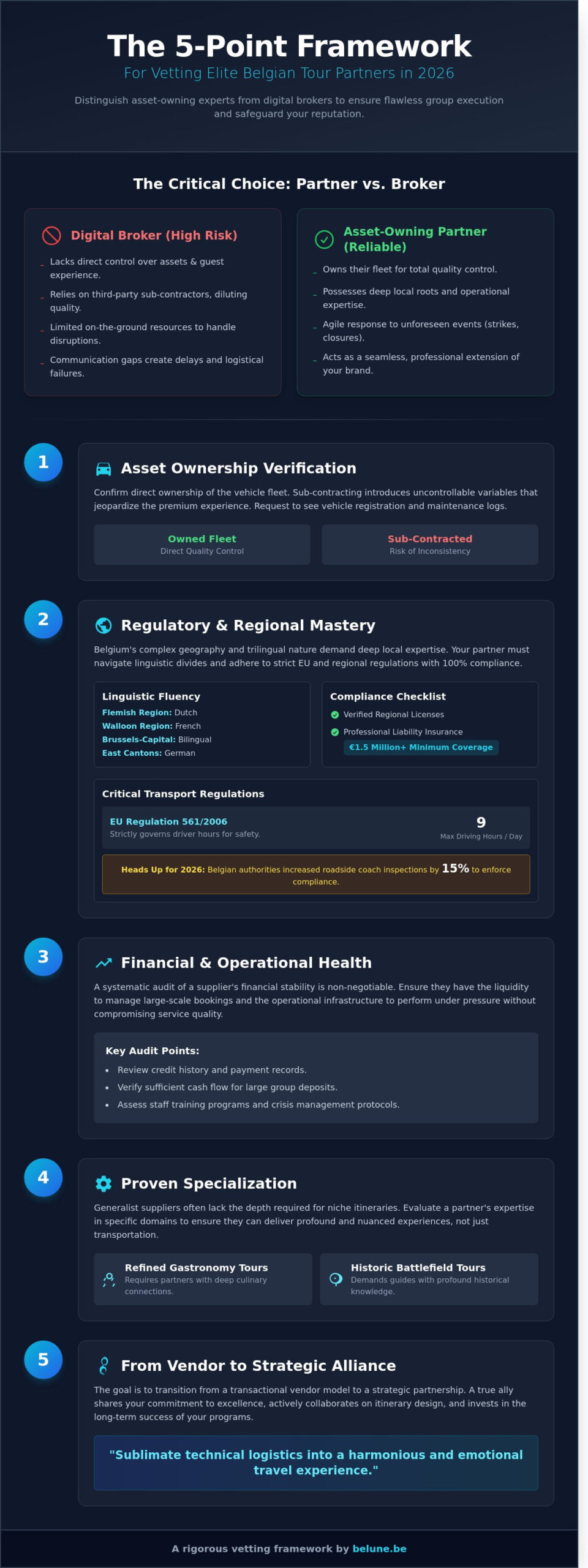
- Master our rigorous 5-point framework for vetting local tour suppliers in belgium to distinguish between asset-owning partners and simple sub-contractors.
- Navigate the intricate linguistic and regulatory divides of the Flemish and Walloon regions by prioritizing high-end, multilingual guiding expertise.
- Evaluate supplier specialization to ensure niche itineraries—from historic battlefields to refined gastronomy—are handled with profound depth and regional nuance.
- Transition from a transactional vendor model to a strategic alliance that sublimates technical logistics into a harmonious and emotional travel experience.
Why Vetting Local Suppliers in Belgium is Critical for Group Success
Excellence in group travel isn’t a happy accident; it’s the result of meticulous preparation and rigorous standards. For an international operator, vetting local tour suppliers in Belgium represents a systematic audit of operational, financial, and regulatory health. This process goes beyond a simple review of a website or a brochure. It involves a deep dive into the supplier’s ability to maintain high performance under pressure, ensuring they possess the liquidity to manage large-scale bookings and the insurance to protect every traveler.
Belgium presents a unique challenge due to its dense, multifaceted geography. A supplier based in Antwerp might struggle with the specific logistical nuances of the Ardennes or the complex traffic patterns surrounding the European Quarter in Brussels. Tourism in Belgium is defined by these regional distinctions, and a partner without deep local roots often fails to anticipate the micro-delays that can derail a tight itinerary. We see the local partner not just as a service provider, but as a visionary architect of the guest experience.
Relying on digital-only brokers carries hidden risks that can’t be ignored in 2026. These platforms often lack physical infrastructure, fleet ownership, or direct contracts with venues. When an unforeseen event occurs, like a sudden rail strike or a road closure in Ghent, a digital middleman lacks the on-the-ground resources to pivot. A poorly vetted supplier can instantly compromise the reputation of an international agency, turning a curated journey into a series of logistical failures.
The Stakes of High-Quality Group Travel
Seamless logistics are the invisible threads that hold a luxury tour together. When a transfer is five minutes late or a guide lacks the necessary depth of knowledge, the harmony of the entire trip is disrupted. Your local partner acts as the on-the-ground face of your agency, representing your values to the client. Quality vetting ensures that this face remains professional, composed, and expert at all times. Supplier vetting is the cornerstone of risk management in 2026.
Belgium’s Regulatory Landscape: What You Need to Know
The Belgian regulatory framework is precise and demands strict compliance. Every professional tour supplier must hold specific regional licenses issued by the Flemish, Walloon, or Brussels-Capital authorities. You must verify that your partner carries comprehensive professional liability insurance, which should ideally provide coverage of at least €1.5 million for group activities to meet modern B2B standards.
Transport logistics are particularly sensitive to local laws. EU Regulation 561/2006 strictly governs driver hours, mandating a maximum of 9 hours of driving per day and specific rest periods. In 2025, Belgian authorities increased roadside inspections for coach operators by 15% to ensure compliance. If your supplier cuts corners on these regulations to save costs, they aren’t just being inefficient; they’re putting your group’s safety and your agency’s legal standing at risk. Vetting local tour suppliers in Belgium is the only way to guarantee that these technical details are handled with absolute precision.
The 5-Point B2B Vetting Checklist for Belgian Tour Partners
Vetting local tour suppliers in belgium demands a shift from surface-level aesthetics to deep operational scrutiny. Your chosen partner acts as the silent architect of your guest’s experience. This relationship requires more than a signature; it necessitates a shared vision of excellence and precision.
- Asset Ownership: Determine if the supplier owns their fleet. Sub-contracting to third parties often dilutes quality control and creates communication gaps during live operations.
- Regional Fluency: Belgium is a complex linguistic mosaic of Dutch, French, and German zones. A partner must navigate these cultural divides with ease. The U.S. International Trade Administration highlights that understanding regional business customs is vital for any successful commercial endeavor in the country.
- Safety and Compliance: Demand digital maintenance logs and proof of driver certification. By 2026, safety standards in the EU have evolved to require real-time fatigue monitoring systems in all professional transport.
- Sustainability Practices: Evaluate their commitment to low-emission transport. With Brussels and Antwerp enforcing strict Low Emission Zones (LEZ), suppliers must utilize Euro 6 engines or electric alternatives to avoid heavy fines and itinerary disruptions.
- B2B Specialization: Confirm they have a dedicated department for tour operators. Retail-focused agencies often lack the technical understanding of margin structures and bulk logistics required for professional partnerships.
Verifying Operational Assets and Fleet Quality
Direct control over modern coaches is superior to the unpredictability of a transport broker. When a supplier owns their assets, they control the narrative of the journey. Ask for a fleet age average of less than 4 years to ensure reliability and modern onboard amenities like high-speed Wi-Fi and climate zones. This ownership is the primary driver of pricing stability, allowing for fixed-price group tours that remain immune to the sudden surcharges typical of third-party rentals.
Assessing Financial and Professional Stability
Longevity serves as a metric of trust in the Benelux region. Seek partners with at least 20 years of experience who maintain active standing with national tourism boards. Professional stability is reflected in their support infrastructure. A robust partner provides a 24/7 emergency coordination team, not just a generic voicemail. This level of dedication ensures that when the unexpected occurs, the solution is already in motion.
When technical mastery meets a passion for service, the result is a journey that feels effortless. Discover how we sublime these professional connections through a commitment to architectural precision and light.
Navigating the Linguistic and Regulatory Nuances of Belgium
Belgium’s geography is a delicate composition of linguistic borders and regional pride. Successful vetting local tour suppliers in Belgium starts with recognizing that Flanders and Wallonia operate under distinct cultural and administrative frameworks. A partner who treats Brussels, Bruges, and Namur with the same generic brush misses the subtle nuances that define the Belgian experience. High-end travel demands an artisan’s touch. It requires a supplier who understands that a guide in Ghent needs different regional sensitivities than one in the High Fens. True expertise lies in the ability to harmonize these regional differences into a single, poetic narrative.
The distinction between national coverage and local specialization is often where luxury itineraries succeed or fail. While many agencies claim to cover the entire territory, the most sophisticated partners maintain deep-rooted connections within specific provinces. This granular approach ensures that every moment of the journey feels bespoke rather than mass-produced. It’s about finding the balance between the technical precision of logistics and the artistic soul of the destination.
The Importance of Multi-Lingual Local Guidance
Authentic luxury is found in the details of communication. For culture group tours in Benelux, linguistic fluency isn’t just a utility; it’s a bridge to heritage. Professional guides must hold regional certifications that reflect their deep-rooted expertise. When checking credentials, look for the quality labels recognized by the Belgian Travel Confederation to ensure the highest professional standards. These experts provide more than facts. They offer insider access. They open doors to private collections and historic estates that remain closed to the general public. This level of specialization distinguishes a general operator from a true local partner who can sublimer the travel experience through storytelling.
Compliance with Cross-Border Logistics
Logistical precision is the foundation of any sophisticated itinerary. It’s vital to vet suppliers for their ability to navigate the legal complexities of Benelux-wide travel. For instance, a coach operator based in Brussels must meet specific French regulatory requirements if the tour extends to Paris. This includes adhering to strict Euro 6 emission standards and driver rest mandates updated in late 2025. Regulatory compliance in Benelux ensures zero downtime for group itineraries by eliminating the risk of roadside delays or administrative permit failures.
- Verification of EU transport licenses for seamless cross-border transit.
- Insurance coverage that extends specifically to the Netherlands and Luxembourg.
- Adherence to the latest labor laws regarding multi-day international guiding.
A visionary partner anticipates these technical hurdles long before the first guest arrives. They transform complex logistics into a seamless flow of movement. This technical rigor, paired with an artistic eye for travel, creates the harmony your clients expect from a premium service. When vetting local tour suppliers in Belgium, prioritize those who view compliance as a tool for excellence rather than a mere administrative burden.
Evaluating Specialization: From Battlefield Tours to Gastronomy
A generalist supplier often misses the subtle nuances that transform a standard trip into a lasting legacy. In a landscape as culturally dense as Belgium, a “jack-of-all-trades” approach usually results in surface-level experiences that fail to satisfy high-end clients. True vetting local tour suppliers in belgium requires looking beyond the glossy brochure to find specialists who hold the keys to restricted archives, private cellars, or hidden architectural gems. These artisans of travel don’t just provide transport; they curate an atmosphere that resonates with the specific soul of the group.
Depth of Thematic Knowledge
Testing a supplier’s expertise in flanders fields itineraries demands more than a list of monuments. You need partners who maintain active, daily dialogues with local curators and organizations like the Last Post Association. By 2026, remembrance tourism has evolved into a deeply personal pilgrimage where precision matters. Ask for case studies regarding themed group travel in Benelux from the last 24 months. A specialist will demonstrate how they bypass the standard tourist crowds at the Menin Gate or secure private access to the Talbot House archives for a more intimate reflection. They understand the weight of history and treat it with the necessary technical and emotional rigour.
The Power of Tailor-Made Coordination
Excellence lies in the details of the “sur-mesure” approach. A dedicated DMC doesn’t simply book rooms; they harmonize the entire stay. They streamline group-friendly hotel accommodations by leveraging long-standing local reputations that a generalist cannot access. This expertise is vital for Belgium gastronomy tours, where the difference between a standard tourist menu and an exclusive farm-to-table experience in a private Ghent manor depends entirely on the supplier’s network. Consider these key evaluation points:
- Flexibility: Can the supplier modify a route mid-tour if a group shows a sudden interest in Art Nouveau architecture?
- Exclusivity: Do they have the keys to venues not open to the general public, such as private chocolate ateliers or monastic breweries?
- Financial Stability: Fixed-price models are essential for your long-term planning. They protect your agency against the 4.5% annual inflation currently impacting European hospitality sectors.
A specialist supplier functions as a visionary conseiller. They anticipate logistical hurdles before they manifest, ensuring the flow of the itinerary remains fluid and aéré. This level of coordination allows your agency to offer something truly unique, moving away from commoditized travel toward a vision of architectural and sensory discovery. Professional vetting local tour suppliers in belgium ensures your partner views a custom itinerary as a piece of design rather than a simple checklist.
Elevate your portfolio with a partner who understands the art of Belgian travel coordination.
Finalizing the Partnership: The Strategic Advantage of a Vetted DMC
Moving beyond the initial phase of vetting local tour suppliers in belgium means shifting your perspective. You aren’t just hiring a vendor; you’re securing a strategic alliance. In the high-stakes world of B2B travel, the transition from a transactional relationship to a partnership is where true value is created. At Belune, we view logistics as a canvas. We sublimate the technicalities of transport into a seamless emotional experience for your guests, ensuring that the movement between destinations feels as curated as the destinations themselves.
Our foundation rests on two decades of Belgian expertise. Since 2006, we’ve refined the art of movement within the kingdom, navigating the nuances of local regulations and seasonal shifts. This 20-year history provides a level of peace of mind that newer entrants cannot replicate. When you partner with an established expert, you’re buying more than a service; you’re investing in a safety net that has been stress-tested by thousands of successful group arrivals. It’s about creating a harmony between your vision and our execution.
The BELUNE Standard of Excellence
Our private fleet of modern coaches serves as a pillar of reliability. Each vehicle represents a commitment to comfort and precision, maintained to the highest safety standards. As a premier benelux incoming tour operator with a national focus, we provide 24/7 support to ensure every itinerary unfolds without friction. We don’t just react to challenges; we anticipate them. This proactive stance is essential for vetting local tour suppliers in belgium who can handle the complexities of 2026 travel demands. Our team acts as an extension of your own, protecting your reputation with every mile driven.
Requesting a Custom Proposal
Transitioning from vetting to design is a collaborative evolution. When you’re ready to move forward, the process is streamlined and transparent. Communicating your group’s specific requirements, from accessibility needs to precise timing, allows us to craft a precise, fixed-price quote. This eliminates the risk of hidden costs or unexpected surcharges that often plague less professional setups. We invite you to schedule a professional consultation to align on your specific group goals for the upcoming season. Partner with a team that values your reputation as much as you do, and let’s transform a simple itinerary into an architectural masterpiece of travel. Excellence isn’t an accident; it’s a choice made during the final stages of the vetting process.
Mastering the Belgian Landscape with Precision
Designing an exceptional itinerary for 2026 requires more than a simple list of contacts. It demands a deep understanding of Belgium’s complex linguistic borders and strict regulatory standards. Vetting local tour suppliers in belgium isn’t just a safety measure; it’s a commitment to professional excellence. By focusing on specialized expertise in sectors like gastronomy or historical battlefield tours, you ensure every group experiences the country’s authentic soul without logistical friction. Precision matters in every mile traveled.
Partnering with a visionary ally transforms a standard trip into a seamless narrative. BELUNE offers over 20 years of Benelux expertise, providing the technical rigor and artistic sensitivity your brand deserves. Our private fleet of modern coaches and specialized B2B team ensure that every detail is handled with absolute care. We don’t just provide transport; we craft the foundation for unforgettable human experiences. It’s time to elevate your Belgian offerings through a partnership built on trust and artisanal quality.
Secure your next Belgian itinerary with a vetted expert. Contact BELUNE today.
Your vision for Belgium deserves a partner who values harmony and excellence as much as you do. Let’s create something remarkable together.
Frequently Asked Questions
What are the legal requirements for tour operators in Belgium?
Belgian law requires all tour operators to hold professional liability insurance and provide protection against insolvency through a recognized financial fund. The Law of 21 November 2017 mandates these specific protections for any package travel sale within the territory. We verify that partners belong to the Travel Guarantee Fund (GFG) or carry equivalent certified coverage. This structural rigor protects your investment and ensures every journey remains a seamless experience for your clientele.
How can I verify if a Belgian coach company owns its vehicles?
You can verify ownership by requesting the European Transport License or the vehicle registration documents associated with the company’s VAT number. Cross-referencing these details with the Belgian Crossroads Bank for Enterprises (CBE) under NACE code 49390 confirms their status as a direct operator. Direct ownership guarantees that the 2026 safety standards are met. It reflects a supplier’s commitment to tangible quality and total operational control over their fleet.
Is it better to use a local guide or a tour manager for Belgian group tours?
Local guides are essential for historical depth in heritage cities, while tour managers handle the logistical flow of the entire itinerary. Flemish regulations from the 1 March 2012 Decree emphasize that only certified guides should lead tours in protected monuments like the Bruges Belfry. We recommend a hybrid approach for most projects. This pairing creates a perfect harmony between technical logistics and the poetic storytelling required to truly transform a guest’s perspective.
What insurance should a Belgian DMC provide to its partners?
A professional Belgian DMC must provide comprehensive Professional Indemnity insurance and a mandatory financial insolvency guarantee. Most top-tier partners carry coverage limits of at least 2.5 million euros per claim to address potential risks in 2026. This technical safety net is a core part of vetting local tour suppliers in Belgium. It allows you to focus on the creative vision of the trip while we handle the underlying complexities of risk management.
How does the regional linguistic split in Belgium affect tour planning?
The linguistic split requires a nuanced approach where Dutch is used in Flanders, French in Wallonia, and both languages in Brussels. Since the 1970 state reforms, these regions have maintained distinct administrative rules for tourism and signage. Successful planning respects these cultural boundaries. We treat language as a material of construction for the guest experience. It adds a layer of authenticity and sophistication to every interaction across the three federal regions.
What is the standard response time for a professional Belgian tour supplier?
A professional Belgian supplier should provide a detailed proposal within 24 to 48 business hours. Industry data from 2024 indicates that 92% of elite DMCs acknowledge receipt within the first 4 hours of a working day. This rapid rhythm reflects a commitment to excellence and professional respect. It shows the supplier is a reliable strategic ally who values your time as much as the artistic integrity of the project they’re helping you build.
Can a Belgian tour supplier handle group travel to the Netherlands and France?
Belgian suppliers manage cross-border travel to the Netherlands and France effortlessly thanks to the 1958 Benelux Treaty and EU cabotage regulations. These legal frameworks allow coaches and guides to move freely within the Schengen Area without additional permits or taxes. This geographical fluidity is a major asset for regional planning. It enables us to design expansive European journeys that maintain a consistent level of high-end service and technical precision across multiple borders.
Why is asset ownership important when vetting tour suppliers?
Asset ownership is vital because it eliminates the uncertainty of third-party availability and fluctuating subcontracting costs during peak seasons. When vetting local tour suppliers in Belgium, we’ve found that companies owning their fleet maintain 15% higher satisfaction rates in 2026 quality audits. Direct control over the physical environment allows for a bespoke level of refinement. It ensures that every detail, from the vehicle’s interior to the driver’s training, aligns with your brand’s standards.
Leave a Reply