Is your in-house coordination truly an asset, or has it become a silent anchor on your growth? For many tour operators, the complexity of managing driver hours, local guide quality, and regional compliance creates a friction that dims the brilliance of the guest experience. You know the exhaustion of rising overheads and the anxiety of a logistical failure in a distant region. Building a business case for outsourcing tour logistics is no longer a matter of simple procurement; it’s a strategic evolution that secures your brand’s future.
We understand that excellence requires both an artistic vision and a rigorous technical foundation. This guide offers the clarity you need to justify a professional DMC partnership to your board, moving beyond surface-level savings to reveal true operational resilience. You’ll master a financial framework that prioritizes fixed-price stability and guest satisfaction. We’ll examine how a scalable model for regional expansion turns complex logistics into your most powerful competitive advantage for 2026, ensuring your vision remains uncompromised as you grow.
Key Takeaways
- Reveal the “shadow labor” and hidden overheads that silently inflate in-house costs, allowing your team to return to the art of experience design.
- Quantify the ROI of brand protection, evaluating how a professional DMC partnership preserves your reputation through meticulous risk mitigation.
- Master a structured framework for building a business case for outsourcing tour logistics that aligns financial rigor with your long-term strategic vision.
- Resolve the control paradox by demonstrating how local expertise and dedicated fleet management provide superior transparency and data-driven insights.
- Evolve your operations into a scalable model for expansion, utilizing fixed-price stability to ensure financial harmony and aesthetic excellence.
The Economic Reality of In-House Tour Logistics Management
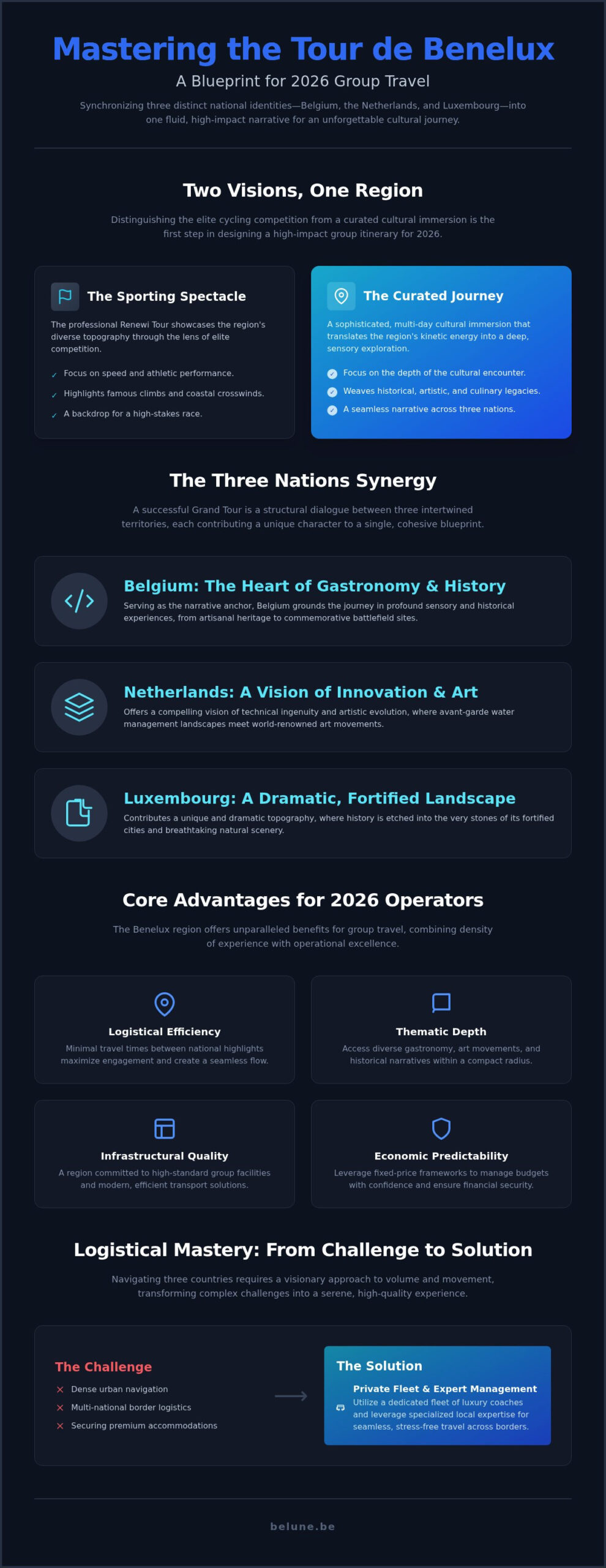
In-house logistics management often masquerades as a cost-saving measure. It’s a common misconception. In reality, maintaining an internal department for tour coordination involves a strategic transfer of risk that most operators aren’t prepared to handle alone. When building a business case for outsourcing tour logistics, one must look beyond the surface. You’re not just buying coach hire or guide services; you’re investing in a destination management company that acts as a structural component of your brand equity.
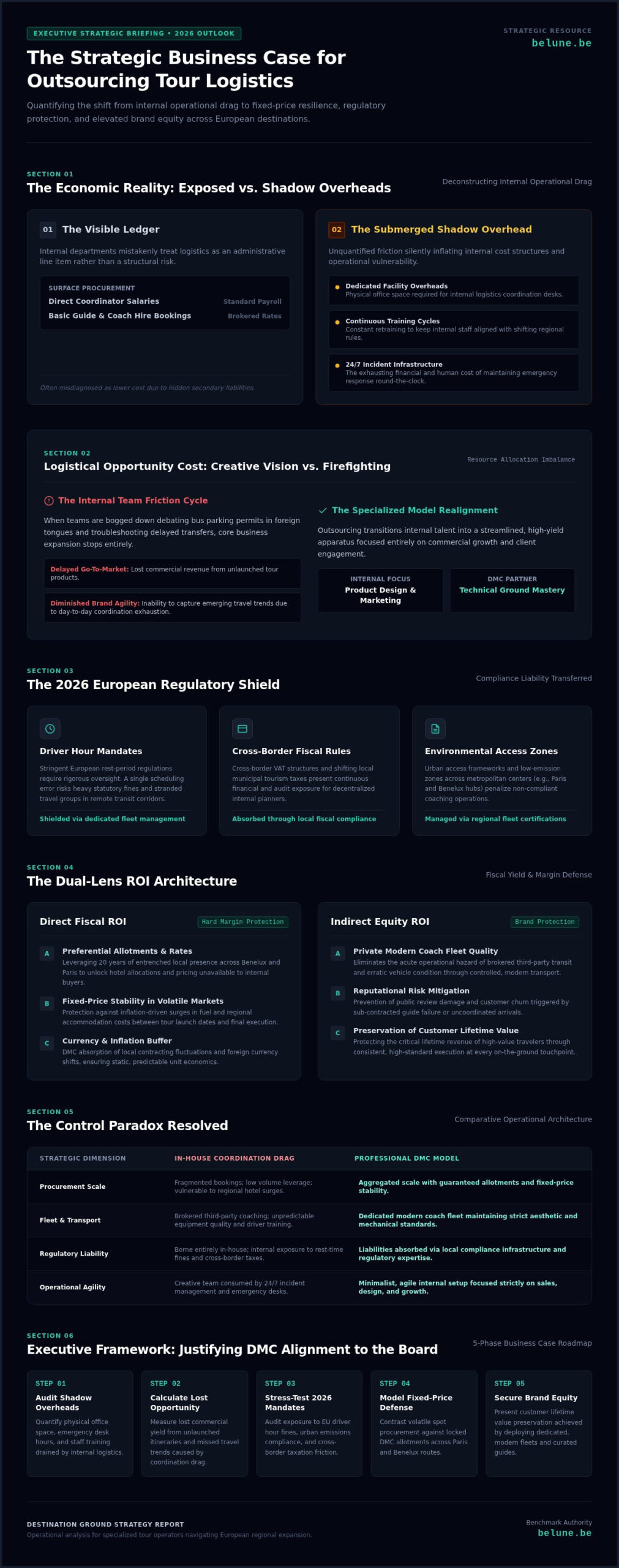
The “Hidden Overhead” of internal operations is substantial. It’s rarely just the salary of a coordinator. It includes:
- The physical office space required for specialized logistics desks.
- Continuous staff training to keep pace with shifting regional nuances.
- The exhausting cost of maintaining 24/7 emergency support infrastructures.
Internal teams frequently lack the procurement scale of a specialized DMC. They struggle to negotiate the same fixed-price stability that protects margins against the volatility of the 2026 economic climate. This lack of scale leads to a high “Cost of Complexity,” where navigating environmental zones and local regulations becomes a financial drain rather than a routine task. A specialized partner absorbs this complexity through established local networks and a dedicated, modern fleet.
The Opportunity Cost of Coordination
Logistical firefighting consumes the spirit of a creative team. Your product designers should be crafting evocative itineraries, not debating bus parking permits in a foreign tongue. Every hour spent resolving a delayed transfer is an hour stolen from strategic growth. We define Logistical Opportunity Cost as the lost revenue from unlaunched products and missed market trends caused by internal operational friction. Outsourcing allows for a minimalist, agile internal structure. Your team focuses on sales and marketing. We handle the technical mastery of the ground operations.
Navigating the Regulatory Labyrinth
The landscape of 2026 is defined by rigorous oversight. Navigating European driver hour mandates requires a precision that internal teams often find stifling. A single compliance error regarding rest periods can result in heavy fines or, worse, a stranded group. Managing VAT complexities and local tourism taxes across national borders adds another layer of financial risk. Local expertise isn’t a luxury. It’s a shield. By transferring these liabilities to an expert partner, you ensure that environmental zones and shifting municipal laws don’t erode your profitability or your peace of mind.
Quantifying the Value: Direct vs. Indirect ROI of a DMC Partner
Measuring the success of a tour operation requires a dual-lens approach. One must look at the immediate fiscal margin and the long-term appreciation of brand equity. When building a business case for outsourcing tour logistics, stakeholders often look for immediate fiscal relief. The direct ROI is found in the delta between fragmented in-house procurement and the streamlined efficiency of DMC fixed-price packages. While internal teams might manage individual bookings, they rarely possess the collective buying power to secure the preferential hotel allotments and rates that a partner with 20 years of local presence can command.
The indirect ROI is perhaps even more vital. It’s found in “Brand Protection.” In an era where a single logistical failure-a late coach or a subpar guide-can lead to a public negative review, the value of an avoided crisis is immense. What’s the lifetime value of a lost customer? By utilizing a private modern coach fleet rather than brokered third-party transport, you eliminate the uncertainty of sub-contracted quality. This technical mastery ensures that every touchpoint reflects your brand’s commitment to excellence.
Procurement Power and Fixed-Price Stability
The 2026 market is defined by volatility. Inflationary pressures on fuel and accommodation can erode margins between the time a tour is sold and when it’s executed. A professional DMC offers fixed-price stability, absorbing the fluctuations of local contracting. This model reduces currency exchange risk and provides a predictable cost structure. Because we maintain established relationships across the Benelux and Paris regions, we secure allotments that internal teams simply cannot access. This precision is the cornerstone of building a business case for outsourcing tour logistics that resonates with both CFOs and Creative Directors.
The ‘Art of the Experience’: Elevating Brand Equity
Logistics shouldn’t be invisible; they should be evocative. High-end coach hire does more than move people. It sets a tone of exclusivity and comfort. When guests transition from a private coach to the care of expert Local Guide Services, the “trip” is elevated into a visionary experience. This seamless flow directly impacts re-booking rates. Guests don’t just remember the sights; they remember the effortless grace with which they moved through them. For those seeking deeper insights into selecting the right partner, consult The Definitive Guide to Choosing a Group Travel Agency in 2026. Partnering with a strategic ally in the Benelux region ensures your financial projections remain as stable as your guest satisfaction scores.
Addressing Stakeholder Objections: Risk, Control, and Quality
When stakeholders question the shift toward external partnerships, the conversation often centers on control. It’s a natural instinct. However, we observe a “Control Paradox” in modern travel management. By clinging to in-house coordination, operators often have less visibility into the minute-by-minute reality of a tour in a distant region. Building a business case for outsourcing tour logistics requires demonstrating that a local expert, equipped with real-time data and regional mastery, actually offers superior oversight compared to a remote internal team. You aren’t losing control; you’re gaining a more sophisticated lens through which to view your operations.
The financial objection usually involves the “DMC Markup.” This is often a myth. The reality is “In-house Leakage”-the invisible erosion of profit through unoptimized routes, guide cancellations, and administrative friction. A partner’s fixed-price model eliminates these variables, ensuring your budget remains as precise as your itinerary. By outsourcing, you transform unpredictable expenses into a stable, strategic investment that protects your bottom line.
Mitigation of Operational Liability
Risk is a silent component of every itinerary. When a coach breaks down at 3 AM on a rainy Tuesday, who answers the phone? Transferring operational liability to a DMC means moving insurance and safety responsibilities to those best equipped to handle them. We provide a local safety net that mitigates regional disruptions before they reach the guest. A single failed group transfer can result in thousands of euros in immediate refunds and a permanent scar on your brand’s digital reputation. By outsourcing, you secure a partner who absorbs these technical risks, allowing your team to remain focused on the guest experience.
Maintaining Brand Integrity through Local Expertise
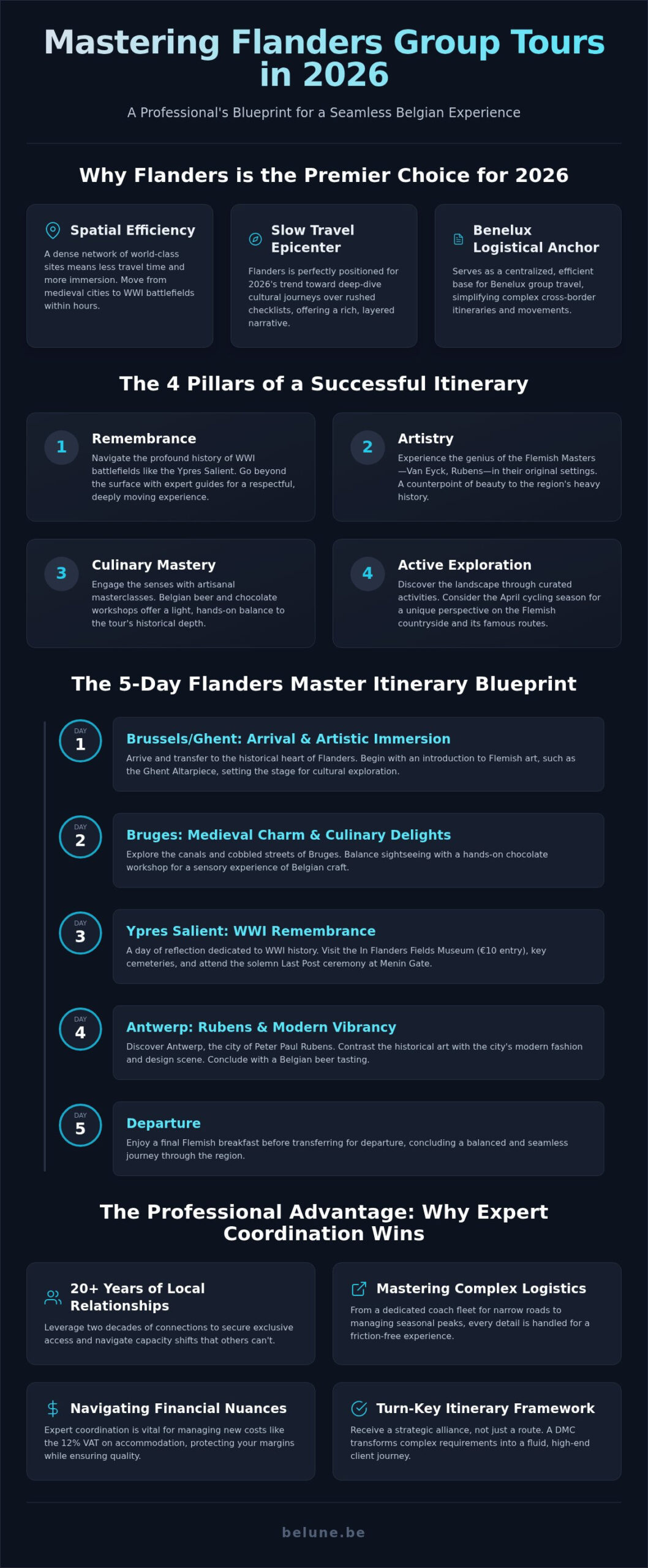
Your brand is a promise. Our Local Guide Services are the frontline of that promise. They ensure artistic continuity, acting as a seamless extension of your creative vision. For instance, our specialized knowledge in Flanders Fields prevents cultural faux pas during sensitive group pilgrimages. This expertise, paired with a modern coach fleet, reflects a sophisticated brand image. It’s about technical mastery and emotional resonance. Every mile traveled should reinforce your reputation for excellence, turning a standard tour into a visionary journey that guests are eager to repeat.
A 5-Step Framework for Building Your Business Case
Constructing a compelling narrative for stakeholders requires a bridge between operational reality and financial ambition. Building a business case for outsourcing tour logistics isn’t just about cutting costs; it’s about unlocking your organization’s true potential. To move from a transactional mindset to a strategic one, we recommend a structured approach that emphasizes clarity and resilience.
- Step 1: Audit current internal logistical costs. Look beyond payroll. Include “shadow labor”, the time your marketing team spends correcting hotel vouchers or your product managers spend on driver scheduling.
- Step 2: Identify Pain Points. Document every logistical failure from the last season. Assign a value to the lost reputation and the staff hours spent on damage control.
- Step 3: Solicit a Fixed-Price proposal. Establish a baseline. A fixed-price model from a DMC provides the certainty required for accurate 2026 budgeting, shielding you from inflationary spikes.
- Step 4: Conduct a Risk-Adjusted financial projection. Project your costs over the next 24 months. Account for the rising costs of local compliance and the financial weight of operational liability.
- Step 5: Present the Strategic Growth argument. Quantify how many more tours your team could launch if they weren’t bogged down by ground coordination.
Data Collection and Gap Analysis
To build a robust case, you must track the “real” time spent on hotel accommodation management. This effort is often fragmented across multiple roles, masking its true cost. Benchmark your current guest satisfaction scores against industry standards to see where logistical friction drags down your ratings. Finally, identify technical gaps in your local supplier network. Do you have direct access to a modern coach fleet, or are you relying on a chain of middlemen that dilutes your control? Understanding these gaps is essential when building a business case for outsourcing tour logistics that resonates with a CFO.
Presenting the Financial Projection to the Board
Focus on scalability. Moving from variable internal costs to predictable fixed-price models transforms your financial outlook. It replaces uncertainty with a steady foundation. Emphasize the expertise factor. Our 20 years of experience in the Benelux and Paris regions acts as a non-depreciating asset for your brand. You’re not just hiring a vendor; you’re securing peace of mind for your stakeholders. If you’re ready to translate your vision into a scalable reality, consult with our strategic advisors today to begin your audit.
BELUNE: Elevating Logistics into a Strategic Asset
Excellence isn’t an accident. It’s the result of technical rigor meeting a refined artistic vision. BELUNE serves as a visionary advisor for those building a business case for outsourcing tour logistics in the Benelux and Paris regions. We don’t simply provide services; we transform the structural components of your tour into a strategic asset. Our private, modern fleet of coaches ensures that every mile reflects your brand’s commitment to quality. This ownership allows for an aesthetic consistency and operational control that third-party brokers cannot replicate. It’s about technical mastery and emotional resonance.
Our expertise extends into the most demanding niches of travel. Whether it’s the profound silence required for Battlefield Tourism or the sensory richness of our Gastronomy tours, our mastery is absolute. We bring a commitment to elegance and rigor to every itinerary. This ensures your guests experience the soul of a destination without the friction of logistical failure. We handle the details so your vision can breathe.
20 Years of Logistical Mastery
There’s a profound difference between a supplier and a partner with a legacy. With over 20 years of experience, our history in both transport and complex tour operations informs every decision we make. We understand the nuances of European driver regulations and the subtle requirements of high-end group travel. This sophisticated professionalism mirrors your own brand’s values. It provides a level of service that reassures your partners and inspires your clients. We’re an ally in your quest for excellence, offering a non-depreciating asset of local wisdom.
Seamless Integration with Your Brand
We believe in a minimalist approach to partnership. We handle the technical complexities, from Hotel Accommodation Management to local guide coordination, while you retain full creative control. Our white-label potential means our guides and coaches represent you. Your brand remains the protagonist. This seamless integration is the final piece when building a business case for outsourcing tour logistics. It allows you to scale your vision without diluting your identity. You keep the creative spark; we provide the engine. Ready to elevate your operations? Request Your Custom Benelux Group Tour Itinerary and let us transform your logistics into your greatest strength.
Securing Your Operational Future in 2026
Transitioning from fragmented in-house coordination to a strategic DMC partnership is about more than just efficiency; it’s about brand preservation and scaling your creative vision. We’ve explored how fixed-price stability and the technical mastery of a private modern coach fleet mitigate the volatility of the modern market. Master the art of building a business case for outsourcing tour logistics by focusing on the long-term ROI of expertise and guest satisfaction. With over 20 years of Benelux expertise, we provide the rigor required to turn complex logistics into an evocative experience. Your vision deserves a foundation of technical excellence that allows your team to focus on the art of the journey rather than the friction of the ground operation. Partner with BELUNE: Elevate Your Tour Logistics Today. Let’s transform your operations into a lasting strategic asset and ensure your legacy continues to inspire every guest you welcome.
Frequently Asked Questions
What are the primary cost savings when outsourcing tour logistics?
The primary savings manifest through the reduction of “shadow labor” and internal overhead. By transferring coordination to a partner, you eliminate the need for dedicated logistics staff, specialized training, and expensive support infrastructures. This structural shift allows your team to focus on strategic growth rather than administrative friction. Building a business case for outsourcing tour logistics often hinges on these visible and invisible cost reductions that protect your long-term margins.
How does a DMC handle emergency logistical issues differently than an in-house team?
A DMC provides a local safety net that remote in-house teams cannot replicate. With over 20 years of industry experience, we resolve regional disruptions before they impact the guest experience. Whether it’s a coach breakdown or a sudden regulation change, our established network allows for immediate, on-the-ground intervention. This technical mastery ensures that emergencies are managed with the same rigor and elegance that defines your brand’s reputation for excellence.
Will I lose control over my tour’s unique ‘feel’ if I outsource the logistics?
You don’t lose control; you gain a more sophisticated lens for oversight. We act as a seamless extension of your creative vision, offering white-label potential where our guides and coaches represent your brand’s identity. This minimalist partnership handles the technical complexities while you retain full authority over the itinerary’s artistic soul. Our private, modern fleet ensures that every touchpoint reflects your specific aesthetic standards and commitment to a premium guest experience.
Is it more expensive to use a DMC for group hotel accommodation management?
While there is a service fee, the total cost is often lower due to preferential allotments and negotiated rates. Internal teams rarely possess the collective buying power of a partner with two decades of local presence. We secure allotments that protect you from seasonal price spikes and availability shortages. This model replaces unpredictable internal leakage with fixed-price stability, ensuring your financial projections remain accurate and your profit margins remain secure.
How do I measure the ROI of a DMC partnership over a single season?
ROI is measured through both direct fiscal margins and indirect brand equity. Direct ROI is found in the delta between fragmented in-house procurement and streamlined DMC packages. Indirectly, you must evaluate the value of brand protection-the cost of avoided negative reviews and the increase in guest re-booking rates. When building a business case for outsourcing tour logistics, these combined metrics demonstrate a resilience that far outweighs simple transactional savings found in traditional models.
What should be the #1 priority when selecting a logistics partner in the Benelux region?
The top priority is a proven legacy of regional mastery combined with direct asset ownership. A partner with 20 years of experience understands the nuances of local regulations and cultural expectations. Furthermore, choosing a partner with a private, modern coach fleet ensures a level of quality control that brokers simply cannot provide. This combination of technical rigor and local wisdom is the only way to guarantee a truly sophisticated and seamless guest experience.
Can a DMC help my business scale to more complex themes like battlefield or culinary tours?
Yes, a specialized DMC provides the technical foundation required for complex niche travel. Our mastery in sectors like Battlefield Tourism and Gastronomy allows you to expand your portfolio without the risk of cultural faux pas. We provide expert Local Guide Services that bring a deep, sensory richness to these itineraries. This expertise transforms a standard trip into a visionary experience, allowing your brand to scale into sophisticated markets with confidence and grace.
How does a fixed-price group tour package protect my profit margins?
A fixed-price model absorbs the volatility of the 2026 economic landscape. It shields your organization from inflationary spikes in fuel and accommodation costs that often occur between the booking and execution phases. This predictability allows you to set your retail prices with confidence, knowing your ground costs are locked in. By eliminating variable expenses, you ensure that your margins remain uncompromised regardless of external regional disruptions or shifting market conditions.