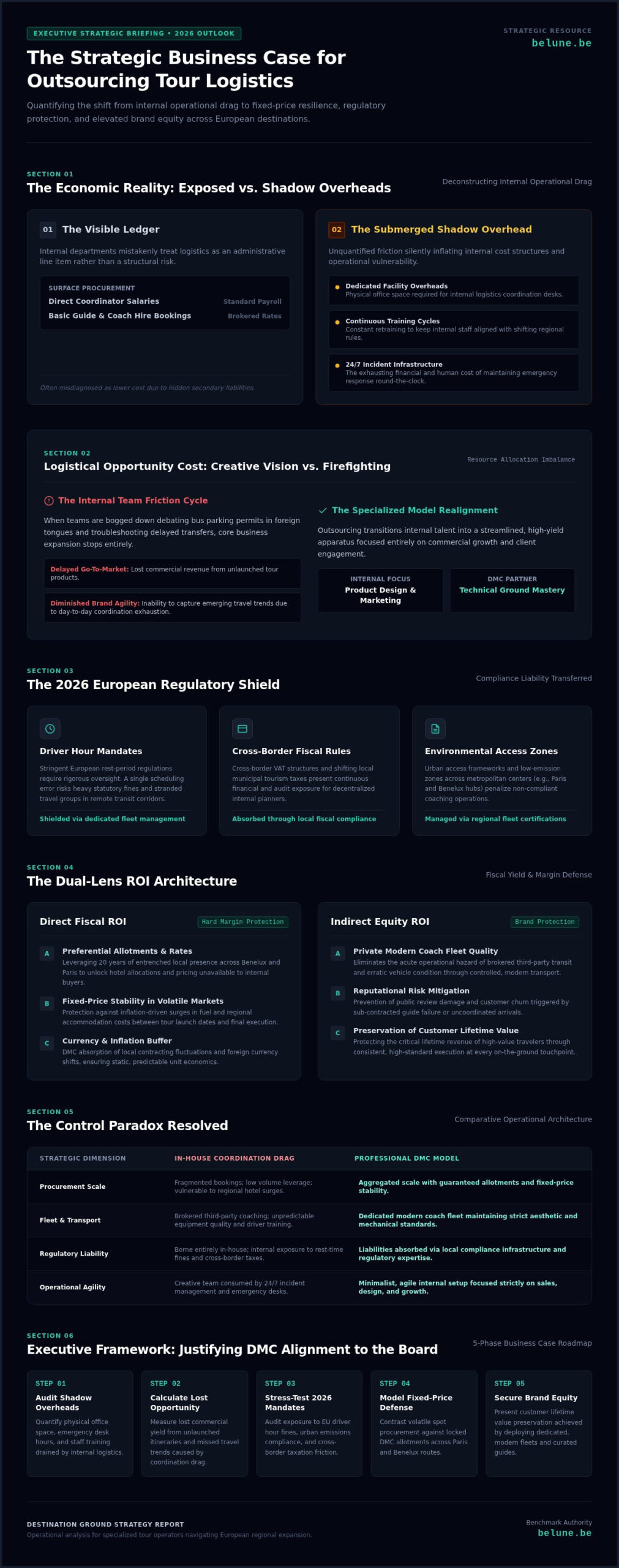
Category: Uncategorized

  • Farm-to-Table Tours in the Netherlands: A Group Travel Masterclass for 2026

    Farm-to-Table Tours in the Netherlands: A Group Travel Masterclass for 2026

    What if the most sophisticated culinary stage in Europe isn’t a Michelin-starred dining room in Amsterdam, but a sun-drenched dairy pasture in the Groene Hart? Planning farm-to-table tours netherlands for groups often feels like a choice between raw authenticity and professional polish. It’s a delicate balance. You want the soul of Dutch agricultural innovation, yet the logistical reality of moving twenty or more guests through narrow polders is undeniably complex. We understand that finding a farm capable of hosting a large party without losing its artisanal charm is a significant challenge for any travel professional seeking excellence.

    This masterclass provides the essential blueprint for choreographing high-end, seamless experiences that respect both the farmer’s craft and the traveler’s expectations for 2026. You’ll discover how to secure exclusive access to private estates and manage complex transport logistics with invisible, expert precision. We’ll preview the critical elements of a sophisticated itinerary, from private workshops at heritage farms to the strategic integration of luxury coach hire and expert local guides who can translate the nuances of the Dutch landscape into a compelling narrative.

    Key Takeaways

    • Learn why farm-to-table tours netherlands for groups are shifting from simple visits to immersive, sensory-driven travel experiences.
    • Understand the technical artistry behind Dutch agriculture, where circular practices and high-tech horticulture create a self-sustaining ecosystem.
    • Master the selection framework for rural sites, ensuring every location meets luxury standards for coach accessibility and group dining capacity.
    • Discover the logistics of navigating narrow countryside routes using a private fleet of modern coaches while balancing rustic charm with professional hotel management.
    • Align with a strategic partner who offers over 20 years of expertise in the Benelux region to transform your creative vision into a seamless reality.

    The Evolution of Rural Gastronomy: Why Farm-to-Table Matters for Groups

    Modern travel demands more than a window seat. It requires a deep dive into the origin of things. We view farm-to-table not as a fleeting trend, but as a structural component of sophisticated group itineraries. There’s a profound shift occurring. Professional groups are moving away from passive sightseeing toward immersive, sensory-driven travel that connects them directly with the land. The Netherlands remains a global epicenter for this movement. The Dutch agricultural sector exported goods worth €137.5 billion in 2025, proving that heritage and high-tech efficiency can coexist beautifully. This technical mastery makes the country a compelling destination for those who appreciate the artistry of production.

    Curating these exclusive experiences requires more than just a map. It demands the vision of a dedicated benelux incoming tour operator capable of opening doors to private estates and working farms. When organizing farm-to-table tours netherlands for groups, the goal is to transform a simple meal into a masterclass of Dutch innovation. It’s about witnessing the precision of a milking carousel before tasting the resulting artisanal cheese, creating a narrative arc that stays with guests long after they leave the polders.

    To better understand this concept, watch this helpful video:

    The Cultural Significance of the Dutch Countryside

    The Dutch polder landscape is a masterpiece of human intervention. For centuries, these reclaimed lands have defined the nation’s identity through food production. Today, traditional dairy farming meets modern culinary standards in a way that feels both timeless and avant-garde. For professional groups, this “slow travel” approach has a measurable emotional impact. It fosters genuine connection and resets group dynamics. There’s something inherently grounding about the rhythm of rural life, especially when paired with the sophisticated comforts of a well-managed itinerary.

    Beyond the Plate: The Educational Value for Groups

    There’s an intellectual depth to these tours that resonates with corporate social responsibility (CSR) goals. Learning about sustainable food systems and circular economy practices provides tangible educational value. Guests observe the intersection of heritage architecture, such as historic barns, and modern gastronomy. It’s a study in how to honor the past while embracing the future. Agritourism serves as a bridge between rural artistry and urban demand. With the turnover of multifunctional agriculture reaching approximately €1.68 billion in recent years, it’s clear that the appetite for these authentic connections is only growing.

    From Soil to Soul: The Technical Artistry of Dutch Agriculture

    Efficiency in the Dutch countryside isn’t merely a metric. It’s a form of artistry. When designing farm-to-table tours netherlands for groups, we look beyond the rustic facade to the technical brilliance beneath. The Netherlands has transformed its limited geography into a masterclass of horticultural precision. Here, farms aren’t just plots of land; they’re self-sustaining ecosystems. This commitment to sustainable agriculture in the Netherlands drives a circular economy where waste becomes a resource. It’s a sophisticated dance between biology and technology that ensures every ingredient served is a testament to innovation.

    Coastal provinces add another layer of complexity with the “Sea to Plate” movement. Coordinating the arrival of North Sea shellfish with a group’s itinerary requires rigorous logistical timing. It’s not just about the food. It’s about the invisible infrastructure that makes such freshness possible for twenty or fifty guests simultaneously. To achieve this level of precision, many planners find that partnering with specialists at belune.be is the most effective way to manage these intricate rural variables.

    High-Tech Greenhouses and Horticultural Innovation

    The Westland region serves as a visual spectacle of data-driven growing. These glass cathedrals utilize precision climate control to produce aesthetics and flavors that were once seasonal. Such sites are essential for high-end themed group travel benelux. They offer a window into the future of food. Our local guides play a critical role here. They translate complex agricultural science into a narrative that resonates with professional travelers, making the technical data feel deeply human and inspiring.

    Artisanal Heritage in the Modern Age

    Heritage isn’t static. The craftsmanship behind Dutch dairy or windmill-milled grains has adapted to 21st-century demands without losing its soul. We focus on family businesses that have thrived for centuries. These producers maintain strict technical standards for their artisanal cheese and produce. Ensuring authenticity for a large group means vetting these sites for their ability to provide an intimate experience while meeting professional hospitality standards. It’s about the touch of the cheesemaker’s hand and the precision of the aging room, perfectly balanced for the modern palate.

    Farm-to-Table Tours in the Netherlands: A Group Travel Masterclass for 2026

    Evaluating Group-Friendly Farm Experiences: A Selection Framework

    Selecting the right location for farm-to-table tours netherlands for groups requires a rigorous framework. It isn’t enough for a farm to produce exceptional Gouda; it must also possess the hospitality infrastructure to host twenty to fifty guests without compromising the experience. We evaluate every site through a lens of logistical feasibility and artistic potential. This ensures that the transition from a luxury coach to a rural workshop is effortless. It’s about the invisible choreography that makes a complex group movement feel like a natural stroll through the countryside.

    Accessibility is paramount. Many authentic farms are tucked away behind narrow dikes where modern coaches cannot easily maneuver. We prioritize sites with dedicated coach parking and wide access routes. Capacity follows closely. Managing private dining or a hands-on workshop for fifty professionals requires a dedicated space, often a restored heritage barn or a modern glass pavilion. Expertise is the final pillar. We seek out farmers who are also storytellers, capable of professional-level interactions that go beyond simple facts. This technical readiness is often a direct result of the Dutch sustainable agriculture policy, which encourages farms to diversify into professional tourism and education.

    A farm visit shouldn’t be an isolated event. It works best when woven into a comprehensive culture group tours benelux itinerary. This creates a dialogue between the urban history of Dutch cities and the rural innovation of the countryside. It allows guests to see the connection between the art in the Rijksmuseum and the landscapes that inspired it.

    Dairy and Cheese Estates vs. Horticultural Centers

    Cheese estates offer tactile, sensory interactions. Guests engage with the artisanal process, often participating in the pressing or salting of the wheels. In contrast, horticultural centers provide a visual masterclass in scale and efficiency. While corporate groups often prefer the high-tech intrigue of a greenhouse, cultural enthusiasts find deeper resonance in the centuries-old traditions of a dairy estate. Private tasting rooms are essential in both cases to maintain an exclusive, high-end atmosphere where group discussion can flourish.

    Coastal Gastronomy and Seaweed Harvesting

    Coastal excursions in provinces like Zeeland introduce unique logistical variables. Tides dictate the schedule for seaweed harvesting tours. These experiences require precise timing and a deep understanding of seasonal availability. Pairing these raw, oceanic encounters with sophisticated hotel accommodation management ensures that the ruggedness of the coast is balanced by luxury at the end of the day. It’s this contrast between the salt spray of the North Sea and the refined service of a five-star stay that defines a masterclass itinerary.

    The Logistics of the Landscape: Planning Seamless Rural Itineraries

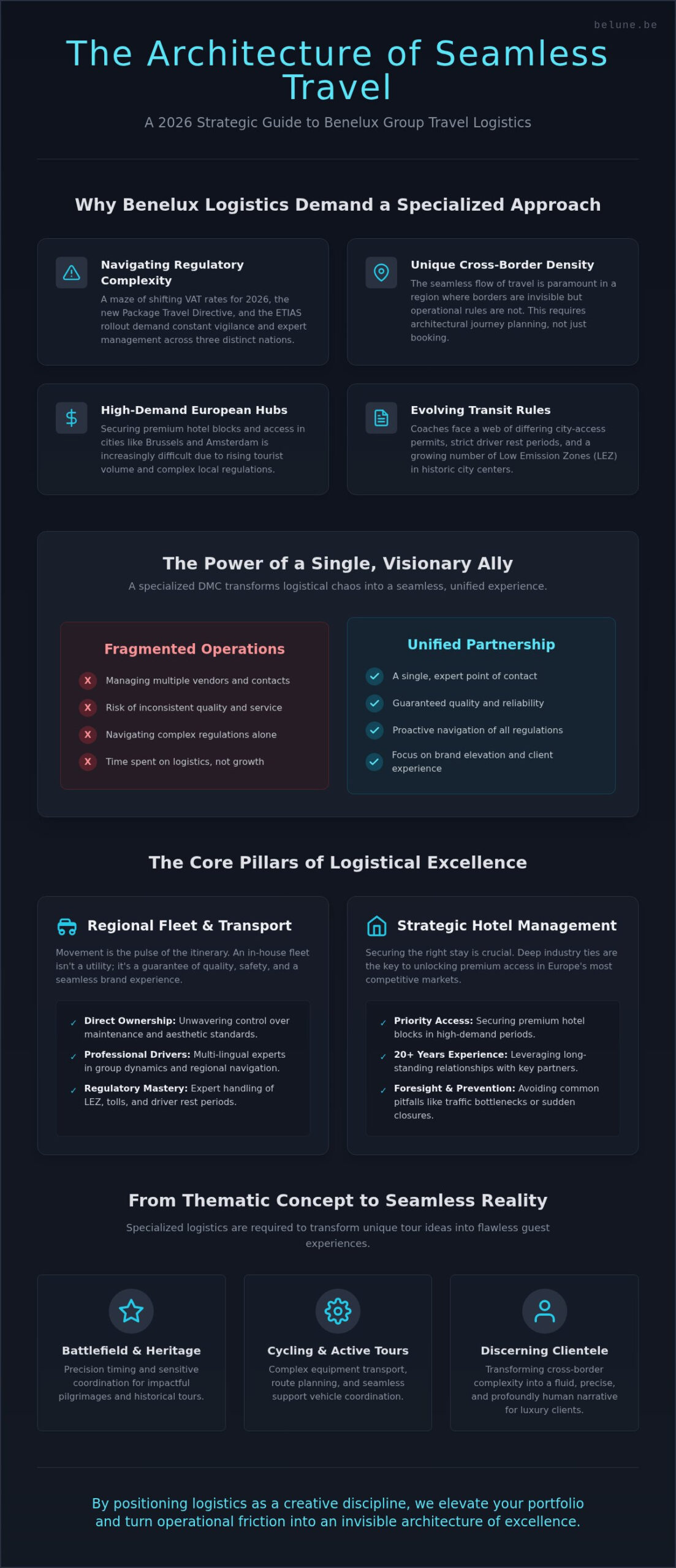
    Logistics are the invisible architecture of a masterpiece. When orchestrating farm-to-table tours netherlands for groups, the transition between the vibrant energy of the city and the serene precision of the polders must feel effortless. It isn’t merely about moving people. It’s about maintaining a thread of sophistication across a complex, rural landscape. The Dutch countryside, with its narrow dikes and intricate waterways, presents a unique set of challenges that require surgical planning. We believe that true luxury lies in the absence of friction, where every arrival is perfectly timed to meet the rhythm of the farm.

    The art of timing is critical. A successful day in the countryside is a choreographed sequence of moments. We balance travel durations with immersive farm sessions to ensure guests never feel rushed. This requires multi-lingual local guides who possess specific agricultural expertise. They don’t just translate words; they translate the soul of the Dutch landscape. If you’re ready to elevate your next project with this level of technical rigour, you can request a tailored logistics proposal for your group here.

    Transport and Mobility Solutions

    Navigating the “Groene Hart” or the coastal reaches of Zeeland requires a modern coach fleet capable of national coverage. We prioritize vehicles that offer both panoramic views and the technical agility to manage rural access routes. Driver service hours and accessibility planning are handled with meticulous detail to prevent any disruption to the itinerary. Reliable coach hire is the backbone of rural group logistics. It provides the structural stability needed to explore remote estates while ensuring guests remain in a climate-controlled, high-end environment between stops.

    Accommodation and Dining Management

    Professional groups shouldn’t compromise on comfort for the sake of authenticity. While some suggest rustic glamping, we focus on sourcing group-friendly hotels that maintain a farm-to-table ethos without sacrificing four-star standards. This involves rigorous hotel accommodation management, ensuring that dietary requirements are communicated with precision to kitchens in remote locations. The role of a group travel agency is to act as a strategic filter, vetting every supplier for their ability to deliver consistent, high-end catering. We ensure that the culinary narrative started on the farm continues seamlessly at the dinner table, creating a unified sensory experience for every guest.

    Elevating the Journey: Why BELUNE is Your Strategic Partner

    Experience isn’t just a number. It’s a refined perspective. With over 20 years of expertise in the Benelux and Paris travel landscape, we don’t just organize trips. We curate legacies. Our role as a strategic partner is to ensure that farm-to-table tours netherlands for groups transcend the ordinary. We blend technical mastery with a deep appreciation for the artisanal, providing a seamless bridge between your creative vision and the logistical reality of the Dutch countryside. It’s a collaboration built on trust, excellence, and a shared passion for the extraordinary.

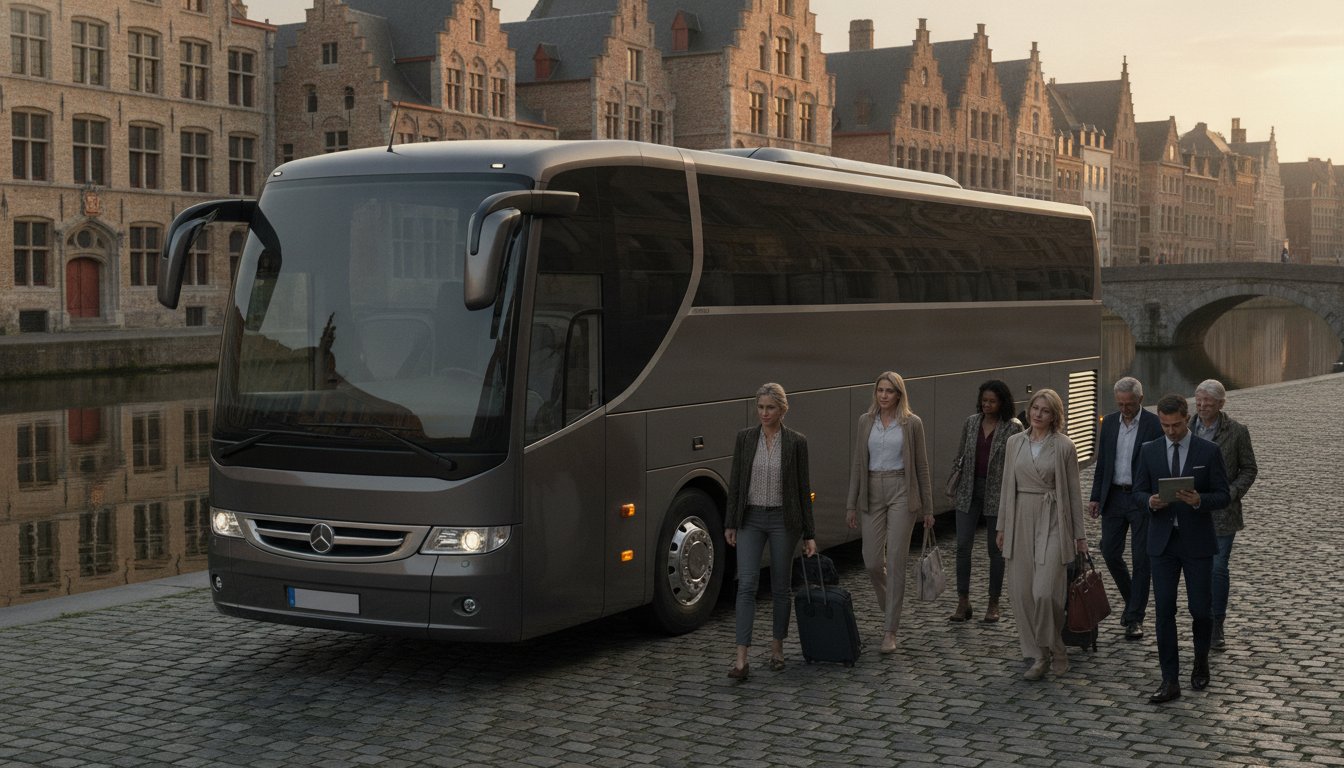
    Total quality control remains a rarity in the travel industry. It’s why we maintain our own fleet of modern buses. By managing our own coach hire, we eliminate the variables that often disrupt rural itineraries. We control the maintenance, the cleanliness, and the professional standards of our drivers. This internal infrastructure allows us to navigate narrow polders and coastal dikes with absolute confidence. Your guests remain enveloped in a climate-controlled, high-end environment from the moment they leave the hotel until they return from the field. Our comprehensive management extends from hotel bookings to the deployment of expert local guides, ensuring every touchpoint reflects a standard of uncompromising quality.

    A Visionary Approach to Group Travel

    We transform a simple tour into a structural masterpiece of storytelling. It’s about more than the destination. It’s about the emotional resonance of the journey itself. Our commitment to professional rigour and artistic elegance means every detail is considered. From the specific expertise of a local guide to the personalized itinerary design that reflects your brand’s unique identity, we refine every element. Having a single point of contact for Benelux-wide logistics simplifies the complex. It allows you to focus on the high-level needs of your clients while we manage the intricate technical execution behind the scenes.

    Partnering for Excellence

    We serve as a silent, powerful ally for tour operators and travel agents. Our goal is to empower you to deliver distinctive, high-end experiences that reflect your own brand’s excellence. Whether you require sophisticated hotel accommodation management or specialized gastronomy and beer experience tours, our team provides the foundation for your success. We invite you to request your custom, fixed-price group package for 2026. This transparency in pricing and precision in planning ensures your projects remain both profitable and prestigious. It’s time to transform the way your groups experience the Dutch landscape.

    Elevate your next group itinerary with BELUNE’s expert DMC services

    Choreographing the Future of Dutch Culinary Travel

    The Dutch landscape is a canvas where technical innovation meets heritage. We’ve explored how the intersection of polder history and modern circular agriculture creates a profound stage for professional groups. Success in 2026 depends on the seamless integration of these elements. It requires a perfect balance of artisanal soul and logistical rigour. By mastering the selection of group-friendly estates and managing the intricate transport needs of the countryside, you transform a simple visit into a structural masterpiece of storytelling. It’s about moving beyond passive observation to create a deep, sensory connection with the land.

    Executing farm-to-table tours netherlands for groups demands a partner who understands the weight of every detail. With over 20 years of industry experience and our own private fleet of modern coaches, we provide the stability and sophistication required for high-end travel. As a specialized DMC for the Benelux region and Paris, we ensure that your creative vision is supported by a foundation of technical excellence and local expertise. We don’t just manage logistics; we elevate the entire human experience.

    Partner with BELUNE for your next custom group tour and let’s redefine what’s possible in the heart of the Netherlands. The polders are waiting to tell their story through your unique lens.

    Frequently Asked Questions

    Can farm-to-table tours in the Netherlands accommodate large groups of 40 or more?

    Yes, several heritage estates and modern horticultural centers are specifically designed to host large parties. While many smaller family farms are limited in space, we partner with locations that feature restored barns or expansive glass pavilions capable of accommodating 50 or more guests. These sites provide the necessary infrastructure for private dining and workshops without compromising the artisanal atmosphere. We meticulously vet every location for coach accessibility and professional service standards.

    What is the best time of year to organize a group agricultural tour in the Netherlands?

    The optimal window for agricultural exploration is between April and October. Spring offers the visual spectacle of horticultural innovation and tulip cultivation, while the summer and early autumn represent the peak of the harvest season. High-tech greenhouse visits remain a compelling option year-round due to the country’s climate-controlled precision. Planning for 2026 should consider these seasonal shifts to align with specific produce and landscape aesthetics.

    Do Dutch farm tours include technical information for professional or educational groups?

    Professional tours prioritize technical depth alongside sensory experience. Many Dutch agricultural operations sit at the cutting edge of circular economy practices and precision agriculture. We coordinate interactions with experts who can detail the science of sustainable dairy production or high-tech greenhouse management. This technical rigour makes farm-to-table tours netherlands for groups particularly valuable for corporate parties interested in innovation and corporate social responsibility.

    How do you handle transport for groups visiting remote rural farms?

    We utilize our own fleet of modern coaches to manage all rural logistics with absolute precision. Navigating narrow dikes and polder roads requires specialized vehicles and experienced drivers who understand the local geography. By controlling the transport infrastructure internally, we ensure that the transition from urban centers to remote estates is seamless. This internal management eliminates the friction often associated with rural group travel and guarantees total quality control.

    Are there luxury accommodation options available near the main agricultural regions?

    Luxury options exist within easy reach of the primary agricultural hubs. While the farms themselves offer rustic authenticity, we source four and five-star hotels in nearby historic towns or restored manor houses. This strategic approach allows groups to experience the rugged beauty of the North Sea coast or the Groene Hart during the day. Guests then return to sophisticated comfort and professional service in the evening.

    Can farm-to-table tours be combined with visits to other Benelux countries?

    These experiences are designed to integrate seamlessly into a broader Benelux itinerary. Our expertise as a specialized DMC allows us to link Dutch agricultural innovation with Belgian gastronomy or the cultural landscapes of Paris. A single point of contact manages the transition between countries. This ensures that the narrative of craftsmanship and quality remains consistent across the entire journey through Western Europe.

    What languages are available for local guides on these specialized tours?

    Our local guides are multi-lingual and possess specialized sector knowledge. We provide experts fluent in English, French, Dutch, and other major languages depending on your group’s specific requirements. These guides don’t just translate words; they bridge the gap between technical agricultural science and engaging storytelling. This ensures that every guest leaves with a deep, sophisticated understanding of the Dutch landscape and its culinary heritage.

    Is it possible to include private workshops, such as cheese-making, for the whole group?

    Private workshops are a cornerstone of our curated group programs. We arrange exclusive sessions where the entire group can engage in heritage crafts like cheese-making or seaweed harvesting under the guidance of master artisans. These activities are held in private spaces to maintain an intimate, high-end atmosphere. It’s a tactile way to connect with the artistry of food production while fostering genuine and productive group dynamics.

  • Benelux Foodie Tour Packages: Designing Masterful Culinary Journeys for Groups in 2026

    Benelux Foodie Tour Packages: Designing Masterful Culinary Journeys for Groups in 2026

    Can a single itinerary truly capture the soul of three distinct nations while navigating the most complex regulatory shift in a decade? For travel professionals, the challenge of 2026 isn’t just about sourcing the finest Michelin-starred dining or authentic Trappist breweries. It’s about maintaining elegance in the face of Amsterdam’s 33.5% total hotel tax and the strict new digital traceability requirements for food businesses. We know you’re looking for a structural narrative that flows effortlessly across borders. By focusing on high-end, logistical-seamless benelux foodie tour packages, we help you transform fragmented local suppliers into a cohesive, masterful culinary journey.

    You’ll discover how to curate exclusive gastronomic experiences while managing the technical realities of private coach hire and the latest EU mobility package regulations. We provide a clear vision for securing reliable group accommodation and designing multi-day itineraries that resonate with the discerning palate of a modern traveler. This guide offers the strategic insight needed to turn logistical complexities into a signature experience of excellence and ease.

    Key Takeaways

    • Master the shift from generic sightseeing to deep-dive gastronomic immersion, blending cultural heritage with sophisticated sensory education for 2026 groups.
    • Discover how to design high-end benelux foodie tour packages that integrate artisanal workshops and brewery visits into a perfectly balanced travel rhythm.
    • Understand the strategic value of bespoke itinerary planning and professional service fee structures when tailoring journeys for specific corporate or senior demographics.
    • Learn why an in-house modern coach fleet and dedicated hotel management are the structural foundations of a seamless multi-country culinary experience.
    • Leverage the expertise of a visionary DMC ally to transform complex logistical requirements into a fluid, artistic narrative of European excellence.

    The Evolution of Benelux Foodie Tour Packages for Professional Groups

    Culinary travel has moved past the era of surface-level tasting. In 2026, the landscape of European travel demands a structural narrative that blends heritage with sophisticated sensory education. Modern benelux foodie tour packages are no longer just about the meal; they’re about the provenance of the ingredient and the technical mastery of the producer. This shift reflects a deeper desire for immersion. Groups now seek to understand the digital traceability of their farm-to-fork experiences, a requirement mandated by new EU regulations as of January 1, 2026. For travel partners, this means moving beyond generic sightseeing toward a curated, high-end gastronomic journey.

    To better understand the unique spirit of this region, watch this helpful video:

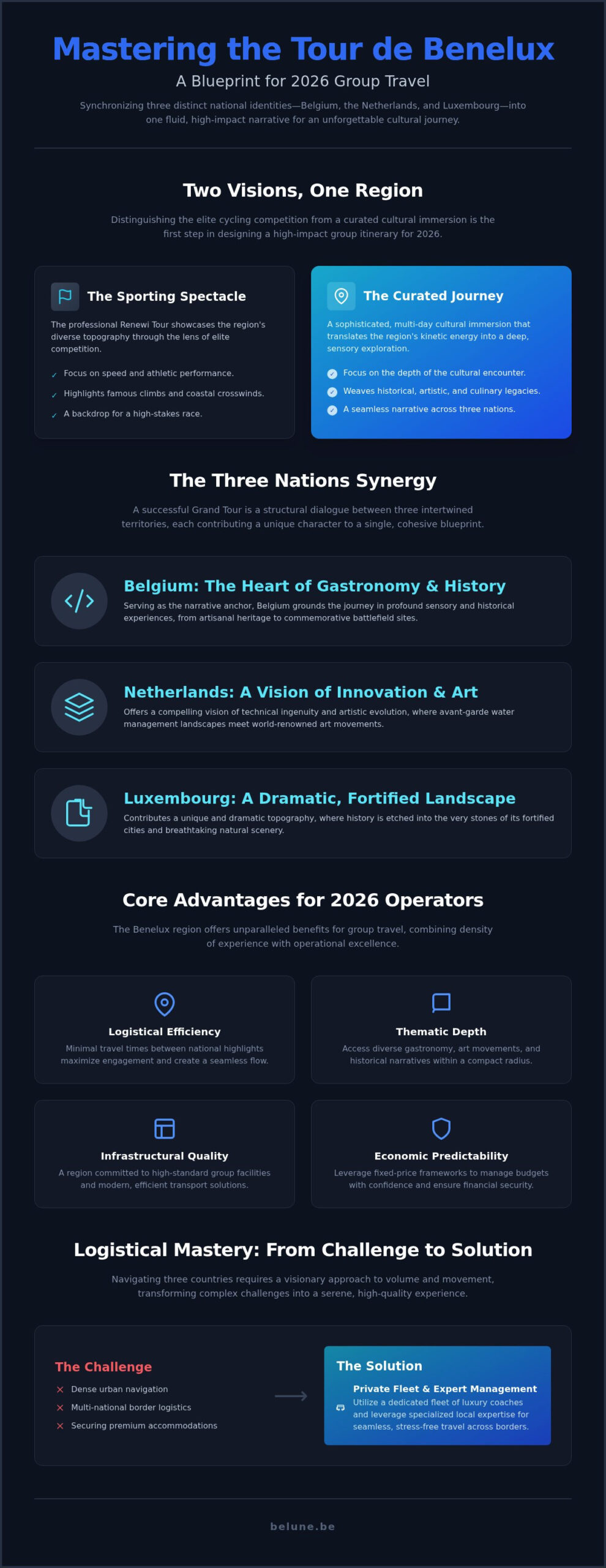
    The Benelux region functions as a unique culinary tripod. Belgium offers the soul of the experience, where Belgian culinary traditions provide a foundation of artisanal excellence. The Netherlands contributes a vision of avant-garde sustainability, while Luxembourg adds a layer of refined, high-altitude terroir. Within this framework, Belgium gastronomy tours act as the essential anchor. They provide the historical weight and sensory richness that discerning groups expect from Western European food travel.

    Why Benelux is the Premier Choice for Foodie Groups

    Diversity defines the Benelux experience. Within a single week, a group can transition from the quiet, meditative atmosphere of a Trappist abbey to the vibrant energy of a Dutch food-tech hub. The geographic proximity of these three nations allows for fluid multi-country itineraries without the exhaustion of long-haul travel. This region is where art and history intersect with the plate. In 2026, the rise of experiential dining formats, such as luxury food tours and exclusive workshop access, has made the Benelux a primary destination for those who value quality over quantity.

    The B2B Advantage in Culinary Tour Design

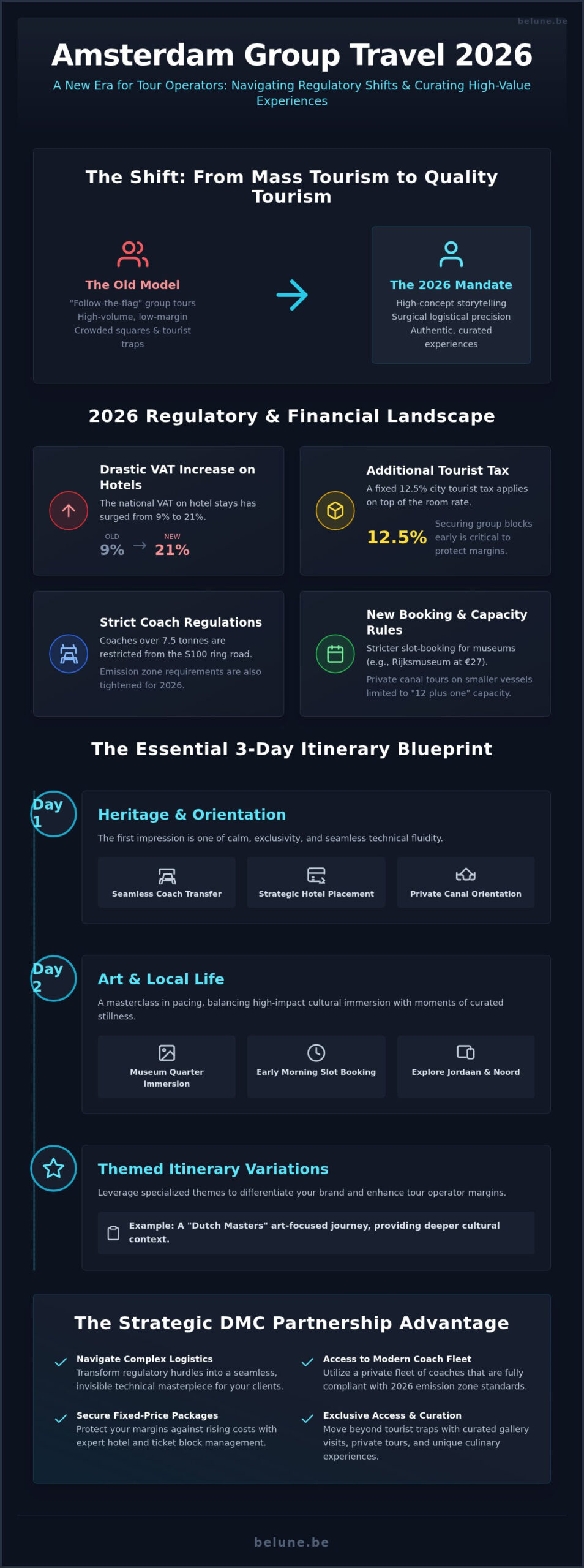
    Professional tour operators face significant logistical hurdles in 2026. The increase in the Netherlands’ VAT on short-stay accommodation from 9% to 21%, combined with Amsterdam’s 12.5% tourist tax, has made margin protection a priority. Partnering with a specialized DMC allows agents to access “closed-door” experiences that aren’t available to the general public. We focus on moving beyond the standard “tourist menu” to provide authentic, high-end group dining. By utilizing fixed-price benelux foodie tour packages, partners can ensure their service standards remain high while protecting their financial interests in an increasingly complex regulatory environment.

    Anatomy of a High-End Benelux Gastronomic Itinerary

    Crafting a masterpiece requires more than just a list of restaurants. It demands a structural understanding of how flavor interacts with history. High-end benelux foodie tour packages succeed when they treat every stop as a chapter in a larger story. We integrate cultural landmarks not as distractions, but as the vital context for the meal. A visit to a Gothic cathedral in Ghent gains new meaning when followed by a masterclass in medieval brewing techniques. This rhythmic balance prevents sensory fatigue and keeps professional groups engaged throughout a multi-day journey.

    The global Culinary Tourism Market is increasingly driven by a demand for these authentic, narrative-driven experiences. To meet this expectation, we rely on multi-lingual local guide services. These experts don’t just translate; they narrate the deep-seated culinary history of the region. By incorporating themed group travel benelux into our itineraries, we offer a unique selling proposition that elevates a standard trip into a strategic asset for your portfolio.

    Belgium: The Heart of Beer and Chocolate Heritage

    Belgium is the spiritual core of our gastronomic design. Trappist brewery tours offer a rare glimpse into monastic discipline, but they require precise logistical planning to accommodate large groups within the quiet confines of an abbey. We manage these sensitivities with professional grace. Similarly, our interactive chocolate workshops move beyond simple tasting. We focus on the technical craft of tempering and molding, allowing guests to experience the joy of creation. For the evening, we source group-friendly fine dining venues that offer both historic character and the capacity to maintain high service standards.

    The Netherlands and Luxembourg: Beyond the Expected

    The journey continues with the salt-air markets of the North and the terraced slopes of the South. Managing the logistics of Dutch cheese markets, like those in Alkmaar or Gouda, requires early morning precision to secure the best vantage points for groups. In Luxembourg, we pivot to the white wine heritage of the Moselle Valley. This viticulture experience offers a refined contrast to the hop-heavy traditions of Belgium. We also integrate modern Dutch farm-to-table concepts, which appeal strongly to eco-conscious groups looking for innovation alongside tradition. If you’re ready to design an itinerary that transcends the ordinary, our team can help you explore bespoke group solutions tailored to your clients’ exact needs.

    Benelux Foodie Tour Packages: Designing Masterful Culinary Journeys for Groups in 2026

    Customisation vs. Template Tours: Choosing the Right Framework

    The choice between a rigid template and a bespoke framework is where the true artistry of travel design begins. While marketplace platforms offer hundreds of pre-set options, they often lack the technical flexibility required for professional group demographics. Senior groups might prioritize a slower rhythm with accessible, high-end seating. Corporate clients often demand high-energy, networking-focused culinary workshops. A masterful approach to benelux foodie tour packages involves a professional service fee structure. This ensures that every minute of the itinerary is curated with precision rather than pulled from a generic database.

    Creating a competitive edge means balancing iconic landmarks with the whispered secrets of the local terroir. Your clients want to see the Grand Place, but they’ll remember the private tasting in a 17th-century cellar that isn’t open to the public. By leveraging a benelux incoming tour operator, you secure exclusive group allotments at these high-demand sites. This strategic partnership transforms a simple trip into a structural narrative of European excellence. When you offer benelux foodie tour packages that are truly bespoke, you position yourself as a visionary advisor rather than a mere vendor.

    The Logistics of Customization

    Managing dietary requirements at scale is a technical challenge that defines the quality of a tour. With the 2026 EU digital traceability requirements, ensuring every meal meets strict safety and preference standards is paramount. We don’t just check for allergies. We curate menus that maintain the integrity of the gastronomic experience for every guest. Timing and flow are equally vital. A group should never feel rushed between a delicate chocolate tempering session and a visit to a historic site. Local guidance ensures these regional nuances are respected and celebrated.

    Ensuring Scalability for Tour Operators

    White-labeling is a core requirement for many travel agencies. Our fixed-price models allow you to integrate these experiences into your brand portfolio with complete confidence. Whether you’re moving a boutique group of 15 or a large-scale delegation of 50+, the service quality remains consistent. Having on-the-ground support means that logistical variables, such as the new 2026 tachograph rules for van transport, are managed behind the scenes. You focus on the client relationship; we handle the structural execution of the journey.

    The Logistics of Excellence: Coaches, Hotels, and On-the-Ground Support

    Excellence is the silent partner of every great meal. For benelux foodie tour packages, the logistics of movement and rest are just as critical as the menu itself. Technical precision ensures that a group arrives at a delicate chocolate workshop or a bustling morning market exactly when the artisans are at their peak. This “just-in-time” methodology requires a deep understanding of local traffic patterns and the latest regulatory shifts. As of July 1, 2026, the EU’s Mobility Package mandates second-generation smart tachographs for international transport, making professional fleet management a structural necessity rather than a luxury. A modern coach fleet serves as a mobile sanctuary, ensuring group comfort and structural reliability during multi-stop culinary tours.

    Private Coach Transport: The Mobile Hub

    Navigating the narrow, historic arteries of European city centers requires more than just a GPS. It demands experienced drivers who understand the nuances of Ghent’s cobblestones or Amsterdam’s canal-side restrictions. Our private fleet allows us to maintain the highest hygiene and service standards, providing a consistent environment for guests as they move between gastronomic chapters. Luggage management becomes a seamless background process during multi-city hops. By strictly adhering to the 2026 driving and rest time regulations, which limit daily driving to nine hours, we ensure that every journey is as safe as it is sophisticated. This technical rigour allows the group to focus entirely on the sensory experience.

    Strategic Hotel Management for Culinary Groups

    Rest is the canvas upon which the next day’s flavors are painted. We source group-friendly hotels that reflect the culinary theme, prioritizing those with superior breakfast offerings and proximity to vibrant dining districts. Managing rooming lists and group check-ins is handled with technical precision to maximize “table time” for your clients. In an era where Amsterdam’s combined hotel tax and VAT reaches 33.5% as of January 2026, our role as a DMC is vital for negotiating competitive group rates during high-demand seasons. We focus on the structural details of your stay so the narrative of the tour remains uninterrupted. You can secure your logistical foundation through our professional group management services.

    Partnering with BELUNE: Your Strategic DMC Ally in Benelux

    Reliability is the foundation upon which artistic travel is built. With over 20 years of experience orchestrating group travel across the Benelux region and Paris, we’ve developed a vision that transcends simple logistics. We don’t just provide services; we offer a structural partnership designed to elevate your brand. Our unique advantage is rooted in the ownership of our in-house coach fleet and a dedicated team of local guides. This vertical integration ensures that every one of our benelux foodie tour packages is executed with a level of sophisticated, minimalist elegance that reflects our deep-seated commitment to quality. As a premier group travel agency, we act as the visionary creator behind your most successful itineraries.

    We understand that professional partners need more than a supplier. You need a conseiller de confiance who can navigate the technical rigours of 2026 while stimulating the imagination of your clients. Our team treats every project as a unique intervention; the emotion of the creative process is balanced by a flawless technical execution. This approach allows us to transform a standard itinerary into a high-end gastronomic journey that resonates on a human level. By choosing to work with us, you aren’t just booking a tour. You’re investing in a strategic asset that prioritizes excellence, innovation, and the aesthetic of the travel experience.

    The BELUNE Approach to Gastronomy

    Our philosophy transforms the traditional culinary tour into a profound structural experience. We focus on the intersection of artistic vision and technical precision. This means we don’t just find a restaurant; we find a venue where the volume of the space and the quality of the light enhance the flavors on the plate. Our commitment to continuous innovation drives us to source new culinary partners who offer more than just food. We look for artisans who provide a narrative of provenance and craft. This dedication to the artisanal and the exclusive ensures that our benelux foodie tour packages remain at the forefront of the industry, offering your groups a journey they can’t find anywhere else.

    Start Your Professional Collaboration

    Requesting a custom proposal for your 2026 group series is the first step toward a masterful collaboration. We’ve designed a transparent process that moves smoothly from the initial conceptual phase to the final on-the-ground execution. Our team listens to your specific needs, ensuring that every itinerary reflects the unique identity of your brand. We invite you to join a network of professional travel partners who value reliability as much as they value beauty. Let’s work together to create something exceptional that redefines the standard for culinary group travel in Europe.

    Shaping the Future of Culinary Excellence

    Designing a masterful journey requires more than just a list of destinations. It’s about weaving a structural narrative that connects the heritage of a Trappist brewery to the technical precision of a modern hotel stay. We’ve explored how the 2026 regulatory landscape demands a more sophisticated approach to itinerary design. By prioritizing authentic immersion and logistical excellence, you can offer experiences that resonate on a deeply human level. Our specialized gastronomy and beer experience tours are designed to do exactly that, turning every meal into a chapter of a larger story.

    The success of your upcoming series depends on a partner who understands both the artistic vision and the technical rigour needed for multi-country travel. With over 20 years of DMC expertise and an in-house modern coach fleet, we ensure that every detail of your benelux foodie tour packages is executed with flawless grace. This is how you transform a simple trip into a signature asset for your portfolio. We invite you to request your custom 2026 Benelux group tour itinerary from BELUNE today. Let’s create a culinary legacy that inspires your clients and sets a new standard for the industry.

    Frequently Asked Questions

    What is typically included in a Benelux foodie tour package for groups?

    A comprehensive package serves as a structural narrative that integrates hotel accommodation management, private coach hire, and local guide services. We include curated culinary experiences such as Trappist brewery visits, artisanal chocolate workshops, and fine dining in historic venues. These benelux foodie tour packages are designed to provide a fluid, high-end journey where every logistical detail supports the gastronomic theme.

    How does a DMC handle dietary restrictions for large culinary groups?

    We manage dietary requirements with technical precision, ensuring every meal meets strict safety and preference standards without sacrificing the artistic integrity of the menu. Using digital traceability, we coordinate with our culinary partners to provide a seamless experience for all guests. This professional approach ensures that the gastronomic narrative remains inclusive and sophisticated for every participant in the group.

    Can Benelux foodie tours be combined with other themes like battlefield tourism?

    Yes, we specialize in multi-theme itineraries that blend gastronomy with Art and Culture or Battlefield Tourism. This creates a balanced rhythm for the group. A morning of historical reflection at a heritage site is followed by a sophisticated culinary experience that highlights regional flavors. This intersection of history and food provides a deeper, more emotional connection to the cultural fabric of the region.

    What is the ideal group size for a culinary-focused itinerary in Belgium?

    The ideal size typically ranges from 15 to 25 guests to ensure access to exclusive, closed-door artisanal sites and intimate tasting rooms. However, our logistical expertise allows us to scale up to 50 participants while maintaining high service standards. We utilize our modern coach fleet to ensure comfortable movement and technical reliability, regardless of the specific group volume or demographic.

    How far in advance should a tour operator book a custom Benelux gastronomic tour?

    We recommend starting the planning process at least 6 to 9 months in advance for 2026 series. This timeline is essential for securing premium hotel allotments and private coach transport in a high-demand environment. Early booking also allows us to navigate the complexities of rising tourist taxes and new EU regulations, ensuring your service margins and quality standards remain protected.

    Do Benelux foodie packages include transport between the Netherlands, Belgium, and Luxembourg?

    Professional benelux foodie tour packages include all international and local transport via our own fleet of modern coaches. This ensures a fluid journey across borders, managed by drivers who understand the latest 2026 EU mobility regulations. We handle the technical rigour of route planning and driving rest times so your group can focus entirely on the sensory experience of the journey.

    Are the culinary workshops and brewery visits guided by local experts?

    Every experience is narrated by multi-lingual local guide services who offer deep technical and historical insights. These experts act as the bridge between the artisan and the guest, transforming a simple tasting into an educational discovery. Their presence ensures that the group understands the provenance and craftsmanship behind every flavor, adding a layer of sophisticated depth to the itinerary.

    What makes 2026 a significant year for culinary travel in the Benelux region?

    2026 marks a pivotal shift due to new EU digital traceability requirements and significant tax increases in major hubs like Amsterdam. These changes demand the expertise of a visionary DMC to maintain high-end standards and logistical ease. We embrace these technical challenges as opportunities to refine our service, offering professional partners a secure and innovative framework for their most ambitious culinary projects.

  • Belgian Food Market Tours for Groups: The Professional DMC Guide 2026

    Belgian Food Market Tours for Groups: The Professional DMC Guide 2026

    The most authentic Belgian food market isn’t just a destination; it’s a logistical masterpiece that begins long before the first oyster is shucked. Organizing belgian food market tours for groups often feels like a delicate dance between artisanal charm and operational complexity. You’ve likely faced the challenge of maneuvering a coach through narrow medieval streets or trying to secure a synchronized, high-end tasting for forty people during the peak Saturday rush. It’s a high-stakes environment where the difference between a crowded walk and an exclusive culinary event lies in the precision of the planning.

    This guide provides the framework you need to orchestrate seamless, gastronomic experiences that resonate with the modern professional traveler. We’ll navigate the 2026 landscape, including the impact of the 12% VAT rate on hospitality services and the rising demand for sustainable sourcing. You’ll learn how to balance technical rigor with sensory poetry, ensuring your groups enjoy the soul of Belgium without the friction of the crowd. From coordinating multi-lingual experts to managing fleet logistics in historic centers, we’re sharing the expertise required to turn a simple market visit into an unforgettable piece of travel art.

    Key Takeaways

    • Understand how the intersection of tradition and artisanal mastery creates a sophisticated backdrop for high-end group engagement and authentic interaction.
    • Gain insights into navigating seasonal variations and regional specialties to curate a truly authentic gastronomic timeline for your guests.
    • Master the technical logistics of belgian food market tours for groups, from managing private coach fleets to optimizing access in pedestrianized zones.
    • Learn to balance structured professional tastings with organic exploration to provide a seamless, premium experience that respects group dynamics.

    Why Belgian Food Markets are the Ultimate Group Experience

    Belgian food markets serve as the living pulse of the nation’s towns and cities. They aren’t merely points of transaction; they are social theaters where tradition meets modern artisanal skill. For professional travel planners, belgian food market tours for groups offer a rare opportunity to witness the unfiltered daily life of the locals. It’s a space where the clinking of glasses at a market stall is as common as the weighing of fresh produce. This environment provides a sophisticated backdrop for professional groups seeking something more substantial than a standard tourist itinerary.

    Gastronomy in Belgium transcends the plate. It’s an exploration of the “terroir”, the unique combination of soil, climate, and heritage that defines the flavors of a region. A Belgian food market tour is a curated sensory journey through the nation’s culinary heritage.

    To better understand the vibrant atmosphere of these culinary hubs, watch this helpful video:

    The Cultural Significance of the “Marché”

    The history of Belgian trade is etched into the cobblestones of its market squares. These gathering places have evolved into the social fabric of the country, reflecting a lifestyle that prioritizes quality over speed. Today, this tradition aligns with a robust farm-to-table movement. By engaging with an overview of Belgian cuisine, one realizes that the “Marché” is where sustainability becomes a tangible experience rather than a marketing buzzword. Producers often share stories of heritage grains or heritage-breed livestock, offering a depth of context that enriches the group’s journey. It’s this human connection that transforms a simple tasting into a meaningful cultural exchange.

    Diversity of Offerings for Group Palates

    Belgium’s geographic position has allowed it to absorb and refine the culinary influences of its neighbors. You’ll find world-class cheeses that rival French varieties and cured meats with a distinctively Germanic precision. This diversity is precisely why belgian food market tours for groups are so effective. While an individual traveler might feel overwhelmed by the sheer variety, a professionally managed group tour provides curated access. We facilitate direct conversations with the artisans, often securing specialized tastings or demonstrations that aren’t available to the general public. It’s this exclusive layer of service that ensures every participant finds something that resonates with their specific palate while discovering the innovation driving today’s Belgian food scene.

    The Belgian market landscape is a shifting canvas. Every month offers a different culinary signature. While many guides focus solely on city centers, true belgian food market tours for groups embrace the regional nuances that define the nation’s soul. From the coastal seafood markets of Flanders to the game-rich stalls in the Ardennes, the variety is staggering. Successful planning requires distinguishing between the functional daily morning markets, where locals source essentials, and the weekly specialized fairs that celebrate specific harvests. For a professional group, the challenge lies in identifying locations that maintain their authentic charm while providing the physical space necessary for a large party to move without disrupting the local rhythm.

    Spring and Summer: Freshness and Festivals

    Spring marks the arrival of the “white gold.” This celebrated Belgian asparagus dominates stalls from April to June. It’s an ephemeral window that makes for an exclusive group experience. As temperatures rise, outdoor food festivals become the focal point. These events often allow for a more relaxed choreography of movement compared to tight city markets. Managing group comfort during these warmer months is essential. We prioritize hydration and shade, often integrating visits to nearby cool, historic cellars to balance the outdoor intensity. You can explore more about these seasonal transitions through the official documentation on Flanders culinary treats.

    Autumn and Winter: Traditional Comforts

    Autumn brings a shift toward earthy intensity. The harvest of apples, pears, and the iconic Belgian endive creates a rich palette for group tastings. This is also the season for game, where markets in the southern regions showcase wild boar and venison. As winter approaches, the atmosphere turns toward traditional comforts. Artisanal warm treats, such as fresh gauffres and spiced speculoos, provide a sensory counterpoint to the crisp air. For winter belgian food market tours for groups, we always maintain a contingency plan. Indoor alternatives or heated tasting pavilions ensure the experience remains sophisticated regardless of the weather. We also account for the 2026 VAT adjustments, where the 12% rate for catering services influences our selection of high-end tasting partners. If you’re looking to design an itinerary that respects these delicate seasonal shifts, our team can help you curate a bespoke professional journey that captures the best of the Belgian calendar.

    Belgian Food Market Tours for Groups: The Professional DMC Guide 2026

    The Logistics of Group Gastronomy: From Private Coaches to Expert Guides

    Executing belgian food market tours for groups requires more than a map and an appetite. It demands a logistical framework that protects the group’s time and the market’s integrity. While individual travelers might rely on public transit, professional groups of twenty or more require a dedicated infrastructure. Coordinating drop-off points near pedestrianized market zones is a technical science. Most historic Belgian market squares, like those in Antwerp or Ghent, strictly limit vehicle access. This requires precise timing and a deep understanding of local traffic regulations to ensure guests arrive at the peak of the artisanal display without the fatigue of long-distance walking.

    Managing the flow of a large group within a crowded market space is equally critical. It’s a delicate balance. We ensure that the group moves as a cohesive unit without overwhelming the very local artisanal stalls they’ve come to admire. This involves pre-arranged tasting windows and a synchronized approach that respects the pace of the market’s daily operations. Technical rigor meets sensory appreciation.

    Modern Coach Fleet Management

    The foundation of a successful tour is the transition between destinations. Utilizing BELUNE’s own fleet of modern coaches ensures that the journey is as refined as the destination. These vehicles provide the necessary climate control and ergonomic seating for recovery between market stops. A critical, often overlooked detail is storage. High-end food tours inevitably lead to purchases; our coaches offer dedicated, secure space for artisanal finds, from delicate chocolates to regional cheeses. The driver plays a pivotal role here, managing EU-regulated driving hours and staying in constant communication with the guide to adjust for real-time traffic or market conditions.

    Expert Guidance and Language Support

    A professional guide serves as the bridge between the international traveler and the local producer. In the bustling environment of a Belgian market, language can be a barrier to understanding the nuances of production. Our multi-lingual experts don’t just translate; they curate. They identify the stalls with the highest quality sourcing and manage the group flow to prevent bottlenecks. By staggering tasting times and selecting vendors accustomed to professional groups, the guide preserves the authentic atmosphere of the market while delivering a high-end, educational experience. This level of local knowledge is what transforms a simple walk into a deep dive into culinary history.

    Planning the Perfect Itinerary: Timing, Sourcing, and Group Dynamics

    The architecture of a professional itinerary is as much about the space between events as the events themselves. When orchestrating belgian food market tours for groups, we look beyond the list of vendors to the rhythm of the day. A successful tour respects the group’s internal clock. It balances the high-energy environment of a bustling square with the necessary downtime for individual reflection. This level of planning ensures that the experience feels like a curated journey rather than a forced march. We meticulously bridge the gap between artisanal chaos and seamless travel, providing a structure that allows for both discovery and comfort.

    Dietary inclusivity is a cornerstone of modern group travel. In 2026, the demand for transparent sourcing and plant-based options has reached a new peak in the Belgian foodservice sector. We work closely with market artisans who have adapted to these shifts, ensuring that vegan and gluten-free participants enjoy the same level of artisanal quality as their peers. This proactive management prevents the friction of last-minute adjustments and maintains the sophisticated tone of the event. Every tasting is a deliberate choice, selected to represent the best of the region while respecting the diverse needs of a modern professional group.

    The Morning Market Strategy

    Arriving before the general public is a technical necessity for large groups. Between 7:30 and 9:00 AM, the market exists in its purest form. This is the window where producers are most available for the authentic interactions that define our tours. We use this time to coordinate exclusive brunch experiences, where groups can taste the day’s freshest arrivals before the crowds thicken. This strategy is essential for maintaining the group’s energy curve. By the time the peak Saturday rush hits, our guests are often transitioning to the next phase of their journey, perhaps moving on to one of our culture group tours in Benelux. This seamless transition is only possible through rigorous logistical foresight and a deep understanding of local market cycles.

    Customizing for Special Interests

    A one-size-fits-all approach is the antithesis of professional DMC service. We tailor each market circuit to reflect the specific interests of the group, whether they are focused on the technicalities of fermentation or the artistry of chocolate tempering. These visits often serve as the first chapter in our more extensive Belgium gastronomy tours. We also navigate the latest regulatory landscape, including the 2026 VAT updates that apply a 12% rate to restaurant and catering services. This financial precision allows us to provide clear, reliable budgeting for our partners. For groups that include participants under 16, we strictly adhere to the 2026 Belgian Food Advertising Code, ensuring all guided content and tasting materials promote a healthy, balanced perspective on culinary heritage.

    To begin designing your tailored itinerary, contact our expert planning team today.

    Elevating the Gastronomic Experience with BELUNE’s Professional Management

    High-end travel is defined by the absence of friction. For twenty years, our team has refined the art of Benelux group logistics, transforming the unpredictable nature of a local market into a controlled, artistic event. While others might offer a list of disparate activities, we provide a cohesive vision that balances technical mastery with sensory appreciation. This expertise is vital when managing belgian food market tours for groups, where the complexity of local regulations and the 2026 VAT increases—now 12% for restaurant and catering services—require a partner with deep sector knowledge and financial precision.

    Our commitment to tour operators and travel agents is absolute. We act as a strategic ally, providing a single point of contact for hotel accommodation management, private coach hire from our own fleet, and local guide services. This vertical integration eliminates the risks associated with third-party fragmentation. We don’t just supply services; we design environments where professional groups can thrive. By handling the structural logistics, we allow the culinary heritage of Belgium to take center stage, ensuring every tasting is an echo of the nation’s artisanal soul.

    A Visionary Approach to Culinary Travel

    We treat gastronomy as a structural component of the travel experience rather than a simple itinerary addition. Our approach is defined by a minimalist elegance that prioritizes the quality of the intervention over commercial noise. Every detail is chosen with precision, from the selection of vendors to the specific expertise of our culinary historians. This clarity of purpose allows the group to focus on the sensory poetry of the market while we manage the technical rigor in the background. We believe that a well-orchestrated tour should feel effortless, reflecting a high-end expertise that inspires confidence in our professional partners.

    Seamless Integration of Services

    The true value of a professional DMC lies in the ability to weave disparate elements into a singular, compelling narrative. Our market visits are often the highlight of our broader themed group travel in Benelux, where we link culinary discovery with art, culture, and history. We offer fixed-price group packages to ensure transparent planning and budgetary certainty. This transparency is essential in a year where hospitality costs are shifting and Belgian rail usage has reached a 2.1% share among tourists.

    We invite you to request a custom itinerary that reflects the unique identity of your brand. Whether your group requires high-end hotel management or a specialized circuit of artisanal producers, our team provides the mastery required to execute at the highest level. We transform the simple act of visiting a market into an exceptional realization of Belgian heritage, tailored to the exacting standards of the professional travel industry.

    Orchestrating the Future of Belgian Culinary Travel

    The 2026 landscape of Belgian gastronomy demands a fusion of technical precision and sensory storytelling. Success hinges on more than just selecting a market; it requires a strategic mastery of logistics, from navigating the 12% VAT hospitality rates to managing the delicate energy curves of a professional group. By prioritizing early access and artisanal authenticity, you ensure your guests experience the true terroir of Belgium without the friction of the crowd. belgian food market tours for groups are no longer just an itinerary addition; they’re an essential component of a sophisticated travel narrative.

    We invite you to partner with BELUNE for your next custom Belgian group itinerary. With over 20 years of DMC experience, our team provides the visionary guidance and rigorous execution your partners expect. From our in-house fleet of modern coaches to our expert multi-lingual local guides, we manage every structural detail so you can focus on the inspiration. Let’s collaborate to transform a simple market visit into an exceptional realization of Belgian culture. Your next masterpiece awaits.

    Frequently Asked Questions

    How large can a group be for a Belgian food market tour?

    We successfully manage groups ranging from 15 to over 50 participants by utilizing a staggered entry system and multiple specialized guides. For larger parties, we divide the group into smaller cohorts of 12 to 15 people. This strategy ensures an intimate experience with local artisans and prevents the group from overwhelming the narrow market aisles or disrupting the local social fabric.

    Do Belgian food markets operate year-round for group visits?

    Yes, Belgian food markets are active throughout the year, though the sensory experience changes with the seasons. While spring markets highlight the arrival of “white gold” asparagus, winter markets transition into festive hubs featuring artisanal warm treats and seasonal game. We select specific markets based on the monthly calendar to ensure your group always encounters the most vibrant and authentic regional produce available.

    Can dietary restrictions like vegan or gluten-free be accommodated in a market setting?

    We accommodate vegan, gluten-free, and other dietary requirements by pre-selecting vendors who prioritize ingredient transparency and sustainability. The 2026 Belgian foodservice market has seen a projected growth in health-conscious and organic offerings. Our guides coordinate with artisans in advance to ensure that every participant enjoys a curated tasting experience that matches the high quality provided to the rest of the group.

    What is the best time of day to take a group to a Belgian food market?

    The optimal window for belgian food market tours for groups is between 8:30 AM and 10:30 AM. Arriving during these early hours allows your guests to witness the peak of the artisanal display before the heavy midday crowds arrive. This timing also facilitates easier coach access near pedestrianized zones and provides the best opportunity for meaningful interaction with local producers.

    Is private transport necessary for group food tours in Belgium?

    Private transport is essential for maintaining professional logistics and group comfort. Navigating Belgium’s historic centers with a large party via public transit often leads to significant delays and physical fatigue. Our own fleet of modern coaches provides secure, climate-controlled storage for any culinary purchases made during the tour and ensures precise drop-offs near market squares that are otherwise difficult to reach.

    How do we handle payments for tastings at individual market stalls for a group?

    We manage all vendor payments and tasting fees centrally to ensure a seamless, cash-free experience for the participants. Our fixed-price packages already account for the 2026 VAT rate of 12% on restaurant and catering services. This centralized approach eliminates the friction of individual transactions at stalls, allowing the group to focus entirely on the gastronomic and cultural narrative provided by the guide.

    Are these tours suitable for corporate team-building events?

    Belgian food market tours for groups provide a sophisticated and engaging backdrop for corporate team-building. These experiences foster natural social interaction in a relaxed environment. We can tailor the itinerary to include interactive workshops with local chocolatiers or cheese masters, creating a shared creative experience that strengthens professional bonds while exploring the deep culinary heritage of the Benelux region.

    What happens if it rains during a scheduled market tour?

    We maintain robust contingency plans for inclement weather by integrating covered market pavilions or nearby indoor tasting venues into the itinerary. Many historic Belgian market squares are situated next to high-end covered galleries or artisanal boutiques that offer excellent shelter. Our guides are experts at adjusting the tour’s rhythm in real-time, ensuring that guest comfort and the quality of the tastings remain uncompromised.

  • The Art of the Dutch Cheese Market Group Experience: A 2026 Professional Guide

    The Art of the Dutch Cheese Market Group Experience: A 2026 Professional Guide

    A Dutch cheese market is not a spectacle to be watched; it’s a medieval ritual that requires precise logistical artistry to master. For the discerning travel professional, the challenge isn’t merely finding the market. It’s ensuring a dutch cheese market group experience remains sophisticated and entirely stress-free amidst the vibrant morning crowds. You’ve likely felt the logistical anxiety of navigating a 50-seater coach through historic centers or the pressure to find authentic depth in a location that often feels increasingly commercial.

    Precision. Heritage. Flow. We believe that a group visit should feel like a private unveiling of culture, not a crowded transit stop. This 2026 guide promises to provide the technical blueprint you need to transform these traditional markets into high-end, seamless events. We’ll examine specific coach logistics at Molenbuurt and Klein Amerika, detail the 2026 schedules for Alkmaar and Gouda, and explore how to integrate exclusive cultural insights that turn a simple itinerary into a masterpiece of Benelux storytelling.

    Key Takeaways

    • Understand the technical heritage of the Kaasdragersgilde to offer clients a narrative that transcends simple sightseeing.
    • Select the perfect venue for your itinerary by balancing Alkmaar’s grand theatricality with Gouda’s deep culinary craft.
    • Master the precise choreography of timing and coach parking to ensure a flawless dutch cheese market group experience.
    • Enhance the sensory journey with curated add-ons, from private tastings in historic venues to refined craft beer pairings.
    • Discover how a specialized DMC transforms logistical complexity into a sophisticated and effortless travel experience.

    The Enduring Allure of the Dutch Cheese Market Group Experience in 2026

    To step into a Dutch square during a market morning is to witness a living museum of medieval commerce. It isn’t just a display; it’s a preserved ecosystem where history remains functional. For travel professionals, a curated visit to Dutch cheese markets offers a rare entry point into the world of the “Kaasdragersgilde,” or Cheese Carriers Guild. These guilds, with their distinctive straw hats and colored ribbons, represent a continuity of craftsmanship that dates back centuries. A well-orchestrated dutch cheese market group experience leverages this history to provide clients with a sense of belonging to an ancient narrative.

    The 2026 travel landscape favors “slow travel” values. Clients no longer want to just see; they want to understand the mechanics of heritage. This evolution makes the cheese market a cornerstone of themed group travel in Benelux. It’s about the technical beauty of the weigh-house and the social contract of the trade. We focus on the details that transform a simple excursion into a profound cultural encounter.

    To better understand the atmosphere and the technical flow of these events, watch this helpful video:

    The Ritual of Handjeklap: More Than a Handshake

    The rhythmic clapping you hear across the square is “Handjeklap.” It’s a 14th-century price-fixing tradition still honored today. Farmers and traders engage in this percussive negotiation, slapping hands until a final price is struck. It’s the heartbeat of the market. This isn’t a performance for the crowds; it’s a technical transaction with deep roots. For a group leader, explaining the nuances of these interactions transforms a chaotic square into a legible, fascinating theater of trade. It’s about the human connection behind the commerce.

    The Sensory Architecture of the Market Square

    The market is a sensory masterpiece. The deep tolling of the 10:00 AM bells marks the start of a highly choreographed event. There’s the scent of aged Gouda mixing with the crisp morning air. The sight of wooden barrows, known as “berries,” loaded with 160 kilograms of gold-colored wheels is striking. To capture the full theatricality, groups must arrive by 9:45 AM. This allows them to witness the square’s transformation from a quiet morning space into a bustling, vibrant arena of heritage. It’s about the flow. It’s about the precision of the moment. We ensure your guests have the best vantage point before the first wheel is weighed.

    Comparing Alkmaar, Gouda, and Edam for Professional Itineraries

    Selecting the ideal backdrop for a dutch cheese market group experience is the first technical decision in crafting a high-impact itinerary. While each market honors the same medieval roots, their architectural rhythms and logistical capacities differ significantly. An organizer must match the group’s energy to the town’s specific atmosphere. Whether your clients seek the grand theatricality of a large-scale event or the quiet charm of a boutique setting, the choice defines the entire day’s flow.

    Strategic selection often depends on the group’s prior stops. If your journey began with the high-energy atmosphere of Amsterdam, an intimate market might offer the perfect contrast. Conversely, for those arriving from quieter regions, the sheer scale of a major market provides a necessary crescendo. It’s about balance. It’s about the emotional arc of the tour. We help you navigate these nuances to ensure the destination resonates with your specific demographic.

    Alkmaar: The Scale of Grandeur

    Alkmaar is the undisputed grand stage of Dutch commerce. For the 2026 season, the market runs every Friday morning from March 27 to September 25. It’s the most theatrical option, making it ideal for high-impact first impressions. The square is a sea of yellow wheels, and the logistical infrastructure is robust. Coaches can efficiently drop off passengers at Molenbuurt, and the Official Alkmaar Cheese Market provides the consistent, high-energy spectacle that many international groups expect. If your clients want the classic Holland postcard experience, Alkmaar is the definitive choice.

    Gouda and Edam: The Bespoke Alternatives

    For a deeper focus on culinary craft, Gouda offers a sophisticated Thursday morning experience from April 2 to August 27, 2026. The focus here is on the historical weighing house, the Waag, and the town’s famous syrup waffles. It’s a sensory journey that fits perfectly into a gastronomy-themed tour. The coach drop-off at Klein Amerika is well-organized, allowing for a smooth transition into the city’s historic core.

    Edam provides the intimate, picturesque alternative. Running on Wednesday mornings from July 1 to August 19, 2026, it’s the best fit for smaller, high-end boutique groups. The canal-side charm and lower crowd density allow for a more contemplative visit. It feels less like a performance and more like a private invitation into the past. For organizers looking to avoid the peak Friday rush, Edam offers a serene but equally authentic narrative. To ensure these logistics translate into a flawless day for your guests, you can partner with a local expert to manage the finer details of the ground operation.

    The Art of the Dutch Cheese Market Group Experience: A 2026 Professional Guide

    Masterclass in Group Logistics: From Coach Access to VIP Viewing

    The success of a dutch cheese market group experience is measured in minutes. Arriving at 10:15 AM is often a logistical failure. By then, the prime viewing perimeters are already four rows deep. For a travel professional, the goal is to have guests positioned by 9:45 AM. This allows them to absorb the silence before the bells, the tension in the square, and the arrival of the first barrows. It’s the difference between watching a crowd and witnessing a ritual. We orchestrate this timing to ensure your clients feel like honored guests rather than part of the fray.

    Navigating a 12-meter coach through a medieval town is a delicate operation. Most generic travel advice suggests simply “driving to the center.” We know better. The streets of Alkmaar and Gouda were built for handcarts, not 50-seater modern fleets. Precision in the drop-off sequence is essential to avoid gridlock and maintain the group’s sense of luxury and calm. It requires a deep understanding of the local urban fabric.

    Coach Parking and Driver Management

    In 2026, Alkmaar continues to enforce strict drop-off protocols at Molenbuurt. After the drop-off, coaches must relocate to the Velodrome car park on Terborchlaan. For Gouda, the Klein Amerika lot remains the primary hub for arrivals. During peak periods in 2026, local regulations may require drivers to move to the Groenheuvel parking lot, located roughly 3 km from the center. Managing these transitions requires foresight. Our private fleet of coaches includes drivers trained specifically in the rhythms of traditional Dutch cheese markets. This ensures that while the driver observes mandatory rest periods, the group transitions seamlessly from the bus to the square without a moment of confusion or delay.

    The Role of the Multi-Lingual Local Guide

    A guide is more than a narrator; they are an interpreter of a silent, historical language. Without a professional to explain the social hierarchy of the cheese carriers, the different colored hats are just costumes. We utilize high-fidelity “whisper” audio systems to maintain the atmosphere. This technology allows the guide to explain the subtle cues of the Handjeklap negotiation without disturbing the tolling of the bells. It preserves the intimacy of the moment for the group while ensuring they don’t miss the technical details of the trade.

    Managing free time is the final piece of the logistical puzzle. We recommend a 45-minute window after the initial weighing. This gives guests the freedom to explore the stalls while maintaining a clear, pre-arranged muster point near the Waag. It balances personal autonomy with the security of a professionally managed tour, ensuring no guest feels lost in the crowd.

    Elevating the Gastronomy Narrative: Curated Add-ons and Pairings

    The visual theater of the square is only the first layer of a sophisticated journey. A truly elite dutch cheese market group experience requires a deliberate transition from the eyes to the palate. While casual tourists settle for small samples on the periphery, we orchestrate private, seated tastings in historical venues like the 17th-century Waag. These environments offer the acoustic and physical space necessary to appreciate the technical nuances of the dairy. It’s about moving beyond the spectacle to find the soul of the product.

    Sophistication lies in the pairing. We believe that Dutch heritage is best understood through its relationship with neighboring cultures. By introducing refined Belgian chocolates or local craft beers into the tasting sequence, we create a cross-border dialogue that resonates with high-end travelers. This isn’t just a meal; it’s a structural component of a broader Belgium gastronomy tour, bridging the gap between two world-class culinary traditions.

    The Art of the Cheese Tasting

    Precision in selection is paramount. We guide groups through the age profiles of Gouda and Edam, from the mild “Jong” to the crystalline intensity of “Overjarig” (aged over a year). The polder terroir isn’t a marketing concept; it’s a geological reality. The salinity of the North Sea air and the mineral-rich soil of the reclaimed land define the flavor profile of the milk. By explaining these technical details, we transform a simple snack into a masterclass in agricultural heritage. It creates a sensory bridge between the medieval ritual in the square and the actual labor of the Dutch polders.

    Synergistic Culinary Experiences

    Active participation deepens the connection. In Gouda, we often integrate a syrup waffle (Stroopwafel) workshop, where guests learn the delicate technique of slicing the hot dough. It’s a tactile experience that complements the observation of the market. For post-market relaxation, a private canal cruise with curated cheese and wine pairings allows the group to decompress while maintaining the high-end narrative. This dutch cheese market group experience can also extend to a “farm-to-table” visit. Taking the group to a local polder farm after the market spectacle allows them to see the modern technology behind the ancient tradition.

    Orchestrating these layers requires an ally who understands both the culinary and logistical demands of the region. To elevate your next project, you can curate your bespoke culinary itinerary with our expert team, ensuring every pairing and every venue meets the highest standards of professional excellence.

    Orchestrating Seamless Benelux Journeys with BELUNE

    Excellence is not an accident. It’s the result of technical mastery and artistic vision. When we talk about a dutch cheese market group experience, we aren’t just discussing a morning in a square. We’re discussing the orchestration of a complex, living system. BELUNE sublimates these logistical challenges into a refined travel experience where the guest never sees the gears turning. Our role is to act as the invisible hand that ensures every transition is as smooth as the aged Gouda your clients will taste.

    The advantage of working with a Benelux incoming tour operator lies in the depth of local assets. We don’t rely on third-party fragments. From our own fleet of modern coaches to our network of elite local guides, we maintain absolute control over the quality of the journey. This vertical integration allows us to manage everything from hotel accommodation to international train bookings with a level of precision that external agencies cannot match. We don’t just move people; we curate environments.

    Your Strategic Partner for Benelux Excellence

    With over 20 years of experience in the transport and tour operator industry, our approach is both sophisticated and deeply professional. We don’t just provide services; we provide a vision. Whether your 2026 itinerary focuses on the somber history of battlefield tourism or the vibrant mastery of a culinary tour, we transform the environment through creative planning. Our team listens. We collaborate. We ensure that your strategic goals are met with technical flawlessness. It’s a commitment to excellence that inspires confidence in our partners and wonder in their clients.

    Request Your Custom 2026 Itinerary

    The 2026 travel season demands more than just a checklist. It demands an accompaniment that is both artistic and technically sound. A flawless dutch cheese market group experience is just one component of the exceptional journeys we design. We invite tour operators to partner with a visionary DMC that understands the nuances of the Benelux region. From the first consultation to the final farewell, we’re your trusted ally in delivering excellence. Partner with BELUNE for your 2026 group travel needs and discover the art of seamless travel.

    Elevating Your 2026 Benelux Vision

    Mastering a dutch cheese market group experience requires a delicate balance of medieval tradition and modern logistical precision. We’ve explored how timing, coach access, and curated sensory pairings transform a simple visit into a high-end cultural event. It’s about the flow of the group and the depth of the narrative. From the first toll of the Alkmaar bells to the final tasting of an aged Gouda, every detail must be technically flawless and artistically inspired.

    With over 20 years of expertise, we specialize in supporting high-end tour operators with a private fleet of modern, eco-friendly coaches. We don’t just provide transport; we act as your strategic partner in the Benelux region. Our team is ready to help you sublimate logistical complexity into a refined travel masterpiece. The 2026 season offers a unique opportunity to return to authentic, slow-travel values through professional orchestration.

    Request your bespoke Benelux group itinerary for 2026 and let’s create a journey that resonates with sophistication and excellence.

    Essential Insights for Professional Itinerary Planning

    What are the official dates for the 2026 Dutch cheese markets?

    The 2026 season follows a traditional seasonal rhythm starting in late March. Alkmaar operates every Friday from March 27 to September 25, while Gouda takes place on Thursdays from April 2 to August 27. Edam offers a shorter summer window, running on Wednesdays from July 1 to August 19. Most markets begin at 10:00 AM and conclude by 1:00 PM.

    How early should a group coach arrive at the Alkmaar cheese market?

    Arrival at the Molenbuurt drop-off zone should be scheduled for no later than 9:45 AM. Arriving fifteen minutes before the opening bells allows your guests to secure a prime vantage point before the square reaches peak capacity. This cushion also accounts for the time needed for the coach to relocate to the Velodrome parking area, ensuring the driver remains within legal rest parameters.

    Is there dedicated coach parking near the Gouda cheese market square?

    Yes, coaches use the Klein Amerika parking lot for passenger drop-off and pick-up. For extended stays during the 2026 season, drivers are often directed to the Groenheuvel lot, which is roughly 3 km from the historic core. Our team manages these movements internally, so your guests experience a fluid transition from the vehicle to the weighing house without logistical delays.

    Can we arrange private cheese tastings for groups of more than 40 people?

    We specialize in orchestrating large-scale, high-end tastings in historical venues or private polder farms. Managing a dutch cheese market group experience for over 40 passengers requires a venue with both the physical volume and the acoustic quality for professional guidance. We curate these sessions to include aged varieties and specific pairings that reflect the region’s culinary mastery.

    What happens if it rains during a scheduled Dutch cheese market experience?

    The traditional rituals typically continue, as the cheese carriers use canvas covers to protect the product. For the comfort of your guests, we maintain a “Plan B” that includes indoor alternatives like the Gouda Cheese Experience or private museum tours. This ensures the narrative remains uninterrupted, regardless of the North Sea weather patterns.

    Are the cheese markets accessible for group members with limited mobility?

    Historic squares often feature uneven cobblestones, which present challenges for some guests. We navigate this by selecting specific, accessible vantage points and utilizing “whisper” audio systems. These headsets allow guests to hear the guide’s interpretation clearly from a comfortable distance, ensuring everyone enjoys an inclusive and sophisticated cultural encounter.

    How does a DMC like BELUNE add value to a standard cheese market visit?

    We transform a public spectacle into a private, professional event. By utilizing our own fleet of coaches and expert local guides, we eliminate the fragmentation often found in international tours. We handle the technical orchestration of timings, parking, and exclusive venue access, allowing you to focus on client satisfaction and the broader Benelux narrative.

    What other activities can be paired with an Edam cheese market tour?

    Edam offers a wealth of “slow travel” opportunities beyond the square. We recommend integrating a visit to “The Story of Edam Cheese” museum or a private canal cruise through the town’s picturesque waterways. These additions provide a deeper connection to the local heritage and create a balanced, multi-sensory itinerary for boutique groups.

  • The Ultimate Brussels Chocolate Workshop for Groups: A 2026 Masterclass Guide

    The Ultimate Brussels Chocolate Workshop for Groups: A 2026 Masterclass Guide

    What if your group’s encounter with Belgian excellence moved beyond the display window and into the heart of the atelier? For professional planners, the challenge isn’t finding a shop; it’s avoiding predictable tourist traps and securing a brussels chocolate workshop for groups that meets the standards of a true masterclass. You likely recognize that a generic tasting won’t suffice for a high-level corporate retreat or a sophisticated cultural journey. You seek a technical immersion that honors the craft’s 2025 induction into the Inventory of Intangible Cultural Heritage.

    We understand that logistics and quality are your primary concerns. This guide shows you how to curate a sensory centerpiece that blends technical education with the luxury of a seamless itinerary. You’ll discover how to navigate the bean-to-bar movement and integrate expert-led sessions into a perfectly timed schedule. From coordinating private coach transport to accessing Gault&Millau’s 2026 award-winning artisans, we provide the blueprint for an elevated culinary experience that transforms a simple visit into a profound professional milestone.

    Key Takeaways

    • Master the technical foundations of Belgian artistry, from achieving the perfect temper to crafting avant-garde ganache flavors.
    • Optimize your itinerary by selecting a brussels chocolate workshop for groups that fits the 90 to 120-minute logistical sweet spot.
    • Elevate the sensory experience by pairing artisanal creations with Belgium’s iconic beer heritage for a truly holistic gastronomy tour.
    • Ensure seamless movement and professional coordination through expert DMC management and a private fleet of modern coaches.
    • Scale large delegations with precision by implementing strategic sub-grouping techniques that maintain an intimate, high-end atmosphere.

    The Essence of a Brussels Chocolate Workshop for Groups in 2026

    Brussels is a city of layers. Its streets hold the weight of centuries, yet its ateliers pulse with modern innovation. For those organizing professional travel, a brussels chocolate workshop for groups in 2026 is no longer a simple tasting event. It’s an immersion into a technical discipline. We view these sessions as sensory architecture. The materials are as vital as the craftsmanship. By focusing on the intersection of art and science, a premium workshop serves as the sophisticated heart of a group’s Belgian journey.

    The 2026 landscape favors ‘slow chocolate.’ This movement prioritizes sustainable bean-to-bar ethics over mass production. Following the 2025 addition of Brussels’ chocolate know-how to the Inventory of Intangible Cultural Heritage, the demand for authentic immersion has peaked. A curated masterclass distinguishes itself by offering technical transparency. It moves beyond the predictable tourist demonstration by engaging directly with the science of the bean and the rigor of the tempering process.

    To better understand the artistry involved in these sessions, watch this helpful video exploration of the city’s chocolate culture:

    Artisanal Integrity vs. Commercial Demonstrations

    True mastery leaves no room for compromise. Professional groups prioritize private, closed-door sessions where the focus remains on artisanal integrity. This means identifying certified master chocolatiers, such as Jérôme Grimonpon, named the best in the city for 2026 by Gault&Millau. High-end workshops insist on 100% cocoa butter and single-origin beans. These ingredients aren’t just quality markers. They are the foundation of the technical challenge. When a group enters a private atelier, they aren’t spectators. They are collaborators in a process that demands precision. From the exact temperature of the marble to the percentage of cocoa solids, every detail matters.

    The Cultural Impact of Belgian Craftsmanship

    To understand the present, one must respect the lineage of the craft. The history and culture of Belgian chocolate is a narrative of constant refinement. Since Jean Neuhaus invented the praline in 1912, the city has refined its identity through sugar and cocoa. This dedication to quality reflects a broader Belgian ethos of excellence. The praline is a structural masterpiece of Belgian confectionery, marrying a crisp exterior with a soul of complex ganache or praliné. By participating in a masterclass, your group connects with a tradition that has defined the capital for over a century.

    Artistry and Technique: The Pillars of a Professional Masterclass

    Technical mastery defines the Belgian identity. A high-end brussels chocolate workshop for groups isn’t a passive demonstration; it’s a laboratory of precision. For professional learners, the value lies in the “why” behind the craft. It’s the difference between eating a sweet and understanding a structural masterpiece. The chocolatier acts as a visionary guide, translating complex chemical reactions into an intuitive, creative process. This technical depth ensures that corporate groups leave with more than just a box of treats. They leave with a profound respect for the rigor required to maintain Belgium’s global reputation.

    The Science of the Tempering Process

    Tempering is the soul of the atelier. It’s the process of heating and cooling chocolate to specific temperatures, typically around 31 to 32 degrees Celsius for dark varieties, to align the Beta V crystals in the cocoa butter. This alignment produces the characteristic “snap” and radiant gloss that distinguish artisanal work from commercial products. Adult learners often find this stage the most engaging. It requires focus and a steady hand. Whether using traditional marble slabs to agitate the mass or modern tempering machinery for high-viscosity batches, the goal remains the same: total control over the material. This stage of the masterclass serves as an excellent metaphor for professional discipline and attention to detail.

    From Pralines to Mendiants: A Diverse Repertoire

    The workshop repertoire balances traditional foundations with avant-garde exploration. Groups delve into the distinct techniques required for various forms:

    • Molded Pralines: Creating the perfect thin shell that gives way to a complex, liquid soul.
    • Hand-Dipped Truffles: A test of dexterity where texture and temperature must be perfectly synchronized.
    • Mendiants: These elegant discs represent a minimalist approach, where the quality of dark chocolate is elevated by the precise placement of dried fruits and nuts.

    Modern masterclasses also offer customization that speaks to the identity of the group. This includes branding chocolates with corporate logos or selecting specific color palettes for the ganache that reflect a brand’s aesthetic. The cooling process is the most critical stage of the workshop because it dictates the final structural integrity and aesthetic brilliance of every single creation. To ensure every technical detail of your masterclass aligns with a broader, high-end itinerary, we recommend consulting with a dedicated travel expert who understands the nuances of professional group movement.

    Artisans like Laurent Gerbaud have pioneered the use of spices and dried fruits to challenge the traditional palate. Your group’s journey through flavor will likely mirror this evolution, moving from familiar hazelnut pralinés to bold, contemporary combinations. This technical and sensory education ensures the experience remains memorable long after the last piece of chocolate has been enjoyed.

    The Ultimate Brussels Chocolate Workshop for Groups: A 2026 Masterclass Guide

    Excellence in execution requires more than artistic vision; it demands a rigorous approach to timing and movement. Organizing a brussels chocolate workshop for groups involves balancing the delicate requirements of the craft with the rigid constraints of a professional itinerary. We find that 90 to 120 minutes represents the ideal duration for a high-end experience. This window provides enough time for technical depth, such as the tempering and molding stages, without exhausting the group’s schedule. It also accounts for the essential cooling phase, ensuring participants don’t leave with unfinished or unstable products.

    Inclusivity is a structural component of modern planning. A successful masterclass must respect the diverse needs of a global delegation. Most premium ateliers in 2026 now offer sophisticated alternatives to accommodate vegan, nut-free, or halal requirements. Many bean-to-bar workshops are naturally gluten-free and plant-based, relying on the purity of the cocoa bean rather than additives. Addressing these dietary needs during the initial coordination phase ensures that every member of the group feels valued and fully engaged in the sensory experience. When these details are handled with professional foresight, the workshop becomes a fluid part of the day rather than a logistical hurdle.

    Seamless Transport and Arrival Coordination

    Brussels’ historic center presents unique challenges for large vehicles and group movement. We utilize our own fleet of modern coaches to manage arrivals with surgical precision. Selecting ateliers with designated coach drop-off points is essential to avoid city-center congestion. By timing workshops to avoid the morning and evening rush hours, we minimize transit stress. A local guide often bridges the gap between the hotel and the atelier, providing cultural context during the short journey and ensuring the group arrives composed and ready to engage.

    Scalability for Large-Scale Delegations

    Scaling a brussels chocolate workshop for groups of 50 or more participants requires a strategic division of space. We recommend utilizing multiple workstations where sub-groups rotate between different technical stages. This maintains an intimate, high-end atmosphere despite the total number of participants. A high ratio of master chocolatiers to participants is non-negotiable; it ensures every individual receives expert guidance. Finally, post-workshop logistics are handled with care. Delicate creations are professionally packaged and transported back to the hotel, allowing the group to continue their day unburdened by their handmade treasures.

    A Holistic Approach to Gastronomy Within a Benelux Itinerary

    A singular event rarely defines a journey. Instead, we view a brussels chocolate workshop for groups as a vital narrative thread within a sophisticated culinary tapestry. For a delegation to truly understand Belgian excellence, the workshop must transcend the atelier walls. It should connect the morning’s technical precision with the evening’s fine dining. This integration ensures that the experience feels like a cohesive exploration rather than a collection of disjointed activities. Gastronomy serves as a universal language for international groups, bridging cultural divides through shared sensory appreciation.

    The Art of the Pairing Session

    The evolution of the tasting experience has led to the rise of the pairing session. This goes beyond simple consumption. It’s an exercise in sensory contrast and harmony. In 2026, we see a significant trend toward pairing high-cocoa dark chocolates with bold Belgian abbey beers. The deep, malty notes of a Trappist ale provide a robust counterpoint to the acidic, fruity profile of single-origin beans. For morning sessions, we often coordinate coffee and chocolate pairings. This involves selecting local roasters whose beans complement the specific flavor profiles of the ganaches created in the workshop. Finding the right venue is paramount; the space must accommodate both the technical making and the reflective tasting.

    National Culinary Landmarks for Groups

    Beyond the workshop, the capital offers a landscape of historic boutiques and modern bean-to-bar factories. Integrating these visits into a broader Belgium gastronomy tour provides a comprehensive view of the industry. Groups can trace the evolution of the craft from the opulent boutiques of the Galeries Royales Saint-Hubert to the minimalist, industrial ateliers of the Marolles. This cultural depth is essential for culture group tours in Benelux, where the goal is to understand the regional landscape through its most iconic exports. We ensure the transition between these landmarks is fluid, utilizing private transport to maintain the group’s comfort and focus. If you’re ready to elevate your delegation’s experience, you can start planning your culinary itinerary with our expert team.

    Connecting the capital’s chocolate scene with the wider regional landscape, such as the hop fields of Flanders or the artisanal creameries of Wallonia, adds a layer of authenticity. It transforms a simple activity into a structural component of the group’s Belgian story. By treating gastronomy as a primary lens for cultural discovery, we create itineraries that resonate long after the final tasting is complete. The result is a journey that feels curated, intentional, and deeply rooted in the soil of the region.

    Why Partner with an Experienced DMC for Your Culinary Journey

    Orchestrating a sensory centerpiece requires more than a simple reservation. It demands a technical understanding of the city’s flow and its artisanal landscape. For professional planners, the value of a brussels chocolate workshop for groups is maximized when it’s part of a seamless, high-end strategy. We bring over 20 years of expertise to this mission, acting as your visionary advisor and strategic partner. Our role is to transform a standard itinerary into a cohesive narrative of Belgian excellence. We ensure that every element, from the choice of atelier to the timing of the arrival, reflects the prestige of your delegation.

    Peace of mind stems from total control over the environment. By leveraging our own private fleet of modern coaches, we eliminate the logistical anxiety of city-center movement. Your delegation arrives at the atelier composed, unburdened by the complexities of urban transit or the unpredictability of third-party services. On-the-ground support from our multilingual guides further ensures that communication remains fluid and precise. These professionals do more than translate; they interpret the cultural nuances of the craft, bridging the gap between the chocolatier’s technical passion and the group’s curiosity. This level of coordination is what distinguishes a professional masterclass from a common tourist activity.

    Curated Excellence and Personalization

    We believe in an elegance that’s felt rather than forced. Every masterclass is tailored to the specific energy and schedule of your group. We adjust the technical intensity of the session to ensure it resonates with your participants. Some delegations seek a rigorous scientific immersion, while others prefer a fluid, creative exploration of flavors. BELUNE provides a single point of contact for every structural element of the journey. From hotel accommodation management to the final tasting session, we apply a commitment to minimalist sophistication. This approach simplifies the professional planning process while magnifying the final emotional impact of the experience.

    Securing Your Group Experience for 2026

    The demand for authentic, high-end culinary experiences in Brussels is projected to reach new heights in 2026. Early coordination is essential to secure exclusive access to the city’s most prestigious ateliers. As a specialized Benelux incoming tour operator, we maintain deep-rooted relationships with master makers, ensuring your group receives priority in the most sought-after venues. We manage the intricate logistics of multi-city culinary tours, allowing you to focus on the human and emotional impact of the journey. When you’re ready to move beyond the ordinary, partner with BELUNE to design your bespoke group itinerary and experience the true artistry of Belgian hospitality.

    Elevating Your Delegation’s Sensory Narrative

    Crafting a memorable group experience in Brussels requires a balance of artisanal depth and logistical foresight. We’ve explored how a technical masterclass serves as a structural component of a broader culinary journey, moving beyond simple demonstrations to engage with the science of the bean. Mastering the tempering process and understanding the cultural weight of the praline ensures your group leaves with a profound respect for Belgian heritage. This isn’t just about tasting; it’s about participating in a legacy of excellence.

    Securing a premium brussels chocolate workshop for groups is the first step toward a flawlessly executed itinerary. With over 20 years of expertise in Benelux travel management, we provide the strategic coordination necessary for success. Our private fleet of modern, luxury coaches and expert multilingual local guides ensure that every movement is as refined as the chocolates your group will create. We handle the technical details so you can focus on the human and emotional impact of your journey.

    Ready to transform your vision into a structural reality? Request Your Custom Benelux Group Tour Itinerary and let us orchestrate an exceptional journey for your delegation. We look forward to welcoming you to the heart of Belgian artistry and ensuring your visit is truly unforgettable.

    Essential Insights for Group Coordination

    What is the typical duration for a group chocolate workshop?

    A premium masterclass typically lasts between 90 and 120 minutes. This timeframe is the structural sweet spot for a professional itinerary. It provides sufficient time for the technical stages of tempering and molding without exhausting the group’s schedule. Shorter sessions often overlook the science of the craft, while longer ones can disrupt the flow of a multi-activity day.

    Can these workshops accommodate groups larger than 40 people?

    We specialize in scaling the brussels chocolate workshop for groups of 40 or more by utilizing multiple workstations. By dividing large delegations into smaller, focused sub-groups, we maintain an intimate and high-end atmosphere. This strategic approach ensures that the ratio of master chocolatiers to participants remains high, allowing for personalized guidance and technical precision for every individual.

    Are the workshops available in multiple languages for international groups?

    Masterclasses are available in English, French, and Dutch as standard, with additional languages coordinated upon request. Clear communication is a structural pillar of our service. We utilize expert multilingual guides to bridge any linguistic gaps, ensuring that the technical nuances of the atelier are accessible to every member of your international delegation. This ensures a seamless and inclusive educational experience.

    Is it possible to customize the chocolates with a corporate logo?

    Customization is a sophisticated way to align the workshop with your brand’s identity. We can coordinate the use of specialized molds or transfer sheets to brand chocolates with corporate logos or specific themed colors. This level of personalization transforms the creative session into a bespoke professional event, reflecting a dedication to excellence and attention to detail that resonates with participants.

    Are there options for participants with nut allergies or vegan diets?

    Ateliers in 2026 are increasingly equipped to handle diverse dietary requirements, including vegan, nut-free, and halal diets. Many artisanal bean-to-bar workshops are naturally plant-based, focusing on the purity of the cocoa bean rather than additives. We manage these specific needs during the planning phase to ensure that the sensory journey is safe, inclusive, and equally rewarding for every participant.

    Does the workshop include the transport to and from the venue?

    We integrate professional transport into our curated packages through our own fleet of modern, luxury coaches. Our coordination includes precise drop-offs and pick-ups at designated points to avoid city-center congestion. This logistical support provides a stress-free transition from your hotel to the atelier, allowing your group to remain composed and focused on the artistic experience ahead.

    What is the best time of day to schedule a workshop for a corporate group?

    Late morning or mid-afternoon represents the ideal timing for a brussels chocolate workshop for groups. These windows avoid the complexities of the morning and evening rush hours, ensuring a fluid arrival and departure. Scheduling during these periods also allows the workshop to serve as a sophisticated prelude to a lunch engagement or a refined transition into an evening of fine dining.

    Do participants get to take their chocolate creations home?

    Participants always take their handmade creations home as a tangible reminder of their technical journey. We provide high-end, professional packaging designed to protect the structural integrity and aesthetic brilliance of the pralines and mendiants. These elegant boxes ensure that the delicate work survives the journey back to the hotel, serving as a lasting connection to the artistry of the Belgian capital.

  • A Belgian Beer Tour Itinerary for Groups: A 2026 Masterclass in Curated Travel

    A Belgian Beer Tour Itinerary for Groups: A 2026 Masterclass in Curated Travel

    In 2026, Belgium celebrates the tenth anniversary of UNESCO recognizing its beer culture as an Intangible Cultural Heritage. This milestone transforms a standard tasting trip into a profound cultural pilgrimage. You likely recognize that designing a premier belgian beer tour itinerary for groups requires more than a list of famous breweries. The real complexity lies in securing private access to silent Trappist cloisters and coordinating flawless coach transport for twenty guests through the winding roads of the Ardennes.

    A premier belgian beer tour itinerary for groups is more than a sequence of tastings. It’s a structural masterpiece that respects the rhythm of the traveler and the sanctity of the heritage. We’ve explored how the balance between spontaneous urban fermentation and the silent precision of Trappist abbeys creates a narrative of depth. This journey requires a technical foundation where slow travel isn’t just a concept; it’s a realized experience through curated “Golden Ratio” scheduling and exclusive venue access. This dedication to authentic storytelling is what sets professional culinary journeys apart, whether you are exploring the abbeys of the Ardennes or joining The Ultimate Budapest Food Tour to discover the flavors of Hungary.

    It’s a delicate dance between ancient heritage and modern technical excellence. We’ve crafted this masterclass to show you exactly how to bridge that gap. You’ll discover a professionally choreographed itinerary that balances sacred monastic traditions with contemporary zythology and high-end logistics. We’ll preview how reliable local partnerships in fleet management and hotel coordination can turn a complex logistical puzzle into a seamless, premium experience that inspires and delights every traveler.

    Key Takeaways

    • Master the “Golden Ratio” of group travel by limiting visits to two breweries per day, ensuring a deep and unhurried appreciation of Belgium’s UNESCO-protected heritage.
    • Navigate the sophisticated transition from the spontaneous fermentation of urban gueuzeries to the silent, sacred brewing traditions found in rural Trappist abbeys.
    • Discover why a successful belgian beer tour itinerary for groups relies on a dedicated coach fleet to access remote monastic sites often restricted to standard transport.
    • Learn how specialized hotel accommodation management provides the necessary infrastructure to meet the rigorous standards of professional group travel.
    • Understand the strategic advantage of partnering with a specialized incoming tour operator to unlock exclusive venue access and private tastings for your guests.

    The Architectural Framework of a Group Belgian Beer Journey

    Designing a premier belgian beer tour itinerary for groups is an exercise in structural balance. It isn’t just about the liquid in the glass; it’s about the space between the sips. We believe in the “Golden Ratio” of curated travel, which dictates a maximum of two brewery visits per day. This restraint ensures that “slow travel” becomes a technical requirement for sensory appreciation rather than just a buzzword. By 2026, the industry has shifted toward “educational zythology,” where professional groups seek the deep narrative of Beer in Belgium as a living, UNESCO-protected heritage. This approach justifies a premium price point by offering depth over volume.

    This narrative-driven framework allows for a seamless blend of technical brewing insight and architectural discovery. We don’t simply visit a site. We analyze its volume, its history, and its soul. A morning spent in a medieval Flemish cellar is balanced by an afternoon admiring the gothic lines of a monastic abbey. It’s a choreographed transition that respects the physical and mental energy of the group, ensuring that every tasting remains an event rather than a routine.

    The Three Pillars: Urban, Monastic, and Farmhouse

    A sophisticated belgian beer tour itinerary for groups must rest on three distinct stylistic pillars to remain engaging. Urban centers like Brussels and Antwerp offer a laboratory for innovation and the complex world of Lambic culture. Monastic sites represent the sacred heart of the industry. Here, the restricted world of Trappist abbeys provides a masterclass in silence and precision. Finally, the Farmhouse traditions of the Walloon Ardennes introduce a rugged, artisanal honesty. These three environments create a dynamic contrast that keeps the group’s imagination stimulated throughout the week.

    Designing for Group Dynamics and Flow

    Managing the rhythm of twenty or more travelers requires surgical precision. The transition from a vibrant city center to a remote rural valley shouldn’t feel like a chore. It should feel like a change in movement. We prioritize these elements to maintain group engagement:

    • Logistical Mastery: Utilizing a private coach fleet to reach remote abbeys that are inaccessible to standard transport.
    • Gastronomic Elevation: Curating dining experiences where the local gastronomy is built around the beer profile, highlighting the artisanal quality of the ingredients.
    • Cultural Respiration: Integrating non-beer stops, such as visits to contemporary art galleries or historical sites, to refresh the group’s perspective and prevent sensory fatigue.

    This structural rigor ensures that the journey remains inspiring. By treating the itinerary as a project of exception, we transform a simple trip into a lasting professional memory.

    Phase One: Urban Heritage and the Art of Spontaneous Fermentation

    Brussels serves as the initiation point for any world-class belgian beer tour itinerary for groups. It is here that the journey transitions from simple travel into a study of biological heritage. The first forty-eight hours focus on the Senne Valley and the Pajottenland, the only regions globally where the specific wild yeasts allow for true spontaneous fermentation. This isn’t merely a brewing method; it’s a living artifact of the UNESCO recognition of Belgian beer culture. For a professional group, this phase offers a technical allure that justifies the premium nature of the tour.

    We believe the urban phase should be a masterclass in contrasts. You’ll move from the industrial, steam-filled rooms of century-old gueuzeries to the refined atmosphere of high-end culinary establishments. Integrating Belgium gastronomy tours into these first few days ensures the group understands how beer functions as a structural component of the national palate. It’s about more than the drink; it’s about the marriage of flavor and history.

    Brussels and the Pajottenland

    The technical heart of this phase lies in exclusive group access. We arrange private tastings at institutions like Cantillon or 3 Fonteinen, where the complexity of Lambic and Gueuze is explained by those who guard the tradition. Reaching the rural Pajottenland with a group of twenty or more requires a dedicated coach fleet. This avoids the logistical friction of public transport and allows for intimate visits to farmhouse blenders that remain hidden from the average tourist. It’s a seamless transition from the urban bustle to the rolling green silence of the valley.

    Flemish Splendour: Bruges and Ghent

    Day three shifts the focus toward the medieval mastery of Flanders. In Bruges, the “city brewery” concept is best exemplified at De Halve Maan, where a modern pipeline carries beer beneath ancient cobblestones. This blend of innovation and heritage is essential for maintaining group engagement. We often pair the sharp acidity of Flemish Red ales with local artisanal chocolates during a canal-side zythology session. Managing large groups in these historic, narrow-street centers requires surgical precision. We utilize local guide services to ensure the flow remains fluid and the experience remains personal. If you’re looking to elevate your next project, our team can help you curate a bespoke experience that balances these complex urban dynamics.

    A Belgian Beer Tour Itinerary for Groups: A 2026 Masterclass in Curated Travel

    Phase Two: The Trappist Trail and Walloon Farmhouse Traditions

    Days four and five of a premier belgian beer tour itinerary for groups mark a profound shift in atmosphere. Leaving the medieval urbanity of Flanders behind, the journey descends into the rugged soul of Wallonia and the Ardennes. This phase is defined by a transition from spontaneous fermentation to the disciplined, sacred world of the Trappist monks and the rustic honesty of farmhouse brewing. It’s a region where geography dictates flavor, and where the technical evolution of “provision beers” provides a masterclass in artisanal resilience.

    To maintain a cohesive narrative across these diverse regions, we utilize the framework of themed group travel benelux. This ensures the transition between the silent cloisters and the wild Ardennes forest feels like a deliberate movement in a larger story. It isn’t just a change in location; it’s a change in the technical and spiritual approach to brewing.

    The Sacred Silence of the Abbeys

    Navigating the Trappist trail requires a refined understanding of monastic etiquette and logistical foresight. While the breweries themselves are often restricted to the public, the surrounding estates offer a sensory experience that is unparalleled. We prioritize securing group-friendly dining at locations like the Auberge d’Poteaupré near Chimay. This allows twenty or more guests to sample the full range of Trappist ales alongside local cheeses in a setting designed for professional groups. The architectural majesty of Orval provides a stunning backdrop, where the ruins of the old abbey serve as a reminder of the historical depth behind every bottle. Professional guidance is essential here to manage group dynamics while respecting the inherent silence and dignity of these monastic sites.

    The Ardennes and Farmhouse Innovation

    The journey continues into the heart of the Ardennes, where the Saison style reigns supreme. These farmhouse ales were originally brewed as seasonal provisions for farmworkers, and their technical profile is deeply tied to the regional water chemistry. Visiting artisanal producers like Fantôme or seeing the influence of Brasserie de la Senne allows groups to appreciate the sensory impact of these specific water profiles. The rugged landscape demands professional coach hire with a dedicated fleet. Our drivers are experts at navigating the winding, scenic routes through the Walloon countryside, ensuring that the transition between remote breweries remains fluid. This logistical precision allows the group to focus entirely on the technical beauty of the liquid and the evocative power of the landscape.

    A successful belgian beer tour itinerary for groups is built on an invisible foundation of logistical mastery. While the focus remains on the liquid and the history, the technical execution of movement determines the group’s comfort. Coordinating twenty or more travelers across the rural stretches of Flanders and Wallonia requires a shift from standard travel to a choreographed logistical operation. It’s about ensuring the transition between a medieval cellar and a remote forest brewery feels like a natural extension of the journey rather than a hurdle.

    Precision in the “Last Mile” is where professional expertise becomes visible. This involves the delicate process of moving a large group from the coach door to the brewery entrance, often through restricted monastic grounds or narrow cobblestone streets. Multi-lingual local guides play a structural role here. They don’t just navigate; they provide technical zythology translations that bridge the gap between a brewer’s specialized jargon and the group’s understanding. This level of detail ensures that no nuance of the production process is lost in translation.

    The BELUNE Coach Advantage

    Private transport isn’t a luxury in this context; it’s a technical requirement. Reaching the silent Trappist abbeys or artisanal farmhouse producers in the Ardennes is impossible via public rail for a group of twenty. We utilize a modern coach fleet to provide the only viable solution for rural access. Our drivers are experts in route optimization and strict adherence to European driving hours, ensuring a fluid experience. On-board amenities are carefully selected to elevate the “Slow Travel” philosophy, allowing guests to reflect on their tastings in a sophisticated, climate-controlled environment. To ensure your next project benefits from this level of logistical rigor, you can partner with our specialized transport team for seamless execution.

    Professional Hotel Management

    Sourcing the right base for a group requires a deep understanding of professional travel standards. We prioritize hotels with the specific capacity for simultaneous group check-ins to avoid arrival friction. The selection process focuses on a balance between high-end infrastructure and proximity to evening cultural hubs. This allows guests the freedom to explore local gastronomy independently after the day’s technical program. Managing luggage logistics between regional transfers is handled with surgical precision, ensuring that the group’s belongings arrive at the next destination before they do. This comprehensive approach to hotel accommodation management removes the burden of coordination from the organizer, allowing the focus to remain on the beer culture itself.

    Elevating Group Travel with BELUNE’s Expertise

    For over twenty years, we’ve refined the craft of the belgian beer tour itinerary for groups. It’s a discipline that requires more than just a list of destinations; it demands a visionary approach to how people move through a landscape. As a specialized Benelux DMC, we position ourselves as a strategic ally rather than a mere supplier. We understand that a premier group journey is a project of exception. It’s an intervention that transforms a standard holiday into a legacy experience, justifying a premium investment through technical precision and artistic curation.

    Our status as a benelux incoming tour operator provides a structural advantage that general agencies cannot replicate. This status opens doors to restricted monastic cloisters and private tasting rooms that remain closed to the public. These relationships, built over two decades of professional collaboration, allow us to secure the exclusive access that defines high-end travel. We provide fixed-price group packages that ensure complete transparency. This reliability is essential for our professional partners who require a seamless, predictable framework for their clients.

    The Value of Local Guidance

    The soul of our intervention lies in our network of experts. We don’t just hire guides; we collaborate with zythologists and cultural historians who understand the technical depth of Belgian brewing. They provide the narrative thread that connects the liquid in the glass to the architecture of the abbey. We call this “silent precision.” It’s the art of on-the-ground management where every detail is handled with a quiet, flawless rigor. We bridge the gap between international agents and local producers, ensuring that the group’s experience remains authentic, sophisticated, and deeply human.

    Request Your 2026 Custom Itinerary

    Designing a bespoke gastronomy and beer experience is a collaborative process. We listen to your specific requirements to build a journey that reflects your group’s unique identity. Whether you’re navigating the complex multi-day logistics of a cross-border Benelux tour or seeking a deep dive into a single region, our team provides the technical infrastructure to make it happen. We manage every component, from the initial flight and train bookings to the final evening of fine dining. We invite you to partner with BELUNE for your next culture group tour in Benelux. Let’s transform your 2026 travel vision into a structural reality that inspires and delights every participant.

    Crafting Your 2026 Legacy Journey

    A premier belgian beer tour itinerary for groups is more than a sequence of tastings. It’s a structural masterpiece that respects the rhythm of the traveler and the sanctity of the heritage. We’ve explored how the balance between spontaneous urban fermentation and the silent precision of Trappist abbeys creates a narrative of depth. This journey requires a technical foundation where slow travel isn’t just a concept; it’s a realized experience through curated “Golden Ratio” scheduling and exclusive venue access.

    Executing such a complex vision demands a partner who understands the nuances of B2B group logistics. With over 20 years of DMC experience and our own private fleet of modern coaches, we ensure that every transition is fluid and every detail is handled with silent rigor. We don’t just provide transport or rooms. We provide the expertise that transforms a project into a lasting professional memory. The 2026 anniversary of UNESCO’s recognition is the perfect moment to elevate your travel offerings.

    Partner with BELUNE for your bespoke 2026 group itinerary. We look forward to realizing your vision with the excellence it deserves.

    Frequently Asked Questions

    How many people constitute a group for a Belgian beer tour?

    A professional group typically consists of 14 to 20 travelers or more. While smaller gatherings are possible, a belgian beer tour itinerary for groups is often most cost-effective when reaching the 20-person threshold. This size allows for the seamless use of a full-sized executive coach and specialized group dining arrangements that cater to professional standards.

    Is it possible for groups to visit Trappist breweries that are closed to the public?

    Most Trappist production areas remain strictly closed to the public to preserve monastic silence and prayer. However, we arrange sophisticated tasting experiences at official visitor centers or nearby abbey cafes like In De Vrede. These locations often offer exclusive access to limited-release ales in a refined setting that respects the monks’ tradition and technical precision.

    What is the best time of year to plan a group beer tour in Belgium?

    April and September are the premier windows for a curated journey. April hosts the Zythos Beer Festival in Leuven, while September features the Belgian Beer Weekend at the Grand-Place in Brussels. In 2026, the tenth anniversary of the UNESCO recognition of Belgian beer culture will make these periods particularly vibrant for groups seeking cultural depth.

    How do you handle non-beer drinkers in a professional group itinerary?

    We design itineraries with a multi-layered approach to ensure every guest remains engaged. Non-beer drinkers appreciate the architectural tours of medieval cities, high-end gastronomy sessions, and artisanal chocolate workshops. The focus remains on the broader cultural heritage and aesthetic beauty of the Benelux region rather than just the technical aspects of brewing.

    What are the transport requirements for a 7-day multi-region tour?

    A 7-day multi-region tour requires a dedicated private coach fleet to bridge the gap between urban centers and rural abbeys. Public transport can’t accommodate the specific timing and remote locations of a professional belgian beer tour itinerary for groups. Fleet management ensures driver hours are optimized for a fluid, unhurried experience across the Ardennes and Flanders.

    Can BELUNE provide fixed-price packages for tour operators?

    We provide transparent, fixed-price land-only packages specifically designed for international tour operators and agents. These packages cover all ground logistics, including hotel accommodation management, coach hire, and specialized guide services. This structure allows our B2B partners to market the tour with total financial confidence and professional reliability.

    What is the role of a DMC in managing brewery bookings?

    As a specialized DMC, our role is to act as a strategic ally in the Benelux region. We manage the complex administrative burden of brewery bookings and secure private venues that are often inaccessible to general travel agencies. We bridge the gap between local producers and international partners through expert coordination and a deep understanding of regional etiquette.

    How do you incorporate Belgian chocolate and gastronomy into the tour?

    Gastronomy is a structural component of every itinerary we curate. We integrate chocolate pairings, particularly with Flemish Red ales, and organize dining experiences that highlight regional specialties like Carbonnade Flamande. This approach transforms a simple tasting into a comprehensive study of Belgian artisanal excellence and culinary innovation.

  • Planning a Respectful Battlefield Pilgrimage: A Masterclass in Remembrance for 2026

    Planning a Respectful Battlefield Pilgrimage: A Masterclass in Remembrance for 2026

    A truly respectful pilgrimage is an exercise in invisible logistics where flawless coordination allows the emotional weight of history to take center stage. You know that organizing a group journey to the hallowed grounds of the Benelux region is a delicate task. It’s about more than just booking tickets. It’s about ensuring every detail, especially choosing accommodation for battlefield tour groups, maintains the solemnity of the experience. With the global war tourism market projected to grow to over $927 million by 2035, the demand for these profound journeys is rising, yet the fear of trivializing sensitive sites remains a real challenge for professional planners.

    Discover how to balance logistical precision with emotional resonance to create a journey that honors the past. This guide provides a framework for respectful itinerary design and high-quality logistics that reflect the gravity of the trip. We’ll examine how expert-led experiences and seamless planning can satisfy discerning clients while keeping the focus on remembrance. By the end, you’ll have the tools to design a 2026 pilgrimage that is as operationally sound as it is deeply moving.

    Key Takeaways

    • Distinguish between standard historical tourism and a true pilgrimage to honor the profound act of collective remembrance.
    • Integrate formal ceremonies into a fluid itinerary while protecting the quiet intervals necessary for deep personal reflection.
    • Link the hallowed grounds of Flanders and the Ardennes through a curated “Remembrance Trail” that connects cemeteries, museums, and trenches.
    • Refine your selection process when choosing accommodation for battlefield tour groups to ensure every stay respects the group’s emotional headspace.
    • Partner with an expert DMC to deliver invisible logistics, where technical excellence allows the gravity of history to take center stage.

    Defining the Battlefield Pilgrimage in the Modern Era

    A battlefield pilgrimage is not a mere vacation. It’s a deliberate act of honor. While standard historical tourism often focuses on the thrill of the past, a pilgrimage seeks a deeper connection with the sacrifice of those who stood on these grounds. In 2026, we see a significant shift in how groups approach these sites. It isn’t just about seeing where a line was held; it’s about understanding the human cost. This evolution is reflected in the global war tourism market, which experts project will reach $927.1 million by 2035. This growth signals a rising desire for journeys that offer more than a checklist of monuments.

    For the modern traveler, modern battlefield pilgrimages serve as a bridge between generations. They preserve a collective memory that risks fading as the last witnesses pass away. Every planning decision, from the route of the coach to the quietness of the dining room, must respect this sanctity. Even the logistical task of choosing accommodation for battlefield tour groups becomes a part of the commemorative act. It’s about finding spaces that allow for reflection after a day spent in the presence of history.

    To gain a broader perspective on the significance of these sites, watch this video exploring historic battlefields:

    The Core Pillars of a Respectful Journey

    Authenticity is our first priority. We believe in historical accuracy over dramatization. The facts of the Benelux campaigns are powerful enough without embellishment. Next is solemnity. A well-designed itinerary doesn’t fill every second with noise; it leaves room for silence. Finally, educational depth is essential. We rely on expert local guides who provide the context needed to transform a field into a story of resilience. Without this expertise, the landscape remains silent.

    Why Intentionality Matters for Tour Operators

    Operators have an ethical responsibility when visiting cemeteries and memorials. You aren’t just moving people; you’re guiding them through a narrative arc. A pilgrimage differs from a standard cultural tour because it demands a higher level of sensitivity. This is why choosing accommodation for battlefield tour groups requires such precision. A loud, bustling hotel can shatter the emotional headspace a group has built throughout the day. We focus on creating a seamless experience where the logistics support the emotional journey rather than distracting from it. It’s a technical mastery that serves a human purpose.

    The Anatomy of Respect: Balancing Silence and Ceremony

    Designing a pilgrimage requires a sophisticated “emotional architecture.” It’s the art of balancing high-impact ceremonies with the restorative power of silence. We don’t just plan stops; we curate a rhythm. This flow ensures that the weight of the history remains impactful without becoming overwhelming for the participants. A successful itinerary respects the individual’s need for personal reflection as much as the group’s need for collective tribute.

    Strategic planning is vital for maintaining this balance. For example, research into Battlefield Tourism as a Catalyst for Rural Development highlights how these sites are more than just ruins; they’re living parts of a community’s identity. This perspective helps us understand why etiquette matters. When we manage group dynamics in quiet zones, we aren’t just following rules. We’re respecting the local heritage and the personal grief of others. The professional challenge of choosing accommodation for battlefield tour groups lies in finding properties that understand this need for a quiet, reflective environment.

    Ceremonies as Itinerary Anchors

    The Last Post at the Menin Gate remains a non-negotiable experience. It provides a profound sense of closure to a day in Flanders. We coordinate specific wreath-laying ceremonies for groups with regimental or ancestral ties, ensuring these moments feel intimate rather than performative. Timing is everything. We aim to arrive when the crowds are manageable, preserving the solemnity. This focus on atmosphere extends to every detail, including choosing accommodation for battlefield tour groups. The hotel must be a sanctuary. It shouldn’t be a place of loud distraction but a space that honors the day’s gravity.

    The Role of the Expert Local Guide

    A guide is more than a source of facts. They’re a bridge. Our professional local guide services provide the cultural nuance required to navigate these sensitive landscapes. They act as storytellers who transform raw data into human emotion. They know when to speak and, perhaps more importantly, when to let the silence do the talking. This professional stewardship is what elevates a trip from simple sightseeing to a genuine pilgrimage. By integrating these expert voices into our themed group travel programs, we ensure every guest feels the weight and the worth of the journey. Technical mastery of the route is expected; the ability to hold space for a group’s emotion is what defines our excellence.

    Planning a Respectful Battlefield Pilgrimage: A Masterclass in Remembrance for 2026

    Curating the Itinerary: From Flanders Fields to the Ardennes

    The landscape of the Benelux serves as a silent witness to two distinct eras of global struggle. Curating an itinerary across this terrain requires more than just a map; it demands an understanding of the emotional shift between the static trenches of WWI and the fluid, desperate maneuvers of WWII. We design a “Remembrance Trail” that links these sites into a cohesive narrative, connecting the preserved trenches of the Ypres Salient with the snowy forests of the Ardennes. This journey isn’t just about moving through space. It’s about moving through time.

    Pacing is the invisible hand of a successful pilgrimage. We avoid “battlefield fatigue” by alternating high-intensity site visits with moments of local heritage and gastronomy. A group cannot sustain a state of deep mourning for ten hours straight. Incorporating a visit to a local brewery or a traditional Belgian bistro isn’t a distraction. It’s a necessary human pause that allows the weight of the history to be processed. This level of thoughtfulness is why choosing accommodation for battlefield tour groups is such a critical pillar of our strategy. The right hotel provides a transition space where the day’s lessons can settle into lasting memories without the group feeling overwhelmed by the logistics of travel.

    The Western Front and the Ypres Salient

    Flanders remains the heart of WWI memory. Essential stops include Tyne Cot Cemetery, the largest Commonwealth cemetery in the world, and the somber German cemetery at Langemark. We often use Flanders Fields as a central theme, focusing on the In Flanders Fields Museum to provide the initial context. The significance of the “Missing” is a recurring motif here. The memorials we visit don’t just list names; they honor the void left by a generation. It’s a technical challenge to manage group flow in these quiet spaces, but our expertise ensures the experience remains intimate.

    The Battle of the Bulge and WWII Remembrance

    In the Ardennes, the narrative shifts to the winter of 1944. Exploring the woods of Bastogne reveals the foxholes where soldiers endured the Battle of the Bulge. The contrast between the static warfare of 1914 and the rapid movement of 1944 is striking. We visit the Mardasson Memorial to understand the scale of the American and Allied contributions. The terrain here is rugged, demanding precise coach hire and a driver who understands the narrow forest roads. This technical mastery allows the group to focus entirely on the Ardennes’ legacy of resilience and liberation.

    Choosing Accommodation for Battlefield Tour Groups

    The technical mastery of a pilgrimage lies in its infrastructure. While the sites themselves provide the historical gravity, the logistics provide the vessel. We believe that the physical environment directly influences a group’s ability to process the emotional weight of the journey. This is why choosing accommodation for battlefield tour groups is a task that requires both aesthetic sensitivity and rigorous operational planning. It’s about more than simple bed counts. It’s about preserving the headspace of the pilgrim through every transition of the day.

    Managing the “invisible logistics” means ensuring that the group never feels the friction of travel. From the moment they depart the hotel to the final meal of the evening, every detail should feel intentional. This includes managing group dining to find a balance between the convenience required for a large party and the local quality that honors the region’s heritage. As a dedicated DMC, we handle the complex work of pre-clearing site access and navigating local regulations, allowing the emotional narrative to remain the focus.

    Travel in Comfort and Contemplation

    A private, modern coach fleet is a sanctuary on wheels. It allows for group cohesion and provides a controlled environment where a guide can continue the narrative between stops. Smooth transitions are essential. We ensure that the movement from a somber cemetery to the next location is handled with grace. Our bespoke coach hire services offer the flexibility needed for custom routes that avoid the jarring noise of public transit. This technical reliability ensures that the group’s focus remains on the history rather than the mechanics of the journey.

    Accommodation for Discerning Groups

    Sourcing the right property is an art. We look for hotels that offer tranquility and high-end facilities without breaking the solemnity of the trip. For elderly participants, proximity to key sites like the Menin Gate or the Bastogne memorials is a functional necessity to minimize travel fatigue. Our group hotel accommodation expertise allows us to secure spaces that reflect the gravity of the pilgrimage. When choosing accommodation for battlefield tour groups, we prioritize properties that understand the specific needs of remembrance travel, from quiet dining areas to accessible layouts that respect the group’s energy levels.

    Ready to design a seamless and respectful pilgrimage for your group? Partner with our expert team to manage your logistics with the precision and grace your clients deserve.

    Partnering for Excellence: Why BELUNE is the DMC of Choice

    Excellence in remembrance tourism isn’t a happy accident. It’s the result of over 20 years of technical refinement and artistic sensitivity. We don’t just provide services. We act as your strategic ally in the Benelux region, ensuring every logistical detail serves the higher purpose of the pilgrimage. Our team excels at choosing accommodation for battlefield tour groups that aligns with the solemnity of the itinerary. We understand that a hotel is more than a bed. It’s a structural component of the emotional experience.

    Logistical control is the foundation of our success. By maintaining our own private fleet of modern coaches, we eliminate the variables that often disrupt group travel. We don’t rely on third-party standards. Our local presence allows us to navigate the region with a precision that only comes from decades of residency. Whether it’s managing site access or adjusting routes for local ceremonies, our intervention is seamless and invisible. This technical rigour allows the emotional narrative to stay at the forefront of the journey.

    The BELUNE Philosophy of Remembrance

    We believe every pilgrimage should be a work of art. Our approach to themed group travel prioritises your vision while adding the depth of our sector expertise. We weave together historical accuracy with the sensory poetry of the Benelux region. This means integrating local gastronomy and cultural heritage into the schedule without compromising the respect due to the sites. We transform a standard trip into a lasting legacy through meticulous planning and a deep commitment to high-end service. Our goal is to reassure professional partners while stimulating the imagination of their clients.

    Starting Your Journey

    Initiating a partnership with us is a straightforward process designed for professional clarity. We focus on transparency, offering fixed-price group tours that provide budget security and peace of mind for operators. This allows you to present a polished, reliable product to your clients without the fear of hidden costs. When choosing accommodation for battlefield tour groups, we leverage our long-standing relationships with premium hotels to secure the best possible environments for reflection. Your group’s legacy deserves the care of established experts who treat every itinerary as a unique mission. Let’s collaborate to create a 2026 pilgrimage that sets a new standard for respect and technical excellence.

    Honoring History Through Technical Mastery

    A successful 2026 pilgrimage is a masterpiece of balance. It requires the technical precision to manage complex routes and the artistic sensitivity to honor the silence of the past. We’ve explored how a curated itinerary and the expertise of specialized local guides transform a tour into a legacy. Every detail matters. From the reliability of a private coach to the intentionality behind choosing accommodation for battlefield tour groups, these elements form the structural heart of a respectful journey.

    With over 20 years of destination management expertise, we provide the invisible logistics that allow your clients to focus on the weight of history. Our private fleet of high-comfort coaches and guides with deep historical knowledge ensure every transition is handled with grace. Request your custom Benelux battlefield itinerary from the experts at BELUNE and elevate your next group project into a profound experience. The hallowed grounds of the Benelux are waiting to tell their stories. Let’s ensure they’re heard with the dignity they deserve.

    Frequently Asked Questions

    How do I ensure our group tour remains respectful at sensitive sites?

    Professional stewardship is the key to maintaining solemnity at sensitive sites. We use local guides who manage group dynamics and ensure that etiquette is observed at all times. This includes designing schedules that allow for private reflection away from the main crowds. By setting the tone through expert storytelling, we ensure the group understands the gravity of the ground they stand on.

    Is it appropriate to combine battlefield visits with gastronomy or beer tours?

    Integrating local beer and gastronomy tours provides a necessary human connection to the land. It honors the resilience of the local communities and offers a moment of reflection after intense historical visits. This balance prevents emotional exhaustion while celebrating the culture that soldiers fought to protect. These moments of levity are a traditional part of the pilgrimage experience, allowing for camaraderie and shared reflection.

    What is the best time of year to plan a battlefield pilgrimage in Benelux?

    Late spring and early autumn provide the best conditions for a pilgrimage. The months of May and September offer milder weather and fewer crowds than the peak summer period. Planning around specific dates, such as the May 15th deadline for teacher institutes or regimental anniversaries, adds a layer of significance to the trip. Winter visits are also possible, particularly for those wishing to experience the Ardennes in conditions similar to the Battle of the Bulge.

    How much time should we allocate for a comprehensive remembrance tour?

    You should allocate at least five to seven days for a tour that covers both the Western Front and the Ardennes. This timeframe allows for a deep exploration of sites like Tyne Cot and Bastogne without causing fatigue. During this period, choosing accommodation for battlefield tour groups becomes essential to ensure the group has a consistent, restful sanctuary each night. A week-long journey provides the necessary space for the narrative to unfold naturally.

    Can we customise a pilgrimage to follow a specific regiment or family history?

    Custom itineraries are a fundamental part of our service. We use historical records to trace the exact path of specific units or family members across the Benelux landscape. This personalized approach transforms a general tour into a unique family or regimental legacy. Our local experts conduct the necessary research to ensure every stop on the route is historically accurate and personally relevant to your group.

    What are the logistical challenges of visiting remote battlefield sites with a group?

    Navigating remote sites in the Ardennes or Flanders requires a private fleet and expert drivers. Narrow roads and restricted parking at memorials can delay an itinerary if not pre-cleared by local experts. Our technical mastery ensures that even the most secluded foxholes are accessible to your group without stress. Technical precision in choosing accommodation for battlefield tour groups also minimizes daily travel time to these harder-to-reach locations.

    How does a DMC assist with the Last Post ceremony at the Menin Gate?

    We manage the entire coordination process for the Last Post ceremony, including wreath-laying applications for your group. Our local presence ensures your group is positioned correctly and understands the protocol of this nightly tribute. This administrative support allows the participants to focus entirely on the emotional weight of the bugle’s call. We handle the timing and crowd management so you don’t have to worry about the logistics of the event.

    Is a battlefield pilgrimage suitable for younger generations and school groups?

    Pilgrimages are exceptionally suitable for school groups when the narrative focuses on the human cost of war rather than just dates. We use expert guides who bridge the gap between historical facts and modern values. This educational depth ensures that younger generations leave with a profound understanding of their role in preserving collective memory. It’s a powerful way to make history tangible and relevant for the leaders of tomorrow.

  • Bruges Canal Tours for Large Groups: A Professional Logistics Guide for 2026

    Bruges Canal Tours for Large Groups: A Professional Logistics Guide for 2026

    With over 6 million annual visitors saturating the historic center, architecting a flawless itinerary in 2026 requires more than just a map; it demands a masterclass in movement. Organizing Bruges canal tours for large groups has evolved into a complex logistical choreography where the distance between the coach terminal and the water’s edge can make or break a guest’s impression. You understand the quiet pressure of coordinating multiple vessels while ensuring fifty clients don’t lose that sense of exclusive discovery in the crowd. It’s a challenge that requires both technical rigor and an eye for elegance.

    We believe that every group transition should feel effortless. This guide provides the professional blueprint to master the complexities of large-scale canal experiences, offering expert insights on private charters and B2B coordination. We’ll explore how to navigate the new 20-person walking tour limits, optimize fixed-price reliability for your packages, and ensure every transition from coach to boat feels like a natural extension of your high-end service. From managing the €375 private boat charter logistics to bypassing public wait times, we’re here to help you refine the art of the group experience.

    Key Takeaways

    • Master the nuances of boat capacity and staggered departures to ensure large groups transition seamlessly without the friction of public wait times.
    • Learn to integrate Bruges canal tours for large groups into broader cultural itineraries that align with the city’s latest sustainability and walking tour regulations.
    • Evaluate the cost-benefit of private charters versus public bookings to secure exclusive routes and total control over your group’s schedule.
    • Implement modern coach logistics, including the ‘Drop-off and Loop’ strategy, to navigate the evolving traffic restrictions within the UNESCO historic center.
    • Discover how a dedicated Benelux DMC partnership elevates your logistics from a basic service to a high-end, strategic asset for your tour operations.

    The Logistics of Bruges Canal Tours for Large Groups

    The city’s waterways are the veins of the Historic Centre of Brugge. They offer a perspective that land-based tours simply cannot replicate. However, managing Bruges canal tours for large groups requires a shift from casual sightseeing to precise operational planning. While a standard vessel might accommodate 35 to 40 passengers, the reality of group movement in a UNESCO world heritage site is far more nuanced. You aren’t just booking a boat; you’re orchestrating a timed entry into a living museum where space is at a premium.

    To better understand the rhythm and visual scale of these waterways, watch this helpful video:

    For groups exceeding 80 participants, the logistics shift toward staggered departures. It’s a common misconception that an entire fleet can depart simultaneously from a single dock. In practice, local regulations and limited dock space necessitate a phased approach. For the 2026 high season, reservations are mandatory for any group of 20 or more. The operational window is strict. Boats run daily from 10:00 AM to 5:30 PM between February 13 and December 30, 2026. Whether you’re planning for the vibrant spring blooms of April or the sharp, clear winter illuminations of December, timing is your most valuable asset. The seasonal atmosphere changes the light, the crowd density, and the very texture of the water.

    Understanding the Landing Stage System

    Bruges operates through five primary embarkation points. Each dock has its own personality and logistical advantages. Selecting the right one depends entirely on your broader itinerary. If your group is arriving by coach, choosing a dock near the Katelijnestraat or the Bargeweg minimizes transit time. Effective group assembly is an art. We focus on docks that allow for spacious gathering areas. This ensures your clients don’t block pedestrian flow on narrow medieval bridges. It’s about maintaining the city’s dignity while providing a premium, frustration-free experience for your guests.

    Capacity and Timing Constraints

    Calculating total tour time for a 100-person group involves more than the fixed 30-minute loop. You must account for the loading and unloading of three separate vessels. Bridge heights and fluctuating water levels also play a role. Larger vessels require specific clearance that can change with the weather, a technical detail often overlooked in the planning phase. Mid-morning and late-afternoon slots typically offer the best flow. These windows avoid the peak congestion of day-trippers. This allows your group to experience the water with the serenity it deserves. These small, technical adjustments transform a standard outing into a seamless professional operation.

    Planning the Perfect Group Itinerary: Beyond the Water

    A boat ride shouldn’t be a standalone box to tick on a checklist. It’s a structural element of a larger narrative. When designing Bruges canal tours for large groups, the most successful operators treat the water experience as a pivot point. It serves as a visual rest between intensive walking tours and formal gallery visits. Integrating these tours into a wider culture group tours benelux strategy ensures that the city’s history feels like a continuous story rather than a series of disconnected stops.

    Consulting the Official Bruges Tourism Portal provides essential updates on museum hours and event schedules that might impact your timing. We often recommend the ‘Golden Hour’ strategy. Scheduling departures as the sun begins to dip behind the Belfry transforms the city into a canvas of amber and deep shadows. It’s the ultimate gift for photography-focused groups. This timing also creates a natural transition. It allows guests to decompress on the water before moving directly to a group dinner at one of the city’s historic squares.

    Thematic Integration for Specialty Groups

    Specialty groups require a tailored lens. For those focused on Art and Heritage, the canals offer views of gables and hidden gardens invisible from the cobblestone streets. If your itinerary includes belgium gastronomy tours, consider docking near the Walplein. This allows for a seamless stroll to local breweries for a post-tour tasting. School groups benefit from a different focus. We emphasize the canals’ role in medieval trade. We help them visualize the city when it was the financial heart of Europe, using the water as a living classroom. Our team can help you curate these high-touch moments for your next high-capacity project.

    Maximizing the Cultural Narrative

    The captain’s script is a foundation, but a multilingual local guide adds the necessary depth for professional groups. They provide the connective tissue between the sights and the city’s broader historical context. From the water, landmarks like the Beguinage and Jan van Eyck Square take on a different weight. The narrative arc should connect the canals to the city’s textile history. It’s about explaining why these waterways exist and how they shaped the wealth of the Flemish primitives. This level of detail transforms a simple boat trip into a sophisticated cultural experience that stays with your clients long after they’ve disembarked.

    Using the boat tour as a transition is a logistical masterstroke. It moves a group from the bustling Markt to the quieter, residential quarters of the city without the fatigue of walking. This keeps energy levels high and ensures that every moment of the day feels intentional. It’s this level of foresight that separates a standard tour from a professional logistics operation.

    Bruges Canal Tours for Large Groups: A Professional Logistics Guide for 2026

    Private Boat Charters vs. Public Group Bookings

    Selecting the right vessel model is a defining moment in your itinerary design. For Bruges canal tours for large groups, the choice often rests on the delicate balance between operational efficiency and the guest’s perception of exclusivity. While a public group booking serves as a functional transit through the city’s history, a private charter transforms the experience into a curated event. It’s the difference between a standard tour and a branded moment that resonates with high-value clients.

    The financial architecture of these two models is distinct. For the 2026 season, public group rates for 20 or more participants are set at €12.00 per person. This is an excellent, cost-effective solution for large-scale cultural tours where the primary goal is access. However, for those seeking a more intimate atmosphere, a private boat charter costs €375.00 for a maximum capacity of 25 people. Consulting with the Bruges Convention Bureau can provide additional clarity on how these choices align with broader corporate events in the city. The private model buys you more than just space; it secures flexible departure times and a sanctuary from the general tourist flow.

    Privacy is the ultimate luxury for corporate incentives or high-level briefings. On a private vessel, the environment is yours. You can deliver a welcome address or an incentive announcement without the intrusion of external noise. It’s important to respect local regulations regarding onboard amenities. Current city guidelines prohibit eating and drinking on canal boats to preserve the heritage environment. A private charter doesn’t bypass this rule, but it does allow for a more sophisticated, focused narrative that isn’t interrupted by the needs of other travelers.

    Comparing the Two Models

    Public bookings are the workhorse of the industry. They’re reliable, follow a fixed 30-minute route, and keep overhead low. They’re ideal for student groups or large cultural delegations where the budget is a primary constraint. In contrast, private charters cater to the premium segment. They allow for a branded experience where the route feels like a personal discovery. Your choice should reflect the brand profile of your client. A luxury fashion group demands the silence of a private deck, while a large-scale festival tour might prefer the logistical simplicity of public blocks.

    B2B Booking Processes

    Navigating the reservation landscape requires a strategic partner. Working with a benelux incoming tour operator ensures you’re not just another name in a booking queue. We manage the complexities of group vouchers and professional invoicing, providing a single point of contact for your entire operation. Professional DMCs often secure preferred rates and more flexible cancellation policies that aren’t available to the general public. This level of oversight is essential for managing volume discounts and ensuring that your group’s transition from land to water is handled with technical precision and artisanal care.

    Essential Logistics: Coach Access and Group Flow

    The transition from a fifty-seater coach to the narrow medieval quays is where logistical precision meets the guest experience. In 2026, the city’s approach to traffic management has become increasingly sophisticated, making the coordination of Bruges canal tours for large groups a task that requires deep local insight. The historic center is a delicate ecosystem. Coaches are primarily directed to the main terminal at Bargeweg, creating a “last mile” challenge that defines the success of your itinerary. It’s a technical hurdle that we transform into a seamless stroll.

    Efficient group flow relies on the ‘Drop-off and Loop’ strategy. This involves a synchronized dance between your driver and the landing stage manager. By coordinating with professional coach hire belgium services, we ensure that the walk from the parking area to the water is timed to the minute. This minimizes the time guests spend standing in public thoroughfares, which is critical given the city’s focus on reducing pedestrian congestion. With an average of 134 visitors per 100 residents daily, every second of idle group time adds to the urban pressure. Precision isn’t just about timing; it’s about city stewardship.

    Managing the ‘Last Mile’ on Foot

    Walking distances from the Bargeweg coach park to the nearest landing stages, such as those near the Katelijnestraat, are approximately 600 to 800 meters. For mobility-impaired members, this transit requires careful dock selection. Some embarkation points offer more gradual access and fewer cobblestone transitions than others. Rainy day contingencies are equally vital. We prioritize docks with nearby covered areas or historical arcades where groups can gather without exposure to the elements. Utilizing licensed local guides is mandatory for these walks. They manage the group’s pace and ensure compliance with the 20-person limit per walking unit that took effect on March 1, 2026.

    Group Dining and the Canal Connection

    The synergy between water and table is a hallmark of a well-planned day. We identify large-capacity restaurants situated within a five-minute walk of the primary docks to maintain momentum. The ‘Boat then Beer’ sequence remains a favorite, where a serene canal loop concludes just steps away from a historic brewery or a vaulted dining hall. Selecting these venues requires an expert eye to avoid the common tourist traps. We focus on establishments that offer fixed-price reliability and the spatial volume needed for professional groups. To secure these high-demand slots for your 2026 season, contact our logistics team for a tailored consultation.

    Why Partner with a Benelux DMC for Group Experiences

    Excellence in group travel is rarely a product of chance. It’s the result of twenty years of quiet refinement and deep-rooted local connections. When architecting Bruges canal tours for large groups, the difference between a functional itinerary and a flawless experience lies in the depth of your partnership. We don’t view ourselves as a mere vendor. Instead, we position ourselves as a strategic ally. Our role is to safeguard your reputation by ensuring every technical detail aligns with your creative vision.

    Customization is the core of our approach. Whether you’re designing an architectural study or a themed group travel benelux program, we tailor the narrative to fit. This isn’t about off-the-shelf solutions. It’s about artisanal logistics. We understand that a high-capacity tour operator needs more than just a boat booking. You need a partner who understands the friction points of the 2026 season and proactively resolves them before the first guest steps off the coach. This level of foresight is what transforms a standard visit into an evocative journey.

    Comprehensive Logistics Management

    Managing a multi-city tour requires a singular vision. We bring accommodation management, coach transport, and local guiding under one professional umbrella. This unified structure is what allows us to handle the unforeseen with grace. If a sudden North Sea squall impacts your canal slot or a traffic delay shifts your dinner reservation, our on-the-ground team recalibrates the schedule in real-time. We provide the technical backbone that allows your creative ideas to flourish.

    • Real-time schedule recalibration for canal departures and group arrivals.
    • Unified invoicing and streamlined communication for all Benelux-wide services.
    • Direct access to a curated network of licensed, multilingual local guides.

    We ensure a seamless transition as your group moves from the canals of Bruges to the diamond districts of Antwerp or the grand squares of Brussels. It’s logistical peace of mind, delivered with technical precision and a deep respect for the traveler’s experience.

    Ready to Plan Your 2026 Group Itinerary?

    The 2026 season is already seeing record interest. With Bruges positioning itself as a leader in smart tourism, available slots for large-scale boat charters and high-capacity dining are filling quickly. Early booking isn’t just a recommendation; it’s a strategic necessity to secure the most prestigious docks and optimal timing. We invite you to request a customized quote for your multi-day group packages. Let’s transform your logistical challenges into a signature travel experience. Partner with BELUNE for your next group tour and discover the power of professional DMC expertise.

    Elevating Your 2026 Group Vision

    Mastering the intricacies of the historic center requires a blend of technical foresight and artistic execution. You’ve seen how precision timing at the Bargeweg terminal and the strategic choice of private charters can transform a standard itinerary into an exclusive event. Success in 2026 isn’t just about booking a boat; it’s about choreographing a seamless flow that respects both the city’s heritage and your guests’ comfort. By prioritizing these logistical nuances, you ensure that every moment on the water feels like an intentional discovery rather than a transit hurdle.

    With over 20 years of DMC experience, we provide the structural support your projects deserve. Our modern private coach fleet and expert local multilingual guides bridge the gap between complex regulations and human emotion. Whether you’re coordinating Bruges canal tours for large groups or designing a multi-city Benelux odyssey, we act as your strategic ally on the ground. It’s time to move beyond standard services and embrace a partnership built on excellence and trust. We’re here to handle the technical weight so you can focus on the creative impact.

    Request Your Custom Benelux Group Tour Itinerary

    The timeless beauty of the Flemish waterways is waiting to be rediscovered through your unique lens. We look forward to bringing your vision to life with the rigor and elegance your clients demand.

    Professional Logistics: Frequently Asked Questions

    What is the maximum capacity for a single boat during a Bruges group tour?

    Standard canal vessels typically accommodate between 35 and 40 passengers per trip. For Bruges canal tours for large groups, this means a delegation of 100 guests will be split across three separate boats. We manage these simultaneous or staggered departures to ensure your group remains as cohesive as possible while respecting the city’s safety and volume regulations.

    Can we book a private canal tour for a corporate group of 100 people?

    You can certainly secure a private experience for 100 guests, though they will travel in a flotilla of four vessels. Since 2026 guidelines require staggered departures for groups exceeding 80 people, we orchestrate the timing with precision. This exclusivity ensures your clients enjoy the historic narrative without the presence of public passengers, maintaining a professional and focused atmosphere.

    How far is the coach parking from the main boat landing stages?

    The primary coach terminal at Bargeweg is located approximately 600 to 800 meters from the nearest embarkation points. This walk takes about 10 to 15 minutes at a comfortable group pace. We recommend utilizing a local guide to lead this transition, as they can navigate the cobblestone streets and ensure your group arrives exactly for their scheduled boarding slot.

    Are there covered boats available for large groups in case of rain?

    Most canal boats in Bruges are open-air to provide the most evocative views of the UNESCO architecture. In the event of light rain, operators often provide umbrellas, but fully enclosed vessels are not the standard in the historic center. We monitor weather forecasts in real-time and work with you to adjust timing or provide nearby sheltered gathering spots if necessary.

    Can we include drinks or snacks on a private group boat charter?

    Eating and drinking are strictly prohibited on all canal boats to preserve the city’s heritage and cleanliness. This regulation is firm across both public tours and private charters. To ensure guest satisfaction, we often pair the boat experience with a visit to a historic brewery or a vaulted cellar restaurant located just steps from the landing stage.

    What is the best time of day to avoid crowds for a large group tour?

    The optimal windows for large groups are mid-morning, shortly after the 10:00 AM opening, or late-afternoon before the 5:30 PM final departure. These slots allow you to bypass the peak congestion caused by midday day-trippers and cruise passengers. Choosing these quieter times ensures a more serene experience on the water and a faster boarding process for your entire party.

    How much time should I budget for the entire group boat experience?

    You should budget approximately 60 minutes from the moment your group arrives at the dock. While the boat follows a fixed 30-minute route, the loading and unloading of multiple vessels for a large group requires additional time. Factoring in a 15-minute buffer for assembly and disembarkation ensures your itinerary remains on track for the next cultural stop.

    Is there a discount for large school groups or non-profit organizations?

    Standardized group rates apply to any organized party of 20 or more participants. For the 2026 season, the verified group rate is €12.00 per person, representing a reduction from the €15.00 individual price. We handle all professional invoicing and reservation requirements, ensuring these fixed-price benefits are clearly reflected in your organization’s travel budget.

  • Curating the Perfect Ghent Group Tour Itinerary for 2026: A Professional Guide

    Curating the Perfect Ghent Group Tour Itinerary for 2026: A Professional Guide

    What if the very medieval charm that draws your clients to Ghent is actually the greatest threat to your tour’s success? Designing a sophisticated Gent group tour itinerary requires more than just a list of landmarks. It demands an architectural approach to logistics. You understand that a single mismanaged coach drop-off or a crowded cobblestone bottleneck can quickly dissolve the exclusive atmosphere you’ve worked so hard to curate. It’s a delicate balance between historical immersion and the rigorous demands of professional travel management.

    We’ll show you how to transform these logistical hurdles into a seamless, high-end experience that balances the city’s 14th-century soul with modern group requirements. This guide provides the technical precision needed to navigate 2026 regulations, including the postponed Low Emission Zone tightening and the latest coach parking structures at Gent Dampoort. We’ll explore a scalable itinerary template that moves beyond the typical tourist path, offering your clients a vision of Ghent that feels both artisanal and effortless. From navigating the €4.20 tourist tax to securing authentic dining, you’ll gain the confidence to lead with excellence.

    Strategic Insights for Professional Planners:

    • Sophisticated Positioning. Ghent as a refined, scalable alternative to traditional Benelux hubs, offering medieval intimacy for large-scale groups.
    • Expert Choreography. How to build a Gent group tour itinerary that masters the flow between the Golden Triangle and Gravensteen with technical precision.
    • Elevated Gastronomy. Transitioning from tourist cafes to curated culinary experiences in venues designed for professional group requirements.
    • Logistical Mastery. Navigating the 2026 Circulation Plan and identifying strategic coach drop-off zones at Dampoort or Bijloke for seamless movement.
    • Predictable Excellence. Ensuring budget stability and high-end service delivery through fixed-price packages and specialized DMC expertise.

    The Strategic Appeal of Ghent for Professional Group Travel

    Choosing the right anchor for a Benelux circuit is a decision of architectural importance. While Bruges often captures the initial gaze of the uninitiated, Ghent offers a more sophisticated, layered alternative for the discerning professional. A well-constructed Gent group tour itinerary leverages the city’s unique ability to host significant numbers without sacrificing its medieval intimacy. It’s a location where the grand scale of history meets the precision of modern infrastructure, creating a backdrop that is as functional as it is beautiful.

    The “Ghent Advantage” is found in this specific duality. You aren’t just presenting a museum city; you’re offering a living, breathing environment where Gothic spires coexist with vibrant, contemporary life. This blend ensures that cultural immersion feels authentic rather than staged. For the operator, this translates to better flow, more versatile venue options, and a higher perceived value for the end client. It’s an expert choice that balances artistic soul with technical reliability.

    To visualize how these sights integrate into a professional schedule, watch this overview of the city’s primary landmarks:

    Why Ghent Outshines Traditional Day-Trip Destinations

    Ghent truly reveals its soul after the sun sets. The city’s award-winning lighting plan transforms the waterfront into a silent, golden masterpiece. This evening atmosphere is a primary reason why overnight stays significantly increase group satisfaction levels. Beyond the aesthetic, Ghent serves as a strategic regional hub. Its central location, nestled between Brussels, Antwerp, and Bruges, makes it an ideal base for exploration. Designing a Gent group tour itinerary that includes an overnight stay allows for a more relaxed, premium pace. Operators benefit from a range of high-capacity, group-friendly hotel accommodation options that provide the necessary scale without losing a sense of local character.

    A Hub for Cultural and Historical Depth

    At the heart of any art-focused journey lies the “Adoration of the Mystic Lamb.” This world-class masterpiece serves as a powerful anchor for culture group tours benelux, drawing visitors into a narrative of Flemish Primitives and religious devotion. However, the city’s depth extends beyond the cathedral walls. To truly understand the history and culture of Ghent, one must also look to its industrial heritage. The juxtaposition of 19th-century textile mills and medieval stone towers creates a rich, complex story. This narrative arc complements traditional medieval tours by showing the city’s evolution into a modern powerhouse. It’s this technical and artistic complexity that makes Ghent an essential pillar for any sophisticated gastronomic or cultural theme.

    Designing the Core Itinerary: Medieval Icons and Artistic Masterpieces

    The “Golden Triangle” isn’t just a collection of sights; it’s the heartbeat of any professional Gent group tour itinerary. Standing in the center of the St. Michael’s Bridge, your clients experience a rare 360-degree panorama of St. Bavo’s Cathedral, the Belfry, and St. Nicholas’ Church. This isn’t merely a photo opportunity. It’s a vital moment of orientation. For the operator, the Graslei and Korenlei quays serve as the ultimate staging ground. These historic waterfronts offer the physical space needed to gather a large group before transitioning into the narrower, more intimate medieval arteries.

    Managing the Gravensteen, or Castle of the Counts, requires technical precision. With a standard entry fee of €13.00, it’s a high-value stop, but timing is everything. We recommend securing early morning slots to avoid the midday surge, ensuring your group can navigate the ramparts without the pressure of heavy crowds. To provide a necessary physical reset, a private canal cruise is more than just a sightseeing trip. It’s a logistical tool. These 40-minute journeys, typically costing between €11.00 and €13.00 for an adult ticket, allow guests to rest while seeing the city from a perspective that clarifies the architectural layout of the center.

    The Mystic Lamb: A High-Value Group Experience

    Viewing the “Adoration of the Mystic Lamb” is a transformative experience that demands careful choreography. To avoid bottlenecks at St. Bavo’s Cathedral, booking specific group slots is essential, especially with the €12.50 ticket price for the altarpiece. While audio guides are included, the presence of a professional local guide adds a layer of human emotion and technical insight that a recording can’t match. They bridge the gap between 15th-century symbolism and the modern viewer. For a tech-forward edge, the cathedral’s augmented reality tour provides a sensory layer that helps travelers connect with the complex history of the Van Eyck masterpiece in a deeply immersive way.

    Hidden Gems for Discerning Itineraries

    Structuring a Gent group tour itinerary that feels effortless requires a mastery of the city’s quieter corners. The Patershol district offers a maze of culinary history, but its narrow streets require a guide who understands group flow. It’s a sensory journey through Ghent’s past. For a moment of reflection, St. Peter’s Abbey provides a tranquil alternative to the bustling center, featuring gardens that offer a rare sense of space. If your schedule allows for a brief pause, the Great Butchers’ Hall is an architectural marvel where groups can sample local Ganda ham under a stunning medieval wooden roof. If you’re looking to elevate these foundational elements into a bespoke experience, our team can help you refine your logistical strategy for 2026.

    Gastronomy and Beer: Curating Group-Friendly Culinary Experiences

    Ghent’s culinary landscape is a tapestry of medieval tradition and avant-garde sustainability. For the professional planner, the challenge lies in scaling this intimacy. A successful Gent group tour itinerary moves beyond the individual cafe recommendations found in standard travel blogs. It focuses on venues capable of maintaining high-end service for forty guests simultaneously. This requires a shift toward belgium gastronomy tours that utilize restaurants with dedicated group salons and meticulously designed pre-set menus. By prioritizing these structural requirements, you ensure the dining experience feels like a curated event rather than a logistical hurdle.

    One of the city’s most compelling unique selling points for 2026 is the “Veggie Thursday” (Donderdag Veggiedag) initiative. Ghent was a pioneer in this movement, and integrating a plant-based lunch into your schedule offers a modern, eco-conscious narrative that resonates with high-end clients. It provides a sophisticated counterpoint to the rich, traditional Flemish stews like Gentse Waterzooi. By balancing these historical flavors with modern, upscale dining, you create a culinary arc that mirrors the city’s own evolution from a textile powerhouse to a leader in sustainable urban living.

    The Belgian Beer Experience for Groups

    Beer is a structural element of Flemish history, not just a beverage. When curating tastings, look for breweries like Gruut, which uses a medieval spice blend instead of hops, or the iconic Dulle Griet. Both offer the spatial capacity required for large parties to engage with the brewing process without feeling cramped. The educational value of these visits is immense, linking beer production to the city’s historical trade wealth. To maximize efficiency, consider the “Beer and Boat” combination. This allows your group to transition directly from a private canal cruise to a brewery dock, creating a seamless, multi-sensory experience that minimizes transit time through crowded streets.

    Chocolate and Waffles: Managing the Sweet Tooth

    Engaging a large group with Ghent’s sweeter side requires more than a simple shop visit. Bottlenecks at small artisanal counters can disrupt even the most disciplined schedule. Instead, organize private workshops where guests can participate in the craft. This is particularly effective for explaining the technical differences between the light, crispy Brussels waffle and the dense, pearl-sugar Liege variety. For the final touch, we partner with artisanal chocolatiers who specialize in professional bulk orders. This ensures that every client receives the same high-quality, handcrafted product without the logistical delays of retail service. It’s about maintaining the artisanal feel while executing with corporate precision.

    Curating the Perfect Ghent Group Tour Itinerary for 2026: A Professional Guide

    Logistics represent the invisible architecture of a successful Gent group tour itinerary. Without technical precision in coach management, the most inspired cultural program can falter. Ghent’s Circulation Plan is a rigorous framework designed to prioritize pedestrian flow, meaning your driver cannot simply navigate by instinct. Success requires an intimate knowledge of the city’s specific entry points and parking regulations. It’s a dance between regulatory compliance and passenger comfort that defines the professional operator’s value.

    Primary drop-off zones like Gent Dampoort, which accommodates 24 coaches, serve as the essential gateway for larger parties. Alternatively, the Bijloke site offers a strategic entry point for groups focused on the museum district. By identifying these zones early, you minimize walking distances and ensure your group arrives at the medieval core with their energy intact. We recommend structuring your day to minimize transit between these points, effectively grouping activities to reduce the physical toll on your guests.

    Managing “Free Time” blocks is equally critical for maintaining the schedule’s integrity. We suggest structuring these intervals so guests remain within a short radius of the designated pick-up point. This prevents the logistical “drift” that often delays departures and compromises the rest of the day’s schedule. A professional itinerary isn’t just about where the group goes; it’s about how they move between those spaces with effortless grace.

    Coach Fleet Management and Environmental Standards

    Navigating the 2026 landscape requires a fleet that meets stringent environmental criteria. While the city has postponed stricter Low Emission Zone (LEZ) rules, diesel coaches must still meet the Euro 5 standard for entry into the center. Foreign-plated vehicles must be registered free of charge before arrival to avoid penalties. Utilizing professional coach hire belgium ensures that your vehicle is compliant and optimized for high-end passenger comfort. It’s also vital to factor in driver rest requirements. A standard 10-hour day must be choreographed to respect these legal limits without interrupting the client’s immersive experience.

    Accessibility and Mobility Considerations

    The medieval soul of Ghent is etched into its cobblestone lanes. While beautiful, these surfaces present a challenge for travelers with limited mobility. A visionary planner views the city’s waterways not just as a scenic asset, but as a tactical mobility solution. Utilizing the hop-on-hop-off water tram allows large groups to bypass difficult terrain while maintaining a sophisticated atmosphere. Our local guides excel at finding “the path of least resistance,” selecting routes that maximize visual impact while minimizing physical strain. To ensure your next project is grounded in this level of technical excellence, you can consult our logistics experts for a tailored transport plan.

    Elevating the Experience with Specialized Group Logistics

    Designing a Gent group tour itinerary is a technical feat, but executing it requires a partner who understands the local pulse. A dedicated DMC acts as the structural foundation for themed group travel benelux, transforming complex supplier networks into a single, cohesive point of contact. This simplification allows travel agents to focus on client relationships while we handle the intricate choreography of local permits, dining reservations, and site access. It’s about shifting the burden of logistics to an expert who views travel as both an art and a science.

    In 2026, budget predictability is paramount for professional planners. With the established €4.20 per night tourist tax and fluctuating service costs, fixed-price group tour packages offer a necessary shield against financial surprises. Our local expertise also serves as an early warning system. We navigate around local disruptions, such as the Gentse Feesten scheduled for July 17-26, 2026, or the Gent Jazz Festival earlier in the month. By aligning your schedule with the local calendar, we ensure your group experiences the city’s vibrancy without the frustration of unexpected crowds or closed routes. This foresight positions you as the hero of the journey, delivering a seamless experience that feels effortless to the end client.

    Customization for Specialized Interests

    Ghent’s versatility allows it to serve as a pivot point for broader regional narratives. For flanders fields remembrance groups, the city provides a sophisticated base of operations, offering high-end comfort after emotionally demanding days at memorial sites. Beyond history, we can layer architectural or Art Nouveau themes onto the standard city walk, revealing the technical mastery of Ghent’s 19th-century expansion. This level of customization ensures that a Gent group tour itinerary feels bespoke, reinforcing your status as a visionary curator who understands the nuances of specialized travel.

    The BELUNE Commitment to Professional Excellence

    With over 20 years of experience in Benelux group travel management, we provide more than just bookings. We offer total logistical control through our private fleet of modern, eco-compliant coaches. This ownership eliminates the uncertainty of third-party transport, ensuring that every vehicle meets our rigorous standards for comfort and environmental compliance. Our team remains your strategic ally, dedicated to the principle that every journey should be an effortless masterpiece. Partner with BELUNE to craft your next Ghent group tour itinerary and experience the serenity that comes with professional excellence.

    Master the Art of the Flemish Journey in 2026

    Designing a Gent group tour itinerary that resonates with high-end clients requires more than just a map; it demands a vision that bridges the gap between historical poetry and technical rigor. You’ve seen how the city’s medieval core can be transformed from a logistical challenge into a seamless asset through expert coach positioning and the strategic use of water transit. By prioritizing authentic gastronomy and mastering the timing of artistic landmarks like the Mystic Lamb, you elevate a simple visit into a structural masterpiece of travel design.

    Execution is where your reputation as a professional planner is solidified. At BELUNE, we provide the technical foundation for your creative vision. With over 20 years of DMC expertise and our own fleet of modern Euro 6 coaches, we specialize in providing dedicated B2B support that ensures every mile is managed with precision. We invite you to Request Your Custom Ghent Group Tour Itinerary from BELUNE and discover the serenity of a partnership grounded in excellence. Your vision for 2026 deserves a foundation that is as enduring as the spires of Ghent.

    Professional Logistics: Frequently Asked Questions

    Is Ghent accessible for large tour coaches?

    Yes, Ghent is accessible for large coaches, provided operators strictly adhere to the city’s Circulation Plan. Coaches must drop off passengers at designated zones such as Gent Dampoort or Bijloke rather than attempting to enter the pedestrianized medieval core. All foreign-plated vehicles must be registered free of charge before arrival to ensure compliance with local traffic management systems.

    What is the best time of year for a Ghent group tour?

    Spring and autumn are the ideal seasons for professional groups seeking a balance of mild weather and manageable visitor numbers. If your clients enjoy a vibrant atmosphere, the Ghent Festival (Gentse Feesten) runs from July 17 to July 26, 2026. However, planners should be aware that logistics and crowd management become significantly more complex during these peak summer dates.

    How much time should a group spend at the Gravensteen castle?

    A standard group visit to the Castle of the Counts requires approximately 90 minutes for a comprehensive experience. This duration allows guests to complete the audio-guided tour and navigate the ramparts at a comfortable pace. Securing an early morning entry slot is a technical necessity to avoid the midday surge and maintain your schedule’s integrity.

    Can we combine Ghent and Bruges in a single day tour?

    While physically possible, combining both cities in one day often results in a rushed experience that sacrifices depth for speed. A 10-hour day requires precise choreography to manage the transit between these hubs. We recommend an overnight stay in Ghent to appreciate the city’s unique evening illumination plan and award-winning lighting design.

    Are there group-friendly hotels in the Ghent area?

    Ghent offers several high-capacity hotels specifically designed to accommodate professional group requirements. When budgeting for 2026, you must factor in the tourist tax of €4.20 per person, per night, for hotel stays. Many of these properties are strategically located near coach-accessible zones to ensure a seamless transition from the vehicle to the lobby.

    How do I book a group viewing of the Ghent Altarpiece?

    Group slots for the “Adoration of the Mystic Lamb” must be reserved in advance through the official cathedral portal. Tickets are €12.50 per person and include an augmented reality experience. To elevate a Gent group tour itinerary, we suggest pairing this visit with a local guide who can provide technical and historical context that transcends the standard audio guide.

    What are the coach parking regulations in Ghent for 2026?

    Coach parking is strictly regulated to designated areas like Gent Dampoort, which offers 24 spaces for €9 for up to five hours. For full-day stays, the Watersportbaan location provides 14 spots at a rate of €3.50 per day. Professional planners must ensure their Gent group tour itinerary accounts for the Euro 5 diesel standard required for LEZ compliance in 2026.

    Do local guides in Ghent speak multiple languages?

    Local guides are exceptionally proficient in a wide range of languages, including English, French, German, and Spanish. Their multilingual expertise is vital for managing international groups and navigating the medieval core’s narrow arteries. These professionals act as your logistical eyes on the ground, ensuring the group moves efficiently through the city’s most complex historical zones.

  • Expert-Led WWI History Tours: The Definitive Guide for Group Travel in 2026

    Expert-Led WWI History Tours: The Definitive Guide for Group Travel in 2026

    What if the most profound way to honor the 110th anniversary of the Somme in 2026 isn’t just to stand at a memorial, but to understand the tactical heartbeat of the ground beneath your feet? For professional organizers, the challenge is rarely finding a destination; it’s securing expert-led ww1 history tours that capture the soul of the story without the friction of logistical failures. You’ve likely felt the frustration of oversimplified narratives or the logistical strain that often plagues large group bookings. We believe a commemorative journey requires more than just a seat on a bus. It demands an intentional blend of academic rigour and refined, technical execution.

    This guide reveals how to curate profound commemorations that balance historian-led depth with the seamless management of transport and accommodation. We’ll explore the essential shift toward exclusive site access and the mastery required to navigate the 2026 landscape. From the ceremonies at Thiepval on July 1 to managing the impact of site closures like Fort Vaux, we provide the blueprint for a sophisticated group experience that respects both the weight of history and your participants’ expectations.

    Key Takeaways

    • Learn how to distinguish between general sightseeing and truly expert-led ww1 history tours that leverage the deep academic insights of dedicated researchers and storytellers.
    • Master the complexities of group logistics by integrating a private coach fleet with specialized hotel accommodation management near key Western Front sites.
    • Discover the art of structuring a commemorative program that balances solemn battlefield visits with local gastronomy and refined cultural experiences.
    • Understand the strategic advantage of partnering with a Benelux-based DMC to navigate local logistics and secure exclusive access to historical landmarks.

    The Evolution of Expert-Led WWI History Tours

    The landscape of remembrance has undergone a profound transformation. We no longer settle for the surface-level anecdotes that once defined battlefield visits. A look into the history of war tourism reveals a shift from simple curiosity toward a deep, intellectual necessity for connection. Today, expert-led ww1 history tours represent a sophisticated bridge between archival data and the physical reality of the Western Front. This evolution reflects a modern audience that prizes technical accuracy as much as emotional resonance.

    To better understand how deep-dive historical analysis enriches the travel experience, watch this session with a leading historian:

    From Sightseeing to Scholarly Pilgrimage

    Digital archives and genealogy platforms have empowered travelers. They don’t just arrive at a cemetery; they arrive with a map, a service record, and a specific coordinate. This informed perspective has pushed expert-led ww1 history tours to move beyond the “big three” monuments. While the Thiepval Memorial remains essential, modern groups seek the hidden traces of the front line. They look for the specific ridge where a diversionary attack failed or the cellar where a field hospital once stood. Data from the Verdun Memorial shows that visitors now spend an average of 1.5 to 2 hours engaging with exhibits, seeking a depth of context that a standard tour simply cannot provide. We focus on this granular detail, turning a journey into a scholarly pilgrimage.

    The Value of Academic Rigour in 2026

    As we approach the 110th anniversary of the Battle of the Somme in 2026, the “centenary effect” continues to elevate expectations. Accuracy isn’t optional; it’s an ethical responsibility. An expert in this field isn’t just a guide with a license. They’re a researcher who can interpret the landscape through the lens of 1916 tactics. For example, on July 1, 2026, while many will gather for the 12:00 ceremony at Thiepval, an expert-led group will have already stood at Lochnagar Crater at precisely 07:28 to mark the mine’s explosion. This level of precision requires navigating complex logistics, such as the scheduled 2026 closure of Fort Vaux for renovations. We manage these technical shifts so the historical narrative remains uninterrupted and the group’s engagement stays focused on the profound human story.

    Defining the Expert: Historians, Researchers, and Storytellers

    The success of expert-led ww1 history tours hinges on a specific type of alchemy. It’s the ability to synthesize cold military data with the warmth of human narrative. Expertise isn’t a monolith; it exists in tiers. A general guide might know the dates, but a specialist researcher understands why a specific battalion was positioned in a certain wood. This distinction is vital for groups seeking a profound connection to the past. We believe that true mastery requires a guide who can navigate both the complexity of a battle map and the delicate emotions of a commemorative service.

    What Makes a WWI Historian-Guide?

    Identifying the right lead means looking beyond a title. Academic credentials provide the foundation, but field experience builds the structure. A true expert translates complex maneuvers into relatable experiences. They don’t just talk about the creeping barrage at the Somme; they explain the sensory overload of the men waiting for the whistle. The Historian-Guide is a dual-role academic and logistical lead who maintains the intellectual integrity of the tour while anticipating the physical needs of the group. This includes coordinating with organizations like the American Battle Monuments Commission to ensure visits to sites like the Meuse-Argonne American Cemetery are both respectful and deeply informative.

    The Importance of Local Language Expertise

    Authentic research often lives in the margins of local archives. In the Benelux region, the most compelling stories are frequently tucked away in French or Dutch municipal records. Local guides bring a layer of nuance that international experts might overlook. They understand the regional folklore and the specific civilian impact of the occupation. This linguistic bridge is a cornerstone of high-quality expert-led ww1 history tours, turning a standard itinerary into a bespoke investigation of the territory. It allows for a richer exploration of the landscape that feels both intimate and authoritative.

    Managing these delicate layers of storytelling requires a partner who understands the rhythm of the Western Front. Our local guide services ensure your group isn’t just seeing the sites, but experiencing them through the eyes of those who have dedicated their lives to preserving these stories.

    Experts also serve as facilitators of emotion. They know when to speak and when to allow for the heavy silence of a cemetery to take hold. This emotional intelligence is what separates a lecture from a pilgrimage. It ensures that every participant leaves with more than just facts. They leave with a transformed perspective on the cost of conflict and the value of remembrance.

    Expert-Led WWI History Tours: The Definitive Guide for Group Travel in 2026

    The Logistics of Remembrance: Navigating the Western Front

    Navigating the Western Front requires more than a map; it demands a technical mastery of geography and group movement. The physical landscape of the Somme and Verdun is often rural and restrictive. Large vehicles face challenges that standard itineraries frequently overlook. We approach these hurdles with a vision that prioritizes the group’s comfort and the historian’s narrative flow. A seamless journey is the canvas upon which the history is painted. Without logistical precision, the most profound academic insights can be lost to the fatigue of travel.

    Modern Coach Hire and Specialized Transport

    Our fleet is not just a means of transport; it’s a mobile lecture theatre. We utilize a private fleet of busses designed to navigate the narrow lanes of the Meuse or the ridges of the Ypres Salient. A battlefield driver is a specialist who understands the specific rhythm of these sites. They know exactly where to drop a group to minimize walking distances while ensuring the coach remains accessible at all times. On-board amenities support the academic depth of expert-led ww1 history tours, allowing for briefings between sites that maximize every minute of the day. This technical coordination ensures that the transition from the coach to the trench remains fluid and respectful.

    Strategic Accommodation Management

    Selecting the right base for a large group is a delicate art. We focus on hotel accommodation management that places guests near the heart of the historical action. Staying in Arras, Ypres, or Verdun reduces transit times, allowing for more contemplative visits and less time on the road. This proximity is essential for avoiding tour fatigue, a common pitfall in over-scheduled programs. We manage these complex logistics through fixed-price group packages that eliminate hidden costs. This provides a reliable structure for our international partners. Understanding WWI battlefield tourism as a cultural phenomenon helps us design itineraries that respect the sanctity of the sites while meeting high modern travel standards.

    Accessibility is a structural component of our planning, not an afterthought. We ensure that groups with varied physical requirements can experience the same depth of insight. This involves pre-vetting paths at sites like Lochnagar Crater and ensuring our coaches are equipped for all participants. By removing logistical friction, we allow the group to focus entirely on the profound history of the Great War. It’s about the technical precision of being in the right place at the right time, especially when managing the 1.5 to 2 hours typically required for a meaningful visit to the Verdun Memorial.

    Designing a Meaningful Itinerary for Group Commemoration

    Creating a truly impactful itinerary is an exercise in narrative architecture. It isn’t enough to simply list destinations; one must compose a journey that breathes. For expert-led ww1 history tours, the structure of a 3-to-5 day program must respect the emotional weight of the subject matter while maintaining a logical, technical flow. We see the itinerary as a structural component of the experience, where every stop serves a specific purpose in the broader story of the Great War. A well-designed path allows for moments of intense academic discovery followed by the necessary space for quiet reflection.

    The Architecture of a Great Battlefield Tour

    Every successful commemoration begins with a clear objective. Is the group tracing the footsteps of a specific regiment, or exploring the evolution of medical care on the front? Defining this “why” early allows for a thematic flow that keeps participants engaged. We often structure these journeys chronologically, starting with the initial movements of 1914 before moving into the static trauma of the trenches. Customization is the hallmark of excellence. We can pivot the focus toward medical history, aviation milestones, or the literary legacy of the war poets. Planning for downtime is equally vital. Groups need room to process the history they’ve just witnessed, ensuring that the experience remains profound rather than overwhelming.

    Beyond the Trenches: Culture and Gastronomy

    A journey through the Western Front is also a journey through modern European identity. To provide a complete perspective, we integrate belgium gastronomy tours into our historical programs. This isn’t a distraction; it’s a sensory bridge. A meal in a historic Flemish square or a local brewery visit provides a moment of communal reflection that military sites alone cannot offer. Our art and culture group tours complement the battlefield visits by highlighting how the war transformed the creative landscape of the 20th century. This holistic approach ensures that participants understand not just how the war was fought, but what was at stake for the civilization that survived it.

    Incorporating specific ceremonies, such as the Last Post at the Menin Gate in Ypres, adds a layer of solemnity that defines the trip. We also facilitate private remembrance moments at smaller, less-frequented cemeteries, providing an exclusive experience away from the crowds of the major memorials. Balancing these heavy moments with the refined pleasures of local hospitality creates a rhythm that sustains the group’s energy and focus. To begin crafting your own bespoke battlefield itinerary, consider how these technical and emotional layers can be woven into a single, seamless narrative.

    Partnering with a Benelux DMC for Unrivalled Battlefield Experiences

    For international travel agents and professional organizers, the Western Front represents more than a historical site. It’s a logistical puzzle requiring absolute precision. Partnering with a local expert transforms this complexity into a strategic advantage. We provide the technical backbone that allows your brand to lead with authority. By consolidating specialized transport, expert guides, and hotel management, we eliminate the friction that often erodes both profit margins and client trust. A local Destination Management Company (DMC) isn’t just a supplier. It’s a visionary partner in the art of remembrance.

    Professional service fees for itinerary planning are an investment in certainty. They save hundreds of hours in coordination and prevent the costly errors associated with poor site timing or restricted vehicle access. We leverage over 20 years of local transport and hotel relationships to secure the most refined assets for your group. This deep-rooted network acts as the ultimate safeguard. It ensures that even when technical shifts occur, such as the 2026 closure of Fort Vaux for renovations, your program remains fluid and impactful. We manage the variables so you can focus on the narrative.

    White-Label Solutions for Tour Operators

    Our role as a benelux incoming tour operator is to act as your invisible ally. We provide white-label solutions that ensure absolute brand consistency across every logistical touchpoint. From the moment your group boards our private coach to the final commemorative dinner, the experience reflects your high standards. Fixed-price certainty is a cornerstone of our B2B partnership. It allows you to market expert-led ww1 history tours with total confidence, knowing that hidden costs won’t emerge in the rural reaches of the Somme or the Meuse.

    The BELUNE Difference: Sophistication and Expertise

    We don’t just supply services; we curate environments. Our approach combines a visionary creative lens with a rigorous technical execution. This balance is critical for expert-led ww1 history tours, where the emotional depth of the history must be supported by flawless logistics. With two decades of experience, we’ve mastered the art of group travel within the Benelux region. We understand the rhythm of the landscape and the expectations of a sophisticated audience. It’s time to elevate your offering through a partnership built on excellence and trust. Request a custom itinerary today and discover how we can transform your next commemorative project into an exceptional journey.

    Mastering the Art of Historical Commemoration

    The journey across the Western Front is a delicate balance of academic depth and logistical precision. We’ve explored how the shift toward scholarly pilgrimages requires a guide who is both a researcher and a storyteller. True expert-led ww1 history tours don’t just happen. They are curated through a deep understanding of the landscape and a commitment to historical accuracy. This technical mastery ensures that the emotional weight of the story remains the group’s primary focus throughout the journey.

    BELUNE provides the structural integrity needed for these profound experiences. With over 20 years of Benelux logistics expertise and a private fleet of modern, high-specification coaches, we ensure every detail is managed with technical rigour. Our specialized DMC services allow tour operators to deliver sophisticated, seamless itineraries that honor the past while meeting the highest modern standards. Partner with BELUNE for your next expert-led group tour to transform your vision into a landmark commemorative event. Let’s create a legacy of remembrance that resonates for generations.

    Frequently Asked Questions

    What is the difference between a battlefield guide and a military historian?

    A military historian provides deep academic context and archival research, while a battlefield guide often focuses on site-specific anecdotes and general navigation. Our expert-led ww1 history tours utilize historians who bridge this gap. They translate complex tactical data into human narratives, ensuring that every location is understood within the broader structural evolution of the conflict. This academic rigour transforms a simple visit into a profound intellectual pilgrimage.

    How large can a group be for an expert-led WWI tour?

    Group sizes typically range from small private delegations of 10 to full coach parties of 50 participants. We manage these variations by scaling our logistical support and guide-to-guest ratios. For larger groups, we often deploy multiple historians to maintain the intimacy and depth of the narrative. This ensures that every individual can engage with the expert and the landscape without the dilution of the experience often found in mass tourism.

    Can WWI history tours be customized for specific regiments or family histories?

    Yes, bespoke itineraries can be designed to trace the specific path of a regiment or a family member’s service record. We utilize archival research to pinpoint exact locations, such as specific trench sectors or field hospital sites. This technical precision allows groups to hold private commemorations at the very spot where their ancestors stood. It’s a deeply personal way to experience history, moving beyond the general narrative to find a unique, structural connection to the past.

    What are the essential sites to include in a first-time WWI group tour?

    A foundational journey should include the Ypres Salient, the Somme battlefields, and the Verdun Memorial. Key landmarks like the Menin Gate, Thiepval Memorial, and the Lochnagar Crater provide the essential framework for understanding the war’s scale. We also recommend including the Verdun Memorial, where visitors typically spend 1.5 to 2 hours exploring the technical and human aspects of the battle. These sites offer a comprehensive introduction to the Western Front’s diverse history.

    How far in advance should we book group accommodation for battlefield sites?

    We recommend booking group accommodation at least 12 to 18 months in advance, especially for anniversary years like 2026. High-quality, group-friendly hotels near key sites like Arras or Ypres are limited and in high demand. Early booking ensures your group stays close to the historical action, reducing transit times and preventing tour fatigue. Our hotel accommodation management services focus on securing these prime locations to safeguard the integrity of your itinerary.

    Are WWI battlefield tours suitable for students and educational groups?

    Battlefield tours are highly effective for educational groups, provided they are led by historians who can adapt the narrative for different learning levels. These journeys turn abstract history into a tangible reality. We structure student programs to focus on the technical evolution of warfare and its lasting impact on European identity. By standing on the actual ground where history was made, students gain a perspective that no textbook can replicate.

    What logistical support is provided for coach transport on rural battlefield roads?

    We provide a private fleet of modern coaches specifically chosen for their ability to navigate the narrow, rural roads of the Western Front. Our battlefield drivers are specialists who understand the unique constraints of these historical areas. They coordinate closely with our historians to ensure seamless drop-offs and pick-ups at every site. This technical mastery of local geography is a core component of our coach hire services, ensuring safety and efficiency.

    How do expert-led tours handle the emotional sensitivity of remembrance sites?

    Our experts are trained to facilitate moments of reflection with the necessary gravity and silence. They understand that a cemetery visit is not just a history lesson; it’s an experience of profound remembrance. We carefully pace our expert-led ww1 history tours to allow for quiet contemplation. By balancing academic insights with the space for personal emotion, we ensure that the sanctity of these sites is always respected and preserved.