
The most polished proposal isn’t automatically the strongest choice. Use a checklist for evaluating DMC proposals that weighs relevant experience, supplier booking status, a workable schedule, approval rules for substitutions, and genuine local destination knowledge. The best fit connects these details into a coherent, distinctive program, rather than simply looking impressive on the page.
It’s natural to focus first on the itinerary and the overall experience. But a memorable incentive program also depends on the details behind each moment: who will deliver it, how the schedule works in practice, and how local insight shapes the experience. This guide explains how to compare those elements, assess supplier confirmations and substitution approvals, and spot schedules built around real operational needs. You’ll also see how a DMC’s destination knowledge and local relationships can make the difference between a polished proposal and a program that feels grounded, seamless, and connected to its setting.
Key Takeaways
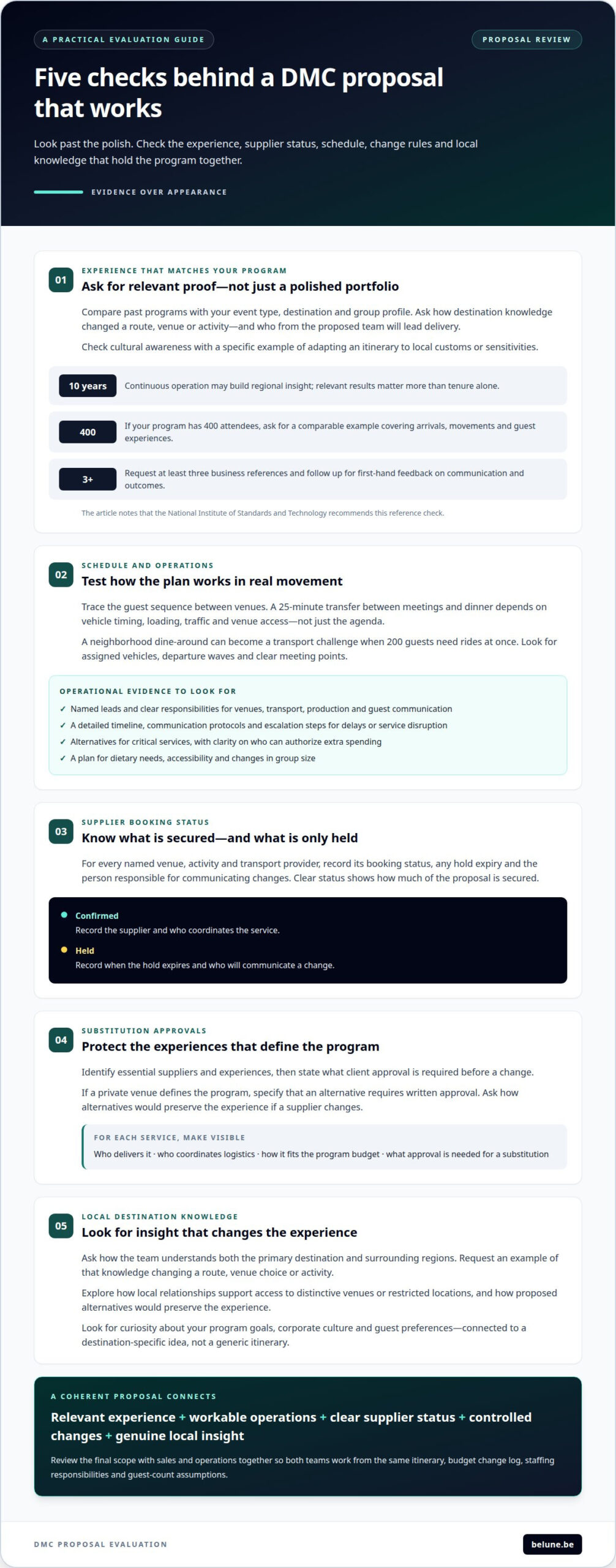
- Compare relevant DMC experience by looking for tailored examples, destination familiarity, and evidence that the proposed team suits your program.
- Assess whether the schedule connects transport, activities, and guest needs into a realistic operational plan.
- Distinguish confirmed bookings from temporary holds, and define approval rules for changes to essential suppliers or experiences.
- Look beyond well-known venues: local relationships and cultural understanding can shape a more distinctive, place-specific incentive program.
DMC experience and international client track record
Begin with evidence, not polished claims. A destination management company with at least 10 years of continuous operation may have developed valuable regional insight, but relevant results matter more than tenure alone. Look for examples that show how its local knowledge shaped a program and helped deliver the stated objectives.
- Match experience to your program. Compare past incentive programs with your event type, destination, and group profile, since a conference portfolio may not demonstrate the creative approach your incentive requires.
- Test scale with a real example. If your program involves 400 attendees, ask how the DMC handled comparable arrivals, movements, and guest experiences; scale affects staffing and coordination.
- Review the proposed team. Ask who will lead planning, which experienced professionals will work on the event, and how responsibilities are divided, so the people presented during sales remain connected to delivery.
- Assess destination range. Ask how the team understands both the primary destination and surrounding regions, then request an example of how that knowledge changed a route, venue choice, or activity.
- Explore cultural awareness. Ask for a specific example of adapting an itinerary to local customs or sensitivities, because a thoughtful partner considers how guests and host communities experience each activity.
- Check the track record firsthand. Request at least three business references with contact information and follow up for first-hand reviews; the National Institute of Standards and Technology recommends this reference check.
What should you ask about staffing, experience, and references? Ask who will work on the event, which comparable programs they have delivered, and whether references can speak to communication and outcomes. The answers help you assess the named team’s relevant experience and whether they can build a dependable working partnership.
Finally, look for evidence of curiosity: does the DMC ask about your program goals, corporate culture, and guest preferences? A proposal that connects these details to a destination-specific idea gives you a clearer basis for judging the potential partnership than a generic itinerary.
Supplier operations, confirmations, and resource scheduling
A polished itinerary depends on operational detail behind each transition. In a 25-minute transfer between meetings and dinner, vehicle timing, loading, traffic, and venue access shape whether the schedule works. Compare the proposed timings with the actual sequence of guest movements, not just the printed agenda.
- Map supplier responsibilities. Identify who coordinates venues, transport, production, and guest communication, so no handoff disappears between teams.
- Test group movement. A neighborhood dine-around becomes a transport challenge when 200 guests need rides at once; look for assigned vehicles, departure waves, and clear meeting points.
- Review operational tools. Look for a detailed timeline, named leads, communication protocols, and escalation steps for delays or service disruption.
- Check contingency planning. The proposal should explain alternatives for critical services and who can authorize extra spending when time is short.
- Clarify guest requirements. Confirm how the plan accounts for dietary needs, accessibility, and changes in group size.
Before paying a deposit, have the sales and operations leads review the final scope together. Align everyone on one current itinerary, a budget change log, staffing responsibilities, and guest-count assumptions. This handoff helps the operations team work from the same version used to approve the pricing.
What contract terms, cancellation policies, and payment schedules should you review? Confirm the agreed itinerary and budget version, responsibilities, staffing hours, deposit dates, and approval process for additional costs. Review the cancellation schedule by milestone, along with the process for changes to dates, suppliers, or scope. The agreement should also explain fixed prices versus estimates, guest-count adjustments, currency, taxes, service fees, gratuities, final reconciliation, refund timing, and any exchange-rate rule.
For group programs that combine transport and guest experiences, coordinated group travel planning can connect the schedule to practical movement between venues.
Confirm supplier booking status and substitution approvals
A striking venue or private experience can anchor an incentive program, but its booking status affects the entire plan. For every named supplier, record whether the booking is confirmed or held, when a hold expires, and who will communicate changes. A clear status helps you judge how much of the proposal is secured.
- List each critical supplier. Match every venue, activity, and transport provider to its status, hold expiry, and responsible contact.
- Set substitution rules. Identify essential experiences and state what client approval is required before they change. For example, if a private venue defines the program, specify that an alternative requires written approval.
- Map the supplier network. Ask how local vendor relationships support access to distinctive venues or restricted locations, and how alternatives preserve the experience if a supplier changes.
- Make supplier roles visible. For each service, record who delivers it, who coordinates logistics, and how the supplier fits the program budget.
- Review references and evidence. Use relevant business references to understand supplier communication and delivery; compare those insights with the proposal’s named vendors and booking status.
Supplier vetting should clarify the proposed provider, service scope, and any conditions that affect the booking. A private dining experience, for instance, needs a clearly identified venue, a service description, and a substitution process. This transparency helps you compare proposals based on the experience actually planned, rather than an evocative label alone.
What sustainability and accessibility standards should you assess? Set practical criteria in the proposal, such as local supplier participation, waste practices, step-free routes, accessible transport, and suitable venue facilities. Evaluate each itinerary stop against those criteria so environmental considerations and guest access are addressed throughout the experience.
Before approval, align the booking-status record with the itinerary and budget version. This gives the client and DMC a shared view of supplier commitments, expiry points, and who can authorize substitutions.
Local destination knowledge and vendor relationships
A destination becomes more than a backdrop when local knowledge informs each choice. Assess whether the proposal connects venues, neighborhoods, and cultural experiences into a coherent program, rather than presenting isolated attractions. Longstanding vendor relationships can also shape access to distinctive settings and experiences beyond familiar visitor routes.
How can you verify a DMC’s local expertise and supplier availability for a specific destination? Ask for a destination-specific route or itinerary with named venues and local suppliers, then assess how each choice fits the program. Compare those details with supplier booking status and a clear process for changes.
- Test geographic knowledge. Ask how the proposed route connects the main destination with surrounding areas, and what local considerations shape travel between stops.
- Look for meaningful access. Ask which vendor relationships make a proposed experience possible, such as a visit to a working cultural site or a meal in a neighborhood venue.
- Read the itinerary for local texture. Check whether creative activities reflect regional culture, rather than repeating the same format across destinations.
- Connect local insight to guest experience. A local guide can explain customs and context that make an art visit or river excursion feel rooted in place.
Strong destination knowledge also shows in the details: realistic transitions, appropriate venues, and an understanding of how local customs shape guest interactions. For example, a cultural visit should give guests context to engage respectfully, not just a venue name and arrival time.
Compare each proposed supplier with the experience it supports. If a venue is central to the incentive, examine its role in the itinerary, the proposed alternatives, and how a change would affect the program’s character. This reveals whether local relationships add genuine value or simply decorate the proposal.
For a more place-led itinerary, explore locally guided experiences that connect guests with the destination’s culture and waterways.
BELUNE: Hotel Accommodation Management
BELUNE supports incentive planners with Hotel Accommodation Management, helping connect the stay to the wider program. When guest lodging, transport, and destination experiences need to work together, its Coach Hire with own fleet of busses and Local Guide Services can support the itinerary’s practical flow. Art & Culture Group Tours bring a locally grounded experience to the program.
For planners shaping a group itinerary, BELUNE brings accommodation, transport, and cultural visits together in a considered plan. Contact BELUNE to discuss your incentive program.
Build the next step into your incentive program
Selecting a DMC begins a working partnership; it isn’t simply the end of a comparison. Use your checklist for evaluating DMC proposals as a decision framework, then turn your preferred direction into a shared brief: define what success should feel like for guests, which priorities must remain fixed, and where the experience can evolve. This conversation helps align practical details with the impression you want the program to leave.
BELUNE offers Hotel Accommodation Management, Coach Hire with its own fleet of buses, and Local Guide Services for group programs. To explore how these offerings could support your plans, discuss your incentive program with BELUNE. A thoughtful next conversation can turn a well-considered proposal into a more intentional guest experience.
Frequently Asked Questions
How do you evaluate and compare DMC proposals for incentive programs?
Compare proposals against the same program goals, guest profile, and decision criteria. A practical checklist for evaluating DMC proposals can assess relevance, delivery clarity, and how convincingly each experience supports the incentive objective. Then identify trade-offs: one option may offer a more original guest experience, while another makes the journey simpler. Choose the strongest overall fit, not the most polished presentation.
Should a DMC disclose its suppliers?
A DMC should identify key suppliers when their role affects the experience, logistics, or decision to proceed. Knowing the proposed venue or activity operator, for example, helps you understand what guests will actually encounter. The proposal can distinguish a named supplier from a general option and explain how changes would be handled. This gives you useful visibility without requiring every operational detail upfront.
What Should You Look for in a DMC Proposal?
Look for a clear connection between your incentive objective and the proposed guest experience. If recognition is central, for example, assess whether the itinerary creates meaningful moments to celebrate participants, rather than simply filling the schedule. The proposal should also make its assumptions easy to follow, showing how guest preferences, program priorities, and practical delivery shape the design.
What does transparent DMC pricing look like?
Transparent pricing makes each cost understandable in relation to a service or planning assumption. For example, an accommodation line should clarify the room allocation or stay details it reflects, while estimates should be distinct from fixed amounts. Review which changes could affect the total and how they are approved. This helps you compare the scope behind each proposal, not just its overall figure.
What is a DMC in corporate event planning?
A destination management company, or DMC, coordinates destination-based services and experiences for a group or event. For corporate planning, that can mean shaping local activities and coordinating practical details that support an incentive or business gathering. Its value lies in connecting the event’s purpose with the destination, so the program feels designed for its setting rather than transferred unchanged from elsewhere.
What should you expect from a DMC proposal for incentive travel?
Expect a proposal to show how the guest journey works from arrival through departure and how its experiences reflect the program’s purpose. A considered submission may also explain pre-trip planning support, on-site coordination, and post-trip follow-up. These details help you understand how the concept carries into execution and how the DMC intends to maintain continuity before, during, and after the trip.
Leave a Reply