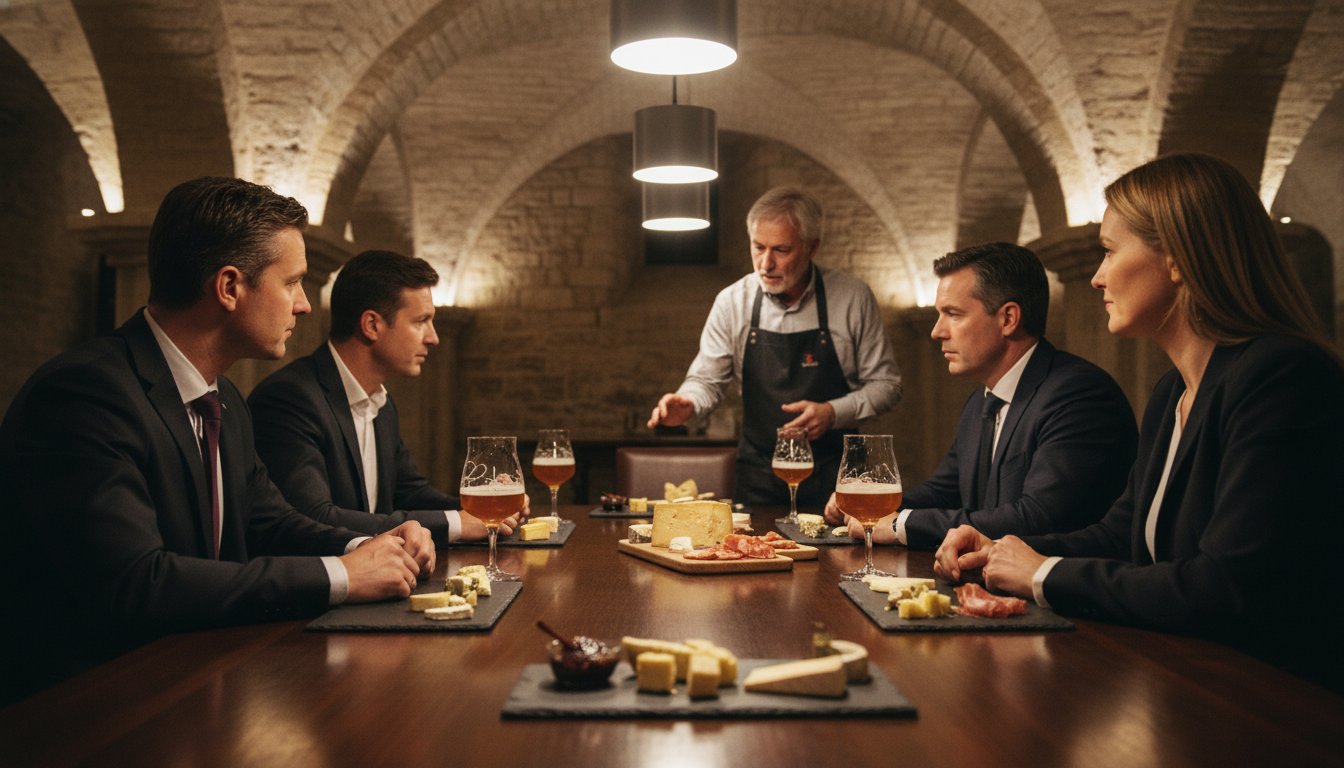
What if the true measure of a luxury group itinerary isn’t the distance traveled, but the depth of the sensory experience? For the 84% of high-end travel planners who prioritize authenticity over volume, the challenge remains avoiding the predictable “tourist traps” that dilute a brand’s prestige. Crafting successful belgium gastronomy tours requires more than a list of restaurants; it demands a curated vision that treats a meal as a piece of architectural art. You understand that your B2B clients don’t just want to eat. They want to witness the precision of a master chocolatier or the heritage of a centuries-old abbey brewery.
We agree that managing the complex logistics between three distinct culinary regions while maintaining an atmosphere of effortless elegance is a daunting task. This guide promises to reveal how you can design a sophisticated, turnkey culinary journey that balances artisanal workshops with world-class transport. We’ll explore the specific elements of a 5-day masterclass itinerary, from securing exclusive access to private cellars to selecting venues that accommodate professional groups without sacrificing intimacy.
Key Takeaways
- Define the Belgian “Art of Living” by exploring the sophisticated fusion of French culinary refinement and Germanic heartiness.
- Distinguish between the coastal elegance of Flanders and the rich heritage of Wallonia to curate a nuanced and balanced regional narrative.
- Elevate your belgium gastronomy tours with exclusive access to master-led workshops and private tastings in historic, vaulted cellars.
- Optimize logistical flow using premium private transport to ensure a seamless, rhythmic journey that prioritizes group comfort and sensory engagement.
- Transform standard itineraries into artisanal masterpieces by applying professional design principles that balance technical precision with emotional resonance.
What Defines Belgium Gastronomy Tours in 2026?
Belgium in 2026 represents a sophisticated intersection of heritage and avant-garde culinary philosophy. It’s a destination where the “Art of Living” isn’t a marketing slogan but a daily practice. This unique cultural fabric weaves together the rigorous precision of French culinary technique with a robust, Germanic appreciation for heartiness and scale. When designing belgium gastronomy tours, we look beyond the plate to the architecture of the experience itself. The modern traveler no longer seeks a seat at the table; they demand a place in the kitchen, the brewery, and the soil.
The evolution of culinary travel has shifted from passive consumption to active, sensory participation. Since the 2023 expansion of the Slow Food Chefs’ Alliance in Flanders and Wallonia, Belgium has solidified its position as the European epicenter of conscious dining. With over 150 Belgian products now listed in the Slow Food Ark of Taste, the focus for 2026 remains on biodiversity and the preservation of ancestral methods. For professional groups, this means moving past standard tastings into immersive workshops that highlight the harmony between seasonal ingredients and technical mastery.
A Destination Management Company (DMC) acts as the visionary architect in this process. We don’t just book reservations; we curate a sensory narrative. We transform a simple itinerary into a sequence of deliberate, evocative moments. By treating light, space, and flavor as integrated materials, a professional partner ensures that every stop on the journey contributes to a larger story of Belgian excellence. It’s about sublimating the logistical into the ethereal.
The Holy Trinity: Beer, Chocolate, and Beyond
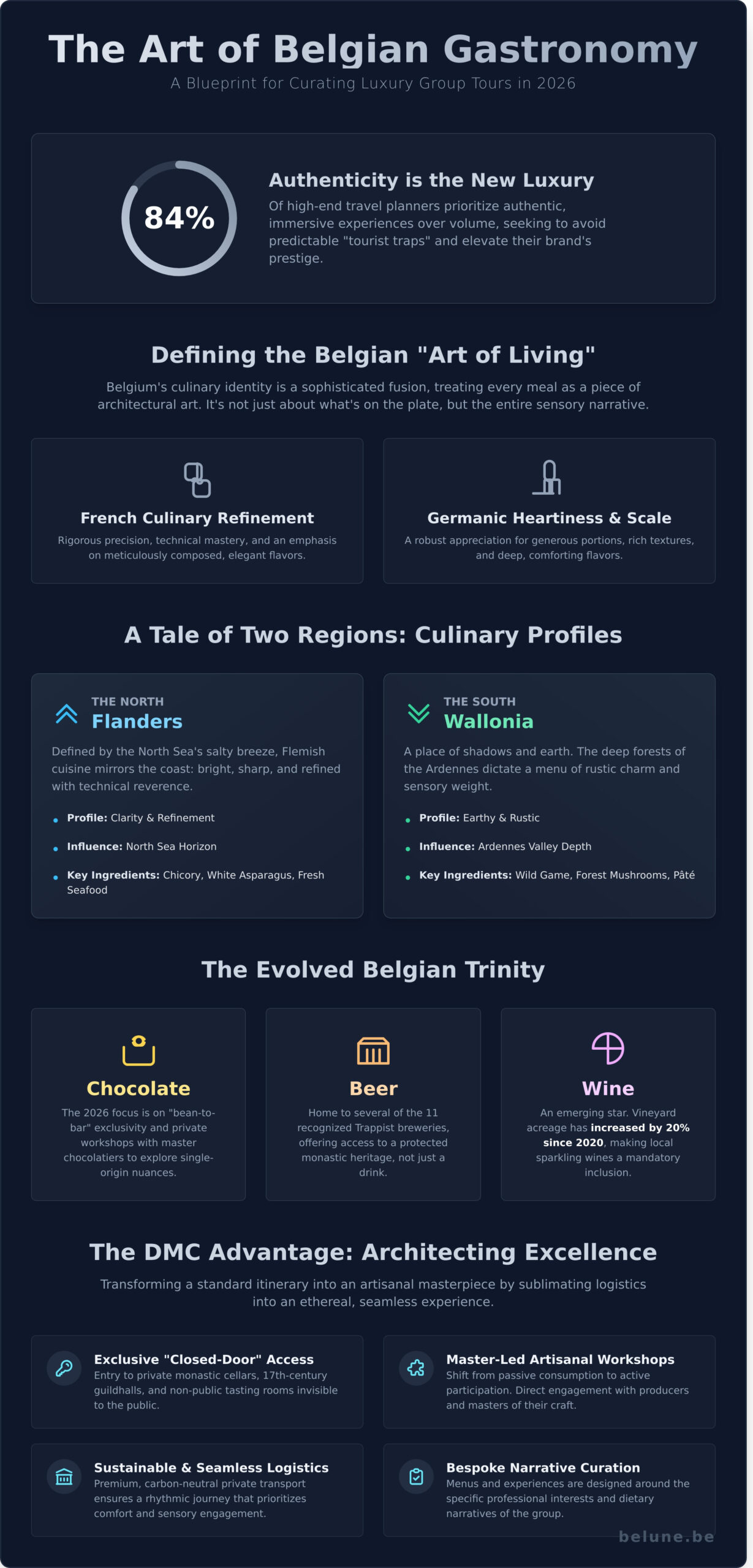
Luxury chocolate remains the global gold standard, but the 2026 landscape focuses on transparency and “bean-to-bar” exclusivity. High-end groups now expect private sessions with master chocolatiers to discuss the nuance of single-origin harvests. Similarly, the 11 recognized Trappist breweries worldwide, several of which reside here, offer more than a drink; they provide a protected monastic heritage that requires expert navigation to access. Emerging trends have also introduced Belgian viticulture into the spotlight. Vineyard acreage in regions like Houyet has increased by 20% since 2020, making local sparkling wines a mandatory inclusion in any modern Belgian cuisine exploration.
The B2B Advantage in Culinary Planning
Professional planning elevates belgium gastronomy tours from 2-hour walking circuits to comprehensive, multi-day narratives. The B2B advantage lies in accessing “closed-door” locations that remain invisible to the public. This includes private dinners in 17th-century guildhalls or sunrise visits to family-owned chocolateries that don’t list themselves on travel platforms. Logistics are the invisible scaffolding of a successful tour. We maintain a sophisticated pace that allows for reflection, ensuring the group never feels the friction of travel. Precision in timing and transport isn’t just a service; it’s the foundation of guest comfort and creative inspiration.
- Artisanal Workshops: Direct engagement with producers rather than third-party guides.
- Exclusive Access: Entry to private monastic cellars and non-public tasting rooms.
- Sustainable Logistics: Utilization of carbon-neutral transport for group movements across the Benelux region.
- Bespoke Curation: Menus designed around the specific dietary narratives and professional interests of the group.
Regional Flavors: Flanders vs. Wallonia Culinary Profiles
Belgium’s culinary map is a study in architectural contrast. It’s a dialogue between the salty breeze of the North Sea and the deep, silent forests of the south. High-end belgium gastronomy tours reveal this contrast through precise, curated experiences that treat flavor as a structural element of culture. In the north, Flanders presents a profile defined by clarity and refinement. The landscape is flat, but the flavors are elevated, leaning heavily on the “North Sea” influence. Here, the cuisine mirrors the light of the coast; it’s bright, sharp, and meticulously composed. Ingredients like chicory and seasonal white asparagus are handled with a technical reverence that rivals the region’s diamond-cutting heritage.
The southern region of Wallonia offers a different sensory weight. It’s a place of shadows and earth. The Ardennes forest dictates the menu, bringing wild game and forest mushrooms to the forefront. While Flanders is about the sea’s horizon, Wallonia is about the valley’s depth. The rustic charm here isn’t accidental; it’s a preserved artisanal mastery. This regional duality meets its climax in Brussels. As a cosmopolitan melting pot, the capital synthesizes these identities. With over 180 nationalities calling the city home, Brussels functions as a laboratory where traditional Flemish techniques meet global spices, all set against the backdrop of the 1847 Galeries Royales Saint-Hubert, where the world’s chocolate standards were born.
The 2024 Michelin guide currently recognizes 153 starred restaurants across the country, a testament to the technical discipline found in both regions. Whether you’re tasting a North Sea shrimp croquette in a coastal bistro or a slow-cooked wild boar ragout in a mountain lodge, the commitment to provenance is absolute. This dedication to local sourcing is best understood by exploring authentic Flemish regional products, which serve as the foundation for the north’s avant-garde culinary scene. Just as we believe that bespoke lighting design transforms a physical room, these ingredients transform the ephemeral space of a meal into a lasting memory.
Flemish Gastronomy: Elegance by the Sea
Flanders excels in the art of the subtle. The North Sea grey shrimp, harvested on horseback in a tradition dating back to the 13th century, remains a centerpiece of coastal dining. In cities like Bruges and Ghent, medieval aesthetics meet ultra-modern plates. Antwerp, meanwhile, utilizes its status as the world’s second-largest port to infuse dishes with rare spices and coffee nuances, creating a sophisticated, trade-influenced palate that defines modern belgium gastronomy tours.
Walloon Terroir: The Soul of the Ardennes
Wallonia is the heart of Belgian craftsmanship. The valleys of the Meuse and Semois produce artisanal cheeses that rival any in Europe. Since 1974, the Jambon d’Ardenne has held protected status, representing a tradition of smoking hams over oak and beechwood. This region is also the stronghold of liquid history; five of the world’s remaining Trappist breweries, including Orval and Rochefort, produce beers within abbey walls that are as complex as fine vintage wines.
The Must-Include Experiences for a 2026 Gastronomy Itinerary
Curating a premier itinerary for 2026 requires a shift from passive observation to active, technical immersion. When orchestrating high-end belgium gastronomy tours, the objective is to harmonize the sensory pleasure of the palate with the architectural soul of the venue. Excellence begins in the Ardennes forests, where the 2026 season introduces exclusive foraging expeditions. These aren’t simple walks; they’re guided by expert mycologists who teach groups to identify rare tubers and seasonal herbs. Data from 2024 indicates a 14% rise in demand for these “earth-to-table” connections, making them a cornerstone for any sophisticated program.
The journey continues into the inner sanctums of culinary power. We provide groups with 90-minute masterclasses inside Michelin-starred kitchens, such as those found in the coastal enclave of Knokke-Heist. Here, the chef doesn’t just cook; they demonstrate the precision of plate composition and the technical mastery of local ingredients. This level of access transforms a meal into a profound educational dialogue between the creator and the guest.
Immersive Artisanal Workshops
Authenticity in 2026 is found in the details of the craft. Chocolate workshops must move beyond simple tasting. We focus on the technical nuances of tempering, where guests learn to maintain dark chocolate at a precise 31.1°C to achieve the perfect crystalline snap. This hands-on rigor is balanced by the historical weight of the setting. For a broader perspective on these traditions, the Official Flanders Tourism portal offers vital insights into the regional masters who have preserved these techniques for over three centuries.
The liquid heritage of the region demands equal precision. Private beer sommelier sessions focus on the complex, wild-fermented profiles of Gueuze and Lambic, explaining how the 1850s brewing methods still dictate modern flavor profiles. Even the humble waffle is elevated. In the heart of Brussels, groups engage in workshops that treat the 18th-century recipe as a cultural history lesson, balancing the lightness of the dough with the heavy significance of the city’s guild traditions.
Dining in Architectural Landmarks
The environment is the silent ingredient that determines the success of a gala dinner. Organizing group events within UNESCO World Heritage sites, such as the vaulted cellars of historic Bruges or the guild houses of the Grand Place, requires a deep understanding of light and space. We select venues where the lighting doesn’t just illuminate; it sublimates the meal, creating a dialogue between the ancient stone and the modern plate. This harmony ensures that the atmosphere is as memorable as the viticulture.
Logistics must be invisible yet flawless to maintain this level of sophistication. Using private, high-spec coach transport allows groups to reach remote, picturesque dining gems that remain inaccessible to the general public. Whether it’s a 12th-century abbey or a secluded manor in the Flemish countryside, the transition from the city to these hidden sanctuaries must be fluid. These elements transform standard trips into definitive belgium gastronomy tours that resonate long after the final course is served.
Logistical Excellence: Planning Your Group Culinary Journey
Precision is the silent partner of every memorable meal. When orchestrating elite belgium gastronomy tours, every detail serves a definitive purpose. We view logistics not as a hurdle, but as a technical canvas. Designing an itinerary for a discerning group requires the same rigor as architectural drafting; you must balance the structural needs of transit with the emotional resonance of the experience. It’s about sculpting time so that guests never feel the friction of movement, only the rhythm of discovery.
This principle of logistical excellence extends beyond tourism and into the very supply chain of gourmet products. For example, ensuring the finest Greek foods and beverages reach global markets requires the same dedication to precision, a task managed by specialists like Helexo through export consolidation.
Mastering this flow begins with five essential strategic steps:
- Step 1: Define the group size and sophistication. Intimacy is a luxury. Groups limited to 12 guests can access private chef tables and boutique aging cellars that remain closed to the masses. Larger parties of 25 or more require venues with the technical capacity to maintain service standards without sacrificing the artisanal quality of the food.
- Step 2: Map the route using private coach hire. Transit fatigue is the enemy of taste. By utilizing premium private coaches, you transform travel time into a moment of repose. A seamless transition from the cobblestones of Bruges to the rolling hills of the Ardennes ensures guests arrive with a refreshed palate.
- Step 3: Secure luxury accommodation with foodie credentials. Choose hotels where the culinary philosophy aligns with the tour. Properties like the Hotel Amigo in Brussels offer more than just rooms; they provide a sensory continuation of the day’s journey. This model of an integrated, high-end hotel dining experience is a global standard, with leading examples in culinary capitals like Bangkok, which you can see at cuisineunplugged.com.
- Step 4: Balance workshops and dining. A 90-minute hands-on chocolate tempering session creates a necessary counterpoint to a three-hour tasting menu. This 60/40 split between active participation and relaxed consumption prevents sensory overload.
- Step 5: Partner with a local DMC. A Destination Management Company acts as your cultural translator. They hold the keys to rural producers who don’t list their services online, ensuring your group experiences the authentic soul of the region.
Transport and Timing Strategy
Efficiency in movement is vital for regional transitions. A private coach isn’t just a vehicle; it’s a mobile sanctuary where guests can decompress. We recommend calculating a minimum of 90 minutes of “digestion time” between major culinary stops. When optimizing routes between Brussels and the Ardennes, we prioritize the E40 corridor to ensure transit never exceeds two hours. This technical precision allows the focus to remain on the flavor, not the clock.
Sourcing Group-Friendly Accommodations
Selecting the right base is a matter of harmony. We look for hotels located within a 15-minute radius of primary food hubs to minimize evening travel. Managing dietary restrictions is equally critical. With 15% of international travelers reporting specific food allergies in 2023, we coordinate directly with hotel kitchens weeks in advance. Local guides bridge the language gap, ensuring that a producer’s passion for their heritage is accurately conveyed to every guest. Expertly managed belgium gastronomy tours rely on these local connections to secure tables at exclusive venues like Hof van Cleve.
The atmosphere of a dining space is just as important as the menu itself. Transform your group’s culinary experience with professional architectural lighting design that enhances every sensory detail and creates the perfect evening ambiance.
BELUNE: Your Architect for Bespoke Belgium Gastronomy Tours
Expertise is a silent language. Since 2004, BELUNE has refined the craft of group travel across the Benelux, transforming standard itineraries into sensory experiences. We believe travel should be a composition. Our team manages every detail from the first inquiry to the final farewell, providing A to Z personalized support that allows tour operators to focus on their clients while we handle the technical precision. With 20 years of heritage, we’ve developed a private fleet of 12 modern, low-emission coaches. These vehicles aren’t just transport; they’re mobile lounges designed for comfort and absolute punctuality.
Our approach to belgium gastronomy tours relies on deep-rooted connections. We maintain over 85 exclusive partnerships with Belgian artisans, from fifth-generation chocolatiers in Brussels to boutique brewers in the Ardennes. These relationships grant our groups access to private ateliers and tasting rooms closed to the general public. We don’t settle for the obvious. We look for the nuance in every flavor and the history behind every dish, ensuring your group experiences the true soul of the region. It’s about sublimating the journey through authentic human connection and technical excellence.
Why Tour Operators Choose BELUNE
Transparency builds trust. We provide fixed-price group packages that eliminate the anxiety of fluctuating costs. Our quotes are comprehensive, covering logistics, tastings, and venue fees with no hidden surcharges. This financial clarity is paired with a visionary design philosophy. We merge art, culture, and food into a single, fluid narrative. Our local experts spend 15% of their time scouting “hidden gems,” identifying authentic locations like 14th-century vaulted cellars or urban rooftop gardens before they enter the mainstream tourist circuit. This foresight keeps your offerings fresh and exclusive.
Start Planning Your Culinary Masterpiece
Every group has a unique pulse. Whether your clients are dedicated oenophiles or casual food lovers, we design custom itineraries tailored to specific interests within 48 hours of your request. The narrative is brought to life by our multi-lingual guides, fluent in English, French, Dutch, and German. They do more than recite facts; they translate the passion of the producers into a story that resonates. Their expertise ensures that every meal becomes a lesson in history and every tasting a moment of genuine connection. It’s time to elevate your portfolio with a partner who understands the poetry of the plate and the rigor of logistics in belgium gastronomy tours.
Ready to redefine excellence? Envision your next group tour with BELUNE and discover the difference that two decades of dedication makes. We don’t just plan trips; we curate legacies of taste and memory for your most discerning clients.
Elevate Your 2026 Group Travel Through Culinary Mastery
Belgium’s culinary landscape in 2026 demands more than just a seat at the table; it requires a deep immersion into the contrast between Flanders’ avant-garde innovation and Wallonia’s soulful, terroir-driven traditions. Masterful belgium gastronomy tours succeed by balancing these sensory nuances with technical precision. By integrating curated farm-to-fork experiences and private cellar tastings into your itinerary, you offer groups a profound connection to European heritage that transcends the plate. Regional diversity and logistical fluidity are the two pillars that define a truly world-class journey.
BELUNE stands as your visionary architect in this journey. We leverage 20+ years of DMC expertise to design bespoke programs where every detail finds its perfect harmony. Our private fleet of modern coaches ensures fluid transitions between regions, while our fixed-price B2B group packages provide the financial clarity required for professional success. We don’t just supply logistics; we craft the atmosphere that allows your clients to truly savor the moment. Our team handles the complexity so you can focus on the experience.
The path to an exceptional 2026 season begins with a partnership rooted in excellence. Partner with BELUNE for your next professional group tour to transform your vision into a flawless reality. Let’s build a journey that resonates long after the final course is served.
Frequently Asked Questions
What is the best time of year for a gastronomy tour in Belgium?
Spring and autumn offer the most refined balance for belgium gastronomy tours. From April to June, or September to October, you’ll experience mild temperatures averaging 18°C. These months avoid the 25% price surge of mid-summer peaks. In May, 15 hours of daylight allow for extended terrace dining and vineyard visits before the evening chill sets in.
How large can a group be for an artisanal chocolate workshop?
We accommodate groups ranging from 12 to 50 participants for artisanal chocolate workshops. Smaller ateliers in Bruges focus on 15-person sessions to ensure hands-on tempering practice. For larger corporate delegations, we utilize 200-square-meter professional kitchens in central Brussels. This ensures every guest receives a 100% personalized experience under the guidance of a master chocolatier.
Can you include both Flanders and Wallonia in a 5-day culinary itinerary?
A 5-day itinerary seamlessly bridges Flanders and Wallonia. You’ll spend 48 hours exploring the Flemish classics in Ghent or Antwerp before traveling 65 kilometers south to the Meuse Valley. This geographic proximity allows for a 60/40 split between the two regions. It showcases the contrast between North Sea seafood and the rich, forest-based game of the Ardennes.
Are Belgian beer tours suitable for non-drinkers or groups with mixed interests?
Belgian beer tours cater to diverse interests by focusing on the 800-year history of Trappist brewing. We provide artisanal non-alcoholic juices and 0.0% craft beers for the 30% of guests who prefer not to drink. The tours emphasize architectural heritage and 4-course food pairings rather than just consumption. This approach ensures every guest finds beauty in the craftsmanship and cultural narrative.
How does BELUNE handle dietary requirements for large group bookings?
We manage dietary requirements through a rigorous 72-hour pre-screening protocol for every guest. Our partners comply with all 14 EU allergen labeling regulations to ensure safety. Whether it’s gluten-free, vegan, or specific religious requirements, we coordinate directly with chefs to provide 1:1 menu substitutions. This precision guarantees that the culinary flow remains uninterrupted for the entire group.
What are the benefits of using a DMC vs. booking individual food tours?
Using a DMC provides a 15% efficiency gain in logistics compared to booking individual vendors. We curate belgium gastronomy tours that offer exclusive access to private cellars closed to the general public. You benefit from a single point of contact and 24/7 on-site coordination. This strategic oversight transforms a series of meals into a cohesive, high-end narrative of the region.
Do you provide specialized guides for culinary-themed tours?
Every tour is led by a guide with a minimum of 10 years of experience in the culinary or hospitality sector. Our experts often hold WSET Level 3 certifications or specialized degrees in food history. They don’t just lead groups; they interpret the landscape through a gastronomic lens. This level of expertise ensures a 98% satisfaction rate among our professional and private clients.
Can we combine a gastronomy tour with battlefield or art history themes?
Gastronomy integrates perfectly with the 1,000-year history of the Benelux region. We often design mornings around the 1914-1918 battlefields or Flemish Primitive art in the Groeninge Museum. These 3-hour cultural immersions are followed by 2-hour curated lunches that reflect the period’s culinary influence. This duality creates a rich, multi-sensory experience that appeals to the intellect and the palate simultaneously.
Leave a Reply