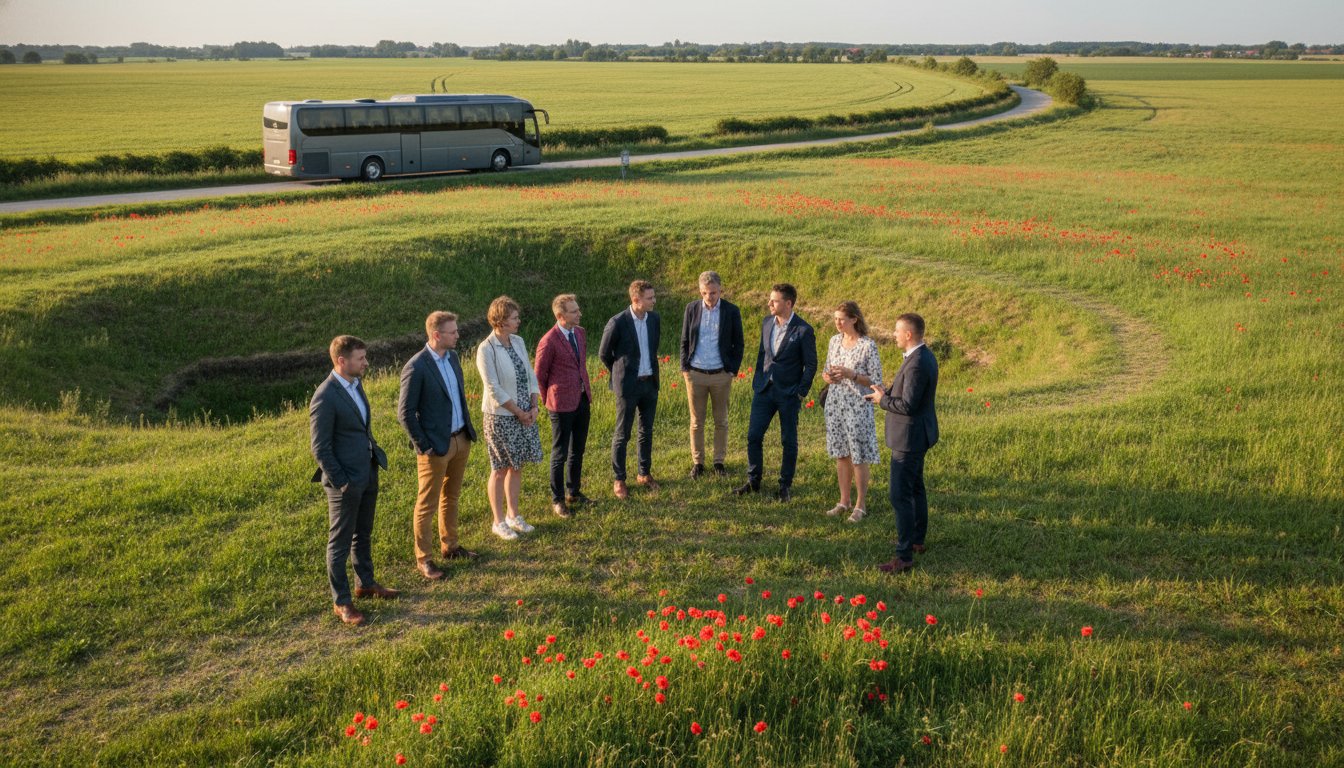
Nearly 300,000 Australians served on the Western Front, leaving behind a legacy that still breathes through the quiet fields of Belgium and France. For those organizing professional group tours, the australian battlefield trail flanders isn’t just a route on a map; it’s a narrative thread that transforms the landscape into a living classroom. You likely recognize that a pilgrimage of this magnitude requires more than just a list of stops. It demands a sophisticated blend of historical accuracy and logistical grace to ensure the emotional weight of the journey isn’t lost in the details of travel.
Planning for 2026 requires navigating specific museum schedules and the unique requirements of rural sites like the In Flanders Fields Museum or the Memorial Museum Passchendaele 1917. This guide provides the essential framework to help you master these complexities. We’ll explore the logistical requirements for coach transport, the selection of group-friendly accommodations near the front lines, and the historical depth needed for a truly resonant itinerary. You’ll discover how a professionally managed approach turns complex site management into a seamless, deeply moving experience for your clients.
Key Takeaways
- Master the narrative thread of the australian battlefield trail flanders by identifying the essential stops that define the Australian experience on the Western Front.
- Optimize your 2026 itinerary by leveraging strategic base locations in Flanders to manage complex cross-border logistics with France.
- Secure high-comfort coach hire and group-friendly accommodations that align with the technical and emotional requirements of a high-end pilgrimage.
- Elevate your tour’s impact through a reliable local partnership that balances historical precision with flawless operational execution.
What is the Australian Remembrance Trail in Flanders?
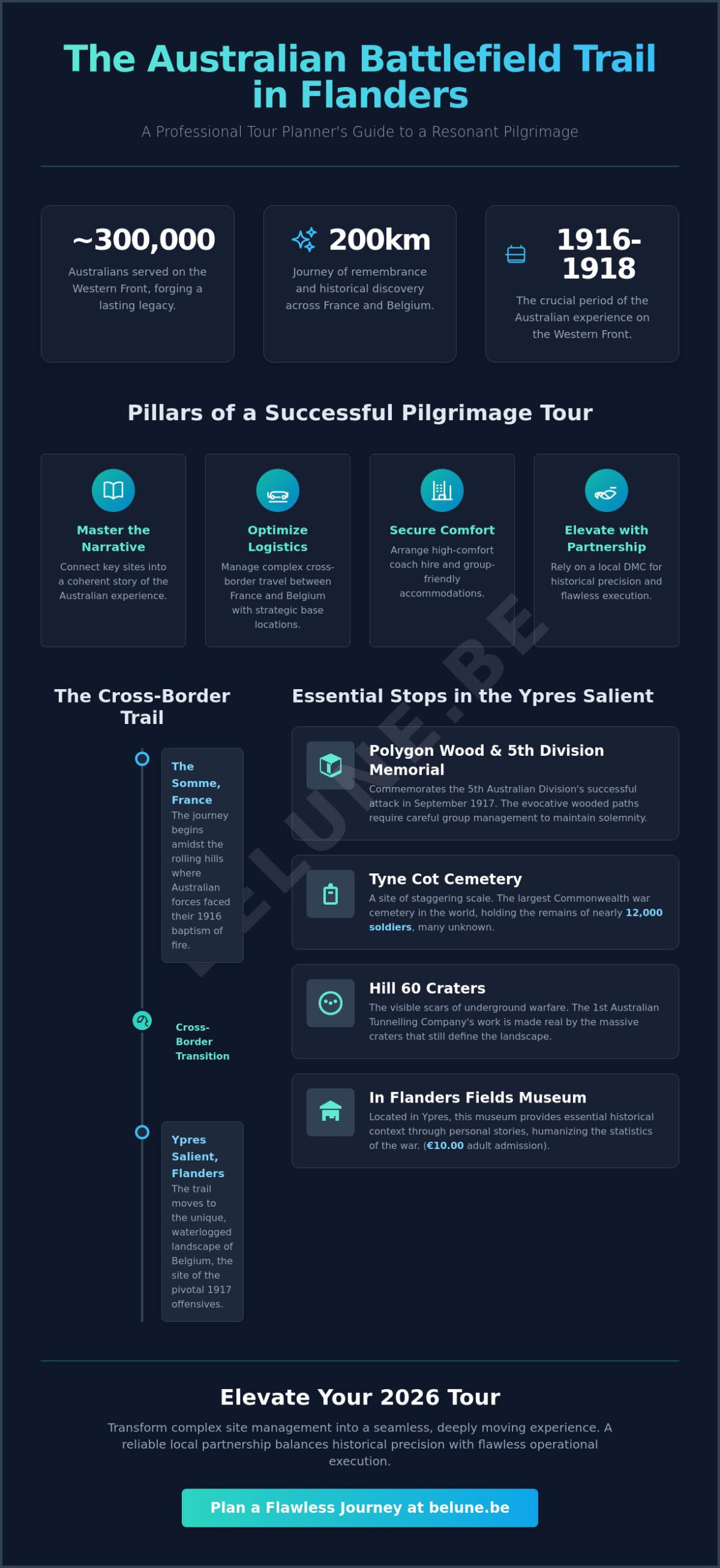
Memory has a physical presence in the soil of Northern Europe. The Australian Remembrance Trail is a formal commemorative route established to honor Australian service on the Western Front. It represents a deliberate, cross-border effort to preserve the sites where history was forged. Spanning from the Somme in France up through the Ypres Salient in Flanders, this journey offers a structured way to explore the 1916-1918 Australian experience. The trail is a 200km journey of remembrance and historical discovery. For professional groups, the australian battlefield trail flanders serves as a curated tapestry of memory, linking isolated cemeteries, preserved trenches, and world-class museums into a single, coherent narrative.
The Significance of the Flanders Landscape
The “Flanders Fields” aesthetic resonates deeply with Australian visitors. There is a haunting beauty in the rows of white headstones set against the low, heavy skies of Belgium. In the Ypres Salient, the Australian Imperial Force (AIF) faced a landscape defined by waterlogged craters and the relentless pressure of high ground. Transitioning from the rolling hills of the Somme to the unique challenges of the Belgian front requires an appreciation for the geography of war. Flanders was a test of technical mastery and human endurance. Grasping this environmental reality is the first step toward understanding the tactical decisions that defined the later years of the conflict.
A Narrative Approach to Group Itineraries
A successful group itinerary moves beyond a simple recitation of dates and names. It seeks to illuminate the stories of individual soldiers, giving a face to the vast statistics of the Great War. Curated journeys provide emotional peaks at key locations, such as the Villers-Bretonneux Australian National Memorial, where the narrative of the trail often finds its most powerful expression. Local context is vital for understanding the 1917 offensives. Without it, the complex maneuvers at Menin Road or Broodseinde remain abstract concepts. By grounding the Australian story in the specificities of the Flemish earth, we create an experience that is both technically precise and deeply resonant. This narrative depth ensures the australian battlefield trail flanders remains a vital pilgrimage for generations to come.
Essential Stops on the Australian Trail in Flanders
The geography of the australian battlefield trail flanders is remarkably intimate. Unlike the vast, rolling plains of the Somme, the Flemish landscape concentrates its history into a few critical kilometers. This proximity allows for a deep, reflective exploration of the 1917 offensives without the exhaustion of long transit times. Every ridge and wood in this sector tells a specific story of the Australian Imperial Force (AIF) and their technical mastery of a brutal environment.
Polygon Wood and the Buttes New British Cemetery
The 5th Australian Division’s successful attack in September 1917 is memorialized at Polygon Wood. The 5th Division Memorial stands as a stark, vertical landmark overlooking the Buttes New British Cemetery. For groups, this site requires careful choreography. The wooded paths are evocative but narrow; managing the movement of a large group through these trails ensures the solemnity of the visit remains intact. The emotional weight of the Dawn Service locations here is profound. When the morning mist still clings to the trees, the landscape looks much as it did a century ago, providing a powerful connection for your clients.
Tyne Cot Cemetery represents a site of staggering scale. As the largest Commonwealth war cemetery in the world, it holds the remains of nearly 12,000 soldiers. Many are “Unknown” Australians, their headstones bearing only the moving inscription chosen by Rudyard Kipling. Nearby, Hill 60 offers a different perspective on the conflict. Here, the 1st Australian Tunnelling Company engaged in a claustrophobic, underground struggle. The massive craters left by the mines are physical scars that make the technical reality of the war visible to modern visitors.
The Ypres Salient: A Concentrated Geography of Memory
The compact nature of the Ypres Salient means your group can transition between sites with ease. This efficiency allows for a more contemplative pace, leaving room for reflection rather than rushing between monuments. Integrating the In Flanders Fields Museum in Ypres provides the necessary historical framework before visiting the sites themselves. The museum, with its adult admission of €10.00, uses personal stories to humanize the statistics of the Great War.
The day inevitably culminates at the Menin Gate. The nightly Last Post ceremony is a mandatory experience for any group following the Australian Remembrance Trail. It is a moment of communal silence that bridges the gap between the past and the present. To ensure your group experiences these sites with the respect and precision they deserve, consider our tailored battlefield itineraries which balance historical depth with seamless logistical execution.
Connecting Flanders and the Somme: Cross-Border Logistics
The narrative arc of the australian battlefield trail flanders doesn’t respect modern administrative borders. It officially begins its journey in the Somme valley of France, specifically at the Sir John Monash Centre in Villers-Bretonneux. This geographical reality makes meticulous cross-border coordination a vital element of professional group planning. Transitioning from the defense of Amiens in 1918 back to the 1917 offensives in Belgium requires a logistical bridge that keeps the historical context clear and the travel experience effortless.
Strategic base locations are the foundation of a successful multi-day pilgrimage. While the trail spans approximately 200 kilometers, establishing a base in the Flanders region is often the most effective choice for those exploring the australian battlefield trail flanders. It allows groups to immerse themselves in the atmosphere of Ypres while remaining within striking distance of the French sites. This stability is key. It prevents the logistical clutter of daily hotel changes, leaving more room for the quiet reflection these sites demand.
From Villers-Bretonneux to Ypres
Linking the 1918 defense of Amiens to the earlier battles in Flanders is essential for a coherent itinerary. We treat the journey between Villers-Bretonneux and Ypres as a narrative progression rather than a simple transfer. This involves incorporating “missing link” stops such as Fromelles and Bullecourt. These sites provide critical context for the Australian experience on the Western Front. By carefully optimizing travel times, we protect groups from “battlefield fatigue.” It’s about finding the right rhythm between intensive historical site visits and the restorative flow of the journey through the countryside.
Unified Logistics for Multi-Day Pilgrimages
Consistency is the hallmark of a high-end tour. Utilizing a specialized benelux incoming tour operator provides the regional expertise necessary for such a complex undertaking. We ensure that every component of the trip, from the technical quality of the coaches to the historical depth of the guiding, remains uniform across both the French and Belgian sectors. Coordinating local guides who understand the nuances of both regions is a priority. This unified approach extends to hotel management. Streamlining bookings across two countries for large groups requires a reliable local partnership that understands the specific needs of historical tourism. We handle these technical details so the focus remains entirely on the emotional and educational outcomes for your clients.
Professional Planning for Battlefield Group Tours
Expertise in the australian battlefield trail flanders requires more than historical knowledge. It demands a flawless technical infrastructure. For professional planners, the challenge lies in translating a somber pilgrimage into a comfortable, high-end experience. We believe that the quality of transport and the choice of sanctuary at the end of the day are structural components of the journey’s emotional success. A well-managed itinerary allows guests to focus entirely on the narrative without the distraction of logistical friction.
Coach Hire and Accessibility in Flanders
The rural roads of Flanders are beautiful but demanding. Navigating these narrow lanes with a private fleet of modern, high-comfort coaches requires both technical skill and local foresight. We ensure that driver hours and route planning align perfectly with the strict timing of the Last Post ceremony in Ypres. Parking at major memorials like Tyne Cot or the Menin Gate can be complex during peak commemorative periods. Our strategies for drop-offs and parking are designed to minimize walking distances for guests while maintaining the flow of the day’s events. This level of detail is essential for groups with varying mobility needs.
Accommodation Management for Large Groups
Securing high-quality room blocks during periods like Anzac Day or Armistice is a significant hurdle for many planners. We prioritize hotels that reflect a sense of minimalist elegance and refined comfort. These sanctuaries provide a necessary space for reflection after intensive site visits. Proximity to historic centers is vital. It gives your clients the freedom for evening exploration in Ypres or Arras, where the atmosphere of the past is most palpable. Managing these bookings requires a deep understanding of local hospitality and the foresight to secure space years in advance for the 2026 season.
Integrating Local Flavors and Culture
A pilgrimage shouldn’t be defined solely by the weight of history. Including belgium gastronomy tours provides a necessary counter-balance to the somber nature of the trail. We arrange group lunches at historic “estaminets” near the battlefields, where the rustic charm and local cuisine offer a moment of respite. Customizing itineraries with craft beer tastings or artisanal chocolate experiences adds a layer of sensory engagement that enriches the overall journey. Balancing the technical demands of the australian battlefield trail flanders with these cultural highlights creates a truly holistic experience. Partner with our specialists to design your 2026 Australian group pilgrimage.
Why Partner with a Specialized DMC for the Australian Trail?
Navigating the australian battlefield trail flanders requires a partner who understands that every detail carries the weight of history. A pilgrimage of this magnitude isn’t a standard tourism product; it’s a profound responsibility. We bring over 20 years of experience in high-quality Benelux group travel to this delicate task. Our role is to act as a bridge between the technical requirements of modern travel and the deep emotional journey your clients expect. We don’t simply manage bookings. We craft an environment where the story of the AIF can be told with the respect and clarity it deserves.
A deeply professional approach is the only way to mirror the solemnity of the trail. From the initial itinerary design to the final on-the-ground execution, we provide comprehensive support that anticipates the unique challenges of battlefield tourism. By managing all logistical volumes with technical mastery, the australian battlefield trail flanders becomes an artistic and technical masterpiece of travel. This allows your group leaders to focus on the narrative while we ensure the machinery of the tour remains invisible and flawless.
Our Vision for Battlefield Tourism
We treat each itinerary as a curated experience rather than a standard package. This is the “Belune touch.” It’s a philosophy that balances technical precision with emotional resonance. We understand that a visit to a cemetery at dusk or a ceremony at the Menin Gate requires a specific kind of atmosphere. Our team works to ensure that the transition between these moments is seamless. We support tour operators in delivering once-in-a-lifetime pilgrimages by providing the high-end infrastructure that discerning clients expect. This commitment to excellence ensures that the legacy of the soldiers remains the central focus of every journey.
A Strategic Ally in Flanders Fields
Leveraging our local network allows us to provide insights that standard guides often overlook. We aren’t just a supplier; we’re a strategic ally. Our deep roots in the region mean we can secure exclusive access or identify quiet moments at busy sites that others might miss. This local expertise provides the peace of mind that comes from knowing every logistical detail is managed by experts. Whether it’s coordinating with local authorities for a special wreath-laying or ensuring a private coach can navigate a restricted rural path, we handle the complexities. Partner with BELUNE for your next Australian battlefield tour and experience the difference that professional dedication makes to your 2026 program.
Crafting the Future of Remembrance
The landscape of Flanders holds a silence that only deepens with time. Mastering the australian battlefield trail flanders requires more than a map; it demands a vision that respects the technical complexity of large group movements and the artistic weight of historical storytelling. We’ve explored how essential stops like Polygon Wood and the Menin Gate form a narrative thread, and why seamless cross-border logistics are the bedrock of a successful 2026 pilgrimage.
True excellence in battlefield tourism lies in the invisible details. With over 20 years of Benelux travel expertise and a private fleet of modern, high-comfort coaches, we specialize in high-end B2B group logistics that transform travel into a profound experience. We’re ready to serve as your strategic ally, ensuring every hotel booking and guide selection mirrors the quality your clients expect. It’s time to elevate your next tour from a standard route to a curated masterpiece of remembrance.
Request Your Custom Australian Battlefield Itinerary for 2026
Let’s work together to create a journey that honors the past with the precision and grace it deserves.
Frequently Asked Questions
What is the best time of year for a group to visit the Australian Battlefield Trail in Flanders?
Late spring and early autumn offer the most balanced conditions for a professional group pilgrimage. While April is significant for Anzac Day, the months of May, June, and September provide milder weather and longer daylight hours for exploring the australian battlefield trail flanders. These periods avoid the harshest winter weather while ensuring that major museums and memorials are fully accessible and operating on standard schedules.
How many days are needed to cover the main Australian sites in Flanders and the Somme?
A minimum of four to five days is recommended to provide a comprehensive and respectful experience. This timeframe allows for two dedicated days in the Somme region and two to three days within the Ypres Salient. It ensures that your group can maintain a contemplative pace, leaving room for emotional engagement at sites like Tyne Cot and the Sir John Monash Centre without the pressure of a rushed schedule.
Are the Australian battlefield sites in Flanders accessible for large coaches?
Major memorials and museums are fully accessible, though the rural geography of Flanders requires expert navigation. While sites like the Menin Gate and Tyne Cot have established coach parking, smaller memorials often sit on narrow country lanes. Our private fleet of modern coaches is specifically selected to manage these technical constraints, ensuring that drop-offs and pick-ups are handled with professional precision and minimal walking for guests.
Can BELUNE arrange specialized guides for Australian military history?
We provide local guide services with a specific focus on Australian military history to elevate the guest experience. These specialists are experts in the 1916-1918 campaigns and are skilled at weaving individual soldier stories into the broader tactical narrative of the australian battlefield trail flanders. Their expertise ensures historical accuracy for discerning clients and provides the deep context necessary for a meaningful pilgrimage.
Is it possible to include the Menin Gate Last Post ceremony in every itinerary?
The Last Post ceremony is a nightly event at 8:00 PM and can be seamlessly integrated into any Flanders itinerary. We structure our logistics, including coach transfers and group dining, to ensure that guests arrive at the Menin Gate with sufficient time to secure a respectful position. It serves as a powerful and mandatory conclusion to a day of remembrance in the Ypres Salient.
What are the accommodation options for large groups near the Ypres Salient?
High-quality hotel options for large groups are concentrated in Ypres and nearby historic hubs like Lille or Arras. We manage hotel accommodation that balances the technical needs of group check-ins with the refined comfort required by high-end travelers. Because the 2026 season will see high demand for commemorative dates, we secure blocks of rooms well in advance to ensure central, convenient locations.
How does a DMC help with cross-border logistics between France and Belgium?
A specialized DMC acts as a strategic ally by managing the different transport regulations and hospitality standards of both countries. We provide a single point of contact for coach hire, guiding, and hotel management across the border. This unified approach eliminates the complexity of coordinating multiple international suppliers, ensuring regional consistency and a flawless flow for the entire multi-day tour.
Are there specific sites on the trail dedicated to the Australian 1st, 2nd, 3rd, 4th, and 5th Divisions?
Each of the five Australian divisions has a dedicated memorial site along the Western Front. The 1st Division is commemorated at Pozières, the 2nd at Mont St Quentin, and the 3rd at Ploegsteert. The 4th Division memorial is situated at Bellenglise, while the 5th Division is honored at Polygon Wood. We can customize itineraries to focus on specific divisional histories based on your group’s particular interests or family connections.
Leave a Reply