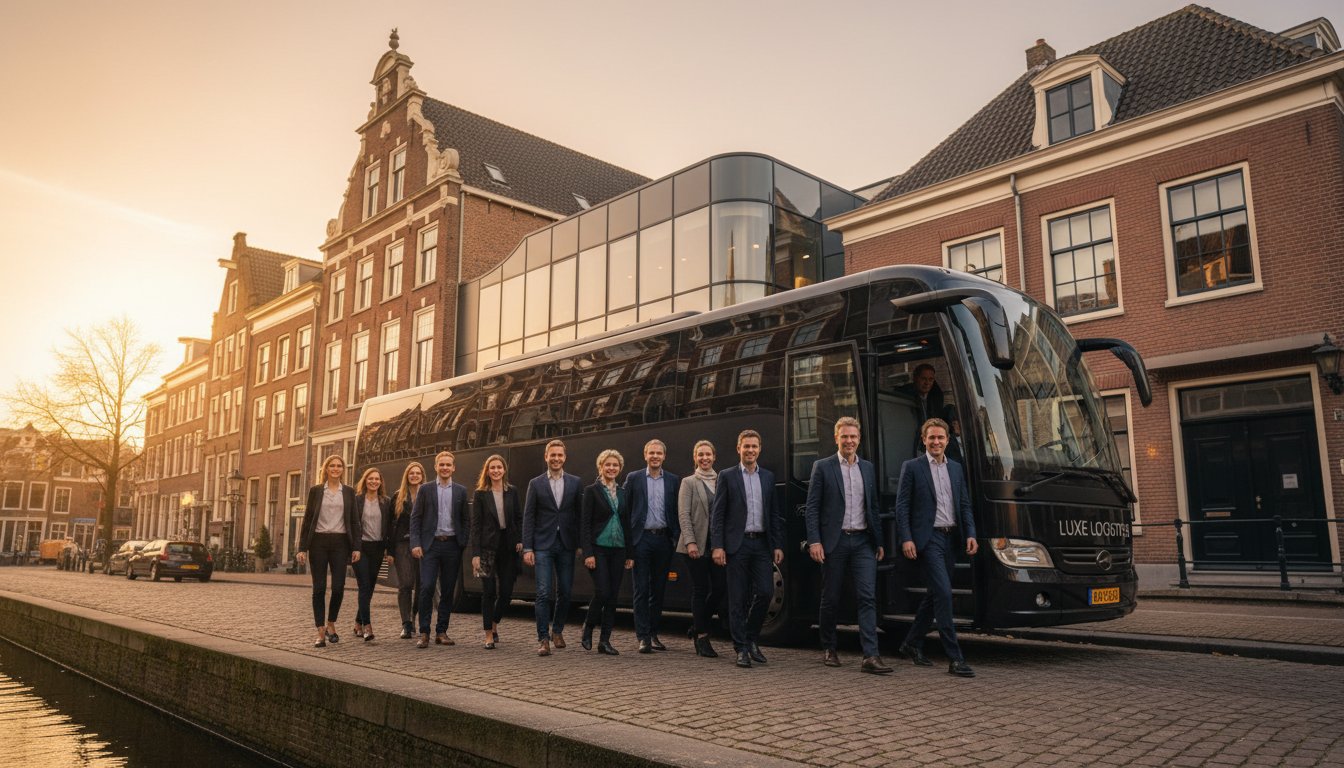
A Michelin-star experience often collapses not at the table, but in the friction of the journey between the vineyard and the cellar. True luxury is found in the silence of a perfectly timed arrival. You understand that orchestrating gastronomy group travel netherlands for twenty or more guests requires more than a palate for fine wine; it demands the technical rigor of an architect. Moving a high-profile group through the cobblestone streets of Utrecht or the windswept polders of North Holland without losing the sense of intimacy is a delicate dance.
We’re here to elevate these logistical challenges into a seamless art form. This masterclass provides the blueprint for creating bespoke, turnkey culinary journeys that maintain a premium feel at every scale. You’ll discover how to secure exclusive, non-touristy venues that accommodate large groups while preserving their soul. We explore the precision required to manage forty distinct dietary profiles without compromising the chef’s vision, ensuring your next Dutch expedition is defined by harmony and effortless elegance.
Key Takeaways
- Orchestrate sophisticated journeys that bridge the gap between historic Dutch heritage and the nation’s emerging status as a sustainable fine-dining powerhouse.
- Learn to balance the rustic charm of regional traditions with the avant-garde glass-house innovations defining the future of gastronomy group travel netherlands.
- Discover the logistical secrets to maintaining a seamless itinerary rhythm through the strategic use of private coach fleets in restricted urban zones.
- Identify how to select venues that harmonize architectural soul with the technical capacity required for high-end professional group hosting.
- Master the “A to Z” approach to itinerary design, ensuring every culinary encounter is sublimed by expert vision and rigorous execution.
Defining Gastronomy Group Travel in the Netherlands for 2026
Gastronomy group travel netherlands is no longer just about the consumption of local delicacies. It has transformed into a curated narrative of a nation’s identity, expressed through its plate and the stories behind its producers. By 2026, the Dutch culinary scene will be recognized as a global powerhouse of innovative, sustainable fine dining. This evolution reflects a shift where the meal itself is the destination, requiring a level of orchestration that transcends traditional tourism.
A fundamental distinction exists between a casual food tour and a professionally managed culinary itinerary. While a tour might offer a glimpse of a cheese market, a managed itinerary constructs a symphony of experiences. It balances sensory discovery with technical precision. A Destination Management Company (DMC) serves as the essential architect in this process. We bridge the gap between exclusive local producers and international groups, ensuring that every interaction feels bespoke and purposeful rather than transactional.
The Evolution of the Dutch Culinary Landscape
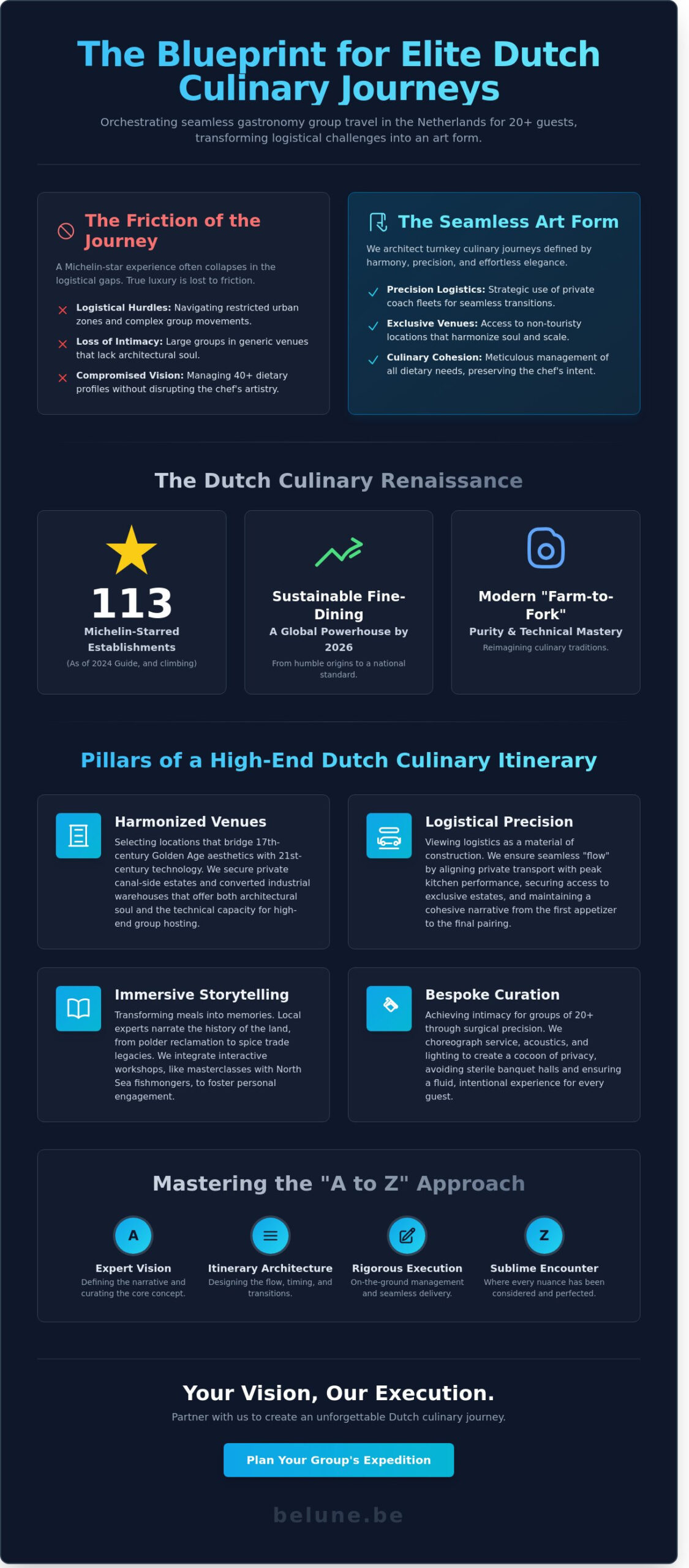
The Dutch kitchen has moved far beyond its humble agricultural origins. Today, it celebrates a Michelin-starred renaissance that emphasizes purity and technical mastery. As of the 2024 Michelin Guide, the Netherlands boasts 113 starred establishments, a figure that continues to climb as we approach 2026. This growth is rooted in Dutch culinary traditions, which have been reimagined through a modern “Farm-to-Fork” philosophy. This isn’t a marketing trend; it’s a national standard. The varied landscape, from the saline Zeeland shores to the fertile clay of the polders, informs a menu diversity that is both seasonal and surprising.
The B2B Perspective: Why Logistics Matter
Professional tour operators understand that high-end gastronomy requires more than a simple table reservation. The success of a multi-day journey depends on the “flow” of the experience. We view logistics as a material of construction, much like light or architecture. Every transition must be seamless. The synergy between transport, timing, and taste is delicate. If a group arrives late to a tasting because of poor routing, the chef’s timing is ruined and the emotional impact is lost. Precision is the silent partner of flavor. Our role is to master these invisible details, allowing the guest to focus entirely on the harmony of the dish.
- Strategic Timing: Aligning transport schedules with peak kitchen performance.
- Access: Opening doors to private estates and experimental labs usually closed to the public.
- Cohesion: Ensuring the narrative of the trip remains consistent from the first appetizer to the final pairing.
The Dutch approach to 2026 is one of quiet confidence and radical sustainability. By integrating architectural precision with culinary passion, we create environments where light, space, and food converge. It’s about more than just eating; it’s about the sublime realization of a project where every nuance has been considered.
The Pillars of a High-End Dutch Culinary Itinerary
Design defines the plate. In the context of gastronomy group travel netherlands, the architecture of the experience matters as much as the flavor profile. We seek out venues that bridge the gap between 17th-century Golden Age aesthetics and 21st-century culinary technology. A private dinner within the historic walls of a canal-side estate or a converted industrial warehouse in Amsterdam’s NDSM wharf provides the scale needed for groups without sacrificing the whisper of exclusivity. It’s about finding harmony between the heritage of the space and the innovation of the menu.
Storytelling transforms a meal into a lasting memory. Local experts don’t just explain the ingredients; they narrate the history of the land. Whether it’s the complex reclamation of the Flevoland polders or the spice trade legacy reflected in Rotterdam’s modern food halls, every bite carries narrative weight. We integrate interactive workshops, such as private masterclasses with North Sea fishmongers or artisanal cheese makers, to create a sense of active participation. This hands-on engagement ensures that the journey remains personal, even within a larger group setting.
Curating the Fine Dining Experience
Achieving intimacy for groups of 20 or more requires surgical precision. We select spaces where acoustics and lighting create a cocoon of privacy, avoiding the sterile atmosphere of standard banquet halls. The Belune standard demands a choreography of service where every movement is intentional and fluid. Pairings go beyond the traditional wine cellar; we explore the nuance of Dutch craft spirits and the resurgence of local viticulture from the Limburg region. This meticulous approach ensures that bespoke culinary environments resonate with the sophisticated traveler’s expectations.
Authentic Heritage and Seasonal Excellence
The Dutch calendar dictates the menu with absolute authority. Between April and June, the “white gold” of Brabant asparagus takes center stage. By September, the focus shifts to the game and forest harvests of the Veluwe. Accessing these moments requires deep-rooted partnerships with local producers who rarely open their doors to the public. We present traditional staples like haring or stamppot through a lens of modern refinement. By applying contemporary techniques to heritage recipes, we preserve the soul of the dish while elevating its aesthetic for a global palate. This balance of the rustic and the refined is the hallmark of premium gastronomy group travel netherlands.
Regional Flavours vs. Modern Innovation: A Comparative Analysis
The Dutch culinary landscape is a study in contrasts. It’s a delicate balance between the raw, salt-sprayed traditions of the coast and the meticulously engineered innovation of the metropolitan hubs. For those orchestrating gastronomy group travel netherlands, understanding this duality is essential. It isn’t just about the food. It’s about how light, architecture, and heritage converge to create a singular sensory experience. We see this most clearly when comparing the dim, amber-lit intimacy of a 17th-century “brown cafe” with the transparent, ethereal atmosphere of a modern glass-house restaurant.
The Coastal Harvest and Maritime Influence
The Dutch coastline stretches across 451 kilometres of diverse maritime terrain. In regions like Zeeland, the logistics of seafood for groups of 20 to 50 guests demand a 12-hour turnaround from dock to table. This ensures the peak vibrancy of the Oosterschelde lobster and Dutch Imperial oysters. The North Sea isn’t just a source of ingredients; it’s a cultural pillar. Contemporary chefs now pair these historic harvests with minimalist techniques that highlight the ingredient’s purity. We often recommend venues where the architecture frames the sea, using natural light to sublime the textures of the plate. It’s a choreography of freshness and heritage.
The Heartland: Dairy, Grains, and Tradition
Moving inland, the narrative shifts toward the “Groene Hart” or Green Heart. This region accounts for approximately 15% of the country’s total land area, dedicated largely to pastoral agriculture. Group engagement here goes beyond a simple cheese market visit. We curate deep-dives into artisanal production where guests witness the precision of aging 40-kilogram wheels of Gouda in climate-controlled cellars. The architectural beauty of these rural dining locations, often repurposed 18th-century barns, provides a grounding contrast to urban luxury. Managing the transition for a group involves a strategic 60-minute journey from these rustic settings to the sleek, polished environments of the city center.
Innovation thrives in the metropolitan core. Since 2021, Amsterdam and Rotterdam have seen a 25% increase in high-end, plant-based dining concepts. These spaces often utilize glass-house architecture to blur the lines between the kitchen garden and the dining room. This transparency reflects a commitment to sustainability and technical excellence. Gastronomy group travel netherlands now frequently centers on these hubs of “New Dutch” cuisine, where the focus is on harmony and nuance. Key logistical considerations for these urban experiences include:
- Acoustic Design: Selecting venues where group conversation doesn’t compromise the serene atmosphere.
- Lighting Mastery: Utilizing spaces that adapt their luminosity to the shifting Dutch sky.
- Sustainable Flow: Prioritizing restaurants with zero-waste certifications, which now number over 30 in major cities.
- Custom Curation: Designing menus that bridge the gap between rural tradition and metropolitan avant-garde.
The Dutch food scene doesn’t settle for the ordinary. It’s a deliberate conception of space and taste. Whether it’s the rugged charm of a maritime port or the sharp lines of a plant-based laboratory, the focus remains on quality. Every meal is an opportunity to explore the technical and emotional resonance of the landscape.
Logistical Precision: The Backbone of Seamless Group Travel
Excellence in gastronomy group travel netherlands isn’t defined by the menu alone; it’s defined by the rhythm of the journey. Logistics serve as the invisible architecture that supports every sensory experience. When a group arrives at a historic canal-side restaurant, the transition from the road to the table must be effortless. This precision ensures that guests aren’t thinking about traffic or parking; they’re ready to engage with the first glass of Dutch sparkling wine. Timing is a sensory element. A group that arrives harried will never appreciate the subtle nuances of a North Sea grey shrimp croquette. We treat time as a material to be shaped, ensuring every arrival is calm and every departure is punctual.
Transport Mastery for Large Groups
A private coach fleet acts as a sanctuary on wheels. We prioritize modern, high-comfort vehicles that mirror the sophistication of the dining venues themselves. These coaches navigate the complex geography of the Netherlands, where water and land constantly intersect. Professional drivers are essential for managing the strict milieuzones (environmental zones) now active in over 15 Dutch cities. In 2024, these regulations require Euro 6 or zero-emission vehicles for entry into urban centers like Amsterdam and Utrecht. By coordinating these arrivals with surgical precision, we eliminate the stress of historic zone restrictions. This links remote artisanal producers in Zeeland with urban luxury dining rooms through a seamless, silent thread of transport.
Expert Local Guidance and On-the-Ground Support
The role of a Destination Management Company (DMC) is to be the silent conductor of a complex symphony. Beyond the visible itinerary, we manage the intricate details of dietary requirements and last-minute adjustments. If a cheese-making workshop in a Gouda warehouse runs ten minutes long, the DMC recalibrates the entire evening in real-time. Multi-lingual local experts don’t just translate; they interpret the culture. They manage group dynamics during high-energy culinary workshops, ensuring every participant feels seen and supported. With 24/7 logistical support, tour operators gain a strategic ally that handles the unexpected with grace. This level of oversight transforms a simple trip into a masterclass in gastronomy group travel netherlands.
True hospitality begins long before the first course is served. It starts with a vision of perfect harmony between movement and rest. Discover how our expertise in atmosphere and design can elevate your professional vision.
Partnering with BELUNE: Your Vision, Our Execution
BELUNE transforms the logistical complexity of gastronomy group travel netherlands into a seamless, high-end experience. With 20 years of expertise in the Benelux region, we don’t just coordinate logistics; we compose journeys. Our “A to Z” philosophy ensures that every detail, from the conceptual sketch of an itinerary to the final farewell at the airport, reflects an uncompromising standard of quality. We act as an extension of your team, providing the technical precision and creative flair needed to sublime every guest interaction.
Transparency drives our partnerships. We provide fixed-price group packages that eliminate the uncertainty often associated with high-end culinary tours. This approach offers tour operators clear value and predictable margins, allowing you to focus on client relationships while we manage the intricate choreography of local suppliers, Michelin-starred venues, and private tastings. It’s a commitment to culinary artistry that prioritizes lasting memories over simple sightseeing.
Bespoke Itinerary Design
We believe every group possesses a unique cultural profile. A group of North American epicureans seeks a different pace than European corporate delegates. Our design process begins with this nuance, tailoring every stop to match the group’s expectations. We often expand the horizon by integrating Belgium gastronomy tours into the schedule. This creates a comprehensive Benelux experience where the rustic flavors of the south meet the innovative seafood techniques of the Dutch coast. By combining these culinary themes with culture group tours in Benelux, we ensure the narrative of the trip is rich, diverse, and intellectually stimulating.
The BELUNE Difference
Control is the foundation of our excellence. Unlike agencies that outsource core services, BELUNE maintains a private fleet and a dedicated in-house team. This vertical integration allows us to pivot instantly to client needs and maintain total control over the guest experience. It’s why we’ve become the preferred benelux incoming tour operator for discerning agents who require more than just a service provider. We are strategic allies in the realization of exceptional architectural and culinary projects.
- Expertise: Two decades of specialized knowledge in the Benelux luxury sector.
- Reliability: A private fleet that ensures punctuality and elite comfort.
- Vision: An artisanal approach to gastronomy group travel netherlands that treats light, space, and food as a single harmonious experience.
Planning for the future requires foresight and a partner who understands the evolving landscape of luxury travel. We are currently accepting inquiries for 2026 group travel needs. Requesting a custom proposal is the first step toward securing a journey that reflects your brand’s commitment to excellence and BELUNE’s mastery of the Dutch and Belgian landscape.
Crafting the Future of Dutch Culinary Excellence
The evolution of gastronomy group travel netherlands for 2026 transcends simple dining. It represents a sophisticated harmony between regional heritage and modern innovation. Success relies on the invisible mastery of logistics. When technical precision meets creative vision, the result is an unforgettable sensory journey. We believe every itinerary should be a bespoke masterpiece, where the transition between a historic farm and a Michelin-starred kitchen is as fluid as the light in a Dutch painting. Reliability is the silent partner of inspiration. It’s the foundation that allows your guests to truly savor the moment.
With 20+ years of Benelux DMC expertise, BELUNE provides the structural integrity your projects deserve. We manage the delicate nuances of group movement through our private fleet of modern, high-comfort coaches. Our specialized B2B focus ensures absolute fixed-price package transparency, removing the friction from your planning process. You’re not just booking a service; you’re partnering with a visionary team dedicated to your success. Let’s transform your logistical requirements into a seamless narrative of taste and elegance.
Partner with BELUNE to design your next Dutch culinary masterpiece. Your vision deserves our execution.
Frequently Asked Questions
What makes the Netherlands a top destination for gastronomy group travel in 2026?
The Netherlands stands out in 2026 due to its 132 Michelin-starred establishments and a 15% increase in farm-to-table initiatives across the country. This evolution makes gastronomy group travel netherlands a premier choice for those seeking culinary innovation. We focus on the harmony between traditional Dutch heritage and modern sustainability. Our itineraries highlight this balance through exclusive access to private vineyards and high-tech urban farms.
How does BELUNE handle transport for large groups visiting historic Dutch centres?
BELUNE manages logistics by deploying Euro 6 compliant coaches and 100% electric canal boats for city center access. We navigate the 17th-century canal rings using vessels designed for silence and comfort. This technical precision ensures your group moves effortlessly through narrow streets. We coordinate every arrival with 15-minute buffer windows to maintain a seamless flow between venues.
Can culinary itineraries be customized for specific group interests, such as beer or cheese?
We design every itinerary as a bespoke masterpiece tailored to your group’s specific fascinations. Whether you’re exploring the 900 craft breweries currently operating or the 800-year history of Gouda cheese, our team crafts the narrative. Gastronomy group travel netherlands thrives on these specialized niches. We connect you directly with master blenders and artisanal producers for private, hands-on workshops.
What is the ideal group size for a premium Dutch gastronomy tour?
A group size of 12 to 20 guests represents the ideal balance for premium culinary experiences. This range allows for intimate “Chef’s Table” interactions that larger crowds can’t access. Many high-end Dutch venues cap private dining at 24 seats to preserve the atmosphere. By keeping groups within these limits, we’ll ensure every guest receives personalized attention from the sommelier and kitchen staff.
How are dietary requirements managed during large-scale group dining events?
We manage dietary needs through a rigorous digital profiling system implemented 30 days before the tour begins. This data allows our partner chefs to integrate allergies and preferences into the menu design rather than offering last-minute substitutions. Our team cross-references every ingredient for 100% compliance. This meticulous approach guarantees a safe, inclusive dining experience for every participant.
Does BELUNE provide all-inclusive pricing for B2B tour operators?
BELUNE provides comprehensive, transparent net rates designed specifically for B2B tour operators. Our quotes cover 100% of the logistical chain, from transport to gratuities. This clarity allows you to build your packages with absolute confidence. We’ll act as your strategic ally, ensuring no hidden costs disrupt your financial planning or client relationships.
What is the best time of year to plan a culinary group trip to the Netherlands?
The months of April through June offer the most vibrant culinary landscape for group visits. This period aligns with the North Sea crab season and the famous “White Gold” asparagus harvest starting in mid-April. September and October provide a rich alternative with game meats and harvest festivals. We recommend booking 12 months in advance to secure the most sought-after seasonal venues.
How do local guides enhance the gastronomic experience for international groups?
Our guides act as cultural architects who transform a simple meal into a profound human experience. They bring 10 or more years of local expertise to every tour, bridging the gap between technical food production and emotional storytelling. They don’t just translate menus; they reveal the soul of Dutch hospitality. This expert guidance adds a layer of sophistication that standard tours lack.
Leave a Reply