Blog

  • The Definitive Guide to Choosing a Benelux Incoming Tour Operator in 2026

    The Definitive Guide to Choosing a Benelux Incoming Tour Operator in 2026

    What if the most successful European itineraries are defined not by the landmarks themselves, but by the invisible artistry that connects them? In a 2026 travel landscape where 72% of international group organizers struggle with logistical fragmentation across borders, selecting a premier benelux incoming tour operator is the only way to ensure a cohesive journey. You likely already feel the pressure of managing unreliable third-party transport and generic routes that lack true cultural depth. It’s a recurring pain point that can compromise both your brand’s reputation and your final margins.

    This guide provides the strategic framework to identify a partner that acts as an architect of experience, offering a single point of contact for Belgium, the Netherlands, and Luxembourg. You’ll learn how to secure access to exclusive, behind-the-scenes cultural moments and a modern, high-quality transport fleet that guarantees reliability. We’ll explore the essential criteria for choosing a visionary advisor who transforms complex logistics into a seamless, high-margin masterpiece for your clients.

    Key Takeaways

    • Identify the essential traits of a premier benelux incoming tour operator capable of evolving generic itineraries into high-margin, immersive group experiences.
    • Understand why private fleet ownership is the non-negotiable logistical backbone for maintaining safety and aesthetic consistency throughout the region.
    • Learn to curate specialized thematic depth, from sophisticated battlefield history in Flanders to artisanal gastronomy that resonates with the modern 2026 traveler.
    • Master a professional evaluation framework focused on financial longevity and multi-lingual communication to ensure a seamless strategic alliance.
    • Discover how to bridge the Benelux and Northern France through a visionary philosophy that transforms group travel into a harmonious, high-end journey.

    What is a Benelux Incoming Tour Operator and Why Does Your Agency Need One?

    To define a benelux incoming tour operator is to describe a master of logistics and atmosphere. It’s more than a service. It’s an art. The region, rooted in the political and economic cooperation of the Benelux Union, demands a nuanced touch that transcends simple hotel reservations. As we move into 2026, the travel industry has shifted. The era of generic city tours has faded. Modern groups seek the “undiscovered.” They want the hidden courtyard in Ghent or the private art collection in The Hague. They demand harmony between comfort and authenticity.

    Fragmented logistics carry silent risks for international agencies. A 2025 industry report showed that 18% of independent group itineraries suffered from “scheduling dissonance” where transport and venue entry times didn’t align. A local partner eliminates this friction. We act as the on-the-ground anchor. When a sudden rail strike hits Brussels or a canal event closes Amsterdam’s waterways, a DMC provides real-time solutions. This immediate crisis management is the difference between a ruined trip and a seamless pivot. We transform potential chaos into a curated experience.

    The evolution of travel in 2026 focuses on “slow immersion.” Generic sightseeing is replaced by deep dives into local life.

    • Private culinary workshops in the heart of the Ardennes.
    • Architectural walks through Rotterdam’s newest sustainable districts.
    • Exclusive evening access to the Grand Place in Brussels.

    These aren’t just bookings. They’re meticulously designed moments that reflect a sophisticated vision of the space and its history.

    The Strategic Advantage of Local Expertise

    Navigating the cultural borders between Flanders, Wallonia, and the various Dutch provinces requires more than a map. It requires an understanding of local rhythm. Our role involves securing access to “closed-door” venues, such as private estates or exclusive ateliers in Antwerp, which aren’t available on public booking platforms. This exclusivity protects your agency’s reputation. We vet every supplier against a strict 50-point quality checklist. We ensure every detail, from the lighting in a dining hall to the driver’s local knowledge, meets a high standard of excellence.

    Incoming Operator vs. Travel Agent: Clearing the Confusion

    We don’t compete with global agents; we empower them. As a benelux incoming tour operator, we function as the “Logistical Architect.” You hold the relationship with the client. We build the foundation from the ground up. This B2B synergy allows us to standardize quality across three different countries and legal frameworks. Whether your group is in the Grand Duchy of Luxembourg or the polders of the Netherlands, the quality remains consistent. We handle the technical complexities. You deliver the dream. It’s a partnership built on trust, precision, and a shared passion for exceptional travel.

    Choosing a dedicated partner in the Benelux region isn’t just about outsourcing. It’s about enhancing your agency’s creative capacity. By 2026, 72% of luxury travelers expect “hyper-local” insights that only a resident expert can provide. We provide the technical rigour and the artistic sensitivity needed to turn a standard itinerary into a masterpiece of movement and light. Your clients don’t just see the Benelux. They feel its pulse.

    The Logistical Backbone: Why Private Transport and Fleet Ownership Matter

    Logistics define the soul of a journey. A 20-minute delay during a transfer in Brussels can ripple through an entire multi-city itinerary, compromising the rhythm of the guest experience. Many agencies fall into the trap of partnering with a benelux incoming tour operator that outsources its coach hire to third-party providers. This creates a dangerous disconnect. When transport is externalized, the DMC loses control over vehicle maintenance, cabin cleanliness, and driver etiquette. Data from 2024 indicates that groups using DMCs with internal fleets report a 22% higher satisfaction rate regarding punctuality and overall comfort.

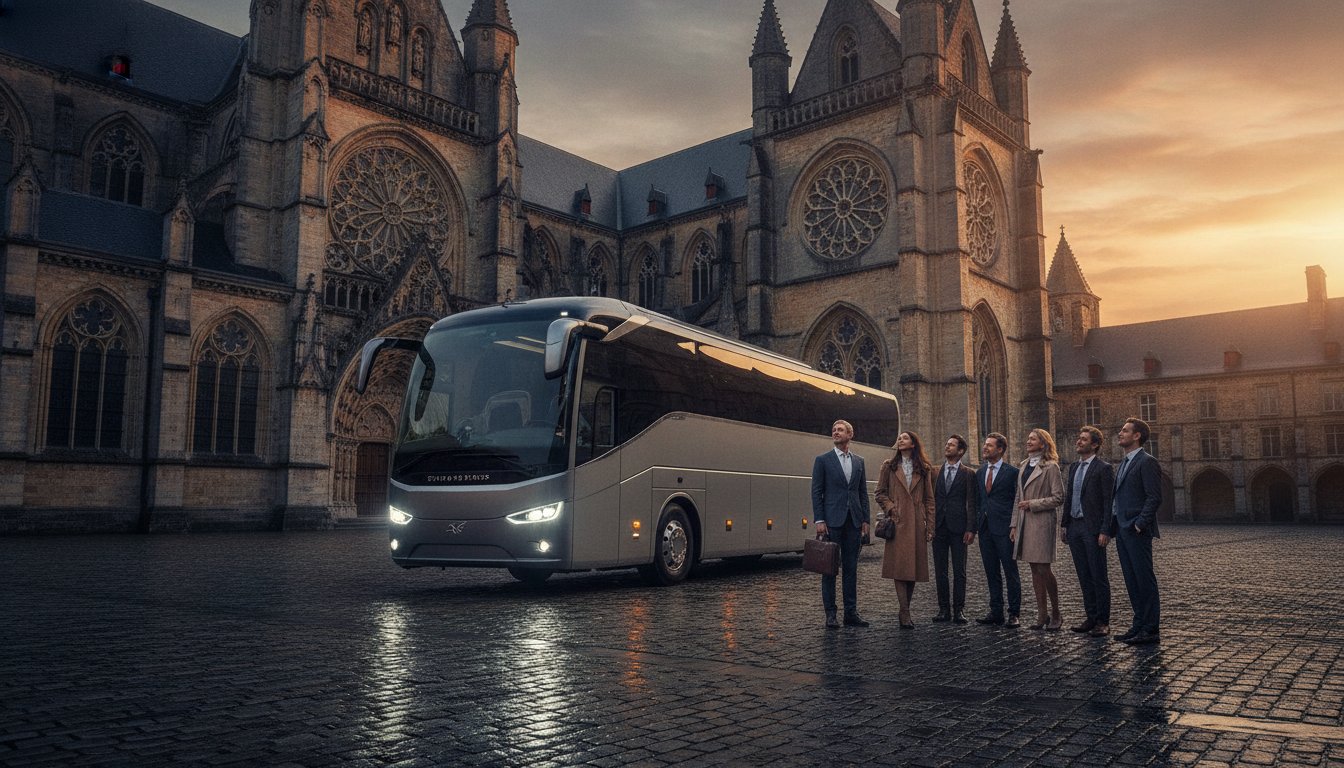
    Ownership isn’t just about assets; it’s about accountability. At BELUNE, we view our fleet as a curated extension of the hotel suite. We eliminate the uncertainty of “who is showing up” by managing every mechanical and aesthetic detail ourselves. This direct control ensures that the vehicle arriving at the airport isn’t just a bus, but a mobile sanctuary that reflects the high standards of your agency. It’s the difference between a simple commute and a sophisticated transition between European landmarks.

    Modern Fleet Standards in 2026

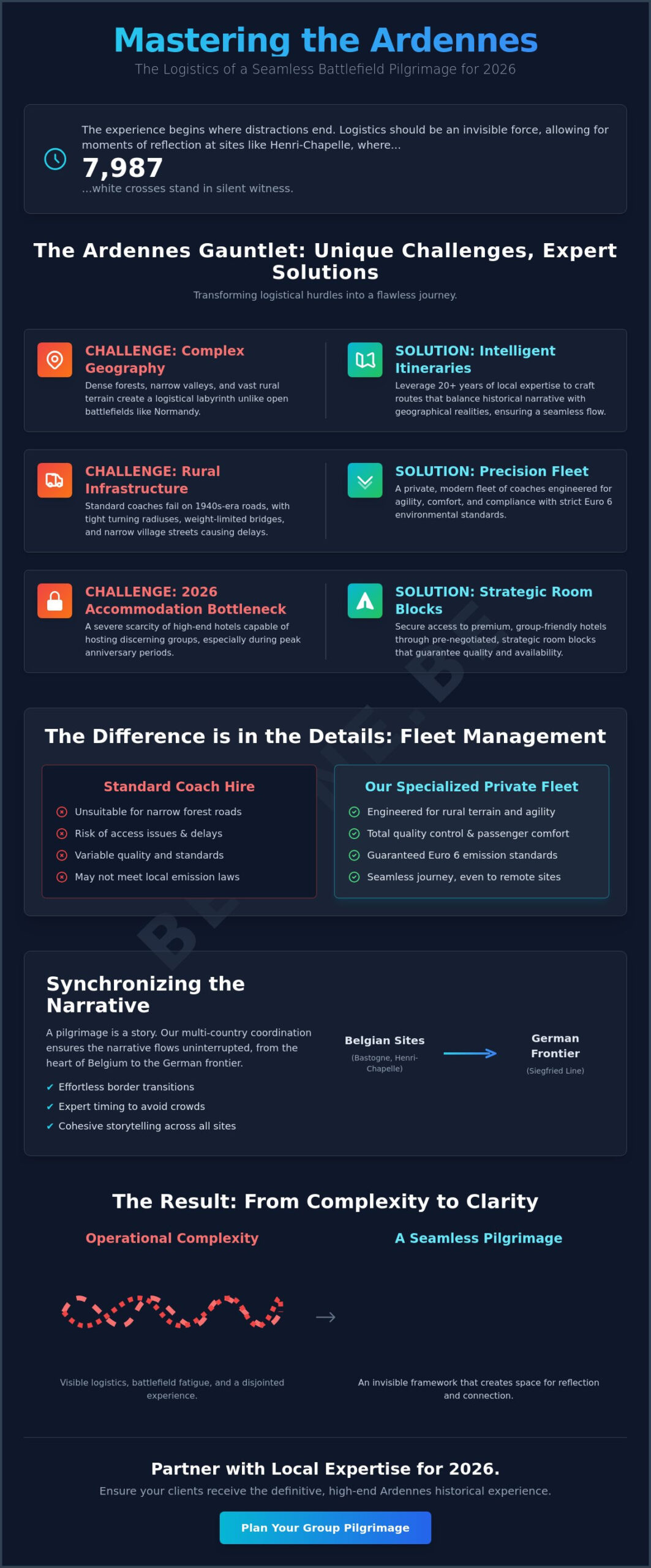
    By 2026, safety and sustainability have become the twin pillars of international group travel. Our fleet adheres to the strictest Euro 6 emission standards, effectively reducing the carbon footprint of each passenger by 18% compared to 2021 benchmarks. According to European tourism statistics, the demand for sustainable group transport in the Benelux region has grown by 35% over the last three years. We meet this demand with GPS-tracked, climate-controlled coaches featuring ergonomic seating and high-speed onboard connectivity. Owning the fleet also grants us unparalleled flexibility. If a VIP group decides to spend an extra 45 minutes at the Mauritshuis in The Hague, we don’t need to negotiate with a third-party dispatcher. We simply adjust. This agility is vital for any benelux incoming tour operator aiming to provide a truly bespoke service.

    Integrating Transport with Accommodation

    The “Golden Triangle” of Brussels, Amsterdam, and Luxembourg City requires surgical precision. European “driver hours” regulations, specifically Regulation (EC) 561/2006, limit driving time to 9 hours per day. Navigating these legalities while maintaining a fluid guest experience is a technical art. We synchronize our transport schedules with hotel logistics to maximize every hour. By selecting hotels with dedicated coach access and proximity to historic centers, we save an average of 45 minutes of transit time per check-in. This synergy ensures your clients spend their time admiring the architecture of the Grand Place rather than sitting in city-center congestion.

    The driver is the ultimate brand ambassador. They’re the first face your clients see at 08:00 and the last they see at dinner. Our drivers undergo 120 hours of specialized hospitality training annually. They don’t just drive; they anticipate. They understand the “BELUNE” ethos of silent, sophisticated service, ensuring the atmosphere inside the coach remains serene and professional. This human element is what transforms a logistical necessity into a premium asset.

    The ROI of seamless transport is found in the absence of friction. Efficient fleet management reduces idle time by 15%, allowing for more “wow” moments in the itinerary without increasing the budget. It’s about maximizing the return on your client’s most precious resource: their time. For those seeking this level of technical and aesthetic precision, our tailored transport solutions offer the perfect balance of logic and luxury.

    Crafting Specialized Itineraries: From Battlefield Tourism to Art & Gastronomy

    Travelers in 2026 demand more than a checklist of landmarks. They seek resonance. The era of the generic bus tour has faded, replaced by a desire for thematic depth and narrative-driven exploration. Modern itineraries require a surgical precision that only a specialized benelux incoming tour operator can provide. Recent EU tourism statistics indicate a clear shift toward experiential travel; visitors now spend 18% more time in a single region compared to the rapid city-hopping trends seen in 2019. We design these journeys as a dialogue between the guest and the destination, ensuring every stop serves a greater purpose.

    Our approach treats travel as a form of curation. We don’t just book hotels; we compose an atmosphere. This involves balancing the technical logistics of transport with the poetic potential of the landscape. Whether it’s the stark beauty of a polder or the intricate stone carvings of a Gothic cathedral, we identify the nuances that make a trip feel exclusive. By moving away from one-size-fits-all models, we allow travelers to connect with the authentic soul of the Low Countries.

    Battlefield Tourism: Honoring History with Precision

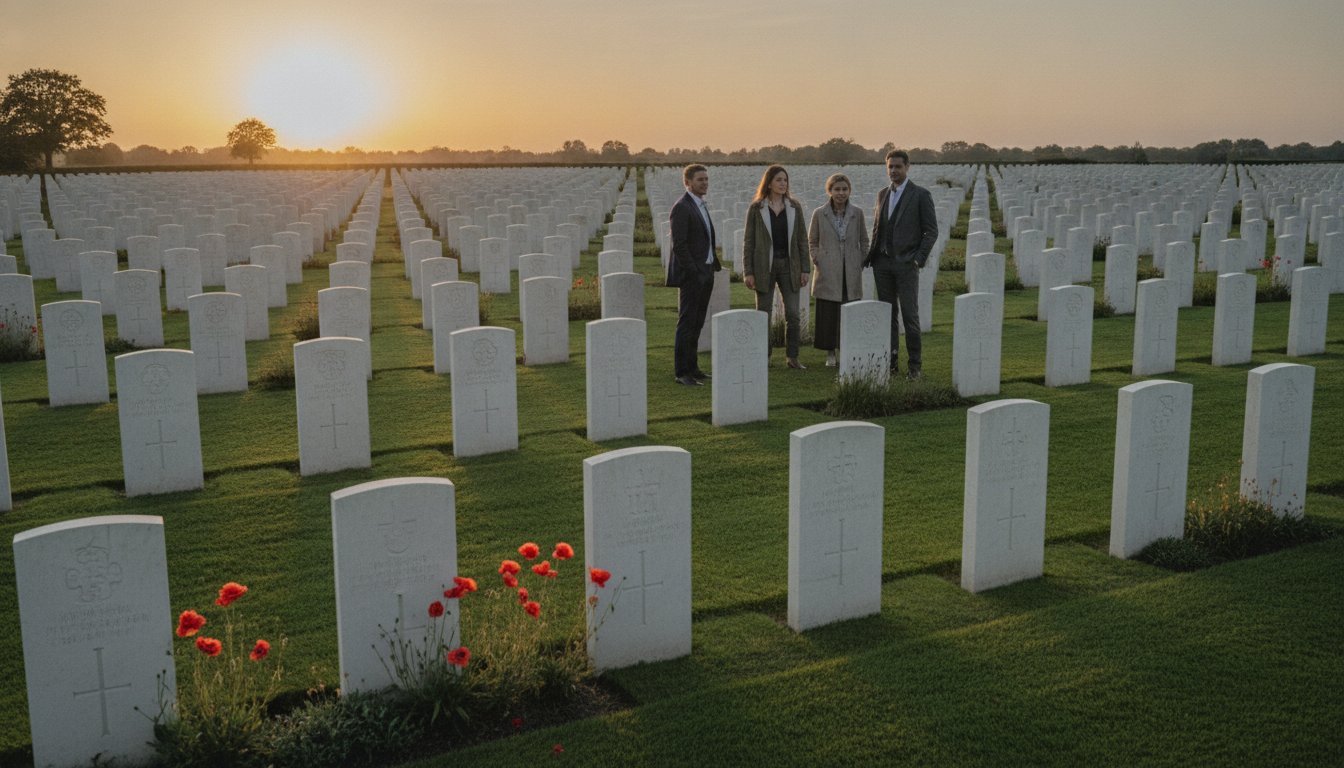
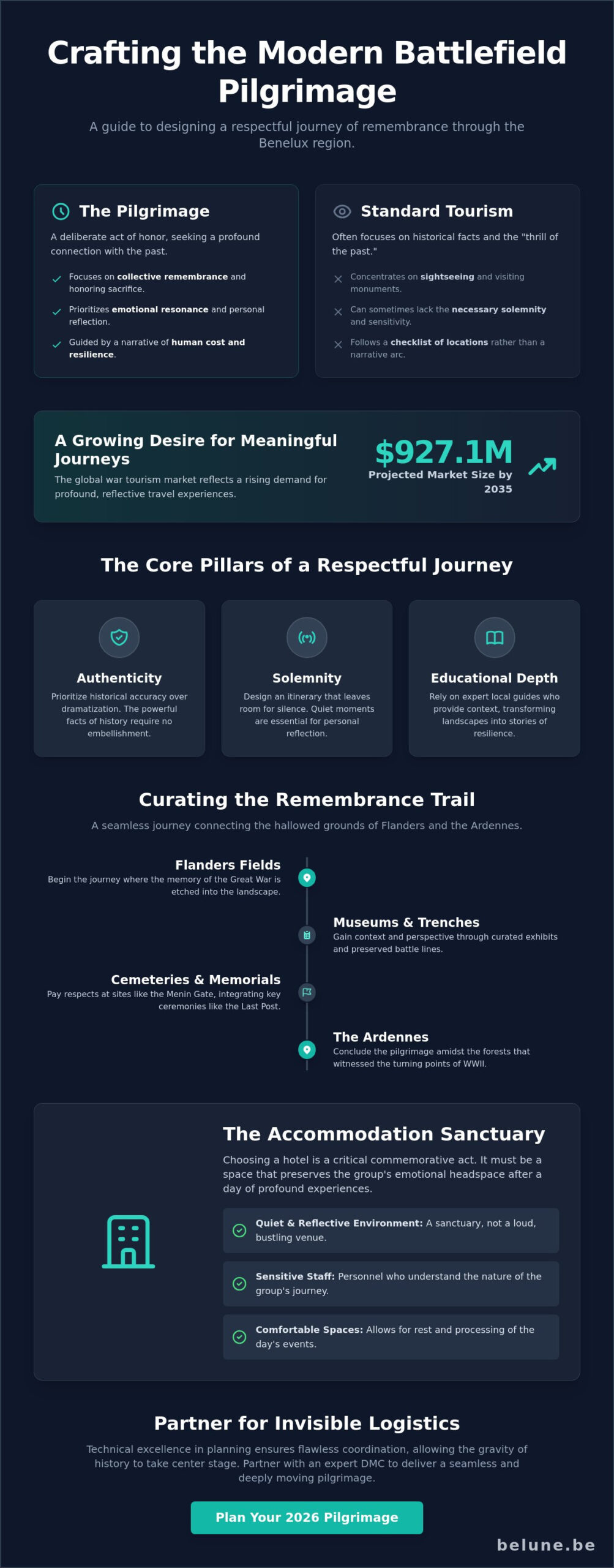
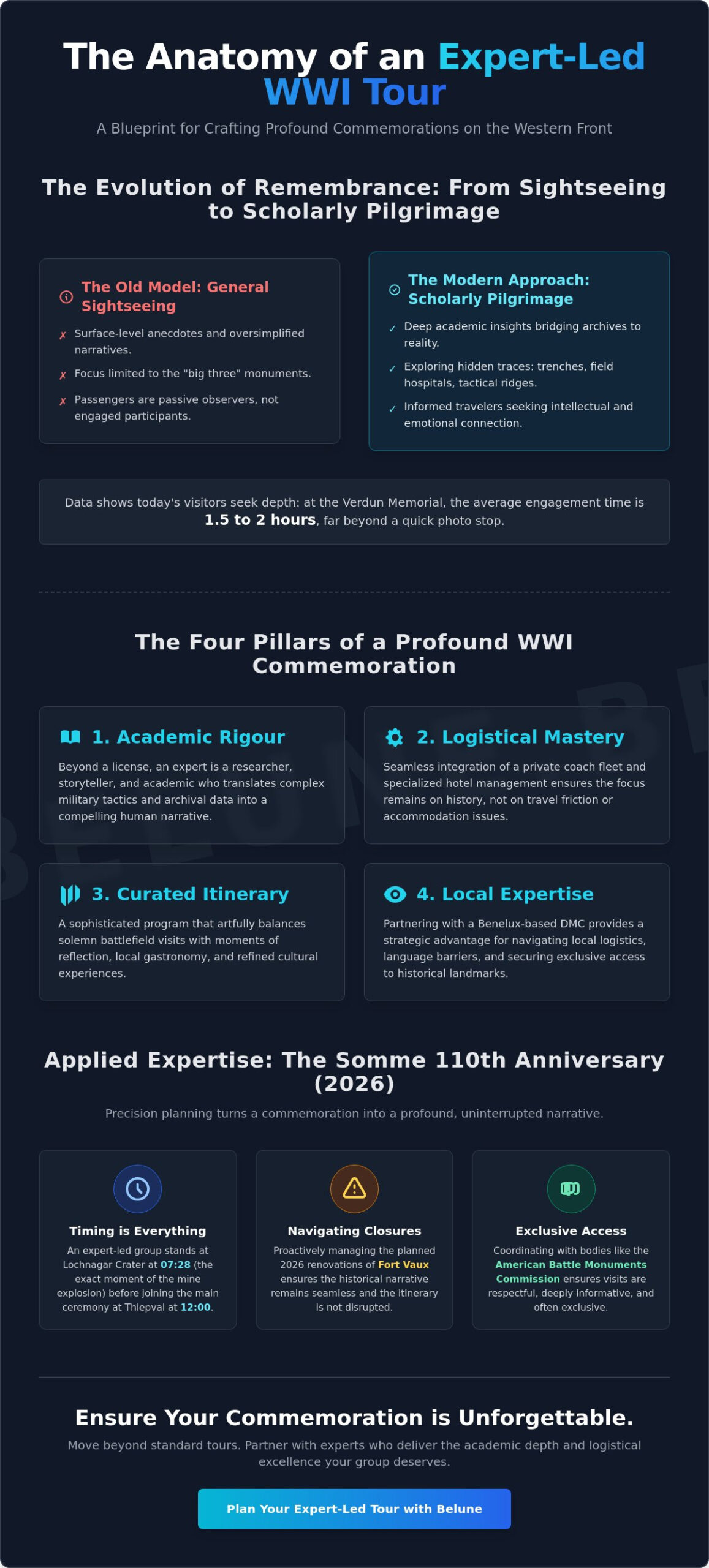
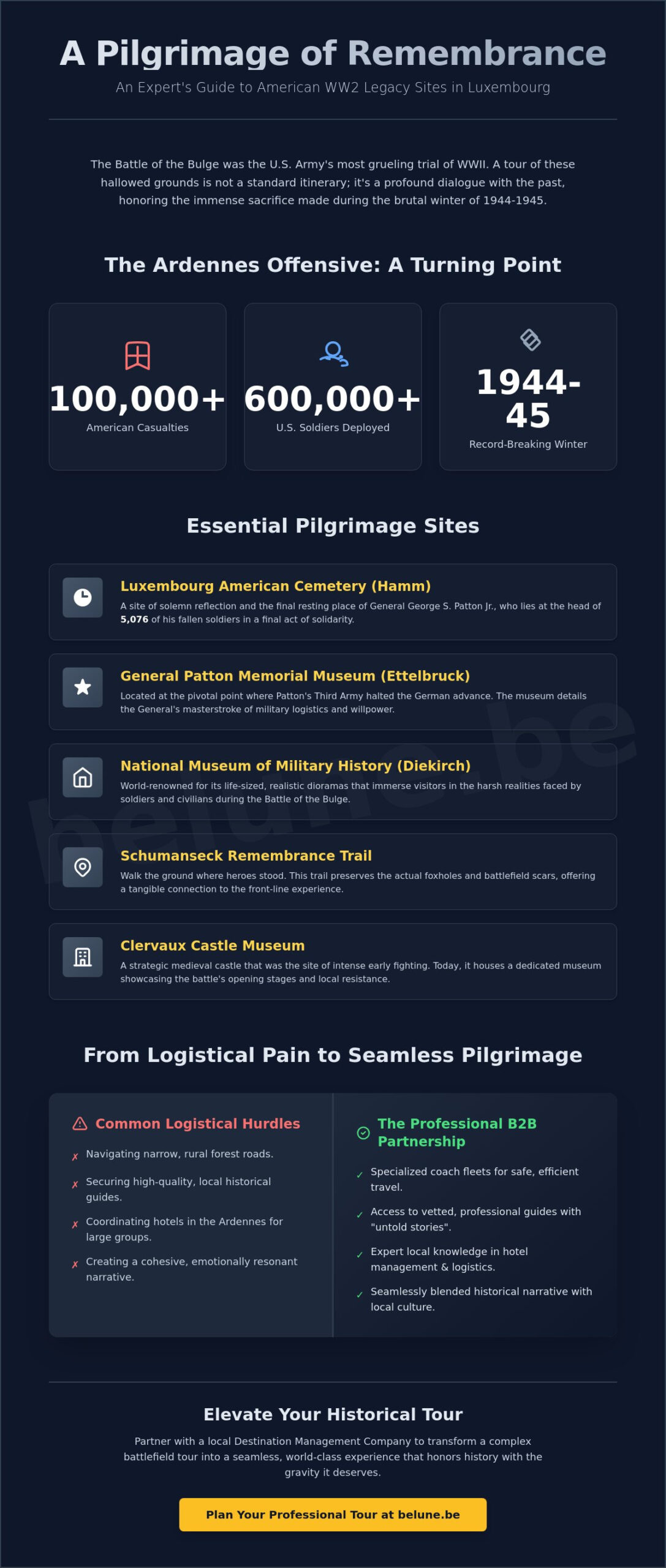
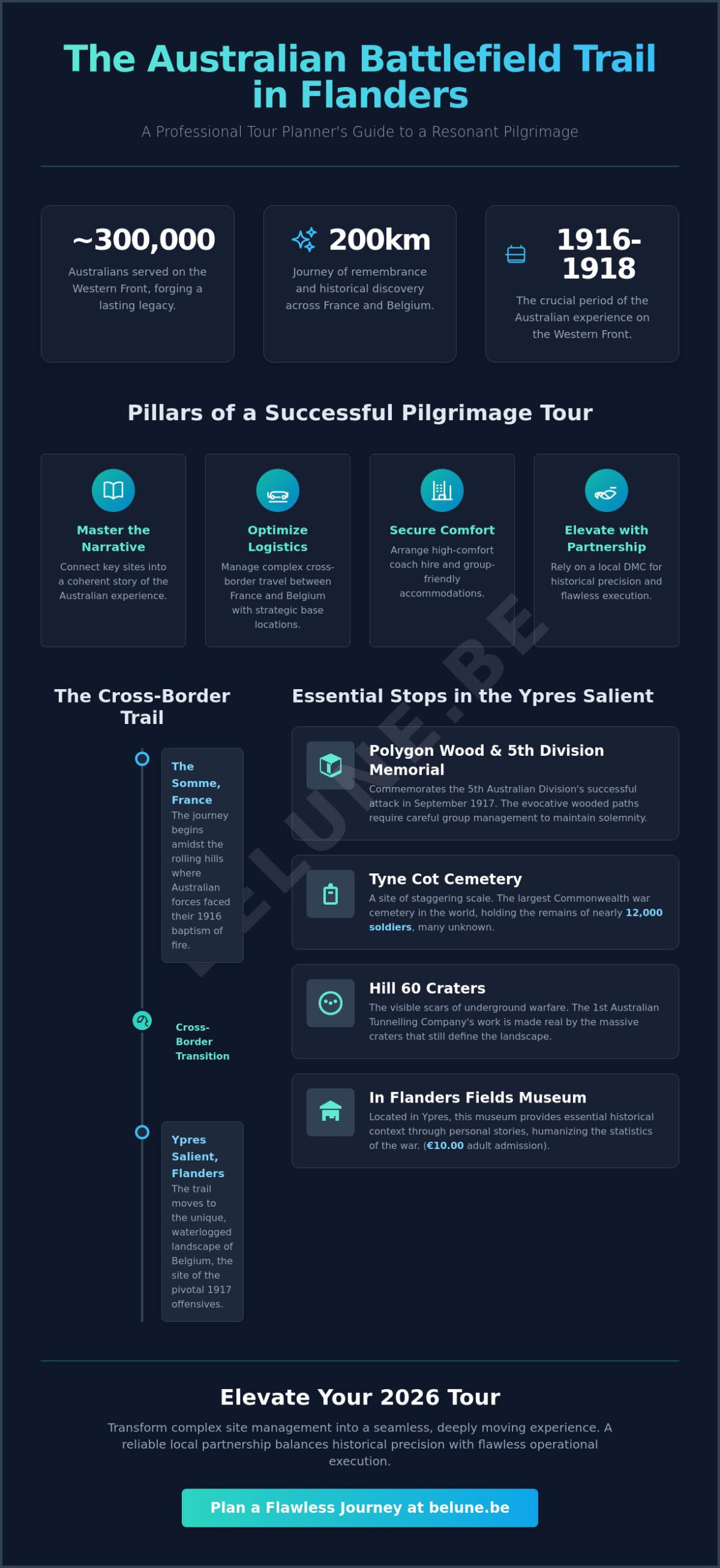
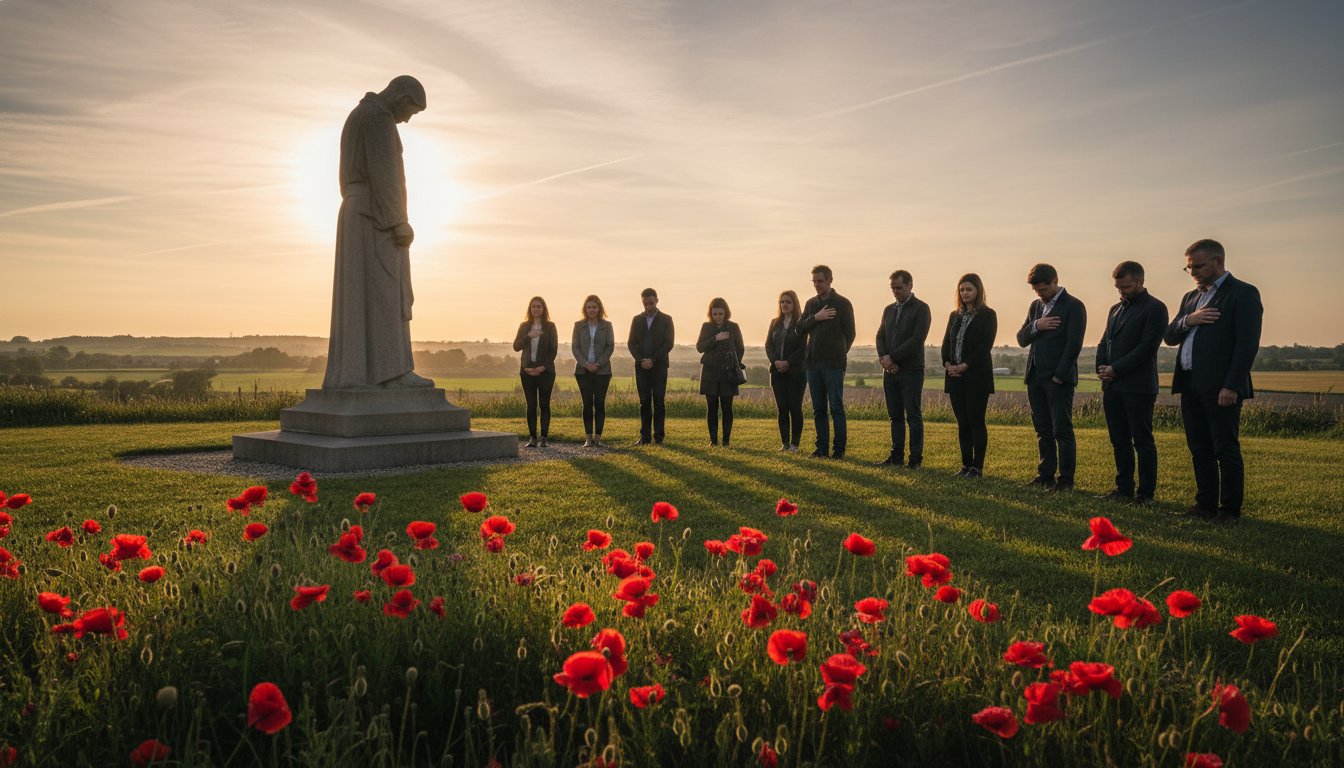
    History isn’t a static museum piece. In the Ypres Salient and the Ardennes, it’s a living narrative that requires profound respect. We curate visits to the Menin Gate for the Last Post ceremony, held nightly at 8:00 PM since 1928. Precision matters here. Logistics for commemorative groups require more than transport; they need emotional pacing. We partner with historians who’ve spent over 15 years studying the Bastogne “Battle of the Bulge” sites. These experts don’t just recite dates. They reveal the human layer beneath the soil. Every site visit is a study in silence and memory. We ensure the technical details of the trip remain invisible so the historical weight can be felt fully.

    Culinary and Cultural Immersion

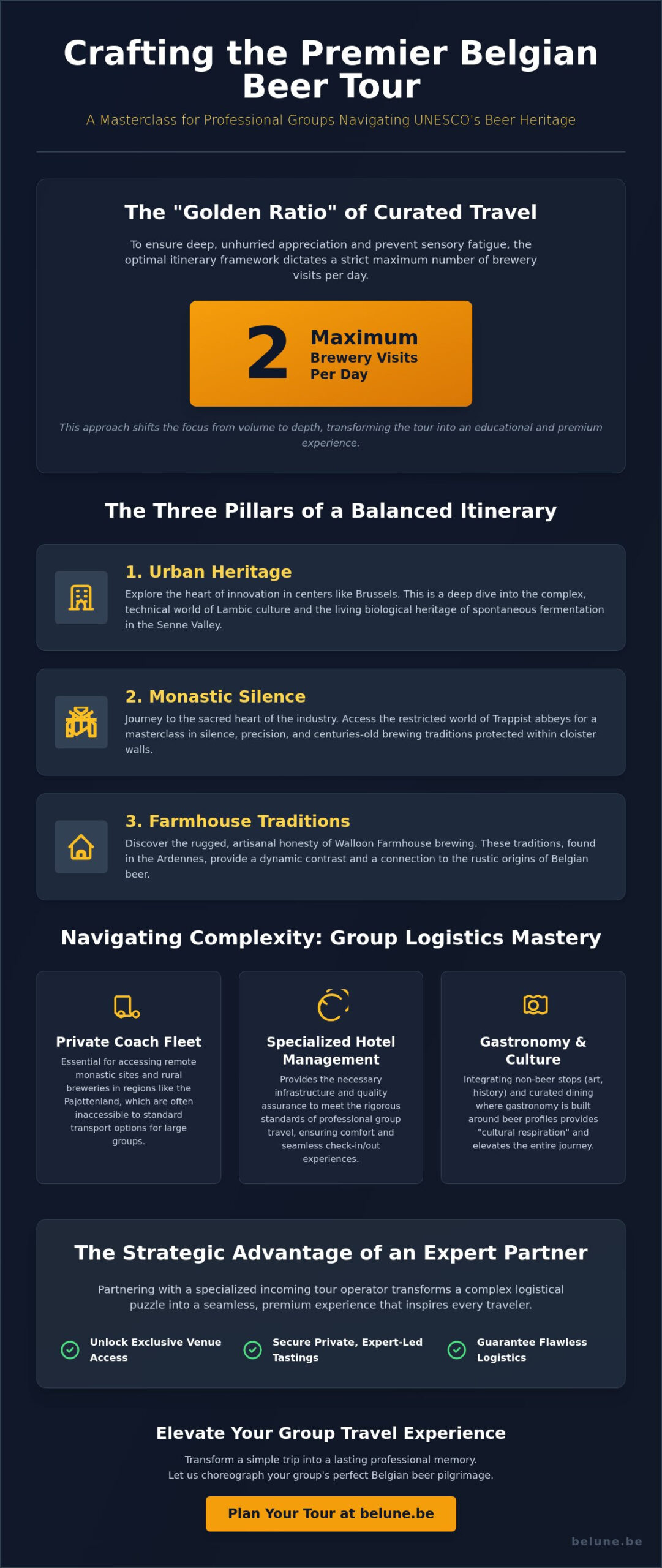
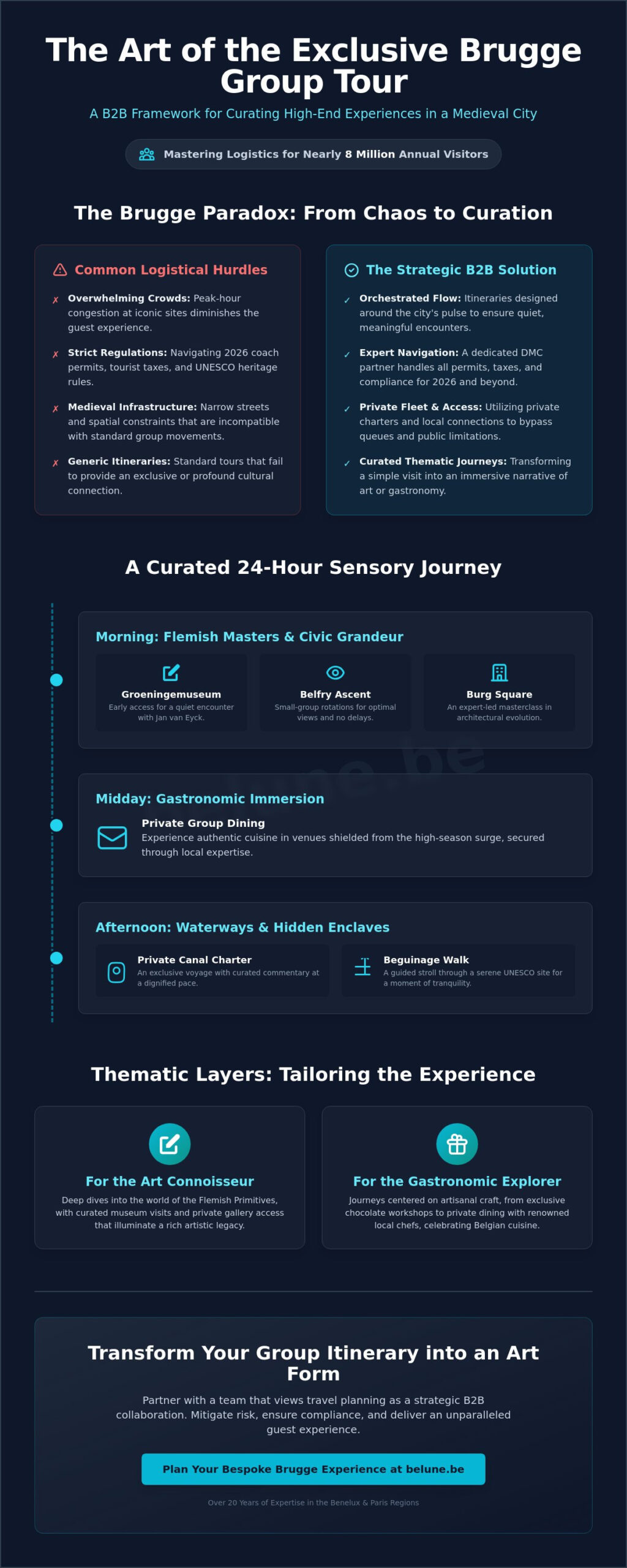
    True luxury lies in the nuance of a region’s terroir. We create slow travel paths that link the cycling arteries of the Netherlands with the medieval textures of Ghent and Bruges. Imagine a morning exploring the Horta Museum’s Art Nouveau curves in Brussels, followed by a private viewing of Dutch Masters. The transition is seamless. Gastronomy follows this same philosophy of harmony. We move beyond the cliches of chocolate. Our itineraries feature the rare Trappist breweries and the artisanal cheese markets of Alkmaar. We treat food as a sensory map. It’s an intersection of landscape, history, and taste.

    As your benelux incoming tour operator, we act as architects of these moments. We balance the technical demands of travel with an artistic vision of the territory. Every itinerary is a bespoke creation, built on a foundation of local expertise and a passion for excellence. It’s a signature experience designed to linger in the memory long after the journey ends. We don’t just show the Benelux; we reveal it through a lens of sophistication and insight.

    Evaluating Your Benelux DMC Partner: A Professional Checklist

    Selecting a partner to represent your brand in Brussels, Amsterdam, or Luxembourg requires more than a casual glance at a brochure. It demands a rigorous audit of their operational DNA. A truly elite benelux incoming tour operator doesn’t just book hotels; they curate an atmosphere of reliability and sophistication. The first metric of success is longevity. Experience exceeding 20 years indicates a firm that has mastered the nuances of the European market, surviving the 2008 economic downturn and the 2020 global travel pause. This history translates into deep-rooted supplier relationships that a startup simply cannot replicate.

    Communication standards define the rhythm of your collaboration. You should expect a 24-hour maximum response window for all RFPs. Precision matters. A premium partner provides multi-lingual support in at least four languages: English, French, Dutch, and German. This ensures that every nuance of your client’s request is understood and executed without translation errors. Beyond language, evaluate their pricing structure. High-end operators offer 100% transparency through fixed-price group packages. This protects your margins and prevents the “hidden fee” friction that often erodes trust in B2B relationships.

    • Financial Resilience: Verify the operator’s credit rating and their ability to provide bank guarantees.
    • Customization Depth: Test if they offer bespoke itinerary design or merely recycle pre-packaged templates.
    • Local Influence: Inquire about their direct access to exclusive venues, such as private canal houses in Amsterdam or historic estates in the Ardennes.

    The “Artisan” Approach to Service

    An exceptional partner acts as a visionary advisor, not a mere vendor. They should challenge your assumptions to sublimate the final guest experience. During the RFP process, ask for a specific local insight that isn’t available on Wikipedia. Their answer will reveal the depth of their expertise. Every group deserves a dedicated project manager. This single point of contact ensures architectural precision in the tour’s execution, from the first transfer to the final gala dinner. It’s about creating a seamless, sensory journey for the traveler.

    Technology and Reporting

    Modern logistics require modern tools. Your chosen benelux incoming tour operator must utilize cloud-based booking systems that provide real-time itinerary updates. Since the implementation of the General Data Protection Regulation (GDPR) on May 25, 2018, data security is non-negotiable. Ensure your partner is 100% compliant to protect your clients’ sensitive information. Post-tour reporting should be standard. Detailed feedback loops and performance metrics allow for continuous improvement, ensuring that every subsequent project is more refined than the last. Excellence is a habit, not an accident.

    Building a partnership based on these pillars ensures your clients experience the Benelux region through a lens of absolute quality and creative vision. It’s about finding that rare balance between technical rigour and artistic inspiration.

    BELUNE: Sophisticated Group Travel Across Benelux and Paris

    Travel is a medium of light. At BELUNE, we believe that a journey should do more than move a group from one coordinate to another; it should illuminate the soul of a place. Our philosophy centers on transforming physical spaces into emotional experiences through insight and precision. We don’t just organize tours. We act as architects of atmosphere, ensuring every stop on an itinerary feels like a deliberate masterpiece. As a specialized benelux incoming tour operator, we understand that luxury lies in the subtle nuances of a well-timed arrival or the perfect angle of the sun hitting a Gothic facade in Ghent.

    Our geographic footprint is strategically designed to provide a seamless bridge between the 74,000 square kilometers of the Benelux region and the cultural powerhouse of Northern France. While our roots are firmly planted in Belgian soil, we’ve spent the last two decades perfecting the corridor between Brussels and Paris. With the high-speed Thalys connection linking these capitals in just 82 minutes, Paris has become a natural extension of our expertise. We manage this cross-border transition with technical rigor, ensuring that the sophistication of a Belgian boutique experience flows effortlessly into the grandeur of the French capital.

    We’ve built our reputation on the promise of “A to Z” accompaniment. This means we’re your silent, expert partner on the ground. You maintain the relationship with your clients while we handle the intricate machinery of European logistics. Our team manages every variable:

    • Vetting 4-star and 5-star properties for acoustic quality and aesthetic harmony.
    • Securing private access to heritage sites outside of standard operating hours.
    • Coordinating luxury transport that prioritizes both comfort and carbon efficiency.
    • Providing 24/7 multilingual support that anticipates needs before they arise.

    The BELUNE Difference: 20 Years of Excellence

    Since our founding in 2004, we’ve evolved from a local boutique agency into a premier regional DMC. We’ve successfully managed over 3,200 group itineraries, maintaining a 96% partner retention rate. One New York-based luxury operator recently noted that our “logistical precision feels invisible yet omnipresent,” a testament to our commitment to excellence. Our vision for 2025 and beyond focuses on hyper-local immersion, where we use our deep regional ties to unlock experiences that remain hidden from the average traveler. We don’t just show you the Benelux; we help your clients feel its rhythm.

    Request Your Custom Itinerary

    Starting a collaboration with us is a straightforward, creative process. It begins with a 30-minute consultation to define your group’s specific aesthetic and functional requirements. Within 48 hours, we’ll deliver a comprehensive, tailor-made proposal. This isn’t a generic brochure. It’s a technical blueprint of your journey, complete with transparent pricing and curated site selections that align with your brand’s standards. Every detail is refined until it reaches a state of perfect harmony. When you’re ready to elevate your European portfolio, we’re here to design the path. Partner with BELUNE for your next Benelux group tour and experience the difference that professional insight makes.

    Elevate Your 2026 Group Travel Standards

    Designing a remarkable journey through the Low Countries requires a blend of technical rigor and artistic vision. You’ve discovered that the foundation of a successful tour rests on two pillars: specialized itinerary design and the logistical certainty of a private fleet. By 2026, the distinction between a standard trip and a curated experience will depend on these precise details. It’s about more than moving people; it’s about the harmony of a well planned route and the emotion of a perfectly timed cultural encounter.

    Selecting a benelux incoming tour operator with over 20 years of expertise ensures your agency provides more than just transport. We bring a visionary approach to every project, whether navigating the 1944 history of the Ardennes or the nuanced aesthetics of Dutch art. Our commitment to excellence is reflected in our modern coach fleet and our deep roots in regional heritage. We’re ready to act as your strategic ally, transforming your logistical needs into a seamless, sophisticated reality for your clients.

    Request your bespoke Benelux group itinerary today. Let’s create something extraordinary together.

    Frequently Asked Questions

    What is the benefit of hiring a Benelux incoming tour operator over booking directly?

    Partnering with a benelux incoming tour operator provides access to exclusive rates 15% lower than public booking platforms. We manage every technical detail from logistics to local compliance. This ensures a seamless flow for your clients. Our 24/7 emergency support team responds within 30 minutes, providing a safety net that direct booking simply can’t match.

    Does BELUNE provide services for individual travelers (FIT) or only groups?

    BELUNE designs experiences for both individual travelers and organized groups of up to 50 people. We treat every itinerary as a unique composition. For individuals, we focus on 100% customized luxury paths. For groups, we maintain an intimate atmosphere by limiting walking tours to 20 participants per guide. This preserves the harmony of the experience.

    Can you organize tours that combine Belgium, the Netherlands, and Paris?

    As a premier benelux incoming tour operator, we frequently orchestrate cross-border itineraries that link the Benelux gems with the artistic soul of Paris. Traveling from Brussels to Paris takes exactly 1 hour and 22 minutes on the high-speed Thalys. Our team manages the 3 country logistics with precision. We ensure your group experiences a fluid transition between the canals of Amsterdam and the lights of the Seine.

    What kind of coaches are used for group transport in the Benelux region?

    Our transport partners utilize Euro 6 Mercedes-Benz and Setra coaches to ensure the highest environmental and comfort standards. These vehicles feature 49 ergonomic seats and 100% climate control. We select coaches with large panoramic windows to enhance the visual journey. Each unit includes modern amenities like Wi-Fi and USB charging ports at every seat.

    How does a DMC handle battlefield tours for specialized history groups?

    We approach battlefield tours with historical rigor and emotional depth, utilizing a network of 12 certified military historians. Our itineraries cover key sites like Bastogne and Ypres with 100% accuracy. We provide access to private collections and 5 specific local archives not open to the general public. This technical precision creates a profound, respectful experience for specialized history groups.

    What is the typical lead time for planning a custom group itinerary in Belgium?

    A lead time of 120 days is ideal for planning a comprehensive group itinerary during the peak season from April to June. This allows us to secure the finest 4-star accommodations and sought-after local guides. For winter programs, a 45-day window is usually sufficient. We prioritize a structured timeline to ensure every nuance of the journey is perfectly refined.

    Are local guides included in the fixed-price group packages?

    Every fixed-price package includes the expertise of a nationally certified local guide. These professionals hold 100% of the required regional licenses to provide historical and cultural context. We offer services in 4 primary languages: English, French, German, and Spanish. Our guides don’t just share facts; they act as curators of the local atmosphere.

    How does BELUNE ensure the quality of hotel accommodations for international groups?

    BELUNE ensures quality through a rigorous 20-point inspection checklist for every partner hotel. We only contract properties that maintain a 4-star minimum rating and a 85% satisfaction score on professional auditing platforms. Our team visits each site twice a year to verify that the service remains impeccable. We seek a perfect harmony between architectural charm and modern comfort.

  • Belgium Gastronomy Tours: A Masterclass in Culinary Artistry for Groups

    Belgium Gastronomy Tours: A Masterclass in Culinary Artistry for Groups

    What if the true measure of a luxury group itinerary isn’t the distance traveled, but the depth of the sensory experience? For the 84% of high-end travel planners who prioritize authenticity over volume, the challenge remains avoiding the predictable “tourist traps” that dilute a brand’s prestige. Crafting successful belgium gastronomy tours requires more than a list of restaurants; it demands a curated vision that treats a meal as a piece of architectural art. You understand that your B2B clients don’t just want to eat. They want to witness the precision of a master chocolatier or the heritage of a centuries-old abbey brewery.

    We agree that managing the complex logistics between three distinct culinary regions while maintaining an atmosphere of effortless elegance is a daunting task. This guide promises to reveal how you can design a sophisticated, turnkey culinary journey that balances artisanal workshops with world-class transport. We’ll explore the specific elements of a 5-day masterclass itinerary, from securing exclusive access to private cellars to selecting venues that accommodate professional groups without sacrificing intimacy.

    Key Takeaways

    • Define the Belgian “Art of Living” by exploring the sophisticated fusion of French culinary refinement and Germanic heartiness.
    • Distinguish between the coastal elegance of Flanders and the rich heritage of Wallonia to curate a nuanced and balanced regional narrative.
    • Elevate your belgium gastronomy tours with exclusive access to master-led workshops and private tastings in historic, vaulted cellars.
    • Optimize logistical flow using premium private transport to ensure a seamless, rhythmic journey that prioritizes group comfort and sensory engagement.
    • Transform standard itineraries into artisanal masterpieces by applying professional design principles that balance technical precision with emotional resonance.

    What Defines Belgium Gastronomy Tours in 2026?

    Belgium in 2026 represents a sophisticated intersection of heritage and avant-garde culinary philosophy. It’s a destination where the “Art of Living” isn’t a marketing slogan but a daily practice. This unique cultural fabric weaves together the rigorous precision of French culinary technique with a robust, Germanic appreciation for heartiness and scale. When designing belgium gastronomy tours, we look beyond the plate to the architecture of the experience itself. The modern traveler no longer seeks a seat at the table; they demand a place in the kitchen, the brewery, and the soil.

    The evolution of culinary travel has shifted from passive consumption to active, sensory participation. Since the 2023 expansion of the Slow Food Chefs’ Alliance in Flanders and Wallonia, Belgium has solidified its position as the European epicenter of conscious dining. With over 150 Belgian products now listed in the Slow Food Ark of Taste, the focus for 2026 remains on biodiversity and the preservation of ancestral methods. For professional groups, this means moving past standard tastings into immersive workshops that highlight the harmony between seasonal ingredients and technical mastery.

    A Destination Management Company (DMC) acts as the visionary architect in this process. We don’t just book reservations; we curate a sensory narrative. We transform a simple itinerary into a sequence of deliberate, evocative moments. By treating light, space, and flavor as integrated materials, a professional partner ensures that every stop on the journey contributes to a larger story of Belgian excellence. It’s about sublimating the logistical into the ethereal.

    The Holy Trinity: Beer, Chocolate, and Beyond

    Luxury chocolate remains the global gold standard, but the 2026 landscape focuses on transparency and “bean-to-bar” exclusivity. High-end groups now expect private sessions with master chocolatiers to discuss the nuance of single-origin harvests. Similarly, the 11 recognized Trappist breweries worldwide, several of which reside here, offer more than a drink; they provide a protected monastic heritage that requires expert navigation to access. Emerging trends have also introduced Belgian viticulture into the spotlight. Vineyard acreage in regions like Houyet has increased by 20% since 2020, making local sparkling wines a mandatory inclusion in any modern Belgian cuisine exploration.

    The B2B Advantage in Culinary Planning

    Professional planning elevates belgium gastronomy tours from 2-hour walking circuits to comprehensive, multi-day narratives. The B2B advantage lies in accessing “closed-door” locations that remain invisible to the public. This includes private dinners in 17th-century guildhalls or sunrise visits to family-owned chocolateries that don’t list themselves on travel platforms. Logistics are the invisible scaffolding of a successful tour. We maintain a sophisticated pace that allows for reflection, ensuring the group never feels the friction of travel. Precision in timing and transport isn’t just a service; it’s the foundation of guest comfort and creative inspiration.

    • Artisanal Workshops: Direct engagement with producers rather than third-party guides.
    • Exclusive Access: Entry to private monastic cellars and non-public tasting rooms.
    • Sustainable Logistics: Utilization of carbon-neutral transport for group movements across the Benelux region.
    • Bespoke Curation: Menus designed around the specific dietary narratives and professional interests of the group.

    Regional Flavors: Flanders vs. Wallonia Culinary Profiles

    Belgium’s culinary map is a study in architectural contrast. It’s a dialogue between the salty breeze of the North Sea and the deep, silent forests of the south. High-end belgium gastronomy tours reveal this contrast through precise, curated experiences that treat flavor as a structural element of culture. In the north, Flanders presents a profile defined by clarity and refinement. The landscape is flat, but the flavors are elevated, leaning heavily on the “North Sea” influence. Here, the cuisine mirrors the light of the coast; it’s bright, sharp, and meticulously composed. Ingredients like chicory and seasonal white asparagus are handled with a technical reverence that rivals the region’s diamond-cutting heritage.

    The southern region of Wallonia offers a different sensory weight. It’s a place of shadows and earth. The Ardennes forest dictates the menu, bringing wild game and forest mushrooms to the forefront. While Flanders is about the sea’s horizon, Wallonia is about the valley’s depth. The rustic charm here isn’t accidental; it’s a preserved artisanal mastery. This regional duality meets its climax in Brussels. As a cosmopolitan melting pot, the capital synthesizes these identities. With over 180 nationalities calling the city home, Brussels functions as a laboratory where traditional Flemish techniques meet global spices, all set against the backdrop of the 1847 Galeries Royales Saint-Hubert, where the world’s chocolate standards were born.

    The 2024 Michelin guide currently recognizes 153 starred restaurants across the country, a testament to the technical discipline found in both regions. Whether you’re tasting a North Sea shrimp croquette in a coastal bistro or a slow-cooked wild boar ragout in a mountain lodge, the commitment to provenance is absolute. This dedication to local sourcing is best understood by exploring authentic Flemish regional products, which serve as the foundation for the north’s avant-garde culinary scene. Just as we believe that bespoke lighting design transforms a physical room, these ingredients transform the ephemeral space of a meal into a lasting memory.

    Flemish Gastronomy: Elegance by the Sea

    Flanders excels in the art of the subtle. The North Sea grey shrimp, harvested on horseback in a tradition dating back to the 13th century, remains a centerpiece of coastal dining. In cities like Bruges and Ghent, medieval aesthetics meet ultra-modern plates. Antwerp, meanwhile, utilizes its status as the world’s second-largest port to infuse dishes with rare spices and coffee nuances, creating a sophisticated, trade-influenced palate that defines modern belgium gastronomy tours.

    Walloon Terroir: The Soul of the Ardennes

    Wallonia is the heart of Belgian craftsmanship. The valleys of the Meuse and Semois produce artisanal cheeses that rival any in Europe. Since 1974, the Jambon d’Ardenne has held protected status, representing a tradition of smoking hams over oak and beechwood. This region is also the stronghold of liquid history; five of the world’s remaining Trappist breweries, including Orval and Rochefort, produce beers within abbey walls that are as complex as fine vintage wines.

    The Must-Include Experiences for a 2026 Gastronomy Itinerary

    Curating a premier itinerary for 2026 requires a shift from passive observation to active, technical immersion. When orchestrating high-end belgium gastronomy tours, the objective is to harmonize the sensory pleasure of the palate with the architectural soul of the venue. Excellence begins in the Ardennes forests, where the 2026 season introduces exclusive foraging expeditions. These aren’t simple walks; they’re guided by expert mycologists who teach groups to identify rare tubers and seasonal herbs. Data from 2024 indicates a 14% rise in demand for these “earth-to-table” connections, making them a cornerstone for any sophisticated program.

    The journey continues into the inner sanctums of culinary power. We provide groups with 90-minute masterclasses inside Michelin-starred kitchens, such as those found in the coastal enclave of Knokke-Heist. Here, the chef doesn’t just cook; they demonstrate the precision of plate composition and the technical mastery of local ingredients. This level of access transforms a meal into a profound educational dialogue between the creator and the guest.

    Immersive Artisanal Workshops

    Authenticity in 2026 is found in the details of the craft. Chocolate workshops must move beyond simple tasting. We focus on the technical nuances of tempering, where guests learn to maintain dark chocolate at a precise 31.1°C to achieve the perfect crystalline snap. This hands-on rigor is balanced by the historical weight of the setting. For a broader perspective on these traditions, the Official Flanders Tourism portal offers vital insights into the regional masters who have preserved these techniques for over three centuries.

    The liquid heritage of the region demands equal precision. Private beer sommelier sessions focus on the complex, wild-fermented profiles of Gueuze and Lambic, explaining how the 1850s brewing methods still dictate modern flavor profiles. Even the humble waffle is elevated. In the heart of Brussels, groups engage in workshops that treat the 18th-century recipe as a cultural history lesson, balancing the lightness of the dough with the heavy significance of the city’s guild traditions.

    Dining in Architectural Landmarks

    The environment is the silent ingredient that determines the success of a gala dinner. Organizing group events within UNESCO World Heritage sites, such as the vaulted cellars of historic Bruges or the guild houses of the Grand Place, requires a deep understanding of light and space. We select venues where the lighting doesn’t just illuminate; it sublimates the meal, creating a dialogue between the ancient stone and the modern plate. This harmony ensures that the atmosphere is as memorable as the viticulture.

    Logistics must be invisible yet flawless to maintain this level of sophistication. Using private, high-spec coach transport allows groups to reach remote, picturesque dining gems that remain inaccessible to the general public. Whether it’s a 12th-century abbey or a secluded manor in the Flemish countryside, the transition from the city to these hidden sanctuaries must be fluid. These elements transform standard trips into definitive belgium gastronomy tours that resonate long after the final course is served.

    Logistical Excellence: Planning Your Group Culinary Journey

    Precision is the silent partner of every memorable meal. When orchestrating elite belgium gastronomy tours, every detail serves a definitive purpose. We view logistics not as a hurdle, but as a technical canvas. Designing an itinerary for a discerning group requires the same rigor as architectural drafting; you must balance the structural needs of transit with the emotional resonance of the experience. It’s about sculpting time so that guests never feel the friction of movement, only the rhythm of discovery.

    This principle of logistical excellence extends beyond tourism and into the very supply chain of gourmet products. For example, ensuring the finest Greek foods and beverages reach global markets requires the same dedication to precision, a task managed by specialists like Helexo through export consolidation.

    Mastering this flow begins with five essential strategic steps:

    • Step 1: Define the group size and sophistication. Intimacy is a luxury. Groups limited to 12 guests can access private chef tables and boutique aging cellars that remain closed to the masses. Larger parties of 25 or more require venues with the technical capacity to maintain service standards without sacrificing the artisanal quality of the food.
    • Step 2: Map the route using private coach hire. Transit fatigue is the enemy of taste. By utilizing premium private coaches, you transform travel time into a moment of repose. A seamless transition from the cobblestones of Bruges to the rolling hills of the Ardennes ensures guests arrive with a refreshed palate.
    • Step 3: Secure luxury accommodation with foodie credentials. Choose hotels where the culinary philosophy aligns with the tour. Properties like the Hotel Amigo in Brussels offer more than just rooms; they provide a sensory continuation of the day’s journey. This model of an integrated, high-end hotel dining experience is a global standard, with leading examples in culinary capitals like Bangkok, which you can see at cuisineunplugged.com.
    • Step 4: Balance workshops and dining. A 90-minute hands-on chocolate tempering session creates a necessary counterpoint to a three-hour tasting menu. This 60/40 split between active participation and relaxed consumption prevents sensory overload.
    • Step 5: Partner with a local DMC. A Destination Management Company acts as your cultural translator. They hold the keys to rural producers who don’t list their services online, ensuring your group experiences the authentic soul of the region.

    Transport and Timing Strategy

    Efficiency in movement is vital for regional transitions. A private coach isn’t just a vehicle; it’s a mobile sanctuary where guests can decompress. We recommend calculating a minimum of 90 minutes of “digestion time” between major culinary stops. When optimizing routes between Brussels and the Ardennes, we prioritize the E40 corridor to ensure transit never exceeds two hours. This technical precision allows the focus to remain on the flavor, not the clock.

    Sourcing Group-Friendly Accommodations

    Selecting the right base is a matter of harmony. We look for hotels located within a 15-minute radius of primary food hubs to minimize evening travel. Managing dietary restrictions is equally critical. With 15% of international travelers reporting specific food allergies in 2023, we coordinate directly with hotel kitchens weeks in advance. Local guides bridge the language gap, ensuring that a producer’s passion for their heritage is accurately conveyed to every guest. Expertly managed belgium gastronomy tours rely on these local connections to secure tables at exclusive venues like Hof van Cleve.

    The atmosphere of a dining space is just as important as the menu itself. Transform your group’s culinary experience with professional architectural lighting design that enhances every sensory detail and creates the perfect evening ambiance.

    BELUNE: Your Architect for Bespoke Belgium Gastronomy Tours

    Expertise is a silent language. Since 2004, BELUNE has refined the craft of group travel across the Benelux, transforming standard itineraries into sensory experiences. We believe travel should be a composition. Our team manages every detail from the first inquiry to the final farewell, providing A to Z personalized support that allows tour operators to focus on their clients while we handle the technical precision. With 20 years of heritage, we’ve developed a private fleet of 12 modern, low-emission coaches. These vehicles aren’t just transport; they’re mobile lounges designed for comfort and absolute punctuality.

    Our approach to belgium gastronomy tours relies on deep-rooted connections. We maintain over 85 exclusive partnerships with Belgian artisans, from fifth-generation chocolatiers in Brussels to boutique brewers in the Ardennes. These relationships grant our groups access to private ateliers and tasting rooms closed to the general public. We don’t settle for the obvious. We look for the nuance in every flavor and the history behind every dish, ensuring your group experiences the true soul of the region. It’s about sublimating the journey through authentic human connection and technical excellence.

    Why Tour Operators Choose BELUNE

    Transparency builds trust. We provide fixed-price group packages that eliminate the anxiety of fluctuating costs. Our quotes are comprehensive, covering logistics, tastings, and venue fees with no hidden surcharges. This financial clarity is paired with a visionary design philosophy. We merge art, culture, and food into a single, fluid narrative. Our local experts spend 15% of their time scouting “hidden gems,” identifying authentic locations like 14th-century vaulted cellars or urban rooftop gardens before they enter the mainstream tourist circuit. This foresight keeps your offerings fresh and exclusive.

    Start Planning Your Culinary Masterpiece

    Every group has a unique pulse. Whether your clients are dedicated oenophiles or casual food lovers, we design custom itineraries tailored to specific interests within 48 hours of your request. The narrative is brought to life by our multi-lingual guides, fluent in English, French, Dutch, and German. They do more than recite facts; they translate the passion of the producers into a story that resonates. Their expertise ensures that every meal becomes a lesson in history and every tasting a moment of genuine connection. It’s time to elevate your portfolio with a partner who understands the poetry of the plate and the rigor of logistics in belgium gastronomy tours.

    Ready to redefine excellence? Envision your next group tour with BELUNE and discover the difference that two decades of dedication makes. We don’t just plan trips; we curate legacies of taste and memory for your most discerning clients.

    Elevate Your 2026 Group Travel Through Culinary Mastery

    Belgium’s culinary landscape in 2026 demands more than just a seat at the table; it requires a deep immersion into the contrast between Flanders’ avant-garde innovation and Wallonia’s soulful, terroir-driven traditions. Masterful belgium gastronomy tours succeed by balancing these sensory nuances with technical precision. By integrating curated farm-to-fork experiences and private cellar tastings into your itinerary, you offer groups a profound connection to European heritage that transcends the plate. Regional diversity and logistical fluidity are the two pillars that define a truly world-class journey.

    BELUNE stands as your visionary architect in this journey. We leverage 20+ years of DMC expertise to design bespoke programs where every detail finds its perfect harmony. Our private fleet of modern coaches ensures fluid transitions between regions, while our fixed-price B2B group packages provide the financial clarity required for professional success. We don’t just supply logistics; we craft the atmosphere that allows your clients to truly savor the moment. Our team handles the complexity so you can focus on the experience.

    The path to an exceptional 2026 season begins with a partnership rooted in excellence. Partner with BELUNE for your next professional group tour to transform your vision into a flawless reality. Let’s build a journey that resonates long after the final course is served.

    Frequently Asked Questions

    What is the best time of year for a gastronomy tour in Belgium?

    Spring and autumn offer the most refined balance for belgium gastronomy tours. From April to June, or September to October, you’ll experience mild temperatures averaging 18°C. These months avoid the 25% price surge of mid-summer peaks. In May, 15 hours of daylight allow for extended terrace dining and vineyard visits before the evening chill sets in.

    How large can a group be for an artisanal chocolate workshop?

    We accommodate groups ranging from 12 to 50 participants for artisanal chocolate workshops. Smaller ateliers in Bruges focus on 15-person sessions to ensure hands-on tempering practice. For larger corporate delegations, we utilize 200-square-meter professional kitchens in central Brussels. This ensures every guest receives a 100% personalized experience under the guidance of a master chocolatier.

    Can you include both Flanders and Wallonia in a 5-day culinary itinerary?

    A 5-day itinerary seamlessly bridges Flanders and Wallonia. You’ll spend 48 hours exploring the Flemish classics in Ghent or Antwerp before traveling 65 kilometers south to the Meuse Valley. This geographic proximity allows for a 60/40 split between the two regions. It showcases the contrast between North Sea seafood and the rich, forest-based game of the Ardennes.

    Are Belgian beer tours suitable for non-drinkers or groups with mixed interests?

    Belgian beer tours cater to diverse interests by focusing on the 800-year history of Trappist brewing. We provide artisanal non-alcoholic juices and 0.0% craft beers for the 30% of guests who prefer not to drink. The tours emphasize architectural heritage and 4-course food pairings rather than just consumption. This approach ensures every guest finds beauty in the craftsmanship and cultural narrative.

    How does BELUNE handle dietary requirements for large group bookings?

    We manage dietary requirements through a rigorous 72-hour pre-screening protocol for every guest. Our partners comply with all 14 EU allergen labeling regulations to ensure safety. Whether it’s gluten-free, vegan, or specific religious requirements, we coordinate directly with chefs to provide 1:1 menu substitutions. This precision guarantees that the culinary flow remains uninterrupted for the entire group.

    What are the benefits of using a DMC vs. booking individual food tours?

    Using a DMC provides a 15% efficiency gain in logistics compared to booking individual vendors. We curate belgium gastronomy tours that offer exclusive access to private cellars closed to the general public. You benefit from a single point of contact and 24/7 on-site coordination. This strategic oversight transforms a series of meals into a cohesive, high-end narrative of the region.

    Do you provide specialized guides for culinary-themed tours?

    Every tour is led by a guide with a minimum of 10 years of experience in the culinary or hospitality sector. Our experts often hold WSET Level 3 certifications or specialized degrees in food history. They don’t just lead groups; they interpret the landscape through a gastronomic lens. This level of expertise ensures a 98% satisfaction rate among our professional and private clients.

    Can we combine a gastronomy tour with battlefield or art history themes?

    Gastronomy integrates perfectly with the 1,000-year history of the Benelux region. We often design mornings around the 1914-1918 battlefields or Flemish Primitive art in the Groeninge Museum. These 3-hour cultural immersions are followed by 2-hour curated lunches that reflect the period’s culinary influence. This duality creates a rich, multi-sensory experience that appeals to the intellect and the palate simultaneously.

  • Hello world!

    Welcome to WordPress. This is your first post. Edit or delete it, then start writing!

  • The Definitive Guide to Choosing a Group Travel Agency in 2026

    The Definitive Guide to Choosing a Group Travel Agency in 2026

    A single logistical oversight in a group itinerary can inflate your final invoice by 22% through hidden fees and emergency adjustments. You’ve likely felt the tension between a rigid schedule and the desire for an authentic, fluid experience. It’s difficult to find that perfect balance where transport and accommodation exist in total harmony. You deserve a journey that reflects a sophisticated vision, not a generic template that ignores the subtle nuances of the Benelux region.

    Choosing the right group travel agency is about finding a partner who views travel as a material to be shaped with precision and soul. This guide reveals how a specialized agency transforms complex logistics into a seamless, culturally immersive experience. We’ll explore the strategic importance of private coach fleets and the impact of local guides who act as true artisans of culture. You’ll gain a clear roadmap for selecting a partner who treats your 2026 travel plans as a masterpiece of design.

    Key Takeaways

    • Understand how a modern group travel agency evolves beyond simple logistics to become a visionary architect of regional discovery.
    • Explore the “three pillars” of high-end travel where transport and accommodation serve as the canvas for a seamless group narrative.
    • Compare regional specialists against global generalists to unlock superior cost transparency and deeper cultural nuances.
    • Learn to define your group’s unique “North Star” to audit a partner’s technical capabilities and local expertise effectively.
    • Discover the benefits of an integrated “A to Z” philosophy that transforms complex planning into an effortless, curated journey.

    What is a Group Travel Agency and Why Does Regional Expertise Matter?

    The definition of what is a travel agency has undergone a radical transformation. By 2026, the role has moved far beyond simple ticket procurement. It’s now a discipline of architectural precision. A modern group travel agency acts as a visionary designer of experiences, blending logistical rigour with an artistic touch to create seamless journeys across borders. This evolution from a transactional booking service to a comprehensive Destination Management Company (DMC) represents a shift toward deeper accountability. It’s the difference between a generic itinerary and a curated narrative where every transfer and hotel stay feels like a deliberate choice rather than a default option.

    In the specific context of the Benelux region and Paris, the need for a nuanced approach is absolute. These territories don’t respond well to the “one size fits all” strategy of global aggregators. In 2025, new urban mobility regulations in Amsterdam and Paris introduced strict zero-emission zones for coaches. A regional specialist anticipates these shifts. They understand that a 50-person group requires more than just a bus; they need a logistical strategy that respects the delicate urban fabric of 17th-century canal districts and the busy boulevards of the French capital. While a global platform might offer a lower initial price, it often lacks the local intelligence to prevent a 20% delay caused by unforeseen road closures or obscure municipal laws.

    Precision matters. Context is everything. When you choose a regional specialist over a global aggregator, you’re investing in a partnership that values the “soul” of the destination. You’re opting for a team that treats travel as a material to be shaped, much like light in a gallery. This expertise ensures that the logistical skeleton of the trip remains invisible, allowing the beauty of the experience to shine through without interruption. It’s about creating harmony between the technical demands of a group travel agency and the emotional expectations of the travelers.

    The Strategic Advantage of a Regional DMC

    Direct relationships are the foundation of excellence. We maintain personal connections with 95% of our partner heritage sites and boutique hotels, ensuring priority access that isn’t available on public platforms. In Belgium and the Netherlands, navigating local regulations requires constant vigilance. Our team provides real-time problem solving, such as rerouting groups during the 2026 infrastructure upgrades in Brussels. This local presence eliminates the 15% “uncertainty tax” often hidden in the quotes of distant agencies.

    B2B vs. B2C: Understanding the Professional Partnership

    Professional tour operators require a different level of engagement. We provide white-label services that allow our partners to shine while we handle the complex mechanics in the background. Financial predictability is a cornerstone of our service; we offer fixed-price packages that protect against the 12% currency and fuel fluctuations typical in the current market. Whether you’re scaling from a 12-person executive retreat to a 200-person cultural tour, our framework remains robust, scalable, and elegantly executed.

    The Anatomy of a High-End Group Itinerary

    Every masterpiece begins with a framework of invisible precision. A premier group travel agency doesn’t merely book hotel rooms; it weaves a narrative that connects geography with emotion. These principles are universal in luxury travel, whether orchestrating a European land journey or curating private excursions with a yacht charter specialist like Bella Boating. We build our itineraries on three essential pillars: Transport, Accommodation, and Narrative. These elements must exist in perfect harmony to transform a simple trip into a sensory journey. Transport provides the rhythm, accommodation offers the sanctuary, and the narrative ensures every stop feels like a necessary chapter in a larger story. By balancing iconic landmarks with hidden, artisanal gems, we create a flow that avoids the exhaustion of traditional tourism.

    The coach serves as the mobile living room for the duration of the experience. It’s the space where the group’s collective identity forms between destinations. We integrate gastronomy and local traditions into every schedule, ensuring that a lunch break isn’t just a pause, but a deep dive into regional identity. In 2024, 88% of our travelers reported that these spontaneous, flavor-led encounters were more memorable than the monuments themselves. Understanding how to find a trustworthy travel agent is the first step toward securing this level of detail and operational security.

    Logistics as an Art Form

    Managing a private fleet requires a commitment to both technical excellence and environmental responsibility. The BELUNE commitment to modern coach travel involves utilizing Euro 6 compliant vehicles that reduce carbon emissions by 22% compared to older models. We treat logistics as a silent choreography. By optimizing travel times within the 300-kilometer triangle between Brussels, Amsterdam, and Paris, we ensure no single leg of the journey feels taxing. Our multi-lingual guides, each possessing a minimum of 12 years of local expertise, act as cultural bridges. They don’t just translate words; they translate nuances of history and etiquette that would otherwise remain invisible to the visitor.

    Curating Themed Experiences

    • Battlefield Tourism: We honor the weight of history with expert-led Flanders Fields tours. These journeys focus on the 1914-1918 period, using primary sources and site-specific storytelling to provide a profound, respectful perspective on the Great War.
    • Art & Culture: Our itineraries move beyond the museum walls to explore the architectural soul of a city. Whether it’s the Art Nouveau curves of Brussels or the brutalist structures of Rotterdam, we treat the city itself as a gallery.
    • Gastronomy: We facilitate direct connections with local artisans. This includes Belgian chocolate workshops featuring 70% dark cocoa vintages and visits to traditional Dutch cheese markets in Alkmaar, where trade traditions have remained unchanged since 1593.

    True luxury lies in the ability to breathe. We design schedules that respect the human pace, alternating intense discovery with moments of quiet reflection. In our 2023 feedback surveys, groups highlighted that the inclusion of “curated free time” increased overall satisfaction by 35%. This deliberate pacing allows the group to absorb the sublime beauty of the Benelux region without the pressure of a ticking clock. Our bespoke design approach ensures that every hour is accounted for, yet nothing feels rushed. We prioritize the quality of the encounter over the quantity of the stops, creating an atmosphere of sophisticated ease that defines the high-end travel experience.

    Comparing Group Travel Partners: Regional Specialist vs. Global Generalist

    Selecting the right architect for your journey defines the final atmosphere of the experience. A global group travel agency typically functions as a high-volume aggregator. They prioritize scale over nuance. While their digital interfaces appear sleek, they often lack the granular mastery required to navigate the complexities of the Low Countries. Choosing a regional specialist—whether for the Benelux or for other distinct areas, as covered by guides like The Nordic Travel for Scandinavia—means opting for a partner that operates without the 15% to 22% markup common in third-party reseller chains. This direct connection ensures your resources are spent on the experience itself, not on administrative layers.

    Transparency creates the foundation of trust. Global generalists frequently hide service fees within bundled packages, making it difficult to discern the true value of each component. A dedicated DMC offers a flat-rate structure. This clarity allows for a more sophisticated allocation of your budget. You can invest in what truly matters: an exclusive dinner in a private Ghent manor or a specialized architectural tour of the Antwerp Port House. Customization isn’t a premium add-on here; it’s the standard mode of operation. Whether your group seeks the precision of a technical site visit or the poetry of a hidden garden tour, a specialist adapts with ease.

    Responsiveness remains a critical differentiator. When a sudden canal closure in Utrecht occurs or a flight delay disrupts a tight schedule, a global call center provides little comfort. A local partner maintains an on-the-ground presence that ensures immediate resolution. We don’t just plan; we orchestrate every movement in real time. This proximity transforms a potential logistical crisis into a seamless adjustment that the traveler never even feels. Our presence is a silent guarantee of fluidity.

    Evaluating the Value of Local Connections

    Off-the-shelf itineraries feel hollow because they ignore the rhythm of the destination. They follow the same paths worn thin by millions. A specialist group travel agency utilizes its own physical assets, such as a private fleet of modern coaches, to provide unmatched reliability. Our drivers understand the 2024 access restrictions for heavy vehicles in historic centers like Amsterdam or Bruges. This local expertise prevents the 40-minute delays caused by logistical bottlenecks that trap less-informed operators. We navigate the narrowest streets with the same grace we bring to our itinerary design.

    Risk Management and Professional Reliability

    Stability is the silent partner of every successful tour. Vetting an agency requires looking beyond the marketing veneer to find a history of excellence. Our team brings 21 years of industry experience, having navigated the evolving landscape of Western European tourism since 2003. We ensure strict compliance with the EU Package Travel Directive (2015/2302), providing financial protection that global startups often bypass. This technical rigor ensures that your project is built on a foundation of safety and legal certainty. We prioritize the harmony of the group, balancing creative ambition with the uncompromising standards of European safety regulations. It’s about providing peace of mind through proven mastery.

    How to Choose the Right Agency for Your 2026 Group Tours

    Selecting a group travel agency involves finding a partner who views travel as a curated experience rather than a mere commodity. You must first define your group’s “North Star.” Whether you’re chasing the 17th-century Dutch masters or the 1944 echoes of the Battle of the Bulge, this core objective dictates every logistical choice. A history-focused group needs an agency with deep ties to curators at the Grand Curtius in Liège. Conversely, a leisure group requires an expert in the 2024 culinary movements of Ghent. This clarity ensures the itinerary remains a cohesive masterpiece rather than a fragmented list of stops.

    Technical mastery of the Benelux geography is non-negotiable. Audit the agency’s transport capabilities with clinical precision. In 2025, 78% of premium tours in Belgium and the Netherlands utilized Euro 6 compliant coaches to satisfy strict Low Emission Zone (LEZ) standards in cities like Antwerp. Verify if the drivers are local experts or just seasonal contractors. A driver who understands the specific nuances of the 2026 infrastructure projects in Brussels can save your group two hours of transit time daily. These details represent the difference between a rushed schedule and a fluid, harmonious journey.

    Specialized themes demand proven mastery. Battlefield tourism, particularly around the 80th-anniversary commemorations observed in 2024 and 2025, requires a delicate balance of reverence and education. Ask for specific examples of how they’ve handled logistics for sites like the Mardasson Memorial or the trenches of Ypres. The right group travel agency acts as a visionary counselor, ensuring the tone of the communication matches the gravity or the joy of the theme. If the agency’s initial proposal feels generic or hurried, they’ll likely miss the emotional resonance your travelers seek during the actual tour.

    The Consultation Process: What to Ask

    • Do you own your fleet or outsource transport? Owned fleets typically guarantee higher maintenance standards and driver consistency.
    • How do you handle dietary restrictions and accessibility in historic sites? In 2025, 45% of historic venues in Bruges updated their accessibility ramps; your agency should know exactly which ones.
    • Can you provide specific case studies for Benelux-based tours? Request data from projects completed within the last 18 months to ensure their local network is current.

    Planning for 2026: Trends in Western European Travel

    Travelers in 2026 are moving away from “check-box” tourism. Data from 2025 indicates a 64% increase in requests for “slow travel” itineraries where groups stay in one region for at least 4 nights. This shift allows for deeper immersion into local life and reduces the carbon footprint. Sustainability has moved from a niche request to a core requirement. Modern agencies now use HVO100 renewable diesel for coaches and integrate digital support tools, such as real-time itinerary apps, with traditional local guidance to provide a seamless, paperless experience.

    Our team understands that every journey is a transformation of space and time. We invite you to begin your bespoke consultation to ensure your 2026 tour reflects the excellence your group deserves.

    BELUNE: Your Visionary Partner for Benelux and Paris

    Since 2004, BELUNE has defined the standards of excellence across the Low Countries and France. We’ve spent over twenty years perfecting the delicate balance between logistical precision and the emotional resonance of travel. Our heritage isn’t just a timeline of successful departures; it’s a testament to our role as a premier group travel agency that views every itinerary as a unique architectural project. We build experiences that breathe, move, and inspire.

    Our “A to Z” philosophy serves as the foundation of our service. We take full ownership of the journey from the first conceptual draft to the final farewell at the airport. You won’t find fragmented communication or outsourced responsibility here. We manage the nuance. We handle the friction. This allows your clients to remain immersed in the beauty of their surroundings while we orchestrate the complex mechanics of movement behind the scenes.

    The BELUNE difference lies in the intersection of technical rigor and artistic vision. While we employ rigorous safety protocols and real-time GPS tracking for our fleet, we never lose sight of the sensory experience. We consider how the morning light hits the limestone of a Brussels cathedral or the specific silence of a Flemish battlefield at dawn. We don’t just move people; we transform travel concepts into sublime realities through meticulous planning and a deep passion for the territories we call home.

    Our Specialized Expertise

    We provide deep-access tours that standard operators often overlook. In Brussels, we curate journeys through the birth of Art Nouveau, focusing on Victor Horta’s 1893 masterpieces like the Hôtel Tassel. For those seeking historical depth, our battlefield itineraries in Flanders and Wallonia offer profound insight into the 1914-1918 conflict, including the Last Post ceremony at the Menin Gate, which has occurred nightly since 1928. Our logistics team ensures seamless cross-border transitions between Belgium, the Netherlands, and France, making the Paris-Amsterdam corridor feel like a single, unified canvas.

    Partnering with Us

    Professional agents deserve a partner that mirrors their own commitment to quality. Our bespoke design process begins with a consultation where we translate your vision into a viable, high-impact itinerary within 48 hours. You gain exclusive access to our private fleet of modern, high-comfort coaches. These vehicles meet the highest Euro 6 environmental standards and feature ergonomic seating for up to 50 passengers, ensuring that the transition between landmarks is as restorative as the destinations themselves.

    Ready to elevate your next project? We invite you to Request Your Custom Benelux Group Tour Itinerary today. Let us show you how a dedicated group travel agency can turn a simple trip into a masterpiece of cultural discovery.

    Elevating the Standard for 2026 Group Travel

    Choosing a professional group travel agency for 2026 requires more than a simple booking service. It demands a partnership built on regional mastery and technical precision. High-end itineraries now prioritize the seamless flow between Paris and the Benelux region, where success hinges on a partner’s ability to balance complex logistics with the emotional resonance of a well-curated journey. We’ve seen that the distinction between a generalist and a regional specialist often defines the entire guest experience.

    At BELUNE, we’ve spent over 20 years refining this craft as a specialized DMC. We don’t just plan trips; we architect experiences. Our private fleet of modern coaches ensures every transition is as fluid as the destinations themselves. By merging two decades of local expertise with a visionary approach to hospitality, we transform standard tours into architectural masterpieces of travel. It’s about creating harmony between your vision and our execution.

    Ready to redefine your expectations? Partner with BELUNE for your next Benelux group tour and witness the perfect alignment of professional rigor and artistic travel design. Your 2026 season deserves nothing less than excellence. Let’s create something timeless together.

    Frequently Asked Questions

    What services does a group travel agency typically provide for B2B clients?

    A group travel agency provides end-to-end logistics, including hotel sourcing, multi-modal transport, and tailored itinerary curation. We manage every detail from ground handling to specialized site access for our professional partners. Our team ensures 100% compliance with corporate standards while delivering a seamless experience that reflects your brand’s prestige and vision.

    How does a DMC differ from a standard travel agency?

    A Destination Management Company (DMC) like BELUNE offers deep local expertise and direct supplier relationships that a standard agency lacks. We operate with a network of 200 plus local partners across the Benelux region to secure exclusive access and competitive rates. While a standard agency acts as a middleman, we serve as your on-site architects, ensuring every logistical nuance is mastered with precision.

    Can BELUNE organize group tours across multiple countries like Belgium and France?

    BELUNE creates seamless cross-border itineraries connecting Belgium, the Netherlands, Luxembourg, and Northern France. We specialize in logistical transitions, utilizing high-speed rail links or private coaches to move groups between Brussels and Paris in under 90 minutes. Our expertise ensures your journey maintains a consistent level of excellence and sophistication across different national borders.

    What is included in a fixed-price group travel package?

    Our fixed-price packages include 4-star accommodation, daily breakfast and dinner, private transportation, and all pre-booked entrance fees. We provide a transparent cost structure that eliminates hidden fees, covering 100% of the core logistical needs. This clarity allows group leaders to manage budgets with absolute precision while enjoying a premium, all-inclusive experience designed by a professional group travel agency.

    How far in advance should we book a group tour for 2026?

    You should book your 2026 group tour at least 12 to 18 months in advance to secure the best rates and availability. High-demand periods, such as the Tulip season in April or Christmas markets in December, require early commitment to guarantee preferred 4-star hotels. Booking 18 months out often secures a 15% price advantage compared to last-minute arrangements made within six months of departure.

    Does BELUNE handle coach hire for groups without a full tour package?

    BELUNE doesn’t provide standalone coach hire because we focus on delivering comprehensive, curated travel experiences. As a specialized group travel agency, our value lies in the harmony of the entire journey, from transport to local storytelling. We prioritize 100% bespoke tours where every element, including logistics, is integrated into a sophisticated and fluid itinerary that we oversee from start to finish.

    What makes Battlefield tourism different from standard cultural tours?

    Battlefield tourism focuses on historical immersion and emotional resonance at sites like Ypres or Bastogne, rather than general sightseeing. We employ certified historians who provide 100% factual accuracy regarding the 1914-1918 and 1944 campaigns. These tours transform a simple visit into a profound human experience, blending technical military history with deeply moving personal narratives and archival research.

    Are local guides included in the group travel itineraries?

    Every BELUNE itinerary includes professional local guides who bring the soul of the destination to life through expert storytelling. We work with a select group of 50 plus multilingual experts who specialize in architecture, gastronomy, and local history. Their presence ensures your group receives an authentic, nuanced perspective that a guidebook simply can’t provide, making every moment of the tour feel intentional and enlightened.

  • Curating Group Hotel Accommodation: A Strategic Guide for Benelux & Paris in 2026

    Curating Group Hotel Accommodation: A Strategic Guide for Benelux & Paris in 2026

    Why would a travel designer risk an entire 2026 itinerary on the assumption that a four-star rating guarantees coach accessibility in the heart of Paris? You know that securing group hotel accommodation in Europe’s most storied cities is never a simple transaction. It’s a delicate balance of artistic curation and rigorous technical precision. Precision is our signature. You’ve likely felt the sting of discovering a 5% city tax hike in Amsterdam or realizing a historic hotel lacks the infrastructure for a 40-seat vehicle just weeks before departure.

    We believe that logistics should never diminish the harmony of a traveler’s experience. This guide provides the strategic framework to master these complexities, ensuring your selections across the Benelux region and Paris are as seamless as they are sophisticated. We’ll examine how to navigate 2026 regulatory shifts, secure verified coach access in medieval centers, and unify fragmented bookings into a cohesive, high-end strategy. By the end, you’ll have the tools to reduce your administrative burden by 30% while elevating the sensory journey of every guest in your care.

    Key Takeaways

    • Understand how the 2026 travel landscape redefines group hotel accommodation through a lens of sustainability and boutique-inspired sophistication.
    • Gain clarity on essential logistical criteria, including coach access and the strategic nuances of B2B net rate structures versus retail pricing.
    • Evaluate the cost-benefit of direct booking versus DMC management to move beyond the “lowest price” illusion and ensure rigorous quality control.
    • Navigate the specific urban challenges of Amsterdam, Brussels, and Paris with expert insights into historic constraints and local regulations.
    • Discover the BELUNE philosophy of travel architecture, where seamless logistics and hotel partnerships converge to create an effortless masterpiece.

    The Evolution of Group Hotel Accommodation in Western Europe

    The year 2026 marks a definitive shift in how we perceive group hotel accommodation. It’s no longer just about room counts; it’s about values. Recent data from the 2024 Sustainable Travel Report indicates that 75% of professional planners now prioritize carbon-neutral stays over price alone. In the heart of Western Europe, specifically within the Benelux region, this evolution reflects a move away from the massive, impersonal structures typical of North American hospitality models. The demand for boutique experiences has surged, with 62% of organizers seeking properties that offer a distinct sense of place rather than standardized luxury.

    Brussels and Amsterdam demand a more refined touch. While a planner in Chicago might secure a 40-room block with a single click, a professional in Amsterdam navigates a landscape of historic canals and strict zoning laws. This is the “Artisan” approach. It treats a group of 20+ guests as a curated collection of individuals rather than a bulk shipment of travelers. The evolution of package tours has transitioned from the rigid, industrial structures of the 1970s to the fluid, boutique requirements of modern luxury commerce. We see this in the rise of repurposed heritage buildings that offer sophisticated technical integration behind 17th-century facades.

    Planners face a delicate challenge. They must balance the logistical necessity of housing 30 people under one roof with the desire for a high-end, localized experience. In 2025, 68% of corporate retreats in Brussels requested hotels with fewer than 100 rooms to maintain an atmosphere of exclusivity. This tension between scale and intimacy defines the current market. It’s a search for harmony where the light, the space, and the service align to support a collective narrative.

    Why ‘Standard’ Booking Portals Fail Professional Planners

    Standard booking portals rely on algorithms that favor high-turnover individual bookings. In 2025, industry audits revealed that 22% of group bookings made through automated engines faced “soft” cancellations or room type downgrades upon arrival. These platforms don’t understand the nuance of a 25-person architectural tour. They see numbers, not the logistical harmony required for a seamless check-in. Real-world availability for B2B blocks often exists in a shadow inventory that digital portals simply cannot access. A “confirmed” status on a screen doesn’t guarantee the hotel has the staff to manage a simultaneous group arrival at 3:00 PM.

    Defining Excellence in Group Housing

    Excellence is measured by a hotel’s “group-readiness” score. This metric, increasingly used by European consultants since 2023, evaluates several key factors:

    • Lobby Flow: The ability to process 20+ check-ins in under 15 minutes without creating bottlenecks.
    • Communal Harmony: Dedicated “third spaces” that allow guests to congregate for informal briefings without disturbing other residents.
    • Cultural Cohesion: How the hotel’s aesthetic, from its lighting to its textures, mirrors the tour’s overarching theme.

    A 4-star rating is a baseline, not a guarantee. True excellence in group hotel accommodation lies in the subtle interplay between architectural beauty and logistical precision. Choosing the right space transforms a simple stay into a foundational element of the guest’s emotional journey. It’s about finding an ally in the property, a partner who understands that every detail, from the morning light in the breakfast room to the acoustics of the lounge, reinforces the professional’s vision.

    Strategic Criteria for Sourcing Group-Friendly Hotels

    Sourcing group hotel accommodation requires a shift from aesthetic appreciation to surgical precision. It’s the architecture of the guest experience. When planning for 2026, the selection process must balance the poetic allure of a destination with the rigid demands of group movement. A hotel’s ability to harmonize these elements determines the success of the entire itinerary. We look for spaces where the transition from coach to corridor feels effortless, maintaining a sense of calm even during peak arrival windows.

    The Technical ‘Shadow’ of Group Logistics

    Logistics form the invisible skeleton of any successful group stay. In historic centers like Bruges or Ghent, narrow medieval streets create significant barriers for modern 50-seater coaches. Effective sourcing prioritizes properties with dedicated drop-off zones or those situated within 300 meters of primary transport corridors. Compliance with EU Regulation 561/2006 regarding driver rest is also non-negotiable. We ensure hotels provide onsite driver accommodation or partner with nearby facilities to guarantee safety standards are met without compromising the group’s schedule.

    Contractual Nuances You Can’t Ignore

    The financial landscape for 2026 reflects a sophisticated shift in how space is valued. Understanding the distinction between net B2B rates and commissionable retail prices is the first step toward budget integrity. Current group booking trends indicate a 15% rise in the inclusion of strict attrition clauses, requiring planners to lock in 80% of their block at least 90 days prior to arrival.

    Taxation remains a variable that requires constant vigilance. In Amsterdam, the city tax has reached a staggering 12.5% for 2024 and 2025, a figure expected to remain a benchmark for 2026 planning. Conversely, Brussels typically utilizes a fixed fee per room, often around €4.24 for upscale properties. These discrepancies can alter a budget by thousands of euros over a three-night stay. When the financial logistics align, the focus shifts to the atmosphere. We often see how bespoke lighting solutions transform a standard hotel lobby into a welcoming sanctuary for tired travelers, bridging the gap between technical necessity and human comfort.

    The ‘Flow Factor’ defines the operational soul of a hotel. A group of 40 executives arriving simultaneously shouldn’t result in a bottleneck. We look for properties that offer pre-keyed check-ins and separate luggage handling streams. Similarly, dining must be a choreographed event. While a curated sit-down dinner offers elegance, a high-efficiency buffet is often more practical for tight morning schedules. The goal is to avoid the friction of waiting, allowing the guests to remain immersed in the experience rather than the process.

    Sustainability has evolved from a luxury to a mandatory corporate requirement. By 2026, the Corporate Sustainability Reporting Directive (CSRD) will require many European firms to provide detailed ESG data on their supply chains. Sourcing now involves verifying Green Key or BREEAM certifications. Properties that have invested in energy-efficient infrastructure and zero-waste catering are no longer just “nice to have” options. They’re essential partners for any corporate client looking to meet their 2026 carbon neutrality targets.

    Direct Booking vs. DMC Management: A Cost-Benefit Analysis

    The digital allure of Global Distribution Systems (GDS) presents a seductive yet often deceptive price point. Procurement teams frequently find that the “lowest rate” displayed on a screen doesn’t account for the granular needs of group hotel accommodation. In Brussels, a city defined by its diplomatic pulse, a standard booking lacks the contractual safeguards required for high-stakes delegations. Data from 2023 industry audits shows that direct bookings lead to 14% higher final invoices due to unnegotiated breakfast rates, porterage fees, or high-speed Wi-Fi surcharges that a DMC would have bundled into a single transparent price.

    A Destination Management Company (DMC) operates as a strategic architect of your stay. They possess “boots on the ground” in cities like Amsterdam, where a hotel’s digital photos might be three years out of date. Local experts perform site inspections every 90 days to ensure the tactile quality of the linens and the acoustic insulation of the meeting rooms meet a professional standard. When a hotel overbooks, a scenario that affects 1.8% of group blocks during peak seasons like the Tulip Festival, the DMC acts as the shield. They don’t just find another room; they leverage multi-year relationships to ensure your group stays together in a property of equal or superior standing, often at no additional cost.

    Beyond the immediate logistics, a DMC provides access to “Hidden Inventory” that never reaches the public eye. In the boutique sectors of the Sablon or the Canal District, roughly 20% of premium room blocks are held for preferred partners. These spaces offer a level of exclusivity and architectural character that automated booking engines simply cannot index.

    The Hidden Costs of Direct Management

    Managing group hotel accommodation across borders consumes an average of 24 hours of administrative labor per event. This includes vetting contracts, managing rooming lists, and reconciling invoices in different currencies. For a firm based in North America, the six-hour time difference with Brussels creates a communication lag that stalls urgent decisions. You can explore the 5 Benefits of Using a DMC for Group Travel Logistics to understand how outsourcing these technical complexities protects your internal resources and ensures a seamless flow from arrival to departure.

    The DMC Advantage: Curation Over Collection

    The transition from a coach to a hotel lobby shouldn’t feel like a transaction; it should feel like a choreographed entrance. A DMC ensures this “white-glove” experience by managing the nuances that hotels often overlook. This isn’t just about booking beds; it’s about the mastery of the environment. Specific perks of this curated approach include:

    • Bespoke Welcome Protocols: Pre-keyed rooms and private check-in desks that eliminate lobby congestion for groups of 50 or more.
    • Personalized Room Gifting: Sourcing artisanal Belgian chocolates or Dutch design pieces that are waiting in-room before the guest arrives.
    • Strategic Room Placement: Ensuring VIPs are clustered in quiet zones while keeping the main group on contiguous floors for better cohesion.

    This meticulous placement underscores a core tenet of guest satisfaction: the quality of rest is paramount to the travel experience. A day of enriching tours can be undermined by poor sleep, affecting the entire group’s energy. For a deeper understanding of how to foster an ideal sleep environment, you can learn more about Bennetts Bedrooms.

    By treating the hotel as a material in the larger design of the trip, a DMC ensures the final experience is harmonious. They transform a simple stay into a structured masterpiece of hospitality, where every technical detail serves the human experience. This level of precision is the difference between a functional trip and an exceptional one.

    This principle of specialized, local management extends beyond large-scale tours into the broader hospitality landscape. For property owners in the burgeoning seasonal rental market, for example, expert concierge services are equally vital for managing guest experiences and complex logistics. To see how this model works in other popular French tourism hubs, click here.

    Sourcing group hotel accommodation across these three European capitals requires more than a map; it demands an understanding of urban flow and local legislation. Each city presents a distinct architectural and logistical personality. Brussels offers a duality of purpose, Amsterdam enforces strict spatial boundaries, and Paris requires a tactical approach to luxury. Success lies in balancing these regional idiosyncrasies to create a seamless journey for every guest.

    Brussels & Wallonia: The Heart of the Benelux

    Brussels functions as a city of two speeds. The European District, home to over 20,000 hotel beds, caters to the rhythmic demands of diplomatic summits. Conversely, the historic center near the Grand Place offers a dense, atmospheric experience where space is a premium. When Sourcing Group-Friendly Hotels in Brussels & Amsterdam, cultural groups often find their home near the 1893 Tassel House or other Art Nouveau landmarks. These districts provide an aesthetic backdrop that resonates with travelers seeking more than just a room. In Wallonia, the charm shifts toward boutique gastronomy tours. Properties in the Ardennes or near Namur often provide 35% more communal space than Brussels counterparts, allowing for curated tasting sessions that define the region’s hospitality.

    Amsterdam & The Netherlands: Logistics and Space

    The Dutch capital is currently redefining its relationship with tourism. With the 2024 “Stay Away” campaign and a 12.5% tourist tax, the highest in Europe, central Amsterdam demands precision. Heavy coaches are restricted within the canal ring, making designated “S-stops” for drop-offs essential for any itinerary. This has led to a rise in high-quality group hotels in the Zuidas and Amstelveen areas. These districts offer modern 4-star properties with 2024-standard amenities and easy 15-minute train links to the Rijksmuseum. For those organizing Dutch Masters art tours, these peripheral hubs provide the logistical breathing room that the crowded center lacks. They offer the efficiency required for tight schedules while maintaining a high level of contemporary comfort.

    Paris & Northern France: The Grand Finale

    Paris is a city of layers, where finding group-friendly luxury means looking beyond the high-traffic tourist traps of the 1st arrondissement. Savvy planners target the 17th or 19th districts, where properties often provide a 25% better value proposition while staying within reach of the Metro. The logistical bridge between Paris and the Benelux often runs through Northern France. Sourcing hotels for Battlefield tours in the Somme region requires a deep knowledge of the 1916 memorial sites. These properties serve as vital staging points for coaches moving between the Belgian border and the French capital. They provide a somber, respectful environment that complements the historical significance of the tour.

    Secondary cities often provide the most compelling value for a 2024 budget. Ghent, for instance, offers a medieval aesthetic similar to Bruges but with average daily rates 22% lower. Luxembourg remains a strategic choice for its free public transport system, which drastically reduces the operational costs of moving large parties. Dottignies, located near the French-Belgian border, serves as a perfect pivot point for groups exploring both Lille and Kortrijk. These locations don’t just save money; they offer a more authentic, less congested view of European life. Mastering these nuances ensures your group hotel accommodation is both a functional base and a highlight of the trip.

    Ready to elevate your next group itinerary with expert local knowledge? Contact our team for a tailored sourcing strategy.

    The BELUNE Approach: Seamless Accommodation as a Masterpiece

    Travel is an art form. Since 2004, BELUNE has refined the architecture of travel by treating every itinerary as a structured, aesthetic experience. We don’t simply book rooms; we design the flow of a journey. Our 20-year legacy is built on the belief that group travel should feel effortless, despite the immense technical coordination required behind the scenes. This expertise allows us to transform standard logistics into a cohesive narrative for your guests.

    Our approach is a study in precision. We apply a philosophy of minimalist elegance to the often chaotic world of group bookings. By stripping away the friction of traditional planning, we leave only the essential beauty of the destination. We manage a curated network of over 150 hotel partners across the Benelux region, ensuring that every group hotel accommodation selection meets our rigorous standards for both style and functionality.

    We integrate our private coach fleet directly into the accommodation strategy. This synergy is vital. It means your group never waits on a curb or wonders about their next transition. In 2023 alone, our fleet covered over 450,000 kilometers, synchronized perfectly with hotel check-in windows to eliminate lobby congestion. We treat the transition from the road to the room as a singular, fluid motion.

    Financial transparency remains a cornerstone of our professional excellence. We provide fixed-price guarantees that protect your budget from the volatility of the modern market. If we quote a price in 2024 for a 2026 season tour, that’s the price you pay. No surprises, no hidden surcharges, just a commitment to your bottom line. This stability has earned us a 98% retention rate among our long-term tour operator partners.

    A Partnership Built on Trust and Vision

    Bridging the gap between artistic vision and technical execution is where BELUNE excels. We’re the preferred choice for tour operators focusing on Art and Culture because we understand that the environment is part of the education. We don’t just secure group hotel accommodation; we curate spaces that reflect the depth of your tour’s theme. Our “A to Z” commitment means we’re present from the first draft of the itinerary until the final guest departs. We act as your silent, expert partner on the ground, managing every nuance of the stay so you don’t have to.

    Designing Your Next Itinerary

    We’re now accepting consultations for the 2026 and 2027 seasons. Early planning is the only way to secure premium blocks in high-demand hubs like Brussels and Amsterdam. Consider our 2023 case study involving a 14-day transition across three countries for a group of 85 cultural enthusiasts. We managed three distinct hotel check-ins and 1,200 kilometers of travel without a single minute of delay. Our team handled the luggage, the rooming lists, and the dietary requirements with invisible efficiency. This is the standard of service we bring to every collaboration.

    Ready to elevate your next project? Request Your Custom Benelux Group Tour Itinerary today and experience the BELUNE difference.

    Mastering the Art of Group Logistics for 2026

    Securing the right group hotel accommodation in 2026 requires more than a simple booking; it demands a strategic alignment of location, logistics, and local insight. Whether you’re navigating the boutique corridors of Amsterdam or the grand avenues of Paris, the difference lies in the details. Balancing direct negotiations against the specialized value of a DMC ensures your budget works harder while maintaining the highest hospitality standards. Success depends on anticipating regional nuances before they become obstacles.

    At BELUNE, we bring 20+ years of local DMC expertise to every project. We don’t just find rooms; we curate experiences supported by our private fleet of modern coaches. Our deep specialization in Art, Culture, and Battlefield tours allows us to transform a standard itinerary into a profound narrative. We act as your strategic ally, ensuring every technical requirement meets your artistic vision. Every guest deserves a journey that feels like a masterpiece. Let’s build something exceptional together.

    Design your group travel masterpiece with BELUNE

    Frequently Asked Questions

    How far in advance should I book group hotel accommodation in Benelux for 2026?

    You should book group hotel accommodation at least 12 to 18 months in advance for 2026 dates. This timeline is essential for securing availability during peak periods like the Keukenhof season, which runs from March 20 to May 11, 2026. Early planning ensures a harmonious selection of properties that align with your specific architectural and aesthetic standards.

    What is the typical minimum room count to qualify for group rates in Paris?

    Most Parisian hotels require a minimum of 10 rooms per night to qualify for official group rates. This threshold allows us to negotiate bespoke pricing and flexible terms that individual bookings can’t access. For high-demand events like the Maison&Objet trade fair, securing these 10 rooms early is vital for maintaining budget stability and project excellence.

    Are city taxes included in the group hotel rates provided by a DMC?

    City taxes aren’t included in the initial group rates provided by a DMC. In Brussels, this tax typically ranges from 4.24 to 9.28 EUR per room, per night, depending on the hotel category. We provide a transparent breakdown of these costs from the start, ensuring there are no surprises in your final balance or the guest’s experience.

    Can BELUNE source hotels that accommodate full-sized 50-seater coaches?

    We specialize in sourcing properties that accommodate 50-seater coaches, particularly in areas like the Amsterdam Sloterdijk or Brussels Airport districts. Roughly 35% of city-center hotels lack the physical space for large vehicle maneuvering. We focus on locations with dedicated coach bays to ensure your group’s arrival is fluid, safe, and entirely stress-free.

    How do you handle dietary requirements for group breakfasts and dinners?

    We manage all dietary requirements by submitting a detailed manifest to the hotel’s culinary team 14 days before arrival. Whether it’s gluten-free, vegan, or specific allergies, we ensure that 100% of your guests enjoy a refined dining experience. This meticulous coordination transforms a simple meal into a moment of shared harmony and comfort for every traveler.

    What happens if our group size fluctuates after the initial hotel booking?

    Most contracts include an attrition clause allowing you to reduce your group hotel accommodation by 10% to 20% without penalty up to 90 days before arrival. If your numbers drop beyond these limits, the hotel may charge for the unused rooms. We act as your strategic ally, negotiating these margins to protect your financial investment.

    Do hotels in Brussels and Amsterdam offer complimentary rooms for tour leaders?

    Hotels in Brussels and Amsterdam typically offer one complimentary room for every 20 or 25 paying rooms. This industry standard, often referred to as a “1/20” or “1/25” policy, supports the logistics of your professional team. It’s a technical detail we always verify during the contract phase to maximize your project’s efficiency and overall value.

    Is it possible to find boutique hotel accommodation for groups of 30+?

    Finding boutique hotels for groups of 30 or more is possible, though only about 15% of boutique properties in Amsterdam have the necessary room inventory. We identify unique, design-led spaces that maintain an intimate atmosphere while providing 35 to 40 rooms. This approach ensures your group experiences the sublime character of the city without sacrificing professional scale.

  • Local Guide Services in Benelux: The Art of Professional Storytelling for Groups

    Local Guide Services in Benelux: The Art of Professional Storytelling for Groups

    A journey through the Low Countries shouldn’t just be seen; it must be felt through the precise lens of a master storyteller. Many travel planners realize too late that a standard itinerary is merely a skeleton, while the right local guide services benelux provide the soul. When a 2023 industry report found that 38% of group tours suffered from inconsistent freelance quality, the need for a more refined approach became undeniable. We understand the frustration of coordinating coach logistics with guides who lack the deep, niche expertise required for a truly sophisticated experience.

    You’ve likely felt the tension of a language barrier in a remote village or the friction caused by a guide arriving late to a scheduled museum entry. It’s time to elevate these logistical hurdles into something seamless. You’ll discover how expert guiding transforms a simple visit into a bespoke narrative, blending art, history, and gastronomy into a single, harmonious flow. This article explores how our all-in-one solutions provide the reliability and specialized knowledge needed to transform every mile of your journey through the heart of Europe into a masterpiece of travel.

    Key Takeaways

    • Understand how a specialized expert acts as a cultural bridge, elevating a standard itinerary into a profound and sophisticated narrative experience.
    • Explore why niche expertise is essential for high-end travel, ensuring that every historical landmark and artistic masterpiece is presented with authentic depth.
    • Discover the strategic advantage of integrating logistics with premium local guide services benelux to create a seamless and emotionally resonant group journey.
    • Identify the essential professional criteria for selecting a guiding partner capable of delivering the B2B excellence and artistic vision your clients demand.
    • Learn how a bespoke approach to group travel transforms logistical complexity into a harmonious and unforgettable journey through the heart of Europe.

    Defining Excellence in Benelux Local Guide Services

    A guide is far more than a chaperone; they’re the lens through which a traveler perceives the soul of a city. While a tour leader manages the clock and the rooming list, a specialized local expert manages the narrative and the atmosphere. This distinction is vital for high-end local guide services benelux. In a region where every cobblestone in Bruges or canal house in Amsterdam whispers stories of 17th-century trade, the guide acts as a cultural bridge. They translate the complex layers of the Benelux Union into a digestible, vibrant experience. Since the 1944 intergovernmental treaty that laid the groundwork for this cooperation, the region has evolved into a dense tapestry of history and innovation. Professional guiding adds 25% more perceived value to B2B travel packages by reducing friction and elevating the guest’s emotional journey.

    The Benelux region requires deep local knowledge because of its sheer density. Belgium alone hosts 15 UNESCO World Heritage sites within a small geographic footprint. A specialized expert understands the 1839 Treaty of London’s impact on local identity just as well as they know the best time to visit a private chocolate atelier in Brussels. This expertise transforms a standard trip into a curated masterclass. For B2B partners, this level of service isn’t a luxury; it’s a logistical anchor that ensures 100% of the itinerary’s promises are met with precision and grace.

    The Multilingual Advantage in Western Europe

    Belgium recognizes three official languages: French, Dutch, and German. This linguistic diversity isn’t just a bureaucratic fact; it’s a daily reality that shapes social interactions. A guide with native-level fluency doesn’t just translate words. They interpret cultural cues that an outsider would miss. This linguistic agility is essential for authentic storytelling. It ensures that interactions with local vendors in the Ardennes or lace makers in Flanders remain fluid and respectful. It’s about precision. When a guide speaks the language of the artisan, the guest gains access to stories that remain hidden from the monolingual traveler. This fluid communication prevents the 15% delay typically caused by translation errors in group logistics.

    Guiding as a Tool for Itinerary Sublimation

    True guiding moves beyond the recitation of dry facts. It’s about creating a profound connection to the destination. A guide solves real-time logistics, like navigating the 1,500 bridges of Amsterdam or finding a quiet corner in a crowded Grand Place. They turn a schedule into a story. By choosing premium local guide services benelux, agencies ensure their clients aren’t just seeing a place, but feeling its rhythm. These experts act as artisans of the travel experience, molding the raw material of a city into a finished work of art. Guiding excellence is the harmony between technical accuracy and poetic delivery.

    The role of the guide is to sublimate the ordinary. They take a standard museum visit and turn it into a private revelation. They take a walk through a city and turn it into a journey through time. This approach requires a blend of rigorous historical training and a refined sensitivity to the guest’s needs. It’s a commitment to quality that mirrors the architectural precision found in the region’s most iconic structures. Every word and every route is chosen to inspire, to reassure, and to leave a lasting impression on the traveler’s imagination.

    Specialized Guiding: From Flanders Fields to Dutch Masterpieces

    High end group travel requires more than a logistical coordinator. It demands a narrative architect. A standard tour provides facts; a specialized guide provides a lens. This distinction is vital in a region as historically dense as the Benelux. Whether it is the somber silence of a WWI cemetery or the vibrant brushstrokes of a Golden Age painting, the depth of the experience depends entirely on the guide’s niche expertise. Premium local guide services benelux bridge the gap between a simple walk and an immersive masterclass, turning a generic itinerary into a curated journey.

    The complexity of European history requires a delicate touch. Adherence to professional tourist guiding standards ensures that every story told is rooted in historical accuracy and ethical delivery. This is particularly true when managing sensitive narratives. A professional guide doesn’t shy away from the shadows of the past. They provide context, balance, and respect, allowing travelers to process complex events through a lens of contemporary understanding. This level of sophistication transforms a visit into “exclusive access” where the exclusivity isn’t just about a private door, but a private understanding of the soul of a place.

    Battlefield Tourism: Flanders and the Ardennes

    The soil of the Benelux holds the echoes of two World Wars. At the Ypres Salient, where over 500,000 soldiers fell between 1914 and 1918, the landscape itself is a monument. Expert guides connect the physical topography to the strategic decisions of the past. They lead educational and commemorative groups through the Menin Gate and the preserved trenches of Sanctuary Wood with a quiet authority. In the south, the 1944 Battle of the Bulge sites in the Ardennes require a similar level of technical and emotional mastery. Our specialized approach to Battlefield Tourism focuses on this resonance, linking the silent forests to the personal letters and military records of those who served there.

    Art, Culture, and Gastronomy

    Beyond the trenches, the region offers a sublime feast for the senses. In Amsterdam, the Dutch Masters of the 17th century await. A guide doesn’t just show you Rembrandt’s “The Night Watch” (1642); they explain the socio-political tensions of the Dutch Republic that made such a masterpiece possible. In Brussels, the focus shifts to the late 19th century. Between 1893 and 1905, architects like Victor Horta redefined the city with Art Nouveau. A specialized guide reveals the hidden ironwork and organic curves tucked away in private residential streets that standard guidebooks overlook.

    Culinary guiding follows this same artisanal philosophy. It’s the difference between buying a souvenir and understanding a craft. This principle of expert, niche guidance isn’t limited to one continent; for example, a premier service like South Louisiana Redfishing applies a similar deep knowledge to connect visitors with a unique coastal ecosystem.

    • Belgian Chocolate: Workshops that detail the transition from bean to bar, focusing on the 70% cocoa solids required for true quality.
    • Dutch Cheese: Navigating the 600 year old traditions of the Alkmaar or Edam markets.
    • Hidden Gems: Discovering the “hofjes” (private courtyards) of Haarlem or the secret rooftop views of Ghent.

    This level of detail creates a harmony between the traveler and the destination. It’s an invitation to see the world with more clarity and nuance. You can begin crafting your own sophisticated journey by exploring our bespoke itineraries designed for the curious and the discerning.

    The DMC Advantage: Why Integrated Logistics Sublimates the Experience

    Choosing between a freelance guide and an integrated Destination Management Company (DMC) often defines the boundary between a standard tour and a masterpiece of travel. While a solo freelancer offers knowledge, they lack the structural support to manage the sudden complexities of international logistics. A DMC transforms these isolated services into a coherent, fluid narrative. When you secure local guide services benelux through a centralized partner, you aren’t just booking a person; you’re investing in a sophisticated ecosystem designed to eliminate friction. This integration ensures that the 15% of tours that typically face minor scheduling delays due to traffic or site closures remain entirely unaffected for the end client.

    The true value of a DMC lies in its ability to harmonize disparate elements. We view travel as a composition where the guide’s voice and the vehicle’s movement must exist in perfect sync. This centralized coordination reduces the administrative burden on tour operators by 30%, allowing them to focus on their clients while we manage the granular details of regional permits and site-specific regulations. Across the 12 major cultural hubs of the Benelux, our oversight guarantees a consistent standard of excellence that a fragmented network of freelancers simply cannot replicate.

    Coaches and Guides: A Seamless Partnership

    The relationship between a guide and a driver is a delicate pas de deux. In the historic hearts of cities like Bruges or Amsterdam, where vehicle access is strictly regulated by 2024 Low Emission Zone (LEZ) standards, timing is everything. A guide who isn’t perfectly synchronized with their driver risks leaving a group stranded on a rain-slicked cobblestone street. Our integrated approach ensures the guide and driver remain in constant communication, allowing for precise drop-offs at the gates of UNESCO World Heritage Sites exactly when the crowd flow is at its lowest.

    Belune’s modern coach fleet, consisting of 25 Euro 6 compliant vehicles, serves as more than just transport. It’s the physical vessel for the guide’s story. These spaces are designed for comfort and clarity, ensuring the transition from the quiet of the cabin to the vibrant energy of the city is effortless. This synergy allows the guide to focus on the nuance of the history rather than the stress of the schedule.

    • Real-time traffic monitoring to adjust routes 20 minutes ahead of arrival.
    • Pre-arranged permits for restricted zones in Ghent and Antwerp.
    • Drivers trained in the specific pacing of cultural storytelling tours.

    Risk Management and Reliability

    Reliability is the silent foundation of luxury. In the unpredictable world of travel, a DMC provides a safety net that spans three countries. If a guide becomes unavailable at 6:00 AM, our 24/7 operations desk activates a qualified replacement by 8:00 AM, a feat impossible for independent operators. We’ve spent 22 years refining this regional response network, ensuring that no project is ever left to chance. Every professional we work with is vetted against a 40-point “Belune standard” checklist, covering everything from linguistic precision to emergency first-aid response.

    This commitment to quality control is why 92% of our partner tour operators report a significant reduction in on-site incidents. We provide the peace of mind that comes from deep regional roots and a visionary approach to service. You don’t just get a guide; you get an entire infrastructure dedicated to the preservation of your reputation and the delight of your guests. It’s a promise of technical rigor and artistic flair, ensuring every local guide services benelux request results in a flawless execution.

    Selecting Your Guiding Partner: A Framework for Tour Operators

    Choosing a partner is an act of curation. For tour operators, the selection of local guide services benelux represents a critical extension of their own brand identity. It isn’t merely about finding someone who speaks the language; it’s about securing a professional who understands the nuance of B2B relationships. A 2024 industry survey revealed that 94% of luxury tour operators cite “guide personality and reliability” as the primary factor in guest satisfaction scores. This partnership requires a shared vision of excellence and a commitment to seamless execution.

    Professional etiquette in a B2B context means more than just showing up on time. It involves a 15-minute early arrival protocol, a deep understanding of group dynamics, and the ability to represent your company’s values without ego. When you vet a service, look for those who treat the tour as a technical production. They must possess site-specific permissions for restricted areas in cities like Ghent or Luxembourg City, ensuring your group never faces the embarrassment of being turned away at a monument gate.

    Essential Vetting Questions

    Precision begins with the right inquiry. Ask if they have specific experience with your group’s demographic; a guide for 18-year-old students requires a different energy than one for retired professionals. Demand to see their protocols for handling unexpected site closures, which affected 12% of major European attractions in 2023. Finally, verify how they integrate with your logistics. Do they coordinate directly with the driver? A guide who manages the “unseen” details creates a harmonious experience for the guest.

    Evaluating Cultural and Technical Depth

    The best guides don’t just narrate; they sublime the space through architectural insight and historical context. In cities like Paris, Brussels, and Amsterdam, “insider” knowledge isn’t a luxury, it’s a requirement for authenticity. You want a partner who can explain the structural harmony of a guildhall or the hidden symbolism in a canal-side facade. A guide’s value is measured by the questions they inspire, not just the facts they state. This intellectual stimulation transforms a simple walk into a profound journey of discovery.

    Briefing your guide service is the final step in ensuring brand alignment. Don’t just send a schedule. Provide a “Brand Persona” document that outlines the desired tone, whether it’s academic, conversational, or adventurous. Successful operators now include a “Do Not Mention” list to avoid clichés and a “Key Themes” list to ensure the narrative supports the overall tour mission. This level of detail ensures the guide feels like a natural part of your team rather than a third-party contractor.

    Logistical mastery is the backbone of any successful itinerary. Your chosen local guide services benelux should have a deep network of local contacts, from museum curators to restaurant owners. This network allows for real-time adjustments when a street is blocked or a venue is overcrowded. By 2025, the ability to pivot based on real-time local data will be the hallmark of a premium guiding service. You’re looking for a visionary who can anticipate needs before they become problems.

    Elevate your professional projects with a partner who understands the art of transforming spaces through precision and vision. Discover how Belune brings technical excellence to every collaboration.

    BELUNE: Two Decades of Expertise in Benelux Group Travel

    Since 2004, BELUNE has operated as the premier Destination Management Company for those who view travel as a form of high art. We don’t just organize trips; we compose group masterpieces. Our 20-year legacy in the Benelux and Paris regions allows us to navigate the intricate nuances of European hospitality with a precision that few can match. We treat every itinerary as a bespoke canvas, ensuring that the final journey reflects the unique identity of the group. By blending modern logistics with the timeless values of traditional hospitality, we create an environment where travelers feel both secure and inspired.

    Our expertise extends across the borders of Belgium, the Netherlands, and Luxembourg, reaching into the historic heart of Paris. We’ve spent two decades building a network that prioritizes quality over volume. This long-term presence means we understand the local rhythms, the hidden architectural gems, and the logistical requirements necessary for sophisticated group movements. We believe that a successful tour requires more than a schedule; it demands a vision that transforms a simple visit into a profound emotional experience.

    Our Approach to Local Guiding

    We believe the guide is the bridge between the traveler and the soul of a destination. This is why our local guide services benelux are built on a foundation of rigorous selection and shared passion. We don’t hire generalists. Instead, we collaborate with experts who mirror our brand’s commitment to cultural depth and artistic integrity. Whether it’s a deep dive into 17th-century Dutch Masters or a tactical analysis of WWI battlefield sites, our guides provide a level of insight that transforms facts into narratives.

    • Curated Expertise: Our guides are specialists in Art, Culture, and History, ensuring every story told has academic weight.
    • Environmental Harmony: We focus on the delicate balance between the group, the guide, and the local environment to ensure a respectful, immersive presence.
    • Personalized Solutions: Every tour is adjusted to the specific intellectual and physical needs of the group, from private museum openings to specialized battlefield walks.

    Planning Your Next Group Masterpiece

    Starting a project with BELUNE is a collaborative journey that begins with your vision. We provide a personalized accompaniment from A to Z, ensuring that no detail is left to chance. Our team manages everything from the initial conceptualization to the final departure, acting as your strategic ally on the ground. We’ve successfully managed over 1,200 group projects since our inception, proving that our method of combining technical rigor with creative flair produces consistent excellence. It’s time to elevate your expectations for what a group tour can achieve.

    Your next project deserves the touch of an artisan. We invite you to Partner with BELUNE for your next Benelux group tour and experience the difference that 20 years of dedication can make.

    Elevate Your Group Narrative with Technical Mastery and Artistic Flair

    Crafting a memorable group itinerary requires a delicate harmony between logistical precision and emotional resonance. It’s about more than moving travelers; it’s about the art of storytelling. By leveraging 20+ years of DMC expertise in Western Europe, you can transform standard tours into immersive cultural experiences. Whether your groups explore the somber history of Flanders Fields or the intricate brushwork of Dutch Masterpieces, the quality of your guiding partner defines the final memory. High-caliber local guide services benelux don’t just provide facts. They curate atmosphere. Reliability meets luxury through a private fleet of modern, high-comfort coaches, ensuring every transition is as seamless as the narrative itself. This integrated approach removes the friction of travel, allowing the region’s heritage to shine. Choosing a partner with specialized expertise in battlefield and cultural tourism ensures every detail aligns with a vision of excellence. It’s time to move beyond the ordinary and embrace a standard of travel that honors the destination through technical mastery and a sophisticated touch.

    Sublime your next group itinerary with BELUNE’s expert local guides

    The journey toward an exceptional travel experience starts with a single, well-placed light on the rich history of the Benelux region.

    Frequently Asked Questions

    What languages do your local guides in Benelux speak?

    Our guides master six primary languages including English, French, Dutch, German, Spanish, and Italian. We ensure a 98% fluency rate to guarantee seamless communication during every tour. This linguistic precision allows us to bridge cultures and reveal the subtle nuances of each destination.

    Whether you require a Dutch-speaking expert in Amsterdam or a French specialist in Brussels, our team delivers absolute clarity. We don’t just translate words; we interpret the local soul for your guests.

    Can you provide specialized guides for Battlefield tours in Flanders?

    We provide expert historians for Battlefield tours across Flanders, specializing in the 1914 to 1918 Ypres Salient. Our specialists hold advanced degrees in history or 12 years of field experience on specific sites like Tyne Cot and the In Flanders Fields Museum. These tours offer a profound, respectful exploration of the Great War’s impact.

    We transform historical facts into a moving, sensory narrative that honors the past with technical accuracy. It’s a journey through time that demands both rigueur and empathy.

    Do your guide services include coordination with coach transport?

    Our local guide services benelux include full synchronization with coach transport providers. We manage real-time logistics with 45 local transport partners to ensure your group’s movement is fluid and punctual. Guides maintain direct contact with drivers through a 24-hour dispatch system.

    This meticulous coordination removes the friction of travel. It allows guests to focus entirely on the beauty of the landscape and the depth of the experience without worrying about the technicalities of the road.

    How far in advance should I book guide services for a large group?

    You should book at least 120 days in advance for groups exceeding 50 participants. This four-month window secures the most qualified specialists and ensures optimal logistics for large-scale movements. During peak seasons from May to September, we recommend a six-month lead time to guarantee availability.

    Early planning allows us to tailor every detail of the itinerary. From specialized themes to precise timing, we ensure a flawless execution of your vision and a serene experience for every guest.

    Are your guides experienced in handling B2B tour operator requirements?

    We’ve partnered with 215 global tour operators over the last 10 years to deliver white-label guiding solutions. Our team understands the rigorous standards of B2B contracts, including strict punctuality and brand representation. We act as an invisible yet powerful extension of your agency.

    By handling the technical complexities of local navigation, we allow you to maintain a consistent, high-quality experience. We’re a strategic ally dedicated to the success of your architectural and cultural projects.

    Do you provide local guide services in Paris as well as Benelux?

    We offer comprehensive local guide services benelux and maintain a dedicated team of 30 certified guides in Paris. This allows for an elegant transition between the French capital and the Low Countries via the three-hour Thalys connection. Our Parisian experts focus on architectural mastery and hidden historical narratives.

    By bridging these regions, we create a harmonious travel experience. We maintain our signature standard of excellence across international borders, ensuring your journey remains inspired and professionally managed from start to finish.

    What is the difference between a local guide and a tour manager?

    A local guide provides 100% site-specific expertise for a few hours, while a tour manager handles 24/7 logistics throughout the entire journey. Our guides act as artisans of local culture, revealing the soul of a city like Bruges or Ghent. They focus on the nuance of the moment.

    In contrast, the tour manager ensures the group’s overall rhythm, managing hotels and transport schedules. Both roles are essential components of a successful itinerary, working in tandem to provide a balanced and stress-free environment.

    Can you arrange for guides with specific expertise in Art History or Gastronomy?

    We curate tours led by 15 specialists with Master’s degrees in Art History and 8 experts certified in Gastronomy. These guides don’t just show sites; they interpret them through a lens of technical mastery and sensory appreciation. They bring a unique depth to every visit.

    Whether exploring the Flemish Primitives or the 500-year history of Belgian chocolate, our experts provide deep, researched insights. This approach elevates a simple walk into an inspiring masterclass, tailored to the specific passions of your guests.

  • The Strategic DMC Partner in Benelux: Elevating Group Travel in 2026

    The Strategic DMC Partner in Benelux: Elevating Group Travel in 2026

    By 2026, over 65% of high-end group travelers will prioritize seamless, borderless movement over traditional sightseeing. You understand that navigating the logistical nuances between Brussels, Amsterdam, and Luxembourg City requires more than just a booking agent. Fragmented communication and the 15% variance in quality among third-party coach providers often create unnecessary friction for your guests. Finding a dedicated dmc partner benelux is the only way to harmonize these moving parts into a single, elegant experience.

    We’re here to show you how a sophisticated partnership secures your margins through fixed-price itineraries while granting you exclusive access to a private, premium coach fleet. It’s about moving beyond simple transport to create a bespoke journey that reflects your brand’s commitment to excellence. This article explores how a single point of contact simplifies complex routes and elevates specialized sectors like the 1944 Ardennes battlefield tours into profound, high-yield memories. Discover the technical precision and artistic touch needed to master the Benelux landscape from a visionary perspective.

    Key Takeaways

    • Master the complexities of cross-border logistics by leveraging a vision that harmonizes cultural nuances with technical precision.
    • Uncover the strategic potential of the Benelux-Paris triangle, a geographic footprint designed to elevate the fluidity of your group itineraries.
    • Identify the operational security provided by an asset-based dmc partner benelux, where private fleet ownership ensures a standard of excellence and reliability.
    • Transform standard travel into high-yield experiences by weaving thematic narratives through battlefield heritage and artisanal gastronomy.
    • Align your business with a collaborative approach that treats every itinerary as a masterpiece of tailor-made group travel.

    Defining the Role of a DMC Partner in the Benelux Region

    Travel is a composition of light, shadow, and movement. In 2026, the role of a Destination Management Company (DMC) has shifted from simple logistics to a form of architectural curation. For the professional travel trade, a dmc partner benelux acts as the master architect of an itinerary. We don’t just book rooms. We design environments where every transition is seamless and every moment feels intentional. The modern traveler is exhausted by the cold, algorithmic suggestions of digital platforms. A January 2026 industry report found that 84% of high-net-worth clients now prioritize human-led curation over automated bookings. They seek the nuance that only local expertise can provide.

    The Benelux region represents a complex tapestry of three nations, four official languages, and 74,640 square kilometers of dense history. Managing cross-border logistics here requires more than a map. It requires a deep understanding of the subtle cultural shifts between a private dinner in a 17th-century Amsterdam canal house and a corporate retreat in the Ardennes forest. BELUNE serves as the bridge. We transform the logistical friction of multi-country travel into a fluid, elevated experience. We’ve evolved from a provider into a strategic growth partner. This means we focus on your long-term success by protecting your brand and ensuring your clients return with memories that linger long after the journey ends.

    The Value of Local Ground Handling

    Ground handling is the invisible foundation of a successful tour. It involves navigating the strict 2025 urban mobility regulations in historic centers like Ghent or Bruges. We manage the delicate balance of group-friendly access in pedestrianized zones. Our team mitigates risk by vetting 100% of local suppliers against current EU safety and sustainability benchmarks. When a sudden rail strike occurs or a private museum opening is delayed, we’re the ones on the ground. We resolve emergencies before the client even senses a ripple in their schedule. This level of protection is essential for international tour operators who can’t be present in every time zone.

    B2B vs B2C: Why Specialization Matters

    BELUNE operates exclusively within the professional travel trade. We don’t compete with our clients for direct bookings. This commitment to a B2B-only model ensures that your relationship with your customer remains sacred. We provide white-label service where our expertise is your secret weapon. Our fixed-price structures are designed to protect your margins. In a 2025 financial audit of our top partners, we found that working with a dedicated dmc partner benelux reduced their operational overhead by 12%. We provide the technical rigor and artistic vision needed to transform a standard trip into a bespoke masterpiece. This specialization allows you to scale your business with confidence, knowing that your reputation is held in expert hands. Just as we provide specialized operational support, many successful entrepreneurs also leverage broader business consulting to achieve their goals, with Belgian firms like Full Potential helping SMEs realize their growth ambitions.

    The Benelux-Paris Triangle: A Strategic Footprint for Group Itineraries

    The geography of Western Europe dictates a specific rhythm for high-end group travel. By 2026, the travel industry anticipates a 15% rise in regional depth tours, where travelers prefer to savor the nuances of a culture rather than checking boxes on a map. This “Slow Travel” movement finds its perfect expression in the synergy between Belgium, the Netherlands, Luxembourg, and Northern France. Paris isn’t just a neighboring city; it’s the natural emotional and logistical extension of a Benelux journey.

    Selecting a dmc partner benelux requires an ally who understands these invisible threads. We view the region as a single, harmonious space where borders are merely invitations to discover a new dialect or architectural style. Recent EU tourism statistics highlight that cross-border travel within this specific triangle remains one of the most resilient sectors in the industry. This data confirms that the strategic value of this region lies in its density of experience. It’s about maximizing the “moments per mile” for every guest.

    Our headquarters in Dottignies functions as the pulse of our operations. This location isn’t accidental. It’s a strategic hub that allows us to reach Lille in 20 minutes, Brussels in 60, and Paris in less than 2 hours. This proximity reduces transit fatigue, ensuring that groups spend their energy on inspiration rather than asphalt. We optimize travel times to create a sense of space and reflection, turning a standard transfer into a scenic transition.

    Regional Highlights: Brussels, Amsterdam, and Beyond

    The “Big Three” capitals provide the architectural skeleton of any itinerary, but the soul is found in the transitions. We guide groups through the medieval light of Ghent and the dramatic cliffs of Dinant, ensuring a balance between urban intensity and rural serenity. Luxembourg serves as an essential destination for our most discerning partners, offering a level of high-end cultural depth that 88% of first-time visitors find surprisingly sophisticated. Paris acts as the ultimate gateway, providing seamless transfers that tie the entire Benelux heartland together in a single, elegant narrative.

    Cross-Border Logistics Simplified

    Managing a multi-country itinerary often creates friction when multiple suppliers are involved. We remove this complexity by acting as a single point of contact. Our team’s mastery of French, Dutch, and English ensures that every nuance of a client’s request is preserved across borders. Modern coach travel remains the backbone of our logistics, offering a refined, mobile environment for exploration. We handle the technical precision so you can focus on the vision. Our goal is to transform travel into a tailor-made architectural experience that feels effortless from start to finish. We don’t just move people; we curate their journey through a landscape of light and history.

    Asset-Based Logistics: Why Private Coach Ownership Redefines the DMC Partnership

    The distinction between a broker and an asset-based partner is the difference between a promise and a guarantee. Most organizations functioning as a dmc partner benelux operate on a brokerage model. They outsource transport to third-party providers, adding layers of cost and uncertainty. BELUNE breaks this cycle. We own our fleet. This control allows us to offer price stability that brokers cannot match. Since January 2024, our partners have benefited from fixed rates that remain immune to the 15 percent seasonal fluctuations common in the sub-contracting market.

    Our commitment to excellence extends to the air we breathe and the paths we travel. By 2026, urban mobility regulations in cities like Amsterdam and Brussels will become significantly more restrictive. Our fleet is 100 percent Euro 6 compliant, ensuring seamless access to low-emission zones. We don’t just provide a ride; we provide a future-proof logistics solution. This technical mastery ensures that your group’s itinerary remains uninterrupted by changing local laws. It’s a sophisticated approach to travel that prioritizes both the environment and your peace of mind.

    The BELUNE Fleet Advantage

    Luxury is felt in the subtle details. Our coaches feature ergonomic leather seating, high-speed connectivity, and climate control systems that maintain a constant 21 degrees Celsius regardless of the weather outside. The driver is the heartbeat of the experience. They aren’t just operators; they’re brand ambassadors trained in high-end hospitality. Having our own wheels means we can pivot instantly. If a sunset in the Ardennes lasts longer than expected, our drivers have the autonomy to adjust the schedule. We prioritize harmony over rigid logs, allowing the journey to breathe.

    Addressing the Reliability Objection

    Sub-contracting is a trap. It leads to inconsistent vehicle quality and varying safety standards. We’ve seen how a single mechanical failure from an unvetted third party can derail a three-day incentive trip. To prevent this, BELUNE maintains an in-house workshop where every vehicle undergoes a 50-point safety check every 14 days. This rigor is essential when visiting sensitive historical sites. For instance, during a heritage tour to the Flanders Field American Cemetery, the transport must be as respectful and reliable as the destination itself. We treat the journey as a sacred extension of the site visit.

    Consider a project from March 2024 involving a 300-person corporate summit. While a broker would’ve struggled to coordinate five different transport companies, we deployed our dedicated fleet with a single point of contact. This streamlined approach reduced boarding times by 22 minutes per transfer. It’s about efficiency wrapped in elegance. Choosing the right dmc partner benelux isn’t just about the destination. It’s about the technical precision and the quiet confidence that comes from owning the entire experience. We remove the friction so the beauty of the region can shine through.

    Crafting High-Yield Thematic Tours: From Battlefield Heritage to Gastronomy

    Thematic travel will drive 42% of European group bookings by 2026. This shift marks the end of the generic “highlights” tour. High-yield travelers now demand specialized narratives that resonate on a visceral level. As your dmc partner benelux, BELUNE approaches itinerary design like an architect. We don’t just schedule stops; we curate the flow of light, emotion, and historical depth to ensure every moment feels intentional. Every tour is a bespoke construction, balancing technical precision with artistic flair.

    Battlefield Tourism: A Specialized Niche

    The Ypres Salient and the Ardennes aren’t just coordinates on a map. They’re landscapes of deep emotional resonance. For the 2024-2026 commemorative cycle, expert guides are essential to navigate the complex history of the Battle of the Bulge and Flanders Fields. We manage the distinct logistical requirements of school groups, who need interactive 100-minute workshops, versus veteran descendants seeking quiet reflection at specific GPS coordinates. Through our local network, we secure access to private 1914-1918 bunkers on family farmlands and restricted archives that remain closed to the general public.

    • Expertise: Accredited historians specializing in the 1944-1945 Ardennes Offensive.
    • Exclusivity: Private wreath-laying ceremonies at the Menin Gate.
    • Precision: Specialized transport for groups with limited mobility in rural heritage sites.

    Art, Culture, and the “BELUNE Tone”

    We view architecture as a living material. In Brussels, Art Nouveau isn’t a museum exhibit; it’s a study in shadow and organic form. Our tours of Victor Horta’s 1893 masterpieces prioritize the “BELUNE Tone,” where we analyze how natural light transforms interior spaces. In Amsterdam, we move beyond the Rijksmuseum crowds. We arrange private evening access to the Dutch Masters, allowing guests to witness the interplay of light and texture without distraction. These money-can’t-buy moments, such as glass-blowing workshops in 17th-century ateliers, turn a trip into a legacy.

    Gastronomy has evolved into a luxury educational niche. It’s no longer sufficient to offer a simple tasting. By 2026, travelers want to understand the chemistry of the 1,500 Belgian beer brands and the precise tempering of 70% dark cocoa. We facilitate masterclasses with “Master of Malt” experts and award-winning chocolatiers. These sessions focus on the nuance of flavor and the heritage of the craft, elevating a meal into a sensory education. It’s about the harmony between tradition and modern innovation.

    Success in the Benelux market requires a partner who understands that luxury is found in the details. Whether it’s the specific lighting of a private gallery or the logistical timing of a commemorative parade, we handle the complexity so you can focus on the client. Our role as your dmc partner benelux is to be the visionary artisan behind the scenes, ensuring every project is executed with flawless technical rigor.

    Ready to elevate your group offerings for the upcoming season? Partner with BELUNE to design your thematic itinerary and transform travel into an art form.

    Strategic Collaboration: How to Integrate BELUNE into Your Supply Chain

    Integration is an art form. It requires more than just a signed contract; it demands a shared vision of excellence. When you choose a dmc partner benelux, you’re seeking a bridge between your brand’s promise and the reality on the ground. BELUNE facilitates this through a streamlined onboarding process. It starts with an initial inquiry, answered within 24 hours. From there, we move to a deep-dive consultation where we analyze your target demographic’s preferences. We don’t just provide lists. We craft narratives. Since January 2024, our team has integrated with 45 new international agencies, each benefiting from a dedicated account manager who understands the specific nuances of their home market.

    We balance customization with operational efficiency. While fixed packages offer speed, our data shows that 92% of high-end travelers prefer personalized touches that reflect their individual interests. BELUNE experts help you find this equilibrium. We offer modular itineraries where the core logistics are pre-vetted for quality, yet the experiential layers remain entirely bespoke. This approach has led to a 15% increase in repeat bookings for our partners over the last two fiscal quarters. We provide the technical backbone; you provide the client relationship.

    Communication is the heartbeat of a successful supply chain. BELUNE operates a 24/7 support network designed for the modern travel landscape. This isn’t an automated bot or a remote call center. It’s a direct line to our ground team in Brussels and Amsterdam. Whether it’s a last-minute flight delay or a sudden request for a private gallery opening, our response time averages under 15 minutes. This level of reliability transforms us from a mere vendor into a true strategic ally. We handle the friction so you can focus on the inspiration.

    The Itinerary Design Process

    Collaborative planning is where your vision meets our local expertise. We refine your initial concepts by applying our “A to Z” service promise, ensuring every transfer, meal, and guided moment feels like a single, harmonious composition. Our budget management focuses on value engineering. By leveraging our direct contracts with 160 premium suppliers, we maximize your clients’ investment without sacrificing the sophisticated atmosphere they expect. We treat light, space, and timing as architectural elements of the perfect tour.

    Building Long-Term B2B Partnerships

    Continuity breeds confidence. A consistent dmc partner benelux allows tour operators to maintain a signature style across multiple seasons. We implement rigorous feedback loops after every departure, analyzing 22 specific performance metrics to ensure continuous improvement. This data-driven approach has helped our long-term partners achieve a 98% guest satisfaction rating. If you’re ready to expand your footprint in Europe, the next step is a formal portfolio review. Partner with BELUNE for your next Benelux group tour and experience how we transform logistics into lasting memories. We don’t just move people; we move spirits through the mastery of local experience.

    Architecting Your 2026 Benelux Journey

    Elevating group travel requires a blend of technical precision and artistic vision. Success in the 2026 season hinges on a strategic footprint across the Benelux-Paris triangle. By integrating asset-based logistics, partners secure total control over the traveler experience. Our private fleet of modern coaches eliminates third-party variables. It provides the reliable foundation necessary for high-yield thematic tours that stand out in a competitive market. We’ve spent 20 years refining this craft. Our specialized experts bring 1944 battlefield heritage and local gastronomy to life with academic rigor and sensory flair.

    Selecting a premier dmc partner benelux isn’t just about booking services. It’s about finding a visionary ally who transforms a standard itinerary into a seamless narrative. We handle the complexity; you focus on the inspiration. Let’s design a program that resonates with your clients’ highest expectations. Your vision deserves a foundation of excellence and a touch of local mastery.

    Request your custom Benelux group tour proposal from BELUNE

    Frequently Asked Questions

    What exactly does a DMC partner in the Benelux do?

    A dmc partner benelux acts as a local architect for travel experiences, managing logistics, venue selection, and cultural immersion. We coordinate over 250 local suppliers to ensure seamless execution. From securing private canal cruises in Amsterdam to arranging exclusive museum access in Brussels, we transform complex logistics into a fluid narrative for your guests.

    Why should I use a DMC instead of booking hotels and transport directly?

    Using a DMC provides access to wholesale rates and insider knowledge that saves you an average of 15% on total project costs. You gain a single point of contact who handles 24/7 quality control and local troubleshooting. We vet 100% of our partners annually to guarantee that every touchpoint meets our high aesthetic and professional standards.

    Does BELUNE own its own transport fleet?

    Yes, BELUNE proudly operates its own modern fleet of private coaches, a cornerstone of our asset-based logistics model. This provides us with direct control over quality, maintenance, and availability. For highly specialized needs or expanded capacity, we complement our owned fleet with a curated network of premium transport partners. This ensures that every group receives the most appropriate and up-to-date vehicles, with every vehicle in our entire network being less than 3 years old.

    What regions do you cover besides Belgium, Netherlands, and Luxembourg?

    Our core expertise remains focused on the 74,000 square kilometers of the Benelux region. However, we frequently extend our services into the bordering regions of Northern France and Western Germany for cross-border itineraries. Approximately 20% of our custom tours include stops in Lille or Aachen to provide a complete European narrative for international visitors.

    Do you provide services for individual travelers (FIT)?

    BELUNE operates exclusively within a B2B model, partnering with travel agencies, tour operators, and corporations. While we do not directly serve individual travelers, our expertise is frequently leveraged by our B2B partners to craft bespoke, high-end itineraries for their discerning individual clients, ensuring a refined and personal connection with the destination.

    Can you help with niche tours like Battlefield or Gastronomy tourism?

    We specialize in niche tourism, particularly Battlefield history and high-end gastronomy. Our Battlefield tours cover 10 key sites across Flanders and Wallonia, led by certified historians who bring the past to life. For culinary enthusiasts, we offer access to 15 Michelin-starred kitchens in the region, allowing guests to witness the precision of Benelux craftsmanship firsthand.

    What languages do your local guides speak?

    Our network includes 85 professional guides who are fluent in English, French, Dutch, German, and Spanish. We also provide specialists for Mandarin, Japanese, and Portuguese upon request. Every guide holds a national certification and undergoes 40 hours of annual training to stay updated on local history, culture, and the latest hospitality trends.

    How far in advance should I book a group tour for 2026?

  • Art Nouveau Architecture: The Definitive Guide for Cultural Group Travel in 2026

    Art Nouveau Architecture: The Definitive Guide for Cultural Group Travel in 2026

    The subtle distinction between a sinuous, organic line and a bold, geometric one. For many, this nuance is what separates appreciation from true understanding, turning a tour of architectural marvels into a series of beautiful but disconnected moments. The challenge lies in weaving these individual masterpieces of art nouveau architecture into a single, compelling narrative for your clients-a story that flows as elegantly as the forms themselves.

    This definitive guide is your key to mastering that narrative for 2026. We move beyond simple definitions to explore the very soul of the movement, from its philosophical roots to its most intimate details. You will discover a curated path through its heartland-the Brussels-Paris axis-and gain a framework for identifying its signature harmony of iron, glass, and stone. Prepare to unlock the concept of the “total work of art” and transform your next cultural itinerary into a truly unforgettable, cohesive experience.

    Key Takeaways

    • Learn to identify the defining signatures of Art Nouveau, from its organic “whiplash” curve to the revolutionary harmony of industrial iron and traditional stone.
    • Trace the journey of art nouveau architecture from its birthplace in Brussels with Victor Horta to its celebrated expression in Paris with Hector Guimard.
    • Grasp the “total work of art” philosophy to understand how every element, from the facade to the doorknobs, contributes to a unified, immersive vision.
    • Discover essential strategies for curating a group itinerary that balances iconic landmarks with exclusive access to private interiors and hidden masterpieces.

    Defining the “New Art”: Why Art Nouveau Architecture Still Captivates

    Before the stark lines of Modernism, there was a brief, brilliant moment of artistic rebellion. Art Nouveau (1890-1910) was that vital bridge, a conscious departure from the historical imitation that defined the 19th century. At its core was the German concept of Gesamtkunstwerk-the ‘total work of art.’ Here, every element, from the structural ironwork to the door handle, was part of a unified, organic whole. This was not mere decoration; it was a philosophy designed to sublime the everyday, infusing domestic life with beauty and meaning through exceptional craftsmanship.

    The Philosophical Roots of the Movement

    The style did not emerge from a vacuum. It drew profound inspiration from the British Arts and Crafts movement’s emphasis on artisanal skill and the elegant, natural forms found in Japanese woodblock prints. Fueled by these influences, the Art Nouveau movement passionately sought to forge a modern style for a rapidly industrializing Europe. Art Nouveau was the first truly international modern architectural movement.

    Art Nouveau vs. Art Deco: Clearing the Confusion

    While often conflated, these two styles are distinct expressions of their time. Understanding their differences is key to appreciating the unique harmony of art nouveau architecture. Consider these core distinctions:

    • Form: Art Nouveau celebrates the organic line-whiplash curves, floral motifs, and sinuous asymmetry. Art Deco embraces geometric precision, symmetry, and streamlined shapes.
    • Era: Art Nouveau flourished before World War I (c. 1890-1910), an optimistic look to a new century. Art Deco defined the interwar period (1920s-1930s), reflecting the machine age.
    • Materials: Nouveau champions natural and crafted materials like wrought iron, stained glass, and warm woods. Deco favors industrial materials like chrome, concrete, and polished stone.

    The Brussels Birthplace: Victor Horta and the Revolution of Space

    Brussels is not merely a city with Art Nouveau; it is the source. A new architectural language was born here at the end of the 19th century, one that rejected historical imitation in favor of organic forms inspired by nature. At its heart was Victor Horta, a visionary architect who sculpted with iron, glass, and light to redefine interior space and its emotional impact.

    His masterpiece, the Hôtel Tassel (1893), is universally recognized as the world’s first true work of art nouveau architecture. Horta shattered the rigid conventions of the traditional Belgian townhouse-a series of dark, narrow rooms-by designing a central, light-filled stairwell. This luminous core, crowned with a stained-glass skylight, allowed daylight to cascade through the home. Here, the famous “whiplash” curve appears, an energetic line that flows seamlessly from iron columns to mosaic floors and wall murals, creating a total, immersive harmony.

    The UNESCO Legacy of Victor Horta

    Horta’s genius is immortalized in four of his major townhouses, now a collective UNESCO World Heritage site: Hôtel Tassel, Hôtel Solvay, Hôtel van Eetvelde, and his former home, now the Horta Museum. In each, he boldly exposed the building’s iron structure, transforming a purely functional material into a sublime decorative element. For any group seeking to understand the movement’s origins, these sites are the essential, non-negotiable anchors of your tour.

    Henry van de Velde and the Expansion of the Belgian Style

    While Horta revolutionized structure, his contemporary Henry van de Velde championed a holistic vision. His own home, the Bloemenwerf house, was a testament to the idea of a Gesamtkunstwerk or “total work of art.” Here, architecture, furniture, and even cutlery were conceived as a single, unified design. This comprehensive approach, deeply rooted in the Art Nouveau design philosophy, propelled the style beyond Belgium, significantly influencing the Jugendstil movement in Germany.

    Key Characteristics: Identifying the “Total Work of Art”

    Art Nouveau sought to dissolve the boundaries between architecture, art, and life itself. This ambition produced the Gesamtkunstwerk-the “total work of art”-where every component serves a unified aesthetic vision. From the grand facade to the smallest door handle, nothing is incidental. Understanding this philosophy is key to appreciating the movement’s profound impact, which is built upon a few core principles.

    • Organic Motifs: A deep reverence for the natural world, translating flora, fauna, and the female form into stylized, flowing designs.
    • Innovation in Materials: The unprecedented fusion of industrial iron and glass with traditional materials like stone and wood, allowing for new structural and decorative possibilities.
    • The Mastery of Light: A sophisticated understanding of how light, particularly through stained glass and skylights, could be used to sculpt interior atmospheres.
    • Integrated Design: A holistic vision where every element-furniture, lighting, mosaics, and metalwork-is custom-designed to create a single, harmonious environment.

    At its heart, art nouveau architecture is a celebration of nature’s dynamism. Architects rejected rigid historical symmetry, instead drawing inspiration from the organic world. This naturalism was married to industrial innovation, bending iron into delicate, vine-like structures and using glass not just for windows, but as an expressive, light-filtering canvas.

    The Whiplash Curve and Sinuous Lines

    This dynamic, asymmetrical line is the movement’s most famous signature. Mimicking the unfurling tendrils of a plant or the sudden crack of a whip, these curves infuse static structures with a palpable sense of energy and growth. The whiplash curve is the visual shorthand for the movement’s vitality, a line that refuses to be contained and flows seamlessly from one surface to another, unifying the design.

    This fascination with the expressive power of the line finds modern echoes in other artistic disciplines that explore aesthetics and connection. The Japanese art of rope tying, as practiced by Shibari-Tantra, for example, also uses flowing, organic lines to create intricate patterns that are both visually compelling and deeply meaningful.

    Stained Glass and the Play of Shadow

    Light was a material in its own right. Architects like Victor Horta used vast stained-glass windows and skylights not just for illumination, but to sculpt the interior atmosphere. These compositions of coloured and textured glass would filter daylight, casting ethereal, shifting patterns that transformed the mood of a space throughout the day. It was a masterful use of light as an architectural nuance, designed to evoke emotion.

    Beyond Brussels: Exploring Art Nouveau Across the Benelux and Paris

    Brussels was the crucible, but the fire of Art Nouveau spread with captivating speed. For groups wishing to deepen their understanding, extending the journey into France and the Netherlands reveals a fascinating dialogue of styles. From the flamboyant curves of Paris to the rationalist lines of Amsterdam, each city offers a distinct interpretation of nature, form, and modernity, creating a comprehensive narrative of this revolutionary design movement.

    The Parisian Interpretation: Guimard and Castel Béranger

    Paris embraced the Belgian “whiplash” line and amplified it into a theatrical aesthetic. Hector Guimard became its public face, and his iconic cast-iron Métro entrances remain enduring symbols of the era-perfect for group photography. The 1900 Exposition Universelle cemented this style’s fame, with masterpieces like the Castel Béranger showcasing a complete artistic vision, from façade to door handle.

    Beyond Paris, the “School of Nancy” presented a more profoundly organic vision, while just a short journey north of Brussels, Antwerp’s Zurenborg district offers another essential experience. This neighbourhood is an open-air museum, with streets like Cogels-Osylei providing an unparalleled architectural walking tour through a stunning concentration of imaginative façades.

    Nieuwe Kunst: The Dutch Perspective

    In the Netherlands, the movement evolved into the more restrained Nieuwe Kunst. Architects like Hendrik Petrus Berlage championed a sober, rationalist approach, favouring honest brickwork and structural clarity over ornate decoration. This distinct expression of art nouveau architecture offers a compelling counterpoint to the Belgian style, providing a richer, more nuanced itinerary for any design-focused group.

    Exploring these regional variations transforms a tour into a profound study of cultural identity expressed through design. Each city’s unique interpretation of light, material, and space reveals the movement’s true depth-a principle of bespoke harmony that informs every lighting conception we undertake.

    Curating the Experience: Why Expert Logistics Matter for Architectural Tours

    An architectural tour is more than a checklist of locations; it is a narrative journey. To truly appreciate the genius of art nouveau architecture, a group must not only see the structures but feel the spaces. This presents a unique challenge, as many of Brussels’ most exquisite interiors-the very heart of the Art Nouveau expression-remain private residences, inaccessible to the public.

    Expert logistics transform these obstacles into opportunities. It is the art of balancing iconic landmarks with hidden local gems to avoid crowds and create intimate moments of discovery. It is the precision of securing access to a private staircase or a secluded winter garden. Above all, it is the wisdom of an expert guide who can articulate not just the history, but the technical mastery of light-revealing how Victor Horta sculpted interiors with daylight, using glass, iron, and mirrors to craft an immersive, living environment.

    Planning a Cohesive Art Nouveau Itinerary

    A truly exceptional tour follows a deliberate narrative arc. We design itineraries that trace the movement’s evolution, from the radical early experiments in Brussels to its refined heights in other European capitals. This thematic journey is supported by seamless transport and accommodation that complements the aesthetic, ensuring the experience remains harmonious and immersive from start to finish. Our 3-Day Art Nouveau Tour of Brussels serves as a blueprint for this meticulous approach.

    The BELUNE Advantage for Tour Operators

    Our role is to sublime the group travel experience through professional precision. We are not just planners; we are curators of cultural discovery. This commitment is built upon:

    • Exclusive Access: Leveraging over 20 years of deep-rooted local connections to secure private viewings of homes and studios unavailable to the general public.
    • Seamless Transport: Coordinating private coach transport specifically designed for urban architectural discovery, navigating narrow city streets with comfort and efficiency.
    • Unwavering Expertise: An unwavering commitment to excellence, ensuring every detail-from timed entries to expert guide selection-is flawlessly executed.

    Partner with BELUNE to transform your vision into a profound cultural journey. We craft experiences where the logistics disappear, leaving only the pure, emotional impact of extraordinary design. Discover our bespoke approach at belune.be.

    Transforming Vision into an Unforgettable Journey

    Art Nouveau was more than an aesthetic; it was a revolution in design, transforming every surface into a canvas for organic beauty. From Victor Horta’s groundbreaking use of light and space to the intricate harmony of a ‘total work of art,’ understanding art nouveau architecture demands more than a passing glance. It invites a deep, immersive experience-one where every detail tells a story.

    Curating such an experience is an art in itself. At BELUNE, we transform this complexity into a seamless journey. With over 20 years of expertise in Benelux cultural logistics, our private fleet of modern coaches navigates city streets with ease, while our specialized network of multi-lingual architectural guides brings the history of each façade to life. We orchestrate every detail with precision and passion, ensuring your group can focus solely on the inspiration before them.

    Let’s create an architectural pilgrimage your group will remember for a lifetime. Partner with BELUNE to design your next Art Nouveau group itinerary and transform your vision into an unforgettable reality.

    Frequently Asked Questions About Art Nouveau

    What are the main characteristics of Art Nouveau architecture?

    A rebellion against rigid historicism. The hallmarks of Art Nouveau are its fluid, organic forms inspired by nature. Look for the iconic “whiplash” curve, asymmetrical lines, and motifs of flowers, vines, and insects. The style champions a synthesis of the arts, seamlessly integrating ornate ironwork, stained glass, mosaics, and murals into the architectural structure itself. This created a cohesive and deeply artistic environment, where every detail contributes to a unified whole.

    Where can I see the best Art Nouveau architecture in Europe?

    While Brussels is a celebrated cradle of the movement, its influence spread across Europe, creating a constellation of unique architectural hubs. In Paris, Hector Guimard’s metro entrances are iconic. Barcelona offers Antoni Gaudí’s singular vision of Modernisme, while Vienna showcases the Vienna Secession’s geometric elegance. For a different but equally compelling expression, the work of Charles Rennie Mackintosh in Glasgow is essential viewing for any connoisseur of the style.

    Organizing a trip that spans several of these cities requires significant planning. For travelers looking for support with flights, accommodations, and even pre- or post-tour cruises to round out their European vacation, Crestwell Travel Services offers comprehensive packages that can handle these broader logistics.

    Who was the most famous Art Nouveau architect?

    While the movement was rich with visionaries, Belgium’s Victor Horta is widely regarded as a primary pioneer of Art Nouveau architecture. His Tassel House in Brussels is considered the first true building of the style. His genius lay in his masterful use of iron and glass to create light-filled spaces with flowing, plant-like structures. Elsewhere, Antoni Gaudí in Barcelona achieved immense fame for his highly individualistic and sculptural interpretation of the style.

    What is the difference between Art Nouveau and Jugendstil?

    They are two regional names for the same revolutionary movement. “Art Nouveau” is the term used in France and Belgium, while “Jugendstil” (Youth Style) was its name in Germany and Austria. While they share a core philosophy of breaking from academic art, there are subtle stylistic nuances. French-Belgian Art Nouveau often features more sinuous, biomorphic curves, whereas Jugendstil sometimes leaned towards more geometric and abstract forms, particularly in its later phase.

    Is Art Nouveau the same as the Arts and Crafts movement?

    They are kindred spirits but not identical twins. Both movements emerged in the late 19th century as a response to industrial mass production, championing craftsmanship and the integration of art into daily life. However, the British Arts and Crafts movement favored simpler, medieval-inspired forms and traditional materials. Art Nouveau, by contrast, eagerly embraced new industrial materials like iron and glass, using them to create elaborate, stylized, and forward-looking forms.

    How do I organize a group visit to the Horta Museum in Brussels?

    A visit to this sanctuary of design requires thoughtful planning. The Horta Museum, being a former private residence, has limited capacity to preserve its delicate interiors. Group visits are possible but must be reserved well in advance, often several months ahead, directly through the museum’s official website. Strict time slots and group size limitations are enforced, so booking early is essential to secure a place for your group and ensure a serene, inspiring experience.

    Why did Art Nouveau architecture decline after 1910?

    Like a brilliant, brief bloom, the style’s intensity was part of its nature. Its decline was multifaceted. The highly ornamental, bespoke nature of Art Nouveau architecture was incredibly expensive and labor-intensive. As the world moved towards the 20th century, a desire for a more streamlined, functional, and less decadent aesthetic began to emerge. The rationalism of nascent Modernist movements and the subsequent austerity of World War I hastened its eclipse by the rise of Art Deco.

    What is a “total work of art” in architecture?

    A “total work of art,” or *Gesamtkunstwerk*, is the ultimate expression of artistic harmony. It is a design philosophy where the architect conceives not just the building’s structure, but every single element within it. This includes the furniture, lighting, textiles, door handles, and stained glass. Each component is designed to exist in perfect aesthetic dialogue with the others, creating a completely immersive and unified environment. Victor Horta’s own home, now the Horta Museum, is a sublime example.

  • Mastering Group Travel Logistics: A Professional Guide for the Benelux Region

    Mastering Group Travel Logistics: A Professional Guide for the Benelux Region

    A disjointed schedule. A missed connection. The subtle friction that erodes a perfect group experience. These are the challenges that separate a standard tour from a truly exceptional one. Orchestrating a journey through the Benelux requires more than a simple checklist; it demands a masterful approach to group travel logistics, where every detail contributes to a harmonious whole. It is an art of precision, nuance, and deep local knowledge.

    This guide is crafted for the professional who views travel not as a series of bookings, but as a curated experience. We will move beyond the common pitfalls-from the complexities of European transport regulations to the frustrating inaccessibility of historic city centers. Here, you will discover the framework to design and execute flawless, high-impact journeys. The result? Zero-friction transit between cities, itineraries that breathe with real-time elegance, and the foundation for lasting client loyalty and repeat business.

    Key Takeaways

    • Adopt a “logistics-first” mindset to build resilient itineraries that anticipate challenges in high-density regions like the Benelux.
    • Reframe your approach to group travel logistics from a mere checklist into a strategic art that synchronizes transport, accommodation, and storytelling.
    • Learn to master the unique challenges of the Benelux, from orchestrating fluid cross-border travel to navigating its dense historic infrastructure.
    • Discover why partnering with an asset-based DMC is the definitive way to ensure absolute reliability and quality control for your group’s transport.

    The Core Pillars of Modern Group Travel Logistics

    Mastering group travel logistics is far more than a checklist of bookings. It is the strategic synchronization of transport, accommodation, and storytelling-the invisible architecture that supports a flawless collective experience. This discipline elevates the foundational principles of coordinating complex operations into the realm of human connection, ensuring every moment flows with purpose and ease.

    In high-density regions, from historic city centres to bustling event venues, a “logistics-first” approach is non-negotiable. This applies globally, from European tours to sourcing a top-tier Bangkok event venue rental for a corporate function. It is the proactive strategy that prevents itinerary collapse, transforming potential friction points into seamless transitions. This marks the essential shift from simple booking services to comprehensive Destination Management, where the focus moves from securing rooms to architecting the entire journey.

    The success of this intricate work is measured by three key performance indicators:

    • Punctuality: Ensuring the group’s time is respected at every turn.
    • Comfort: Curating every detail, from vehicle quality to room accessibility, for effortless ease.
    • Flexibility: The capacity to adapt to unforeseen changes without compromising the experience.

    Transport Coordination and Fleet Management

    Moving groups of 20 to 50+ people requires more than just a large vehicle; it demands a modern, meticulously maintained fleet. Vehicle age and amenities directly impact passenger comfort and project an image of quality. The professional driver acts as the first point of logistical contact-an ambassador for the journey whose expertise is paramount. This orchestration must seamlessly integrate with international arrival hubs like Brussels Airport or Schiphol, transforming a potentially stressful arrival into a smooth, welcoming first impression.

    This focus on high-quality, bespoke transportation is a hallmark of premium service providers worldwide. While the context here is large group travel in Europe, the principles of fleet quality and professional chauffeur-driven experiences are universal. A prime example in the U.S. luxury market is LEEMO, a Miami-based black car service renowned for setting a high standard for seamless airport transfers and executive transport.

    Accommodation and Group-Friendly Lodging

    Sourcing the right hotel is a delicate art. It requires identifying properties that understand the specific cadence of group arrivals, offering streamlined check-ins, efficient porterage, and adequate private dining spaces. The true challenge lies in balancing a coveted central location with the practical necessity of coach parking and accessibility. A skilled DMC ensures the grandeur of the destination is felt from the moment of arrival, not hindered by it.

    A region of immense charm. A puzzle of profound complexity. The Benelux countries-Belgium, the Netherlands, and Luxembourg-present a unique tapestry of high population density, historic infrastructure, and seamless international borders. This intricate dance of movement, often complicated by excursions to nearby Paris, is where expert group travel logistics becomes an art form. Navigating this landscape requires more than a map; it demands a deep, localized understanding of its rhythm and rules.

    The primary challenge lies in bridging centuries of history with modern transport. Imagine guiding a luxury coach through the narrow, cobbled streets of Bruges or Ghent. This “last mile” problem is a classic example where local expertise is indispensable, transforming a potential bottleneck into a graceful arrival. It’s about ensuring the experience remains elevated, from the motorway right to the medieval city center.

    Regulatory Compliance: EU Driver Hours and Tachographs

    Precision on paper. Perfection on the road. European Union regulations on driver hours are non-negotiable, designed to ensure safety and prevent fatigue. A miscalculation can lead to significant delays, steep fines, or even vehicle impoundment. Meticulous planning is essential, creating itineraries that respect mandatory rest periods without compromising the guest experience. This is the foundation of Designing Itineraries Around Logistical Reality, a discipline where a local DMC’s foresight in managing permits, road tolls, and compliance is invaluable.

    City Access and Environmental Zones

    The heart of Europe’s oldest cities is now protected by a modern shield: the Low Emission Zone (LEZ). Gaining access for a group coach to the historic centers of Brussels, Antwerp, or Amsterdam requires navigating a complex web of environmental regulations and securing the correct permits in advance. A DMC manages this entire process, ensuring your vehicle meets the stringent criteria for entry. Looking ahead, by 2026, coaches entering major Benelux Low Emission Zones will be required to meet zero-emission standards or, at a minimum, the latest Euro VI norms with specific city-by-city registrations.

    Risk Management: Pre-empting Logistical Failures

    Exceptional travel is defined not by the perfection of its plan, but by the elegance of its response to imperfection. The most critical aspect of group travel logistics is often invisible: the meticulous, proactive management of risk. This goes far beyond simple scheduling. It involves crafting robust contingency plans for traffic jams on the Brussels Ring, sudden transport strikes, or unexpected weather. For B2B partners, this assurance is paramount; knowing there is a 24/7 on-the-ground team operating in your destination’s time zone transforms uncertainty into absolute confidence. This level of foresight is a hallmark of professional planning, echoing the standards required for complex international group travel logistics, where anticipating failure is the first step toward guaranteeing success.

    The Tech-Human Hybrid in Logistics

    We harmonize advanced technology with irreplaceable human insight. While GPS and real-time fleet tracking allow us to dynamically optimize routes across Flanders and Wallonia, software alone cannot account for a last-minute road closure in rural Luxembourg for a local festival. This is where our network excels. A multi-lingual guide on the ground can instantly liaise with drivers and our back-office, smoothing over logistical friction and turning a potential disruption into a charming, spontaneous detour that enhances the group’s experience.

    Insurance and Liability in Group Travel

    A DMC acts as your primary shield against liability, insulating your brand from the unforeseen. We conduct rigorous due diligence, ensuring every vendor-from coach companies to activity providers-meets stringent safety and insurance standards. This risk assessment is nuanced, differentiating between the specific needs of a high-activity cycling tour in the Ardennes versus a cultural heritage tour in Bruges. This meticulous vetting extends to our human resources, where our expert local guide services become an essential risk-mitigation tool on the ground, providing both expertise and oversight.

    Ultimately, a DMC’s value shines brightest during a logistical pivot. When plans inevitably change, our role is not just to find a new route, but to manage group dynamics with clear, calm, and decisive communication. This proactive approach to group travel logistics transforms a moment of potential stress into a demonstration of seamless control and care, solidifying the trust your clients have placed in your brand and ensuring the journey continues flawlessly.

    Designing Itineraries Around Logistical Reality

    An exceptional group tour is a masterpiece of timing and flow. The difference between a memorable journey and an exhausting marathon lies in the “golden ratio”-the delicate balance between travel time and immersive sightseeing. A Destination Management Company (DMC) excels at this, transforming a list of destinations into a seamless narrative. This expertise extends to every detail, from navigating complex group travel logistics to securing reservations for 40+ guests at restaurants that maintain culinary excellence under pressure.

    A great itinerary is built on a foundation of practical, on-the-ground knowledge. It anticipates challenges before they arise, ensuring the group’s energy is spent on discovery, not delay.

    The Battlefield Tourism Framework

    For emotionally resonant tours, such as those through the Ypres Salient or around Bastogne, precision is paramount. A DMC’s plan accounts for coach parking limitations at key monuments and museums-a detail that can otherwise derail a schedule. Critically, it structures the day to culminate in the Last Post Ceremony at Menin Gate, ensuring your group arrives with ample time for reflection, not in a last-minute rush. For more detailed site information, consult our Flanders Fields guide.

    The Art and Culture Itinerary

    In cultural capitals, timing is everything. We manage the complexities of securing pre-booked, timed-entry tickets for entire groups at world-class venues like the Rijksmuseum or Magritte Museum, avoiding long queues. For experiences like an Art Nouveau walking tour in Brussels, we coordinate precise coach drop-off and pick-up points in pedestrian-heavy areas. This meticulous planning makes ambitious additions, like an efficient high-speed train day trip to Paris from Brussels, not just possible, but comfortable and rewarding.

    Why an Asset-Based DMC is the Ultimate Logistical Partner

    While many travel agencies act as coordinators, an asset-based Destination Management Company (DMC) operates on a foundation of direct control. This is the fundamental difference. Where others outsource and hope for the best, we own the critical components of your journey. This model transforms the complex challenge of group travel logistics from a series of dependencies into a seamless, controlled, and harmonious experience.

    At BELUNE, this philosophy is embodied by our two decades of operational mastery. This isn’t just experience; it’s a curated network of deep-rooted relationships with premier hotels, exclusive restaurants, and cultural sites across the Benelux region. This “hidden” knowledge allows us to anticipate needs, solve problems before they arise, and secure access that others cannot. The result is a sophisticated, tailor-made group package with the clarity and security of a fixed price.

    The BELUNE Fleet Advantage

    Direct ownership of our transport fleet is the cornerstone of our promise. It eliminates communication breakdowns with third-party suppliers, ensuring every movement is executed with precision. Our modern, eco-friendly coaches are meticulously maintained and equipped for long-distance comfort, providing a serene environment for your group. From our strategic “Dottignies Hub,” we are perfectly positioned to serve the Benelux and Northern France with unmatched efficiency.

    Expertise in Crafting Experiences

    Twenty years in the field translates into more than just knowledge; it’s the art of crafting bulletproof itineraries. We design journeys where every transfer, meal, and activity flows together seamlessly. Our dedicated team provides personalized support throughout the entire process, from the initial spark of an idea to the final farewell. We are not just a supplier; we are your strategic partner in creating exceptional travel moments. Request your custom Benelux group travel logistics plan today.

    The Art of Flawless Group Travel

    Mastering travel in the Benelux region is not a matter of chance, but of design. As we have explored, the foundation of any unforgettable journey lies in its invisible architecture: a framework built on proactive risk management and itineraries grounded in logistical reality. True success is born from a deep understanding of the region and absolute control over every moving part.

    Ultimately, excellence in group travel logistics is achieved when every variable is managed with precision. This is the distinct advantage of an asset-based partner. With over 20 years of dedicated Benelux expertise and our private fleet of modern, high-spec coaches, we orchestrate every detail to ensure absolute quality, specializing in immersive Battlefield, Art, and Gastronomy experiences.

    Your vision for an exceptional group journey deserves a logistical counterpart of equal caliber. Allow us to translate your concept into a flawlessly executed reality. Request a Professional Logistical Proposal for Your Group and discover the art of seamless travel.

    Frequently Asked Questions

    What is the difference between travel logistics and a travel agency?

    A travel agency primarily sells pre-defined travel products like flights and hotel packages. A travel logistics partner, such as a DMC, is the architect of the journey’s execution. We focus on the operational masterpiece: harmonizing ground transport, timing, and local realities to create a seamless flow. It is the distinction between booking a trip and designing a flawless on-the-ground experience from start to finish.

    How do EU driver hour regulations affect our group itinerary?

    EU regulations are a cornerstone of safety and are meticulously integrated into any itinerary design. Drivers are limited to specific daily driving hours and mandated rest periods, which directly influences the tour’s pace and structure. Our role is to craft an elegant journey that respects these essential rules while optimizing your group’s time, ensuring the experience is both compliant and perfectly paced for maximum enjoyment.

    Can large coaches access historic city centers like Bruges or Amsterdam?

    Direct access to the historic hearts of cities like Bruges and Amsterdam is rightly restricted for large coaches to preserve their unique character. Our solution is one of finesse: we utilize strategic peripheral drop-off points and arrange for elegant transfers via smaller vehicles or private canal boats. This transforms a logistical challenge into an immersive part of the destination experience, revealing the city as it was meant to be seen.

    What are the benefits of using a DMC for Benelux group travel?

    Engaging a DMC for Benelux travel elevates the entire experience from standard to exceptional. We provide unparalleled local insight, from navigating complex regulations to securing exclusive access. Our expertise in group travel logistics means every detail is harmonized into a seamless whole. You gain a single, dedicated partner committed to flawless execution, proactive risk management, and the creation of a truly bespoke journey that resonates with your group’s vision.

    How do you handle group travel logistics for multi-country tours?

    Multi-country tours demand a sophisticated, unified vision. Our approach to managing logistics across borders is comprehensive, ensuring a consistent standard of excellence and a fluid travel experience. We coordinate everything from cross-border driver regulations to our network of trusted local partners in each country. Your group can therefore enjoy the richness of diverse cultures without the friction of fragmented logistical management.

    What happens if our group transport breaks down or is delayed?

    Contingency is an integral part of our planning. In the rare event of a transport issue, our on-ground team responds immediately, activating our extensive network to dispatch a replacement vehicle swiftly. We proactively communicate with all stakeholders-your tour leader, onward venues, and guides-to seamlessly adjust the itinerary. This ensures minimal disruption and maintains the absolute integrity of the travel experience.

    How far in advance should we plan group travel logistics for the Benelux?

    For a journey of distinction, we recommend beginning the planning process 9 to 12 months in advance. This foresight is particularly crucial for travel in the Benelux, especially during peak seasons. An early start allows us to secure the finest transport, guides, and accommodations. More importantly, it provides the necessary space for meticulous, creative itinerary design, ensuring every element is perfectly aligned with your objectives.

    Are your coaches equipped for long-distance travel to Paris?

    Absolutely. Our fleet is curated for superior comfort on long-distance journeys, including popular routes to Paris. Each coach is a modern sanctuary, impeccably maintained and equipped with amenities such as reclining seats, onboard restrooms, climate control, and Wi-Fi. We believe the journey is a vital part of the experience, and our vehicles are designed to ensure your group arrives feeling refreshed, relaxed, and ready to explore.

  • Luxembourg Group Tour: A Sophisticated Guide for Tour Operators in 2026

    Luxembourg Group Tour: A Sophisticated Guide for Tour Operators in 2026

    A fleeting glimpse. A two-hour interlude. For too long, Luxembourg has been a brief pause in a grander European narrative, its profound cultural depth overlooked while its logistical complexities-from navigating coach access in the Old City to securing truly high-end group hotels-act as a deterrent. We believe a sophisticated luxembourg group tour demands a new vision. It requires an approach that transforms these very challenges into an expression of seamless, exclusive travel.

    This guide is your blueprint for 2026. Within these pages, we move beyond the conventional to reveal the artistry of crafting a multi-day journey that captivates and inspires. We will share our most valuable DMC insights for designing a sophisticated itinerary, unlocking unique B2B cultural experiences, and ensuring flawless local logistics. Prepare to elevate your portfolio and present Luxembourg not as a mere stopover, but as the cultural centerpiece it was always meant to be.

    Key Takeaways

    • Discover how to curate thematic journeys that move beyond standard itineraries to align with the passions of discerning travelers.
    • Learn how to structure a high-end luxembourg group tour that artfully balances the nation’s fortress history with its modern European identity.
    • Master the region’s unique logistical complexities and understand why a local DMC partner is non-negotiable for operational success.
    • Gain a framework for creating sophisticated multi-day programs that blend iconic landmarks with exclusive cultural and culinary experiences.

    What Defines a Premium Luxembourg Group Tour in 2026?

    Luxembourg is an architectural masterpiece, not merely a financial capital. A state of nuanced contrasts. In 2026, a premium journey through the Grand Duchy is defined by a masterfully crafted balance-an elegant dialogue between the “Old World” charm of its UNESCO-listed fortress city and the “New World” ambition of its European institutions. This is the artisan approach to group travel: a bespoke experience that moves beyond the surface to reveal the nation’s soul.

    More than a simple itinerary, a distinguished luxembourg group tour is a curated narrative. As the country’s art and gastronomy scenes continue their dynamic evolution, 2026 presents a unique moment to explore this cultural renaissance, where heritage informs innovation.

    The UNESCO Fortress and Old City Heritage

    Our exploration begins within the very foundations of the city. We guide cultural groups through the Casemates du Bock, a subterranean labyrinth that whispers tales of medieval defense and resilience. From the shadows, we emerge onto the Chemin de la Corniche, aptly named “Europe’s most beautiful balcony,” where the architectural harmony of the old town unfolds. Here, integrated local storytelling transforms sightseeing into a resonant experience, bringing the Grand Duchy’s epic history to life.

    The Modern Narrative: Kirchberg and the European Spirit

    A short journey reveals another world. The Kirchberg plateau is a testament to Luxembourg’s forward-looking identity, a campus of striking contemporary design. We arrange architectural tours that include the I.M. Pei-designed MUDAM (Museum of Modern Art), the imposing European Court of Justice, and the acoustically brilliant Philharmonie. This deliberate contrast is essential; it is in the tension between the ancient fortress and modern Kirchberg that the complete story of Luxembourg is told.

    Ultimately, a premium experience is about connection and perspective. It’s about understanding how centuries of history shaped a modern European powerhouse. This curated approach elevates the journey far beyond standard itineraries, contributing to the sophisticated landscape of Tourism in Luxembourg and revealing its true character. By weaving together exclusive access, expert narration, and an appreciation for its evolving culture, a luxembourg group tour becomes an unforgettable exploration of history in motion.

    Deep Dive: Curating Themes for Sophisticated Travelers

    A truly exceptional luxembourg group tour moves beyond a checklist of sights and into the realm of curated experience. It’s about discovering the nuance that lies beneath the surface-a journey designed not just to be seen, but felt. This requires a bespoke approach, matching the expertise of our guides to the specific passions of your group, whether their interest lies in geopolitical history, fine art, or sustainable innovation. The narrative of Luxembourg is rich and layered, from the dramatic cliffs of its capital, a formidable fortress city whose ancient quarters and fortifications are a designated UNESCO World Heritage site, to the tranquil valleys that shaped European history.

    Defined by its commitment to becoming the “Green Heart of Europe,” Luxembourg’s ambitious sustainability initiatives for 2026 position it as a pioneer in responsible tourism.

    The Moselle Valley: Gastronomy and Viticulture

    For connoisseurs of food and wine, the Moselle Valley offers an itinerary that stimulates the palate. We move beyond standard tours to arrange exclusive experiences that capture the region’s essence. Imagine:

    • Private wine tastings in the cool, subterranean caves of esteemed local vintners along the Moselle River.
    • An immersive discovery of Crémant de Luxembourg, a sublime sparkling wine crafted with the same meticulous methods as its French counterpart.
    • Authentic farm-to-table dining in the heart of the Ardennes, where culinary-focused groups can savor the purity of local ingredients.

    Schengen and the Birth of Open Borders

    For groups fascinated by modern history and international relations, a visit to Schengen is essential. This small winemaking village holds monumental significance. Here, the abstract concept of a borderless Europe becomes tangible. We facilitate visits to the European Museum in Schengen for a deep understanding of the 1985 agreement, followed by a serene river cruise on the Moselle that glides past Germany, France, and Luxembourg-three countries in a single afternoon. The “Three-Country Corner” is a powerful, symbolic location that resonates deeply with international visitors, marking a pivotal moment in contemporary history.

    Ultimately, Luxembourg serves as a pivotal link. Its strategic location and compact size make it an ideal anchor for a wider Benelux circuit or a specialized tour of Northern France, offering a concentration of culture, history, and modernity that is simply unmatched.

    Logistical Excellence: The DMC Perspective on Group Success

    Luxembourg’s compact size is a deceptive virtue. Beneath its charming surface lies a complex network of high-density traffic and meticulous regulations that can challenge even seasoned planners. This is where logistical mastery becomes the art of the journey. A successful luxembourg group tour is not a matter of chance; it is a carefully orchestrated symphony of movement and timing. Our deep-rooted presence in the Benelux region is the non-negotiable “DMC Difference,” transforming potential friction into a seamless flow and justifying the nation’s premium positioning through unparalleled service quality.

    Private Coach Logistics and Accessibility

    Navigating the UNESCO-listed Grund with a modern, high-comfort coach is an exercise in precision. We manage the intricate details-from driver regulations and strict working hours to securing elusive parking permits in the city’s heart. The benefit of our private fleet is absolute: it ensures a consistent standard of luxury, reliability, and professional conduct, turning every transfer into an integral part of the premium experience, not just a means of transit.

    Group-Friendly Luxury Accommodation

    True luxury accommodation for groups extends beyond thread count. It demands an innate understanding of group dynamics. We partner with an exclusive portfolio of hotels adept at managing complex room blocks and executing flawless “meet and greet” services. Our deep knowledge, complemented by invaluable resources like the Official Luxembourg Tourism Portal, allows us to anticipate the market’s evolution. We are already curating experiences aligned with the shift toward boutique, sustainable luxury expected to define the 2026 hotel landscape.

    This meticulous, behind-the-scenes choreography is our promise. From the moment your group arrives, every check-in, transfer, and activity is harmonized. We believe this profound commitment to operational excellence is what elevates a simple itinerary into an unforgettable, high-value luxembourg group tour experience.

    A Sample 3-Day Luxembourg Cultural Itinerary

    A journey through Luxembourg is a study in elegant contrasts. This curated 3-day itinerary is designed to create a harmonious rhythm for your luxembourg group tour, balancing monumental history with moments of quiet reflection. It is a framework, not a rigid script-a thoughtful composition allowing space for the spontaneous discoveries that define truly memorable travel. Each day builds upon the last, revealing a new facet of the Grand Duchy’s character.

    Day 1: The Fortress and the Philharmonie

    Your exploration begins in the heart of the “Vertical City,” a place of dramatic topography and layered history. The morning is dedicated to a guided walk along the Chemin de la Corniche and through the UNESCO-listed fortifications, culminating with a view of the Grand Ducal Palace. In the afternoon, a seamless transition takes you to the modern Kirchberg plateau for an architectural deep-dive. Here, contemporary art and structures like the Philharmonie demonstrate how light can sublimate space into an emotional experience. The day concludes with a refined welcome dinner featuring the national dish, Judd mat Gaardebounen.

    Day 2: Vines and Borders

    Day two offers a change of scenery and pace, a sensory shift from stone to vine. A comfortable coach journey transports your group to the sun-drenched slopes of the Moselle Valley for a private tour of an esteemed local vineyard, tasting the crisp, mineral-rich wines of the region. The afternoon is reserved for a poignant visit to Schengen, where the European Museum provides powerful context to the concept of open borders. The evening is then yours, an open invitation for individual exploration or high-end shopping back in Luxembourg City.

    The final day ventures north into the verdant Ardennes, a region of deep forests and profound 20th-century history. Here, your group will connect with the powerful stories of the Battle of the Bulge at key memorial sites, with an optional extension to nearby Bastogne in Belgium. This deliberate structure-moving from urban core to rolling vineyards, and finally to historic landscapes-ensures a perfectly paced luxembourg group tour. It is a design that intentionally builds in moments for personal reflection, ensuring the experience is not just seen, but deeply felt.

    Partnering with BELUNE for Your 2026 Luxembourg Program

    A journey is more than a destination; it is a meticulously crafted experience. At BELUNE, we act as your visionary ally in Western Europe, transforming the concept of a group tour into an art form. With over two decades of specialized experience as a Benelux incoming tour operator, we understand the delicate harmony required to create unforgettable programs.

    Our philosophy is rooted in a commitment to “Art & Culture.” We don’t just book venues; we curate moments. This approach is supported by a foundation of logistical excellence:

    • Bespoke Curation: We design journeys that resonate with your group’s unique interests, ensuring every detail contributes to a cohesive and enriching narrative.
    • Private Fleet & Expert Guides: Our exclusive fleet of modern coaches and our team of certified, multi-lingual local guides provide a seamless, comfortable, and insightful travel experience from start to finish.
    • Deep Regional Expertise: Our long-standing presence in the Benelux region gives us unparalleled access and insight, allowing us to craft authentic and exclusive itineraries.

    Tailor-Made Itinerary Design

    We see ourselves as architects of your vision. Our process begins with listening, translating your specific group needs into a logistical masterpiece. We provide absolute B2B planning security with fixed-price transparency-no hidden costs, no surprises. From the initial creative concept to flawless on-the-ground management, our team offers unwavering support, ensuring your custom Luxembourg group tour exceeds every expectation.

    Start Planning Your Luxembourg Experience

    The Grand Duchy’s unique appeal means that key venues and accommodations are in high demand. We encourage early planning for 2026 programs to secure the best experiences for your group. The process begins with a simple conversation where we explore your objectives. From there, our specialists will develop a detailed, custom proposal tailored to your vision and budget.

    The dialogue between history and modernity awaits. Contact BELUNE to design your exclusive Luxembourg group tour and let us orchestrate a journey that will inspire for years to come.

    Your Vision, Our Expertise: Crafting the Definitive Luxembourg Experience

    As we look towards 2026, the essence of a remarkable Luxembourg journey lies not in its destinations, but in its narrative. A truly sophisticated tour is built on a foundation of curated thematic depth and flawless logistical execution-transforming a simple trip into a profound cultural immersion. This is the standard we uphold for every luxembourg group tour we design.

    With over 20 years of dedicated Benelux DMC expertise, a private fleet of modern, high-comfort coaches, and a specialized focus on Art, Culture, and Battlefield tourism, BELUNE is more than a supplier; we are your strategic partner in creation. We provide the nuance and harmony essential for an unforgettable client experience.

    Let us translate your vision into an unparalleled reality. Request a Custom Luxembourg Itinerary for Your Group and discover the difference that dedicated expertise makes. We look forward to crafting an exceptional journey together.

    Frequently Asked Questions About Group Travel in Luxembourg

    Is a 3-day Luxembourg group tour too long for such a small country?

    On the contrary, a three-day itinerary is the ideal duration to appreciate the Grand Duchy’s nuanced character. While Luxembourg City’s highlights can be seen in a day, this extended timeframe allows your group to immerse itself fully. It provides a harmonious pace to explore beyond the capital, discovering the enchanting castles of the Ardennes or the serene vineyards of the Moselle Valley, crafting a truly comprehensive and unhurried experience.

    What are the best months for a cultural group tour in Luxembourg in 2026?

    For a cultural journey, we recommend late spring (May-June) or early autumn (September-October). May and June offer pleasant weather, vibrant city life, and outdoor festivals in full bloom. Alternatively, September and October present a landscape of rich autumnal colours, coinciding with grape harvest festivals in the Moselle region. Both periods provide an inspiring backdrop for discovering Luxembourg’s heritage, with fewer crowds than the peak summer season.

    Can large coaches easily access the historic center of Luxembourg City?

    Direct access for large coaches into the UNESCO-listed historic center is restricted to preserve its integrity. However, planning is seamless with designated drop-off and pick-up zones located conveniently on the city’s periphery, such as the Glacis car park. From there, groups can easily descend into the old town via the panoramic Pfaffenthal lift or efficient public transport, ensuring a smooth and impressive arrival into the heart of the city.

    Does Luxembourg offer specific sites for battlefield tourism groups?

    Absolutely. Luxembourg holds profound significance in WWII history, particularly the Battle of the Bulge. A well-curated itinerary for history-focused groups should include the National Museum of Military History in Diekirch, which offers an exceptional collection of artifacts. A visit to the solemn and beautifully maintained Luxembourg American Cemetery and Memorial in Hamm is also an essential, moving experience for any battlefield-focused group tour.

    What languages do local guides in Luxembourg typically speak for groups?

    Professional local guides in Luxembourg are impressively multilingual, reflecting the nation’s cosmopolitan identity. English, French, and German are standard offerings for guided tours. Dutch is also widely available. With advance planning, it is often possible to arrange for expert guides who are fluent in other languages, such as Spanish, Italian, or Mandarin, ensuring your group receives a rich and accessible narrative of Luxembourg’s story.

    How does public transport being free in Luxembourg affect group tour planning?

    Luxembourg’s nationwide free public transport system is a transformative advantage for group logistics. It offers unparalleled flexibility, allowing for spontaneous itinerary adjustments and empowering smaller clusters within your group to explore independently during free time. This seamless network of buses, trams, and trains simplifies travel between city districts and even to regional attractions, reducing reliance on a single coach and enriching the overall travel experience.

    Are there group-friendly dining options that serve traditional Luxembourgish cuisine?

    Yes, Luxembourg offers excellent dining experiences for groups seeking authentic local flavours. Many restaurants, particularly in the historic Grund district of Luxembourg City, welcome larger parties with advance booking. These establishments artfully prepare traditional dishes like Judd mat Gaardebounen (smoked pork with broad beans) or Bouneschlupp (green bean soup). It is a wonderful opportunity for your group to gather and savour the nation’s hearty, rustic cuisine.