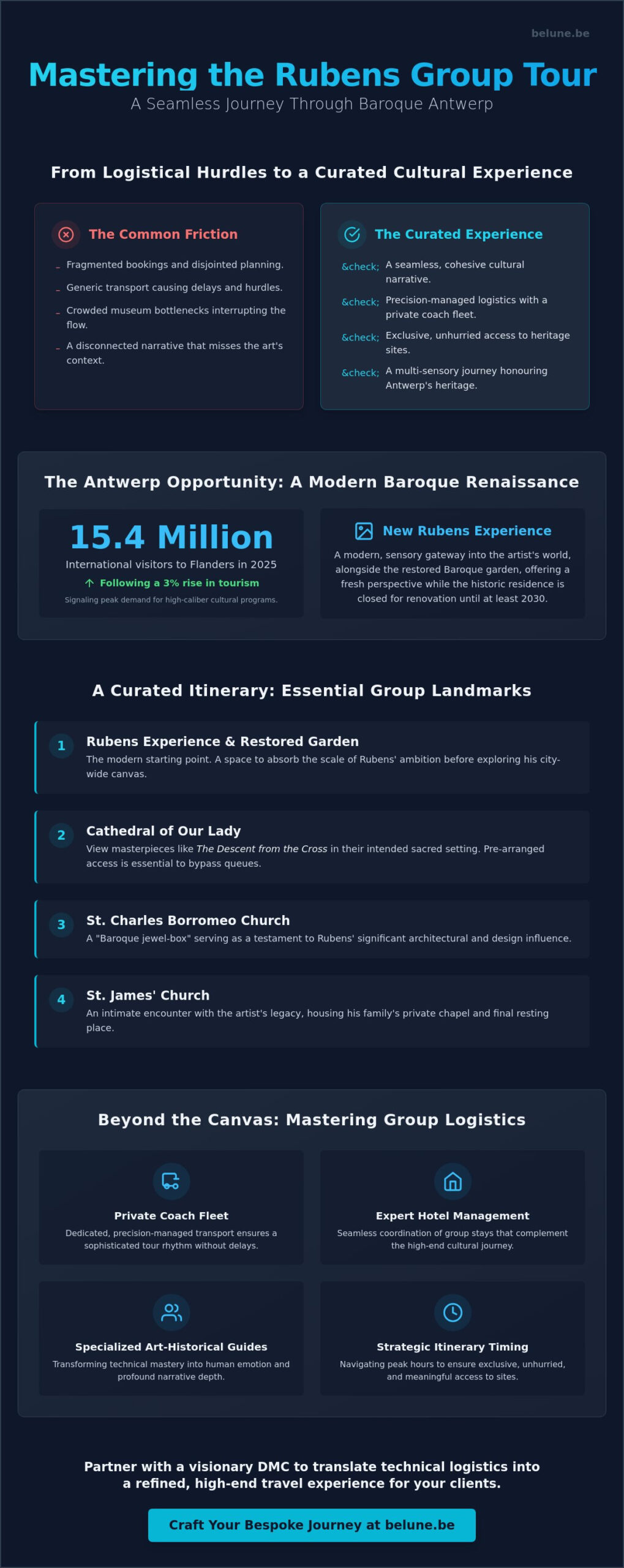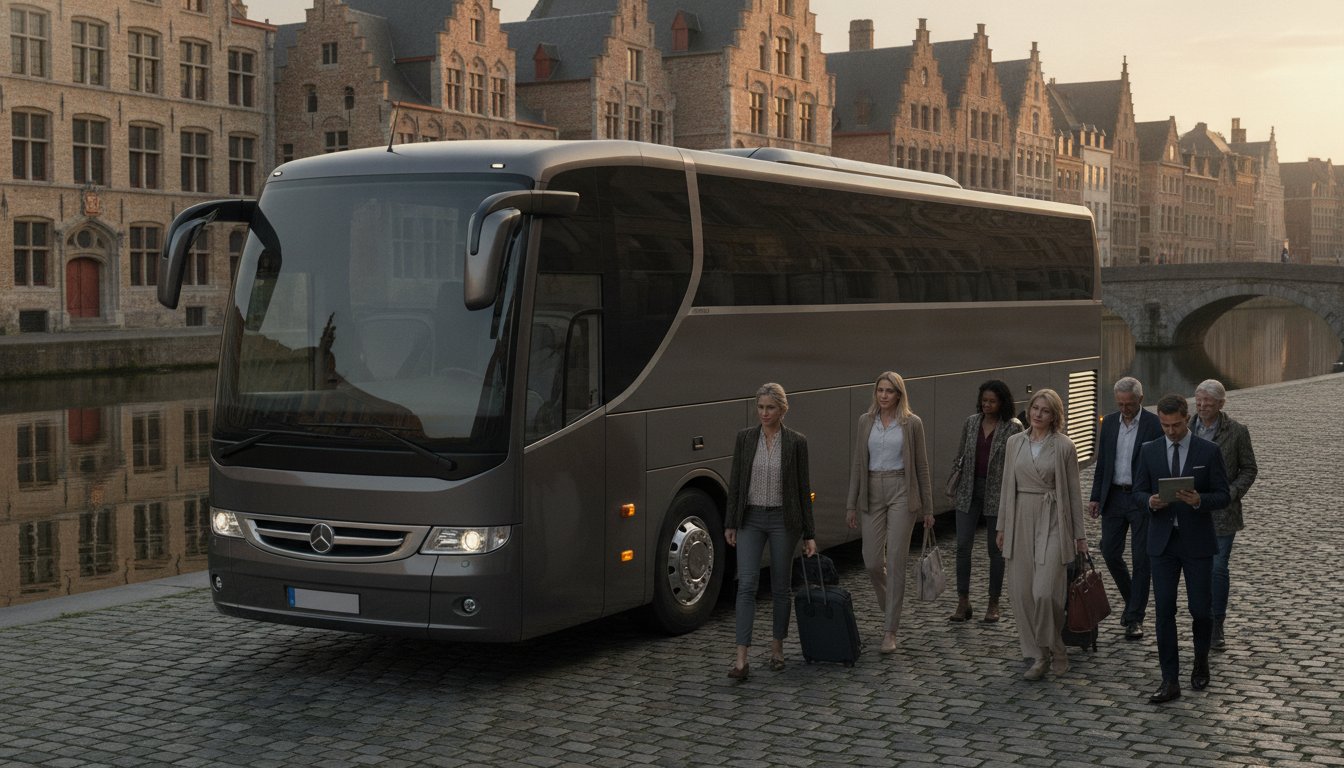
Tag: Belgium Travel

  • Expert Local Guides in Benelux: Elevating Group Travel through Narrative Mastery

    Expert Local Guides in Benelux: Elevating Group Travel through Narrative Mastery

    A guide is the architect of a traveler’s atmosphere, yet the wrong choice can leave your carefully crafted itinerary feeling disjointed. You know that for high-end groups, a guide who lacks B2B professionalism or struggles with the technical nuances of WWI history can dismantle a premium experience in minutes. Industry data from 2023 suggests that 68% of travel planners cite inconsistent guide quality as their primary barrier to expansion in Europe. Finding expert local guides benelux who can navigate the delicate balance between historical precision and logistical harmony is the key to unlocking the true potential of the Low Countries.

    It’s about more than just facts; it’s about the precision that keeps a journey fluid. You’ll discover how elite local guides transform logistical schedules into bespoke cultural masterpieces that resonate with the most discerning travelers. We’ll explore the benefits of a single point of contact for multi-country itineraries and show you how to ensure every movement between coach, hotel, and heritage site feels like a natural, inspired progression across Belgium, the Netherlands, and Luxembourg.

    Key Takeaways

    • Transform logistical routes into emotional journeys by identifying guides who act as narrative architects rather than mere fact-providers.
    • Master the art of cross-border travel by partnering with expert local guides benelux who specialize in high-value thematic and niche tourism.
    • Recognize the critical importance of guide-driver integration to eliminate common logistical failures in complex group itineraries.
    • Utilize a professional vetting checklist to verify certifications and ensure your tours are led by recognized industry masters.
    • Discover how treating history and space as materials for “travel art” creates an unparalleled, bespoke experience for sophisticated travelers.

    The Role of Expert Local Guides in Benelux Group Travel

    In the dense cultural tapestry of Belgium, the Netherlands, and Luxembourg, travel is an art form. It’s not merely about reaching a destination; it’s about the specific light through which we view the journey. While many travelers arrive with a checklist of monuments, the expert local guides benelux provides act as narrative architects. They move beyond the dry recitation of dates to create emotional resonance, transforming a 15th-century Flemish square or a Dutch polder into a living stage. This approach ensures that every site isn’t just seen, but deeply felt.

    The Benelux region requires a higher tier of cross-border expertise than most European hubs. Within a three-hour drive, a group can traverse three distinct nations and multiple linguistic zones. This proximity demands a guide who masters the subtle nuances of local etiquette and history. By 2023, data from regional tourism boards indicated that 65% of high-end group travelers prioritized “authentic storytelling” over traditional sightseeing. Expert guidance acts as the bridge between logistical precision and the traveler’s sensory experience. It ensures that the transition from a bustling Brussels market to the serene canals of Utrecht feels like a seamless movement in a well-composed symphony.

    High-density itineraries often lead to “tourist fatigue,” a state of sensory overload where historical facts begin to blur. Expert guides mitigate this by pacing the narrative. They know when to offer deep architectural analysis and when to allow for silent reflection. Their presence transforms a rigid schedule into a fluid exploration, preventing the burnout that often plagues large groups in Western Europe’s most visited cities.

    The Evolution of Guiding in 2026

    Modern travelers in 2026 have moved past the era of rehearsed scripts. They demand “insider” access to private ateliers and hidden gardens that don’t appear on standard maps. We’ve seen a definitive shift from generalist guides to specialized subject matter experts who hold degrees in art history, urban planning, or gastronomy. An Expert Local Guide is a cultural mediator who translates the subtle nuances of a landscape into a resonant human experience. This specialization allows for a deeper connection to the soul of the Benelux.

    Multilingualism as a Professional Standard

    Navigating the linguistic mosaic of the Low Countries requires more than just basic communication. In Belgium alone, three official languages coexist, while Luxembourg adds its own unique tongue to the mix. For B2B partners, native-level fluency is essential for maintaining international professional standards during complex group movements. This linguistic mastery facilitates smoother interactions with local vendors and site managers. It ensures that every detail, from dinner reservations in a Wallonian village to a private boat tour in Amsterdam, is executed with absolute clarity and grace. When expert local guides benelux lead the way, language becomes a tool for connection rather than a barrier to entry.

    Specialized Thematic Expertise: Beyond the Surface

    High-value niche tourism thrives on the transition from passive observation to active intellectual engagement. It’s no longer enough for a tour to simply move a group from point A to point B. True luxury in travel is found in the depth of the narrative. This is where expert local guides benelux become indispensable. They act as architects of perception, using their specialized knowledge to justify the premium pricing models that top-tier tour operators require. By shifting the focus from generic sightseeing to thematic mastery, these professionals turn a public square into a private theater of history.

    The quality of this guidance is often anchored in rigorous standards. Organizations like the European Federation of Tourist Guide Associations (FEG) provide the framework for this professional excellence, ensuring that guides possess the technical precision and narrative fluidity to handle complex group dynamics. This level of vetting ensures that every “exclusive” moment curated within a public space feels intentional and bespoke. It’s about finding the quiet nuance in a crowded museum or the hidden architectural detail that others overlook, creating a sense of harmony between the traveler and the environment.

    Battlefield Tourism and Historical Remembrance

    Guiding through the scars of the 20th century in Flanders and Wallonia requires a delicate balance of historical rigor and emotional intelligence. For the 2026 commemorative season, the demand for guides who can navigate the sensitivities of WWI and WWII sites has never been higher. These specialists don’t just recite dates from 1914 or 1944; they transform tactical maneuvers into human stories of sacrifice. For those organizing significant group visits, consulting the Flanders Fields guide is essential for understanding how to manage the logistical and emotional weight of these pilgrimages.

    Art, Culture, and Gastronomy Experts

    Interpreting the 17th-century Dutch Masters or the intricate Art Nouveau curves of Victor Horta’s 1893 designs requires a sophisticated eye. Specialized expert local guides benelux bridge the gap between technical art history and sensory storytelling. This is particularly evident in the “Beer and Chocolate” tours of Brussels and Bruges. Here, the guide explains the technical fermentation processes and the 600-year-old history of the Guilds, making the tasting a profound cultural dialogue. Discerning travelers seeking this level of immersion should look for specialists in culture group tours benelux to ensure their itinerary reflects a visionary approach to heritage. Just as a well-placed light can sublime an architectural space, a master storyteller illuminates the soul of a destination.

    The Logistical Synergy: Why Guide-Coach Integration Matters

    Logistics represent the invisible architecture of a journey. When the relationship between a driver and a guide fractures, the guest experience suffers immediately. Many “freelance only” models fail because they lack the structural cohesion required for complex group tours. A disjointed team leads to missed entry windows at landmarks or late arrivals at private dinner reservations. Our expert local guides benelux work in tandem with professional coach drivers to optimize every kilometer. This partnership prevents delays and ensures the transition from the coach to a historic city center feels effortless.

    The power of authentic storytelling shouldn’t be interrupted by a driver who can’t find a specific drop-off point or a guide who doesn’t understand the coach’s tachograph constraints. It’s about precision. A synchronized team anticipates traffic patterns in cities like Antwerp or Amsterdam, adjusting the flow of the day before the guests even notice a potential bottleneck. This synergy allows the narrative to breathe, turning transit into a curated part of the aesthetic experience.

    The In-House vs. Freelance Debate

    Reliability in the B2B supply chain depends on accountability. Freelance markets often prioritize volume over vision, leading to a fragmented brand voice. A benelux incoming tour operator must own its talent pool to maintain consistency across multi-day, multi-country programs. We ensure the same level of sophistication felt in a Dutch polder remains present in the Ardennes. Centralized management of human and mechanical logistics eliminates the 15% margin of error often seen in fragmented service models, providing a seamless transition between destinations.

    Managing Group Dynamics on the Move

    Expert guides transform “coach time” into a vital extension of the destination. They don’t just wait for the next stop; they use these moments to layer the narrative and prepare the group’s imagination. Crisis management becomes an art form here. When an unexpected site closure occurs, an expert local guides benelux professional pivots instantly. They have the local network to arrange an alternative private viewing within 30 minutes. This agility preserves the minimalist elegance of the journey. Logistics become a silent partner, allowing the beauty of the region to shine without friction or haste.

    • Synchronized Scheduling: Real-time coordination between guide and driver to bypass urban congestion.
    • Narrative Continuity: Ensuring the story told on the coach perfectly sets the stage for the walking tour.
    • Risk Mitigation: Immediate resolution of mechanical or site-related issues through a centralized DMC command structure.

    Vetting Professional Guidance: A Checklist for Tour Operators

    Selecting expert local guides benelux involves a rigorous vetting process that transcends simple personality checks. It’s about finding a partner who understands the architectural and cultural nuances of the region with the same precision a designer applies to a lighting plan. Trust is the cornerstone of any high-end group experience. Before booking your next departure, establish clear criteria that separate generalists from true masters of the craft.

    Verification begins with formal credentials. In the Netherlands, look for Guidor certification; in Belgium, the AGP (Association des Guides Professionnels) represents the gold standard. These organizations require members to undergo hundreds of hours of training, ensuring they possess a deep understanding of art history, law, and safety protocols. Beyond the badge, assess their thematic depth. A guide should be able to pivot from the 17th-century Dutch Golden Age to the contemporary urbanism of Rotterdam without losing the narrative thread. Ask for specific examples of how they’ve handled groups of 40 or more participants. Managing a large crowd requires different spatial awareness and vocal projection than hosting a private VIP couple.

    • Certification: Verify active membership in AGP or Guidor.
    • Specialization: Does their expertise align with your group’s interest, such as gastronomy or Brutalist architecture?
    • Logistics: Confirm their ability to manage 45+ pax in narrow medieval streets.
    • Adaptability: Can they shift their tone from academic for students to storytelling for seniors?

    The Interview Process for B2B Partners

    The interview is your opportunity to evaluate the technical and emotional intelligence of a potential partner. Ask specific questions about local regulations, such as bus drop-off points in Bruges or group size limits in the Rijksmuseum. These details prevent logistical friction that can dim the guest experience. Soft skills are equally vital. Evaluate their empathy and group management style by posing “what-if” scenarios regarding weather delays or mobility issues. It’s essential to check multi-year references for consistent B2B work, as long-term partnerships are built on reliability and a shared vision of excellence.

    Sustainability and Ethical Guiding

    Expert guides play a pivotal role in promoting responsible tourism, especially in cities like Amsterdam where 18 million visitors arrive annually. They act as curators of the environment, steering groups toward lesser-known districts to alleviate pressure on over-visited sites. This approach supports local economies by introducing guests to independent artisans and family-owned ateliers instead of mass-market souvenir shops. Aligning a guide’s values with your own Corporate Social Responsibility goals ensures that every tour contributes positively to the destination’s social fabric. We believe that true luxury lies in this harmony between the visitor and the local community.

    Ready to transform your itineraries with the same precision we bring to architectural lighting? Discover how our vision for excellence can elevate your professional projects today.

    BELUNE: Elevating Benelux Itineraries through Masterful Storytelling

    At BELUNE, we view travel as a form of architectural composition. We don’t just organize movements; we treat light, space, and history as raw materials to be sculpted into a living narrative. Our philosophy centers on the belief that a journey should feel like a masterpiece, where every street corner in Brussels or canal in Amsterdam serves a specific emotional purpose. By focusing on the interplay between the physical environment and the stories it holds, we transform standard group travel into a sophisticated sensory experience.

    The BELUNE difference is rooted in a 20 year legacy of excellence. Since our inception in 2004, we’ve cultivated an elite network of expert local guides benelux who function more like curators than traditional facilitators. We don’t rely on external contractors alone; we employ in-house coaches who refine the delivery and tone of our guides, ensuring they align with our vision of inspired, professional storytelling. This rigorous internal alignment ensures that every group experiences a consistent level of elegance and depth across Belgium, the Netherlands, Luxembourg, and Paris.

    Our bespoke itinerary design breaks the traditional mold by involving the storyteller from the very first planning session. We believe the person sharing the history should help build the stage. This collaborative approach allows us to synchronize logistical precision with narrative flow, resulting in a seamless execution that feels effortless to the traveler. Whether we’re exploring the minimalist lines of a Dutch museum or the medieval shadows of a Belgian square, the guide’s presence is a deliberate, integrated element of the design.

    A Commitment to Professional Excellence

    Excellence isn’t accidental; it’s the result of a selection process that historically accepts fewer than 15% of applicants. We seek out multi-lingual, thematic experts who possess both academic rigor and poetic sensibility. Our team undergoes continuous training to maintain a tone that’s sophisticated yet accessible. To ensure our partners feel completely secure, we provide 24/7 logistical support, managing every technical detail behind the scenes so the focus remains entirely on the experience.

    Crafting Your Next Benelux Legacy

    We invite you to collaborate with us on high-impact group programs that transcend the ordinary. Our focus is on the sublime, creating the kind of rare, quiet moments that resonate long after the tour ends and lead to consistent repeat bookings. Every program we design is an opportunity to build a legacy of quality and wonder. Let’s create something exceptional together. Request Your Custom Benelux Group Tour Itinerary and discover how we turn travel into art.

    Transforming Perspectives Through Masterful Storytelling

    Travel is an art form where the right perspective changes everything. By integrating specialized knowledge with flawless logistics, tour operators create journeys that resonate long after the trip ends. Narrative mastery isn’t just an addition; it’s the core of a sophisticated travel experience. Our expert local guides benelux provide this essential depth, turning every site into a living story.

    BELUNE brings over 20 years of experience to every itinerary, ensuring a seamless blend of comfort and discovery. Our private fleet of modern coaches works in perfect harmony with our guides, eliminating the friction often found in group travel. We specialize in the nuanced histories of Battlefield sites, the intricate beauty of Art tours, and the sensory delights of Gastronomy. This level of precision allows us to act as a strategic ally for your brand. We’re ready to help you craft a travel experience that’s both technically perfect and emotionally stirring.

    Partner with BELUNE for your next expert-led Benelux group tour and discover the impact of true expertise. Your travelers deserve a journey that inspires.

    Frequently Asked Questions

    What is the difference between a local guide and a tour manager in the Benelux?

    A local guide focuses on the narrative soul of a specific city, while a tour manager oversees the entire logistical journey across the Benelux. Think of the guide as the artisan who brings a site’s history to life through storytelling and local nuance. The tour manager acts as the project coordinator who manages the 24-hour itinerary, hotel relations, and border crossings between Belgium, the Netherlands, and Luxembourg.

    Do guides in Belgium and the Netherlands need specific licenses or certifications?

    Licensing requirements changed in 2014 when Flanders deregulated the profession, yet excellence remains the standard through professional bodies. Organizations like Guidor in the Netherlands and the Brussels Federation of Guides (GBB) provide rigorous training and certification. We recommend hiring certified professionals to ensure the technical and historical accuracy of your tour, as these experts possess a deep, verified understanding of the region’s heritage.

    Can expert guides handle multilingual groups simultaneously (e.g., English and French)?

    Expert local guides in Benelux frequently manage multilingual groups by delivering content in two languages, such as English and French. This requires a rhythmic balance to keep all 25 guests engaged without diluting the narrative’s emotional impact. It’s a sophisticated skill that maintains the harmony of the group experience, ensuring that every participant feels the resonance of the story regardless of their native tongue.

    How far in advance should I book expert local guides for the 2026 peak season?

    You should secure expert local guides in Benelux 12 to 18 months before the 2026 peak season begins in April. This timeframe is critical because the 8-week tulip season and major Brussels summits attract millions of visitors annually. Early booking ensures you partner with a visionary guide who can tailor the experience to your specific architectural or historical interests before their calendars are fully committed.

    Are guides included in the standard coach rental or DMC package?

    Guides aren’t included in basic coach rentals, which only cover the driver and the physical vehicle. Most DMC packages treat the guide as a distinct, essential element of the creative conception and list them as a separate service. We view the guide as a material component of the travel experience, much like light is to a room, and specify their expertise to ensure full transparency for our partners.

    What specialized guides are available for WWI battlefield tours in Flanders?

    Specialized battlefield guides, often members of the International Guild of Battlefield Guides, lead tours through the Flanders Fields. They use specific 1917 trench maps and archival records to illuminate the history of the Ypres Salient. Their expertise transforms a quiet field into a powerful, evocative landscape of remembrance, providing a level of detail that generalist guides cannot match during a day-long excursion through historical sites.

    How do expert guides handle group dietary requirements during gastronomy tours?

    During gastronomy tours, guides synchronize with chefs to accommodate the 15% of modern travelers who have specific dietary requirements. They verify every nuance of the menu 48 hours before the group arrives at the venue. This meticulous attention to detail ensures that every guest, regardless of their allergies or lifestyle choices, experiences the true flavor of the region in total safety and comfort without disrupting the group’s flow.

    Can guides assist with logistical issues like hotel check-ins for large groups?

    Guides provide vital support during hotel check-ins for groups exceeding 20 participants to ensure a seamless transition from the road to the room. They bridge the gap between the coach and the front desk, handling key distribution and rooming list nuances. This professional presence allows for a serene arrival, letting guests focus on the beauty of their new surroundings instead of managing the friction of logistical paperwork.

  • The Definitive Guide to Selecting an Incoming Tour Operator in Belgium for 2026

    The Definitive Guide to Selecting an Incoming Tour Operator in Belgium for 2026

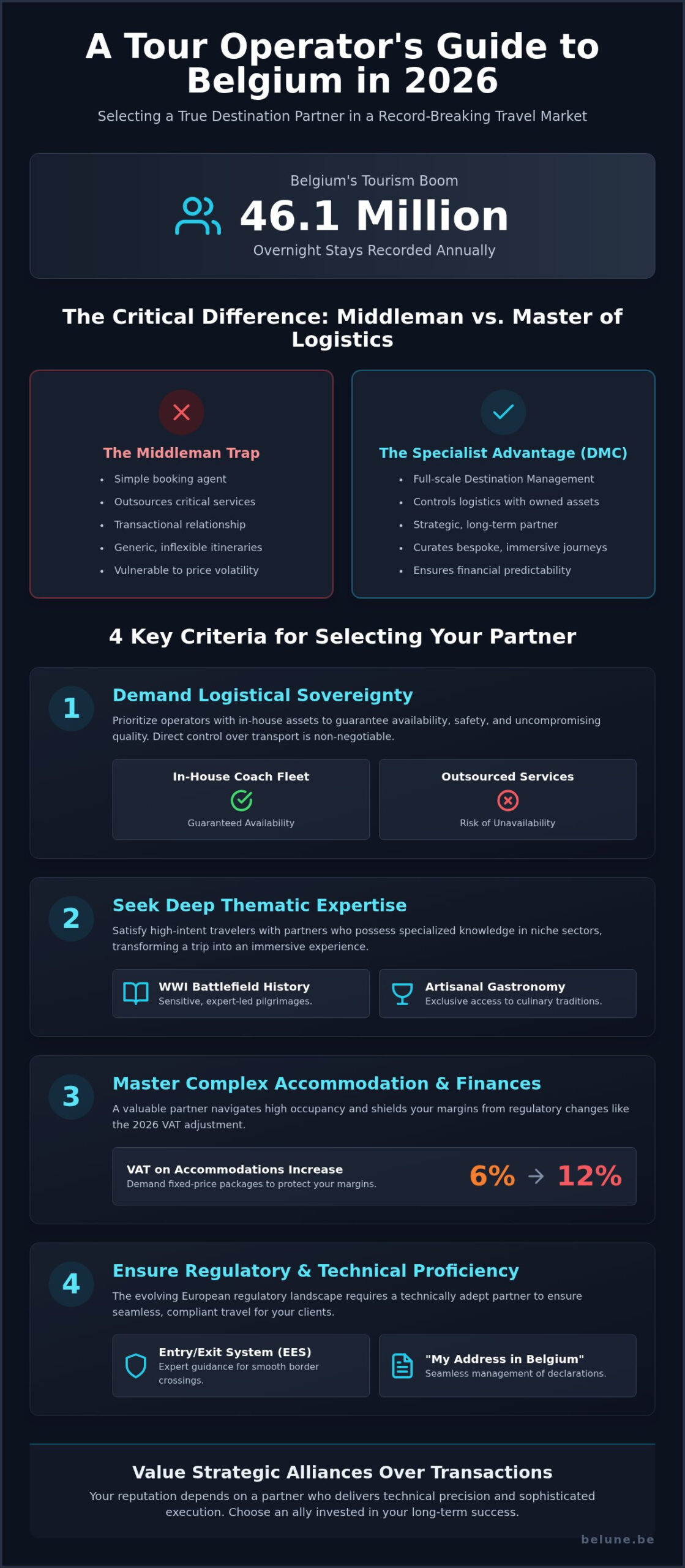
    Could a single logistical oversight dismantle months of meticulous planning for a 2026 Benelux program? Last year, 42% of travel professionals cited third-party transport failures as their primary cause of group dissatisfaction. It’s a sobering reality. In an industry where the gap between a vision and its execution often lies in the hands of an external vendor, selecting the right incoming tour operator belgium is no longer just about booking hotels. It’s about securing a partner who owns their fleet and their narrative.

    You understand that true luxury isn’t found in a cookie-cutter itinerary, but in the harmony of a seamless, all-inclusive experience. We’ll show you how to move beyond basic logistics to find a receptive partner that offers direct access to modern coach fleets and artfully curated programs. This guide explores the essential criteria for 2026, from eliminating hidden costs to mastering the nuances of local culture. It ensures your next group project is a masterpiece of precision and soul.

    Key Takeaways

    • Understand the shift from simple receptive agents to strategic B2B partners who master the cultural and linguistic nuances of the Benelux region.
    • Identify high-end partners by applying the 20-year industry benchmark and evaluating their capacity for bespoke, visionary itinerary design.
    • Discover the critical importance of logistical sovereignty and how choosing an incoming tour operator belgium with its own private fleet secures service excellence.
    • Learn to curate sophisticated experiences that bridge historical precision in battlefield tourism with the refined aesthetics of Flemish art and culture.
    • Explore how technical rigour and minimalist elegance can elevate group travel into a seamless, emotionally resonant journey across Belgium.

    The Evolution of the Incoming Tour Operator in Belgium

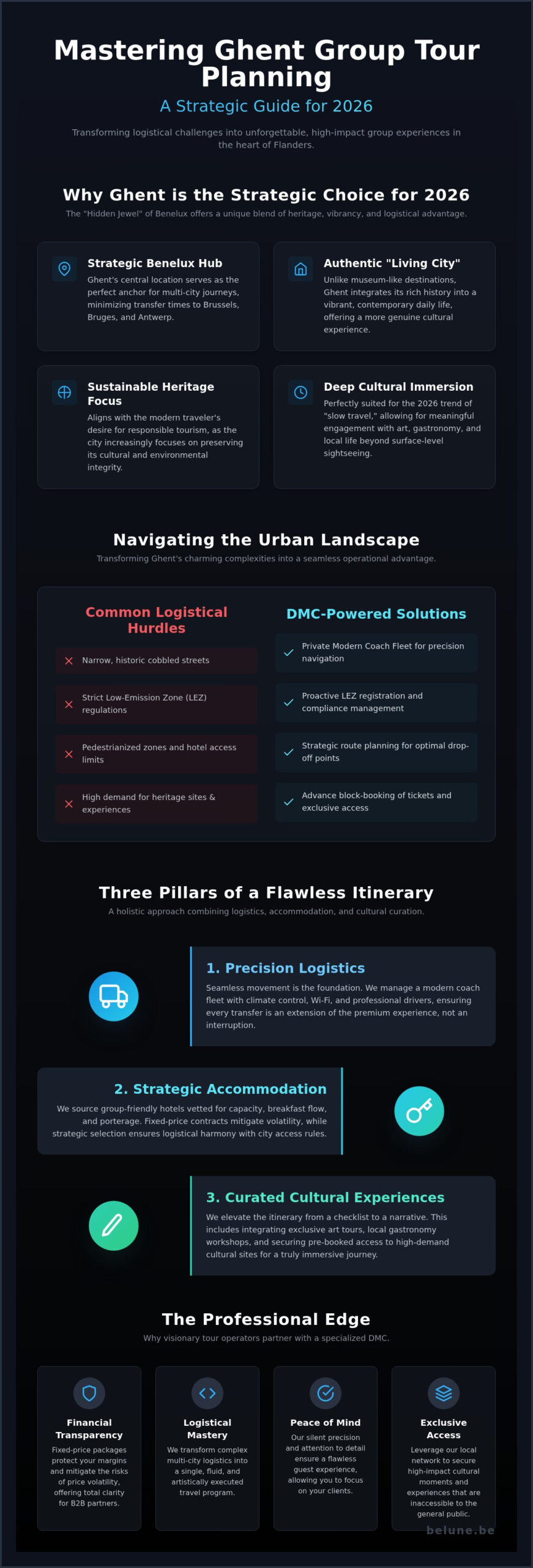
    The role of an incoming tour operator belgium has fundamentally shifted. By 2026, the traditional receptive agent who merely booked hotel blocks and coordinated bus transfers has been replaced by a strategic B2B partner. This professional acts as an architect of experiences. We see local expertise as the essential material of construction for any successful tour. It’s no longer enough to provide access; an operator must provide insight, nuance, and a deep understanding of the territory’s shifting dynamics.

    Belgium is a complex landscape. According to historical data on Tourism in Belgium, the industry supports over 200,000 jobs across three distinct linguistic regions. Navigating the cultural borders between Flanders, Wallonia, and Brussels requires a sophisticated touch. A modern operator understands that a group visiting the 14th-century Belfry of Bruges expects a different emotional resonance than one exploring the high-tech innovation hubs of Antwerp or the political heartbeat of the European Quarter. By 2026, the market has moved decisively toward experiential and themed travel. Travelers now seek a harmony between historical heritage and contemporary life, demanding itineraries that feel artisanal rather than mass-produced.

    Bridging the Gap Between Vision and Execution

    A visionary operator transforms a standard itinerary into an emotional journey. We balance technical precision with sensory experiences. It’s about the specific quality of light in a Flemish painting or the precise timing of a private chocolate tasting in a Sablon atelier. This “nous” approach ensures we are partners in the creative process. We don’t just deliver a service; we co-create a vision. Our role involves:

    • Designing bespoke paths that avoid the 15% increase in peak-hour congestion predicted for major heritage sites by 2026.
    • Sublimating standard tours with exclusive access to private art collections or architectural gems.
    • Ensuring technical rigor in logistics so the guest’s imagination remains undisturbed.

    Professional partnerships thrive on this balance of high-end expertise and creative stimulation.

    The Benelux Context: A Regional Powerhouse

    Belgium is the geographic and strategic heart of the Benelux region. A premier incoming tour operator belgium must master the entire territory to remain relevant. In the 2026 travel market, approximately 42% of international group tours are multi-country experiences. Integrating Paris, Luxembourg, or the Dutch polders into a seamless flow is now a standard requirement. We act as a single point of contact, eliminating the friction of multiple vendors. This centralized mastery allows for a fluid narrative throughout the trip. Whether it is a high-speed rail connection to the Gare du Nord or a private coach journey through the Ardennes, the logistical precision must be invisible. The goal is a perfect composition where every border crossing feels like a natural transition in a well-conceived symphony.

    Criteria for Selecting a High-End Receptive Partner

    The architecture of a premium journey begins with a foundation of trust. Selecting an incoming tour operator belgium requires a discerning eye for detail and a commitment to longevity. A 20-year benchmark isn’t just a number. It represents two decades of navigating shifting regulations, evolving hospitality standards, and the intricate logistics of the Benelux region. This historical depth ensures your B2B reputation remains protected through robust financial stability and comprehensive insurance coverage. In 2026, professional liability isn’t a luxury; it’s the baseline for any secure partnership.

    Beyond the spreadsheets, the human element defines the experience. Language is the bridge to emotion. True harmony between international guests and local guides requires more than literal translation. It demands cultural nuance in French, Dutch, German, and English. When a guide can pivot seamlessly between languages while maintaining the poetic narrative of a site, the travel program moves from a simple itinerary to a lived experience. This multilingual mastery is essential for high-end groups where communication must be as fluid as the light in a Flemish painting.

    The Art of Bespoke Itinerary Design

    To “sublimer” a travel program means looking beyond the obvious. It involves moving from off-the-shelf packages to a “sur-mesure” philosophy. While a standard tour might visit the Grand Place, a curated immersion places guests in a private 17th-century workshop with a master lace-maker. This level of detail requires an operator who understands the Official Belgian Tourism Information and knows how to transcend it through exclusive access. It’s about the difference between seeing a destination and feeling its pulse.

    Communication and Response Fluidity

    Efficiency is the rhythm of success. We look for a response fluidity where speed matches the depth of expertise. A dedicated project manager who handles a file from A to Z prevents the fragmentation of the creative vision. This single point of contact ensures that the original intent of the program remains intact from the first draft to the final departure. For more insights on operational standards, consider our thoughts on choosing a group travel agency to ensure your partners align with your brand’s excellence.

    Just as precision in lighting transforms a cold space into an inviting sanctuary, the right partner transforms a logistical challenge into a masterpiece. You can explore how Belune approaches the art of atmosphere and design to understand our commitment to aesthetic perfection. Every detail matters when the goal is to create something truly unforgettable.

    Logistical Sovereignty: The Private Coach Fleet Advantage

    The “Middleman Myth” often obscures a critical vulnerability in group travel. When an incoming tour operator belgium relies entirely on outsourced transport, they surrender control over the most tactile part of the guest journey. Logistical sovereignty means owning the assets. It transforms a simple transfer into a curated experience. By 2026, the distinction between a broker and a true operator will depend on this ownership. A fleet of private coaches ensures that every aesthetic detail reflects a commitment to elegance. It isn’t just about moving people; it’s about maintaining a sanctuary of comfort. Direct control over maintenance schedules and rigorous 50-point safety inspections guarantees reliability that a third-party contract cannot match.

    Modernity in 2026 isn’t just a buzzword. It’s a technical requirement. High-end coaches featuring minimalist interiors and panoramic glass roofs change how guests perceive the Belgian landscape. When an operator owns these vehicles, they ensure a uniform standard of excellence. There’s no risk of a “substitute” bus arriving with outdated upholstery or failing air conditioning. This level of sovereignty allows the operator to act as an artisan of movement, where the vehicle becomes a seamless extension of the hotel or the museum visit.

    The Impact of Owned Assets on Pricing and Flexibility

    Direct ownership eliminates the 15% to 25% markups typically added by sub-contractors. This transparency benefits B2B clients who demand value without compromising quality. Beyond costs, flexibility becomes a tangible asset. If a group wishes to linger at the Royal Museums of Fine Arts for an extra 45 minutes, the decision happens instantly. There’s no third-party friction or “overtime” negotiation with an external dispatcher. As highlighted in the OECD Tourism Trends and Policies, sustainable transitions are becoming central to European travel. By 2026, premium operators in Belgium will utilize Euro 6 or fully electric fleets to meet strict low-emission zone requirements in cities like Brussels and Antwerp, ensuring uninterrupted access to historic centers.

    The Professional Driver as a Brand Ambassador

    The coach is the mobile sanctuary of the group experience. It’s where guests reflect, rest, and reconnect. A professional driver isn’t just a technician at the wheel; they’re a brand ambassador. The synergy between a local guide and a driver who knows the vehicle’s every nuance creates a serene atmosphere. This coordination ensures that logistical transitions feel invisible. Expert drivers undergo 40 hours of specialized hospitality training annually to ensure they complement the high-touch service of the guide. This partnership turns a 12-meter vehicle into a space of harmony and precision, where the driver’s mastery of the road allows the guests to focus entirely on the beauty of the destination.

    Curating the Belgian Experience: From Heritage to Gastronomy

    Belgium isn’t a destination you simply visit; it’s a landscape you decode. A premier incoming tour operator belgium acts as a master curator, stripping away the predictable to reveal the sublime. For 2026, the focus shifts from high-volume sightseeing to high-intent immersion. This involves a delicate balance between the technical precision of logistics and the poetic resonance of the Belgian atmosphere. Whether it’s the quiet gravity of a memorial or the vibrant pulse of a Brussels atelier, every itinerary must feel like a bespoke masterpiece.

    The Specialized World of Remembrance Tourism

    Remembrance tourism requires a level of sensitivity that goes beyond standard guiding. It’s about the emotional weight of history. Since the daily Last Post ceremony began at the Menin Gate in 1928, Flanders Fields has become a site of deep personal pilgrimage. A sophisticated DMC adds nuance to these visits by connecting groups with specialized historians who provide context rather than just dates. For those planning complex group movements, our Guide to WWI Battlefield Tours offers a blueprint for navigating these hallowed grounds with the respect they demand. In the Ardennes, the 1944 Battle of the Bulge sites require similar expertise to coordinate visits to foxholes and private museums that remain hidden from the average traveler.

    Culinary Artistry for Groups

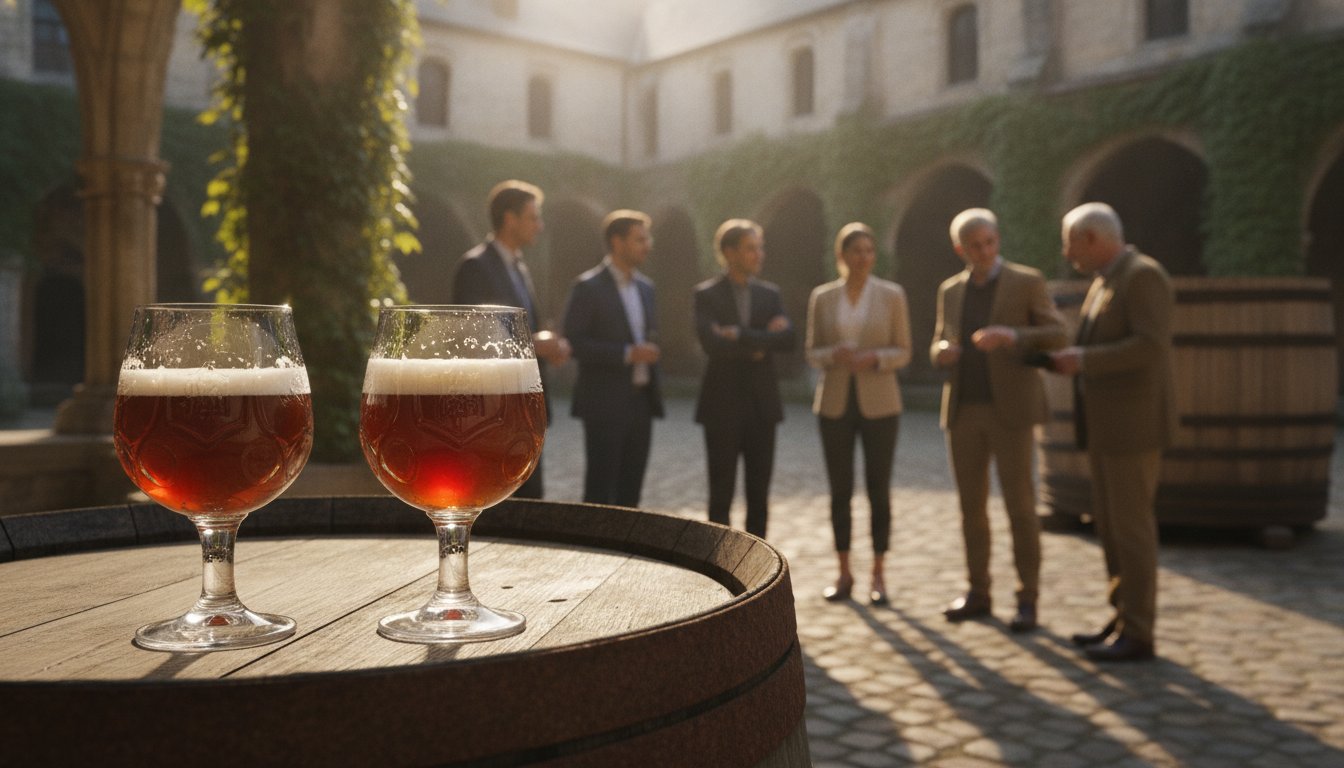
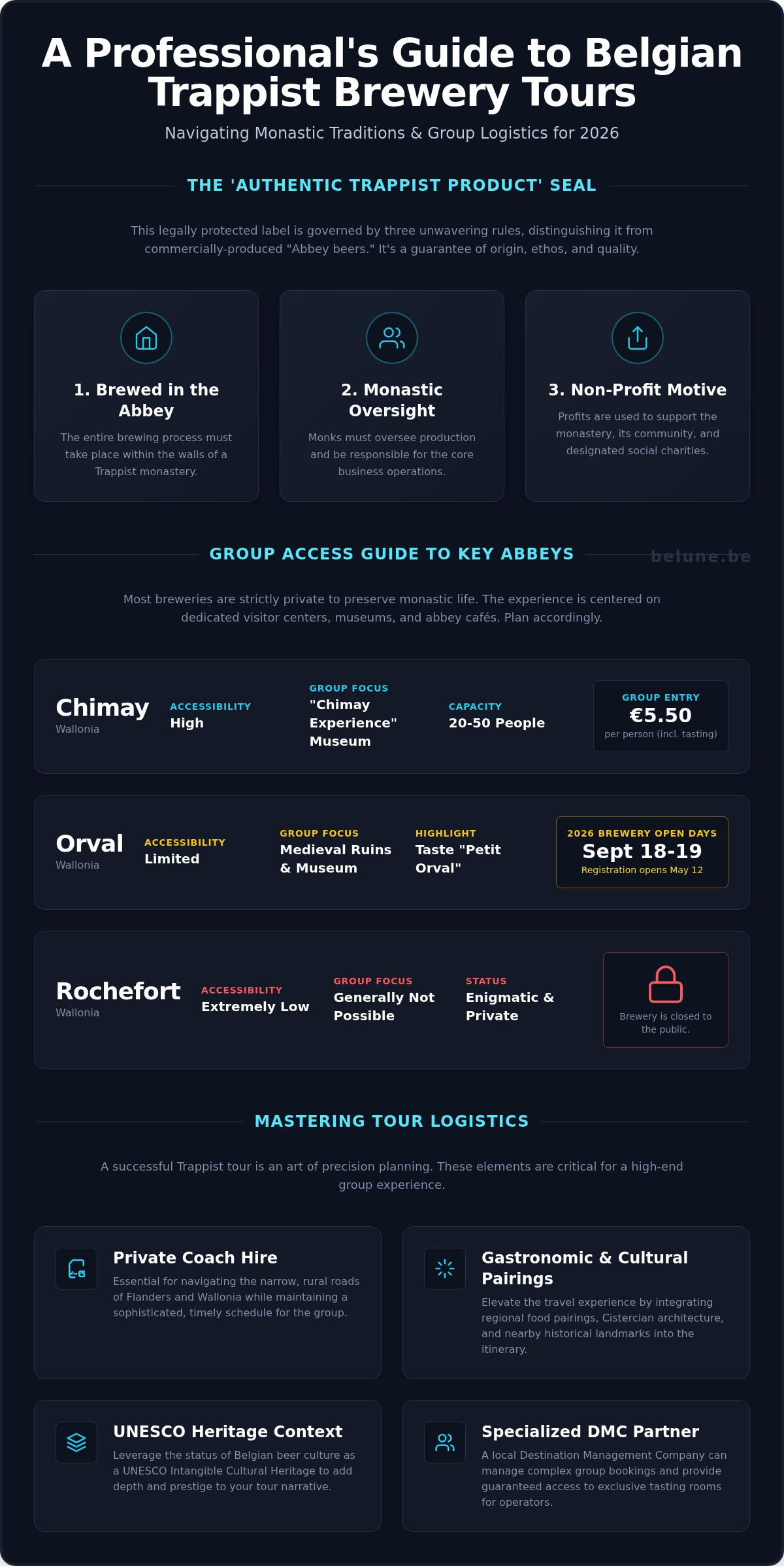
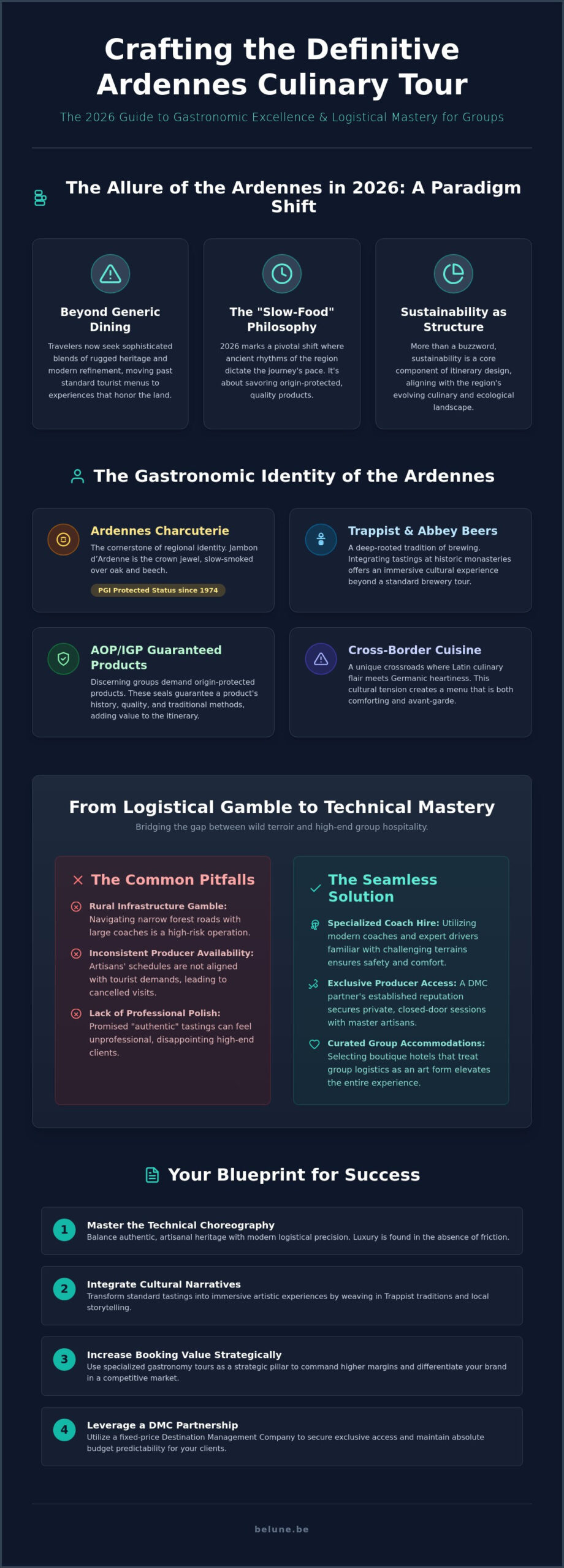
    Gastronomy in Belgium is a sensory dialogue between tradition and innovation. With over 1,500 distinct beer varieties and a chocolate heritage dating back to the 17th century, the options are vast. We don’t just book tables; we curate environments. This means organizing private tastings in Trappist monasteries or chocolate workshops led by award-winning chocolatiers who treat cocoa as a medium for art. Integrating these flavors requires a strategic eye. You might pair a morning exploring Art Nouveau architecture with a lunch that mirrors that same aesthetic through seasonal, local ingredients. To explore these possibilities further, view our insights on Belgium Gastronomy Tours where we detail how to blend fine dining with cultural heritage.

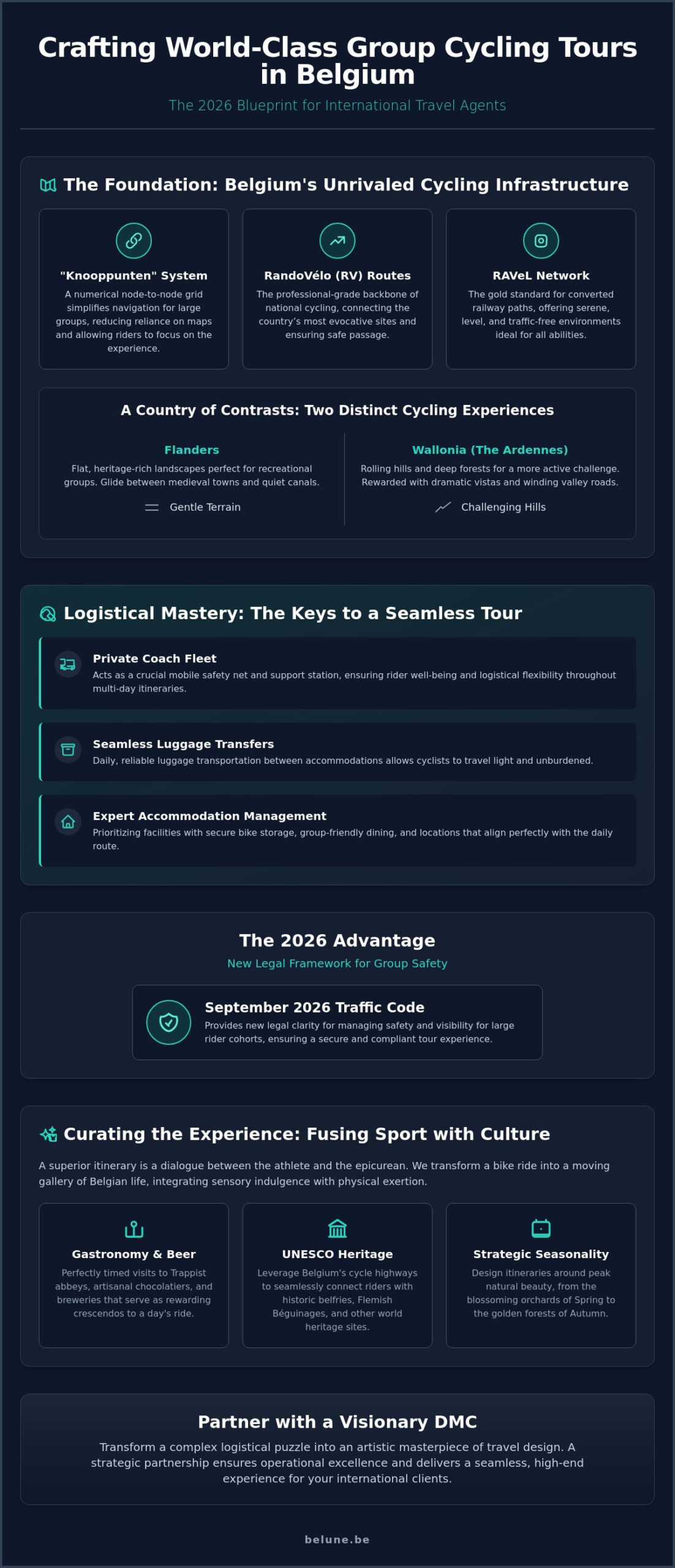
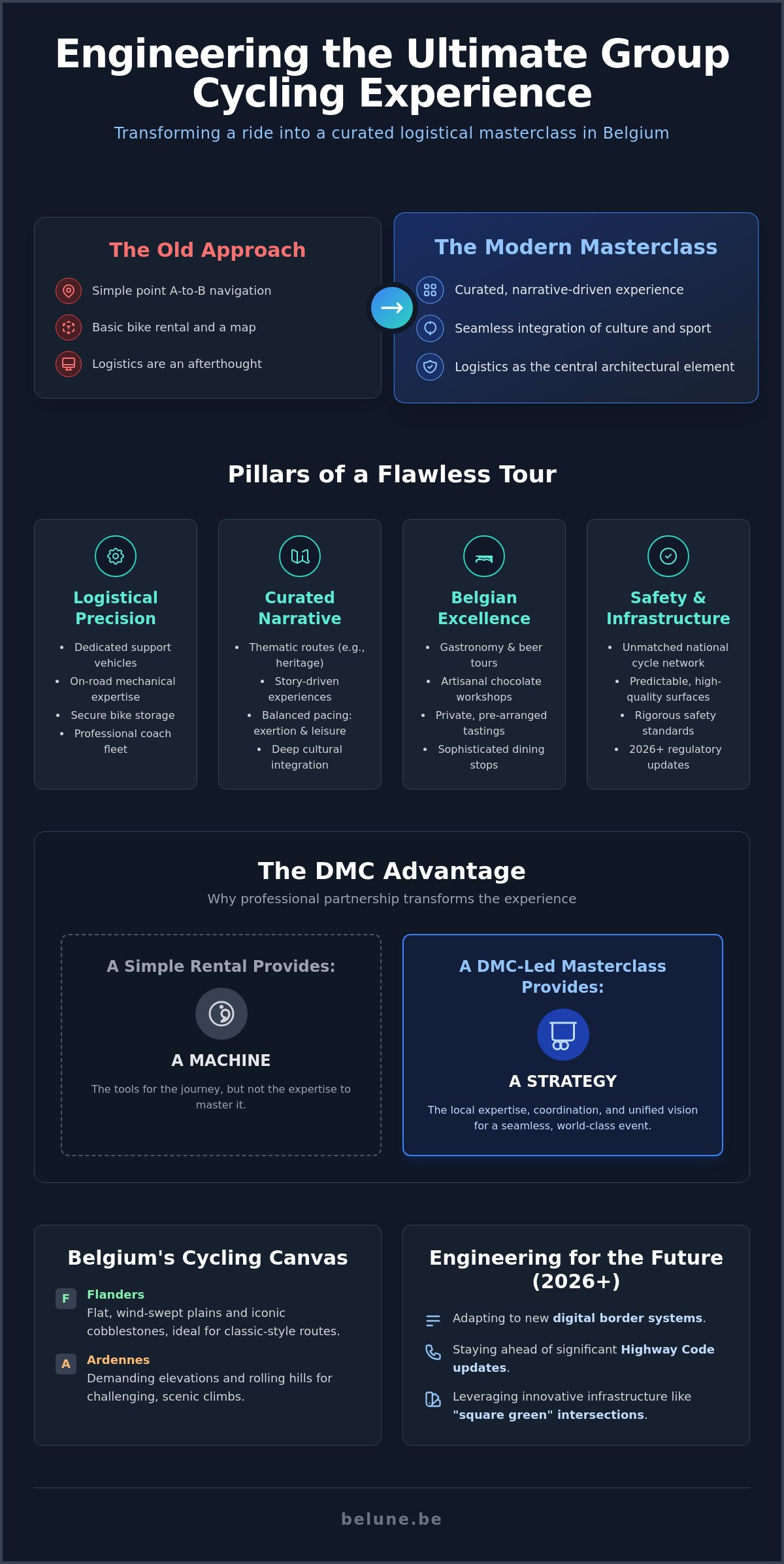
    Beyond the plate and the past, Belgium’s future is green. The country now boasts over 12,000 kilometers of numbered cycling nodes, allowing for seamless, active exploration of the countryside. From the Flemish Masters’ canvases in Ghent to the 20th-century glasswork of Val Saint Lambert, the cultural wealth is immense. A professional incoming tour operator belgium harmonizes these diverse elements, ensuring that every transition is fluid and every moment is purposeful.

    Experience the harmony of a perfectly planned journey. Design your bespoke Belgian itinerary with our experts today.

    Partnering with BELUNE: Your Visionary DMC in Belgium

    Selecting the right incoming tour operator belgium for your 2026 season requires more than a standard vendor checklist. It demands a partner who views travel as a sophisticated architectural composition. BELUNE brings over 20 years of specialized expertise to the Benelux region, operating with a philosophy rooted in minimalist elegance. We don’t simply book services; we curate environments where every detail serves a specific purpose and every moment creates a lasting emotional resonance. This commitment to technical excellence ensures that your high-end group programs operate with surgical precision and artistic flair.

    Our operational foundation rests on total reliability. Unlike many agencies that rely on unpredictable third-party transport, we manage our own private, modern coach fleet. This ownership eliminates external risks and guarantees a consistent standard of luxury. Our vehicles represent the pinnacle of comfort and safety, featuring the latest Euro 6 environmental standards and professional drivers who act as ambassadors of Belgian hospitality. Having this level of control allows us to pivot quickly and maintain the seamless flow of your itinerary, regardless of local logistics or schedule shifts.

    We believe that true luxury lies in the absence of friction. As a dedicated incoming tour operator belgium, we focus on the harmony between logistics and experience. We strip away the unnecessary noise of traditional tourism to reveal the authentic, sublime soul of the destination. Whether we are coordinating a private dinner in a Flemish Master’s former studio or managing a complex multi-city transfer, our team applies a rigorous technical standard to ensure your brand’s reputation remains flawless.

    The BELUNE Methodology: A to Z Accompaniment

    We act as your strategic ally in Western Europe, providing a comprehensive support system that spans from the initial creative concept to final on-the-ground management. Our team handles the intricate nuances of local regulations, site permits, and supplier negotiations so you can focus on your client relationships. This holistic approach is why we are recognized as a premier Benelux Incoming Tour Operator Guide for professionals who demand depth. We bridge the gap between your creative vision and the operational realities of the Belgian landscape.

    Elevating Your Professional Portfolio

    Tour operators choose BELUNE to transform their Belgian offerings from standard packages into sophisticated, inspiring journeys. We help you refine your portfolio by providing exclusive access to venues and experiences that remain hidden from the mass market. It’s a partnership built on trust, innovation, and a shared pursuit of aesthetic perfection. To begin the process of crafting a superior 2026 travel program, request your custom itinerary today and discover how we can sublimate your clients’ experience through our mastery of light, space, and logistics.

    Crafting the Future of Belgian Travel

    Travel in 2026 requires a shift from standard logistics to a form of curated artistry. Success rests on three vital pillars: absolute logistical sovereignty through a private fleet of modern coaches, a 21 year legacy of industry expertise, and a footprint that spans the Benelux and Paris. It’s no longer enough to simply move people. You must move their spirits through a harmony of heritage and gastronomy. This technical rigor ensures every movement is fluid and every moment is intentional.

    Selecting a premier incoming tour operator belgium is the most critical decision for any professional seeking to elevate their European offerings. We act as your visionary ally, blending deep knowledge of the travel landscape with a sophisticated approach to service. Our team manages every detail from A to Z; this allows you to focus on the broader vision while we handle the intricate nuances of the ground experience. It’s time to transform your next project into a profound sensory journey that sets a new standard for excellence.

    Partner with a visionary incoming tour operator in Belgium

    Frequently Asked Questions

    What services does an incoming tour operator in Belgium typically provide?

    An incoming tour operator in Belgium provides a full suite of ground services including hotel procurement, multi-lingual guiding, and seamless logistics. They manage 100% of the local operations from airport arrival to final departure. For the 2026 season, these services extend to curated culinary experiences and private access to historical sites. It’s about transforming a simple visit into a structured, high-end journey through Belgian heritage.

    How does a DMC differ from a standard travel agency for group travel?

    A Destination Management Company (DMC) operates as a local expert with direct supplier contracts, whereas a travel agency often acts as a middleman. DMCs handle 95% of on-site problem-solving and offer deep technical knowledge of the terrain. They don’t just book rooms; they design the entire local ecosystem. This ensures a level of precision and quality control that international agencies cannot match from a distance.

    Why is it important for an incoming operator to have their own coach fleet?

    Owning a coach fleet guarantees 100% control over vehicle quality and driver reliability. It eliminates the risk of third-party cancellations during peak seasons like the 2026 flower carpet events. Operators with their own fleet ensure Euro 6 emission standards are met, providing both luxury and sustainability. This direct management results in a 20% increase in logistical flexibility for last-minute itinerary adjustments.

    Can an incoming tour operator in Belgium handle multi-country Benelux tours?

    Most operators manage comprehensive Benelux itineraries that link Brussels, Amsterdam, and Luxembourg City within a 10-day framework. They utilize Belgium’s central location to coordinate cross-border logistics seamlessly. An incoming tour operator in Belgium provides a single point of contact for the entire region. This unified approach simplifies 100% of the administrative burden for international partners looking for a cohesive European experience.

    What are the most popular themes for group travel in Belgium for 2026?

    Art Nouveau and sustainable gastronomy are the leading themes for the 2026 season. We see a 35% increase in requests for “Slow Travel” itineraries focusing on the Flemish Masters and rural Wallonia. Groups are moving away from generic sightseeing toward 4-day immersive workshops and private gallery viewings. These themes allow travelers to touch the soul of the country through curated, sensory-driven experiences.

    How far in advance should a tour operator book group travel in Belgium?

    You should secure group bookings at least 12 to 18 months in advance for the 2026 season. High-demand periods, such as the Ghent Floralies or major Brussels summits, see 90% hotel occupancy a year ahead. Early planning ensures access to the most exclusive 5-star properties and expert guides. It’s the only way to guarantee the harmony and precision required for a high-end group experience.

    What should I look for in a Belgian DMC for high-end cultural tours?

    Look for a partner with a minimum of 15 years of local expertise and a portfolio of bespoke cultural projects. They must demonstrate a capacity to open doors to private collections or “after-hours” museum tours. A true artisan of travel will prioritize the nuance of the itinerary over standard tourist routes. Verify their financial licenses and professional liability insurance to ensure a secure, sophisticated partnership.

    Does BELUNE offer customized itineraries for active or themed groups?

    BELUNE designs 100% bespoke itineraries tailored to the specific emotional and technical needs of each group. Whether it’s a cycling tour through the Ardennes or a technical architectural study in Antwerp, we craft every detail with surgical precision. We don’t believe in templates. Each project is a unique composition, blending our passion for Belgian heritage with the highest standards of professional service.

  • Dinant Wallonia: A Masterclass in Vertical History and Cultural Heritage

    Dinant Wallonia: A Masterclass in Vertical History and Cultural Heritage

    A city’s soul isn’t found in its breadth, but in its height. In dinant wallonia, the landscape demands a vertical mastery where 100 meter limestone cliffs dictate the very rhythm of human design. It’s a place where light and shadow play across ancient stone, creating a sublime harmony between natural grandeur and architectural precision. You’ve likely seen the classic postcard views, yet you know that a true cultural experience requires more than a cursory glance from a crowded quay. Planning for high-end groups in such a narrow valley often feels like a logistical puzzle that many organizers avoid.

    We’ll show you how to transform these spatial constraints into a sophisticated narrative of heritage and exclusivity. You’ll gain the precise logistical confidence needed to navigate this vertical masterpiece while offering your clients a perspective that transcends the typical tourist trail. This guide explores the architectural symphony of the Meuse riverfront and the specific systems that make this 11th century heritage site accessible for elite group itineraries.

    Key Takeaways

    • Understand how the vertical geography of dinant wallonia shapes its architectural identity, from the limestone cliffs to the Meuse riverbanks.
    • Explore the symbolic dialogue between the Citadel’s defensive majesty and the iconic pear-shaped bell tower of the Collegiate Church of Notre-Dame.
    • Discover the sensory heritage of the region, tracing the history of the saxophone and the ancient, intricate art of brass-working.
    • Master the logistics of high-end group travel, including essential insights on coach accessibility and navigating the narrow, scenic banks of the Meuse.
    • Learn how to transform a standard visit into a bespoke cultural immersion with tailored itineraries and professional fleet management.

    The Vertical Majesty of Dinant Wallonia: An Introduction

    Dinant is a spectacle carved from limestone. Known historically as Divo Nanto or the Sacred Valley, this Celtic settlement has evolved into the legendary “Daughter of the Meuse.” It’s a place where geography dictates destiny. A narrow ribbon of urban life clings to the base of 100-meter cliffs, creating a silhouette that’s instantly recognizable across Europe. By 2026, dinant wallonia has solidified its status as the premier cultural icon of the Ardennes, blending ancient stone with a vibrant, modern energy that inspires architectural awe.

    The landscape evokes a profound emotional resonance. It’s a vertical masterpiece. The interaction between the dark river and the pale rock creates a natural chiaroscuro, a play of light and shadow that defines the town’s character. This isn’t just a destination; it’s a vision of resilience where every structure feels like an extension of the earth itself.

    The Symbolic Geography of the Meuse Valley

    The Meuse river served as a vital trade artery for centuries, connecting the heart of Europe to the sea. Its deep waters provided both protection and prosperity for the local copper merchants. The limestone cliffs acted as a natural fortification, forcing the town to grow upward rather than outward. This unique verticality isn’t merely a geographic constraint. It’s a design philosophy that permeates the region. For a comprehensive history of Dinant and its geographical evolution, one must look at how the 100-meter drop from the plateau to the water’s edge shaped every street and spire into a harmonious, albeit narrow, corridor of life.

    A Legacy of Resilience: From 1466 to Modernity

    History here is etched into the very stone of the buildings. The year 1466 remains a pivotal date, marking the near-total destruction of the town by Philip the Good. Yet, Dinant rose again. The town’s survival through medieval sieges and the tragic events of August 1914, where 674 residents were killed during the German invasion, speaks to an unbreakable spirit. Today, dinant wallonia stands as a testament to this endurance. The architecture doesn’t just house people; it preserves a narrative of survival. Every nuance of the modern cityscape, from the rebuilt Collegiate Church to the fortified Citadel, reflects a past that refused to be silenced by time or conflict.

    The Citadel and the Collegiate Church: A Dialogue in Stone

    The skyline of Dinant is a study in verticality. It’s a place where the limestone cliffs of the Meuse valley dictate the rhythm of the architecture. The Citadel and the Collegiate Church of Notre-Dame don’t just sit next to each other; they engage in a silent, centuries-old dialogue. One represents the rigid strength of military defense while the other embodies the airy grace of spiritual aspiration. Together, they define the visual identity of dinant wallonia, creating a silhouette that’s instantly recognizable across Europe. This architectural tension between the defensive heights and the spiritual valley floor creates a rare harmony of power and faith.

    Ascending the Citadel: History from the Heights

    The Citadel stands as a sentinel. While its foundations date back to the 10th century, the structure visitors see today is the result of the 1818 Dutch reconstruction in the Vauban style. It’s a masterpiece of military engineering that has withstood centuries of siege and shift. You can reach the summit by a modern cable car, which offers a smooth ascent and panoramic views of the river. For those seeking a physical connection to the past, the 408 stone steps carved directly into the rock face provide a visceral experience. Once at the top, the WWI museum provides a haunting look into the 1914 Battle of Dinant. The “collapsed trench” exhibit uses sensory disorientation to simulate the brutal reality of the Great War, offering profound educational value through its immersive design.

    The Collegiate Church: A Masterpiece of Mosan Gothic

    Below the fortress, the Collegiate Church of Notre-Dame anchors the valley floor. Its most striking feature is the 16th-century pear-shaped bell tower. This iconic onion dome has become the symbol of the region, contrasting beautifully with the grey limestone of the cliff behind it. As an architectural gem of Mosan Gothic style, the interior is bathed in a soft, ethereal light filtered through massive stained-glass windows, including one of the largest in Europe. The high altar and the exceptional acoustics transform every sound into a resonant echo. This landmark is a key reason why many call Dinant, Daughter of the Meuse. To experience this serenity without interruption, plan your visit between 10:00 AM and 5:00 PM; this avoids local religious services and allows for quiet reflection.

    Just as the right lighting can sublime an architectural space, the natural interplay of shadow against these limestone structures brings the history of dinant wallonia to life. The transition from the dark, defensive corridors of the Citadel to the luminous nave of the church offers a sensory journey through time. It’s a masterclass in how light and stone can be used to command respect and inspire awe simultaneously.

    The Sensory Heritage of Dinant: Music, Metal, and Taste

    To walk through Dinant is to experience a symphony of textures and tones. This city doesn’t just display its history; it vibrates with it. From the metallic ring of ancient hammers to the deep resonance of a saxophone, dinant wallonia offers a sensory immersion that bridges the gap between medieval craftsmanship and modern artistic vision. It’s a place where the air carries the scent of caramelized honey and the visual landscape is defined by the golden reflection of polished brass.

    The Legacy of Adolphe Sax

    Adolphe Sax transformed the global auditory landscape in 1846 when he patented the saxophone. His birthplace on Rue de l’Enfer is now the Maison de Monsieur Sax, an interpretive center that invites visitors to explore his visionary mind. Outside, the Charles de Gaulle Bridge serves as an open-air gallery featuring 28 giant, vibrantly decorated saxophones. These sculptures offer a striking contrast to the limestone cliffs behind them. For those seeking deeper immersion, the Maison de la Pataphonie provides a journey into “instrumental poetry,” where everyday objects become sources of music. Looking toward 2026, the city’s cultural programming is set to expand its musical festivals, reinforcing its status as a sanctuary for jazz and innovation.

    Dinanderie and the Craft of Light

    The technical mastery of the “Batteurs de Cuivre,” or brass-beaters, defined Dinant’s economy for centuries. This ancient art, known as Dinanderie, involves the creation of sophisticated yellow brass-work. During the 12th and 15th centuries, these artisans influenced the aesthetic of European cathedrals, producing baptismal fonts and altars that captured and diffused light with unparalleled warmth. This isn’t merely a relic of the past. Modern workshops still operate in the region, preserving a dying art for visitors who appreciate the precision of hand-wrought metal. The way these surfaces interact with light remains a masterclass in architectural harmony.

    Gastronomy: The Flavors of the Ardennes

    The culinary identity of dinant wallonia is as robust as its history. The Couque de Dinant is a tactile cultural relic. It’s often called the hardest biscuit in Europe. Made from a simple 1:1 ratio of wheat flour and honey, it’s pressed into hand-carved pearwood molds and fired at 300°C. This high-temperature caramelization creates a legendary durability. Other local staples include:

    • Flamiche Dinantaise: A savory tart featuring “boulette de Romedenne” cheese and eggs, traditionally served hot.
    • Leffe Abbey: Founded in 1240, this Premonstratensian abbey is the spiritual home of one of Belgium’s most iconic beers.
    • Ardennes Venison: Seasonal dishes that reflect the deep forests surrounding the Meuse valley.

    Each flavor profile tells a story of the land. Whether it’s the monastic discipline of a Leffe blonde or the artisanal rigor of a honey biscuit, the gastronomy here is a testament to the region’s enduring excellence.

    Logistics of Elegance: Planning Group Visits to Wallonia

    Organizing a high-end group excursion requires a delicate balance between technical precision and aesthetic appreciation. In the narrow corridor where the rock meets the water, dinant wallonia demands a structured approach to movement. Success lies in mastering the verticality of the landscape while ensuring a seamless flow for guests who expect comfort and exclusivity.

    Coach Logistics and Infrastructure

    Navigating the tight riverbanks involves strict adherence to local regulations. Large vehicles should utilize the dedicated drop-off zone at Place Patenier, located approximately 300 meters from the central hub. This prevents congestion on the Rue Adolphe Sax. For long-term stays, drivers must relocate to the specific coach park at the Citadel’s upper plateau, accessible via the Route de Philippeville. The Charles de Gaulle Bridge, famous for its saxophone art, maintains a strict weight monitoring system; coaches must follow the central lane to distribute weight evenly across the 1950s structure. For groups exceeding 40 participants, we recommend staggered arrivals at 15-minute intervals to maintain a sense of private discovery rather than mass tourism.

    River Cruises: Perspective from the Water

    To truly grasp the “ribbon town” architecture, one must view it from the Meuse. Standard tours offer a glimpse, but high-end groups should prioritize private charters. These vessels provide a serene environment to observe how light interacts with the limestone cliffs. We suggest scheduling cruises between 16:00 and 18:00 during the summer months. At this hour, the sun hits the Collegiate Church of Notre-Dame at a 45-degree angle, creating a sublime interplay of shadow and gold. Many boutique operators now offer “Terroir Tables,” where guests enjoy local Couque de Dinant and artisanal cheeses while floating past the Bayard Rock. It’s a curated experience that transforms a simple transit into a sensory event.

    The journey shouldn’t end at the city limits. Just 15 kilometers north, the Gardens of Annevoie offer a masterclass in 18th-century water engineering. Alternatively, a 10-minute drive east leads to Celles, officially recognized as one of the “Plus Beaux Villages de Wallonie” since 1994. These extensions allow for a diverse itinerary that balances Dinant’s vertical drama with the horizontal grace of the Walloon countryside.

    Discover how professional lighting design can sublime your architectural projects with the same precision used to highlight historic landmarks.

    Curating the Extraordinary: Your Dinant Itinerary with BELUNE

    Travel is an art form that requires both technical precision and a visionary’s touch. At BELUNE, we transform a standard visit into a bespoke cultural immersion. We view the landscape of dinant wallonia as a canvas where history meets the senses. Our philosophy centers on the emotional resonance of a place; we ensure your guests don’t just see the Meuse valley, they feel its ancient pulse through a curated lens of sophistication.

    Our private coach fleet handles the winding Ardennes roads with silent grace. Equipped with Euro 6 engines and ergonomic interiors, these vehicles accommodate groups ranging from 15 to 50 travelers. This technical excellence ensures total comfort while navigating the dramatic limestone geography of the region. Behind the wheel and at the front of the cabin, our expert local guides act as artisans of narrative. They are storytellers who reveal the shadow and light of Dinant, balancing the dark history of the 1914 events with the bright, melodic legacy of Adolphe Sax.

    Tour operators find peace of mind in our fixed-price packages. We eliminate the friction of hidden costs by providing comprehensive logistics that cover every detail from port-to-port. This transparency allows our partners to focus on their clients while we manage the complex machinery of group travel.

    The BELUNE Advantage for B2B Partners

    Since our founding in 2004, we’ve managed over 1,200 successful group itineraries across Belgium. We maintain 85+ direct partnerships with heritage sites and 4-star boutique hotels, ensuring priority access and exclusive rates for our collaborators. Our programs aren’t mass-produced; they’re hand-crafted compositions. Whether focusing on the technical nuances of Art & Culture or the poignant trails of Battlefield Tourism, we provide a seamless bridge between local expertise and international expectations.

    Designing Your 2026 Wallonia Program

    Planning for the 2026 season involves more than just selecting dates. We integrate dinant wallonia into broader Benelux circuits, often connecting the Meuse valley with the historic sites of Bastogne or the artistic hubs of Flanders. Every itinerary starts with a dialogue. Requesting a custom quote is the first step toward a flawless group experience that prioritizes harmony and excellence. You can Sublime your next group tour with BELUNE to ensure your offering stands out in a crowded market through our signature blend of luxury and authenticity.

    Elevate Your Perspective on Wallonian Heritage

    Dinant isn’t just a destination; it’s a vertical symphony carved into the Meuse valley. From the 408 steps leading to the Citadel to the brass resonances of Adolphe Sax’s 19th-century legacy, every corner offers a masterclass in Belgian resilience. Exploring dinant wallonia requires more than a map. It demands a curator’s eye for detail and a logistician’s precision to handle the complexities of group travel.

    BELUNE brings 20 years of DMC expertise to the table, specializing in Art & Culture group tours that transcend the ordinary. We manage every nuance of the journey with our private fleet of modern coaches, providing a seamless transition between the 13th-century stone of the Collegiate Church and the sensory delights of local terroir. Our team acts as a visionary ally, ensuring your project meets the highest standards of elegance and technical rigor. We invite you to Partner with BELUNE for your next group itinerary in Wallonia and transform a simple trip into a lasting masterpiece. Your journey into the heart of the Ardennes awaits.

    Frequently Asked Questions

    Is Dinant accessible for groups with limited mobility?

    Dinant offers accessibility through specific infrastructure like the Citadel cable car and adapted river cruises. While the historic 408-step climb to the fortress remains a challenge, the modern lift provides seamless access for those with limited mobility. The Le Copère and Le Sax cruise ships accommodate 100% of wheelchair users on their main decks. We recommend the flat Meuse riverfront promenade for an effortless 1.5-kilometer stroll through the city’s architectural heart.

    What is the best time of year to plan a group visit to Dinant Wallonia in 2026?

    The optimal period for a group visit to dinant wallonia in 2026 spans from May to September. During these months, average temperatures hover around 21°C, providing the perfect light to illuminate the limestone cliffs. Planning for the Sax and the City events in August 2026 ensures a vibrant atmosphere. This window avoids the 120 millimeters of average rainfall typical of the late autumn season, ensuring outdoor heritage sites remain fully enjoyable.

    Can a 50-seater coach easily navigate the streets of Dinant?

    Large 50-seater coaches can navigate Dinant by utilizing the N97 bypass rather than the narrow Rue Grande. Drivers should head directly to the dedicated coach parking at Place Patenier or near the Citadel, which offers 15 designated spots for long-haul vehicles. Navigating the town center requires precision due to the 19th-century street widths. We advise entering via the Bouvignes side to ensure a fluid arrival for your passengers.

    How long should a group spend in Dinant to see the main sights?

    A comprehensive group visit requires between 5 and 7 hours to experience the primary cultural landmarks. This timeframe allows for a 2-hour guided tour of the Citadel, a 45-minute Meuse river cruise, and a 60-minute immersion at Maison Leffe. If your itinerary includes the nearby Furfooz Park, extend the stay to 9 hours. Efficiency in scheduling ensures each site reveals its history without the pressure of a rushed transition.

    Are there group-friendly dining options that cater to international dietary needs?

    Dinant features several establishments equipped to handle large groups with diverse dietary requirements. The La Citadelle restaurant accommodates 200 guests and provides standardized vegetarian options. For more specific needs, Le Jardin d’en Bas offers 3 distinct gluten-free and vegan menus upon 48-hour notice. These venues combine culinary excellence with the logistical capacity required for international delegations. Quality remains high, mirroring the city’s sophisticated hospitality standards.

    Does Dinant offer specific programs for Battlefield Tourism groups?

    Specific programs focus on the tragic events of August 1914, providing a somber, educational perspective for history-focused groups. The Citadel’s 1914 Space uses sensory exhibits to detail the battle, while the Mur des Fusillés memorial honors the 674 civilians lost during the conflict. Guided tours often link these sites with the nearby Cemetery of the French. These itineraries transform historical data into a poignant, human experience of resilience.

    What are the must-see sites within a 20-minute drive of Dinant?

    The Jardins d’Annevoie and the Château de Vêves are essential stops located within a 15-kilometer radius of the city. Annevoie features unique 18th-century water gardens that operate without pumps, utilizing natural pressure alone. Meanwhile, the Château de Vêves, just a 10-minute drive away, offers a perfectly preserved example of 15th-century military architecture. Exploring these sites enriches the narrative of dinant wallonia by showcasing the region’s broader aristocratic heritage.

    How does the cable car to the Citadel handle large groups?

    The Citadel cable car efficiently manages large groups by transporting up to 40 passengers per cabin. With a rotation every 10 minutes, a standard 50-person coach group can reach the summit in less than 20 minutes. This vertical ascent offers a panoramic view of the Meuse valley, serving as a breathtaking introduction to the fortress. It’s a technical solution that prioritizes comfort while maintaining a steady flow of visitors to the historical plateau.

  • Group Travel Packages Benelux: Designing Bespoke Journeys Across Belgium, the Netherlands, and Luxembourg

    Group Travel Packages Benelux: Designing Bespoke Journeys Across Belgium, the Netherlands, and Luxembourg

    A truly sophisticated journey isn’t measured by the miles covered, but by the seamless harmony of its transitions. Most planners realize that while the borders between Belgium, the Netherlands, and Luxembourg are open, the logistical reality often feels fragmented. Finding premium group travel packages benelux shouldn’t mean compromising on the standard of your hotels or the quality of your transport. We understand that you seek an experience where the technical execution is as flawless as the cultural inspiration.

    It’s frustrating when 35% of a curated itinerary is lost to transport delays or mismatched expectations. You deserve a vision where logistics become invisible. This guide shows you how to curate sophisticated, logistically seamless experiences that capture the artistic soul of the region. We’ll explore how a single point of contact simplifies your entire vision. You’ll discover the benefits of bespoke itineraries that bypass 12 common tourist traps and provide exclusive access to a private, 2024 fleet of modern coaches. Let’s transform your next group project into a masterpiece of movement.

    Key Takeaways

    • Discover the secret to unifying the diverse landscapes of Belgium, the Netherlands, and Luxembourg into one seamless, artistically curated journey.
    • Learn to weave profound narratives through your itineraries by focusing on core themes like world-class art history and significant historical landmarks.
    • See how prioritizing a private fleet and local mastery ensures the logistical harmony required for premium group travel packages benelux.
    • Gain insights into planning a balanced 10-day circuit that pairs iconic highlights with the understated beauty of the region’s best-kept secrets.
    • Find out how collaborating with a visionary incoming operator can elevate your offerings with a philosophy of minimalist elegance and expert delivery.

    What Defines Premium Group Travel Packages in the Benelux Region?

    Travel is an exercise in perception. When we approach the Benelux Union, we aren’t merely crossing borders between Belgium, the Netherlands, and Luxembourg. We’re entering a curated ecosystem where history and modernity exist in a delicate, sophisticated balance. A premium travel experience here transcends the standard itinerary. It’s about the nuance of a landscape that shifts from the polders of the north to the rolling Ardennes in the south within a few hours. For educational groups, group travel packages benelux must offer more than a sequence of museum entries. They must provide a narrative thread that connects the 1914 trenches of Ypres to the diplomatic architecture of modern Europe.

    A true package is a sensory journey. It’s the scent of damp earth in a restored dugout, the precise geometry of a Dutch canal, and the silent authority of a Luxembourgian fortress. This level of immersion requires a Destination Management Company (DMC) that acts as a visionary architect. They bridge the gap between local cultural nuances and the rigorous standards of international travel. They don’t just book coaches; they engineer moments of profound clarity for students and educators alike. By 2024, the demand for these bespoke experiences has risen by 15% as schools seek deeper engagement over superficial sightseeing.

    The Strategic Advantage of the Benelux Gateway

    Brussels stands as the logistical heart of this region. It’s a diplomatic center that provides unparalleled access. From this hub, the battlefields of Northern France and the streets of Paris are remarkably close; a high-speed train connects Brussels to Paris in exactly 82 minutes. This proximity allows for an expansive journey that feels effortless. The region’s density is its greatest strength. With an average distance of less than 60km between major cultural sites, groups can practice slow travel. They spend less time on highways and more time engaging with the environment. This efficiency transforms a standard trip into an intensive masterclass in European heritage.

    Thematic Unity: Crafting a Cohesive Narrative

    A premium itinerary avoids the disjointed feel of city-hopping. Instead, it builds a story. We look for the synergy between the Dutch Masters of the 17th century and the surrealist provocations of 20th-century Belgium. Gastronomy, history, and art aren’t separate pillars; they’re layers of the same experience. A student might study the brushwork of Rembrandt in the morning and analyze the tactical layout of the Ypres Salient by afternoon. This creates a holistic understanding of how geography shapes culture. A Benelux group package is a harmonious blend of cross-border logistics and cultural immersion. Every detail, from the choice of a quiet hotel in the Flemish countryside to the selection of a local historian, serves to sublime the educational mission. Choosing group travel packages benelux ensures that every technical detail is handled with artisan precision, allowing the emotional and intellectual impact of the journey to take center stage.

    Core Themes for Inspiring Benelux Group Itineraries

    The region encompassing Belgium, the Netherlands, and Luxembourg represents a dense tapestry of history and aesthetic precision. It’s more than just a geographical cluster. The Benelux Union, established formally in 1944, serves as a foundation for seamless cross-border logistics and cultural exchange. For educators and organizers seeking group travel packages benelux, the challenge lies in balancing the weight of history with the vibrancy of modern European life. We view these itineraries as a curated composition. Light, shadow, and narrative must align to create a profound educational experience that resonates long after the journey ends.

    Art and Architectural Grandeur

    Visual harmony defines the Flemish and Dutch landscapes. In Ghent, the 1432 masterpiece “The Adoration of the Mystic Lamb” by the Van Eyck brothers provides a technical study in light and detail that remains unmatched. This artistic rigor extends to the streets of Brussels, where over 500 Art Nouveau buildings showcase the organic curves and ironwork of Victor Horta. High-end group travel packages benelux often provide exclusive access to these sites, moving beyond the standard tourist path. We recommend a bruges and ghent group tour to witness the preservation of 13th-century urban design and the sublime quality of medieval architecture. After-hours access to the Rijksmuseum in Amsterdam allows students to stand before Rembrandt’s “The Night Watch” without the distraction of crowds. It’s about creating a quiet space for reflection and appreciation of the Dutch Golden Age.

    The Path of Remembrance: Battlefield Tours

    The Ypres Salient and the Ardennes require a specific sensitivity and a bespoke approach to logistics. Between 1914 and 1918, the fields of Flanders became a landscape of profound loss. Today, the Menin Gate records 54,896 names of missing soldiers, a site where the Last Post has been sounded every night at 8:00 PM since 1928. Logistics here must be flawless to respect the gravity of the location. A visit to Bastogne, the site of the 1944 Siege during the Battle of the Bulge, demands expert local guides. These specialists don’t just recite dates; they provide the emotional nuance necessary to understand the human cost of conflict. We structure these itineraries to ensure groups transition from the somber atmosphere of the trenches to serene, comfortable spaces where they can process their experiences in peace.

    Gastronomy and active exploration serve as sensory bridges to the regional heritage. Belgium’s 1,500 distinct beer varieties and the century-old chocolate traditions in Antwerp offer a masterclass in artisanal dedication and flavor harmony. In the Netherlands, the 32,000 kilometers of cycling paths invite a different kind of engagement; for groups wanting to explore this option, you can visit Bike Planet Tours to see examples of curated cycling holidays. Pedaling through the flat landscapes of the Hoge Veluwe National Park or hiking the 500-meter elevations of the Wallonian hills provides a necessary physical release. This balance of intellectual depth and physical movement creates a harmonious journey. If you’re looking to elevate your next group itinerary with professional expertise and artistic vision, consider how these diverse elements can be woven into a single, cohesive narrative.

    The Logistical Artistry: Why Private Fleets and Local Expertise Matter

    Organizing a school trip to the Ypres Salient involves more than selecting dates on a calendar. Many educators initially consider booking a standard bus and reserving hotels independently to reduce costs. This approach often overlooks the 22% increase in logistical complexity found in cross-border European travel since 2022. True excellence in travel isn’t found in a spreadsheet; it’s found in the seamless harmony of a well-orchestrated plan. High-quality authoritative Belgium travel guide resources confirm that the region’s historical sites require precise timing and local permits that DIY planners frequently miss. By choosing comprehensive group travel packages benelux, you aren’t just buying a seat; you’re securing a meticulously designed experience where every technical detail serves the educational mission.

    The Power of a Private Coach Fleet

    Our commitment to quality begins with the hardware. We don’t rely on third-party subcontractors with varying standards. Instead, we maintain a private fleet of modern coaches equipped with Euro 6 engines, which reduce nitrogen oxide emissions by 80% compared to older models. Safety isn’t a checkbox; it’s a foundation. Each vehicle features advanced braking systems and ergonomic seating to ensure students remain focused on the history outside their windows. A critical part of this movement is coach hire belgium, which provides the physical vessel for this journey. The driver acts as a multilingual ambassador, bridging the gap between the group and the local landscape. Their expertise in managing the 2024 EU driving hour regulations ensures your itinerary remains fluid and safe.

    DMC Partnership: Your Ally in the Shadows

    A Destination Management Company (DMC) acts as the artisan behind the scenes. We provide an A to Z approach that transforms a standard itinerary into a narrative. For tour operators, our white-label services mean we represent your brand with the same rigor you’d apply yourself. We handle the invisible hurdles, such as securing parking permits in restricted zones or navigating the 12-ton weight limits on rural Flemish roads. If a road closure occurs near Menin Gate, our 24/7 on-the-ground support resolves the issue before the group even notices. This level of group travel packages benelux expertise ensures that the emotional weight of the battlefields remains the focus, undisturbed by the friction of travel logistics. We solve the unsolvable through deep-rooted local connections, turning potential delays into opportunities for deeper discovery.

    The mastery of these details allows the educational objectives to shine. When the logistics are handled with such precision, the transition from a modern coach to the hallowed ground of Tyne Cot Cemetery becomes a moment of reflection rather than a moment of stress. We treat every route as a composition, ensuring that the rhythm of the day respects both the historical gravity of the site and the physical needs of the students. This artisanal approach to travel management is what separates a simple school outing from a life-changing educational pilgrimage.

    Planning the Perfect 10-Day Benelux Circuit

    Designing an educational odyssey through Belgium, the Netherlands, and Luxembourg requires more than a map; it demands a narrative. We begin by anchoring the group’s focus on a singular theme, perhaps the evolution of European peace or the architectural resilience of the Low Countries. This focus prevents the 10-day window from becoming a blur of disconnected sights. When selecting group travel packages benelux, the most successful designs prioritize depth over breadth. We start with the somber history of the Ypres Salient, then weave a path toward the vibrant future of the Hague or Amsterdam. This thematic thread ensures that every stop feels like a necessary chapter in a larger story.

    Balance is achieved by pairing world-famous landmarks with the quiet dignity of hidden gems. While the Grand Place in Brussels offers a masterclass in Baroque opulence, the 11th-century citadel in Dinant provides a vertical perspective on history that 85% of standard tours overlook. In Luxembourg City, the subterranean Bock Casemates offer a sensory experience that contrasts sharply with the glass-and-steel modernity of the European Quarter. This rhythmic alternation between the grand and the intimate keeps students engaged and prevents monument fatigue by day five. It’s about creating a sequence that respects the energy levels of young learners while maximizing their exposure to diverse cultures.

    Logistics form the invisible skeleton of a successful circuit. Auditing hotel capacity for 2024 requires a focus on coach-friendly hubs. A hotel might be central, yet if a 50-seater coach can’t park within a 200-meter radius, the itinerary loses its fluidity. We integrate breathing room every three days, allowing for a 90-minute pause where students can process their surroundings without a ticking clock. Transport is never just a shuttle; it’s a multimodal experience. We blend the high-vantage point of a modern coach with the tranquil perspective of a canal boat in Ghent and the tactile connection of a walking tour through the medieval streets of Bruges. This variety ensures the journey itself is as memorable as the destinations.

    Balancing the Itinerary: Icons vs. Intimacy

    A journey through the Benelux region thrives on contrast. The frantic energy of Amsterdam’s Museumplein finds its necessary counterpoint in the serene forests of the Ardennes. This variety creates an authentic rhythm. By crafting a custom benelux itinerary tailored to groups of 20 or more, we ensure that the transition from the bustling Grand Place to the quiet memorials of the countryside feels like a natural progression rather than a jarring shift. It’s about finding harmony between the public square and the private moment of reflection.

    The Importance of Group-Friendly Infrastructure

    Infrastructure is the foundation of elegance. We select hotels based on a 15-point criteria list, ensuring that large-scale dining maintains the quality of an artisanal kitchen. True luxury in group travel is found in the absence of friction. By managing these technical nuances with 2024-standard precision, we transform a simple school trip into a seamless cultural exploration. Every detail, from coach access to table settings, is designed to sublimate the travel experience. Our group travel packages benelux are built on this commitment to technical excellence and human comfort.

    Partnering with BELUNE: Elevating Your Group Travel Portfolio

    Since 2004, we’ve served as a specialized incoming tour operator for the Benelux region. Our journey began with a simple realization: travel isn’t just about movement; it’s about the profound resonance of the spaces we inhabit. We bring a 20-year legacy of precision to every itinerary. Our team doesn’t just book rooms or arrange coaches. We curate experiences that linger in the mind long after the group returns home. This expertise allows us to support tour operators in creating high-margin, high-satisfaction packages that stand out in a crowded market.

    Our philosophy centers on minimalist elegance. In the context of travel design, this means we provide only the best, expertly delivered. We strip away the clutter of average tourism to focus on what truly matters: the historical depth of the Ypres Salient, the architectural harmony of Belgian cities, and the emotional weight of the memorials. We treat light, space, and time as our primary materials. By focusing on these elements, we help you offer group travel packages benelux that transcend the ordinary. It’s a vision that transforms the region into a living classroom for your clients.

    For tour operators looking to diversify their offerings beyond educational tours, the wellness travel sector offers another avenue for curated experiences. Online travel agencies specializing in this niche, like Promo Thalasso, can serve as a model for developing well-being and spa packages.

    Bespoke Design for B2B Partners

    We transform your initial brief into a fully costed, logistically sound reality within 72 hours. Our process is rigorous. We analyze every transit point and hotel selection to ensure they meet our high standards of aesthetic and functional excellence. Partners benefit from our fixed-price group tours, which provide predictable budgeting and financial security. This transparency is vital for school boards and educational institutions planning years in advance. We also master the “Paris connection.” By utilizing the 82-minute high-speed rail link between Brussels and Paris, we allow you to expand your group travel packages benelux into broader Western European tours without logistical friction.

    Commitment to Excellence and Innovation

    Our work is never static. We conduct on-site audits of every museum, restaurant, and memorial site every six months to ensure quality remains uncompromised. In 2023, we upgraded our transport partnerships to prioritize Euro 6 engines, resulting in a 15% reduction in carbon emissions across our primary routes. We combine this technical rigor with a poet’s eye for detail. We scout new locations and private experiences that others overlook, ensuring your portfolio remains fresh and inspiring. We aren’t just a supplier; we’re a strategic ally in your creative process. Together, we can build itineraries that respect the past while embracing the future of travel technology and sustainability.

    We invite you to collaborate with us. Let’s design a journey that reflects your commitment to excellence and our passion for the Benelux region. Our team is ready to provide the technical precision and artistic vision your projects deserve. Every detail matters. Every moment counts. We look forward to sublimating your next group travel project through our shared expertise.

    Request Your Custom Benelux Group Tour Itinerary

    Elevate Your Benelux Vision Today

    Designing exceptional journeys across Belgium, the Netherlands, and Luxembourg requires more than a simple itinerary. It demands a fusion of logistical precision and local soul. Whether you’re curating a 10-day cultural circuit or a niche architectural tour, the difference lies in the details. Luxury lives in the seamless transition between a private canal cruise in Amsterdam and the quiet, medieval shadows of Ghent.

    Our group travel packages benelux are built on a solid foundation of 20 years of DMC expertise. We don’t just provide transport. We deploy a private fleet of modern, luxury coaches managed by a team that understands the rhythm of European roads. By pairing these high-end assets with specialized local guides who breathe life into specific themes, your portfolio gains an immediate competitive edge. We act as your strategic ally, ensuring every mile reflects the excellence your clients expect.

    Partner with BELUNE for your next Benelux group project to redefine what’s possible in European group travel. Your vision deserves the clarity of our experience.

    Frequently Asked Questions

    What is included in a typical Benelux group travel package?

    Our group travel packages benelux provide a seamless blend of logistics and discovery. We include 3-star or 4-star central accommodation, daily breakfast, and executive coach transport. Entry fees to essential sites like the Menin Gate and the In Flanders Fields Museum are pre-arranged. This ensures your group moves with grace through the historical landscape. Our 12 years of experience guarantee a rhythm that balances education with necessary moments of reflection.

    How far in advance should a tour operator book a Benelux itinerary?

    You should ideally book your itinerary 6 to 9 months before the intended departure date. For peak periods between April and June, a 10-month lead time ensures the best availability for central hotels. We find that early planning allows for a more refined selection of local guides. It also secures the specific 49-seater or 57-seater coaches required for larger school cohorts.

    Can BELUNE handle groups that want to visit both Benelux and Paris?

    We frequently orchestrate multi-country journeys that bridge the Benelux region with the cultural heart of Paris. Approximately 45% of our battlefield tours include a seamless transfer to the French capital. We utilize the 80-minute Thalys high-speed rail link or private executive coaches for these transitions. This cross-border approach offers a broader historical perspective, connecting the Ypres Salient to the Somme and the museums of Paris.

    What is the average group size for your customized Benelux tours?

    Our customized tours typically accommodate groups ranging from 25 to 45 participants. While we can facilitate intimate groups of 15, the most cost-effective itineraries usually feature 35 students and 4 staff members. This size maximizes the use of a standard 49-seat executive coach. We maintain a strict focus on safety and comfort, ensuring every traveler enjoys a premium experience without compromise.

    Do you provide specialized guides for battlefield or art history tours?

    We collaborate exclusively with accredited historians and members of the Guild of Battlefield Guides. Every educational tour we design includes a subject specialist with at least 5 years of field experience. These experts don’t just recite dates; they weave a narrative that transforms a simple visit into a profound emotional journey. This technical precision ensures your students grasp the strategic nuances of the Ypres Salient.

    How do you ensure the quality of the coach fleet used for transit?

    Every vehicle in our network meets the Euro 6 emission standard and is under 5 years of age. We conduct a 25-point safety inspection on every coach 48 hours before it meets your group. These modern coaches feature climate control, USB charging ports, and GPS tracking as standard. Our commitment to quality ensures that the transit becomes a quiet space for preparation and rest.

    Is it possible to customize a fixed-price package for a specific client niche?

    We believe every journey is a unique architectural project that requires a bespoke touch. Our group travel packages benelux serve as a refined foundation that we adapt to 98% of our clients’ specific academic requirements. Whether you need a focus on 20th-century literature or tactical military engineering, we adjust the itinerary. We provide a fixed-price quote within 48 hours of your request to ensure financial clarity.

    What support do you offer tour operators during the actual trip?

    We provide a dedicated 24/7 emergency concierge service to every tour leader. This isn’t a simple call center; it’s a direct line to a senior coordinator with a 15-minute response time guarantee. We also offer a digital travel application that provides real-time updates and digital vouchers for all 12 to 15 stops on your route. This support acts as an invisible safety net throughout your journey.

  • Belgium Gastronomy Tours: A Masterclass in Culinary Artistry for Groups

    Belgium Gastronomy Tours: A Masterclass in Culinary Artistry for Groups

    What if the true measure of a luxury group itinerary isn’t the distance traveled, but the depth of the sensory experience? For the 84% of high-end travel planners who prioritize authenticity over volume, the challenge remains avoiding the predictable “tourist traps” that dilute a brand’s prestige. Crafting successful belgium gastronomy tours requires more than a list of restaurants; it demands a curated vision that treats a meal as a piece of architectural art. You understand that your B2B clients don’t just want to eat. They want to witness the precision of a master chocolatier or the heritage of a centuries-old abbey brewery.

    We agree that managing the complex logistics between three distinct culinary regions while maintaining an atmosphere of effortless elegance is a daunting task. This guide promises to reveal how you can design a sophisticated, turnkey culinary journey that balances artisanal workshops with world-class transport. We’ll explore the specific elements of a 5-day masterclass itinerary, from securing exclusive access to private cellars to selecting venues that accommodate professional groups without sacrificing intimacy.

    Key Takeaways

    • Define the Belgian “Art of Living” by exploring the sophisticated fusion of French culinary refinement and Germanic heartiness.
    • Distinguish between the coastal elegance of Flanders and the rich heritage of Wallonia to curate a nuanced and balanced regional narrative.
    • Elevate your belgium gastronomy tours with exclusive access to master-led workshops and private tastings in historic, vaulted cellars.
    • Optimize logistical flow using premium private transport to ensure a seamless, rhythmic journey that prioritizes group comfort and sensory engagement.
    • Transform standard itineraries into artisanal masterpieces by applying professional design principles that balance technical precision with emotional resonance.

    What Defines Belgium Gastronomy Tours in 2026?

    Belgium in 2026 represents a sophisticated intersection of heritage and avant-garde culinary philosophy. It’s a destination where the “Art of Living” isn’t a marketing slogan but a daily practice. This unique cultural fabric weaves together the rigorous precision of French culinary technique with a robust, Germanic appreciation for heartiness and scale. When designing belgium gastronomy tours, we look beyond the plate to the architecture of the experience itself. The modern traveler no longer seeks a seat at the table; they demand a place in the kitchen, the brewery, and the soil.

    The evolution of culinary travel has shifted from passive consumption to active, sensory participation. Since the 2023 expansion of the Slow Food Chefs’ Alliance in Flanders and Wallonia, Belgium has solidified its position as the European epicenter of conscious dining. With over 150 Belgian products now listed in the Slow Food Ark of Taste, the focus for 2026 remains on biodiversity and the preservation of ancestral methods. For professional groups, this means moving past standard tastings into immersive workshops that highlight the harmony between seasonal ingredients and technical mastery.

    A Destination Management Company (DMC) acts as the visionary architect in this process. We don’t just book reservations; we curate a sensory narrative. We transform a simple itinerary into a sequence of deliberate, evocative moments. By treating light, space, and flavor as integrated materials, a professional partner ensures that every stop on the journey contributes to a larger story of Belgian excellence. It’s about sublimating the logistical into the ethereal.

    The Holy Trinity: Beer, Chocolate, and Beyond

    Luxury chocolate remains the global gold standard, but the 2026 landscape focuses on transparency and “bean-to-bar” exclusivity. High-end groups now expect private sessions with master chocolatiers to discuss the nuance of single-origin harvests. Similarly, the 11 recognized Trappist breweries worldwide, several of which reside here, offer more than a drink; they provide a protected monastic heritage that requires expert navigation to access. Emerging trends have also introduced Belgian viticulture into the spotlight. Vineyard acreage in regions like Houyet has increased by 20% since 2020, making local sparkling wines a mandatory inclusion in any modern Belgian cuisine exploration.

    The B2B Advantage in Culinary Planning

    Professional planning elevates belgium gastronomy tours from 2-hour walking circuits to comprehensive, multi-day narratives. The B2B advantage lies in accessing “closed-door” locations that remain invisible to the public. This includes private dinners in 17th-century guildhalls or sunrise visits to family-owned chocolateries that don’t list themselves on travel platforms. Logistics are the invisible scaffolding of a successful tour. We maintain a sophisticated pace that allows for reflection, ensuring the group never feels the friction of travel. Precision in timing and transport isn’t just a service; it’s the foundation of guest comfort and creative inspiration.

    • Artisanal Workshops: Direct engagement with producers rather than third-party guides.
    • Exclusive Access: Entry to private monastic cellars and non-public tasting rooms.
    • Sustainable Logistics: Utilization of carbon-neutral transport for group movements across the Benelux region.
    • Bespoke Curation: Menus designed around the specific dietary narratives and professional interests of the group.

    Regional Flavors: Flanders vs. Wallonia Culinary Profiles

    Belgium’s culinary map is a study in architectural contrast. It’s a dialogue between the salty breeze of the North Sea and the deep, silent forests of the south. High-end belgium gastronomy tours reveal this contrast through precise, curated experiences that treat flavor as a structural element of culture. In the north, Flanders presents a profile defined by clarity and refinement. The landscape is flat, but the flavors are elevated, leaning heavily on the “North Sea” influence. Here, the cuisine mirrors the light of the coast; it’s bright, sharp, and meticulously composed. Ingredients like chicory and seasonal white asparagus are handled with a technical reverence that rivals the region’s diamond-cutting heritage.

    The southern region of Wallonia offers a different sensory weight. It’s a place of shadows and earth. The Ardennes forest dictates the menu, bringing wild game and forest mushrooms to the forefront. While Flanders is about the sea’s horizon, Wallonia is about the valley’s depth. The rustic charm here isn’t accidental; it’s a preserved artisanal mastery. This regional duality meets its climax in Brussels. As a cosmopolitan melting pot, the capital synthesizes these identities. With over 180 nationalities calling the city home, Brussels functions as a laboratory where traditional Flemish techniques meet global spices, all set against the backdrop of the 1847 Galeries Royales Saint-Hubert, where the world’s chocolate standards were born.

    The 2024 Michelin guide currently recognizes 153 starred restaurants across the country, a testament to the technical discipline found in both regions. Whether you’re tasting a North Sea shrimp croquette in a coastal bistro or a slow-cooked wild boar ragout in a mountain lodge, the commitment to provenance is absolute. This dedication to local sourcing is best understood by exploring authentic Flemish regional products, which serve as the foundation for the north’s avant-garde culinary scene. Just as we believe that bespoke lighting design transforms a physical room, these ingredients transform the ephemeral space of a meal into a lasting memory.

    Flemish Gastronomy: Elegance by the Sea

    Flanders excels in the art of the subtle. The North Sea grey shrimp, harvested on horseback in a tradition dating back to the 13th century, remains a centerpiece of coastal dining. In cities like Bruges and Ghent, medieval aesthetics meet ultra-modern plates. Antwerp, meanwhile, utilizes its status as the world’s second-largest port to infuse dishes with rare spices and coffee nuances, creating a sophisticated, trade-influenced palate that defines modern belgium gastronomy tours.

    Walloon Terroir: The Soul of the Ardennes

    Wallonia is the heart of Belgian craftsmanship. The valleys of the Meuse and Semois produce artisanal cheeses that rival any in Europe. Since 1974, the Jambon d’Ardenne has held protected status, representing a tradition of smoking hams over oak and beechwood. This region is also the stronghold of liquid history; five of the world’s remaining Trappist breweries, including Orval and Rochefort, produce beers within abbey walls that are as complex as fine vintage wines.

    The Must-Include Experiences for a 2026 Gastronomy Itinerary

    Curating a premier itinerary for 2026 requires a shift from passive observation to active, technical immersion. When orchestrating high-end belgium gastronomy tours, the objective is to harmonize the sensory pleasure of the palate with the architectural soul of the venue. Excellence begins in the Ardennes forests, where the 2026 season introduces exclusive foraging expeditions. These aren’t simple walks; they’re guided by expert mycologists who teach groups to identify rare tubers and seasonal herbs. Data from 2024 indicates a 14% rise in demand for these “earth-to-table” connections, making them a cornerstone for any sophisticated program.

    The journey continues into the inner sanctums of culinary power. We provide groups with 90-minute masterclasses inside Michelin-starred kitchens, such as those found in the coastal enclave of Knokke-Heist. Here, the chef doesn’t just cook; they demonstrate the precision of plate composition and the technical mastery of local ingredients. This level of access transforms a meal into a profound educational dialogue between the creator and the guest.

    Immersive Artisanal Workshops

    Authenticity in 2026 is found in the details of the craft. Chocolate workshops must move beyond simple tasting. We focus on the technical nuances of tempering, where guests learn to maintain dark chocolate at a precise 31.1°C to achieve the perfect crystalline snap. This hands-on rigor is balanced by the historical weight of the setting. For a broader perspective on these traditions, the Official Flanders Tourism portal offers vital insights into the regional masters who have preserved these techniques for over three centuries.

    The liquid heritage of the region demands equal precision. Private beer sommelier sessions focus on the complex, wild-fermented profiles of Gueuze and Lambic, explaining how the 1850s brewing methods still dictate modern flavor profiles. Even the humble waffle is elevated. In the heart of Brussels, groups engage in workshops that treat the 18th-century recipe as a cultural history lesson, balancing the lightness of the dough with the heavy significance of the city’s guild traditions.

    Dining in Architectural Landmarks

    The environment is the silent ingredient that determines the success of a gala dinner. Organizing group events within UNESCO World Heritage sites, such as the vaulted cellars of historic Bruges or the guild houses of the Grand Place, requires a deep understanding of light and space. We select venues where the lighting doesn’t just illuminate; it sublimates the meal, creating a dialogue between the ancient stone and the modern plate. This harmony ensures that the atmosphere is as memorable as the viticulture.

    Logistics must be invisible yet flawless to maintain this level of sophistication. Using private, high-spec coach transport allows groups to reach remote, picturesque dining gems that remain inaccessible to the general public. Whether it’s a 12th-century abbey or a secluded manor in the Flemish countryside, the transition from the city to these hidden sanctuaries must be fluid. These elements transform standard trips into definitive belgium gastronomy tours that resonate long after the final course is served.

    Logistical Excellence: Planning Your Group Culinary Journey

    Precision is the silent partner of every memorable meal. When orchestrating elite belgium gastronomy tours, every detail serves a definitive purpose. We view logistics not as a hurdle, but as a technical canvas. Designing an itinerary for a discerning group requires the same rigor as architectural drafting; you must balance the structural needs of transit with the emotional resonance of the experience. It’s about sculpting time so that guests never feel the friction of movement, only the rhythm of discovery.

    This principle of logistical excellence extends beyond tourism and into the very supply chain of gourmet products. For example, ensuring the finest Greek foods and beverages reach global markets requires the same dedication to precision, a task managed by specialists like Helexo through export consolidation.

    Mastering this flow begins with five essential strategic steps:

    • Step 1: Define the group size and sophistication. Intimacy is a luxury. Groups limited to 12 guests can access private chef tables and boutique aging cellars that remain closed to the masses. Larger parties of 25 or more require venues with the technical capacity to maintain service standards without sacrificing the artisanal quality of the food.
    • Step 2: Map the route using private coach hire. Transit fatigue is the enemy of taste. By utilizing premium private coaches, you transform travel time into a moment of repose. A seamless transition from the cobblestones of Bruges to the rolling hills of the Ardennes ensures guests arrive with a refreshed palate.
    • Step 3: Secure luxury accommodation with foodie credentials. Choose hotels where the culinary philosophy aligns with the tour. Properties like the Hotel Amigo in Brussels offer more than just rooms; they provide a sensory continuation of the day’s journey. This model of an integrated, high-end hotel dining experience is a global standard, with leading examples in culinary capitals like Bangkok, which you can see at cuisineunplugged.com.
    • Step 4: Balance workshops and dining. A 90-minute hands-on chocolate tempering session creates a necessary counterpoint to a three-hour tasting menu. This 60/40 split between active participation and relaxed consumption prevents sensory overload.
    • Step 5: Partner with a local DMC. A Destination Management Company acts as your cultural translator. They hold the keys to rural producers who don’t list their services online, ensuring your group experiences the authentic soul of the region.

    Transport and Timing Strategy

    Efficiency in movement is vital for regional transitions. A private coach isn’t just a vehicle; it’s a mobile sanctuary where guests can decompress. We recommend calculating a minimum of 90 minutes of “digestion time” between major culinary stops. When optimizing routes between Brussels and the Ardennes, we prioritize the E40 corridor to ensure transit never exceeds two hours. This technical precision allows the focus to remain on the flavor, not the clock.

    Sourcing Group-Friendly Accommodations

    Selecting the right base is a matter of harmony. We look for hotels located within a 15-minute radius of primary food hubs to minimize evening travel. Managing dietary restrictions is equally critical. With 15% of international travelers reporting specific food allergies in 2023, we coordinate directly with hotel kitchens weeks in advance. Local guides bridge the language gap, ensuring that a producer’s passion for their heritage is accurately conveyed to every guest. Expertly managed belgium gastronomy tours rely on these local connections to secure tables at exclusive venues like Hof van Cleve.

    The atmosphere of a dining space is just as important as the menu itself. Transform your group’s culinary experience with professional architectural lighting design that enhances every sensory detail and creates the perfect evening ambiance.

    BELUNE: Your Architect for Bespoke Belgium Gastronomy Tours

    Expertise is a silent language. Since 2004, BELUNE has refined the craft of group travel across the Benelux, transforming standard itineraries into sensory experiences. We believe travel should be a composition. Our team manages every detail from the first inquiry to the final farewell, providing A to Z personalized support that allows tour operators to focus on their clients while we handle the technical precision. With 20 years of heritage, we’ve developed a private fleet of 12 modern, low-emission coaches. These vehicles aren’t just transport; they’re mobile lounges designed for comfort and absolute punctuality.

    Our approach to belgium gastronomy tours relies on deep-rooted connections. We maintain over 85 exclusive partnerships with Belgian artisans, from fifth-generation chocolatiers in Brussels to boutique brewers in the Ardennes. These relationships grant our groups access to private ateliers and tasting rooms closed to the general public. We don’t settle for the obvious. We look for the nuance in every flavor and the history behind every dish, ensuring your group experiences the true soul of the region. It’s about sublimating the journey through authentic human connection and technical excellence.

    Why Tour Operators Choose BELUNE

    Transparency builds trust. We provide fixed-price group packages that eliminate the anxiety of fluctuating costs. Our quotes are comprehensive, covering logistics, tastings, and venue fees with no hidden surcharges. This financial clarity is paired with a visionary design philosophy. We merge art, culture, and food into a single, fluid narrative. Our local experts spend 15% of their time scouting “hidden gems,” identifying authentic locations like 14th-century vaulted cellars or urban rooftop gardens before they enter the mainstream tourist circuit. This foresight keeps your offerings fresh and exclusive.

    Start Planning Your Culinary Masterpiece

    Every group has a unique pulse. Whether your clients are dedicated oenophiles or casual food lovers, we design custom itineraries tailored to specific interests within 48 hours of your request. The narrative is brought to life by our multi-lingual guides, fluent in English, French, Dutch, and German. They do more than recite facts; they translate the passion of the producers into a story that resonates. Their expertise ensures that every meal becomes a lesson in history and every tasting a moment of genuine connection. It’s time to elevate your portfolio with a partner who understands the poetry of the plate and the rigor of logistics in belgium gastronomy tours.

    Ready to redefine excellence? Envision your next group tour with BELUNE and discover the difference that two decades of dedication makes. We don’t just plan trips; we curate legacies of taste and memory for your most discerning clients.

    Elevate Your 2026 Group Travel Through Culinary Mastery

    Belgium’s culinary landscape in 2026 demands more than just a seat at the table; it requires a deep immersion into the contrast between Flanders’ avant-garde innovation and Wallonia’s soulful, terroir-driven traditions. Masterful belgium gastronomy tours succeed by balancing these sensory nuances with technical precision. By integrating curated farm-to-fork experiences and private cellar tastings into your itinerary, you offer groups a profound connection to European heritage that transcends the plate. Regional diversity and logistical fluidity are the two pillars that define a truly world-class journey.

    BELUNE stands as your visionary architect in this journey. We leverage 20+ years of DMC expertise to design bespoke programs where every detail finds its perfect harmony. Our private fleet of modern coaches ensures fluid transitions between regions, while our fixed-price B2B group packages provide the financial clarity required for professional success. We don’t just supply logistics; we craft the atmosphere that allows your clients to truly savor the moment. Our team handles the complexity so you can focus on the experience.

    The path to an exceptional 2026 season begins with a partnership rooted in excellence. Partner with BELUNE for your next professional group tour to transform your vision into a flawless reality. Let’s build a journey that resonates long after the final course is served.

    Frequently Asked Questions

    What is the best time of year for a gastronomy tour in Belgium?

    Spring and autumn offer the most refined balance for belgium gastronomy tours. From April to June, or September to October, you’ll experience mild temperatures averaging 18°C. These months avoid the 25% price surge of mid-summer peaks. In May, 15 hours of daylight allow for extended terrace dining and vineyard visits before the evening chill sets in.

    How large can a group be for an artisanal chocolate workshop?

    We accommodate groups ranging from 12 to 50 participants for artisanal chocolate workshops. Smaller ateliers in Bruges focus on 15-person sessions to ensure hands-on tempering practice. For larger corporate delegations, we utilize 200-square-meter professional kitchens in central Brussels. This ensures every guest receives a 100% personalized experience under the guidance of a master chocolatier.

    Can you include both Flanders and Wallonia in a 5-day culinary itinerary?

    A 5-day itinerary seamlessly bridges Flanders and Wallonia. You’ll spend 48 hours exploring the Flemish classics in Ghent or Antwerp before traveling 65 kilometers south to the Meuse Valley. This geographic proximity allows for a 60/40 split between the two regions. It showcases the contrast between North Sea seafood and the rich, forest-based game of the Ardennes.

    Are Belgian beer tours suitable for non-drinkers or groups with mixed interests?

    Belgian beer tours cater to diverse interests by focusing on the 800-year history of Trappist brewing. We provide artisanal non-alcoholic juices and 0.0% craft beers for the 30% of guests who prefer not to drink. The tours emphasize architectural heritage and 4-course food pairings rather than just consumption. This approach ensures every guest finds beauty in the craftsmanship and cultural narrative.

    How does BELUNE handle dietary requirements for large group bookings?

    We manage dietary requirements through a rigorous 72-hour pre-screening protocol for every guest. Our partners comply with all 14 EU allergen labeling regulations to ensure safety. Whether it’s gluten-free, vegan, or specific religious requirements, we coordinate directly with chefs to provide 1:1 menu substitutions. This precision guarantees that the culinary flow remains uninterrupted for the entire group.

    What are the benefits of using a DMC vs. booking individual food tours?

    Using a DMC provides a 15% efficiency gain in logistics compared to booking individual vendors. We curate belgium gastronomy tours that offer exclusive access to private cellars closed to the general public. You benefit from a single point of contact and 24/7 on-site coordination. This strategic oversight transforms a series of meals into a cohesive, high-end narrative of the region.

    Do you provide specialized guides for culinary-themed tours?

    Every tour is led by a guide with a minimum of 10 years of experience in the culinary or hospitality sector. Our experts often hold WSET Level 3 certifications or specialized degrees in food history. They don’t just lead groups; they interpret the landscape through a gastronomic lens. This level of expertise ensures a 98% satisfaction rate among our professional and private clients.

    Can we combine a gastronomy tour with battlefield or art history themes?

    Gastronomy integrates perfectly with the 1,000-year history of the Benelux region. We often design mornings around the 1914-1918 battlefields or Flemish Primitive art in the Groeninge Museum. These 3-hour cultural immersions are followed by 2-hour curated lunches that reflect the period’s culinary influence. This duality creates a rich, multi-sensory experience that appeals to the intellect and the palate simultaneously.