The trip that looks cheapest can become costly when the details do not line up. Common DIY group travel planning pitfalls include setting a budget before agreeing on the trip style and duration, then booking accommodation or activities without accounting for changing numbers and individual preferences.
Planning it yourself can feel like the simplest way to keep everyone involved, but the organizer often absorbs the work of coordinating decisions, bookings, and updates. A clear plan makes that load more manageable. This article explains how to align budgets and expectations, coordinate activities without requiring everyone to join each one, and leave room for flexibility. It also looks at where group planning can become demanding, so you can decide what to manage together and when structured support may help.
Key Takeaways
- Agree on the budget, travel style, and trip length before making bookings to reduce costly mismatches.
- Offer a focused choice of activities and let people opt in, so plans can suit different interests.
- Leave breathing room in the schedule; a flexible itinerary can make shared travel easier to enjoy.
- Set one clear planning lead and shared communication process to keep decisions and organizer workload manageable.
1. Agreeing on budget, trip style, and duration
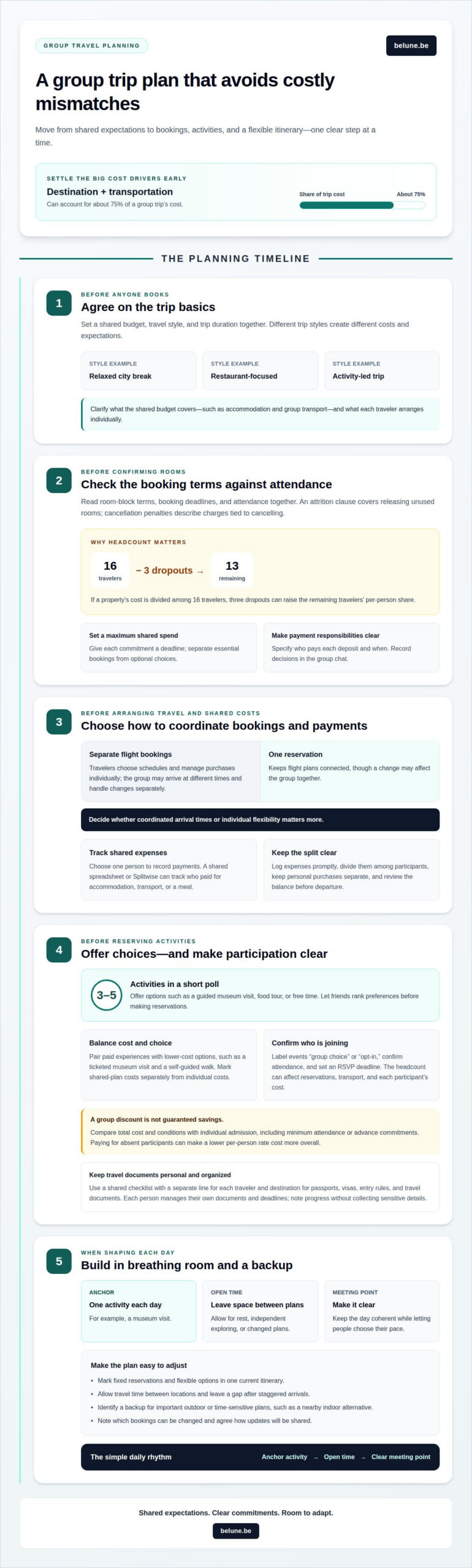
Before anyone books, agree on a shared budget, trip style, and duration. A relaxed city break, a restaurant-focused itinerary, and an activity-led trip create different costs and expectations. Destination and transportation choices can account for about 75% of a group trip’s cost, so settle those decisions early. Give everyone a clear picture of what the shared budget covers, such as accommodation and group transport, and what travelers arrange individually.
A hotel room block reserves a set of rooms for a group; an attrition clause describes the terms for releasing unused rooms, while cancellation penalties describe charges tied to cancelling. Read these terms together with the booking deadlines, and compare them with the group’s confirmed attendance. For example, if a property’s cost is divided among 16 travelers, three dropouts can raise the remaining travelers’ per-person share.
When budgets and payment deadlines differ, agree on a maximum shared spend and set a deadline for each commitment. Separate essential bookings from optional choices so travelers can decide what suits their finances without holding up the whole plan. Specify who pays each deposit and when, and record decisions in the group chat so everyone has the same information.
Separate flight bookings let travelers choose their schedules and manage their own purchases, but the group may arrive at different times and handle changes individually. One reservation can keep flight plans connected, though a change may affect the group together. Before booking, decide whether coordinated arrival times or individual flexibility matters more.
For shared expenses, choose one person to record payments and agree how reimbursements will work. A shared spreadsheet or Splitwise can track who paid for accommodation, transport, or a meal. Log each expense promptly and divide it among the people who took part. Keep personal purchases separate, and review the balance before departure to avoid surprises.
2. Booking activities and coordinating participation
Start with a short poll offering 3-5 activities, such as a guided museum visit, a food tour, or free time. Friends can rank preferences before you reserve anything, helping the group avoid paying for an activity that only a few people want. Record each choice and its expected charge in one shared itinerary.
Balance paid experiences with lower-cost options. Pair a ticketed museum visit with a self-guided walk, or plan a restaurant meal alongside time to explore independently. This gives travelers choices without making every day depend on another paid booking. Clearly distinguish activities covered by the shared plan from those each participant pays for.
Make activities optional unless one is central to the trip. Label each event as a “group choice” or “opt-in,” then confirm attendance before reserving places. Travelers who want a slower day, for example, can skip a walking tour while others join. Set an RSVP deadline, since the final headcount may affect reservations, transport, and each participant’s cost.
Group discounts are not automatic. Compare the total cost and conditions of a group booking with individual admission, including any minimum attendance or advance commitment. For trips to major attraction hubs, checking authorized sellers like KGS Tickets can help organizers benchmark discounted admission rates without locking the group into rigid minimum headcount rules. A lower rate per person can still cost more overall if the group must pay for absent participants. Share the terms before asking anyone to commit, and do not treat a discount as guaranteed savings.
For passports, visas, entry rules, and travel documents, use a shared checklist with a separate line for each traveler and destination. Each person should manage their own documents and deadlines; the organizer can note progress without collecting sensitive details. Keep the checklist factual and direct travelers to the relevant official requirements for their itinerary rather than assuming everyone has the same needs.
For cultural itineraries, Art & Culture Group Tours can bring activities into a coherent group program, while leaving room for participants to choose what suits them.
3. Keeping itineraries flexible and manageable
A tightly packed schedule can leave a group with little time to enjoy a destination. Plan one anchor activity each day, such as a museum visit, and leave open time before the next commitment. On a beach trip, include downtime instead of filling every hour with excursions. This lets travelers rest, explore nearby, or adjust plans without disrupting the whole group.
Flexibility involves planning and cost trade-offs. A prepaid activity may require a firm attendance decision, while an independent walk leaves more room to change plans. Mark fixed reservations and flexible options in the itinerary, and note which plans depend on everyone arriving together. A self-guided walk, for example, can be an alternative if travel delays disrupt a scheduled tour.
Make the itinerary easy to update. Share one current version, mark confirmed bookings, and assign someone to communicate changes. Allow travel time between locations instead of scheduling activities back-to-back. If travelers arrive from different places, leave a gap after arrival before planning a shared event. A relaxed meal can bring everyone together without making every activity compulsory.
For delays, cancellations, illness, or bad weather, identify a backup for each important outdoor or time-sensitive plan. Choose an indoor alternative nearby, note which bookings can be changed, and agree how the organizer will share updates. These steps give the group a practical way to respond without rewriting the whole itinerary.
Keep each day simple: plan one anchor activity, leave open time, and set a clear meeting point. Travelers who want more activity can arrange an optional outing while others take a slower pace. The group might split between exploring a town and relaxing by the pool, then reunite for dinner. This keeps the schedule coherent while giving everyone room to choose.
4. Group-planned trips and organizer workload
A group trip needs a coordinator, not an unspoken assumption that one person will handle everything. The organizer may research and book accommodation, activities, and restaurants, while tracking decisions and communicating changes. For a larger group, divide specific tasks among volunteers, such as collecting meal preferences or sharing arrival details. Keep one person responsible for the final itinerary so updates remain consistent.
There’s no universal group size that makes booking flights, hotels, and activities together impractical. Groups of 10, 20, or more travelers can face added coordination when dates, budgets, and preferences differ. A Spain trip planned for 13 people included travelers arriving from six cities. That kind of spread makes arrival logistics and booking responsibilities as important as headcount.
Set a commitment point before making shared reservations. For a Spain trip, 26 people were invited during planning, while 13 traveled. Collect a deposit from guests who remain noncommittal before committing the group to a shared booking. For a rental property, review room divisions, comfort levels, and cancellation terms together, so the people paying understand the arrangement.
Reduce repeated questions with a one-page FAQ covering the destination, travel options, booking decisions, and deadlines. Clarify which travelers arrange their own transport and which reservations the organizer handles. Keep decisions and updates in one group channel. When planning without an agent, the group must resolve problems itself, so assign a backup contact who can access the itinerary.
The takeaway: DIY coordination works best when the organizer’s role is explicit, commitments are recorded, and tasks are shared. For a group itinerary that needs coordinated logistics, explore group travel planning support.
BELUNE: Art & Culture Group Tours
BELUNE helps tour operators and travel agents turn cultural interests into coordinated group itineraries. When organizing every detail becomes too demanding, BELUNE’s Art & Culture Group Tours provide a natural next step, with Hotel Accommodation Management, coach hire using its own fleet, and Local Guide Services supporting the journey.
This approach suits groups seeking a shared cultural program without leaving the organizer to coordinate every element alone. A clear brief covering the group’s interests, preferred pace, and travel priorities helps shape the itinerary. Coordinated accommodation, transport, and local guidance then bring the different parts of the trip together.
If your group needs cultural plans and logistics to work together, contact BELUNE to discuss your itinerary.
Shape the trip around what matters most
Many DIY group travel planning pitfalls that increase costs begin before anyone books: the group has not decided what would make the trip worthwhile. Turn that discussion into a concise trip brief covering the experience everyone wants to share, the choices travelers can make independently, and who will coordinate decisions. A clear purpose helps keep later requests aligned with the group’s priorities.
Tour operators and travel agents planning a cultural group journey can work with BELUNE to shape a customized itinerary. A considered plan brings the destination’s character into focus and gives the organizer a clear next step. The goal is not to fill every moment, but to create a shared experience that leaves room for individual preferences.
Ready to develop your group’s ideas into a cultural itinerary? Contact BELUNE to plan your group trip. Start with the experience you want travelers to remember, and let that intention guide the journey.
Frequently Asked Questions
Second Step: Where to Stay – Rooms, Villa or Other?
Choose accommodation based on how the group wants to spend time together, not just sleeping capacity. A villa such as Villa Cielito del Mar may provide shared living space, while hotel rooms can offer more privacy and separate arrival routines. Consider the distance to planned activities, where meals will take place, and whether the layout suits the group. The right fit supports the rhythm of the trip.
What are the most common pitfalls when planning group travel yourself?
Common DIY group travel planning pitfalls include treating tentative interest as a firm commitment and underestimating the work involved in connecting locations. Accommodation far from planned activities, for example, can add transport coordination and split the group’s day. Before booking, map the main stops and distinguish confirmed decisions from ideas still under discussion. This helps prevent late changes and mismatched expectations.
How should a group agree on budget, dates, destination, and travel style?
Start by identifying each traveler’s priorities, such as a preferred date range, pace, or experience. Compare destinations against those shared priorities rather than letting one preference dominate by default. If ideas differ, record the trade-offs and decide what matters most. This gives the trip a clear direction before detailed planning begins.
What steps help prevent conflicts over itineraries, free time, and decision-making?
Agree in advance how decisions will be made and how long people have to raise objections. The group might authorize one coordinator to settle practical details after gathering preferences, while reserving major changes for discussion. Keep the final plan in one shared place and label optional activities clearly. This helps everyone know which version is current and who is expected to attend.
How do you plan transportation and activities for a group in a specific destination?
Group activities by location, then plan transport between nearby clusters instead of crossing the destination repeatedly. Set clear meeting points and share the route before the day begins. Match transport to the group’s schedule and activity locations, allowing time to travel between stops. A local guide can help put activities in the context of the destination.
Leave a Reply