
A five-star review is earned in the details, not just the destination. Understanding how to get 5-star reviews for multi-country tours starts with delivering an experience guests can describe: a thoughtful guide, a comfortable pace, and moments that stay with them. The most useful reviews bring those details to life.
Travelers know that a well-planned itinerary matters. On a multi-country tour, every handoff and included experience shapes the journey, so even a small service gap can stand out as clearly as a memorable local encounter.
This article explores what guests tend to praise or criticize about guides, booking service, tour inclusions, itineraries, and cross-border experiences. You’ll learn how to invite useful feedback, respond in ways that build trust, and use recurring review themes to improve the tour experience.
Key Takeaways
- Encourage feedback that names the guide, tour pace, and moments guests remember to make reviews more useful to future travelers.
- Use recurring comments about bookings and international itineraries to spot where handoffs, timing, or communication could be improved.
- Make tour inclusions clear and connect them to the experiences travelers value, so expectations align with what the journey delivers.
- Respond appreciatively to reviews and share guest perspectives thoughtfully to build trust and highlight the character of each tour.
- Compare feedback across countries to distinguish local preferences from consistent service issues, then refine the experience accordingly.
1. Guest feedback about guides and booking service
Five-star reviews grow from consistent care across the guide, booking, and travel experience. For multi-country tours, guests praise clear communication, a well-paced day, and local details that make each stop distinctive. That is the practical answer to how to get 5-star reviews for multi-country tours: make every stage feel considered, then invite feedback about specific moments.
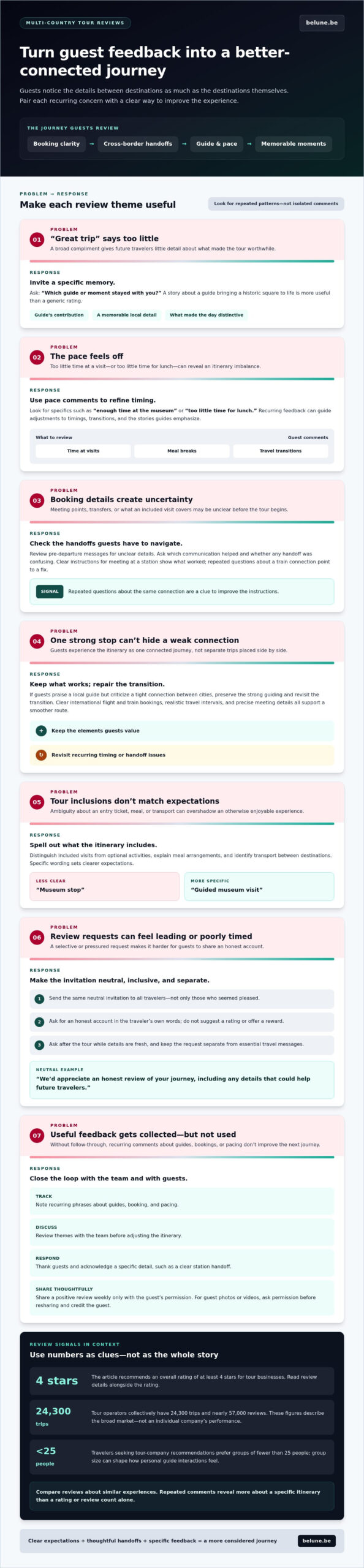
Ask guests to describe what the guide contributed, rather than simply rate the tour. A review explaining how a guide brought a historic square to life gives future travelers more insight than “great trip.” The same goes for pace: comments such as “enough time at the museum” or “too little time for lunch” can show whether the itinerary balances travel and discovery. Use recurring feedback to refine timings, transitions, and the stories guides emphasize at each destination.
Booking service shapes expectations before guests meet a guide. Review pre-departure messages and identify details that may be unclear, such as a meeting point, transfer arrangement, or what an included visit covers. After the tour, invite guests to mention the most helpful communication and any confusing handoff. A specific example, such as clear instructions for meeting at a station, shows what worked; repeated questions about a train connection point to an improvement.
Make the feedback request easy to answer. Ask one open question, such as, “Which guide or moment stayed with you?” Then let guests describe the experience in their own words. Reviews that mention a guide, tour pace, or memorable detail are more useful to people comparing tours. When someone shares a review, respond with a simple thank-you. On review sites, marking reviews as helpful can make them easier to find.
Guest photos and videos can convey an atmosphere that itinerary descriptions cannot. Invite travelers to tag the tour business when sharing images, so their content is easier to find and reshare. A guide explaining local art or a shared table during a food experience may show the character of a stop better than a generic promotional image. Ask permission before resharing, credit the guest, and keep the caption relevant to the experience shown.
Close the loop by sharing one positive review each week on social media, with the guest’s permission. Track recurring phrases about guides, booking, and pacing, then discuss them with the team before adjusting the itinerary. Travelers seeking tour-company recommendations prefer groups of fewer than 25 people, so group size can also shape how personal guide interactions feel. Use that feedback to improve the next journey, not just to collect praise.
2. Guided tour operators and international itineraries
For multi-country tours, review quality reflects more than the appeal of each destination. Guests experience the route as one connected journey, from the first booking details to the final guided visit. Operators earn stronger feedback when handoffs, timing, and expectations stay clear across borders. A well-planned itinerary makes transitions feel intentional, not like separate trips placed side by side.
Review ratings offer a useful first signal, but they need context. The recommended overall rating for tour businesses is at least 4 stars. Travelers can compare that figure with the substance of reviews: do guests describe helpful guides, understandable travel arrangements, and a satisfying pace? A rating alone can’t show whether a tour suits a traveler seeking cultural visits or a carefully coordinated route.
Review volume adds another perspective, but it isn’t a quality score. Tour operators collectively have 24,300 trips and nearly 57,000 reviews across operators. Those figures describe a broad market, not the performance of any single company. For a specific itinerary, read comments about the same kind of experience and look for repeated themes, such as confusing station transfers or a guide who made a city’s history vivid.
Request honest reviews with a neutral message sent to all travelers, not only those who seemed pleased. Ask them to describe the experience in their own words, without suggesting a rating or offering a reward for posting. This keeps the invitation transparent and gives travelers room to mention both strengths and shortcomings. For example: “We’d appreciate an honest review of your journey, including any details that could help future travelers.”
Ask for feedback after the tour, while the route and its details are still fresh. Travelers can then reflect on the whole itinerary rather than judging just one stop. Keep the request separate from essential travel messages, such as train times or meeting instructions. This helps guests recognize it as an invitation, not a condition of their booking.
Use review patterns to improve the next itinerary. If guests repeatedly praise a local guide but criticize a tight connection between cities, preserve the strong guiding and revisit the transition. Clear international flight and train bookings can form part of that planning, alongside realistic travel intervals and precise meeting details. Respond to each review with a specific acknowledgment, such as thanking a traveler for noting a clear station handoff. That response shows future bookers that operators listen and act.
Choose tour operators with a solid track record and plenty of positive reviews; use recurring feedback to guide refinements while preserving the itinerary elements guests value.
3. Tour inclusions and traveler experiences
Guests assess a tour against the experience they expected. A clear itinerary distinguishes included visits from optional activities, explains meal arrangements, and identifies transport between destinations. For example, “guided museum visit” tells travelers more than “museum stop.” Ambiguity about an entry ticket or meal can overshadow an otherwise memorable day. Describe each inclusion in plain language before booking.
Premium or VIP experiences need the same precision. Explain what makes an experience distinctive, such as a reserved visit, a specialist-led tasting, or access arranged for the group. Don’t use “exclusive” in place of a description. Travelers should know what the access involves, where it happens, and how it fits into the day. If a special visit is central to the tour, explain its role rather than relying on a grand label.
An operator’s expertise shows in how well the tour’s theme and details fit together. A food-focused itinerary, for instance, should connect tastings with local culinary context, not just list stops. An art itinerary can pair a gallery visit with a guide who explains the work and its setting. When comparing multi-country tours, look for operator experience that matches the route and travel style. Read testimonials for specific examples, not just general praise.
Pre-trip information reduces disappointment by making practical expectations clear. Send travelers the daily schedule, meeting points, transport arrangements, included activities, and any preparation needed for each experience. For instance, identify a walking-intensive city visit before departure, rather than letting guests discover it at the first stop. According to the Centers for Disease Control and Prevention, travelers should check vaccine and medicine requirements and visit a doctor at least a month before the trip.
Use guest feedback to see whether the written description matches the delivered experience. If reviews praise a local tasting but mention unclear meal inclusions, clarify what the tasting covers. If travelers value a specialist guide, make that expertise visible in the tour description. Compare comments by experience type, such as cultural visits, food activities, and transport days. This helps operators preserve the details guests remember while correcting avoidable friction.
Before publishing or updating an itinerary, read it from a traveler’s perspective. Can guests tell what is included, what they’ll do, and how each experience connects to the next? Ask someone unfamiliar with the route to flag unclear phrases, then revise them with specific details. A precise description sets fair expectations, gives travelers a clearer sense of the journey, and provides a stronger basis for honest reviews.
4. Tour quality concerns and service shortcomings
Operators can improve satisfaction across countries by setting clear service standards and explaining each transition. Travelers should know who leads each stage and what happens next. Share practical updates when plans change, and make the daily schedule easy to follow. Consistency starts with expectations guests can understand.
Service standards should suit the tour style. A cycling itinerary needs clear information about riding pace, route conditions, and support arrangements; an art-focused group visit needs time for interpretation and questions. Explain these differences before booking instead of making one broad promise for every tour. Then compare guest comments with the advertised experience. If travelers expected relaxed museum visits but experienced rushed stops, adjust the schedule or clarify the description.
Handle complaints during the tour by listening, recording the concern, and explaining the next practical step. If a guest says a hotel room is missing a requested feature, acknowledge the issue and pass it to the person responsible for accommodation. Follow up with the traveler after action is taken. A calm response and clear update can keep an unresolved service problem from defining the whole journey.
Keep guides, hotels, transport, and service consistent across countries with shared operating notes and a handover at each arrival. The next guide should receive the current itinerary, group needs, and details of the transfer. Accommodation teams should use the same rooming information, and transport arrangements should match the published schedule. Clear ownership of every handoff helps prevent gaps between local teams.
Customer service is visible in small, specific actions. A guide who confirms the meeting point before leaving a gallery, or a tour representative who explains a delayed departure, gives guests useful support. Train teams to share accurate updates, avoid conflicting instructions, and record recurring problems. These practices matter across tour styles, from a festival visit to a multi-country cultural itinerary.
Review service shortcomings by category, not just by overall impression. Separate comments about accommodation, transport, guiding, and communication, then look for repeated examples. If guests in different countries describe unclear pickup instructions, revise the shared message template. If criticism centres on one local stop, review that segment with the team responsible. Specific patterns point to practical changes.
Set a simple review routine after every departure. Compare the promised service with guest feedback, identify an issue to address, and assign responsibility. For example, if travelers praise a guide’s knowledge but mention confusing hotel check-in, preserve the strong guiding and improve the arrival instructions. Highlight concrete service improvements in future tour information without implying every journey is identical.
5. Customer reviews of tours in different countries
A multi-country tour can receive different reactions at each stop. Guests may praise a local guide in one country, then criticize confusing arrival instructions in another. Read reviews by destination and journey stage, not just as one overall score. This separates a local issue from a pattern affecting the full itinerary. One difficult transfer calls for a different response than repeated complaints about unclear handoffs.
Language barriers affect how easily travelers follow instructions, ask questions, and understand local context. Cultural differences shape expectations around timing, meals, and communication. Local logistics, such as a station meeting point or a busy city transfer, can turn small uncertainties into significant frustrations. A guest may describe a delay as poor organization when the underlying issue was unclear guidance about where to meet.
To interpret feedback fairly, compare reviews about the same place and activity. A complaint about a crowded museum visit in one city may concern that particular stop, while similar comments across destinations can indicate a scheduling problem. Note the country, tour segment, and issue mentioned. Then compare those details with the itinerary and guest information used for that departure.
Reviews also reveal what travelers value at each destination. One guest might remember a canal-side walk, while another praises a guide’s explanation of local art. These details help future travelers understand the character of each stop. Ask for honest feedback about the full route and specific experiences without steering guests toward praise. Respond to criticism with a practical acknowledgment, such as explaining that meeting instructions have been clarified.
Analyze reviews after each tour by grouping comments under themes such as guiding, language clarity, transport, timing, and cultural experience. Mark whether each comment concerns one destination or several countries. If guests mention unclear station directions in different cities, improve the shared arrival instructions. If feedback focuses on one guide’s interpretation, review the guiding approach at that destination.
For tours with distinct local experiences, such as a river cruise with local excursions, assess each part separately. Guests may love the scenery but find the excursion instructions difficult to follow. This level of detail shows what to preserve and what to adjust. Share relevant themes with the team planning the next itinerary, then compare later feedback to see whether the concern persists.
The clearest takeaway is to treat reviews as both destination-specific and journey-wide evidence. A comment about a guide in one country should inform that stop; repeated concerns across the route deserve broader attention. This balanced approach helps operators protect what guests value while correcting friction at its source. It also makes responses more credible, because each reply addresses the experience the traveler actually described.
BELUNE: Hotel Accommodation Management
BELUNE is a practical partner for tour operators and travel agents coordinating group travel across several destinations. Its Hotel Accommodation Management supports the lodging element, while Coach Hire with its own fleet of buses and Local Guide Services bring transport and local expertise into the itinerary. Art & Culture Group Tours can add a clear theme to the journey.
Turn to BELUNE when accommodation, guiding, transport, and cultural visits need to work together in a group itinerary. Its services are designed for organized group travel, not individual travel bookings. Contact BELUNE to discuss your group tour plans.
Build the next journey around what guests value
Reviews can guide more than a response to the last departure. Use them as a design tool for the next itinerary: decide which moments deserve more space, where clearer coordination could help, and what local character should remain at the heart of each stop. That turns feedback into a considered direction for future group travel. A thoughtful approach to how to get 5-star reviews for multi-country tours begins with shaping an experience guests can describe honestly and specifically.
For tour operators planning group journeys, BELUNE offers Hotel Accommodation Management, Coach Hire with its own fleet of buses, and Local Guide Services. Together, these services can make an itinerary more connected, with accommodation, transport, and local insight planned as parts of the same journey.
Bring your tour concept and priorities into the next planning conversation. Contact BELUNE about your tour, and take the next step toward a journey shaped with care.
Frequently Asked Questions
What makes a good review?
A good review helps someone decide whether a tour suits their interests and travel style. It describes what the guest experienced, what stood out, and who might value the same journey. For example, a traveler who prefers unhurried cultural visits can say whether the tour’s pace matched that preference. Honest, firsthand detail is more useful than praise alone, while a balanced account helps readers understand both the experience and its fit.
How should tour operators respond to negative reviews and service failures?
Respond calmly, acknowledge the guest’s concern, and address the specific issue without arguing. If a review describes a missed connection, explain what steps have been taken to review the handoff, without sharing private booking details publicly. Keep the response professional and concise. Take personal discussion to a private channel, then use the complaint internally to identify whether the issue came from planning, communication, or delivery.
What review scores and benchmarks are typical for multi-country tour operators?
A practical benchmark is an overall rating of at least 4 stars for a tour business. Treat this as a recommended target, not as a guarantee or a universal average for multi-country operators. Interpret the score alongside review content: a strong overall rating can still conceal recurring criticism about one itinerary segment. Compare feedback for similar tour types and destinations to understand what the rating reveals about the experience travelers actually receive.
How can tour operators measure review performance and improve ratings over time?
Track overall ratings, new review volume, responses, and recurring themes across destinations and tour styles. Keep a simple record of each concern, the team responsible, and the change made. Then compare later feedback to see whether the issue appears less often or has shifted. For example, if travelers repeatedly mention unclear arrival directions, revise the instructions and monitor comments about arrivals on later tours.