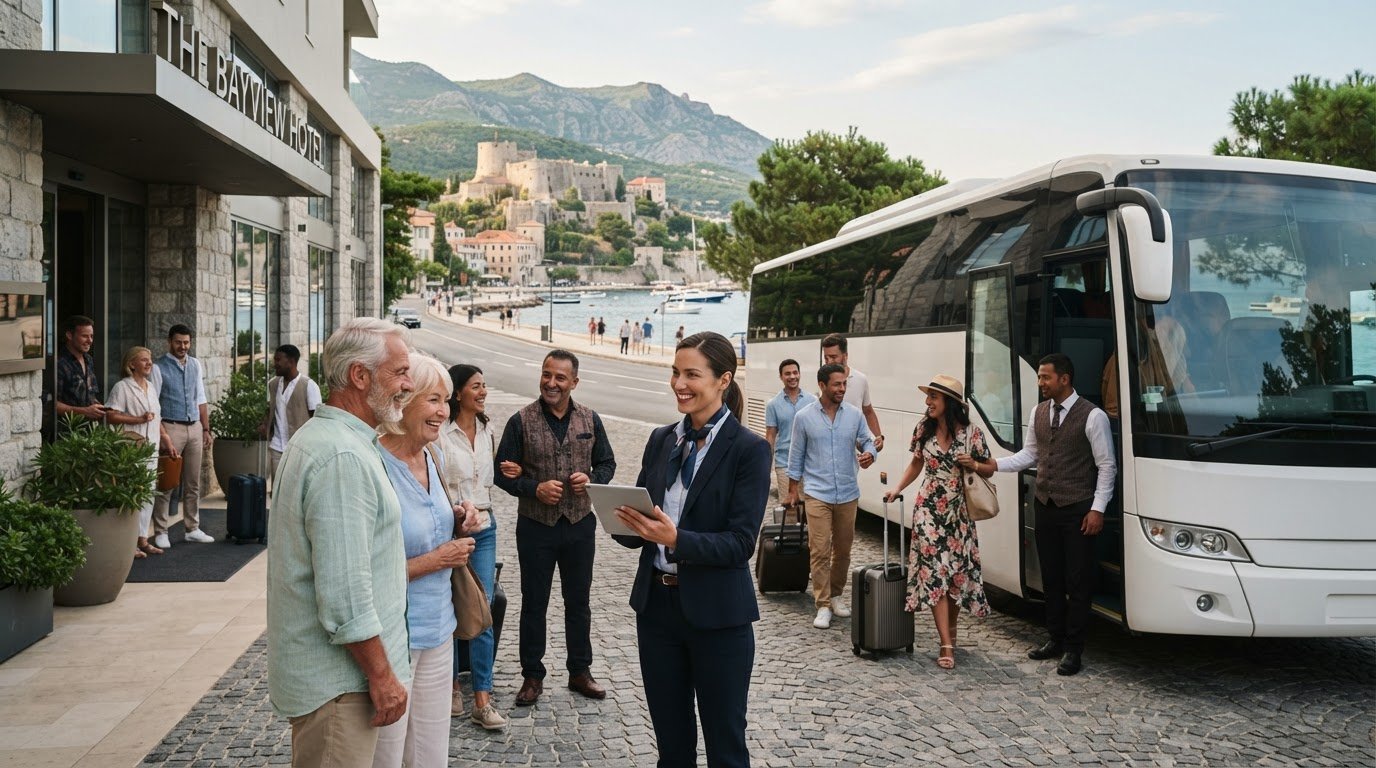
A brand’s reputation is shaped not only by what a campaign promises, but by what guests experience: the coach that arrives, the welcome they receive and the details that make a trip feel well organised. That’s where how a dmc partner enhances brand reputation becomes clear. Coordinated local delivery can bring a brand promise to life, while repeated mismatches between the promise and the experience can weaken trust.
It’s natural to want local expertise without giving up control of the guest experience. A strong partnership brings the two together: your brand sets the intent, while thoughtful coordination and destination knowledge help deliver it for each audience. In this article, you’ll learn how the details of a trip influence brand perception and what to consider when assessing a DMC beyond its list of services. We’ll also explore how BELUNE combines coach transport, accommodation management, local guidance and experiences in tailored group programmes. These practical criteria can help you choose a partner and keep the guest experience consistent with your brand.
Key Takeaways
- See how a DMC partnership can turn a brand promise into a consistent, locally informed guest experience.
- Learn how transport, accommodation, guidance and activities can work together across the guest journey.
- Compare in-house coordination with a DMC partnership by considering destination knowledge, team capacity and programme complexity.
- Use a clear brief covering audience needs, tone, service priorities and brand standards to keep delivery aligned.
- Discover how BELUNE’s more than 20 years of tourism experience supports coordinated, tailor-made trips.
What a DMC Partnership Means for Your Brand Reputation
A Destination Management Company (DMC) coordinates travel services and experiences at a destination, bringing separate parts of a trip together. Its work can connect transport, accommodation, local guides and activities into a considered guest journey. For a foundational overview of the Destination Management Company (DMC), look beyond the service list: the value is in how the arrangements work together on the ground.
Brand reputation is the impression people form through their experiences over time. A campaign may promise care, quality or discovery, but guests encounter that promise in practical moments: whether arrival feels organised, accommodation fits the programme and activities suit the group. Each touchpoint contributes to the overall impression. A brand is not only what it says; it is also what people experience repeatedly.
A DMC can bring a brand promise into the destination by coordinating local services around a coherent guest journey. This is the connection behind how a dmc partner enhances brand reputation: thoughtful local delivery can make a brand feel credible and considered, while friction between the promise and the experience can create doubt.
How destination experiences become brand impressions
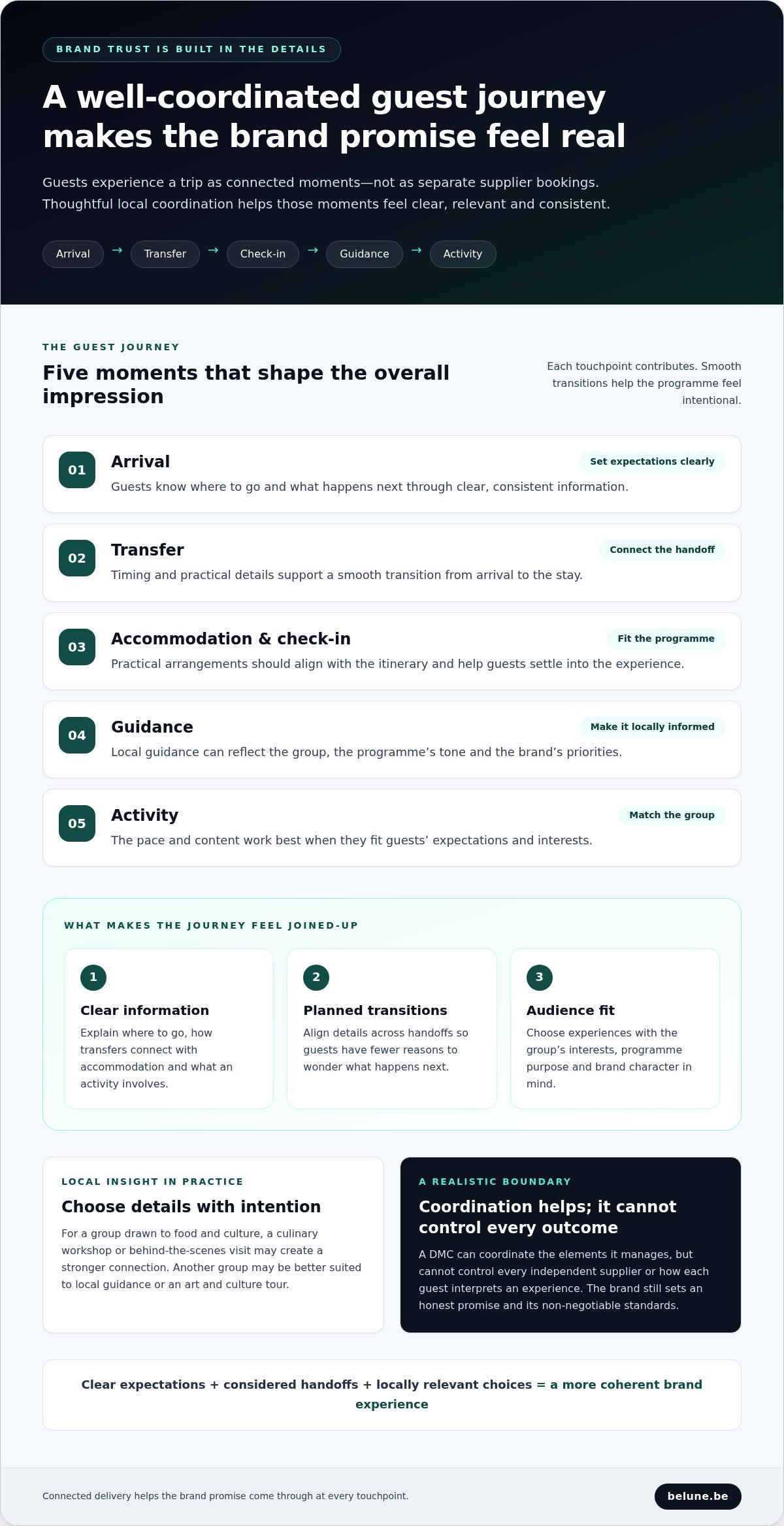
Guests rarely think about a trip in supplier categories. They experience a sequence: arrival, transfer, accommodation, guidance and activities. Well-planned transitions help the programme feel intentional. Locally informed choices, such as matching a cultural visit with activities that suit the group’s interests, can also make an itinerary feel more relevant than a generic programme.
Small inconsistencies can interrupt that impression. Conflicting instructions or an activity that does not suit the audience may distract from an otherwise well-designed trip. One disappointing touchpoint may be seen as an exception; repeated mismatches can look like a pattern and weaken trust in the brand behind the experience.
What a DMC can influence, and what it cannot guarantee
A DMC can coordinate the services and experiences it manages, aligning practical arrangements with the programme’s tone and priorities. Clear communication between the brand and its destination partner supports this work. It gives the partner useful context for decisions, from the style of local guidance to the pace and character of group activities.
Coordination does not mean control over every outcome. Guests have different expectations, and no partner can determine how each person will interpret an experience. The brand owner remains responsible for setting an honest promise, explaining what guests can expect and defining non-negotiable standards. With that foundation, a DMC can help translate the promise into local delivery while the brand retains its voice and direction.
How Local Expertise and Seamless Delivery Strengthen Brand Trust
Local knowledge matters when it improves the experience guests actually receive. A DMC can connect transport, accommodation, guided tours and activities so each part supports the next. The aim is not simply to assemble bookings. It is to shape a guest journey that feels clear, relevant and consistent with the brand behind it.
Coordination starts before guests arrive. Clear information about where to go, how transfers connect with accommodation and what an activity involves helps set expectations. When handoffs are planned and details align, guests have fewer reasons to pause and wonder what happens next. Reducing avoidable friction helps the experience feel more assured and gives the brand’s intended qualities room to come through.
Consistency across the guest journey
Consider the journey as a series of connected moments: arrival, transfer, check-in, guided experience and activity. Each contributes to the impression, and the transitions often show how well the programme has been considered.
- Arrival: Guests receive clear, consistent information about what happens next.
- Transfer and accommodation: Timing and practical details support a smooth transition into the stay.
- Guidance and activities: The programme’s pace and content fit the group’s expectations.
A DMC can coordinate the elements it manages and align information with relevant partners. It cannot control every independent supplier or every guest interaction. Dependable planning helps reduce avoidable uncertainty without suggesting that every moment can be controlled.
When evaluating a DMC’s local expertise, look for how it informs the proposed programme. Ask whether the partner can explain why activities suit your audience, how the itinerary connects its different elements and what practical details guests need in advance. Local knowledge is valuable when it shapes the experience, not simply when it appears in a proposal.
Local insight that makes an experience feel distinctive
A locally informed itinerary can respond to the group’s interests, the purpose of the programme and the brand’s character. For an audience drawn to food and culture, a culinary workshop or behind-the-scenes visit may create a more vivid connection than a standard stop. For another group, booking a private catamaran charter Lisbon or arranging specialized local guidance may be a better fit. Tailoring is about choosing details with intention, not adding novelty for its own sake.
Those choices can help a programme feel rooted in its destination rather than interchangeable. A DMC’s local knowledge can inform which experiences suit the audience and how they fit into the wider itinerary. Combined with clear expectations and considered transitions, these details help guests feel that the programme was designed with them in mind.
Consistent delivery turns a brand promise into an experience guests can trust. Explore how tailor-made itineraries and local experiences can bring a programme’s character to life.
DMC Partner or In-House Coordination: Which Better Protects Your Brand?
There isn’t one model that protects every brand best. In-house coordination keeps decisions close to your team, while a DMC partnership brings destination knowledge and coordination capacity into the programme. The right balance depends on your team’s familiarity with the destination, the time and expertise it can dedicate, and how many services need to work together. A partner can coordinate agreed delivery, while brand oversight remains with you.
Use this comparison to identify where each approach may fit. The strengths and considerations depend on your programme and how responsibilities are agreed.
| Approach | Responsibilities | Potential strengths | Considerations |
|---|---|---|---|
| In-house coordination | Your team researches, arranges and aligns destination services. | Direct control over decisions and a close connection to audience insight and brand standards. | Requires internal time, destination familiarity and capacity to coordinate multiple moving parts. |
| DMC partnership | Your team sets the brief and standards; the DMC coordinates agreed local services and experiences. | Local knowledge and on-the-ground logistics can support a connected programme. | Needs clear responsibilities, communication and approval points to keep delivery aligned with the brand. |
When a DMC partnership can add the most value
A partnership can be especially useful when your team is less familiar with the destination, several services need to connect, or the programme calls for experiences tailored to a particular audience. Coordinating group transport, accommodation and local guidance involves more than arranging each item separately. Timing and transitions need to support the overall programme. BELUNE brings together coach transport, accommodation management and local guide services, alongside tailor-made itineraries and on-the-ground logistics. This combination helps tour operators, group organisers and corporate teams coordinate travel programmes as a whole.
That does not mean every task should be handed over. Identify which responsibilities need local coordination, then decide which strategic choices should stay with your team. A useful partnership adds destination capability while preserving the perspective only the brand owner can provide.
Where the brand team should stay involved
Your team knows the audience, the brand’s tone and the promise made to travellers. Keep ownership of those foundations and agree on approval points for itinerary direction, key experiences and guest-facing information. This gives a DMC room to apply local knowledge while keeping the programme recognisably yours. For more destination-partner context, see this guide to choosing an incoming tour operator.
Ultimately, how a dmc partner enhances brand reputation depends on a clear division of roles: local expertise supports delivery, and the brand team sets the standards that delivery should express. Choose in-house coordination when your team has the destination familiarity and capacity. Consider a DMC when local insight, multiple services or programme complexity call for a dedicated destination partner.
How to Keep a DMC Partnership Aligned With Your Brand
A productive partnership starts with a shared understanding of what guests should experience and why it matters to your brand. The goal is not to script every moment. It is to give your destination partner enough context to make considered local choices while protecting the standards your audience expects. A practical process keeps that balance visible from the first brief through post-trip reflection.
- Define the promise. Describe the feeling and service standard the programme should deliver, and clarify what guests have been told to expect.
- Brief the partner. Share who the audience is, what matters to them, the brand’s tone and essential service priorities.
- Align touchpoints. Agree how the itinerary, guest information, transport, accommodation and activities should express the promise.
- Review feedback. Discuss what guests experienced, identify mismatches and use those observations to shape future coordination.
Build a brand brief the destination partner can use
A useful brief is concise but specific. Separate fixed requirements from areas where the partner can recommend a locally informed approach. For example, a programme might require a particular service standard and a cultural focus, while leaving the selection and order of suitable activities open to discussion.
- Audience: Who is travelling, and what interests or practical needs should shape the programme?
- Desired feeling: Should the experience feel welcoming, refined, energetic or reflective?
- Service expectations: What should guests know about key arrangements and transitions?
- Brand standards: Which values, language or service details are non-negotiable?
- Creative scope: Where can local insight inform the itinerary or experience design?
This structure gives both teams a shared reference. It also helps prevent a common mismatch: a partner may deliver the requested components but miss the intended tone because the audience or brand priorities were never clearly described.
Agree on communication, ownership and feedback
Before the trip, establish who owns each key decision and who communicates practical information to guests. Agree on how itinerary changes are raised, which details require brand approval and how updates reach the people who need them. Clear communication routes reduce preventable misunderstandings and help the brand team stay involved without managing every local detail.
After the programme, compare the original intent with guest comments and the team’s observations. Look for useful patterns: Was the information clear? Did the pace suit the group? Did the experience reflect the brand’s character? Treat feedback as input for improving future itineraries, not as a verdict on one isolated moment. For broader partner-selection context, explore this guide to choosing a group travel agency.
Clear briefs and open collaboration make it easier to see how a dmc partner enhances brand reputation through delivery that reflects your standards. Learn more about planning a tailored group experience with BELUNE.
How BELUNE Helps Partners Deliver a Reputation-Strengthening Experience
A reputation-conscious programme needs more than a compelling itinerary. Local decisions and practical arrangements need to work together in a way that feels true to the brand. BELUNE is a DMC with more than 20 years of tourism experience, working with tour operators, travel agents, group travel organisers and corporate clients. Its approach is collaborative: understand the programme’s purpose, then coordinate the destination elements that bring it to life.
BELUNE’s tailor-made itineraries connect with on-the-ground logistics, accommodation management and local guidance. A group programme can bring coach transport, a managed stay and guided cultural experiences together in a considered sequence. Each service has a practical purpose, and their coordination shapes how guests experience the programme as a whole. Itineraries can be tailored to the audience and the character the organising brand wants to express.
A coordinated partner for group and corporate travel
For group and corporate programmes, several arrangements need to support one shared purpose. BELUNE’s MICE services include corporate events, team-building activities and conference planning, alongside its travel and destination expertise. Transport, accommodation management, local guidance and group experiences can all contribute to the programme. BELUNE’s own fleet of modern, comfortable coaches and local partnerships support programme planning, while access to distinctive experiences can help an itinerary feel considered rather than standardised.
Partners can shape a programme around its audience. An art and culture group tour may suit one brief; a gastronomy and beer experience, cycling tour, festival trip or river cruise with local excursions may suit another. The aim is not to include every experience, but to select elements that make sense together and reflect the purpose of the trip. Coordinating the agreed elements can create a more coherent guest experience, while the brand retains ownership of its standards and promise.
Local partnerships and destination knowledge matter when they serve the brief. BELUNE’s tourism experience informs its work as a destination partner. The brand and its DMC shape the experience together, aligning the programme with the audience, purpose and standards the organiser has set.
Start a conversation about your brand and itinerary
Begin with the essentials: who the guests are, what the programme should achieve and what kind of experience would feel distinctive to them. Share your audience, objectives, priorities and desired tone. From there, a collaborative conversation can shape a tailored programme that connects suitable travel services and local experiences with your brand’s character.
Understanding how a dmc partner enhances brand reputation starts with aligning intention and delivery. Let’s create something extraordinary together.
Make Your Next Guest Experience Intentional
A strong reputation grows through experiences that feel true to the brand, not simply through promises made before a trip. For your next programme, choose one quality you want guests to remember, such as feeling welcomed, inspired or exceptionally well cared for. Let that intention guide the choices you make with your destination partner, from the programme’s pace to the character of its experiences.
That clarity gives local expertise a meaningful direction. It also helps your team distinguish what must remain consistent from where a partner can bring a fresh perspective. The answer to how a dmc partner enhances brand reputation lies in this collaboration: a clear brand intention, thoughtfully translated into guest experiences, can give people a reason to remember and trust your organisation.
Your next destination programme can express your brand in a more vivid, human way. Keep the audience and the qualities you want them to experience at the centre of the planning process.
Frequently Asked Questions
Can a DMC guarantee that my brand reputation will improve?
No. A destination partner cannot guarantee how every guest will interpret a trip, since expectations and personal experiences differ. A DMC can influence the elements it coordinates through local knowledge, planning and attention to the agreed brief. Reputation develops through experiences over time, not simply by hiring a partner. Well-organised arrangements can support trust, while the brand remains responsible for making a promise it can stand behind.
Will travellers know that a DMC is involved in the trip?
That depends on how you design the programme and present each party’s role. A DMC may coordinate arrangements behind the scenes, or its role may be visible in guest communications. Decide in advance how the organiser and destination partner should be identified, including who travellers should approach with practical questions. Clear wording in pre-trip information can prevent confusion and help the journey feel connected to the organiser’s brand.
Can a DMC support both group travel and corporate events?
Yes. BELUNE supports group and luxury travel, as well as MICE programmes that include corporate events, team-building activities and conference planning. A tour operator might focus on a themed group itinerary, while a company could shape a programme around a meeting or team activity. Tailor-made itineraries, on-the-ground logistics and local guidance can support these different formats, with the organiser defining the audience and purpose.
Does working with a DMC mean giving up control of my brand?
No. Your organisation retains ownership of its values, audience promise and brand standards. A DMC contributes destination expertise and coordinates the services agreed for the programme. For a practical division of responsibilities, your team might approve the overall itinerary and guest-facing language, while the destination partner coordinates local arrangements. This makes the working relationship collaborative without transferring responsibility for the identity you want travellers to recognise.
What should I share with a DMC before planning begins?
Share the purpose of the trip, who will attend and what you want them to take away from it. Include service priorities, preferred communication style, brand standards and essential programme requirements. It also helps to distinguish fixed elements from choices that can be tailored. For example, a cultural focus might be essential, while specific activities can be shaped around the group’s interests and itinerary.
Can a DMC help create a more distinctive group experience?
Yes. Local knowledge and tailored planning can help match an experience to the group’s interests and the programme’s character. BELUNE offers access to experiences such as behind-the-scenes visits and local culinary workshops, alongside cultural and gastronomy tours. A group interested in food and local traditions, for instance, can have those interests inform the itinerary. Share your audience priorities so the programme has a clear purpose rather than feeling interchangeable.
To discuss a tailored programme for your group or corporate audience, plan your next experience with BELUNE.
Leave a Reply