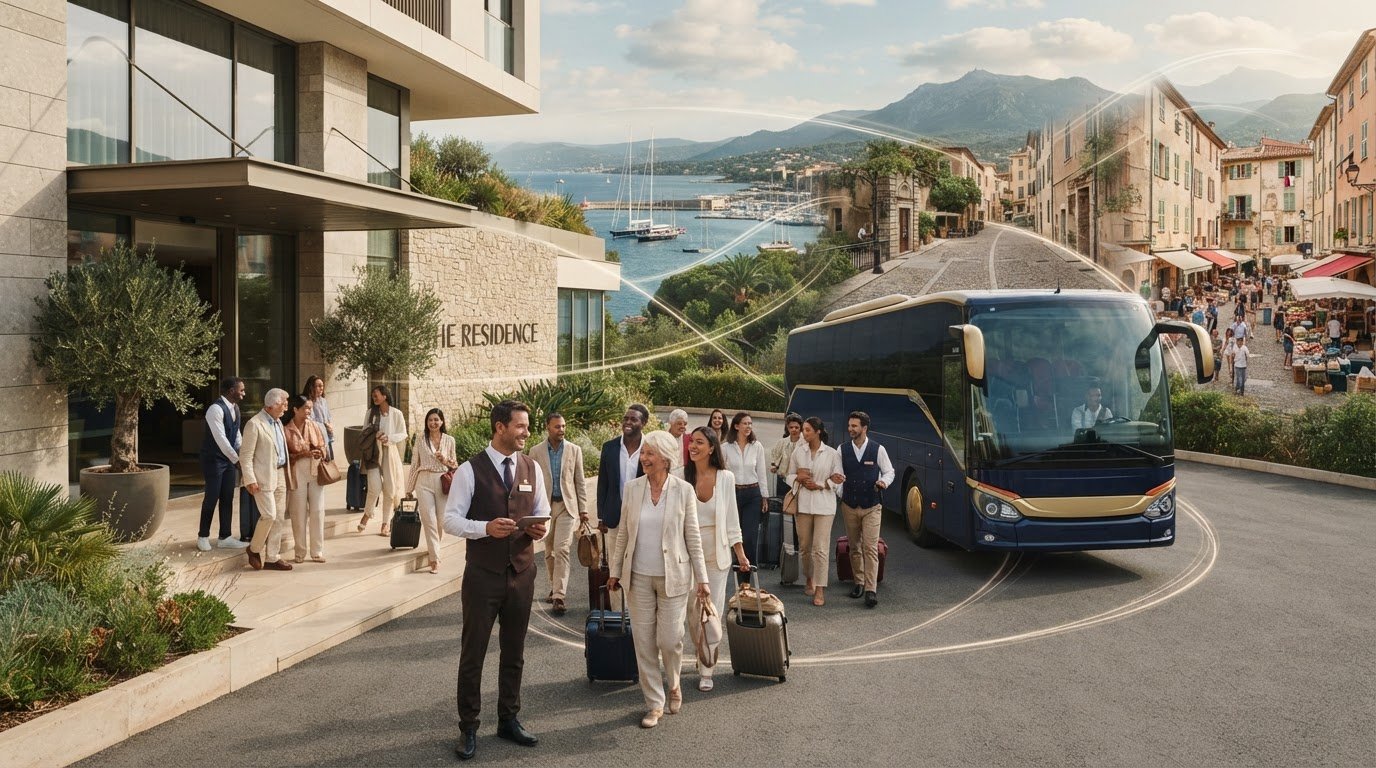
What makes a group tour feel seamless? It is not simply a detailed transport plan. Coaches, accommodation, activities and local guidance need to work together as one journey. When these arrangements are planned separately, the guest experience can feel disjointed. Peace of mind for complex tour logistics comes from shaping the whole itinerary around the group and its purpose.
That is a familiar challenge for tour operators, travel agents and group organisers. A well-designed programme needs to reflect the group’s goals while keeping practical arrangements aligned. With more than 20 years of tourism experience, BELUNE brings coach transport, hotel accommodation management and local guidance together in tailor-made group programmes.
This guide explains how to assess logistics support for a complex tour and choose a partner whose expertise can help create a coherent itinerary. We’ll look at how to coordinate transport, accommodation and experiences, and how to prepare a brief that makes your priorities clear. The aim is straightforward: more confident planning for organisers and a more considered journey for guests.
Key Takeaways
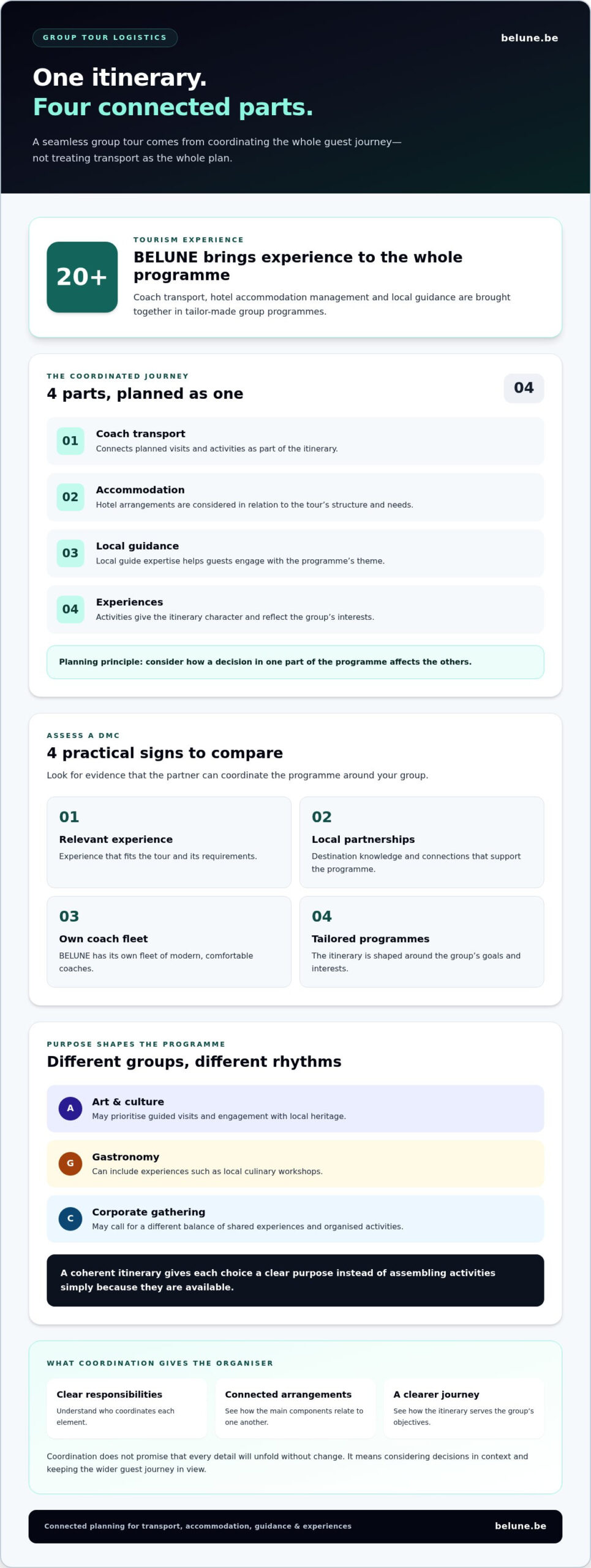
- Assess logistics as a connected guest journey, with each service aligned to the itinerary and the group’s objectives.
- Compare DMC support using practical evidence: relevant experience, local partnerships, an own coach fleet and the ability to tailor programmes.
- Prepare a clear brief by setting out the tour’s purpose, group interests, itinerary priorities and desired experience.
- Find peace of mind for complex tour logistics by bringing planning and local expertise together around your group’s needs.
Why complex tour logistics need more than transport coordination
A group experiences its tour as one journey, even when the arrangements involve separate bookings and teams. An organiser may need to coordinate coach movements, accommodation, local guides and activities at the same time. Each item can seem manageable on its own. The complexity lies in the connections: an activity needs to fit the itinerary, accommodation needs to support the group’s plans, and transport needs to link the different parts in a practical sequence. Peace of mind for complex tour logistics starts with planning those connections, not treating transport as the whole plan.
Arranging individual elements is only the first step. Coordination means considering how a decision in one part of the programme affects the others. A transport plan, for example, is more useful when it is considered alongside the accommodation and experiences it needs to connect. The broader idea of Logistics is the coordination of connected resources and movement. For a tour organiser, the same principle applies to the complete guest journey.
A useful illustration of large-scale tour planning:
Which moving parts make a group tour complex?
Transport, accommodation and experiences need to fit the itinerary as a whole. Consider a group whose programme includes a guided cultural visit and a shared meal. The organiser needs to consider how the group will move between these activities, how the accommodation fits the overall plan, and how each experience supports the tour’s purpose. No single booking answers all of those questions.
The group’s objectives shape the programme, too. An art and culture tour, a gastronomy experience or a corporate gathering calls for different choices and a different rhythm. A coherent itinerary gives those choices a clear purpose instead of assembling activities simply because they are available. Local guidance adds context, while practical arrangements help each experience fit naturally into the wider journey.
What does peace of mind mean for a tour organiser?
For an organiser, peace of mind means having clarity about responsibilities, arrangements and the experience the programme is designed to create. It means understanding how the main components relate, who is coordinating each element, and how the itinerary serves the group’s objectives. That clarity supports informed decisions and makes the plan easier to communicate to colleagues and guests.
Coordinated tour logistics are the connected planning and management of transport, accommodation, guidance and experiences around a group’s itinerary and objectives. Coordination does not promise that every detail will unfold without change. It means approaching the tour as an integrated programme, so decisions can be considered in context and the organiser can see the wider guest journey more clearly.
What coordinated tour logistics should cover across the guest journey
Coordinated tour logistics bring the arrangements into one itinerary shaped around the group and its purpose. Instead of treating transport, accommodation and activities as separate bookings, consider how each supports the next part of the guest journey. This makes it easier to see where decisions connect and whether the programme’s practical structure supports the experience it aims to create.
The plan should reflect the tour’s theme and objectives. An art and culture programme, for example, may prioritise guided visits and opportunities to engage with local heritage. For VIP groups or executive retreats requiring high-end villas and suites, providers like Luxury Bookings AE illustrate how premium lodging must seamlessly match the schedule. The details depend on the group, but the principle is consistent: plan the logistics around the intended experience, not the other way round.
How transport, accommodation and guidance fit together
Each element has a distinct role, but its value depends on how well it fits the programme. Coach transport connects the itinerary’s components; accommodation management supports the group’s stay; and local guide services bring expertise to the experiences. BELUNE brings these services together in tailored programmes, supported by its own fleet of modern, comfortable coaches. The World Bank Transport Overview offers a broader view of transport’s role in connecting people and places, a useful perspective when considering movement as one part of a wider journey.
For organisers, mapping the journey can help show how each service contributes:
- Moving through the programme: Coach transport connects planned visits and activities as part of the itinerary.
- Supporting the stay: Hotel accommodation management is considered in relation to the tour’s structure and needs.
- Bringing places to life: Local guides provide expertise that helps guests engage with the programme’s theme.
- Creating memorable moments: Experiences give the itinerary character, whether its focus is culture, gastronomy or another group interest.
This joined-up view helps organisers assess whether each component has a clear place in the guest journey. It also makes trade-offs easier to spot: changing one part of the programme may affect how another fits.
Where local knowledge and unique experiences add value
A distinctive experience should serve the tour’s theme, not simply fill a space in the schedule. Bringing transport, accommodation management, local guidance and unique experiences into one plan helps create peace of mind for complex tour logistics through clarity and coherence. Explore BELUNE’s tailored group travel support for programmes shaped around the guest journey.
How to compare a DMC for complex group tour logistics
A useful comparison looks beyond whether transport can be arranged. Consider how well the DMC’s services and experience fit the group’s purpose, theme and itinerary. Comparing the same practical dimensions makes differences easier to identify and helps you focus on relevant capabilities rather than general claims.
Use this framework to assess how a DMC’s services connect to your programme:
| What to compare | Evidence to look for |
|---|---|
| Itinerary customisation | Tailor-made programmes shaped around the group’s objectives and travel theme. |
| Transport | Coach hire and information about the provider’s own fleet. |
| Accommodation | Accommodation management considered as part of the itinerary, not just a standalone booking. |
| Local guidance | Local guide services and destination knowledge that support the programme’s experiences. |
BELUNE brings these elements together through tailor-made itineraries, hotel accommodation management, local guide services and its own fleet of modern, comfortable coaches. Its group programmes cover themes such as art and culture, gastronomy and beer, battlefield tourism and cycling, as well as sport events, festivals and river cruises with local excursions. This range shows how different group interests can be connected with relevant logistics.
Which questions reveal whether a service fits your itinerary?
Compare how each programme can reflect the group’s objectives instead of assuming one format suits every tour. Ask whether the services address the journey’s practical needs: coach transport for group movement, accommodation management for the stay, and local guidance or experiences that support the theme. A programme centred on culture may need a different mix from a sport event tour. BELUNE develops tailor-made programmes for a range of group interests.
How to assess experience, local knowledge and flexibility
Relevant experience provides context for a DMC’s planning capabilities. BELUNE brings more than 20 years of tourism experience, alongside strong local partnerships and knowledge of the destinations it serves. These foundations support itinerary planning around an organiser’s priorities. Local knowledge informs the planning, while a tailored itinerary keeps the programme focused on the needs of the specific group.
Customised programmes and coordinated services give organisers a clearer basis for confident decisions. For more context on partner selection, see this guide to choosing a group travel agency and the Benelux incoming tour operator guide. These perspectives can help frame the comparison around itinerary fit, relevant experience and the services that support the guest journey, rather than transport alone. That is a practical route toward peace of mind for complex tour logistics.
For organisers seeking a tailored approach, see how BELUNE supports group travel organisers with connected logistics and programme planning.
How to prepare a clear brief for complex tour logistics
A clear brief gives itinerary planning a useful starting point. It does not need to be a finished schedule. Explain why the group is travelling, what guests hope to experience and which arrangements matter most. With those priorities in view, BELUNE can shape a programme around the group instead of relying on a generic template.
Start with the purpose and shape of the trip
Begin with the programme’s central idea. Is it cultural, gastronomic, battlefield-themed or corporate? Then describe the experience you want guests to have and the balance you are looking for between activities, travel and time to enjoy each experience. Use plain language. A concise picture of the intended journey is more useful than a long list of disconnected requests.
Separate fixed priorities from flexible ideas. An essential visit or key programme objective may set the direction, while the exact mix of activities can be developed during itinerary planning. This distinction keeps the purpose clear while leaving room to shape the details.
Bring the logistics into one coherent planning brief
Once the purpose is clear, bring the practical needs together. This sequence helps organise the brief from broad intent to specific services:
- State the purpose. Describe the tour theme, programme objectives and intended guest experience.
- Set the priorities. Identify essential elements and distinguish them from details that can be tailored as the itinerary develops.
- Describe the group’s interests. Note the kinds of cultural, culinary, sporting or other experiences that suit the travellers and the tone you want to create.
- Outline the travel arrangements. Include coach transport, accommodation management and any international flight or train bookings relevant to the programme.
- Identify guidance and experiences. Say whether local guides, themed tours or distinctive experiences should contribute to the journey.
Be specific about preferences, but you do not need to solve every logistical detail in advance. For example, an organiser planning a gastronomy-themed programme can explain that local food experiences are central, while leaving the itinerary details to be developed around that priority. If the theme is the organising principle, themed group travel planning offers a useful perspective on translating it into a programme.
A strong brief treats the group’s interests and practical arrangements as parts of the same plan. It gives the itinerary room to be tailored while keeping its purpose intact. That is a practical foundation for peace of mind for complex tour logistics, because decisions can be considered against a shared understanding of what the journey should deliver.
Ready to turn your group’s priorities into a considered programme? Explore BELUNE’s tailored group travel support.
How BELUNE brings peace of mind to complex tour logistics
For a group organiser, confidence grows when the itinerary, practical arrangements and guest experience are considered together. BELUNE is a destination management company (DMC) with more than 20 years of tourism experience, working with tour operators, travel agents, group organisers and corporate clients. Its services combine tailor-made itineraries, on-the-ground logistics and hotel accommodation management in programmes shaped around each group’s objectives.
That joined-up perspective matters because every programme has its own priorities. One may be built around culture; another around gastronomy, a sporting event or a corporate purpose. The goal is to make the logistics support that intention, rather than letting individual bookings determine the character of the trip.
What BELUNE brings to a tailored group programme
BELUNE brings together practical services that support different parts of the journey. Coach hire with its own fleet of modern, comfortable coaches supports group transport. Hotel accommodation management supports the stay, while local guide services bring destination expertise into the programme. Tailor-made itineraries connect these elements according to the group’s theme and priorities.
Local partnerships and knowledge inform programme planning. Depending on the group’s objectives, a programme can include unique experiences such as behind-the-scenes visits or local culinary workshops. MICE services also support corporate groups with event planning and team-building activities.
The value lies in how the pieces fit together. Organisers can consider how transport, accommodation and guidance contribute to the intended experience, while keeping the programme tailored rather than relying on a one-size-fits-all format. BELUNE’s collaborative, no-nonsense approach and focus on fair pricing support a clear planning conversation.
How to take the next step with BELUNE
A concise brief is a strong starting point. Describe the group’s purpose, the theme or central interest, the experience you want guests to have, and the travel arrangements you are considering. Include relevant needs for coaches, accommodation, local guidance, activities or MICE support. You do not need a fully formed itinerary. Clear priorities give the planning process direction while leaving room to shape the details together.
Use BELUNE’s Request a Quote form to outline those objectives and preferences. A focused brief helps frame a tailored group-tour proposal around what matters most to your travellers, whether that is a distinctive theme, connected logistics or a considered balance of both. From there, the programme can take shape through collaboration and local expertise.
For peace of mind for complex tour logistics, bring the purpose of the trip and its practical arrangements into the same conversation. Request a tailored group-tour proposal.
Shape your next group journey with confidence
The next step is to turn your group’s priorities into a shared starting point for planning. Be clear about what the journey should mean to guests, which moments matter most and where you would value support shaping the arrangements. That intention gives the itinerary a stronger centre and helps keep practical decisions aligned with the experience you want to create.
Peace of mind for complex tour logistics does not come from removing every unknown. It grows from having a considered plan and a collaborative partner to bring the details into focus. Start with the purpose of your trip, then develop the programme around it.
Request a tailored group-tour proposal and take the first step toward a group journey shaped around your vision. Your next itinerary can begin with a clear idea and grow into an experience guests will remember.
Frequently Asked Questions
Can BELUNE arrange international flight and train bookings?
Yes. BELUNE arranges international flight and train bookings. If your group is arriving by different modes or has a rail segment within a wider programme, include those requirements in the brief alongside the tour’s purpose and preferred travel arrangements. This helps show how international journeys relate to the group programme and gives itinerary planning a clearer starting point.
Does BELUNE provide private drivers and concierge services?
Yes. BELUNE provides private drivers and concierge services for individually tailored travel experiences. In your brief, describe the travellers’ needs and the role you want these services to play, such as supporting a particular part of the programme. This helps place them in context with the wider itinerary.
Can BELUNE arrange excursions for a river cruise?
Yes. BELUNE offers river cruises that include local excursions. To help shape the programme, describe what the group enjoys, whether its interests lean toward culture, food or another experience, and what style of outing would suit the trip. This gives itinerary planning useful direction and connects the excursion to the wider programme.
Can BELUNE organise sports-event or festival tours?
Yes. BELUNE offers sports-event and festival tours, including F1 events, Grand Slam Tennis and Tomorrowland. In your brief, identify the event that gives the trip its focus and describe the travel arrangements you want considered as part of the group programme. This helps connect the event theme to itinerary planning.
Can a corporate group include team building in its programme?
Yes. BELUNE provides MICE services, including corporate events and team-building activities. These can be included in a tailored programme when they support the organisation’s objectives. Outline whether the gathering is intended to bring colleagues together, complement a meeting or form part of a wider corporate trip, then note the arrangements you want included. That context helps shape a programme around your aims.
How can I request a quote from BELUNE?
To request a quote, use BELUNE’s Request a Quote form, email info@belune.eu or call +32 56 505 986. Share the trip’s purpose, group interests, preferred theme and arrangements you would like considered, such as transport, accommodation or local guidance. A concise outline gives the proposal a clear starting point and supports peace of mind for complex tour logistics as planning takes shape.
Can BELUNE tailor a group tour around a specific theme?
Yes. BELUNE creates fully customisable itineraries, including themes such as battlefield tourism, gastronomy and cultural heritage. In your brief, explain what draws the group to the theme, its main interests and the experience you hope to create. Those details give the programme a clear direction and help shape the arrangements around the group.
Leave a Reply