Tag: guest experience

  • How a DMC Partner Enhances Brand Reputation

    How a DMC Partner Enhances Brand Reputation

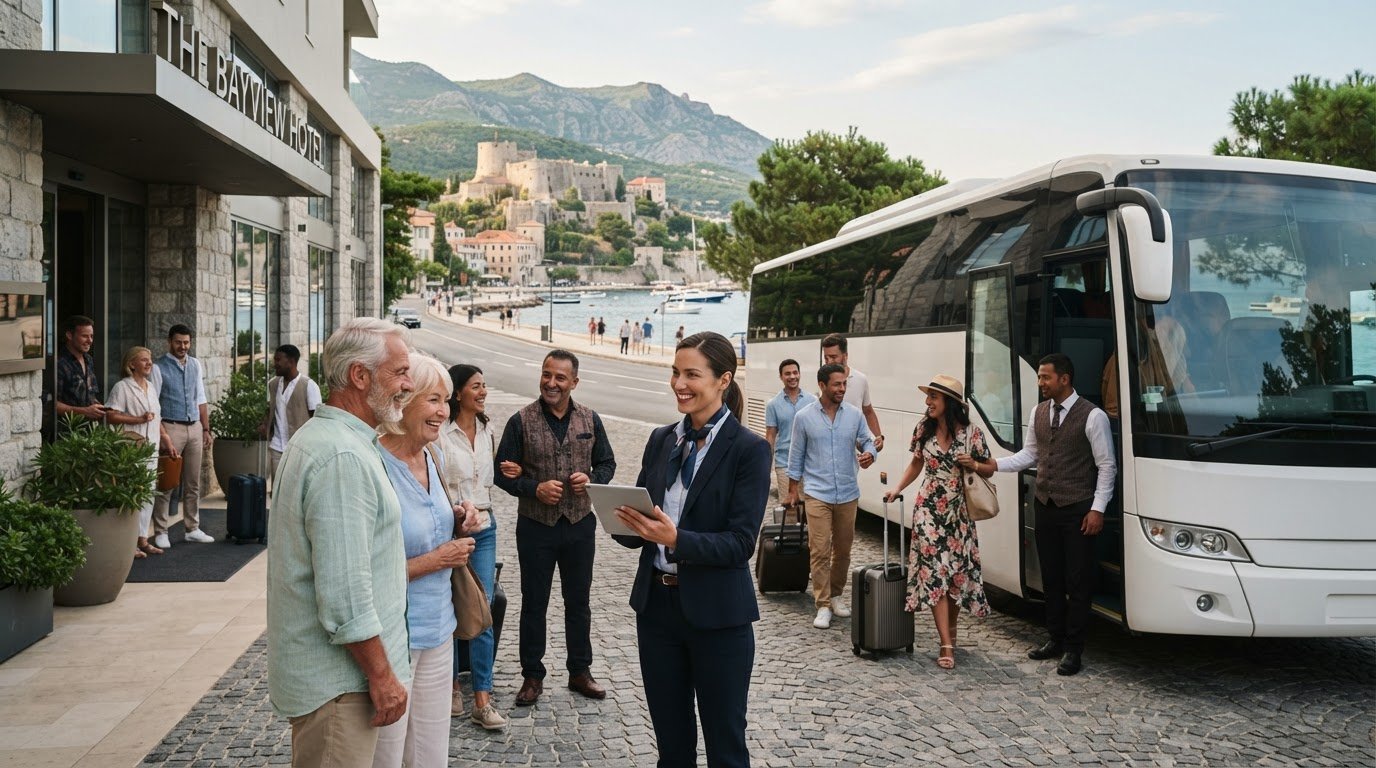
    A brand’s reputation is shaped not only by what a campaign promises, but by what guests experience: the coach that arrives, the welcome they receive and the details that make a trip feel well organised. That’s where how a dmc partner enhances brand reputation becomes clear. Coordinated local delivery can bring a brand promise to life, while repeated mismatches between the promise and the experience can weaken trust.

    It’s natural to want local expertise without giving up control of the guest experience. A strong partnership brings the two together: your brand sets the intent, while thoughtful coordination and destination knowledge help deliver it for each audience. In this article, you’ll learn how the details of a trip influence brand perception and what to consider when assessing a DMC beyond its list of services. We’ll also explore how BELUNE combines coach transport, accommodation management, local guidance and experiences in tailored group programmes. These practical criteria can help you choose a partner and keep the guest experience consistent with your brand.

    Key Takeaways

    • See how a DMC partnership can turn a brand promise into a consistent, locally informed guest experience.
    • Learn how transport, accommodation, guidance and activities can work together across the guest journey.
    • Compare in-house coordination with a DMC partnership by considering destination knowledge, team capacity and programme complexity.
    • Use a clear brief covering audience needs, tone, service priorities and brand standards to keep delivery aligned.
    • Discover how BELUNE’s more than 20 years of tourism experience supports coordinated, tailor-made trips.

    What a DMC Partnership Means for Your Brand Reputation

    A Destination Management Company (DMC) coordinates travel services and experiences at a destination, bringing separate parts of a trip together. Its work can connect transport, accommodation, local guides and activities into a considered guest journey. For a foundational overview of the Destination Management Company (DMC), look beyond the service list: the value is in how the arrangements work together on the ground.

    Brand reputation is the impression people form through their experiences over time. A campaign may promise care, quality or discovery, but guests encounter that promise in practical moments: whether arrival feels organised, accommodation fits the programme and activities suit the group. Each touchpoint contributes to the overall impression. A brand is not only what it says; it is also what people experience repeatedly.

    A DMC can bring a brand promise into the destination by coordinating local services around a coherent guest journey. This is the connection behind how a dmc partner enhances brand reputation: thoughtful local delivery can make a brand feel credible and considered, while friction between the promise and the experience can create doubt.

    How destination experiences become brand impressions

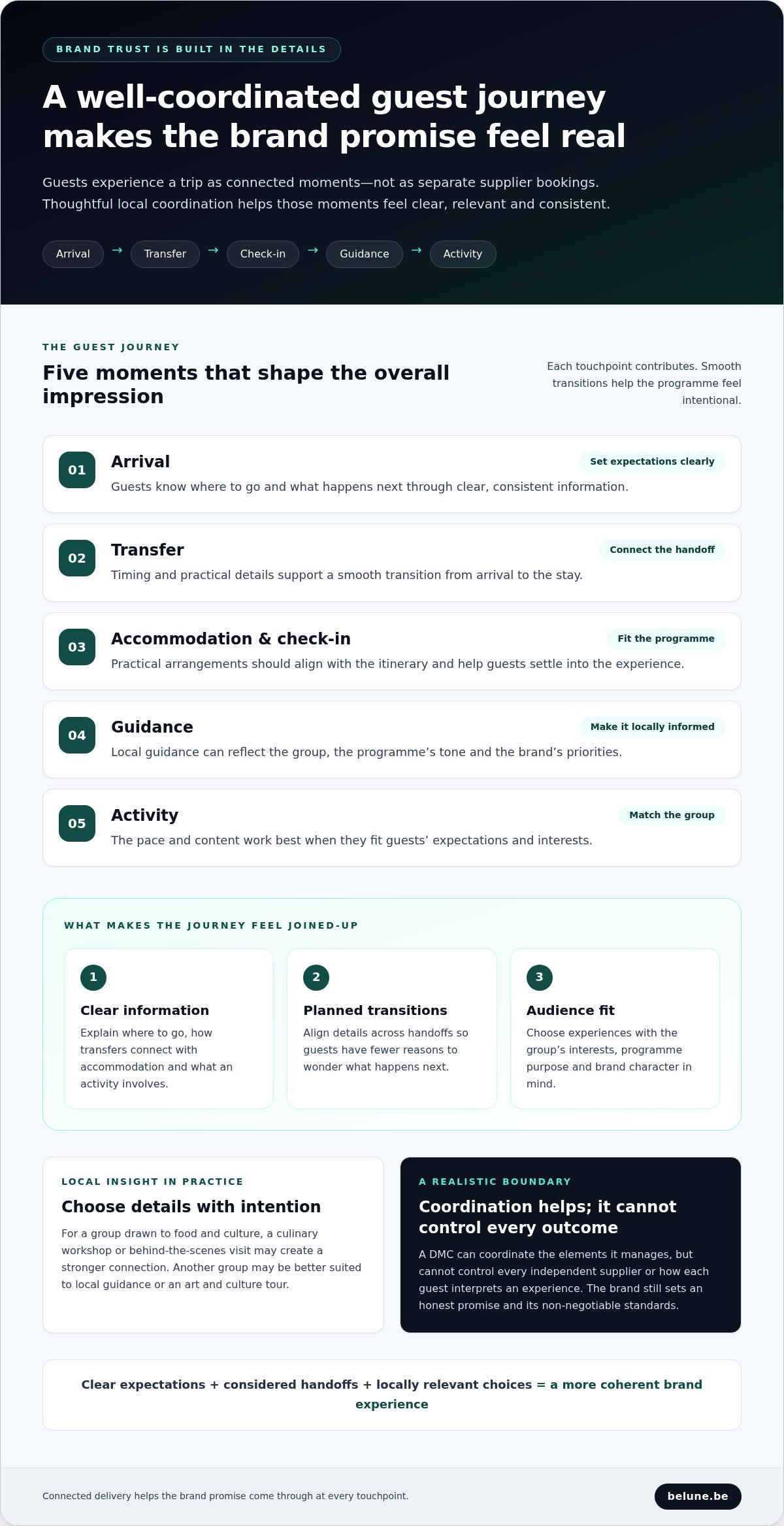
    Guests rarely think about a trip in supplier categories. They experience a sequence: arrival, transfer, accommodation, guidance and activities. Well-planned transitions help the programme feel intentional. Locally informed choices, such as matching a cultural visit with activities that suit the group’s interests, can also make an itinerary feel more relevant than a generic programme.

    Small inconsistencies can interrupt that impression. Conflicting instructions or an activity that does not suit the audience may distract from an otherwise well-designed trip. One disappointing touchpoint may be seen as an exception; repeated mismatches can look like a pattern and weaken trust in the brand behind the experience.

    What a DMC can influence, and what it cannot guarantee

    A DMC can coordinate the services and experiences it manages, aligning practical arrangements with the programme’s tone and priorities. Clear communication between the brand and its destination partner supports this work. It gives the partner useful context for decisions, from the style of local guidance to the pace and character of group activities.

    Coordination does not mean control over every outcome. Guests have different expectations, and no partner can determine how each person will interpret an experience. The brand owner remains responsible for setting an honest promise, explaining what guests can expect and defining non-negotiable standards. With that foundation, a DMC can help translate the promise into local delivery while the brand retains its voice and direction.

    How Local Expertise and Seamless Delivery Strengthen Brand Trust

    Local knowledge matters when it improves the experience guests actually receive. A DMC can connect transport, accommodation, guided tours and activities so each part supports the next. The aim is not simply to assemble bookings. It is to shape a guest journey that feels clear, relevant and consistent with the brand behind it.

    Coordination starts before guests arrive. Clear information about where to go, how transfers connect with accommodation and what an activity involves helps set expectations. When handoffs are planned and details align, guests have fewer reasons to pause and wonder what happens next. Reducing avoidable friction helps the experience feel more assured and gives the brand’s intended qualities room to come through.

    Consistency across the guest journey

    Consider the journey as a series of connected moments: arrival, transfer, check-in, guided experience and activity. Each contributes to the impression, and the transitions often show how well the programme has been considered.

    • Arrival: Guests receive clear, consistent information about what happens next.
    • Transfer and accommodation: Timing and practical details support a smooth transition into the stay.
    • Guidance and activities: The programme’s pace and content fit the group’s expectations.

    A DMC can coordinate the elements it manages and align information with relevant partners. It cannot control every independent supplier or every guest interaction. Dependable planning helps reduce avoidable uncertainty without suggesting that every moment can be controlled.

    When evaluating a DMC’s local expertise, look for how it informs the proposed programme. Ask whether the partner can explain why activities suit your audience, how the itinerary connects its different elements and what practical details guests need in advance. Local knowledge is valuable when it shapes the experience, not simply when it appears in a proposal.

    Local insight that makes an experience feel distinctive

    A locally informed itinerary can respond to the group’s interests, the purpose of the programme and the brand’s character. For an audience drawn to food and culture, a culinary workshop or behind-the-scenes visit may create a more vivid connection than a standard stop. For another group, booking a private catamaran charter Lisbon or arranging specialized local guidance may be a better fit. Tailoring is about choosing details with intention, not adding novelty for its own sake.

    Those choices can help a programme feel rooted in its destination rather than interchangeable. A DMC’s local knowledge can inform which experiences suit the audience and how they fit into the wider itinerary. Combined with clear expectations and considered transitions, these details help guests feel that the programme was designed with them in mind.

    Consistent delivery turns a brand promise into an experience guests can trust. Explore how tailor-made itineraries and local experiences can bring a programme’s character to life.
    How a DMC Partner Enhances Brand Reputation

    DMC Partner or In-House Coordination: Which Better Protects Your Brand?

    There isn’t one model that protects every brand best. In-house coordination keeps decisions close to your team, while a DMC partnership brings destination knowledge and coordination capacity into the programme. The right balance depends on your team’s familiarity with the destination, the time and expertise it can dedicate, and how many services need to work together. A partner can coordinate agreed delivery, while brand oversight remains with you.

    Use this comparison to identify where each approach may fit. The strengths and considerations depend on your programme and how responsibilities are agreed.

    Approach Responsibilities Potential strengths Considerations
    In-house coordination Your team researches, arranges and aligns destination services. Direct control over decisions and a close connection to audience insight and brand standards. Requires internal time, destination familiarity and capacity to coordinate multiple moving parts.
    DMC partnership Your team sets the brief and standards; the DMC coordinates agreed local services and experiences. Local knowledge and on-the-ground logistics can support a connected programme. Needs clear responsibilities, communication and approval points to keep delivery aligned with the brand.

    When a DMC partnership can add the most value

    A partnership can be especially useful when your team is less familiar with the destination, several services need to connect, or the programme calls for experiences tailored to a particular audience. Coordinating group transport, accommodation and local guidance involves more than arranging each item separately. Timing and transitions need to support the overall programme. BELUNE brings together coach transport, accommodation management and local guide services, alongside tailor-made itineraries and on-the-ground logistics. This combination helps tour operators, group organisers and corporate teams coordinate travel programmes as a whole.

    That does not mean every task should be handed over. Identify which responsibilities need local coordination, then decide which strategic choices should stay with your team. A useful partnership adds destination capability while preserving the perspective only the brand owner can provide.

    Where the brand team should stay involved

    Your team knows the audience, the brand’s tone and the promise made to travellers. Keep ownership of those foundations and agree on approval points for itinerary direction, key experiences and guest-facing information. This gives a DMC room to apply local knowledge while keeping the programme recognisably yours. For more destination-partner context, see this guide to choosing an incoming tour operator.

    Ultimately, how a dmc partner enhances brand reputation depends on a clear division of roles: local expertise supports delivery, and the brand team sets the standards that delivery should express. Choose in-house coordination when your team has the destination familiarity and capacity. Consider a DMC when local insight, multiple services or programme complexity call for a dedicated destination partner.

    How to Keep a DMC Partnership Aligned With Your Brand

    A productive partnership starts with a shared understanding of what guests should experience and why it matters to your brand. The goal is not to script every moment. It is to give your destination partner enough context to make considered local choices while protecting the standards your audience expects. A practical process keeps that balance visible from the first brief through post-trip reflection.

    1. Define the promise. Describe the feeling and service standard the programme should deliver, and clarify what guests have been told to expect.
    2. Brief the partner. Share who the audience is, what matters to them, the brand’s tone and essential service priorities.
    3. Align touchpoints. Agree how the itinerary, guest information, transport, accommodation and activities should express the promise.
    4. Review feedback. Discuss what guests experienced, identify mismatches and use those observations to shape future coordination.

    Build a brand brief the destination partner can use

    A useful brief is concise but specific. Separate fixed requirements from areas where the partner can recommend a locally informed approach. For example, a programme might require a particular service standard and a cultural focus, while leaving the selection and order of suitable activities open to discussion.

    • Audience: Who is travelling, and what interests or practical needs should shape the programme?
    • Desired feeling: Should the experience feel welcoming, refined, energetic or reflective?
    • Service expectations: What should guests know about key arrangements and transitions?
    • Brand standards: Which values, language or service details are non-negotiable?
    • Creative scope: Where can local insight inform the itinerary or experience design?

    This structure gives both teams a shared reference. It also helps prevent a common mismatch: a partner may deliver the requested components but miss the intended tone because the audience or brand priorities were never clearly described.

    Agree on communication, ownership and feedback

    Before the trip, establish who owns each key decision and who communicates practical information to guests. Agree on how itinerary changes are raised, which details require brand approval and how updates reach the people who need them. Clear communication routes reduce preventable misunderstandings and help the brand team stay involved without managing every local detail.

    After the programme, compare the original intent with guest comments and the team’s observations. Look for useful patterns: Was the information clear? Did the pace suit the group? Did the experience reflect the brand’s character? Treat feedback as input for improving future itineraries, not as a verdict on one isolated moment. For broader partner-selection context, explore this guide to choosing a group travel agency.

    Clear briefs and open collaboration make it easier to see how a dmc partner enhances brand reputation through delivery that reflects your standards. Learn more about planning a tailored group experience with BELUNE.

    How BELUNE Helps Partners Deliver a Reputation-Strengthening Experience

    A reputation-conscious programme needs more than a compelling itinerary. Local decisions and practical arrangements need to work together in a way that feels true to the brand. BELUNE is a DMC with more than 20 years of tourism experience, working with tour operators, travel agents, group travel organisers and corporate clients. Its approach is collaborative: understand the programme’s purpose, then coordinate the destination elements that bring it to life.

    BELUNE’s tailor-made itineraries connect with on-the-ground logistics, accommodation management and local guidance. A group programme can bring coach transport, a managed stay and guided cultural experiences together in a considered sequence. Each service has a practical purpose, and their coordination shapes how guests experience the programme as a whole. Itineraries can be tailored to the audience and the character the organising brand wants to express.

    A coordinated partner for group and corporate travel

    For group and corporate programmes, several arrangements need to support one shared purpose. BELUNE’s MICE services include corporate events, team-building activities and conference planning, alongside its travel and destination expertise. Transport, accommodation management, local guidance and group experiences can all contribute to the programme. BELUNE’s own fleet of modern, comfortable coaches and local partnerships support programme planning, while access to distinctive experiences can help an itinerary feel considered rather than standardised.

    Partners can shape a programme around its audience. An art and culture group tour may suit one brief; a gastronomy and beer experience, cycling tour, festival trip or river cruise with local excursions may suit another. The aim is not to include every experience, but to select elements that make sense together and reflect the purpose of the trip. Coordinating the agreed elements can create a more coherent guest experience, while the brand retains ownership of its standards and promise.

    Local partnerships and destination knowledge matter when they serve the brief. BELUNE’s tourism experience informs its work as a destination partner. The brand and its DMC shape the experience together, aligning the programme with the audience, purpose and standards the organiser has set.

    Start a conversation about your brand and itinerary

    Begin with the essentials: who the guests are, what the programme should achieve and what kind of experience would feel distinctive to them. Share your audience, objectives, priorities and desired tone. From there, a collaborative conversation can shape a tailored programme that connects suitable travel services and local experiences with your brand’s character.

    Understanding how a dmc partner enhances brand reputation starts with aligning intention and delivery. Let’s create something extraordinary together.

    Make Your Next Guest Experience Intentional

    A strong reputation grows through experiences that feel true to the brand, not simply through promises made before a trip. For your next programme, choose one quality you want guests to remember, such as feeling welcomed, inspired or exceptionally well cared for. Let that intention guide the choices you make with your destination partner, from the programme’s pace to the character of its experiences.

    That clarity gives local expertise a meaningful direction. It also helps your team distinguish what must remain consistent from where a partner can bring a fresh perspective. The answer to how a dmc partner enhances brand reputation lies in this collaboration: a clear brand intention, thoughtfully translated into guest experiences, can give people a reason to remember and trust your organisation.

    Your next destination programme can express your brand in a more vivid, human way. Keep the audience and the qualities you want them to experience at the centre of the planning process.

    Frequently Asked Questions

    Can a DMC guarantee that my brand reputation will improve?

    No. A destination partner cannot guarantee how every guest will interpret a trip, since expectations and personal experiences differ. A DMC can influence the elements it coordinates through local knowledge, planning and attention to the agreed brief. Reputation develops through experiences over time, not simply by hiring a partner. Well-organised arrangements can support trust, while the brand remains responsible for making a promise it can stand behind.

    Will travellers know that a DMC is involved in the trip?

    That depends on how you design the programme and present each party’s role. A DMC may coordinate arrangements behind the scenes, or its role may be visible in guest communications. Decide in advance how the organiser and destination partner should be identified, including who travellers should approach with practical questions. Clear wording in pre-trip information can prevent confusion and help the journey feel connected to the organiser’s brand.

    Can a DMC support both group travel and corporate events?

    Yes. BELUNE supports group and luxury travel, as well as MICE programmes that include corporate events, team-building activities and conference planning. A tour operator might focus on a themed group itinerary, while a company could shape a programme around a meeting or team activity. Tailor-made itineraries, on-the-ground logistics and local guidance can support these different formats, with the organiser defining the audience and purpose.

    Does working with a DMC mean giving up control of my brand?

    No. Your organisation retains ownership of its values, audience promise and brand standards. A DMC contributes destination expertise and coordinates the services agreed for the programme. For a practical division of responsibilities, your team might approve the overall itinerary and guest-facing language, while the destination partner coordinates local arrangements. This makes the working relationship collaborative without transferring responsibility for the identity you want travellers to recognise.

    What should I share with a DMC before planning begins?

    Share the purpose of the trip, who will attend and what you want them to take away from it. Include service priorities, preferred communication style, brand standards and essential programme requirements. It also helps to distinguish fixed elements from choices that can be tailored. For example, a cultural focus might be essential, while specific activities can be shaped around the group’s interests and itinerary.

    Can a DMC help create a more distinctive group experience?

    Yes. Local knowledge and tailored planning can help match an experience to the group’s interests and the programme’s character. BELUNE offers access to experiences such as behind-the-scenes visits and local culinary workshops, alongside cultural and gastronomy tours. A group interested in food and local traditions, for instance, can have those interests inform the itinerary. Share your audience priorities so the programme has a clear purpose rather than feeling interchangeable.

    To discuss a tailored programme for your group or corporate audience, plan your next experience with BELUNE.

  • How to Get 5-Star Reviews for Your Group Tours

    How to Get 5-Star Reviews for Your Group Tours

    What if the best way to earn more five-star reviews isn’t to ask more often, but to make every moment of the tour feel worth remembering? Knowing how to get 5-star reviews for your group tours starts with the experience itself: the thoughtful details guests appreciate, the small issues handled with care, and a final request that feels personal rather than promotional.

    Even delighted guests may move on without leaving feedback. And when one part of a carefully planned journey disappoints, it can shape the story they share publicly. That’s why review-building isn’t a last-minute task. It’s part of how a tour is designed, delivered and followed up. For group travel professionals, coordinated logistics and a well-paced itinerary can help create a consistent experience from arrival to farewell.

    This guide shows you how to strengthen the moments guests want to recommend, invite honest feedback at a natural time, and build a respectful process your team can repeat. You’ll also learn how to use public reviews and private feedback to refine future tours, giving each group a genuine reason to share its experience.

    Key Takeaways

    • Learn how to get 5-star reviews for your group tours by focusing on a thoughtful guest experience, not chasing a rating.
    • Map key touchpoints across the journey and set clear expectations with accurate pre-tour information.
    • Choose feedback methods that suit your purpose: use private responses to spot issues and public reviews to inform future travellers.
    • Create a simple post-tour follow-up process that feels personal, timely and easy to respond to.
    • See how coordinated itineraries, accommodation, coach transport and local guidance can support a more consistent group-tour experience.

    Why 5-Star Reviews for Group Tours Begin with the Guest Experience

    A five-star review is a guest’s honest account of a tour they valued, not an outcome an operator can promise or script. The rating is only the surface. A guest may be recalling whether the itinerary matched its description, whether the day felt well paced, how smoothly transitions worked, and how they were treated when plans needed attention. Each detail can shape the overall impression.

    That’s why how to get 5-star reviews for your group tours is ultimately a question about the full journey. Clear information before departure helps guests know what to expect. Thoughtful pacing gives them room to engage, while dependable coordination between transport, accommodation and local guidance helps the tour feel coherent rather than fragmented. No single element guarantees praise, but each can contribute to how guests remember the trip.

    For another perspective on how interactions shape perceptions, watch this video from Tourpreneur:

    The customer experience spans a person’s responses across interactions with a service. For a group tour, that can include booking information, the first welcome, travel time, the main activity and the final exchange. A review may focus on one standout moment, but its credibility comes from the guest’s account of the experience as a whole.

    What makes a group-tour review feel trustworthy?

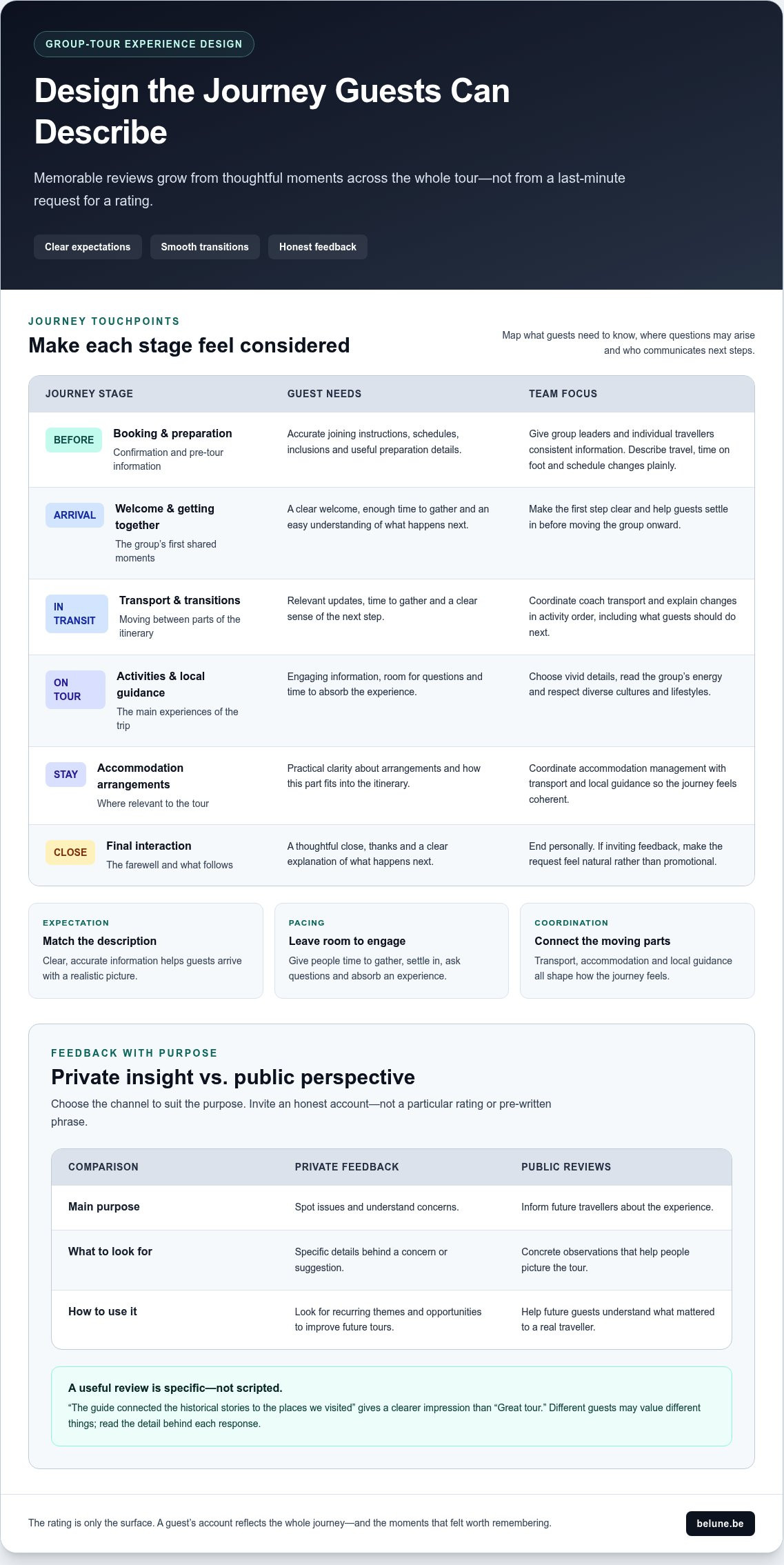
    Specific details help future travellers picture the tour. “The guide connected the historical stories to the places we visited” gives a clearer impression than “Great tour.” Generic praise can sound interchangeable; concrete observations show what mattered to that guest. Invite guests to share their own perspective, not to use suggested phrases or give a particular rating. Honest feedback is more useful, even when it includes a concern.

    Why one group experience can produce different reviews

    A shared itinerary doesn’t create identical experiences. One traveller may be drawn to cultural context, while another values unhurried time or practical comfort. Expectations and accessibility needs can differ, too. A group leader may comment on coordination and communication, while individual guests describe the guide, pace or moments that felt meaningful. A mixed review doesn’t automatically mean the tour failed. Look for the specific detail behind each response.

    Review quality comes from genuine, useful accounts, not simply a larger number of ratings. Read comments for recurring themes, then distinguish a one-off preference from an issue that may affect other guests. This gives feedback a practical role: not just public reassurance, but insight into how the next group’s experience can be improved.

    Design Group-Tour Moments Guests Will Want to Remember

    Memorable tours rarely depend on one grand gesture. They take shape through a sequence of considered moments: clear information before departure, an easy welcome, smooth transitions, time to absorb an experience and a thoughtful close. Map these touchpoints to spot where small uncertainties can interrupt the journey, without assuming every moment will go exactly to plan.

    Start with a simple journey map. For each stage, note what guests need to know, where questions may arise and who is responsible for communicating. Include booking confirmation, pre-tour preparation, arrival, transport, activities, accommodation arrangements where relevant, and the final interaction. This makes the experience easier to review and improve as a whole.

    Set expectations before the group arrives

    Pre-tour information should make practical decisions straightforward. Share accurate joining instructions, schedules, what’s included, and useful preparation details such as what to bring or expect during the day. Give group leaders and individual travellers consistent information, so no one has to rely on second-hand details. Clear expectations can prevent avoidable disappointment when the delivered experience differs from an assumption.

    Be precise about the rhythm as well as the itinerary. If a day includes travel between activities or time on foot, say so plainly. If a schedule may change, describe it as an estimate rather than a certainty. The aim isn’t to over-explain; it’s to help guests arrive with a realistic picture and focus on the experience.

    Create a considered experience while the tour is underway

    Once the group is together, pacing and transitions become part of the hospitality. Allow enough time for people to gather, understand the next step and settle in. A guide can keep information engaging by choosing a few vivid details, pausing for questions and reading the group’s energy instead of filling every quiet moment with commentary. For example, story-driven operators such as sistersgrimmghosttour.com show how blending local history with captivating narration can keep guests thoroughly engaged and leave a memorable impression.

    Communication matters most when plans change. If the order of activities shifts, explain what’s happening and what guests should do next. Clear updates help people feel considered, even when an adjustment is needed. The Global Code of Ethics for Tourism also underscores respect for diverse cultures and lifestyles, a useful principle when shaping interpretation and interactions for a varied group.

    • Before departure: align the schedule, inclusions and practical guidance.
    • During transitions: make the next step clear and share relevant updates.
    • At the close: thank guests and explain what happens next.

    Dependable coordination ties these moments together. Coach transport, accommodation management and local guidance each influence how naturally a group moves through its itinerary. BELUNE brings these elements together in customized group itineraries. Travel professionals planning a connected journey can explore BELUNE’s group travel planning.

    Every touchpoint contributes to the overall guest impression, from the first practical detail to the final farewell. Review the sequence to see where expectations and delivery align, and where clearer communication or a more thoughtful transition could make the next tour feel more seamless.

    How to Get 5-Star Reviews for Your Group Tours

    Choose Review and Feedback Methods That Feel Natural

    A review request can feel awkward if it sounds like a sales pitch or puts a guest on the spot. Keep the process simple: choose a method that fits what you want to learn, explain why you’re asking, and make participation optional. The aim isn’t to steer anyone toward a particular rating. It’s to make it easy for guests to share an honest perspective in the right place.

    Each channel serves a different purpose:

    • Private surveys help identify what worked and where the experience could improve. Focused questions about communication, pacing or coordination can reveal useful detail.
    • Direct conversations offer a personal, low-effort way to hear immediate impressions. They can add context, but shouldn’t be treated as a public endorsement.
    • Public review platforms let travellers share their experience with people considering a tour. A voluntary, honest account can help prospective guests understand what to expect.

    When should operators use a survey instead of a public review request?

    Use a private survey when you need specific feedback, such as whether the schedule felt manageable or pre-tour information was clear. Keep it focused so guests can respond without completing a long questionnaire. A public review request has a different purpose: inviting a guest to tell future travellers about their experience. A survey can inform improvements, but it isn’t a substitute for a voluntary public review.

    How can operators ask without influencing the rating?

    Use neutral language and make clear that a response is optional. For example: “We’d value your honest feedback. If you’d like to share your experience with future travellers, you can leave a review here.” Avoid asking for five stars, suggesting specific wording or implying that positive feedback is expected. A respectful invitation gives guests room to describe the tour in their own words.

    Some guests prefer to speak directly with a guide; others would rather respond privately later or post publicly. Offer the relevant route without pressing for an answer, and don’t treat a friendly comment during the tour as permission to publish or quote it. Listen to concerns with care, and let each guest decide whether they want to leave a public review.

    Before introducing rewards, discounts or other incentives, read the current rules of the review platform you plan to use. Policies may differ and change. Check them before making an offer, and never make a reward conditional on a positive rating. Also avoid review filters that direct only satisfied guests to public platforms while diverting unhappy guests elsewhere. Invite honest feedback from guests broadly, then use private channels to understand concerns and public reviews to inform future travellers.

    A natural request is brief, timely and pressure-free. For operators considering how to get 5-star reviews for your group tours, the key is to invite honest accounts consistently, not control what guests say. Choose one clear public-review route and a separate way to gather detailed private feedback, so each response serves its proper purpose.

    Build a Repeatable Post-Tour Review Process

    Consistent follow-up makes it easier for guests to share feedback without making a review feel like an obligation. Set a simple routine your team can use after each departure, then refine it based on what guests respond to. The process should support both public reviews and private learning, while leaving every guest in control of whether they take part.

    Use this sequence as a practical starting point:

    1. Identify the right contact. Confirm who coordinates communication for the group, and whether individual travellers can be contacted directly through an appropriate channel.
    2. Choose one follow-up route. Select a suitable channel, such as a post-tour email, and keep the message brief. Avoid sending the same request through several channels.
    3. Allow time to reflect. Follow up after guests have had some space from the tour, so they can consider the experience without feeling rushed.
    4. Invite, don’t insist. Thank guests for joining and invite them to share an honest review if they wish. Make participation clearly voluntary.
    5. Review and learn. Read public reviews and private feedback for useful specifics, then look for themes that can guide practical improvements.

    Who should receive the review invitation, and when?

    Coordinate with the group leader so the request reaches the right audience, but don’t assume one person’s response represents everyone. If individual travellers can be contacted appropriately, let them decide whether to respond for themselves. Send one concise invitation after the tour, once guests have had time to reflect. Repeated reminders can make an optional request feel compulsory, so let a single clear message stand.

    How should tour operators respond to praise and criticism?

    Respond with a personal, concise thank-you that acknowledges the reviewer’s actual comment. If someone praises the guide’s storytelling or how smoothly a transfer went, refer to that detail rather than relying on a stock reply. For criticism, stay calm, recognise the concern and avoid disclosing private guest information. A public response should show attentiveness without turning into an argument or exposing details about the person’s arrangements.

    Close the loop internally, too. Record recurring themes in a straightforward format, such as communication, pacing, transport coordination or accommodation arrangements. Note whether feedback points to a one-off issue or something appearing across several tours, then assign a practical next step to the relevant team. For example, recurring confusion about a meeting point may call for clearer joining instructions; comments about rushed transitions may prompt a review of the itinerary’s timing. Track whether the change addresses the concern on later departures.

    A sustainable review process is consistent in its invitations, voluntary for guests and responsive to what they share. That balance is central to how to get 5-star reviews for your group tours: not manufacturing praise, but building a thoughtful habit of listening and acting. BELUNE supports travel professionals with coordinated itineraries and logistics. Learn more about planning a group tour with BELUNE.

    How BELUNE’s Group-Travel Expertise Supports Lasting Guest Impressions

    A review reflects what guests experienced, not simply the places they visited. For travel professionals, a carefully chosen itinerary matters, but so does the way its elements connect: the time between activities, the move from coach to accommodation, and the local context offered along the way. A destination management company can help bring these pieces into a coherent group journey through thoughtful planning and coordination.

    BELUNE has more than 20 years of experience in transport and tour operations, supporting customized group travel through itinerary planning, accommodation management, coach transport using its own fleet, and local guide services. That experience supports considered delivery, but does not promise a particular rating or review. Guests retain their own perspective, and their feedback remains theirs to share.

    Why coordinated logistics matter to the guest experience

    Each part of a tour affects the next. An itinerary shapes how the group moves through the day; transport connects its planned moments; accommodation arrangements contribute to the journey’s rhythm; and local guidance gives activities context. Considering these elements together helps travel professionals identify handoffs that might otherwise feel disjointed, clarify responsibilities and reduce avoidable friction for guests.

    For example, if a schedule includes a transition between a guided visit and onward coach travel, the plan should account for how guests will know where to go next and how that movement fits the day. These practical details may be quiet, but they influence whether the experience feels composed. Coordination creates continuity; it doesn’t remove every uncertainty or guarantee that every guest will respond in the same way.

    As a specialist destination management company, BELUNE works with travel professionals to organize group travel across these connected elements. Its role is to support the design and delivery of the journey, while each review remains an honest reflection from a guest.

    Turn review insights into a stronger next tour

    Feedback becomes most useful when it informs the next planning conversation. Bring recurring guest comments to the itinerary review, then consider what they reveal about the group’s interests and practical requirements. If travellers repeatedly value time for independent exploration, that preference might shape the balance of a future schedule. If feedback points to confusion around transitions, revisit how those moments are arranged and explained.

    Customization gives travel professionals room to respond thoughtfully rather than apply the same template to every group. Interests, pace and logistical needs can guide choices across itinerary design, accommodation management, coach transport and local guidance. For example, specialized operators such as winetoursofsedona.com demonstrate how designing fully customized itineraries around specific group interests helps deliver a more personal and memorable experience. Base changes on a real pattern or a clearly understood need, not a single rating viewed in isolation. This turns reviews into one source of insight for continual refinement.

    Learning how to get 5-star reviews for your group tours means building an experience guests can assess honestly, then listening carefully to what they say. BELUNE brings more than 20 years of group-travel experience to that work. To explore a customized itinerary shaped around your group’s priorities, discuss a tailored group tour with BELUNE.

    Shape the Next Journey with Guest Insight

    Let each tour leave more than a memory. It can also offer a useful perspective for shaping what comes next. As you plan future group journeys, consider how guest feedback might inform the experience, from the balance of the itinerary to the practical details that help each stage feel connected. The aim isn’t to engineer a rating; it’s to create a thoughtful experience and invite guests to describe it honestly.

    For travel professionals considering how to get 5-star reviews for your group tours, BELUNE brings more than 20 years of experience in transport and tour operations to customized itineraries, accommodation management, coach transport with its own fleet, and local guide services. These elements can be coordinated around each group’s needs and interests, supporting considered tour planning without promising a particular review outcome.

    Bring your priorities and guest insights into a new group-tour plan. Discuss a tailored group tour with BELUNE, and shape a journey designed with care from its first details to its final moments.

    Frequently Asked Questions

    Should I ask every guest on a group tour for a review?

    You can invite all guests to leave feedback, provided the invitation is appropriate and equally voluntary. This gives individual travellers the chance to describe their own experience rather than relying only on the group leader’s account. Use a suitable communication channel and avoid repeatedly approaching guests who don’t respond. If you can only reach the group leader, ask them to share the invitation rather than speak on everyone’s behalf.

    When is the best time to ask guests to review a group tour?

    Ask after the tour, when guests have had a little time to reflect and are no longer managing the practicalities of departure. The right point can vary: a one-day activity and a multi-day itinerary leave different opportunities for follow-up. Make the invitation easy to act on later, such as in a concise message with a direct route to the review page, and avoid interrupting guests during a meaningful moment.

    Can tour operators offer incentives for five-star reviews?

    Only consider an incentive after checking the current rules of the specific review platform, and never make it conditional on a five-star rating or positive wording. A safer approach is to invite an honest review without offering a reward. If a platform permits an incentive, follow its disclosure requirements and apply the terms fairly. Policies can change, so review them before launching any incentive-based request.

    What should I do if a group-tour guest leaves a negative review?

    Respond calmly and address the issue the guest actually described. Thank them for explaining their perspective, acknowledge the concern without becoming defensive, and state what you’ll do to review it. Don’t share booking details or personal information in a public reply. Internally, check relevant records and speak with the responsible team so your response is informed and any appropriate follow-up happens privately.

    Can I ask guests to leave a five-star review?

    No. Ask guests for an honest review, not a particular rating or prewritten praise. A request for five stars can pressure people and make their feedback less trustworthy to future travellers. Keep the invitation neutral, such as, “If you’d like, share your honest experience with other travellers.” Guests should be free to decide whether to post and what to say, including criticism.

    Should the group leader or individual travellers leave the review?

    Either can share feedback, but their perspectives may cover different parts of the trip. A group leader might comment on coordination and communication with the operator, while a traveller may focus on a particular activity or guide. Invite the leader to describe their own experience, and allow individual guests to contribute separately if they wish. Don’t ask one person to submit a review as though it represents the entire group.

    How can a tour operator encourage reviews from international guests?

    Make the request easy to understand across language backgrounds. Use short, plain sentences, explain that feedback is optional, and avoid idioms or culturally specific expressions that may not translate clearly. If you share translated instructions, make sure they accurately reflect the original message. Point guests to a review platform they can access, and don’t assume every traveller prefers the same language or communication channel.

  • Optimizing a Group Tour Itinerary: The Art of Logistical Choreography

    Optimizing a Group Tour Itinerary: The Art of Logistical Choreography

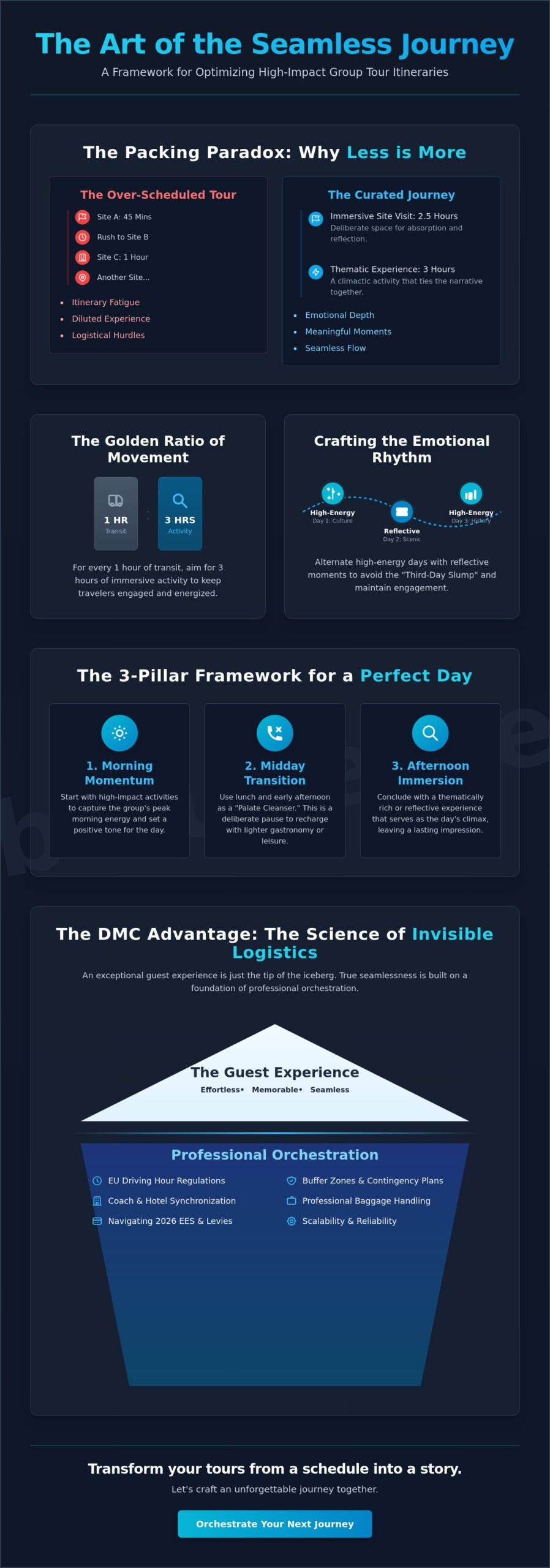
    The most memorable journeys are those where the mechanics of travel remain entirely invisible to the guest. A truly exceptional experience isn’t found in a packed schedule, but in the deliberate space between destinations. When optimizing a group tour itinerary, the challenge lies in transforming a rigid sequence of events into a fluid narrative that respects both the clock and the human spirit.

    It’s a common frustration to see participants overwhelmed by itinerary fatigue or delayed by the subtle friction of coach logistics and hotel check-ins. We agree that a high-impact tour should feel like a curated performance rather than a logistical hurdle. This guide provides the tools to master the balance of technical precision and emotional resonance, ensuring your fixed-price packages deliver maximum value. We’ll explore how to orchestrate a seamless flow between destinations while navigating the 2026 landscape, including the new Entry/Exit System (EES) implemented on April 10 and evolving tourist levies. You’ll discover how to create a journey that feels both effortless and deeply significant for every traveler.

    Key Takeaways

    • Understand why the Packing Paradox suggests that adding more sites often reduces the emotional depth of the travel experience.
    • Master the Golden Ratio of transit to activity when optimizing a group tour itinerary to ensure participants remain engaged rather than exhausted.
    • Discover the Palate Cleanser technique for balancing intense historical themes with lighter gastronomy and beer experiences.
    • Implement a structured 3-Pillar Framework to capture morning momentum and create meaningful midday transitions.
    • Learn how professional orchestration manages technical driving regulations and local logistics to maintain a seamless, invisible flow.

    The Philosophy of Itinerary Optimization: More Than a Schedule

    True optimization isn’t a mere list of times and coordinates. It’s the harmonious balance between movement and stillness. In the pursuit of value, many planners fall into the “Packing Paradox,” believing that more stops equal more worth. In reality, over-scheduling dilutes the experience. It creates noise where there should be resonance. When we focus on optimizing a group tour itinerary, we aren’t just filling hours; we’re protecting the traveler’s ability to actually see what’s in front of them.

    An exceptional trip follows a narrative arc. It needs a beginning to set the tone, a climax that leaves guests breathless, and a resolution that allows for reflection. This complex logistical choreography ensures that the path taken is as meaningful as the destination reached. It’s about the transition as much as the arrival.

    To better understand how these elements come together, watch this helpful video:

    Raw logistics are the clay; the group travel agency is the sculptor. We don’t just book coaches and hotels. We refine the experience by removing the friction that often plagues large groups. By prioritizing flow over mere volume, we transform a standard trip into a curated journey that feels effortless for the participant.

    The Emotional Rhythm of a Group Tour

    A journey has a pulse. We identify “High-Energy” days, such as an immersive day of art and culture, and balance them with “Reflective” moments. This strategic pacing is essential to avoid the “Third-Day Slump,” a common point where physical and mental exhaustion begins to set in for participants. Narrative pacing is the secret to high participant satisfaction. It’s the difference between a group that’s merely present and one that’s truly engaged.

    B2B vs. B2C Optimization Perspectives

    Professional tour operators must view optimization through a lens of scalability and reliability. While an individual traveler might chase a “hidden gem” down a narrow, inaccessible alley, a group coach requires proven infrastructure. We build “buffer zones” into every professional plan. These aren’t wasted hours; they’re the safety net that allows the group to remain calm when the unexpected occurs. We balance the client’s ambitious wish list with the hard reality of operational constraints. This ensures that the final result isn’t just a beautiful concept, but a reliable reality that protects your reputation and the guest’s experience.

    The Logistics of Movement: Masterclass in Coach and Transit Timing

    Movement is the invisible skeleton of travel. When optimizing a group tour itinerary, we apply a specific cadence known as the Golden Ratio. Ideally, for every hour of transit, participants should enjoy at least three hours of immersive activity. This prevents the feeling of being ‘trapped’ on a bus while maintaining a steady forward momentum through the region. It’s a delicate balance. It ensures the journey never feels like a commute.

    Technical constraints often dictate the success of this rhythm. European driving hour regulations are non-negotiable; they require precise rest periods that, if ignored, can derail an entire afternoon. Sophisticated algorithmic tour planning takes these legal mandates into account from the very first draft. By utilizing our own fleet of modern coaches, we maintain total control over these variables. Reliability isn’t just a promise; it’s a structural component of our operation.

    The choreography continues at the hotel door. Coordinating a coach drop-off for thirty or more guests requires a synchronized effort between the driver, the guide, and the front desk. We prioritize properties that specialize in baggage handling and efficient room distribution. If you’re looking for a partner to manage these complexities, our specialized coach hire and logistics services provide the necessary foundation for excellence.

    Optimizing Transit Corridors

    Strategic routing minimizes dead-time on highways. We view transit as an opportunity, not a delay. A drive through the Flemish countryside can become a guided lecture on local architecture or a scenic detour through rolling hills. Professional coach hire ensures these transitions are seamless, turning the space between hubs into a highlight of the tour. It’s about making every mile count.

    Hotel Accommodation Management for Large Groups

    The ‘Hub and Spoke’ model is our preferred approach for minimizing group fatigue. By selecting a central, high-quality hotel and conducting day trips from that base, we reduce the constant cycle of packing and unpacking. Precise room block management is essential. We ensure every guest is accounted for long before the coach pulls into the driveway, allowing for a swift, dignified check-in process. This attention to detail transforms a simple stay into a refined hospitality experience.

    Optimizing a Group Tour Itinerary: The Art of Logistical Choreography

    Thematic Optimization: Battlefield, Gastronomy, and Culture

    Thematic depth shouldn’t come at the cost of emotional exhaustion. A successful journey layers specialized interests, such as battlefield tourism, within a broader cultural narrative. This requires a nuanced understanding of how different subjects interact with the traveler’s psyche. When we’re optimizing a group tour itinerary, we treat the schedule as a composition where heavy, somber notes are balanced by moments of levity and sensory delight. It’s about resonance, not just repetition.

    We utilize the “Palate Cleanser” technique to maintain engagement. After a morning spent at moving historical sites, we transition the group toward gastronomy and beer experiences. This isn’t just about food; it’s a strategic reset. It allows the group to process complex history in a relaxed, social environment. Applying a rigorous methodology for route optimization allows us to thread these sensitive locations into a broader cultural fabric without the logistics feeling forced or clinical.

    Success in this area relies heavily on the quality of local guide services. We curate experts who don’t just recite facts but adapt their narrative to the group’s specific knowledge level. This is particularly vital because themed group travel in Benelux requires a deep understanding of local regional nuances. A guide must know when to lean into the technical details of a battle and when to pivot toward the artistic heritage of a nearby village.

    The Battlefield Pilgrimage Framework

    Effective battlefield tours require a choice between chronological and geographic routing. For WWI and WWII sites in Flanders or Normandy, we often prioritize the narrative sequence to help guests grasp the historical scale. We also build in “Personal Connection” time. Many groups seek specific memorials or gravesites. Our logistics must remain flexible enough to accommodate these private moments of remembrance while ensuring the coach can navigate often rural or sensitive historical zones without delay.

    Gastronomy as a Logistical Tool

    Meals serve as cultural anchors. They’re the punctuation marks of the day. We select venues that can comfortably house thirty guests while maintaining the intimate feel of a boutique establishment. This balance is difficult to achieve but essential for high-end group travel. Our local guides play a crucial role here, navigating complex dietary requirements and regional specialties across international borders. They ensure the dining experience reinforces the day’s theme rather than interrupting it. It’s a seamless extension of the tour’s artistic vision.

    The 3-Pillar Framework for a Perfect Day

    A single day within a journey is a microcosm of the entire trip. It requires its own beginning, middle, and end. When optimizing a group tour itinerary, we divide the day into three distinct pillars to ensure energy remains high and the narrative remains clear. This structure isn’t just about efficiency; it’s about respecting the natural ebb and flow of human attention and physical stamina.

    The first pillar is Morning Momentum. We schedule the “Must-See” site as the very first stop. This is when energy levels are at their peak and natural light is optimal for both photography and appreciation. By securing early entry slots, we avoid the mid-morning rush, allowing the group to experience iconic locations with a sense of exclusivity. This sets a tone of excellence for the remainder of the day.

    The second pillar is the Midday Transition. Lunch shouldn’t be a pause in the experience but a curated extension of it. We select venues that reinforce the day’s theme, whether it’s a traditional brewery in Brussels or a historic inn near a battlefield. This transition serves as a bridge, allowing guests to refuel while processing the morning’s discoveries in a social, relaxed setting.

    The final pillar is the Afternoon Discovery and Evening Reflection. The afternoon offers a choice: a secondary, lower-intensity site or structured free time. We conclude with a communal dining experience or a cultural event that provides a sense of closure. This final act allows the group to decompress and share their experiences, cementing the day’s memories before returning to the hotel. For those seeking to implement this level of precision, you can partner with our expert logistics team to design your next high-impact journey.

    The Power of ‘White Space’

    The most valuable part of an optimized itinerary is often the time where nothing is scheduled. We believe that sixty minutes of unstructured time is essential. We strategically place these gaps in pedestrian-friendly areas where guests can explore at their own pace. This prevents the feeling of being “herded” and allows for personal serendipity. Thoughtfully placed white space is the essential valve that prevents group burnout and directly increases repeat bookings.

    Managing the ‘Group Gravity’

    Keeping thirty to fifty people moving in unison requires technical finesse. We use “whisper” radio systems in crowded museums and city centers. These allow the guide to speak at a natural volume while guests listen through earpieces, maintaining an intimate connection even in a throng of tourists. We also eliminate “waiting-in-line” fatigue by pre-booking every entry slot. This ensures the group moves with a constant, effortless flow, never losing momentum to administrative delays or ticket queues.

    The DMC Advantage: Why Professional Orchestration Wins

    Professional orchestration is the final layer of refinement. While a basic schedule provides a map, a Benelux incoming tour operator provides the pulse. We act as the “Invisible Hand,” managing the complex variables that can disrupt even the most carefully planned journey. From sudden rail strikes to the biometric processing delays at borders following the April 10, 2026, EES implementation, we solve logistical hiccups before the group even notices a delay. This level of on-the-ground support is what truly defines the art of optimizing a group tour itinerary.

    Beyond risk management, we offer access that remains closed to individual planners. This includes private museum viewings and after-hours cultural experiences that elevate a tour from standard to extraordinary. Partners benefit from the financial security of fixed-price group packages. This transparency allows tour operators to market with confidence, knowing every technical detail is accounted for within a stable budget. It’s a partnership built on reliability and shared vision.

    Integration of Fleet and Expertise

    There’s a unique synergy in owning the coach fleet while designing the path it travels. Real-time communication between our drivers, local guides, and the management office ensures that every transition is fluid. We don’t rely on third-party availability. Instead, we leverage over twenty years of regional experience to find logistical shortcuts that save hours over the course of a week. This technical mastery transforms transit from a necessity into a seamless component of the narrative. It ensures the group stays focused on the destination, not the drive.

    Finalizing the Itinerary: A Collaborative Vision

    Every project undergoes a rigorous “Itinerary Audit.” We review every turn, every timing, and every transition to eliminate potential friction points. Customization is our standard approach. We adjust the flow based on whether we’re serving a student pilgrimage or a luxury corporate retreat. The result is a bespoke experience that reflects your specific goals and respects the traveler’s time. Request your custom Benelux group tour itinerary from BELUNE today.

    The Future of Curated Group Travel

    A truly exceptional journey is more than the sum of its destinations. It’s a carefully composed narrative where technical precision serves as the foundation for emotional resonance. By embracing the Golden Ratio of movement and the strategic inclusion of white space, you transform a standard trip into a profound human experience. Mastering the art of optimizing a group tour itinerary requires a deep understanding of both the landscape and the traveler’s rhythm. It’s about ensuring every transition feels like a natural progression rather than a logistical necessity.

    With over 20 years of regional expertise and a private fleet of modern, luxury coaches, we specialize in high-complexity thematic tours that challenge the ordinary. We invite you to Partner with BELUNE for your next masterpiece in group travel. Our team stands ready to serve as your strategic ally, turning complex logistics into a seamless, inspiring reality. Let’s create a journey that stays with your guests long after they’ve returned home.

    Frequently Asked Questions

    What is the ideal group size for an optimized coach tour?

    The ideal group size typically ranges between 25 and 35 participants. This number allows for a comfortable atmosphere on a standard 50-seater luxury coach while maintaining the economic efficiency of the tour. When optimizing a group tour itinerary, this range ensures that museum entries and restaurant seating remain manageable without sacrificing the intimate feel of a curated journey.

    How much ‘free time’ should be included in a 7-day group itinerary?

    We recommend at least sixty to ninety minutes of daily “white space” and one full free afternoon mid-week. This prevents the physical and mental exhaustion often associated with rigid schedules. Strategic free time in pedestrian-friendly city centers allows guests to explore personal interests, which significantly improves overall satisfaction and repeat booking rates.

    How do you account for coach driving regulations when planning long-distance tours?

    European Union mandates require specific rest periods for drivers, such as a 45-minute break after four and a half hours of driving. We treat these technical requirements as structural pillars rather than obstacles. By aligning these breaks with scenic stops or guided lunches, the flow of the tour remains uninterrupted while ensuring full legal compliance and passenger safety.

    What are the benefits of using a DMC for Benelux group travel?

    A Destination Management Company provides the “invisible hand” that navigates regional complexities like the new Entry/Exit System (EES) implemented in April 2026. Our local presence allows us to manage hotel blocks, coach logistics, and guide services with a level of precision that individual planners can’t replicate. We transform raw logistics into a refined, professional experience through constant on-the-ground support.

    How do you balance niche themes like battlefield tours with general sightseeing?

    The secret lies in the “Palate Cleanser” technique. We follow somber, high-intensity visits to WWI or WWII sites with lighter cultural or gastronomy experiences. This balance respects the emotional weight of historical pilgrimages while providing the necessary contrast to keep the group engaged. It ensures the itinerary feels like a complete narrative rather than a repetitive sequence.

    What happens if a site is unexpectedly closed during the tour?

    Our management office and local guides maintain real-time communication to pivot instantly if a closure occurs. Because we understand the regional landscape intimately, we can redirect the group to a secondary site of equal cultural value. This orchestration happens behind the scenes, ensuring the guest’s experience remains seamless and stress-free regardless of external disruptions.

    Is it better to stay in one central hotel or move between cities?

    The “Hub and Spoke” model is generally superior for optimizing a group tour itinerary in regions like the Benelux. Staying in a central city like Brussels or Ghent for several nights reduces the fatigue of constant packing and unpacking. This approach allows for deeper immersion in a single base while providing efficient access to surrounding historical and cultural hubs.

    How do you manage dietary restrictions for a group of 40 people?

    We manage dietary requirements through a rigorous pre-screening process conducted weeks before arrival. This data is shared with our curated network of restaurants to ensure that every guest enjoys a high-quality meal. Our guides double-check these arrangements on-site, making the dining experience a seamless cultural anchor rather than a logistical hurdle.