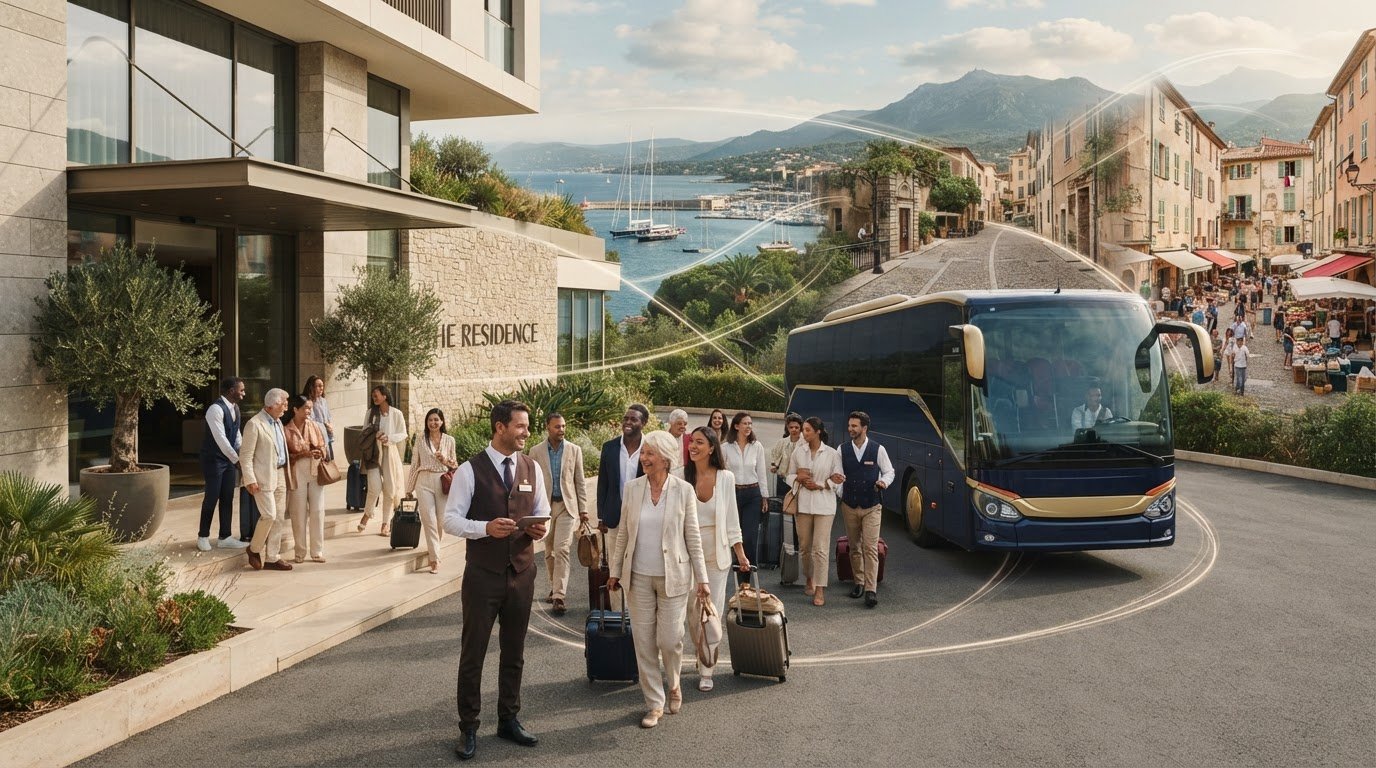
Tag: Coach Transport

  • Peace of Mind for Complex Tour Logistics: A Buying Guide

    Peace of Mind for Complex Tour Logistics: A Buying Guide

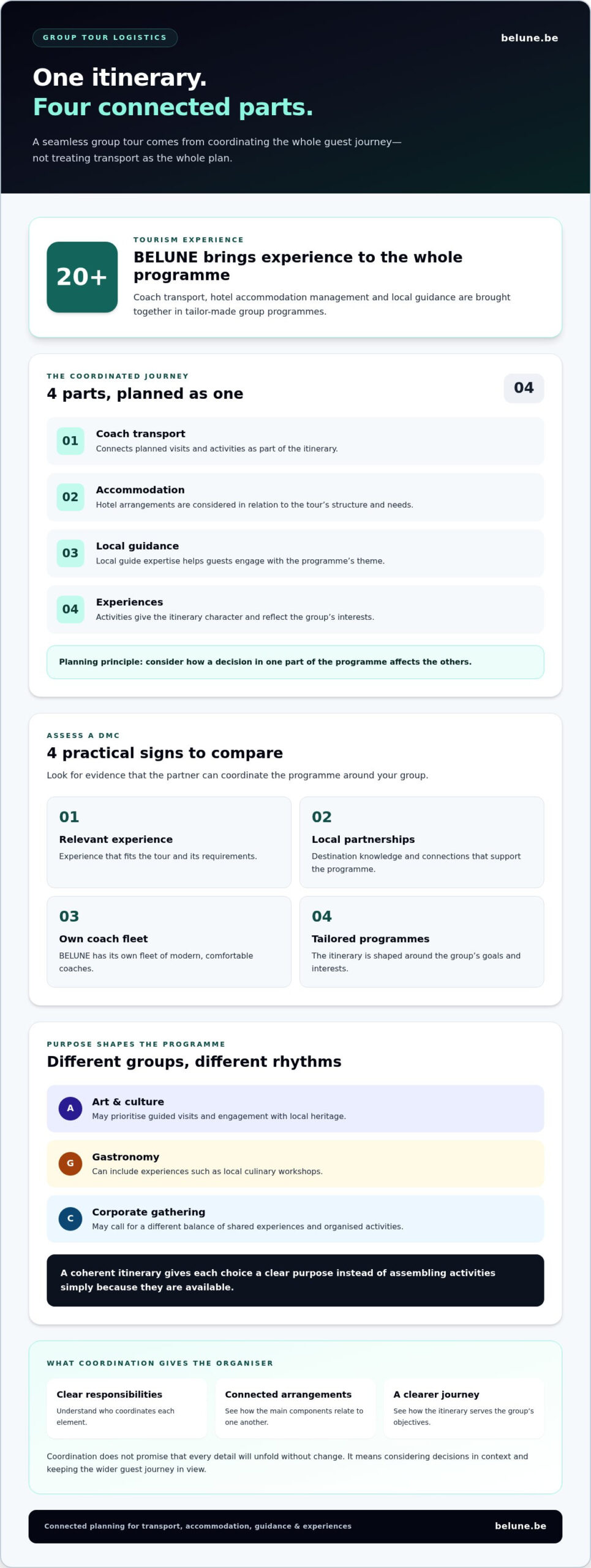
    What makes a group tour feel seamless? It is not simply a detailed transport plan. Coaches, accommodation, activities and local guidance need to work together as one journey. When these arrangements are planned separately, the guest experience can feel disjointed. Peace of mind for complex tour logistics comes from shaping the whole itinerary around the group and its purpose.

    That is a familiar challenge for tour operators, travel agents and group organisers. A well-designed programme needs to reflect the group’s goals while keeping practical arrangements aligned. With more than 20 years of tourism experience, BELUNE brings coach transport, hotel accommodation management and local guidance together in tailor-made group programmes.

    This guide explains how to assess logistics support for a complex tour and choose a partner whose expertise can help create a coherent itinerary. We’ll look at how to coordinate transport, accommodation and experiences, and how to prepare a brief that makes your priorities clear. The aim is straightforward: more confident planning for organisers and a more considered journey for guests.

    Key Takeaways

    • Assess logistics as a connected guest journey, with each service aligned to the itinerary and the group’s objectives.
    • Compare DMC support using practical evidence: relevant experience, local partnerships, an own coach fleet and the ability to tailor programmes.
    • Prepare a clear brief by setting out the tour’s purpose, group interests, itinerary priorities and desired experience.
    • Find peace of mind for complex tour logistics by bringing planning and local expertise together around your group’s needs.

    Why complex tour logistics need more than transport coordination

    A group experiences its tour as one journey, even when the arrangements involve separate bookings and teams. An organiser may need to coordinate coach movements, accommodation, local guides and activities at the same time. Each item can seem manageable on its own. The complexity lies in the connections: an activity needs to fit the itinerary, accommodation needs to support the group’s plans, and transport needs to link the different parts in a practical sequence. Peace of mind for complex tour logistics starts with planning those connections, not treating transport as the whole plan.

    Arranging individual elements is only the first step. Coordination means considering how a decision in one part of the programme affects the others. A transport plan, for example, is more useful when it is considered alongside the accommodation and experiences it needs to connect. The broader idea of Logistics is the coordination of connected resources and movement. For a tour organiser, the same principle applies to the complete guest journey.

    A useful illustration of large-scale tour planning:

    Which moving parts make a group tour complex?

    Transport, accommodation and experiences need to fit the itinerary as a whole. Consider a group whose programme includes a guided cultural visit and a shared meal. The organiser needs to consider how the group will move between these activities, how the accommodation fits the overall plan, and how each experience supports the tour’s purpose. No single booking answers all of those questions.

    The group’s objectives shape the programme, too. An art and culture tour, a gastronomy experience or a corporate gathering calls for different choices and a different rhythm. A coherent itinerary gives those choices a clear purpose instead of assembling activities simply because they are available. Local guidance adds context, while practical arrangements help each experience fit naturally into the wider journey.

    What does peace of mind mean for a tour organiser?

    For an organiser, peace of mind means having clarity about responsibilities, arrangements and the experience the programme is designed to create. It means understanding how the main components relate, who is coordinating each element, and how the itinerary serves the group’s objectives. That clarity supports informed decisions and makes the plan easier to communicate to colleagues and guests.

    Coordinated tour logistics are the connected planning and management of transport, accommodation, guidance and experiences around a group’s itinerary and objectives. Coordination does not promise that every detail will unfold without change. It means approaching the tour as an integrated programme, so decisions can be considered in context and the organiser can see the wider guest journey more clearly.

    What coordinated tour logistics should cover across the guest journey

    Coordinated tour logistics bring the arrangements into one itinerary shaped around the group and its purpose. Instead of treating transport, accommodation and activities as separate bookings, consider how each supports the next part of the guest journey. This makes it easier to see where decisions connect and whether the programme’s practical structure supports the experience it aims to create.

    The plan should reflect the tour’s theme and objectives. An art and culture programme, for example, may prioritise guided visits and opportunities to engage with local heritage. For VIP groups or executive retreats requiring high-end villas and suites, providers like Luxury Bookings AE illustrate how premium lodging must seamlessly match the schedule. The details depend on the group, but the principle is consistent: plan the logistics around the intended experience, not the other way round.

    How transport, accommodation and guidance fit together

    Each element has a distinct role, but its value depends on how well it fits the programme. Coach transport connects the itinerary’s components; accommodation management supports the group’s stay; and local guide services bring expertise to the experiences. BELUNE brings these services together in tailored programmes, supported by its own fleet of modern, comfortable coaches. The World Bank Transport Overview offers a broader view of transport’s role in connecting people and places, a useful perspective when considering movement as one part of a wider journey.

    For organisers, mapping the journey can help show how each service contributes:

    • Moving through the programme: Coach transport connects planned visits and activities as part of the itinerary.
    • Supporting the stay: Hotel accommodation management is considered in relation to the tour’s structure and needs.
    • Bringing places to life: Local guides provide expertise that helps guests engage with the programme’s theme.
    • Creating memorable moments: Experiences give the itinerary character, whether its focus is culture, gastronomy or another group interest.

    This joined-up view helps organisers assess whether each component has a clear place in the guest journey. It also makes trade-offs easier to spot: changing one part of the programme may affect how another fits.

    Where local knowledge and unique experiences add value

    A distinctive experience should serve the tour’s theme, not simply fill a space in the schedule. Bringing transport, accommodation management, local guidance and unique experiences into one plan helps create peace of mind for complex tour logistics through clarity and coherence. Explore BELUNE’s tailored group travel support for programmes shaped around the guest journey.
    Peace of Mind for Complex Tour Logistics: A Buying Guide

    How to compare a DMC for complex group tour logistics

    A useful comparison looks beyond whether transport can be arranged. Consider how well the DMC’s services and experience fit the group’s purpose, theme and itinerary. Comparing the same practical dimensions makes differences easier to identify and helps you focus on relevant capabilities rather than general claims.

    Use this framework to assess how a DMC’s services connect to your programme:

    What to compare Evidence to look for
    Itinerary customisation Tailor-made programmes shaped around the group’s objectives and travel theme.
    Transport Coach hire and information about the provider’s own fleet.
    Accommodation Accommodation management considered as part of the itinerary, not just a standalone booking.
    Local guidance Local guide services and destination knowledge that support the programme’s experiences.

    BELUNE brings these elements together through tailor-made itineraries, hotel accommodation management, local guide services and its own fleet of modern, comfortable coaches. Its group programmes cover themes such as art and culture, gastronomy and beer, battlefield tourism and cycling, as well as sport events, festivals and river cruises with local excursions. This range shows how different group interests can be connected with relevant logistics.

    Which questions reveal whether a service fits your itinerary?

    Compare how each programme can reflect the group’s objectives instead of assuming one format suits every tour. Ask whether the services address the journey’s practical needs: coach transport for group movement, accommodation management for the stay, and local guidance or experiences that support the theme. A programme centred on culture may need a different mix from a sport event tour. BELUNE develops tailor-made programmes for a range of group interests.

    How to assess experience, local knowledge and flexibility

    Relevant experience provides context for a DMC’s planning capabilities. BELUNE brings more than 20 years of tourism experience, alongside strong local partnerships and knowledge of the destinations it serves. These foundations support itinerary planning around an organiser’s priorities. Local knowledge informs the planning, while a tailored itinerary keeps the programme focused on the needs of the specific group.

    Customised programmes and coordinated services give organisers a clearer basis for confident decisions. For more context on partner selection, see this guide to choosing a group travel agency and the Benelux incoming tour operator guide. These perspectives can help frame the comparison around itinerary fit, relevant experience and the services that support the guest journey, rather than transport alone. That is a practical route toward peace of mind for complex tour logistics.

    For organisers seeking a tailored approach, see how BELUNE supports group travel organisers with connected logistics and programme planning.

    How to prepare a clear brief for complex tour logistics

    A clear brief gives itinerary planning a useful starting point. It does not need to be a finished schedule. Explain why the group is travelling, what guests hope to experience and which arrangements matter most. With those priorities in view, BELUNE can shape a programme around the group instead of relying on a generic template.

    Start with the purpose and shape of the trip

    Begin with the programme’s central idea. Is it cultural, gastronomic, battlefield-themed or corporate? Then describe the experience you want guests to have and the balance you are looking for between activities, travel and time to enjoy each experience. Use plain language. A concise picture of the intended journey is more useful than a long list of disconnected requests.

    Separate fixed priorities from flexible ideas. An essential visit or key programme objective may set the direction, while the exact mix of activities can be developed during itinerary planning. This distinction keeps the purpose clear while leaving room to shape the details.

    Bring the logistics into one coherent planning brief

    Once the purpose is clear, bring the practical needs together. This sequence helps organise the brief from broad intent to specific services:

    1. State the purpose. Describe the tour theme, programme objectives and intended guest experience.
    2. Set the priorities. Identify essential elements and distinguish them from details that can be tailored as the itinerary develops.
    3. Describe the group’s interests. Note the kinds of cultural, culinary, sporting or other experiences that suit the travellers and the tone you want to create.
    4. Outline the travel arrangements. Include coach transport, accommodation management and any international flight or train bookings relevant to the programme.
    5. Identify guidance and experiences. Say whether local guides, themed tours or distinctive experiences should contribute to the journey.

    Be specific about preferences, but you do not need to solve every logistical detail in advance. For example, an organiser planning a gastronomy-themed programme can explain that local food experiences are central, while leaving the itinerary details to be developed around that priority. If the theme is the organising principle, themed group travel planning offers a useful perspective on translating it into a programme.

    A strong brief treats the group’s interests and practical arrangements as parts of the same plan. It gives the itinerary room to be tailored while keeping its purpose intact. That is a practical foundation for peace of mind for complex tour logistics, because decisions can be considered against a shared understanding of what the journey should deliver.

    Ready to turn your group’s priorities into a considered programme? Explore BELUNE’s tailored group travel support.

    How BELUNE brings peace of mind to complex tour logistics

    For a group organiser, confidence grows when the itinerary, practical arrangements and guest experience are considered together. BELUNE is a destination management company (DMC) with more than 20 years of tourism experience, working with tour operators, travel agents, group organisers and corporate clients. Its services combine tailor-made itineraries, on-the-ground logistics and hotel accommodation management in programmes shaped around each group’s objectives.

    That joined-up perspective matters because every programme has its own priorities. One may be built around culture; another around gastronomy, a sporting event or a corporate purpose. The goal is to make the logistics support that intention, rather than letting individual bookings determine the character of the trip.

    What BELUNE brings to a tailored group programme

    BELUNE brings together practical services that support different parts of the journey. Coach hire with its own fleet of modern, comfortable coaches supports group transport. Hotel accommodation management supports the stay, while local guide services bring destination expertise into the programme. Tailor-made itineraries connect these elements according to the group’s theme and priorities.

    Local partnerships and knowledge inform programme planning. Depending on the group’s objectives, a programme can include unique experiences such as behind-the-scenes visits or local culinary workshops. MICE services also support corporate groups with event planning and team-building activities.

    The value lies in how the pieces fit together. Organisers can consider how transport, accommodation and guidance contribute to the intended experience, while keeping the programme tailored rather than relying on a one-size-fits-all format. BELUNE’s collaborative, no-nonsense approach and focus on fair pricing support a clear planning conversation.

    How to take the next step with BELUNE

    A concise brief is a strong starting point. Describe the group’s purpose, the theme or central interest, the experience you want guests to have, and the travel arrangements you are considering. Include relevant needs for coaches, accommodation, local guidance, activities or MICE support. You do not need a fully formed itinerary. Clear priorities give the planning process direction while leaving room to shape the details together.

    Use BELUNE’s Request a Quote form to outline those objectives and preferences. A focused brief helps frame a tailored group-tour proposal around what matters most to your travellers, whether that is a distinctive theme, connected logistics or a considered balance of both. From there, the programme can take shape through collaboration and local expertise.

    For peace of mind for complex tour logistics, bring the purpose of the trip and its practical arrangements into the same conversation. Request a tailored group-tour proposal.

    Shape your next group journey with confidence

    The next step is to turn your group’s priorities into a shared starting point for planning. Be clear about what the journey should mean to guests, which moments matter most and where you would value support shaping the arrangements. That intention gives the itinerary a stronger centre and helps keep practical decisions aligned with the experience you want to create.

    Peace of mind for complex tour logistics does not come from removing every unknown. It grows from having a considered plan and a collaborative partner to bring the details into focus. Start with the purpose of your trip, then develop the programme around it.

    Request a tailored group-tour proposal and take the first step toward a group journey shaped around your vision. Your next itinerary can begin with a clear idea and grow into an experience guests will remember.

    Frequently Asked Questions

    Can BELUNE arrange international flight and train bookings?

    Yes. BELUNE arranges international flight and train bookings. If your group is arriving by different modes or has a rail segment within a wider programme, include those requirements in the brief alongside the tour’s purpose and preferred travel arrangements. This helps show how international journeys relate to the group programme and gives itinerary planning a clearer starting point.

    Does BELUNE provide private drivers and concierge services?

    Yes. BELUNE provides private drivers and concierge services for individually tailored travel experiences. In your brief, describe the travellers’ needs and the role you want these services to play, such as supporting a particular part of the programme. This helps place them in context with the wider itinerary.

    Can BELUNE arrange excursions for a river cruise?

    Yes. BELUNE offers river cruises that include local excursions. To help shape the programme, describe what the group enjoys, whether its interests lean toward culture, food or another experience, and what style of outing would suit the trip. This gives itinerary planning useful direction and connects the excursion to the wider programme.

    Can BELUNE organise sports-event or festival tours?

    Yes. BELUNE offers sports-event and festival tours, including F1 events, Grand Slam Tennis and Tomorrowland. In your brief, identify the event that gives the trip its focus and describe the travel arrangements you want considered as part of the group programme. This helps connect the event theme to itinerary planning.

    Can a corporate group include team building in its programme?

    Yes. BELUNE provides MICE services, including corporate events and team-building activities. These can be included in a tailored programme when they support the organisation’s objectives. Outline whether the gathering is intended to bring colleagues together, complement a meeting or form part of a wider corporate trip, then note the arrangements you want included. That context helps shape a programme around your aims.

    How can I request a quote from BELUNE?

    To request a quote, use BELUNE’s Request a Quote form, email info@belune.eu or call +32 56 505 986. Share the trip’s purpose, group interests, preferred theme and arrangements you would like considered, such as transport, accommodation or local guidance. A concise outline gives the proposal a clear starting point and supports peace of mind for complex tour logistics as planning takes shape.

    Can BELUNE tailor a group tour around a specific theme?

    Yes. BELUNE creates fully customisable itineraries, including themes such as battlefield tourism, gastronomy and cultural heritage. In your brief, explain what draws the group to the theme, its main interests and the experience you hope to create. Those details give the programme a clear direction and help shape the arrangements around the group.
  • Curating the Experience: A Professional Guide to Group Accommodation in Flanders Fields for 2026

    Curating the Experience: A Professional Guide to Group Accommodation in Flanders Fields for 2026

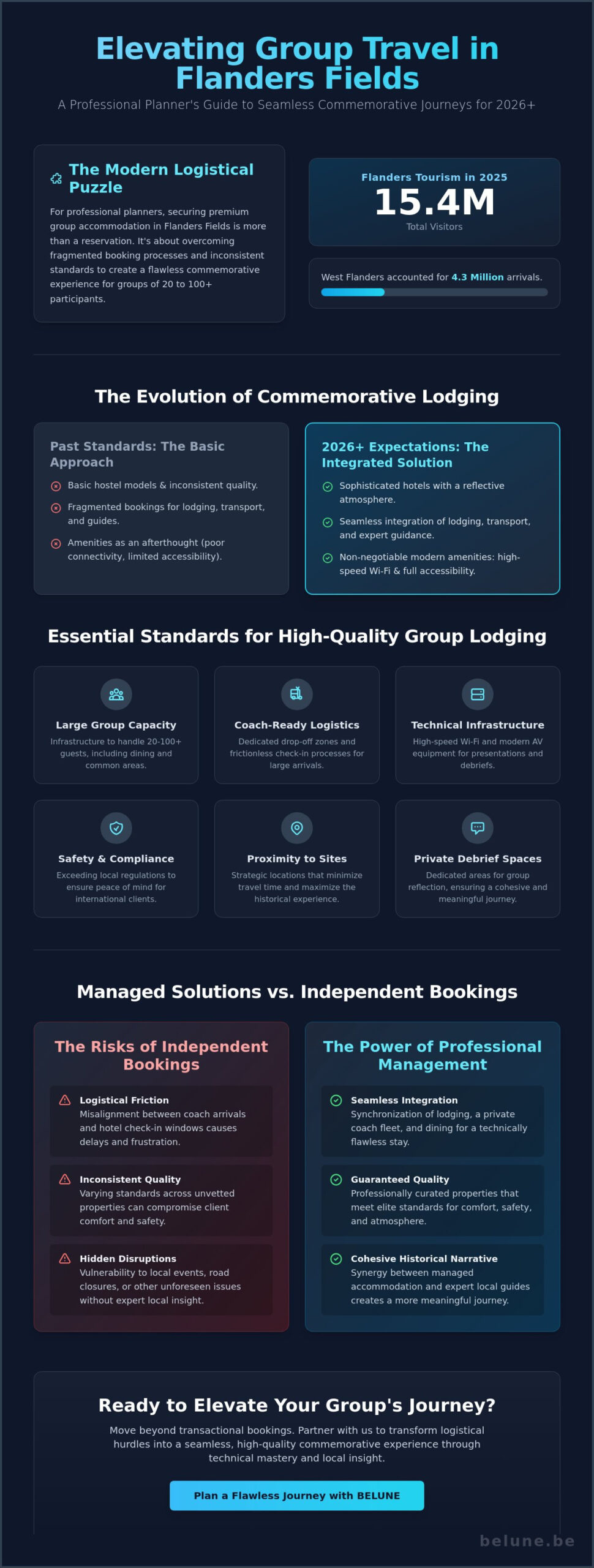
    What if the quality of your group’s rest was as meticulously curated as the history they came to witness? With Flanders welcoming over 15.4 million visitors in 2025, the region’s landscape is evolving, yet securing premium group accommodation in Flanders Fields remains a complex puzzle for professional planners. You recognize the inherent friction between fragmented booking processes and the varying standards found in rural historical zones. It’s a challenge that requires more than a simple reservation; it demands a strategic vision that treats lodging as a structural component of the entire commemorative experience.

    This guide demonstrates how professional management transforms logistical hurdles into a seamless, high-quality journey. We promise to show you how the integration of elite lodging with our private coach fleet and expert local guidance creates a technically flawless stay. We’ll explore the essential standards for 2026, from navigating site proximity to ensuring your international clients experience the perfect harmony of comfort and historical depth. Our approach moves beyond the transactional, offering a refined perspective on how to elevate every aspect of group travel through technical mastery and local insight.

    Key Takeaways

    • Identify the technical infrastructure required for 2026, focusing on how dining capacity and seamless check-in processes define high-quality group stays.
    • Recognize the hidden risks of independent bookings and how professional curation of group accommodation flanders fields ensures stability against local logistical disruptions.
    • Master the synchronization of coach transport with lodging windows to eliminate friction during large-scale group arrivals.
    • Discover how the synergy between managed accommodation and expert local guide services creates a more meaningful, cohesive historical narrative for your clients.

    The Landscape of Group Accommodation in Flanders Fields

    In the specialized field of battlefield tourism, lodging acts as more than a resting point; it’s a structural component of the historical narrative. Professional planners recognize that securing high-quality group accommodation flanders fields involves more than just calculating bed counts. It requires a vision that balances technical logistics with the emotional weight of the surroundings. As the region saw 15.4 million visitors in 2025, the demand for sophisticated, large-scale lodging has intensified, particularly in West Flanders, which accounted for 4.3 million arrivals. This growth has pushed the industry toward a more curated approach where the environment must reflect the gravity of the sites being visited.

    To visualize the profound atmosphere of these historical sites and understand the geographical context, watch this perspective on the region’s most significant landmarks:

    The Evolution of Commemorative Lodging

    The standards for 2026 have moved decisively away from the basic hostel models of the past. Today’s international groups expect sophisticated hotels that don’t sacrifice modern amenities for historical proximity. Atmosphere is essential. A well-chosen property maintains the reflective mood of a Flanders Fields itinerary long after the day’s tours have concluded. Technical requirements have also shifted; high-speed connectivity and full accessibility are now non-negotiable for groups coming from the Netherlands, Germany, and France, who represent the largest international markets in the region. We focus on properties that offer these modern comforts while preserving a sense of place.

    Capacity and Scale Requirements

    Managing groups ranging from 20 to over 100 participants introduces specific architectural and logistical needs. It’s not enough to have the rooms; the property must possess the physical infrastructure to handle large-scale coach arrivals without causing friction. This includes dedicated drop-off zones and proximity to the primary commemorative sites. Communal spaces play a vital role in the experience. We prioritize venues with private areas for evening debriefs and group reflection, ensuring the technical layout supports the human element of the journey. For a deeper look at planning these complex trips, explore our guide to flanders fields pilgrimages. Success in 2026 relies on this harmony between physical capacity and the specific needs of the commemorative traveler.

    Essential Standards for High-Quality Group Lodging

    High-quality group accommodation flanders fields isn’t simply about bed counts; it’s about the technical mastery of the environment. While many directories list basic youth hostels or school-focused lodging, professional agents in 2026 require a different tier of excellence. A property must function as a strategic hub for complex itineraries, providing a flawless technical foundation that allows the historical narrative to remain the focus. Consulting the Official tourism information for Flanders reveals the density of the region’s heritage, making logistical excellence even more critical for adult and corporate groups.

    Safety and compliance form the bedrock of international peace of mind. We look for properties that exceed local regulations, ensuring that every participant feels secure. This starts with a seamless check-in process. For large-scale arrivals, the transition from coach to room must be instantaneous. Friction at the front desk disrupts the emotional flow of a commemorative journey. Our approach to hotel accommodation management prioritizes these invisible but vital touchpoints.

    Technical Infrastructure and Connectivity

    Robust digital infrastructure is non-negotiable for modern tour operators. In 2026, high-speed Wi-Fi is a structural necessity, not a luxury. Meeting spaces must be equipped with the latest audiovisual technology to facilitate historical lectures and presentations with precision. We also prioritize properties that integrate sustainable practices. From energy-efficient climate control to waste reduction, sustainability is a core requirement for international clients who value ethical travel. These technical elements ensure the lodging supports the intellectual labor of the tour.

    Culinary Excellence for Groups

    The culinary experience must reflect the sophistication of the group. We’ve moved decisively away from “canteen” styles toward curated gastronomic experiences. 2026 standards demand menus that incorporate local heritage, transforming every meal into a cultural discovery. Managing the timing and flow of dining is an art form. We ensure that catering staff can handle complex dietary needs with elegance while keeping the group strictly on schedule for their next site visit. This level of coordination ensures that the journey remains immersive and respectful of the group’s time. Whether it’s a quick, high-quality breakfast or a formal evening meal, the food should be as memorable as the sites themselves.

    Curating the Experience: A Professional Guide to Group Accommodation in Flanders Fields for 2026

    Managed Solutions vs. Independent Bookings

    Choosing between a managed solution and independent booking isn’t just a matter of convenience; it’s a choice between technical certainty and logistical friction. When securing group accommodation flanders fields, the hidden risks of direct booking often surface at the most critical moments. Direct platforms offer individual property listings but lack the structural coordination required for large-scale commemorative itineraries. For a professional tour operator, the goal isn’t just to find rooms. It’s to ensure that every component of the stay, from coach access to culinary flow, functions as a single, harmonious unit.

    Local logistical disruptions are a reality in rural historical zones. A road closure near a cemetery or a sudden change in museum access can ripple through a carefully planned day. Without a professional partner, the burden of adjusting check-in times or informing catering staff falls entirely on the group leader. A managed approach provides a single point of contact for both lodging and transport, ensuring that if a site visit runs late, the hotel is already briefed and the evening’s narrative remains uninterrupted.

    Risk Mitigation and Reliability

    Handling the fluid nature of group travel requires deep local roots. Last-minute changes in group size or itinerary flow can be catastrophic when dealing with rigid retail booking systems. Our role as a benelux incoming tour operator allows us to leverage long-standing relationships with regional hoteliers. These connections are essential for securing the best room blocks and ensuring priority service that independent bookings simply cannot access. Reliability in 2026 depends on this ability to adapt technically while maintaining a serene experience for the end client.

    The Financial Logic of Professional Curation

    Analyzing the total cost of ownership for a tour reveals that retail rates are often deceptive. While a direct booking might seem cost-effective initially, it doesn’t account for the hidden costs of logistical friction or the lack of onsite support. We utilize fixed-price models that protect your margins against 2026 inflation and fluctuating seasonal rates. This financial clarity is paired with value-added services, such as synchronized driver logistics and specialized group dining, which are excluded from standard retail packages. Professional curation transforms accommodation from a simple line item into a strategic asset that preserves both the budget and the integrity of the historical journey.

    Logistical Coordination: Integrating Transport and Stay

    The success of a historical journey depends on the invisible threads connecting transport and rest. In the commemorative landscape of 2026, securing group accommodation flanders fields is only half the battle. The true mastery lies in the synchronization of coach arrival times with hotel check-in windows. We’ve seen how logistical friction can dampen the emotional impact of a visit to a memorial. By treating transport and lodging as a single structural unit, we eliminate the wait times that often plague large-scale groups. Every minute saved in transit is a minute returned to reflection.

    Modern coach fleets do more than move people; they enhance the entire accommodation experience. A high-quality vehicle serves as a mobile sanctuary between sites, but its effectiveness is tied to where it stops. We prioritize hotels that offer dedicated, secure parking and efficient drop-off zones. This technical foresight ensures that the “last mile” between the hotel and primary remembrance sites remains fluid and respectful of the group’s energy. It’s about maintaining a rhythm that feels natural rather than forced.

    Fleet Management and Driver Support

    Safety is a non-negotiable standard. Maintaining this requires rigorous attention to driver logistics. We ensure that every driver in our fleet has access to professional lodging and adequate rest in close proximity to the group. This isn’t just about compliance; it’s about the technical reliability of the entire tour. When you choose our coach hire services, you’re investing in a system where driver well-being is integrated into the broader stay. A well-rested driver is a cornerstone of a safe and seamless journey.

    Itinerary Flow and Timing

    Strategic placement of lodging within the national remembrance landscape is essential to maximize site engagement. We design stays that minimize transit time, allowing more space for reflection and local discovery. This coordination extends to our local guides, who meet groups directly at the hotel for seamless transitions into the field. By placing groups at the heart of the action, we transform the logistical necessity of sleep into a component of the historical narrative. We don’t just book rooms; we position your group for the most impactful experience possible.

    If you’re ready to integrate your transport and lodging into a single, high-performance itinerary, contact our team for expert logistics management.

    Elevating the Journey with BELUNE Expert Management

    The landscape of commemorative travel in 2026 requires a partner who understands that the soul of a pilgrimage lives in the details of its execution. We don’t just provide services; we craft environments. Our 20-year legacy in managing flanders fields itineraries has taught us that excellence is found at the intersection of technical rigor and artistic sensitivity. For professional tour operators, securing high-quality group accommodation flanders fields is about more than proximity; it’s about the technical integrity of the partner you choose.

    The BELUNE philosophy is rooted in the transformation of technical logistics into emotional experiences. We believe that a perfectly timed check-in, a quiet communal space for reflection, and a well-rested driver are the structural components that allow a group to truly connect with history. Our approach is defined by a minimalist elegance. We remove the noise of fragmented booking processes, replacing them with a single, sophisticated point of contact that manages the entire stay with professional precision.

    A Partnership of Trust and Excellence

    We position ourselves as a strategic ally for international travel partners, not a simple supplier. This distinction is vital for large-scale group management where the stakes are high and the itineraries are complex. Our team provides multi-lingual support and deep local expertise across the Benelux region, ensuring that cultural nuances are respected and logistical hurdles are cleared before they impact your clients. We’ve managed diverse projects, from high-end corporate retreats to massive historical commemorations, always maintaining the same standard of professional rigor. Trust is built through this consistent delivery of quality, where our local relationships become your competitive advantage.

    Tailor-Made Curations for 2026

    Designing themed group travel requires a deep understanding of how lodging integrates into the broader narrative. We don’t believe in generic listings. Instead, we offer customized accommodation solutions that reflect the specific goals of your tour. Our unique market advantage lies in the synergy between our private coach fleet and our hand-selected hotel management. This dual mastery allows us to control the “last mile” of the journey, ensuring that transport and rest are perfectly synchronized. Whether you’re planning a battlefield pilgrimage or a cultural exploration, we invite you to request a bespoke proposal. Let us show you how we can transform your next group accommodation flanders fields into a seamless, high-quality historical journey that resonates long after the group returns home.

    Architecting Your 2026 Commemorative Journey

    Mastering the complexities of group accommodation flanders fields requires more than a simple reservation. It’s a technical and artistic orchestration. We’ve explored how integrating a private fleet of modern coaches with managed lodging eliminates the friction that often disrupts large-scale itineraries. By prioritizing technical infrastructure and culinary excellence, you ensure that the historical narrative remains the primary focus for every participant. This structural harmony is what separates a standard trip from a profound journey.

    Our approach is built on 20 years of DMC expertise and a specialized focus on battlefield tourism management. This foundation allows us to act as your strategic ally, transforming technical logistics into a serene experience for your international clients. We don’t just solve problems; we anticipate them through professional rigor and local insight. This level of curation ensures your margins are protected and your group’s journey is technically flawless.

    Request Your Custom Flanders Fields Group Itinerary and let us refine the structural components of your next stay. The landscape of 2026 is full of potential. We’re ready to help you capture it with precision and elegance.

    Frequently Asked Questions

    What are the primary requirements for large group accommodation in Flanders Fields?

    Large groups require properties with specific structural capacities, including dedicated coach parking, high-speed connectivity, and communal reflection spaces. Beyond simple bed counts, the facility must handle synchronized arrivals and offer dining areas that accommodate 20 to 100+ participants simultaneously. These technical standards ensure the commemorative narrative remains uninterrupted by logistical friction. We prioritize venues where the physical layout supports the group’s need for both privacy and collective debriefing.

    How does a DMC improve the booking process for tour operators?

    A DMC acts as a single point of strategic coordination, merging lodging, transport, and local guide services into one cohesive contract. This eliminates the need for fragmented communication with individual vendors and provides a buffer against local disruptions. We leverage long-standing regional relationships to secure room blocks that aren’t available through retail platforms. This approach ensures technical reliability and financial clarity for every component of the stay.

    Can you manage dietary requirements for groups of over 50 people?

    We specialized in managing complex dietary needs by coordinating directly with hotel catering teams to ensure sophisticated gastronomic experiences for large groups. Our management style moves away from basic canteen service toward curated menus that reflect local heritage while adhering to strict schedules. We ensure that every meal supports the group’s health and the tour’s timing without compromising on quality. Every participant receives the same level of culinary attention regardless of group size.

    What is the typical lead time for booking group hotels in the remembrance region?

    Professional planners should aim for a lead time of 12 to 18 months to secure the highest quality group accommodation flanders fields. With international visitor numbers showing steady growth, early booking is essential to guarantee proximity to primary sites and avoid fluctuating retail rates. Securing space well in advance allows for better synchronization of our private coach fleet and local guide schedules. This foresight is the foundation of a technically flawless itinerary.

    How do you coordinate transport between the accommodation and battlefield sites?

    We synchronize our private coach fleet with hotel check-in and check-out windows to create a fluid transition between rest and exploration. This coordination involves pre-arranged drop-off zones and proximity-based lodging choices that minimize transit time. Our drivers are briefed on the specific itinerary flow, ensuring that the group moves seamlessly from their rest environment to the historical field. This integration treats transport as a structural component of the entire stay.

    Is it possible to secure high-quality lodging for specialized adult groups?

    Adult and corporate groups can access a tier of sophisticated lodging that goes far beyond the traditional hostel model. We curate properties that offer minimalist elegance, private meeting rooms for historical lectures, and modern amenities like high-speed Wi-Fi. This ensures that specialized groups experience the perfect balance of professional comfort and reflective atmosphere throughout their stay. Every property is chosen for its ability to maintain the tour’s sophisticated narrative.

    What security standards should I look for in group-friendly hotels?

    Look for properties that exceed local safety regulations and provide clear protocols for large-scale arrivals and departures. Essential standards include secure coach parking, modern fire safety systems, and accessible points of contact for group leaders. We prioritize hotels that offer a secure environment where international clients can focus entirely on their commemorative journey. These safety benchmarks are non-negotiable for maintaining professional peace of mind during a complex itinerary.

    How does BELUNE handle last-minute itinerary adjustments for large groups?

    Our team manages adjustments through a single point of contact who coordinates directly with our transport fleet and hotel partners. Because we maintain our own fleet and deep local ties, we can pivot logistics quickly to accommodate site closures or weather changes. This technical agility ensures that the group’s emotional experience remains stable, even when the external schedule must shift. We provide a safety net that protects the integrity of the historical journey.