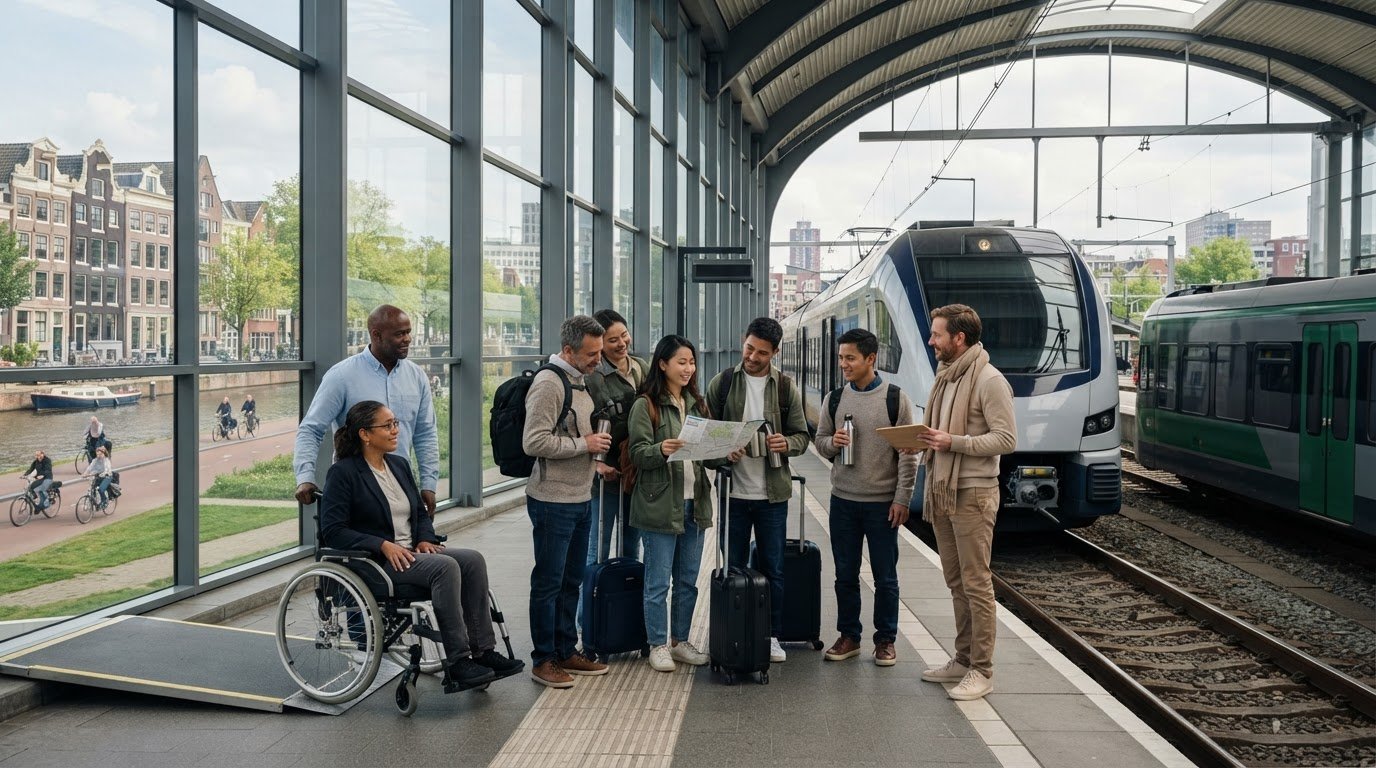
The most sustainable choice for a group depends on the journey. A train, coach or combination of both may suit different routes, schedules and accessibility needs. The practical starting point for sustainable group travel practices Benelux organisers can use is to compare those factors together, rather than looking for one perfect option.
Environmental claims can be difficult to compare, and a lower-impact option still needs to suit the group’s budget, timetable and mobility requirements. This guide sets out how to assess transport, accommodation and activities, and what to ask suppliers before booking. It also explains how coordinating the different elements can create a coherent itinerary. The aim isn’t perfection, but a considered trip shaped around evidence and the group’s needs.
Key Takeaways
- Start with the group’s size, mobility needs, interests and itinerary constraints before comparing options.
- Assess each transport leg by route, capacity, accessibility and timing. Ask for emissions information where available.
- For sustainable group travel practices benelux organisers can apply, distinguish documented policies and measurable evidence from broad environmental marketing claims.
- Ask accommodation providers how they manage resources and what arrangements they can make for your group.
- A local DMC can bring transport, accommodation, guides and activities into one planning conversation. Check each supplier’s sustainability claims separately.
Sustainable group travel in the Benelux in practice
A responsible group itinerary depends on connected decisions: how people arrive and travel between activities, where they stay, what they eat and how they visit the places on the itinerary. No single choice defines the whole trip. Group size alone doesn’t demonstrate lower impact. A group may share transport, for example, but the route, vehicle capacity, accommodation and activities still matter. Assess each choice in the context of this group and itinerary, and ask what evidence supports the assessment.
Which parts of a group trip should organisers assess?
Map the journey from arrival to departure, including transfers. Then assess its components separately, since each calls for different questions:
- Transport: Which routes and transfers are needed? What information can the provider share about the proposed option?
- Accommodation and meals: What resource-management practices are documented? How does the group’s choice support local businesses or workers?
- Activities: How might the group’s timing and presence affect the visit? Can participants take part comfortably?
These are different considerations, not interchangeable measures. Resource use relates to environmental performance; local benefit concerns where spending and work go; visitor pressure concerns how and when a group experiences a place. Organisers can set priorities, choose dates and ask questions, but suppliers control many operational details. Request information about the services included in your booking rather than assuming a general claim applies to them.
What does responsible travel mean for a group?
Responsible group travel means choosing transport, stays and activities with attention to environmental evidence, local value, accessibility and the group’s experience. This reflects the broader idea of Sustainable tourism, which considers environmental, social and economic dimensions together.
In practice, priorities can compete. A route with fewer changes may better suit travellers with mobility needs, while an activity scheduled at a different time may affect the rest of the itinerary. Neither choice is automatically sustainable. Compare the available evidence with the group’s actual needs: who can participate, what the supplier can substantiate and how the option fits the journey.
There may be no perfect itinerary. Aim for deliberate trade-offs, clear questions and a plan that respects participants and the places they visit. Setting priorities in advance makes decisions easier to explain and review.
How to assess transport, accommodation and activities across the Benelux
Compare the itinerary as a whole, while assessing each supplier on the part they control. Asking the same questions of each provider helps reveal practical differences without treating a label, vehicle type or promise as proof of environmental performance. For wider policy context, the EU strategy for sustainable tourism offers a broader framework for considering tourism’s impacts.
How should organisers compare coach, rail and mixed-mode travel?
Start with the door-to-door journey, not just its main transport leg. Compare routes, passenger capacity, transfers, timetable fit and accessibility. Rail may work well for one section and a coach for another. A mixed-mode itinerary can also be practical, provided connections and transfers are manageable for the group.
If emissions information is available, check that comparisons use current data and state their sources and assumptions, including route, occupancy and vehicle type. If the information isn’t comparable, don’t present one option as definitively lower impact. Record what’s known, what’s uncertain and how well each option fits the group.
What should you ask accommodation and activity providers?
For activities, ask how visits are organised to respect cultural or heritage sites and the communities connected to them. Confirm that the format, timing and access arrangements suit your participants. These questions help distinguish documented practices from marketing language while keeping the visitor experience in view.
Use the same questions across providers to make comparisons fair. A simple record can capture:
- Evidence: What current data, policy or specific example supports the claim?
- Practicality: Does the option fit the route, schedule and group arrangements?
- Access and experience: Can participants take part comfortably, and is the visit appropriate for the setting?
Environmental information is only one part of the assessment. Accessibility, local context and the flow of the journey matter too. BELUNE arranges group itineraries, coach transport, accommodation and local guide services, bringing those logistics into one planning conversation. Organisers considering group itinerary coordination can use that conversation to raise informed questions with suppliers, then check each claim against its own evidence.

How to compare sustainable group travel choices without greenwashing
A persuasive label isn’t a comparison. Use the same criteria for each supplier and assess the complete journey, from arrival and transfers to accommodation and activities. An isolated rail leg or hotel policy may tell only part of the story. The goal is to understand what’s supported by evidence, what suits the group and where trade-offs remain.
Which evidence makes a sustainability claim more credible?
Ask what a claim covers, when the information was collected and how it was assessed. A documented policy explains a provider’s stated approach, but it isn’t the same as measured results. Data for one service or activity shouldn’t be assumed to represent the whole itinerary. If information is missing or options use different methods, mark it as “unknown” rather than treating confident wording as proof.
Use a consistent framework for each proposed option:
- Impact evidence: Record the measured data, its source and scope, or note that evidence isn’t available.
- Practicality: Compare routes, transfers, timing and operational fit across the journey.
- Accessibility: Note whether the option accommodates the group’s mobility and participation needs.
- Group experience: Consider comfort, itinerary flow and the quality of the visit for participants.
Keep evidence types distinct. A measured result has a source and method; a documented policy describes an approach; an unsubstantiated claim lacks enough detail or scope to verify. This distinction helps organisers weigh each type appropriately.
How can organisers weigh sustainability against group needs?
Rank the group’s priorities before reviewing supplier proposals. Accessibility or a reliable connection may be essential, while other preferences can remain flexible. Then assess each option against those priorities and the environmental information available. The best fit depends on the route, participants and evidence, not on a transport mode or label by itself.
Record why you chose an option and what compromises remain. One itinerary may have clearer supporting evidence, while another better meets the group’s accessibility needs or timing. Be open about that tension. Thoughtful planning means making choices that are transparent and proportionate, then reviewing them if the itinerary changes.
A practical planning checklist for a more responsible Benelux group trip
A clear brief makes proposals easier to compare. Before planning the itinerary, agree on the group’s needs and what responsible travel means for this trip. Use the steps below to turn priorities into supplier questions, then apply what you learn to future plans.
What should be settled before requesting proposals?
- Describe the group. Record its size, mobility and accessibility needs, interests, preferred pace and other participation requirements.
- Set the travel framework. Confirm dates, starting and ending points, route constraints, available time and accommodation needs.
- Rank sustainability criteria. Separate essentials from preferences. Documented supplier practices might be a priority, while a particular activity theme could be flexible.
- Share one consistent brief. Give each prospective partner the same route, accommodation, activity and accessibility requirements so responses are easier to compare.
- Review the proposed journey. Check connections and allow realistic time for transfers, arrivals and transitions between activities. Consider experiences that connect with local culture and context without crowding the schedule.
- Check supplier information. Ask what evidence supports environmental claims, which services it covers, and how accessibility and group-specific arrangements will be handled. Note unanswered questions instead of filling gaps with assumptions.
This process turns sustainable group travel practices Benelux organisers can use into a repeatable routine: prepare a brief, apply consistent checks and record the reasoning behind each choice. Keep it practical. A concise planning document is more useful than a long list of criteria no one can verify.
How can organisers review the trip after it happens?
After the journey, ask participants about comfort, access, timing and the quality of their experiences. Compare supplier commitments with what was communicated or delivered, and note any changes to transport, accommodation or activities. Use the feedback to improve the next itinerary, not to claim environmental results that weren’t measured.
Close the file with a short decision record: the options selected, the reasons for choosing them, the evidence sources consulted and any remaining uncertainties. This makes future comparisons more transparent and gives the next planning team a useful starting point.
Planning a coordinated group itinerary across the Benelux? Discuss your group itinerary requirements with BELUNE.
How a Benelux DMC can coordinate more considered group travel
Group travel decisions are connected. A change to a transfer can affect arrival times, accommodation arrangements and the pace of an activity. A destination management company (DMC) can bring these moving parts into one planning conversation, helping organisers consider how transport, stays, local guides and experiences fit together. That coordination makes it easier to compare options with the group’s priorities, but it doesn’t prove that an itinerary has lower environmental impact.
What can BELUNE coordinate for group organisers?
BELUNE is a Benelux-focused DMC with more than 20 years of experience in transport and tour operations. Its group services include customized itinerary planning, hotel accommodation management, local guide services and coach transport using its own modern fleet. Group activities can include art and culture tours or gastronomy and beer experiences, shaped around the interests and practical requirements in the brief.
Bringing these elements together can help organisers spot issues with connections, schedules or accessibility arrangements. Coaches are one option to assess against the route, passenger capacity and group needs, not an automatic environmental solution. Ask for sustainability information from suppliers and assess it on its own merits. BELUNE’s logistical experience can support that evaluation, but it isn’t proof of environmental superiority or supplier credentials.
What information should a group brief include?
A useful brief gives a DMC and prospective suppliers a clear picture of the group’s needs and priorities. Include:
- Group profile: Size, interests, mobility and accessibility requirements.
- Travel requirements: Dates, route, arrival and departure plans, timing constraints and accommodation needs.
- Experience themes: Preferred activities, pace and cultural or local interests.
- Sustainability priorities: Essential criteria, flexible preferences and the evidence you expect suppliers to provide.
Specific priorities make it easier to build an itinerary around the group rather than broad claims or assumptions. For organisers exploring sustainable group travel practices benelux, a coordination partner can connect the planning details and help raise informed questions. Each claim still needs to be verified with its source.
If you’re shaping a group trip and have an initial brief, you can discuss a tailored group itinerary with BELUNE and share the priorities you’d like the plan to reflect.
Turn thoughtful choices into a cohesive group journey
Responsible group travel isn’t defined by one transport mode or sustainability label. It comes from comparing the full itinerary, checking what suppliers can substantiate and balancing environmental considerations with accessibility, timing and the group’s experience. These sustainable group travel practices Benelux organisers can apply make decisions clearer, including when evidence is incomplete and trade-offs need to be recorded.
Coordination brings the details together. BELUNE has more than 20 years of experience in transport and tour operations, along with group accommodation management and its own modern coach fleet. These capabilities support itinerary planning, while each transport option and supplier claim should still be assessed for the group and route.
Ready to shape a considered itinerary around your group’s needs and priorities? Discuss a tailored group itinerary with BELUNE. Start with a clear brief and the priorities you want the plan to reflect.
Frequently Asked Questions
What are sustainable group travel practices?
Sustainable group travel practices are considered choices across a trip, from transport and accommodation to meals, activities and transfers. Organisers weigh environmental evidence alongside local benefit, accessibility and participant experience. Practical steps include comparing complete routes, asking suppliers for specific documentation and choosing activities that respect communities and cultural sites. The aim isn’t to claim a perfect trip, but to make informed decisions and be clear about what’s known and what remains uncertain.
Is group travel more sustainable than individual travel?
Not automatically. A group may share transport or coordinate an itinerary, but group size alone doesn’t prove lower impact. The outcome depends on factors such as route, capacity, transfers, accommodation and activities, as well as participants’ needs. Compare options using consistent, relevant information. If you use emissions data, check that its source and assumptions are clear and comparable rather than treating shared travel as proof of environmental benefit.
How can a tour operator make a group trip more sustainable?
A tour operator can start by understanding the group’s size, interests, accessibility needs and schedule, then coordinate transport, accommodation, guides and activities around those priorities. It can ask suppliers for current evidence, allow realistic transfer times and consider local context when shaping the itinerary. A Benelux DMC such as BELUNE can coordinate group logistics, including accommodation management, coach transport and local guide services. Coordination itself isn’t proof of environmental performance.
Are coaches or trains more sustainable for group travel?
There isn’t a universal answer. Compare the complete journey, including passenger capacity, route, transfers, timetable, accessibility and how well each option fits the group. For an emissions comparison, use current data from a reputable source and check that the methods and assumptions match, including occupancy and vehicle type where available. A mixed-mode itinerary may also be worth assessing. Choose based on the group’s needs and the evidence, not the transport mode’s label alone.
How can I tell whether a travel provider’s sustainability claims are credible?
Ask for the claim’s scope, supporting evidence, source and date. Check whether it describes measured results, a documented policy or broad marketing language, and whether it covers the whole service or only one part. If a provider names a certification, verify its criteria and independent oversight rather than assuming the label is meaningful. Record missing or incomparable information as unknown. Confident wording isn’t evidence of environmental performance.
Leave a Reply