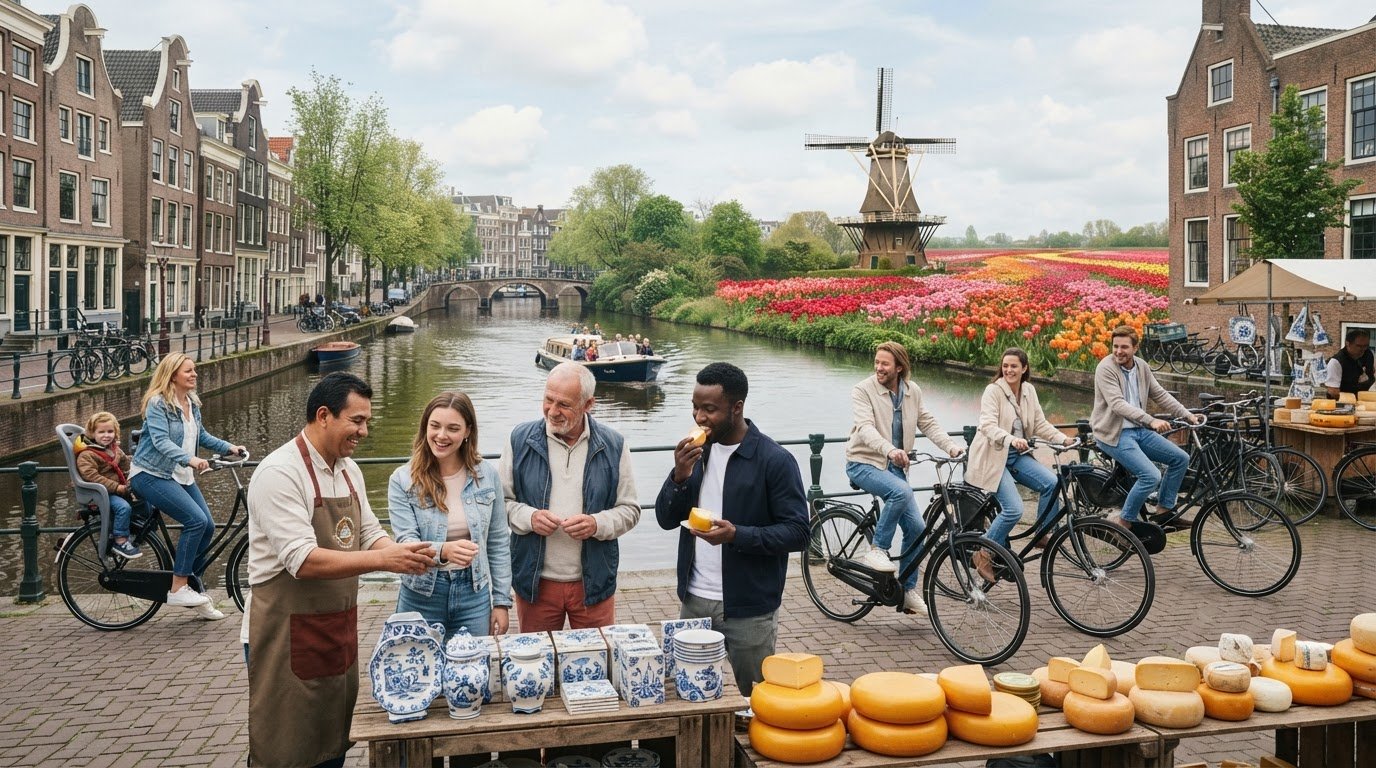
A highlight of Holland isn’t always one landmark. For a group, it might be the moment a shared activity opens a window onto Dutch culture. The phrase can refer to an interactive attraction or to the country’s wider range of memorable experiences. Knowing the difference helps you plan: one offers an engaging introduction, while a varied itinerary can bring together heritage, landscapes, and local traditions.
It’s tempting to fit everything in. Canals, windmills, tulip fields, art, cycling, and regional food each reveal a different side of the Netherlands, but a packed schedule can leave little time to enjoy them. A thoughtful balance makes the journey feel more coherent, combining interactive discovery with slower cultural experiences.
This guide introduces the attraction’s interactive approach, then compares seven ways to experience Dutch culture and how they might suit your group. You’ll find practical criteria for choosing activities and connecting them through transport, accommodation, and local guidance, so individual highlights can become one memorable journey.
Key Takeaways
- Explore seven ways to encounter Dutch culture, from art and water heritage to food, crafts, and cycling.
- Consider the Highlights of Holland attraction as one possible starting point, then choose other experiences that add variety to your group’s trip.
- Compare activities by participation, learning style, weather exposure, accessibility, and energy level to find a comfortable mix.
- Set group priorities first, then leave space for meals, transitions, and different attention spans.
- Bring individual experiences together with tailored planning and coordinated travel logistics.
What Does “Highlights of Holland” Mean? Start with the Interactive Dutch Experience
“Highlights of Holland” can mean a named attraction that introduces Dutch culture interactively, or the broader range of experiences that make a trip to the Netherlands memorable. For group planners, the distinction matters: one is a visit to a particular venue; the other is an itinerary shaped around several places, activities, and perspectives.
The attraction presents Dutch sights, stories, and traditions through an indoor, participatory format with themed rooms. It can give visitors an engaging first encounter with cultural ideas, but no single attraction can represent every facet of a country. The diverse culture of the Netherlands includes history, arts, and social customs that extend well beyond one visitor experience.
For a visual sense of the range of experiences a Netherlands trip can include, watch this travel guide:
What is the Highlights of Holland attraction?
Think of it as a compact indoor cultural experience designed to involve visitors, rather than simply ask them to observe. Its themed rooms offer different entry points into Dutch life and heritage, making it an accessible introduction for visitors who enjoy learning through participation. The themes are a curated interpretation, not a complete account of the country.
Visit duration and room details can change, so use the attraction’s current visitor information when setting the schedule. Avoid building a tight group itinerary around an assumed visit length or fixed room lineup. The central distinction is straightforward: this is an interactive cultural visit, not a tour of the Netherlands.
How is the attraction different from Dutch travel highlights?
In search results, “highlight of Holland” may refer to the venue or to a standout experience within a larger trip. Museums and heritage visits allow more time with collections and history. Food experiences bring culture into conversation and taste, while outdoor activities reveal landscapes through movement. Each format can complement an interactive indoor visit and add a different perspective to a group programme.
In short: Highlights of Holland is an interactive attraction; Dutch travel highlights are the wider collection of cultural and scenic experiences a group can combine. Treat the attraction as one possible opening note, then build outward. This distinction helps you choose a meaningful mix without expecting one visit to stand in for a complete Netherlands itinerary.
Seven Ways to Experience Dutch Culture Beyond a Single Attraction
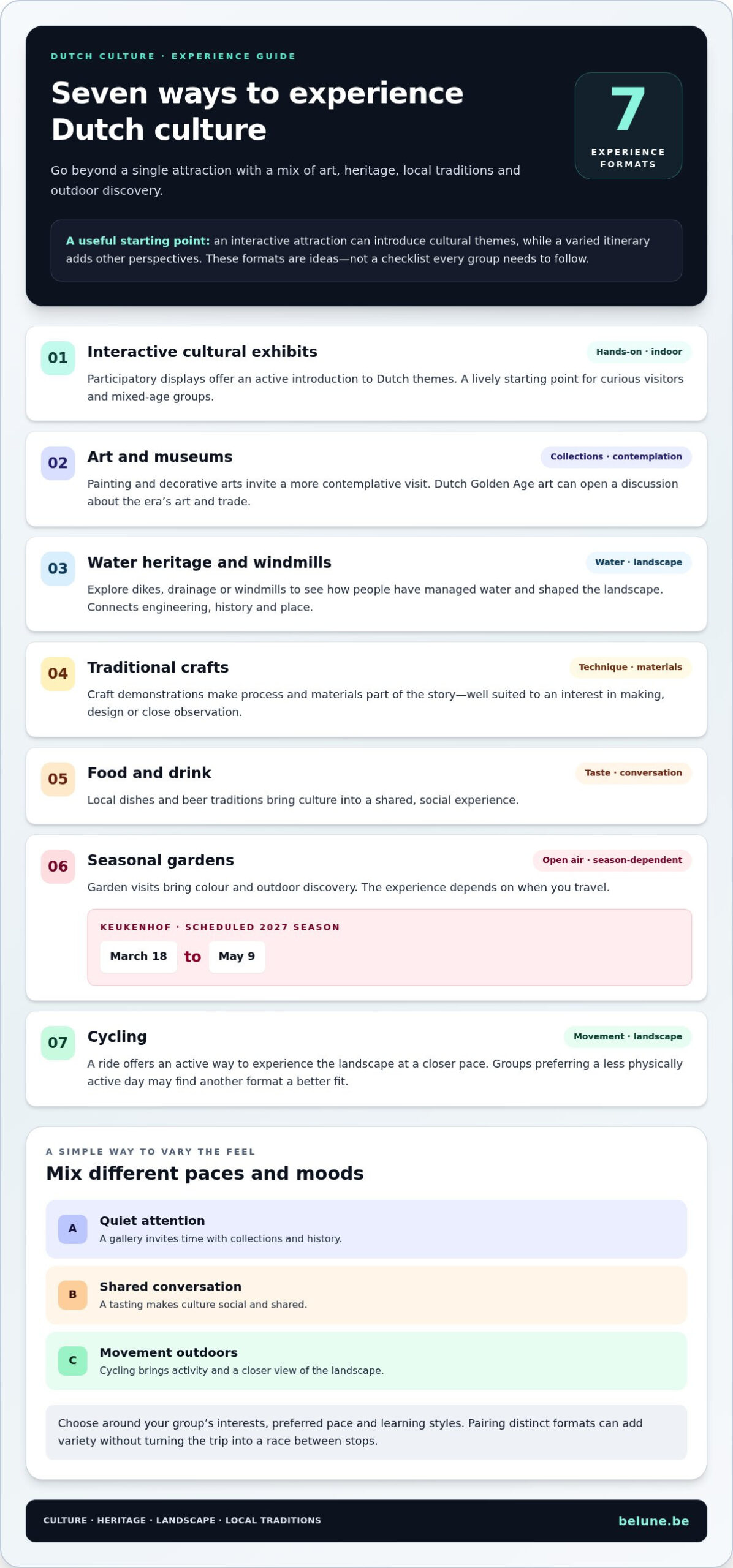
An interactive attraction can be a lively beginning, but Dutch culture comes into sharper focus through different settings and activities. The right combination depends on your group’s shared interests, preferred pace, and learning styles. These seven formats offer ideas, not a checklist every itinerary needs to follow.
- Interactive cultural exhibits: Hands-on displays give curious visitors and mixed-age groups an active way to encounter Dutch themes. They work well as an introduction, especially when followed by experiences that offer other perspectives.
- Art and museums: Collections of painting and decorative arts offer a more contemplative visit. The Dutch Golden Age can provide a lens for discussing the era’s art and trade, without reducing the country’s cultural story to one period.
- Water heritage and windmills: A visit focused on dikes, drainage, or windmills can show how people have managed water and shaped the landscape. This format may suit groups interested in engineering, history, and the relationship between people and place.
- Traditional crafts: Craft demonstrations make technique and materials part of the story. Choose this format if your group is interested in making, design, or close observation.
- Food and drink: Tasting local dishes or exploring beer traditions makes culture a shared, social experience. Find more ideas in our gastronomy experiences for groups.
- Seasonal gardens: Garden visits bring colour and open-air discovery to an itinerary, but their appeal depends on the season. For example, Keukenhof’s 2027 season is scheduled for March 18 to May 9, so timing is central to planning this experience.
- Cycling: A ride offers an active way to experience the landscape at a closer pace. It can suit energetic groups; visitors who prefer a less physically active day may find another format a better fit.
These experiences differ in pace and mood: a gallery invites quiet attention, a tasting encourages conversation, and cycling brings movement. The Netherlands Board of Tourism & Conventions provides a wider view of the country’s cultural and natural attractions, which can help you choose a theme around your group’s interests. A strong highlight of holland itinerary doesn’t need to include everything. Pairing distinct formats can add variety without turning the trip into a race between stops.
For further cultural-trip ideas, explore our guide to culture group tours. BELUNE helps tour operators and travel agents bring cultural visits, food experiences, and active outings together in a tailored programme.
Interactive Attraction or Classic Cultural Visit: Which Fits Your Group?
The right choice depends less on which experience is “best” and more on what your group wants from the day. Consider who’s travelling, how they prefer to learn, their activity level, and the time available. An interactive attraction can provide a shared starting point; a museum, heritage visit, food experience, or outdoor outing can add a different kind of depth.
When does an interactive Dutch attraction work well?
Choose an indoor, participatory visit when the group enjoys exploring ideas through activity and wants a common introduction to Dutch themes. It can provide a change of pace between outdoor stops or more reflective visits. The activity takes place indoors, but you’ll still need to plan the journey to and from the venue.
Before adding it to a group schedule, review the attraction’s current visitor information for visit duration, accessibility, and age suitability. These details help you assess whether the format suits the group and the time available. A lively, hands-on experience may appeal to visitors who enjoy taking part; those who prefer quiet observation may connect more with collections or guided heritage visits.
When should a group add heritage, food, or outdoor experiences?
Add a contrasting format when your group wants more than an introduction. A heritage visit suits people drawn to historical context and place. A food experience makes room for conversation and shared discovery. Cycling or another outdoor activity adds movement and landscape, but also asks more of participants’ energy and mobility. Consider the needs of the people travelling before choosing.
Compare options using a few practical questions:
- Participation: Will the group enjoy trying, tasting, or moving, or prefer to look and listen?
- Learning style: Is the priority hands-on discovery, expert interpretation, or informal conversation?
- Weather and setting: Does the activity take place indoors, outdoors, or across both?
- Access and energy: Do the format, pace, and physical demands suit the people travelling?
- Schedule: Can the experience fit comfortably alongside travel time, meals, and breaks?
These choices also reflect the breadth of culture itself. The Government of the Netherlands’ Dutch Ministry of Culture sits within a wider portfolio that includes education and science, a reminder that cultural life extends beyond a single venue or theme.
One attraction can be a memorable highlight of holland, but it can’t stand in for a complete cultural itinerary. A thoughtful combination, shaped around your group’s interests and pace, lets each experience contribute something distinct.
How to Build a Dutch Highlights Itinerary Around Your Group
A memorable group itinerary starts with the people travelling, not a checklist of attractions. Agree on the trip’s shared purpose, then balance cultural discovery with enough breathing room to enjoy each experience. A highlight of holland journey might combine an interactive visit with art, food, or cycling; the right mix depends on the group.
How should you choose experiences for different group interests?
Start with the group’s age range, interests, preferred activity level, and access needs. A history-focused group may value a guided heritage visit; food enthusiasts may prefer a culinary experience, while active travellers might enjoy cycling. For mixed interests, vary the format instead of scheduling several similar visits back to back. That gives participants different ways to engage and helps the itinerary feel considered rather than crowded.
Set expectations clearly. Explain what each activity involves, how much participation it asks of visitors, and whether it takes place indoors or outdoors. Where needs differ, prioritise experiences that let people take part at a comfortable pace. No single format will suit everyone, but a thoughtful balance can make the programme more welcoming to the group as a whole.
What makes a group itinerary feel seamless?
Build the sequence around real transitions, not just the listed activity times. Allow space for boarding and leaving the coach, arriving at venues, meals, check-ins, and quieter moments between experiences. Set timings and routes according to the actual itinerary rather than relying on generic travel estimates.
Logistics shape the experience as much as the cultural stops do. Coordinated coach transport can connect activities, while accommodation management brings overnight arrangements into the wider programme. Local guides can add context and help link one visit to the next. Planning these elements together lets the group focus less on the mechanics of the day and more on the experience itself.
For further ideas, explore themed group travel experiences. BELUNE draws on more than 20 years of group travel experience to create tailored itineraries for travel partners, coordinating transport, accommodation, and local guidance around the programme. Learn about BELUNE’s group itinerary planning.
Plan a More Cohesive Dutch Group Experience with BELUNE
A Dutch group trip is more rewarding when its experiences feel connected, not collected at random. BELUNE works with tour operators and travel agents to shape tailored itineraries, bringing cultural visits and practical travel arrangements into one considered programme. With more than 20 years of experience in group travel, transport, and tour operations, we understand how the journey between experiences influences the rhythm of a trip.
How does tailored planning connect separate experiences?
Itinerary design starts with the group’s interests and turns them into a coherent sequence. An interactive cultural visit might introduce a theme, while a heritage tour or food experience adds another perspective. The programme’s pace can be shaped around the group, balancing guided activities with meals and time to transition.
Practical details matter, too. BELUNE coordinates hotel accommodation management, coach transport through its own fleet of modern coaches, and local guide services. Bringing these elements together aligns where the group stays, how it moves between activities, and the local context it encounters along the way. The result is a programme tailored to the project, rather than a fixed itinerary that treats every group alike.
What should travel partners prepare before shaping a group trip?
A clear brief makes planning more purposeful. Before shaping a Dutch group itinerary, travel partners can outline:
- Group profile: Who is travelling, and are there particular access or participation needs?
- Shared interests: Is the priority art and culture, heritage, gastronomy, cycling, or a considered blend?
- Travel dates and pace: What are the planned dates, and should the programme feel active, relaxed, or varied?
- Logistical requirements: What accommodation, coach transport, and local guidance arrangements should the itinerary bring together?
These details give planning a strong foundation without locking the group into a one-size-fits-all package. They also help create a realistic flow, with space for transfers, meals, and changes in energy across the day. A highlight of holland is more meaningful when it suits the group and forms part of a journey designed with care.
For professional travel partners seeking a cohesive programme, explore tailored group travel with BELUNE.
Shape a Dutch Group Journey to Remember
A highlight of holland might be an interactive introduction, a heritage visit, a shared meal, or a thoughtful combination of experiences. The strongest group itineraries start with the people travelling: their interests, preferred pace, and appetite for active or reflective activities. A balanced programme leaves room for discovery without turning every day into a race between stops.
For tour operators and travel agents, BELUNE brings more than 20 years of group travel and transport experience to itinerary planning. Coordinated accommodation management, coach transport, and local guide services help connect separate visits into a programme with a clear rhythm and a sense of continuity.
Every group has its own character. With thoughtful planning, Dutch culture can unfold through experiences that feel engaging, varied, and well connected. Explore a tailored group travel experience with BELUNE and start shaping a journey your group will remember.
Frequently Asked Questions
What is Highlights of Holland?
Highlights of Holland can refer to an indoor, participatory attraction introducing Dutch sights, stories, and traditions, or to the country’s cultural experiences more broadly. The attraction uses themed rooms to give visitors an engaging encounter with selected aspects of Dutch culture. It’s one possible stop, not a complete representation of the Netherlands or a full itinerary. A wider trip can include heritage, art, food, and outdoor activities.
How long does the Highlights of Holland experience take?
Use the visit duration in the attraction’s current official visitor information when planning your schedule. Some online references cite 75 minutes, but details can change, so verify that figure against the attraction’s own guidance rather than relying on an older or third-party estimate. For a group visit, allow time for arrival, entry, and onward travel as well as the attraction itself.
What can you see or do at Highlights of Holland?
Visitors encounter Dutch themes through an indoor, participatory experience arranged around themed rooms. The attraction presents selected sights, stories, and traditions interactively, making it different from a conventional museum visit or outdoor heritage stop. Room themes and activities may change, so consult current visitor information for the latest details. Treat the experience as an introduction, then add other visits for a broader cultural perspective.
Is Highlights of Holland suitable for families and school groups?
The participatory format may appeal to families and school groups looking for an active introduction to Dutch themes, but suitability depends on visitors’ ages, interests, and needs. Review the attraction’s current guidance on age suitability, accessibility, activities, and visit duration before planning. For school groups, consider how the visit supports learning aims; for families, think about whether the format and pace suit the children travelling.
Can you combine an interactive Dutch attraction with other cultural experiences?
Yes. An interactive attraction can sit alongside heritage visits, museums, food experiences, or outdoor activities, giving a group several ways to encounter Dutch culture. Choose complementary formats rather than trying to fit too many stops into one day. Allow time for transfers, meals, and breaks, and review each venue’s current visitor information for practical details such as accessibility and visit duration.
What are the best ways to experience Dutch culture on a group trip?
Match experiences to the group’s shared interests, preferred pace, and activity level. Combine formats, such as an art or heritage visit with a culinary experience or cycling, rather than stacking similar activities. For tour operators and travel agents, BELUNE designs tailored group itineraries and coordinates accommodation management, coach transport, and local guides, drawing on more than 20 years of group travel and transport experience.
Leave a Reply