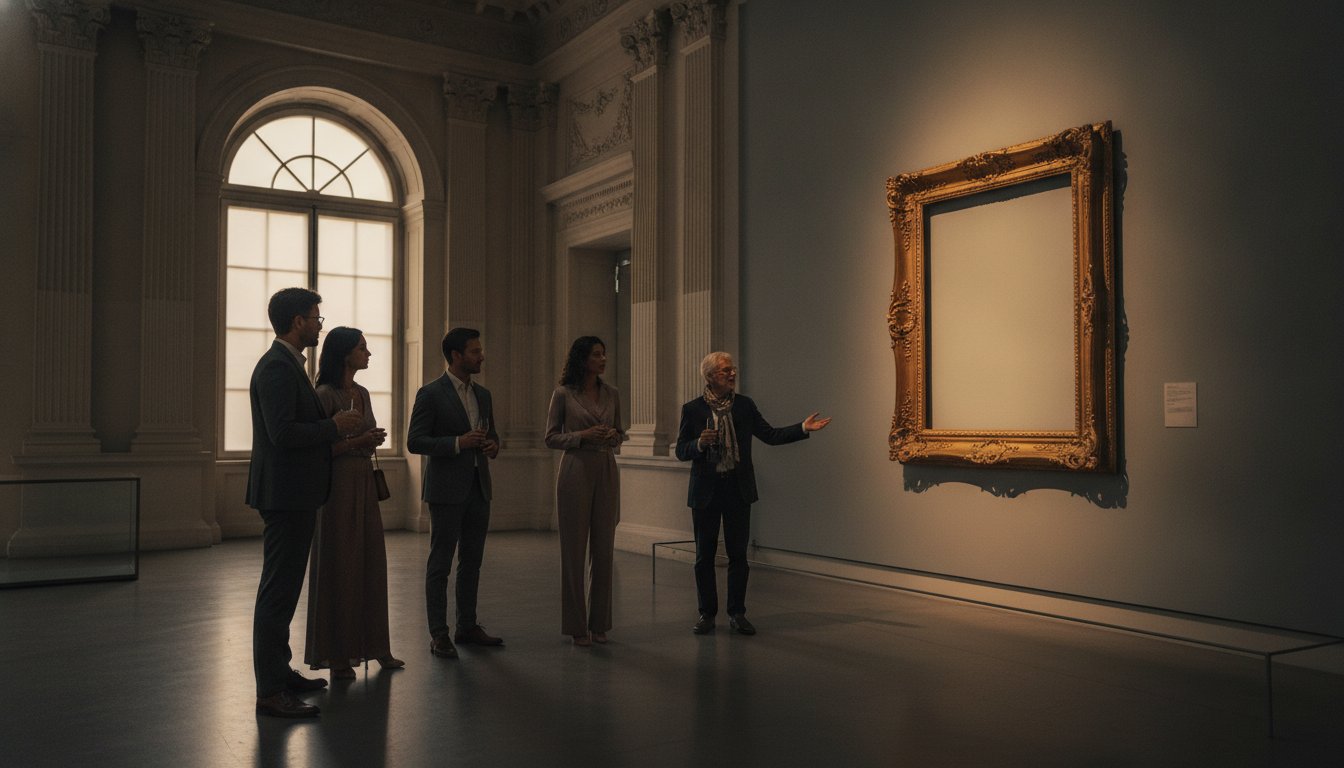
A true encounter with a Vermeer isn’t found in a crowded gallery; it’s found in the quiet moments of a perfectly timed itinerary. Orchestrating a Dutch masters museum tour for groups in 2026 requires more than a simple booking. It demands a delicate choreography where professional precision allows artistic emotion to take center stage. You understand that managing twenty art enthusiasts through the Rijksmuseum or the Mauritshuis is an exercise in both cultural curation and logistical mastery. The challenge isn’t just seeing the art, it’s preserving the atmosphere that makes the art resonate.
This article provides the blueprint for creating seamless, high-level group experiences that blend the legacy of the Golden Age with flawless execution. We’ll examine how to navigate the latest timed-entry protocols and new 2026 ETIAS requirements without breaking the narrative flow. From securing expert guides who transcend generic scripts to managing a private coach fleet across the Benelux, you’ll discover how to transform complex travel requirements into a refined journey. We’ll preview the essential strategies for hotel management and itinerary pacing that satisfy even the most demanding collectors.
Key Takeaways
- Master the complexities of 2026 museum entry protocols and ETIAS requirements to ensure a seamless dutch masters museum tour for groups.
- Learn how to weave a compelling narrative across the Benelux that connects major national collections into a single, immersive story of the Golden Age.
- Gain insights into the role of specialized local guides in transforming standard museum visits into high-end cultural experiences for discerning collectors.
- Understand the strategic advantages of the DMC model, including fixed-price certainty and the efficiency of a private, modern coach fleet.
- Discover how professional logistics and deep art-historical expertise collaborate to eliminate common group travel bottlenecks in high-traffic institutions.
The Legacy of the Dutch Masters: A Narrative for Modern Groups
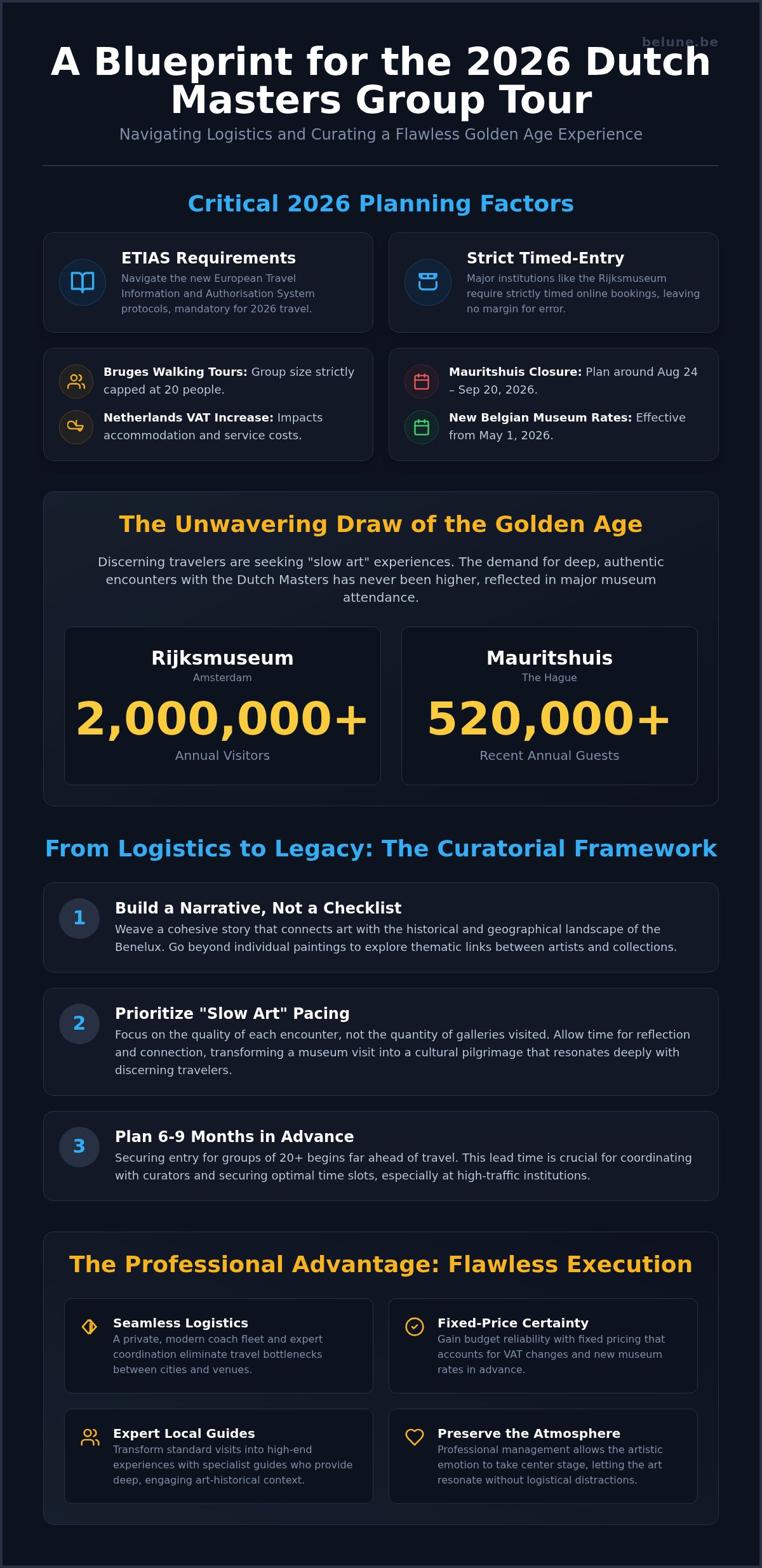
The 17th century remains a cornerstone of European culture. A Dutch Golden Age painting isn’t just a static object; it’s a window into a world of commerce, science, and domesticity. For a dutch masters museum tour for groups, this era provides a rich, cohesive narrative that resonates with modern sensibilities. The play of light in a Vermeer or the raw humanity in a Rembrandt portrait speaks across centuries. In 2026, the demand for these experiences remains exceptionally high. The Rijksmuseum continues to attract over 2 million annual visitors, while the Mauritshuis recently welcomed over 520,000 guests in a single year. These numbers reflect a deep, global fascination with a period that redefined the visual language of the West.
Light is the protagonist here. Rembrandt mastered the shadow, while Vermeer captured the impossible stillness of a sunlit room. This evolution of light isn’t just a technical achievement. It’s an emotional one. Modern travelers find a strange comfort in these domestic scenes and honest portraits. They offer a sense of grounding in a fast-paced world. For the tour operator, the goal is to harness this emotional resonance. You aren’t just showing paintings; you’re facilitating a connection with the human condition.
The Enduring Appeal of the Golden Age
International groups are moving away from hurried sightseeing. They’re seeking “slow art” experiences where the quality of the encounter matters more than the quantity of galleries visited. Professional travel agents prioritize these itineraries because they offer depth and reliability. The 17th-century masters provide a unique blend of technical brilliance and emotional accessibility. This makes them the perfect anchor for high-end cultural pilgrimages. In an era of digital saturation, the tactile reality of oil on canvas provides a profound sensory experience that travelers crave. It’s a heritage-rich journey that justifies the investment of time and resources.
Curating the Artistic Narrative
Successful tour operators don’t just book tickets. They build bridges between the art and the physical landscape of the Benelux. A dutch masters museum tour for groups should explore the thematic connections that bind these artists together. It’s about seeing how the flat, watery horizon of the Low Countries influenced landscape painting. It’s about understanding how the wealth of the merchant class funded a new kind of secular art. Linking these masterpieces to the broader historical context adds layers of value to the tour. It transforms a simple museum visit into a visionary exploration of identity. This approach ensures that the itinerary feels like a curated journey rather than a series of disconnected stops.
Choreographing Group Logistics for High-Traffic Art Institutions
Managing a dutch masters museum tour for groups in 2026 requires a high degree of technical foresight. With major institutions like the Rijksmuseum requiring strictly timed online bookings for their 2 million annual visitors, the margin for error is non-existent. A successful tour doesn’t just happen; it’s engineered. You must account for the Mauritshuis closure from August 24 to September 20, 2026, and the new Belgian federal museum rates effective May 1, 2026. These aren’t just dates; they’re the structural constraints of your masterpiece. Organizers must also navigate the 2026 ETIAS protocols and the recent VAT increase in the Netherlands, which impacts accommodation and service costs across the region.
Curating the content within these slots is equally vital. Beyond the titans, modern collectors appreciate narratives like the Women Artists of the Dutch Golden Age, which adds a sophisticated layer to the traditional gallery experience. Balancing this depth with the logistical reality of group size is a delicate art. In cities like Bruges, where walking tour limits are now capped at 20 people, the organization must be airtight. Every movement must be calculated to preserve the group’s focus on the canvas rather than the crowd.
Mastering Time and Motion
Securing entry for 20 or more art enthusiasts begins six to nine months before the first brushstroke of the journey. It involves a systematic coordination with national curators to ensure that entry protocols are met without dampening the group’s excitement. The transition from the vehicle to the gallery should be invisible to the client. The DMC Advantage in group entry logistics lies in the ability to transform rigid institutional requirements into a seamless, prestigious arrival experience. This proactive management allows your guests to enter the museum with the serenity required for true artistic appreciation.
Professional Transport Integration
A private coach fleet acts as the steady rhythm of the itinerary. It eliminates the unpredictability of public transit and ensures that groups arrive exactly when their timed slots begin. Professional drivers manage their hours with surgical precision, aligning rest periods with museum visits so the vehicle is always ready for the next move. Modern amenities, from climate control to refined seating, ensure that the transition between artistic eras is as comfortable as the galleries themselves. For organizers seeking this level of operational excellence, partnering with a visionary Benelux partner ensures every detail is handled with artistic care. This synergy between transport and culture is what defines a premium travel experience.
A National Perspective: The Broader Canvas of the Dutch Masters
The legacy of the 17th century extends far beyond the canals of a single capital. A truly comprehensive dutch masters museum tour for groups must embrace the national landscape of the Benelux to capture the movement’s full complexity. While the Rijksmuseum remains the undisputed epicenter for masterpieces like The Night Watch, a visionary itinerary looks further. It connects the civic pride found in regional Dutch centers with the courtly elegance of The Hague and the baroque energy of the Southern Netherlands. This multi-city perspective allows travelers to witness how local context shaped artistic vision. It transforms a gallery visit into a geographical exploration of heritage.
Strategic planning in 2026 requires balancing these high-profile anchors with smaller, specialized institutions across the Benelux. These off-the-beaten-path locations offer groups a more intimate encounter with the art, away from the high-density crowds of major hubs. By curating a journey that spans national borders, you provide a narrative that competitors often overlook. The region offers the world’s highest density of art history; however, this richness is only accessible if the itinerary is choreographed to avoid the fatigue of repetitive collections. It’s about finding the unique strength of each national collection to build a diverse, multi-day experience.
The Multi-City Art Itinerary
Structuring a tour across several national heritage sites demands a regional approach. It’s about maximizing viewing time by reducing transit friction between different provinces. A well-designed route might start in the northern Netherlands and flow southward into Belgium, tracing the evolution of Northern Renaissance techniques into the Golden Age. Integrating specialized local guide services at each stop bridges the gap between different collections. These experts don’t just recite facts; they weave a continuous story that connects a landscape in one region to a portrait in another. This method ensures that every day adds a new chapter to the group’s understanding of the era.
Choosing the Right Cultural Anchor
Not every institution is suited for the specific dynamics of large groups. When evaluating anchors, consider facilities like dedicated group entrances and the quality of natural lighting, which is essential for appreciating 17th-century palettes. Major Belgian institutions provide a powerful counterpoint to the Dutch collections, offering a different perspective on the era’s wealth and influence. With the new standardized rates for Belgian Federal Museums taking effect in May 2026, the financial planning of these tours becomes more predictable for operators. Selecting the right anchors ensures that the logistical framework supports, rather than distracts from, the artistic experience.
Strategic Planning for Tour Operators: The DMC Framework
Organizing a dutch masters museum tour for groups requires a strategic partner who understands that logistics are the canvas for the art itself. A specialized DMC doesn’t just book tickets; they act as a visionary advisor. They anticipate the friction points of high-season tourism and provide the budget certainty of fixed-price group tour packages. This is crucial in 2026. Operators must navigate the Netherlands’ VAT increase on accommodations and services. By securing rates early, you protect your margins and ensure a premium experience for your clients. Risk mitigation is about foresight. It’s about knowing which galleries will be under renovation and which hidden gems offer a quieter alternative.
The B2B Partnership Model
Trust is the currency of high-level tourism. Professional operators often consult the definitive guide to choosing a group travel agency in 2026 to find partners with the right local depth. With over 20 years of experience in the Benelux region, a partner like BELUNE provides more than just access; they provide insight. We customize every dutch masters museum tour for groups to match the specific artistic level of the participants. This bespoke approach leverages a deep local network to secure exclusive viewing windows. These are the moments that define a tour’s value. It’s about the difference between seeing art and experiencing it.
Accommodation and Gastronomy Integration
The art experience doesn’t end at the museum exit. It continues in the hotels and restaurants that host the group. Managing hotel bookings that reflect the sophistication of the Golden Age requires a discerning eye for volume and atmosphere. We integrate Belgium gastronomy tours into the art itinerary to create a holistic sensory journey. There’s a profound interplay between the visual feast of a Rubens and the culinary excellence of a curated Belgian dinner. This balance of art, food, and comfort ensures that the group remains inspired rather than exhausted. To begin crafting your next masterpiece, you can discuss your 2026 art tour strategy with our expert team today.
The BELUNE Excellence: Elevating Art Tours Through Expertise
A dutch masters museum tour for groups is more than a sequence of gallery visits; it’s a structural component of a larger cultural vision. We believe that professional precision should serve as the invisible framework for artistic emotion. As a premier benelux incoming tour operator, we bring over 20 years of industry mastery to the realization of these complex itineraries. Our role is to act as a visionary advisor and a trusted partner for B2B clients, ensuring that every technical detail is handled with a sophistication that reflects the art itself. We don’t just provide services. We provide a strategic alliance dedicated to excellence.
The true power of our approach lies in the synergy between our private, modern coach fleet and our network of expert local guides. Most providers treat transport and guiding as separate, outsourced commodities. We treat them as a single, integrated experience. By owning our fleet, we maintain total control over the group’s rhythm and comfort. Our guides are selected for their genuine expertise rather than their ability to follow a generic script. This combination transforms a standard museum visit into a cultural masterpiece, where the logistics are so seamless they become part of the aesthetic pleasure of the journey.
Visionary Logistics and Artistry
Our commitment to an elegant, minimalist approach to travel ensures that our culture group tours in Benelux set a new industry benchmark. We focus on the transformation of space and time through creative intervention. This means we don’t just move groups from point A to point B; we curate the entire environment of the tour. As your advisory partner, we specialize in the realization of d’exception projects that satisfy even the most discerning art collectors. Every route is calculated, and every timing is perfected to preserve the serene atmosphere required for high-level art appreciation.
Contacting Your Benelux Art Experts
Orchestrating a successful dutch masters museum tour for groups in 2026 requires early and detailed planning. The process for submitting a custom itinerary request is designed to be as professional and efficient as the tours themselves. During a BELUNE consultation, we’ll discuss your specific goals, the artistic level of your group, and the logistical constraints of the 2026 season. You can expect a deep listening process followed by a bespoke proposal that includes fixed-price certainty. This ensures your project is protected from regional economic fluctuations while maintaining the highest standards of quality. Reach out today to begin the realization of your next exceptional art journey.
Crafting the Future of Cultural Heritage in the Benelux
The evolution of high-end travel in 2026 demands a shift from simple sightseeing to deep, narrative-driven exploration. We’ve explored how logistical precision, from navigating timed-entry slots to managing cross-border protocols, provides the essential structure for artistic immersion. A successful dutch masters museum tour for groups is no longer just about the destination; it’s about the seamless choreography of transport, expert guidance, and cultural context. By embracing a regional perspective that spans the Benelux, you offer your clients a richer, more authentic connection to the Golden Age legacy.
The realization of these projects requires a partner who shares your commitment to excellence. With 20+ Years of Benelux Expertise and our own Private Modern Coach Fleet, we provide the sophisticated B2B advisory needed to transform complex requirements into a refined reality. We invite you to Partner with BELUNE for your 2026 Art Group Itinerary and experience the difference that visionary planning makes. Let’s collaborate to ensure your next group tour is a masterpiece of both logistics and artistry.
Frequently Asked Questions
How far in advance should I book a group tour for major art museums?
Professional organizers should initiate bookings at least six to nine months in advance. High-traffic institutions like the Rijksmuseum require strictly timed entry slots that fill up rapidly for the 2026 season. Early coordination is essential to secure the specific narrative flow of your itinerary. This lead time also allows us to align your schedule with the specialized availability of our expert local guides and secure hotel blocks before high-season demand peaks.
Can BELUNE provide expert guides specialized in the Dutch Golden Age?
We provide local guide services that feature profound expertise in 17th-century art history. Our guides transcend generic scripts to offer the technical and emotional insights that discerning collectors expect. They are trained to articulate the sophisticated nuances of a dutch masters museum tour for groups, bridging the gap between the canvas and the historical landscape. This level of expertise ensures that every gallery visit becomes a deeply resonant cultural encounter.
How does BELUNE manage coach transportation for large groups in historic areas?
We utilize our own fleet of modern coaches to ensure surgical precision in group movement. Our drivers possess the technical skill to navigate the logistical constraints of historic national centers while adhering to strict museum entry protocols. By maintaining an in-house fleet, we guarantee that vehicle amenities and scheduling are perfectly synchronized with your itinerary. This integrated approach eliminates the unpredictability of external transport and maintains the group’s serene atmosphere.
What are the benefits of a fixed-price group tour package for art tours?
Fixed-price group tour packages offer essential budget certainty for tour operators. With the 2026 VAT increase in the Netherlands and the new Belgian federal museum rates, early price locks protect your margins from regional economic shifts. This model allows for transparent financial planning without sacrificing the quality of the experience. It provides a stable framework that allows you to focus on the artistic vision rather than fluctuating logistical costs.
Do you offer multi-day itineraries covering multiple art museums in the Benelux?
We specialize in comprehensive itineraries that connect major national collections across the entire Benelux region. Our 20 years of experience allow us to choreograph travel between heritage sites to maximize viewing time and minimize transit friction. These multi-day journeys are designed to offer a complete perspective on the era’s legacy. We weave together high-profile anchors with hidden gems to create a diverse and intellectually stimulating experience for your guests.
Can a group tour be customized to focus on specific masters like Vermeer or Rembrandt?
Customization is a cornerstone of our B2B advisory model. We can refine a dutch masters museum tour for groups to focus on specific artists or thematic elements like the mastery of light. Our team works closely with you to select the museums and guides that best support your chosen narrative. This bespoke approach ensures that the itinerary reflects the specific interests and artistic level of your group, creating a truly prestigious journey.
What happens if a museum time slot is unavailable for our group?
Our role as a visionary DMC is to provide proactive solutions when primary slots are restricted. We leverage our deep local network to identify alternative viewing windows or pivot to regional collections that offer equivalent artistic value. We monitor institutional availability daily and provide strategic advice to ensure the tour’s narrative remains intact. Our goal is to transform logistical challenges into opportunities for exclusive, off-the-beaten-path encounters that enhance the overall experience.
How does BELUNE handle accommodation management for high-end art groups?
Our hotel accommodation management focuses on properties that mirror the sophistication of the art on display. We source and manage bookings for groups of 20 or more, ensuring that the environment reflects the refined nature of the tour. By handling every technical detail of the stay, we allow the group to remain immersed in the cultural experience. This comprehensive service provides a seamless transition from the gallery to the hotel, maintaining a consistent level of excellence.
Leave a Reply