Tag: Museum Tours

  • Mastering the Dutch Masters: Curating Group Museum Tours in the Benelux for 2026

    Mastering the Dutch Masters: Curating Group Museum Tours in the Benelux for 2026

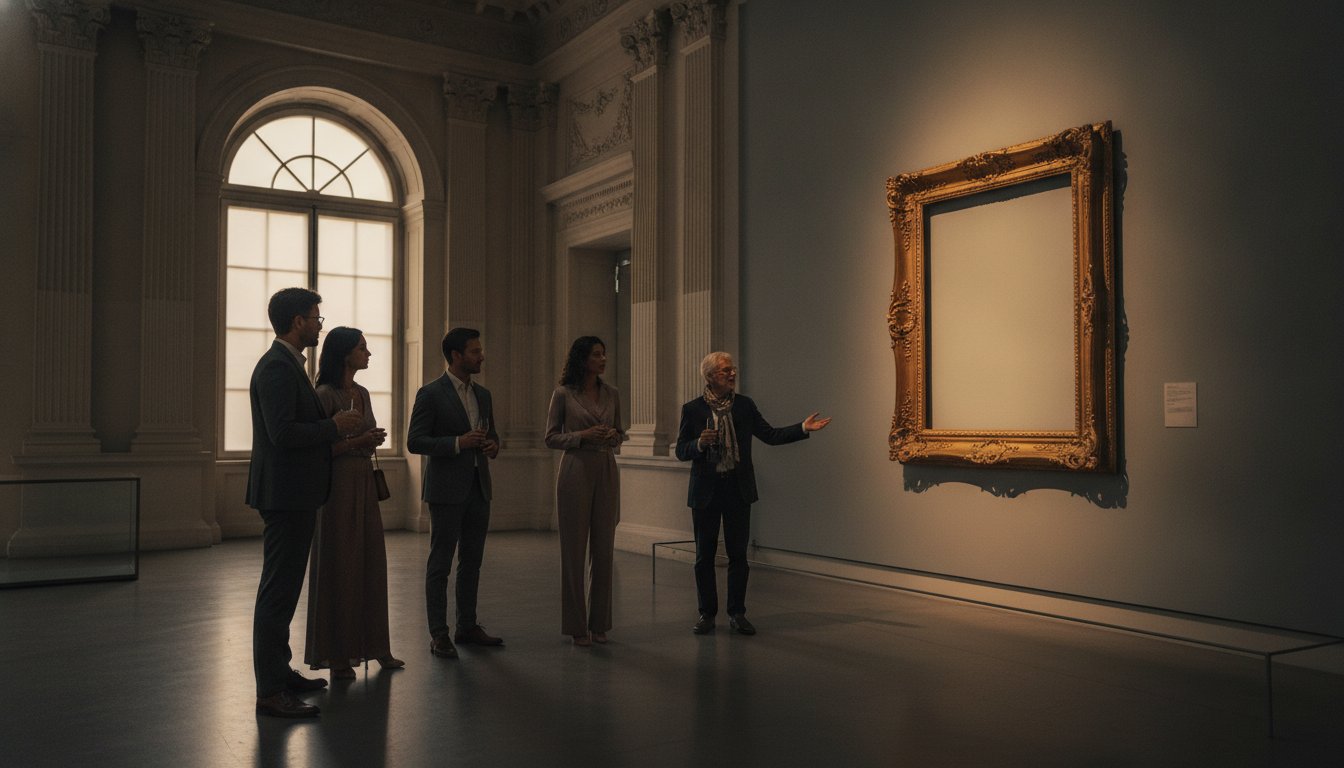
    A true encounter with a Vermeer isn’t found in a crowded gallery; it’s found in the quiet moments of a perfectly timed itinerary. Orchestrating a Dutch masters museum tour for groups in 2026 requires more than a simple booking. It demands a delicate choreography where professional precision allows artistic emotion to take center stage. You understand that managing twenty art enthusiasts through the Rijksmuseum or the Mauritshuis is an exercise in both cultural curation and logistical mastery. The challenge isn’t just seeing the art, it’s preserving the atmosphere that makes the art resonate.

    This article provides the blueprint for creating seamless, high-level group experiences that blend the legacy of the Golden Age with flawless execution. We’ll examine how to navigate the latest timed-entry protocols and new 2026 ETIAS requirements without breaking the narrative flow. From securing expert guides who transcend generic scripts to managing a private coach fleet across the Benelux, you’ll discover how to transform complex travel requirements into a refined journey. We’ll preview the essential strategies for hotel management and itinerary pacing that satisfy even the most demanding collectors.

    Key Takeaways

    • Master the complexities of 2026 museum entry protocols and ETIAS requirements to ensure a seamless dutch masters museum tour for groups.
    • Learn how to weave a compelling narrative across the Benelux that connects major national collections into a single, immersive story of the Golden Age.
    • Gain insights into the role of specialized local guides in transforming standard museum visits into high-end cultural experiences for discerning collectors.
    • Understand the strategic advantages of the DMC model, including fixed-price certainty and the efficiency of a private, modern coach fleet.
    • Discover how professional logistics and deep art-historical expertise collaborate to eliminate common group travel bottlenecks in high-traffic institutions.

    The Legacy of the Dutch Masters: A Narrative for Modern Groups

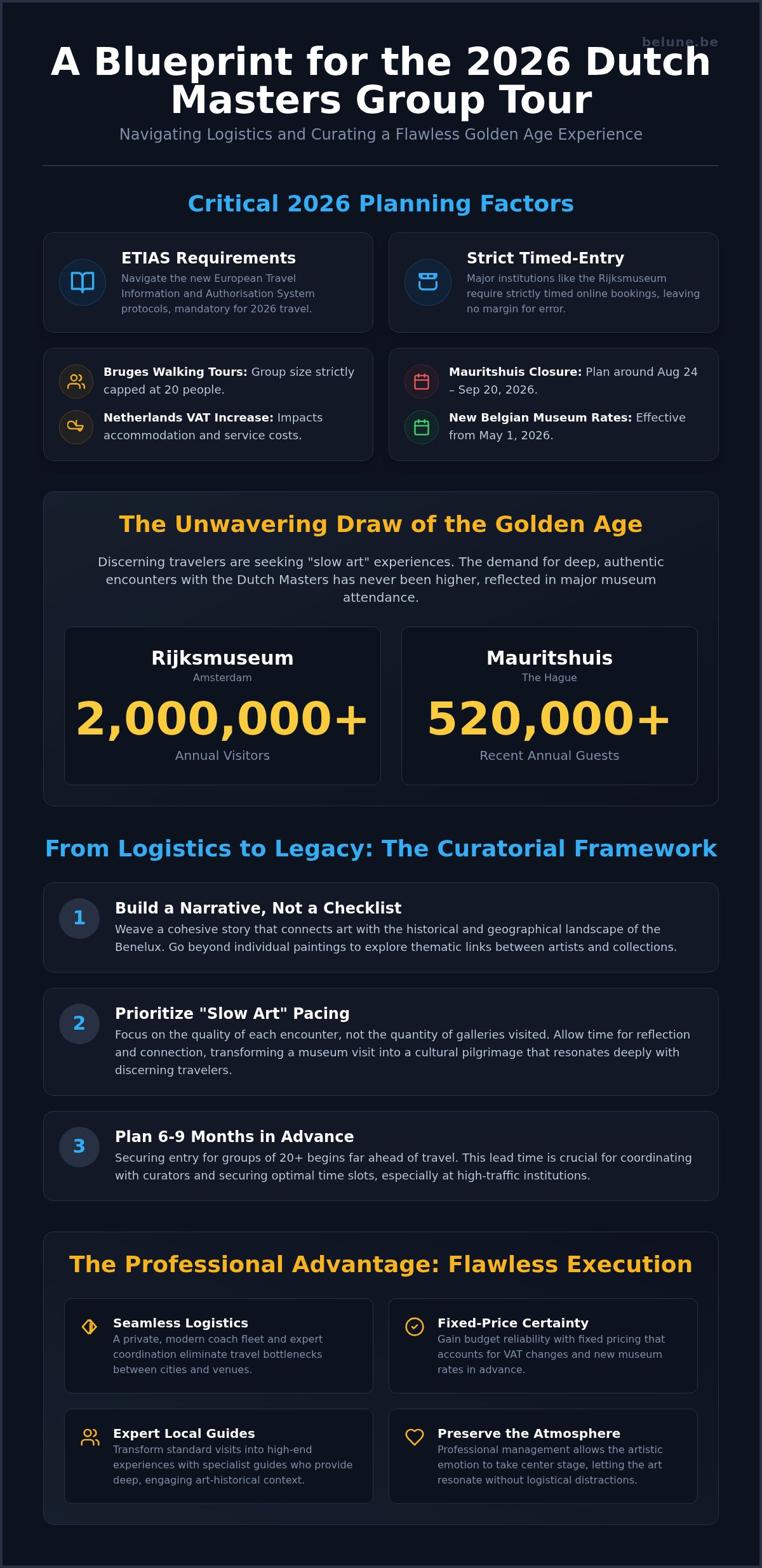
    The 17th century remains a cornerstone of European culture. A Dutch Golden Age painting isn’t just a static object; it’s a window into a world of commerce, science, and domesticity. For a dutch masters museum tour for groups, this era provides a rich, cohesive narrative that resonates with modern sensibilities. The play of light in a Vermeer or the raw humanity in a Rembrandt portrait speaks across centuries. In 2026, the demand for these experiences remains exceptionally high. The Rijksmuseum continues to attract over 2 million annual visitors, while the Mauritshuis recently welcomed over 520,000 guests in a single year. These numbers reflect a deep, global fascination with a period that redefined the visual language of the West.

    Light is the protagonist here. Rembrandt mastered the shadow, while Vermeer captured the impossible stillness of a sunlit room. This evolution of light isn’t just a technical achievement. It’s an emotional one. Modern travelers find a strange comfort in these domestic scenes and honest portraits. They offer a sense of grounding in a fast-paced world. For the tour operator, the goal is to harness this emotional resonance. You aren’t just showing paintings; you’re facilitating a connection with the human condition.

    The Enduring Appeal of the Golden Age

    International groups are moving away from hurried sightseeing. They’re seeking “slow art” experiences where the quality of the encounter matters more than the quantity of galleries visited. Professional travel agents prioritize these itineraries because they offer depth and reliability. The 17th-century masters provide a unique blend of technical brilliance and emotional accessibility. This makes them the perfect anchor for high-end cultural pilgrimages. In an era of digital saturation, the tactile reality of oil on canvas provides a profound sensory experience that travelers crave. It’s a heritage-rich journey that justifies the investment of time and resources.

    Curating the Artistic Narrative

    Successful tour operators don’t just book tickets. They build bridges between the art and the physical landscape of the Benelux. A dutch masters museum tour for groups should explore the thematic connections that bind these artists together. It’s about seeing how the flat, watery horizon of the Low Countries influenced landscape painting. It’s about understanding how the wealth of the merchant class funded a new kind of secular art. Linking these masterpieces to the broader historical context adds layers of value to the tour. It transforms a simple museum visit into a visionary exploration of identity. This approach ensures that the itinerary feels like a curated journey rather than a series of disconnected stops.

    Choreographing Group Logistics for High-Traffic Art Institutions

    Managing a dutch masters museum tour for groups in 2026 requires a high degree of technical foresight. With major institutions like the Rijksmuseum requiring strictly timed online bookings for their 2 million annual visitors, the margin for error is non-existent. A successful tour doesn’t just happen; it’s engineered. You must account for the Mauritshuis closure from August 24 to September 20, 2026, and the new Belgian federal museum rates effective May 1, 2026. These aren’t just dates; they’re the structural constraints of your masterpiece. Organizers must also navigate the 2026 ETIAS protocols and the recent VAT increase in the Netherlands, which impacts accommodation and service costs across the region.

    Curating the content within these slots is equally vital. Beyond the titans, modern collectors appreciate narratives like the Women Artists of the Dutch Golden Age, which adds a sophisticated layer to the traditional gallery experience. Balancing this depth with the logistical reality of group size is a delicate art. In cities like Bruges, where walking tour limits are now capped at 20 people, the organization must be airtight. Every movement must be calculated to preserve the group’s focus on the canvas rather than the crowd.

    Mastering Time and Motion

    Securing entry for 20 or more art enthusiasts begins six to nine months before the first brushstroke of the journey. It involves a systematic coordination with national curators to ensure that entry protocols are met without dampening the group’s excitement. The transition from the vehicle to the gallery should be invisible to the client. The DMC Advantage in group entry logistics lies in the ability to transform rigid institutional requirements into a seamless, prestigious arrival experience. This proactive management allows your guests to enter the museum with the serenity required for true artistic appreciation.

    Professional Transport Integration

    A private coach fleet acts as the steady rhythm of the itinerary. It eliminates the unpredictability of public transit and ensures that groups arrive exactly when their timed slots begin. Professional drivers manage their hours with surgical precision, aligning rest periods with museum visits so the vehicle is always ready for the next move. Modern amenities, from climate control to refined seating, ensure that the transition between artistic eras is as comfortable as the galleries themselves. For organizers seeking this level of operational excellence, partnering with a visionary Benelux partner ensures every detail is handled with artistic care. This synergy between transport and culture is what defines a premium travel experience.
    Mastering the Dutch Masters: Curating Group Museum Tours in the Benelux for 2026

    A National Perspective: The Broader Canvas of the Dutch Masters

    The legacy of the 17th century extends far beyond the canals of a single capital. A truly comprehensive dutch masters museum tour for groups must embrace the national landscape of the Benelux to capture the movement’s full complexity. While the Rijksmuseum remains the undisputed epicenter for masterpieces like The Night Watch, a visionary itinerary looks further. It connects the civic pride found in regional Dutch centers with the courtly elegance of The Hague and the baroque energy of the Southern Netherlands. This multi-city perspective allows travelers to witness how local context shaped artistic vision. It transforms a gallery visit into a geographical exploration of heritage.

    Strategic planning in 2026 requires balancing these high-profile anchors with smaller, specialized institutions across the Benelux. These off-the-beaten-path locations offer groups a more intimate encounter with the art, away from the high-density crowds of major hubs. By curating a journey that spans national borders, you provide a narrative that competitors often overlook. The region offers the world’s highest density of art history; however, this richness is only accessible if the itinerary is choreographed to avoid the fatigue of repetitive collections. It’s about finding the unique strength of each national collection to build a diverse, multi-day experience.

    The Multi-City Art Itinerary

    Structuring a tour across several national heritage sites demands a regional approach. It’s about maximizing viewing time by reducing transit friction between different provinces. A well-designed route might start in the northern Netherlands and flow southward into Belgium, tracing the evolution of Northern Renaissance techniques into the Golden Age. Integrating specialized local guide services at each stop bridges the gap between different collections. These experts don’t just recite facts; they weave a continuous story that connects a landscape in one region to a portrait in another. This method ensures that every day adds a new chapter to the group’s understanding of the era.

    Choosing the Right Cultural Anchor

    Not every institution is suited for the specific dynamics of large groups. When evaluating anchors, consider facilities like dedicated group entrances and the quality of natural lighting, which is essential for appreciating 17th-century palettes. Major Belgian institutions provide a powerful counterpoint to the Dutch collections, offering a different perspective on the era’s wealth and influence. With the new standardized rates for Belgian Federal Museums taking effect in May 2026, the financial planning of these tours becomes more predictable for operators. Selecting the right anchors ensures that the logistical framework supports, rather than distracts from, the artistic experience.

    Strategic Planning for Tour Operators: The DMC Framework

    Organizing a dutch masters museum tour for groups requires a strategic partner who understands that logistics are the canvas for the art itself. A specialized DMC doesn’t just book tickets; they act as a visionary advisor. They anticipate the friction points of high-season tourism and provide the budget certainty of fixed-price group tour packages. This is crucial in 2026. Operators must navigate the Netherlands’ VAT increase on accommodations and services. By securing rates early, you protect your margins and ensure a premium experience for your clients. Risk mitigation is about foresight. It’s about knowing which galleries will be under renovation and which hidden gems offer a quieter alternative.

    The B2B Partnership Model

    Trust is the currency of high-level tourism. Professional operators often consult the definitive guide to choosing a group travel agency in 2026 to find partners with the right local depth. With over 20 years of experience in the Benelux region, a partner like BELUNE provides more than just access; they provide insight. We customize every dutch masters museum tour for groups to match the specific artistic level of the participants. This bespoke approach leverages a deep local network to secure exclusive viewing windows. These are the moments that define a tour’s value. It’s about the difference between seeing art and experiencing it.

    Accommodation and Gastronomy Integration

    The art experience doesn’t end at the museum exit. It continues in the hotels and restaurants that host the group. Managing hotel bookings that reflect the sophistication of the Golden Age requires a discerning eye for volume and atmosphere. We integrate Belgium gastronomy tours into the art itinerary to create a holistic sensory journey. There’s a profound interplay between the visual feast of a Rubens and the culinary excellence of a curated Belgian dinner. This balance of art, food, and comfort ensures that the group remains inspired rather than exhausted. To begin crafting your next masterpiece, you can discuss your 2026 art tour strategy with our expert team today.

    The BELUNE Excellence: Elevating Art Tours Through Expertise

    A dutch masters museum tour for groups is more than a sequence of gallery visits; it’s a structural component of a larger cultural vision. We believe that professional precision should serve as the invisible framework for artistic emotion. As a premier benelux incoming tour operator, we bring over 20 years of industry mastery to the realization of these complex itineraries. Our role is to act as a visionary advisor and a trusted partner for B2B clients, ensuring that every technical detail is handled with a sophistication that reflects the art itself. We don’t just provide services. We provide a strategic alliance dedicated to excellence.

    The true power of our approach lies in the synergy between our private, modern coach fleet and our network of expert local guides. Most providers treat transport and guiding as separate, outsourced commodities. We treat them as a single, integrated experience. By owning our fleet, we maintain total control over the group’s rhythm and comfort. Our guides are selected for their genuine expertise rather than their ability to follow a generic script. This combination transforms a standard museum visit into a cultural masterpiece, where the logistics are so seamless they become part of the aesthetic pleasure of the journey.

    Visionary Logistics and Artistry

    Our commitment to an elegant, minimalist approach to travel ensures that our culture group tours in Benelux set a new industry benchmark. We focus on the transformation of space and time through creative intervention. This means we don’t just move groups from point A to point B; we curate the entire environment of the tour. As your advisory partner, we specialize in the realization of d’exception projects that satisfy even the most discerning art collectors. Every route is calculated, and every timing is perfected to preserve the serene atmosphere required for high-level art appreciation.

    Contacting Your Benelux Art Experts

    Orchestrating a successful dutch masters museum tour for groups in 2026 requires early and detailed planning. The process for submitting a custom itinerary request is designed to be as professional and efficient as the tours themselves. During a BELUNE consultation, we’ll discuss your specific goals, the artistic level of your group, and the logistical constraints of the 2026 season. You can expect a deep listening process followed by a bespoke proposal that includes fixed-price certainty. This ensures your project is protected from regional economic fluctuations while maintaining the highest standards of quality. Reach out today to begin the realization of your next exceptional art journey.

    Crafting the Future of Cultural Heritage in the Benelux

    The evolution of high-end travel in 2026 demands a shift from simple sightseeing to deep, narrative-driven exploration. We’ve explored how logistical precision, from navigating timed-entry slots to managing cross-border protocols, provides the essential structure for artistic immersion. A successful dutch masters museum tour for groups is no longer just about the destination; it’s about the seamless choreography of transport, expert guidance, and cultural context. By embracing a regional perspective that spans the Benelux, you offer your clients a richer, more authentic connection to the Golden Age legacy.

    The realization of these projects requires a partner who shares your commitment to excellence. With 20+ Years of Benelux Expertise and our own Private Modern Coach Fleet, we provide the sophisticated B2B advisory needed to transform complex requirements into a refined reality. We invite you to Partner with BELUNE for your 2026 Art Group Itinerary and experience the difference that visionary planning makes. Let’s collaborate to ensure your next group tour is a masterpiece of both logistics and artistry.

    Frequently Asked Questions

    How far in advance should I book a group tour for major art museums?

    Professional organizers should initiate bookings at least six to nine months in advance. High-traffic institutions like the Rijksmuseum require strictly timed entry slots that fill up rapidly for the 2026 season. Early coordination is essential to secure the specific narrative flow of your itinerary. This lead time also allows us to align your schedule with the specialized availability of our expert local guides and secure hotel blocks before high-season demand peaks.

    Can BELUNE provide expert guides specialized in the Dutch Golden Age?

    We provide local guide services that feature profound expertise in 17th-century art history. Our guides transcend generic scripts to offer the technical and emotional insights that discerning collectors expect. They are trained to articulate the sophisticated nuances of a dutch masters museum tour for groups, bridging the gap between the canvas and the historical landscape. This level of expertise ensures that every gallery visit becomes a deeply resonant cultural encounter.

    How does BELUNE manage coach transportation for large groups in historic areas?

    We utilize our own fleet of modern coaches to ensure surgical precision in group movement. Our drivers possess the technical skill to navigate the logistical constraints of historic national centers while adhering to strict museum entry protocols. By maintaining an in-house fleet, we guarantee that vehicle amenities and scheduling are perfectly synchronized with your itinerary. This integrated approach eliminates the unpredictability of external transport and maintains the group’s serene atmosphere.

    What are the benefits of a fixed-price group tour package for art tours?

    Fixed-price group tour packages offer essential budget certainty for tour operators. With the 2026 VAT increase in the Netherlands and the new Belgian federal museum rates, early price locks protect your margins from regional economic shifts. This model allows for transparent financial planning without sacrificing the quality of the experience. It provides a stable framework that allows you to focus on the artistic vision rather than fluctuating logistical costs.

    Do you offer multi-day itineraries covering multiple art museums in the Benelux?

    We specialize in comprehensive itineraries that connect major national collections across the entire Benelux region. Our 20 years of experience allow us to choreograph travel between heritage sites to maximize viewing time and minimize transit friction. These multi-day journeys are designed to offer a complete perspective on the era’s legacy. We weave together high-profile anchors with hidden gems to create a diverse and intellectually stimulating experience for your guests.

    Can a group tour be customized to focus on specific masters like Vermeer or Rembrandt?

    Customization is a cornerstone of our B2B advisory model. We can refine a dutch masters museum tour for groups to focus on specific artists or thematic elements like the mastery of light. Our team works closely with you to select the museums and guides that best support your chosen narrative. This bespoke approach ensures that the itinerary reflects the specific interests and artistic level of your group, creating a truly prestigious journey.

    What happens if a museum time slot is unavailable for our group?

    Our role as a visionary DMC is to provide proactive solutions when primary slots are restricted. We leverage our deep local network to identify alternative viewing windows or pivot to regional collections that offer equivalent artistic value. We monitor institutional availability daily and provide strategic advice to ensure the tour’s narrative remains intact. Our goal is to transform logistical challenges into opportunities for exclusive, off-the-beaten-path encounters that enhance the overall experience.

    How does BELUNE handle accommodation management for high-end art groups?

    Our hotel accommodation management focuses on properties that mirror the sophistication of the art on display. We source and manage bookings for groups of 20 or more, ensuring that the environment reflects the refined nature of the tour. By handling every technical detail of the stay, we allow the group to remain immersed in the cultural experience. This comprehensive service provides a seamless transition from the gallery to the hotel, maintaining a consistent level of excellence.
  • Mastering Museum Logistics for Large Groups: A Professional Guide for 2026

    Mastering Museum Logistics for Large Groups: A Professional Guide for 2026

    The difference between a chaotic tour and a masterpiece of coordination lies in the choreography of the silence before the doors even open. For the modern travel professional, mastering museum logistics for large groups isn’t just an administrative task; it’s the high-stakes art of managing time, space, and human emotion. You’ve likely felt the tension of a coach circling a Parisian boulevard with no parking in sight, or the frustration of a timed-entry window closing while a local guide navigates a new security protocol. It’s a delicate balance that can easily tip from inspiration to exhaustion without a vision for the technical details.

    This guide provides a technical and artistic roadmap to managing seamless large-scale visits across Western Europe in 2026. We’ll show you how to navigate the shift toward digital integration and strict accreditation, such as the new Vatican guide requirements or the precise booking windows at the Obama Foundation Museum. You’ll discover how to orchestrate a fluid transition from coach arrival to gallery entry, ensuring your clients enjoy an exclusive atmosphere regardless of the crowd size. We’re moving beyond simple sightseeing to create a structured, effortless experience that values both the heritage of the site and the precious time of your guests.

    Key Takeaways

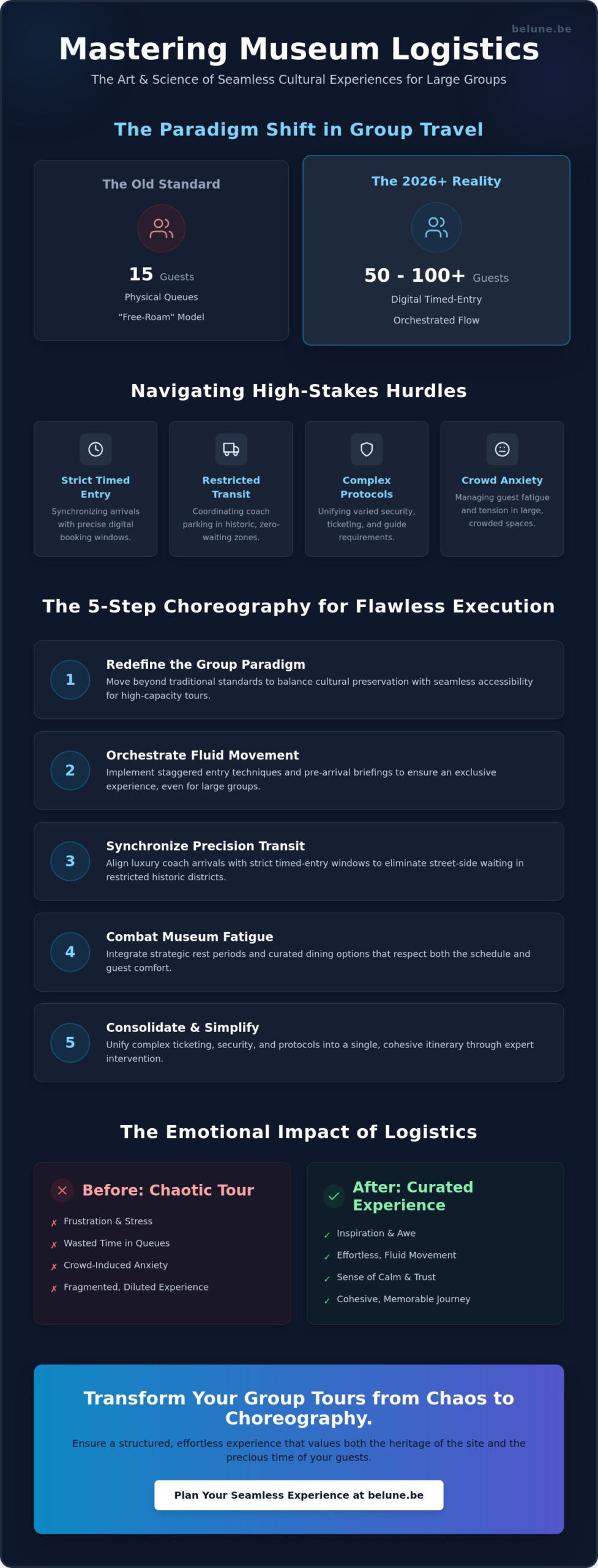
    • Redefining the Large Group Paradigm: Move beyond traditional standards to balance cultural preservation with seamless accessibility for high-capacity tours.
    • The Art of Fluid Movement: Implement staggered entry techniques and pre-arrival briefings to ensure an exclusive experience, even for groups exceeding 50 guests.
    • Precision in Transit: Synchronize luxury coach arrivals with strict timed-entry windows to eliminate street-side waiting in restricted historic districts.
    • Combating Museum Fatigue: Integrate strategic rest periods and curated dining options that respect both the schedule and the guest’s physical comfort.
    • Strategic Consolidation: Discover how expert intervention simplifies museum logistics for large groups by unifying complex ticketing and security protocols into a single, cohesive itinerary.

    The Fundamentals of High-Capacity Cultural Logistics

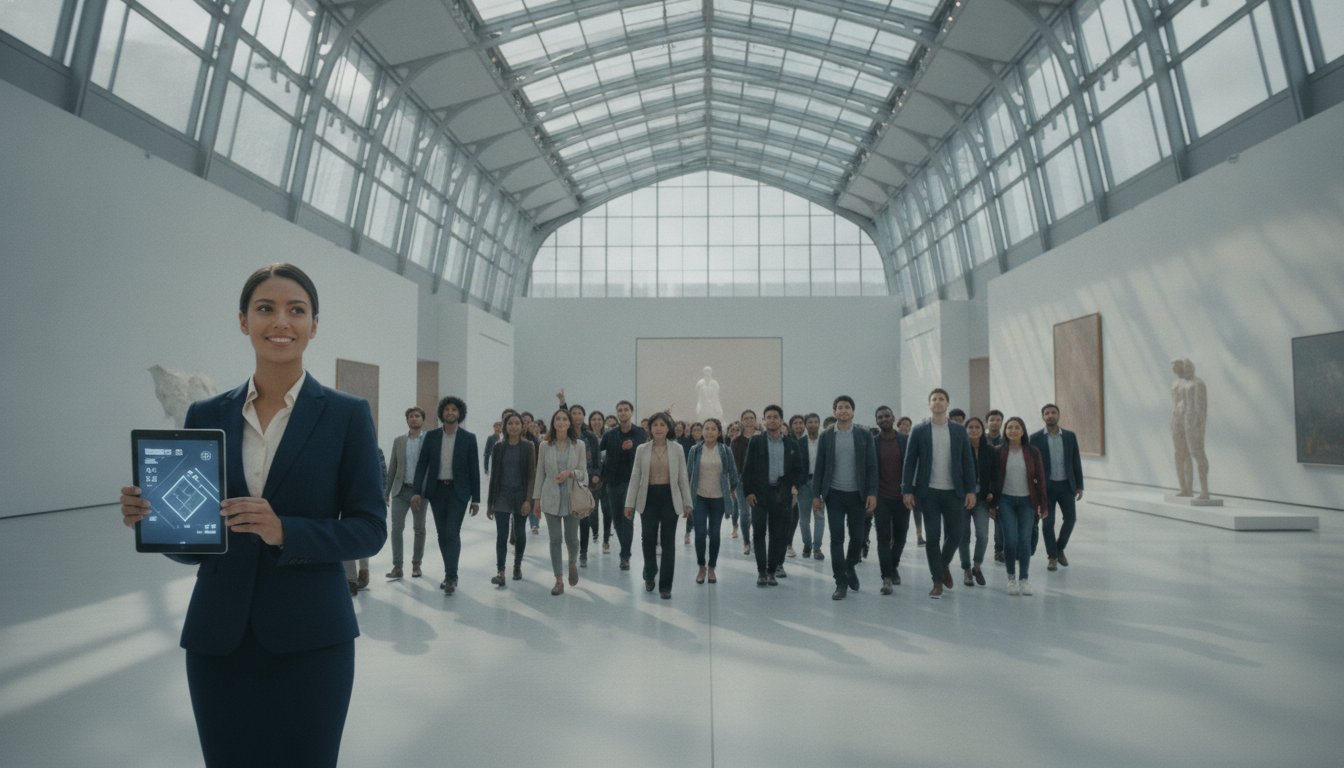
    In 2026, the definition of a “large group” has undergone a significant transformation. While 15 guests once served as the industry benchmark, modern museum logistics for large groups now frequently involve managing parties of 30, 50, or even 100 individuals. This shift requires a technical mastery that balances the delicate preservation of historic spaces with the logistical demand for accessibility. It’s no longer just about purchasing tickets; it’s about the artisanal orchestration of movement within a restricted volume to ensure the art remains the primary focus.

    The traditional “free-roam” model, where guests are left to navigate galleries independently, often collapses under the weight of high-end expectations. For international groups, this lack of structure leads to fragmented experiences, lost time, and a diluted emotional impact. We act as a strategic ally, bridging the gap between rigid museum administrations and the fluid needs of tour operators. By applying professional crowd management principles, we transform a potentially chaotic entry into a serene, curated arrival that honors the venue’s heritage.

    To better understand how cultural institutions view these partnerships, watch this helpful video:

    The Evolution of Museum Entry Systems

    Museums have transitioned from physical queues to sophisticated digital timed-entry systems that demand absolute precision. Understanding the technical nuances between “Travel Trade” portals and “General Public” booking pathways is essential for any professional operator. Trade pathways often offer the stability and advance windows needed for complex itineraries, whereas public systems can be volatile and subject to immediate sell-outs. The modern timed-entry protocol serves as a sophisticated tool to guarantee guest satisfaction by eliminating unpredictable waiting times and ensuring a smooth transition into the cultural space.

    The Emotional Impact of Group Logistics

    Logistics isn’t merely a series of data points; it’s a direct influence on the human psyche. High-end travelers often experience “crowd anxiety” when faced with the scale of major European institutions. A sophisticated arrival sequence reduces this tension, allowing the beauty of the collection to resonate immediately. When a group moves effortlessly from coach to gallery, it builds an immediate sense of trust in the tour operator’s expertise. The role of a specialized partner in managing museum logistics for large groups is to turn administrative hurdles into invisible, elegant infrastructure. Consolidating these variables into a single, cohesive plan is why choosing a fixed-price group package through a specialized agency is the most reliable path to excellence.

    The Choreography of Movement: Managing Capacity and Flow

    Mastering the physical flow of a large group requires a proactive stance. Waiting until you reach the museum steps is too late. The rehearsal begins on the coach. This is where we define the success of museum logistics for large groups. A precise pre-arrival briefing ensures guests understand the sequence of security, cloakroom access, and the transition into the galleries. When guests know exactly where to go and what to expect, the collective anxiety of the group dissolves, replaced by a sense of calm anticipation.

    To maintain an atmosphere of quiet reverence, we employ whispering systems. These digital headsets allow guides to speak at a conversational volume while guests explore freely within a specific radius. This technical approach aligns with a broader introduction to museum logistics, where the primary goal is to minimize the group’s footprint on the cultural environment. It’s about being present without being intrusive. We focus on four critical pillars of movement:

    • Pre-arrival briefings: Clarifying the entry sequence before the group leaves the coach.
    • Staggered entry: Splitting 50+ guests into smaller cohorts to avoid overwhelming security checkpoints.
    • Whispering systems: Ensuring high-fidelity guiding that doesn’t disrupt other visitors.
    • Bottleneck management: Proactive handling of cloakrooms and gift shops to maintain a steady pace.

    Bottlenecks are the enemies of elegance. Security and cloakrooms often represent the most significant friction points in any itinerary. We manage these by timing the arrival of smaller cohorts. If you have 60 guests, splitting them into three groups of 20 with 10-minute intervals prevents the “huddle” effect. While one group clears security, the next receives a curated introduction to the museum’s architecture or history outside the main gates.

    Advanced Timing Strategies for 2026

    We calculate “dwell time”—the period spent engaging with masterpieces—against “transit time” between halls. In 2026, we’ve refined the “First-In, Last-Out” method for group rotations across multi-museum regional tours. This ensures that while Group A is finishing at one site, Group B is just beginning at the next, avoiding overlap in narrow corridors or popular galleries. If you’re looking for a partner to orchestrate these complex movements, our team can streamline your regional itinerary with technical precision.

    Local Guides: The Human Element of Logistics

    The technical plan only succeeds with a skilled human interface. Utilizing professional local guide services benelux is essential for navigating the internal, often unwritten, protocols of European institutions. These guides act as logistical liaisons. They know which elevator is faster and which gallery entrance is less congested on a Tuesday morning. We brief our guides on the specific pace and interests of your guests, ensuring the narrative remains fluid and the group never feels rushed or stagnant.

    Mastering Museum Logistics for Large Groups: A Professional Guide for 2026

    Integrating Luxury Transport with Museum Arrivals

    The arrival at a cultural monument is the first physical movement of a curated performance. For travel professionals, the transition from the vehicle to the gallery represents one of the most complex phases of museum logistics for large groups. Historic districts in cities like Amsterdam, Brussels, or Bruges present a unique “Drop-off/Pick-up” dilemma. Restricted access zones and narrow cobblestone streets mean that a coach cannot simply idle at the entrance. It requires a synchronized ballet where the driver, guide, and museum security act in total unison to ensure guests never spend a single minute waiting on a sidewalk.

    Precision is the only currency that matters here. We synchronize coach arrival with the exact start of a timed-entry window. This prevents the “street-side huddle,” an experience that immediately diminishes the prestige of a high-end tour. During the visit, driver management becomes a silent but vital component. A professional driver doesn’t just park; they manage their hours and hospitality protocols to ensure the coach remains a pristine, climate-controlled sanctuary the moment the group emerges from the museum’s exit. This level of coordination is especially critical for regional tours where guests visit multiple sites in a single day.

    The Technical Side of Coach Hire

    In 2026, access is increasingly tied to the environmental footprint of the transport provider. Having an own fleet of modern coaches is a logistical game-changer. It allows for absolute control over the vehicle’s technical specifications, ensuring every bus meets the latest Low-Emission Zone (LEZ) standards required to enter the heart of European cultural hubs. Real-time communication between the driver and the tour leader allows for instant adjustments. If a group finishes a gallery tour five minutes early, the coach is already moving toward the designated pick-up point before the guests even reach the gift shop.

    Arrival Etiquette and Professionalism

    Professionalism extends to the “deboarding” process. We train our teams to manage this transition with minimal public disruption, treating the sidewalk as an extension of the museum’s lobby. The driver’s role in the logistical chain is to facilitate an effortless exit and reentry. By maintaining the coach as a mobile sanctuary, equipped with the necessary comforts and a calm atmosphere, we ensure the emotional energy of the museum visit isn’t lost during the transit to the next destination. It’s about preserving the continuity of the experience from one masterpiece to the next.

    Addressing the Challenges of Group Dining and Rest Periods

    The transition from a gallery’s silent reverence to a dining room’s social energy is a critical pivot in any itinerary. We recognize that “Museum Fatigue” isn’t just a fatigue of the body; it’s a saturation of the senses. Planning strategic breaks is a core component of effective museum logistics for large groups. It’s the difference between a guest feeling inspired and a guest feeling overwhelmed. Moving 50 or more people from a masterpiece to a table in under 15 minutes requires a technical choreography that starts long before the appetizer is served.

    Choosing between in-museum catering and an external restaurant depends on the narrative of the day. While in-museum dining offers convenience, an external venue provides a change of atmosphere that resets the group’s focus. We manage dietary requirements at scale by coordinating with chefs weeks in advance. This ensures that even the most complex needs don’t delay the group’s flow. Our goal is to make the meal a continuation of the day’s elegance rather than a logistical hurdle.

    The Gastronomic Transition

    We believe a cultural journey should be mirrored by a culinary one. Integrating belgium gastronomy tours into a museum day transforms a simple lunch into a sensory extension of the art. We source restaurants that reflect a minimalist elegance, avoiding the noise of typical group venues. By utilizing pre-ordered menus, we ensure the group is seated and served with a precision that respects the afternoon’s schedule. If you want to elevate your group’s dining experience, you can book a curated culinary sequence with our specialists.

    Rest and Reflection: The Hidden Logistics

    Structured days must breathe. We identify “quiet zones” within or near museums for senior travelers who may need a moment of stillness. Managing “early leavers”, those who wish to return to the hotel before the main group, is a logistical necessity that we handle without disrupting the collective experience. It’s about providing a mobile sanctuary for every guest, regardless of their pace. This flexible approach ensures that high-capacity logistics remain invisible, leaving only the memory of an exceptional day.

    Why a Specialized DMC is Essential for High-End Group Itineraries

    Twenty years of immersion in the Benelux landscape has taught us that excellence isn’t found in a brochure; it’s forged in the quiet resolution of complexity. For the international tour operator, the challenge of museum logistics for large groups often lies in the invisible friction of administrative fragmentation. Coordinating separate contracts for transport, guiding, and entry for a party of 50 is a high-stakes endeavor where a single delay ripples through the entire itinerary. We act as a strategic ally, consolidating these disparate elements into a single, cohesive fixed-price group package that provides both financial clarity and operational certainty.

    Real-world expertise is most visible when the unexpected occurs. On-the-ground crisis management is a pillar of our service. Whether it’s a sudden museum closure due to a private event or a last-minute change in security protocols, our local presence allows us to pivot instantly. We don’t just solve problems; we anticipate them. This proactive stance enables us to customize itineraries to include niche cultural heritage, those hidden gems and private collections often missed by generic operators, ensuring your guests experience the authentic soul of Western Europe.

    The BELUNE Difference: Technical Excellence

    Our methodology treats every component of the journey as a structural element of the final experience. This includes a sophisticated approach to hotel accommodation management, where we prioritize properties in immediate proximity to cultural hubs to minimize transit fatigue. There’s a vital synergy between our private coach fleet, our accredited guides, and our direct relationships with museum administrators. A single point of contact for every complex logistical variable offers the profound peace of mind needed to focus entirely on your guests’ emotional engagement with the art.

    Building Lasting Partnerships with Tour Operators

    We don’t view ourselves as a mere supplier. We act as your local office in Western Europe, a visionary partner dedicated to the realization of exceptional projects. This transition from “provider” to “strategic ally” means we’re as invested in the project’s success as you are. Our team is currently designing bespoke programs for the upcoming season, blending technical precision with artistic flair. If you’re ready to redefine what’s possible for your clients, we invite you to request a custom itinerary for 2026 and discover the power of professional museum logistics for large groups handled with artisanal care.

    Orchestrating the Future of Cultural Touring

    The successful execution of high-capacity visits depends on the silent harmony between movement, transport, and timing. We’ve seen how technical precision in arrival sequences and the human touch of specialized guiding transform a daunting itinerary into a fluid, emotional journey. Mastering museum logistics for large groups in 2026 requires a shift from reactive management to a proactive, artistic mastery of cultural spaces. It’s about ensuring the logistics remain invisible so the art can take center stage.

    Our team brings over 20 years of DMC expertise to the table, supported by a private fleet of modern luxury coaches specifically maintained for the restricted zones of the Benelux region and Paris. This deep specialization allows us to turn logistical friction into a seamless, high-end experience for your most discerning guests. We invite you to partner with BELUNE for your 2026 group museum logistics and experience the difference of a truly integrated approach. Let’s work together to ensure that while the world watches the art, your operations remain a masterpiece of invisible excellence. Your vision deserves a partner who values precision as much as you do.

    Frequently Asked Questions

    How do we manage group entry if the museum has strict timed-entry slots?

    We manage strict windows by dividing large groups into smaller cohorts and staggering their arrival. For a party of 60, we typically secure three consecutive slots of 20 guests at 10 or 15 minute intervals. This technical approach prevents a bottleneck at security and ensures a fluid transition from the coach to the gallery without the group ever feeling rushed or stagnant.

    What is the ideal group size for a guided museum tour in 2026?

    The ideal ratio for a high-end experience is 15 to 20 guests per local guide. While we frequently handle museum logistics for large groups exceeding 50 people, we always fragment them into smaller, manageable units. This preservation of scale ensures that the acoustic quality remains high and the movement through narrow gallery corridors doesn’t disrupt the museum’s serene atmosphere.

    Can coaches park directly at major museums in the Benelux region?

    Direct parking at museum gates is increasingly rare in historic European centers due to Low-Emission Zone regulations. We utilize designated drop-off and pick-up points located at the nearest authorized perimeter. Our drivers coordinate with the tour leader in real time to ensure the coach arrives exactly as the group exits, maintaining a seamless flow between the institution and their mobile sanctuary.

    How does BELUNE handle last-minute museum closures or strikes?

    We provide immediate on-the-ground crisis management through our established local network. If a site closes unexpectedly, our team pivots to a pre-verified alternative of equal cultural prestige. Because we maintain direct relationships with museum administrations, we often receive early warnings of potential disruptions, allowing us to adjust the itinerary’s architecture before the guests even become aware of a conflict.

    Are whispering systems provided for large group tours?

    Yes, digital whispering systems are a foundational component of our logistical infrastructure. These headsets allow guides to speak at a conversational volume, ensuring every guest receives the narrative with high-fidelity clarity. It’s a non-disruptive solution that respects the museum’s environment while allowing guests the freedom to linger at a masterpiece without losing the thread of the story.

    Is it possible to arrange private, after-hours museum visits for large groups?

    Private, after-hours access is one of the most prestigious options we coordinate for our partners. We work with curators to open galleries during “off-peak” hours, providing an exclusive silence that is impossible to find during public opening times. These sessions require significant lead time but offer an unparalleled level of emotional engagement and exclusivity for high-capacity international groups.

    How far in advance should we book museum logistics for a group of 50+?

    We recommend starting the planning process six to nine months before the intended travel date. Many institutions open their 2026 travel trade portals early, and the most desirable timed-entry windows for museum logistics for large groups fill up rapidly. Securing your slots early also guarantees the availability of our private luxury coach fleet and the most experienced local guides.

    Do children and seniors count towards the total group capacity for bookings?

    Every individual counts as a full visitor toward the museum’s total capacity regardless of their age. Museums base their entry limits on strict fire safety and preservation protocols, which means a child or senior occupies a space just as an adult does. We factor these demographics into our planning to ensure the pace of the tour and the proximity of rest areas are perfectly calibrated.