Tag: Historical Tourism

  • Planning a Respectful Battlefield Pilgrimage: A Masterclass in Remembrance for 2026

    Planning a Respectful Battlefield Pilgrimage: A Masterclass in Remembrance for 2026

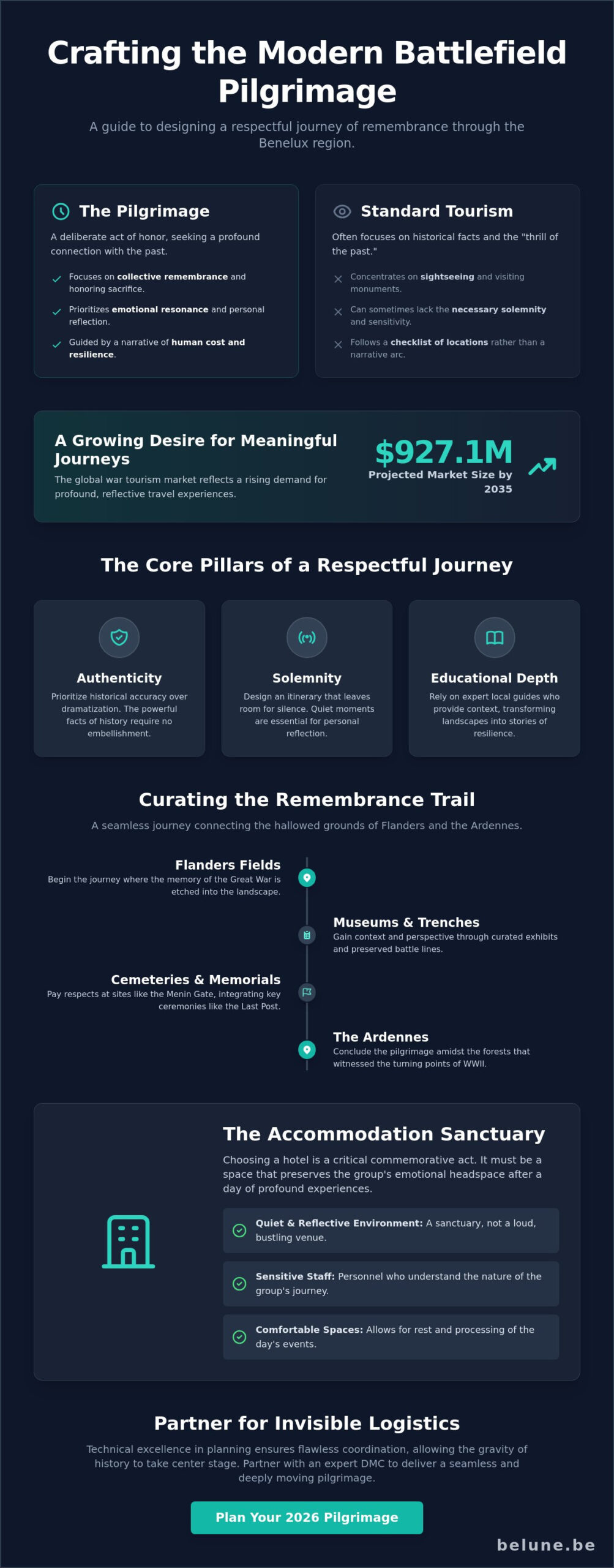
    A truly respectful pilgrimage is an exercise in invisible logistics where flawless coordination allows the emotional weight of history to take center stage. You know that organizing a group journey to the hallowed grounds of the Benelux region is a delicate task. It’s about more than just booking tickets. It’s about ensuring every detail, especially choosing accommodation for battlefield tour groups, maintains the solemnity of the experience. With the global war tourism market projected to grow to over $927 million by 2035, the demand for these profound journeys is rising, yet the fear of trivializing sensitive sites remains a real challenge for professional planners.

    Discover how to balance logistical precision with emotional resonance to create a journey that honors the past. This guide provides a framework for respectful itinerary design and high-quality logistics that reflect the gravity of the trip. We’ll examine how expert-led experiences and seamless planning can satisfy discerning clients while keeping the focus on remembrance. By the end, you’ll have the tools to design a 2026 pilgrimage that is as operationally sound as it is deeply moving.

    Key Takeaways

    • Distinguish between standard historical tourism and a true pilgrimage to honor the profound act of collective remembrance.
    • Integrate formal ceremonies into a fluid itinerary while protecting the quiet intervals necessary for deep personal reflection.
    • Link the hallowed grounds of Flanders and the Ardennes through a curated “Remembrance Trail” that connects cemeteries, museums, and trenches.
    • Refine your selection process when choosing accommodation for battlefield tour groups to ensure every stay respects the group’s emotional headspace.
    • Partner with an expert DMC to deliver invisible logistics, where technical excellence allows the gravity of history to take center stage.

    Defining the Battlefield Pilgrimage in the Modern Era

    A battlefield pilgrimage is not a mere vacation. It’s a deliberate act of honor. While standard historical tourism often focuses on the thrill of the past, a pilgrimage seeks a deeper connection with the sacrifice of those who stood on these grounds. In 2026, we see a significant shift in how groups approach these sites. It isn’t just about seeing where a line was held; it’s about understanding the human cost. This evolution is reflected in the global war tourism market, which experts project will reach $927.1 million by 2035. This growth signals a rising desire for journeys that offer more than a checklist of monuments.

    For the modern traveler, modern battlefield pilgrimages serve as a bridge between generations. They preserve a collective memory that risks fading as the last witnesses pass away. Every planning decision, from the route of the coach to the quietness of the dining room, must respect this sanctity. Even the logistical task of choosing accommodation for battlefield tour groups becomes a part of the commemorative act. It’s about finding spaces that allow for reflection after a day spent in the presence of history.

    To gain a broader perspective on the significance of these sites, watch this video exploring historic battlefields:

    The Core Pillars of a Respectful Journey

    Authenticity is our first priority. We believe in historical accuracy over dramatization. The facts of the Benelux campaigns are powerful enough without embellishment. Next is solemnity. A well-designed itinerary doesn’t fill every second with noise; it leaves room for silence. Finally, educational depth is essential. We rely on expert local guides who provide the context needed to transform a field into a story of resilience. Without this expertise, the landscape remains silent.

    Why Intentionality Matters for Tour Operators

    Operators have an ethical responsibility when visiting cemeteries and memorials. You aren’t just moving people; you’re guiding them through a narrative arc. A pilgrimage differs from a standard cultural tour because it demands a higher level of sensitivity. This is why choosing accommodation for battlefield tour groups requires such precision. A loud, bustling hotel can shatter the emotional headspace a group has built throughout the day. We focus on creating a seamless experience where the logistics support the emotional journey rather than distracting from it. It’s a technical mastery that serves a human purpose.

    The Anatomy of Respect: Balancing Silence and Ceremony

    Designing a pilgrimage requires a sophisticated “emotional architecture.” It’s the art of balancing high-impact ceremonies with the restorative power of silence. We don’t just plan stops; we curate a rhythm. This flow ensures that the weight of the history remains impactful without becoming overwhelming for the participants. A successful itinerary respects the individual’s need for personal reflection as much as the group’s need for collective tribute.

    Strategic planning is vital for maintaining this balance. For example, research into Battlefield Tourism as a Catalyst for Rural Development highlights how these sites are more than just ruins; they’re living parts of a community’s identity. This perspective helps us understand why etiquette matters. When we manage group dynamics in quiet zones, we aren’t just following rules. We’re respecting the local heritage and the personal grief of others. The professional challenge of choosing accommodation for battlefield tour groups lies in finding properties that understand this need for a quiet, reflective environment.

    Ceremonies as Itinerary Anchors

    The Last Post at the Menin Gate remains a non-negotiable experience. It provides a profound sense of closure to a day in Flanders. We coordinate specific wreath-laying ceremonies for groups with regimental or ancestral ties, ensuring these moments feel intimate rather than performative. Timing is everything. We aim to arrive when the crowds are manageable, preserving the solemnity. This focus on atmosphere extends to every detail, including choosing accommodation for battlefield tour groups. The hotel must be a sanctuary. It shouldn’t be a place of loud distraction but a space that honors the day’s gravity.

    The Role of the Expert Local Guide

    A guide is more than a source of facts. They’re a bridge. Our professional local guide services provide the cultural nuance required to navigate these sensitive landscapes. They act as storytellers who transform raw data into human emotion. They know when to speak and, perhaps more importantly, when to let the silence do the talking. This professional stewardship is what elevates a trip from simple sightseeing to a genuine pilgrimage. By integrating these expert voices into our themed group travel programs, we ensure every guest feels the weight and the worth of the journey. Technical mastery of the route is expected; the ability to hold space for a group’s emotion is what defines our excellence.

    Planning a Respectful Battlefield Pilgrimage: A Masterclass in Remembrance for 2026

    Curating the Itinerary: From Flanders Fields to the Ardennes

    The landscape of the Benelux serves as a silent witness to two distinct eras of global struggle. Curating an itinerary across this terrain requires more than just a map; it demands an understanding of the emotional shift between the static trenches of WWI and the fluid, desperate maneuvers of WWII. We design a “Remembrance Trail” that links these sites into a cohesive narrative, connecting the preserved trenches of the Ypres Salient with the snowy forests of the Ardennes. This journey isn’t just about moving through space. It’s about moving through time.

    Pacing is the invisible hand of a successful pilgrimage. We avoid “battlefield fatigue” by alternating high-intensity site visits with moments of local heritage and gastronomy. A group cannot sustain a state of deep mourning for ten hours straight. Incorporating a visit to a local brewery or a traditional Belgian bistro isn’t a distraction. It’s a necessary human pause that allows the weight of the history to be processed. This level of thoughtfulness is why choosing accommodation for battlefield tour groups is such a critical pillar of our strategy. The right hotel provides a transition space where the day’s lessons can settle into lasting memories without the group feeling overwhelmed by the logistics of travel.

    The Western Front and the Ypres Salient

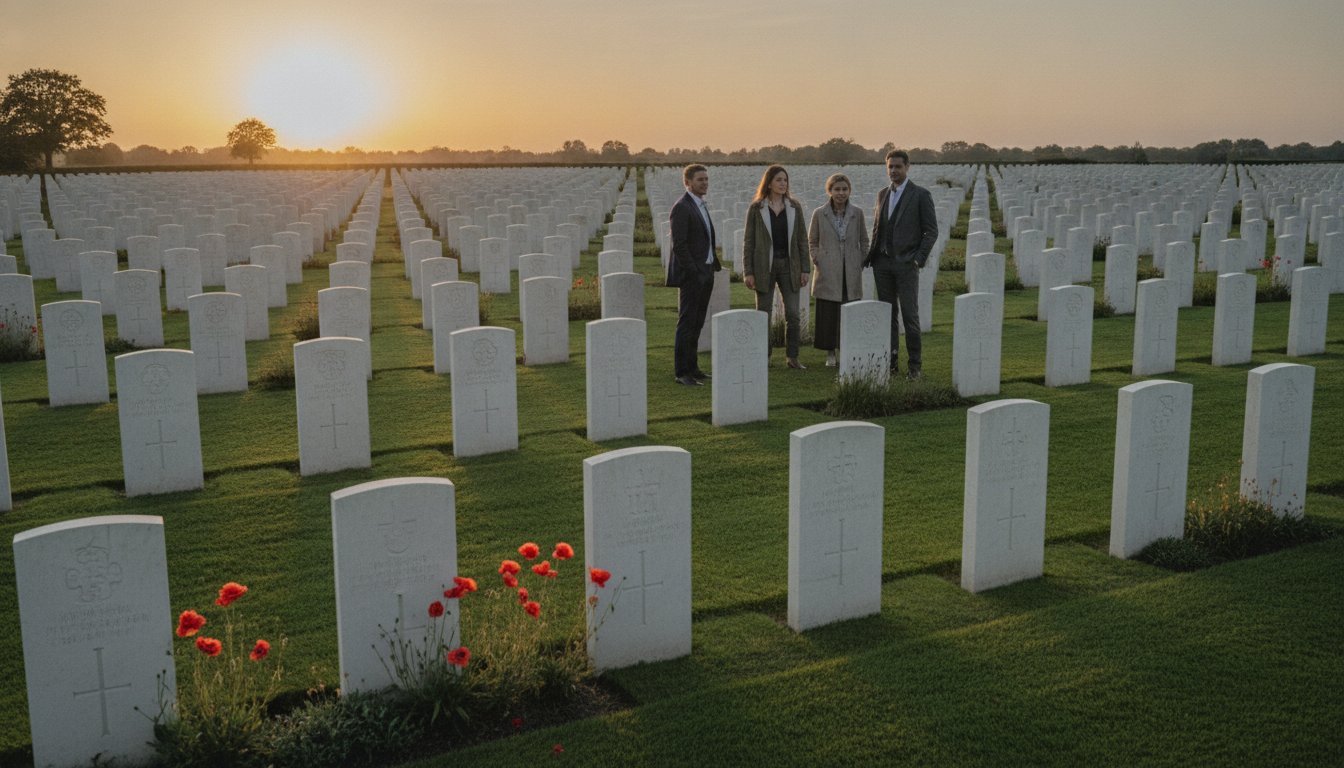
    Flanders remains the heart of WWI memory. Essential stops include Tyne Cot Cemetery, the largest Commonwealth cemetery in the world, and the somber German cemetery at Langemark. We often use Flanders Fields as a central theme, focusing on the In Flanders Fields Museum to provide the initial context. The significance of the “Missing” is a recurring motif here. The memorials we visit don’t just list names; they honor the void left by a generation. It’s a technical challenge to manage group flow in these quiet spaces, but our expertise ensures the experience remains intimate.

    The Battle of the Bulge and WWII Remembrance

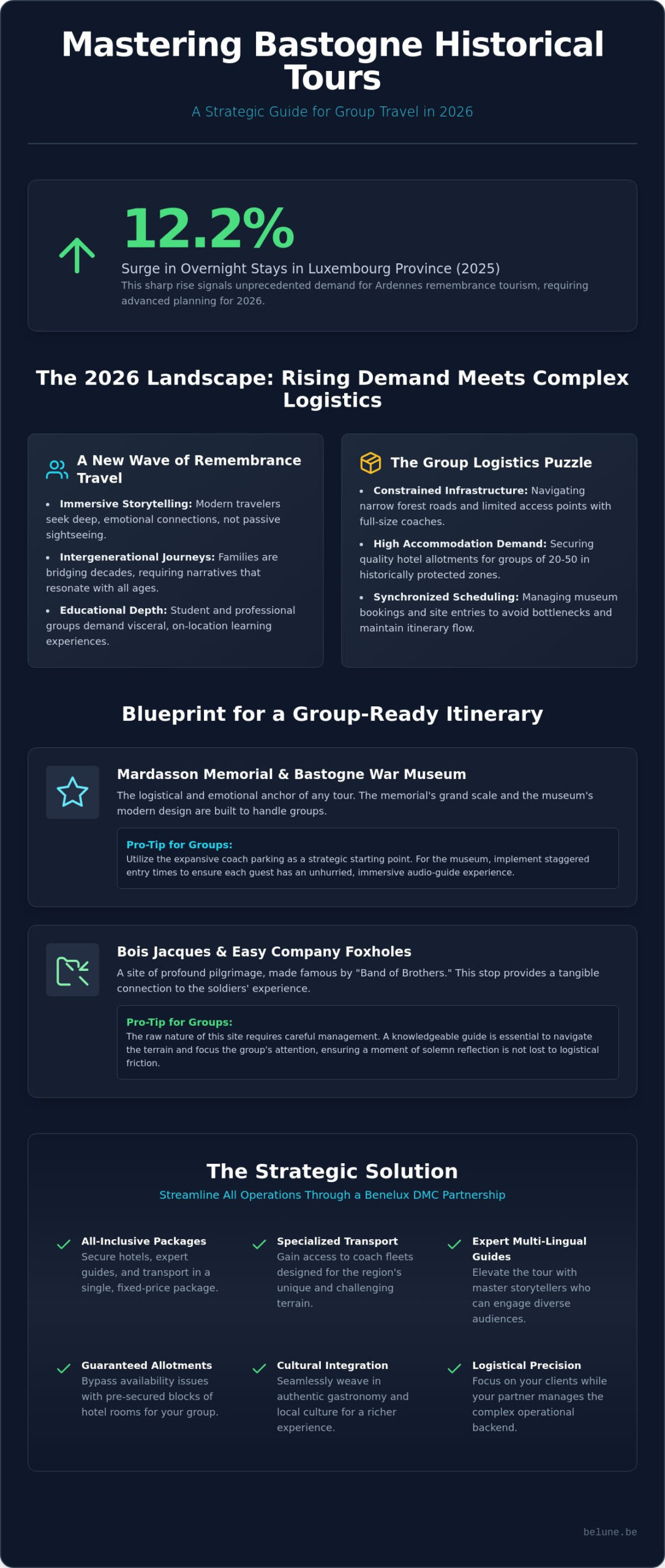
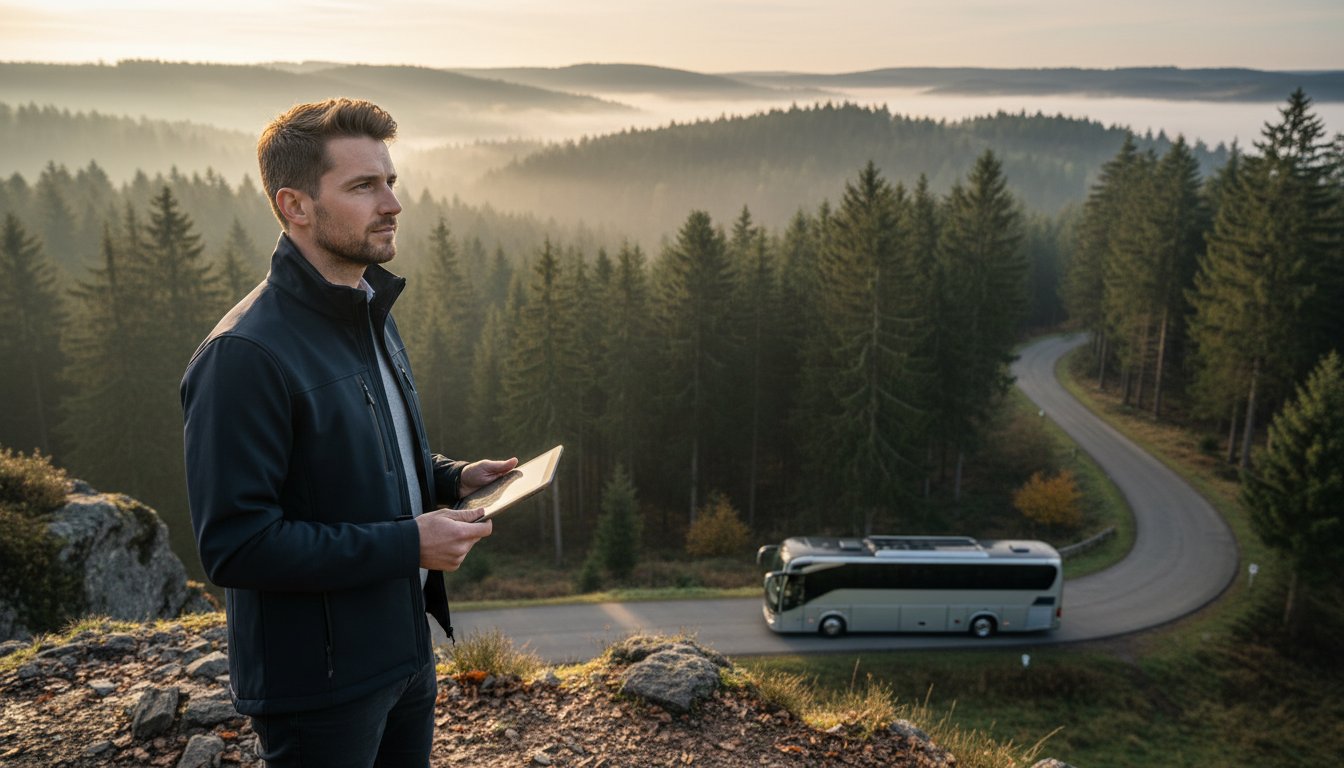
    In the Ardennes, the narrative shifts to the winter of 1944. Exploring the woods of Bastogne reveals the foxholes where soldiers endured the Battle of the Bulge. The contrast between the static warfare of 1914 and the rapid movement of 1944 is striking. We visit the Mardasson Memorial to understand the scale of the American and Allied contributions. The terrain here is rugged, demanding precise coach hire and a driver who understands the narrow forest roads. This technical mastery allows the group to focus entirely on the Ardennes’ legacy of resilience and liberation.

    Choosing Accommodation for Battlefield Tour Groups

    The technical mastery of a pilgrimage lies in its infrastructure. While the sites themselves provide the historical gravity, the logistics provide the vessel. We believe that the physical environment directly influences a group’s ability to process the emotional weight of the journey. This is why choosing accommodation for battlefield tour groups is a task that requires both aesthetic sensitivity and rigorous operational planning. It’s about more than simple bed counts. It’s about preserving the headspace of the pilgrim through every transition of the day.

    Managing the “invisible logistics” means ensuring that the group never feels the friction of travel. From the moment they depart the hotel to the final meal of the evening, every detail should feel intentional. This includes managing group dining to find a balance between the convenience required for a large party and the local quality that honors the region’s heritage. As a dedicated DMC, we handle the complex work of pre-clearing site access and navigating local regulations, allowing the emotional narrative to remain the focus.

    Travel in Comfort and Contemplation

    A private, modern coach fleet is a sanctuary on wheels. It allows for group cohesion and provides a controlled environment where a guide can continue the narrative between stops. Smooth transitions are essential. We ensure that the movement from a somber cemetery to the next location is handled with grace. Our bespoke coach hire services offer the flexibility needed for custom routes that avoid the jarring noise of public transit. This technical reliability ensures that the group’s focus remains on the history rather than the mechanics of the journey.

    Accommodation for Discerning Groups

    Sourcing the right property is an art. We look for hotels that offer tranquility and high-end facilities without breaking the solemnity of the trip. For elderly participants, proximity to key sites like the Menin Gate or the Bastogne memorials is a functional necessity to minimize travel fatigue. Our group hotel accommodation expertise allows us to secure spaces that reflect the gravity of the pilgrimage. When choosing accommodation for battlefield tour groups, we prioritize properties that understand the specific needs of remembrance travel, from quiet dining areas to accessible layouts that respect the group’s energy levels.

    Ready to design a seamless and respectful pilgrimage for your group? Partner with our expert team to manage your logistics with the precision and grace your clients deserve.

    Partnering for Excellence: Why BELUNE is the DMC of Choice

    Excellence in remembrance tourism isn’t a happy accident. It’s the result of over 20 years of technical refinement and artistic sensitivity. We don’t just provide services. We act as your strategic ally in the Benelux region, ensuring every logistical detail serves the higher purpose of the pilgrimage. Our team excels at choosing accommodation for battlefield tour groups that aligns with the solemnity of the itinerary. We understand that a hotel is more than a bed. It’s a structural component of the emotional experience.

    Logistical control is the foundation of our success. By maintaining our own private fleet of modern coaches, we eliminate the variables that often disrupt group travel. We don’t rely on third-party standards. Our local presence allows us to navigate the region with a precision that only comes from decades of residency. Whether it’s managing site access or adjusting routes for local ceremonies, our intervention is seamless and invisible. This technical rigour allows the emotional narrative to stay at the forefront of the journey.

    The BELUNE Philosophy of Remembrance

    We believe every pilgrimage should be a work of art. Our approach to themed group travel prioritises your vision while adding the depth of our sector expertise. We weave together historical accuracy with the sensory poetry of the Benelux region. This means integrating local gastronomy and cultural heritage into the schedule without compromising the respect due to the sites. We transform a standard trip into a lasting legacy through meticulous planning and a deep commitment to high-end service. Our goal is to reassure professional partners while stimulating the imagination of their clients.

    Starting Your Journey

    Initiating a partnership with us is a straightforward process designed for professional clarity. We focus on transparency, offering fixed-price group tours that provide budget security and peace of mind for operators. This allows you to present a polished, reliable product to your clients without the fear of hidden costs. When choosing accommodation for battlefield tour groups, we leverage our long-standing relationships with premium hotels to secure the best possible environments for reflection. Your group’s legacy deserves the care of established experts who treat every itinerary as a unique mission. Let’s collaborate to create a 2026 pilgrimage that sets a new standard for respect and technical excellence.

    Honoring History Through Technical Mastery

    A successful 2026 pilgrimage is a masterpiece of balance. It requires the technical precision to manage complex routes and the artistic sensitivity to honor the silence of the past. We’ve explored how a curated itinerary and the expertise of specialized local guides transform a tour into a legacy. Every detail matters. From the reliability of a private coach to the intentionality behind choosing accommodation for battlefield tour groups, these elements form the structural heart of a respectful journey.

    With over 20 years of destination management expertise, we provide the invisible logistics that allow your clients to focus on the weight of history. Our private fleet of high-comfort coaches and guides with deep historical knowledge ensure every transition is handled with grace. Request your custom Benelux battlefield itinerary from the experts at BELUNE and elevate your next group project into a profound experience. The hallowed grounds of the Benelux are waiting to tell their stories. Let’s ensure they’re heard with the dignity they deserve.

    Frequently Asked Questions

    How do I ensure our group tour remains respectful at sensitive sites?

    Professional stewardship is the key to maintaining solemnity at sensitive sites. We use local guides who manage group dynamics and ensure that etiquette is observed at all times. This includes designing schedules that allow for private reflection away from the main crowds. By setting the tone through expert storytelling, we ensure the group understands the gravity of the ground they stand on.

    Is it appropriate to combine battlefield visits with gastronomy or beer tours?

    Integrating local beer and gastronomy tours provides a necessary human connection to the land. It honors the resilience of the local communities and offers a moment of reflection after intense historical visits. This balance prevents emotional exhaustion while celebrating the culture that soldiers fought to protect. These moments of levity are a traditional part of the pilgrimage experience, allowing for camaraderie and shared reflection.

    What is the best time of year to plan a battlefield pilgrimage in Benelux?

    Late spring and early autumn provide the best conditions for a pilgrimage. The months of May and September offer milder weather and fewer crowds than the peak summer period. Planning around specific dates, such as the May 15th deadline for teacher institutes or regimental anniversaries, adds a layer of significance to the trip. Winter visits are also possible, particularly for those wishing to experience the Ardennes in conditions similar to the Battle of the Bulge.

    How much time should we allocate for a comprehensive remembrance tour?

    You should allocate at least five to seven days for a tour that covers both the Western Front and the Ardennes. This timeframe allows for a deep exploration of sites like Tyne Cot and Bastogne without causing fatigue. During this period, choosing accommodation for battlefield tour groups becomes essential to ensure the group has a consistent, restful sanctuary each night. A week-long journey provides the necessary space for the narrative to unfold naturally.

    Can we customise a pilgrimage to follow a specific regiment or family history?

    Custom itineraries are a fundamental part of our service. We use historical records to trace the exact path of specific units or family members across the Benelux landscape. This personalized approach transforms a general tour into a unique family or regimental legacy. Our local experts conduct the necessary research to ensure every stop on the route is historically accurate and personally relevant to your group.

    What are the logistical challenges of visiting remote battlefield sites with a group?

    Navigating remote sites in the Ardennes or Flanders requires a private fleet and expert drivers. Narrow roads and restricted parking at memorials can delay an itinerary if not pre-cleared by local experts. Our technical mastery ensures that even the most secluded foxholes are accessible to your group without stress. Technical precision in choosing accommodation for battlefield tour groups also minimizes daily travel time to these harder-to-reach locations.

    How does a DMC assist with the Last Post ceremony at the Menin Gate?

    We manage the entire coordination process for the Last Post ceremony, including wreath-laying applications for your group. Our local presence ensures your group is positioned correctly and understands the protocol of this nightly tribute. This administrative support allows the participants to focus entirely on the emotional weight of the bugle’s call. We handle the timing and crowd management so you don’t have to worry about the logistics of the event.

    Is a battlefield pilgrimage suitable for younger generations and school groups?

    Pilgrimages are exceptionally suitable for school groups when the narrative focuses on the human cost of war rather than just dates. We use expert guides who bridge the gap between historical facts and modern values. This educational depth ensures that younger generations leave with a profound understanding of their role in preserving collective memory. It’s a powerful way to make history tangible and relevant for the leaders of tomorrow.

  • Bastogne Battlefield Tour: A Definitive Guide for Group Travel Operators

    Bastogne Battlefield Tour: A Definitive Guide for Group Travel Operators

    A profound historical journey isn’t defined by the miles traveled, but by the weight of the silence it leaves behind. For professional operators, the challenge goes beyond merely booking a bastogne battlefield tour. It involves orchestrating a narrative that honors the 19,000 American soldiers who perished during the brutal winter of 1944. You recognize that your clients seek more than a checklist of monuments; they want an encounter with the frozen foxholes of the Ardennes that feels both intimate and grand.

    Designing these experiences requires a delicate harmony between logistical precision and emotional resonance. It’s often difficult to balance the popular “Band of Brothers” narrative with the broader, more complex reality of the Siege of Bastogne. This guide serves as your strategic blueprint for excellence. We’ll outline a curated selection of must-visit sites, detail the fluid movement of group transport, and show how partnering with a local expert ensures every detail is handled with artisan care. From the Mardasson Memorial to the hidden gems of the surrounding forests, we provide the clarity needed to transform a standard itinerary into a masterpiece of historical travel.

    Key Takeaways

    • Understand the evolving historical significance of the Ardennes to curate a 2026 itinerary that resonates with deep emotional and cultural memory.
    • Learn to design a sophisticated bastogne battlefield tour by balancing iconic architectural monuments with immersive, multi-sensory museum experiences.
    • Navigate the logistical complexities of the Ardennes with expert insights on coach selection and timing to ensure a seamless, high-end group experience.
    • Discover how to deepen the narrative by integrating strategic sites like Kessler Farm and General Patton’s relief route into your professional programming.
    • Explore the BELUNE approach to sublimating history through expert local guidance and a private fleet of modern, luxury coaches.

    The Significance of a Bastogne Battlefield Tour in 2026

    Bastogne serves as a structural anchor for European historical memory. In 2026, eighty-two years after the Ardennes snow finally cleared, this Belgian town transcends its role as a mere geographic location. It’s a masterclass in resilience and a vital touchstone for American identity abroad. For travel operators, a bastogne battlefield tour represents more than a logistical stop; it’s an immersive exercise in heritage diplomacy. We’re seeing a definitive shift away from the surface-level “war tourism” of the past. Today’s professional itineraries demand a sophisticated, curated narrative that treats history as a living material, balancing technical tactical analysis with the raw emotion of human survival.

    The ‘Nuts!’ Legacy and Tactical Importance

    On December 22, 1944, General Anthony McAuliffe delivered his famous one-word rebuttal to the German surrender demand. This wasn’t simple bravado; it was a strategic refusal that anchored the 101st Airborne Division’s defense of a vital logistics hub. The “perimeter” around Bastogne wasn’t just a line on a map; it was a desperate hold on seven key roads that the German army required for their push toward Antwerp. The Ardennes landscape remains a primary witness to this struggle. The dense forests and frozen ridges offer a visceral understanding of the technical challenges faced by soldiers who lacked winter gear and sufficient ammunition during that brutal season.

    Evolving Perspectives on the Ardennes Offensive

    Modern travelers expect a perspective that goes beyond the Hollywood lens. We now integrate the Belgian civilian experience, acknowledging the 3,000 local residents who perished during the winter of 1944-1945. Preserving “silent” sites—the unmarked foxholes and quiet treelines—requires a delicate, expert touch that respects the sanctity of the ground. Launched on December 16, 1944, the Ardennes Offensive involved over 1 million soldiers, making it the largest land battle fought by the United States Army in history. A professionally designed bastogne battlefield tour provides the necessary depth to honor this scale through:

    • Technical analysis of the 1944 weather patterns that grounded Allied air power.
    • Access to curated sites like the Bois Jacques, where the scars of artillery are still visible in the earth.
    • Narratives that link the liberation of Belgian villages to the broader restoration of European democracy.
    • Expert storytelling that bridges the gap between 20th-century conflict and 21st-century peace.

    The value for group operators lies in this precision. It’s about transforming a trip into a legacy project, ensuring every traveler leaves with a profound understanding of the harmony between sacrifice and freedom.

    Essential Sites for a Bastogne Battlefield Roundup

    A successful bastogne battlefield tour hinges on a precise choreography of locations. Operators must balance the grand architectural gestures of the Mardasson Memorial with the visceral, sensory reality of the 101st Airborne Museum (Le Mess). This museum, housed in a 1936 officers’ mess building, captures the claustrophobic tension of the siege through its underground bunker simulations. Since its 2014 reopening, the Bastogne War Museum has set the standard for educational depth, using four distinct character perspectives to humanize the 1944 winter offensive. These sites don’t just show history; they curate an emotional landscape for the visitor.

    The Mardasson Memorial: Architecture of Gratitude

    Dedicated on July 16, 1950, the Mardasson Memorial stands as a sculptural masterpiece of stone and memory. Its star-shaped design, featuring 12-meter high pillars, creates a rhythmic play of light and shadow that invites quiet contemplation. For professional operators, this is the essential starting point. The gallery displays the names of the 48 U.S. states that formed the Union during the war, etched into the frieze to create a permanent bond between the American home front and Belgian soil. The spiral staircases lead to a panoramic roof, offering a 360-degree view of the terrain where the 101st Airborne held their perimeter. This elevated perspective is vital for groups to grasp the tactical isolation of the city.

    Bois Jacques and the Foxholes of Easy Company

    Bois Jacques remains the emotional heart of any bastogne battlefield tour. Managing group expectations here requires a delicate touch, as the site is a living forest rather than a manicured museum. The foxholes, originally dug in December 1944, are fragile indentations in the earth. Preserving these remnants against erosion and heavy foot traffic is a technical challenge. In 2021, the site integrated augmented reality via a dedicated app, allowing visitors to visualize the “Band of Brothers” positions without disturbing the hallowed ground. We recommend facilitating a five-minute period of silence here; the natural acoustics of the pine forest provide a powerful backdrop for reflection. Just as we seek to achieve architectural harmony through light, this site achieves a rare harmony between nature and history. It’s a place where the stillness of the trees speaks more clearly than any traditional lecture.

    Beyond the Perimeter: Deepening the Historical Narrative

    To master a bastogne battlefield tour, operators must look past the town’s immediate center to the peripheral sites that define the siege’s resolution. Kessler Farm stands as a pivotal technical landmark. On December 22, 1944, four German soldiers arrived here with a written demand for surrender; an event that prompted General McAuliffe’s legendary one-word response. The site is exceptionally coach-friendly. A wide, paved pull-off on the N874 allows 15-meter vehicles to park safely, letting groups stand on the exact ground where the ultimatum was delivered. For orientation, the Sherman tank in McAuliffe Square remains the essential anchor. This M4A3, part of the 11th Armored Division, was immobilized on December 30, 1944. It provides a tangible, textured connection to the mechanical scale of the conflict.

    The Liberation Route and Patton’s Third Army

    The narrative of the siege shifts dramatically on the road to Assenois. At 16:45 on December 26, 1944, the 4th Armored Division pierced the German ring from the south. This breakthrough transformed the battle’s geometry. We recommend stopping at the concrete pillbox near the E25 underpass; it marks the precise link-up point between Patton’s relief forces and the 101st Airborne. The contrast here is vital for any sophisticated itinerary. You move from the static, desperate defense of the perimeter to the kinetic, aggressive momentum of the liberation. It’s a transition from shadow to light that resonates deeply with visitors.

    The German Cemetery at Recogne: A Necessary Contrast

    The cemetery at Recogne offers a somber, architectural counterpoint to the Allied memorials. Established by the American Graves Registration Service in 1945, it eventually became the final resting place for 6,807 German soldiers. The design language here is intentionally heavy. Dark basalt crosses replace the white marble found elsewhere, creating a mood of quiet reflection on the war’s total human cost.

    • Casualty Scale: While American losses in the Ardennes reached 19,000 dead, German fatalities are estimated between 67,000 and 100,000.
    • Professional Guidance: We advise guides to focus on the youth of the fallen; many soldiers buried here were teenagers conscripted in the war’s final months.
    • Visual Harmony: The site’s layout reflects a grim, orderly precision that helps groups visualize the sheer magnitude of the German effort.

    Integrating Recogne into a bastogne battlefield tour ensures a balanced, professional perspective. It elevates the experience from a simple military study to a profound meditation on European history. This nuanced approach builds trust with discerning travelers who seek more than just a surface-level summary of events.

    Logistical Excellence: Planning the Group Experience

    Precision defines the professional experience. Orchestrating a bastogne battlefield tour requires a blend of technical rigor and historical sensitivity. We see logistics as the framework that allows the narrative to breathe; it ensures every transition is seamless and every site is approached with the correct rhythm. Success lies in the details of the Ardennes landscape. Operators shouldn’t just plan a route; they should curate a journey that respects both the land and the memory it holds.

    Coach Access and Site Navigation

    The narrow arteries of the Ardennes demand careful vehicle selection. While standard 15-meter coaches manage main roads, the route to the Foxholes of Bois Jacques is best served by 12-meter models. This ensures fluid movement through the dense treeline without compromising the group’s comfort. For the Mardasson Memorial and the Bastogne War Museum, dedicated parking bays accommodate up to 60 coaches, yet early arrival remains essential during peak periods. Operators should prepare elderly guests for the 500-meter walk on uneven forest soil at the 101st Airborne sites. Proper footwear isn’t just a suggestion; it’s a requirement for safety and engagement.

    Seasonal Planning: The December Commemorations

    December in Bastogne is a visceral experience. The annual “Nuts Weekend,” held around December 16th, transforms the town into a living tribute. It’s a period of high demand where hotel capacity, roughly 450 beds in the city center, reaches 100% occupancy 12 months in advance for major anniversaries. The biting cold, often dipping to -5°C, adds a layer of authenticity that many groups seek, yet it requires rigorous climate management. A comprehensive bastogne battlefield tour during these months requires a different logistical lens. Professional operators must balance the emotional impact of the snow-covered landscape with the practicalities of winter road closures and shortened daylight hours. To master the atmosphere of your next group itinerary, explore our approach to bespoke project design.

    • Timing: A full-day immersion (8 hours) is necessary to cover the Museum, Mardasson, and the perimeter woods. Half-day tours often feel rushed and fail to capture the site’s nuance.
    • B2B Capacity: Group-friendly dining at venues like “Le Wagon” can host 80+ guests, but reservations are mandatory 6 months out for peak dates.
    • Coordination: Large-scale events require direct communication with the Bastogne municipal authorities to secure permits for specific commemorative zones.

    The BELUNE Perspective: Bespoke Battlefield Itineraries

    At BELUNE, we don’t just organize trips; we curate legacies. We believe that to truly understand the Ardennes, one must look beyond the physical remains of conflict. We sublimate the experience by blending technical precision with emotional depth. Our approach transforms a standard bastogne battlefield tour into a profound narrative journey. We manage the entire lifecycle of your group’s visit. From the initial 9:00 AM briefing to the final hotel check-out, every detail is orchestrated with surgical accuracy. Our private fleet of 15 luxury coaches, all meeting Euro 6 emission standards, ensures that transit is as serene as the landscapes themselves.

    Artisans of History: Our Local Guides

    Our guides are the architects of memory. These multi-lingual experts speak four languages fluently, allowing them to bridge cultural gaps for diverse international groups. They move past the dry recitation of dates and troop movements. Instead, they focus on the human resonance of the 1944 winter. We believe in a holistic sensory experience. This means integrating local gastronomy into the itinerary. A pause for a traditional three-course Ardennes lunch or a tasting of regional craft beers provides the necessary space for reflection. It creates a harmony between the weight of history and the richness of present-day Belgian culture.

    Partnering with BELUNE for Benelux Excellence

    Since 2004, we’ve served as a dedicated ally for global travel operators. Our 20 years of experience in the Benelux region translates into a frictionless process for our B2B partners. We prioritize professional transparency above all else. You’ll receive fixed-price reliability with no hidden surcharges, ensuring your margins remain protected. We understand that every bastogne battlefield tour we design is a reflection of your brand’s commitment to quality. We act as your visionary advisors on the ground, handling the complex logistics so you can focus on your clients. Our team provides 24/7 support, ensuring that even the most intricate custom requests are met with a “sur-mesure” solution.

    Ready to elevate your group’s Ardennes experience? Discover our bespoke battlefield tour packages and partner with the experts in Belgian hospitality and history.

    Elevating the 2026 Commemorative Experience

    Designing a profound historical journey requires more than a map; it demands a vision that honors the weight of the past. As the 82nd anniversary of the Siege approaches in 2026, group operators must balance complex logistics with an immersive narrative that resonates. A successful bastogne battlefield tour isn’t just about visiting the Mardasson Memorial or the foxholes of Bois Jacques. It’s about the technical precision of the itinerary and the emotional depth of the storytelling. We leverage over 20 years of DMC expertise in the Benelux region to transform these historical sites into a seamless, high-end experience for your clients.

    Our private fleet of modern, group-friendly coaches ensures comfort across every kilometer, while our expert multi-lingual local guides provide the nuanced perspective that sophisticated travelers demand. We don’t simply move groups; we curate an atmosphere of respect and discovery. By choosing a partner who values architectural precision in planning and poetic resonance in delivery, you ensure your tour stands out in a crowded market. Excellence isn’t an accident; it’s a deliberate choice. Partner with BELUNE for your next professional group tour and bring a new level of sophistication to your historical programming. We look forward to crafting this journey with you.

    Frequently Asked Questions

    What is the best time of year for a Bastogne battlefield tour?

    Late spring and early autumn provide the most balanced light and weather for a bastogne battlefield tour. From May 15th to September 30th, groups enjoy 14 hours of daylight and average temperatures of 18 degrees Celsius. This window allows for a deep exploration of the landscape’s nuances. Alternatively, the December 16th anniversary offers a raw, emotional atmosphere that mirrors the 1944 conditions.

    Is Bastogne suitable for groups with limited mobility?

    Bastogne is highly accessible, with 95% of its major cultural sites designed for visitors with limited mobility. The Bastogne War Museum features elevators and wide ramps throughout its 1,600 square meter layout. The Mardasson Memorial offers flat, paved access to its central gallery. While Bois Jacques remains a forest, the 2021 renovations added accessible viewing platforms for a safe, inclusive experience.

    How much time should a group allocate to the Bastogne War Museum?

    Groups should reserve a minimum of 3 hours to fully appreciate the Bastogne War Museum’s immersive design. The three multisensory scenographies take 45 minutes to complete, while the extensive collection of 400 original artifacts requires significant time for reflection. We recommend a structured itinerary to ensure guests don’t rush through the final exhibits, which contain the most poignant personal testimonies.

    Can we combine a Bastogne tour with other Battle of the Bulge sites?

    Combining Bastogne with other Battle of the Bulge sites is a standard practice for comprehensive 2 day itineraries. Malmedy is located 55 kilometers to the north, roughly a 45 minute drive via the E25. Houffalize, situated just 18 kilometers away, offers a logical stop to see the Panther tank. These connections create a harmonious narrative of the 1944 winter offensive.

    Are there group-friendly restaurants in the Bastogne area?

    Bastogne hosts several high capacity restaurants that specialize in tailor-made group dining experiences. Wagon Leo accommodates up to 150 guests in a refined, historical setting near the Place McAuliffe. For smaller parties of 25, Le Nut’s provides curated 3 course menus featuring local Ardennes trout. These venues understand the logistical precision required for professional travel operators and their tight schedules.

    What is the significance of the foxholes in Bois Jacques for tourists?

    The foxholes in Bois Jacques serve as a visceral connection to the 101st Airborne’s defensive line. Over 20 visible excavations mark the positions held by Easy Company starting December 19, 1944. These sites transform the forest into a living monument, allowing visitors to visualize the tactical challenges of the winter siege. It’s a place where history and nature achieve a somber, powerful harmony.

    Do we need a specialized guide for a professional group tour?

    Hiring a certified professional guide is mandatory for operators seeking a sophisticated and accurate bastogne battlefield tour. Accredited guides provide 4 hours of expert narration, linking technical military maneuvers to the human experience. Their presence ensures a seamless flow between sites like the 101st Airborne Museum and the German Cemetery. This expertise transforms a simple visit into a profound, expertly designed educational journey.

    How far is Bastogne from other major Belgian cities for a day trip?

    Bastogne is 155 kilometers from Brussels, making it a viable but intensive day trip option. The drive from the capital takes 100 minutes via the E411 highway. Luxembourg City is much closer, located only 75 kilometers away with a 50 minute travel time. For groups arriving from Liege, the 80 kilometer journey takes approximately 60 minutes, allowing for an early 9:00 AM start.