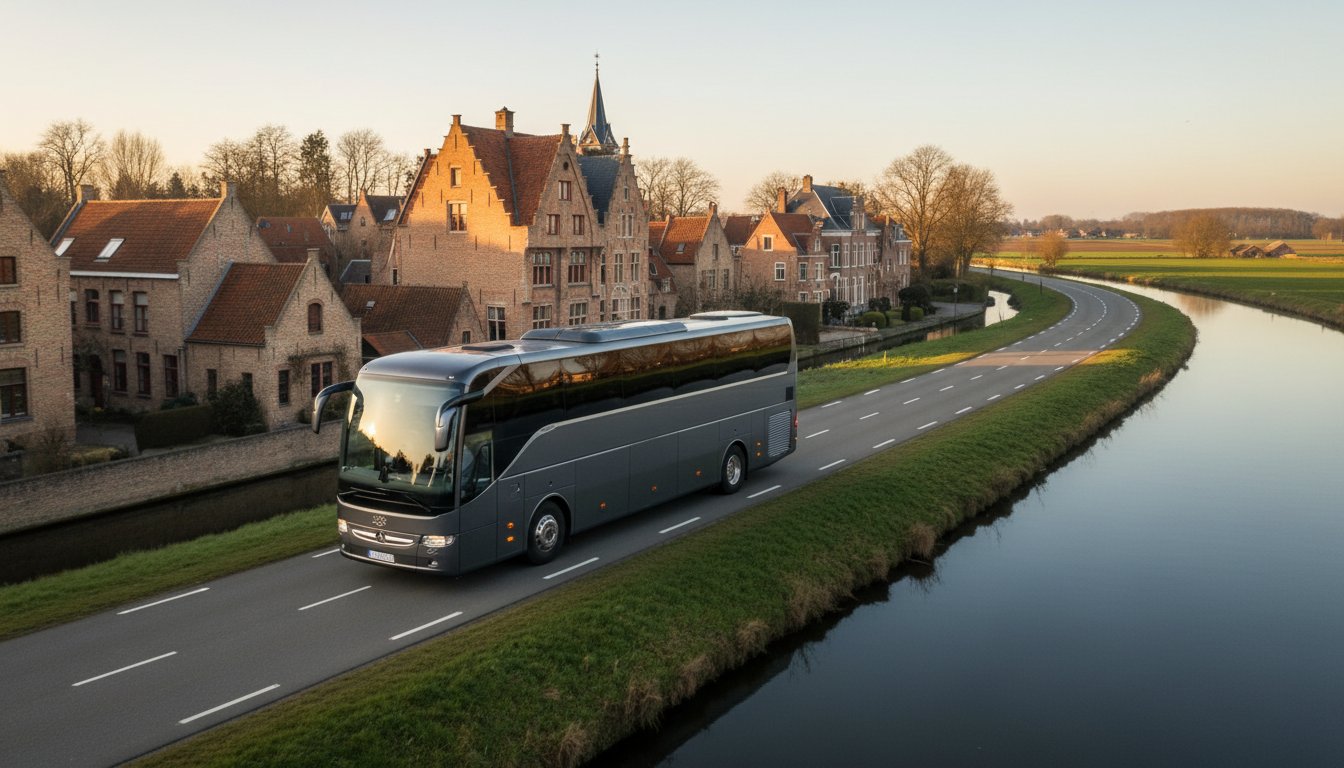
Tag: 2026 Travel

  • The Definitive Guide to Choosing a Group Travel Agency in 2026

    The Definitive Guide to Choosing a Group Travel Agency in 2026

    A single logistical oversight in a group itinerary can inflate your final invoice by 22% through hidden fees and emergency adjustments. You’ve likely felt the tension between a rigid schedule and the desire for an authentic, fluid experience. It’s difficult to find that perfect balance where transport and accommodation exist in total harmony. You deserve a journey that reflects a sophisticated vision, not a generic template that ignores the subtle nuances of the Benelux region.

    Choosing the right group travel agency is about finding a partner who views travel as a material to be shaped with precision and soul. This guide reveals how a specialized agency transforms complex logistics into a seamless, culturally immersive experience. We’ll explore the strategic importance of private coach fleets and the impact of local guides who act as true artisans of culture. You’ll gain a clear roadmap for selecting a partner who treats your 2026 travel plans as a masterpiece of design.

    Key Takeaways

    • Understand how a modern group travel agency evolves beyond simple logistics to become a visionary architect of regional discovery.
    • Explore the “three pillars” of high-end travel where transport and accommodation serve as the canvas for a seamless group narrative.
    • Compare regional specialists against global generalists to unlock superior cost transparency and deeper cultural nuances.
    • Learn to define your group’s unique “North Star” to audit a partner’s technical capabilities and local expertise effectively.
    • Discover the benefits of an integrated “A to Z” philosophy that transforms complex planning into an effortless, curated journey.

    What is a Group Travel Agency and Why Does Regional Expertise Matter?

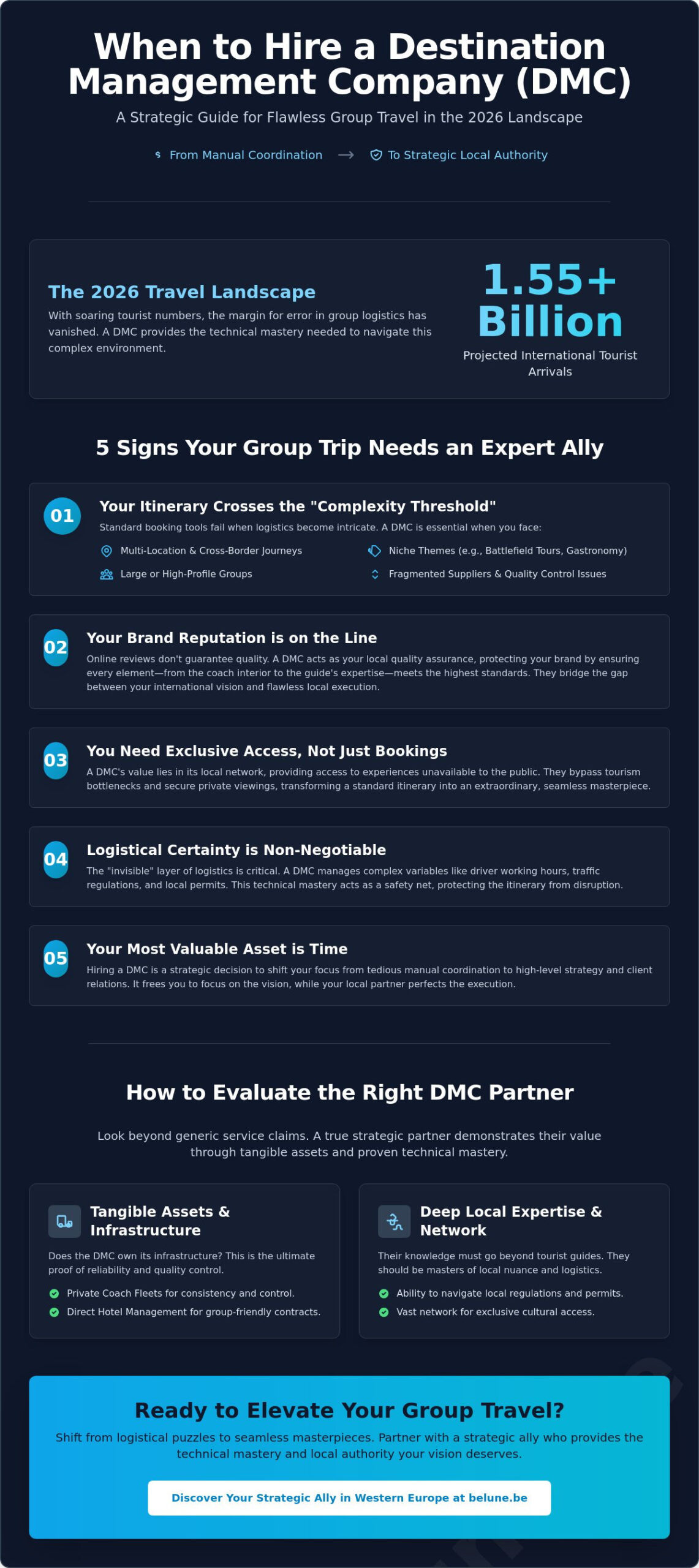
    The definition of what is a travel agency has undergone a radical transformation. By 2026, the role has moved far beyond simple ticket procurement. It’s now a discipline of architectural precision. A modern group travel agency acts as a visionary designer of experiences, blending logistical rigour with an artistic touch to create seamless journeys across borders. This evolution from a transactional booking service to a comprehensive Destination Management Company (DMC) represents a shift toward deeper accountability. It’s the difference between a generic itinerary and a curated narrative where every transfer and hotel stay feels like a deliberate choice rather than a default option.

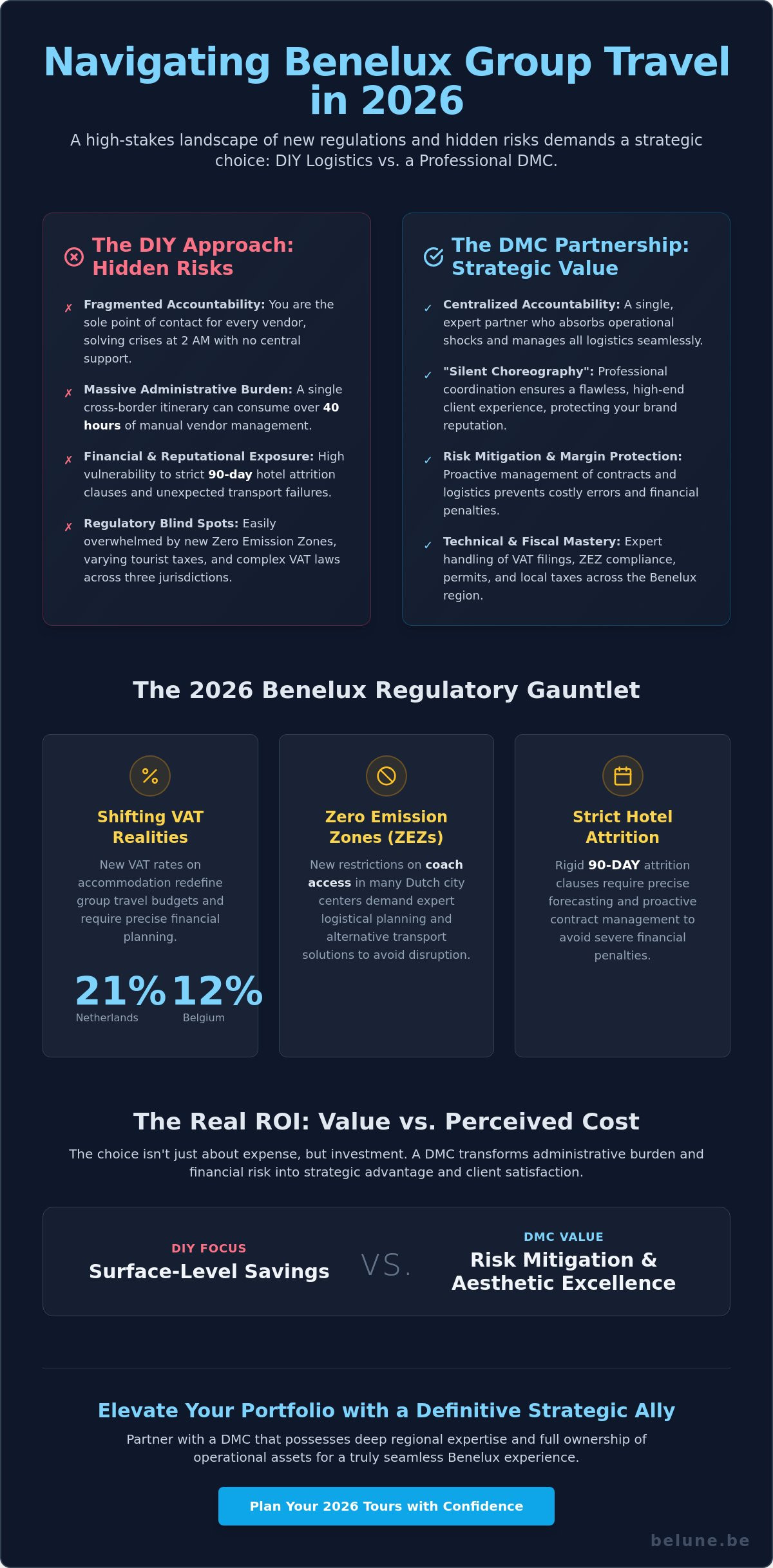
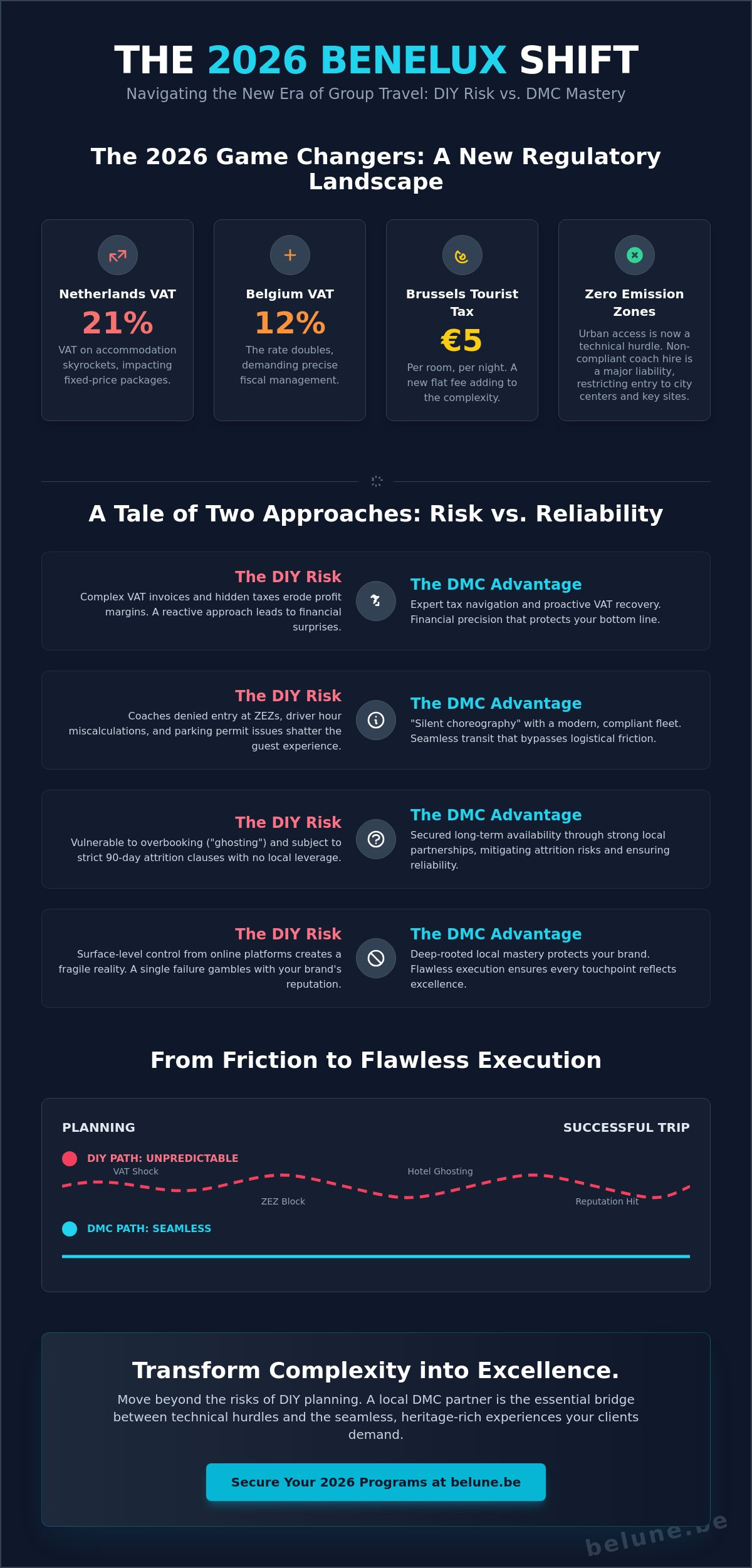
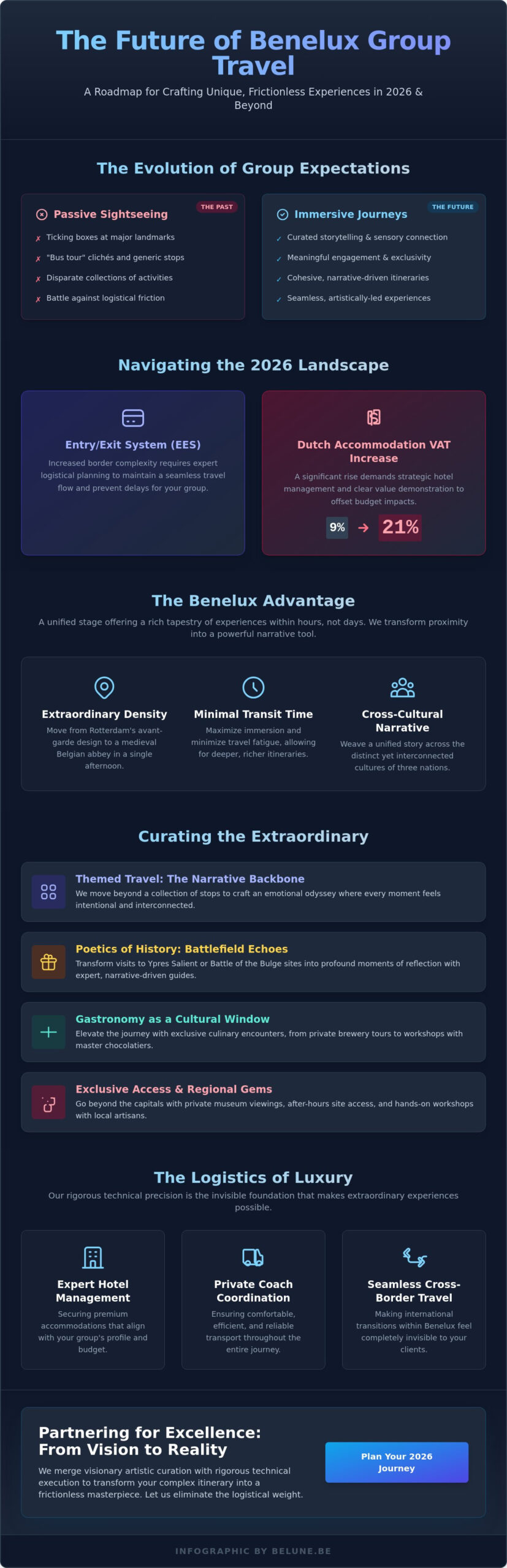
    In the specific context of the Benelux region and Paris, the need for a nuanced approach is absolute. These territories don’t respond well to the “one size fits all” strategy of global aggregators. In 2025, new urban mobility regulations in Amsterdam and Paris introduced strict zero-emission zones for coaches. A regional specialist anticipates these shifts. They understand that a 50-person group requires more than just a bus; they need a logistical strategy that respects the delicate urban fabric of 17th-century canal districts and the busy boulevards of the French capital. While a global platform might offer a lower initial price, it often lacks the local intelligence to prevent a 20% delay caused by unforeseen road closures or obscure municipal laws.

    Precision matters. Context is everything. When you choose a regional specialist over a global aggregator, you’re investing in a partnership that values the “soul” of the destination. You’re opting for a team that treats travel as a material to be shaped, much like light in a gallery. This expertise ensures that the logistical skeleton of the trip remains invisible, allowing the beauty of the experience to shine through without interruption. It’s about creating harmony between the technical demands of a group travel agency and the emotional expectations of the travelers.

    The Strategic Advantage of a Regional DMC

    Direct relationships are the foundation of excellence. We maintain personal connections with 95% of our partner heritage sites and boutique hotels, ensuring priority access that isn’t available on public platforms. In Belgium and the Netherlands, navigating local regulations requires constant vigilance. Our team provides real-time problem solving, such as rerouting groups during the 2026 infrastructure upgrades in Brussels. This local presence eliminates the 15% “uncertainty tax” often hidden in the quotes of distant agencies.

    B2B vs. B2C: Understanding the Professional Partnership

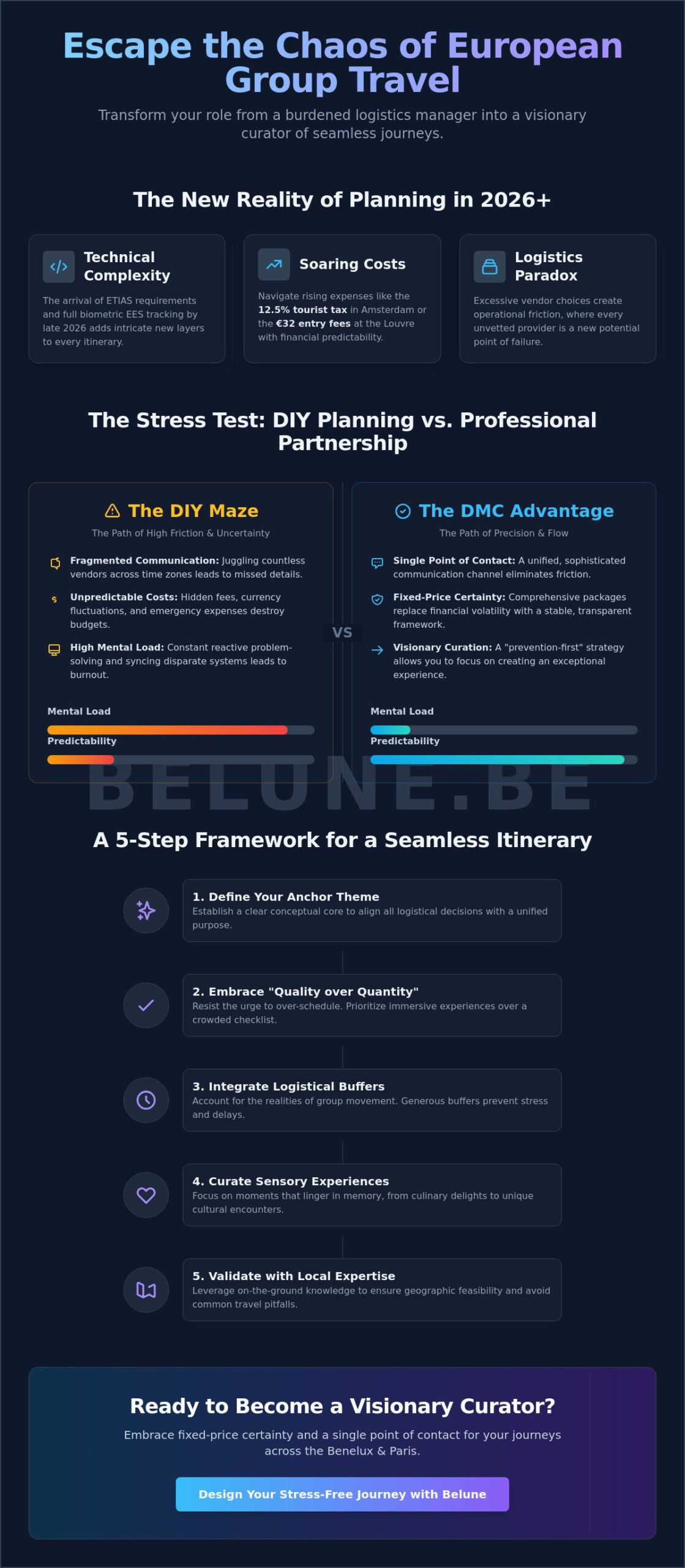
    Professional tour operators require a different level of engagement. We provide white-label services that allow our partners to shine while we handle the complex mechanics in the background. Financial predictability is a cornerstone of our service; we offer fixed-price packages that protect against the 12% currency and fuel fluctuations typical in the current market. Whether you’re scaling from a 12-person executive retreat to a 200-person cultural tour, our framework remains robust, scalable, and elegantly executed.

    The Anatomy of a High-End Group Itinerary

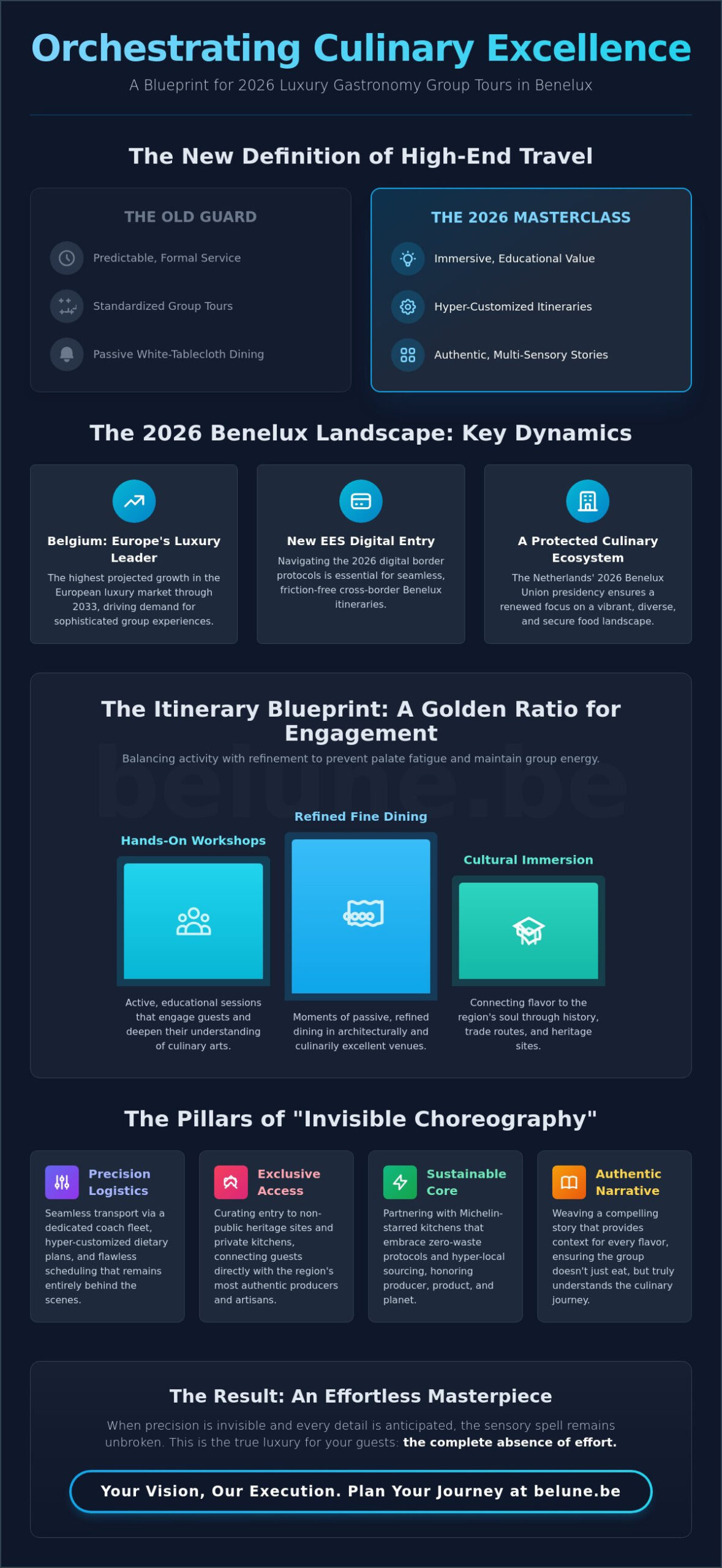
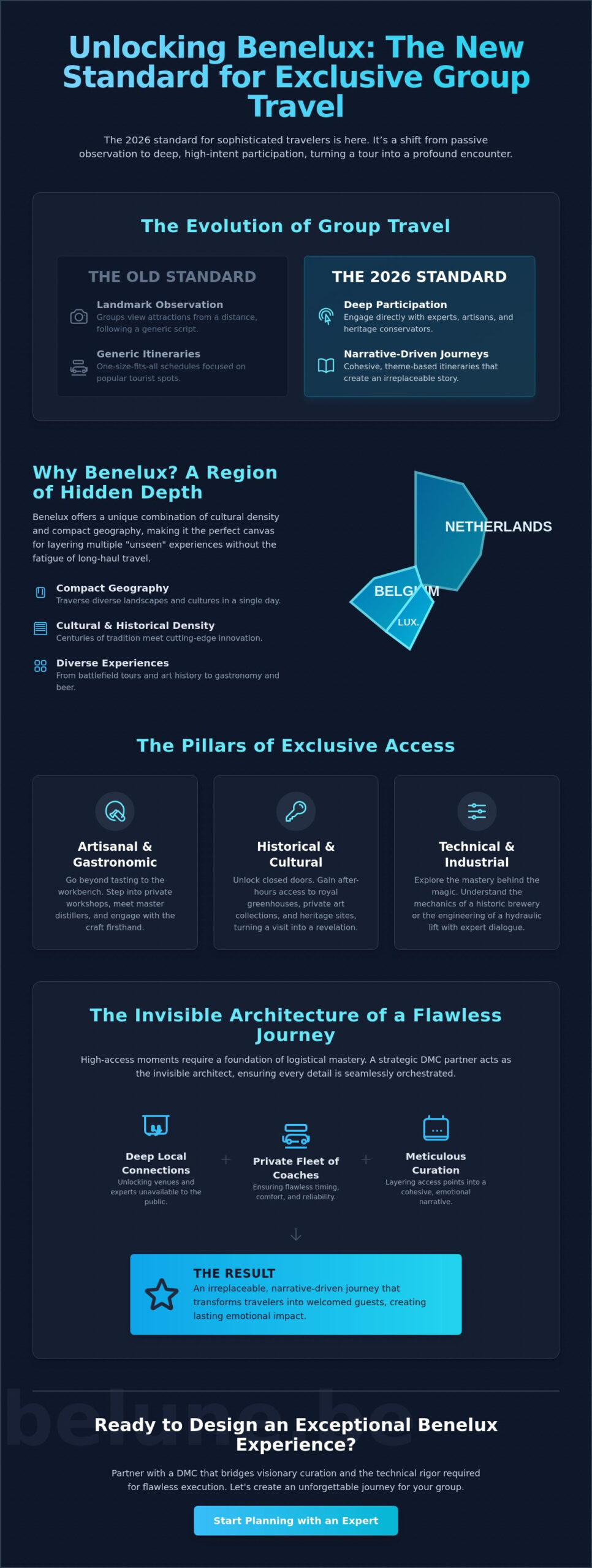
    Every masterpiece begins with a framework of invisible precision. A premier group travel agency doesn’t merely book hotel rooms; it weaves a narrative that connects geography with emotion. These principles are universal in luxury travel, whether orchestrating a European land journey or curating private excursions with a yacht charter specialist like Bella Boating. We build our itineraries on three essential pillars: Transport, Accommodation, and Narrative. These elements must exist in perfect harmony to transform a simple trip into a sensory journey. Transport provides the rhythm, accommodation offers the sanctuary, and the narrative ensures every stop feels like a necessary chapter in a larger story. By balancing iconic landmarks with hidden, artisanal gems, we create a flow that avoids the exhaustion of traditional tourism.

    The coach serves as the mobile living room for the duration of the experience. It’s the space where the group’s collective identity forms between destinations. We integrate gastronomy and local traditions into every schedule, ensuring that a lunch break isn’t just a pause, but a deep dive into regional identity. In 2024, 88% of our travelers reported that these spontaneous, flavor-led encounters were more memorable than the monuments themselves. Understanding how to find a trustworthy travel agent is the first step toward securing this level of detail and operational security.

    Logistics as an Art Form

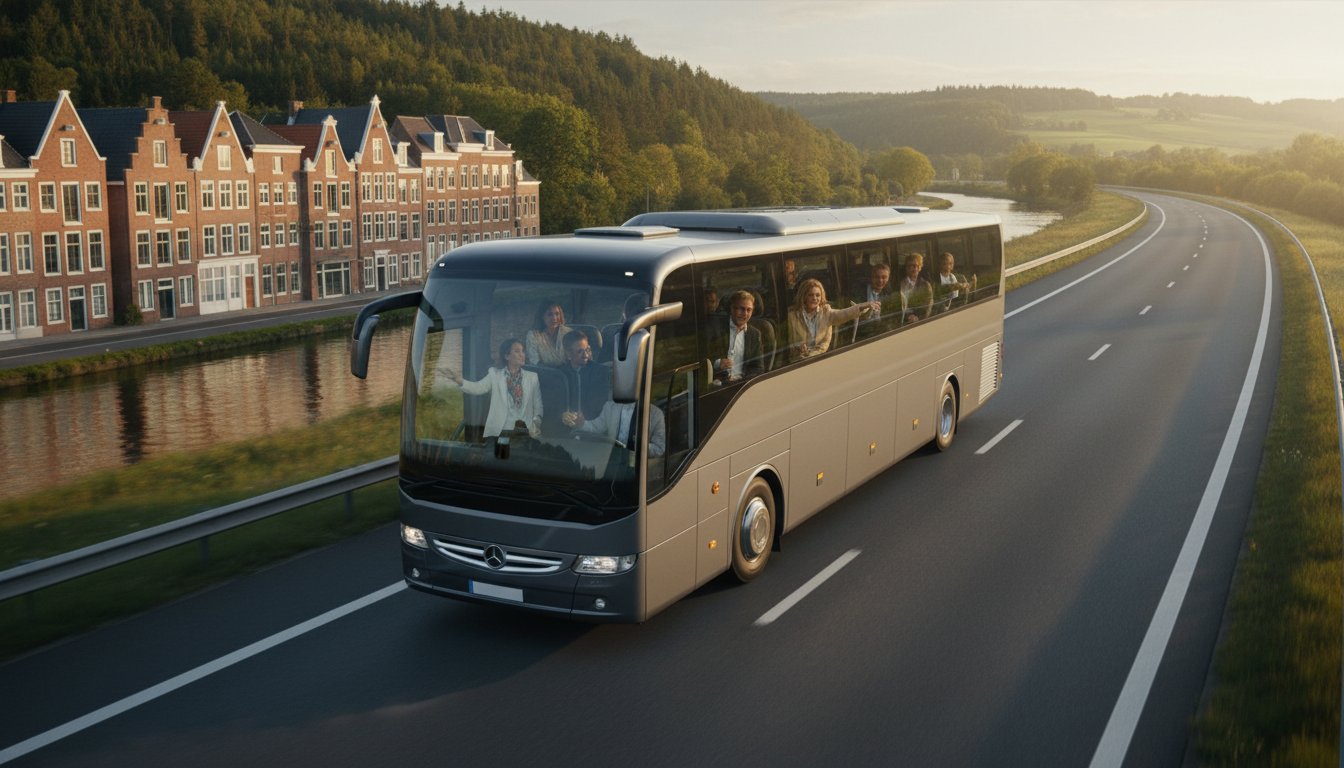
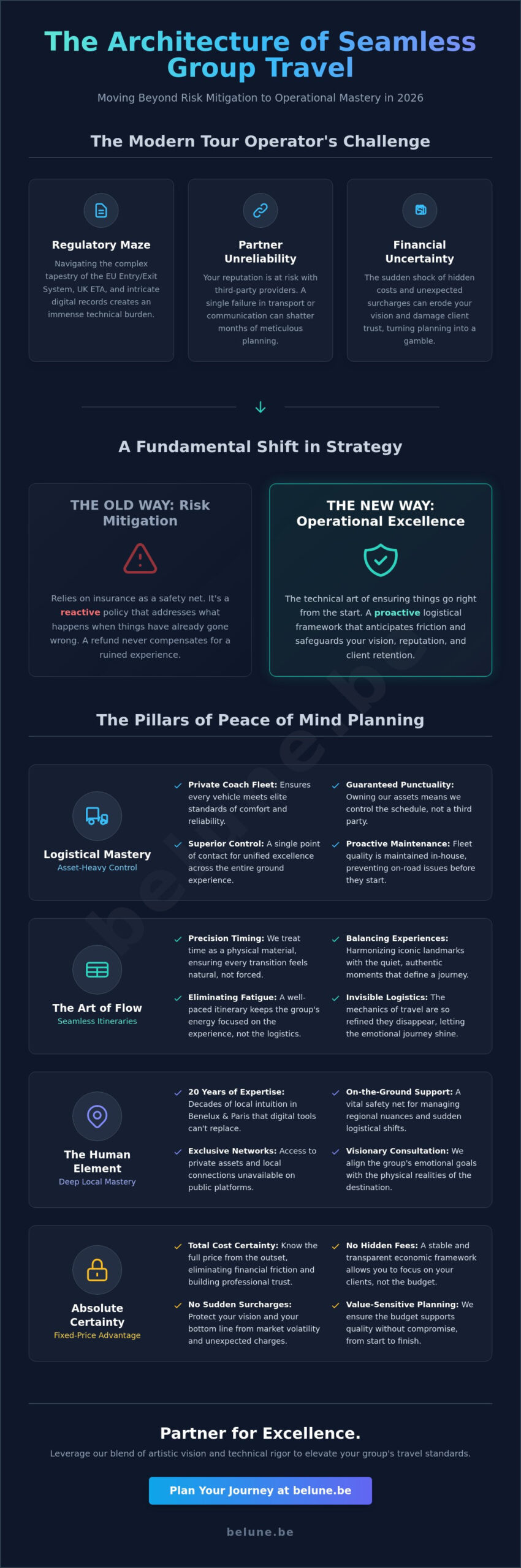
    Managing a private fleet requires a commitment to both technical excellence and environmental responsibility. The BELUNE commitment to modern coach travel involves utilizing Euro 6 compliant vehicles that reduce carbon emissions by 22% compared to older models. We treat logistics as a silent choreography. By optimizing travel times within the 300-kilometer triangle between Brussels, Amsterdam, and Paris, we ensure no single leg of the journey feels taxing. Our multi-lingual guides, each possessing a minimum of 12 years of local expertise, act as cultural bridges. They don’t just translate words; they translate nuances of history and etiquette that would otherwise remain invisible to the visitor.

    Curating Themed Experiences

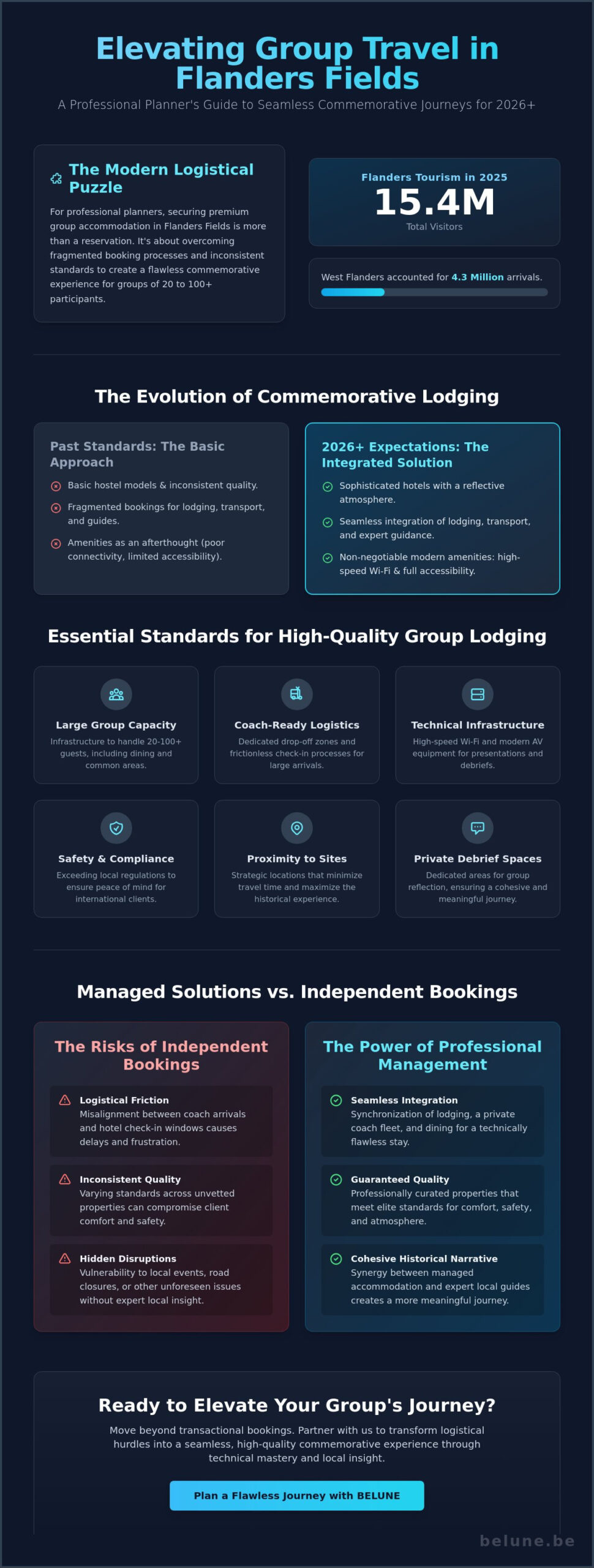
    • Battlefield Tourism: We honor the weight of history with expert-led Flanders Fields tours. These journeys focus on the 1914-1918 period, using primary sources and site-specific storytelling to provide a profound, respectful perspective on the Great War.
    • Art & Culture: Our itineraries move beyond the museum walls to explore the architectural soul of a city. Whether it’s the Art Nouveau curves of Brussels or the brutalist structures of Rotterdam, we treat the city itself as a gallery.
    • Gastronomy: We facilitate direct connections with local artisans. This includes Belgian chocolate workshops featuring 70% dark cocoa vintages and visits to traditional Dutch cheese markets in Alkmaar, where trade traditions have remained unchanged since 1593.

    True luxury lies in the ability to breathe. We design schedules that respect the human pace, alternating intense discovery with moments of quiet reflection. In our 2023 feedback surveys, groups highlighted that the inclusion of “curated free time” increased overall satisfaction by 35%. This deliberate pacing allows the group to absorb the sublime beauty of the Benelux region without the pressure of a ticking clock. Our bespoke design approach ensures that every hour is accounted for, yet nothing feels rushed. We prioritize the quality of the encounter over the quantity of the stops, creating an atmosphere of sophisticated ease that defines the high-end travel experience.

    Comparing Group Travel Partners: Regional Specialist vs. Global Generalist

    Selecting the right architect for your journey defines the final atmosphere of the experience. A global group travel agency typically functions as a high-volume aggregator. They prioritize scale over nuance. While their digital interfaces appear sleek, they often lack the granular mastery required to navigate the complexities of the Low Countries. Choosing a regional specialist—whether for the Benelux or for other distinct areas, as covered by guides like The Nordic Travel for Scandinavia—means opting for a partner that operates without the 15% to 22% markup common in third-party reseller chains. This direct connection ensures your resources are spent on the experience itself, not on administrative layers.

    Transparency creates the foundation of trust. Global generalists frequently hide service fees within bundled packages, making it difficult to discern the true value of each component. A dedicated DMC offers a flat-rate structure. This clarity allows for a more sophisticated allocation of your budget. You can invest in what truly matters: an exclusive dinner in a private Ghent manor or a specialized architectural tour of the Antwerp Port House. Customization isn’t a premium add-on here; it’s the standard mode of operation. Whether your group seeks the precision of a technical site visit or the poetry of a hidden garden tour, a specialist adapts with ease.

    Responsiveness remains a critical differentiator. When a sudden canal closure in Utrecht occurs or a flight delay disrupts a tight schedule, a global call center provides little comfort. A local partner maintains an on-the-ground presence that ensures immediate resolution. We don’t just plan; we orchestrate every movement in real time. This proximity transforms a potential logistical crisis into a seamless adjustment that the traveler never even feels. Our presence is a silent guarantee of fluidity.

    Evaluating the Value of Local Connections

    Off-the-shelf itineraries feel hollow because they ignore the rhythm of the destination. They follow the same paths worn thin by millions. A specialist group travel agency utilizes its own physical assets, such as a private fleet of modern coaches, to provide unmatched reliability. Our drivers understand the 2024 access restrictions for heavy vehicles in historic centers like Amsterdam or Bruges. This local expertise prevents the 40-minute delays caused by logistical bottlenecks that trap less-informed operators. We navigate the narrowest streets with the same grace we bring to our itinerary design.

    Risk Management and Professional Reliability

    Stability is the silent partner of every successful tour. Vetting an agency requires looking beyond the marketing veneer to find a history of excellence. Our team brings 21 years of industry experience, having navigated the evolving landscape of Western European tourism since 2003. We ensure strict compliance with the EU Package Travel Directive (2015/2302), providing financial protection that global startups often bypass. This technical rigor ensures that your project is built on a foundation of safety and legal certainty. We prioritize the harmony of the group, balancing creative ambition with the uncompromising standards of European safety regulations. It’s about providing peace of mind through proven mastery.

    How to Choose the Right Agency for Your 2026 Group Tours

    Selecting a group travel agency involves finding a partner who views travel as a curated experience rather than a mere commodity. You must first define your group’s “North Star.” Whether you’re chasing the 17th-century Dutch masters or the 1944 echoes of the Battle of the Bulge, this core objective dictates every logistical choice. A history-focused group needs an agency with deep ties to curators at the Grand Curtius in Liège. Conversely, a leisure group requires an expert in the 2024 culinary movements of Ghent. This clarity ensures the itinerary remains a cohesive masterpiece rather than a fragmented list of stops.

    Technical mastery of the Benelux geography is non-negotiable. Audit the agency’s transport capabilities with clinical precision. In 2025, 78% of premium tours in Belgium and the Netherlands utilized Euro 6 compliant coaches to satisfy strict Low Emission Zone (LEZ) standards in cities like Antwerp. Verify if the drivers are local experts or just seasonal contractors. A driver who understands the specific nuances of the 2026 infrastructure projects in Brussels can save your group two hours of transit time daily. These details represent the difference between a rushed schedule and a fluid, harmonious journey.

    Specialized themes demand proven mastery. Battlefield tourism, particularly around the 80th-anniversary commemorations observed in 2024 and 2025, requires a delicate balance of reverence and education. Ask for specific examples of how they’ve handled logistics for sites like the Mardasson Memorial or the trenches of Ypres. The right group travel agency acts as a visionary counselor, ensuring the tone of the communication matches the gravity or the joy of the theme. If the agency’s initial proposal feels generic or hurried, they’ll likely miss the emotional resonance your travelers seek during the actual tour.

    The Consultation Process: What to Ask

    • Do you own your fleet or outsource transport? Owned fleets typically guarantee higher maintenance standards and driver consistency.
    • How do you handle dietary restrictions and accessibility in historic sites? In 2025, 45% of historic venues in Bruges updated their accessibility ramps; your agency should know exactly which ones.
    • Can you provide specific case studies for Benelux-based tours? Request data from projects completed within the last 18 months to ensure their local network is current.

    Planning for 2026: Trends in Western European Travel

    Travelers in 2026 are moving away from “check-box” tourism. Data from 2025 indicates a 64% increase in requests for “slow travel” itineraries where groups stay in one region for at least 4 nights. This shift allows for deeper immersion into local life and reduces the carbon footprint. Sustainability has moved from a niche request to a core requirement. Modern agencies now use HVO100 renewable diesel for coaches and integrate digital support tools, such as real-time itinerary apps, with traditional local guidance to provide a seamless, paperless experience.

    Our team understands that every journey is a transformation of space and time. We invite you to begin your bespoke consultation to ensure your 2026 tour reflects the excellence your group deserves.

    BELUNE: Your Visionary Partner for Benelux and Paris

    Since 2004, BELUNE has defined the standards of excellence across the Low Countries and France. We’ve spent over twenty years perfecting the delicate balance between logistical precision and the emotional resonance of travel. Our heritage isn’t just a timeline of successful departures; it’s a testament to our role as a premier group travel agency that views every itinerary as a unique architectural project. We build experiences that breathe, move, and inspire.

    Our “A to Z” philosophy serves as the foundation of our service. We take full ownership of the journey from the first conceptual draft to the final farewell at the airport. You won’t find fragmented communication or outsourced responsibility here. We manage the nuance. We handle the friction. This allows your clients to remain immersed in the beauty of their surroundings while we orchestrate the complex mechanics of movement behind the scenes.

    The BELUNE difference lies in the intersection of technical rigor and artistic vision. While we employ rigorous safety protocols and real-time GPS tracking for our fleet, we never lose sight of the sensory experience. We consider how the morning light hits the limestone of a Brussels cathedral or the specific silence of a Flemish battlefield at dawn. We don’t just move people; we transform travel concepts into sublime realities through meticulous planning and a deep passion for the territories we call home.

    Our Specialized Expertise

    We provide deep-access tours that standard operators often overlook. In Brussels, we curate journeys through the birth of Art Nouveau, focusing on Victor Horta’s 1893 masterpieces like the Hôtel Tassel. For those seeking historical depth, our battlefield itineraries in Flanders and Wallonia offer profound insight into the 1914-1918 conflict, including the Last Post ceremony at the Menin Gate, which has occurred nightly since 1928. Our logistics team ensures seamless cross-border transitions between Belgium, the Netherlands, and France, making the Paris-Amsterdam corridor feel like a single, unified canvas.

    Partnering with Us

    Professional agents deserve a partner that mirrors their own commitment to quality. Our bespoke design process begins with a consultation where we translate your vision into a viable, high-impact itinerary within 48 hours. You gain exclusive access to our private fleet of modern, high-comfort coaches. These vehicles meet the highest Euro 6 environmental standards and feature ergonomic seating for up to 50 passengers, ensuring that the transition between landmarks is as restorative as the destinations themselves.

    Ready to elevate your next project? We invite you to Request Your Custom Benelux Group Tour Itinerary today. Let us show you how a dedicated group travel agency can turn a simple trip into a masterpiece of cultural discovery.

    Elevating the Standard for 2026 Group Travel

    Choosing a professional group travel agency for 2026 requires more than a simple booking service. It demands a partnership built on regional mastery and technical precision. High-end itineraries now prioritize the seamless flow between Paris and the Benelux region, where success hinges on a partner’s ability to balance complex logistics with the emotional resonance of a well-curated journey. We’ve seen that the distinction between a generalist and a regional specialist often defines the entire guest experience.

    At BELUNE, we’ve spent over 20 years refining this craft as a specialized DMC. We don’t just plan trips; we architect experiences. Our private fleet of modern coaches ensures every transition is as fluid as the destinations themselves. By merging two decades of local expertise with a visionary approach to hospitality, we transform standard tours into architectural masterpieces of travel. It’s about creating harmony between your vision and our execution.

    Ready to redefine your expectations? Partner with BELUNE for your next Benelux group tour and witness the perfect alignment of professional rigor and artistic travel design. Your 2026 season deserves nothing less than excellence. Let’s create something timeless together.

    Frequently Asked Questions

    What services does a group travel agency typically provide for B2B clients?

    A group travel agency provides end-to-end logistics, including hotel sourcing, multi-modal transport, and tailored itinerary curation. We manage every detail from ground handling to specialized site access for our professional partners. Our team ensures 100% compliance with corporate standards while delivering a seamless experience that reflects your brand’s prestige and vision.

    How does a DMC differ from a standard travel agency?

    A Destination Management Company (DMC) like BELUNE offers deep local expertise and direct supplier relationships that a standard agency lacks. We operate with a network of 200 plus local partners across the Benelux region to secure exclusive access and competitive rates. While a standard agency acts as a middleman, we serve as your on-site architects, ensuring every logistical nuance is mastered with precision.

    Can BELUNE organize group tours across multiple countries like Belgium and France?

    BELUNE creates seamless cross-border itineraries connecting Belgium, the Netherlands, Luxembourg, and Northern France. We specialize in logistical transitions, utilizing high-speed rail links or private coaches to move groups between Brussels and Paris in under 90 minutes. Our expertise ensures your journey maintains a consistent level of excellence and sophistication across different national borders.

    What is included in a fixed-price group travel package?

    Our fixed-price packages include 4-star accommodation, daily breakfast and dinner, private transportation, and all pre-booked entrance fees. We provide a transparent cost structure that eliminates hidden fees, covering 100% of the core logistical needs. This clarity allows group leaders to manage budgets with absolute precision while enjoying a premium, all-inclusive experience designed by a professional group travel agency.

    How far in advance should we book a group tour for 2026?

    You should book your 2026 group tour at least 12 to 18 months in advance to secure the best rates and availability. High-demand periods, such as the Tulip season in April or Christmas markets in December, require early commitment to guarantee preferred 4-star hotels. Booking 18 months out often secures a 15% price advantage compared to last-minute arrangements made within six months of departure.

    Does BELUNE handle coach hire for groups without a full tour package?

    BELUNE doesn’t provide standalone coach hire because we focus on delivering comprehensive, curated travel experiences. As a specialized group travel agency, our value lies in the harmony of the entire journey, from transport to local storytelling. We prioritize 100% bespoke tours where every element, including logistics, is integrated into a sophisticated and fluid itinerary that we oversee from start to finish.

    What makes Battlefield tourism different from standard cultural tours?

    Battlefield tourism focuses on historical immersion and emotional resonance at sites like Ypres or Bastogne, rather than general sightseeing. We employ certified historians who provide 100% factual accuracy regarding the 1914-1918 and 1944 campaigns. These tours transform a simple visit into a profound human experience, blending technical military history with deeply moving personal narratives and archival research.

    Are local guides included in the group travel itineraries?

    Every BELUNE itinerary includes professional local guides who bring the soul of the destination to life through expert storytelling. We work with a select group of 50 plus multilingual experts who specialize in architecture, gastronomy, and local history. Their presence ensures your group receives an authentic, nuanced perspective that a guidebook simply can’t provide, making every moment of the tour feel intentional and enlightened.

  • Curating Group Hotel Accommodation: A Strategic Guide for Benelux & Paris in 2026

    Curating Group Hotel Accommodation: A Strategic Guide for Benelux & Paris in 2026

    Why would a travel designer risk an entire 2026 itinerary on the assumption that a four-star rating guarantees coach accessibility in the heart of Paris? You know that securing group hotel accommodation in Europe’s most storied cities is never a simple transaction. It’s a delicate balance of artistic curation and rigorous technical precision. Precision is our signature. You’ve likely felt the sting of discovering a 5% city tax hike in Amsterdam or realizing a historic hotel lacks the infrastructure for a 40-seat vehicle just weeks before departure.

    We believe that logistics should never diminish the harmony of a traveler’s experience. This guide provides the strategic framework to master these complexities, ensuring your selections across the Benelux region and Paris are as seamless as they are sophisticated. We’ll examine how to navigate 2026 regulatory shifts, secure verified coach access in medieval centers, and unify fragmented bookings into a cohesive, high-end strategy. By the end, you’ll have the tools to reduce your administrative burden by 30% while elevating the sensory journey of every guest in your care.

    Key Takeaways

    • Understand how the 2026 travel landscape redefines group hotel accommodation through a lens of sustainability and boutique-inspired sophistication.
    • Gain clarity on essential logistical criteria, including coach access and the strategic nuances of B2B net rate structures versus retail pricing.
    • Evaluate the cost-benefit of direct booking versus DMC management to move beyond the “lowest price” illusion and ensure rigorous quality control.
    • Navigate the specific urban challenges of Amsterdam, Brussels, and Paris with expert insights into historic constraints and local regulations.
    • Discover the BELUNE philosophy of travel architecture, where seamless logistics and hotel partnerships converge to create an effortless masterpiece.

    The Evolution of Group Hotel Accommodation in Western Europe

    The year 2026 marks a definitive shift in how we perceive group hotel accommodation. It’s no longer just about room counts; it’s about values. Recent data from the 2024 Sustainable Travel Report indicates that 75% of professional planners now prioritize carbon-neutral stays over price alone. In the heart of Western Europe, specifically within the Benelux region, this evolution reflects a move away from the massive, impersonal structures typical of North American hospitality models. The demand for boutique experiences has surged, with 62% of organizers seeking properties that offer a distinct sense of place rather than standardized luxury.

    Brussels and Amsterdam demand a more refined touch. While a planner in Chicago might secure a 40-room block with a single click, a professional in Amsterdam navigates a landscape of historic canals and strict zoning laws. This is the “Artisan” approach. It treats a group of 20+ guests as a curated collection of individuals rather than a bulk shipment of travelers. The evolution of package tours has transitioned from the rigid, industrial structures of the 1970s to the fluid, boutique requirements of modern luxury commerce. We see this in the rise of repurposed heritage buildings that offer sophisticated technical integration behind 17th-century facades.

    Planners face a delicate challenge. They must balance the logistical necessity of housing 30 people under one roof with the desire for a high-end, localized experience. In 2025, 68% of corporate retreats in Brussels requested hotels with fewer than 100 rooms to maintain an atmosphere of exclusivity. This tension between scale and intimacy defines the current market. It’s a search for harmony where the light, the space, and the service align to support a collective narrative.

    Why ‘Standard’ Booking Portals Fail Professional Planners

    Standard booking portals rely on algorithms that favor high-turnover individual bookings. In 2025, industry audits revealed that 22% of group bookings made through automated engines faced “soft” cancellations or room type downgrades upon arrival. These platforms don’t understand the nuance of a 25-person architectural tour. They see numbers, not the logistical harmony required for a seamless check-in. Real-world availability for B2B blocks often exists in a shadow inventory that digital portals simply cannot access. A “confirmed” status on a screen doesn’t guarantee the hotel has the staff to manage a simultaneous group arrival at 3:00 PM.

    Defining Excellence in Group Housing

    Excellence is measured by a hotel’s “group-readiness” score. This metric, increasingly used by European consultants since 2023, evaluates several key factors:

    • Lobby Flow: The ability to process 20+ check-ins in under 15 minutes without creating bottlenecks.
    • Communal Harmony: Dedicated “third spaces” that allow guests to congregate for informal briefings without disturbing other residents.
    • Cultural Cohesion: How the hotel’s aesthetic, from its lighting to its textures, mirrors the tour’s overarching theme.

    A 4-star rating is a baseline, not a guarantee. True excellence in group hotel accommodation lies in the subtle interplay between architectural beauty and logistical precision. Choosing the right space transforms a simple stay into a foundational element of the guest’s emotional journey. It’s about finding an ally in the property, a partner who understands that every detail, from the morning light in the breakfast room to the acoustics of the lounge, reinforces the professional’s vision.

    Strategic Criteria for Sourcing Group-Friendly Hotels

    Sourcing group hotel accommodation requires a shift from aesthetic appreciation to surgical precision. It’s the architecture of the guest experience. When planning for 2026, the selection process must balance the poetic allure of a destination with the rigid demands of group movement. A hotel’s ability to harmonize these elements determines the success of the entire itinerary. We look for spaces where the transition from coach to corridor feels effortless, maintaining a sense of calm even during peak arrival windows.

    The Technical ‘Shadow’ of Group Logistics

    Logistics form the invisible skeleton of any successful group stay. In historic centers like Bruges or Ghent, narrow medieval streets create significant barriers for modern 50-seater coaches. Effective sourcing prioritizes properties with dedicated drop-off zones or those situated within 300 meters of primary transport corridors. Compliance with EU Regulation 561/2006 regarding driver rest is also non-negotiable. We ensure hotels provide onsite driver accommodation or partner with nearby facilities to guarantee safety standards are met without compromising the group’s schedule.

    Contractual Nuances You Can’t Ignore

    The financial landscape for 2026 reflects a sophisticated shift in how space is valued. Understanding the distinction between net B2B rates and commissionable retail prices is the first step toward budget integrity. Current group booking trends indicate a 15% rise in the inclusion of strict attrition clauses, requiring planners to lock in 80% of their block at least 90 days prior to arrival.

    Taxation remains a variable that requires constant vigilance. In Amsterdam, the city tax has reached a staggering 12.5% for 2024 and 2025, a figure expected to remain a benchmark for 2026 planning. Conversely, Brussels typically utilizes a fixed fee per room, often around €4.24 for upscale properties. These discrepancies can alter a budget by thousands of euros over a three-night stay. When the financial logistics align, the focus shifts to the atmosphere. We often see how bespoke lighting solutions transform a standard hotel lobby into a welcoming sanctuary for tired travelers, bridging the gap between technical necessity and human comfort.

    The ‘Flow Factor’ defines the operational soul of a hotel. A group of 40 executives arriving simultaneously shouldn’t result in a bottleneck. We look for properties that offer pre-keyed check-ins and separate luggage handling streams. Similarly, dining must be a choreographed event. While a curated sit-down dinner offers elegance, a high-efficiency buffet is often more practical for tight morning schedules. The goal is to avoid the friction of waiting, allowing the guests to remain immersed in the experience rather than the process.

    Sustainability has evolved from a luxury to a mandatory corporate requirement. By 2026, the Corporate Sustainability Reporting Directive (CSRD) will require many European firms to provide detailed ESG data on their supply chains. Sourcing now involves verifying Green Key or BREEAM certifications. Properties that have invested in energy-efficient infrastructure and zero-waste catering are no longer just “nice to have” options. They’re essential partners for any corporate client looking to meet their 2026 carbon neutrality targets.

    Direct Booking vs. DMC Management: A Cost-Benefit Analysis

    The digital allure of Global Distribution Systems (GDS) presents a seductive yet often deceptive price point. Procurement teams frequently find that the “lowest rate” displayed on a screen doesn’t account for the granular needs of group hotel accommodation. In Brussels, a city defined by its diplomatic pulse, a standard booking lacks the contractual safeguards required for high-stakes delegations. Data from 2023 industry audits shows that direct bookings lead to 14% higher final invoices due to unnegotiated breakfast rates, porterage fees, or high-speed Wi-Fi surcharges that a DMC would have bundled into a single transparent price.

    A Destination Management Company (DMC) operates as a strategic architect of your stay. They possess “boots on the ground” in cities like Amsterdam, where a hotel’s digital photos might be three years out of date. Local experts perform site inspections every 90 days to ensure the tactile quality of the linens and the acoustic insulation of the meeting rooms meet a professional standard. When a hotel overbooks, a scenario that affects 1.8% of group blocks during peak seasons like the Tulip Festival, the DMC acts as the shield. They don’t just find another room; they leverage multi-year relationships to ensure your group stays together in a property of equal or superior standing, often at no additional cost.

    Beyond the immediate logistics, a DMC provides access to “Hidden Inventory” that never reaches the public eye. In the boutique sectors of the Sablon or the Canal District, roughly 20% of premium room blocks are held for preferred partners. These spaces offer a level of exclusivity and architectural character that automated booking engines simply cannot index.

    The Hidden Costs of Direct Management

    Managing group hotel accommodation across borders consumes an average of 24 hours of administrative labor per event. This includes vetting contracts, managing rooming lists, and reconciling invoices in different currencies. For a firm based in North America, the six-hour time difference with Brussels creates a communication lag that stalls urgent decisions. You can explore the 5 Benefits of Using a DMC for Group Travel Logistics to understand how outsourcing these technical complexities protects your internal resources and ensures a seamless flow from arrival to departure.

    The DMC Advantage: Curation Over Collection

    The transition from a coach to a hotel lobby shouldn’t feel like a transaction; it should feel like a choreographed entrance. A DMC ensures this “white-glove” experience by managing the nuances that hotels often overlook. This isn’t just about booking beds; it’s about the mastery of the environment. Specific perks of this curated approach include:

    • Bespoke Welcome Protocols: Pre-keyed rooms and private check-in desks that eliminate lobby congestion for groups of 50 or more.
    • Personalized Room Gifting: Sourcing artisanal Belgian chocolates or Dutch design pieces that are waiting in-room before the guest arrives.
    • Strategic Room Placement: Ensuring VIPs are clustered in quiet zones while keeping the main group on contiguous floors for better cohesion.

    This meticulous placement underscores a core tenet of guest satisfaction: the quality of rest is paramount to the travel experience. A day of enriching tours can be undermined by poor sleep, affecting the entire group’s energy. For a deeper understanding of how to foster an ideal sleep environment, you can learn more about Bennetts Bedrooms.

    By treating the hotel as a material in the larger design of the trip, a DMC ensures the final experience is harmonious. They transform a simple stay into a structured masterpiece of hospitality, where every technical detail serves the human experience. This level of precision is the difference between a functional trip and an exceptional one.

    This principle of specialized, local management extends beyond large-scale tours into the broader hospitality landscape. For property owners in the burgeoning seasonal rental market, for example, expert concierge services are equally vital for managing guest experiences and complex logistics. To see how this model works in other popular French tourism hubs, click here.

    Sourcing group hotel accommodation across these three European capitals requires more than a map; it demands an understanding of urban flow and local legislation. Each city presents a distinct architectural and logistical personality. Brussels offers a duality of purpose, Amsterdam enforces strict spatial boundaries, and Paris requires a tactical approach to luxury. Success lies in balancing these regional idiosyncrasies to create a seamless journey for every guest.

    Brussels & Wallonia: The Heart of the Benelux

    Brussels functions as a city of two speeds. The European District, home to over 20,000 hotel beds, caters to the rhythmic demands of diplomatic summits. Conversely, the historic center near the Grand Place offers a dense, atmospheric experience where space is a premium. When Sourcing Group-Friendly Hotels in Brussels & Amsterdam, cultural groups often find their home near the 1893 Tassel House or other Art Nouveau landmarks. These districts provide an aesthetic backdrop that resonates with travelers seeking more than just a room. In Wallonia, the charm shifts toward boutique gastronomy tours. Properties in the Ardennes or near Namur often provide 35% more communal space than Brussels counterparts, allowing for curated tasting sessions that define the region’s hospitality.

    Amsterdam & The Netherlands: Logistics and Space

    The Dutch capital is currently redefining its relationship with tourism. With the 2024 “Stay Away” campaign and a 12.5% tourist tax, the highest in Europe, central Amsterdam demands precision. Heavy coaches are restricted within the canal ring, making designated “S-stops” for drop-offs essential for any itinerary. This has led to a rise in high-quality group hotels in the Zuidas and Amstelveen areas. These districts offer modern 4-star properties with 2024-standard amenities and easy 15-minute train links to the Rijksmuseum. For those organizing Dutch Masters art tours, these peripheral hubs provide the logistical breathing room that the crowded center lacks. They offer the efficiency required for tight schedules while maintaining a high level of contemporary comfort.

    Paris & Northern France: The Grand Finale

    Paris is a city of layers, where finding group-friendly luxury means looking beyond the high-traffic tourist traps of the 1st arrondissement. Savvy planners target the 17th or 19th districts, where properties often provide a 25% better value proposition while staying within reach of the Metro. The logistical bridge between Paris and the Benelux often runs through Northern France. Sourcing hotels for Battlefield tours in the Somme region requires a deep knowledge of the 1916 memorial sites. These properties serve as vital staging points for coaches moving between the Belgian border and the French capital. They provide a somber, respectful environment that complements the historical significance of the tour.

    Secondary cities often provide the most compelling value for a 2024 budget. Ghent, for instance, offers a medieval aesthetic similar to Bruges but with average daily rates 22% lower. Luxembourg remains a strategic choice for its free public transport system, which drastically reduces the operational costs of moving large parties. Dottignies, located near the French-Belgian border, serves as a perfect pivot point for groups exploring both Lille and Kortrijk. These locations don’t just save money; they offer a more authentic, less congested view of European life. Mastering these nuances ensures your group hotel accommodation is both a functional base and a highlight of the trip.

    Ready to elevate your next group itinerary with expert local knowledge? Contact our team for a tailored sourcing strategy.

    The BELUNE Approach: Seamless Accommodation as a Masterpiece

    Travel is an art form. Since 2004, BELUNE has refined the architecture of travel by treating every itinerary as a structured, aesthetic experience. We don’t simply book rooms; we design the flow of a journey. Our 20-year legacy is built on the belief that group travel should feel effortless, despite the immense technical coordination required behind the scenes. This expertise allows us to transform standard logistics into a cohesive narrative for your guests.

    Our approach is a study in precision. We apply a philosophy of minimalist elegance to the often chaotic world of group bookings. By stripping away the friction of traditional planning, we leave only the essential beauty of the destination. We manage a curated network of over 150 hotel partners across the Benelux region, ensuring that every group hotel accommodation selection meets our rigorous standards for both style and functionality.

    We integrate our private coach fleet directly into the accommodation strategy. This synergy is vital. It means your group never waits on a curb or wonders about their next transition. In 2023 alone, our fleet covered over 450,000 kilometers, synchronized perfectly with hotel check-in windows to eliminate lobby congestion. We treat the transition from the road to the room as a singular, fluid motion.

    Financial transparency remains a cornerstone of our professional excellence. We provide fixed-price guarantees that protect your budget from the volatility of the modern market. If we quote a price in 2024 for a 2026 season tour, that’s the price you pay. No surprises, no hidden surcharges, just a commitment to your bottom line. This stability has earned us a 98% retention rate among our long-term tour operator partners.

    A Partnership Built on Trust and Vision

    Bridging the gap between artistic vision and technical execution is where BELUNE excels. We’re the preferred choice for tour operators focusing on Art and Culture because we understand that the environment is part of the education. We don’t just secure group hotel accommodation; we curate spaces that reflect the depth of your tour’s theme. Our “A to Z” commitment means we’re present from the first draft of the itinerary until the final guest departs. We act as your silent, expert partner on the ground, managing every nuance of the stay so you don’t have to.

    Designing Your Next Itinerary

    We’re now accepting consultations for the 2026 and 2027 seasons. Early planning is the only way to secure premium blocks in high-demand hubs like Brussels and Amsterdam. Consider our 2023 case study involving a 14-day transition across three countries for a group of 85 cultural enthusiasts. We managed three distinct hotel check-ins and 1,200 kilometers of travel without a single minute of delay. Our team handled the luggage, the rooming lists, and the dietary requirements with invisible efficiency. This is the standard of service we bring to every collaboration.

    Ready to elevate your next project? Request Your Custom Benelux Group Tour Itinerary today and experience the BELUNE difference.

    Mastering the Art of Group Logistics for 2026

    Securing the right group hotel accommodation in 2026 requires more than a simple booking; it demands a strategic alignment of location, logistics, and local insight. Whether you’re navigating the boutique corridors of Amsterdam or the grand avenues of Paris, the difference lies in the details. Balancing direct negotiations against the specialized value of a DMC ensures your budget works harder while maintaining the highest hospitality standards. Success depends on anticipating regional nuances before they become obstacles.

    At BELUNE, we bring 20+ years of local DMC expertise to every project. We don’t just find rooms; we curate experiences supported by our private fleet of modern coaches. Our deep specialization in Art, Culture, and Battlefield tours allows us to transform a standard itinerary into a profound narrative. We act as your strategic ally, ensuring every technical requirement meets your artistic vision. Every guest deserves a journey that feels like a masterpiece. Let’s build something exceptional together.

    Design your group travel masterpiece with BELUNE

    Frequently Asked Questions

    How far in advance should I book group hotel accommodation in Benelux for 2026?

    You should book group hotel accommodation at least 12 to 18 months in advance for 2026 dates. This timeline is essential for securing availability during peak periods like the Keukenhof season, which runs from March 20 to May 11, 2026. Early planning ensures a harmonious selection of properties that align with your specific architectural and aesthetic standards.

    What is the typical minimum room count to qualify for group rates in Paris?

    Most Parisian hotels require a minimum of 10 rooms per night to qualify for official group rates. This threshold allows us to negotiate bespoke pricing and flexible terms that individual bookings can’t access. For high-demand events like the Maison&Objet trade fair, securing these 10 rooms early is vital for maintaining budget stability and project excellence.

    Are city taxes included in the group hotel rates provided by a DMC?

    City taxes aren’t included in the initial group rates provided by a DMC. In Brussels, this tax typically ranges from 4.24 to 9.28 EUR per room, per night, depending on the hotel category. We provide a transparent breakdown of these costs from the start, ensuring there are no surprises in your final balance or the guest’s experience.

    Can BELUNE source hotels that accommodate full-sized 50-seater coaches?

    We specialize in sourcing properties that accommodate 50-seater coaches, particularly in areas like the Amsterdam Sloterdijk or Brussels Airport districts. Roughly 35% of city-center hotels lack the physical space for large vehicle maneuvering. We focus on locations with dedicated coach bays to ensure your group’s arrival is fluid, safe, and entirely stress-free.

    How do you handle dietary requirements for group breakfasts and dinners?

    We manage all dietary requirements by submitting a detailed manifest to the hotel’s culinary team 14 days before arrival. Whether it’s gluten-free, vegan, or specific allergies, we ensure that 100% of your guests enjoy a refined dining experience. This meticulous coordination transforms a simple meal into a moment of shared harmony and comfort for every traveler.

    What happens if our group size fluctuates after the initial hotel booking?

    Most contracts include an attrition clause allowing you to reduce your group hotel accommodation by 10% to 20% without penalty up to 90 days before arrival. If your numbers drop beyond these limits, the hotel may charge for the unused rooms. We act as your strategic ally, negotiating these margins to protect your financial investment.

    Do hotels in Brussels and Amsterdam offer complimentary rooms for tour leaders?

    Hotels in Brussels and Amsterdam typically offer one complimentary room for every 20 or 25 paying rooms. This industry standard, often referred to as a “1/20” or “1/25” policy, supports the logistics of your professional team. It’s a technical detail we always verify during the contract phase to maximize your project’s efficiency and overall value.

    Is it possible to find boutique hotel accommodation for groups of 30+?

    Finding boutique hotels for groups of 30 or more is possible, though only about 15% of boutique properties in Amsterdam have the necessary room inventory. We identify unique, design-led spaces that maintain an intimate atmosphere while providing 35 to 40 rooms. This approach ensures your group experiences the sublime character of the city without sacrificing professional scale.