Tag: UNESCO World Heritage

  • Curated Belgian Beguinages Tour: A Group Heritage Experience for 2026

    Curated Belgian Beguinages Tour: A Group Heritage Experience for 2026

    A beguinage is far more than a collection of historic bricks; it represents a preserved silence and an architectural testament to a unique social autonomy that has survived centuries. You likely understand that organizing a high-quality Belgian beguinages tour requires more than just a map and a schedule. It demands an appreciation for the delicate balance between public heritage and private residence, where the atmosphere of the space is as vital as the history itself.

    Coordinating group transport through narrow cobblestone streets and securing refined, group-friendly accommodation near these UNESCO-listed sites is often a logistical puzzle that overshadows the beauty of the destination. We promise a sophisticated, turnkey itinerary for 2026 that removes every point of friction. By integrating our own modern coach fleet with expert local guidance, we ensure your group experiences the architectural serenity of these enclaves without the stress of management.

    This article previews a masterfully coordinated journey through Belgium’s most iconic beguinages, from the academic atmosphere of Leuven to the nineteenth-century grandeur of Ghent. You’ll discover how a visionary approach to heritage travel turns a simple visit into a profound cultural immersion that respects the past while providing modern comfort and seamless execution.

    Key Takeaways

    • Uncover the historical significance of the Beguines, whose independent communities shaped a unique urban phenomenon of sanctuary and autonomy.
    • Understand the architectural poetics of the Flemish “Hof,” where minimalist design and courtyard structures create a profound atmosphere of silence.
    • Solve the logistical complexities of a belgian beguinages tour by utilizing a private coach fleet designed for navigating historic European city centers.
    • Design a multi-layered itinerary for 2026 that balances UNESCO-listed heritage with local gastronomy and artistic depth.
    • Align with an expert DMC to transform technical logistics into an elevated, emotional journey for sophisticated group travelers.

    Understanding the Belgian Beguinages: A Legacy of Sanctuary

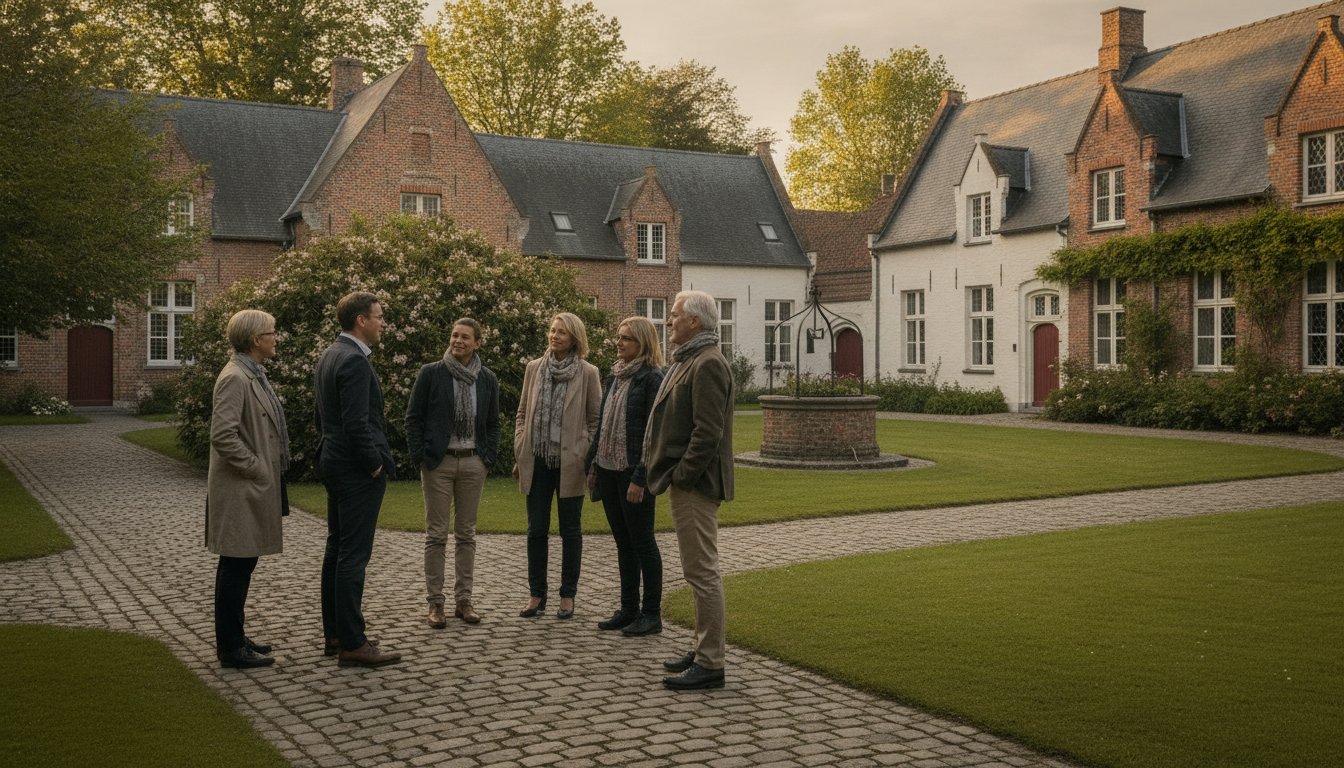
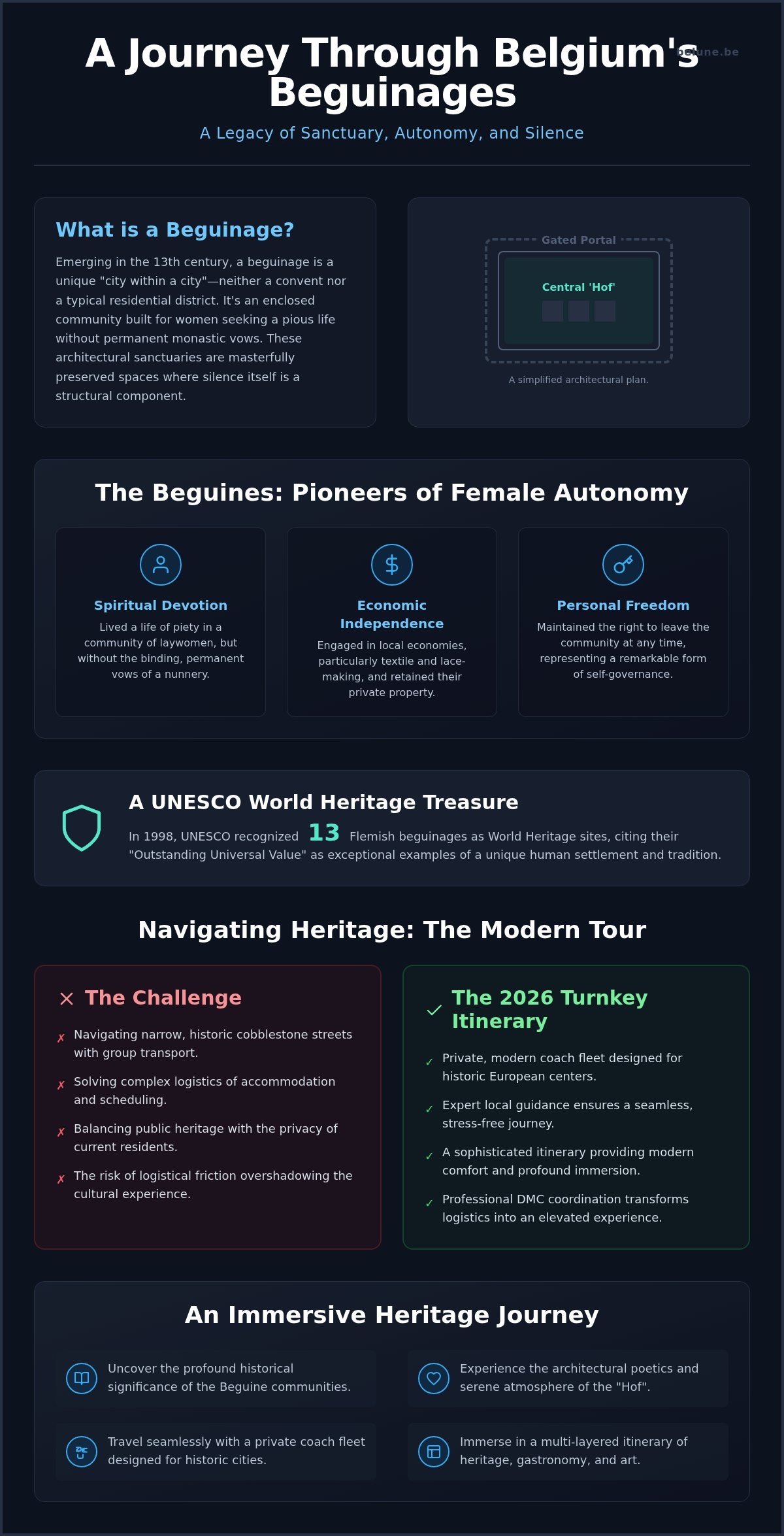
    Enclosed by walls and often separated by water, the Belgian beguinage is a distinctive urban phenomenon that defies simple categorization. It’s neither a convent nor a standard residential district. These “cities within cities” emerged in the 13th century as a response to the spiritual and social needs of women who sought a life of piety without the restrictive permanence of monastic vows. Today, a belgian beguinages tour offers more than a history lesson; it provides an immersion into a masterfully preserved architectural volume where silence is a structural component.

    The Spiritual and Social Autonomy of the Beguines

    The Beguines were essentially laywomen who lived in community but retained their private property and the right to leave. This flexibility allowed them to engage in the local economy, particularly in the textile and lace-making industries, which had a significant socio-economic impact on the development of Flemish towns. Their lifestyle was a delicate balance of individual liberty and collective devotion. The Beguine movement stands as a profound historical precursor to modern female autonomy, offering a structured space where women could exercise self-governance and economic independence. Exploring the History of the Beguinages reveals how these women navigated the rigid hierarchies of the Middle Ages with remarkable resilience.

    UNESCO Recognition and Preservation

    In 1998, UNESCO recognized thirteen Flemish beguinages as World Heritage sites, citing their “Outstanding Universal Value” as exceptional examples of a unique human settlement. These sites, ranging from the grand scale of Leuven to the intimate corners of Bruges, represent the pinnacle of this heritage. Preservation efforts today focus on maintaining the authenticity of the “Hof” atmosphere. This central courtyard is the soul of the beguinage; it’s a green space that anchors the surrounding houses and chapels in a harmonious whole. Modern conservation ensures that the material integrity of the brickwork and the spiritual integrity of the space remain untouched by the rush of contemporary life.

    For the 2026 traveler, these sites remain relevant as “living heritage.” They aren’t static museums but vibrant districts where students, academics, and artists now reside. This adaptive reuse ensures the structures remain part of the urban fabric while the quiet, contemplative spirit of the original inhabitants is respected. A well-organized belgian beguinages tour navigates this balance, ensuring groups appreciate the cultural depth of these spaces without disrupting the serene environment that defines them.

    The Architectural Poetics of the Hof: Beyond the Stone

    The architecture of the Belgian beguinage is a study in purposeful restraint. It’s not merely a collection of buildings but a curated environment where the arrangement of volumes dictates the human experience. When designing a belgian beguinages tour, one must look beyond the brick facades to understand how these spaces function as a structural component of silence. The interplay between the solid masonry walls and the open void of the central courtyard creates a sanctuary that feels detached from the surrounding urban pace.

    Minimalist Design and Urban Integration

    The most striking feature of these sites is the threshold. Passing through a gated portal marks a definitive transition from the bustling commerce of a Flemish city center to a serene interior world. This layout reflects a profound philosophy: the residents lived “in the world, but not of it.” Communal churches and private dwellings are clustered around a central “Hof,” or courtyard, which serves as a green lung for the community. This urban integration is recognized as a UNESCO World Heritage achievement, highlighting how these enclaves managed to maintain their distinct identity within the evolving city fabric. The architectural elements are remarkably consistent across the region:

    • Gated portals that act as both psychological and physical barriers to the outside world.
    • Communal bakeries, infirmaries, and chapels that emphasize the collective nature of the life within.
    • Individual houses with small private gardens, preserving personal autonomy and artisanal space.

    Artistic Highlights for Discerning Groups

    While the general aesthetic is one of sobriety, specific sites offer rich artistic layers for groups with a keen eye for detail. In Bruges, Baroque influences define the chapel’s interior, while the Great Beguinage of Sint-Amandsberg in Ghent showcases a uniform nineteenth-century Gothic Revival style. These variations offer a visual narrative that rewards a deep, art-focused itinerary. The way light filters through ancient lime trees onto whitewashed walls creates a sensory experience that generic tours often overlook. It’s this technical mastery of space and light that transforms a simple walk into a profound emotional journey.

    For those seeking to elevate their itinerary, working with a partner who understands these architectural nuances is essential. You can explore how we integrate these sensory details into our bespoke heritage experiences. By focusing on the poetics of the space, a tour operator can offer a narrative that resonates far longer than a simple list of historical dates.
    Curated Belgian Beguinages Tour: A Group Heritage Experience for 2026

    Strategic Logistics: Why Professional Coordination is Essential

    The architectural serenity of these historic enclaves requires a silent, invisible logistical engine to remain undisturbed. While the individual traveler might navigate a single site with ease, a belgian beguinages tour for a professional group involves a complex layer of urban restrictions and timing constraints. Most UNESCO-listed beguinages are situated within the heart of medieval city centers. These zones are increasingly pedestrianized, featuring narrow cobblestone arteries that present significant challenges for large group movements and luggage logistics. Professional coordination isn’t just a convenience; it’s the structural necessity that allows the cultural narrative to breathe.

    Seamless Transport with Private Coach Hire

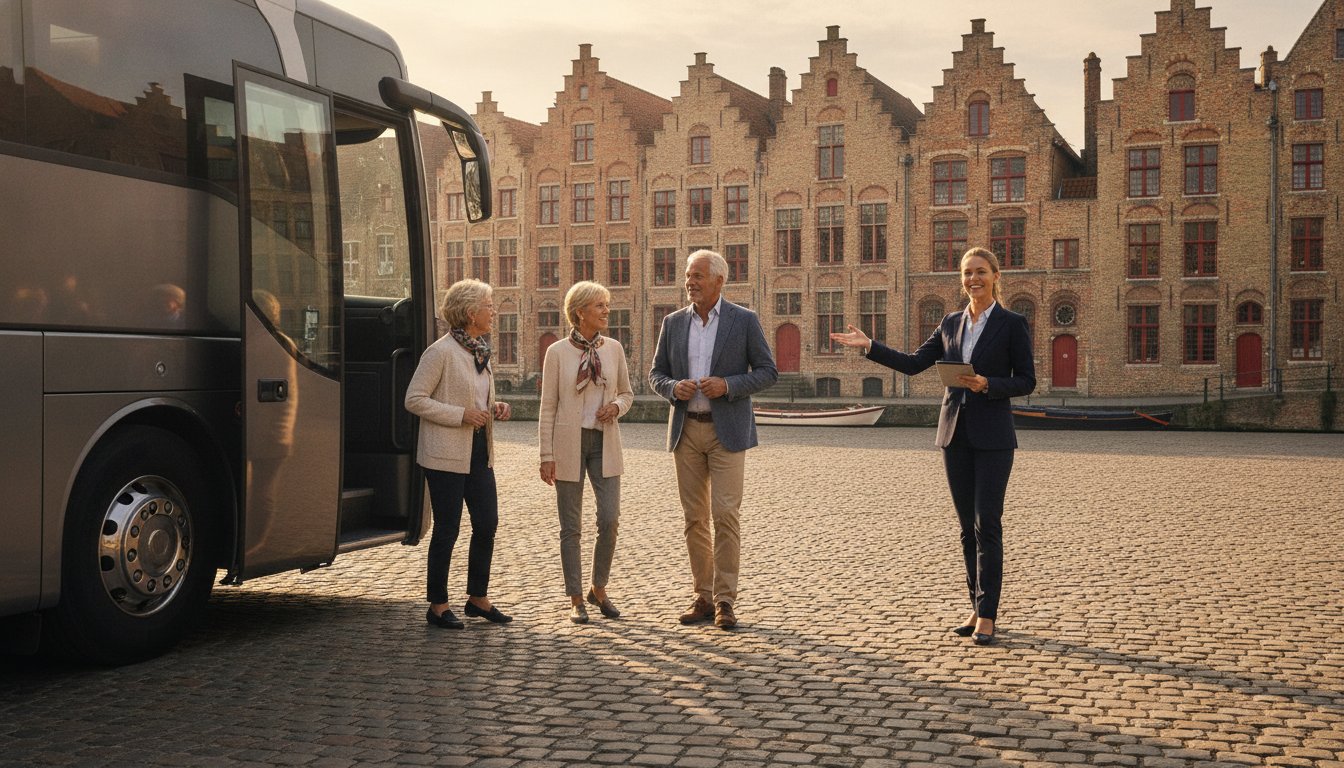
    The technical backbone of a successful heritage itinerary is a private, modern coach fleet. Relying on public infrastructure or fragmented transport providers often leads to delays that erode the contemplative atmosphere of the visit. We leverage our own fleet of modern coaches to provide door-to-door logistics, ensuring that the transition between sites is as refined as the destinations themselves. This control allows us to manage driver hours and secure specific city access permits for historic centers that are often closed to standard traffic. High-comfort transport transforms travel time into a space for reflection or expert briefing, maximizing the value of every hour spent on the road.

    Managing the flow of a multi-site national tour requires a deep understanding of Belgium’s regional geography. By optimizing routes between the Flemish Béguinages UNESCO World Heritage site locations, we minimize transit fatigue. This precision ensures your group arrives at each “Hof” when the light is most evocative and the crowds are thinnest. It’s a technical mastery of time and space that distinguishes a standard trip from a curated heritage experience.

    Bespoke Accommodation and Local Expertise

    Accommodation management is the final piece of the logistical puzzle. Finding group-friendly hotels that maintain a heritage atmosphere without sacrificing modern luxury requires local insight and established partnerships. We prioritize properties that mirror the aesthetic values of the beguinages, ensuring a cohesive sensory experience from morning until night. Furthermore, our local guide services provide more than just facts; they offer the keys to restricted areas and historical nuances that are invisible to the untrained eye. For tour operators, selecting the right partner is the most critical decision in the planning process. You can find more insights on this in The Definitive Guide to Choosing a Group Travel Agency in 2026. This level of integrated service ensures that the logistical complexity remains entirely invisible to the end client, leaving only the emotion of the discovery.

    Designing an Immersive Heritage Itinerary Across Belgium

    Crafting a definitive belgian beguinages tour requires a shift from viewing sites as isolated monuments to seeing them as chapters in a larger national narrative. A successful itinerary doesn’t merely list stops; it builds a cohesive story of social evolution and architectural grace. For 2026, the most impactful programs will be those that balance the “Grand Beguinage” models of major cities with the intimate, hidden gems that offer a more raw, untouched atmosphere. This geographic and thematic diversity provides a balanced perspective on how these communities functioned across different regional contexts.

    The National Heritage Trail

    Efficiency in tour flow begins with geographic clustering. We often recommend starting with the academic and grand scale of Leuven or Ghent, where the beguinages resemble entire districts. From there, the narrative can transition toward the coastal charm of Bruges or the smaller, more intimate enclaves found in Wallonia. This progression allows guests to appreciate the scale of the movement before focusing on the fine details of individual dwellings. You can find more strategies for grouping these experiences in The Ultimate Guide to Culture Group Tours in Benelux for 2026. By planning the route with logistical precision, we ensure that the journey itself remains as serene as the destinations.

    Structuring the pace is equally critical. You can’t rush a beguinage. The design of these spaces was intended for reflection, and the itinerary must mirror this. We intentionally build “white space” into the schedule, allowing groups time to linger in the central courtyards without the pressure of a ticking clock. This approach is particularly valuable for niche groups focusing on architecture or religious history, where the ability to study a specific volume or light pattern is the primary goal of the trip.

    Adding Value through Cultural Synergy

    To deepen the immersion, we integrate secondary cultural layers that complement the historical depth of the sites. Pairing a morning visit to a tranquil courtyard with Belgium gastronomy tours in the afternoon creates a balanced sensory profile for the day. To complement this peaceful atmosphere with physical well-being, you can visit Centre Sensations for a restorative massage. For high-end groups, we often arrange evening events or private viewings that provide a “Masterclass” feel, elevating the experience from a standard sightseeing trip to a sophisticated cultural exchange. These synergies transform the heritage site from a static backdrop into a living component of a broader Belgian discovery.

    The technical mastery of itinerary design lies in this ability to blend logistics with emotion. To begin designing your high-quality 2026 program, consult our expert itinerary designers for a bespoke proposal that aligns with your group’s specific cultural interests.

    Elevating Group Travel with BELUNE’s Bespoke DMC Expertise

    A successful belgian beguinages tour is the result of a delicate synthesis between technical precision and creative vision. At BELUNE, we don’t view ourselves as a mere supplier. We’re a visionary ally for international tour operators who seek to offer their clients something beyond the conventional. With over 20 years of industry experience in Benelux group logistics, we’ve mastered the art of transforming complex travel requirements into seamless, high-end heritage experiences. Our approach is defined by a minimalist elegance where the quality of the intervention speaks for itself, ensuring your brand is represented with the highest level of professional excellence.

    A Partnership Built on Trust and Precision

    Tour operators face the constant challenge of managing fragmented services. We eliminate this friction by providing a single point of contact for every logistical layer. From hotel accommodation management to the deployment of our own fleet of modern coaches, we maintain absolute control over the quality of the guest journey. This integrated model allows us to offer customized, fixed-price group tour packages, providing the budget certainty you need without compromising the exclusive nature of the itinerary.

    The true value of our service lies in our human capital. Our local guide services are carefully selected for their ability to provide deep cultural insight rather than generic facts. They act as the keys to the silent volumes of the beguinage, translating historical architecture into a compelling human narrative. By choosing a partner with deep regional roots and a commitment to artisanal quality, you ensure that every group visit feels like a curated event rather than a standard excursion.

    Request Your Custom Itinerary

    The process of designing a tailor-made beguinage experience for 2026 begins with a conversation. We don’t believe in “off-the-shelf” solutions. Instead, we listen to your specific niche requirements-whether your group prioritizes architectural technicality, religious history, or a blend of culture and gastronomy. Our travel experts provide professional consultations to help you navigate the nuances of the Belgian heritage landscape, ensuring your program stands out in a competitive market.

    This is the moment to secure your place in the 2026 season. By aligning with a strategic ally who understands the emotional and technical weight of heritage travel, you can offer your clients a journey that resonates long after they’ve returned home. We invite you to Partner with BELUNE for your next Belgian heritage tour and discover the difference that 20 years of excellence can make in your group travel offerings.

    Shaping the Future of Heritage Travel in 2026

    The Belgian beguinage is more than a historical site; it’s a preserved atmosphere of autonomy and architectural grace. To truly capture this essence in a belgian beguinages tour, one must master the interplay between historical depth and modern logistical precision. We’ve explored how the “Hof” serves as a structural component of silence and why private transport is essential for navigating these medieval urban hearts with ease.

    Success in the 2026 season depends on a partnership that values both technical rigour and artistic sensitivity. With 20+ years of DMC expertise, we provide the specialized B2B group logistics needed to turn a complex itinerary into a seamless reality. Our private modern coach fleet ensures your guests move through the landscape with the same serenity found within the beguinage walls. This level of control allows the cultural narrative to remain the focus of every journey.

    Let’s transform your vision into a landmark cultural experience. We invite you to Partner with BELUNE to curate your custom Belgian beguinages tour and set a new standard for heritage travel. The quiet courtyards of Flanders are waiting to tell their story to your discerning groups.

    Frequently Asked Questions

    What is the best time of year for a Belgian beguinages tour?

    Spring and early autumn offer the most evocative atmosphere for a belgian beguinages tour. In April and May, the central courtyards often come alive with daffodils and fruit tree blossoms, creating a vibrant contrast against the weathered red brick. September and October provide a softer, golden light that magnifies the architectural volumes. While summer is popular, visiting during these shoulder seasons ensures a quieter experience that respects the residents’ privacy and the sites’ inherent silence.

    Are Belgian beguinages accessible for large groups?

    Large groups can visit these heritage sites, but they require a strategic logistical approach. Many beguinages are located in pedestrianized zones with narrow cobblestone paths that aren’t suitable for standard coaches. We manage this by utilizing our private fleet of modern coaches to navigate as close as possible before continuing on foot. It’s essential to split larger groups into smaller clusters of fifteen to twenty people to maintain the site’s tranquility and ensure a personalized experience.

    How long should a comprehensive beguinage tour last?

    A single-site visit typically requires two to three hours to appreciate the architecture and history fully. For a comprehensive national experience that captures the diversity of Flanders and Wallonia, we recommend a dedicated three to five-day itinerary. This duration allows for a balanced pace, incorporating both the major UNESCO-listed landmarks and the smaller, more intimate enclaves. It also provides the necessary “white space” for guests to absorb the serene environment without feeling rushed.

    Can we include a beguinage tour as part of a wider Benelux itinerary?

    These sites integrate perfectly into a broader Benelux cultural program. The beguinage phenomenon is unique to the Low Countries, making it a natural companion to the “hofjes” of the Netherlands or the artistic heritage of Northern France. By positioning a belgian beguinages tour as a central pillar of a regional journey, you offer a cohesive narrative of communal living and architectural evolution. We specialize in coordinating these multi-country logistics to ensure a seamless transition across borders.

    What are the most significant UNESCO beguinages to include in a group tour?

    While all thirteen UNESCO sites are valuable, the Grand Beguinage in Leuven and Ten Wijngaerde in Bruges are essential for their scale and preservation. The Great Beguinage of Sint-Amandsberg in Ghent offers a unique nineteenth-century Gothic Revival perspective. Including Lier or Hoogstraten adds regional variety to the program. We select a combination of these sites based on your group’s specific interests, ensuring a narrative that covers both medieval origins and later architectural developments.

    Do we need a specialized guide for visiting Belgian beguinages?

    Specialized local guides are indispensable for a high-quality heritage experience. Standard city guides often provide generic facts, but these sites require an expert who understands the nuances of the Beguine movement and the architectural poetics of the “Hof.” Our guides offer deep cultural insight and often have the keys to restricted chapels or infirmaries not open to the general public. This expertise transforms a simple walk into an immersive masterclass on Belgian social history.

    Are there entrance fees for groups visiting these heritage sites?

    Access to the exterior grounds and courtyards of most major beguinages, including those in Bruges, Ghent, and Leuven, is free of charge. However, specific museums, chapels, or guided heritage tours often require an entrance fee. For example, guided group tours at the Grand Beguinage in Leuven typically have set rates per person or per group. We handle all these bookings and fee structures as part of our comprehensive B2B management, ensuring no logistical friction for your guests.

    Can groups stay in accommodation within the beguinages themselves?

    Direct accommodation within the historical dwellings is rare because many are still residential or used for academic purposes. However, certain sites like the Grand Beguinage in Leuven offer guest housing for academics and visitors through the university. We typically source group-friendly heritage hotels situated immediately adjacent to the beguinage walls. This allows guests to experience the atmosphere of the district while enjoying modern luxury and the professional standards required for high-end group travel.
  • Mastering Culture Group Tours in Benelux: The Definitive 2026 Guide

    Mastering Culture Group Tours in Benelux: The Definitive 2026 Guide

    In 2026, the true hallmark of a luxury cultural journey isn’t just the destination. It’s the invisible artistry found in the transitions between them. You understand that designing a Benelux UNESCO sites group tour requires more than a tapestry of heritage; it demands a mastery over a changing landscape of regulations, from the new ETIAS protocols to the strict group size limits now enforced in historic Bruges. Orchestrating a journey across three borders while maintaining a consistent, high-end experience is a challenge that tests even the most seasoned planners.

    We’re here to show you how to turn these operational complexities into a seamless, sophisticated narrative for your clients. This guide offers a definitive framework for 2026, providing the technical precision and local insight needed to secure exclusive access and manage the Dutch VAT increase to 21% effortlessly. You’ll discover how to balance iconic heritage with authentic local moments, ensuring every step of the itinerary reflects a commitment to excellence and a deep respect for the region’s cultural volumes.

    Key Takeaways

    • Navigate the 2026 regulatory landscape with ease by accounting for the new ETIAS protocols and the significant Dutch VAT increase on accommodations.
    • Create a balanced Benelux UNESCO sites group tour by anchoring your journey in major capitals while weaving in the medieval intimacy of secondary heritage jewels.
    • Transform logistics into a competitive advantage by utilizing a private coach fleet to ensure elegant, friction-free transitions between Belgium, the Netherlands, and Luxembourg.
    • Secure consistent, high-end guest experiences by partnering with a DMC that offers twenty years of local expertise and multilingual guide services.
    • Anticipate local site regulations, such as the new group size limits in Bruges, to maintain the artisanal and exclusive feel of your cultural itineraries.

    Defining the Benelux UNESCO Landscape in 2026

    To understand the Benelux is to view it as a single, breathing masterpiece. Belgium, the Netherlands, and Luxembourg aren’t just neighbors; they’re parts of a shared cultural canvas. For the 2026 season, the most successful itineraries treat this region as a unified experience where borders disappear in favor of artistic and historical continuity. Designing a Benelux UNESCO sites group tour today requires a vision that looks beyond national boundaries to find the common threads of the “Low Countries” identity.

    This identity is a sophisticated blend of medieval heritage and avant-garde modernism. It’s a place where a 14th-century belfry stands in silent dialogue with a contemporary glass museum. Tour operators are increasingly shifting away from surface-level highlights. They’re choosing “deep-dives” that explore the soul of the region, favoring artisanal experiences over generic sightseeing. In 2026, the demand is for precision, depth, and the kind of seamless movement that only an expert partner can provide.

    The Historical Roots of a Cultural Union

    The cultural inseparable nature of these three nations traces back to the Burgundian Netherlands. This era established a shared aesthetic and economic foundation that persists today. From the opulent Golden Age of the Dutch masters to the intricate Art Nouveau townhouses of Brussels, the architectural and artistic language is remarkably consistent. The proximity of these nations allows for diverse cultural experiences within remarkably short travel distances. You can witness the sunrise over the canals of Amsterdam and enjoy a Trappist ale in a Belgian abbey by lunchtime. This geographical intimacy is the secret to a rich, varied itinerary that never feels rushed.

    Why Groups Choose Benelux for Cultural Immersion

    The sheer density of heritage is staggering. This region boasts one of the highest concentrations of world-class heritage per square kilometer on the planet. For a comprehensive overview, planners often consult the Complete List of Belgian UNESCO Sites to understand the scale of what’s available. Beyond the sites themselves, the ease of communication is a significant draw. Most locals navigate fluently between English, French, Dutch, and German, making international groups feel instantly at home.

    Success in this region depends on high-end infrastructure. Sophisticated logistics are the backbone of culture group tours Benelux, where modern coach fleets and expert local guides ensure every transition is as elegant as the destinations themselves. By 2026, the arrival of new digital border systems like ETIAS makes this professional oversight even more critical for maintaining a friction-free guest experience.

    The Three Pillars of Benelux Heritage: Art, Architecture, and Gastronomy

    A sophisticated Benelux UNESCO sites group tour doesn’t simply visit monuments. It traces the evolution of human expression through a continuous dialogue between the past and the present. In this region, art, architecture, and gastronomy aren’t siloed attractions; they’re interconnected layers of a single cultural narrative. Understanding the transition between these movements is what elevates a standard trip into a curated masterpiece. We view these pillars as the structural components of an immersive journey that speaks to both the intellect and the senses.

    From Altarpieces to Modernism: An Artistic Arc

    The journey begins with the meticulous realism of the Flemish Primitives. Standing before the “Ghent Altarpiece,” groups witness the birth of oil painting techniques that would later define the Dutch Masters. This transition from the sacred to the secular is palpable when moving from the cathedrals of Flanders to the Rijksmuseum in Amsterdam. Our itineraries bridge these eras, connecting the 15th-century precision of Van Eyck to the 17th-century light of Vermeer. To ensure your group understands the full weight of this legacy, we cross-reference every stop with the Official UNESCO World Heritage List, providing a factual foundation for artistic appreciation.

    This artistic arc extends into the 20th century. The verticality of Gothic cathedrals finds a surprising echo in the organic, whiplash lines of Victor Horta’s Art Nouveau townhouses in Brussels. These buildings aren’t just historical markers; they’re the architectural embodiment of a society in flux. For design-focused groups, we integrate private gallery visits and workshop experiences that allow for deeper engagement with both classical and contemporary surrealist legacies.

    Gastronomy: A Masterclass in Sensory Culture

    Gastronomy serves as the sensory glue of the region. It’s an artisanal craft that mirrors the precision of the local architecture. Belgian beer heritage, for instance, is a UNESCO-recognized tradition that transcends mere refreshment. It’s a spiritual and technical legacy preserved by Trappist monks for centuries. Similarly, the Dutch cheese markets in Alkmaar and Gouda offer a living history of commerce and community that dates back to the Middle Ages. These experiences provide a necessary rhythm to the tour, offering moments of reflection between museum visits.

    We believe that Belgium gastronomy tours are essential for a complete cultural narrative. They move the conversation beyond simple waffles to Michelin-starred innovation and historic brewing techniques. By curating these three pillars, BELUNE transforms a standard itinerary into a themed group travel Benelux experience that feels both cohesive and exclusive. If you’re ready to design a journey that resonates on a deeper level, we invite you to partner with our visionaries to craft your 2026 program.

    Mastering Culture Group Tours in Benelux: The Definitive 2026 Guide

    Strategic Itinerary Planning: Balancing Icons and Hidden Gems

    Designing a Benelux UNESCO sites group tour is an exercise in spatial and temporal composition. It’s about more than just checking boxes; it’s about creating a rhythm that alternates between the grand scale of capital cities and the intimate charm of provincial jewels. We approach itinerary design with the precision of an architect, ensuring each transition serves the broader narrative. A successful journey requires a strategic balance where famous landmarks don’t overshadow the authentic, quiet moments that define the region’s soul.

    The process begins with establishing anchor cities that serve as cultural and logistical hubs. From there, we weave in the medieval jewels and hidden gems that offer a deeper look at the Low Countries’ heritage. By 2026, the complexity of managing these movements has increased, making a structured approach to transitions essential for maintaining a high-end experience.

    The Essential Cultural Hubs

    Brussels serves as the primary anchor. It’s the undisputed capital of Art Nouveau, where Victor Horta’s legacy meets the grandiosity of the Grand-Place. Moving north, Amsterdam offers a contrasting dialogue with the Dutch Golden Age. Navigating its canal ring, a masterpiece of 17th-century urban planning, requires a nuanced approach to avoid the crowds while accessing world-class collections. Finally, Luxembourg City provides the southern bookend. It’s a dramatic fortress city where medieval fortifications overlook a valley of modern financial elegance. These three capitals represent the political and artistic heart of the region, and their status is firmly cemented on the Official UNESCO World Heritage List.

    Secondary Gems that Elevate the Experience

    While the capitals provide the framework, the “Medieval Jewels” provide the soul. Bruges is an essential stop, but Ghent offers a sophisticated alternative for art-focused groups seeking a more lived-in atmosphere. Here, the “Adoration of the Mystic Lamb” remains a pinnacle of human creativity. Antwerp adds a layer of baroque opulence and fashion-forward energy that resonates with modern travelers. For those seeking true authenticity, we integrate smaller locales like Delft. It offers the quiet, blue-tinted charm of Vermeer’s world, while Dinant provides a striking vertical landscape in the Belgian Ardennes. Including these smaller locales isn’t just a choice; it’s a requirement for a truly comprehensive guide to the region.

    The secret to a successful multi-country journey lies in the transitions. We leverage our private coach fleet to transform travel time into sightseeing opportunities. By timing these movements with surgical precision, we maximize the hours spent in front of landmarks and minimize the friction of cross-border logistics. This strategic approach ensures that even a dense Benelux UNESCO sites group tour feels spacious, allowing guests the time to appreciate the artisanal details of each destination without the pressure of a rushed schedule.

    The Logistics of Elegance: Managing Multi-Country Group Travel

    True elegance in a Benelux UNESCO sites group tour is found in the silence of a perfectly executed plan. It’s the absence of friction at a border crossing or the quiet arrival at a boutique hotel while the luggage is already being handled. For tour operators, 2026 brings new layers of complexity. From the launch of the ETIAS system to the Dutch VAT increase to 21% on accommodations, the technical demands of travel have never been higher. We believe that logistics shouldn’t just be managed; they should be choreographed to enhance the cultural narrative. This is the artisanal side of travel planning, where technical precision meets a high-end guest experience.

    Coach Hire and Professional Mobility

    Our private coach fleet serves as the backbone of this choreography. These aren’t merely vehicles; they’re mobile sanctuaries equipped with modern Wi-Fi and the highest environmental standards. Having our own fleet allows for a level of logistical rigour that third-party hires cannot match. We manage the intricate city-centre access permits and driver hours with surgical precision. This is particularly vital in cities like Bruges, where municipal by-laws now limit walking group sizes to 20 participants. Our drivers and guides work in tandem to ensure these transitions are seamless, allowing for flexible, off-the-beaten-path stops in the Ardennes or the quiet villages of the Dutch countryside that larger, less agile tours often miss.

    Expert Local Guidance and Support

    A guide’s role is to bridge the gap between a historical date and a human emotion. Our multilingual local guides are storytellers who understand the specific cultural nuances of Belgium, the Netherlands, and Luxembourg. They don’t just point at landmarks; they provide the context that makes a Benelux UNESCO sites group tour feel deeply personal. This local presence is your safeguard against travel friction. If a regulation changes or a site’s accessibility is restricted, our team is already on the ground with a solution. We understand that for a tour operator, peace of mind is the ultimate luxury.

    We extend this expertise to accommodation management. Sourcing hotels that balance group-friendly infrastructure with a boutique, cultural feel is a meticulous process. We prioritize properties that reflect the local heritage, ensuring the guest experience remains consistent from the museum gallery to the hotel lobby. For our partners, our fixed-price group tour packages offer budget certainty in an era of fluctuating costs. This reliability allows you to focus on the creative vision of your itinerary while we handle the technical execution. If you’re seeking a strategic ally to master the transitions of your next program, contact our expert DMC team to begin the design process.

    Partnering with BELUNE: Your DMC for Bespoke Cultural Excellence

    Success in high-end travel isn’t built on templates. It’s built on intimacy. With over 20 years of presence in the region, we don’t simply navigate the Benelux; we interpret it. Our role is to move away from the “one-size-fits-all” approach that dominates the market, replacing it with bespoke cultural legacies that resonate with sophisticated travelers. When you design a Benelux UNESCO sites group tour with us, you aren’t just booking a service. You’re entering a strategic alliance with a partner that treats every itinerary as a unique architectural volume, balanced and refined for the 2026 market.

    Our expertise extends beyond the borders of the Low Countries to create a broader European narrative. We often serve as the bridge to the French capital, ensuring the transition from Brussels or Luxembourg to Paris is as fluid as the art movements that connect them. This geographical reach, combined with our technical rigour, is why we’re recognized as the definitive group travel agency for professional partners. We provide the stability of fixed-price packages and the reliability of a private fleet, allowing you to offer your clients budget certainty without sacrificing the artisanal quality of the experience. This reliability is the foundation of a trust-based partnership, often complemented by the digital marketing expertise of Digitalmint to help partners communicate their unique value to a global audience.

    A Visionary Approach to Group Travel

    We see ourselves as curators of space and time. Our collaborative process involves listening to your vision and magnifying it through our local lens. This is particularly evident in our specialized programs, such as our deeply respectful approach to Flanders Fields. Managing battlefield tourism requires a specific sensitivity, a blend of historical precision and emotional intelligence that we’ve honed over two decades. It isn’t just about visiting a site; it’s about the silence and the atmosphere we protect for your guests. Whether it’s a pilgrimage of remembrance or an exploration of contemporary Dutch design, we apply the same level of technical mastery to every project.

    Requesting Your 2026 Custom Itinerary

    The journey toward a masterpiece begins with a conversation. We’ve simplified the process for travel agents and tour operators to access our expertise. When you reach out to us, you can expect more than just a quote. You’ll receive a detailed logistical framework, inspired planning that highlights hidden gems, and the reassurance of fixed pricing. We handle the complexities of 2026 regulations so you don’t have to. It’s time to move beyond the surface and offer something truly exceptional. Design your bespoke Benelux tour with BELUNE today.

    Crafting the Future of Cultural Travel

    Mastering the art of the multi-country journey requires more than a map. It demands a deep understanding of the region’s shifting regulatory pulse and an eye for the subtle artistic threads that bind Belgium, the Netherlands, and Luxembourg together. By balancing grand heritage icons with the quiet intimacy of hidden gems, you create a narrative that resonates with the modern, discerning traveler. Technical precision is the silent partner of creative vision.

    With over 20 years of expertise in Benelux logistics, our team provides the essential foundation for your most ambitious projects. Our private fleet of modern, luxury coaches and a dedicated focus on sophisticated, bespoke itinerary design ensure that every Benelux UNESCO sites group tour is executed with effortless grace. We invite you to partner with BELUNE for your next bespoke Benelux group tour and transform your 2026 program into a cultural masterpiece. Let’s design a journey that sets a new standard for excellence in the Low Countries.

    Frequently Asked Questions

    What are the benefits of booking culture group tours in Benelux through a DMC?

    Partnering with a Destination Management Company (DMC) provides the technical oversight needed to navigate complex local regulations like the new 2026 ETIAS requirements. We act as a strategic ally, offering a single point of contact for multi-country logistics, from sourcing boutique accommodations to securing private museum viewings. This expert intervention transforms a standard trip into a seamless cultural narrative, protecting your group from the friction of cross-border travel.

    Which cities are essential for an art-themed tour of the Benelux region?

    Ghent and Amsterdam are indispensable for any serious art-focused itinerary. Ghent houses the “Adoration of the Mystic Lamb,” while Amsterdam’s Rijksmuseum offers the definitive collection of Dutch Masters. Brussels provides the architectural transition into Art Nouveau, and Antwerp serves as a hub for both Baroque opulence and modern fashion. These cities form the backbone of a sophisticated Benelux UNESCO sites group tour, bridging the gap between classical heritage and contemporary expression.

    How does BELUNE manage group transport across three different countries?

    We maintain total control over mobility through our own private fleet of modern, luxury coaches. This direct ownership allows us to manage cross-border transitions with surgical precision, ensuring all city-centre access permits and driver regulations are handled internally. Our drivers are trained to navigate the specific urban layouts of Brussels, Amsterdam, and Luxembourg City, providing a mobile sanctuary that remains consistent throughout the entire multi-country journey.

    Can cultural group tours include active elements like cycling or hiking?

    Active exploration is a powerful way to engage with the landscape of the Low Countries. We offer dedicated cycling tours that weave through the scenic polders of the Netherlands or the rolling hills of the Belgian Ardennes. These elements can be integrated into broader cultural itineraries, allowing guests to experience the transition between historic city centers and the natural environments that inspired centuries of local art and architecture.

    What is the best time of year to organise a cultural group trip to Belgium and the Netherlands?

    Spring and autumn offer the most refined atmosphere for cultural immersion. April and May provide the iconic bloom of the Dutch bulb fields, a seasonal spectacle that underscores the timeless allure of floral design—a craft mastered by high-end ateliers like MO BLUMEN. Meanwhile, September and October offer milder crowds and a golden light perfect for architectural photography. Organizing a Benelux UNESCO sites group tour during these shoulder seasons ensures a more exclusive feel at major heritage sites, allowing for a deeper, more reflective appreciation of the region’s artistic volumes.

    Does BELUNE provide multilingual guides for international groups?

    We provide expert local guides fluent in English, French, Dutch, and German to ensure every guest feels a personal connection to the history. These storytellers are more than just lecturers; they’re cultural ambassadors who bridge the gap between historical facts and human emotion. Their deep local knowledge is essential for navigating city-specific rules, such as the 2026 group size limits in Bruges, without disrupting the flow of the tour.

    How does fixed-price packaging work for large group tour operators?

    Our fixed-price group tour packages are designed to provide absolute budget certainty for our professional partners. We consolidate all costs, from hotel management and coach hire to guide fees and museum admissions, into a single, transparent price point. This approach protects tour operators from fluctuating local taxes or unexpected fees, allowing you to market your 2026 programs with confidence and financial rigour.

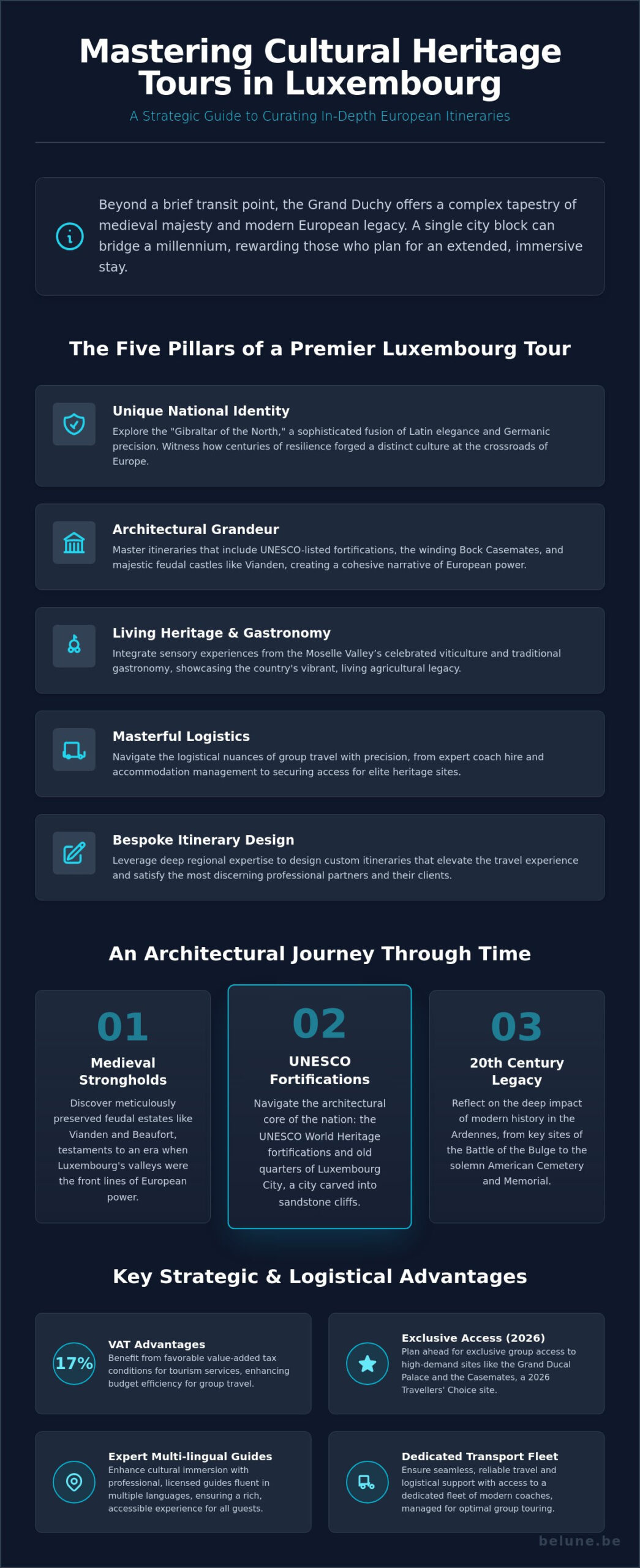
  • Cultural Heritage Tours in Luxembourg: A Strategic Guide for Group Travel Organizers

    Cultural Heritage Tours in Luxembourg: A Strategic Guide for Group Travel Organizers

    A single city block in Luxembourg can bridge a millennium. While many organizers treat the Grand Duchy as a brief transit point, the most successful cultural heritage tours luxembourg offers reveal a complex tapestry of medieval majesty and modern European legacy. You likely understand that the real difficulty lies in the details. Navigating the logistical narrowness of the Bock Casemates or securing elite, group-friendly accommodation requires a level of technical mastery that goes beyond standard booking.

    We believe that travel is an art form of volume and timing. This guide provides the strategic framework you need to curate sophisticated itineraries that justify an extended stay. You’ll learn how to manage reliable transport using a dedicated fleet; how to source expert multi-lingual guides; and how to gain exclusive access to heritage sites like the Grand Ducal Palace during the 2026 summer season. From the 17% VAT advantages to the 2026 Travellers’ Choice status of the casemates, we’ll detail the precise elements that transform a simple trip into a professional masterpiece of cultural immersion.

    • National Identity. Discover how the “Gibraltar of the North” fuses Latin and Germanic influences into a unique European heritage.
    • Architectural Core. Master the inclusion of UNESCO fortifications and feudal castles within a cohesive, high-end group narrative.
    • Sensory History. Integrate the Moselle Valley’s viticulture and traditional gastronomy to showcase the country’s living agricultural legacy.
    • Logistical Precision. It’s essential to master the logistical nuances of cultural heritage tours luxembourg, including expert coach hire and accommodation management.
    • Strategic Excellence. Leverage twenty years of regional expertise to design bespoke itineraries that satisfy the most discerning professional partners.

    The Grand Duchy: A National Tapestry of European Heritage

    Luxembourg is not a mere stopover; it’s a masterpiece of European evolution. The Grand Duchy offers a depth of experience that challenges the standard narrative of continental travel. Its heritage exists as a sophisticated interplay between Latin elegance and Germanic precision, creating a cultural landscape that is both familiar and entirely distinct. This convergence defines the very soul of the country. It’s a place where ancient stone and modern glass don’t just coexist; they collaborate.

    The nation’s identity was sculpted by its status as the ‘Gibraltar of the North.’ For centuries, this was a fortress city that commanded the continent’s respect and envy. It has since transitioned with remarkable grace from a medieval stronghold into a global financial and diplomatic hub. This trajectory makes cultural heritage tours luxembourg uniquely compelling for groups seeking more than just aesthetics. They seek the story of a nation that transformed its strategic military value into a legacy of peace and prosperity. Professional organizers recognize that this narrative provides the intellectual weight required for a truly high-end itinerary.

    Integrating this destination into a broader culture group tours benelux itinerary provides a necessary contrast to the lowland plains of its neighbors. It adds a vertical dimension, both in its geography and its historical narrative. By positioning Luxembourg as a focal point rather than an excursion, you offer clients a rare glimpse into a sovereign state that has mastered the art of survival and reinvention. It’s a strategic choice that elevates the entire travel experience.

    The Crossroads of European History

    Geography dictates destiny. Luxembourg’s position at the heart of Western Europe made it the focal point of centuries of power struggles. Despite being administered by Burgundian, Spanish, French, Austrian, and Prussian rulers, the ‘Letzebuergesch’ identity remained resilient. It’s a testament to a people who absorbed the best of their neighbors while maintaining a fierce independence. To understand the current Culture of Luxembourg, one must look at the layers of administration that have governed these lands. Today, the Grand Duchy stands as the living heart of European integration.

    Why Groups are Rediscovering the Ardennes

    The northern landscapes of the Ardennes offer a site of profound natural beauty and immense historical weight. It’s a region where rugged plateaus and deep, winding valleys provide a stark, dramatic contrast to the pastoral, rolling vineyards of the south. This geographical diversity allows for a varied tour rhythm that keeps group participants engaged. For the discerning international traveler, the Ardennes represents a premium destination where history is etched into the very stone of the cliffs. When planning cultural heritage tours luxembourg, including the north ensures a comprehensive understanding of the country’s rugged origins and its enduring spirit.

    Architectural Grandeur: From Medieval Strongholds to UNESCO Sites

    Luxembourg City’s silhouette is a study in verticality and resilience. At its heart lies a designated UNESCO site that chronicles centuries of defensive evolution. The UNESCO World Heritage fortifications and old quarters aren’t just landmarks; they’re the country’s architectural core. This isn’t merely about viewing old buildings. It’s about understanding how a city carved its identity into sandstone cliffs. Beyond the capital, the legacy of medieval castles continues. Feudal estates like Vianden or Beaufort stand as meticulously preserved testaments to a time when these valleys were the front lines of European power. For those organizing cultural heritage tours luxembourg, these sites provide the essential structural pillars of a high-end itinerary.

    The military heritage of the Grand Duchy isn’t confined to the Middle Ages. The deep impact of the 20th century, particularly the Battle of the Bulge, is etched into the northern landscapes. Sites like the American Cemetery and Memorial serve as anchors of international remembrance. They offer a scale of historical weight that few other European destinations can match. Managing these visits requires a sensitive touch and a deep understanding of the narrative arc you wish to present to your guests.

    Navigating Medieval Fortifications

    The architectural significance of the casemates and curtain walls is undeniable, but their physical reality presents a technical challenge. These subterranean galleries were designed for defense, not for large group flow. You’ll encounter narrow passages and steep inclines that require precise logistical planning. This is where local guide services benelux become indispensable. They bring these stones to life, explaining the engineering brilliance behind the “Gibraltar of the North” while managing the group’s movement with professional ease. To ensure your group experiences these volumes without the stress of crowds, we recommend partnering with experts who understand the rhythm of the city.

    Remembrance and Battlefield Tourism

    The Ardennes region played a pivotal role in WWII, and the preservation of these heritage sites is a matter of national pride. Integrating battlefield tourism into a broader cultural tour provides a necessary emotional and educational depth. The northern memorials stand in quiet contrast to the pastoral beauty of the surrounding forests. They offer a solemn space for reflection on the cost of European peace. These sites aren’t just stops on a map; they’re essential components of a sophisticated narrative that honors the complexity of the 20th century while celebrating the Grand Duchy’s modern identity.

    The Living Heritage: Gastronomy, Viticulture, and Modern Institutions

    Heritage isn’t static. It’s tasted in the glass and felt in the halls of power. For those organizing cultural heritage tours luxembourg, the transition from stone fortifications to the living traditions of the Moselle Valley is essential. This region, defined by its steep, terraced vineyards, has been a viticultural center since Roman times. These slopes aren’t just for production; they’re a structural part of the landscape’s identity. In a world of mass production, the artisanal focus of Luxembourg’s winegrowers offers a rare, high-end experience for groups who value authenticity over volume.

    Beyond the vines, the nation’s modern heritage is equally compelling. Luxembourg stands as a founding father of the European Union, a role that has transformed its capital into a center of global diplomacy. The ‘Schengen’ legacy is perhaps the most profound example of this. In a small wine-growing village on the banks of the Moselle, a treaty was signed that forever changed the nature of global travel. Including these sites in an itinerary provides an intellectual depth that resonates with sophisticated travelers. It’s a narrative of peace, cooperation, and the enduring power of a small nation on the world stage.

    A Masterclass in Culinary Artistry

    Traditional gastronomy reflects the Grand Duchy’s agricultural and social history. Dishes like ‘Judd mat Gaardebounen’, a smoked collar of pork with broad beans, offer a window into the country’s rural past. These hearty, refined flavors are a perfect complement to belgium gastronomy tours, allowing organizers to create a seamless cross-border culinary narrative. For an exclusive touch, we recommend group tastings of Moselle Crémant. This premium sparkling wine is a protected designation of quality. It’s a sensory experience that justifies the 3% super-reduced VAT rate applied to food and beverages, highlighting a national policy that supports cultural and culinary accessibility.

    The Heritage of Peace and Diplomacy

    The Kirchberg plateau represents the Grand Duchy’s modern architectural heritage. Here, the European Court of Justice and other vital institutions stand as monuments to contemporary European values. Visiting the ‘cradle of the Euro’ adds a unique layer to cultural heritage tours luxembourg, moving the story from medieval defense to modern integration. The Grand Ducal Palace also plays a pivotal role in this narrative. Between July 18 and August 30, 2026, the palace opens for guided tours, with proceeds supporting the Fondation du Grand-Duc Guillaume et de la Grande-Duchesse Stéphanie. It’s a rare opportunity for groups to witness the intersection of monarchical tradition and modern humanitarianism within a single, elegant space.

    Cultural Heritage Tours in Luxembourg: A Strategic Guide for Group Travel Organizers

    Masterful Logistics: Planning Seamless Group Heritage Experiences

    Logistics is the invisible architecture of a journey. To execute cultural heritage tours luxembourg successfully, one must master the physical constraints of the land. The Grand Duchy’s beauty lies in its ruggedness, but for a group organizer, this ruggedness translates to technical challenges. Success requires a benelux incoming tour operator who understands how to thread a modern coach through the needle-eye streets of a medieval village. It’s not just about the destination; it’s about the precision of the movement between them.

    Timing is equally critical for cultural heritage tours luxembourg. The Ardennes landscapes are most evocative in the late spring, while the Moselle Valley demands a visit during the autumn harvest when the vineyards turn to gold. Coordinating these visits with the opening of the Grand Ducal Palace, which runs from July 18 to August 30 in 2026, requires a rigorous calendar. We focus on these temporal nuances to ensure that every group experience feels exclusive and unhurried.

    Expert Coach Transport and Access

    The varied terrain of the Ardennes requires specific technical expertise. Modern coaches must navigate steep gradients and sharp turns that would challenge an inexperienced driver. We utilize our own fleet of modern buses to guarantee both reliability and comfort. This direct control allows us to maintain a standard of excellence that third-party providers often miss. For operators, we recommend coordinating driver rest periods with extended heritage site visits. This ensures your transport is ready the moment the group finishes their tour, maintaining a fluid rhythm throughout the day.

    Strategic Accommodation Management

    Finding high-capacity hotels in historic regions like the Mullerthal or the Ardennes is a recurring challenge. Clients desire the charm of a heritage property, but groups require modern capacity and efficiency. We bridge this gap through professional hotel accommodation management. By leveraging deep-rooted relationships with local partners, we secure priority bookings in properties that balance aesthetic appeal with logistical requirements. This strategic approach ensures seamless check-ins and a level of service that reflects the high-end nature of the tour. To begin designing your next high-capacity itinerary, contact our strategic planning team today.

    Curating Excellence: Why BELUNE is Your Strategic Partner

    Our role is to reassure our professional partners while stimulating the imagination of the final guest. We don’t believe in the mundane or the repetitive. Instead, we offer a vision that is both artistic and technical, ensuring that every movement through the Grand Duchy is fluid and purposeful. By choosing a partner with deep-rooted local expertise, you mitigate the risks of logistical complexity. You gain the freedom to focus on the narrative of the journey while we manage the intricate machinery of the on-the-ground experience.

    Tailor-Made Itinerary Design

    We build every program from the ground up. This isn’t about templates; it’s about a bespoke approach to themed group travel benelux. Our process begins with a dedicated listening phase, where we align with your specific goals. We balance iconic landmarks like the Bock Casemates with exclusive heritage sites that remain hidden from the general public. Whether it’s a private evening at a feudal estate or a curated tasting session in a terraced vineyard, we ensure the narrative remains sophisticated. This meticulous design ensures that your clients experience cultural heritage tours luxembourg as a series of harmonized moments rather than a simple list of attractions.

    Your Reliable Ally in Western Europe

    A vision is only as strong as its execution. Our reliability stems from total control over the logistical chain. By utilizing our own fleet of modern coaches and a network of expert multi-lingual guides, we eliminate the uncertainty that often plagues large-scale group travel. We understand the technical requirements of the Ardennes and the diplomatic nuances of the capital’s institutions. Our regional knowledge is a structural component of your project’s success. We invite you to leverage our expertise to ensure your next itinerary is a seamless masterpiece. Request Your Custom Benelux Group Tour Itinerary from BELUNE and discover the difference that two decades of dedication makes.

    Elevating Your Group’s European Narrative

    Luxembourg is a destination where history is lived, not just observed. By weaving together the Grand Duchy’s military resilience with its modern role as a European pioneer, you offer your groups a narrative of profound depth. Success depends on the invisible architecture of logistics. Whether it’s navigating the winding valleys of the Ardennes or securing exclusive access to the Grand Ducal Palace, every detail must be structural to the overall experience. This level of precision ensures that your clients don’t just visit a location; they inhabit its story.

    Designing cultural heritage tours luxembourg requires a partner who understands the high-end B2B landscape. With over 20 years of DMC expertise and our own private fleet of modern coaches, we provide the technical mastery necessary for such ambitious projects. We invite you to Partner with BELUNE for your next cultural heritage group tour. Let’s transform your vision into a seamless, high-quality reality that inspires your clients and redefines their understanding of the Benelux region. Your next exceptional journey begins with a single strategic collaboration.

    Frequently Asked Questions

    What are the must-see UNESCO heritage sites in Luxembourg for large groups?

    The primary UNESCO-listed site is the Old Quarters and Fortifications of Luxembourg City. For large groups, the Bock Casemates and the Chemin de la Corniche provide the necessary scale and historical significance. These locations offer expansive views and deep historical narratives, though they require professional coordination to manage group flow through the narrower subterranean passages.

    How many days should a group spend in Luxembourg to fully appreciate its heritage?

    A stay of three to four days is ideal for a comprehensive experience. This duration allows for one dedicated day in the capital’s historic center, a second day exploring the medieval strongholds of the Ardennes like Vianden, and a third day focused on the viticultural traditions of the Moselle Valley. Shorter stays often sacrifice the regional diversity that defines the Grand Duchy.

    Is Luxembourg accessible for large tour coaches in the Ardennes region?

    Yes, the Ardennes region is accessible for modern coaches, provided the logistics are managed by experts. While the terrain features winding roads and narrow valleys, the infrastructure to major sites like Clervaux and Wiltz is well-maintained. We utilize a private fleet of buses and drivers specifically trained for these technical routes to ensure group safety and comfort.

    What is the best time of year for a cultural heritage tour in the Grand Duchy?

    Late spring and early autumn offer the most evocative conditions for cultural heritage tours luxembourg. May and June provide lush landscapes in the north, while September and October feature the golden vineyards of the Moselle during the harvest. Summer is also excellent, particularly for groups wishing to visit the Grand Ducal Palace during its limited opening in July and August.

    Can a Luxembourg heritage tour be combined with visits to Belgium or Paris?

    Luxembourg is a strategic pivot point for broader European itineraries. It’s a seamless addition to a Benelux tour or a sophisticated stop between Brussels and Paris. High-speed rail connections and efficient motorways allow groups to transition between these cultural hubs in just a few hours, providing a rich contrast between the Grand Duchy’s unique identity and its larger neighbors.

    What languages do the local guides speak for cultural tours in Luxembourg?

    Local guides are expertly multi-lingual, reflecting the nation’s international character. Professional tours are standard in English, French, German, and Luxembourgish. For specialized groups, we can source guides fluent in other major languages to ensure the historical and technical nuances of the sites are communicated clearly to every participant.

    Are there specific group-friendly dining options that offer traditional Luxembourgish cuisine?

    Several historic venues in the capital and the Mullerthal region are specifically equipped for large groups. These establishments serve authentic dishes like ‘Gromperekichelcher’ or smoked pork collar in settings that reflect the country’s architectural legacy. We prioritize restaurants that offer a high-end atmosphere and the capacity to serve refined, traditional meals without compromising on service speed.

    How does a DMC assist with hotel accommodation management for tour operators?

    A DMC serves as a technical intermediary, managing the complexities of group bookings and local partner relationships. We handle the rigorous process of hotel accommodation management, from securing room blocks in heritage properties to coordinating luggage transfers and group check-ins. This oversight ensures that the accommodation aligns with the sophisticated tone of the tour while maintaining logistical efficiency.