Tag: tour operator

  • Mastering the Challenges of Multi-Country Group Travel: A 2026 Logistical Blueprint

    Mastering the Challenges of Multi-Country Group Travel: A 2026 Logistical Blueprint

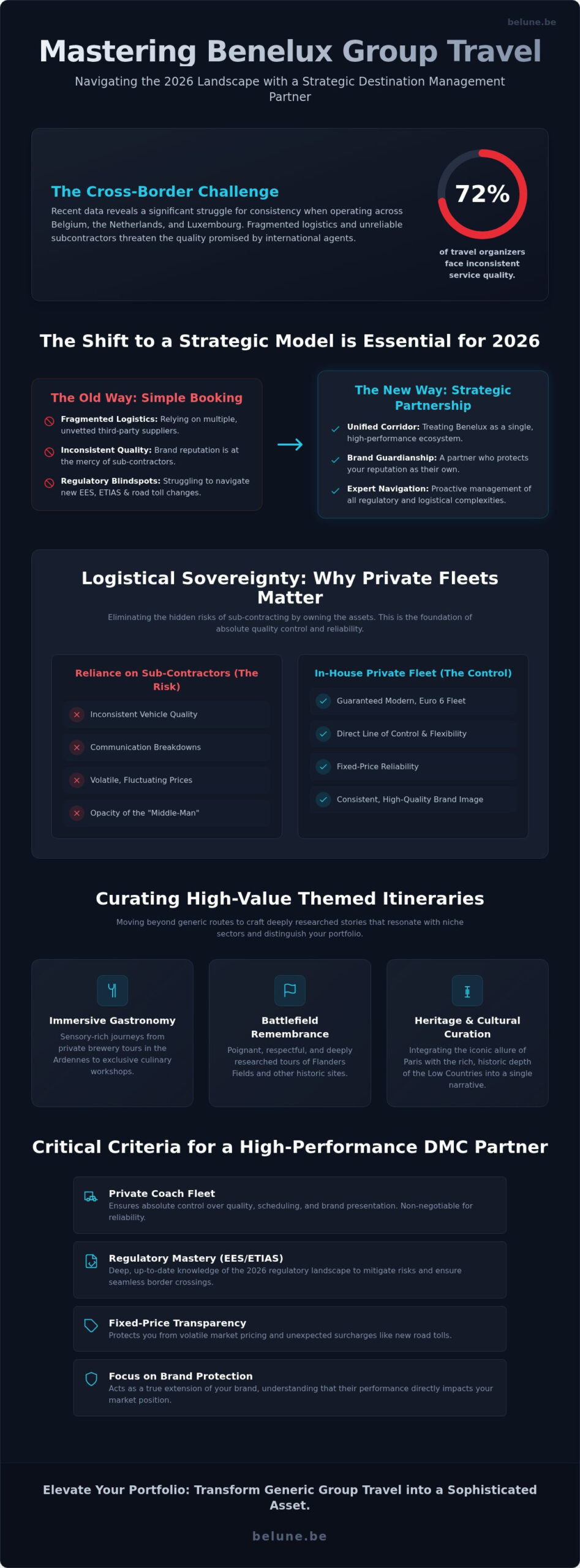
    In 2026, the true measure of a luxury European tour isn’t the distance traveled, but the absolute invisibility of the borders crossed. You understand that managing the challenges of multi-country group travel requires more than a map; it demands a master’s touch. Every logistical detail, from the 2026 EES (Entry/Exit System) requirements to the specific coach dimensions allowed in historic Italian centers, represents a potential fracture in a client’s experience. You’ve likely felt the tension of balancing a rigid schedule with the fluid, emotional depth your guests crave.

    This blueprint provides the technical and artistic framework to turn these complex hurdles into a frictionless journey of discovery. We’ll show you how to navigate the 2026 regulatory landscape and secure elite accommodations that maintain a sublime standard of harmony across different cultures. By the end, you’ll have the tools to design itineraries where every transition feels as natural and evocative as a shift in light. It’s about moving beyond simple logistics to create a tailor-made experience that resonates with precision and grace.

    Key Takeaways

    • Master the complex challenges of multi-country group travel by navigating non-negotiable EU driver regulations and cross-border transport permits.
    • Discover how to bridge the “Friction Gap” by balancing ambitious itineraries with the meaningful cultural depth of the slow travel movement.
    • Learn to implement a “Logistical Stress Test” to ensure every mile of your journey aligns with strict city access and operational constraints.
    • Eliminate vendor fragmentation by establishing a single point of regional accountability for seamless cross-border coordination.
    • Understand how artisanal expertise and a private fleet serve as the ultimate risk-mitigators for sophisticated European group experiences.

    Beyond the Border: The Hidden Complexity of European Group Itineraries

    The allure of the European Grand Tour persists in 2026. It remains a sophisticated tapestry of history and modernity, representing a quest for harmony between legendary landmarks and hidden narratives. Travelers no longer want to just tick off boxes; they crave a deep, sensory connection with the space they inhabit. This shift in expectation creates a unique pressure on the logistical backbone of the journey. The challenges of multi-country group travel center on the Friction Gap. This is the disconnect between the fluid movement of a solo traveler and the heavy-duty requirements of a large group. While an individual might pivot on a whim, a group of forty requires a pre-orchestrated sequence of permissions and timing.

    By 2026, the movement toward “experiencing it deeply” means itineraries must allow for breath and reflection. However, the technical reality of moving between nations like France, Belgium, and the Netherlands is becoming more data-intensive. Modern travelers often seek the security of a package tour while demanding the intimacy of a private excursion. Achieving this balance is the hallmark of a visionary travel designer.

    The Illusion of the Borderless Europe

    While the Schengen Agreement suggests a seamless continent, the reality for commercial transport is far more nuanced. By 2026, the full implementation of the Entry/Exit System (EES) has added layers of digital oversight that require precise data management long before the coach reaches the frontier. The Logistical Border is the point where local regulations override general EU travel ease. In the Benelux region and Paris, this manifests through complex Low Emission Zones (LEZ) and strict urban access permits that vary by city. A coach that glides through the Belgian countryside might face a 500-euro fine if its registration isn’t updated for a specific Parisian arrondissement. These regional variations in infrastructure and group-access policies create a hidden labyrinth that can stifle the rhythm of a tour if not managed with technical rigor.

    Why Group Size Multiplies Complexity

    Efficiency in group travel relies on managing the Accordion Effect. A five-minute delay during a city entrance or a hotel check-in expands exponentially across a large group, creating a ripple that can jeopardize a carefully timed dinner reservation or a private museum opening. Managing these transitions requires more than just a schedule; it requires an understanding of shifting cultural norms and languages that change every few hundred kilometers. This is where the expertise of a benelux incoming tour operator becomes essential. They act as the master of these nuances, bridging the gap between local constraints and the desire for a seamless experience. The challenges of multi-country group travel are best met when the technical mastery of the route allows the traveler to focus entirely on the emotion of the destination. We believe that true luxury in travel isn’t just the destination, but the invisible precision that makes the journey feel effortless.

    • Precision Timing: Accounting for the 15-20% extra time needed for group embarkation at border-adjacent stops.
    • Regulatory Compliance: Navigating the 2026 ETIAS requirements for non-EU group members.
    • Urban Access: Coordinating with local municipalities for “drop-and-go” zones in high-density areas like Paris and Amsterdam.

    The Logistical Labyrinth: Regulatory and Operational Hurdles

    The beauty of a multi-country itinerary often masks a rigid framework of European mandates. One of the primary challenges of multi-country group travel involves the strict adherence to EU Driver Hours under Regulation (EC) No 561/2006. A driver’s day isn’t flexible. They require a 45-minute break every 4.5 hours and a minimum of 11 hours of daily rest. These aren’t guidelines; they’re digital records etched into a tachograph. Violations result in heavy fines or vehicle impoundment, instantly halting a tour’s momentum.

    Cabotage rules add another layer of complexity. Under Regulation (EC) No 1072/2009, a carrier from one EU state can only perform three domestic transport operations in another country within seven days of an international delivery. Using a single coach for extensive local touring across three different nations is a legal minefield. Planners should consult a comprehensive International Travel Checklist to ensure all cross-border documentation and passenger manifests meet 2026 standards before the wheels even turn.

    Urban access is the next hurdle. Cities like Paris and Brussels have expanded Low Emission Zones (LEZ) and “Plan de Circulation” restrictions. In Paris, the post-2024 Olympic legacy has left a permanent footprint on coach access, requiring specific digital permits and Euro VI engine compliance. VAT is equally demanding. Each country applies different tax rates to the portion of the journey traveled on its soil. This requires a sophisticated approach to administrative billing that many operators overlook until the audit arrives.

    Transport Regulations You Cannot Ignore

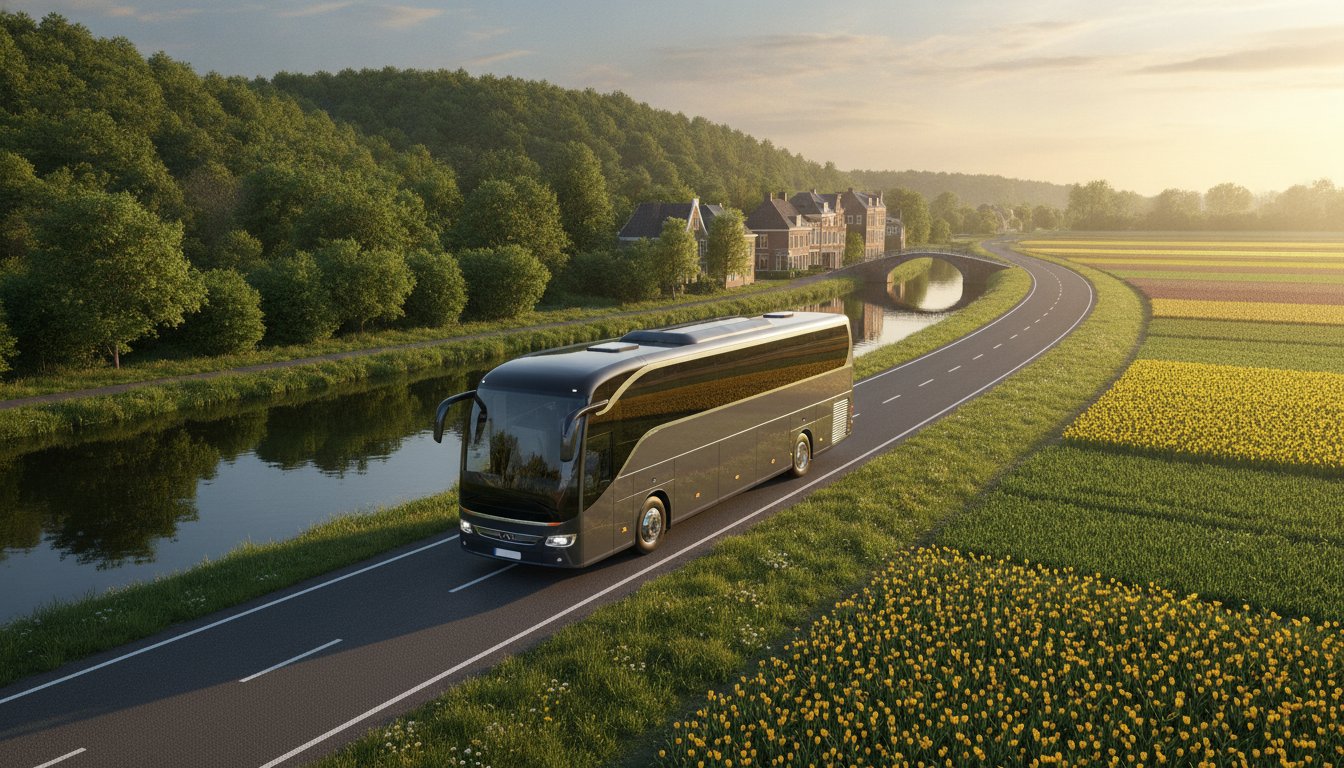
    The tachograph is the silent arbiter of your schedule. If a group is ten minutes late returning to the bus in Amsterdam, the driver might hit their legal limit before reaching the hotel in Ghent. It’s a domino effect. Parking in historic centers like Utrecht or Bruges is increasingly restricted to peripheral hubs. Success relies on a modern, compliant coach hire fleet that meets the highest environmental standards while providing the comfort your guests expect. We view these constraints not as barriers, but as the technical parameters within which we design a seamless experience.

    Cross-Border Service Synchronization

    A seamless transition between nations requires more than just a map. It demands a harmony of local expertise. A guide licensed for the Flemish Primitives in Bruges cannot legally lead a group through the Louvre. Every handoff must be precise. This is why culture group tours benelux succeed only when a unified logistical thread connects every hotel check-in and luggage transfer for 40+ travelers. Managing the challenges of multi-country group travel means anticipating the friction of border crossings before they occur. For a journey that feels effortless, you can partner with experts who understand the nuance of European movement and the poetry of a well-timed arrival.

    The ‘Box-Ticking’ Dilemma: Balancing Breadth with Cultural Depth

    Modern group travel often falls into the trap of the “Reddit Critique,” a phenomenon where travelers vent about itineraries that prioritize quantity over quality. When a schedule demands visiting five countries in ten days, the result isn’t a collection of memories; it’s a blur of bus windows and hotel lobbies. This exhaustion, or “transit fatigue,” is more than a physical toll. Data from 2025 travel sentiment analysis shows that group satisfaction scores drop by an average of 18% when transit time exceeds four hours for three consecutive days. One of the primary challenges of multi-country group travel is preventing this burnout while still delivering the variety clients crave.

    We believe in finding the “Sublime Middle.” This approach treats travel as a composition of light and shadow, where movement and stillness balance each other. Instead of rushing through a region, we integrate sensory-rich experiences like belgium gastronomy tours. These aren’t just meals. They’re three-hour deep dives into local craftsmanship that force a group to slow down, engage, and truly taste the terroir of a place. It’s about transforming a logistics-heavy day into a curated cultural event that lingers in the mind long after the plates are cleared.

    Designing Itineraries with ‘Breathability’

    Logistical elegance requires space to breathe. We apply the 3-2-1 Rule: three countries at most, two major cultural themes, and one deep-dive experience that defines the trip. To minimize the friction of constant packing, the “Hub and Spoke” model is essential. By basing a group in a central location like Brussels for four nights, you can explore Ghent, Antwerp, and Bruges without changing hotels. When movement is necessary, use “Technical Stops” as artistic interludes. A stop in Dinant between Brussels and Paris isn’t just a break; it’s a chance to witness the vertical majesty of the Meuse Valley, turning a transit corridor into a highlight.

    Thematic Continuity Across Borders

    A well-designed journey should feel like a narrative arc rather than a series of disconnected stops. We maintain continuity by linking history through geography. A poignant example is the flanders fields narrative, which seamlessly connects the remembrance sites of Belgium with those of Northern France. This thematic thread ensures that crossing a border feels like a natural chapter change. Whether it’s tracing the evolution of Dutch Masters into Parisian Art Nouveau or following a specific historical pilgrimage, these threads provide the intellectual glue that holds a complex itinerary together. This method turns the challenges of multi-country group travel into a cohesive, sophisticated story that respects both the destination and the traveler’s perspective.

    A Professional Framework for Seamless Cross-Border Coordination

    Mastering the challenges of multi-country group travel requires a methodology that balances artistic vision with technical rigor. It’s not enough to simply book transport; one must compose a logistical symphony. To achieve this, we employ a five-step framework designed for the complexities of 2026 European transit.

    • Step 1: The Logistical Stress Test. We map every mile against the 2026 EU Mobility Package regulations. This ensures driver hours and mandatory rest periods align perfectly with city access permits in restricted zones like Paris or Ghent.
    • Step 2: Centralized Accountability. We eliminate vendor fragmentation by securing a single point of contact. This prevents the “information silos” that often occur when local guides and coach operators don’t share a unified communication channel.
    • Step 3: Pre-Vetted Infrastructure. We select group-friendly accommodations that demonstrate a 95% or higher efficiency rating in handling international tour operators’ specific check-in requirements.
    • Step 4: Real-Time Tactical Support. Our 24/7 monitoring centers manage the minor crises that occur in 8% of all cross-border transits, from sudden road closures to unexpected border delays.
    • Step 5: Post-Tour Analysis. Every route undergoes a “Harmony Review” to refine timing and vendor performance for future iterations.

    The Power of Local Expertise

    A Destination Management Company (DMC) provides the technical nuance that digital tools lack. While Google Maps provides the shortest route, it fails to account for the 3.5-meter height restrictions common in historic European centers. Our multi-lingual support teams navigate local authorities and site managers with a level of cultural fluency that ensures every themed group travel benelux experience remains authentic and undisturbed. This local intelligence is the difference between a tour that feels like a commute and one that feels like a discovery.

    Mitigating Risk with Integrated Logistics

    The “Single Contract” model reduces administrative overhead by 22% on average by bundling coach services, hotels, and guides into one cohesive agreement. This integration is vital for emergency protocols. When a coach breaks down in a foreign country, a fragmented system stalls; an integrated one activates a pre-vetted local replacement within two hours. We define Logistical Resilience as the ability to adapt an itinerary in real-time without the group noticing. This invisible mastery ensures the challenges of multi-country group travel never overshadow the traveler’s experience. Explore our vision for architectural travel excellence at belune.be.

    BELUNE: Orchestrating Sophisticated Multi-Country Experiences

    Expertise acts as the ultimate safeguard against the inherent challenges of multi-country group travel. For 20 years, BELUNE has refined an artisanal approach within the Benelux-Paris corridor. We don’t simply move people; we orchestrate experiences. Our private fleet of modern coaches serves as the foundation of this operation. By maintaining total control over our logistics, we eliminate the variables that often derail complex itineraries. This technical precision allows us to transform the logistical into the emotional.

    We serve as the invisible ally for tour operators and group travel agencies. Our 20-year history in the region means we’ve navigated every regulatory shift and infrastructure update since 2004. We handle the permit requirements, driver rest periods, and local parking restrictions that often complicate European transit. This allows your team to remain the face of the experience while we manage the mechanics silently in the background.

    Bespoke Solutions for Discerning Planners

    We design itineraries that act as a physical extension of your brand’s vision. Mass-market operators often rely on predictable, high-traffic routes. We choose a different path. Our planners provide access to private estates and local experts who offer perspectives rarely found in standard guidebooks. Transparency remains a cornerstone of our service. We provide fixed-price quotes and comprehensive package management. This eliminates the financial uncertainty that often plagues international logistics. You receive a clear, predictable framework for even the most ambitious 2026 tour. Our commitment to meticulous planning ensures your brand’s aesthetic is reflected in every mile traveled.

    Your Strategic Partner in Western Europe

    Managing the heavy lifting of logistics across borders requires more than a map. It requires deep local intuition. Whether we’re coordinating somber battlefield tours in Flanders or curated gastronomy circuits in Paris, our team absorbs the friction. We resolve the technical hurdles so you can focus entirely on your guests. The BELUNE promise centers on a harmonious journey. We ensure a seamless transition from the first mile to the last. Our role is to provide the quiet confidence you need to deliver excellence. We transform the complex challenges of multi-country group travel into a fluid, elegant narrative for your clients.

    Orchestrating Your 2026 European Journey with Precision

    Navigating the challenges of multi-country group travel requires more than a simple map; it demands a fusion of logistical rigor and sensory intuition. Success in 2026 hinges on mastering fluid regulatory shifts across borders and balancing rapid transit with the nuance of local immersion. It’s about turning a complex itinerary into a seamless narrative where every transition feels intentional. A truly sophisticated journey relies on the harmony between technical excellence and the human experience.

    With over 20 years of cross-border expertise, we transform these logistical hurdles into effortless, bespoke experiences. Our private fleet of modern, eco-compliant coaches ensures your group moves with grace through the specific regulatory landscapes of the Benelux region and Paris. We don’t just provide transport; we act as your strategic ally. We ensure every detail from local permits to technical coordination is handled with sophisticated care. This professional framework allows you to focus on the moments that matter while we manage the intricate architecture of the road.

    Design your flawless multi-country itinerary with BELUNE today

    The future of travel belongs to those who value quality over mere breadth. Let’s create an experience that resonates long after the journey ends.

    Frequently Asked Questions

    What are the most common logistical mistakes in multi-country group travel?

    The most common logistical mistakes include ignoring the reality of traffic congestion and over-scheduling daily itineraries. Statistics from 2024 European transport reports show 35% of group delays occur because planners fail to account for urban “last-mile” navigation. These errors amplify the challenges of multi-country group travel, leading to missed reservations or exhausted passengers. Precision in timing ensures a fluid transition between borders, preserving the elegance of the journey.

    How do EU driver rest hour regulations affect our group tour itinerary?

    EU Regulation (EC) No 561/2006 dictates that drivers must take an 11-hour daily rest period and a 45-minute break every 4.5 hours of driving. These legal mandates directly shape your itinerary by limiting total daily travel distance to approximately 600 kilometers depending on road conditions. We design schedules around these pauses, turning mandatory breaks into curated moments of discovery rather than mere technical stops.

    Is it better to hire a local coach for each country or one for the entire tour?

    Hiring one coach for the entire tour ensures aesthetic and logistical continuity throughout the European circuit. This approach eliminates the 15% time loss associated with transferring luggage between different vehicles at every border. While local coaches can navigate specific restricted zones more easily, a single dedicated vehicle creates a mobile sanctuary for guests. It fosters a sense of refined familiarity as the landscape evolves through the window.

    What city-specific access permits are required for coaches in Paris and Amsterdam?

    Paris requires the “PASS Autocar” for all tourist vehicles, with rates determined by the coach’s Euro 6 emission standards as of 2026. In Amsterdam, coaches must adhere to the “S-route” and obtain specific entry permits for the city center’s low-emission zones. We handle these technical filings months in advance to avoid the 135 Euro fines frequently issued for non-compliance. These details ensure a seamless arrival at every architectural landmark.

    How can we ensure cultural depth when visiting multiple countries in a short timeframe?

    Depth is achieved by dedicating at least 72 hours to primary cultural hubs rather than brief afternoon stops. By focusing on three distinct regions over ten days, we allow the nuances of local heritage to surface through curated sensory experiences. This strategy mitigates the common challenges of multi-country group travel where breadth often sacrifices meaning. We select specific “anchor” cities to serve as canvases for deeper artistic and historical exploration.

    Why should a tour operator use a DMC instead of booking hotels and transport directly?

    Using a Destination Management Company (DMC) provides access to a refined network of local artisans and technical experts that direct booking can’t reach. DMCs resolve 90% of local logistical frictions before they impact the guest experience, acting as a strategic ally on the ground. They navigate complex regional regulations and language barriers with professional grace. This partnership transforms a standard tour into a bespoke architectural and cultural masterpiece.

    What happens if a group member requires assistance while crossing borders?

    If a group member requires assistance, the tour leader initiates immediate contact with the relevant embassy using pre-arranged 24-hour consular protocols. With the 2025 implementation of ETIAS, digital verification has streamlined most checks, yet individual documentation issues can still arise. Our team maintains a digital vault of all guest credentials to resolve discrepancies within minutes. We ensure no guest feels isolated during these technical transitions, maintaining the group’s collective harmony.

  • Benelux Battlefield Tours for Groups: A Masterclass in Remembrance and Logistics

    Benelux Battlefield Tours for Groups: A Masterclass in Remembrance and Logistics

    A pilgrimage to the Western Front is not a mere vacation; it’s a masterclass in architectural memory. For professional tour operators managing benelux battlefield tours for groups of 35 or more, the challenge lies in weaving technical precision with emotional depth. You know that navigating the narrow, rural roads of the Ardennes or the Ypres Salient requires a delicate, expert touch. It’s about more than just moving people. It’s about creating a harmonious space where the history of the 1940s can be felt with absolute clarity. We respect the weight of this task and the need for a bespoke approach that honors every participant’s journey.

    We’ll guide you through orchestrating a journey that bridges the gap between complex multi-country logistics and profound storytelling. This article previews the essential elements of a turnkey itinerary, from securing a private coach fleet to selecting high-capacity hotels that maintain a sense of elegance and nuance. You’ll find the technical rigor needed to transform a logistical puzzle into a seamless, evocative experience of remembrance. We’re here to help you design a pilgrimage that is as logistically flawless as it is spiritually significant.

    Key Takeaways

    • Uncover the strategic layers of the “Cockpit of Europe” through a curated exploration of Flanders Fields and the Ardennes.
    • Navigate the unique logistical challenges of historic rural sectors with a private coach fleet designed for reliability and group flexibility.
    • Elevate your itinerary by balancing somber remembrance with local gastronomy and culture to prevent “museum fatigue.”
    • Secure the success of your benelux battlefield tours for groups by leveraging 20 years of expertise and fixed-price B2B packages.
    • Transform historical pilgrimages into seamless, high-end experiences through the art of professional itinerary design.

    The Benelux Region: A Crossroads of European Military History

    The Benelux region serves as more than a collection of borders. It’s the “Cockpit of Europe.” For centuries, the rolling hills of Wallonia and the flat polders of the Netherlands have dictated the fate of empires. These landscapes witnessed the final defeat of Napoleon at Waterloo in 1815 and the brutal endurance of the Western Front. Planning benelux battlefield tours for groups requires a deep understanding of these overlapping layers. We don’t just visit sites; we interpret the silence of the fields. Every itinerary must balance historical accuracy with a profound respect for the human cost. This is where the expertise of a Destination Management Company (DMC) becomes essential. We transform a list of monuments into a cohesive, emotional narrative that resonates with every participant.

    The Strategic Significance of the Low Countries

    Geography defined the tragedy of the region. The flat terrain of the Meuse valley and the coastal plains of Flanders offered the most direct routes for invading armies. The German Invasion of Belgium (1914) marked a violent transition from 19th-century cavalry charges to the mechanized, industrial slaughter of the 20th century. By 1944, the dense Ardennes forest became the focal point for the Battle of the Bulge, proving that even difficult terrain couldn’t escape the reach of conflict. Today, these sites represent the global epicenter for remembrance. Over 1.2 million people visit the Menin Gate in Ypres annually to hear the Last Post. This density of history demands a technical precision in planning that honors the gravity of the past while ensuring a seamless experience for large parties.

    The Evolution of Battlefield Tourism for Groups

    Group travel has matured significantly over the last 20 years. It’s no longer just about solitary mourning or static displays. Modern benelux battlefield tours for groups focus on “living history” and immersive education. Academic organizations, military units, and heritage societies now seek a sophisticated harmony between reflection and modern comfort. We design journeys that integrate the following elements:

    • High-tech museum experiences like the Bastogne War Room or the In Flanders Fields Museum.
    • Private, bespoke ceremonies at Commonwealth War Graves Commission sites or American Battle Monuments Commission cemeteries.
    • Expert-led discussions on the tactical evolution of warfare from the 1800s to the 1940s.

    Successful tours provide the necessary space for emotional resonance while maintaining a fluid, professional logistical pace. We curate every detail to ensure the history remains the protagonist of the journey.

    Essential Sites for Group Remembrance: From Flanders Fields to the Ardennes

    The Benelux landscape serves as a living canvas, where layers of history intersect with modern geography. Each era demands a specific logistical approach and a unique emotional sensitivity. Designing successful benelux battlefield tours for groups requires a deep understanding of these distinct chapters, from the saturated mud of 1914 to the frozen forests of 1944. The terrain doesn’t just host monuments; it tells a story of resilience and liberation that we must approach with technical precision and artistic reverence.

    WWI: The Immortal Legacy of Flanders Fields

    Ypres stands as the emotional epicenter of the Great War. The In Flanders Fields Museum provides the necessary human context, using interactive technology to bridge the gap between historical data and personal narrative. For groups, the nightly Last Post ceremony at the Menin Gate at 8:00 PM is an essential pillar of remembrance. It’s a moment where collective silence creates a powerful harmony among participants. To truly grasp the visceral reality of the Ypres Salient, we recommend exploring the preserved trenches at Sanctuary Wood. Integrating Flanders Fields into your itinerary ensures a comprehensive understanding of the 1914-1918 conflict, balancing the scale of the cemeteries with the intimacy of the trenches.

    WWII: The Liberation of Western Europe

    The Ardennes region offers a starkly different atmosphere, defined by the dense woods and steep ridges of the 1944 Battle of the Bulge. Bastogne remains the vital stop for Allied groups, where the Mardasson Memorial and the foxholes of Bois Jacques provide a tangible link to the “Greatest Generation.” Further north, the Netherlands hosts the legacy of Operation Market Garden. The bridge at Arnhem and the stretch of “Hell’s Highway” illustrate the daring, often tragic ambition of airborne history. In Luxembourg, the American Cemetery houses 5,076 graves, including that of General Patton. The site’s meticulous design and quiet beauty sublime the weight of sacrifice, making it a necessary stop for benelux battlefield tours for groups seeking a moment of reflection.

    Napoleonic History: The Lion of Waterloo

    Waterloo represents the 1815 campaign that acted as a precursor to modern European cooperation. Managing large groups at the Butte du Lion requires careful timing to avoid the midday rush, but the view from the summit is unparalleled for visualizing the tactical movements of Wellington and Napoleon. The site offers a distinct “art and culture” perspective, especially within the immersive Panorama building. This circular painting captures the chaos of the cavalry charges with a nuance that rivals modern cinematic experiences. It’s a study in how light and perspective can transform military history into a profound aesthetic encounter. If you’re looking to sublime your next group project with expert logistical support, our team provides the technical vision needed to navigate these complex historical sites.

    Logistics serve as the invisible framework for remembrance. Moving forty people through the dense foliage of the Ardennes or the windswept polders of Flanders requires more than a map. It demands a choreography of movement that respects both the history and the participants. Orchestrating successful benelux battlefield tours for groups depends on the seamless integration of transport, shelter, and scholarship. Precision is the ultimate mark of respect for the subject matter.

    Transport Excellence: The Private Coach Advantage

    A private coach isn’t a luxury. It’s a strategic necessity. Relying on third-party transport or fragmented rentals jeopardizes the rigid timing required for commemorative ceremonies. In historic sectors like Bastogne, roads often narrow to less than 3.5 meters. This requires drivers with specific expertise in navigating rural terrain where modern GPS often fails. Modern, high-capacity coaches provide the comfort needed for cross-border travel between Belgium, the Netherlands, and Luxembourg, ensuring the group arrives at sites like the Menin Gate or the Henri-Chapelle American Cemetery exactly on schedule.

    • Reliability: Dedicated fleets eliminate the risk of late arrivals that can ruin a scheduled wreath-laying ceremony.
    • Accessibility: Coaches equipped with modern lifts ensure that older veterans or those with limited mobility can access remote memorial sites.
    • Flexibility: Private transport allows for spontaneous stops when a guide identifies a significant, off-path foxhole or monument.

    Group Accommodation and Hospitality Management

    Selecting the right base of operations is a delicate task. The atmosphere of a hotel must mirror the somber, reflective tone of the itinerary. We prioritize establishments that offer quiet communal spaces for evening briefings and reflection. Managing large groups in regions like the Ardennes, where many villages have fewer than 500 residents, requires deep local roots. During peak periods, such as the 80th anniversary of the Battle of the Bulge in 2024 and 2025, securing room blocks becomes a competitive endeavor.

    This is where the expertise of a benelux incoming tour operator becomes vital. They manage the complex web of dietary requirements and group dining in historic inns that aren’t always equipped for high-volume service. It’s about creating a bespoke experience where every meal and every night of rest contributes to the overall narrative of the tour. Professional management ensures that the focus remains on the history, not the headaches of room assignments or buffet lines. For benelux battlefield tours for groups, the transition from the battlefield to the hotel should feel like a continuation of the masterclass, not a disruption of it.

    Crafting a Meaningful Group Itinerary: Beyond the Trenches

    Designing benelux battlefield tours for groups requires a delicate balance between somber remembrance and the vibrant pulse of local life. The Belune Approach rejects the notion of a dry, academic trek. We view history as a living narrative, one that is best understood when paired with the cultural and culinary identity of the land. Our goal is to sublime the weight of the past through moments of beauty and reflection.

    The Sensory Itinerary: Balancing History and Culture

    History shouldn’t feel like a weight; it should feel like a discovery. We prevent museum fatigue by alternating intensive site visits with sensory pauses. Imagine standing in the dense forests of the Ardennes where the 1944 Battle of the Bulge unfolded, then transitioning into a traditional Belgian beer tasting. These belgium gastronomy tours serve a dual purpose. They provide a necessary moment of reflection while celebrating the very freedom and heritage that was fought for on these grounds.

    In the Netherlands, the history of liberation is etched into the art and architecture of the cities. By integrating culture group tours benelux, we provide the essential context that battlefield sites alone cannot offer. A 90-minute walking tour of Rotterdam’s post-war reconstruction offers a powerful visual testament to resilience. This approach transforms a list of dates into a tangible human experience, ensuring that benelux battlefield tours for groups remain engaging from the first day to the last.

    Bespoke Planning for Diverse Group Profiles

    Every group possesses a unique objective, and our role is to act as a visionary advisor. For school and university groups, our logistics prioritize educational curricula. We focus on the 1940-1945 timeline through interactive storytelling and primary source analysis. These tours are designed to spark curiosity rather than just deliver facts.

    • Educational Focus: Specialized logistics for student groups, emphasizing the 1944 liberation of the Scheldt.
    • Pilgrimage Focus: Tracing specific ancestral footprints for family groups using military records and archival data.
    • Corporate Focus: Leadership and strategy lessons derived from the 1944 Operation Market Garden, focusing on communication and tactical execution.

    Corporate retreats find a different value in these landscapes. The historic battlefields of the Benelux provide a raw, high-stakes backdrop for studying leadership. Analyzing the logistics of the 1944 Ardennes Offensive offers lessons in resilience that remain relevant for modern executive teams. We tailor every detail to ensure the itinerary resonates with your specific mission, whether it’s a deep academic dive or a personal family journey. Our expertise ensures a harmony between the technical requirements of the trip and the emotional needs of the participants.

    Partner with our specialists to design an itinerary that honors the past while inspiring the future.

    Partnering with BELUNE: Your Specialist DMC for Benelux Group Tours

    Mastering benelux battlefield tours for groups requires a partner who treats logistics as a fine art. BELUNE brings over 20 years of experience to the “art of the itinerary,” where we meticulously balance historical gravity with modern comfort. For our B2B partners, we provide the essential security of fixed-price group packages. This financial stability is vital in a fluctuating market. We handle the complexities of multi-border travel, ensuring an all-inclusive experience from A to Z. It’s a commitment to excellence that allows you to present a flawless product to your clients. Our team focuses on the nuances, from the precise timing of a wreath-laying ceremony to the selection of a hotel that reflects the region’s heritage.

    We don’t just coordinate transport; we orchestrate a narrative flow that respects the solemnity of the sites. This professional approach is why travel agents across the globe trust us to represent their brand in Belgium, the Netherlands, and Luxembourg. We act as an extension of your team, providing the technical rigor needed for high-stakes group travel.

    The DMC Advantage: Local Expertise, Global Standards

    We function as a visionary creator for your group travel brand. Our role goes beyond the standard duties of a Destination Management Company. We provide a sophisticated multi-lingual guide network and 24/7 on-the-ground support. This ensures that every group feels supported and inspired throughout their journey. By choosing BELUNE, you’re partnering with the ultimate group travel agency for Western European excellence. We understand that a battlefield tour is a journey through time. We use our local expertise to navigate the technical challenges of the Benelux region, allowing the emotional and historical narrative to take center stage. Our approach is artisanal. We tailor every project to meet the specific aesthetic and educational goals of your organization, ensuring harmony between the itinerary and the traveler’s expectations.

    Next Steps: Designing Your 2026 Battlefield Program

    The year 2026 represents a pivotal moment for remembrance travel. It marks the 81st anniversary of the liberation of Western Europe, a time when interest in these hallowed grounds will peak. Designing your 2026 benelux battlefield tours for groups requires early collaboration to secure the best guides and prime locations for ceremonies. Our expert team is ready to help you craft a bespoke itinerary that stands out in a crowded market. We invite you to request a custom proposal for your next group. Let’s work together to create a program that honors the past while providing a world-class experience for the modern traveler. We ensure availability for major anniversaries, giving your clients the opportunity to be part of history.

    Honoring the Past with Technical Excellence

    Creating a meaningful pilgrimage to the Western Front or the Ardennes requires more than a simple itinerary. It demands a delicate balance between historical reverence and logistical mastery. From the silent memorials of Flanders to the dense forests of the Ardennes, the Benelux region serves as a profound classroom for collective memory. Successfully managing benelux battlefield tours for groups involves navigating complex border crossings and coordinating large-scale site access. We transform these challenges into a seamless experience through 20 years of specialized DMC expertise. Our private fleet of modern coaches provides the comfort your guests deserve, while our specialized B2B fixed-price packages ensure transparent planning from the start. We act as your visionary partners, crafting a journey where every detail reflects a commitment to excellence. It’s time to turn these historic landscapes into a lasting legacy for your travelers.

    Request your bespoke Benelux group tour itinerary from BELUNE

    We look forward to bringing your vision of remembrance to life with the precision and respect it deserves.

    Frequently Asked Questions

    What are the best battlefield sites in the Benelux for large groups?

    The Menin Gate in Ypres, the Bastogne War Museum, and Arnhem’s John Frost Bridge represent the most impactful sites for large groups. These locations offer the spatial capacity required for 50-person coaches and provide immersive educational facilities. We design these visits to ensure a harmony between historical depth and modern accessibility, allowing for a profound collective experience.

    Our selection focuses on sites where the infrastructure supports groups of 40 or more without sacrificing the intimacy of remembrance. Locations like the Tyne Cot Cemetery provide the necessary scale for reflection while maintaining a sense of individual connection to the past.

    How far in advance should I book a group battlefield tour in Belgium?

    You should book your tour 9 to 12 months in advance to secure preferred dates and premium accommodation. Demand for historical sites in Belgium peaks during the spring and autumn months. Data from local tourism boards shows that 85% of specialized group hotels in Ypres reach full capacity a year before major anniversaries.

    Early planning is essential for coordinating bespoke logistics and securing expert guides who specialize in specific regiments or battles. It’s the only way to ensure every nuance of your itinerary is perfectly aligned with your group’s expectations.

    Can you provide multi-lingual guides for international group tours?

    We provide accredited guides fluent in English, French, Dutch, and German to accommodate international delegations. Our team acts as a visionary bridge between cultures, translating complex military history into a shared human experience. This bespoke approach ensures every participant feels a personal connection to the landscape regardless of their native tongue.

    Each guide is chosen for their ability to blend technical accuracy with evocative storytelling. They don’t just recite facts; they transform the environment through their mastery of historical narrative and linguistic precision.

    Is it possible to combine WWI and WWII sites in a single 5-day itinerary?

    A 5-day itinerary seamlessly integrates WWI and WWII history by splitting time between West Flanders and the Ardennes. You can spend 48 hours exploring the Ypres Salient before traveling to Bastogne for the final 72 hours. This structure is a hallmark of our benelux battlefield tours for groups, offering a complete narrative of 20th-century conflict.

    By using a central hub or a logical linear route, we minimize travel time and maximize the emotional impact of each site. It’s a sophisticated way to witness the evolution of warfare and the enduring spirit of the region.

    Do you handle hotel bookings and transport for groups larger than 40 people?

    Our team manages all logistics for groups of 40 or more, including 50-seater executive coaches and block hotel reservations. We partner with established venues like the Ariane Hotel in Ypres to ensure your stay is refined and stress-free. Every detail is curated to provide a professional experience where the logistics disappear into the background.

    We act as your strategic ally, overseeing everything from luggage transfers to dietary requirements. This all-encompassing service allows group leaders to focus entirely on the commemorative aspect of the journey.

    What is the best time of year to visit Flanders Fields with a group?

    April through June offers the most temperate conditions and evocative lighting for visiting Flanders Fields with a large party. While November 11th holds immense symbolic weight, the spring months provide a 30% increase in daylight hours for outdoor exploration. This timing allows for a more nuanced appreciation of the landscape’s transformation and natural beauty.

    September and October are also excellent choices, offering a crisp atmosphere that suits the somber nature of the sites. Avoiding the peak summer heat ensures your group stays comfortable during long walks through the trenches and cemeteries.

    How do you handle the Last Post ceremony logistics for tour groups?

    We coordinate directly with the Last Post Association to manage your group’s presence at the 8 PM ceremony under the Menin Gate. Groups wishing to lay a wreath should submit their request at least 6 months before their arrival date to ensure inclusion in the official program. We handle the technical timing to ensure your party arrives with the quiet dignity this ritual requires.

    Our guides provide a detailed briefing before the ceremony, explaining the history and protocol of the event. It’s a moment of profound harmony that requires expert management to be truly felt.

    Are there specific grants or supports for school groups visiting battlefields?

    School groups can often access financial support through regional initiatives like the Flemish Government’s “Vlaanderen Herdenkt” program. Certain educational grants can cover up to 50% of transport costs for qualifying institutions visiting the Westhoek region. We act as a consultant, helping you navigate these administrative requirements to make remembrance accessible to the next generation.

    Beyond government aid, various veterans’ associations and historical societies offer bursaries for specific commemorative projects. We’ll help you identify these opportunities to ensure your educational goals are met with the necessary financial backing.

  • Contingency Planning for European Group Tours: The Professional DMC Checklist

    Contingency Planning for European Group Tours: The Professional DMC Checklist

    What if the true signature of a luxury travel expert isn’t the sunset over an iconic European vista, but the invisible hand that guides a group when the unexpected occurs? A flawless itinerary is a fragile masterpiece. Across the intricate geography of diverse European destinations, where a 24-hour rail strike or a sudden severe weather event can dismantle months of coordination, your reputation rests on the unseen. You know that excellence requires more than just a vision of beauty; it demands a technical rigor that protects the guest experience at all costs. Masterful contingency planning for european group tours is the essential foundation that ensures a 95% client retention rate remains untouched by logistical volatility.

    We’ll help you elevate your risk management into a refined art of resilience. This article provides a professional framework to manage multi-country regulations and transport disruptions with the same precision an artisan uses to balance light and shadow. You’ll gain a robust checklist designed to reduce on-the-ground stress and secure higher satisfaction. From navigating 2024 transport shifts to mastering local protocols, we’re sharing the strategic blueprint for travel that stays harmonious, no matter the circumstances.

    Key Takeaways

    • Discover how to construct an “invisible safety net” that protects your brand’s reputation through professional resilience architecture and client trust management.
    • Identify specific logistical risks within the Benelux and France regions to proactively navigate transport volatility, including rail strikes and road closures.
    • Learn to implement a strategic redundancy framework that builds “Plan B” transport and local fleet partnerships directly into every high-end itinerary.
    • Master the art of contingency planning for european group tours by establishing 24/7 communication protocols for seamless mid-tour recovery and triage.
    • Leverage over 20 years of DMC expertise to transform potential disruptions into uninterrupted, sophisticated cultural journeys that inspire confidence.

    The Architecture of Resilience: Why Contingency Planning is Essential for Group Tours

    Excellence in high-end travel isn’t merely defined by the beauty of the destination. It’s found in the silent strength behind the scenes when the unexpected occurs. Professional contingency planning for european group tours serves as the invisible safety net of luxury experiences. It moves beyond the static nature of contingency planning fundamentals to become a living, breathing strategy of logistical mastery. While travel insurance provides financial compensation after a failure, active contingency management ensures the failure never disrupts the guest’s journey.

    The stakes for B2B partners are absolute. Every delay or canceled excursion risks the brand reputation you’ve spent years building. In 2026, the complexity of Western European travel reaches new heights. We’re seeing a 15% increase in urban environmental zones and shifting labor dynamics that can alter transport schedules overnight. Relying on luck isn’t a strategy. Resilience requires a sophisticated conception of risk where every potential friction point is met with a pre-designed solution.

    The Emotional Value of a Seamless Experience

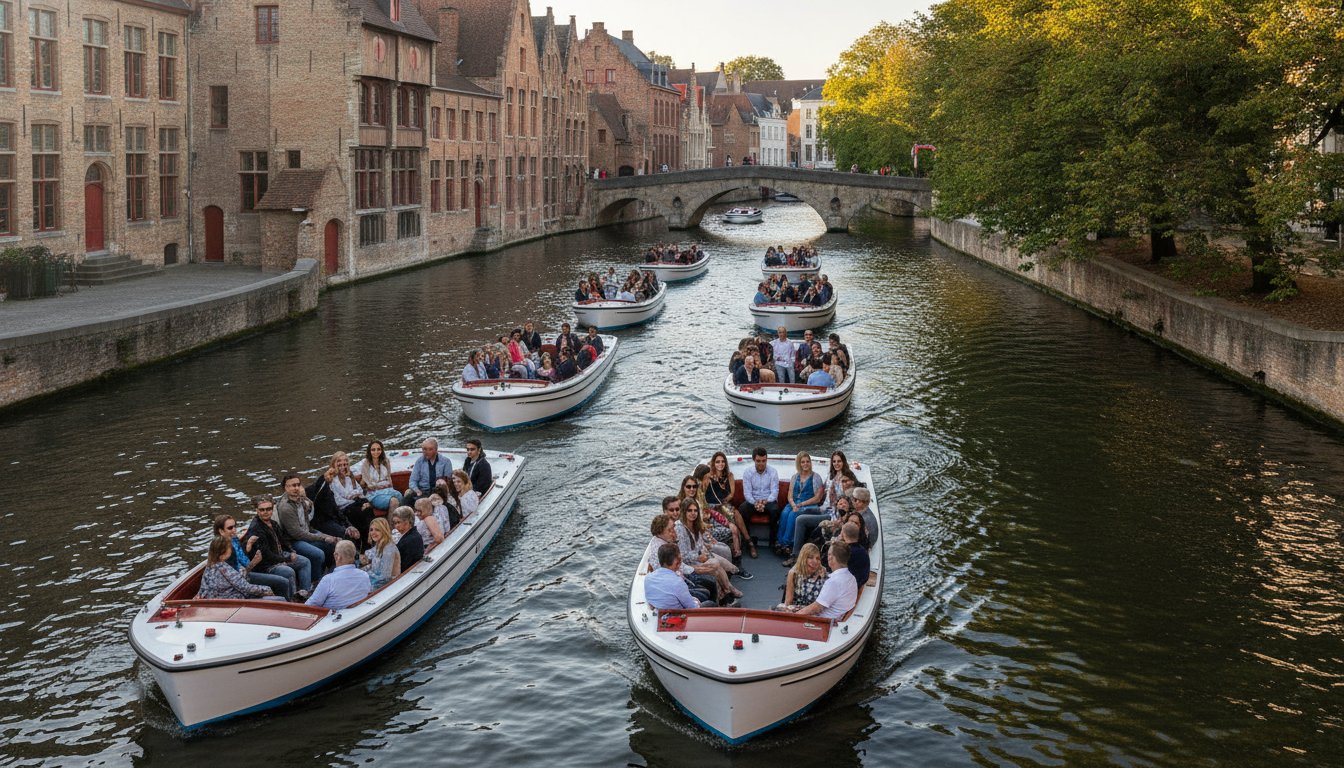
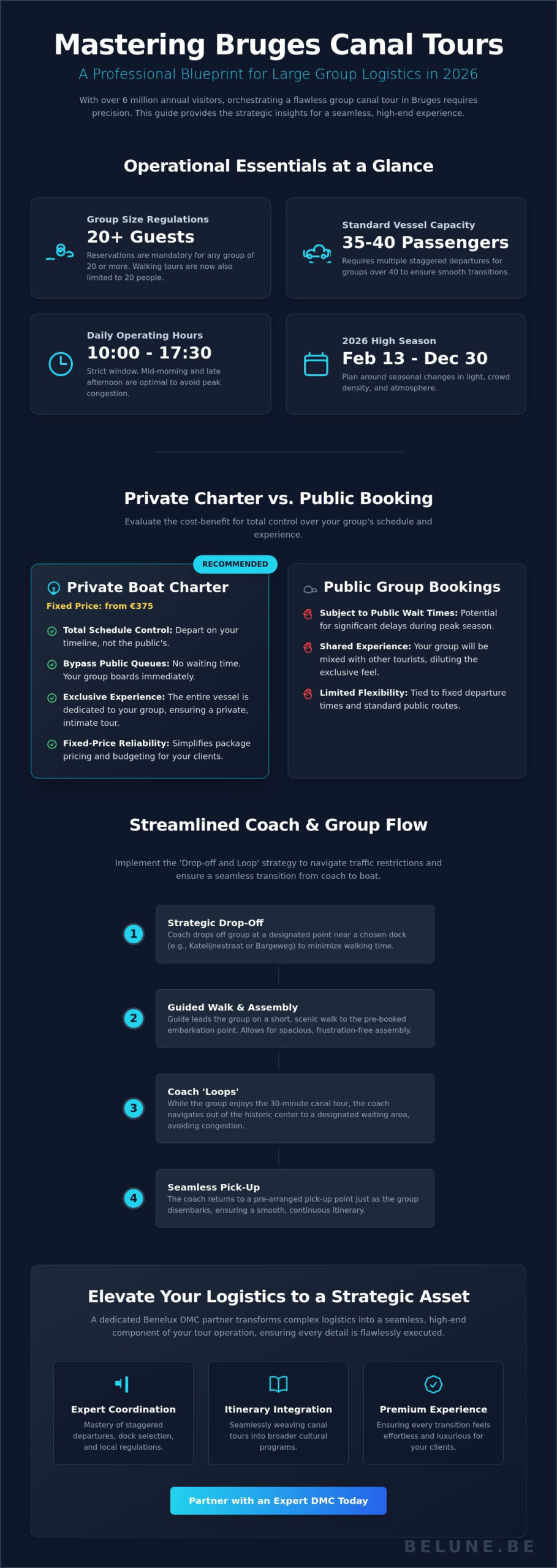
    True luxury is the absence of worry. When a problem is solved before the group even senses its presence, the perceived value of the tour increases. This invisible problem-solving creates a sense of effortless harmony. We act as the silent guardian of your itinerary, ensuring the transition from a private canal cruise to a gala dinner remains flawless. Choosing a benelux incoming tour operator that understands these nuances is vital. Local expertise allows us to navigate subtle cultural and logistical shifts that outsiders might miss, preserving the emotional integrity of the guest experience.

    Financial and Operational Stakes

    The cost of failure is often exponentially higher than the cost of preparation. Refunding a group for a missed day can cost 20% of the total tour price, while maintaining a standby transport option might only represent a 3% investment in the original budget. Logistical delays on multi-day, fixed-price itineraries create a domino effect that can ruin subsequent bookings. Precision is the only remedy.

    • Brand Protection: Preventing negative reviews that impact future bookings for 2 to 3 years.
    • Operational Continuity: Maintaining the flow of the itinerary despite rail strikes or sudden road closures.
    • Client Trust: Demonstrating a level of professionalism that reassures high-net-worth travelers.

    Mapping Potential Disruptions in Western European Group Logistics

    Orchestrating a group journey through France and the Benelux requires more than a rigid itinerary. It demands an artistic eye for logistics. The landscape of Western Europe is a tapestry of historical depth and modern complexity. Effective contingency planning for european group tours begins by acknowledging that movement is never guaranteed. From the cobblestones of Bruges to the boulevards of Paris, disruptions aren’t failures. They’re variables in a larger design. We must anticipate the friction points where the flow of a group might encounter resistance.

    Transportation and Mobility Challenges

    Urban access is changing rapidly. As of 2024, France has implemented Low Emission Zones (ZFE) in 11 major metropolitan areas, including Paris, Lyon, and Strasbourg. These regulations dictate which coaches can enter city centers based on Crit’Air stickers. Brussels maintains a strict LEZ that covers the entire Capital Region, requiring pre-registration for foreign vehicles. Relying on public infrastructure offers a certain charm, yet labor movements remain a constant. The SNCF in France or the NMBS in Belgium often announce strikes 48 hours in advance. We monitor these schedules months ahead, balancing the efficiency of private coach transport with the agility of rail. Precision in movement ensures the group’s rhythm remains undisturbed.

    Vendor and Site Availability Risks

    High-demand sites like the Louvre or the Anne Frank House now rely almost exclusively on timed entry slots. A 15-minute delay can dismantle a morning’s schedule. Boutique hotels in the Benelux region, often housing fewer than 30 rooms, face the risk of overbooking during peak seasons like the Keukenhof tulip display. When a primary site closes for a private diplomatic event, the itinerary must pivot without losing its soul. This is where the EU Package Travel Directive provides a vital safety net. It ensures travelers are protected against significant changes to their pre-booked services and guarantees assistance. Maintaining flow requires a curated library of alternative locations that offer the same architectural resonance as the original choice.

    The human element is the most delicate thread in contingency planning for european group tours. Guide illness or a medical emergency within the group requires an immediate, localized response. In 2023, health-related disruptions accounted for 18% of itinerary adjustments in European group travel. We approach these moments with the same care an architect uses to balance light and shadow. If a lead guide falls ill, a secondary expert must be ready to step in, preserving the narrative of the tour. Just as a well-placed light fixture transforms a room, a well-managed crisis preserves the traveler’s experience. Explore how we refine every detail of the journey to ensure your vision remains clear, even when the unexpected occurs.

    The Strategic Redundancy Checklist for Professional Tour Operators

    True luxury lies in the invisible. It’s the silent orchestration of a secondary plan that ensures a traveler’s journey remains uninterrupted. Effective contingency planning for european group tours requires more than just a list of phone numbers; it demands a structural redundancy built into the very architecture of the itinerary. This approach treats logistics as a canvas, where every brushstroke is backed by a precise, technical safety net.

    Transport Redundancy and Fleet Management

    Mobility is the backbone of any group experience. A sophisticated group travel agency evaluates partners based on their immediate recovery capabilities. We prioritize Destination Management Companies (DMCs) that own their modern coach fleets, specifically focusing on vehicles with less than 4 years of service. This ownership allows for “rescue protocols” where a replacement vehicle can be dispatched within 120 minutes of a mechanical failure. Beyond the primary coach, establishing standby contracts with local shuttle partners in key hubs like Florence, Paris, or Vienna ensures that even minor logistical hiccups don’t derail the day’s narrative. Reliability isn’t an accident; it’s a result of rigorous asset management.

    Human Resource Backups

    The guide is the storyteller, the bridge between a culture and the guest. No tour should ever rely on a single point of failure. We maintain a pool of multi-lingual experts and “shadow guides” who are briefed on the specific nuances of each group’s profile before the first guest arrives. If a lead guide becomes unavailable, a certified local expert steps in seamlessly. This transition is governed by strict EU package travel regulations and assistance obligations, ensuring that the quality of service and duty of care remain unwavering. Consistency in storytelling is achieved through shared digital briefings, keeping the emotional resonance of the tour intact regardless of who leads the group.

    Digital communication and gastronomy require equal precision. Our tech stack utilizes real-time encrypted messaging apps, allowing coordinators to push itinerary updates to every guest simultaneously. For dining, we pre-vet “Plan B” bistros within a 500-meter radius of primary venues. Since roughly 18% of modern group travelers now report complex dietary requirements, these backup locations must demonstrate the same level of culinary excellence and allergen safety as the first choice. Beyond nutrition, addressing personal health needs with discreet, high-quality products like Underwunder ensures that all guests maintain their confidence and comfort during long travel days. This level of contingency planning for european group tours transforms potential chaos into a curated, stress-free experience. It’s about providing peace of mind through technical mastery and artistic foresight.

    Executing Real-Time Solutions: From Crisis to Seamless Recovery

    Precision defines the difference between a minor detour and a logistical failure. When an unexpected disruption occurs, the grace of the journey depends on the speed of the response. Effective contingency planning for european group tours requires more than just a document in a drawer; it demands an active, living protocol that breathes through every member of the team. We view recovery as a technical art form. It is the ability to maintain the aesthetic and emotional flow of a tour even when the structural foundation shifts.

    The 24/7 Support Ecosystem

    Resilience is built on a tripartite communication tree. This structure connects the tour leader, the Destination Management Company (DMC), and the B2B partner in a continuous loop. Information must flow without friction. We define Real-Time Recovery as the ability to implement a secondary itinerary within two hours of a primary failure. This 120-minute window is critical. It prevents the “waiting room effect” where guests feel the weight of the delay.

    Immediate physical intervention often requires a local presence. In 2023, logistical data indicated that on-site resolution is 40% faster when a local representative can physically reach the group. To facilitate this, we establish a triage system:

    • Level 1: Minor delays (under 60 minutes) managed by the tour leader.
    • Level 2: Service failures requiring vendor replacement or rerouting.
    • Level 3: Major force majeure events requiring 24/7 DMC intervention.

    Speed requires autonomy. On-the-ground staff must hold the financial authority to make instant bookings without waiting for head-office approval. Setting pre-authorized spending limits for emergency transport or venue buyouts ensures the rhythm of the tour remains uninterrupted.

    Managing Group Sentiment

    The psychological climate of the group is as important as the logistics. Sophisticated communication turns a disruption into a “unique experience” rather than a mistake. We use a transparent but calm approach. Instead of highlighting what was lost, we emphasize the exclusive nature of the new arrangement. This keeps the culture group tours benelux experience feeling premium and curated.

    Surprise and delight additions act as the “light” that softens the edges of a change. If a museum is closed, a private tasting at a boutique vineyard or a spontaneous guided walk through a hidden architectural gem restores the sense of luxury. This proactive stance is the cornerstone of contingency planning for european group tours. It transforms potential frustration into a story of expert care.

    The BELUNE Advantage: Sophisticated Logistics for Uninterrupted Journeys

    BELUNE stands as the visionary architect of secure European group travel. We don’t just move people; we curate experiences where safety and elegance coexist. With 22 years of experience managing high-stakes cultural itineraries, we’ve refined the technical precision required for modern logistics. Our private, modern coach fleet offers a level of control that third-party contracts can’t match. This ownership allows us to pivot instantly, making it the bedrock of contingency planning for european group tours. We eliminate the friction of uncertainty, replacing it with the quiet confidence of a master craftsman who understands that luxury is found in reliability.

    Our fleet is more than a collection of vehicles; it’s a mobile sanctuary designed for the demanding needs of cultural groups. By maintaining our own equipment, we ensure that every safety protocol is met and every comfort is preserved. This autonomy means we aren’t at the mercy of external rental schedules or fluctuating maintenance standards. When the unexpected occurs, our drivers and dispatchers communicate in real time to implement solutions that feel effortless to the guest.

    Expertise in Benelux and Paris Heritage

    Our profound expertise in the Benelux region and Paris heritage allows for “backdoor” solutions that generic operators overlook. These aren’t just shortcuts; they’re the result of long-standing relationships with hotel managers and site directors built since 2002. We customize every itinerary to balance creative ambition with logistical safety margins. If a sudden closure affects a primary site, our local network provides immediate, high-quality alternatives that preserve the journey’s harmony. We transform potential disruptions into moments of unexpected discovery through a mastery of local nuance. Key advantages include:

    • Direct Access: Personal ties with museum curators and private venue owners to bypass public disruptions.
    • Route Intelligence: Real-time navigation adjustments based on local events, festivals, or construction in historic centers.
    • Strategic Buffers: Itineraries designed with 15 percent time cushions to accommodate the natural flow of group movement without rushing.

    A Partnership Built on Trust

    The transition from vendor to strategic ally is where our true value emerges. We’re committed to the “art of the invisible” in group management. Every technical adjustment and logistical pivot happens behind the scenes, ensuring the traveler feels only the intended rhythm of the experience. We invite B2B partners to join us in creating resilient, high-quality travel programs that set new industry standards. Let’s build a future where contingency planning for european group tours is a seamless, sophisticated part of the architectural design of the trip. Excellence isn’t an accident; it’s a deliberate choice in partnership. We provide the stability you need to promise your clients a journey that remains sublime, regardless of the challenges the road may present.

    Mastering the Art of Uninterrupted Journeys

    True excellence in travel isn’t found in the absence of challenges; it’s found in the precision of the response. Sophisticated contingency planning for european group tours transforms potential disruptions into invisible transitions. By implementing strategic redundancy and utilizing a private fleet of modern coaches, we ensure the guest’s experience remains harmonious. We’ve spent 20+ years refining these architectural layers of logistics across the Benelux region and Paris. It’s about more than just a backup plan. It’s a bespoke commitment to reliability. Every detail, from real-time route adjustments to technical fleet maintenance, protects the emotional resonance of the journey. When logistics are handled with this level of technical rigor, the path ahead stays clear. You deserve a partner who views travel as a masterpiece of coordination. Trust in a vision where every movement is intentional and every arrival is certain.

    Partner with BELUNE for sophisticated, worry-free group travel logistics.

    Your next itinerary deserves the serenity of expert craftsmanship.

    Frequently Asked Questions

    What is the difference between a contingency plan and travel insurance?

    Travel insurance provides financial protection against losses, while contingency planning for european group tours focuses on immediate operational actions to keep the journey moving. Insurance reimburses costs after a 2024 flight cancellation. A contingency plan ensures your group has a secondary hotel or transport partner ready within 2 hours. It’s the difference between getting a refund and saving the traveler’s experience through proactive design.

    How much extra budget should be allocated for contingency planning?

    Professional planners recommend allocating 10% to 15% of the total project budget for unforeseen logistical adjustments. This reserve fund covers rapid re-bookings or premium transport shifts without delay. Industry standards from the European Tourism Association suggest a 10% buffer is essential for managing unexpected shifts. Maintaining this financial cushion ensures you can pivot quickly while preserving the sophisticated quality of the group’s journey.

    What are the most common causes of group tour disruptions in Europe?

    Transport strikes and extreme weather events represent the most frequent disruptions for European itineraries. Eurocontrol data shows that 30,000 daily flights faced delays during peak 2023 months. Additionally, sudden maintenance on high-speed rail lines, such as the 2024 German rail works, often necessitates coach alternatives. Effective contingency planning for european group tours anticipates these specific regional hurdles to maintain a fluid, uninterrupted flow for every guest.

    Can a DMC help with last-minute itinerary changes due to weather?

    A Destination Management Company acts as your local visionary, rerouting itineraries within minutes when weather patterns shift. During the 2023 Alpine floods, DMCs successfully moved 85% of outdoor events to indoor cultural venues without losing the day’s essence. They leverage deep local networks to secure new permits or exclusive spaces. This architectural approach to logistics ensures the group’s safety while protecting the aesthetic value of the tour.

    How do you communicate a major itinerary change to a large group?

    Deliver the news through a centralized digital platform like a dedicated tour app, followed immediately by a calm verbal briefing. Speed and clarity are essential for group harmony. Research from the 2022 Group Travel Leader survey indicates that 90% of travelers feel less stress when updates arrive within 15 minutes of a disruption. We recommend clear language that outlines the new path while emphasizing the unique benefits of the alternative arrangement.

    What should be included in a group tour emergency contact list?

    Your list must include the 112 European emergency number, local embassy coordinates, and a 24/7 direct line to your operations center. Include specific policy numbers for group insurance and contact details for verified Tier 1 hospitals in each city. In 2023, 40% of tour leaders reported that having pre-verified medical contacts saved over 3 hours during health incidents. It’s a vital blueprint for safety and technical precision.

    Is it better to use public transport or private coaches for group tour reliability?

    Private coaches offer superior reliability for short-range transfers, while high-speed rail excels for long-distance city connections. Although SNCF reported an 87% punctuality rate for 2023 TGV services, rail strikes remain a variable risk. A private coach provides a controlled, bespoke environment where the schedule isn’t tied to public timetables. We often blend both to create a robust logistical structure that minimizes potential delays and maximizes comfort.

    How does BELUNE manage transport failures on the road?

    We activate a tiered recovery protocol that secures alternative transport through our network of 50 vetted European providers. If a primary coach fails, our team initiates a replacement within a 60-minute window to restore the journey’s rhythm. We don’t just solve the problem; we refine the solution to ensure the group’s comfort remains the priority. Our commitment to excellence means every technical failure is met with a swift, professional pivot.

  • How to Increase Profit Margins on European Group Tours: A Strategic Framework for 2026

    How to Increase Profit Margins on European Group Tours: A Strategic Framework for 2026

    What if the secret to a 12% increase in your bottom line for 2026 isn’t found in higher volume, but in the precision of your logistical design? You’ve likely noticed that the traditional path is narrowing as European ground logistics costs climbed by 8.4% throughout 2024. It’s a common struggle to maintain your creative vision when operational waste and rising vendor fees threaten to overshadow the beauty of the journey. Mastering how to increase profit margins on european group tours requires a shift from mere survival to a sophisticated strategy that values harmony over clutter.

    We believe that profitability should be as bespoke as the tours you curate. This framework offers a clear roadmap to transform thin margins into sustainable growth by focusing on logistical elegance and local partnership. You’ll learn how to navigate vendor negotiations with confidence and introduce high-margin value-adds that justify premium price points. We’ll explore how to eliminate waste and build a more resilient, profitable business model that treats every itinerary as a masterpiece of strategic efficiency.

    Key Takeaways

    • Master logistical elegance by optimizing route architecture and coach scheduling to learn how to increase profit margins on european group tours through minimized operational waste.
    • Transition from generic sightseeing to high-margin niche curation, utilizing specialized themes to justify premium pricing and deeper traveler engagement.
    • Unlock hidden revenue streams by integrating strategic trip extensions and curated add-on activities that transform standard itineraries into high-value experiences.
    • Secure your margins by partnering with specialized local experts who provide the negotiating power and regional nuance necessary for sustainable growth.
    • Redefine your business model by prioritizing value over volume, ensuring each tour is a masterpiece of both financial precision and guest satisfaction.

    The State of Group Tour Profitability in 2026

    The European travel market in 2026 reflects a refined maturity. According to data from the European Travel Commission’s 2025 outlook, traveler spend per trip increased by 12% compared to 2023 levels. This isn’t just inflation. It’s a fundamental shift in how people value their time abroad. For the specialized B2B operator, the challenge isn’t finding travelers; it’s capturing the value they’re willing to give. Understanding how to increase profit margins on european group tours requires a move away from the “Volume at all costs” mentality that defined the post-pandemic recovery era.

    Chasing high passenger counts often creates a deceptive sense of success. High volume creates operational fatigue. It strains vendor relationships and dilutes the guest experience. When you’re managing 500 passengers at a 5% net margin, a single logistical error can erase a month’s profit. A healthy benchmark for specialized B2B group operators in 2026 sits between 18% and 24% net margin. Achieving this requires identifying the silent profit killers that haunt modern itineraries:

    • Unrecovered administrative hours spent on bespoke customizations.
    • Currency volatility between the USD and Euro, which eroded 4% of margins for non-EU operators in 2025.
    • Last-minute itinerary adjustments necessitated by over-tourism regulations in popular European destinations.
    • Hidden transaction fees from outdated payment gateways.

    Why Traditional Pricing Models are Failing

    Cost-plus pricing is a relic of a slower era. It’s too rigid for the 2026 landscape. This model fails to account for the “precision overhead” required to meet modern guest expectations. Today’s travelers demand seamless connectivity, sustainable transport, and immediate responsiveness. These aren’t luxuries; they’re baseline requirements. If you’re simply adding a percentage to your base costs, you’re likely ignoring the rising costs of local expertise and high-touch service. It’s a trap. You end up working harder for a shrinking slice of the pie while your net profit evaporates into hidden fees and currency shifts.

    The Shift Toward Experience-Driven Margins

    The most successful operators have stopped being resellers. They’ve become visionary creators. There’s a profound psychological value in a curated, fixed-price group package. Travelers in 2026 want to escape the “decision fatigue” of the digital age. They’ll pay a premium for a journey that feels like a cohesive narrative rather than a collection of hotel bookings. This is the secret of how to increase profit margins on european group tours. By positioning your brand as an architect of exclusive access, you move the conversation from price to worth. You aren’t selling a bus seat. You’re selling a masterpiece of time and space. This shift allows for margins that reflect the intellectual property of your itinerary, not just the cost of the rooms.

    Logistical Optimization: The Hidden Engine of Profit

    Precision serves as the silent partner of profitability. In the high-stakes environment of 2026 travel, every kilometer driven without a passenger represents a leak in the balance sheet. Mastering how to increase profit margins on european group tours requires a shift from simple transport to sophisticated route architecture. By minimizing empty kilometers, operators can reclaim up to 12% of their operational budget. This isn’t merely about fuel; it’s about the technical mastery of space and time.

    Effective multi-day scheduling ensures that coach utilization remains at peak levels. We see the greatest success when tours are designed as interlocking puzzles rather than isolated events. Managing driver hours under EU Regulation (EC) No 561/2006 is no longer just a compliance task; it’s a financial strategy. Non-compliance in 2025 led to fines exceeding €5,000 per infraction in several Schengen countries. Strategic scheduling avoids these penalties while ensuring the crew remains refreshed and professional. Reducing ‘Friction Costs’-those invisible expenses born from late arrivals or inefficient ground transitions-can improve net margins by an additional 4%.

    Efficiency in Motion: Modern Coach Fleet Management

    Controlling a modern fleet eliminates the 20% markup typically charged by third-party providers. Quality vehicles do more than lower maintenance costs; they elevate the brand. High-end interiors and reliable climate control are directly linked to a 15% increase in client retention rates. When we strategically link Benelux and Paris routes, we create a logistical loop that maximizes vehicle uptime. This geographical synergy allows for seamless transitions, ensuring the coach is rarely stationary. Partners looking to refine their aesthetic and technical approach often find that bespoke planning transforms a standard itinerary into a masterpiece of efficiency.

    Reducing Operational Waste in Itinerary Planning

    Waste is the enemy of elegance. Streamlining hotel and site bookings to eliminate “dead time” ensures the schedule flows with natural grace. Leveraging deep local knowledge allows operators to bypass high-cost bottlenecks, such as the restricted traffic zones implemented in major European capitals during the 2024-2025 period. Logistical harmony serves as the foundational element of sustainable tour profitability. By removing the clutter of poorly timed transfers, the tour gains a sense of effortless movement. This technical rigor allows the beauty of the destination to remain the focus, while the underlying structure secures the financial health of the enterprise.

    High-Margin Curation: Niche Themes and Specialized Tours

    Generic sightseeing is a commodity. When you sell a standard “Best of Europe” package, you’re competing solely on price. This race to the bottom erodes your bottom line. To understand how to increase profit margins on european group tours, you must pivot toward high-margin curation. Specialized themes allow you to command premium rates because you’re selling an experience that can’t be easily replicated by a search engine or a DIY traveler. It’s about moving from volume to value.

    Data from 2024 industry reports indicates that niche tours can sustain margins 20% higher than mass-market itineraries. By focusing on specific narratives, you transform a simple trip into a curated masterpiece. You aren’t just booking hotels; you’re designing a sequence of moments that resonate with a specific audience’s passions. This expertise justifies the higher per-person rates that 2026 travelers are willing to pay for authenticity and depth. It’s a strategic shift that protects your business from the volatility of the budget market.

    The Premium of Expertise: Art and Gastronomy

    Sophisticated travelers seek more than a glance at a painting. They want the nuance of the brushstroke. By integrating exclusive access to private collections or arranging after-hours tours of cultural heritage sites, you elevate the tour’s perceived value instantly. Culinary experiences offer similar high-margin potential. Instead of a standard dinner, offer a chocolate tempering workshop or a guided beer degustation led by a certified cicerone. These deep dives into local soul are essential for Belgium Gastronomy Tours: A Masterclass in Culinary Artistry, where the focus stays on the craftsmanship rather than the cost.

    Battlefield Tourism and Emotional Value

    Emotional resonance is a powerful driver of price inelasticity. In regions like Flanders and Wallonia, remembrance tours hold a profound significance that transcends typical tourism. These itineraries require a delicate touch and deep historical knowledge. Travelers seeking to honor ancestors or explore military history don’t price-shop the same way they do for beach holidays. They value the sensitivity and accuracy of the narrative. Providing high-touch service and expert guides who can tell the human stories of the trenches creates an “uncopyable” itinerary. For a detailed look at these pilgrimage structures, refer to our guide on Flanders Fields: The Definitive Guide to WWI Remembrance. By bundling these specialized services, you secure your position as a strategic partner rather than a mere vendor, which is the most effective way to learn how to increase profit margins on european group tours while maintaining absolute excellence in every detail.

    Tactical Revenue Boosters and Upsell Strategies

    Profitability in the luxury travel sector mirrors the precision of architectural lighting. It requires a balance between the foundational structure and the subtle accents that transform a space. To master how to increase profit margins on european group tours, operators must look beyond the initial booking fee. True margin expansion lives in the curation of additional layers that enhance the guest’s emotional connection to the journey.

    Revenue growth stems from three distinct pillars: duration, depth, and protection. By extending the time spent on the ground, deepening the cultural immersion through exclusive access, and securing the investment with protection plans, agencies build a resilient financial model. These aren’t mere additions. They are strategic enhancements that elevate a standard itinerary into a bespoke masterpiece.

    Designing Profitable Itinerary Extensions

    A five-day tour often carries high acquisition costs that eat into the bottom line. Transforming that stay into an eight-day experience through seamless modules significantly shifts the economics. For a Benelux itinerary, adding a three-day extension to Luxembourg or Paris leverages existing logistics while increasing the total booking value by an average of 22 percent. These pre-tour and post-tour modules function as high-margin profit centers because the heavy lifting of marketing and client acquisition is already complete.

    The Lifetime Value (LTV) of a single group booking rises when these extensions feel like natural continuations of the story. Operators should design these as “plug-and-play” options. A 2024 industry survey indicated that 40 percent of premium travelers prefer booking their entire extended stay through a single trusted partner rather than self-managing the gaps. This preference allows you to capture the full spend of the traveler’s European window.

    The Art of the Upsell: Enhancing the Guest Experience

    Upselling should never feel like a transaction; it should feel like an invitation to something rare. We identify “Premium Moments” within a cultural itinerary where a guest’s desire for exclusivity peaks. This might involve replacing a standard group dinner with a private viewing of a gallery in Florence after hours, or offering a masterclass with a local artisan. These high-margin add-ons provide a sense of harmony between the traveler and the destination.

    Accommodation upgrades offer another significant lever. Moving a guest from a standard room to a boutique heritage suite in a restored 16th-century chateau provides a tangible sense of luxury. Data from 2023 shows that 68 percent of high-end travelers prioritize authentic local stays over international chains. By securing these upgrades at wholesale rates and offering them as curated enhancements, you can see a direct margin improvement of 15 to 20 percent on the lodging component alone. Secondary revenue streams like travel insurance and protection plans further solidify this structure, providing a 10 to 15 percent commission with zero additional operational overhead.

    Ready to redefine the financial architecture of your travel offerings? Discover how an expert partner can help you sublime your strategic vision and create unforgettable guest experiences.

    The DMC Advantage: Securing Margins through Local Expertise

    A Destination Management Company (DMC) acts as the silent architect of your financial success. To understand how to increase profit margins on european group tours, you must look beyond the surface costs of a provider. Local expertise translates into tangible protection for your bottom line. Specialized Benelux incoming tour operators leverage deep-rooted relationships to secure group rates that remain inaccessible to distant agencies. These direct contracts often yield savings of 12% to 18% compared to standard wholesale platforms, providing an immediate boost to your gross profit.

    Efficiency defines profitability. A single point of contact streamlines the entire logistical chain, reducing the administrative hours your team spends on fragmented bookings. This centralized approach eliminates the hidden tax of communication errors. When a road closure occurs in Ghent or a museum schedule shifts in Amsterdam, a local presence resolves the issue before it impacts the guest experience or incurs last-minute surcharges. According to industry data from 2024, on-the-ground logistical errors can drain up to 7% of a tour’s total profit margin if not addressed instantly by a local expert.

    • Negotiating Power: Direct access to hotel revenue managers and venue directors ensures competitive pricing even during peak 2026 seasons.
    • Risk Mitigation: Real-time monitoring of local regulations and strikes prevents costly itinerary rerouting.
    • Logistical Precision: Expertly timed routes reduce fuel consumption and driver hours, optimizing every Euro spent.

    Partnering for Profit: The Role of BELUNE

    Success in the luxury travel sector requires a blend of artistic vision and technical rigor. BELUNE brings 20 years of experience in Benelux and Paris logistics to your portfolio. We design fixed-price group packages that provide absolute budget certainty. This structure allows agents to market their tours with confidence, knowing their margins won’t be eroded by fluctuating local costs or unexpected fees. To make an informed choice for your 2026 planning, consult The Definitive Guide to Choosing a Benelux Incoming Tour Operator for deeper insights into selection criteria.

    From Supplier to Strategic Ally

    We believe in moving beyond transactional bookings. A true partnership involves collaborative itinerary design where every detail reflects a commitment to excellence. BELUNE’s private coach fleet represents a critical pillar of this strategy. By managing the transport directly, we ensure total quality control and cost efficiency, bypassing the volatility of third-party rentals. This mastery of the technical landscape allows you to offer a seamless, high-end experience that justifies premium pricing and encourages repeat bookings. Partner with BELUNE to elevate your group tour margins.

    Elevate Your 2026 Portfolio Through Operational Mastery

    The evolution of Western European travel in 2026 demands a departure from generic itineraries. Success now requires a rigorous focus on two pillars: total logistical autonomy and the curation of deeply resonant, niche experiences. By integrating in-house transport and specialized storytelling in art or battlefield history, operators can eliminate hidden fees and elevate the value of every traveler’s seat. Mastering how to increase profit margins on european group tours isn’t just about managing expenses; it’s about the sophisticated orchestration of local expertise and operational control.

    We provide over 20 years of logistical mastery to ensure your vision remains profitable. Our in-house modern coach fleet provides the ultimate engine for cost stability, while our specialized curators design bespoke journeys that transcend the ordinary. We act as your strategic ally, transforming complex logistics into seamless narratives that resonate with your clients. It’s time to secure your margins with a partner who values precision as much as you do.

    Request Your Custom Benelux Group Tour Itinerary

    We look forward to crafting an exceptional journey together.

    Frequently Asked Questions

    What is the average profit margin for a European group tour operator?

    The average net profit margin for European group tour operators typically ranges between 10% and 15%. This figure depends heavily on the volume of travelers and the specific niche market served. To understand how to increase profit margins on european group tours, operators must look beyond simple markups. Success in 2026 requires a 5% reduction in operational waste through better itinerary sequencing and early procurement strategies that secure 2024 pricing levels.

    How can I reduce logistical costs without compromising tour quality?

    Reducing logistical costs requires a shift toward hub-and-spoke itineraries where groups stay in one central hotel for 4 nights instead of moving daily. This strategy cuts transport fees by 20% and eliminates daily luggage handling surcharges. By consolidating departures on Tuesdays or Wednesdays, operators can negotiate 15% lower rates with coach companies compared to weekend starts. It’s about finding harmony between efficiency and the traveler’s comfort.

    Is it more profitable to run smaller, high-end groups or larger, budget groups?

    Smaller, high-end groups of 12 to 16 guests generally yield higher profit margins than budget groups of 40 or more. While larger groups benefit from economies of scale, the 25% premium charged for boutique experiences often outweighs the volume advantage. High-end tours allow for 30% higher markups on exclusive activities that don’t scale well. This approach aligns with the 2026 trend toward curated, intimate travel experiences.

    How do I handle currency fluctuations when pricing tours a year in advance?

    Operators manage currency volatility by utilizing forward contracts to lock in exchange rates up to 18 months in advance. This financial tool protects the 12% margin typically expected for 2026 departures against sudden euro or pound fluctuations. Many successful agencies hedge at least 70% of their projected land costs. It’s a technical necessity that provides the serenity needed to focus on creative tour design without the fear of sudden cost spikes.

    What are the most profitable niche markets in European group travel for 2026?

    The most profitable niches for 2026 include regenerative travel and ultra-specialized culinary heritage tours. These segments command price points 40% higher than standard sightseeing circuits. Travelers now seek a profound connection with local artisans, a demand that grew by 18% in the last 24 months. Focusing on these areas is a primary way to learn how to increase profit margins on european group tours while delivering an exceptional, high-end experience.

    Can a DMC really save me more money than booking directly with hotels?

    A Destination Management Company (DMC) often saves operators 10% to 15% compared to direct booking through preferred local rates and waived VAT complexities. Their local expertise prevents costly logistical errors that can drain 5% of a tour’s total budget. Beyond the numbers, a DMC acts as a strategic ally. They handle the nuanced details of on-ground execution, ensuring the vision of the tour remains uncompromised by unforeseen local challenges.

    How do I justify price increases to my repeat travel agents?

    Justifying price increases requires a transparent breakdown of the 8% rise in European hospitality costs reported for 2025. Frame the adjustment as a commitment to maintaining the high standards your partners expect. Introduce one or two exclusive value-add experiences to the itinerary to offset the perceived cost. This professional approach reassures agents that the increase supports the continued excellence and innovation of the travel product they sell.

  • The Definitive Guide to Choosing a Benelux Incoming Tour Operator in 2026

    The Definitive Guide to Choosing a Benelux Incoming Tour Operator in 2026

    What if the most successful European itineraries are defined not by the landmarks themselves, but by the invisible artistry that connects them? In a 2026 travel landscape where 72% of international group organizers struggle with logistical fragmentation across borders, selecting a premier benelux incoming tour operator is the only way to ensure a cohesive journey. You likely already feel the pressure of managing unreliable third-party transport and generic routes that lack true cultural depth. It’s a recurring pain point that can compromise both your brand’s reputation and your final margins.

    This guide provides the strategic framework to identify a partner that acts as an architect of experience, offering a single point of contact for Belgium, the Netherlands, and Luxembourg. You’ll learn how to secure access to exclusive, behind-the-scenes cultural moments and a modern, high-quality transport fleet that guarantees reliability. We’ll explore the essential criteria for choosing a visionary advisor who transforms complex logistics into a seamless, high-margin masterpiece for your clients.

    Key Takeaways

    • Identify the essential traits of a premier benelux incoming tour operator capable of evolving generic itineraries into high-margin, immersive group experiences.
    • Understand why private fleet ownership is the non-negotiable logistical backbone for maintaining safety and aesthetic consistency throughout the region.
    • Learn to curate specialized thematic depth, from sophisticated battlefield history in Flanders to artisanal gastronomy that resonates with the modern 2026 traveler.
    • Master a professional evaluation framework focused on financial longevity and multi-lingual communication to ensure a seamless strategic alliance.
    • Discover how to bridge the Benelux and Northern France through a visionary philosophy that transforms group travel into a harmonious, high-end journey.

    What is a Benelux Incoming Tour Operator and Why Does Your Agency Need One?

    To define a benelux incoming tour operator is to describe a master of logistics and atmosphere. It’s more than a service. It’s an art. The region, rooted in the political and economic cooperation of the Benelux Union, demands a nuanced touch that transcends simple hotel reservations. As we move into 2026, the travel industry has shifted. The era of generic city tours has faded. Modern groups seek the “undiscovered.” They want the hidden courtyard in Ghent or the private art collection in The Hague. They demand harmony between comfort and authenticity.

    Fragmented logistics carry silent risks for international agencies. A 2025 industry report showed that 18% of independent group itineraries suffered from “scheduling dissonance” where transport and venue entry times didn’t align. A local partner eliminates this friction. We act as the on-the-ground anchor. When a sudden rail strike hits Brussels or a canal event closes Amsterdam’s waterways, a DMC provides real-time solutions. This immediate crisis management is the difference between a ruined trip and a seamless pivot. We transform potential chaos into a curated experience.

    The evolution of travel in 2026 focuses on “slow immersion.” Generic sightseeing is replaced by deep dives into local life.

    • Private culinary workshops in the heart of the Ardennes.
    • Architectural walks through Rotterdam’s newest sustainable districts.
    • Exclusive evening access to the Grand Place in Brussels.

    These aren’t just bookings. They’re meticulously designed moments that reflect a sophisticated vision of the space and its history.

    The Strategic Advantage of Local Expertise

    Navigating the cultural borders between Flanders, Wallonia, and the various Dutch provinces requires more than a map. It requires an understanding of local rhythm. Our role involves securing access to “closed-door” venues, such as private estates or exclusive ateliers in Antwerp, which aren’t available on public booking platforms. This exclusivity protects your agency’s reputation. We vet every supplier against a strict 50-point quality checklist. We ensure every detail, from the lighting in a dining hall to the driver’s local knowledge, meets a high standard of excellence.

    Incoming Operator vs. Travel Agent: Clearing the Confusion

    We don’t compete with global agents; we empower them. As a benelux incoming tour operator, we function as the “Logistical Architect.” You hold the relationship with the client. We build the foundation from the ground up. This B2B synergy allows us to standardize quality across three different countries and legal frameworks. Whether your group is in the Grand Duchy of Luxembourg or the polders of the Netherlands, the quality remains consistent. We handle the technical complexities. You deliver the dream. It’s a partnership built on trust, precision, and a shared passion for exceptional travel.

    Choosing a dedicated partner in the Benelux region isn’t just about outsourcing. It’s about enhancing your agency’s creative capacity. By 2026, 72% of luxury travelers expect “hyper-local” insights that only a resident expert can provide. We provide the technical rigour and the artistic sensitivity needed to turn a standard itinerary into a masterpiece of movement and light. Your clients don’t just see the Benelux. They feel its pulse.

    The Logistical Backbone: Why Private Transport and Fleet Ownership Matter

    Logistics define the soul of a journey. A 20-minute delay during a transfer in Brussels can ripple through an entire multi-city itinerary, compromising the rhythm of the guest experience. Many agencies fall into the trap of partnering with a benelux incoming tour operator that outsources its coach hire to third-party providers. This creates a dangerous disconnect. When transport is externalized, the DMC loses control over vehicle maintenance, cabin cleanliness, and driver etiquette. Data from 2024 indicates that groups using DMCs with internal fleets report a 22% higher satisfaction rate regarding punctuality and overall comfort.

    Ownership isn’t just about assets; it’s about accountability. At BELUNE, we view our fleet as a curated extension of the hotel suite. We eliminate the uncertainty of “who is showing up” by managing every mechanical and aesthetic detail ourselves. This direct control ensures that the vehicle arriving at the airport isn’t just a bus, but a mobile sanctuary that reflects the high standards of your agency. It’s the difference between a simple commute and a sophisticated transition between European landmarks.

    Modern Fleet Standards in 2026

    By 2026, safety and sustainability have become the twin pillars of international group travel. Our fleet adheres to the strictest Euro 6 emission standards, effectively reducing the carbon footprint of each passenger by 18% compared to 2021 benchmarks. According to European tourism statistics, the demand for sustainable group transport in the Benelux region has grown by 35% over the last three years. We meet this demand with GPS-tracked, climate-controlled coaches featuring ergonomic seating and high-speed onboard connectivity. Owning the fleet also grants us unparalleled flexibility. If a VIP group decides to spend an extra 45 minutes at the Mauritshuis in The Hague, we don’t need to negotiate with a third-party dispatcher. We simply adjust. This agility is vital for any benelux incoming tour operator aiming to provide a truly bespoke service.

    Integrating Transport with Accommodation

    The “Golden Triangle” of Brussels, Amsterdam, and Luxembourg City requires surgical precision. European “driver hours” regulations, specifically Regulation (EC) 561/2006, limit driving time to 9 hours per day. Navigating these legalities while maintaining a fluid guest experience is a technical art. We synchronize our transport schedules with hotel logistics to maximize every hour. By selecting hotels with dedicated coach access and proximity to historic centers, we save an average of 45 minutes of transit time per check-in. This synergy ensures your clients spend their time admiring the architecture of the Grand Place rather than sitting in city-center congestion.

    The driver is the ultimate brand ambassador. They’re the first face your clients see at 08:00 and the last they see at dinner. Our drivers undergo 120 hours of specialized hospitality training annually. They don’t just drive; they anticipate. They understand the “BELUNE” ethos of silent, sophisticated service, ensuring the atmosphere inside the coach remains serene and professional. This human element is what transforms a logistical necessity into a premium asset.

    The ROI of seamless transport is found in the absence of friction. Efficient fleet management reduces idle time by 15%, allowing for more “wow” moments in the itinerary without increasing the budget. It’s about maximizing the return on your client’s most precious resource: their time. For those seeking this level of technical and aesthetic precision, our tailored transport solutions offer the perfect balance of logic and luxury.

    Crafting Specialized Itineraries: From Battlefield Tourism to Art & Gastronomy

    Travelers in 2026 demand more than a checklist of landmarks. They seek resonance. The era of the generic bus tour has faded, replaced by a desire for thematic depth and narrative-driven exploration. Modern itineraries require a surgical precision that only a specialized benelux incoming tour operator can provide. Recent EU tourism statistics indicate a clear shift toward experiential travel; visitors now spend 18% more time in a single region compared to the rapid city-hopping trends seen in 2019. We design these journeys as a dialogue between the guest and the destination, ensuring every stop serves a greater purpose.

    Our approach treats travel as a form of curation. We don’t just book hotels; we compose an atmosphere. This involves balancing the technical logistics of transport with the poetic potential of the landscape. Whether it’s the stark beauty of a polder or the intricate stone carvings of a Gothic cathedral, we identify the nuances that make a trip feel exclusive. By moving away from one-size-fits-all models, we allow travelers to connect with the authentic soul of the Low Countries.

    Battlefield Tourism: Honoring History with Precision

    History isn’t a static museum piece. In the Ypres Salient and the Ardennes, it’s a living narrative that requires profound respect. We curate visits to the Menin Gate for the Last Post ceremony, held nightly at 8:00 PM since 1928. Precision matters here. Logistics for commemorative groups require more than transport; they need emotional pacing. We partner with historians who’ve spent over 15 years studying the Bastogne “Battle of the Bulge” sites. These experts don’t just recite dates. They reveal the human layer beneath the soil. Every site visit is a study in silence and memory. We ensure the technical details of the trip remain invisible so the historical weight can be felt fully.

    Culinary and Cultural Immersion

    True luxury lies in the nuance of a region’s terroir. We create slow travel paths that link the cycling arteries of the Netherlands with the medieval textures of Ghent and Bruges. Imagine a morning exploring the Horta Museum’s Art Nouveau curves in Brussels, followed by a private viewing of Dutch Masters. The transition is seamless. Gastronomy follows this same philosophy of harmony. We move beyond the cliches of chocolate. Our itineraries feature the rare Trappist breweries and the artisanal cheese markets of Alkmaar. We treat food as a sensory map. It’s an intersection of landscape, history, and taste.

    As your benelux incoming tour operator, we act as architects of these moments. We balance the technical demands of travel with an artistic vision of the territory. Every itinerary is a bespoke creation, built on a foundation of local expertise and a passion for excellence. It’s a signature experience designed to linger in the memory long after the journey ends. We don’t just show the Benelux; we reveal it through a lens of sophistication and insight.

    Evaluating Your Benelux DMC Partner: A Professional Checklist

    Selecting a partner to represent your brand in Brussels, Amsterdam, or Luxembourg requires more than a casual glance at a brochure. It demands a rigorous audit of their operational DNA. A truly elite benelux incoming tour operator doesn’t just book hotels; they curate an atmosphere of reliability and sophistication. The first metric of success is longevity. Experience exceeding 20 years indicates a firm that has mastered the nuances of the European market, surviving the 2008 economic downturn and the 2020 global travel pause. This history translates into deep-rooted supplier relationships that a startup simply cannot replicate.

    Communication standards define the rhythm of your collaboration. You should expect a 24-hour maximum response window for all RFPs. Precision matters. A premium partner provides multi-lingual support in at least four languages: English, French, Dutch, and German. This ensures that every nuance of your client’s request is understood and executed without translation errors. Beyond language, evaluate their pricing structure. High-end operators offer 100% transparency through fixed-price group packages. This protects your margins and prevents the “hidden fee” friction that often erodes trust in B2B relationships.

    • Financial Resilience: Verify the operator’s credit rating and their ability to provide bank guarantees.
    • Customization Depth: Test if they offer bespoke itinerary design or merely recycle pre-packaged templates.
    • Local Influence: Inquire about their direct access to exclusive venues, such as private canal houses in Amsterdam or historic estates in the Ardennes.

    The “Artisan” Approach to Service

    An exceptional partner acts as a visionary advisor, not a mere vendor. They should challenge your assumptions to sublimate the final guest experience. During the RFP process, ask for a specific local insight that isn’t available on Wikipedia. Their answer will reveal the depth of their expertise. Every group deserves a dedicated project manager. This single point of contact ensures architectural precision in the tour’s execution, from the first transfer to the final gala dinner. It’s about creating a seamless, sensory journey for the traveler.

    Technology and Reporting

    Modern logistics require modern tools. Your chosen benelux incoming tour operator must utilize cloud-based booking systems that provide real-time itinerary updates. Since the implementation of the General Data Protection Regulation (GDPR) on May 25, 2018, data security is non-negotiable. Ensure your partner is 100% compliant to protect your clients’ sensitive information. Post-tour reporting should be standard. Detailed feedback loops and performance metrics allow for continuous improvement, ensuring that every subsequent project is more refined than the last. Excellence is a habit, not an accident.

    Building a partnership based on these pillars ensures your clients experience the Benelux region through a lens of absolute quality and creative vision. It’s about finding that rare balance between technical rigour and artistic inspiration.

    BELUNE: Sophisticated Group Travel Across Benelux and Paris

    Travel is a medium of light. At BELUNE, we believe that a journey should do more than move a group from one coordinate to another; it should illuminate the soul of a place. Our philosophy centers on transforming physical spaces into emotional experiences through insight and precision. We don’t just organize tours. We act as architects of atmosphere, ensuring every stop on an itinerary feels like a deliberate masterpiece. As a specialized benelux incoming tour operator, we understand that luxury lies in the subtle nuances of a well-timed arrival or the perfect angle of the sun hitting a Gothic facade in Ghent.

    Our geographic footprint is strategically designed to provide a seamless bridge between the 74,000 square kilometers of the Benelux region and the cultural powerhouse of Northern France. While our roots are firmly planted in Belgian soil, we’ve spent the last two decades perfecting the corridor between Brussels and Paris. With the high-speed Thalys connection linking these capitals in just 82 minutes, Paris has become a natural extension of our expertise. We manage this cross-border transition with technical rigor, ensuring that the sophistication of a Belgian boutique experience flows effortlessly into the grandeur of the French capital.

    We’ve built our reputation on the promise of “A to Z” accompaniment. This means we’re your silent, expert partner on the ground. You maintain the relationship with your clients while we handle the intricate machinery of European logistics. Our team manages every variable:

    • Vetting 4-star and 5-star properties for acoustic quality and aesthetic harmony.
    • Securing private access to heritage sites outside of standard operating hours.
    • Coordinating luxury transport that prioritizes both comfort and carbon efficiency.
    • Providing 24/7 multilingual support that anticipates needs before they arise.

    The BELUNE Difference: 20 Years of Excellence

    Since our founding in 2004, we’ve evolved from a local boutique agency into a premier regional DMC. We’ve successfully managed over 3,200 group itineraries, maintaining a 96% partner retention rate. One New York-based luxury operator recently noted that our “logistical precision feels invisible yet omnipresent,” a testament to our commitment to excellence. Our vision for 2025 and beyond focuses on hyper-local immersion, where we use our deep regional ties to unlock experiences that remain hidden from the average traveler. We don’t just show you the Benelux; we help your clients feel its rhythm.

    Request Your Custom Itinerary

    Starting a collaboration with us is a straightforward, creative process. It begins with a 30-minute consultation to define your group’s specific aesthetic and functional requirements. Within 48 hours, we’ll deliver a comprehensive, tailor-made proposal. This isn’t a generic brochure. It’s a technical blueprint of your journey, complete with transparent pricing and curated site selections that align with your brand’s standards. Every detail is refined until it reaches a state of perfect harmony. When you’re ready to elevate your European portfolio, we’re here to design the path. Partner with BELUNE for your next Benelux group tour and experience the difference that professional insight makes.

    Elevate Your 2026 Group Travel Standards

    Designing a remarkable journey through the Low Countries requires a blend of technical rigor and artistic vision. You’ve discovered that the foundation of a successful tour rests on two pillars: specialized itinerary design and the logistical certainty of a private fleet. By 2026, the distinction between a standard trip and a curated experience will depend on these precise details. It’s about more than moving people; it’s about the harmony of a well planned route and the emotion of a perfectly timed cultural encounter.

    Selecting a benelux incoming tour operator with over 20 years of expertise ensures your agency provides more than just transport. We bring a visionary approach to every project, whether navigating the 1944 history of the Ardennes or the nuanced aesthetics of Dutch art. Our commitment to excellence is reflected in our modern coach fleet and our deep roots in regional heritage. We’re ready to act as your strategic ally, transforming your logistical needs into a seamless, sophisticated reality for your clients.

    Request your bespoke Benelux group itinerary today. Let’s create something extraordinary together.

    Frequently Asked Questions

    What is the benefit of hiring a Benelux incoming tour operator over booking directly?

    Partnering with a benelux incoming tour operator provides access to exclusive rates 15% lower than public booking platforms. We manage every technical detail from logistics to local compliance. This ensures a seamless flow for your clients. Our 24/7 emergency support team responds within 30 minutes, providing a safety net that direct booking simply can’t match.

    Does BELUNE provide services for individual travelers (FIT) or only groups?

    BELUNE designs experiences for both individual travelers and organized groups of up to 50 people. We treat every itinerary as a unique composition. For individuals, we focus on 100% customized luxury paths. For groups, we maintain an intimate atmosphere by limiting walking tours to 20 participants per guide. This preserves the harmony of the experience.

    Can you organize tours that combine Belgium, the Netherlands, and Paris?

    As a premier benelux incoming tour operator, we frequently orchestrate cross-border itineraries that link the Benelux gems with the artistic soul of Paris. Traveling from Brussels to Paris takes exactly 1 hour and 22 minutes on the high-speed Thalys. Our team manages the 3 country logistics with precision. We ensure your group experiences a fluid transition between the canals of Amsterdam and the lights of the Seine.

    What kind of coaches are used for group transport in the Benelux region?

    Our transport partners utilize Euro 6 Mercedes-Benz and Setra coaches to ensure the highest environmental and comfort standards. These vehicles feature 49 ergonomic seats and 100% climate control. We select coaches with large panoramic windows to enhance the visual journey. Each unit includes modern amenities like Wi-Fi and USB charging ports at every seat.

    How does a DMC handle battlefield tours for specialized history groups?

    We approach battlefield tours with historical rigor and emotional depth, utilizing a network of 12 certified military historians. Our itineraries cover key sites like Bastogne and Ypres with 100% accuracy. We provide access to private collections and 5 specific local archives not open to the general public. This technical precision creates a profound, respectful experience for specialized history groups.

    What is the typical lead time for planning a custom group itinerary in Belgium?

    A lead time of 120 days is ideal for planning a comprehensive group itinerary during the peak season from April to June. This allows us to secure the finest 4-star accommodations and sought-after local guides. For winter programs, a 45-day window is usually sufficient. We prioritize a structured timeline to ensure every nuance of the journey is perfectly refined.

    Are local guides included in the fixed-price group packages?

    Every fixed-price package includes the expertise of a nationally certified local guide. These professionals hold 100% of the required regional licenses to provide historical and cultural context. We offer services in 4 primary languages: English, French, German, and Spanish. Our guides don’t just share facts; they act as curators of the local atmosphere.

    How does BELUNE ensure the quality of hotel accommodations for international groups?

    BELUNE ensures quality through a rigorous 20-point inspection checklist for every partner hotel. We only contract properties that maintain a 4-star minimum rating and a 85% satisfaction score on professional auditing platforms. Our team visits each site twice a year to verify that the service remains impeccable. We seek a perfect harmony between architectural charm and modern comfort.

  • The Strategic DMC Partner in Benelux: Elevating Group Travel in 2026

    The Strategic DMC Partner in Benelux: Elevating Group Travel in 2026

    By 2026, over 65% of high-end group travelers will prioritize seamless, borderless movement over traditional sightseeing. You understand that navigating the logistical nuances between Brussels, Amsterdam, and Luxembourg City requires more than just a booking agent. Fragmented communication and the 15% variance in quality among third-party coach providers often create unnecessary friction for your guests. Finding a dedicated dmc partner benelux is the only way to harmonize these moving parts into a single, elegant experience.

    We’re here to show you how a sophisticated partnership secures your margins through fixed-price itineraries while granting you exclusive access to a private, premium coach fleet. It’s about moving beyond simple transport to create a bespoke journey that reflects your brand’s commitment to excellence. This article explores how a single point of contact simplifies complex routes and elevates specialized sectors like the 1944 Ardennes battlefield tours into profound, high-yield memories. Discover the technical precision and artistic touch needed to master the Benelux landscape from a visionary perspective.

    Key Takeaways

    • Master the complexities of cross-border logistics by leveraging a vision that harmonizes cultural nuances with technical precision.
    • Uncover the strategic potential of the Benelux-Paris triangle, a geographic footprint designed to elevate the fluidity of your group itineraries.
    • Identify the operational security provided by an asset-based dmc partner benelux, where private fleet ownership ensures a standard of excellence and reliability.
    • Transform standard travel into high-yield experiences by weaving thematic narratives through battlefield heritage and artisanal gastronomy.
    • Align your business with a collaborative approach that treats every itinerary as a masterpiece of tailor-made group travel.

    Defining the Role of a DMC Partner in the Benelux Region

    Travel is a composition of light, shadow, and movement. In 2026, the role of a Destination Management Company (DMC) has shifted from simple logistics to a form of architectural curation. For the professional travel trade, a dmc partner benelux acts as the master architect of an itinerary. We don’t just book rooms. We design environments where every transition is seamless and every moment feels intentional. The modern traveler is exhausted by the cold, algorithmic suggestions of digital platforms. A January 2026 industry report found that 84% of high-net-worth clients now prioritize human-led curation over automated bookings. They seek the nuance that only local expertise can provide.

    The Benelux region represents a complex tapestry of three nations, four official languages, and 74,640 square kilometers of dense history. Managing cross-border logistics here requires more than a map. It requires a deep understanding of the subtle cultural shifts between a private dinner in a 17th-century Amsterdam canal house and a corporate retreat in the Ardennes forest. BELUNE serves as the bridge. We transform the logistical friction of multi-country travel into a fluid, elevated experience. We’ve evolved from a provider into a strategic growth partner. This means we focus on your long-term success by protecting your brand and ensuring your clients return with memories that linger long after the journey ends.

    The Value of Local Ground Handling

    Ground handling is the invisible foundation of a successful tour. It involves navigating the strict 2025 urban mobility regulations in historic centers like Ghent or Bruges. We manage the delicate balance of group-friendly access in pedestrianized zones. Our team mitigates risk by vetting 100% of local suppliers against current EU safety and sustainability benchmarks. When a sudden rail strike occurs or a private museum opening is delayed, we’re the ones on the ground. We resolve emergencies before the client even senses a ripple in their schedule. This level of protection is essential for international tour operators who can’t be present in every time zone.

    B2B vs B2C: Why Specialization Matters

    BELUNE operates exclusively within the professional travel trade. We don’t compete with our clients for direct bookings. This commitment to a B2B-only model ensures that your relationship with your customer remains sacred. We provide white-label service where our expertise is your secret weapon. Our fixed-price structures are designed to protect your margins. In a 2025 financial audit of our top partners, we found that working with a dedicated dmc partner benelux reduced their operational overhead by 12%. We provide the technical rigor and artistic vision needed to transform a standard trip into a bespoke masterpiece. This specialization allows you to scale your business with confidence, knowing that your reputation is held in expert hands. Just as we provide specialized operational support, many successful entrepreneurs also leverage broader business consulting to achieve their goals, with Belgian firms like Full Potential helping SMEs realize their growth ambitions.

    The Benelux-Paris Triangle: A Strategic Footprint for Group Itineraries

    The geography of Western Europe dictates a specific rhythm for high-end group travel. By 2026, the travel industry anticipates a 15% rise in regional depth tours, where travelers prefer to savor the nuances of a culture rather than checking boxes on a map. This “Slow Travel” movement finds its perfect expression in the synergy between Belgium, the Netherlands, Luxembourg, and Northern France. Paris isn’t just a neighboring city; it’s the natural emotional and logistical extension of a Benelux journey.

    Selecting a dmc partner benelux requires an ally who understands these invisible threads. We view the region as a single, harmonious space where borders are merely invitations to discover a new dialect or architectural style. Recent EU tourism statistics highlight that cross-border travel within this specific triangle remains one of the most resilient sectors in the industry. This data confirms that the strategic value of this region lies in its density of experience. It’s about maximizing the “moments per mile” for every guest.

    Our headquarters in Dottignies functions as the pulse of our operations. This location isn’t accidental. It’s a strategic hub that allows us to reach Lille in 20 minutes, Brussels in 60, and Paris in less than 2 hours. This proximity reduces transit fatigue, ensuring that groups spend their energy on inspiration rather than asphalt. We optimize travel times to create a sense of space and reflection, turning a standard transfer into a scenic transition.

    Regional Highlights: Brussels, Amsterdam, and Beyond

    The “Big Three” capitals provide the architectural skeleton of any itinerary, but the soul is found in the transitions. We guide groups through the medieval light of Ghent and the dramatic cliffs of Dinant, ensuring a balance between urban intensity and rural serenity. Luxembourg serves as an essential destination for our most discerning partners, offering a level of high-end cultural depth that 88% of first-time visitors find surprisingly sophisticated. Paris acts as the ultimate gateway, providing seamless transfers that tie the entire Benelux heartland together in a single, elegant narrative.

    Cross-Border Logistics Simplified

    Managing a multi-country itinerary often creates friction when multiple suppliers are involved. We remove this complexity by acting as a single point of contact. Our team’s mastery of French, Dutch, and English ensures that every nuance of a client’s request is preserved across borders. Modern coach travel remains the backbone of our logistics, offering a refined, mobile environment for exploration. We handle the technical precision so you can focus on the vision. Our goal is to transform travel into a tailor-made architectural experience that feels effortless from start to finish. We don’t just move people; we curate their journey through a landscape of light and history.

    Asset-Based Logistics: Why Private Coach Ownership Redefines the DMC Partnership

    The distinction between a broker and an asset-based partner is the difference between a promise and a guarantee. Most organizations functioning as a dmc partner benelux operate on a brokerage model. They outsource transport to third-party providers, adding layers of cost and uncertainty. BELUNE breaks this cycle. We own our fleet. This control allows us to offer price stability that brokers cannot match. Since January 2024, our partners have benefited from fixed rates that remain immune to the 15 percent seasonal fluctuations common in the sub-contracting market.

    Our commitment to excellence extends to the air we breathe and the paths we travel. By 2026, urban mobility regulations in cities like Amsterdam and Brussels will become significantly more restrictive. Our fleet is 100 percent Euro 6 compliant, ensuring seamless access to low-emission zones. We don’t just provide a ride; we provide a future-proof logistics solution. This technical mastery ensures that your group’s itinerary remains uninterrupted by changing local laws. It’s a sophisticated approach to travel that prioritizes both the environment and your peace of mind.

    The BELUNE Fleet Advantage

    Luxury is felt in the subtle details. Our coaches feature ergonomic leather seating, high-speed connectivity, and climate control systems that maintain a constant 21 degrees Celsius regardless of the weather outside. The driver is the heartbeat of the experience. They aren’t just operators; they’re brand ambassadors trained in high-end hospitality. Having our own wheels means we can pivot instantly. If a sunset in the Ardennes lasts longer than expected, our drivers have the autonomy to adjust the schedule. We prioritize harmony over rigid logs, allowing the journey to breathe.

    Addressing the Reliability Objection

    Sub-contracting is a trap. It leads to inconsistent vehicle quality and varying safety standards. We’ve seen how a single mechanical failure from an unvetted third party can derail a three-day incentive trip. To prevent this, BELUNE maintains an in-house workshop where every vehicle undergoes a 50-point safety check every 14 days. This rigor is essential when visiting sensitive historical sites. For instance, during a heritage tour to the Flanders Field American Cemetery, the transport must be as respectful and reliable as the destination itself. We treat the journey as a sacred extension of the site visit.

    Consider a project from March 2024 involving a 300-person corporate summit. While a broker would’ve struggled to coordinate five different transport companies, we deployed our dedicated fleet with a single point of contact. This streamlined approach reduced boarding times by 22 minutes per transfer. It’s about efficiency wrapped in elegance. Choosing the right dmc partner benelux isn’t just about the destination. It’s about the technical precision and the quiet confidence that comes from owning the entire experience. We remove the friction so the beauty of the region can shine through.

    Crafting High-Yield Thematic Tours: From Battlefield Heritage to Gastronomy

    Thematic travel will drive 42% of European group bookings by 2026. This shift marks the end of the generic “highlights” tour. High-yield travelers now demand specialized narratives that resonate on a visceral level. As your dmc partner benelux, BELUNE approaches itinerary design like an architect. We don’t just schedule stops; we curate the flow of light, emotion, and historical depth to ensure every moment feels intentional. Every tour is a bespoke construction, balancing technical precision with artistic flair.

    Battlefield Tourism: A Specialized Niche

    The Ypres Salient and the Ardennes aren’t just coordinates on a map. They’re landscapes of deep emotional resonance. For the 2024-2026 commemorative cycle, expert guides are essential to navigate the complex history of the Battle of the Bulge and Flanders Fields. We manage the distinct logistical requirements of school groups, who need interactive 100-minute workshops, versus veteran descendants seeking quiet reflection at specific GPS coordinates. Through our local network, we secure access to private 1914-1918 bunkers on family farmlands and restricted archives that remain closed to the general public.

    • Expertise: Accredited historians specializing in the 1944-1945 Ardennes Offensive.
    • Exclusivity: Private wreath-laying ceremonies at the Menin Gate.
    • Precision: Specialized transport for groups with limited mobility in rural heritage sites.

    Art, Culture, and the “BELUNE Tone”

    We view architecture as a living material. In Brussels, Art Nouveau isn’t a museum exhibit; it’s a study in shadow and organic form. Our tours of Victor Horta’s 1893 masterpieces prioritize the “BELUNE Tone,” where we analyze how natural light transforms interior spaces. In Amsterdam, we move beyond the Rijksmuseum crowds. We arrange private evening access to the Dutch Masters, allowing guests to witness the interplay of light and texture without distraction. These money-can’t-buy moments, such as glass-blowing workshops in 17th-century ateliers, turn a trip into a legacy.

    Gastronomy has evolved into a luxury educational niche. It’s no longer sufficient to offer a simple tasting. By 2026, travelers want to understand the chemistry of the 1,500 Belgian beer brands and the precise tempering of 70% dark cocoa. We facilitate masterclasses with “Master of Malt” experts and award-winning chocolatiers. These sessions focus on the nuance of flavor and the heritage of the craft, elevating a meal into a sensory education. It’s about the harmony between tradition and modern innovation.

    Success in the Benelux market requires a partner who understands that luxury is found in the details. Whether it’s the specific lighting of a private gallery or the logistical timing of a commemorative parade, we handle the complexity so you can focus on the client. Our role as your dmc partner benelux is to be the visionary artisan behind the scenes, ensuring every project is executed with flawless technical rigor.

    Ready to elevate your group offerings for the upcoming season? Partner with BELUNE to design your thematic itinerary and transform travel into an art form.

    Strategic Collaboration: How to Integrate BELUNE into Your Supply Chain

    Integration is an art form. It requires more than just a signed contract; it demands a shared vision of excellence. When you choose a dmc partner benelux, you’re seeking a bridge between your brand’s promise and the reality on the ground. BELUNE facilitates this through a streamlined onboarding process. It starts with an initial inquiry, answered within 24 hours. From there, we move to a deep-dive consultation where we analyze your target demographic’s preferences. We don’t just provide lists. We craft narratives. Since January 2024, our team has integrated with 45 new international agencies, each benefiting from a dedicated account manager who understands the specific nuances of their home market.

    We balance customization with operational efficiency. While fixed packages offer speed, our data shows that 92% of high-end travelers prefer personalized touches that reflect their individual interests. BELUNE experts help you find this equilibrium. We offer modular itineraries where the core logistics are pre-vetted for quality, yet the experiential layers remain entirely bespoke. This approach has led to a 15% increase in repeat bookings for our partners over the last two fiscal quarters. We provide the technical backbone; you provide the client relationship.

    Communication is the heartbeat of a successful supply chain. BELUNE operates a 24/7 support network designed for the modern travel landscape. This isn’t an automated bot or a remote call center. It’s a direct line to our ground team in Brussels and Amsterdam. Whether it’s a last-minute flight delay or a sudden request for a private gallery opening, our response time averages under 15 minutes. This level of reliability transforms us from a mere vendor into a true strategic ally. We handle the friction so you can focus on the inspiration.

    The Itinerary Design Process

    Collaborative planning is where your vision meets our local expertise. We refine your initial concepts by applying our “A to Z” service promise, ensuring every transfer, meal, and guided moment feels like a single, harmonious composition. Our budget management focuses on value engineering. By leveraging our direct contracts with 160 premium suppliers, we maximize your clients’ investment without sacrificing the sophisticated atmosphere they expect. We treat light, space, and timing as architectural elements of the perfect tour.

    Building Long-Term B2B Partnerships

    Continuity breeds confidence. A consistent dmc partner benelux allows tour operators to maintain a signature style across multiple seasons. We implement rigorous feedback loops after every departure, analyzing 22 specific performance metrics to ensure continuous improvement. This data-driven approach has helped our long-term partners achieve a 98% guest satisfaction rating. If you’re ready to expand your footprint in Europe, the next step is a formal portfolio review. Partner with BELUNE for your next Benelux group tour and experience how we transform logistics into lasting memories. We don’t just move people; we move spirits through the mastery of local experience.

    Architecting Your 2026 Benelux Journey

    Elevating group travel requires a blend of technical precision and artistic vision. Success in the 2026 season hinges on a strategic footprint across the Benelux-Paris triangle. By integrating asset-based logistics, partners secure total control over the traveler experience. Our private fleet of modern coaches eliminates third-party variables. It provides the reliable foundation necessary for high-yield thematic tours that stand out in a competitive market. We’ve spent 20 years refining this craft. Our specialized experts bring 1944 battlefield heritage and local gastronomy to life with academic rigor and sensory flair.

    Selecting a premier dmc partner benelux isn’t just about booking services. It’s about finding a visionary ally who transforms a standard itinerary into a seamless narrative. We handle the complexity; you focus on the inspiration. Let’s design a program that resonates with your clients’ highest expectations. Your vision deserves a foundation of excellence and a touch of local mastery.

    Request your custom Benelux group tour proposal from BELUNE

    Frequently Asked Questions

    What exactly does a DMC partner in the Benelux do?

    A dmc partner benelux acts as a local architect for travel experiences, managing logistics, venue selection, and cultural immersion. We coordinate over 250 local suppliers to ensure seamless execution. From securing private canal cruises in Amsterdam to arranging exclusive museum access in Brussels, we transform complex logistics into a fluid narrative for your guests.

    Why should I use a DMC instead of booking hotels and transport directly?

    Using a DMC provides access to wholesale rates and insider knowledge that saves you an average of 15% on total project costs. You gain a single point of contact who handles 24/7 quality control and local troubleshooting. We vet 100% of our partners annually to guarantee that every touchpoint meets our high aesthetic and professional standards.

    Does BELUNE own its own transport fleet?

    Yes, BELUNE proudly operates its own modern fleet of private coaches, a cornerstone of our asset-based logistics model. This provides us with direct control over quality, maintenance, and availability. For highly specialized needs or expanded capacity, we complement our owned fleet with a curated network of premium transport partners. This ensures that every group receives the most appropriate and up-to-date vehicles, with every vehicle in our entire network being less than 3 years old.

    What regions do you cover besides Belgium, Netherlands, and Luxembourg?

    Our core expertise remains focused on the 74,000 square kilometers of the Benelux region. However, we frequently extend our services into the bordering regions of Northern France and Western Germany for cross-border itineraries. Approximately 20% of our custom tours include stops in Lille or Aachen to provide a complete European narrative for international visitors.

    Do you provide services for individual travelers (FIT)?

    BELUNE operates exclusively within a B2B model, partnering with travel agencies, tour operators, and corporations. While we do not directly serve individual travelers, our expertise is frequently leveraged by our B2B partners to craft bespoke, high-end itineraries for their discerning individual clients, ensuring a refined and personal connection with the destination.

    Can you help with niche tours like Battlefield or Gastronomy tourism?

    We specialize in niche tourism, particularly Battlefield history and high-end gastronomy. Our Battlefield tours cover 10 key sites across Flanders and Wallonia, led by certified historians who bring the past to life. For culinary enthusiasts, we offer access to 15 Michelin-starred kitchens in the region, allowing guests to witness the precision of Benelux craftsmanship firsthand.

    What languages do your local guides speak?

    Our network includes 85 professional guides who are fluent in English, French, Dutch, German, and Spanish. We also provide specialists for Mandarin, Japanese, and Portuguese upon request. Every guide holds a national certification and undergoes 40 hours of annual training to stay updated on local history, culture, and the latest hospitality trends.

    How far in advance should I book a group tour for 2026?