Tag: slow travel

  • Benelux Cycling Tours for Travel Agents: The Ultimate B2B DMC Guide for 2026

    Benelux Cycling Tours for Travel Agents: The Ultimate B2B DMC Guide for 2026

    A single logistical oversight in a multi-day itinerary can dissolve your profit margins faster than a sudden downpour in challenging terrain. For professionals seeking to curate excellence, benelux cycling tours for travel agents represent more than just a trip; they’re a masterclass in spatial movement and rich cultural narratives. You’ve likely felt the tension of coordinating secure bike storage at boutique hotels or balancing the pace of a group with varying fitness levels. It’s a delicate harmony to maintain when your brand’s reputation is on the line.

    We understand that the true value of a partnership lies in the invisible details. By 2026, the demand for curated, slow-travel experiences across Belgium, the Netherlands, and Luxembourg is projected to grow by 12 percent annually. This guide provides the blueprint for high-margin, expertly managed itineraries that eliminate the friction of luggage transport and equipment maintenance. You’ll discover how our private coach fleets and fixed-price models turn logistical complexity into a refined, branded advantage that reassures your most discerning clients.

    Key Takeaways

    • Understand the 2026 shift toward “slow travel” and why the Benelux region serves as the premier global hub for sophisticated active tourism.
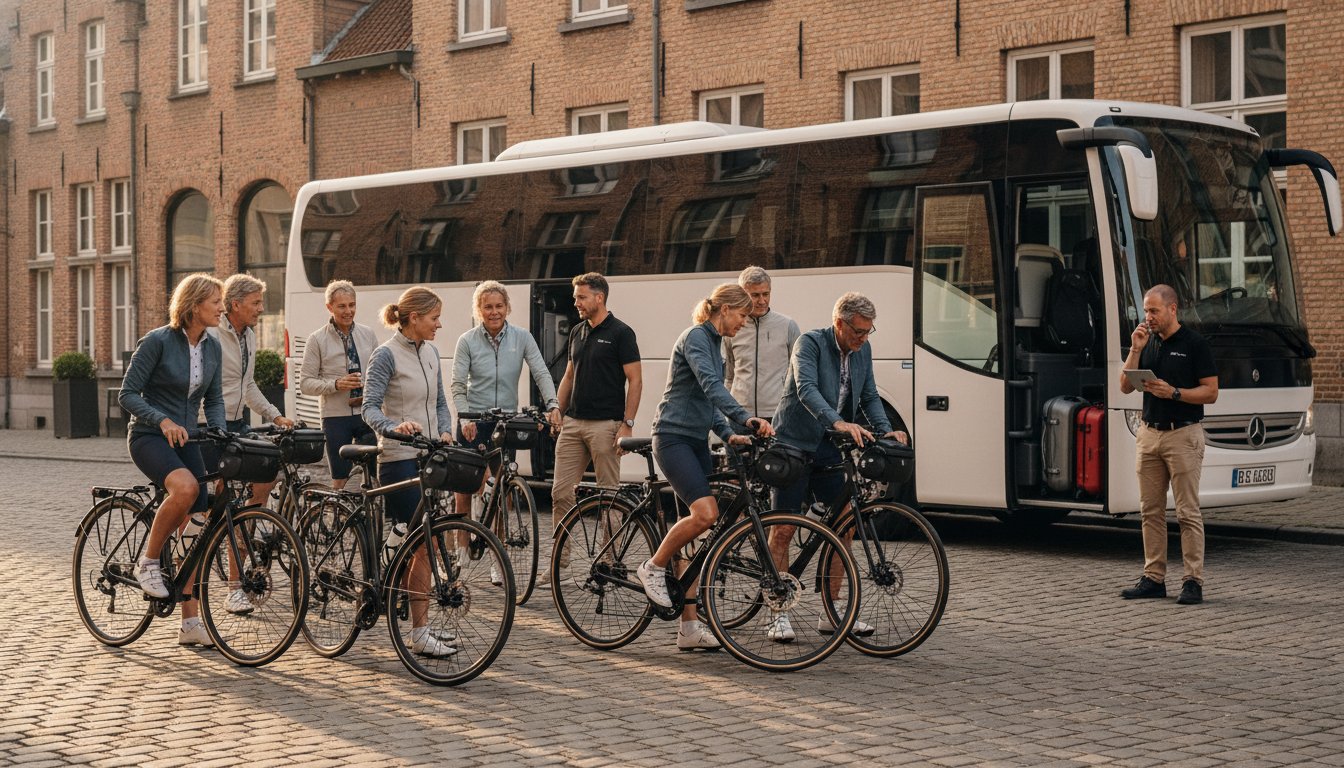
    • Master the logistics architecture of premium benelux cycling tours for travel agents, utilizing the “Coach + Cycle” model to ensure seamless and flexible group movement.
    • Compare the strategic advantages of land-based itineraries against traditional barge tours to unlock superior customization and higher margins for your portfolio.
    • Explore how to weave sensory experiences, such as authentic Belgian gastronomy, into cycling routes to create a compelling narrative that resonates with discerning clients.
    • Learn the value of a strategic DMC partnership to secure all-inclusive, fixed-price packages backed by twenty years of regional expertise and architectural precision.

    The Growing Demand for Active Benelux Group Travel in 2026

    The travel landscape for 2026 reveals a profound shift in how groups experience Europe. Travelers now prioritize depth over distance, seeking “slow travel” experiences that foster a genuine connection with the landscape. This evolution has transformed Belgium, the Netherlands, and Luxembourg into the world’s premier hubs for active tourism. For industry professionals, curated benelux cycling tours for travel agents represent a strategic opportunity to capture a market that values sustainability, health, and cultural intimacy.

    Demand is surging across diverse demographics. Corporate retreats now look for team-building through movement rather than conference rooms. Simultaneously, “silver-age” cycling clubs, which account for nearly 40% of the luxury active travel segment, demand premium comfort and seamless logistics. A specialized Benelux incoming tour operator serves as the essential architect in this ecosystem. They bridge the gap between complex local bike infrastructure and the sophisticated expectations of international sales channels, ensuring every detail is technically flawless and artistically inspired.

    Why Benelux is the Golden Triangle for Cycling

    The region’s infrastructure is a masterpiece of interconnected design. Belgium’s RAVeL network offers over 1,480 kilometers of greenways, repurposed from old railway lines to ensure smooth, car-free journeys. In the Netherlands, the LF (Landelijke Fietsroutes) routes create a seamless web of long-distance paths. Cycling in the Netherlands is a foundational element of the national identity, providing a level of safety and maintenance that’s unmatched globally.

    The geography stays largely flat, making it accessible for groups with varying fitness levels. However, the true appeal lies in the density of the experience. It’s one of the few places on earth where a group can traverse three different countries in a single week. The itinerary flows effortlessly from the medieval art cities of Flanders to the high-plateau forests of the Ardennes and the sophisticated urban pulse of Luxembourg.

    The Travel Agent Opportunity: High-Margin Active Tours

    Active tours command significantly higher price points than standard coach-based itineraries. The complexity of bike logistics, specialized support vehicles, and luggage transfers creates a barrier to entry that justifies premium margins. Clients aren’t just paying for a bike; they’re paying for “curated friction.” This concept balances the physical challenge of the route with the reward of high-end recovery, such as boutique hotel stays and private culinary tastings.

    The logistical precision required for these tours makes the travel agent’s role indispensable. You aren’t just selling a trip; you’re selling a managed adventure. In 2026, active travel has evolved into a multi-sensory cultural experience that blends physical movement with deep artistic immersion and culinary discovery. By focusing on benelux cycling tours for travel agents, you position your brand as a purveyor of health, luxury, and authentic European heritage.

    Logistics Architecture: The Backbone of Professional Cycling Tours

    Precision defines excellence. In the Benelux region, a successful itinerary relies on an invisible yet robust structure. Travel agents must secure a triad of reliability: transport, equipment, and accommodation. Without this foundation, the most scenic route through the Ardennes or the Dutch coast loses its charm. The “Coach + Cycle” model represents the gold standard for high-end groups. It’s about providing a safety net that allows guests to focus on the rhythm of their pedals rather than the weight of their luggage. This logistical framework is the primary reason benelux cycling tours for travel agents require a specialized partner who understands the nuance of movement.

    The demand for these curated experiences is measurable. According to European cycling tourism statistics, this sector contributes over €44 billion annually to the EU economy. Capturing a share of this market requires more than just a map; it demands specialized trailers for carbon frames and secure charging stations for a growing fleet of e-bikes. Seamless luggage transfers between regional hotels ensure that when a guest arrives at their destination, their belongings are already waiting in their room. This level of synchronization transforms a simple bike ride into a sophisticated journey.

    Private Coach Support and Fleet Management

    Flexibility is the ultimate luxury. Using a DMC with its own modern fleet ensures that plans can shift with the weather or group energy levels. A dedicated support vehicle isn’t just for technical failures; it’s a mobile sanctuary. It offers respite for tired riders and carries the specialized tools needed for roadside repairs. Choosing the right partner for coach hire Belgium creates a logistical cornerstone. This fleet management allows for a “rolling hub” where snacks, water, and spare parts are always within reach, ensuring the group’s momentum remains uninterrupted.

    Sourcing Group-Friendly Accommodations

    Not every four-star hotel understands the specific needs of a cyclist. “Bike-friendly” is a technical specification, not a marketing buzzword. It requires secure, ground-floor storage and high-voltage charging zones for e-bike batteries. Catering must pivot toward high-protein, slow-release energy menus served at flexible hours. Finding properties that can house 20+ cyclists while maintaining a boutique feel is a significant challenge. BELUNE manages these partnerships through rigorous quality audits across borders. We ensure that every stop reflects a standard of elegance that reassures the traveler. For those seeking to craft these high-end experiences, partnering with a regional specialist ensures every detail is mastered with surgical precision.

    Comparison: Bike & Barge vs. Land-Based Coach Supported Tours

    Choosing the right vessel for a journey defines the entire guest experience. In the Benelux region, travel agents often weigh the traditional allure of bike and barge against the precision of land-based, coach-supported tours. While barges offer a floating home, they remain bound by the rhythm of the canals. Land-based tours provide a different harmony. They offer the scalability required for larger corporate groups or high-end private departures. A barge might cap your group at 22 guests; a land-based operation scales effortlessly to 50 or more without sacrificing intimacy.

    For those curating benelux cycling tours for travel agents, the land-based model often yields a superior ROI. You aren’t paying for the constant overhead of a vessel’s maritime crew. Instead, you invest in high-margin luxury hotel partnerships and bespoke culinary experiences. This model allows for a more nuanced pricing strategy that rewards the agent’s creative input. Client satisfaction often peaks when the itinerary feels tailor-made rather than dictated by a fixed waterway path.

    The Versatility of Land-Based Itineraries

    Land-based tours allow us to reach the heart of the “Art & Culture” scene. You can’t dock a barge in the middle of the Hoge Veluwe National Park to see the Kröller-Müller Museum at sunset. Land itineraries pivot. If the North Sea wind turns fierce, a support coach repositions the group in minutes. This flexibility is vital for white-label branding. It allows agents to design a unique signature that isn’t tied to a standard boat route. It’s about movement without compromise. You can curate a morning in a Belgian chocolatier followed by an afternoon ride through the Flemish Ardennes, all while your luggage moves seamlessly between five-star properties.

    The Logistics of the “Hybrid” Experience

    The most sophisticated approach involves a “hybrid” architecture. We combine the physical exhilaration of cycling with the silent comfort of luxury coach transfers. This ensures guests spend their energy on the most scenic segments, skipping industrial outskirts or repetitive polder paths. It maximizes the Economic benefits of cycle tourism by distributing guest spending across a wider range of local boutiques and heritage sites.

    When deciding which model fits your client base, consider their desire for space. A coach-supported tour offers room to breathe and the ability to escape the group dynamic when desired. It’s a strategic choice for benelux cycling tours for travel agents looking to elevate the standard active holiday. In 2026, the modern cyclist values destination depth over purely nautical convenience.

    Thematic Integration: Beyond the Pedals

    A journey through the Low Countries shouldn’t be a mere collection of kilometers. It’s a curated narrative. The most successful benelux cycling tours for travel agents distinguish themselves by offering a story that breathes life into the landscape. We believe that cycling is the medium, but the theme is the message. By layering historical depth and sensory experiences, agents create a product that resonates long after the bikes are returned. It’s about moving through a living gallery where every turn reveals a new layer of cultural nuance.

    Cycling Through History: Flanders Fields & Beyond

    The Ypres Salient offers a profound emotional resonance that few other routes can match. Cycling between the Menin Gate and the preserved trenches of Sanctuary Wood allows travelers to absorb the weight of history at a human pace. It’s an immersive pilgrimage. For a comprehensive look at how to structure these visits, refer to this Flanders Fields guide. On the ground, professional guides act as the essential voice of the landscape. They transform silent monuments into vivid accounts during scheduled breaks, ensuring the 1914 to 1918 history feels immediate and personal for every participant.

    The Gastronomic Reward: Beer, Cheese, and Chocolate

    The concept of “Cycling for Calories” turns physical exertion into a gateway for luxury. Integrating Belgium gastronomy tours into a route adds a layer of artisanal appreciation. We recommend stops at Trappist breweries like Westvleteren or Orval, where the scarcity of the product matches the exclusivity of the experience. Organizing private tastings for groups of 12 to 20 riders requires meticulous logistics; securing these spots 6 months in advance is standard practice for high-end operators. This focus on themed group travel Benelux creates the “Instagrammable” moments that drive modern travel sales. Beyond the plate, the architecture of the farmsteads and the geometry of the hop fields provide a visual harmony that delights the eye.

    Art and architecture provide the final layer of this thematic tapestry. Whether it’s the Art Nouveau curves of Brussels or the medieval textures of Ghent, the built environment serves as a gallery. We recommend schedules that allow for 90 minute mid-ride gallery visits, ensuring the physical and the intellectual are perfectly balanced. This isn’t just a bike trip; it’s a bespoke composition of movement, taste, and memory. By integrating these elements, benelux cycling tours for travel agents become more than a service, they become a vision of European heritage.

    Ready to elevate your itinerary with a vision that blends technical precision and artistic flair? Partner with our experts to design your next masterpiece.

    Partnering with BELUNE: Your Strategic DMC in the Benelux

    BELUNE acts as a specialized extension of your agency. We position ourselves as the premier partner for professionals seeking fixed-price, all-inclusive packages that eliminate the complexity of European logistics. Since 2000, we’ve spent over 24 years mastering regional transport and itinerary design across Belgium, the Netherlands, and Luxembourg. This deep-rooted experience allows us to anticipate the unique needs of high-end clientele before they even arise. Our “A to Z” service model means we handle every touchpoint. We manage the initial conceptual planning, secure luxury accommodations, and provide rigorous on-the-ground management throughout the trip.

    One of our most significant advantages is that we own our logistics fleet. We don’t rely on third-party contractors for transport or equipment. This ownership ensures a level of reliability and quality control that’s rare in the industry. Our fleet of 15 specialized support vehicles is maintained to the highest standards, ensuring that benelux cycling tours for travel agents remain seamless and professional. By controlling the entire supply chain, we provide a safety net that protects your reputation and your clients’ experience.

    Custom Itinerary Design for Travel Agents

    We believe in a collaborative approach to travel. We don’t just offer off-the-shelf products; we work with you to build a unique tour that mirrors your specific brand voice. Whether your clients seek a rugged athletic challenge or a gentle ride through historic landscapes, we tailor the pace and tone. Our fixed-price model provides total transparency. This makes it easier for you to apply markups and manage your margins without worrying about fluctuating local costs or hidden fees.

    Our team includes multi-lingual local guides who are fluent in at least four languages, including English, French, Dutch, and German. These experts specialize in active travel. They don’t just lead the way; they act as storytellers and problem solvers. They ensure that every guest feels supported, regardless of their cycling proficiency. This high-touch service is what transforms a standard holiday into a signature experience for your agency.

    The BELUNE Difference: Sophistication Meets Sport

    At BELUNE, we’re committed to a philosophy of minimalist elegance. We aim to remove the logistical noise and stress that often accompany group travel. By handling the heavy lifting behind the scenes, we ensure that the emotion of the journey remains the focus for the traveler. It’s about creating a space where the beauty of the Benelux landscape can truly shine. We invite you to explore the possibilities for your upcoming seasons. We’re currently accepting consultations for 2026 and 2027 group departures, providing the lead time necessary to craft something truly exceptional.

    Shaping the Future of Active Travel in 2026

    The 2026 travel season demands more than just a route; it requires a symphony of logistics and sensory experiences. Success lies in balancing the technical precision of a private coach fleet with the poetic discovery of the Belgian and Dutch landscape. We’ve explored how integrating thematic narratives and choosing between land-based or barge-supported models defines the guest’s journey. It’s about moving beyond the pedals to create a seamless, high-end narrative for every group. This mastery of movement ensures your clients experience the region in its most sublime form.

    As you design your upcoming season, the right partnership becomes your most valuable asset. BELUNE brings 20+ years of DMC expertise to the table, ensuring every itinerary is backed by a private fleet of modern coaches and fixed-price, all-inclusive B2B packages. We handle the complexity so you can focus on the vision. Elevate your portfolio with premium benelux cycling tours for travel agents that transform a simple holiday into a refined exploration of the Low Countries.

    Partner with BELUNE for your next Benelux group cycling tour to secure your 2026 dates. Let’s craft an unforgettable journey together.

    Frequently Asked Questions

    What are the best cycling routes in the Benelux region for large groups?

    The LF Maasroute and the Vennbahn are the most reliable choices for large groups due to their wide paths and exceptional infrastructure. The Vennbahn, a 125-kilometer former railway line, offers a consistent 2% gradient that ensures comfort for cyclists of all fitness levels. These routes provide a sense of harmony between safety and scenic beauty, passing through the High Fens and the Ardennes with ease.

    How does a travel agent benefit from using a DMC for cycling tours?

    Travel agents gain a strategic ally who manages 100% of local logistics and technical requirements. This partnership provides access to a curated network of boutique hotels and multilingual guides that aren’t always available to the general public. By delegating the complex coordination of bikes and transfers, you can focus on the client relationship while we ensure the execution is flawless and professional.

    Is the Benelux region suitable for e-bike group tours?

    The region is a global leader for e-bike travel, featuring over 37,000 kilometers of cycling paths in the Netherlands alone. Most routes include dedicated charging points at “Fietsers Welkom” cafes and hotels, making it simple to maintain battery levels. We provide bespoke e-bike fleets equipped with Bosch mid-drive motors to ensure every guest enjoys the landscape with effortless grace and technical reliability.

    How do you handle luggage transfers for multi-day cycling itineraries?

    We manage luggage transfers through a synchronized logistics system that guarantees bags arrive at the next hotel by 4:00 PM daily. This service is a vital component of our benelux cycling tours for travel agents, as it allows guests to ride without the weight of heavy panniers. Our team coordinates directly with hotel concierges to ensure luggage is often waiting in the guest rooms before the group arrives.

    Can cycling tours be combined with battlefield or culinary themes?

    Cycling itineraries naturally pair with historical and gastronomic themes, such as the 1944 Battle of the Bulge sites or Flanders’ Michelin-starred regions. You can design a 7-day journey that balances the somber history of Bastogne with private beer tastings in Westvleteren. This fusion of physical activity and cultural depth creates a multi-sensory experience that resonates deeply with sophisticated travelers seeking more than just a bike ride.

    What happens if a group member cannot complete a cycling segment?

    Our support vehicles provide immediate assistance for any guest who feels they can’t continue the day’s ride. We maintain a 1:15 ratio of support vans to cyclists to ensure prompt response times across the entire group. A guest can transition to the air-conditioned vehicle, enjoy the scenery from a different perspective, and rejoin their companions at the next scheduled stop or hotel.

    Are your cycling tour packages for travel agents fixed-price or commission-based?

    Our benelux cycling tours for travel agents operate on a net-price model, which gives you the freedom to set your own margins and final client pricing. We provide comprehensive quotes within 48 hours of your request, detailing every inclusion from mechanical support to hotel taxes. This transparent approach ensures you maintain professional autonomy while benefiting from our established wholesale rates with local partners.

    What kind of support vehicles do you provide for group cycling tours?

    We deploy modern 9-seater vans that serve as mobile command centers, equipped with professional bike racks and specialized toolkits. These vehicles meet the group at designated intervals every 20 kilometers to provide hydration, snacks, or mechanical adjustments. Each van is operated by a technician who ensures the technical rhythm of the tour remains uninterrupted, allowing the group to focus entirely on the journey.

  • The Sophisticated Guide to Curating a Belgian Beer Tour for Professional Groups in 2026

    The Sophisticated Guide to Curating a Belgian Beer Tour for Professional Groups in 2026

    An exceptional journey isn’t defined by the destination, but by the silent precision of its execution. For those curating a Belgian beer tour in 2026, the goal is to transform a simple tasting into an architectural and sensory masterpiece. You know that discerning professional groups expect more than a seat at a crowded bar; they want an experience that feels both personal and profound. We agree that the friction of coordinating transport to remote 12th-century abbeys like Orval often threatens the harmony of a high-end itinerary.

    This guide provides the technical and creative framework to design a seamless, all-inclusive tour that satisfies the most demanding travelers. You’ll learn how to secure exclusive access to restricted sites and how to partner with boutique venues that maintain an intimate, artisanal atmosphere for groups of 18 or more. We’ll detail the logistics of private transport and the art of blending deep zythology with historical sightseeing. By the end, you’ll have a sophisticated blueprint to elevate your 2026 travel projects into something truly visionary.

    Key Takeaways

    • Master the art of “Slow Travel” by integrating Belgium’s UNESCO-protected brewing heritage into an itinerary that resonates with cultural depth.
    • Learn to curate a sophisticated Belgian beer tour that balances the sacred silence of Trappist monasteries with the spontaneous fermentation of the Pajottenland.
    • Resolve the logistical challenges of reaching remote, rural sites with professional transport solutions designed for group safety and absolute comfort.
    • Discover how to harmonize the distinct regional identities of Flanders and Wallonia, from historic city breweries to the rugged farmhouse traditions of the Ardennes.
    • Understand the value of a bespoke DMC partnership to transform complex logistics into a seamless, high-end experience for your discerning professional clients.

    Table of Contents

    The Cultural Architecture of Belgian Beer: Why It Is the Ultimate Group Destination

    Belgium isn’t just a location; it’s a sensory blueprint. In 2016, UNESCO recognized the country’s brewing craft as an intangible cultural heritage, elevating the liquid arts to the same status as fine architecture or classical music. This designation transformed the way discerning travelers view the region. A comprehensive guide to Belgian beer reveals a landscape where every bottle tells a story of local identity and technical mastery. For modern high-end groups, the appeal lies in the “Slow Travel” movement. It’s a shift away from frantic sightseeing toward deep, intentional immersion. 2026 stands as the pivotal year for this journey, as it marks the Benelux Year of Gastronomy. This initiative will see a 25% increase in curated culinary events across the region, making it the definitive time to organize a belgian beer tour that prioritizes excellence over volume.

    The structural integrity of this culture rests on four distinct pillars. These categories define the output of the 400 active breweries currently operating within the borders. Understanding these pillars is essential for any group seeking a sophisticated itinerary:

    • Trappist: Authentic ales produced within the walls of Cistercian monasteries, with only six Belgian sites currently holding the “Authentic Trappist Product” label.
    • Abbey: Beers brewed in the monastic style, often through licensing agreements with historic religious foundations.
    • Lambic: The wild soul of Belgian brewing, utilizing spontaneous fermentation exclusive to the Pajottenland region and the Zenne Valley.
    • Craft: A vibrant wave of modern innovation where young brewers apply scientific precision to traditional hop and malt profiles.

    UNESCO Heritage and the Art of the Pour

    The ritual of service in Belgium is a choreographed performance. It’s an exercise in precision that appeals directly to luxury-oriented travel groups. Every one of the 1,500+ beer varieties has its own unique glass, designed to optimize carbonation and aroma. Temperature control is absolute. A heavy Trappist quadrupel served at exactly 12°C reveals hidden notes of plum and caramel that would vanish at a standard refrigerator setting. Professional belgian beer tour guides are often certified Zythologists. These beer sommeliers act as cultural translators, explaining the harmony between the pour, the foam, and the glass. Their presence ensures that every tasting is an educational masterclass rather than a simple drink.

    Beyond the Glass: Beer as Living History

    Brewing is an architectural feat of time and patience. The monastic traditions reach back to the Middle Ages, following St. Benedict’s Rule of self-sufficiency. This history isn’t just found in books; it’s tasted in the glass. In the Pajottenland, the link between terroir and the final product is undeniable. Brewers open their cooling vats to the night air, allowing wild yeasts like Brettanomyces bruxellensis to initiate fermentation. It’s a process that hasn’t changed in centuries, relying on the specific microflora of the local environment. This connection to the land creates a sense of place that few other beverages can match. Belgian Beer Culture is a blend of spiritual tradition and scientific innovation.

    Essential Styles and Sites: Building the Core of Your Belgian Beer Tour

    A sophisticated belgian beer tour transcends simple tasting; it’s an exploration of liquid architecture. The craft is so deeply woven into the national identity that it earned a spot as a UNESCO Intangible Cultural Heritage in 2016. This recognition isn’t merely for the beverage itself, but for the social fabric and artisanal mastery that sustain it. To build a truly discerning itinerary, you must balance the sacred silence of monasteries with the vibrant energy of modern urban taprooms.

    The Trappist Trail: Exclusive and Sacred

    The “Authentic Trappist Product” (ATP) seal is the gold standard of brewing exclusivity. To carry this hexagonal mark, the beer must be produced within the walls of a Cistercian monastery under the direct supervision of monks. As of 2024, only five breweries in Belgium maintain this prestigious status for their beer: Westmalle, Westvleteren, Chimay, Rochefort, and Orval. Understanding the distinction between an “Abbey beer” (often produced by commercial giants under license) and a “Trappist beer” (a monastic labor of love) is vital for your group’s appreciation of the craft.

    • Orval: Famous for its unique Brettanomyces yeast and iconic Art Deco bottle.
    • Rochefort: Known for its numeric system (6, 8, 10) representing gravity and depth.
    • Westvleteren: Often cited as the world’s most elusive beer. It’s sold only at the abbey gates by appointment or at the “In de Vrede” visitor center.

    Group logistics require a delicate touch. You can’t simply walk into the cloistered brewing areas. Most abbeys remain closed to the public to preserve the monks’ contemplative life. Instead, we recommend booking guided tastings at nearby “associated” taprooms where the history is shared through curated sensory experiences. Planning these stops requires a minimum lead time of 4 to 6 weeks for larger parties.

    Lambic and Spontaneous Fermentation

    In the Zenne Valley and the Pajottenland, brewers don’t pitch yeast. They invite it. This region is the only place on earth where the specific microflora allows for spontaneous fermentation. The result is Lambic; a complex, tart, and still beer that serves as the base for Gueuze and Kriek. For travelers who typically prefer fine wines, these “sour” beers are a revelation. They share a similar structural acidity and potential for bottle aging.

    Visiting Brasserie Cantillon, founded in 1900, feels like entering a living museum. The cobwebs are intentional; they protect the ecosystem of the brewery. 3 Fonteinen offers a more contemporary but equally traditionalist perspective. Note that the brewing season is strictly seasonal. It runs from October to April when the night air is cool enough to inoculate the wort in open cooling ships. If you visit in the summer, focus on the “assemblage” or blending process instead. Designing a journey through these historic sites requires the same eye for detail as mastering architectural light to define a space.

    The Flemish Red and Modern Evolution

    In West Flanders, the “Burgundy of Belgium” awaits. Flemish Red-Brown ales, like those from Rodenbach in Roeselare, are aged in massive oak foeders. Rodenbach’s cathedral of 294 oak barrels is a sight that rivals any traditional gallery. Meanwhile, Brussels is reinventing itself. Since its founding in 2013, the Brussels Beer Project has challenged tradition with experimental hops and collaborative spirit. It’s a necessary counterpoint to the ancient abbeys, proving that Belgian beer is a living, breathing art form that continues to evolve.

    Reaching the heart of the Pajottenland or the secluded valleys of the Ardennes requires more than a map. It demands a sophisticated strategy. Over 400 active breweries currently dot the Belgian landscape, yet many of the most prestigious sites sit in rural isolation. Public transport networks rarely align with the production schedules of Trappist monasteries or small-scale lambic producers. We understand that for a discerning group, the journey must be as refined as the destination. Eliminating the friction of travel allows the focus to remain on the sensory experience. A belgian beer tour shouldn’t feel like a logistical puzzle; it should feel like a curated gallery opening where every transition is seamless.

    The Role of Private Coach Transport

    Our approach centers on the use of a bespoke, modern fleet designed to navigate the specific challenges of European geography. Standard tour buses often struggle with the 12% gradients and narrow cobblestone paths found in the Flemish Ardennes. We utilize agile, high-specification coaches that offer the intimacy of a private lounge. Safety is our primary pillar. With a professional, dedicated driver at the helm, guests can explore high-gravity quadrupels and complex sours without the burden of navigation or sobriety concerns. These vehicles feature climate control and high-speed Wi-Fi, providing a quiet space for reflection between the 150-kilometer stretches that often separate iconic sites like Westmalle and Orval. It’s about creating a mobile sanctuary where the group can recharge in total comfort.

    Timing the Perfect Itinerary

    Structure dictates the success of a 5 to 7-day journey. We adhere to the “two-visit rule” to prevent sensory fatigue and ensure each tasting receives the respect it deserves. A typical day begins at 10:00 AM with a technical brewery walkthrough, followed by a long, gastronomic lunch. The afternoon is reserved for cultural immersion. In 2016, the UNESCO Intangible Cultural Heritage of Humanity recognized Belgian beer culture for its deep social roots and craftsmanship. We honor this by integrating stops at architectural landmarks, such as the 1893 Victor Horta townhouses in Brussels or the 13th-century belfries of Bruges. These visual pauses are essential. They provide a necessary contrast to the industrial or rustic aesthetic of the breweries.

    Selecting the right base of operations is equally vital for group cohesion. We prioritize hotels that mirror our commitment to excellence and local heritage. Consider these criteria when booking for a belgian beer tour:

    • Centrality: Properties like the Hotel Heritage in Bruges allow for easy evening strolls without transport.
    • Curation: We look for bars that stock rare vintages, such as 3 Fonteinen or Cantillon, directly on-site.
    • Capacity: Ensuring the venue can host private group tastings in a quiet, dedicated space.

    Managing the “Beer Fatigue” factor is an art form. By the fourth day, even the most dedicated enthusiast can feel overwhelmed by the complexity of Belgian yeast profiles. We break this rhythm by introducing a “dry” afternoon focused on the history of the 1901 Art Nouveau movement or a private chocolate workshop. This reset ensures that when the group reaches their final destination, their palates are sharp and their enthusiasm is renewed. We don’t just move people from point A to point B; we orchestrate a balanced narrative that celebrates the harmony of Belgian life.

    Regional Nuances: Crafting a Balanced Journey Across Flanders and Wallonia

    Belgium’s brewing map is an intricate tapestry of light and shadow, much like a masterfully lit architectural space. To curate a truly bespoke belgian beer tour, one must understand the distinct sensory identities of Flanders and Wallonia. These regions don’t just produce different liquids; they offer entirely different atmospheres, rhythms, and historical echoes. A balanced itinerary treats the country as a canvas where urban precision meets rural soul.

    Flanders represents the structured, historical heart of the north. Here, the brewing tradition is inseparable from the gothic and renaissance architecture of its major cities. Wallonia, by contrast, offers a more rugged, artisanal experience. The southern landscape dictates the pace. It’s a place where farmhouse traditions and the vast greenery of the Ardennes shape every glass. Brussels sits at the center, acting as a cosmopolitan prism that refracts every style into a modern, international context.

    Flanders: Tradition Meets Innovation

    Flanders thrives on technical mastery and urban heritage. In Bruges, the De Halve Maan brewery demonstrated this perfectly by installing a 3.2-kilometer underground beer pipeline in 2016. This project preserved the city’s medieval cobblestones while modernizing production. Groups visiting Antwerp should explore De Koninck, a brewery that has defined the city’s “Bolleke” culture since 1833. The atmosphere here is best captured in “Brown Cafés.” These are intimate, wood-paneled spaces where the patina of age adds a sublime layer to the tasting experience. For history buffs, integrating these stops with a visit to the Flanders Fields museum in Ypres provides a profound connection between the region’s resilient spirit and its liquid heritage.

    Wallonia: The Soul of the Ardennes

    Wallonia offers a raw, organic beauty. The Meuse valley provides the backdrop for the “Saison” style, a farmhouse ale originally brewed for seasonal workers. These beers are dry, peppery, and deeply refreshing. The Ardennes forest covers over 11,000 square kilometers, offering a playground for active groups. It’s common to see cycling parties stop at Orval, where the abbey ruins date back to 1132, to pair a Trappist ale with local semi-hard cheeses. The gastronomic harmony here is deliberate. The saltiness of Ardennes ham, cured for at least six months, creates a perfect counterpoint to the carbonation of a classic Wallonian Triple. It’s a sensory dialogue between the land and the table.

    Choosing the right path depends entirely on your group’s profile. Active groups seeking movement and fresh air will find their home in the south. Those who prefer the quiet contemplation of art, history, and sophisticated city life should focus on the northern clusters. Most discerning itineraries spend three days in each region to appreciate the nuances of the 1,600+ beers recognized by UNESCO in 2016. Whether you’re navigating the sleek breweries of Ghent or the forest-bound abbeys of the south, the goal is always the same: to find harmony between the environment and the glass.

    Every successful journey requires a visionary approach to detail and atmosphere. Just as we transform a physical room through the mastery of light, a well-planned belgian beer tour transforms a simple trip into a profound cultural experience. We invite you to discover our vision of bespoke excellence and apply that same rigor to your next group adventure.

    Brussels remains the essential bridge. It’s where the wild fermentation of Lambics meets the experimental edge of new-wave craft brewers. A group can spend a morning at Cantillon, which has used the same natural cooling methods since 1900, and an evening at a sleek, minimalist taproom in the Dansaert district. This contrast defines the Belgian experience. It’s never just about the drink; it’s about the space, the history, and the human connection forged in the presence of exceptional craft.

    The BELUNE Advantage: Bespoke B2B Partnership for Belgian Beer Tours

    BELUNE operates as the silent architect of your travel projects. We don’t just book coaches or reserve tables; we design atmosphere. For 21 years, we’ve functioned as a dedicated Destination Management Company (DMC) for partners who demand excellence. Our approach is defined by a minimalist elegance that prioritizes the guest’s emotional connection to the landscape. We are the “Artisan of Light” for your projects. We illuminate the hidden gems while keeping the logistical machinery invisible in the shadows. This balance ensures that every belgian beer tour we facilitate feels effortless and exclusive.

    Our 21-year history in the heart of Europe has allowed us to cultivate a network of 185 local suppliers. These aren’t just names in a database. They are personal relationships with abbey monks, family-run hop farms, and private cellar masters. We leverage these connections to secure access that isn’t available on the open market. Whether it’s a private tasting in a cellar that hasn’t opened to the public since 1994 or a dinner inside a working brewhouse, our partners benefit from our local gravity.

    We believe in a “A to Z” philosophy. This means we take full ownership of the project from the first conceptual sketch to the final guest departure. Tour operators choose us because we eliminate the fragmentation that often plagues international travel planning. By consolidating all Belgian operations under one visionary roof, we provide a level of consistency that a simple booking agent cannot match. We treat every itinerary as a unique composition, ensuring that the rhythm of the tour matches the sophisticated expectations of your clientele.

    Custom Itineraries and Local Expertise

    Tailoring is our signature. We adapt every belgian beer tour to the specific profile of your group, whether you’re hosting 12 executive VIPs or a 40-person corporate delegation. Our guides are more than just translators. They are zythology experts who bridge the gap between history and sensory experience. They provide the narrative structure that turns a tasting into a masterclass. For those who wish to expand the journey, our Art & Culture Group Tours provide the perfect aesthetic framework to complement the gastronomic elements of the trip.

    Seamless Execution for Peace of Mind

    Logistics should be felt, not seen. BELUNE manages the intricate dance of hotel room blocks, specialized transport, and site permissions with surgical precision. By providing a single point of contact, we reduce communication friction by 40% for our international partners. We are currently opening our calendar for the next season. Contact BELUNE to start designing your exclusive 2026 Belgian beer tour itinerary.

    Excellence isn’t an accident. It’s the result of rigorous technical standards and a passion for the Belgian terroir. We invite you to collaborate with us to create something sublime. Let us handle the complexity so you can focus on the vision. Together, we’ll craft a journey that resonates long after the final glass is poured.

    Crafting Your 2026 Legacy Journey

    Designing a world-class travel experience requires more than a simple list of destinations. It demands an architectural approach where the 1,500 distinct beer styles recognized by UNESCO meet the logistical precision of a seasoned partner. A successful belgian beer tour in 2026 balances the historic Trappist abbeys of Wallonia with the cutting-edge craft scenes of Flanders to ensure every professional group finds its perfect rhythm. We bring over 20 years of DMC expertise to your planning process. Our private fleet of modern, group-friendly coaches and expert multi-lingual local guides transform a complex logistical puzzle into a seamless, sensory narrative. We don’t just move people from one brewery to another; we curate moments of harmony and discovery that linger long after the final glass is poured. Excellence is found in the details of the pour and the timing of the transit. Let’s build a journey that reflects your group’s unique professional identity through the lens of Belgian excellence.

    Request Your Custom Benelux Group Tour Itinerary

    Frequently Asked Questions

    What is the best time of year for a Belgian beer tour?

    Late spring, specifically May, offers the optimal balance of temperate 18°C weather and vibrant outdoor terrace culture. This period precedes the peak summer crowds of July, allowing for a more intimate experience at iconic sites like Cantillon. Autumn is also exceptional; September aligns with the Belgian Beer Weekend in Brussels, where over 400 different beers are showcased in the historic Grand Place.

    How many breweries can a group realistically visit in one day?

    A discerning itinerary typically includes two or three brewery visits per day to maintain a sophisticated and relaxed pace. This schedule allows 90 minutes for a technical tour and 60 minutes for a guided tasting session. Attempting more than three locations often compromises the sensory appreciation of the craft and leads to palate fatigue. It’s about quality of engagement over quantity of stops.

    Are Belgian breweries accessible for large groups and coaches?

    Most established breweries accommodate groups of 15 to 50 guests, though historic city centers like Bruges require specific coach drop-off zones. Large 50-seater vehicles must park at designated terminals like Bargeplein, situated 1.5 kilometers from the central square. We recommend mid-sized 20-seater executive sprinters for direct access to rural farmhouse breweries where narrow lanes limit larger transport options.

    Do we need a professional guide for a beer tour, or is a driver enough?

    A professional cicerone or beer sommelier provides the technical narrative and cultural depth that a driver cannot offer. While a driver ensures safety and logistics, a guide decodes the complex fermentation profiles and 1,000-year history of the region. This expertise transforms a simple transit into a curated educational masterclass, elevating your belgian beer tour into a truly sophisticated cultural event.

    Can a Belgian beer tour be combined with other Benelux destinations like Amsterdam or Paris?

    Brussels serves as a central European hub, connecting to Paris in 82 minutes and Amsterdam in 110 minutes via Thalys high-speed rail. This proximity allows for a multi-country sequence that bridges Belgian tradition with Dutch innovation or French gastronomy. A 10-day circuit can easily dedicate 5 days to Belgium before transitioning to neighboring capitals for a broader architectural and culinary perspective.

    What is the typical duration of a comprehensive Belgian beer itinerary?

    A comprehensive belgian beer tour requires a minimum of 5 to 7 days to cover the primary regions of Flanders and Wallonia. This timeframe allows for 3 nights in a central city like Ghent and 2 nights exploring the southern Trappist trail. A shorter 3-day stay usually limits groups to a single province, missing the essential regional nuances between acidic Lambics and robust Abbey ales.

    Is it possible to visit the actual brewing areas of Trappist monasteries?

    Direct access to the inner brewing halls of the 6 Belgian Trappist monasteries is strictly prohibited to preserve the monks’ vow of silence. Visitors instead experience the “Espace Chimay” or the “In de Vrede” visitor center at Westvleteren, located just 500 meters from the abbey gates. These dedicated spaces provide a profound connection to the monastic craft through interactive exhibits and exclusive onsite tastings.

    How do we handle dietary requirements such as gluten-free options on a beer-focused tour?

    Modern Belgian brewing now includes certified gluten-free options such as Brunehaut or Mongy, which utilize deglutenized barley. Approximately 15% of specialized beer boutiques now stock these alternatives to ensure inclusivity for every guest. We coordinate with taprooms 14 days in advance to secure specific pairings, ensuring the harmony of Belgian flavors is accessible regardless of dietary restrictions.