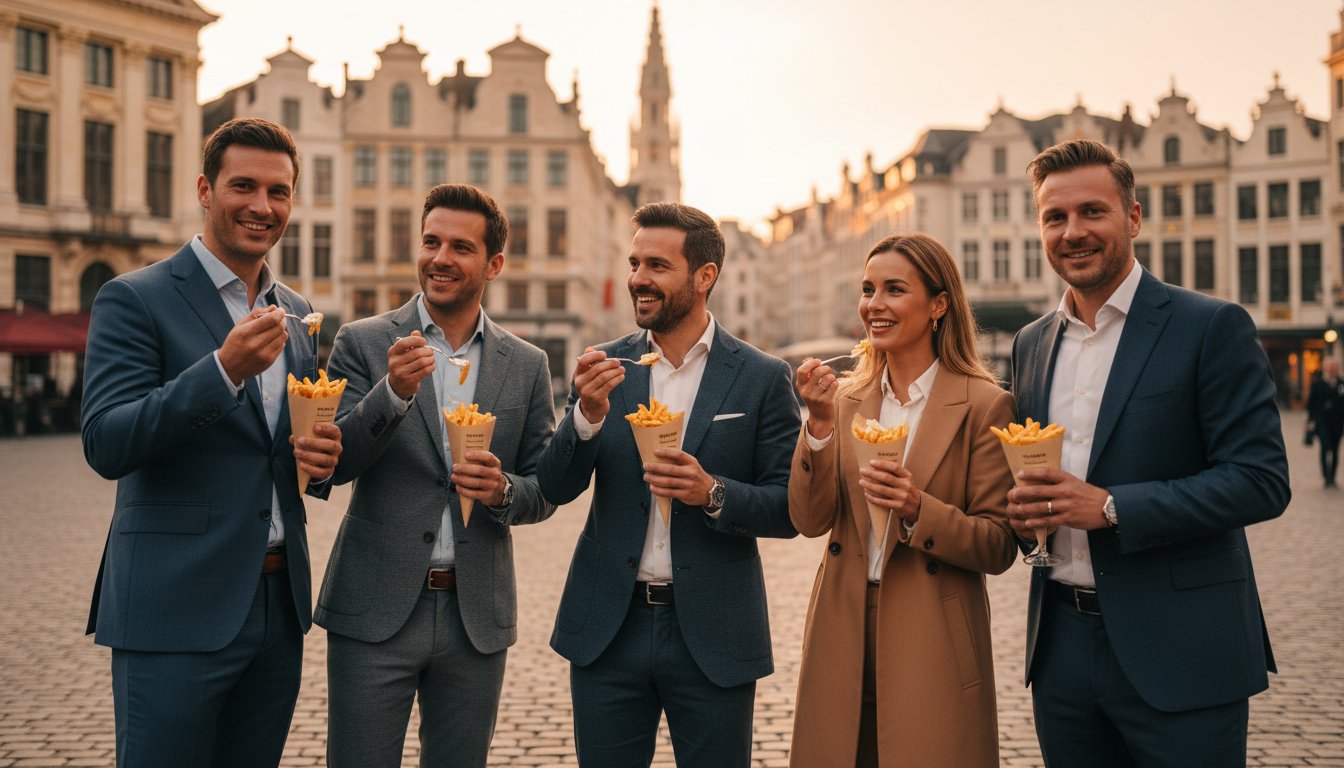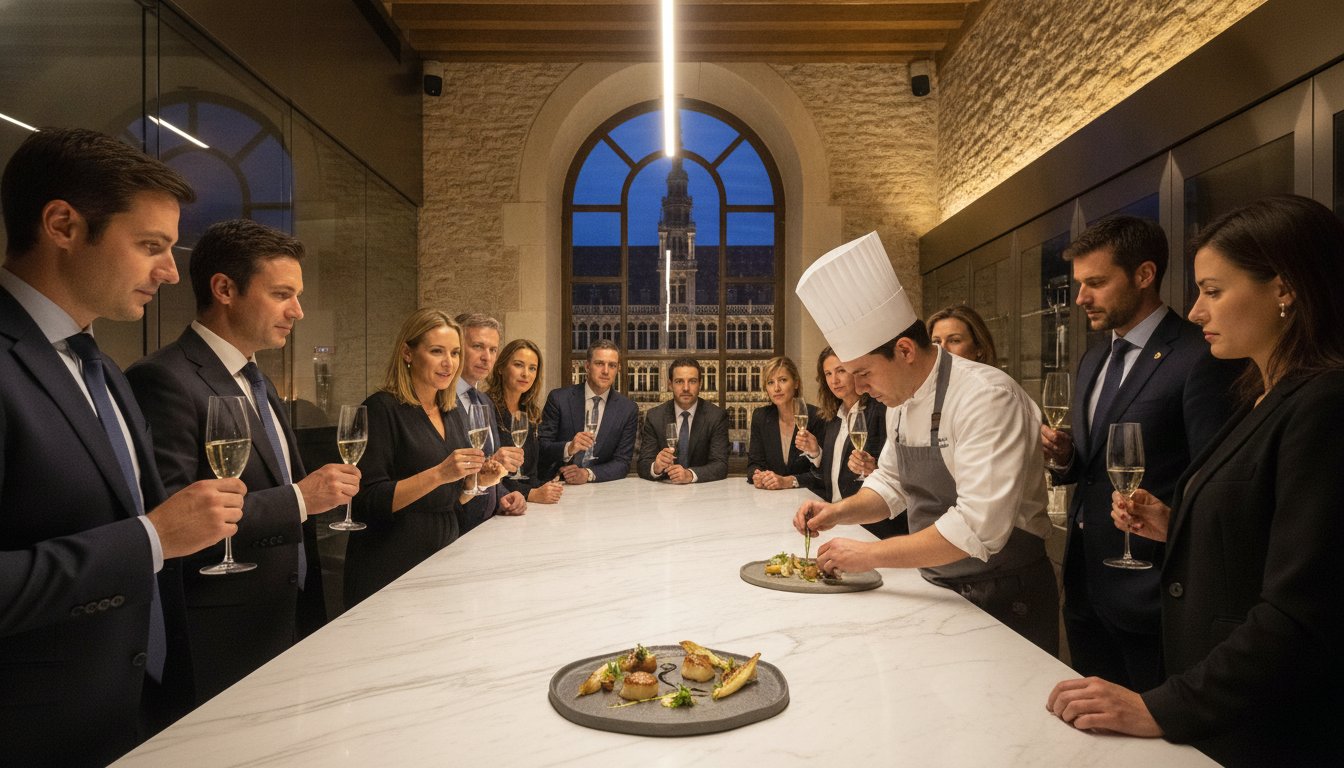
Brussels currently holds more Michelin-starred restaurants per capita than Paris, a fact that defines the city’s quiet culinary mastery. Yet, orchestrating a brussels food tour for groups that maintains this level of sophistication requires more than just a reservation. You likely understand the tension between providing an authentic, local experience and the technical reality of managing large-scale logistics through narrow, historic streets. It’s the delicate challenge of balancing sensory intimacy with professional infrastructure.
This guide reveals how to transform these logistical hurdles into a seamless, high-end gastronomic journey. We’ll show you how to move from standard sightseeing to a curated culinary choreography that leverages expert local guidance and exclusive access to the city’s most visionary venues. From navigating 2026’s most anticipated openings to managing complex dietary requirements and private coach transport, we’ll preview the strategic framework needed to execute a flawless professional itinerary that inspires and reassures in equal measure.
Key Takeaways
- Master the orchestration of a logistical symphony that preserves sensory intimacy while managing the complex flow of large professional delegations.
- Discover the structural pillars of a brussels food tour for groups that blends technical precision with deep cultural immersion.
- Learn to curate experiences that move beyond passive tasting toward active engagement, including artisanal workshops and exclusive fine dining access.
- Understand how integrated transport and private coach hire fleets resolve the “last mile” challenges of historic urban navigation.
- Identify the value of a visionary DMC partner in transforming standard culinary visits into sophisticated, risk-free professional itineraries.
The Art of the Brussels Food Tour for Groups
Brussels commands a unique position in European gastronomy, boasting more Michelin-starred restaurants per capita than Paris as of mid-2026. It’s a city where technical culinary precision meets centuries-old street food traditions. For professional delegations, a brussels food tour for groups isn’t merely a lunch break. It’s a calculated cultural immersion. We see it as a narrative told through flavor, where each venue represents a chapter in the city’s complex heritage. It requires a visionary approach to transform a simple meal into a strategic asset for your itinerary.
Moving beyond the surface requires a shift in perspective. The modern traveller seeks the “why” behind the “what.” A professional DMC acts as a strategic ally, connecting these dots through exclusive partner access that isn’t available to the general public. This ensures that even the largest groups experience the same intimacy and quality as a private guest. By integrating local guide services with high-end transport, we create a fluid movement through the city that feels natural rather than forced.
To better understand how these elements come together in the heart of the city, watch this perspective on the local culinary landscape:
Why Culinary Curation Matters for Modern Groups
True sophistication lies in the details. We avoid the common clichés that saturate the tourist market, seeking instead the artisanal depth of Brussels’ regional cuisine. We might align a specific chocolate tasting with the city’s Art Nouveau architecture or pair a Trappist ale with a discussion on medieval history. Gastronomy becomes a tool for storytelling. It’s about creating an emotional resonance that lingers long after the plates are cleared. High-end travellers expect this level of intellectual and sensory alignment, where every bite serves a broader purpose.
The Challenge of Scale in Urban Gastronomy
Logistics often dictate the quality of the experience. Once a group exceeds 15 participants, the technical requirements shift significantly. Local regulations often enforce a maximum of 25 people per guide for walking tours, a detail that requires careful planning. Navigating the cobblestone alleys with a large delegation requires precise timing and flow. Professional planning is essential to maintain a unified narrative across multiple tasting locations. We ensure that every participant receives the same high-quality engagement and expert guidance, regardless of the group’s scale or the complexity of the urban environment.
Successful curation involves several key pillars:
- Artisanal sourcing from local producers who prioritize seasonal menus.
- Historical context provided by expert guides who add cultural depth.
- Seamless logistics involving a private coach hire fleet to manage the “last mile.”
Designing a Logistical Symphony: Gastronomy for Large Delegations
Executing a brussels food tour for groups of 50 or more requires a level of technical precision that mirrors a high-end architectural project. It’s a logistical symphony. We don’t simply move people through the city; we engineer a fluid experience that preserves the intimacy of a solo visit while meeting the structural needs of a large delegation. This balance is achieved through meticulous timing, staggered itineraries, and a deep understanding of urban flow. Precision is paramount. We ensure that the transition from a modern coach to a historic tasting room is invisible to the guest, maintaining a sense of effortless discovery.
Managing dietary requirements at scale is often where standard tours falter. We treat these not as obstacles, but as essential components of our service design. Whether the requirement is vegan, gluten-free, or halal, our partners are briefed with technical rigour. This ensures that every participant, regardless of their restrictions, experiences the full depth of Belgian home cooking traditions. By integrating these needs into the foundational planning, we remove the friction often associated with group dining, allowing the focus to remain on the sensory experience.
The Multi-Lingual Expert: More Than a Guide
A professional guide in Brussels acts as both a cultural storyteller and a logistics manager. They bridge the gap between the technical history of the city and the emotive power of its gastronomy. For professional partners, our local guide services benelux provide the necessary cultural depth to transform a tasting into an educational journey. These experts navigate bustling urban markets with ease, offering insights that only a true local can provide. They are the human element that ensures the narrative remains consistent across every stop.
Timing and Flow: The Invisible Elements of Success
Success lies in the “buffer time” and the calculation of group movement. In Brussels, local regulations enforce a maximum of 25 participants per guide for walking tours. To maintain quality for larger delegations, we stagger groups across multiple artisanal workshops. This prevents overcrowding and ensures each guest receives personalized attention from the maker. We calculate the exact minutes needed for a group to disembark a coach and reach a tasting table, ensuring the temperature of the food and the readiness of the host are perfectly aligned. If you are looking for a strategic ally to manage these complexities, our team is ready to design your next professional itinerary.
- Staggered entry times to prevent venue saturation.
- Dedicated logistics coordinators for groups exceeding 30 participants.
- Pre-verified dietary menus for every artisanal stop.
From Artisanal Chocolate to Trappist Ales: Curation Strategies
Curation is choreography. For a professional brussels food tour for groups, the selection of venues isn’t a matter of proximity; it’s a matter of structural balance. We build itineraries on three distinct pillars: the technical mastery of chocolate, the monastic heritage of Trappist ales, and the avant-garde precision of fine dining. In a city that boasts more Michelin-starred restaurants per capita than Paris, the standards are exceptionally high. The 23rd Belgian edition of the Gault&Millau guide recently listed 1,340 restaurants, naming Brussels-based chef Karen Torosyan as “Chef of the Year 2026.” This level of excellence must be reflected in every stop we curate for your delegation.
We move beyond the surface. A sophisticated tour doesn’t just present a plate; it explains the terroir. Whether it’s a private tasting in a minimalist modern studio or a formal dinner in a historic guildhall, the atmosphere must align with the group’s professional standing. We ensure that every culinary asset, from savoury to liquid, serves a narrative purpose. It’s about transforming a standard visit into a strategic cultural investment.
Beyond the Plate: The Educational Experience
True immersion requires participation. We partner with master chocolatiers to offer private group demonstrations where the focus is on the artisanal process. Guests learn about the technical tempering of cocoa and the sourcing of sustainable ingredients. This educational layer adds significant value to our belgium gastronomy tours, moving the experience from simple consumption to intellectual engagement. Understanding the “why” behind the flavour creates a much deeper resonance for high-end travellers who value expertise and authenticity.
Curating a Balanced Tasting Menu
A successful itinerary requires a calculated rhythm. We structure tours to balance intense savoury flavours with delicate sweet transitions. Timing is vital. We calculate the flow to include liquid assets, specifically Trappist beers, which offer a lesson in monastic brewing history and fermentation techniques. Managing free time within culinary hubs like the Sainte-Catherine district requires equal precision. We provide groups with the space to explore artisanal boutiques without losing logistical control. This ensures the group remains cohesive while allowing for moments of personal discovery. We manage the background details so the transition from a historic tavern to a modern workshop feels seamless and intentional.
- Private demonstrations with award-winning master chocolatiers.
- Educational beer pairings focused on monastic brewing traditions.
- Integration of Gault&Millau recognized venues for high-level delegations.
Navigating Urban Logistics: Coaches, Guides, and Group Flow
Historic Brussels was not designed for modern 12-meter coaches. Optimizing the “last mile” is a technical discipline that separates a standard visit from a professional brussels food tour for groups. It requires coordinating with local authorities to identify precise drop-off points that minimize walking distance while respecting strict urban regulations. For a delegation of 40 or 50 people, this isn’t just a convenience. It’s a structural requirement for safety and flow. We engineer these routes with surgical precision, ensuring that the transition from the vehicle to the tasting venue is effortless and dignified.
Total operational control is the only way to guarantee this level of reliability. This is why we utilize our own coach hire fleet. By removing third-party dependencies, we ensure the vehicle remains an integrated component of the culinary experience. Our drivers act as strategic partners, briefed on the exact timing of each artisanal stop. They understand that for a group of this scale, every minute of transit must be accounted for to ensure the food is served at its peak and the guides are ready to receive the guests immediately upon arrival.
The Private Fleet Advantage
Modern, eco-friendly coaches are essential for navigating the city’s low-emission zones while providing the comfort high-end travellers expect. These vehicles are equipped with professional audio systems, meeting the local requirement of providing a dedicated seat and microphone for the guide. Between tasting stops, we plan routes that turn transit into a visual masterclass of the city’s architecture. The movement through the city becomes as inspiring as the gastronomy itself. We treat the coach as a mobile sanctuary where guests can reflect on their experiences in a climate-controlled, sophisticated environment.
Hotel Integration: Extending the Gastronomic Theme
The culinary narrative shouldn’t end at the restaurant door. We source hotels that offer high-quality, group-friendly dining that mirrors the artisanal depth of the tour. Proximity is a technical necessity. We align hotel locations with the culinary itinerary to eliminate unnecessary travel time, ensuring the group’s energy remains focused on the experience. Our group hotel accommodation strategies focus on properties that understand the technical needs of large delegations while maintaining a “local” feel. If you’re ready to elevate your next professional visit, contact our logistics team to begin designing your custom itinerary.
- Coordination of dedicated coach parking near historic pedestrian zones.
- GPS-tracked fleet to manage real-time traffic and arrival windows.
- Strategic hotel sourcing based on culinary proximity and coach accessibility.
BELUNE: Your Strategic Partner for Exceptional Culinary Journeys
BELUNE stands as a premier national DMC with over 20 years of expertise in the Benelux region. We don’t view a brussels food tour for groups as an isolated event. Instead, we treat it as a critical architectural component of a broader professional itinerary. Our approach is defined by a unique synthesis of minimalist elegance and technical logistical rigour. This ensures that every culinary intervention reflects the high standards of our professional partners. Tour operators trust us to manage the intricate complexities of large-scale gastronomy because we prioritize the structural integrity of the experience over simple commercial transactions.
We understand that your travel agency’s brand identity is paramount. Every itinerary we design is customized to align with your specific vision, ensuring a seamless extension of your service. By integrating transport, accommodation, and local guidance into a single, cohesive framework, we eliminate the friction typically associated with multi-vendor coordination. This holistic perspective allows us to maintain a level of quality that is simply unattainable through fragmented planning. We act as an expert ally, transforming the urban environment through our technical mastery and artistic sensitivity.
A Visionary Approach to Group Travel
We transform a standard trip into a masterclass in curated experiences. This transformation is achieved through a commitment to professional excellence and an artistic presentation of the city’s volumes. Having a single point of contact for coach hire, hotel management, and gastronomy tours provides our partners with a strategic advantage. It allows for a unified narrative and a consistent level of service throughout the entire Benelux journey. We act as your visionary advisor, ensuring that every artistic choice is backed by a flawless technical execution and a deep respect for the human experience.
Start Your Culinary Partnership
Initiating a partnership with our team begins with a shared commitment to quality over quantity. We provide custom fixed-price group packages that allow you to offer your clients a sophisticated, risk-free experience. Our process for vetting culinary partners and local guides is exhaustive. We only collaborate with those who share our dedication to artisanal depth and logistical precision. By joining our network, you gain access to a level of sector-specific expertise that has been refined over two decades. We invite you to reach out to our team to begin the conceptualization of your next exceptional culinary journey in the heart of Europe.
- Over 20 years of specialized experience in the Benelux group travel sector.
- Full operational control through our own fleet of modern coaches.
- Customized B2B itineraries that reflect your unique brand identity.
- Strategic management of hotels, guides, and exclusive culinary venues.
Elevating the Gastronomic Standard in Brussels
Organizing a sophisticated brussels food tour for groups requires more than a simple list of venues. It demands a technical mastery of urban flow and an artistic eye for curation. We’ve explored how the integration of private transport and expert local guidance transforms a standard visit into a seamless cultural immersion. By prioritizing artisanal depth and logistical rigour, you ensure every participant experiences the true soul of Belgian gastronomy without the friction of large-scale movement.
Success lies in the invisible details. From coordinating the last mile with our private fleet of modern coaches to sourcing hotels that reflect the city’s culinary heritage, every decision serves a larger vision. With 20+ years of DMC expertise, we act as specialists in Benelux and Paris group travel, providing the reliability and creative insight needed for exceptional itineraries. We’re ready to help you redefine what’s possible for your professional delegations.
Request your custom culinary itinerary from BELUNE and begin designing a journey that inspires confidence and delights the senses. Your vision deserves the precision of a dedicated strategic partner.
Frequently Asked Questions
Can a food tour in the capital be customized for groups of 50 or more?
Yes, we engineer customized itineraries for delegations of 50 or more by utilizing a staggered entry strategy. This technical approach prevents venue saturation while maintaining the intimacy of the experience. We divide the larger delegation into smaller units, each led by a professional guide, ensuring that every guest receives personalized attention from our artisanal partners and master chocolatiers.
How do you manage coach access in the historic city centre for culinary tours?
We manage urban access through our private fleet of modern coaches and pre-coordinated drop-off zones. Organizing a brussels food tour for groups requires precise knowledge of the city’s low-emission zones and historic parking regulations. Our drivers work in tandem with local guides to ensure the “last mile” is handled with technical precision, minimizing walking distances in the pedestrian heart of the city.
What is the typical duration of a professional group gastronomy experience?
A professional gastronomy experience typically spans between three and five hours. This duration allows for a calculated rhythm that includes multiple artisanal stops, deep historical context, and a seated tasting or fine dining element. We adjust the specific timing and flow to fit the broader schedule of your group’s professional visit, ensuring a seamless transition between activities.
Are dietary restrictions like vegan or gluten-free options available for large groups?
Every dietary requirement is integrated into the foundational planning of the tour with surgical precision. Whether the need is vegan, gluten-free, or halal, we brief our culinary partners well in advance to ensure the quality of the alternative dish matches the standard of the primary menu. This commitment to inclusivity ensures a consistent, high-end experience for every member of the delegation.
Do you provide private chocolate workshops for corporate or incentive groups?
We provide private chocolate workshops that focus on the technical tempering and artisanal process of cocoa. These sessions are specifically designed for corporate or incentive groups looking for active intellectual and sensory engagement. It’s an immersive demonstration led by master chocolatiers that moves beyond passive consumption to reveal the true craftsmanship behind Belgian chocolate.
How does a DMC differ from a standard local tour guide for culinary events?
A DMC acts as a strategic ally managing the entire structural infrastructure of the trip. While a guide provides the narrative element, we handle the coach hire, hotel management, and complex multi-vendor coordination. This single point of contact ensures a level of logistical rigour and risk mitigation that a standalone guide simply cannot offer for large-scale professional groups.
Is it possible to combine a food tour with an Art Nouveau architecture walk?
Combining culinary stops with an Art Nouveau architecture walk is a signature of our visionary approach. We align the aesthetic of the chosen venues with the city’s historic volumes, creating a unified cultural narrative. This allows groups to appreciate the city’s visual heritage while discovering its regional flavours, resulting in a more profound and memorable immersion.
What are the benefits of booking a fixed-price group package for culinary travel?
Fixed-price packages offer financial predictability and logistical security for professional travel agencies. By booking a comprehensive package, you mitigate the risks associated with price fluctuations and vendor availability in a busy capital. This allows you to focus on your clients’ imaginative experience while we manage the technical execution and logistical rigour of the journey.