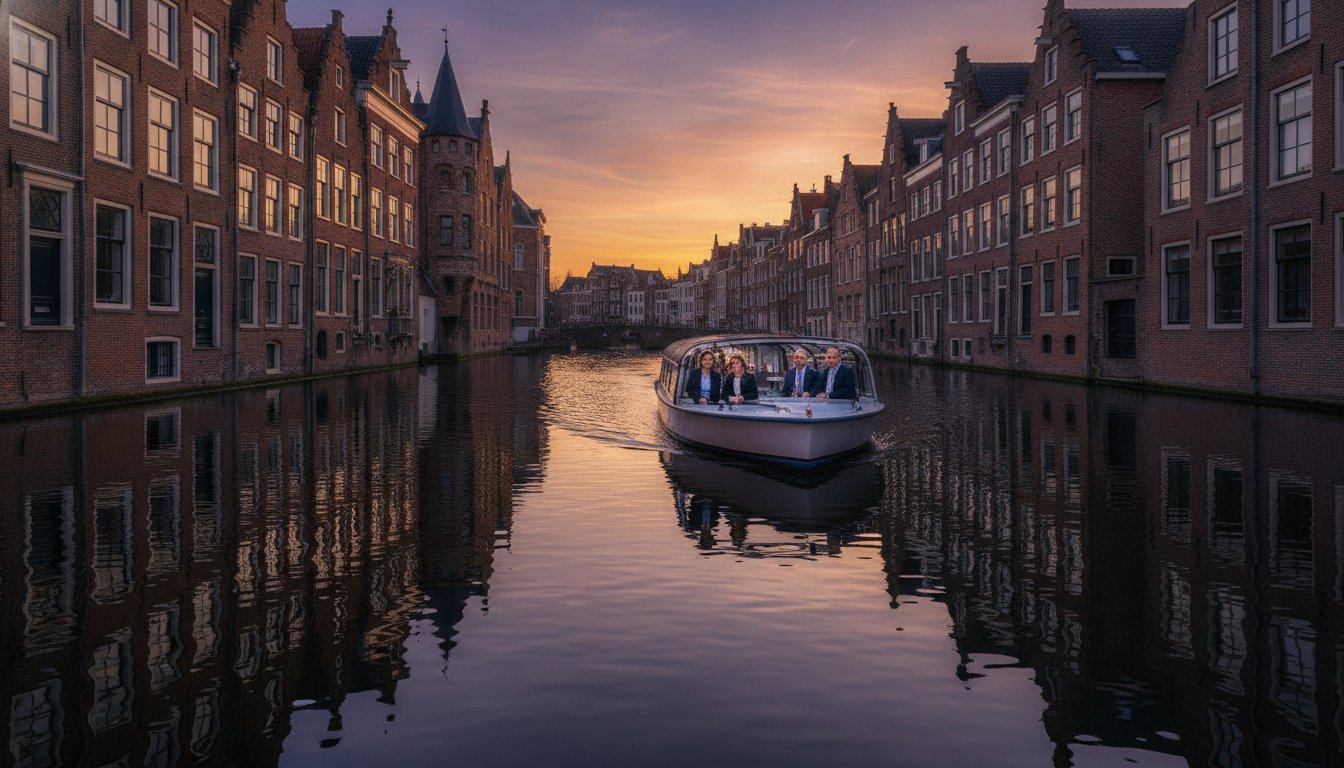
Tag: Canal Cities

  • Exploring the ‘Venice of the North’: A Masterclass in European Canal Cities for 2026

    Exploring the ‘Venice of the North’: A Masterclass in European Canal Cities for 2026

    What if the most profound encounter with European water culture doesn’t involve the sweltering crowds of St. Mark’s Square? For many travel professionals, the search for an authentic, fluid group experience leads away from the Mediterranean toward the sophisticated engineering of Northern Europe. You’ve likely felt the frustration of navigating over-tourism or the logistical headache of maneuvering a coach through narrow, ancient streets. It’s a challenge that requires more than just a map; it demands a vision of how urban spaces breathe and move.

    The title venice of the north is claimed by several cities, yet it represents a singular standard of architectural and cultural excellence that defines the Benelux soul. This article provides the expert knowledge you need to curate an impeccable group itinerary for 2026, balancing historical depth with modern logistical precision. We’ll explore the architectural splendor of these iconic waterways, reveal the secrets of seamless access for large groups, and provide a practical framework for experiences that resonate on a deeply human level. Discover how to transform a standard tour into a masterclass of European heritage through the lens of an expert partner who understands the rhythm of the water.

    Key Takeaways

    • Understand the historical and cultural criteria that define a true venice of the north to better articulate the value of these destinations to your clients.
    • Compare the logistical and atmospheric differences between Amsterdam’s Golden Age engineering and the medieval preservation of Bruges to select the perfect fit for your itinerary.
    • Identify hidden gems like Giethoorn and Amiens to offer authentic, tranquil alternatives that avoid the overcrowding of more traditional canal routes.
    • Learn how the unique “waterfront” aesthetic influences local architecture and gastronomy, providing a sensory framework for immersive group experiences.
    • Master the logistical complexities of canal-heavy cities by leveraging modern coach fleets and strategic hotel sourcing tailored for large professional groups.

    What Defines a ‘Venice of the North’? The Origin of the Title

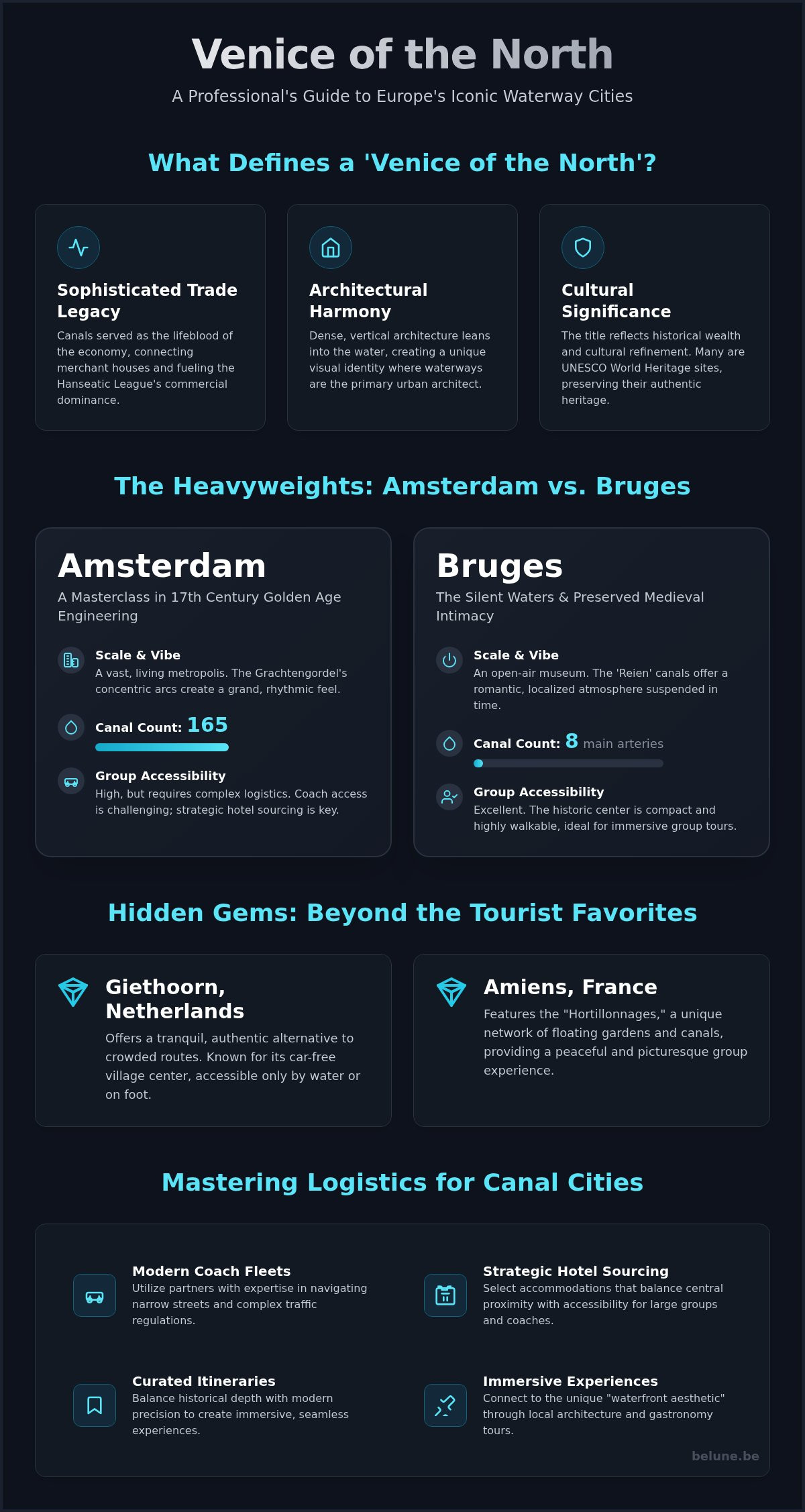
    The term venice of the north isn’t merely a flattering comparison; it’s a testament to a specific urban DNA where water dictates the rhythm of existence. Historically, cities across Northern Europe adopted this label to align themselves with the prestige of the Venetian Republic. They sought to mirror its status as a maritime superpower and a beacon of cultural refinement. Ultimately, the venice of the north serves as a designation for cities where waterways are the primary architect of urban life.

    True candidacy for this title requires more than a few scenic streams. It demands a sophisticated trade legacy, where the canal was the lifeblood of the economy, and an architectural harmony that reflects a city’s historical wealth. As we look toward 2026, these cities are evolving into something even more significant. They’re no longer just frozen relics of a Golden Age; they’ve become laboratories for sustainable urbanism and vibrant cultural hubs where historic waterways meet modern ecological innovation.

    The Hanseatic Influence on Water-Centric Urbanism

    During the Middle Ages, the Hanseatic League transformed the Benelux region into a commercial powerhouse. Canals served as the essential highways of the era, facilitating the movement of wool, grain, and spices directly to the doorsteps of merchant houses. This infrastructure blended defensive moats with commercial arteries and residential aesthetics. The resulting landscape is one of dense, vertical architecture that leans into the water, creating a unique visual harmony that defines the Northern European identity. For the travel professional, understanding this technical mastery is key to explaining why these cities look and feel so distinct from their land-locked neighbors.

    Marketing Gimmick or Cultural Heritage?

    While many towns claim the nickname for tourism appeal, only a handful possess the historical depth to sustain it. UNESCO World Heritage status often separates the self-promoted from the historically significant, ensuring that the intricate systems of locks and quays are preserved with technical rigour. Modern travelers increasingly look past the marketing labels in search of authentic heritage. In an era where traditional Venice faces significant environmental and social pressure, these Northern counterparts offer a more breathable, yet equally profound, connection to maritime history. They provide a space where the heritage is lived daily, not just staged for the passing visitor.

    The Heavyweights: Amsterdam vs. Bruges

    Amsterdam and Bruges represent two distinct interpretations of the venice of the north archetype. While Amsterdam impresses with its grand, rhythmic engineering, Bruges captures the imagination through its silent, preserved medieval intimacy. Choosing between them isn’t about quality; it’s about the specific emotional and logistical needs of your group. Amsterdam offers a vast, interconnected network that feels like a living metropolis, whereas Bruges provides a concentrated dose of Flemish history that feels suspended in time.

    Feature Amsterdam Bruges
    Canal Count 165 canals 8 main arteries (Reien)
    UNESCO Status Canal Ring (Since 2010) Historic Centre (Since 2000)
    Group Accessibility High (Complex logistics) Excellent (Compact, walkable)

    Amsterdam’s Canal Ring: A Masterclass in Engineering

    The Grachtengordel, or 17th-century canal ring, is a marvel of urban planning. Its concentric arcs were designed to manage water and facilitate global trade during the Dutch Golden Age. For groups, this means a dense concentration of cultural landmarks like the Rijksmuseum and the Anne Frank House within a single district. However, the sheer scale presents challenges for coach access. Success often depends on sourcing group hotel accommodation that provides central proximity without the noise of the main tourist arteries. Navigating this labyrinth requires a partner who understands the technical nuances of Dutch traffic regulations.

    Bruges: The Silent Waters of Flanders

    In contrast, the ‘Reien’ canals of Bruges offer a more localized, romantic atmosphere. This city feels like an open-air museum where the water reflects centuries of Flemish craftsmanship. It’s an ideal anchor for culture group tours benelux itineraries, especially for luxury clients seeking a slower pace. The city’s compact nature makes it exceptionally walkable; it’s a significant advantage for groups that prefer intimate exploration. Integrating a canal cruise here provides a different perspective, focusing on the hidden gardens and stone bridges that a coach cannot reach. To ensure your clients experience these cities without the stress of logistics, consider how a modern private coach fleet can bridge the gap between these iconic waterways.
    Exploring the 'Venice of the North': A Masterclass in European Canal Cities for 2026

    Hidden Gems: Beyond the Tourist Favorites

    While Amsterdam and Bruges are the definitive anchors, the true venice of the north experience often reveals itself in the quieter, more exclusive corners of the continent. Moving beyond the primary hubs allows for a more intimate connection with European water culture. Incorporating these hidden gems into a themed group travel benelux program elevates the itinerary from standard to exceptional. It provides that sought-after sense of discovery that modern clients demand, particularly those who’ve already visited the major capitals.

    Giethoorn: The Car-Free Wonder

    Giethoorn represents the most literal interpretation of a venice of the north, where the absence of roads forces a slower, more intentional pace. For professional organizers, managing a coach group here requires precise coordination. The village is famous for its 18th-century thatched-roof cottages and over 170 small wooden bridges. Groups typically transition from their modern coach to whisper-quiet electric boats or traditional punters. It’s a logistical shift that rewards travelers with a silence rarely found in urban centers. Planning a day trip from Amsterdam or Utrecht is straightforward, provided you’ve secured parking and boat slots in advance to avoid the mid-day peak.

    Amiens and the French Connection

    Further south, Amiens offers a French interpretation of the canal city through its “Hortillonnages.” This 300-hectare network of floating gardens has been cultivated since the Middle Ages. It’s an ideal stop for itineraries bridging the gap between the Benelux region and Paris, areas where we maintain deep operational expertise. Beyond the boat tours, the Saint-Leu district provides a vibrant backdrop for gastronomy experiences. Integrating local Picardy specialties adds a layer of sensory depth to the cultural exploration, ensuring the group’s journey is as flavorful as it is scenic.

    Finally, Strasbourg’s “Petite France” district offers a Franco-German hybrid that shouldn’t be overlooked. The timber-framed houses reflect in the Ill river, creating a dense architectural tapestry. It’s a masterclass in how water management can define a city’s historical and aesthetic identity, providing a perfect conclusion to a multi-city canal tour.

    Water as a Canvas: Architecture and Gastronomy

    The venice of the north isn’t just a geographic label; it’s a visual dialogue between stone and reflection. In these cities, the water acts as a canvas that magnifies the architectural ambition of the merchant class. Strategic water management transformed Benelux cities from utilitarian defensive forts into fluid, artistic masterpieces where every facade tells a story of maritime wealth. During the twilight hours, the role of light becomes paramount. Reflections on the rippling surface soften the rigid lines of brick and mortar, creating a luminous atmosphere that defines the nocturnal beauty of Northern Europe.

    Architectural Evolution on the Water’s Edge

    The transition from the austere Hanseatic brick gothic to the ornate Dutch Baroque is nowhere more evident than along the canal banks. In Amsterdam, the slender, deep merchant houses were designed to maximize waterfront frontage, resulting in the iconic gabled rooftops that lean slightly forward. Meanwhile, the belfries of Flanders stand as vertical sentinels over the medieval waterways, symbolizing civic pride and commercial success. Organizing expert-led architectural walks for specialized groups allows travelers to decode these stylistic shifts. It turns a simple stroll into a technical appreciation of how these cities were literally reclaimed from the sea, one pile and one brick at a time.

    The Gastronomy of the Waterways

    The relationship between the water and the palate is equally profound. A culinary journey through these cities moves seamlessly from the North Sea’s fresh seafood to the historical canal-side breweries that once used these waters for production. Elevating the group experience often involves integrating belgium gastronomy tours that utilize the unique setting of the ‘Reien’ or ‘Grachten’. Imagine a private canal cruise featuring a curated beer or chocolate tasting, where the surroundings enhance the sensory experience. It’s an immersive way to connect with local culture while avoiding the static environment of a traditional restaurant.

    Success in these complex environments relies on the deep local knowledge of a benelux incoming tour operator. We understand that a meal isn’t just about the menu; it’s about the harmony of the location and the ease of access. From sourcing the perfect terrace for a sunset aperitif to coordinating logistical support for large groups, our team ensures every detail is polished. To begin crafting your own bespoke cultural and culinary itinerary, contact our expert planning team today.

    Professional Logistics: Planning the Perfect Canal City Tour

    Organizing a tour through a venice of the north requires more than an eye for beauty; it demands technical precision. The very features that make these cities enchanting, such as narrow cobblestone streets and intricate canal networks, represent significant hurdles for group movement. Success lies in the invisible architecture of the tour: the logistics. A seamless experience is the result of balancing aesthetic desire with the cold reality of urban restrictions.

    Timing is a critical component of our strategy. Managing seasonal crowds is essential for maintaining a high-quality experience for your clients. We often suggest off-peak hours or hidden access points for the most iconic waterways. This ensures the group feels the city’s soul rather than the crowd’s weight. Sourcing central hotels is a similar exercise in balance. We prioritize properties that offer the quintessential canal-side atmosphere while remaining accessible for group arrivals and departures.

    Coach Travel and Accessibility

    Amsterdam and Bruges have implemented strict Low Emission Zones and restricted access areas to preserve their heritage. Navigating these requires up-to-date knowledge and modern equipment. Our private fleet of modern coaches is specifically curated for these environments. We coordinate strategic drop-off points that minimize walking distances for clients while respecting local regulations. It’s about the rhythm of the city. Our drivers act as logistical partners who understand the nuances of tight city schedules and the technical demands of European traffic laws. We turn the challenge of narrow streets into a non-issue through rigorous planning and superior fleet management.

    Curating the Custom Itinerary

    A sophisticated itinerary balances the “must-see” landmarks with silent, off-the-beaten-path water experiences. We believe that local guide services are indispensable for authentic storytelling. These experts decode the history of the gabled houses and the secrets of the locks, adding a layer of intellectual depth to the visual spectacle. Our role as a DMC is to act as the conductor for a multi-modal journey. Transitioning from a coach to a private canal boat, and then to an expert-led walking tour, should feel effortless. BELUNE transforms a standard city visit into a sophisticated cultural immersion, leveraging 20 years of industry experience to ensure every transition is polished and every moment is meaningful.

    Mastering the Waterways of 2026

    Curating a high-end group experience in a venice of the north requires a delicate balance of artistic vision and technical mastery. We’ve explored how the rhythmic canals of Amsterdam and the silent streets of Bruges offer distinct cultural narratives, each demanding its own logistical approach. Success in these environments isn’t just about the destinations; it’s about the precision of the execution. By integrating hidden gems like Amiens and leveraging the sensory depth of local gastronomy, you can offer your clients a journey that feels both exclusive and deeply authentic.

    Navigating the evolving regulations and architectural labyrinths of these cities is a task for a trusted strategist. With over 20 years of dedicated industry experience, our team provides the deep local knowledge and private fleet of modern coaches necessary for seamless movement. We don’t just provide transport; we offer a structural component to your creative project. Partner with BELUNE to design your next masterpiece group itinerary in the Benelux region and ensure your 2026 programs are as fluid as the waterways they celebrate. Let’s transform your vision into an unforgettable reality.

    Frequently Asked Questions

    Which city is officially known as the Venice of the North?

    Amsterdam and Bruges are the most prominent cities associated with the title venice of the north. While many cities across the region use this nickname to highlight their beauty, these two are recognized for their historical maritime influence and preserved canal systems. The designation reflects a specific urban DNA where waterways served as primary trade routes. Choosing the “official” one depends on whether you prioritize Amsterdam’s Golden Age engineering or the medieval intimacy of Bruges.

    Is Amsterdam or Bruges better for a group tour?

    The choice between Amsterdam and Bruges depends entirely on your group’s specific goals and size. Amsterdam offers a vast scale with world-class museums and a rhythmic metropolis feel, making it ideal for larger cultural tours. Bruges provides a more concentrated, romantic atmosphere that is exceptionally walkable for luxury groups. We often recommend integrating both into a single itinerary to provide a comprehensive view of the region’s diverse water-centric heritage; it’s the best way to satisfy varied interests.

    How do coaches access the historic centers of canal cities?

    Coaches access these historic centers through a series of strategic drop-off points designed to respect local Low Emission Zones and traffic regulations. Navigating these narrow streets requires modern equipment and deep technical knowledge of city-specific access permits. We utilize our private fleet of modern coaches to ensure seamless transitions between major landmarks. This approach minimizes walking distances for clients while ensuring the group remains compliant with the evolving environmental standards of European canal cities.

    What is the best time of year to visit the Venice of the North cities?

    Late spring and early autumn are the ideal times to visit these iconic waterways to balance favorable weather with manageable crowd levels. Visiting during these periods allows groups to experience the architectural splendor and canal-side dining without the peak summer congestion. April and May are particularly vibrant due to the floral displays in the Netherlands. Conversely, September provides a softer light and a more serene atmosphere that is perfect for professional architectural walks and cultural immersion.

    Can you visit Giethoorn with a large tour group?

    You can certainly visit Giethoorn with a large group, provided the logistics are coordinated with technical precision. Since the village is car-free, groups must transition from their coach to private electric boats or traditional punters at specific entry points. We manage these transfers to ensure the group moves smoothly from the parking areas into the heart of the village. Advance booking for boat slots is essential to maintain the schedule and avoid the mid-day tourist peak.

    What are the best group activities in a canal-based city?

    The most impactful activities involve engaging directly with the water through private canal cruises or themed walking tours. Gastronomy and beer experience tours are particularly effective, allowing groups to sample local craftsmanship while enjoying the waterfront aesthetic. Architectural walks led by local experts also provide deep intellectual value, decoding the history of gabled merchant houses. For more active groups, cycling along the canal paths offers a dynamic perspective of the urban landscape and its natural surroundings.

    How does a DMC help with canal city logistics?

    A DMC acts as a strategic ally by coordinating the complex multi-modal transport required in water-centric environments. We manage everything from sourcing hotels with coach access to securing private local guides who understand the rhythm of the city. Our 20 years of experience allow us to navigate the technical nuances of local regulations and hidden logistical hurdles. This comprehensive support transforms a standard visit into a polished, high-quality experience that inspires confidence in your professional partners.

    Are there any ‘Venice of the North’ cities in France?

    Amiens is frequently cited as a French venice of the north due to its stunning “Hortillonnages” or floating gardens. Strasbourg also offers a unique Franco-German interpretation through its historic “Petite France” district, where timber-framed houses line the Ill river. These destinations provide an excellent bridge for itineraries moving between the Benelux region and Paris. They offer a distinct sensory experience that complements the more traditional canal cities while adding a layer of exclusivity to your travel programs.
  • Exploring the Venice of the North: A Group Tour Guide to Europe’s Iconic Canal Cities in 2026

    Exploring the Venice of the North: A Group Tour Guide to Europe’s Iconic Canal Cities in 2026

    While Amsterdam often claims the crown, the true “Venice of the North” for a sophisticated 2026 itinerary might just be the medieval masterpiece of West Flanders. You likely understand that planning a high-end group tour Bruges involves more than just booking a canal boat; it’s an exercise in precise choreography. It’s about balancing the timeless beauty of the belfry with the increasingly complex reality of European travel regulations and evolving city access rules.

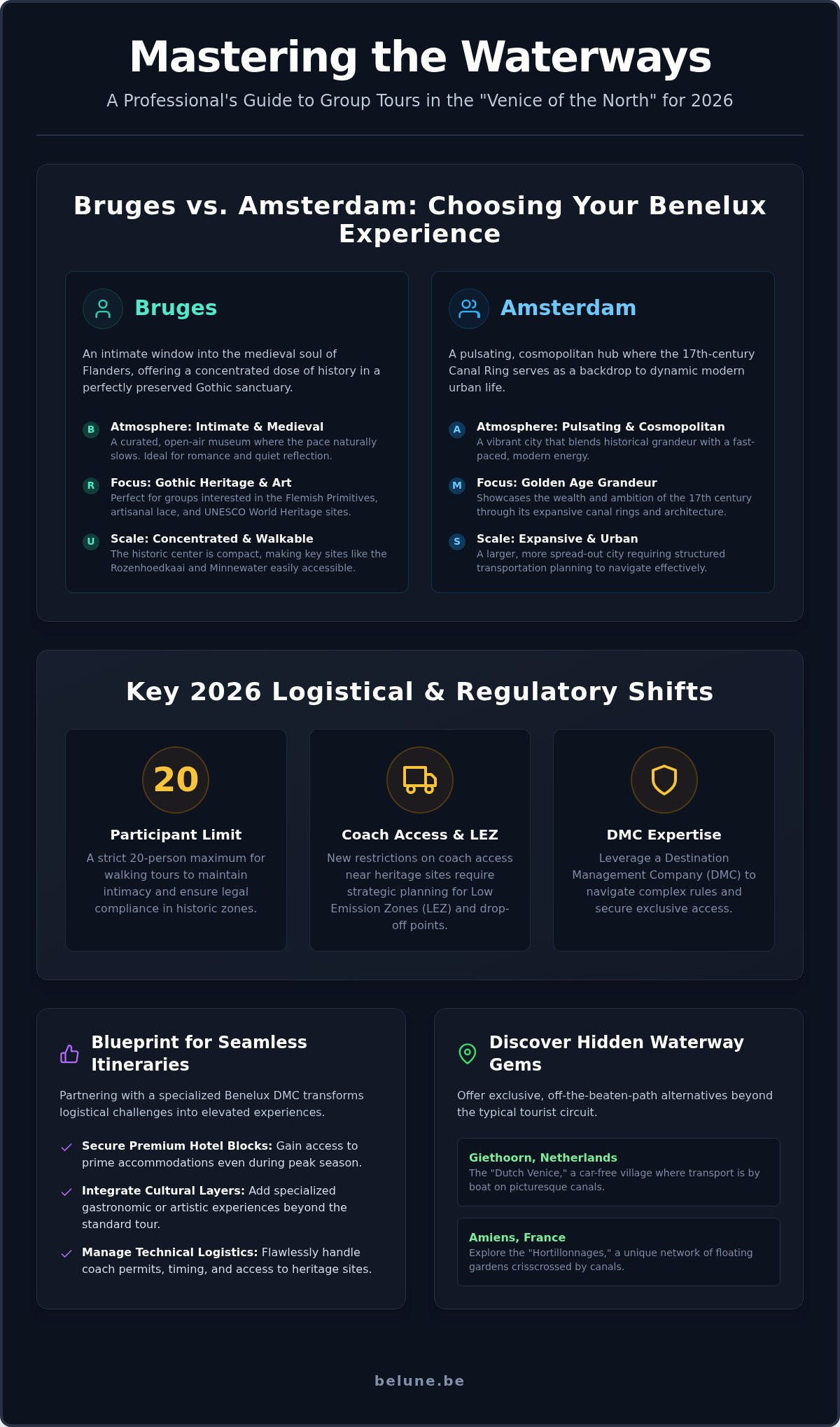
    We agree that your clients deserve the quiet magic of the Quay of the Rosary without the frustration of logistical bottlenecks. This guide reveals the technical secrets to mastering the Benelux waterways. You’ll learn how to navigate the new 20-person walking tour limits and secure exclusive coach access near heritage sites. We’ll provide a professional comparison between Bruges and Amsterdam, actionable timing strategies for the 2026 season, and a blueprint for partnering with a DMC to transform these historic volumes into seamless, elevated experiences. It’s time to move beyond the simple tourist path and embrace a vision of travel that prioritizes both aesthetic beauty and technical excellence.

    Key Takeaways

    • Understand the historical nuances behind the “Venice of the North” nickname to craft a more authentic and compelling narrative for your travelers.
    • Master the 2026 regulatory shifts, specifically the 20-person participant limit, to maintain the intimacy and legal compliance of every group tour Bruges.
    • Discover hidden waterway gems like Giethoorn and Amiens to offer your clients exclusive, off-the-beaten-path experiences beyond the typical tourist circuit.
    • Acquire technical strategies for managing coach access and Low Emission Zones to ensure your group arrives seamlessly at the heart of historic canal districts.
    • Leverage the expertise of a professional DMC to secure premium hotel blocks and integrate specialized cultural or gastronomic layers into your itinerary.

    What Defines a “Venice of the North”? The History Behind the Nickname

    The term Venice of the North isn’t a mere marketing cliché. It’s a historical acknowledgment of urban spaces that harnessed water to command global trade. When organizing a group tour Bruges, the goal is to peel back the layers of this nickname to reveal a legacy of technical mastery. These cities are defined by intricate canal networks and a specific vernacular of waterfront architecture that reflects their maritime past. The comparison to Venice, Italy, persists because it sets a high bar for cultural group travel, evoking a sense of romantic permanence. For Northern Europe’s merchant cities, the nickname evolved from a local boast into a powerful global brand. These waterways were the lifeblood of their success, dictating the rhythm of daily life and the flow of wealth.

    To visualize the atmospheric charm that defines these historic waterways, watch this helpful visual guide:

    The Golden Age Influence on Urban Planning

    Engineering transformed these northern landscapes. During the 17th century, cities expanded through sophisticated concentric canal rings. This wasn’t just aesthetic; it was a masterpiece of hydraulic management. Many of these routes began as medieval defensive moats, eventually evolving into the commercial transport arteries that fueled the Northern Renaissance. The “Venice of the North” stands as a testament to European hydraulic engineering and cultural ambition.

    Cultural Heritage and UNESCO Recognition

    The UNESCO World Heritage status of cities like Bruges and Amsterdam isn’t a static award. It’s a commitment to preservation. Managing a group tour Bruges in 2026 requires a deep respect for this “living museum” environment. These historic zones must accommodate modern tourism without losing their soul. Today, the water continues to influence everything from the light reflecting on Flemish canvases to the local gastronomy, where traditional beer brewing still relies on the city’s unique water management history. For the discerning traveler, these canals are more than just scenic routes; they’re the structural components of a culture built on water.

    Bruges vs. Amsterdam: Comparing the Iconic Benelux Contenders

    Bruges and Amsterdam are often grouped together as canal-side peers, yet for a professional planner, they represent entirely different operational canvases. Amsterdam is a pulsating, cosmopolitan hub where the 17th-century Canal Ring serves as a backdrop to modern urban life. In contrast, Bruges remains a meticulously preserved Gothic sanctuary. Choosing between them depends on the narrative you wish to construct for your guests. While one offers the grandeur of the Golden Age, the other provides an intimate window into the medieval soul of Flanders. Understanding these distinctions is the first step in mastering the Benelux region.

    Bruges: The Intimate Medieval Experience

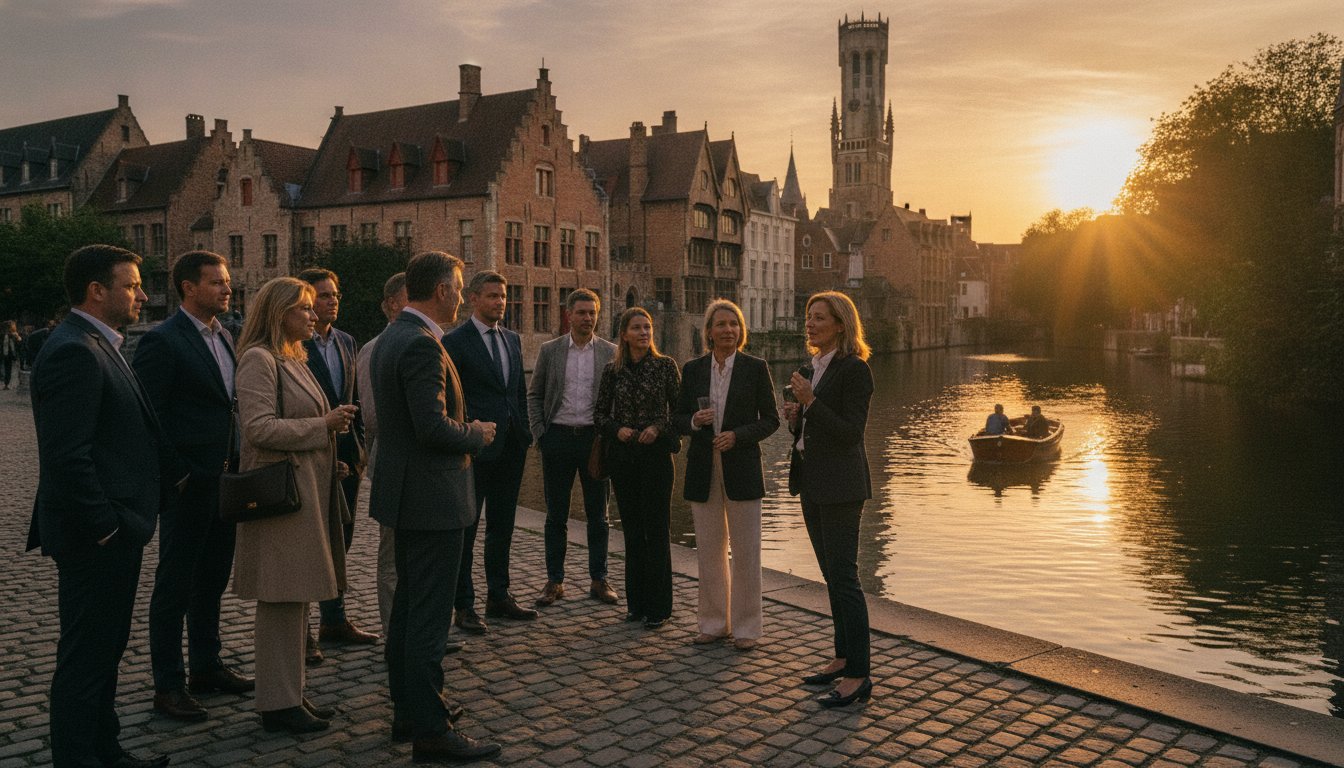
    For those designing culture group tours in Benelux, Bruges offers a concentrated dose of history. It’s a city where the pace naturally slows. The entire historic center is recognized as a UNESCO World Heritage Site, acting as a curated open-air museum. A successful group tour Bruges often centers on the Rozenhoedkaai, where the reflection of the Belfry in the water creates the city’s most iconic view. The experience here is tactile and close-up.

    Managing groups here requires a delicate touch. While the Lake of Love (Minnewater) provides ample space for reflection, the narrow medieval streets demand precise timing. It’s an ideal choice for groups focused on the Flemish Primitives, artisanal lace, or the quiet romance of a perfectly preserved past. The logistical challenge lies in the city’s intimacy; large groups must be handled with a “leave no trace” philosophy to maintain the atmosphere. It’s about finding the balance between visibility and respect for the local rhythm.

    Amsterdam: The Grand Scale of the Golden Age

    Amsterdam operates on a grander, more industrial scale. The “Grachtengordel” is a feat of 17th-century engineering that accommodates a high volume of traffic. Movement here is often water-based, with glass-topped canal boats providing the primary perspective. This city is the right fit for groups seeking the energy of a contemporary capital. It’s vibrant, loud, and constantly evolving.

    Linking the Rijksmuseum’s masterpieces to the canal-side heritage houses creates a powerful synergy between art and environment. When building a program with a benelux incoming tour operator, Amsterdam serves as the vibrant, high-energy anchor. The challenge here is the sheer scale; navigating the massive canal ring with forty or more guests requires a different logistical logic than the walkable streets of Flanders. It’s an exercise in urban navigation rather than a quiet stroll.

    The Strategic Choice: Themes and Accessibility

    The decision often rests on the group’s thematic focus. If the goal is art history and quiet reflection, the medieval “swan” of Belgium wins. If the objective is to explore the intersection of history and contemporary urban life, the Dutch capital is the superior choice. Accessibility also differs significantly. Bruges is a pedestrian’s paradise, where the architectural details are best appreciated on foot. Amsterdam’s sprawling nature makes canal boats and public transport essential components of the itinerary. As you refine your 2026 plans, consider how these environments will shape the guest experience. If you need assistance balancing these two distinct worlds, our team can help you design a cohesive multi-country itinerary that respects the unique character of each city.

    Exploring the Venice of the North: A Group Tour Guide to Europe’s Iconic Canal Cities in 2026

    Beyond the Famous: Discovering France and the Netherlands’ Hidden Waterways

    The 2026 travel landscape demands a shift toward the periphery. While the architectural gravity of a group tour Bruges provides a necessary anchor, the sophisticated traveler now seeks the quietude of hidden waterways. These secondary canal cities offer a respite from the high-traffic heritage zones of the Benelux capitals. They provide a more intimate, artisanal perspective on Northern Europe’s hydraulic history. Integrating these locations into a broader program for themed group travel in Benelux allows for a narrative that feels both exclusive and technically diverse. It’s about moving beyond the expected to find the soul of the region in its lesser-known currents.

    Giethoorn: A Village Without Roads

    In the Dutch province of Overijssel, Giethoorn presents a unique logistical challenge and opportunity. This is a village where roads are replaced by a network of narrow canals. For professional planners, the primary currency is the “whisper boat.” These electric, silent vessels are essential for maintaining the serenity of the car-free environment. Managing a large group here requires a different choreography than the bustling streets of Amsterdam. Coach parking is strictly regulated at the village periphery, necessitating a short walk or a pre-arranged transfer. While popular, Giethoorn can still offer a high-end experience if timed correctly. It fits perfectly into a multi-day themed group travel Benelux itinerary that prioritizes active, nature-focused exploration.

    Amiens and the Floating Gardens of France

    Amiens serves as a strategic bridge between a Paris-based tour and the Flemish heartland. Often called the “Little Venice of the North,” its Saint-Leu district is a vibrant intersection of Gothic architecture and flowing water. The true highlight for gastronomy and nature lovers is the Hortillonnages. These floating gardens, accessible only by traditional flat-bottomed boats, offer a sensory experience that contrasts sharply with the stone-heavy aesthetics of larger cities. For senior travelers, the flat terrain and gentle boat rides provide an accessible way to engage with the landscape. It’s a masterclass in how water can shape both urban identity and agricultural innovation.

    When evaluating these smaller villages for large coach groups, precision is mandatory. You must account for the limited maneuvering space in medieval French streets and the strict parking regulations in the Dutch countryside. Consulting a comprehensive Bruges travel guide can provide initial inspiration for the region, but the technical execution of a multi-country waterway tour requires local expertise. These hidden gems are not just scenic detours; they’re the structural components of a modern, sophisticated itinerary that values depth over simple proximity. The water dictates the path, and for those who know how to navigate it, the rewards are immense.

    Logistical Mastery: Planning Group Tours to High-Traffic Canal Cities

    Designing a group tour Bruges in 2026 is an exercise in high-stakes logistics. The architectural beauty of these canal cities is matched only by the complexity of their access regulations. As Low Emission Zones (LEZ) tighten across Amsterdam and strict coach permits become the norm in Bruges, the margin for error has vanished. Success lies in the technical mastery of these constraints. It’s about ensuring that your group experiences the morning mist on the Dijver canal rather than the frustration of a distant drop-off point. Technical precision is the foundation of a sophisticated guest experience.

    Strategic timing is the professional’s greatest tool. By scheduling arrivals for early morning or securing late-evening canal excursions, you bypass the density of day-trippers that often saturate these heritage zones. This allows your guests to appreciate the city’s volumes in silence. Private coach hire becomes the structural backbone of this experience. It allows for seamless transitions between multiple “Venices” across international borders without the unpredictability of public transport. Reliability is the silent partner in every successful itinerary.

    Coach Hire and Transport Logistics

    A private fleet of modern coaches is an operational necessity for reliability in historic centers. Managing driver hours while navigating “coach-free” zones requires a deep understanding of local urban planning. You need a group travel agency that doesn’t just book transport but actively manages traffic permits and drop-off choreography. Our team ensures that every vehicle meets the 2026 LEZ standards, preventing fines and delays before they occur. This technical foresight protects the integrity of your schedule.

    Accommodation and Dining for Large Groups

    The art of finding centrally located hotels that can accommodate 20+ rooms is a delicate balancing act. You want an authentic, canal-side feel, but you cannot sacrifice coach accessibility or luggage handling efficiency. Securing these blocks requires long-standing local relationships. Similarly, managing dietary requirements for forty guests in a high-demand waterfront restaurant demands more than a reservation; it requires a partnership. Leveraging a DMC’s network allows you to secure exclusive access to heritage venues for private dining. We turn a standard meal into a cultural event through meticulous planning and local influence.

    Technical excellence in logistics is the foundation upon which travel art is built. If you are ready to elevate your 2026 programming, partner with our logistics experts to secure your coach permits and hotel blocks today.

    Crafting the Perfect Waterway Itinerary with a Specialised Benelux DMC

    Planning a group tour Bruges is about more than logistics; it’s about the creative synthesis of space and time. BELUNE brings 20 years of experience to this delicate task, turning complex cross-border requirements into seamless travel art. We understand that a waterway theme is a thread that can pull together diverse experiences across the region. You might weave the somber reflection of flanders fields into a Flemish itinerary or punctuate a canal cruise with a high-end gastronomy tour. For a professional group tour Bruges, the narrative must be as flawless as the execution.

    Our multi-lingual local guides provide the intellectual and emotional context that transforms a simple visit into a profound cultural exchange. We move beyond the “Venice of the North” label to explore the specific merchant history and artistic heritage that define each city. Customization is our core philosophy. We reject the constraints of fixed-price packages in favor of tailored solutions that mirror the specific profile of your group. Whether your travelers seek the quietude of medieval architecture or the vibrant energy of Dutch urbanism, the itinerary must reflect that intent.

    The Visionary Approach to Itinerary Planning

    We balance the “must-see” landmarks with curated cultural encounters that remain hidden from the average tourist. This approach ensures a rhythmic flow to the program, preventing the “traveler fatigue” that often plagues multi-city European tours. We manage the energy of the group by alternating high-intensity sightseeing with moments of quiet appreciation. BELUNE transforms a standard itinerary into a curated artistic vision of the Benelux region by masterfully blending technical precision with a deep sensitivity to the guest experience.

    Partnering for Success in 2026

    Working with a DMC that manages its own transport fleet and direct hotel relationships provides a level of security that is essential in modern travel. We act as your strategic ally, handling the friction of local regulations so you can focus on your clients. The collaboration begins with your vision. We take your initial concept and refine it into a fully costed, fixed-price group proposal that balances ambition with operational reality. Our team ensures that every detail, from coach permits to private dining access, is secured well in advance of the 2026 season.

    If you are ready to design an exceptional experience for the coming season, request your custom Benelux group tour itinerary today.

    Elevating Your 2026 Waterway Vision

    The “Venice of the North” represents a structural harmony between water and stone. It’s a heritage that demands more than simple admiration; it requires technical mastery. You’ve explored the intimate Gothic soul of Flanders and the grand Golden Age scale of the Dutch capital. You now understand that a successful group tour Bruges in 2026 hinges on navigating strict coach permits and Low Emission Zones with absolute precision. By integrating hidden gems like Amiens or Giethoorn, you offer your clients a narrative that is both exclusive and deeply cultural.

    Excellence in group travel is the result of meticulous planning and local influence. With over 20 years of Benelux expertise and a private fleet of modern coaches, we transform logistical challenges into seamless travel art. We provide fixed-price group tour packages with no hidden costs, ensuring your budget remains as secure as your schedule. Partner with BELUNE to curate your 2026 group tour of Europe’s most beautiful canal cities. The canals are waiting to tell their story. Let’s ensure your guests are there to hear it in the best possible light.

    Frequently Asked Questions

    Which city is considered the “true” Venice of the North for group tours?

    Both Bruges and Amsterdam hold the title, but Bruges is the definitive choice for those seeking a concentrated, medieval atmosphere. Its compact nature makes it easier to navigate for planners focusing on architectural purity and romantic history. Amsterdam serves groups looking for a larger, cosmopolitan experience where the waterways are integrated into a modern capital’s pulse. The choice ultimately depends on the specific cultural narrative you wish to present to your guests.

    How do I arrange coach parking in historic cities like Bruges or Amsterdam?

    Coach parking is strictly regulated and must be arranged at designated terminals outside the historic cores. In Bruges, the Kanaaleiland terminal is the primary hub for group arrivals. Amsterdam planners must navigate 2026 Low Emission Zone (LEZ) requirements and use pre-registered drop-off zones to avoid significant fines. Partnering with a logistics expert ensures these permits are secured well before your arrival, preventing unnecessary delays.

    Is it better to visit these canal cities in the spring or autumn for groups?

    Autumn is often the superior choice for professional groups seeking to avoid the peak cruise ship season. The light in September and October provides a stunning reflection on the water that appeals to photography-focused tours. Spring remains popular for its floral displays and the tulip season in the Netherlands, though it requires much earlier booking for quality hotel blocks due to the high global demand during those months.

    Can large groups be accommodated on traditional canal boat tours?

    Private boat charters are the most effective way to accommodate large groups while maintaining a sense of exclusivity. A group tour Bruges can easily secure private vessels for up to 40 passengers, allowing for a guided narrative without the interference of other tourists. This ensures the technical details of the city’s history are heard clearly and provides a more intimate experience for your guests.

    Are these cities accessible for travellers with limited mobility?

    These cities are increasingly accessible, though the medieval infrastructure presents specific challenges that require foresight. While many modern canal boats now offer lift access, the cobblestone streets of Flanders require guides to select routes with smoother paving. It’s essential to pre-vet all walking paths and restaurant entries to ensure comfort for guests with limited mobility. Technical planning in the itinerary phase prevents physical barriers from disrupting the experience.

    What are the most group-friendly “Venices of the North” in France?

    Amiens stands out as the most group-friendly canal city in Northern France. Its Saint-Leu district is perfectly sized for group exploration, and the Hortillonnages floating gardens offer a unique horticultural perspective. It serves as an excellent logistical bridge for itineraries moving between Paris and the Benelux region, providing a quieter but equally evocative waterway experience for sophisticated travellers.

    How does a DMC help with group hotel bookings in high-demand areas?

    A DMC acts as a strategic ally by securing exclusive room blocks through established local partnerships that aren’t available on the open market. We manage the technical requirements of group contracts and guarantee proximity to heritage sites. This prevents the logistical nightmare of split groups or distant suburban accommodations, ensuring your guests remain at the heart of the cultural experience.

    Can we combine a canal tour with a battlefield or gastronomy-themed trip?

    Integrating multiple themes creates a richer, more sophisticated guest experience for any group tour Bruges. You can easily pair the quiet beauty of the canals with a morning visit to the Flanders Fields battlefields or an evening artisanal beer tasting. Waterways often serve as the structural link between these diverse cultural layers, allowing for a rhythmic and balanced itinerary that caters to varied interests.