Tag: Bruges 2026

  • 2026 Brugge Group Itinerary: The Professional Planner’s Strategic Guide

    2026 Brugge Group Itinerary: The Professional Planner’s Strategic Guide

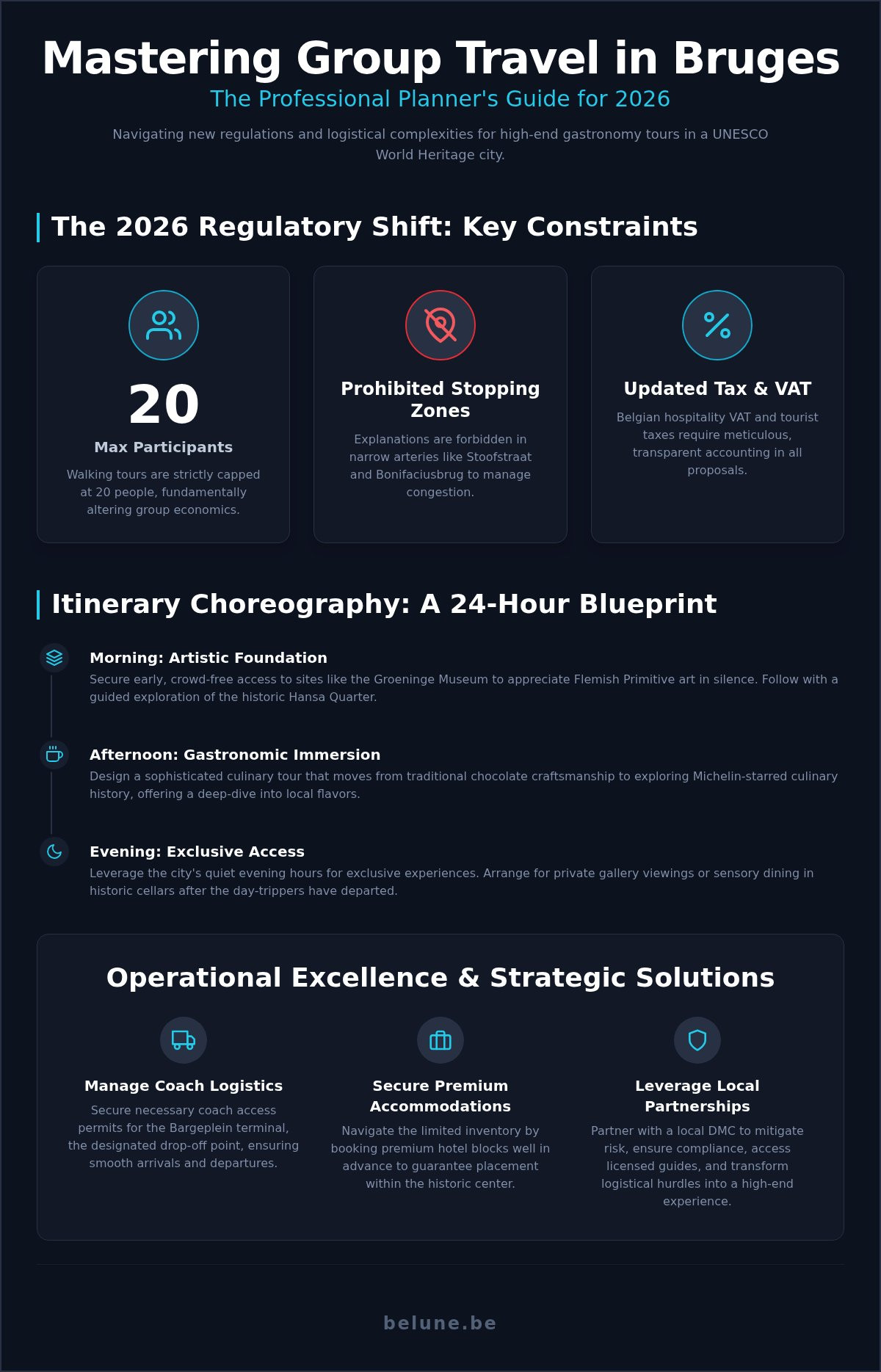
    In 2026, the difference between a seamless Bruges itinerary and a logistical failure is exactly 21 people. With the city’s strict new regulations limiting walking tours to 20 participants, the art of group travel has become a game of technical precision. You understand that orchestrating a high-end experience in a UNESCO-protected center requires more than just a list of landmarks. It demands a deep mastery of spatial choreography and local compliance. This guide provides the strategic framework to manage 2026 VAT increases and complex coach logistics while curating a Brugge gastronomy tour for groups that feels both effortless and exclusive.

    We’ll reveal how to navigate prohibited stopping zones and secure elite supplier allocations to ensure your clients experience the city’s poetic soul without the friction of overtourism. From tax-efficient planning to after-hours access, we’re transforming logistical hurdles into a blueprint for professional excellence. You’ll gain the insights needed to act as a visionary advisor, ensuring every movement through the cobblestone streets is intentional, compliant, and deeply inspiring. By the end of this guide, you’ll have a roadmap for frictionless group movement that prioritizes both artisanal quality and technical rigor.

    Key Takeaways

    • Master the 2026 UNESCO group size limits and updated Belgian tourist tax structures to ensure full compliance and budget accuracy.
    • Choreograph a 24-to-72 hour itinerary that balances iconic heritage sites with exclusive, crowd-free enclaves.
    • Elevate your programming by designing a sophisticated Brugge gastronomy tour for groups that transitions from traditional chocolate craft to Michelin-starred culinary history.
    • Resolve complex operational challenges, including coach access permits at Bargeplein and securing premium hotel blocks in the historic center.
    • Leverage a strategic partnership with a local DMC to mitigate risk and transform technical logistics into a high-end brand experience.

    Planning a Brugge gastronomy tour for groups in 2026 requires more than a refined palate. It demands a forensic understanding of the city’s evolving legal framework. Bruges has transitioned from a passive heritage site to an actively managed urban ecosystem. For the professional planner, this means the technicalities of the 2026 UNESCO framework are now the foundation of every successful itinerary. These regulations aren’t merely suggestions; they’re structural requirements that dictate the flow and financial viability of your program. Ignoring these shifts risks not only the guest experience but also the significant fines now levied for non-compliance.

    The 2026 landscape is defined by a shift toward high-value, low-impact tourism. This strategy protects the historic city of Bruges from the erosion of mass visitation. For international operators, early compliance is the only way to maintain profit margins. By securing allocations and understanding tax liabilities twelve months in advance, you insulate your pricing from the volatility of mid-season adjustments. We view these constraints as a creative catalyst, pushing us to design more intimate, sophisticated experiences that respect the city’s rhythm.

    The 2026 VAT and Tourist Tax Framework

    Tax compliance in 2026 has become a central pillar of B2B travel management. Belgian hospitality VAT and updated tourist tax structures for overnight stays require meticulous accounting. These costs must be integrated into fixed-price packages with total transparency. It’s no longer enough to estimate these figures. Precise calculation at the proposal stage prevents the margin erosion that often plagues international groups. Professional billing now demands a clear breakdown of these stay-related taxes to ensure your partnerships remain built on trust and financial accuracy.

    UNESCO and Spatial Constraints

    Managing group volume in a medieval environment is a matter of spatial choreography. As of March 2026, walking tours are strictly capped at 20 participants. This regulation fundamentally alters the economics of a Brugge gastronomy tour for groups. Furthermore, stopping to provide explanations is now forbidden in narrow arteries like Stoofstraat and the Bonifaciusbrug. To maintain a premium atmosphere, we prioritize off-peak timing and alternative routes that bypass these congested zones. Expert benelux incoming tour operator partners are essential here; they provide the licensed guides and local intelligence needed to navigate these constraints without compromising the narrative flow. This rigorous approach ensures that your group feels like a collection of invited guests rather than a logistical burden on the city.

    Orchestrating the Perfect Itinerary: A Choreography of Heritage and Flow

    Designing a Bruges itinerary is an exercise in technical choreography. It’s not just about selecting sites; it’s about managing the arc of energy over 24 to 72 hours. We aim for a narrative that balances the grandiosity of the Belfry with the quiet intimacy of hidden courtyards. This requires a deep understanding of the city’s pulse and the physical constraints of its medieval layout. A successful program feels like a seamless progression where every transition is intentional. By treating the city as a living gallery, you can move your group through history without the friction of the crowds.

    The evening should serve as the crescendo of this experience. While the day-trippers depart, the city regains its poetic silence. This is the ideal window for private gallery access or a sensory dining experience in a historic cellar. These exclusive layers transform a standard visit into a sophisticated professional event. To ensure these high-end components align with local regulations, consulting with a strategic DMC is the most reliable way to secure after-hours permissions and elite supplier access.

    Morning: The Artistic and Civic Foundation

    The Groeninge Museum is the spiritual heart of the morning. To see the Flemish Primitives without the distraction of crowds, timing is everything. We recommend an early entry, ideally as the doors open, to appreciate the meticulous detail of Jan van Eyck’s work in silence. Move next to the Hansa Quarter. This area illustrates the city’s historical trade dominance through its imposing facades and merchant houses. Local guide services are essential here to translate these architectural symbols into a compelling story of medieval economic power and civic pride.

    Afternoon: Perspective and Sensory Breaks

    By midday, the main squares often reach peak density. This is the moment to shift perspective and use the water. A private boat charter offers a sophisticated B2B value proposition, allowing your group to bypass pedestrian congestion entirely while seeing the city from its original trade arteries. It’s a serene transition to the Beguinage, where the atmosphere encourages decompression and reflection. This quietude sets the stage for a Brugge gastronomy tour for groups. A curated midday tasting of artisanal products, paired with insights from Official Bruges Tourism Information resources, provides a sensory bridge to the evening. Integrating these belgium gastronomy tours layers ensures the itinerary remains both intellectually stimulating and physically comfortable for every participant.
    2026 Brugge Group Itinerary: The Professional Planner’s Strategic Guide

    Beyond the Surface: Thematic Layers for Discerning Groups

    Specialization is no longer a luxury; it’s a strategic necessity for the modern planner. In a city governed by strict UNESCO World Heritage Site regulations, generalist tours often fail to capture the sophisticated imagination of high-end clients. The future of themed group travel benelux lies in the ability to layer specific narratives over the physical landscape. We don’t simply walk the streets. We explore the connective tissue between the Flemish Primitives and the wider Northern Renaissance, transforming a simple museum visit into an intellectual deep-dive. This approach ensures that every hour of the itinerary adds distinct value to the group experience.

    Designing a Brugge gastronomy tour for groups requires a similar shift in perspective. It’s about moving from the commercial surface to the artisanal core. We replace generic chocolate shop visits with masterclasses that explore the technical bean-to-bar philosophy. We trade standard pub stops for beer heritage tours that detail the city’s unique underground pipeline and centuries-old monastic traditions. This level of curation satisfies the discerning traveler’s hunger for authenticity while maintaining the rigorous standards expected by professional partners.

    Brugge Gastronomy Tour for Groups: Artisanal Craft

    True culinary excellence for large groups is a matter of logistical precision and seasonal storytelling. We curate menus that showcase the terroir of West Flanders, working with chefs who specialize in Michelin-starred history. Private workshops allow participants to engage directly with the craft, whether through chocolate tempering or understanding the fermentation science behind local ales. These sessions are designed to be intimate yet scalable, ensuring that even groups of twenty experience the visceral connection to the maker’s hand. It’s a sensory narrative that elevates the meal from a functional break to a programmatic highlight.

    Heritage and Battlefield Synergy

    Bruges serves as an exceptional base for broader historical explorations. The transition from medieval civic pride to the 20th-century remembrance of a flanders fields pilgrimage is logistically seamless with the right partner. This synergy allows groups to contrast the architectural preservation of the city with the profound landscapes of nearby WWI sites. A professional DMC is essential for these multi-themed, cross-regional tours. We manage the complex transport logistics and guide rotations required to bridge these disparate eras, ensuring the emotional and historical arc remains coherent for the duration of the journey.

    Operational Excellence: Managing Logistics in a Medieval Environment

    Bruges is a masterpiece of preservation, but for a professional planner, it’s a labyrinth of technical constraints. Managing logistics here isn’t just about moving people. It’s about anticipating the friction of a 13th-century layout meeting 21st-century regulations. Real-time management involves handling invisible details, from terminal permits to the exact timing of a Brugge gastronomy tour for groups. We ensure that the transition from a modern coach to a cobblestone street feels like a natural extension of the guest experience, not a logistical hurdle. Success in this environment depends on a rigorous approach to spatial timing and local compliance.

    A seamless operation requires a deep understanding of the city’s circulatory system. This includes everything from the width of the approach roads to the specific licensing required for guides. When these technical layers are handled with precision, the group remains immersed in the city’s poetic atmosphere. If they’re ignored, the experience quickly dissolves into a series of delays and frustrations. We prioritize the technical rigor that allows the creative vision of your itinerary to shine through without interruption.

    Coach Fleet and Terminal Strategy

    The Bargeplein serves as the critical gateway for all group movements. Navigating this terminal requires strict adherence to pick-up and drop-off windows. Using a DMC with its own fleet of modern coaches provides a significant strategic advantage. We control the schedule, the vehicle quality, and the driver’s expertise. This is vital for multi-city itineraries where driver hour management can impact the entire program’s flow. Our fleet meets the highest environmental standards, ensuring compliance with the Low-Emission Zones that define Belgian urban planning in 2026. Partner with us to secure reliable group transport across the Benelux.

    Accommodation and VAT Management

    Sourcing hotel blocks in the historic center requires a balance of aesthetic charm and operational feasibility. Many boutique properties lack the infrastructure for large luggage transfers or group check-ins. We prioritize hotels that offer seamless logistics while maintaining the city’s poetic atmosphere. Beyond the physical space, managing the 2026 VAT adjustments for B2B contracts is a technical necessity. These tax implications can shift margins if not addressed during the negotiation phase. Working with a specialized group travel agency ensures that contracts are both legally compliant and financially optimized. This level of oversight is what allows a Brugge gastronomy tour for groups to remain a premium, high-margin offering for your clients.

    For travel professionals looking to maintain these high standards in other parts of the world, you can discover U Hotel Group for premium hotel accommodations across New Zealand and Bangkok.

    Strategic Partnerships: Elevating Your Group Experiences with BELUNE

    Success in Bruges isn’t just about knowing the map; it’s about knowing the people who draw it. With over 20 years of DMC experience across the Benelux and Paris, BELUNE serves as the ultimate risk-mitigation tool for professional planners. We translate complex local mandates into a seamless operational reality. This deep-rooted expertise allows you to offer a Brugge gastronomy tour for groups that remains untouched by the logistical friction of overtourism. We act as your single point of contact, simplifying the cross-border complexities of the region while maintaining a standard of excellence that reflects your own brand’s reputation.

    Our approach transforms travel planning into a strategic B2B collaboration. We don’t just provide services; we propose a vision. By aligning with a partner who views logistics as a form of choreography, you ensure higher guest satisfaction and, consequently, robust repeat business. We understand that your reputation depends on the invisible details. From the timing of a coach arrival to the temperature of a private tasting room, our technical rigor supports your creative ambition. This synergy is what differentiates a standard trip from a sophisticated professional event.

    The DMC as a Creative and Technical Ally

    We move far beyond the traditional supplier role to become a structural component of your project. Local insights unlock experiences that are simply unavailable on public booking platforms. Private cellar tastings and after-hours gallery access are the results of decades of relationship building and artisanal trust. Our multi-lingual, expert local guides are the backbone of our culture group tours benelux offerings. They provide the narrative depth and cultural nuance that high-end clients demand, ensuring every interaction is meaningful and every story is told with passion and precision.

    Requesting Your Custom 2026 Itinerary

    Securing your 2026 allocations now is a vital step in protecting your margins and your client’s experience. Our co-creation process is transparent and collaborative. We start with your specific goals and apply our technical expertise to build a fixed-price group tour package that accounts for all 2026 tax and regulatory shifts. We handle the logistical heavy lifting, from Bargeplein terminal permits to VAT-compliant hotel management. This allows you to focus entirely on your client relationships while we manage the technical execution. Securing a Brugge gastronomy tour for groups well in advance ensures access to our private fleet of modern coaches and elite supplier network, shielding your program from the price volatility of the upcoming season.

    Master the Art of the 2026 Bruges Itinerary

    The evolution of Bruges into a strictly managed heritage site demands a shift from traditional planning to technical choreography. You’ve seen how mastering the 2026 UNESCO mandates and VAT structures protects your margins while ensuring a premium atmosphere. Success now depends on the seamless integration of logistics and narrative, whether you’re orchestrating a Brugge gastronomy tour for groups or a complex cross-regional pilgrimage. By prioritizing early compliance and artisanal specialization, you transform a standard visit into a visionary group experience.

    Strategic excellence is built on reliability. With over 20 years of specialized DMC expertise and a private fleet of modern, high-spec coaches, we provide the technical rigor required to navigate these new regulatory landscapes. We don’t just manage travel; we co-create sophisticated B2B solutions that respect the city’s poetic soul. Secure your position in the upcoming season by choosing to Request Your Custom 2026 Benelux Group Itinerary today. Let’s transform the technical challenges of 2026 into your most successful program yet.

    Frequently Asked Questions

    What are the specific coach parking regulations in Bruges for 2026?

    All high-capacity coaches must use the Bargeplein terminal on the city’s periphery. As of 2026, specific terminal permits are mandatory for drop-off and pick-up windows. This regulation ensures the historic core remains pedestrian-friendly while providing a dedicated gateway for group arrivals. Professional drivers must adhere to these zones strictly to avoid significant municipal fines. We coordinate these permits well in advance to ensure your group’s transition from coach to city is seamless and compliant.

    How has the Belgian tourist tax changed for group stays in 2026?

    The 2026 Belgian tourist tax for group stays is calculated per person, per night, and varies depending on the accommodation’s classification. These structural increases are designed to fund the preservation of UNESCO sites. It’s vital to factor these costs into your initial B2B quotes to maintain margin transparency. We provide a detailed breakdown of these stay-related taxes at the proposal stage, ensuring your fixed-price packages remain accurate and competitive throughout the season.

    Can a high-capacity coach access the historic centre of Bruges?

    No, high-capacity coaches are strictly prohibited from entering the historic centre to protect the medieval infrastructure. All group transport must terminate at the Bargeplein station. From this point, groups transition to walking or use licensed local shuttles for specific access needs. This spatial constraint is a key reason why a Brugge gastronomy tour for groups requires precise timing, as participants must move on foot between artisanal stops and heritage landmarks.

    What is the best way to integrate a Bruges visit into a wider Benelux itinerary?

    Bruges acts as a poetic anchor between the urban energy of Brussels and the historical weight of Flanders Fields. We recommend a 48-hour stay to allow for both deep artistic immersion and sensory culinary exploration. This allows for a logical progression through the Benelux, connecting the Flemish Primitives in Bruges to the Rubens legacy in Antwerp. By using the city as a strategic base, you minimize transit time while maximizing the thematic depth of your itinerary.

    Are there specific VAT exemptions for international tour operators booking in Belgium?

    International tour operators should note that while some B2B services fall under the reverse charge mechanism, hospitality VAT in Belgium is generally non-recoverable. The 2026 adjustments have refined how these taxes apply to organized group travel. We manage these technicalities through transparent billing and contract negotiation, ensuring your pricing reflects the most current tax landscape. Professional oversight here is essential to prevent unexpected costs from eroding your program’s financial viability during the final settlement.

    How can I secure private access to museums like the Groeninge for my group?

    Private access to the Groeninge Museum is best secured through early entry or after-hours sessions coordinated with local heritage authorities. These exclusive windows allow your group to experience the Flemish Primitives without the distraction of peak-hour crowds. We leverage our long-standing relationships with cultural suppliers to secure these allocations twelve months in advance. This level of access transforms a standard museum visit into a sophisticated, private event that aligns with the expectations of discerning clients.

    What are the benefits of using a DMC with its own coach fleet for Benelux tours?

    Using a DMC with its own fleet provides total control over vehicle quality, driver expertise, and Euro 6 environmental compliance. It eliminates the risks associated with third-party transport brokers, such as unexpected vehicle substitutions or driver hour conflicts. For a Brugge gastronomy tour for groups, this means your transport is always synchronized with your tasting schedule. Our private fleet serves as a mobile sanctuary, ensuring comfort and reliability across every border in the Benelux region.

    How does BELUNE handle last-minute logistical changes for large groups?

    We handle last-minute logistical shifts through our 20+ years of experience and a robust network of 150 vetted local suppliers. Having our own fleet of modern coaches allows for immediate re-routing or schedule adjustments that third-party providers simply can’t match. We act as a strategic ally, absorbing the technical pressure of unforeseen changes so you can focus on guest relationships. This proactive approach ensures that even the most complex large-group logistics remain fluid and professional.
  • Bruges Canal Tours for Large Groups: A Professional Logistics Guide for 2026

    Bruges Canal Tours for Large Groups: A Professional Logistics Guide for 2026

    With over 6 million annual visitors saturating the historic center, architecting a flawless itinerary in 2026 requires more than just a map; it demands a masterclass in movement. Organizing Bruges canal tours for large groups has evolved into a complex logistical choreography where the distance between the coach terminal and the water’s edge can make or break a guest’s impression. You understand the quiet pressure of coordinating multiple vessels while ensuring fifty clients don’t lose that sense of exclusive discovery in the crowd. It’s a challenge that requires both technical rigor and an eye for elegance.

    We believe that every group transition should feel effortless. This guide provides the professional blueprint to master the complexities of large-scale canal experiences, offering expert insights on private charters and B2B coordination. We’ll explore how to navigate the new 20-person walking tour limits, optimize fixed-price reliability for your packages, and ensure every transition from coach to boat feels like a natural extension of your high-end service. From managing the €375 private boat charter logistics to bypassing public wait times, we’re here to help you refine the art of the group experience.

    Key Takeaways

    • Master the nuances of boat capacity and staggered departures to ensure large groups transition seamlessly without the friction of public wait times.
    • Learn to integrate Bruges canal tours for large groups into broader cultural itineraries that align with the city’s latest sustainability and walking tour regulations.
    • Evaluate the cost-benefit of private charters versus public bookings to secure exclusive routes and total control over your group’s schedule.
    • Implement modern coach logistics, including the ‘Drop-off and Loop’ strategy, to navigate the evolving traffic restrictions within the UNESCO historic center.
    • Discover how a dedicated Benelux DMC partnership elevates your logistics from a basic service to a high-end, strategic asset for your tour operations.

    The Logistics of Bruges Canal Tours for Large Groups

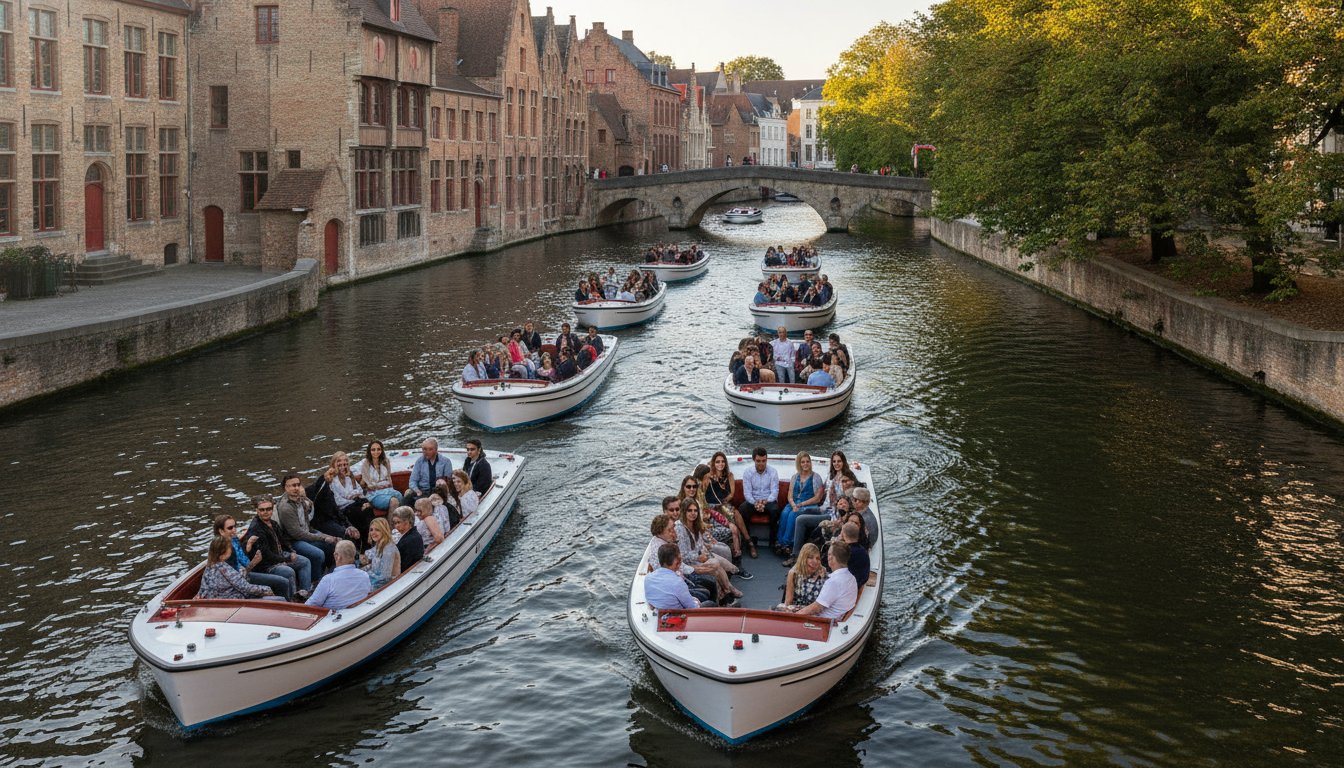
    The city’s waterways are the veins of the Historic Centre of Brugge. They offer a perspective that land-based tours simply cannot replicate. However, managing Bruges canal tours for large groups requires a shift from casual sightseeing to precise operational planning. While a standard vessel might accommodate 35 to 40 passengers, the reality of group movement in a UNESCO world heritage site is far more nuanced. You aren’t just booking a boat; you’re orchestrating a timed entry into a living museum where space is at a premium.

    To better understand the rhythm and visual scale of these waterways, watch this helpful video:

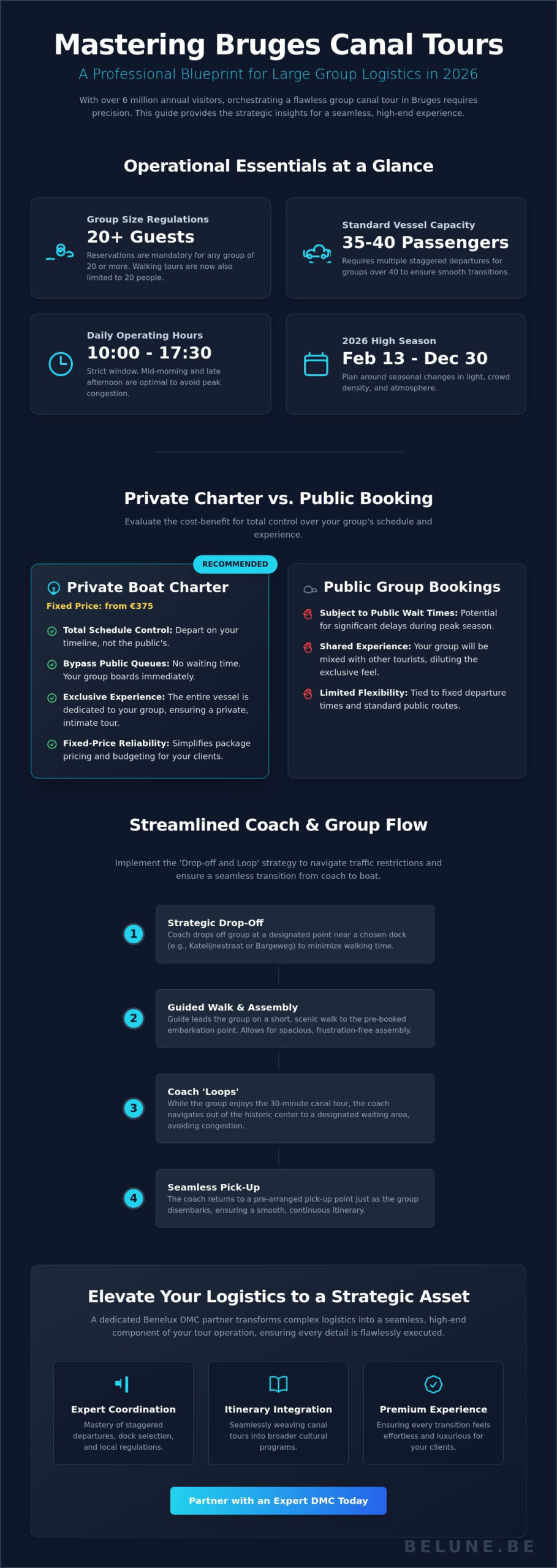
    For groups exceeding 80 participants, the logistics shift toward staggered departures. It’s a common misconception that an entire fleet can depart simultaneously from a single dock. In practice, local regulations and limited dock space necessitate a phased approach. For the 2026 high season, reservations are mandatory for any group of 20 or more. The operational window is strict. Boats run daily from 10:00 AM to 5:30 PM between February 13 and December 30, 2026. Whether you’re planning for the vibrant spring blooms of April or the sharp, clear winter illuminations of December, timing is your most valuable asset. The seasonal atmosphere changes the light, the crowd density, and the very texture of the water.

    Understanding the Landing Stage System

    Bruges operates through five primary embarkation points. Each dock has its own personality and logistical advantages. Selecting the right one depends entirely on your broader itinerary. If your group is arriving by coach, choosing a dock near the Katelijnestraat or the Bargeweg minimizes transit time. Effective group assembly is an art. We focus on docks that allow for spacious gathering areas. This ensures your clients don’t block pedestrian flow on narrow medieval bridges. It’s about maintaining the city’s dignity while providing a premium, frustration-free experience for your guests.

    Capacity and Timing Constraints

    Calculating total tour time for a 100-person group involves more than the fixed 30-minute loop. You must account for the loading and unloading of three separate vessels. Bridge heights and fluctuating water levels also play a role. Larger vessels require specific clearance that can change with the weather, a technical detail often overlooked in the planning phase. Mid-morning and late-afternoon slots typically offer the best flow. These windows avoid the peak congestion of day-trippers. This allows your group to experience the water with the serenity it deserves. These small, technical adjustments transform a standard outing into a seamless professional operation.

    Planning the Perfect Group Itinerary: Beyond the Water

    A boat ride shouldn’t be a standalone box to tick on a checklist. It’s a structural element of a larger narrative. When designing Bruges canal tours for large groups, the most successful operators treat the water experience as a pivot point. It serves as a visual rest between intensive walking tours and formal gallery visits. Integrating these tours into a wider culture group tours benelux strategy ensures that the city’s history feels like a continuous story rather than a series of disconnected stops.

    Consulting the Official Bruges Tourism Portal provides essential updates on museum hours and event schedules that might impact your timing. We often recommend the ‘Golden Hour’ strategy. Scheduling departures as the sun begins to dip behind the Belfry transforms the city into a canvas of amber and deep shadows. It’s the ultimate gift for photography-focused groups. This timing also creates a natural transition. It allows guests to decompress on the water before moving directly to a group dinner at one of the city’s historic squares.

    Thematic Integration for Specialty Groups

    Specialty groups require a tailored lens. For those focused on Art and Heritage, the canals offer views of gables and hidden gardens invisible from the cobblestone streets. If your itinerary includes belgium gastronomy tours, consider docking near the Walplein. This allows for a seamless stroll to local breweries for a post-tour tasting. School groups benefit from a different focus. We emphasize the canals’ role in medieval trade. We help them visualize the city when it was the financial heart of Europe, using the water as a living classroom. Our team can help you curate these high-touch moments for your next high-capacity project.

    Maximizing the Cultural Narrative

    The captain’s script is a foundation, but a multilingual local guide adds the necessary depth for professional groups. They provide the connective tissue between the sights and the city’s broader historical context. From the water, landmarks like the Beguinage and Jan van Eyck Square take on a different weight. The narrative arc should connect the canals to the city’s textile history. It’s about explaining why these waterways exist and how they shaped the wealth of the Flemish primitives. This level of detail transforms a simple boat trip into a sophisticated cultural experience that stays with your clients long after they’ve disembarked.

    Using the boat tour as a transition is a logistical masterstroke. It moves a group from the bustling Markt to the quieter, residential quarters of the city without the fatigue of walking. This keeps energy levels high and ensures that every moment of the day feels intentional. It’s this level of foresight that separates a standard tour from a professional logistics operation.

    Bruges Canal Tours for Large Groups: A Professional Logistics Guide for 2026

    Private Boat Charters vs. Public Group Bookings

    Selecting the right vessel model is a defining moment in your itinerary design. For Bruges canal tours for large groups, the choice often rests on the delicate balance between operational efficiency and the guest’s perception of exclusivity. While a public group booking serves as a functional transit through the city’s history, a private charter transforms the experience into a curated event. It’s the difference between a standard tour and a branded moment that resonates with high-value clients.

    The financial architecture of these two models is distinct. For the 2026 season, public group rates for 20 or more participants are set at €12.00 per person. This is an excellent, cost-effective solution for large-scale cultural tours where the primary goal is access. However, for those seeking a more intimate atmosphere, a private boat charter costs €375.00 for a maximum capacity of 25 people. Consulting with the Bruges Convention Bureau can provide additional clarity on how these choices align with broader corporate events in the city. The private model buys you more than just space; it secures flexible departure times and a sanctuary from the general tourist flow.

    Privacy is the ultimate luxury for corporate incentives or high-level briefings. On a private vessel, the environment is yours. You can deliver a welcome address or an incentive announcement without the intrusion of external noise. It’s important to respect local regulations regarding onboard amenities. Current city guidelines prohibit eating and drinking on canal boats to preserve the heritage environment. A private charter doesn’t bypass this rule, but it does allow for a more sophisticated, focused narrative that isn’t interrupted by the needs of other travelers.

    Comparing the Two Models

    Public bookings are the workhorse of the industry. They’re reliable, follow a fixed 30-minute route, and keep overhead low. They’re ideal for student groups or large cultural delegations where the budget is a primary constraint. In contrast, private charters cater to the premium segment. They allow for a branded experience where the route feels like a personal discovery. Your choice should reflect the brand profile of your client. A luxury fashion group demands the silence of a private deck, while a large-scale festival tour might prefer the logistical simplicity of public blocks.

    B2B Booking Processes

    Navigating the reservation landscape requires a strategic partner. Working with a benelux incoming tour operator ensures you’re not just another name in a booking queue. We manage the complexities of group vouchers and professional invoicing, providing a single point of contact for your entire operation. Professional DMCs often secure preferred rates and more flexible cancellation policies that aren’t available to the general public. This level of oversight is essential for managing volume discounts and ensuring that your group’s transition from land to water is handled with technical precision and artisanal care.

    Essential Logistics: Coach Access and Group Flow

    The transition from a fifty-seater coach to the narrow medieval quays is where logistical precision meets the guest experience. In 2026, the city’s approach to traffic management has become increasingly sophisticated, making the coordination of Bruges canal tours for large groups a task that requires deep local insight. The historic center is a delicate ecosystem. Coaches are primarily directed to the main terminal at Bargeweg, creating a “last mile” challenge that defines the success of your itinerary. It’s a technical hurdle that we transform into a seamless stroll.

    Efficient group flow relies on the ‘Drop-off and Loop’ strategy. This involves a synchronized dance between your driver and the landing stage manager. By coordinating with professional coach hire belgium services, we ensure that the walk from the parking area to the water is timed to the minute. This minimizes the time guests spend standing in public thoroughfares, which is critical given the city’s focus on reducing pedestrian congestion. With an average of 134 visitors per 100 residents daily, every second of idle group time adds to the urban pressure. Precision isn’t just about timing; it’s about city stewardship.

    Managing the ‘Last Mile’ on Foot

    Walking distances from the Bargeweg coach park to the nearest landing stages, such as those near the Katelijnestraat, are approximately 600 to 800 meters. For mobility-impaired members, this transit requires careful dock selection. Some embarkation points offer more gradual access and fewer cobblestone transitions than others. Rainy day contingencies are equally vital. We prioritize docks with nearby covered areas or historical arcades where groups can gather without exposure to the elements. Utilizing licensed local guides is mandatory for these walks. They manage the group’s pace and ensure compliance with the 20-person limit per walking unit that took effect on March 1, 2026.

    Group Dining and the Canal Connection

    The synergy between water and table is a hallmark of a well-planned day. We identify large-capacity restaurants situated within a five-minute walk of the primary docks to maintain momentum. The ‘Boat then Beer’ sequence remains a favorite, where a serene canal loop concludes just steps away from a historic brewery or a vaulted dining hall. Selecting these venues requires an expert eye to avoid the common tourist traps. We focus on establishments that offer fixed-price reliability and the spatial volume needed for professional groups. To secure these high-demand slots for your 2026 season, contact our logistics team for a tailored consultation.

    Why Partner with a Benelux DMC for Group Experiences

    Excellence in group travel is rarely a product of chance. It’s the result of twenty years of quiet refinement and deep-rooted local connections. When architecting Bruges canal tours for large groups, the difference between a functional itinerary and a flawless experience lies in the depth of your partnership. We don’t view ourselves as a mere vendor. Instead, we position ourselves as a strategic ally. Our role is to safeguard your reputation by ensuring every technical detail aligns with your creative vision.

    Customization is the core of our approach. Whether you’re designing an architectural study or a themed group travel benelux program, we tailor the narrative to fit. This isn’t about off-the-shelf solutions. It’s about artisanal logistics. We understand that a high-capacity tour operator needs more than just a boat booking. You need a partner who understands the friction points of the 2026 season and proactively resolves them before the first guest steps off the coach. This level of foresight is what transforms a standard visit into an evocative journey.

    Comprehensive Logistics Management

    Managing a multi-city tour requires a singular vision. We bring accommodation management, coach transport, and local guiding under one professional umbrella. This unified structure is what allows us to handle the unforeseen with grace. If a sudden North Sea squall impacts your canal slot or a traffic delay shifts your dinner reservation, our on-the-ground team recalibrates the schedule in real-time. We provide the technical backbone that allows your creative ideas to flourish.

    • Real-time schedule recalibration for canal departures and group arrivals.
    • Unified invoicing and streamlined communication for all Benelux-wide services.
    • Direct access to a curated network of licensed, multilingual local guides.

    We ensure a seamless transition as your group moves from the canals of Bruges to the diamond districts of Antwerp or the grand squares of Brussels. It’s logistical peace of mind, delivered with technical precision and a deep respect for the traveler’s experience.

    Ready to Plan Your 2026 Group Itinerary?

    The 2026 season is already seeing record interest. With Bruges positioning itself as a leader in smart tourism, available slots for large-scale boat charters and high-capacity dining are filling quickly. Early booking isn’t just a recommendation; it’s a strategic necessity to secure the most prestigious docks and optimal timing. We invite you to request a customized quote for your multi-day group packages. Let’s transform your logistical challenges into a signature travel experience. Partner with BELUNE for your next group tour and discover the power of professional DMC expertise.

    Elevating Your 2026 Group Vision

    Mastering the intricacies of the historic center requires a blend of technical foresight and artistic execution. You’ve seen how precision timing at the Bargeweg terminal and the strategic choice of private charters can transform a standard itinerary into an exclusive event. Success in 2026 isn’t just about booking a boat; it’s about choreographing a seamless flow that respects both the city’s heritage and your guests’ comfort. By prioritizing these logistical nuances, you ensure that every moment on the water feels like an intentional discovery rather than a transit hurdle.

    With over 20 years of DMC experience, we provide the structural support your projects deserve. Our modern private coach fleet and expert local multilingual guides bridge the gap between complex regulations and human emotion. Whether you’re coordinating Bruges canal tours for large groups or designing a multi-city Benelux odyssey, we act as your strategic ally on the ground. It’s time to move beyond standard services and embrace a partnership built on excellence and trust. We’re here to handle the technical weight so you can focus on the creative impact.

    Request Your Custom Benelux Group Tour Itinerary

    The timeless beauty of the Flemish waterways is waiting to be rediscovered through your unique lens. We look forward to bringing your vision to life with the rigor and elegance your clients demand.

    Professional Logistics: Frequently Asked Questions

    What is the maximum capacity for a single boat during a Bruges group tour?

    Standard canal vessels typically accommodate between 35 and 40 passengers per trip. For Bruges canal tours for large groups, this means a delegation of 100 guests will be split across three separate boats. We manage these simultaneous or staggered departures to ensure your group remains as cohesive as possible while respecting the city’s safety and volume regulations.

    Can we book a private canal tour for a corporate group of 100 people?

    You can certainly secure a private experience for 100 guests, though they will travel in a flotilla of four vessels. Since 2026 guidelines require staggered departures for groups exceeding 80 people, we orchestrate the timing with precision. This exclusivity ensures your clients enjoy the historic narrative without the presence of public passengers, maintaining a professional and focused atmosphere.

    How far is the coach parking from the main boat landing stages?

    The primary coach terminal at Bargeweg is located approximately 600 to 800 meters from the nearest embarkation points. This walk takes about 10 to 15 minutes at a comfortable group pace. We recommend utilizing a local guide to lead this transition, as they can navigate the cobblestone streets and ensure your group arrives exactly for their scheduled boarding slot.

    Are there covered boats available for large groups in case of rain?

    Most canal boats in Bruges are open-air to provide the most evocative views of the UNESCO architecture. In the event of light rain, operators often provide umbrellas, but fully enclosed vessels are not the standard in the historic center. We monitor weather forecasts in real-time and work with you to adjust timing or provide nearby sheltered gathering spots if necessary.

    Can we include drinks or snacks on a private group boat charter?

    Eating and drinking are strictly prohibited on all canal boats to preserve the city’s heritage and cleanliness. This regulation is firm across both public tours and private charters. To ensure guest satisfaction, we often pair the boat experience with a visit to a historic brewery or a vaulted cellar restaurant located just steps from the landing stage.

    What is the best time of day to avoid crowds for a large group tour?

    The optimal windows for large groups are mid-morning, shortly after the 10:00 AM opening, or late-afternoon before the 5:30 PM final departure. These slots allow you to bypass the peak congestion caused by midday day-trippers and cruise passengers. Choosing these quieter times ensures a more serene experience on the water and a faster boarding process for your entire party.

    How much time should I budget for the entire group boat experience?

    You should budget approximately 60 minutes from the moment your group arrives at the dock. While the boat follows a fixed 30-minute route, the loading and unloading of multiple vessels for a large group requires additional time. Factoring in a 15-minute buffer for assembly and disembarkation ensures your itinerary remains on track for the next cultural stop.

    Is there a discount for large school groups or non-profit organizations?

    Standardized group rates apply to any organized party of 20 or more participants. For the 2026 season, the verified group rate is €12.00 per person, representing a reduction from the €15.00 individual price. We handle all professional invoicing and reservation requirements, ensuring these fixed-price benefits are clearly reflected in your organization’s travel budget.

  • Bruges Canal Tours for Groups: A Masterclass in Logistical Excellence for 2026

    Bruges Canal Tours for Groups: A Masterclass in Logistical Excellence for 2026

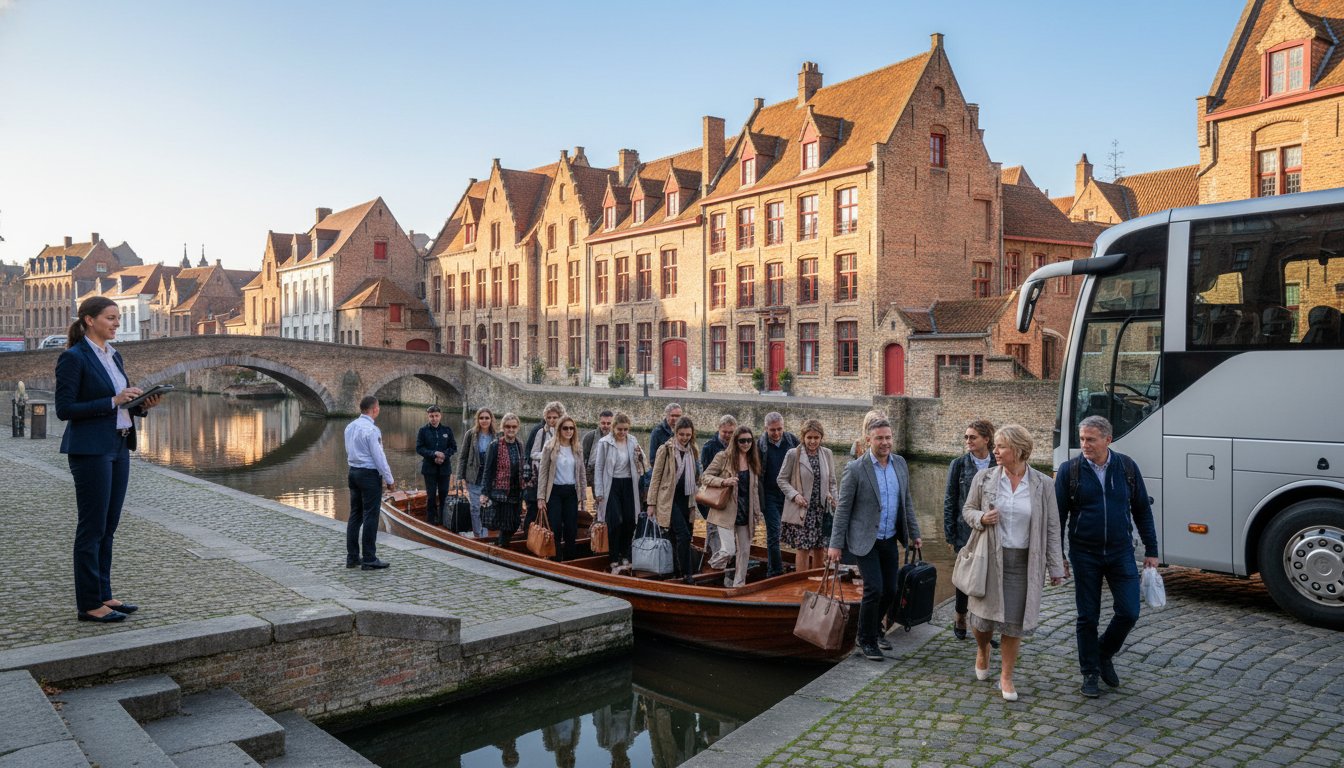
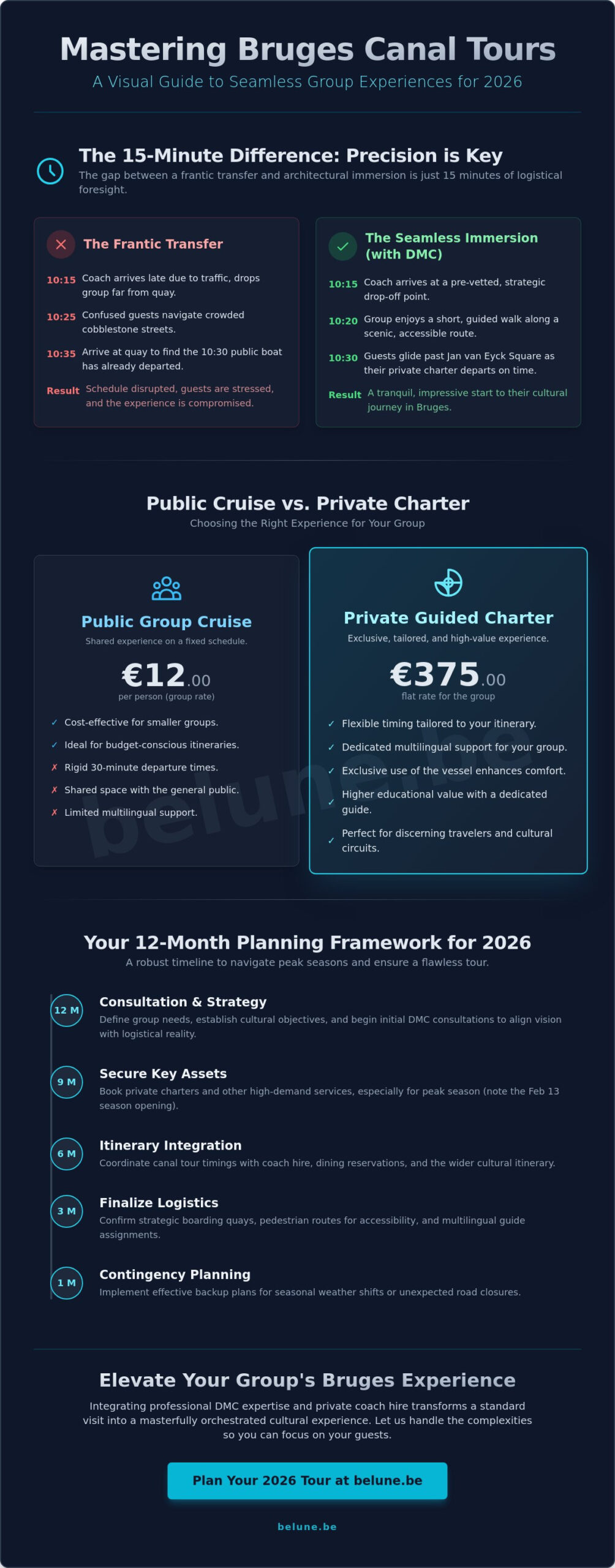
    A coach arrives at the terminal at 10:15 AM; by 10:30 AM, forty guests are already gliding past the Jan van Eyck Square. This level of precision isn’t accidental. The difference between a frantic transfer and a moment of pure architectural immersion often comes down to exactly fifteen minutes of logistical foresight. We understand that managing bruges canal tours for groups requires more than just a ticket; it demands a vision where every transition feels effortless.

    You likely know the frustration of aligning a rigid 30-minute boat departure with the unpredictable flow of group dining and traffic. It’s a delicate balance of timing and local intuition. This article shows you how to master these complexities by integrating professional DMC expertise into your 2026 planning. You’ll discover how to leverage the February 13 opening season and secure the €12.00 group rate or a €375.00 private charter to create a seamless, high-quality experience.

    We’ll examine the specific 2026 regulations, the best strategies for multi-language groups, and how to pair these aquatic journeys with a wider cultural itinerary that satisfies the most discerning travelers.

    Key Takeaways

    • Learn why the UNESCO World Heritage waterways serve as a curated canvas for your group’s cultural narrative, offering more than just a scenic view.
    • Master the timing of bruges canal tours for groups by identifying strategic boarding quays that facilitate seamless coach-to-boat transitions.
    • Discover the distinct advantages of private charters over public cruises for ensuring dedicated multilingual support and higher educational value.
    • Establish a robust 12-month planning framework to navigate peak season demand and implement effective contingency plans for seasonal weather shifts.
    • Explore how integrating professional DMC expertise and private coach hire transforms a standard visit into a masterfully orchestrated cultural experience.

    The Timeless Allure of Bruges Canal Tours for Groups

    Bruges isn’t just a city; it’s a living canvas of stone, light, and water. For tour operators, bruges canal tours for groups represent the most direct way to immerse guests in the “Venice of the North.” This UNESCO World Heritage site offers a labyrinth of waterways that dictated the city’s wealth and layout centuries ago. These canals are the very veins of the city, providing a curated journey through a medieval landscape that has remained remarkably intact. It’s a foundational experience that transforms a standard visit into a masterclass in architectural appreciation.

    These waterways aren’t merely scenic routes for leisure. They serve as the essential narrative thread for any high-capacity cultural circuit through the historic city of Bruges. From the water, the medieval architecture reveals nuances and details invisible from the cobblestone streets. It’s the cornerstone of a successful Benelux itinerary, offering a unique vantage point that highlights the grandeur of the city’s golden age while providing a necessary logistical anchor for large parties. The perspective from the water level sublimates the city’s scale, making the towering spires and intricate facades feel both intimate and immense.

    To better understand the unique perspective these waterways provide, watch this helpful video:

    Historical Significance for Cultural Groups

    The waterways were the pulse of the 14th-century Golden Age, carrying lace, wool, and spices to the heart of Europe. On bruges canal tours for groups, visitors see the water-level entrances where goods were once hoisted directly into warehouses. This perspective highlights the ingenuity of medieval urban planning. Certain landmarks, like the secluded gardens of the Beguinage or the weathered foundations of merchant houses, only reveal their true character to those on the water. For art and history enthusiasts, the boat becomes a moving classroom where the city’s timeline unfolds bridge by bridge.

    The Emotional Impact of Waterborne Sightseeing

    The atmosphere in Bruges is a curated blend of silence, light, and stone. As the boat maneuvers through the narrow passages, the interplay of light on the green-tinted water and the weathered red bricks creates a cinematic quality. Passing beneath the low arches of the 14th-century Meebrug and Peerdenbrug bridges creates a sensory shift that grounds the traveler. It’s a moment of refined tranquility. Within a packed travel schedule, these thirty minutes offer a necessary pause, allowing guests to absorb the harmony of the environment before continuing their journey.

    Efficiency is the silent partner of elegance. When managing bruges canal tours for groups, the logistical chain begins long before the first guest steps onto the mahogany deck. It starts at the city’s perimeter. For high-capacity itineraries, identifying the right boarding quays is paramount to avoiding the congestion often found at Jan van Eyck Square. While this square offers a stunning backdrop, its popularity requires a strictly timed entry strategy to ensure your schedule remains intact. A professional DMC acts as the conductor here, synchronizing the arrival of a 50-seater coach with the immediate availability of a private vessel.

    Accessibility remains a cornerstone of professional planning. The historic center, a recognized UNESCO World Heritage Site, presents challenges for senior groups or those with limited mobility. Navigating medieval cobblestones to reach the water requires a nuanced approach. Selecting quays with the fewest steps and providing clear, level pedestrian routes is essential. We’ve found that a well-orchestrated transfer doesn’t just save time; it preserves the guests’ energy for the cultural immersion that follows.

    Coach Parking and Pedestrian Coordination

    Most group journeys begin at the Bargeplein coach park. It’s located on the city’s southern edge, approximately 1.5 kilometers from the primary canal departure points. For groups exceeding 40 people, a staggered boarding strategy is the only way to maintain a sense of exclusivity. Rather than a mass influx, guests arrive in smaller waves. This is where our bespoke coach hire services provide a distinct advantage, allowing for direct, flexible transfers that align perfectly with boat departure windows.

    Synchronized Timing for Multi-Activity Days

    A 30-minute cruise is a brief but intense sensory experience. It must be anchored precisely between other itinerary pillars, such as a gastronomy tour or a museum visit. We recommend a 20-minute “buffer window” before boarding. This time accounts for group restroom breaks and the inevitable photo opportunities that arise when first encountering the Belfry view. Clear communication between the coach driver and the boat captain ensures that the vessel is ready the moment the group arrives. This eliminates the wait time that can often disrupt the rhythm of a high-end cultural tour.

    Bruges Canal Tours for Groups: A Masterclass in Logistical Excellence for 2026

    Comparing Group Experiences: Public Cruises vs. Private Guided Charters

    The choice between a standard public cruise and a private charter is the choice between mere sightseeing and profound storytelling. While public tours offer a glimpse of the city, they often compromise the integrity of a high-end itinerary. For bruges canal tours for groups, the “hop-on” nature of public boats means your guests are often seated alongside random travelers, diluting the group’s collective focus. A private charter elevates the experience to a bespoke event. It reinforces your brand’s commitment to quality by offering an environment where the architecture and history are the sole protagonists. This exclusivity isn’t just about comfort; it’s about maintaining the narrative flow of your curated journey.

    Flexibility is the hallmark of a private arrangement. Public departures follow a rigid, unyielding pulse that waits for no one. In contrast, a private charter allows for subtle adjustments in timing, ensuring that the transition from the coach to the water remains fluid. This logistical freedom is essential when managing tight schedules between cultural landmarks and gastronomy experiences. It transforms a potential bottleneck into a seamless highlight of the day.

    The Benefit of Dedicated Professional Guides

    Communication is the bridge to cultural understanding. In a city as layered as Bruges, a multilingual local guide isn’t a luxury; it’s a necessity. Unlike the pre-recorded or generalized commentary found on public boats, a private guide tailors the narrative to the group’s specific interests. Whether the focus is on the 14th-century trade routes or the intricacies of Flemish Primitives, the depth of information is significantly higher. This expertise is particularly vital for culture group tours benelux, where the historical context of the Low Countries requires a nuanced, expert voice to truly resonate with international guests. A dedicated guide ensures that no detail is lost in translation.

    Customising the On-Board Experience

    Exclusivity allows for sensory layers that public tours simply cannot provide. Imagine your group gliding under the historic bridges while sampling a curated selection of local Trappist beers or artisanal chocolates. These additions transform a 30-minute transit into a multisensory masterclass. Private charters also offer the logistical freedom to request “quiet zones” for reflection or specific photography pauses near the Church of Our Lady. As your strategic partner, we act as the bridge between your vision and local boat owners. We negotiate these bespoke details to ensure every moment on the water feels like a deliberate, handcrafted experience that exceeds the expectations of your most discerning clients.

    Essential Planning Framework for Professional Tour Operators

    Precision in planning isn’t just a preference; it’s a structural necessity. For the 2026 peak season, which spans from April through September, we recommend a 12-month planning horizon. This foresight ensures availability at the most desirable quays and secures the preferred departure windows that align with your broader itinerary. When managing bruges canal tours for groups, the margin for error is slim. Early booking allows us to weave the waterborne journey into the day’s rhythm with the accuracy of a master artisan.

    Operational integrity also relies on a firm grasp of regional legalities. Group activities in the Benelux region must adhere to specific insurance and safety standards, particularly concerning waterborne transport. We prioritize fixed-price packages to maintain your operator margins. This approach protects your budget against seasonal fluctuations and ensures that the end-client receives a consistent, high-quality experience without the disruption of hidden surcharges or last-minute fee adjustments.

    Step-by-Step Booking Timeline

    • Step 1: Define the group profile. This includes finalizing the exact passenger count and specifying the required languages for the guide to ensure total cultural immersion.
    • Step 2: Secure coach parking permits. At this stage, it’s vital to synchronize with a benelux incoming tour operator to align the fleet arrival with the boat’s quay manifest.
    • Step 3: Confirm final passenger counts exactly 14 days prior to arrival. This deadline is essential for finalizing manifests and ensuring the boarding process remains swift and professional.

    Risk Management and Contingency Plans

    Contingency planning is where local expertise truly shines. Open-top boat operations are tied to the elements. While the 2026 season is confirmed from February 13 to December 30, extreme weather or scheduled canal maintenance can occasionally necessitate a “Plan B.” Whether it’s an exclusive gallery visit or a private chocolate masterclass, having a pre-verified alternative is non-negotiable. Our team provides 24/7 on-the-ground assistance. We handle real-time logistical shifts so that your group leaders can focus entirely on the guest experience. To ensure your 2026 itineraries are built on a foundation of logistical excellence, request a consultation with our planning team.

    Elevating Group Travel with BELUNE’s Destination Management

    At BELUNE, we view ourselves as the architect of light and travel. We don’t just facilitate movement; we design the atmosphere in which your guests experience the heart of Europe. Excellence in bruges canal tours for groups isn’t an isolated event. It’s a single, luminous thread within a larger tapestry of service. Our approach integrates these iconic waterborne journeys into sophisticated themed group travel benelux programs. Whether the focus is on the interplay of shadow and stone in medieval architecture or the vibrant energy of a gastronomy circuit, we ensure the transition from land to water is effortless.

    Our A to Z service model removes the friction of coordination. We manage everything from high-capacity accommodation bookings to the selection of local guides who possess a deep, artisanal knowledge of their craft. This holistic management allows tour operators to provide a seamless narrative for their clients. Every detail, from the first hotel check-in to the final canal departure, is handled with a rigueur that inspires absolute confidence. We transform the logistical burden into a masterfully orchestrated experience where the only thing your guests need to focus on is the beauty of the city.

    A Fleet of Modern Coaches for Seamless Transfers

    The journey begins on the road. Our own fleet of modern coaches represents the pinnacle of comfort and reliability. Having a dedicated BELUNE driver simplifies the complex logistics of city-centre drop-offs, ensuring your group arrives at the quay refreshed and on time. This synergy between land and water transport is what defines our commitment to excellence. All our transport solutions meet the highest European safety and environmental standards. This commitment to quality ensures that the physical journey is as refined as the cultural one.

    Your Strategic Partner for Benelux and Beyond

    True expertise is measured in decades. We invite you to leverage over 20 years of experience in regional group travel. By choosing BELUNE, you gain a single point of contact for complex, multi-city itineraries spanning Bruges, Ghent, Brussels, and Amsterdam. This centralized coordination eliminates the fragmentation that often plagues international tours. We’re not just a supplier; we’re a visionary ally in the creation of exceptional architectural and cultural projects. Contact us today to request a customized, fixed-price group itinerary and experience the masterclass in logistical excellence your clients deserve.

    Orchestrating Exceptional Journeys for 2026

    Mastering the intricacies of bruges canal tours for groups requires more than a simple booking; it demands a vision of harmony between land and water. We’ve explored how a 12-month planning horizon and the strategic use of private charters transform a standard visit into a refined cultural event. By prioritizing accessibility and synchronized coach transfers, you ensure that every guest experiences the city’s medieval soul without the friction of logistical delays.

    As a specialized DMC, BELUNE brings over 20 years of Benelux expertise to your most ambitious projects. Our private fleet of modern coaches and dedicated local guides provide the technical rigueur necessary to sublime every itinerary. We act as your strategic partner, managing every nuance from accommodation to on-board catering. It’s time to elevate your offerings from simple sightseeing to a masterclass in travel design. Partner with BELUNE to design your next bespoke group itinerary and discover the difference that professional orchestration makes. Your vision deserves a foundation of excellence.

    Frequently Asked Questions

    Can canal tours in Bruges accommodate groups of more than 50 people?

    Yes, we manage large-capacity arrivals by coordinating multiple vessels simultaneously. Since standard boats typically accommodate 35 to 40 passengers, a group of 60 would utilize two boats departing in tandem. This ensures the entire party experiences the city’s harmony together. For bruges canal tours for groups exceeding 100 travelers, we implement a staggered boarding schedule at primary quays to maintain logistical fluidity and guest comfort.

    Is it possible to book a private canal boat with a guide who speaks a specific language?

    Private charters are the only way to guarantee a dedicated multilingual professional for your group. While public tours offer generalized commentary, a private booking allows us to assign a local expert fluent in your guests’ native tongue. This is essential for cultural groups who require technical depth. We currently coordinate guides in over 10 languages to ensure every nuance of the city’s history is perfectly communicated.

    What is the best time of day for groups to avoid the crowds on the canals?

    Optimal tranquility is found before 11:00 AM or in the late afternoon after 4:00 PM. During these windows, the light hits the medieval brickwork with a specific softness that’s perfect for photography. Midday often sees a 40% increase in quay congestion due to day-trippers from Brussels. By scheduling your group outside these peak hours, we preserve the refined tranquility that makes the experience so memorable for high-end travelers.

    How far is the coach parking from the main boat departure points?

    The primary coach terminal at Bargeplein is approximately 1.5 kilometers from the central boarding quays. This walk takes a group roughly 20 minutes at a moderate pace. We recommend utilizing our private coach fleet for drop-and-go maneuvers near the city perimeter when local regulations allow. This reduces pedestrian fatigue and ensures your guests arrive at the water level with their energy fully intact for the tour.

    Are the boats covered in case of rain during a group tour?

    Most vessels are open-top to ensure they can pass safely under the 14th-century stone bridges. While some operators provide umbrellas, we treat rain as a logistical variable that requires a Plan B. In the event of persistent downpours, we leverage our local partnerships to pivot the itinerary toward indoor cultural masterclasses. This proactive management ensures that weather never diminishes the quality of a professionally orchestrated bruges canal tours for groups.

    Can we combine a canal tour with a group lunch or chocolate tasting?

    We specialize in weaving these sensory layers into a single, cohesive itinerary. A 30-minute cruise serves as the perfect transition between a morning of architectural discovery and a curated gastronomy experience. We coordinate with local artisans and restaurants near the quays to ensure your group moves seamlessly from the boat to a private chocolate atelier or a canal-side dining room without any wasted transit time.

    What happens if our group is delayed due to traffic or coach issues?

    Real-time communication is our safeguard against the unexpected. Our team provides 24/7 assistance, acting as the bridge between your coach driver and the boat captain. If traffic on the E40 motorway causes a 15-minute delay, we negotiate the departure window in real-time. This flexibility is a hallmark of our DMC service, ensuring that a minor delay doesn’t result in a missed experience or a fractured schedule.

    Is there a discounted rate for large groups or professional tour operators?

    Verified 2026 rates for groups of 20 or more people are set at €12.00 to €14.00 per person. These professional rates offer a significant advantage over the €15.00 individual adult ticket. For B2B partners, we manage these bookings as part of a fixed-price package. This approach protects your margins and ensures that the financial aspect of the tour remains transparent and predictable from the initial planning phase.