Tag: Benelux Cycling

  • Bad weather backup plans for Benelux cycling tours: when to shelter, reroute or add time

    Bad weather backup plans for Benelux cycling tours: when to shelter, reroute or add time

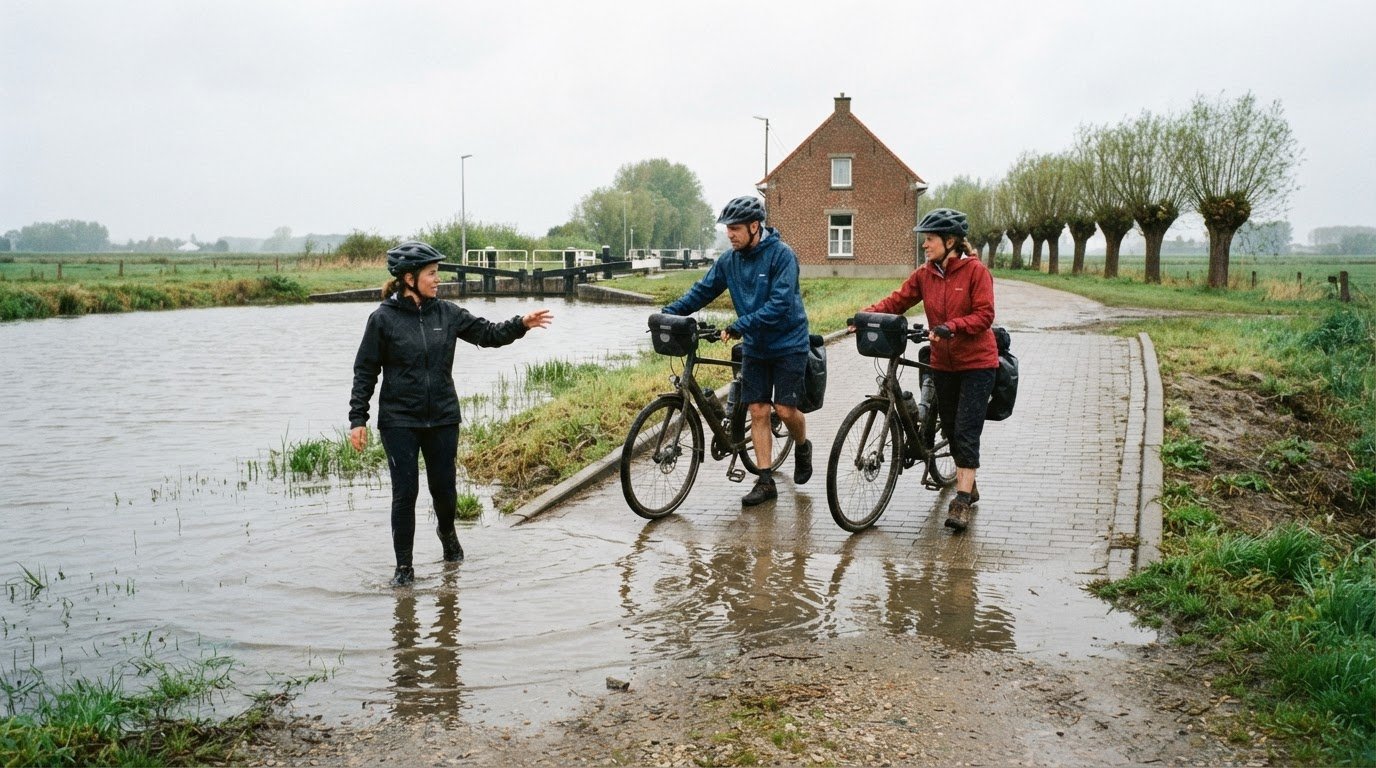
    Rain should change the plan, not dictate the day. Effective bad weather backup plans for Benelux cycling tours combine rain radar and precipitation probabilities to time shelter stops, route checks for flooding or diversions, and extra time for slower riding or weather delays. If heavy rain makes it difficult for drivers to see cyclists, get off the road. If conditions remain safe, adjust the day’s distance rather than treating rain alone as a reason to abandon the tour.

    A changing forecast can unsettle even a carefully planned itinerary. The aim isn’t to ride through every shower, but to make clear decisions that protect safety and preserve the experience. This guide explains when to pause, when to reroute and how to leave more room in the schedule.

    Learn how to combine rain radar with seven-day forecasts, check routes after overnight rain, use long-term weather averages as a planning guide and allow for a slower pace in adverse conditions. The result is a more flexible tour, with practical options to shelter, shorten a stage or take a weather day.

    Key Takeaways

    • Use radar and precipitation probabilities together to choose a safer window for shelter, lunch or a rest day.
    • After overnight rain, review the route for flooding and diversions before setting out, and adjust the day’s plan if needed.
    • Use long-term weather averages to shape expectations, but consider record temperatures too, especially when camping.
    • Build weather days and extra travel time into the itinerary so headwinds or a slower pace don’t force rushed decisions.

    1. Rain radar for choosing when to shelter or rest

    Along Benelux routes, use a weather app or national meteorological service to check forecasts, rain radar and storm alerts for your location. While travelling, review the seven-day forecast, then compare radar movement with precipitation probabilities before deciding when to shelter, eat lunch or rest.

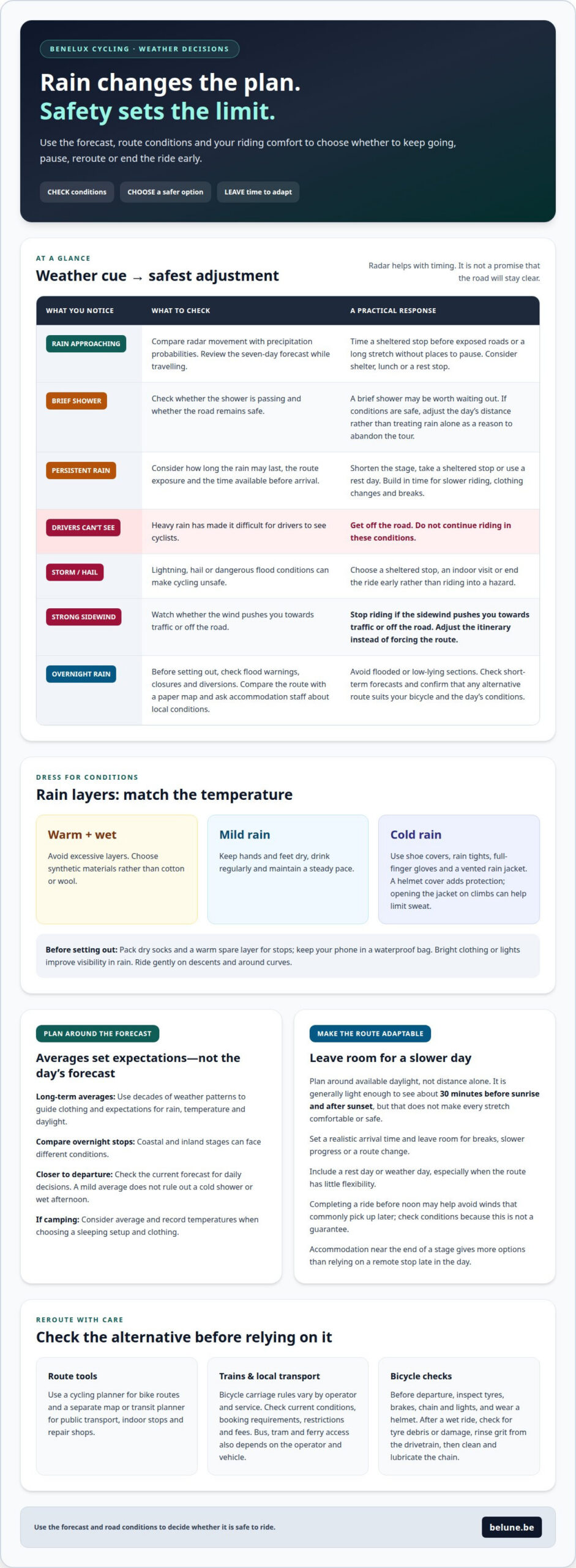
    Use radar as a timing tool, not a promise that the road will stay clear. If rain is approaching, choose a sheltered stop before exposed roads or a long stretch without places to pause. A brief shower may be worth waiting out; persistent rain may call for a shorter stage or rest day. If rain becomes so heavy that drivers can’t see cyclists, get off the road. Strong storms may mean taking more breaks or ending the ride early.

    Dress for the temperature as well as the rain. In warm, wet weather, avoid excessive layers and choose synthetic materials over cotton or wool. In mild rain, keep your hands and feet dry, drink regularly and maintain a steady pace. In cold rain, use shoe covers, rain tights, full-finger gloves and a vented rain jacket. A helmet cover can add protection, while opening the jacket on climbs can help limit sweat.

    Prepare the bicycle and essentials before setting out. Pack dry socks and a warm spare layer for stops, and keep your phone in a waterproof bag. Bright clothing or lights improve visibility in rain; ride gently on descents and around curves. Snow or rain alone doesn’t automatically rule out cycling: use the forecast and road conditions to decide whether it’s safe to ride. A rain jacket, dry clothing and a flexible schedule are useful on any travel day.

    2. Research routes and check for flooding or diversions

    After overnight rain, inspect the day’s route before setting out. Check for flood warnings, closures and diversions, then compare the route with a paper map to find alternatives that avoid low-lying paths or exposed roads. Accommodation staff may also know about local delays or flooded sections. Short-term forecasts can show whether conditions are improving or worsening along the route.

    For thunderstorms, strong winds or flooding, adjust the itinerary instead of forcing the planned route. Avoid flooded sections, and stop riding if a strong sidewind pushes you towards traffic or off the road. Lightning, hail and dangerous flood conditions can make cycling unsafe. A shorter stage, sheltered stop or indoor visit may be a better choice than riding into a hazard.

    Train rules and charges for bicycles vary by operator and service across Belgium, the Netherlands and Luxembourg. Before relying on a train, check the current bicycle-carriage conditions for your journey, including any booking requirements, restrictions or fees.

    Access for bicycles on buses, trams and ferries also depends on the operator and vehicle. Don’t assume a bicycle can board in bad weather; check the service’s carriage conditions before relying on it for a reroute.

    Route-planning tools vary in what they show. Use a cycling planner for bike routes and a separate map or transit planner for public transport, indoor stops and repair shops. Confirm the alternative route suits your bicycle and the day’s conditions. For a coordinated Benelux cycling tour, route changes can be considered alongside the wider itinerary.

    Before departure, inspect the bicycle’s tyres, brakes, chain and lights, and wear a helmet. After a wet ride, check the tyres for debris or damage, rinse grit from the drivetrain, then clean and lubricate the chain. These simple checks can reveal problems before the next day’s ride.
    Bad weather backup plans for Benelux cycling tours: when to shelter, reroute or add time

    3. Using long-term weather averages for tour planning

    Start with weather averages gathered over decades for the towns and landscapes along your Benelux route. They reveal seasonal patterns that can help you choose clothing and set realistic expectations for rain, temperature and daylight. They aren’t a day-by-day forecast. Compare averages for each overnight stop, since coastal and inland stages can face different conditions. Then use the current forecast closer to departure to guide daily decisions. A mild average doesn’t rule out a cold shower or wet afternoon.

    When planning to camp, consider average and record temperatures together. Averages help you prepare for typical conditions, while records show how much temperatures have varied. This matters when choosing a sleeping setup, jacket and waterproof layers. Pack gloves and dry clothing so a temperature change doesn’t leave you uncomfortable after riding. Plan overnight stops where you can rest and dry wet gear, rather than assuming every day will suit camping.

    Plan each day around available daylight, not distance alone. It’s generally light enough to see about 30 minutes before sunrise and after sunset, but that doesn’t make every stretch comfortable or safe to ride. Set a realistic arrival time and leave room for breaks, slower progress or a route change. A stage that ends near accommodation gives you more options than one that relies on reaching a remote stop late.

    Include a rest day or weather day in the itinerary, especially if the route has little flexibility. If the forecast turns poor, move a riding stage, pause in town or use the day to recover. Completing a ride before noon can help avoid winds that commonly pick up later. Treat this as an option, not a guarantee: check the day’s conditions and adapt the schedule accordingly.

    4. Building time buffers into tour plans for unpredictable weather

    A weather buffer is planned flexibility, not unused time. Headwinds can make the same distance take longer and feel harder, while rain can slow riding and add clothing changes or shelter stops. Build bad weather backup plans for Benelux cycling tours around the day’s destination, expected riding time, route exposure and arrival window. Leave room for slower progress instead of scheduling every hour around ideal conditions. The right amount of flexibility depends on the terrain, forecast, temperature and how easily the route can be shortened.

    Build flexibility into the parts of the route where it can make a difference. Allow more room for a headwind across open countryside than on a sheltered urban stretch. If rain is forecast, identify a town where the group can pause, dry clothes or end the stage early. Keep lights ready in case a delay pushes arrival towards dusk, and avoid making a distant overnight stop the only workable destination.

    Rest days and weather days can serve different purposes. A rest day supports recovery; a weather day gives the itinerary room to shift when conditions disrupt riding. For a Patagonia cycling tour in spring 2017, Martin Moschek planned two extra days as a weather buffer. That example shows the principle, not a universal formula: route length, terrain, accommodation sequence and forecast uncertainty all affect how much time makes sense.

    Build the buffer into the schedule before departure, then decide how to use it as conditions develop. Move a stage, shorten the day or pause when unsafe weather makes continuing unwise. Groups travelling to a fixed event or timed connection have less flexibility than those with adaptable overnight stops, so protect those commitments first. Effective bad weather backup plans for Benelux cycling tours also account for the group’s priorities and practical travel arrangements. If your group needs an itinerary designed with weather flexibility in mind, plan a tailored cycling tour around its route and accommodation needs. A little room in the schedule helps the adventure stay composed when the forecast changes.

    BELUNE: Cycling Tours

    BELUNE organizes customized cycling tours for groups travelling through the Benelux, bringing route planning and travel logistics into one itinerary. For tour operators and travel agents, that can mean considering where a weather delay could affect the day’s ride, overnight stay or onward transfer.

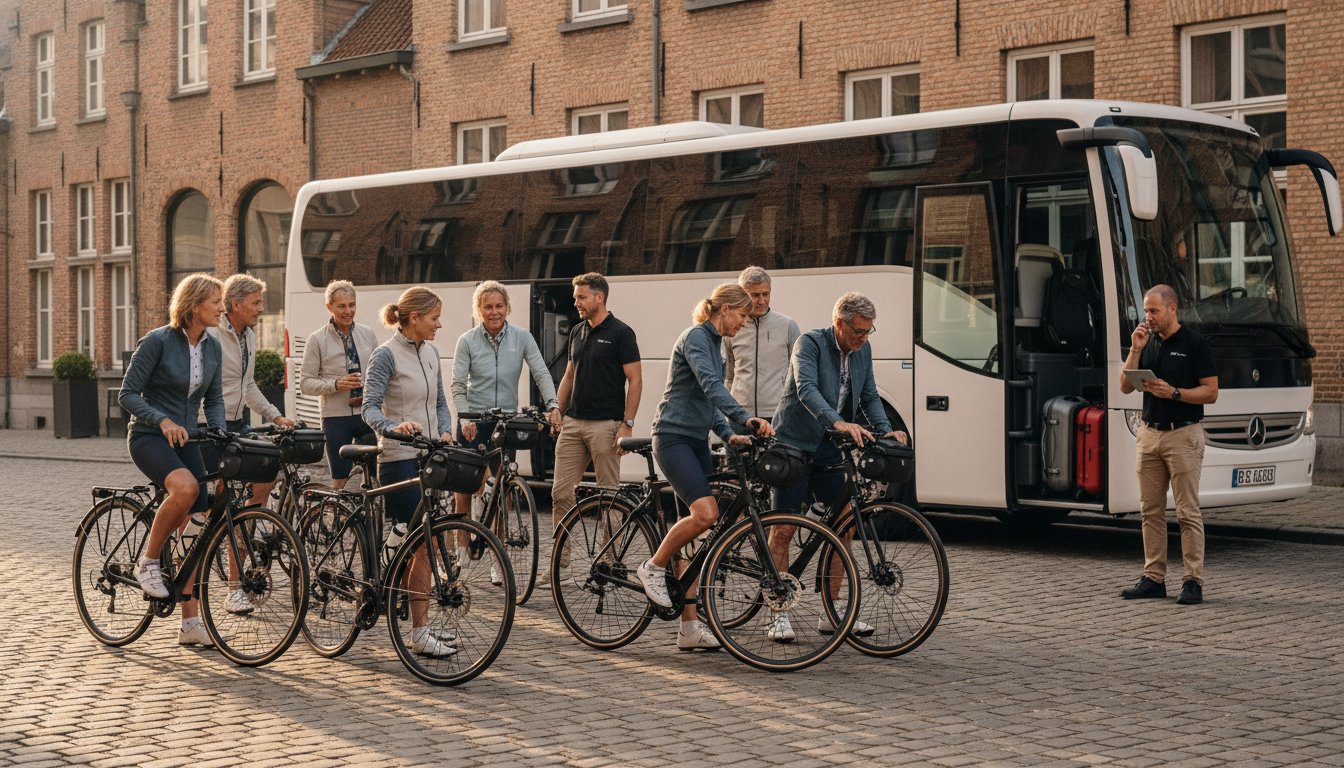
    If rain or flooding calls for a change, BELUNE can support a revised group itinerary with accommodation management and coach hire using its own fleet of buses. Local guide services bring regional knowledge to the journey. These services can help shape a cycling tour with room for route alternatives, rest periods or a different daily rhythm.

    Share your group’s cycling tour plans with BELUNE to discuss an itinerary tailored to your travel needs.

    Make room for a more adaptable journey

    A cycling itinerary is more than a line between destinations. It’s a sequence of choices shaped by the group, the landscape and the rhythm of each day. Build bad weather backup plans for Benelux cycling tours into the design from the outset, so changing conditions lead to considered adjustments rather than rushed decisions. For tour operators and travel agents, practical flexibility helps keep the journey’s character intact.

    BELUNE can help develop a customized group cycling itinerary and coordinate the travel arrangements that support it. Bring your route ideas, group priorities and preferred travel dates to the conversation, and explore how they can come together in a coherent plan. Contact BELUNE about your cycling tour to discuss the next step. With thoughtful planning behind it, a change of weather can become a reason to adjust the pace, not lose sight of the journey.

    Frequently Asked Questions

    Plan B: What should I do in bad weather?

    Choose whether to wait, reroute or end the ride based on what conditions make safe. If the weather is expected to pass, pause somewhere sheltered and reassess before setting off. If a route segment is unsafe, take a pre-planned alternative that still leads to your overnight stop. If no safe option remains, stop riding and reorganize the day rather than treating the original schedule as fixed.

    What happens if it rains during my bike tour?

    Light rain may not require ending the ride, but wet roads call for careful handling. Avoid sudden braking, sharp turns and close following, especially where puddles may hide debris. If visibility drops or conditions become hazardous, stop somewhere safe and decide whether to wait or change plans. After the ride, let wet clothes dry before packing them with dry layers.

    What happens if a bike ride is canceled due to weather?

    A canceled ride can become an opportunity to reshape the day around an indoor activity. Consider a museum visit, cultural experience, artisan tour or wine tasting, depending on the route and opening times. If the itinerary includes several overnight stops, rearrange the order of activities rather than adding a long transfer. Keep the next cycling stage flexible until conditions improve.

    How often do rain, wind and storms affect cycling conditions in the Benelux?

    Weather’s effect varies with the season, location and timing, so there’s no single frequency that applies to every Benelux route. A shower may affect only one stretch, while wind can increase the effort across a longer stage. Check conditions for the places you’ll pass through, not just the day’s starting point, and let the forecast guide your riding decision.

    Which indoor attractions and museums near popular Benelux cycling routes make good rainy-day backups?

    Museums and cultural venues can make useful alternatives, as can artisan visits, wine tastings and other indoor experiences. Choose an option near the planned route or overnight stop, so a rainy-day change doesn’t create a demanding transfer. Check opening times and whether the visit suits the group before rearranging the day. This keeps the detour purposeful, rather than simply filling time.

    Which bike-friendly hotels, hostels and campsites offer flexible cancellation or shelter for wet-weather stops?

    Look for accommodation near your route with a sheltered place to wait or dry off, and cancellation terms that suit a weather-sensitive itinerary. Policies and facilities vary, so compare the written terms before booking. At campsites, consider whether there’s an indoor communal space; at hotels or hostels, check whether arrival and cancellation conditions give your group room to adapt its plans.
  • Benelux Cycling Tours for Travel Agents: The Ultimate B2B DMC Guide for 2026

    Benelux Cycling Tours for Travel Agents: The Ultimate B2B DMC Guide for 2026

    A single logistical oversight in a multi-day itinerary can dissolve your profit margins faster than a sudden downpour in challenging terrain. For professionals seeking to curate excellence, benelux cycling tours for travel agents represent more than just a trip; they’re a masterclass in spatial movement and rich cultural narratives. You’ve likely felt the tension of coordinating secure bike storage at boutique hotels or balancing the pace of a group with varying fitness levels. It’s a delicate harmony to maintain when your brand’s reputation is on the line.

    We understand that the true value of a partnership lies in the invisible details. By 2026, the demand for curated, slow-travel experiences across Belgium, the Netherlands, and Luxembourg is projected to grow by 12 percent annually. This guide provides the blueprint for high-margin, expertly managed itineraries that eliminate the friction of luggage transport and equipment maintenance. You’ll discover how our private coach fleets and fixed-price models turn logistical complexity into a refined, branded advantage that reassures your most discerning clients.

    Key Takeaways

    • Understand the 2026 shift toward “slow travel” and why the Benelux region serves as the premier global hub for sophisticated active tourism.
    • Master the logistics architecture of premium benelux cycling tours for travel agents, utilizing the “Coach + Cycle” model to ensure seamless and flexible group movement.
    • Compare the strategic advantages of land-based itineraries against traditional barge tours to unlock superior customization and higher margins for your portfolio.
    • Explore how to weave sensory experiences, such as authentic Belgian gastronomy, into cycling routes to create a compelling narrative that resonates with discerning clients.
    • Learn the value of a strategic DMC partnership to secure all-inclusive, fixed-price packages backed by twenty years of regional expertise and architectural precision.

    The Growing Demand for Active Benelux Group Travel in 2026

    The travel landscape for 2026 reveals a profound shift in how groups experience Europe. Travelers now prioritize depth over distance, seeking “slow travel” experiences that foster a genuine connection with the landscape. This evolution has transformed Belgium, the Netherlands, and Luxembourg into the world’s premier hubs for active tourism. For industry professionals, curated benelux cycling tours for travel agents represent a strategic opportunity to capture a market that values sustainability, health, and cultural intimacy.

    Demand is surging across diverse demographics. Corporate retreats now look for team-building through movement rather than conference rooms. Simultaneously, “silver-age” cycling clubs, which account for nearly 40% of the luxury active travel segment, demand premium comfort and seamless logistics. A specialized Benelux incoming tour operator serves as the essential architect in this ecosystem. They bridge the gap between complex local bike infrastructure and the sophisticated expectations of international sales channels, ensuring every detail is technically flawless and artistically inspired.

    Why Benelux is the Golden Triangle for Cycling

    The region’s infrastructure is a masterpiece of interconnected design. Belgium’s RAVeL network offers over 1,480 kilometers of greenways, repurposed from old railway lines to ensure smooth, car-free journeys. In the Netherlands, the LF (Landelijke Fietsroutes) routes create a seamless web of long-distance paths. Cycling in the Netherlands is a foundational element of the national identity, providing a level of safety and maintenance that’s unmatched globally.

    The geography stays largely flat, making it accessible for groups with varying fitness levels. However, the true appeal lies in the density of the experience. It’s one of the few places on earth where a group can traverse three different countries in a single week. The itinerary flows effortlessly from the medieval art cities of Flanders to the high-plateau forests of the Ardennes and the sophisticated urban pulse of Luxembourg.

    The Travel Agent Opportunity: High-Margin Active Tours

    Active tours command significantly higher price points than standard coach-based itineraries. The complexity of bike logistics, specialized support vehicles, and luggage transfers creates a barrier to entry that justifies premium margins. Clients aren’t just paying for a bike; they’re paying for “curated friction.” This concept balances the physical challenge of the route with the reward of high-end recovery, such as boutique hotel stays and private culinary tastings.

    The logistical precision required for these tours makes the travel agent’s role indispensable. You aren’t just selling a trip; you’re selling a managed adventure. In 2026, active travel has evolved into a multi-sensory cultural experience that blends physical movement with deep artistic immersion and culinary discovery. By focusing on benelux cycling tours for travel agents, you position your brand as a purveyor of health, luxury, and authentic European heritage.

    Logistics Architecture: The Backbone of Professional Cycling Tours

    Precision defines excellence. In the Benelux region, a successful itinerary relies on an invisible yet robust structure. Travel agents must secure a triad of reliability: transport, equipment, and accommodation. Without this foundation, the most scenic route through the Ardennes or the Dutch coast loses its charm. The “Coach + Cycle” model represents the gold standard for high-end groups. It’s about providing a safety net that allows guests to focus on the rhythm of their pedals rather than the weight of their luggage. This logistical framework is the primary reason benelux cycling tours for travel agents require a specialized partner who understands the nuance of movement.

    The demand for these curated experiences is measurable. According to European cycling tourism statistics, this sector contributes over €44 billion annually to the EU economy. Capturing a share of this market requires more than just a map; it demands specialized trailers for carbon frames and secure charging stations for a growing fleet of e-bikes. Seamless luggage transfers between regional hotels ensure that when a guest arrives at their destination, their belongings are already waiting in their room. This level of synchronization transforms a simple bike ride into a sophisticated journey.

    Private Coach Support and Fleet Management

    Flexibility is the ultimate luxury. Using a DMC with its own modern fleet ensures that plans can shift with the weather or group energy levels. A dedicated support vehicle isn’t just for technical failures; it’s a mobile sanctuary. It offers respite for tired riders and carries the specialized tools needed for roadside repairs. Choosing the right partner for coach hire Belgium creates a logistical cornerstone. This fleet management allows for a “rolling hub” where snacks, water, and spare parts are always within reach, ensuring the group’s momentum remains uninterrupted.

    Sourcing Group-Friendly Accommodations

    Not every four-star hotel understands the specific needs of a cyclist. “Bike-friendly” is a technical specification, not a marketing buzzword. It requires secure, ground-floor storage and high-voltage charging zones for e-bike batteries. Catering must pivot toward high-protein, slow-release energy menus served at flexible hours. Finding properties that can house 20+ cyclists while maintaining a boutique feel is a significant challenge. BELUNE manages these partnerships through rigorous quality audits across borders. We ensure that every stop reflects a standard of elegance that reassures the traveler. For those seeking to craft these high-end experiences, partnering with a regional specialist ensures every detail is mastered with surgical precision.

    Comparison: Bike & Barge vs. Land-Based Coach Supported Tours

    Choosing the right vessel for a journey defines the entire guest experience. In the Benelux region, travel agents often weigh the traditional allure of bike and barge against the precision of land-based, coach-supported tours. While barges offer a floating home, they remain bound by the rhythm of the canals. Land-based tours provide a different harmony. They offer the scalability required for larger corporate groups or high-end private departures. A barge might cap your group at 22 guests; a land-based operation scales effortlessly to 50 or more without sacrificing intimacy.

    For those curating benelux cycling tours for travel agents, the land-based model often yields a superior ROI. You aren’t paying for the constant overhead of a vessel’s maritime crew. Instead, you invest in high-margin luxury hotel partnerships and bespoke culinary experiences. This model allows for a more nuanced pricing strategy that rewards the agent’s creative input. Client satisfaction often peaks when the itinerary feels tailor-made rather than dictated by a fixed waterway path.

    The Versatility of Land-Based Itineraries

    Land-based tours allow us to reach the heart of the “Art & Culture” scene. You can’t dock a barge in the middle of the Hoge Veluwe National Park to see the Kröller-Müller Museum at sunset. Land itineraries pivot. If the North Sea wind turns fierce, a support coach repositions the group in minutes. This flexibility is vital for white-label branding. It allows agents to design a unique signature that isn’t tied to a standard boat route. It’s about movement without compromise. You can curate a morning in a Belgian chocolatier followed by an afternoon ride through the Flemish Ardennes, all while your luggage moves seamlessly between five-star properties.

    The Logistics of the “Hybrid” Experience

    The most sophisticated approach involves a “hybrid” architecture. We combine the physical exhilaration of cycling with the silent comfort of luxury coach transfers. This ensures guests spend their energy on the most scenic segments, skipping industrial outskirts or repetitive polder paths. It maximizes the Economic benefits of cycle tourism by distributing guest spending across a wider range of local boutiques and heritage sites.

    When deciding which model fits your client base, consider their desire for space. A coach-supported tour offers room to breathe and the ability to escape the group dynamic when desired. It’s a strategic choice for benelux cycling tours for travel agents looking to elevate the standard active holiday. In 2026, the modern cyclist values destination depth over purely nautical convenience.

    Thematic Integration: Beyond the Pedals

    A journey through the Low Countries shouldn’t be a mere collection of kilometers. It’s a curated narrative. The most successful benelux cycling tours for travel agents distinguish themselves by offering a story that breathes life into the landscape. We believe that cycling is the medium, but the theme is the message. By layering historical depth and sensory experiences, agents create a product that resonates long after the bikes are returned. It’s about moving through a living gallery where every turn reveals a new layer of cultural nuance.

    Cycling Through History: Flanders Fields & Beyond

    The Ypres Salient offers a profound emotional resonance that few other routes can match. Cycling between the Menin Gate and the preserved trenches of Sanctuary Wood allows travelers to absorb the weight of history at a human pace. It’s an immersive pilgrimage. For a comprehensive look at how to structure these visits, refer to this Flanders Fields guide. On the ground, professional guides act as the essential voice of the landscape. They transform silent monuments into vivid accounts during scheduled breaks, ensuring the 1914 to 1918 history feels immediate and personal for every participant.

    The Gastronomic Reward: Beer, Cheese, and Chocolate

    The concept of “Cycling for Calories” turns physical exertion into a gateway for luxury. Integrating Belgium gastronomy tours into a route adds a layer of artisanal appreciation. We recommend stops at Trappist breweries like Westvleteren or Orval, where the scarcity of the product matches the exclusivity of the experience. Organizing private tastings for groups of 12 to 20 riders requires meticulous logistics; securing these spots 6 months in advance is standard practice for high-end operators. This focus on themed group travel Benelux creates the “Instagrammable” moments that drive modern travel sales. Beyond the plate, the architecture of the farmsteads and the geometry of the hop fields provide a visual harmony that delights the eye.

    Art and architecture provide the final layer of this thematic tapestry. Whether it’s the Art Nouveau curves of Brussels or the medieval textures of Ghent, the built environment serves as a gallery. We recommend schedules that allow for 90 minute mid-ride gallery visits, ensuring the physical and the intellectual are perfectly balanced. This isn’t just a bike trip; it’s a bespoke composition of movement, taste, and memory. By integrating these elements, benelux cycling tours for travel agents become more than a service, they become a vision of European heritage.

    Ready to elevate your itinerary with a vision that blends technical precision and artistic flair? Partner with our experts to design your next masterpiece.

    Partnering with BELUNE: Your Strategic DMC in the Benelux

    BELUNE acts as a specialized extension of your agency. We position ourselves as the premier partner for professionals seeking fixed-price, all-inclusive packages that eliminate the complexity of European logistics. Since 2000, we’ve spent over 24 years mastering regional transport and itinerary design across Belgium, the Netherlands, and Luxembourg. This deep-rooted experience allows us to anticipate the unique needs of high-end clientele before they even arise. Our “A to Z” service model means we handle every touchpoint. We manage the initial conceptual planning, secure luxury accommodations, and provide rigorous on-the-ground management throughout the trip.

    One of our most significant advantages is that we own our logistics fleet. We don’t rely on third-party contractors for transport or equipment. This ownership ensures a level of reliability and quality control that’s rare in the industry. Our fleet of 15 specialized support vehicles is maintained to the highest standards, ensuring that benelux cycling tours for travel agents remain seamless and professional. By controlling the entire supply chain, we provide a safety net that protects your reputation and your clients’ experience.

    Custom Itinerary Design for Travel Agents

    We believe in a collaborative approach to travel. We don’t just offer off-the-shelf products; we work with you to build a unique tour that mirrors your specific brand voice. Whether your clients seek a rugged athletic challenge or a gentle ride through historic landscapes, we tailor the pace and tone. Our fixed-price model provides total transparency. This makes it easier for you to apply markups and manage your margins without worrying about fluctuating local costs or hidden fees.

    Our team includes multi-lingual local guides who are fluent in at least four languages, including English, French, Dutch, and German. These experts specialize in active travel. They don’t just lead the way; they act as storytellers and problem solvers. They ensure that every guest feels supported, regardless of their cycling proficiency. This high-touch service is what transforms a standard holiday into a signature experience for your agency.

    The BELUNE Difference: Sophistication Meets Sport

    At BELUNE, we’re committed to a philosophy of minimalist elegance. We aim to remove the logistical noise and stress that often accompany group travel. By handling the heavy lifting behind the scenes, we ensure that the emotion of the journey remains the focus for the traveler. It’s about creating a space where the beauty of the Benelux landscape can truly shine. We invite you to explore the possibilities for your upcoming seasons. We’re currently accepting consultations for 2026 and 2027 group departures, providing the lead time necessary to craft something truly exceptional.

    Shaping the Future of Active Travel in 2026

    The 2026 travel season demands more than just a route; it requires a symphony of logistics and sensory experiences. Success lies in balancing the technical precision of a private coach fleet with the poetic discovery of the Belgian and Dutch landscape. We’ve explored how integrating thematic narratives and choosing between land-based or barge-supported models defines the guest’s journey. It’s about moving beyond the pedals to create a seamless, high-end narrative for every group. This mastery of movement ensures your clients experience the region in its most sublime form.

    As you design your upcoming season, the right partnership becomes your most valuable asset. BELUNE brings 20+ years of DMC expertise to the table, ensuring every itinerary is backed by a private fleet of modern coaches and fixed-price, all-inclusive B2B packages. We handle the complexity so you can focus on the vision. Elevate your portfolio with premium benelux cycling tours for travel agents that transform a simple holiday into a refined exploration of the Low Countries.

    Partner with BELUNE for your next Benelux group cycling tour to secure your 2026 dates. Let’s craft an unforgettable journey together.

    Frequently Asked Questions

    What are the best cycling routes in the Benelux region for large groups?

    The LF Maasroute and the Vennbahn are the most reliable choices for large groups due to their wide paths and exceptional infrastructure. The Vennbahn, a 125-kilometer former railway line, offers a consistent 2% gradient that ensures comfort for cyclists of all fitness levels. These routes provide a sense of harmony between safety and scenic beauty, passing through the High Fens and the Ardennes with ease.

    How does a travel agent benefit from using a DMC for cycling tours?

    Travel agents gain a strategic ally who manages 100% of local logistics and technical requirements. This partnership provides access to a curated network of boutique hotels and multilingual guides that aren’t always available to the general public. By delegating the complex coordination of bikes and transfers, you can focus on the client relationship while we ensure the execution is flawless and professional.

    Is the Benelux region suitable for e-bike group tours?

    The region is a global leader for e-bike travel, featuring over 37,000 kilometers of cycling paths in the Netherlands alone. Most routes include dedicated charging points at “Fietsers Welkom” cafes and hotels, making it simple to maintain battery levels. We provide bespoke e-bike fleets equipped with Bosch mid-drive motors to ensure every guest enjoys the landscape with effortless grace and technical reliability.

    How do you handle luggage transfers for multi-day cycling itineraries?

    We manage luggage transfers through a synchronized logistics system that guarantees bags arrive at the next hotel by 4:00 PM daily. This service is a vital component of our benelux cycling tours for travel agents, as it allows guests to ride without the weight of heavy panniers. Our team coordinates directly with hotel concierges to ensure luggage is often waiting in the guest rooms before the group arrives.

    Can cycling tours be combined with battlefield or culinary themes?

    Cycling itineraries naturally pair with historical and gastronomic themes, such as the 1944 Battle of the Bulge sites or Flanders’ Michelin-starred regions. You can design a 7-day journey that balances the somber history of Bastogne with private beer tastings in Westvleteren. This fusion of physical activity and cultural depth creates a multi-sensory experience that resonates deeply with sophisticated travelers seeking more than just a bike ride.

    What happens if a group member cannot complete a cycling segment?

    Our support vehicles provide immediate assistance for any guest who feels they can’t continue the day’s ride. We maintain a 1:15 ratio of support vans to cyclists to ensure prompt response times across the entire group. A guest can transition to the air-conditioned vehicle, enjoy the scenery from a different perspective, and rejoin their companions at the next scheduled stop or hotel.

    Are your cycling tour packages for travel agents fixed-price or commission-based?

    Our benelux cycling tours for travel agents operate on a net-price model, which gives you the freedom to set your own margins and final client pricing. We provide comprehensive quotes within 48 hours of your request, detailing every inclusion from mechanical support to hotel taxes. This transparent approach ensures you maintain professional autonomy while benefiting from our established wholesale rates with local partners.

    What kind of support vehicles do you provide for group cycling tours?

    We deploy modern 9-seater vans that serve as mobile command centers, equipped with professional bike racks and specialized toolkits. These vehicles meet the group at designated intervals every 20 kilometers to provide hydration, snacks, or mechanical adjustments. Each van is operated by a technician who ensures the technical rhythm of the tour remains uninterrupted, allowing the group to focus entirely on the journey.