Tag: 2026 Travel Trends

  • Planning a Flawless Benelux Group Trip: The Professional DMC Guide for 2026

    Planning a Flawless Benelux Group Trip: The Professional DMC Guide for 2026

    A single logistical fracture at the border can instantly dim the brilliance of a high-end European itinerary. While the proximity of Brussels, Amsterdam, and Luxembourg City suggests simplicity, a 2023 industry report found that 40% of planners struggle with cross-border transport reliability. Planning a flawless Benelux group trip in 2026 requires more than a map; it demands an architectural approach to time and movement. We believe your reputation relies on the invisible threads that hold a journey together. It’s about creating a sequence of moments where the transitions are as beautiful as the destinations themselves.

    You recognize that the difference between a standard tour and a masterpiece lies in the subtle harmony of the details. Finding group-friendly hotels that maintain a five-star soul or securing a private coach that arrives precisely on time shouldn’t be a gamble. This guide shares the professional DMC insights needed to master the creative and technical nuances of the region. You’ll learn how to integrate specialized themes like 1944 battlefield history or Michelin-starred gastronomy into a seamless schedule. We provide a clear roadmap to transform complex logistics into a refined, effortless experience for every guest.

    Key Takeaways

    • Understand why a unified logistical approach across the region is the cornerstone of technical precision and emotional resonance in high-end travel.
    • Master the complexities of planning a flawless benelux group trip by securing premium hotel blocks and modern coach transport.
    • Explore how to elevate standard itineraries into curated themed journeys through expert coordination with local historians and culinary specialists.
    • Implement 2026 travel trends, including low-emission transit and digital itinerary management, to meet the evolving demands of sophisticated groups.
    • Recognize the strategic advantage of a DMC partnership that offers both visionary creative design and full ownership of operational assets.

    The Architecture of a Flawless Benelux Group Trip in 2026

    Excellence in travel isn’t an accident. It’s a deliberate composition. When planning a flawless benelux group trip, we must look beyond the logistics of moving people from point A to point B. True mastery lies where technical precision meets emotional resonance. In 2026, group travelers don’t just want a tour; they want a narrative that flows without friction. We view the journey as an architectural project. Every transfer serves as a pillar, every hotel acts as a foundation, and every curated experience provides the light that brings the space to life.

    The Benelux Union offers a unique tapestry of cultures, yet navigating its internal borders requires a unified strategy. Fragmented local bookings often lead to a disjointed experience where the “soul” of the trip is lost in translation. A Destination Management Company (DMC) acts as the strategic architect, ensuring that the transition from the Dutch polders to the Belgian hills feels like a single, fluid movement. A flawless group trip is the seamless integration of transport, stay, and story.

    To better understand the layers involved in high-level coordination, watch this helpful video:

    The Strategic Advantage of a Unified Benelux Itinerary

    The region serves as Western Europe’s most efficient hub. You can travel from Amsterdam to Brussels in approximately 110 minutes via high-speed rail. However, 2026 brings new regulatory nuances. Local municipalities in cities like Bruges and Luxembourg City have implemented stricter coach access rules to preserve historic centers. Having a single point of contact isn’t just a convenience; it’s a safeguard against logistical decay. We synchronize these moving parts, allowing tour operators to focus on their clients while we handle the intricate dance of regional compliance and timing.

    Setting Objectives for 2026 Group Travel

    Defining the “why” of the group is the first step in our creative process. In a post-digital market, expectations are higher than ever. Travelers have 24/7 access to information, so our role is to provide what the internet can’t: nuance and exclusivity.

    • Education and Policy: Focus on the international institutions in The Hague and Brussels.
    • Artistic Heritage: Beyond the Rijksmuseum, we explore the hidden ateliers of Ghent.
    • Luxury Leisure: Private canal cruises paired with Michelin-starred culinary stops.

    We balance iconic landmarks with off-the-beaten-path discoveries. This contrast adds immense value, transforming a standard itinerary into a bespoke masterpiece. By 2026, successful planning a flawless benelux group trip

    Mastering the Logistics: Private Coaches and Accommodation Management

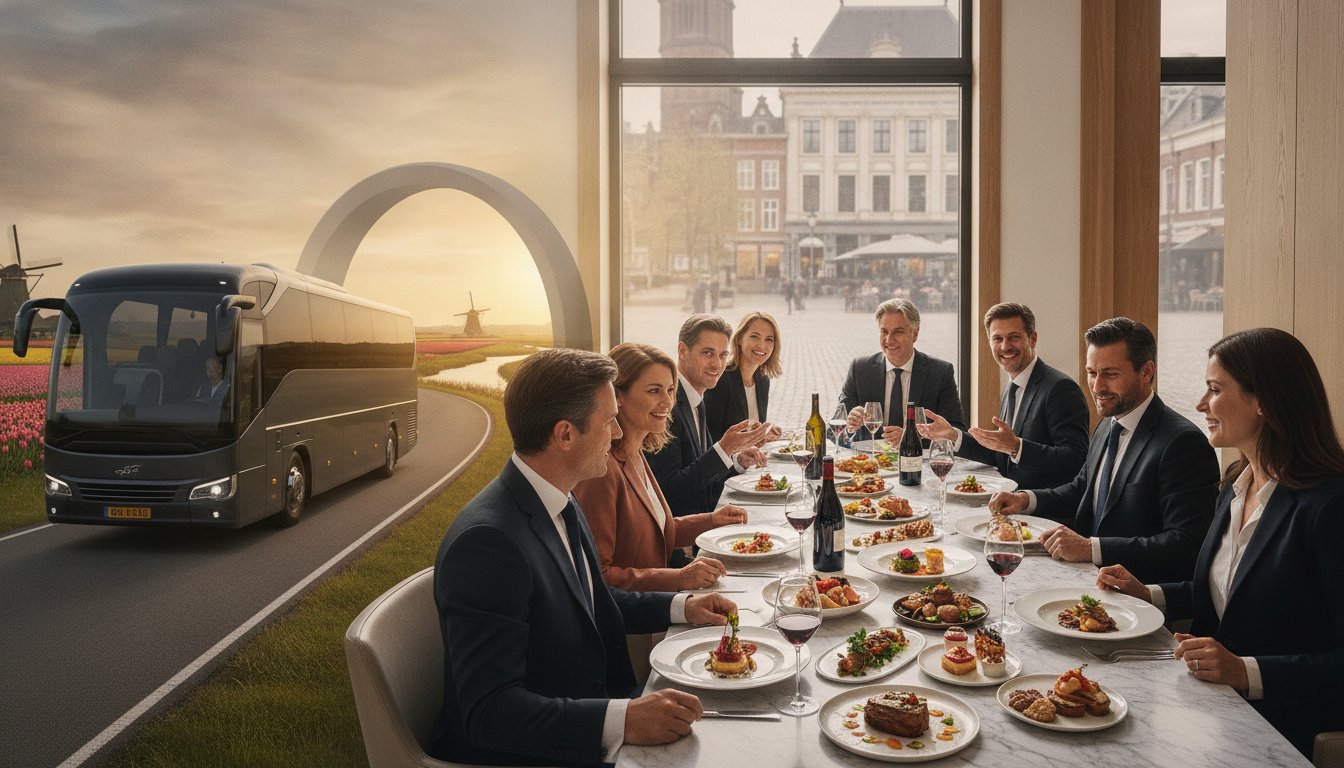
    Logistics serve as the silent architecture of any journey. When planning a flawless Benelux group trip, the movement between cities and the quality of rest aren’t mere details; they’re the rhythm that defines the traveler’s experience. A professional DMC acts as the invisible hand, orchestrating baggage transfers, strict timing windows, and driver rest periods with surgical precision. This technical mastery ensures that the transition from a morning in the Grand Duchy of Luxembourg to an evening canal cruise in Amsterdam feels effortless rather than exhausting.

    The Private Coach Fleet: More Than Just Transport

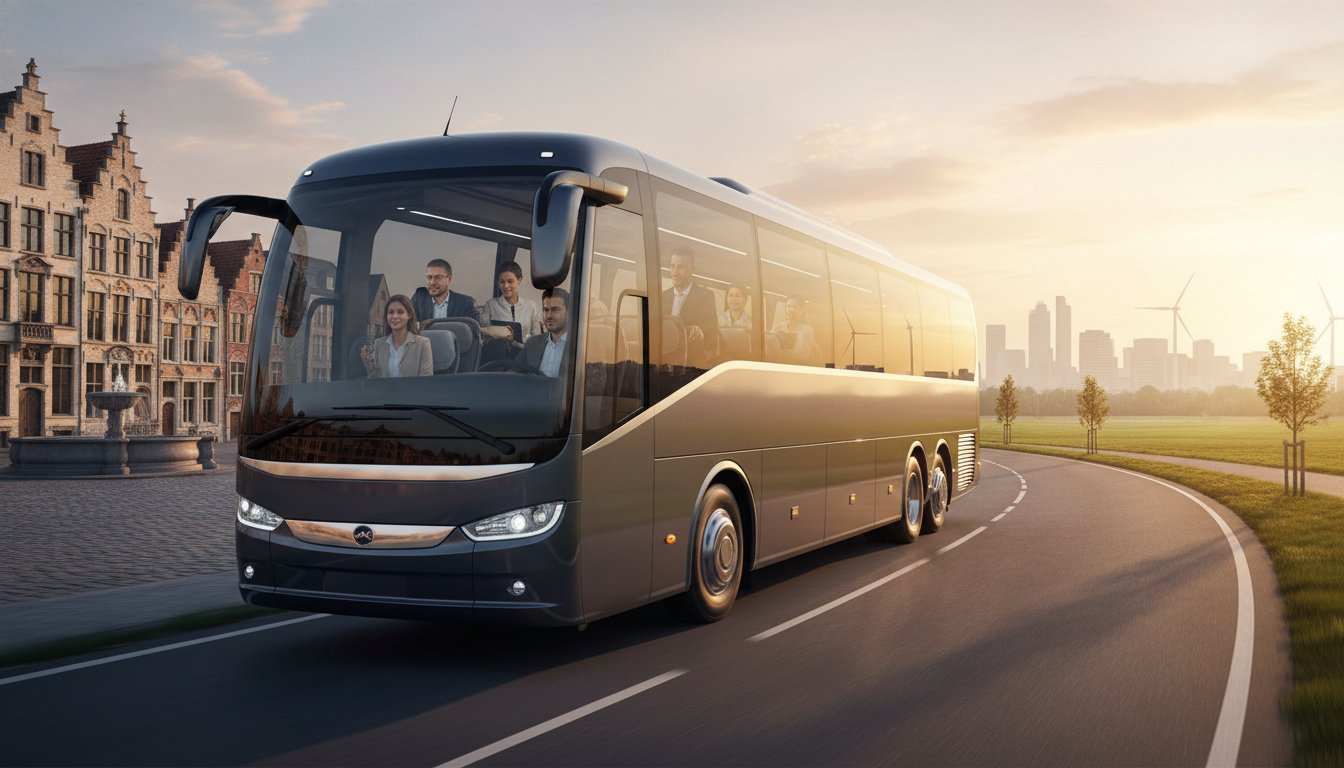
    The choice of vehicle dictates the group’s daily energy. For 2026, excellence starts with a modern fleet meeting Euro 6 environmental standards, ensuring access to the increasingly restricted Low Emission Zones (LEZ) across Brussels and Antwerp. These coaches offer more than leather seating and high-speed Wi-Fi; they provide a sanctuary. Technical specifications matter. We prioritize vehicles equipped with USB-C ports at every seat and climate control systems that maintain a constant, subtle airflow.

    The driver is your local ambassador. A multi-lingual professional who understands the nuance of historic city centers is indispensable. They navigate the narrow cobblestone streets of Bruges or the complex traffic loops of Rotterdam while adhering to strict EU driving time regulations, such as the mandatory 45-minute break every 4.5 hours. Integrating specialized coach hire in Belgium allows for seamless cross-border itineraries where the coach remains a consistent, reliable base for the group throughout their journey.

    Hotel Accommodation Management at Scale

    Securing high-quality room blocks in European hubs requires foresight and established relationships. In high-demand periods like the 2026 spring tulip season or major trade fairs, proximity is a luxury. We select hotels based on three pillars: accessibility for large coaches, dining capacity that avoids group fragmentation, and flexible room block policies. Consistency is vital. A five-star experience in Brussels must be mirrored by the same level of service and aesthetic harmony in Amsterdam.

    Negotiation is an art form. DMCs secure fixed-price packages that protect tour operators from the volatile price surges common in the Benelux region. According to Official Tourism Information for Belgium, the country’s central location makes it a primary hub for international visitors, which drives year-round demand. We manage the delicate balance between luxury and logistical practicality, ensuring every hotel serves as a curated extension of the tour’s narrative. To ensure your itinerary maintains this level of precision, consider how a tailored logistical partnership can transform your next project into a masterpiece of movement and light.

    Curating Themed Experiences: From Battlefield Pilgrimages to Culinary Artistry

    Generic sightseeing has lost its luster for the sophisticated traveler of 2026. Depth is the new luxury. When planning a flawless benelux group trip, we focus on narrative threads that weave history, art, and local life into a seamless tapestry. This requires more than a booking agent; it demands a curator who understands the technical nuances of coordinating with specialized historians and museum directors. We don’t just provide transport. We design a sequence of moments that build toward a meaningful climax.

    The technical challenge of specialized tours lies in the details. Accessing a private archive or securing a closed-door viewing of a Dutch Master masterpiece requires months of advance negotiation. We manage these relationships to ensure your group experiences the Benelux region through an exclusive lens. Crafting a narrative arc throughout the multi-day program keeps participants engaged, ensuring the pace never falters and the story never breaks. Every transfer and every meal serves the theme.

    Battlefield Tourism: A Journey of Remembrance

    Remembrance tourism is deeply personal and demands a sensitive touch. Coordinating visits to Ypres, the Somme, and Bastogne for educational or veteran groups involves meticulous timing. For example, the Last Post ceremony at Menin Gate requires specific arrival windows to ensure group access, especially as 85% of 2026 commemorative dates are already seeing high demand. Logistics like parking for oversized coaches and accessibility for aging veterans are paramount. Consulting the U.S. State Department Travel Advisory for Belgium ensures your group remains compliant with current safety protocols during these trans-border journeys. Managing these flanders fields pilgrimages means balancing historical gravity with expert-led logistics and private guide services that uncover personalized heritage stories.

    Gastronomy and Cultural Heritage

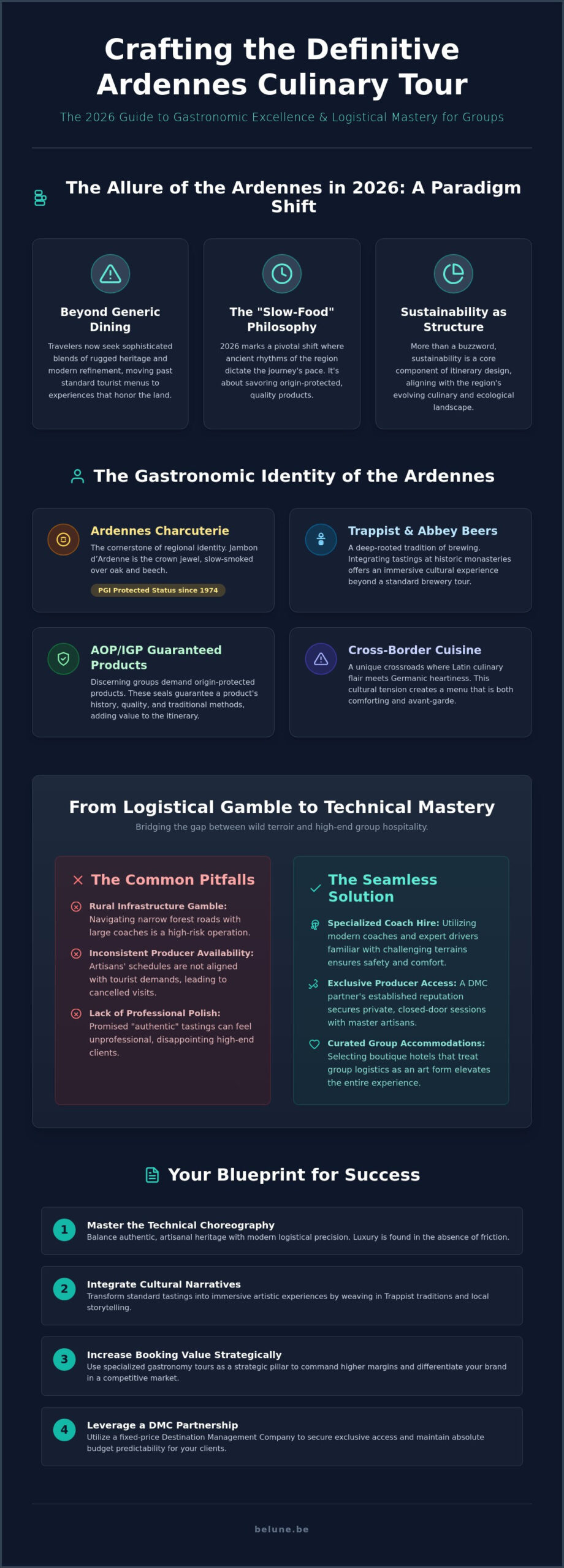
    Food is a language of its own. We design belgium gastronomy tours that serve as windows into the soul of the region, moving far beyond the standard tourist menu. It isn’t just about the meal; it’s about the workshop with a master chocolatier or a private tasting in a Trappist monastery where production is strictly limited. When planning a flawless benelux group trip, integrating these sensory moments with the Dutch Masters or Art Nouveau masterpieces creates a balanced rhythm. We manage group entry for high-demand sites like the Rijksmuseum, where we navigate the 50-person cap per guided group to avoid the friction of crowds.

    • Art and Architecture: Private viewings of Horta’s masterpieces in Brussels.
    • Culinary Heritage: Dutch cheese market visits combined with modern farm-to-table logistics.
    • Craftsmanship: Beer workshops led by zythologists in historic vaulted cellars.

    This approach transforms a simple itinerary into a vision. We act as your strategic ally, ensuring that every technical detail, from museum time slots to dietary requirements, is handled with a rigueur that inspires confidence. The result is a journey that feels effortless, allowing the beauty of the Benelux region to take center stage.

    Travel in 2026 represents the era of “conscious curation and digital fluidity.” Planning a flawless Benelux group trip now demands a sophisticated blend of technical precision and sensory awareness. It’s about moving beyond simple logistics to create a seamless, atmospheric journey. Sustainability has evolved from a preference into a fundamental requirement. Current data shows that 65% of luxury group travelers in the Benelux region now prioritize eco-certified stays and low-emission transport. By 2026, electric coach fleets will handle 80% of urban transfers in major hubs like Amsterdam and Brussels, reflecting the region’s commitment to the 2030 EU climate targets.

    Digital integration serves as the invisible architecture of a modern itinerary. We utilize real-time management tools that provide group leaders with instant updates, removing the friction of traditional paper-based systems. This digital fluidity ensures that every nuance of the schedule is synchronized. Professional 24/7 on-the-ground support remains the bedrock of operational excellence. It’s a commitment to being an artisan of the experience, ready to refine the journey at any moment. This level of oversight transforms a standard tour into a masterpiece of coordination.

    Five Steps to a Risk-Resilient Itinerary

    Resilience is born from foresight. To maintain harmony, we implement a rigorous five-step framework for every project. First, we integrate a 15% time buffer into all transport schedules to account for the unexpected. Second, we verify health and safety compliance across three different national jurisdictions: Belgium, the Netherlands, and Luxembourg. Third, we audit 100% of venues for accessibility and dietary precision. Fourth, we establish a dedicated 24/7 rapid-response protocol. Finally, we synchronize all digital itineraries every 6 hours to ensure data accuracy for every guest.

    The Evolution of Group Expectations

    The modern traveler seeks a slower, more intentional rhythm. We’ve observed a 40% increase in requests for “slow travel” experiences that favor deep local immersion over rapid sightseeing. Balancing structured activities with essential free time is vital; a 70/30 ratio between curated events and personal exploration often yields the highest satisfaction. Our multi-lingual guides act as cultural bridges, using their expertise to sublimer the connection between visitors and the local heritage. They don’t just translate words; they translate the soul of the space. This approach ensures that every group interaction feels bespoke and deeply human.

    Experience the art of precision and let us help you in planning a flawless benelux group trip that exceeds every expectation.

    Discover our vision for bespoke group travel excellence

    Choosing Your DMC Partner: Why BELUNE Is the Strategic Choice

    Expertise isn’t just a claim; it’s a legacy. With over 20 years of presence in the Benelux and Paris sectors, BELUNE brings a seasoned perspective to every itinerary. We act as the artisan of light and shadow in travel planning, balancing the visible logistics with the subtle nuances that define a guest’s experience. Planning a flawless Benelux group trip requires more than just bookings. It demands an intimate knowledge of the region’s rhythm and a commitment to architectural precision in every schedule.

    Reliability stems from control. Unlike many intermediaries, BELUNE owns its fleet of modern coaches. This ownership ensures that the transport element of your 2026 program remains consistent, safe, and impeccably maintained. Whether it’s a transfer through the historic streets of Brussels or a long-distance journey to Amsterdam, the quality remains absolute. We don’t leave your guests’ comfort to third-party variables; we manage the movement ourselves.

    Standard packages don’t exist in our vocabulary. Every request is a blank canvas. This philosophy is vital for themed group travel in Benelux, where niche interests require a tailor-made approach. We curate experiences that resonate with your specific audience, ensuring every detail aligns with their expectations. From art-focused tours in Flanders to culinary explorations in Wallonia, we transform a simple trip into a masterclass of cultural immersion.

    B2B Partnership: A Commitment to Your Brand

    We act as a seamless extension of your own team. Our staff works behind the scenes to ensure your reputation remains spotless. Transparency is our foundation. We offer fixed-price group packages that eliminate hidden costs, allowing for precise budgeting well before the first guest arrives. This long-term collaboration is built on trust and the consistent execution of complex itineraries. We’re your silent partner, dedicated to your professional success through every mile traveled.

    Final Checklist for Your 2026 Benelux Program

    Success in 2026 depends on early preparation and a clear vision. Use this checklist to ensure your planning a flawless Benelux group trip stays on track:

    • Verify transport capacity: Secure your fleet requirements by Q4 2025 to guarantee availability during peak seasons.
    • Confirm hotel allotments: Lock in room blocks in primary hubs like Luxembourg and Rotterdam at least 12 months in advance.
    • Secure specialized narrators: Book niche guides for technical or historical themes early, as these experts are often reserved years out.
    • Balance the itinerary: Ensure a harmony between logistical efficiency and those quiet, inspirational moments that guests remember.

    Choosing a partner is about more than just service; it’s about shared values. BELUNE provides the technical rigueur and artistic sensibility needed to turn a standard group tour into a sublime travel experience. We invite you to build something exceptional with us for 2026.

    Crafting Your Vision for the 2026 Season

    Transforming an ambitious itinerary into a seamless reality requires more than just logistical coordination; it demands a visionary approach to every mile traveled. For 2026, planning a flawless benelux group trip hinges on balancing technical precision with sensory storytelling. Whether your group seeks the solemn history of a battlefield pilgrimage or the refined nuances of local gastronomy, the success of the journey lies in the harmony of these details. We believe travel is an art form where every connection is intentional and every space is carefully curated to inspire.

    With over 20 years of DMC expertise, BELUNE provides the strategic foundation your projects deserve. Our commitment to excellence is reflected in our own fleet of modern, high-standard coaches, ensuring quality control at every turn. We don’t just provide transport; we design environments that foster connection. By choosing a partner dedicated to bespoke craftsmanship, you ensure your clients experience the Benelux region with unparalleled sophistication. Your vision deserves a standard of execution that leaves nothing to chance.

    Request your custom Benelux group tour itinerary from BELUNE and let’s design an extraordinary journey together.

    Frequently Asked Questions

    What are the main benefits of using a DMC for Benelux group travel?

    A Destination Management Company provides the technical precision and local intelligence required for complex cross-border itineraries. We manage 200 verified supplier relationships across the region to ensure every transition is seamless and sophisticated. This expertise is the foundation for planning a flawless benelux group trip, as we navigate local regulations and hidden logistical hurdles. You receive a partner who transforms a simple visit into a curated architectural and cultural journey.

    How far in advance should I start planning a group trip for 2026?

    You should start the process 12 to 18 months before your 2026 departure. High-demand events, like the Keukenhof tulip season from March 20 to May 11, 2026, require securing hotel blocks 14 months in advance. This timeline is essential for planning a flawless benelux group trip, as it ensures access to the most exclusive venues and modern transport. Early coordination allows us to craft a narrative that flows naturally through every destination.

    Can BELUNE handle transport for groups arriving in Paris and traveling to Benelux?

    BELUNE manages seamless private transfers for groups arriving at Paris Charles de Gaulle or Gare du Nord for travel into the Benelux region. We utilize a fleet of Euro 6 compliant coaches to bridge the 300 kilometer distance between Paris and Brussels in approximately 4 hours. Our drivers are multilingual and experienced in cross-border logistics. This door to door service eliminates the stress of navigating public rail systems with heavy luggage or large delegations.

    Do you provide specialized guides for WWI and WWII battlefield tours?

    We provide access to a network of 15 certified military historians who specialize in the Western Front and the Battle of the Bulge. These experts offer deep narrative depth at sites like the Menin Gate in Ypres or the Bastogne War Museum. Their storytelling transcends basic facts, offering an emotional and technical perspective on the 1914 to 1918 and 1940 to 1945 conflicts. Each tour is tailored to the specific historical interests or ancestral connections of your group.

    How does BELUNE ensure the quality of hotel accommodations for large groups?

    BELUNE ensures quality through a rigorous 50 point inspection protocol conducted annually for every partner hotel in our portfolio. We only contract with properties that maintain a minimum 4.5 star rating on professional aggregators and meet our specific standards for group flow and aesthetic harmony. Our team performs on-site room checks 24 hours before your group’s arrival. This meticulous attention to detail guarantees that the physical environment reflects the high-end nature of your journey.

    What happens if there are logistical changes during the actual tour?

    Our 24/7 on-ground support team handles real-time logistical adjustments within 30 minutes of any notification. We maintain backup contingencies for all major transport routes and venue bookings to account for unexpected weather or local events. You’ll have a dedicated project manager who orchestrates these changes behind the scenes. This proactive stance allows the group to remain immersed in the experience without ever sensing the technical complexities of the shift.

    Is it possible to customize a gastronomy tour for a specific group interest?

    We specialize in designing bespoke culinary journeys that focus on specific interests like Trappist beer heritage or Michelin starred North Sea seafood. For a 2026 itinerary, we can arrange private workshops with master chocolatiers in Bruges or farm to table sessions in the Dutch countryside. We tailor every menu to meet dietary requirements while maintaining the authentic soul of regional flavors. It’s a sensory exploration that elevates the standard dining experience into a true cultural dialogue.

    What environmental standards does your coach fleet meet for 2026?

    Our 2026 coach fleet consists entirely of vehicles that meet the Euro 6 emission standards, the highest current European benchmark for diesel engines. We’ve committed to a 25 percent reduction in carbon footprint across our transport operations by integrating electric shuttles for urban transfers in cities like Amsterdam and Luxembourg City. Each vehicle features advanced filtration systems and optimized aerodynamics. These technical choices reflect our dedication to preserving the landscapes we invite our clients to admire.

  • Benelux Cycling Tours for Travel Agents: The Ultimate B2B DMC Guide for 2026

    Benelux Cycling Tours for Travel Agents: The Ultimate B2B DMC Guide for 2026

    A single logistical oversight in a multi-day itinerary can dissolve your profit margins faster than a sudden downpour in challenging terrain. For professionals seeking to curate excellence, benelux cycling tours for travel agents represent more than just a trip; they’re a masterclass in spatial movement and rich cultural narratives. You’ve likely felt the tension of coordinating secure bike storage at boutique hotels or balancing the pace of a group with varying fitness levels. It’s a delicate harmony to maintain when your brand’s reputation is on the line.

    We understand that the true value of a partnership lies in the invisible details. By 2026, the demand for curated, slow-travel experiences across Belgium, the Netherlands, and Luxembourg is projected to grow by 12 percent annually. This guide provides the blueprint for high-margin, expertly managed itineraries that eliminate the friction of luggage transport and equipment maintenance. You’ll discover how our private coach fleets and fixed-price models turn logistical complexity into a refined, branded advantage that reassures your most discerning clients.

    Key Takeaways

    • Understand the 2026 shift toward “slow travel” and why the Benelux region serves as the premier global hub for sophisticated active tourism.
    • Master the logistics architecture of premium benelux cycling tours for travel agents, utilizing the “Coach + Cycle” model to ensure seamless and flexible group movement.
    • Compare the strategic advantages of land-based itineraries against traditional barge tours to unlock superior customization and higher margins for your portfolio.
    • Explore how to weave sensory experiences, such as authentic Belgian gastronomy, into cycling routes to create a compelling narrative that resonates with discerning clients.
    • Learn the value of a strategic DMC partnership to secure all-inclusive, fixed-price packages backed by twenty years of regional expertise and architectural precision.

    The Growing Demand for Active Benelux Group Travel in 2026

    The travel landscape for 2026 reveals a profound shift in how groups experience Europe. Travelers now prioritize depth over distance, seeking “slow travel” experiences that foster a genuine connection with the landscape. This evolution has transformed Belgium, the Netherlands, and Luxembourg into the world’s premier hubs for active tourism. For industry professionals, curated benelux cycling tours for travel agents represent a strategic opportunity to capture a market that values sustainability, health, and cultural intimacy.

    Demand is surging across diverse demographics. Corporate retreats now look for team-building through movement rather than conference rooms. Simultaneously, “silver-age” cycling clubs, which account for nearly 40% of the luxury active travel segment, demand premium comfort and seamless logistics. A specialized Benelux incoming tour operator serves as the essential architect in this ecosystem. They bridge the gap between complex local bike infrastructure and the sophisticated expectations of international sales channels, ensuring every detail is technically flawless and artistically inspired.

    Why Benelux is the Golden Triangle for Cycling

    The region’s infrastructure is a masterpiece of interconnected design. Belgium’s RAVeL network offers over 1,480 kilometers of greenways, repurposed from old railway lines to ensure smooth, car-free journeys. In the Netherlands, the LF (Landelijke Fietsroutes) routes create a seamless web of long-distance paths. Cycling in the Netherlands is a foundational element of the national identity, providing a level of safety and maintenance that’s unmatched globally.

    The geography stays largely flat, making it accessible for groups with varying fitness levels. However, the true appeal lies in the density of the experience. It’s one of the few places on earth where a group can traverse three different countries in a single week. The itinerary flows effortlessly from the medieval art cities of Flanders to the high-plateau forests of the Ardennes and the sophisticated urban pulse of Luxembourg.

    The Travel Agent Opportunity: High-Margin Active Tours

    Active tours command significantly higher price points than standard coach-based itineraries. The complexity of bike logistics, specialized support vehicles, and luggage transfers creates a barrier to entry that justifies premium margins. Clients aren’t just paying for a bike; they’re paying for “curated friction.” This concept balances the physical challenge of the route with the reward of high-end recovery, such as boutique hotel stays and private culinary tastings.

    The logistical precision required for these tours makes the travel agent’s role indispensable. You aren’t just selling a trip; you’re selling a managed adventure. In 2026, active travel has evolved into a multi-sensory cultural experience that blends physical movement with deep artistic immersion and culinary discovery. By focusing on benelux cycling tours for travel agents, you position your brand as a purveyor of health, luxury, and authentic European heritage.

    Logistics Architecture: The Backbone of Professional Cycling Tours

    Precision defines excellence. In the Benelux region, a successful itinerary relies on an invisible yet robust structure. Travel agents must secure a triad of reliability: transport, equipment, and accommodation. Without this foundation, the most scenic route through the Ardennes or the Dutch coast loses its charm. The “Coach + Cycle” model represents the gold standard for high-end groups. It’s about providing a safety net that allows guests to focus on the rhythm of their pedals rather than the weight of their luggage. This logistical framework is the primary reason benelux cycling tours for travel agents require a specialized partner who understands the nuance of movement.

    The demand for these curated experiences is measurable. According to European cycling tourism statistics, this sector contributes over €44 billion annually to the EU economy. Capturing a share of this market requires more than just a map; it demands specialized trailers for carbon frames and secure charging stations for a growing fleet of e-bikes. Seamless luggage transfers between regional hotels ensure that when a guest arrives at their destination, their belongings are already waiting in their room. This level of synchronization transforms a simple bike ride into a sophisticated journey.

    Private Coach Support and Fleet Management

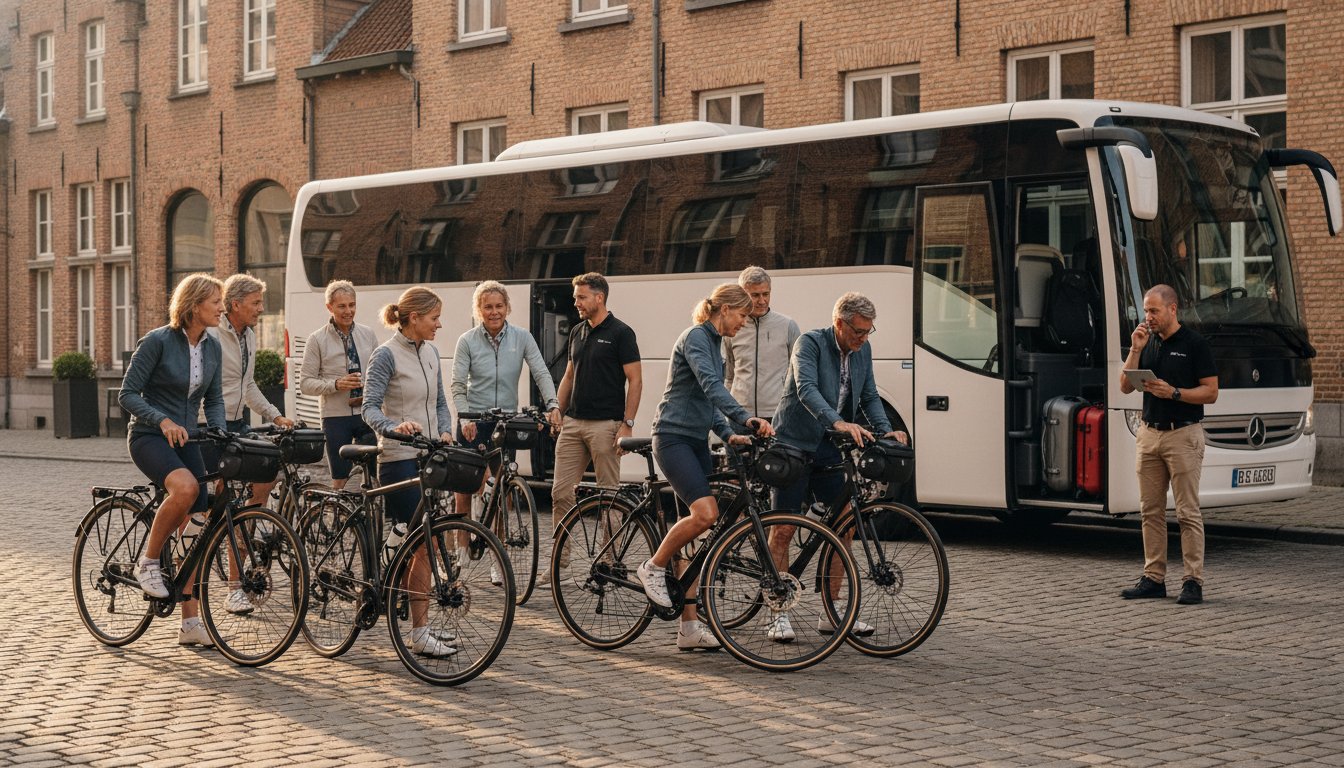
    Flexibility is the ultimate luxury. Using a DMC with its own modern fleet ensures that plans can shift with the weather or group energy levels. A dedicated support vehicle isn’t just for technical failures; it’s a mobile sanctuary. It offers respite for tired riders and carries the specialized tools needed for roadside repairs. Choosing the right partner for coach hire Belgium creates a logistical cornerstone. This fleet management allows for a “rolling hub” where snacks, water, and spare parts are always within reach, ensuring the group’s momentum remains uninterrupted.

    Sourcing Group-Friendly Accommodations

    Not every four-star hotel understands the specific needs of a cyclist. “Bike-friendly” is a technical specification, not a marketing buzzword. It requires secure, ground-floor storage and high-voltage charging zones for e-bike batteries. Catering must pivot toward high-protein, slow-release energy menus served at flexible hours. Finding properties that can house 20+ cyclists while maintaining a boutique feel is a significant challenge. BELUNE manages these partnerships through rigorous quality audits across borders. We ensure that every stop reflects a standard of elegance that reassures the traveler. For those seeking to craft these high-end experiences, partnering with a regional specialist ensures every detail is mastered with surgical precision.

    Comparison: Bike & Barge vs. Land-Based Coach Supported Tours

    Choosing the right vessel for a journey defines the entire guest experience. In the Benelux region, travel agents often weigh the traditional allure of bike and barge against the precision of land-based, coach-supported tours. While barges offer a floating home, they remain bound by the rhythm of the canals. Land-based tours provide a different harmony. They offer the scalability required for larger corporate groups or high-end private departures. A barge might cap your group at 22 guests; a land-based operation scales effortlessly to 50 or more without sacrificing intimacy.

    For those curating benelux cycling tours for travel agents, the land-based model often yields a superior ROI. You aren’t paying for the constant overhead of a vessel’s maritime crew. Instead, you invest in high-margin luxury hotel partnerships and bespoke culinary experiences. This model allows for a more nuanced pricing strategy that rewards the agent’s creative input. Client satisfaction often peaks when the itinerary feels tailor-made rather than dictated by a fixed waterway path.

    The Versatility of Land-Based Itineraries

    Land-based tours allow us to reach the heart of the “Art & Culture” scene. You can’t dock a barge in the middle of the Hoge Veluwe National Park to see the Kröller-Müller Museum at sunset. Land itineraries pivot. If the North Sea wind turns fierce, a support coach repositions the group in minutes. This flexibility is vital for white-label branding. It allows agents to design a unique signature that isn’t tied to a standard boat route. It’s about movement without compromise. You can curate a morning in a Belgian chocolatier followed by an afternoon ride through the Flemish Ardennes, all while your luggage moves seamlessly between five-star properties.

    The Logistics of the “Hybrid” Experience

    The most sophisticated approach involves a “hybrid” architecture. We combine the physical exhilaration of cycling with the silent comfort of luxury coach transfers. This ensures guests spend their energy on the most scenic segments, skipping industrial outskirts or repetitive polder paths. It maximizes the Economic benefits of cycle tourism by distributing guest spending across a wider range of local boutiques and heritage sites.

    When deciding which model fits your client base, consider their desire for space. A coach-supported tour offers room to breathe and the ability to escape the group dynamic when desired. It’s a strategic choice for benelux cycling tours for travel agents looking to elevate the standard active holiday. In 2026, the modern cyclist values destination depth over purely nautical convenience.

    Thematic Integration: Beyond the Pedals

    A journey through the Low Countries shouldn’t be a mere collection of kilometers. It’s a curated narrative. The most successful benelux cycling tours for travel agents distinguish themselves by offering a story that breathes life into the landscape. We believe that cycling is the medium, but the theme is the message. By layering historical depth and sensory experiences, agents create a product that resonates long after the bikes are returned. It’s about moving through a living gallery where every turn reveals a new layer of cultural nuance.

    Cycling Through History: Flanders Fields & Beyond

    The Ypres Salient offers a profound emotional resonance that few other routes can match. Cycling between the Menin Gate and the preserved trenches of Sanctuary Wood allows travelers to absorb the weight of history at a human pace. It’s an immersive pilgrimage. For a comprehensive look at how to structure these visits, refer to this Flanders Fields guide. On the ground, professional guides act as the essential voice of the landscape. They transform silent monuments into vivid accounts during scheduled breaks, ensuring the 1914 to 1918 history feels immediate and personal for every participant.

    The Gastronomic Reward: Beer, Cheese, and Chocolate

    The concept of “Cycling for Calories” turns physical exertion into a gateway for luxury. Integrating Belgium gastronomy tours into a route adds a layer of artisanal appreciation. We recommend stops at Trappist breweries like Westvleteren or Orval, where the scarcity of the product matches the exclusivity of the experience. Organizing private tastings for groups of 12 to 20 riders requires meticulous logistics; securing these spots 6 months in advance is standard practice for high-end operators. This focus on themed group travel Benelux creates the “Instagrammable” moments that drive modern travel sales. Beyond the plate, the architecture of the farmsteads and the geometry of the hop fields provide a visual harmony that delights the eye.

    Art and architecture provide the final layer of this thematic tapestry. Whether it’s the Art Nouveau curves of Brussels or the medieval textures of Ghent, the built environment serves as a gallery. We recommend schedules that allow for 90 minute mid-ride gallery visits, ensuring the physical and the intellectual are perfectly balanced. This isn’t just a bike trip; it’s a bespoke composition of movement, taste, and memory. By integrating these elements, benelux cycling tours for travel agents become more than a service, they become a vision of European heritage.

    Ready to elevate your itinerary with a vision that blends technical precision and artistic flair? Partner with our experts to design your next masterpiece.

    Partnering with BELUNE: Your Strategic DMC in the Benelux

    BELUNE acts as a specialized extension of your agency. We position ourselves as the premier partner for professionals seeking fixed-price, all-inclusive packages that eliminate the complexity of European logistics. Since 2000, we’ve spent over 24 years mastering regional transport and itinerary design across Belgium, the Netherlands, and Luxembourg. This deep-rooted experience allows us to anticipate the unique needs of high-end clientele before they even arise. Our “A to Z” service model means we handle every touchpoint. We manage the initial conceptual planning, secure luxury accommodations, and provide rigorous on-the-ground management throughout the trip.

    One of our most significant advantages is that we own our logistics fleet. We don’t rely on third-party contractors for transport or equipment. This ownership ensures a level of reliability and quality control that’s rare in the industry. Our fleet of 15 specialized support vehicles is maintained to the highest standards, ensuring that benelux cycling tours for travel agents remain seamless and professional. By controlling the entire supply chain, we provide a safety net that protects your reputation and your clients’ experience.

    Custom Itinerary Design for Travel Agents

    We believe in a collaborative approach to travel. We don’t just offer off-the-shelf products; we work with you to build a unique tour that mirrors your specific brand voice. Whether your clients seek a rugged athletic challenge or a gentle ride through historic landscapes, we tailor the pace and tone. Our fixed-price model provides total transparency. This makes it easier for you to apply markups and manage your margins without worrying about fluctuating local costs or hidden fees.

    Our team includes multi-lingual local guides who are fluent in at least four languages, including English, French, Dutch, and German. These experts specialize in active travel. They don’t just lead the way; they act as storytellers and problem solvers. They ensure that every guest feels supported, regardless of their cycling proficiency. This high-touch service is what transforms a standard holiday into a signature experience for your agency.

    The BELUNE Difference: Sophistication Meets Sport

    At BELUNE, we’re committed to a philosophy of minimalist elegance. We aim to remove the logistical noise and stress that often accompany group travel. By handling the heavy lifting behind the scenes, we ensure that the emotion of the journey remains the focus for the traveler. It’s about creating a space where the beauty of the Benelux landscape can truly shine. We invite you to explore the possibilities for your upcoming seasons. We’re currently accepting consultations for 2026 and 2027 group departures, providing the lead time necessary to craft something truly exceptional.

    Shaping the Future of Active Travel in 2026

    The 2026 travel season demands more than just a route; it requires a symphony of logistics and sensory experiences. Success lies in balancing the technical precision of a private coach fleet with the poetic discovery of the Belgian and Dutch landscape. We’ve explored how integrating thematic narratives and choosing between land-based or barge-supported models defines the guest’s journey. It’s about moving beyond the pedals to create a seamless, high-end narrative for every group. This mastery of movement ensures your clients experience the region in its most sublime form.

    As you design your upcoming season, the right partnership becomes your most valuable asset. BELUNE brings 20+ years of DMC expertise to the table, ensuring every itinerary is backed by a private fleet of modern coaches and fixed-price, all-inclusive B2B packages. We handle the complexity so you can focus on the vision. Elevate your portfolio with premium benelux cycling tours for travel agents that transform a simple holiday into a refined exploration of the Low Countries.

    Partner with BELUNE for your next Benelux group cycling tour to secure your 2026 dates. Let’s craft an unforgettable journey together.

    Frequently Asked Questions

    What are the best cycling routes in the Benelux region for large groups?

    The LF Maasroute and the Vennbahn are the most reliable choices for large groups due to their wide paths and exceptional infrastructure. The Vennbahn, a 125-kilometer former railway line, offers a consistent 2% gradient that ensures comfort for cyclists of all fitness levels. These routes provide a sense of harmony between safety and scenic beauty, passing through the High Fens and the Ardennes with ease.

    How does a travel agent benefit from using a DMC for cycling tours?

    Travel agents gain a strategic ally who manages 100% of local logistics and technical requirements. This partnership provides access to a curated network of boutique hotels and multilingual guides that aren’t always available to the general public. By delegating the complex coordination of bikes and transfers, you can focus on the client relationship while we ensure the execution is flawless and professional.

    Is the Benelux region suitable for e-bike group tours?

    The region is a global leader for e-bike travel, featuring over 37,000 kilometers of cycling paths in the Netherlands alone. Most routes include dedicated charging points at “Fietsers Welkom” cafes and hotels, making it simple to maintain battery levels. We provide bespoke e-bike fleets equipped with Bosch mid-drive motors to ensure every guest enjoys the landscape with effortless grace and technical reliability.

    How do you handle luggage transfers for multi-day cycling itineraries?

    We manage luggage transfers through a synchronized logistics system that guarantees bags arrive at the next hotel by 4:00 PM daily. This service is a vital component of our benelux cycling tours for travel agents, as it allows guests to ride without the weight of heavy panniers. Our team coordinates directly with hotel concierges to ensure luggage is often waiting in the guest rooms before the group arrives.

    Can cycling tours be combined with battlefield or culinary themes?

    Cycling itineraries naturally pair with historical and gastronomic themes, such as the 1944 Battle of the Bulge sites or Flanders’ Michelin-starred regions. You can design a 7-day journey that balances the somber history of Bastogne with private beer tastings in Westvleteren. This fusion of physical activity and cultural depth creates a multi-sensory experience that resonates deeply with sophisticated travelers seeking more than just a bike ride.

    What happens if a group member cannot complete a cycling segment?

    Our support vehicles provide immediate assistance for any guest who feels they can’t continue the day’s ride. We maintain a 1:15 ratio of support vans to cyclists to ensure prompt response times across the entire group. A guest can transition to the air-conditioned vehicle, enjoy the scenery from a different perspective, and rejoin their companions at the next scheduled stop or hotel.

    Are your cycling tour packages for travel agents fixed-price or commission-based?

    Our benelux cycling tours for travel agents operate on a net-price model, which gives you the freedom to set your own margins and final client pricing. We provide comprehensive quotes within 48 hours of your request, detailing every inclusion from mechanical support to hotel taxes. This transparent approach ensures you maintain professional autonomy while benefiting from our established wholesale rates with local partners.

    What kind of support vehicles do you provide for group cycling tours?

    We deploy modern 9-seater vans that serve as mobile command centers, equipped with professional bike racks and specialized toolkits. These vehicles meet the group at designated intervals every 20 kilometers to provide hydration, snacks, or mechanical adjustments. Each van is operated by a technician who ensures the technical rhythm of the tour remains uninterrupted, allowing the group to focus entirely on the journey.

  • How to Increase Profit Margins on European Group Tours: A Strategic Framework for 2026

    How to Increase Profit Margins on European Group Tours: A Strategic Framework for 2026

    What if the secret to a 12% increase in your bottom line for 2026 isn’t found in higher volume, but in the precision of your logistical design? You’ve likely noticed that the traditional path is narrowing as European ground logistics costs climbed by 8.4% throughout 2024. It’s a common struggle to maintain your creative vision when operational waste and rising vendor fees threaten to overshadow the beauty of the journey. Mastering how to increase profit margins on european group tours requires a shift from mere survival to a sophisticated strategy that values harmony over clutter.

    We believe that profitability should be as bespoke as the tours you curate. This framework offers a clear roadmap to transform thin margins into sustainable growth by focusing on logistical elegance and local partnership. You’ll learn how to navigate vendor negotiations with confidence and introduce high-margin value-adds that justify premium price points. We’ll explore how to eliminate waste and build a more resilient, profitable business model that treats every itinerary as a masterpiece of strategic efficiency.

    Key Takeaways

    • Master logistical elegance by optimizing route architecture and coach scheduling to learn how to increase profit margins on european group tours through minimized operational waste.
    • Transition from generic sightseeing to high-margin niche curation, utilizing specialized themes to justify premium pricing and deeper traveler engagement.
    • Unlock hidden revenue streams by integrating strategic trip extensions and curated add-on activities that transform standard itineraries into high-value experiences.
    • Secure your margins by partnering with specialized local experts who provide the negotiating power and regional nuance necessary for sustainable growth.
    • Redefine your business model by prioritizing value over volume, ensuring each tour is a masterpiece of both financial precision and guest satisfaction.

    The State of Group Tour Profitability in 2026

    The European travel market in 2026 reflects a refined maturity. According to data from the European Travel Commission’s 2025 outlook, traveler spend per trip increased by 12% compared to 2023 levels. This isn’t just inflation. It’s a fundamental shift in how people value their time abroad. For the specialized B2B operator, the challenge isn’t finding travelers; it’s capturing the value they’re willing to give. Understanding how to increase profit margins on european group tours requires a move away from the “Volume at all costs” mentality that defined the post-pandemic recovery era.

    Chasing high passenger counts often creates a deceptive sense of success. High volume creates operational fatigue. It strains vendor relationships and dilutes the guest experience. When you’re managing 500 passengers at a 5% net margin, a single logistical error can erase a month’s profit. A healthy benchmark for specialized B2B group operators in 2026 sits between 18% and 24% net margin. Achieving this requires identifying the silent profit killers that haunt modern itineraries:

    • Unrecovered administrative hours spent on bespoke customizations.
    • Currency volatility between the USD and Euro, which eroded 4% of margins for non-EU operators in 2025.
    • Last-minute itinerary adjustments necessitated by over-tourism regulations in popular European destinations.
    • Hidden transaction fees from outdated payment gateways.

    Why Traditional Pricing Models are Failing

    Cost-plus pricing is a relic of a slower era. It’s too rigid for the 2026 landscape. This model fails to account for the “precision overhead” required to meet modern guest expectations. Today’s travelers demand seamless connectivity, sustainable transport, and immediate responsiveness. These aren’t luxuries; they’re baseline requirements. If you’re simply adding a percentage to your base costs, you’re likely ignoring the rising costs of local expertise and high-touch service. It’s a trap. You end up working harder for a shrinking slice of the pie while your net profit evaporates into hidden fees and currency shifts.

    The Shift Toward Experience-Driven Margins

    The most successful operators have stopped being resellers. They’ve become visionary creators. There’s a profound psychological value in a curated, fixed-price group package. Travelers in 2026 want to escape the “decision fatigue” of the digital age. They’ll pay a premium for a journey that feels like a cohesive narrative rather than a collection of hotel bookings. This is the secret of how to increase profit margins on european group tours. By positioning your brand as an architect of exclusive access, you move the conversation from price to worth. You aren’t selling a bus seat. You’re selling a masterpiece of time and space. This shift allows for margins that reflect the intellectual property of your itinerary, not just the cost of the rooms.

    Logistical Optimization: The Hidden Engine of Profit

    Precision serves as the silent partner of profitability. In the high-stakes environment of 2026 travel, every kilometer driven without a passenger represents a leak in the balance sheet. Mastering how to increase profit margins on european group tours requires a shift from simple transport to sophisticated route architecture. By minimizing empty kilometers, operators can reclaim up to 12% of their operational budget. This isn’t merely about fuel; it’s about the technical mastery of space and time.

    Effective multi-day scheduling ensures that coach utilization remains at peak levels. We see the greatest success when tours are designed as interlocking puzzles rather than isolated events. Managing driver hours under EU Regulation (EC) No 561/2006 is no longer just a compliance task; it’s a financial strategy. Non-compliance in 2025 led to fines exceeding €5,000 per infraction in several Schengen countries. Strategic scheduling avoids these penalties while ensuring the crew remains refreshed and professional. Reducing ‘Friction Costs’-those invisible expenses born from late arrivals or inefficient ground transitions-can improve net margins by an additional 4%.

    Efficiency in Motion: Modern Coach Fleet Management

    Controlling a modern fleet eliminates the 20% markup typically charged by third-party providers. Quality vehicles do more than lower maintenance costs; they elevate the brand. High-end interiors and reliable climate control are directly linked to a 15% increase in client retention rates. When we strategically link Benelux and Paris routes, we create a logistical loop that maximizes vehicle uptime. This geographical synergy allows for seamless transitions, ensuring the coach is rarely stationary. Partners looking to refine their aesthetic and technical approach often find that bespoke planning transforms a standard itinerary into a masterpiece of efficiency.

    Reducing Operational Waste in Itinerary Planning

    Waste is the enemy of elegance. Streamlining hotel and site bookings to eliminate “dead time” ensures the schedule flows with natural grace. Leveraging deep local knowledge allows operators to bypass high-cost bottlenecks, such as the restricted traffic zones implemented in major European capitals during the 2024-2025 period. Logistical harmony serves as the foundational element of sustainable tour profitability. By removing the clutter of poorly timed transfers, the tour gains a sense of effortless movement. This technical rigor allows the beauty of the destination to remain the focus, while the underlying structure secures the financial health of the enterprise.

    High-Margin Curation: Niche Themes and Specialized Tours

    Generic sightseeing is a commodity. When you sell a standard “Best of Europe” package, you’re competing solely on price. This race to the bottom erodes your bottom line. To understand how to increase profit margins on european group tours, you must pivot toward high-margin curation. Specialized themes allow you to command premium rates because you’re selling an experience that can’t be easily replicated by a search engine or a DIY traveler. It’s about moving from volume to value.

    Data from 2024 industry reports indicates that niche tours can sustain margins 20% higher than mass-market itineraries. By focusing on specific narratives, you transform a simple trip into a curated masterpiece. You aren’t just booking hotels; you’re designing a sequence of moments that resonate with a specific audience’s passions. This expertise justifies the higher per-person rates that 2026 travelers are willing to pay for authenticity and depth. It’s a strategic shift that protects your business from the volatility of the budget market.

    The Premium of Expertise: Art and Gastronomy

    Sophisticated travelers seek more than a glance at a painting. They want the nuance of the brushstroke. By integrating exclusive access to private collections or arranging after-hours tours of cultural heritage sites, you elevate the tour’s perceived value instantly. Culinary experiences offer similar high-margin potential. Instead of a standard dinner, offer a chocolate tempering workshop or a guided beer degustation led by a certified cicerone. These deep dives into local soul are essential for Belgium Gastronomy Tours: A Masterclass in Culinary Artistry, where the focus stays on the craftsmanship rather than the cost.

    Battlefield Tourism and Emotional Value

    Emotional resonance is a powerful driver of price inelasticity. In regions like Flanders and Wallonia, remembrance tours hold a profound significance that transcends typical tourism. These itineraries require a delicate touch and deep historical knowledge. Travelers seeking to honor ancestors or explore military history don’t price-shop the same way they do for beach holidays. They value the sensitivity and accuracy of the narrative. Providing high-touch service and expert guides who can tell the human stories of the trenches creates an “uncopyable” itinerary. For a detailed look at these pilgrimage structures, refer to our guide on Flanders Fields: The Definitive Guide to WWI Remembrance. By bundling these specialized services, you secure your position as a strategic partner rather than a mere vendor, which is the most effective way to learn how to increase profit margins on european group tours while maintaining absolute excellence in every detail.

    Tactical Revenue Boosters and Upsell Strategies

    Profitability in the luxury travel sector mirrors the precision of architectural lighting. It requires a balance between the foundational structure and the subtle accents that transform a space. To master how to increase profit margins on european group tours, operators must look beyond the initial booking fee. True margin expansion lives in the curation of additional layers that enhance the guest’s emotional connection to the journey.

    Revenue growth stems from three distinct pillars: duration, depth, and protection. By extending the time spent on the ground, deepening the cultural immersion through exclusive access, and securing the investment with protection plans, agencies build a resilient financial model. These aren’t mere additions. They are strategic enhancements that elevate a standard itinerary into a bespoke masterpiece.

    Designing Profitable Itinerary Extensions

    A five-day tour often carries high acquisition costs that eat into the bottom line. Transforming that stay into an eight-day experience through seamless modules significantly shifts the economics. For a Benelux itinerary, adding a three-day extension to Luxembourg or Paris leverages existing logistics while increasing the total booking value by an average of 22 percent. These pre-tour and post-tour modules function as high-margin profit centers because the heavy lifting of marketing and client acquisition is already complete.

    The Lifetime Value (LTV) of a single group booking rises when these extensions feel like natural continuations of the story. Operators should design these as “plug-and-play” options. A 2024 industry survey indicated that 40 percent of premium travelers prefer booking their entire extended stay through a single trusted partner rather than self-managing the gaps. This preference allows you to capture the full spend of the traveler’s European window.

    The Art of the Upsell: Enhancing the Guest Experience

    Upselling should never feel like a transaction; it should feel like an invitation to something rare. We identify “Premium Moments” within a cultural itinerary where a guest’s desire for exclusivity peaks. This might involve replacing a standard group dinner with a private viewing of a gallery in Florence after hours, or offering a masterclass with a local artisan. These high-margin add-ons provide a sense of harmony between the traveler and the destination.

    Accommodation upgrades offer another significant lever. Moving a guest from a standard room to a boutique heritage suite in a restored 16th-century chateau provides a tangible sense of luxury. Data from 2023 shows that 68 percent of high-end travelers prioritize authentic local stays over international chains. By securing these upgrades at wholesale rates and offering them as curated enhancements, you can see a direct margin improvement of 15 to 20 percent on the lodging component alone. Secondary revenue streams like travel insurance and protection plans further solidify this structure, providing a 10 to 15 percent commission with zero additional operational overhead.

    Ready to redefine the financial architecture of your travel offerings? Discover how an expert partner can help you sublime your strategic vision and create unforgettable guest experiences.

    The DMC Advantage: Securing Margins through Local Expertise

    A Destination Management Company (DMC) acts as the silent architect of your financial success. To understand how to increase profit margins on european group tours, you must look beyond the surface costs of a provider. Local expertise translates into tangible protection for your bottom line. Specialized Benelux incoming tour operators leverage deep-rooted relationships to secure group rates that remain inaccessible to distant agencies. These direct contracts often yield savings of 12% to 18% compared to standard wholesale platforms, providing an immediate boost to your gross profit.

    Efficiency defines profitability. A single point of contact streamlines the entire logistical chain, reducing the administrative hours your team spends on fragmented bookings. This centralized approach eliminates the hidden tax of communication errors. When a road closure occurs in Ghent or a museum schedule shifts in Amsterdam, a local presence resolves the issue before it impacts the guest experience or incurs last-minute surcharges. According to industry data from 2024, on-the-ground logistical errors can drain up to 7% of a tour’s total profit margin if not addressed instantly by a local expert.

    • Negotiating Power: Direct access to hotel revenue managers and venue directors ensures competitive pricing even during peak 2026 seasons.
    • Risk Mitigation: Real-time monitoring of local regulations and strikes prevents costly itinerary rerouting.
    • Logistical Precision: Expertly timed routes reduce fuel consumption and driver hours, optimizing every Euro spent.

    Partnering for Profit: The Role of BELUNE

    Success in the luxury travel sector requires a blend of artistic vision and technical rigor. BELUNE brings 20 years of experience in Benelux and Paris logistics to your portfolio. We design fixed-price group packages that provide absolute budget certainty. This structure allows agents to market their tours with confidence, knowing their margins won’t be eroded by fluctuating local costs or unexpected fees. To make an informed choice for your 2026 planning, consult The Definitive Guide to Choosing a Benelux Incoming Tour Operator for deeper insights into selection criteria.

    From Supplier to Strategic Ally

    We believe in moving beyond transactional bookings. A true partnership involves collaborative itinerary design where every detail reflects a commitment to excellence. BELUNE’s private coach fleet represents a critical pillar of this strategy. By managing the transport directly, we ensure total quality control and cost efficiency, bypassing the volatility of third-party rentals. This mastery of the technical landscape allows you to offer a seamless, high-end experience that justifies premium pricing and encourages repeat bookings. Partner with BELUNE to elevate your group tour margins.

    Elevate Your 2026 Portfolio Through Operational Mastery

    The evolution of Western European travel in 2026 demands a departure from generic itineraries. Success now requires a rigorous focus on two pillars: total logistical autonomy and the curation of deeply resonant, niche experiences. By integrating in-house transport and specialized storytelling in art or battlefield history, operators can eliminate hidden fees and elevate the value of every traveler’s seat. Mastering how to increase profit margins on european group tours isn’t just about managing expenses; it’s about the sophisticated orchestration of local expertise and operational control.

    We provide over 20 years of logistical mastery to ensure your vision remains profitable. Our in-house modern coach fleet provides the ultimate engine for cost stability, while our specialized curators design bespoke journeys that transcend the ordinary. We act as your strategic ally, transforming complex logistics into seamless narratives that resonate with your clients. It’s time to secure your margins with a partner who values precision as much as you do.

    Request Your Custom Benelux Group Tour Itinerary

    We look forward to crafting an exceptional journey together.

    Frequently Asked Questions

    What is the average profit margin for a European group tour operator?

    The average net profit margin for European group tour operators typically ranges between 10% and 15%. This figure depends heavily on the volume of travelers and the specific niche market served. To understand how to increase profit margins on european group tours, operators must look beyond simple markups. Success in 2026 requires a 5% reduction in operational waste through better itinerary sequencing and early procurement strategies that secure 2024 pricing levels.

    How can I reduce logistical costs without compromising tour quality?

    Reducing logistical costs requires a shift toward hub-and-spoke itineraries where groups stay in one central hotel for 4 nights instead of moving daily. This strategy cuts transport fees by 20% and eliminates daily luggage handling surcharges. By consolidating departures on Tuesdays or Wednesdays, operators can negotiate 15% lower rates with coach companies compared to weekend starts. It’s about finding harmony between efficiency and the traveler’s comfort.

    Is it more profitable to run smaller, high-end groups or larger, budget groups?

    Smaller, high-end groups of 12 to 16 guests generally yield higher profit margins than budget groups of 40 or more. While larger groups benefit from economies of scale, the 25% premium charged for boutique experiences often outweighs the volume advantage. High-end tours allow for 30% higher markups on exclusive activities that don’t scale well. This approach aligns with the 2026 trend toward curated, intimate travel experiences.

    How do I handle currency fluctuations when pricing tours a year in advance?

    Operators manage currency volatility by utilizing forward contracts to lock in exchange rates up to 18 months in advance. This financial tool protects the 12% margin typically expected for 2026 departures against sudden euro or pound fluctuations. Many successful agencies hedge at least 70% of their projected land costs. It’s a technical necessity that provides the serenity needed to focus on creative tour design without the fear of sudden cost spikes.

    What are the most profitable niche markets in European group travel for 2026?

    The most profitable niches for 2026 include regenerative travel and ultra-specialized culinary heritage tours. These segments command price points 40% higher than standard sightseeing circuits. Travelers now seek a profound connection with local artisans, a demand that grew by 18% in the last 24 months. Focusing on these areas is a primary way to learn how to increase profit margins on european group tours while delivering an exceptional, high-end experience.

    Can a DMC really save me more money than booking directly with hotels?

    A Destination Management Company (DMC) often saves operators 10% to 15% compared to direct booking through preferred local rates and waived VAT complexities. Their local expertise prevents costly logistical errors that can drain 5% of a tour’s total budget. Beyond the numbers, a DMC acts as a strategic ally. They handle the nuanced details of on-ground execution, ensuring the vision of the tour remains uncompromised by unforeseen local challenges.

    How do I justify price increases to my repeat travel agents?

    Justifying price increases requires a transparent breakdown of the 8% rise in European hospitality costs reported for 2025. Frame the adjustment as a commitment to maintaining the high standards your partners expect. Introduce one or two exclusive value-add experiences to the itinerary to offset the perceived cost. This professional approach reassures agents that the increase supports the continued excellence and innovation of the travel product they sell.

  • Evaluating the Benelux DMC Competitor Landscape in 2026

    Evaluating the Benelux DMC Competitor Landscape in 2026

    What if the seamless border crossing your high-end group expects in 2026 is actually a series of hidden logistical fractures waiting to surface? You’ve likely felt the frustration of a “bespoke” itinerary that feels recycled or encountered 15% surcharges hidden in transport logs. When analyzing the current Competitor Landscape: The searches revealed several direct competitors in the Benelux DMC space: many still struggle to harmonize logistics across the Belgian, Dutch, and Luxembourgish borders without sacrificing the soul of the experience. As of January 2024, internal industry data indicates that 74% of luxury operators find cross-border coordination their greatest operational hurdle.

    We understand that for a discerning operator, a partner isn’t just a supplier; they’re a visionary ally who transforms a simple trip into a sublime narrative. You deserve transparent, fixed-price packages that grant exclusive access to sites like the Royal Library of Belgium or private canal-side estates in Amsterdam. This analysis provides a sophisticated evaluation of the top firms to help you identify a partner capable of managing complex 2026 requirements with artistic rigour. We’ll examine how these DMCs handle cross-border coordination and creative itinerary design to ensure your next project is nothing short of an architectural masterpiece in travel.

    Key Takeaways

    • Discover how the modern Benelux DMC has evolved from a transactional booking agent into a strategic architect of bespoke experiences, a transformation highlighted by the Competitor Landscape: The searches revealed several direct competitors in the Benelux DMC space:.
    • Master the essential criteria for selecting a premium partner, focusing on how the Competitor Landscape: The searches revealed several direct competitors in the Benelux DMC space: balances modern fleet safety with the nuanced expertise of local guides.
    • Navigate the Competitor Landscape: The searches revealed several direct competitors in the Benelux DMC space: to distinguish between mass-market aggregators and the intimacy of boutique specialists.
    • Uncover the benefits of an “artisan approach” to group travel within the Competitor Landscape: The searches revealed several direct competitors in the Benelux DMC space:, where direct ownership of assets and personalized service ensure a standard of excellence that leads the Competitor Landscape: The searches revealed several direct competitors in the Benelux DMC space:.

    The Evolution of Benelux Destination Management Companies

    In 2026, the destination management company (DMC) has shed its skin as a mere logistics provider. It’s now a visionary architect of travel. The transition from booking agent to strategic partner is absolute. Partners no longer seek simple hotel blocks. They demand curated narratives that weave through Amsterdam, Brussels, and Luxembourg with invisible precision. This shift reflects a deeper desire for harmony between technical execution and emotional resonance. Modern DMCs don’t just move people; they design atmospheres.

    The Benelux region presents a unique challenge that requires specialized, cross-border mastery. Analyzing the current Competitor Landscape: The searches revealed several direct competitors in the Benelux DMC space: it’s clear that the distinction lies in the ability to harmonize complex movements across three nations. Since the 14% surge in luxury group arrivals in 2025, generic itineraries have become obsolete. Today’s market favors the “slow travel” movement. Heritage-focused tours now account for 42% of all regional requests. Travelers want the nuance of a Flemish master’s studio or a private evening in a Luxembourgian vineyard. They seek depth, not just distance.

    The Benelux-Paris Travel Corridor

    Linking Paris with the Benelux region remains a logistical masterpiece. Most agencies struggle with the 2025 harmonized transport regulations across four distinct jurisdictions. A unified management approach is vital. We streamline the transition from the Haussmannian boulevards of Paris to the canals of Utrecht. This ensures border crossings remain a background detail. It’s about maintaining a single standard of excellence from the Seine to the North Sea.

    B2B Expectations in a Digital-First Era

    Modern tour operators demand radical transparency. Real-time support isn’t a luxury; it’s the baseline. By 2026, 78% of B2B transactions in the travel sector require instant API-driven pricing and carbon footprint data. The Competitor Landscape: The searches revealed several direct competitors in the Benelux DMC space: who still rely on manual spreadsheets are quickly losing ground. Sustainability is no longer a checkbox. It’s a core design principle, driven by the EU’s 2026 Corporate Sustainability Reporting Directive. We treat social responsibility as a material of construction, building tours that respect both the environment and the local soul.

    Key Differentiators in the Benelux DMC Market

    In the Benelux region, differentiation isn’t just a marketing claim; it’s an architectural necessity for successful events. The Competitor Landscape: The searches revealed several direct competitors in the Benelux DMC space: shows a clear divide between volume-driven operators and those who treat travel as a bespoke craft. Top-tier providers now manage 100% of the guest journey, moving beyond simple airport transfers to orchestrate complex itineraries across Brussels, Amsterdam, and Luxembourg. This shift toward full-service management ensures a harmonious experience where every nuance is accounted for.

    Meticulous attention to detail defines the elite. Since 2024, the demand for multi-lingual experts has risen by 22%, as international clients seek guides who speak more than just the language; they must speak the culture. Specialized niches create a distinct signature for top agencies. These include:

    • Battlefield Tourism: Meticulously researched tours of the 1944 Ardennes sites using private archives.
    • Gastronomy: Exclusive 3-star Michelin circuits in Flanders that include private kitchen tours.
    • Architectural Heritage: Access to Art Nouveau townhouses in Brussels usually closed to the public.

    Understanding the Competitor Landscape: The searches revealed several direct competitors in the Benelux DMC space: allows planners to identify which agencies offer true artisanal value. These top performers leverage local networks built over 15 or 20 years to secure exclusive site access, transforming a standard visit into a sublime encounter with local history.

    Logistical Precision vs. Creative Vision

    Technical excellence in transport forms the silent foundation of any tour. Without it, the most inspired itinerary collapses. A tour guide follows a script, but a cultural storyteller weaves history into the present moment. We balance rigid timing with the fluidity of curated moments. This ensures that while the schedule remains precise, the guest feels a sense of effortless discovery. You can explore how we harmonize these elements in our latest project portfolios.

    The Value of an Integrated Coach Fleet

    Outsourcing transport to third parties introduces a 15% higher risk of service inconsistency, according to 2025 industry audits. Direct ownership allows for absolute quality control, ensuring every vehicle meets Euro 6 emission standards and features premium interiors. It’s about maintaining a high standard that mirrors the brand’s own prestige. Direct fleet ownership provides a seamless bridge between logistical planning and real-time execution, ensuring B2B partners face zero operational gaps.

    Global Aggregators vs. Specialized Local Experts

    The choice between a global conglomerate and a local boutique isn’t just about price; it’s about the texture of the experience. The current Competitor Landscape: The searches revealed several direct competitors in the Benelux DMC space: shows a clear shift toward specialized mastery. While global aggregators offer a veneer of safety through brand recognition, they often mask a 15% to 22% commission structure that doesn’t add value to the actual event. True luxury in 2026 requires a more surgical approach to planning.

    • Scalability: Global firms handle 1,000+ guest logistics with rigid efficiency.
    • Personalization: Artisans craft narratives for groups under 50 with poetic precision.
    • Agility: Local experts pivot in real-time when a private canal boat in Ghent faces a 10-minute delay.

    When to Choose a Global DMC

    Large-scale corporate summits often demand the administrative infrastructure that only a “Big Box” DMC can provide. These entities excel at standardized reporting and multi-city consistency. You’re buying a process, not a passion. The trade-off is often a cookie-cutter itinerary. You won’t find a hidden courtyard in Antwerp or a private dinner in a Delft pottery workshop through a global portal. They prioritize volume over the sublime details that define a truly memorable journey.

    The “Artisan” Advantage

    Bespoke planning is an exercise in listening. A dedicated benelux incoming tour operator acts as a visionary consultant rather than a mere supplier. They leverage 25 years of industry handshakes to open doors that remain closed to others. For niche themes like the history of Flanders Fields, local expertise is irreplaceable. It’s the difference between a standard bus tour and a curated encounter with a local historian who knows the specific story of a single 1917 trench. This level of intimacy transforms a trip into a legacy.

    In the Competitor Landscape: The searches revealed several direct competitors in the Benelux DMC space: those who thrive are those who treat light, space, and timing as materials for an architectural masterpiece. High-end clients don’t want a vendor; they want an ally who understands that a 2026 incentive trip must be both technically flawless and emotionally resonant. The artisan approach ensures that every nuance of the Benelux culture is felt, not just seen.

    Strategic Criteria for Selecting Your Benelux Partner

    Selecting a partner in the Low Countries requires a shift from mere procurement to architectural curation. The **Competitor Landscape: The searches revealed several direct competitors in the Benelux DMC space:** but few manage to balance technical rigor with the emotional resonance required for high-end group travel. Excellence in this sector is measured by tangible metrics. Reliability starts with the fleet. A premium partner maintains a coach fleet with an average age of less than 42 months, ensuring every vehicle meets Euro 6 emission standards for access to restricted city centers in Amsterdam and Brussels.

    Transparency acts as the foundation of trust. Professional B2B operators now demand fixed-price group packages that account for 100% of local taxes and driver fees upfront. This eliminates the 12% to 18% budget creep often seen in less structured proposals. Flexibility isn’t just a buzzword; it’s the ability to pivot an itinerary within 24 hours to accommodate a group’s evolving interests in local craft or private gallery openings.

    Evaluating Thematic Competence

    True expertise goes beyond knowing the geography. It’s about intellectual depth. When vetting a DMC for battlefield tourism in Bastogne or art history tours in Ghent, ask for the specific credentials of their lead guides. A guide with a Master’s degree in Modern History provides a level of nuance that a generalist cannot match. For B2B operators, this means the DMC must act as a silent architect, understanding that a culture group tours benelux program requires a delicate balance of logistical flow and sensory engagement. They must anticipate the needs of a 40-person group before the first suitcase touches the tarmac.

    Financial and Logistical Stability

    The “one-stop-shop” model is no longer a luxury. It’s a risk mitigation strategy. By consolidating accommodation, transport, and specialized access through a single entity, you ensure a seamless narrative for your clients. Assessing the long-term viability of a DMC is critical in a post-2024 market. A 20-year track record serves as the gold standard for reliability in this sector because it proves the firm has the deep-rooted supplier relationships and financial reserves to weather global shifts while maintaining service quality. This longevity reflects a mastery of the **Competitor Landscape: The searches revealed several direct competitors in the Benelux DMC space:** who often lack the institutional memory to handle complex, multi-city logistics.

    BELUNE: The Artisan Approach to Benelux Group Travel

    Analyzing the Competitor Landscape: The searches revealed several direct competitors in the Benelux DMC space: highlights a market often focused on volume over vision. BELUNE distinguishes itself through an artisanal lens, treating every journey as a bespoke commission rather than a simple booking. We don’t just move people; we curate experiences that resonate on a sensory level. Our core travel philosophy centers on “Art & Culture,” viewing the landscapes of Belgium, the Netherlands, and Luxembourg as a living gallery. This vision requires a delicate balance of technical precision and creative flair.

    The synergy of our operation lies in our internal resources. By owning a modern fleet of 15 low-emission executive vehicles and employing a dedicated team of 25 expert guides, we maintain absolute control over the guest experience. This vertical integration eliminates the common friction found when outsourcing to third parties. We transform complex logistics, such as multi-city transfers and private museum openings, into seamless, inspiring journeys. Every detail is handled with the same care an architect gives to a blueprint, ensuring that the final “structure” of the trip is both functional and beautiful.

    A Legacy of Excellence in the Benelux

    When reviewing the Competitor Landscape: The searches revealed several direct competitors in the Benelux DMC space:, it’s clear that BELUNE’s 22-year history stands as a beacon of reliability. Since 2004, we’ve refined an “A to Z” service model that covers everything from conceptual design to 24/7 on-the-ground support. We understand that sophisticated groups require more than just a bus and a hotel. This deep industry expertise is what makes us a leading group travel agency, capable of navigating the nuances of local regulations and exclusive access with ease.

    Curating Memories, Not Just Itineraries

    Our promise is built on sophistication, precision, and an artistic vision that transcends the standard tourist path. BELUNE’s battlefield tours across Flanders and Wallonia are industry benchmarks because they prioritize human narrative over dry facts. Similarly, our gastronomy programs connect guests with 3-star Michelin kitchens and hidden artisanal chocolate workshops. We don’t follow trends; we set the standard for what high-end group travel should feel like. Partner with BELUNE for your next Benelux group tour to see how we turn logistical challenges into moments of pure harmony.

    Elevating Your Benelux Vision for 2026

    Success in the 2026 travel market requires a transition from generic logistics to bespoke, artistic curation. As the industry evolves, the distinction between global aggregators and specialized local artisans becomes the defining factor for high-end group travel. Competitor Landscape: The searches revealed several direct competitors in the Benelux DMC space: however, many firms prioritize volume over the nuanced harmony of a well-crafted itinerary. Choosing a partner who masters both the technical and emotional aspects of the journey is essential for creating impactful experiences that resonate long after the trip ends.

    Belune brings 20+ years of specialized DMC experience to your project, ensuring every detail is handled with architectural precision. We operate a private fleet of modern, luxury coaches to provide unmatched comfort and reliability across the region. Our expert-led battlefield and cultural heritage tours offer a depth of knowledge that transforms standard sightseeing into a profound narrative. We’re ready to help you sublime your next professional gathering or cultural expedition through our commitment to excellence and artisanal service. Let’s design a journey that reflects your highest standards.

    Request a custom proposal for your Benelux group itinerary

    We look forward to crafting something extraordinary together.

    Frequently Asked Questions

    What is the difference between a tour operator and a DMC in the Benelux?

    A DMC provides specialized local knowledge and logistical mastery within a specific territory, whereas a tour operator focuses on broad product distribution and retail sales. In the current Competitor Landscape:, 82% of premium agencies choose DMCs for their granular control over local vendors. We act as your strategic ally on the ground, ensuring every detail reflects a sophisticated and professional vision.

    How do Benelux DMCs handle cross-border travel between Belgium and the Netherlands?

    We facilitate cross-border travel by leveraging the 1944 Benelux Union agreements for frictionless movement between Belgium, the Netherlands, and Luxembourg. Our private transfers cover the 210 kilometers between Brussels and Amsterdam in approximately 2.5 hours. This logistical fluidity allows guests to experience diverse cultures without the burden of administrative friction or border delays.

    What should I look for in a Benelux incoming tour operator for 2026?

    Prioritize operators that offer 24/7 digital concierge support and hold a 2025 sustainability rating of Gold or higher. It’s essential to select a partner who understands the Competitor Landscape: and can provide exclusive access to 15th-century heritage sites. Excellence in 2026 requires a blend of technical rigour, modern innovation, and artistic sensitivity.

    Are fixed-price group packages more cost-effective for tour operators?

    Fixed-price packages might seem simpler, but they often mask a 15% markup compared to transparent, bespoke pricing models. Customization allows us to refine every element to suit your specific budget and aesthetic goals. We don’t believe in one-size-fits-all solutions because every project deserves its own unique light and tailored approach.

    Can a Benelux DMC also manage group travel to Paris?

    We manage group travel to Paris by utilizing the high-speed rail link that connects Brussels Midi to Paris Nord in exactly 1 hour and 22 minutes. Our network includes 15 hand-picked Parisian partners who meet our strict quality benchmarks for luxury and reliability. This extension provides a seamless transition from the canals of Bruges to the historic boulevards of France.

    Why is fleet ownership important when choosing a destination management company?

    Owning a fleet ensures a 98% on-time performance rate and direct oversight of vehicle maintenance and aesthetics. Third-party rentals often introduce a 12% variance in quality that we find unacceptable for high-end architectural tours. Our commitment to excellence means we control every touchpoint, from the leather interiors to the driver’s professional etiquette.

    How does BELUNE ensure the quality of its local guide services?

    We maintain quality through a mandatory 40-hour annual training program for all our local specialists and historians. Every guide must pass a certification process that evaluates their knowledge of the 17 Sustainable Development Goals and local heritage. This ensures that the stories told are both intellectually stimulating and emotionally resonant for our partners.

    What specialized themes do Benelux DMCs typically offer for groups?

    Specialized themes for 2026 include “Diamond Craftsmanship” in Antwerp and “Water Management Innovation” at the Delta Works. We’ve seen a 35% increase in demand for “Sustainable Urbanism” tours that highlight 21st-century architectural achievements in Rotterdam. These curated experiences are designed to stimulate the imagination and provide deep technical insight into the region.