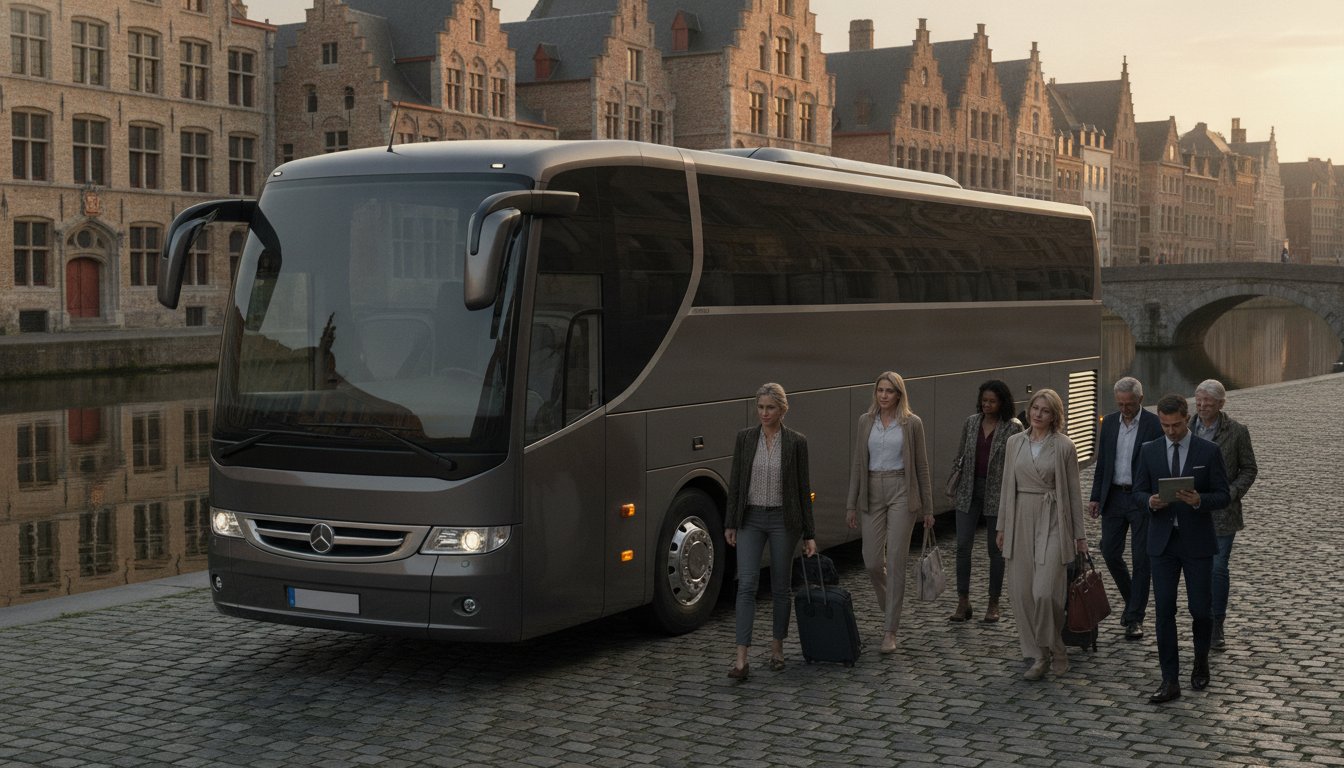
Tag: 2026 Travel Guide

  • The Art of the Dutch Cheese Market Group Experience: A 2026 Professional Guide

    The Art of the Dutch Cheese Market Group Experience: A 2026 Professional Guide

    A Dutch cheese market is not a spectacle to be watched; it’s a medieval ritual that requires precise logistical artistry to master. For the discerning travel professional, the challenge isn’t merely finding the market. It’s ensuring a dutch cheese market group experience remains sophisticated and entirely stress-free amidst the vibrant morning crowds. You’ve likely felt the logistical anxiety of navigating a 50-seater coach through historic centers or the pressure to find authentic depth in a location that often feels increasingly commercial.

    Precision. Heritage. Flow. We believe that a group visit should feel like a private unveiling of culture, not a crowded transit stop. This 2026 guide promises to provide the technical blueprint you need to transform these traditional markets into high-end, seamless events. We’ll examine specific coach logistics at Molenbuurt and Klein Amerika, detail the 2026 schedules for Alkmaar and Gouda, and explore how to integrate exclusive cultural insights that turn a simple itinerary into a masterpiece of Benelux storytelling.

    Key Takeaways

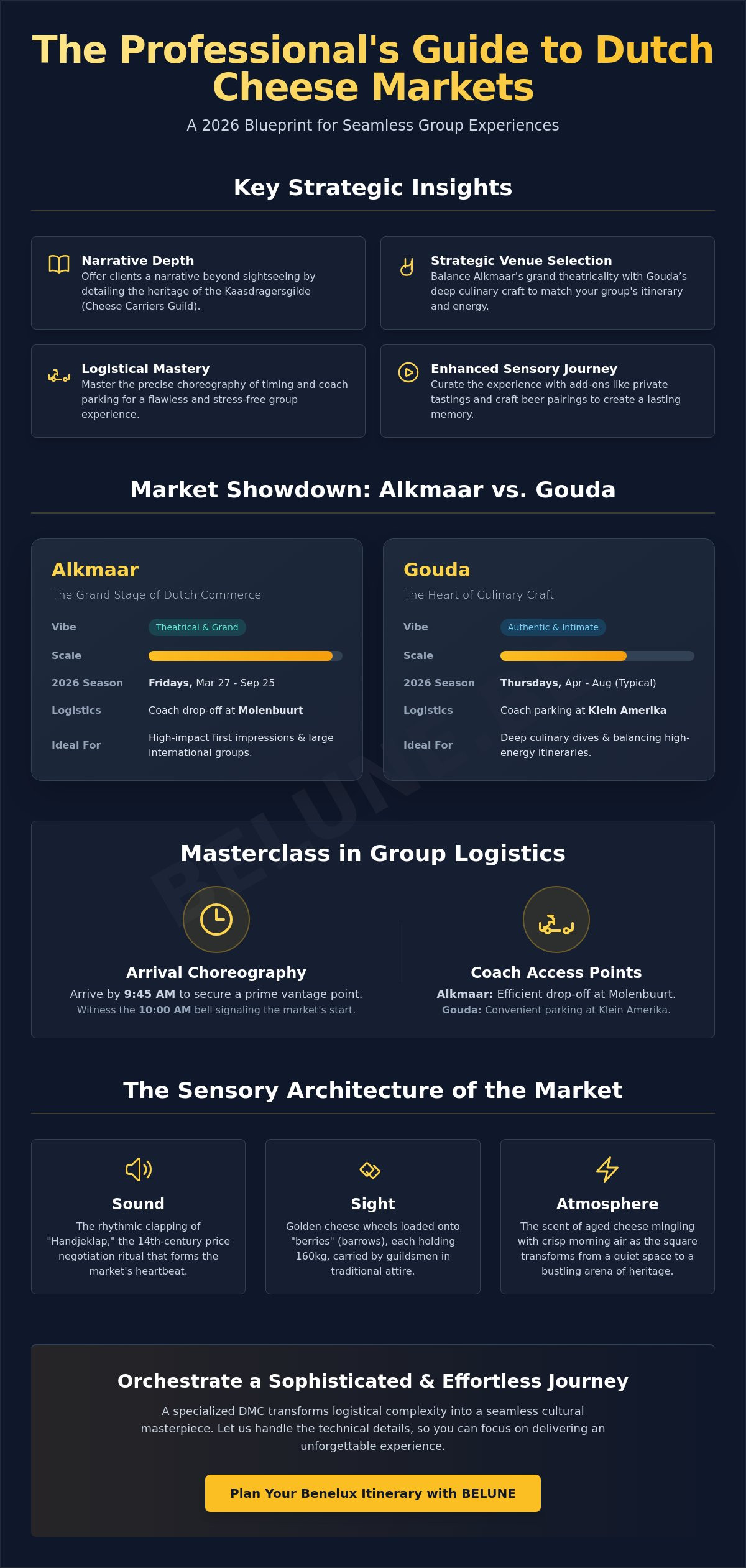
    • Understand the technical heritage of the Kaasdragersgilde to offer clients a narrative that transcends simple sightseeing.
    • Select the perfect venue for your itinerary by balancing Alkmaar’s grand theatricality with Gouda’s deep culinary craft.
    • Master the precise choreography of timing and coach parking to ensure a flawless dutch cheese market group experience.
    • Enhance the sensory journey with curated add-ons, from private tastings in historic venues to refined craft beer pairings.
    • Discover how a specialized DMC transforms logistical complexity into a sophisticated and effortless travel experience.

    The Enduring Allure of the Dutch Cheese Market Group Experience in 2026

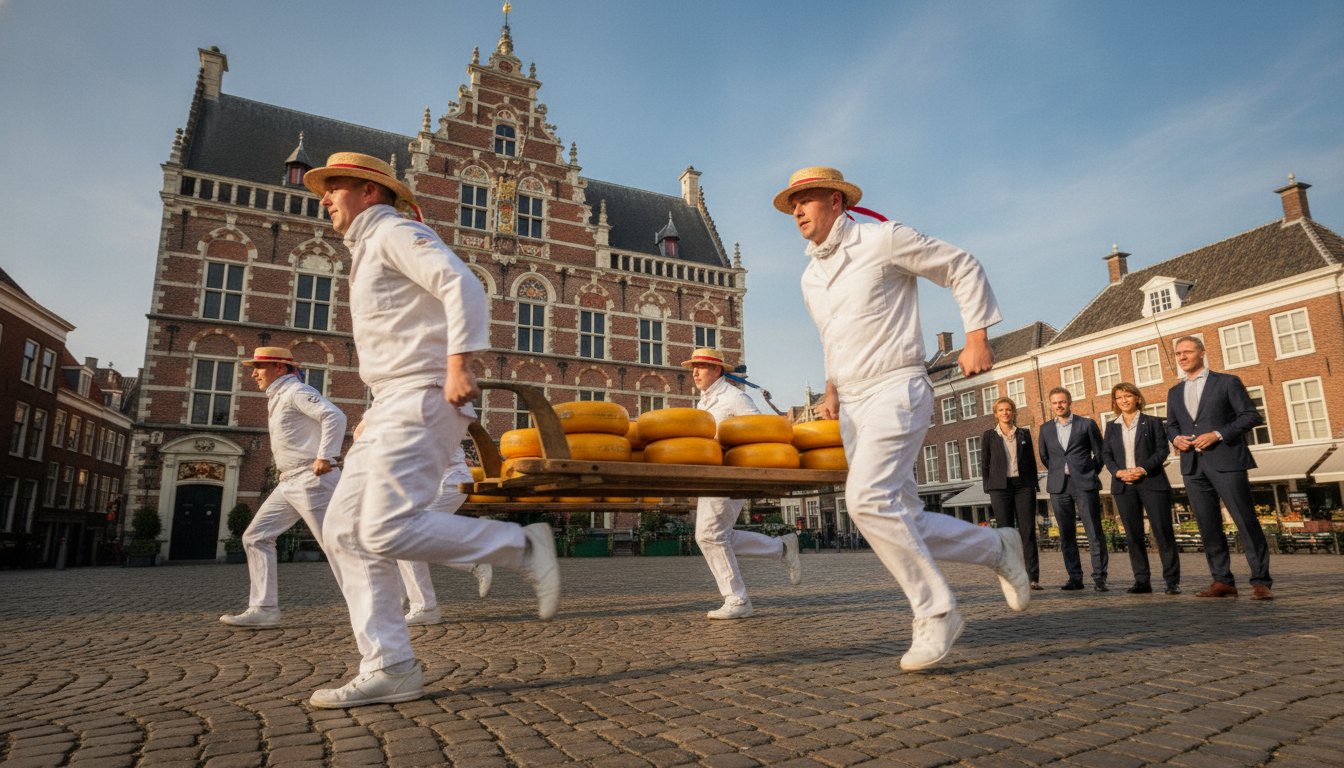
    To step into a Dutch square during a market morning is to witness a living museum of medieval commerce. It isn’t just a display; it’s a preserved ecosystem where history remains functional. For travel professionals, a curated visit to Dutch cheese markets offers a rare entry point into the world of the “Kaasdragersgilde,” or Cheese Carriers Guild. These guilds, with their distinctive straw hats and colored ribbons, represent a continuity of craftsmanship that dates back centuries. A well-orchestrated dutch cheese market group experience leverages this history to provide clients with a sense of belonging to an ancient narrative.

    The 2026 travel landscape favors “slow travel” values. Clients no longer want to just see; they want to understand the mechanics of heritage. This evolution makes the cheese market a cornerstone of themed group travel in Benelux. It’s about the technical beauty of the weigh-house and the social contract of the trade. We focus on the details that transform a simple excursion into a profound cultural encounter.

    To better understand the atmosphere and the technical flow of these events, watch this helpful video:

    The Ritual of Handjeklap: More Than a Handshake

    The rhythmic clapping you hear across the square is “Handjeklap.” It’s a 14th-century price-fixing tradition still honored today. Farmers and traders engage in this percussive negotiation, slapping hands until a final price is struck. It’s the heartbeat of the market. This isn’t a performance for the crowds; it’s a technical transaction with deep roots. For a group leader, explaining the nuances of these interactions transforms a chaotic square into a legible, fascinating theater of trade. It’s about the human connection behind the commerce.

    The Sensory Architecture of the Market Square

    The market is a sensory masterpiece. The deep tolling of the 10:00 AM bells marks the start of a highly choreographed event. There’s the scent of aged Gouda mixing with the crisp morning air. The sight of wooden barrows, known as “berries,” loaded with 160 kilograms of gold-colored wheels is striking. To capture the full theatricality, groups must arrive by 9:45 AM. This allows them to witness the square’s transformation from a quiet morning space into a bustling, vibrant arena of heritage. It’s about the flow. It’s about the precision of the moment. We ensure your guests have the best vantage point before the first wheel is weighed.

    Comparing Alkmaar, Gouda, and Edam for Professional Itineraries

    Selecting the ideal backdrop for a dutch cheese market group experience is the first technical decision in crafting a high-impact itinerary. While each market honors the same medieval roots, their architectural rhythms and logistical capacities differ significantly. An organizer must match the group’s energy to the town’s specific atmosphere. Whether your clients seek the grand theatricality of a large-scale event or the quiet charm of a boutique setting, the choice defines the entire day’s flow.

    Strategic selection often depends on the group’s prior stops. If your journey began with the high-energy atmosphere of Amsterdam, an intimate market might offer the perfect contrast. Conversely, for those arriving from quieter regions, the sheer scale of a major market provides a necessary crescendo. It’s about balance. It’s about the emotional arc of the tour. We help you navigate these nuances to ensure the destination resonates with your specific demographic.

    Alkmaar: The Scale of Grandeur

    Alkmaar is the undisputed grand stage of Dutch commerce. For the 2026 season, the market runs every Friday morning from March 27 to September 25. It’s the most theatrical option, making it ideal for high-impact first impressions. The square is a sea of yellow wheels, and the logistical infrastructure is robust. Coaches can efficiently drop off passengers at Molenbuurt, and the Official Alkmaar Cheese Market provides the consistent, high-energy spectacle that many international groups expect. If your clients want the classic Holland postcard experience, Alkmaar is the definitive choice.

    Gouda and Edam: The Bespoke Alternatives

    For a deeper focus on culinary craft, Gouda offers a sophisticated Thursday morning experience from April 2 to August 27, 2026. The focus here is on the historical weighing house, the Waag, and the town’s famous syrup waffles. It’s a sensory journey that fits perfectly into a gastronomy-themed tour. The coach drop-off at Klein Amerika is well-organized, allowing for a smooth transition into the city’s historic core.

    Edam provides the intimate, picturesque alternative. Running on Wednesday mornings from July 1 to August 19, 2026, it’s the best fit for smaller, high-end boutique groups. The canal-side charm and lower crowd density allow for a more contemplative visit. It feels less like a performance and more like a private invitation into the past. For organizers looking to avoid the peak Friday rush, Edam offers a serene but equally authentic narrative. To ensure these logistics translate into a flawless day for your guests, you can partner with a local expert to manage the finer details of the ground operation.

    The Art of the Dutch Cheese Market Group Experience: A 2026 Professional Guide

    Masterclass in Group Logistics: From Coach Access to VIP Viewing

    The success of a dutch cheese market group experience is measured in minutes. Arriving at 10:15 AM is often a logistical failure. By then, the prime viewing perimeters are already four rows deep. For a travel professional, the goal is to have guests positioned by 9:45 AM. This allows them to absorb the silence before the bells, the tension in the square, and the arrival of the first barrows. It’s the difference between watching a crowd and witnessing a ritual. We orchestrate this timing to ensure your clients feel like honored guests rather than part of the fray.

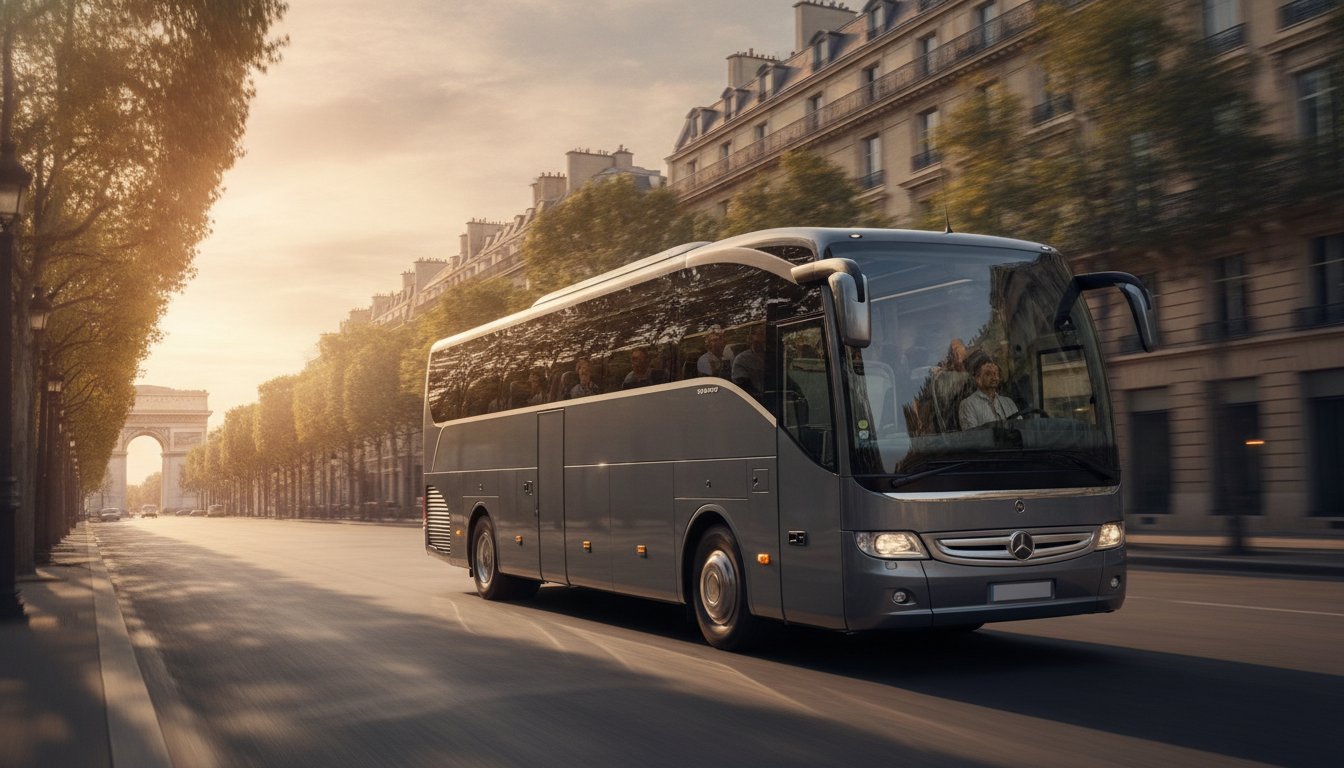
    Navigating a 12-meter coach through a medieval town is a delicate operation. Most generic travel advice suggests simply “driving to the center.” We know better. The streets of Alkmaar and Gouda were built for handcarts, not 50-seater modern fleets. Precision in the drop-off sequence is essential to avoid gridlock and maintain the group’s sense of luxury and calm. It requires a deep understanding of the local urban fabric.

    Coach Parking and Driver Management

    In 2026, Alkmaar continues to enforce strict drop-off protocols at Molenbuurt. After the drop-off, coaches must relocate to the Velodrome car park on Terborchlaan. For Gouda, the Klein Amerika lot remains the primary hub for arrivals. During peak periods in 2026, local regulations may require drivers to move to the Groenheuvel parking lot, located roughly 3 km from the center. Managing these transitions requires foresight. Our private fleet of coaches includes drivers trained specifically in the rhythms of traditional Dutch cheese markets. This ensures that while the driver observes mandatory rest periods, the group transitions seamlessly from the bus to the square without a moment of confusion or delay.

    The Role of the Multi-Lingual Local Guide

    A guide is more than a narrator; they are an interpreter of a silent, historical language. Without a professional to explain the social hierarchy of the cheese carriers, the different colored hats are just costumes. We utilize high-fidelity “whisper” audio systems to maintain the atmosphere. This technology allows the guide to explain the subtle cues of the Handjeklap negotiation without disturbing the tolling of the bells. It preserves the intimacy of the moment for the group while ensuring they don’t miss the technical details of the trade.

    Managing free time is the final piece of the logistical puzzle. We recommend a 45-minute window after the initial weighing. This gives guests the freedom to explore the stalls while maintaining a clear, pre-arranged muster point near the Waag. It balances personal autonomy with the security of a professionally managed tour, ensuring no guest feels lost in the crowd.

    Elevating the Gastronomy Narrative: Curated Add-ons and Pairings

    The visual theater of the square is only the first layer of a sophisticated journey. A truly elite dutch cheese market group experience requires a deliberate transition from the eyes to the palate. While casual tourists settle for small samples on the periphery, we orchestrate private, seated tastings in historical venues like the 17th-century Waag. These environments offer the acoustic and physical space necessary to appreciate the technical nuances of the dairy. It’s about moving beyond the spectacle to find the soul of the product.

    Sophistication lies in the pairing. We believe that Dutch heritage is best understood through its relationship with neighboring cultures. By introducing refined Belgian chocolates or local craft beers into the tasting sequence, we create a cross-border dialogue that resonates with high-end travelers. This isn’t just a meal; it’s a structural component of a broader Belgium gastronomy tour, bridging the gap between two world-class culinary traditions.

    The Art of the Cheese Tasting

    Precision in selection is paramount. We guide groups through the age profiles of Gouda and Edam, from the mild “Jong” to the crystalline intensity of “Overjarig” (aged over a year). The polder terroir isn’t a marketing concept; it’s a geological reality. The salinity of the North Sea air and the mineral-rich soil of the reclaimed land define the flavor profile of the milk. By explaining these technical details, we transform a simple snack into a masterclass in agricultural heritage. It creates a sensory bridge between the medieval ritual in the square and the actual labor of the Dutch polders.

    Synergistic Culinary Experiences

    Active participation deepens the connection. In Gouda, we often integrate a syrup waffle (Stroopwafel) workshop, where guests learn the delicate technique of slicing the hot dough. It’s a tactile experience that complements the observation of the market. For post-market relaxation, a private canal cruise with curated cheese and wine pairings allows the group to decompress while maintaining the high-end narrative. This dutch cheese market group experience can also extend to a “farm-to-table” visit. Taking the group to a local polder farm after the market spectacle allows them to see the modern technology behind the ancient tradition.

    Orchestrating these layers requires an ally who understands both the culinary and logistical demands of the region. To elevate your next project, you can curate your bespoke culinary itinerary with our expert team, ensuring every pairing and every venue meets the highest standards of professional excellence.

    Orchestrating Seamless Benelux Journeys with BELUNE

    Excellence is not an accident. It’s the result of technical mastery and artistic vision. When we talk about a dutch cheese market group experience, we aren’t just discussing a morning in a square. We’re discussing the orchestration of a complex, living system. BELUNE sublimates these logistical challenges into a refined travel experience where the guest never sees the gears turning. Our role is to act as the invisible hand that ensures every transition is as smooth as the aged Gouda your clients will taste.

    The advantage of working with a Benelux incoming tour operator lies in the depth of local assets. We don’t rely on third-party fragments. From our own fleet of modern coaches to our network of elite local guides, we maintain absolute control over the quality of the journey. This vertical integration allows us to manage everything from hotel accommodation to international train bookings with a level of precision that external agencies cannot match. We don’t just move people; we curate environments.

    Your Strategic Partner for Benelux Excellence

    With over 20 years of experience in the transport and tour operator industry, our approach is both sophisticated and deeply professional. We don’t just provide services; we provide a vision. Whether your 2026 itinerary focuses on the somber history of battlefield tourism or the vibrant mastery of a culinary tour, we transform the environment through creative planning. Our team listens. We collaborate. We ensure that your strategic goals are met with technical flawlessness. It’s a commitment to excellence that inspires confidence in our partners and wonder in their clients.

    Request Your Custom 2026 Itinerary

    The 2026 travel season demands more than just a checklist. It demands an accompaniment that is both artistic and technically sound. A flawless dutch cheese market group experience is just one component of the exceptional journeys we design. We invite tour operators to partner with a visionary DMC that understands the nuances of the Benelux region. From the first consultation to the final farewell, we’re your trusted ally in delivering excellence. Partner with BELUNE for your 2026 group travel needs and discover the art of seamless travel.

    Elevating Your 2026 Benelux Vision

    Mastering a dutch cheese market group experience requires a delicate balance of medieval tradition and modern logistical precision. We’ve explored how timing, coach access, and curated sensory pairings transform a simple visit into a high-end cultural event. It’s about the flow of the group and the depth of the narrative. From the first toll of the Alkmaar bells to the final tasting of an aged Gouda, every detail must be technically flawless and artistically inspired.

    With over 20 years of expertise, we specialize in supporting high-end tour operators with a private fleet of modern, eco-friendly coaches. We don’t just provide transport; we act as your strategic partner in the Benelux region. Our team is ready to help you sublimate logistical complexity into a refined travel masterpiece. The 2026 season offers a unique opportunity to return to authentic, slow-travel values through professional orchestration.

    Request your bespoke Benelux group itinerary for 2026 and let’s create a journey that resonates with sophistication and excellence.

    Essential Insights for Professional Itinerary Planning

    What are the official dates for the 2026 Dutch cheese markets?

    The 2026 season follows a traditional seasonal rhythm starting in late March. Alkmaar operates every Friday from March 27 to September 25, while Gouda takes place on Thursdays from April 2 to August 27. Edam offers a shorter summer window, running on Wednesdays from July 1 to August 19. Most markets begin at 10:00 AM and conclude by 1:00 PM.

    How early should a group coach arrive at the Alkmaar cheese market?

    Arrival at the Molenbuurt drop-off zone should be scheduled for no later than 9:45 AM. Arriving fifteen minutes before the opening bells allows your guests to secure a prime vantage point before the square reaches peak capacity. This cushion also accounts for the time needed for the coach to relocate to the Velodrome parking area, ensuring the driver remains within legal rest parameters.

    Is there dedicated coach parking near the Gouda cheese market square?

    Yes, coaches use the Klein Amerika parking lot for passenger drop-off and pick-up. For extended stays during the 2026 season, drivers are often directed to the Groenheuvel lot, which is roughly 3 km from the historic core. Our team manages these movements internally, so your guests experience a fluid transition from the vehicle to the weighing house without logistical delays.

    Can we arrange private cheese tastings for groups of more than 40 people?

    We specialize in orchestrating large-scale, high-end tastings in historical venues or private polder farms. Managing a dutch cheese market group experience for over 40 passengers requires a venue with both the physical volume and the acoustic quality for professional guidance. We curate these sessions to include aged varieties and specific pairings that reflect the region’s culinary mastery.

    What happens if it rains during a scheduled Dutch cheese market experience?

    The traditional rituals typically continue, as the cheese carriers use canvas covers to protect the product. For the comfort of your guests, we maintain a “Plan B” that includes indoor alternatives like the Gouda Cheese Experience or private museum tours. This ensures the narrative remains uninterrupted, regardless of the North Sea weather patterns.

    Are the cheese markets accessible for group members with limited mobility?

    Historic squares often feature uneven cobblestones, which present challenges for some guests. We navigate this by selecting specific, accessible vantage points and utilizing “whisper” audio systems. These headsets allow guests to hear the guide’s interpretation clearly from a comfortable distance, ensuring everyone enjoys an inclusive and sophisticated cultural encounter.

    How does a DMC like BELUNE add value to a standard cheese market visit?

    We transform a public spectacle into a private, professional event. By utilizing our own fleet of coaches and expert local guides, we eliminate the fragmentation often found in international tours. We handle the technical orchestration of timings, parking, and exclusive venue access, allowing you to focus on client satisfaction and the broader Benelux narrative.

    What other activities can be paired with an Edam cheese market tour?

    Edam offers a wealth of “slow travel” opportunities beyond the square. We recommend integrating a visit to “The Story of Edam Cheese” museum or a private canal cruise through the town’s picturesque waterways. These additions provide a deeper connection to the local heritage and create a balanced, multi-sensory itinerary for boutique groups.

  • The 2026 Logistics Checklist for Benelux Group Travel: A Masterclass in Orchestration

    The 2026 Logistics Checklist for Benelux Group Travel: A Masterclass in Orchestration

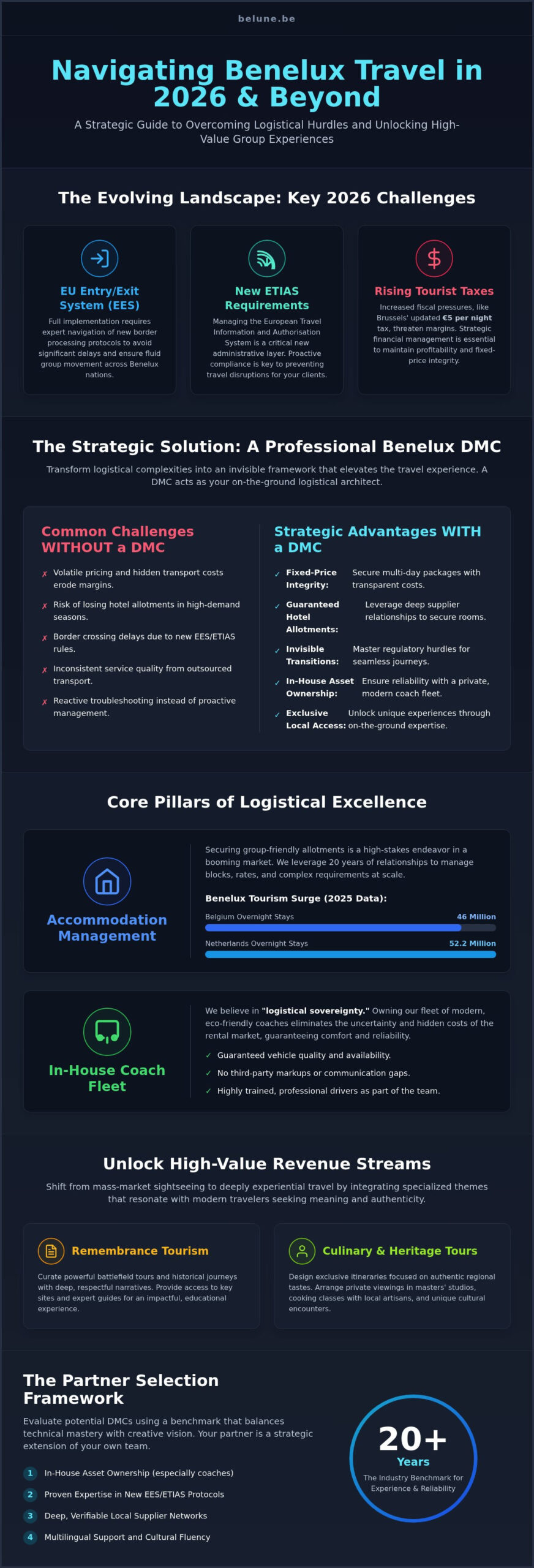
    A truly exceptional group journey across the Low Countries is an exercise in invisible architecture. In 2026, executing this vision requires more than just local knowledge; it demands a sophisticated response to the evolving benelux group travel logistics challenges that define our modern borders. From the digital biometric registration of the Entry/Exit System (EES) to the 21% VAT rate now applied to Dutch accommodations, the margin for administrative error has vanished. Precision is the only luxury that matters.

    You recognize that high-level planning isn’t about paperwork; it’s about protecting the guest’s peace of mind through technical rigor. This masterclass provides the clarity you need to navigate the 2026 regulatory environment, ensuring your groups move with the grace of a perfectly orchestrated performance. We’ll explore the critical updates on ETIAS, the stricter Euro 5 diesel bans in the Brussels Low-Emission Zone, and the new kilometer-based tolls that form the foundation of a fail-proof, professional itinerary across Belgium, the Netherlands, and Luxembourg.

    Key Takeaways

    • Master the 2026 cross-border VAT landscapes and ETIAS entry protocols to ensure a fluid, compliant journey across the Benelux borders.
    • Discover the technical requirements for modern coach fleets, including Euro 6 compliance and the strategic synchronization of driver rest periods with cultural itineraries.
    • Learn to source accommodations that bridge the gap between high-end boutique aesthetics and the robust logistical capacity required for seamless group check-ins.
    • Align the delicate timing of specialized experiences, from the solemn precision of Battlefield ceremonies to the complex dietary orchestration of regional gastronomy tours.
    • Implement a rigorous 90-60-30 day audit framework to proactively address 2026 benelux group travel logistics challenges before your guests arrive on the ground.

    Cross-Border Compliance and the 2026 Benelux Regulatory Landscape

    The Benelux Union represents a masterpiece of geopolitical cooperation, yet for the modern travel designer, its internal borders present a sophisticated tapestry of administrative requirements. In 2026, the shift toward digital-first border management and fiscal harmonization has introduced new layers of complexity. Mastering these benelux group travel logistics challenges is no longer optional; it’s the foundation of a professional journey. Precision in the planning phase ensures that the transition between countries feels like a single, fluid movement rather than a series of bureaucratic hurdles.

    To better understand the technical precision required in modern group management, watch this helpful video:

    Entry Requirements and Digital Documentation

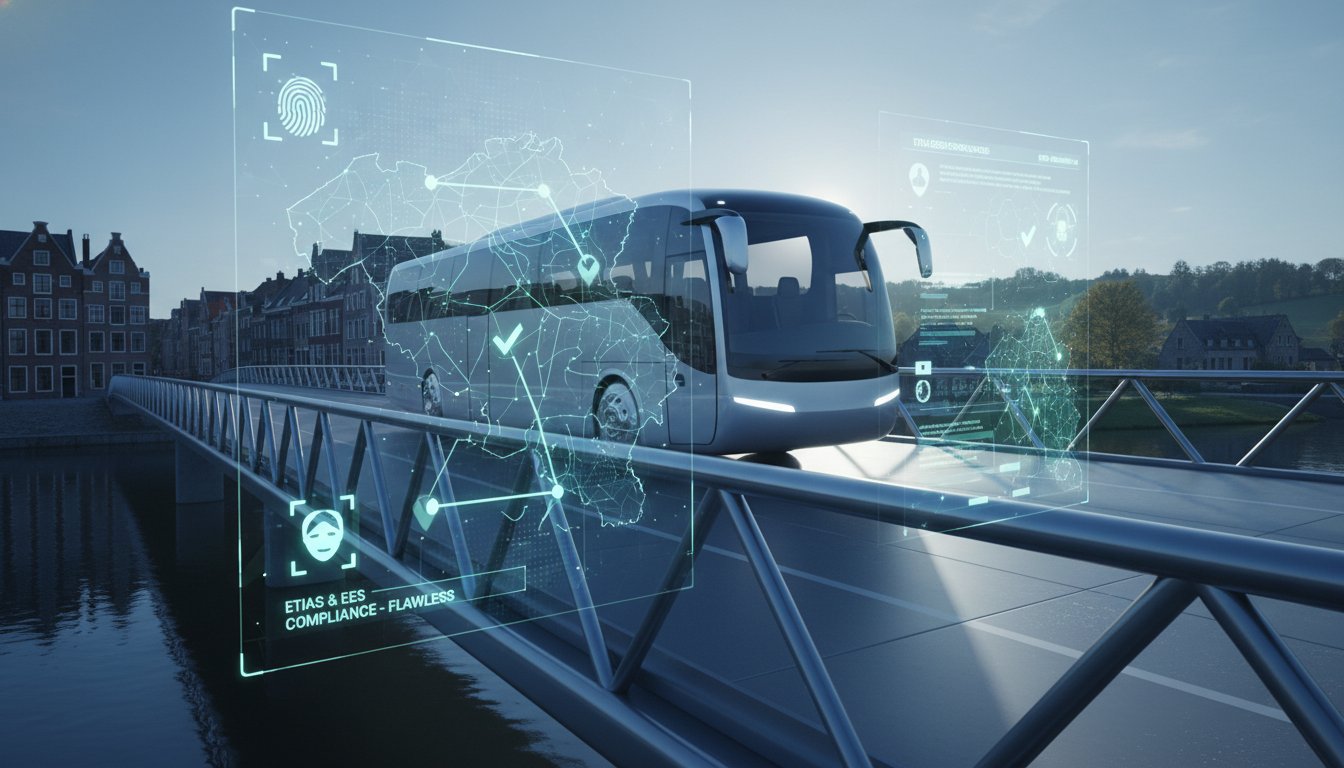
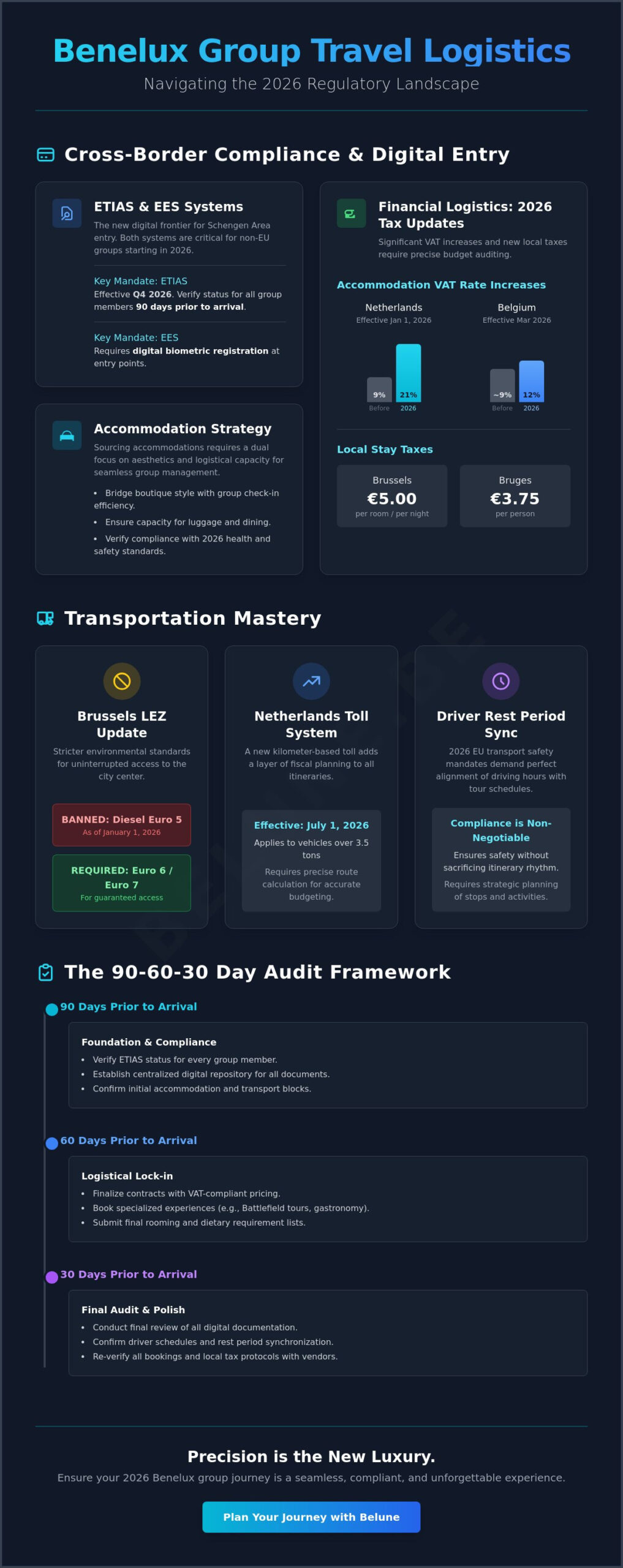
    The final quarter of 2026 marks the definitive arrival of the European Travel Information and Authorisation System (ETIAS). This isn’t just a new form; it’s a structural change in how non-EU groups enter the Schengen Area. We recommend verifying the ETIAS status for every group member at least 90 days prior to arrival. Managing these benelux group travel logistics challenges requires a centralized digital repository. This hub should house group visas, insurance documents, and biometric entry confirmations. By ensuring all documentation meets the updated 2026 EU health and safety standards well in advance, you eliminate the risk of friction at major transport hubs or border crossings.

    Financial Logistics and Tax Compliance

    Fiscal precision is where many complex itineraries lose their elegance. Effective January 1, 2026, the Netherlands increased the VAT rate on short-stay accommodation from 9% to 21%. In a similar move, Belgium raised its hospitality VAT to 12% in March 2026. These divergent rates demand a meticulous audit of fixed-price packages to maintain cross-border tax parity. Consulting a specialized benelux incoming tour operator is essential for developing effective VAT reclamation strategies that protect your project’s margins.

    Local stay taxes add another layer of technical detail. In 2026, Brussels implemented a flat rate of €5 per room, per night, while Bruges charges €3.75 per person. Establishing clear protocols for handling these local taxes at various points of the journey prevents administrative delays during check-in. This level of foresight allows the group’s leadership to focus on the experience rather than the ledger. Beyond the numbers, we must also account for the 2026 EU transport safety mandates, which require stricter synchronization of driver rest periods with your cultural itineraries to ensure total compliance without sacrificing the rhythm of the tour.

    Transportation Mastery: The Strategic Advantage of a Private Coach Fleet

    Movement across Belgium, the Netherlands, and Luxembourg requires a technical choreography that often goes unnoticed by the guest. In the high-end sector, the vehicle is more than a mode of transport; it’s a mobile sanctuary. Achieving this level of comfort while adhering to tightening environmental standards is a primary focus for 2026. As of January 1, 2026, the Brussels Low-Emission Zone (LEZ) has prohibited Diesel Euro 5 vehicles from entering the city. This shift makes fleet age a critical logistical consideration. We prioritize Euro 6 and Euro 7 standards to ensure our groups enjoy uninterrupted access to historic hearts without the friction of local fines or restrictive rerouting.

    While Schengen Area travel regulations facilitate the physical crossing of borders, the administrative weight of urban access remains a localized hurdle. In the Netherlands, the introduction of a kilometer-based toll system for vehicles over 3.5 tons on July 1, 2026, adds a new layer of fiscal planning to every itinerary. These benelux group travel logistics challenges require a partner who views transportation through a lens of both environmental stewardship and technical rigor. Choosing the right private coach hire partner ensures these technicalities are resolved long before the first guest boards.

    Driver Regulations and Safety Protocols

    The safety of a group rests on the precision of its driver. We audit all driving hours against the 2026 EU transport safety mandates to prevent fatigue and ensure legal compliance. This is not merely about logs; it’s about the rhythm of the journey. By equipping our fleet with real-time GPS tracking, we maintain a constant pulse on the group’s progress. This synchronization allows for seamless communication between the driver and the operator, ensuring that multi-lingual proficiency is always available to handle cross-border documentation or unexpected road adjustments with quiet authority.

    Route Optimization and Urban Accessibility

    Urban centers in the Benelux region are increasingly prioritizing pedestrian-friendly environments. Successfully managing “Last-Mile” transfers requires identifying coach-friendly drop-off points for cultural heritage sites months in advance. We secure parking permits for high-traffic zones well before the peak 2026 travel season begins. This proactive approach accounts for seasonal traffic patterns specific to the Benelux transit corridors. By factoring in the Flanders CO2 road toll surcharges and city-specific visitor caps, we protect the itinerary’s flow from the delays that often plague less prepared operators.

    The 2026 Logistics Checklist for Benelux Group Travel: A Masterclass in Orchestration

    The Architecture of Group-Friendly Accommodation Management

    A hotel is more than a sanctuary for rest; it’s a structural component of the group’s daily rhythm. In the Benelux region, where historic charm often meets compact urban design, finding the intersection of aesthetic beauty and logistical capacity is a delicate art. The 2026 landscape has added fiscal weight to these decisions. With the Netherlands increasing VAT on accommodations to 21% and Belgium adjusting to 12%, the selection process requires a rigorous financial audit alongside a creative one. These benelux group travel logistics challenges demand a partner who views a room block not as a commodity, but as a carefully managed asset.

    True luxury lies in the absence of friction. For a group of forty, a beautiful lobby loses its luster if the check-in process takes an hour. We look for properties that understand the technical requirements of large-scale arrivals, ensuring that the transition from the coach to the suite is instantaneous. This orchestration allows the guest to remain immersed in the narrative of the tour, undisturbed by the administrative machinery working behind the scenes.

    Criteria for Vendor Selection

    We prioritize properties with proven group hotel accommodation management expertise. It’s vital to select hotels that offer dedicated check-in desks and specialized luggage handling areas to prevent congestion. Proximity to main transit routes is another non-negotiable factor; it minimizes daily coach transfer times and protects the integrity of the itinerary. We also verify the availability of private dining or meeting spaces. These exclusive environments are essential for maintaining group cohesion and providing a space where guests can reflect on the day’s cultural discoveries in a refined, private setting.

    On-Site Management and Luggage Logistics

    Precision is the hallmark of our approach. We finalize all rooming lists at least 30 days prior to arrival. This lead time allows the hotel to pre-key rooms and synchronize luggage portage with the coach’s arrival time. Every guest’s experience must be equitable. We perform a parity audit on room types across the entire block to ensure satisfaction remains consistent throughout the group. In 2026, we also audit hotel sustainability certifications. This ensures that every stay aligns with modern corporate social responsibility standards, reflecting a commitment to quality that is both ethical and aesthetic. By managing the local stay taxes-such as the €5 flat rate in Brussels or the €3.30 per room in Ghent-before the group arrives, we ensure the check-out process is as silent and sophisticated as the check-in.

    Themed Experience Logistics: From Battlefields to Gastronomy

    The soul of a journey lies in its narrative, yet a narrative is only as strong as the logistics supporting it. In 2026, the demand for immersive, deeply specific experiences has intensified, bringing unique benelux group travel logistics challenges to the forefront. Whether it’s the solemn silence of a remembrance ceremony or the vibrant energy of a world-class festival like Tomorrowland, the technical orchestration must be flawless. It’s about securing “impossible” access through deep regional roots and technical foresight. We believe that a perfectly timed visit to a museum or a brewery should feel like a natural extension of the guest’s curiosity, never a forced march against a ticking clock.

    Our approach treats every themed tour as a structural masterpiece. We bridge the gap between the emotional weight of a historical site and the rigid requirements of modern group management. By leveraging our local guide services, we ensure that every storyteller is also a logistical asset, capable of navigating specialized topics while managing the group’s movement with quiet authority. This level of precision allows the group to remain fully present in the moment, undisturbed by the administrative complexities that define 2026 travel.

    Remembrance and Heritage Site Logistics

    Pilgrimages to sites of memory require a profound level of sensitivity and timing. For those organizing flanders fields visits, we recommend reserving group slots at least six months in advance. This lead time is essential to synchronize with the Last Post ceremony at the Menin Gate, where space is a finite luxury. We coordinate directly with local authorities to ensure specialized access to sensitive historical sites, providing a level of exclusivity that standard tours cannot reach. For outdoor active or cycling tours, we develop weather-contingent routing, ensuring the group’s comfort remains paramount regardless of the elements.

    Culinary and Event Coordination

    Culinary exploration is a sensory transformation of space. Managing dietary restrictions across multi-course regional tastings isn’t just a kitchen concern; it’s a logistical one. We audit restaurant capacity in historic centers to ensure private group dining feels intimate rather than crowded. Synchronizing brewery and chocolate workshop timings with coach transit schedules prevents the rush that can ruin a delicate experience. We also manage these benelux group travel logistics challenges by securing 2026 festival and sporting event tickets, from F1 Francorchamps to grand slam tennis, through authorized channels. To begin crafting your own bespoke itinerary with a partner who understands these nuances, explore our specialized group tour services.

    The Final 2026 Benelux Logistics Checklist for Agencies

    Orchestration is the difference between a trip and a transformation. As we’ve explored, the technical landscape of 2026 requires a rigorous, tiered approach to planning. These benelux group travel logistics challenges are best managed through a structured timeline that addresses compliance, transportation, and guest comfort in a logical sequence. Finalizing a journey is about more than confirming dates; it’s about the technical simulation of every transition to ensure the narrative remains unbroken from arrival to departure. Precision at this stage provides the serenity your clients expect from a high-end experience.

    This final phase of planning acts as the structural audit for your project. It’s the moment where the creative vision is stress-tested against the regulatory realities of the Benelux region. By following a disciplined pre-departure framework, you transform potential administrative friction into a silent, professional operation that appears effortless to the end guest.

    Timeline for Logistical Excellence

    • 90 Days Out: Perform a comprehensive regulatory audit. Cross-reference your guest list against 2026 ETIAS requirements and verify that all transport providers meet the latest Euro 6 or Euro 7 emission standards for urban access.
    • 60 Days Out: Finalize and confirm all group travel agency bookings. This ensures that your room blocks and private dining spaces are locked in before the seasonal demand from major 2026 events like Tomorrowland or the F1 Grand Prix peaks.
    • 30 Days Out: Distribute the Master Itinerary. This document must include real-time contact details for all drivers and local guides. Perform a final “dry run” of the timing for high-stakes cultural transitions, such as the synchronized arrival at a Last Post ceremony or a museum time-slot.

    Communication and Risk Management

    Communication is the invisible layer of any successful journey. We recommend establishing a dedicated support line that connects the group leader directly to the coach driver and the operator. This triangle of communication allows for instantaneous adjustments if cross-border travel disruptions occur. To empower the guests, distribute digital “Welcome Packs” that include logistical FAQs regarding local stay taxes and 2026 digital border protocols. This proactive transparency reduces anxiety and builds trust before the group even sets foot in the region.

    The final step in our framework is the post-tour reconciliation. We believe in a rigorous review of all vendors and logistical touchpoints once the journey concludes. This feedback loop is essential for maintaining the artisanal quality of our tours. Partnering with a regional expert for end-to-end management provides more than just administrative support; it offers the peace of mind that comes from knowing every technical detail has been mastered by a visionary advisor. In the complex world of 2026 travel, this level of partnership is the ultimate luxury.

    Elevating the Group Journey into a Structural Art Form

    The 2026 travel landscape across Belgium, the Netherlands, and Luxembourg demands a shift from simple planning to sophisticated orchestration. You’ve seen how digital border shifts, complex VAT adjustments, and tightening environmental zones create a new set of benelux group travel logistics challenges. Success lies in the invisible details. It’s the technical rigor of a 90-day audit and the seamless synchronization of a private coach with a time-sensitive cultural event. When these components align, the result isn’t just a trip; it’s a flawlessly executed performance.

    We bring over 20 years of regional logistical expertise to every project. With our private fleet of modern Euro-standard coaches and a dedicated multilingual network of local guide experts, we transform technical complexity into an effortless guest experience. Your vision deserves a foundation of absolute precision. Request Your Bespoke 2026 Benelux Itinerary from BELUNE and let’s begin the creative process together.

    Frequently Asked Questions

    Do non-EU travelers need a separate visa for each Benelux country in 2026?

    No, a single Schengen visa or ETIAS authorization covers travel across the entire Benelux region. As part of the Schengen Area, Belgium, the Netherlands, and Luxembourg operate under unified entry rules. Non-EU visitors must register via the digital Entry/Exit System (EES) and, starting in the last quarter of 2026, visa-exempt travelers must obtain an ETIAS authorization before arrival.

    What are the coach driving hour regulations in Belgium and the Netherlands for 2026?

    Regulations follow the 2026 EU transport safety mandates, which require a 45-minute break after 4.5 hours of driving. Daily driving is generally limited to 9 hours, though it can be extended to 10 hours twice a week. These rules are strictly monitored via digital tachographs and are vital for managing benelux group travel logistics challenges without risking legal delays or safety compromises.

    How far in advance should I book group accommodation for peak season in the Benelux?

    We recommend securing group blocks at least 12 months in advance for peak periods or major events. High-demand occasions like Tomorrowland or the F1 Grand Prix at Francorchamps exhaust hotel inventory rapidly. For standard travel windows, a lead time of 6 to 9 months is the minimum required to ensure access to properties that offer both high-end aesthetics and group-specific check-in capabilities.

    Are there specific low-emission zone permits required for coaches in 2026?

    Yes, specific digital registrations are mandatory for urban centers like Brussels, Antwerp, and Ghent. As of January 1, 2026, Brussels has prohibited Diesel Euro 5 vehicles from circulating within the city. While some cities require a one-time registration of the vehicle’s Euro standard, others use camera-based enforcement. Verifying the environmental compliance of your fleet is essential to avoid automatic fines during city transfers.

    How can I manage VAT reclamation for a multi-country group tour?

    Managing VAT requires a meticulous breakdown of services consumed in each specific jurisdiction. Since the Netherlands charges 21% and Belgium charges 12% for accommodations in 2026, invoices must be technically compliant with each nation’s tax laws. Specialized partners help navigate these benelux group travel logistics challenges by ensuring all documentation meets the rigorous standards for international business tax recovery across different borders.

    What is the best way to handle dietary requirements for a large group in the Benelux region?

    The most effective strategy is a centralized guest profile system finalized 30 days prior to the group’s arrival. Benelux gastronomy is world-class, but historic venues often have limited kitchen capacity for last-minute changes. Providing detailed dietary manifests to local restaurants in advance ensures that multi-course regional tastings remain a seamless experience for every guest, regardless of their specific restrictions.

    Can a private coach travel freely between Belgium, the Netherlands, and Luxembourg?

    Yes, coaches move across borders without physical stops, though they must adhere to country-specific toll and tax systems. On July 1, 2026, the Netherlands introduced a kilometer-based toll for vehicles over 3.5 tons. While the transit is physically fluid, the administrative burden of managing these tolls and the Flanders CO2 surcharges requires proactive digital management to ensure an uninterrupted journey.

    Why should a travel agent use a local DMC like BELUNE instead of direct booking?

    A local DMC acts as a strategic architect, providing a level of technical precision that direct bookings cannot achieve. We offer a private fleet of modern coaches, a deep-rooted network of local guide experts, and a sophisticated understanding of 2026 regional regulations. This partnership transforms a series of individual bookings into a cohesive, high-end journey protected by 20 years of logistical mastery and artistic vision.

  • The Art of Corporate Group Travel in Benelux: A 2026 Strategic Guide

    The Art of Corporate Group Travel in Benelux: A 2026 Strategic Guide

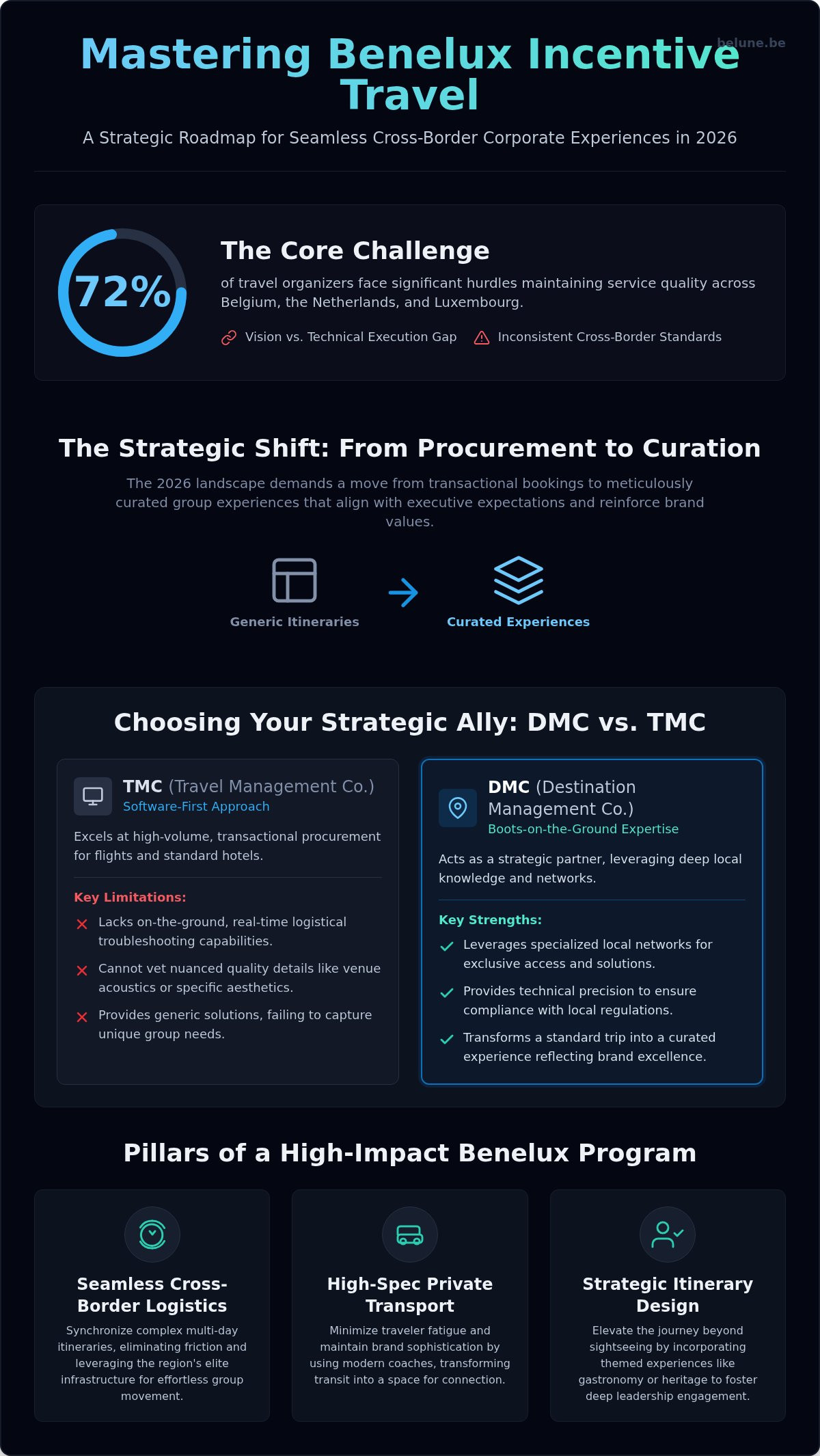
    What if your next cross-border meeting felt less like a logistical puzzle and more like a curated gallery opening? You’ve likely felt the exhaustion of managing fifty executives across three countries in forty-eight hours, only to find that generic itineraries and aging coaches dim the brilliance of your objectives. It’s a common struggle. Industry reports from 2024 indicate that 62% of luxury travel planners cite multi-national accommodation as their most significant source of friction. Our guide to corporate group travel benelux in 2026 shows you how to transcend these hurdles and illuminate the path to a seamless experience.

    We’ll help you master the nuance of cross-border logistics and bespoke itinerary curation to create a sense of harmony throughout your journey. You’ll learn how to secure exclusive cultural access and modern, high-spec coach transport that mirrors the sophistication of your brand. We’re going to detail a strategic path to perfectly synchronized multi-day experiences that feel effortless for your guests, ensuring every detail of your vision is realized with technical precision and artistic flair.

    Key Takeaways

    • Discover how to navigate the complex cross-border logistics of corporate group travel benelux to ensure seamless transitions between Belgium, the Netherlands, and Luxembourg.
    • Learn why partnering with a specialized regional expert transforms standard itineraries into masterfully curated journeys that generic agencies cannot replicate.
    • Understand the profound impact that high-end private transport has on the group’s emotional well-being and the overall rhythm of the corporate experience.
    • Explore how to weave historical heritage and gastronomy into a cohesive narrative that aligns perfectly with your modern corporate values.
    • Master the collaborative design process required to build bespoke 2026 journeys that balance technical precision with artistic inspiration.

    Understanding the Dynamics of Corporate Group Travel in Benelux

    The landscape of corporate group travel benelux in 2026 reflects a sophisticated fusion of three distinct nations into one seamless professional stage. It’s no longer enough to offer a standard itinerary. Today’s delegations demand a narrative. The Benelux Union, established as a pioneer of European integration, provides a unique framework where borders feel like mere nuances. This proximity allows a group to breakfast in Brussels, hold a symposium in Luxembourg City, and conclude with a canal-side dinner in Amsterdam, all within a single day. The region doesn’t just host events; it sublimates the professional experience through its geographical density.

    The region serves as a premier hub because it balances high-density economic activity with an unparalleled density of heritage sites. In 2026, the shift toward curated, thematic experiences has replaced traditional sightseeing. Modern itineraries focus on the “why” behind the journey. Managing these multi-national logistics requires a mastery of cultural expectations. The Dutch preference for directness meets the Belgian appreciation for culinary excellence and the Luxembourgish demand for financial discretion. Each transition must be handled with a precision that ensures the group’s focus remains on their strategic objectives rather than the mechanics of the move.

    The Strategic Value of the Benelux Region

    The proximity of national borders acts as a catalyst for diverse, high-impact itineraries. With over 3,000 kilometers of high-speed rail connecting the major hubs, the region offers an efficiency that few other global territories can match. For B2B partners, this integration represents more than convenience; it’s a strategic asset. The historic heritage of cities like Ghent or Delft provides a timeless backdrop for modern infrastructure. This creates an environment where innovation and tradition exist in perfect harmony, allowing corporate group travel benelux to feel both grounded and visionary.

    Evolving Expectations for 2026 Corporate Tours

    By 2026, “Art & Culture” has emerged as the primary motivator for 68% of corporate delegations. It’s about the emotional resonance of the space. Companies now seek all-inclusive, fixed-price transparency to ensure financial predictability without sacrificing the bespoke nature of the trip. This demand for clarity extends to logistics. Sustainability isn’t a luxury anymore; it’s the standard. The 2026 market sees a 40% increase in the use of electric coach transport. This reflects a deep commitment to environmental responsibility that aligns with the core values of global leaders. Our approach ensures every nuance of the journey is considered, from the quality of the light in the meeting rooms to the carbon footprint of the transport.

    The Essential Role of a Specialized Benelux Incoming Tour Operator

    Mastery in logistics isn’t accidental; it’s the result of precise, local coordination. For high-stakes corporate group travel benelux, the difference between a generic global agency and a regional expert is the difference between a standard trip and a curated experience. While a generalist might understand the mechanics of a booking, they often lack the nuanced grasp of the “Golden Triangle” dynamics. A specialized operator functions as an architect of time and space, ensuring that every transition between Brussels, Amsterdam, and Luxembourg City feels effortless.

    Professional travel agents rely on local DMCs because they provide a safety net that software cannot replicate. This expertise is grounded in data. According to Eurostat tourism statistics, the Benelux region remains one of the most densely traveled corridors in Europe, with residents from these three nations accounting for a significant portion of intra-EU tourism. This high density requires an operator who understands how to bypass congestion and secure exclusive access to venues that aren’t listed on public platforms.

    The Expertise of a Benelux Incoming Tour Operator

    Navigating the regulatory landscape of three distinct nations requires more than just a map. Each country has its own transport laws, VAT structures, and site access requirements. By leveraging benelux incoming tour operator expertise, firms avoid the friction of cross-border logistics. We focus on seamless transitions; whether it’s a private canal dinner in Utrecht or a boardroom session in the heart of Luxembourg’s financial district, the flow remains uninterrupted.

    Experience acts as the ultimate risk mitigation tool. With 20 years of industry presence, an expert operator anticipates disruptions before they occur. It’s about knowing which cobblestone streets in Bruges are inaccessible to coaches or which days the European Parliament sessions will impact traffic in Brussels. This foresight transforms a potential crisis into a footnote.

    Bespoke Itinerary Planning for Professional Groups

    Corporate goals dictate the rhythm of the journey. An incentive program for top performers requires a different “light” than a technical educational tour for engineers. We balance high-density logistics with what we call moments of reflection. These are the pauses in the itinerary that allow for genuine connection and creative thought. Every program is a custom build, designed to reflect the brand’s identity through the lens of Benelux culture.

    • Customization: Programs tailored to specific KPIs, from team building to executive retreats.
    • Predictability: Fixed-price group packages provide budget security, eliminating the hidden fees often found in fragmented bookings.
    • Management: Full “A to Z” oversight, covering everything from sourcing 5-star boutique hotels to providing multilingual guides who specialize in corporate etiquette.

    True luxury in travel is found in the absence of worry. When you partner with a team that views travel as an art form, you ensure your project is executed with technical rigor and aesthetic grace. To begin crafting your next regional experience, you can discover our approach to bespoke event design and see how we elevate the standard of professional gatherings.

    Logistics as an Art Form: Elevating the Group Experience

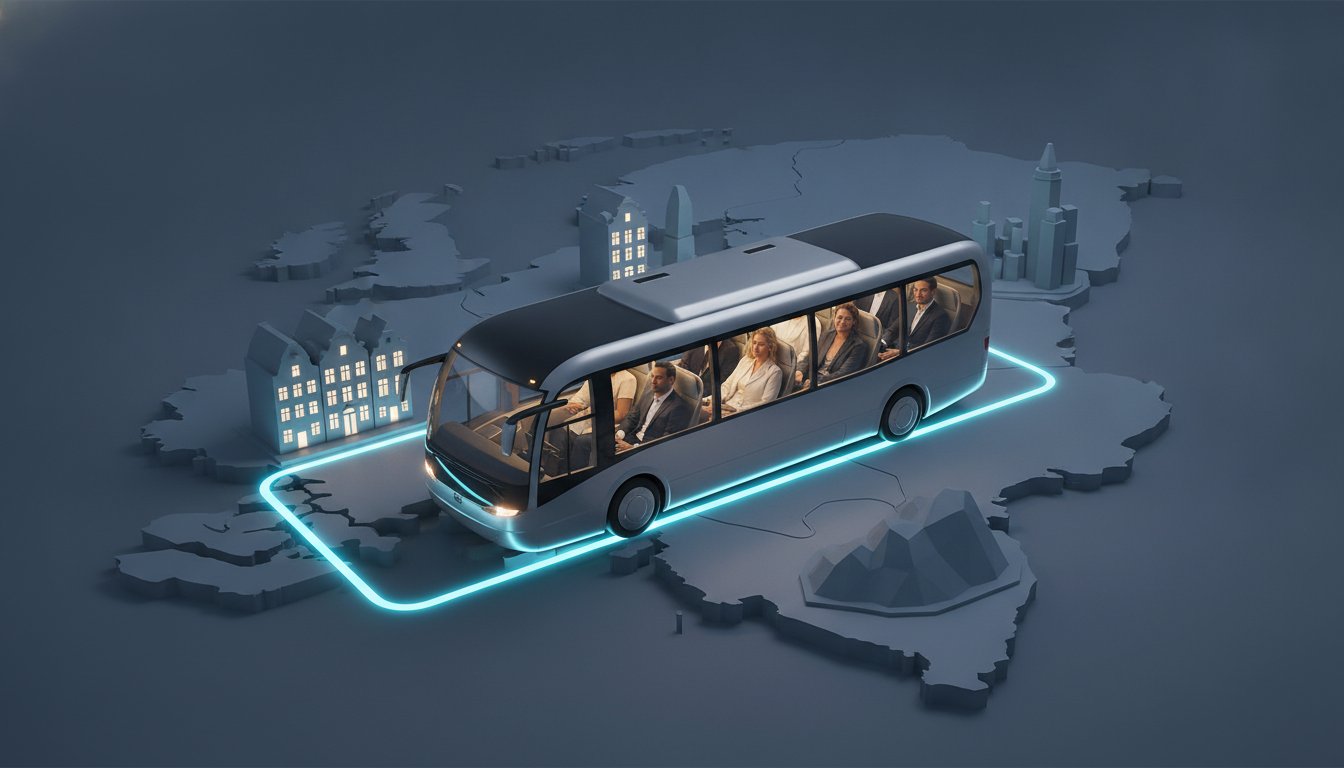
    Logistics represents more than simple movement; it functions as the silent rhythm of a successful journey. For corporate group travel benelux, every transition must feel intentional and fluid. Private transport serves as the essential backbone of this experience. It eliminates the friction of public schedules, allowing the group to maintain its collective momentum. The quality of a coach directly influences the emotional state of the team. A cramped, noisy environment breeds fatigue. Conversely, a serene, high-end cabin preserves mental energy for the strategic work ahead.

    Synchronizing these movements with local guide services creates a fluid narrative. When the transport arrives exactly as a tour concludes, the story of the city remains unbroken. Many firms struggle with the choice between maintaining an in-house fleet or outsourcing to third-party specialists. While in-house management offers perceived control, professional outsourcing provides 100% scalability and access to the latest vehicle technologies without the burden of maintenance. Recent analysis of Benelux travel trends indicates that corporate clients now prioritize personalized, agile logistics over static, pre-packaged itineraries.

    The BELUNE Private Coach Advantage

    By 2026, the standard for professional transport has shifted toward total environmental and digital integration. Our recommended fleets utilize Euro VII engines or electric drivetrains to meet strict corporate ESG mandates. These vehicles aren’t just buses; they’re mobile workspaces. Features include:

    • Ergonomic seating with 110cm of legroom for maximum physical recovery.
    • Integrated 5G mesh networks ensuring constant connectivity between Brussels and Amsterdam.
    • On-board presentation screens for mid-transit briefings.

    Drivers act as ambassadors of your brand. They possess the technical skill to navigate medieval city centers and the social nuance to provide a sophisticated, discreet service.

    Seamless Multi-National Logistics

    Coordinating arrivals across national transit hubs like Schiphol, Brussels Airport, and Findel requires a master’s touch. The role of a specialized group travel agency is to act as the central architect of these moving parts. They manage hotel blocks across three different legal jurisdictions, ensuring that rooming lists and check-in procedures are synchronized. Strategies for minimizing friction involve pre-cleared security protocols and dedicated luggage transfer services that move bags directly from the tarmac to the hotel suite. This level of precision allows travelers to focus on the landscape of the Benelux region rather than the mechanics of the trip.

    Curating Themed Experiences: Culture, Gastronomy, and Heritage

    Successful corporate group travel benelux relies on a narrative thread that binds every activity together. It’s not enough to move a team from a meeting room to a restaurant; we must treat the itinerary as a curated exhibition where every stop serves a specific purpose. By 2026, data from regional tourism boards suggests a 22% increase in demand for “meaningful travel,” where corporate values like sustainability and innovation are mirrored in the historical sites visited. We design these journeys to balance educational depth with aesthetic pleasure, ensuring that the storyline of the trip resonates long after the group returns home.

    The sensory impact of a well-chosen theme creates a shared memory that strengthens group cohesion. When a team explores the technical mastery of a 17th-century Dutch canal system or the architectural precision of a Belgian Art Nouveau townhouse, they aren’t just sightseeing. They’re observing excellence. This alignment between historical heritage and modern corporate ambition creates a powerful psychological anchor for the participants.

    Art and Culture: The Emotional Core of the Trip

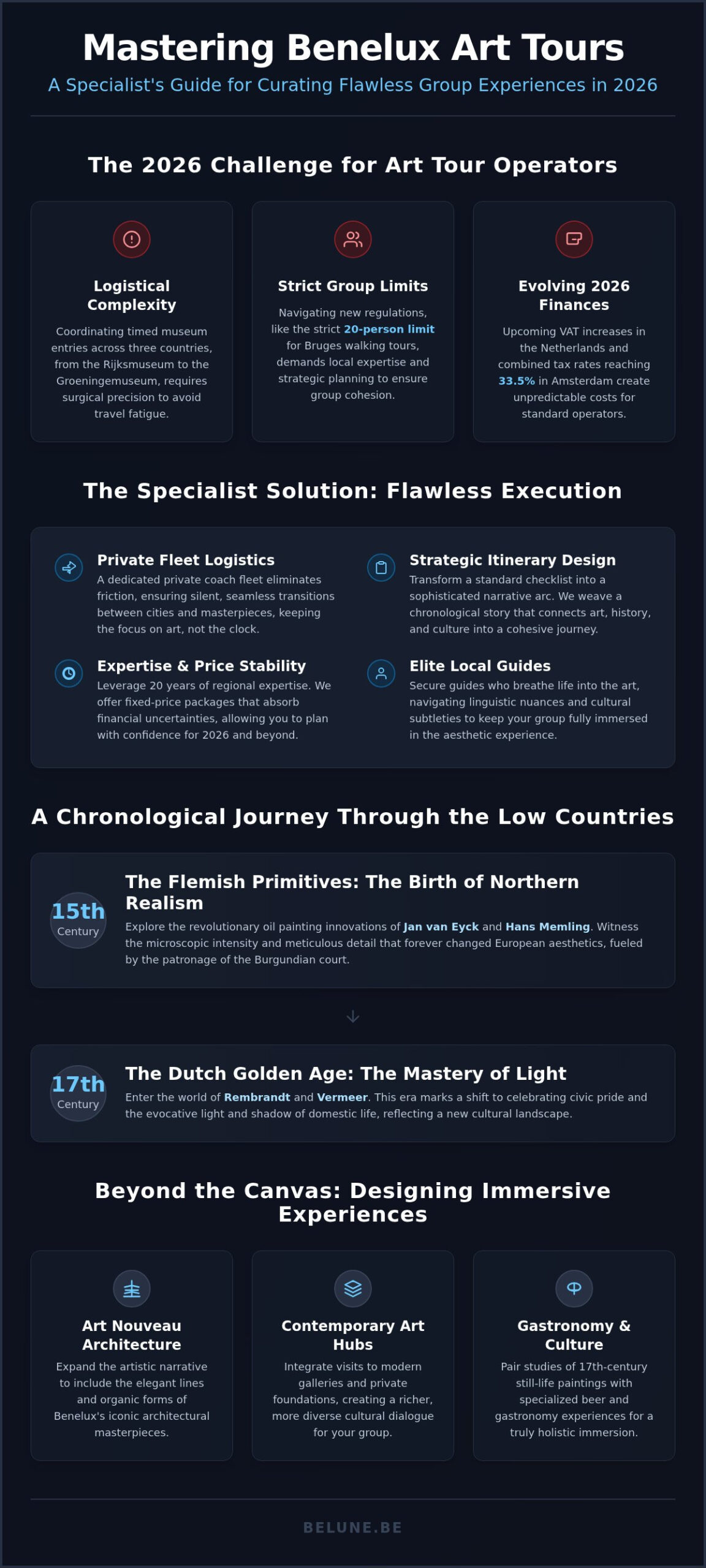
    Utilizing the culture group tours benelux framework for 2026 allows us to treat an itinerary like a bespoke architectural project. We focus on exclusive access, such as private viewings at the Royal Museum of Fine Arts Antwerp or after-hours tours of the Grand Ducal Palace in Luxembourg. These moments of quiet reflection allow the group to absorb the nuance of their surroundings without the distraction of crowds.

    The role of multi-lingual local guides is essential in sublimating this experience. A guide isn’t just a source of facts; they’re a storyteller who translates complex history into relatable insights. In 2026, we prioritize guides who specialize in “architectural storytelling,” bridging the gap between historical heritage and contemporary design. This approach ensures that every gallery visit or landmark tour feels like a personal discovery rather than a standard excursion.

    Gastronomy and Heritage as Strategic Assets

    Integrating belgium gastronomy tours into high-end incentive programs transforms a simple meal into a sensory dialogue. We use culinary excellence as a strategic asset to foster communication. Whether it’s a private workshop with a master chocolatier in Bruges or a farm-to-table dinner in the Ardennes, the focus remains on the harmony of flavors and the heritage of the ingredients.

    • Battlefield Tourism: For commemorative groups, visiting sites like Flanders Fields or the Bastogne War Museum provides a profound lesson in resilience and cooperation.
    • Culinary Context: We pair 19th-century industrial heritage sites with modern Michelin-starred dining to showcase the region’s evolution.
    • Layered Itineraries: Every day includes a mix of high-energy exploration and moments of serene appreciation.

    Blending these elements requires a rigourous technical approach to planning. It’s about the rhythm of the day. We ensure that the transition from a somber historical site to a vibrant gastronomic experience is fluid and respectful. This mastery of pace and atmosphere is what defines a truly premium corporate journey in the Benelux region.

    Partnering for Excellence: Designing Your 2026 Corporate Journey

    Achieving excellence in corporate group travel benelux requires more than a booking; it demands a shared vision. We don’t just organize trips. We compose experiences. Our collaboration with travel agents and operators functions as a masterclass in synergy. We act as the local lens, translating global objectives into tangible, high-end realities across Belgium, the Netherlands, and Luxembourg. This partnership ensures that every technical detail serves the overarching creative goal, providing a seamless bridge between your vision and the region’s unique offerings.

    The BELUNE Methodology: From Vision to Execution

    Our process begins with an initial consultation to identify the “soul” of your project. We listen to the rhythm of your brand to understand the emotional impact you want to achieve. Once the creative vision is set, our technical planning phase aligns logistics with that aesthetic. This isn’t just about bus schedules; it’s about the harmony of movement. We treat logistics as a material to be sculpted, ensuring that transport, dining, and meetings flow into one another without friction.

    Quality control remains our primary focus throughout the travel lifecycle. Our 24/7 on-the-ground management team acts as the invisible hand that maintains perfection. If a flight is delayed or a venue needs a last-minute adjustment, our team handles it with quiet, professional precision. We’re not just suppliers; we’re your strategic allies in the field, dedicated to protecting the integrity of your program from arrival to departure.

    Securing Your 2026 Group Travel Program

    The 2026 calendar is already filling with global events and high-level summits. High-demand venues in Amsterdam, Brussels, and Luxembourg City often require bookings 12 to 18 months in advance. Securing your corporate group travel benelux early guarantees access to exclusive hotel room blocks and private transport slots that often vanish by mid-2025. This proactive approach allows us to lock in the most evocative spaces before they reach capacity.

    To begin, you can request a comprehensive, fixed-price proposal. This document provides clarity and financial security, honoring your budget while maintaining our signature quality. Use this final checklist to ensure your 2026 program is ready for execution:

    • Define core objectives: Distinguish between incentive-based rewards and strategic meeting requirements.
    • Confirm logistics: Validate guest counts and specific dietary or accessibility nuances.
    • Sustainability audit: Ensure all vendors meet 2026 environmental compliance standards.
    • Technical review: Finalize the timeline for all high-touch transitions and private events.

    We invite you to start this dialogue today. Together, we’ll transform your corporate objectives into a sophisticated, professional journey that leaves a lasting impact on every participant. Our commitment is to provide a partnership where excellence is the only standard.

    Defining the Next Era of Your Benelux Vision

    The landscape of corporate group travel benelux in 2026 demands more than just logistics; it requires a vision that blends regional heritage with modern precision. Success lies in the delicate balance between technical excellence and sensory storytelling. From the seamless flow of a private fleet to the curation of exclusive gastronomic encounters, every detail must serve a greater purpose. It’s about transforming a simple gathering into a landmark event that resonates long after the journey ends.

    At Belune, we bring over 20 years of specialized regional experience to your projects. We don’t just move people; we craft atmospheres. Our private fleet of modern, professional coaches ensures reliability, while our Red Dot-level attention to aesthetic and technical detail guarantees a flawless execution. We act as your strategic ally, ensuring that every nuance of your Benelux experience is bespoke and impactful. Partner with BELUNE for your next corporate group travel experience in Benelux. Let’s design a journey that reflects your commitment to excellence and inspires your team to reach new heights.

    Frequently Asked Questions

    What are the primary benefits of using a DMC for Benelux corporate travel?

    A Destination Management Company provides deep local knowledge and boots-on-the-ground support that’s impossible to replicate remotely. For corporate group travel benelux, this expertise translates to a 25% reduction in administrative overhead for your internal planners. We manage complex vendor contracts across three different legal jurisdictions. Our team secures exclusive access to high-end venues like private canal houses in Amsterdam or historic architectural cellars in Luxembourg City.

    How does BELUNE manage cross-border logistics between Belgium, Netherlands, and Luxembourg?

    We coordinate cross-border logistics through a centralized digital hub that syncs transportation and hotel bookings across all three nations. Our team utilizes a network of 15 regional transport partners to ensure zero-delay transitions. We monitor real-time traffic data at 12 key border crossing points. This precision allows for fluid movement between Brussels and The Hague within a predictable 150-minute window, keeping your schedule perfectly intact.

    Can itineraries be fully customized for specific corporate industries?

    We tailor every itinerary to reflect the specific technical or creative requirements of your particular industry. A 2026 fintech summit might focus on Amsterdam’s financial district, while a chemical engineering group visits the Port of Antwerp. Over 90% of our programs include site visits to industry-specific innovation hubs. We transform a standard trip into a strategic learning expedition that resonates with your professional goals.

    What kind of transport fleet is available for large corporate groups?

    Our fleet includes executive sedans, 16-seater luxury sprinters, and 50-passenger premium coaches equipped with high-speed Wi-Fi and ergonomic workspaces. Every vehicle meets Euro 6 emission standards to comply with 2026 environmental regulations in Benelux city centers. We maintain a ratio of one dedicated coordinator for every 20 guests during transit. It ensures boarding and luggage handling take less than 10 minutes per stop.

    How are local guides selected for high-end cultural tours?

    We select local guides based on a rigorous 5-point certification process that prioritizes academic background and linguistic fluency. Each guide holds a minimum of 10 years experience in cultural storytelling or architectural history. We match guides to your specific corporate culture. If your group values innovation, we assign experts specializing in modern urban development and 21st-century design to provide a more relevant perspective.

    What is included in a fixed-price corporate group travel package?

    A fixed-price package for corporate group travel benelux covers 4-star or 5-star accommodation, private ground transportation, and curated dining experiences. It also includes 24/7 on-site coordination and all entrance fees for scheduled cultural visits. By bundling these services, we eliminate hidden costs and currency fluctuation risks. This transparency allows for precise budget forecasting 12 months in advance of your departure date.

    How does BELUNE handle dietary requirements and accessibility during tours?

    We manage dietary requirements through a detailed guest profiling system implemented 45 days before arrival. Our team coordinates with 100% of our partner restaurants to ensure allergen-free and culturally appropriate menus. For accessibility, we audit every venue and transport route for step-free access. We provide specialized mobility equipment within 2 hours if an unexpected need arises during the tour, ensuring no guest is left behind.

    What is the lead time required for planning a multi-day corporate tour?

    Planning a multi-day corporate tour requires a minimum lead time of 6 months to secure premium hotel blocks and high-demand venues. For groups exceeding 100 participants, we recommend starting the design process 9 months before the event. This timeline allows for three rounds of itinerary refinement. It ensures we can curate a bespoke experience that aligns perfectly with your brand’s strategic objectives for the 2026 season.