Tag: Group Travel

  • Vetted Tour Suppliers in Belgium: A Professional Guide for Tour Operators in 2026

    Vetted Tour Suppliers in Belgium: A Professional Guide for Tour Operators in 2026

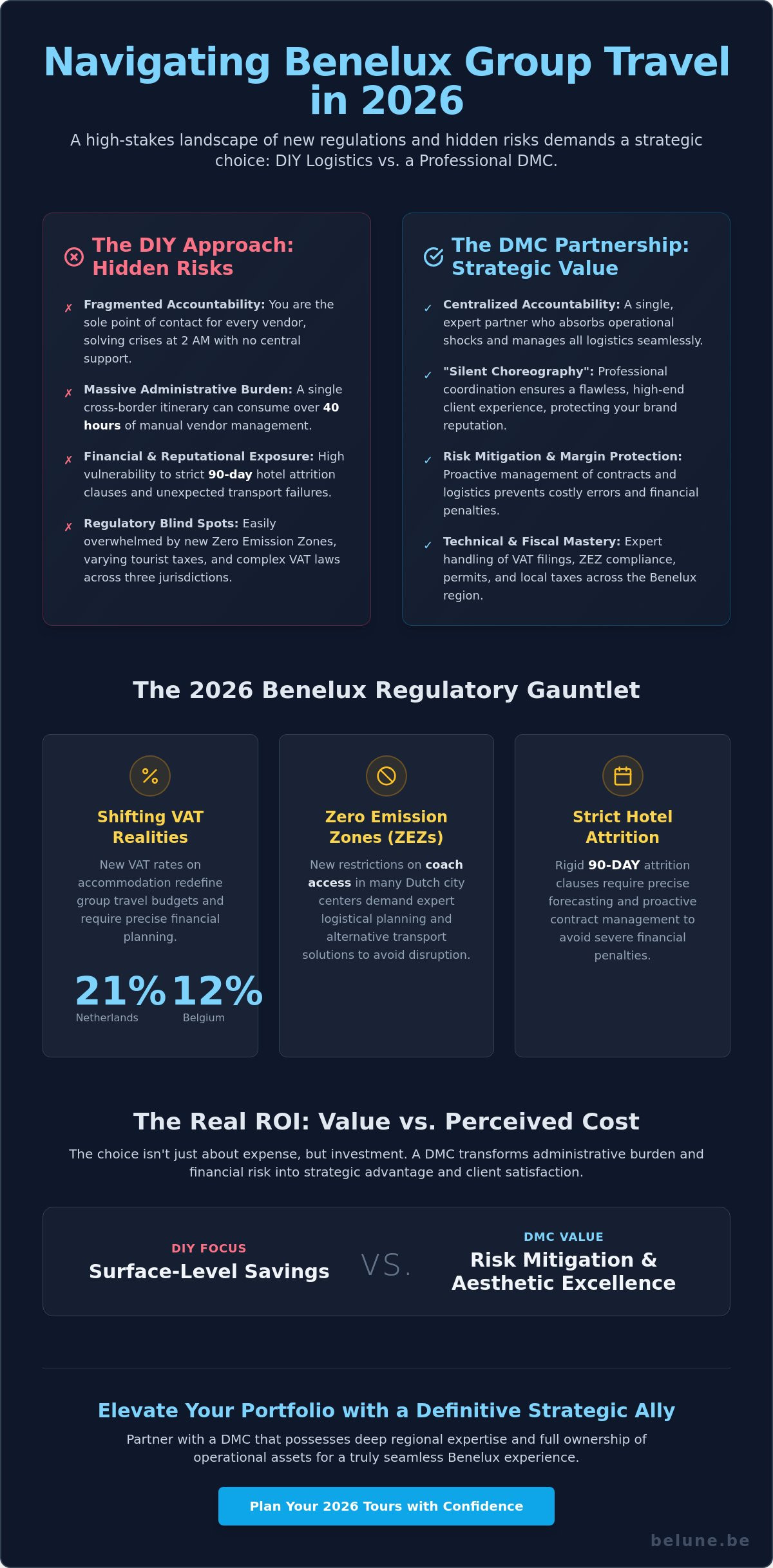
    In a market where 19.6 million tourists arrived in 2025, the difference between a sublime itinerary and a logistical nightmare often comes down to who actually owns the keys to the coaches. You understand that a digital presence isn’t a guarantee of quality; it’s the on-the-ground reality that matters. Finding vetted tour suppliers in Belgium has become increasingly complex as the industry adapts to the new 12% VAT on accommodation that took effect on March 1, 2026, and the upcoming ETIAS launch later this year. You need more than a middleman. You need a strategic partner with the technical mastery to handle 46 million annual overnight stays without losing the personal, bespoke touch your clients demand.

    For specialized needs such as executive airport pickups or smaller group transfers, you can learn more about Luchthavenvervoer naar Zaventem to ensure that the high standard of logistical precision begins the moment your clients arrive.

    We’ll show you how to identify partners who offer direct control over logistics and deep-rooted niche expertise, from WWII battlefields to exclusive art tours in Brussels. You’ll learn how to verify supplier reliability to ensure seamless execution, avoid hidden costs, and navigate the EES digital systems that became operational on April 10, 2026. This guide provides the professional framework to transform your Belgian offerings into high-end experiences that inspire trust and deliver lasting value through every mile of the journey.

    Key Takeaways

    • Understand the shift toward hyper-specialization in the Belgian market to meet the growing demand for high-end group travel.
    • Identify the core criteria for selecting vetted tour suppliers in Belgium, focusing on direct asset ownership to eliminate the risks of logistical fragmentation.
    • Learn to distinguish between digital brokers and true local experts who possess deep-rooted knowledge in specialized sectors like WWI history and gastronomy.
    • Discover the operational benefits of partnering with suppliers who maintain their own coach fleets, ensuring consistency in both branding and service quality.
    • Explore how a strategic destination management ally can transform complex logistics into a seamless, artistically crafted experience for your clients.

    The Belgian travel scene has matured beyond simple sightseeing. In 2025, the country registered over 46 million overnight stays, proving that global travelers now seek depth and sophistication. This shift toward hyper-specialization means that generalist aggregators often fall short. They lack the technical mastery required to handle high-end group needs. Relying on unvetted partners creates logistical fragmentation; it puts your brand reputation at risk. The broad scope of Tourism in Belgium encompasses everything from the medieval charm of Bruges to the modern pulse of Brussels, requiring a partner who understands these nuances intimately.

    Professional tour operators are moving away from global platforms toward dedicated DMCs. They recognize that a “Vetted Standard” involves more than just a functional website. It requires financial stability, local licensing, and a proven capacity for large groups. Finding vetted tour suppliers in Belgium who can navigate the new 12% VAT on accommodation, effective since March 1, 2026, is now a strategic necessity. You need a partner who views logistics as an art form, ensuring every transfer and hotel stay contributes to a sense of harmony and excellence.

    To gain a visual perspective on the diverse Belgian landscape and its logistical requirements, watch this helpful overview:

    The Role of a DMC in Ensuring Quality

    A DMC serves as the essential bridge between international agents and local service providers. They aren’t just intermediaries; they’re architects of the experience. With over 20 years of local presence, a true partner secures priority bookings and better rates that aggregators can’t access. They offer a single point of contact for complex, multi-day national itineraries. This centralized control ensures that the vision for the tour remains intact from arrival to departure. It’s about sublimer the journey through sur-mesure planning and technical rigour.

    Vetting for Reliability and Safety

    Safety is the silent foundation of a successful tour. Vetting vetted tour suppliers in Belgium means verifying insurance coverage and strict compliance with national transport regulations. Since the EU Entry/Exit System (EES) became fully operational on April 10, 2026, border logistics have become more technical. You need a partner with 24/7 on-the-ground support to handle any unforeseen challenges. A professional supplier provides robust crisis management protocols for international groups. They balance technical precision with a human touch, ensuring your clients feel secure and inspired throughout their stay.

    Core Criteria for Vetting Belgian Tour Partners: A Professional Checklist

    Selection is an exercise in precision. When identifying vetted tour suppliers in Belgium, the first pillar of excellence is direct asset ownership. A partner who manages their own fleet of coaches offers a level of consistency that digital brokers simply cannot match. It ensures that maintenance standards are rigorous and that drivers are seasoned professionals who understand the intricate local terrain. This logistical mastery must be paired with deep expertise in specialized themes. Whether it’s the somber history of WWI battlefields or the sensory richness of Belgian gastronomy, your partner should demonstrate a nuanced understanding that goes beyond a standard script. They should act as an artisan of the experience, crafting each moment with technical rigour and artistic sensitivity.

    Language is the thread that weaves a tour together. Standardized multilingual capabilities in Dutch, French, and English are essential for any professional operation. This linguistic fluidity allows for seamless transitions between the Flemish and Walloon regions, ensuring no detail is lost in translation. Alongside this, transparent pricing models are vital for your bottom line. With the VAT on accommodation rising to 12% on March 1, 2026, fixed-price packages provide the financial clarity you need for long-term planning. You deserve a partner who values clarity over hidden costs, providing a stable foundation for your business growth.

    Evaluating Communication and Responsiveness

    Responsiveness defines trust. In an industry where time zones often clash, a 24-hour response time is the gold standard for managing global clients. Dedicated account managers provide the continuity required during the intricate itinerary planning phase. They act as the guardians of your vision, especially when handling custom, ‘white-label’ requests that must align perfectly with your own brand identity. This level of personalized service ensures that every conception is executed with flawless precision.

    Financial and Regulatory Due Diligence

    Regulatory compliance is the final filter in the vetting process. Professional liability insurance specific to the Belgian travel industry is a non-negotiable prerequisite. You should verify the supplier’s standing through the official Belgian tourism portal to ensure they are recognized by regional bodies and adhere to the latest safety standards. Ultimately, a ‘vetted’ status is the harmonious combination of legal compliance and operational excellence that guarantees a flawless guest experience. For those seeking a partner who embodies these high standards, exploring a strategic destination management collaboration can elevate your Belgian portfolio to new heights of sophistication.

    Vetted Tour Suppliers in Belgium: A Professional Guide for Tour Operators in 2026

    Specialised Sector Analysis: Identifying Experts in Heritage, Gastronomy, and Battlefield Tourism

    Belgium is a tapestry of complex narratives. A generalist guide might skim the surface, but for professional operators, depth is the only currency. Partnering with vetted tour suppliers in Belgium ensures that your itinerary is backed by academic rigour and local nuance. As members of the European Tour Operators Association emphasize, specialized knowledge is what differentiates a standard trip from a world-class pilgrimage. With 19.6 million tourist arrivals in 2025, the demand for authentic, high-value experiences has never been higher. You need a partner who views history not as a list of dates, but as a material to be shaped into a compelling guest journey.

    Battlefield tourism requires a delicate balance of technical logistics and emotional intelligence. It’s not just about securing a coach; it’s about finding a guide certified to interpret the scars of the 20th century. Beyond the history, the culinary landscape offers its own challenges. True gastronomy and beer tours must move beyond the tourist-heavy squares of Brussels and Bruges to find the authentic, group-friendly experiences that define Belgian culture. Managing logistics for high-value museum visits also requires surgical precision, especially when coordinating group entry protocols at sites like the Royal Museums of Fine Arts during peak seasons.

    The Nuances of Battlefield Tourism Logistics

    Managing sensitive itineraries for school groups and historical societies demands extreme attention to detail. Remote memorial sites across Flanders and Wallonia aren’t always designed for modern coach access. A vetted supplier understands the turning circles of a 50-seater bus on rural roads as well as they know the timeline of the Battle of the Bulge. They bridge the gap between technical transport requirements and the somber atmosphere of a pilgrimage. For a deeper look at these specific requirements, consult our Flanders Fields: The Definitive Guide to WWI Remembrance. It’s about creating a sur-mesure experience that respects the gravity of the location.

    Curating Authentic Gastronomy Experiences

    True culinary immersion happens in the shadow of the mash tun or the tempering marble. Vetting vetted tour suppliers in Belgium involves ensuring they can secure exclusive brewery access and private chocolate workshops that remain closed to the general public. With hotels accounting for 21.4 million overnight stays in 2025, the pressure on high-quality dining venues is significant. Your partner must ensure that culinary tours accommodate complex dietary restrictions for large groups without sacrificing the gourmet standard. Explore our Belgium Gastronomy Tours: A Masterclass in Culinary Artistry to see how we harmonize local craft with professional group requirements, ensuring every meal is a moment of pure inspiration.

    Asset Ownership vs. Brokering: The Logistical Impact on Group Quality

    Digital facades often mask a lack of physical infrastructure. Many entities claiming to be local experts are merely digital intermediaries, brokering services without owning a single seat. This is the “Hidden Broker” problem. When you prioritize vetted tour suppliers in Belgium who own their logistical assets, you eliminate the risk of sub-contractor variability. Direct ownership translates to technical rigour. It ensures every coach in the fleet meets the Euro 6 environmental standard, aligning your tour with modern sustainability expectations. By removing the middleman, you achieve a level of cost-efficiency that protects your margins while enhancing the guest experience.

    Reliability is born from control. A broker relies on the availability of others, which often leads to inconsistent vehicle quality or last-minute cancellations during peak seasons. In contrast, an asset-owner provides a guarantee of service that is written into the very fabric of their operation. This mastery over logistics allows for a more harmonious journey, where the technical aspects of travel never overshadow the emotional resonance of the destination.

    The Advantage of a Modern Coach Fleet

    Owning a fleet isn’t just about the vehicles; it’s about total control. You gain consistency in driver professionalism and onboard amenities that sub-contractors often ignore. Identifying vetted tour suppliers in Belgium with their own fleet is the only way to guarantee vehicle age and maintenance standards. When a supplier owns the transport, they offer a level of flexibility in routing that brokers cannot match. If a group requires a last-minute change during a tour of Wallonia, an owner-operator makes it happen instantly. A broker must negotiate with a third party, creating delays and uncertainty. This technical mastery ensures a seamless flow through the Belgian landscape.

    Strategic Accommodation Management

    Hotels remained the most popular choice in 2025, accounting for 21.4 million overnight stays. With the VAT on accommodation increasing to 12% on March 1, 2026, direct hotel relationships are more critical than ever for financial stability. A DMC with local roots doesn’t just book rooms; they manage blocks through established trust. They use their cumulative buying power to secure availability in peak months like June or July. This direct link ensures your groups are prioritized and that quality remains consistent across the entire itinerary. For a deeper analysis of these partnerships, consult The Definitive Guide to Choosing a Benelux Incoming Tour Operator.

    Secure your reputation with a partner who owns the journey from start to finish. You can hire a private coach fleet and manage your group accommodation through a single, trusted source that values excellence over mere convenience.

    Partnering with BELUNE: Your Strategic Destination Management Ally in Belgium

    Mastery is a slow-burning achievement. With over 20 years of experience navigating the Benelux and Parisian landscapes, we’ve refined our role as more than just a provider. We’re a strategic ally. Our “Asset-Right” model serves as the cornerstone of this relationship. It combines the technical certainty of a private coach fleet with the artistic vision of expert itinerary planning. When looking for vetted tour suppliers in Belgium, you seek a partner who understands that a journey is a material to be sculpted. We provide that precision. Our approach ensures that every logistical detail contributes to a sense of harmony and professional excellence.

    We don’t just move people; we curate emotions. From the somber silence of Battlefield pilgrimages to the vibrant energy of elite gastronomy tours, our team handles every nuance with surgical care. The 19.6 million tourist arrivals in 2025 have taught us that groups demand exclusivity and technical rigour. We deliver this through direct access and local authority. Whether it’s managing the new 12% VAT on accommodation or preparing for the EES digital systems, our expertise acts as a shield for your brand. We transform complex requirements into seamless, high-end experiences that stimulate the imagination of your clients.

    Our Tailor-Made Itinerary Process

    Collaboration is at our core. We work alongside you to design unique, high-conversion programs that reflect your brand’s soul. Consider the logistical complexity of international sport events, such as F1 Francorchamps or Grand Slam Tennis. Managing thousands of movements while maintaining a premium atmosphere requires more than luck. It requires a rigourous framework and a sur-mesure conception. Our process ensures that even the most ambitious concepts become a flawlessly executed reality. For more insights on selecting the right partner, see The Definitive Guide to Choosing a Group Travel Agency.

    Contact Our Benelux Travel Experts

    Your 2026 group travel season deserves a foundation of excellence. We invite you to request a custom quote that reflects our commitment to artistic vision and technical mastery. Every journey we design is an opportunity to sublimer the travel experience. Let’s transform your Belgian portfolio together through a partnership built on trust and artisanal quality. Partner with BELUNE for your next Belgian group tour and experience a standard of service that inspires immediate respect for the craft of travel.

    Elevating the Belgian Experience for 2026 and Beyond

    The Belgian travel landscape in 2026 demands a shift from volume to value. You’ve seen how direct asset ownership and specialized cultural expertise define the highest standard of professional service. Identifying vetted tour suppliers in Belgium is the first step toward securing your reputation in a market that recorded 19.6 million tourist arrivals in 2025. With over 20 years of industry experience and a private fleet of modern coaches, we bridge the gap between technical rigour and artistic inspiration.

    Our specialized expertise in battlefield and cultural tourism allows us to transform complex logistics into a seamless narrative for your guests. It’s time to move beyond the middleman and embrace a strategic partnership built on transparency and artisanal quality. We’re ready to help you navigate the nuances of the Benelux region with precision and grace.

    Request Your Custom Benelux Group Tour Itinerary from the Experts at BELUNE

    We look forward to helping you design a journey that inspires and endures.

    Frequently Asked Questions

    What defines a ‘vetted’ tour supplier in the Belgian market?

    A vetted supplier combines legal compliance with operational excellence and financial stability. In the Belgian market, this involves meeting the CERTA label standards and maintaining professional liability insurance. Identifying vetted tour suppliers in Belgium requires checking for direct asset control and a proven track record with large groups. This rigour ensures your brand reputation remains protected while delivering a sophisticated experience that meets the high expectations of modern international travelers.

    Why is it better to work with a local DMC rather than a global aggregator?

    Local DMCs offer technical mastery and direct accountability that global aggregators simply cannot match. While aggregators focus on volume, a local partner provides priority bookings and on-the-ground crisis management. This is critical for navigating the new EES digital systems operational since April 10, 2026. We act as your strategic ally, ensuring that every logistical nuance is handled with the precision and grace your clients deserve throughout their journey.

    Can BELUNE handle specialized battlefield tours for educational groups?

    Yes, we specialize in crafting sensitive, high-impact itineraries for educational and historical groups. Our battlefield tours are led by certified expert guides who provide deep historical context for WWI and WWII sites. We manage the complex logistics of coordinating visits to remote memorial sites across Flanders and Wallonia. This ensures a somber, respectful, and educational atmosphere that resonates deeply with students and historical societies alike through technical and emotional precision.

    Does BELUNE own its own fleet of coaches for transport logistics?

    We operate our own fleet of modern coaches to guarantee technical consistency, safety, and reliability. This direct ownership allows us to maintain the Euro 6 environmental standard across our vehicles while ensuring driver professionalism. It eliminates the service variability often found with sub-contractors. By controlling the transport logistics, we offer the flexibility necessary for seamless group movements throughout the diverse Belgian and Parisian landscapes, ensuring a harmonious travel experience from start to finish.

    What languages do the local guides provided by BELUNE speak?

    Our local guides are expertly fluent in Dutch, French, and English to ensure a seamless narrative across all Belgian regions. This linguistic fluidity is essential for navigating the cultural nuances of both Flanders and Wallonia. We can also provide guides for additional specific languages to accommodate diverse international delegations. This commitment to clear, sophisticated communication ensures that every guest feels inspired and fully engaged with the rich heritage of the destination.

    How does BELUNE ensure the quality of hotel accommodations for large groups?

    We leverage 20 years of industry experience to manage direct relationships with group-friendly hotels across the country. This buying power is vital for securing room blocks, especially following the VAT increase on accommodation to 12% on March 1, 2026. We personally vet every property to ensure it meets our standards for aesthetics and service. Our team handles all technical aspects of accommodation management, providing a stable and high-quality foundation for your group itinerary.

    Can you provide fully customized itineraries for niche interests like gastronomy?

    We specialize in sur-mesure itineraries that cater to niche interests like gastronomy and beer culture. Our tours provide exclusive access to local breweries and private chocolate workshops that are often closed to the general public. We manage all dietary requirements for large groups with technical rigour, ensuring the culinary experience remains a highlight. This artistic approach to gastronomy transforms a simple meal into a moment of pure sensory harmony and cultural immersion.

    What is the typical lead time for booking a group tour in Belgium for 2026?

    A lead time of 6 to 9 months is ideal for securing the best assets for the 2026 season. Given that Belgium registered over 46 million overnight stays in 2025, early planning is essential for high-demand periods like the summer festival season. Early booking allows us to refine the conception of your tour with the technical precision required for flawless execution. This foresight ensures your group receives priority access to premium experiences and exclusive local venues.

  • Mastering Ghent Group Tour Logistics: A 2026 Guide for Travel Agents

    Mastering Ghent Group Tour Logistics: A 2026 Guide for Travel Agents

    The most evocative tour of Flanders can lose its luster the moment a coach is diverted by a restricted pedestrian zone or an unregistered LEZ entry. For the visionary travel professional, the beauty of a journey is found in its effortless rhythm. Mastering ghent group tour logistics for travel agents in 2026 is an exercise in technical precision and artistic foresight. You recognize that your clients’ emotions are shaped by the silence of a smooth transfer and the ease of a perfectly timed museum entry.

    We share your commitment to excellence and the belief that logistics should be invisible yet flawless. This guide offers the clarity you need to transform potential hurdles into a seamless masterpiece of travel. You’ll gain expert insights into the €4.40 hotel tourist tax, secure the 24 coach spots at Gent Dampoort, and navigate the Euro 5 diesel requirements with absolute confidence. From securing the €13 group rates at the Castle of the Counts to obtaining pedestrian zone permits through your hotel partners, we provide the strategic roadmap for your next exceptional Flemish itinerary.

    Key Takeaways

    • Navigate the unique urban complexities of Ghent, where 2026 regulations demand a more nuanced approach than neighboring Flemish destinations.
    • Master ghent group tour logistics for travel agents by leveraging specific coach parking strategies and ensuring full compliance with the latest LEZ standards.
    • Secure the harmony of your group’s stay by balancing authentic boutique hotel experiences with the operational precision required for large-scale room block management.
    • Expand your cultural narrative through bespoke itineraries that weave together art, battlefield history, and local gastronomy for a truly holistic guest experience.
    • Align with a visionary partner whose two decades of expertise transform technical logistical challenges into a seamless, elevated journey for your professional clientele.

    The Logistical Landscape of Ghent for Professional Travel Agents

    Ghent isn’t a static backdrop. It’s a vibrant, evolving organism. For those managing ghent group tour logistics for travel agents, this reality demands a blend of technical rigor and creative intuition. While Bruges offers a predictable, postcard-perfect charm, Ghent presents a more intricate puzzle. It’s a city where medieval architecture meets a strict 2026 regulatory framework, requiring a nuanced approach to movement and timing. You aren’t just moving people; you’re orchestrating an experience within a living heritage site.

    Understanding the city’s pulse starts with a solid foundation. A quick look at a Ghent Historical Overview reveals a layout defined by its rivers and ancient trade routes. Today, these translate into narrow streets and sprawling car-free zones that can catch the unprepared off guard. Success lies in balancing historic preservation with the modern needs of international tourists. It’s about knowing which streets allow for a Euro 5 diesel coach and which require a specialized permit from the hotel to ensure a smooth guest arrival.

    To better understand the professional hurdles and opportunities within the travel industry, watch this helpful video:

    The 2026 landscape is defined by its commitment to sustainability and digital efficiency. These technical details aren’t mere hurdles; they’re the building blocks of a high-quality tour. Consider these essential factors for your planning:

    • Digital Parking: On-street parking in Ghent is now entirely paperless, requiring license plate registration via mobile apps.
    • LEZ Standards: As of May 2026, diesel coaches must meet Euro 5 standards to avoid the €35 day pass fee.
    • Tourist Tax Nuance: Rates vary significantly, with hotels requiring €4.40 per person compared to the €2.20 for hostels.

    Understanding the DMC Advantage in Flanders

    Local expertise isn’t just a convenience; it’s a strategic shield. As an incoming tour operator, we understand that a standard visit only scratches the surface. We manage the delicate relationships with local partners that allow your groups to bypass the midday crowds. We don’t just book tickets. We design the flow of the day to ensure every transition feels like a natural extension of the experience. This local presence de-risks the itinerary, allowing you to focus on your vision while we handle the technical execution on the ground.

    B2B vs. B2C Operational Requirements

    Retail platforms often leave agents vulnerable to the whims of individual suppliers. Professional operations require a different level of predictability. You need fixed-price packages that protect your margins and guarantee availability during peak festival seasons. Whether you’re planning themed group travel centered on art or history, the technical execution must be flawless. We prioritize the emotional journey of the guest, ensuring that the logistics of a 40-person check-in never overshadow the beauty of a sunset on the Graslei.

    Seamless Group Transportation: Coaches, Parking, and LEZ Compliance

    The movement of a large group through Ghent is a choreography of timing and technical compliance. For those refining ghent group tour logistics for travel agents, the challenge isn’t just distance; it’s the invisible boundaries of the Low Emission Zone (LEZ). As of May 2026, diesel coaches must meet Euro 5 standards to traverse the city without penalty. Foreign-plated vehicles require online registration before arrival to avoid a €35 day pass fee, which is limited to 12 uses per year. This technical precision ensures your itinerary remains uninterrupted and your budget stays protected.

    Precision continues at the curb. Strategic drop-off points are essential for groups entering the pedestrianized historic core. For long-term stays, Gent Dampoort offers 24 coach spots at a rate of €1.80 per hour, while Yachtdreef provides 14 spaces with a simplified €3.50 day ticket. Coordinating these locations with Ghent’s Official Travel Trade Portal guidelines allows for a friction-free transition from transport to exploration. It’s about knowing exactly where the bus can linger and where it must move to maintain the city’s delicate urban harmony.

    Operational success also hinges on the human element: your driver. Navigating a tight schedule requires a deep understanding of mandatory rest periods and driving hours. A delay in a morning museum visit can ripple through the afternoon if the driver’s legal break isn’t calculated into the flow. We synchronize these technical requirements with the tour’s emotional peaks, ensuring the coach is an asset rather than a constraint. If you’re looking to secure your next project, a bespoke transport strategy can transform your operational efficiency.

    Coach Parking Regulations and Permits

    Managing a 50-seat coach in Flanders requires foresight. While the city provides dedicated zones, the pedestrian areas in the center are strictly monitored. Coaches dropping guests at central hotels need specific permits, typically requested through the hotel partner in advance. Pre-registration for the LEZ is a one-time necessity that avoids the frustration of administrative fines. Optimizing the shuttle flow between the Yachtdreef coach park and the city gates ensures guests never feel the weight of the logistics, keeping the focus on the beauty of the surroundings.

    The Role of Modern Fleet Management

    Reliability is the cornerstone of professional trust. Utilizing a private fleet of modern coaches eliminates the variables associated with third-party sub-contractors. Our vehicles exceed the current LEZ Euro 5 requirements and provide the silence and amenities that elevate a transfer into a moment of rest. Real-time coordination between drivers and local guides ensures that the coach is waiting exactly when the tour concludes, respecting both legal rest periods and the group’s momentum.

    Mastering Ghent Group Tour Logistics: A 2026 Guide for Travel Agents

    Strategic Accommodation and Group Dining Management

    Sourcing the ideal residence for a group in Ghent is an exercise in nuance. It requires a balance between the city’s medieval soul and the technical demands of professional hospitality. For groups of 40 or more, the check-in process must be a silent, efficient transition. You don’t want your guests lingering in a lobby; you want them immersed in the atmosphere of Flanders. Managing ghent group tour logistics for travel agents involves securing these room blocks months in advance, especially during peak 2026 festival seasons when the city’s capacity is tested to its limits.

    Accessibility remains the primary technical hurdle. Many boutique properties are tucked away in narrow, cobblestone alleys where a 50-seat coach cannot pass. We prioritize hotels that offer a dedicated drop-off zone or those that have secured the necessary permits for pedestrian zone entry. Before finalizing any contract, it’s vital to cross-reference the Official Ghent LEZ Compliance Information. This step ensures that your coach fleet meets the Euro 5 diesel standards required for 2026, preventing costly administrative delays and ensuring the €4.40 nightly tourist tax is the only unexpected figure on the ledger.

    Dining is where the emotional narrative of the tour takes shape. It’s the moment where technical planning meets sensory delight. Securing a private space in a historic Belgian eatery allows your guests to experience the city’s culinary heritage without the noise of the crowds. Whether it’s a curated beer tasting or a menu centered on local chocolate, the logistics of high-volume service must never compromise the quality of the plate. We manage these details so the transition from exploration to table is effortless.

    Hotel Accommodation Management Strategies

    Negotiating multi-night stays across a Benelux circuit is a strategic move that secures more competitive rates for your clients. We look for properties that understand the specific rhythm of international groups. This includes ensuring the hotel can handle 40 suitcases simultaneously and provide a breakfast service that respects a sharp 8:00 AM departure. The goal is a friction-free stay where the technical details are handled long before the first guest arrives. We focus on hotels that offer both the aesthetic charm your clients crave and the operational rigor your business requires.

    Curating Gastronomic Experiences for Groups

    Authenticity shouldn’t be sacrificed for scale. We manage the logistics of group dining by selecting partners who specialize in high-volume, high-quality Belgian cuisine. This includes managing complex dietary requirements for international travelers while maintaining a cohesive menu. By securing private dining rooms in historic locations, we create an exclusive atmosphere that resonates with the traveler’s imagination. It’s about transforming a simple meal into a memorable chapter of the journey, ensuring every guest feels the artisan touch of a well-planned experience.

    Curating Thematic Itineraries: Art, History, and Gastronomy

    A profound itinerary is more than a sequence of stops. It’s a carefully composed narrative where every chapter enhances the next. Mastering ghent group tour logistics for travel agents requires moving beyond the obvious landmarks to find the city’s true pulse. While the Adoration of the Mystic Lamb is a cornerstone, the real art lies in how you weave this masterpiece into a broader story of Flemish resilience and creative brilliance. You aren’t just booking sights; you’re designing a sensory journey through time.

    Precision is the silent partner of inspiration. To avoid the friction of group congestion, we schedule boat tours and museum visits with architectural exactness. For instance, the STAM (Ghent City Museum) offers a group rate of €11 for 15 or more people, but the real value is in the expert guidance. A guide costs €100, though this rate increases to €105 for bookings after September 1, 2026. Coordinating these details ensures your group moves through the city like light through a prism, clear and unobstructed. If you’re ready to elevate your offerings, explore our sur-mesure itinerary services today.

    Art and Heritage: The Ghent Perspective

    Connecting Ghent’s medieval architecture with the broader culture group tours in the Benelux region creates a holistic perspective. It’s about seeing the threads that link the Gravensteen castle to the guildhalls of Antwerp. For groups of 15 or more, the €13 entry at the Castle of the Counts must be timed to perfection to avoid the midday rush. We manage these slots with the same rigor we apply to every technical detail. For those staying longer, the CityCard Gent at €42 for 48 hours provides a seamless bridge between public transport and museum access, subliming the guest experience through effortless mobility.

    Battlefield and Remembrance Integration

    Ghent serves as a strategic and elegant base for those exploring the solemn landscapes of Flanders Fields. Integrating Ghent into themed group travel allows for a powerful contrast between urban culture and the quiet remembrance of the Ypres Salient. The transition from a morning chocolate tasting to an afternoon at a remembrance site is a delicate logistical feat. We coordinate these movements with technical precision, ensuring the emotional weight of the experience is supported by reliable transport. Our multi-lingual local guides provide the historical depth necessary to connect WWI and WWII narratives within a single, harmonious journey.

    Why BELUNE is the Strategic Partner for Your Ghent Operations

    BELUNE serves as an artisan of movement. For over 20 years, we’ve navigated the Benelux and Paris markets with a commitment to excellence that transcends simple logistics. Our mastery of ghent group tour logistics for travel agents is born from a deep understanding that a journey is a collection of perfectly timed moments. We don’t just provide solutions; we offer a strategic alliance. By combining technical rigor with an artistic approach to itinerary design, we ensure that every group experience is both seamless and sublime.

    True peace of mind is the ultimate luxury for a professional tour operator. From the initial conceptual phase to the final on-the-ground execution, we act as your visionary advisor. Our role is to absorb the technical complexities of Ghent’s landscape so you don’t have to. Whether it’s managing our own fleet of modern coaches or coordinating local guide services that offer profound historical depth, our focus remains on your brand’s reputation. We operate exclusively in the B2B space. This means our energy is entirely dedicated to supporting professional partners with technical precision and artisanal care.

    Customized B2B Support for Tour Operators

    Our approach is inherently tailor-made. Every itinerary should reflect your brand’s unique travel philosophy. We provide transparent pricing models that respect your agency margins while delivering the highest level of craftsmanship. To us, sublimating a journey means paying attention to the silence between the activities. The ease of a luggage transfer. The harmony of a private dining room. This artisanal attention to detail transforms a standard tour into an exceptional architectural project of human experience. We believe that when the logistics are invisible, the emotion of the travel can truly shine.

    Ready for 2026: Future-Proofing Your Group Tours

    The logistical environment of Western Europe is in constant flux. Evolving LEZ regulations and shifting tourist tax structures require a partner who is always ahead of the curve. We anticipate these changes, ensuring your ghent group tour logistics for travel agents are future-proofed against administrative friction. By choosing a partner with a long-term vision, you guarantee your clients the highest level of service and local insight. Let us handle the technical shadows so your tour can shine. Partner with BELUNE for your next Ghent group itinerary and experience the difference of true expertise.

    Crafting the Future of Flemish Travel

    The complexity of 2026 regulations, from Euro 5 compliance to the €4.40 hotel tax, defines the modern professional landscape. You now possess the strategic insights to navigate these technical requirements with confidence. We’ve detailed how to balance the artisanal charm of boutique stays with the operational necessity of specialized coach parking. Mastering ghent group tour logistics for travel agents is about this precise harmony between technical detail and guest emotion.

    Our team brings over 20 years of DMC expertise to every project. We utilize a private modern coach fleet to ensure your itineraries remain fluid and reliable across the Benelux region. We don’t just solve problems; we design excellence. It’s time to move beyond standard sightseeing and offer your clients a truly curated journey through Flanders. Elevate your Ghent operations, request a custom group itinerary from BELUNE today. Your vision deserves a partner who values technical perfection as much as you do. Let’s create something exceptional together.

    Frequently Asked Questions

    How does the Ghent Low Emission Zone (LEZ) affect tour coaches in 2026?

    As of May 2026, diesel coaches must meet Euro 5 standards to enter the Ghent Low Emission Zone without a penalty. Foreign vehicles require online registration before arrival to maintain compliance. If a vehicle doesn’t meet these standards, a day pass is available for €35, though this is restricted to 12 uses per year per license plate. We ensure all ghent group tour logistics for travel agents are handled to avoid these administrative costs.

    Where is the best place for a 50-seater coach to drop off passengers in Ghent?

    Gent Dampoort is the premier location for large coach parking, offering 24 dedicated spaces just outside the historic center. The rate is €1.80 per hour between 9:00 AM and 7:00 PM, with a maximum of 5 hours for €9. For groups requiring longer stays, Yachtdreef provides 14 spots with a day ticket priced at €3.50. These zones allow for efficient passenger transfers while respecting the city’s pedestrianized core.

    Can travel agents book private hotel blocks through a Benelux DMC?

    Yes, BELUNE specializes in managing comprehensive hotel room blocks for groups of 40 or more guests. We prioritize properties that offer both an authentic boutique atmosphere and the technical accessibility required for large coaches. Our deep relationships with local hospitality partners allow us to secure competitive rates and manage the complexity of group check-ins. This B2B service is designed to de-risk your operations and ensure a harmonious stay for every traveler.

    What are the legal requirements for coach driver rest periods in Belgium?

    Belgian law strictly requires a 45-minute break for every 4.5 hours of driving to ensure passenger safety. Drivers must also have a minimum of 11 hours of daily rest, which can be reduced to 9 hours three times a week. We integrate these legal mandates into every itinerary, balancing technical constraints with the emotional flow of the tour. This foresight prevents unexpected delays and ensures your transport remains reliable and professional throughout the journey.

    Is it possible to organize a private group viewing of the Ghent Altarpiece?

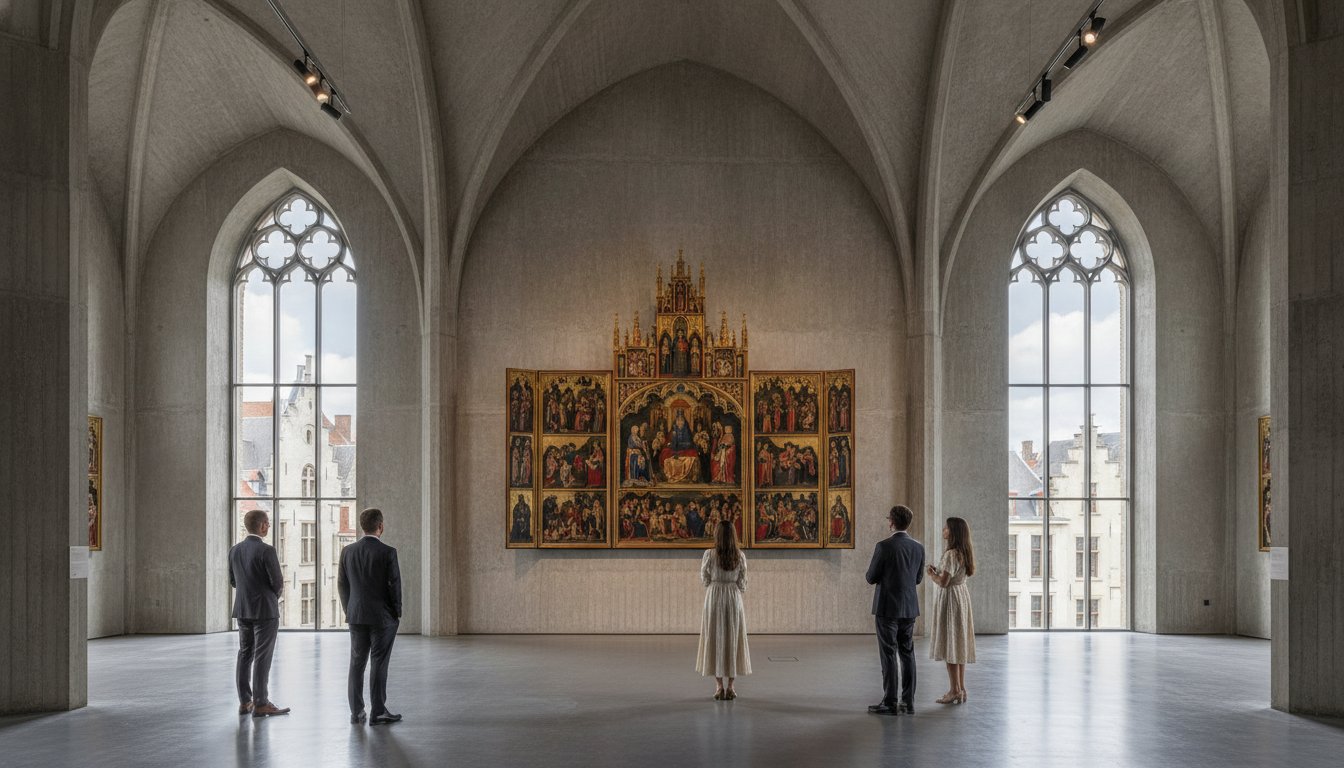
    Private group viewings are possible through advance reservations at St. Bavo’s Cathedral, where the Ghent Altarpiece is housed. We manage the logistics of timed entry to avoid the congestion of peak hours, ensuring your guests have the space to appreciate this masterpiece. Group rates and specialized audio guides are available. This technical coordination is essential for maintaining the high-quality cultural narrative that professional tour operators expect for their clientele.

    How does BELUNE handle last-minute logistical changes for group tours?

    We handle unforeseen changes through real-time coordination between our in-house drivers and local guides. With over 20 years of experience in the Benelux market, we possess the agility to pivot itineraries without compromising the guest experience. Whether it’s a weather-related delay or a sudden venue closure, our team provides the technical support needed to find an elegant solution. This proactive management is a cornerstone of our ghent group tour logistics for travel agents.

    What are the benefits of using a private coach fleet vs. local rentals?

    Using a private coach fleet guarantees Euro 6 compliance and a level of reliability that local rentals often lack. Our fleet offers superior on-board amenities and silent operation, which sublimates the transfer between Flemish cities. By maintaining our own vehicles, we eliminate the variables of third-party sub-contractors. This direct control allows for precision timing and a consistent brand experience that reflects your commitment to excellence and traveler comfort.

    Does BELUNE provide multi-lingual guides for specialized themes like gastronomy?

    Yes, we provide local guide services in multiple languages, specializing in themes like Flemish gastronomy and beer heritage. Our guides are chosen for their ability to blend technical historical knowledge with engaging storytelling. Whether your group is exploring the nuances of Belgian chocolate or the history of Ghent’s medieval breweries, our experts ensure the experience is both educational and inspiring. This specialized guidance is a vital component of our sur-mesure cultural tours.

  • Bruges Canal Tours for Groups: A Masterclass in Logistical Excellence for 2026

    Bruges Canal Tours for Groups: A Masterclass in Logistical Excellence for 2026

    A coach arrives at the terminal at 10:15 AM; by 10:30 AM, forty guests are already gliding past the Jan van Eyck Square. This level of precision isn’t accidental. The difference between a frantic transfer and a moment of pure architectural immersion often comes down to exactly fifteen minutes of logistical foresight. We understand that managing bruges canal tours for groups requires more than just a ticket; it demands a vision where every transition feels effortless.

    You likely know the frustration of aligning a rigid 30-minute boat departure with the unpredictable flow of group dining and traffic. It’s a delicate balance of timing and local intuition. This article shows you how to master these complexities by integrating professional DMC expertise into your 2026 planning. You’ll discover how to leverage the February 13 opening season and secure the €12.00 group rate or a €375.00 private charter to create a seamless, high-quality experience.

    We’ll examine the specific 2026 regulations, the best strategies for multi-language groups, and how to pair these aquatic journeys with a wider cultural itinerary that satisfies the most discerning travelers.

    Key Takeaways

    • Learn why the UNESCO World Heritage waterways serve as a curated canvas for your group’s cultural narrative, offering more than just a scenic view.
    • Master the timing of bruges canal tours for groups by identifying strategic boarding quays that facilitate seamless coach-to-boat transitions.
    • Discover the distinct advantages of private charters over public cruises for ensuring dedicated multilingual support and higher educational value.
    • Establish a robust 12-month planning framework to navigate peak season demand and implement effective contingency plans for seasonal weather shifts.
    • Explore how integrating professional DMC expertise and private coach hire transforms a standard visit into a masterfully orchestrated cultural experience.

    The Timeless Allure of Bruges Canal Tours for Groups

    Bruges isn’t just a city; it’s a living canvas of stone, light, and water. For tour operators, bruges canal tours for groups represent the most direct way to immerse guests in the “Venice of the North.” This UNESCO World Heritage site offers a labyrinth of waterways that dictated the city’s wealth and layout centuries ago. These canals are the very veins of the city, providing a curated journey through a medieval landscape that has remained remarkably intact. It’s a foundational experience that transforms a standard visit into a masterclass in architectural appreciation.

    These waterways aren’t merely scenic routes for leisure. They serve as the essential narrative thread for any high-capacity cultural circuit through the historic city of Bruges. From the water, the medieval architecture reveals nuances and details invisible from the cobblestone streets. It’s the cornerstone of a successful Benelux itinerary, offering a unique vantage point that highlights the grandeur of the city’s golden age while providing a necessary logistical anchor for large parties. The perspective from the water level sublimates the city’s scale, making the towering spires and intricate facades feel both intimate and immense.

    To better understand the unique perspective these waterways provide, watch this helpful video:

    Historical Significance for Cultural Groups

    The waterways were the pulse of the 14th-century Golden Age, carrying lace, wool, and spices to the heart of Europe. On bruges canal tours for groups, visitors see the water-level entrances where goods were once hoisted directly into warehouses. This perspective highlights the ingenuity of medieval urban planning. Certain landmarks, like the secluded gardens of the Beguinage or the weathered foundations of merchant houses, only reveal their true character to those on the water. For art and history enthusiasts, the boat becomes a moving classroom where the city’s timeline unfolds bridge by bridge.

    The Emotional Impact of Waterborne Sightseeing

    The atmosphere in Bruges is a curated blend of silence, light, and stone. As the boat maneuvers through the narrow passages, the interplay of light on the green-tinted water and the weathered red bricks creates a cinematic quality. Passing beneath the low arches of the 14th-century Meebrug and Peerdenbrug bridges creates a sensory shift that grounds the traveler. It’s a moment of refined tranquility. Within a packed travel schedule, these thirty minutes offer a necessary pause, allowing guests to absorb the harmony of the environment before continuing their journey.

    Efficiency is the silent partner of elegance. When managing bruges canal tours for groups, the logistical chain begins long before the first guest steps onto the mahogany deck. It starts at the city’s perimeter. For high-capacity itineraries, identifying the right boarding quays is paramount to avoiding the congestion often found at Jan van Eyck Square. While this square offers a stunning backdrop, its popularity requires a strictly timed entry strategy to ensure your schedule remains intact. A professional DMC acts as the conductor here, synchronizing the arrival of a 50-seater coach with the immediate availability of a private vessel.

    Accessibility remains a cornerstone of professional planning. The historic center, a recognized UNESCO World Heritage Site, presents challenges for senior groups or those with limited mobility. Navigating medieval cobblestones to reach the water requires a nuanced approach. Selecting quays with the fewest steps and providing clear, level pedestrian routes is essential. We’ve found that a well-orchestrated transfer doesn’t just save time; it preserves the guests’ energy for the cultural immersion that follows.

    Coach Parking and Pedestrian Coordination

    Most group journeys begin at the Bargeplein coach park. It’s located on the city’s southern edge, approximately 1.5 kilometers from the primary canal departure points. For groups exceeding 40 people, a staggered boarding strategy is the only way to maintain a sense of exclusivity. Rather than a mass influx, guests arrive in smaller waves. This is where our bespoke coach hire services provide a distinct advantage, allowing for direct, flexible transfers that align perfectly with boat departure windows.

    Synchronized Timing for Multi-Activity Days

    A 30-minute cruise is a brief but intense sensory experience. It must be anchored precisely between other itinerary pillars, such as a gastronomy tour or a museum visit. We recommend a 20-minute “buffer window” before boarding. This time accounts for group restroom breaks and the inevitable photo opportunities that arise when first encountering the Belfry view. Clear communication between the coach driver and the boat captain ensures that the vessel is ready the moment the group arrives. This eliminates the wait time that can often disrupt the rhythm of a high-end cultural tour.

    Bruges Canal Tours for Groups: A Masterclass in Logistical Excellence for 2026

    Comparing Group Experiences: Public Cruises vs. Private Guided Charters

    The choice between a standard public cruise and a private charter is the choice between mere sightseeing and profound storytelling. While public tours offer a glimpse of the city, they often compromise the integrity of a high-end itinerary. For bruges canal tours for groups, the “hop-on” nature of public boats means your guests are often seated alongside random travelers, diluting the group’s collective focus. A private charter elevates the experience to a bespoke event. It reinforces your brand’s commitment to quality by offering an environment where the architecture and history are the sole protagonists. This exclusivity isn’t just about comfort; it’s about maintaining the narrative flow of your curated journey.

    Flexibility is the hallmark of a private arrangement. Public departures follow a rigid, unyielding pulse that waits for no one. In contrast, a private charter allows for subtle adjustments in timing, ensuring that the transition from the coach to the water remains fluid. This logistical freedom is essential when managing tight schedules between cultural landmarks and gastronomy experiences. It transforms a potential bottleneck into a seamless highlight of the day.

    The Benefit of Dedicated Professional Guides

    Communication is the bridge to cultural understanding. In a city as layered as Bruges, a multilingual local guide isn’t a luxury; it’s a necessity. Unlike the pre-recorded or generalized commentary found on public boats, a private guide tailors the narrative to the group’s specific interests. Whether the focus is on the 14th-century trade routes or the intricacies of Flemish Primitives, the depth of information is significantly higher. This expertise is particularly vital for culture group tours benelux, where the historical context of the Low Countries requires a nuanced, expert voice to truly resonate with international guests. A dedicated guide ensures that no detail is lost in translation.

    Customising the On-Board Experience

    Exclusivity allows for sensory layers that public tours simply cannot provide. Imagine your group gliding under the historic bridges while sampling a curated selection of local Trappist beers or artisanal chocolates. These additions transform a 30-minute transit into a multisensory masterclass. Private charters also offer the logistical freedom to request “quiet zones” for reflection or specific photography pauses near the Church of Our Lady. As your strategic partner, we act as the bridge between your vision and local boat owners. We negotiate these bespoke details to ensure every moment on the water feels like a deliberate, handcrafted experience that exceeds the expectations of your most discerning clients.

    Essential Planning Framework for Professional Tour Operators

    Precision in planning isn’t just a preference; it’s a structural necessity. For the 2026 peak season, which spans from April through September, we recommend a 12-month planning horizon. This foresight ensures availability at the most desirable quays and secures the preferred departure windows that align with your broader itinerary. When managing bruges canal tours for groups, the margin for error is slim. Early booking allows us to weave the waterborne journey into the day’s rhythm with the accuracy of a master artisan.

    Operational integrity also relies on a firm grasp of regional legalities. Group activities in the Benelux region must adhere to specific insurance and safety standards, particularly concerning waterborne transport. We prioritize fixed-price packages to maintain your operator margins. This approach protects your budget against seasonal fluctuations and ensures that the end-client receives a consistent, high-quality experience without the disruption of hidden surcharges or last-minute fee adjustments.

    Step-by-Step Booking Timeline

    • Step 1: Define the group profile. This includes finalizing the exact passenger count and specifying the required languages for the guide to ensure total cultural immersion.
    • Step 2: Secure coach parking permits. At this stage, it’s vital to synchronize with a benelux incoming tour operator to align the fleet arrival with the boat’s quay manifest.
    • Step 3: Confirm final passenger counts exactly 14 days prior to arrival. This deadline is essential for finalizing manifests and ensuring the boarding process remains swift and professional.

    Risk Management and Contingency Plans

    Contingency planning is where local expertise truly shines. Open-top boat operations are tied to the elements. While the 2026 season is confirmed from February 13 to December 30, extreme weather or scheduled canal maintenance can occasionally necessitate a “Plan B.” Whether it’s an exclusive gallery visit or a private chocolate masterclass, having a pre-verified alternative is non-negotiable. Our team provides 24/7 on-the-ground assistance. We handle real-time logistical shifts so that your group leaders can focus entirely on the guest experience. To ensure your 2026 itineraries are built on a foundation of logistical excellence, request a consultation with our planning team.

    Elevating Group Travel with BELUNE’s Destination Management

    At BELUNE, we view ourselves as the architect of light and travel. We don’t just facilitate movement; we design the atmosphere in which your guests experience the heart of Europe. Excellence in bruges canal tours for groups isn’t an isolated event. It’s a single, luminous thread within a larger tapestry of service. Our approach integrates these iconic waterborne journeys into sophisticated themed group travel benelux programs. Whether the focus is on the interplay of shadow and stone in medieval architecture or the vibrant energy of a gastronomy circuit, we ensure the transition from land to water is effortless.

    Our A to Z service model removes the friction of coordination. We manage everything from high-capacity accommodation bookings to the selection of local guides who possess a deep, artisanal knowledge of their craft. This holistic management allows tour operators to provide a seamless narrative for their clients. Every detail, from the first hotel check-in to the final canal departure, is handled with a rigueur that inspires absolute confidence. We transform the logistical burden into a masterfully orchestrated experience where the only thing your guests need to focus on is the beauty of the city.

    A Fleet of Modern Coaches for Seamless Transfers

    The journey begins on the road. Our own fleet of modern coaches represents the pinnacle of comfort and reliability. Having a dedicated BELUNE driver simplifies the complex logistics of city-centre drop-offs, ensuring your group arrives at the quay refreshed and on time. This synergy between land and water transport is what defines our commitment to excellence. All our transport solutions meet the highest European safety and environmental standards. This commitment to quality ensures that the physical journey is as refined as the cultural one.

    Your Strategic Partner for Benelux and Beyond

    True expertise is measured in decades. We invite you to leverage over 20 years of experience in regional group travel. By choosing BELUNE, you gain a single point of contact for complex, multi-city itineraries spanning Bruges, Ghent, Brussels, and Amsterdam. This centralized coordination eliminates the fragmentation that often plagues international tours. We’re not just a supplier; we’re a visionary ally in the creation of exceptional architectural and cultural projects. Contact us today to request a customized, fixed-price group itinerary and experience the masterclass in logistical excellence your clients deserve.

    Orchestrating Exceptional Journeys for 2026

    Mastering the intricacies of bruges canal tours for groups requires more than a simple booking; it demands a vision of harmony between land and water. We’ve explored how a 12-month planning horizon and the strategic use of private charters transform a standard visit into a refined cultural event. By prioritizing accessibility and synchronized coach transfers, you ensure that every guest experiences the city’s medieval soul without the friction of logistical delays.

    As a specialized DMC, BELUNE brings over 20 years of Benelux expertise to your most ambitious projects. Our private fleet of modern coaches and dedicated local guides provide the technical rigueur necessary to sublime every itinerary. We act as your strategic partner, managing every nuance from accommodation to on-board catering. It’s time to elevate your offerings from simple sightseeing to a masterclass in travel design. Partner with BELUNE to design your next bespoke group itinerary and discover the difference that professional orchestration makes. Your vision deserves a foundation of excellence.

    Frequently Asked Questions

    Can canal tours in Bruges accommodate groups of more than 50 people?

    Yes, we manage large-capacity arrivals by coordinating multiple vessels simultaneously. Since standard boats typically accommodate 35 to 40 passengers, a group of 60 would utilize two boats departing in tandem. This ensures the entire party experiences the city’s harmony together. For bruges canal tours for groups exceeding 100 travelers, we implement a staggered boarding schedule at primary quays to maintain logistical fluidity and guest comfort.

    Is it possible to book a private canal boat with a guide who speaks a specific language?

    Private charters are the only way to guarantee a dedicated multilingual professional for your group. While public tours offer generalized commentary, a private booking allows us to assign a local expert fluent in your guests’ native tongue. This is essential for cultural groups who require technical depth. We currently coordinate guides in over 10 languages to ensure every nuance of the city’s history is perfectly communicated.

    What is the best time of day for groups to avoid the crowds on the canals?

    Optimal tranquility is found before 11:00 AM or in the late afternoon after 4:00 PM. During these windows, the light hits the medieval brickwork with a specific softness that’s perfect for photography. Midday often sees a 40% increase in quay congestion due to day-trippers from Brussels. By scheduling your group outside these peak hours, we preserve the refined tranquility that makes the experience so memorable for high-end travelers.

    How far is the coach parking from the main boat departure points?

    The primary coach terminal at Bargeplein is approximately 1.5 kilometers from the central boarding quays. This walk takes a group roughly 20 minutes at a moderate pace. We recommend utilizing our private coach fleet for drop-and-go maneuvers near the city perimeter when local regulations allow. This reduces pedestrian fatigue and ensures your guests arrive at the water level with their energy fully intact for the tour.

    Are the boats covered in case of rain during a group tour?

    Most vessels are open-top to ensure they can pass safely under the 14th-century stone bridges. While some operators provide umbrellas, we treat rain as a logistical variable that requires a Plan B. In the event of persistent downpours, we leverage our local partnerships to pivot the itinerary toward indoor cultural masterclasses. This proactive management ensures that weather never diminishes the quality of a professionally orchestrated bruges canal tours for groups.

    Can we combine a canal tour with a group lunch or chocolate tasting?

    We specialize in weaving these sensory layers into a single, cohesive itinerary. A 30-minute cruise serves as the perfect transition between a morning of architectural discovery and a curated gastronomy experience. We coordinate with local artisans and restaurants near the quays to ensure your group moves seamlessly from the boat to a private chocolate atelier or a canal-side dining room without any wasted transit time.

    What happens if our group is delayed due to traffic or coach issues?

    Real-time communication is our safeguard against the unexpected. Our team provides 24/7 assistance, acting as the bridge between your coach driver and the boat captain. If traffic on the E40 motorway causes a 15-minute delay, we negotiate the departure window in real-time. This flexibility is a hallmark of our DMC service, ensuring that a minor delay doesn’t result in a missed experience or a fractured schedule.

    Is there a discounted rate for large groups or professional tour operators?

    Verified 2026 rates for groups of 20 or more people are set at €12.00 to €14.00 per person. These professional rates offer a significant advantage over the €15.00 individual adult ticket. For B2B partners, we manage these bookings as part of a fixed-price package. This approach protects your margins and ensures that the financial aspect of the tour remains transparent and predictable from the initial planning phase.

  • Benelux Group Tour Highlights for Travel Operators: A 2026 Strategy Guide

    Benelux Group Tour Highlights for Travel Operators: A 2026 Strategy Guide

    How can evolving fiscal policies, such as adjustments to accommodation VAT and hotel taxes within the region, actually lead to your most profitable season yet? You’ve likely felt the pressure of shifting regulations, from the €90 Schengen visa fee to the new €20 ETIAS requirement arriving in late 2026. Designing a journey across three distinct national frameworks requires more than just a map. It demands a mastery of the finer details. Identifying the right Benelux group tour highlights for travel operators is no longer about following the crowds. It’s about curating an experience where logistical precision meets artistic vision.

    We understand that your reputation rests on the harmony of the itinerary and the reliability of the execution. You’ll discover the essential thematic pillars and logistical secrets that turn standard Benelux itineraries into high-margin, award-winning group travel products. This guide provides a curated list of high-impact experiences, a breakdown of the logistical backbone needed for 2026, and a roadmap to finding a DMC partner who acts as a true strategic ally. We’ll show you how to navigate the complexities of 2026 with the confidence of an artisan.

    Key Takeaways

    • Master the “Short Distance, High Impact” strategy to maximize guest satisfaction by connecting high-density UNESCO sites within a compact, efficient geographic footprint.
    • Identify the most marketable benelux group tour highlights for travel operators, focusing on deep-dive thematic immersion in Remembrance heritage and artisanal gastronomy.
    • Navigate the complex 2026 fiscal and regulatory shifts through a logistical backbone of owner-operated fleets and sophisticated hotel allotment management.
    • Elevate your brand with bespoke, white-label solutions that transform standard itineraries into high-margin, award-winning travel products.
    • Discover how strategic collaboration with a visionary DMC partner eliminates operational friction while stimulating the imagination of your global clientele.

    The Strategic Value of Benelux Group Tours in 2026

    The Benelux region represents a masterclass in spatial efficiency. For travel operators, it offers a rare density of UNESCO World Heritage sites and diverse cultural layers within a remarkably compact geography. This “Short Distance, High Impact” advantage means guests spend less time on motorways and more time immersed in the actual benelux group tour highlights for travel operators. It’s an architecture of travel where every hour is purposeful. As we approach 2026, Western Europe is seeing a definitive recovery in premium group bookings, with travelers seeking depth over distance.

    In 2026, the market is moving away from the frantic pace of the “Grand Tour.” We’re witnessing a sophisticated shift toward curated, thematic experiences. This evolution isn’t just about visiting a city; it’s about understanding its light, its textures, and its history through the Benelux Union‘s unique cross-border synergy. It’s a region where the nuance of a single canal house can be as captivating as a royal palace.

    To better understand this concept, watch this helpful video:

    Why Operators Prioritize the Benelux Region

    Diversifying beyond the saturated markets of Italy or France is essential for portfolio health. The Benelux countries offer deep repeat-client potential. A guest who explored the Flemish Primitives in Bruges often returns to discover the innovative water management of the Netherlands. When you partner with a specialized incoming expert, the logistical friction of crossing three national borders vanishes. It allows you to focus on the narrative while we handle the technical precision of the journey. We act as your artisans of the itinerary, ensuring every transition is seamless.

    Defining the 2026 Group Travel Persona

    The 2026 traveler seeks a deeper connection. They don’t just want to see a battlefield; they want an expert-led educational experience that honors the emotional weight of history. They expect the “Slow Travel” philosophy, even in a multi-country itinerary. This means longer stays in high-end accommodations and seamless transport. Our own fleet of modern coaches ensures this standard is met without compromise. Every detail, from the clarity of the guide’s commentary to the comfort of the seats, must reflect the premium quality your brand promises.

    Remembrance and Heritage: High-Impact Thematic Highlights

    Remembrance tourism remains a cornerstone of the European travel market, particularly for groups from the Commonwealth and North America. These aren’t mere sightseeing stops; they are profound emotional pilgrimages that require a delicate, professional touch. Identifying the right benelux group tour highlights for travel operators often starts with these hallowed grounds. In 2026, the demand for authentic, narrative-driven history is higher than ever. Operators who successfully weave these stories into a broader cultural fabric create products with lasting resonance and high repeat value.

    Integrating heritage sites into a wider itinerary requires a sense of harmony. You don’t want to overwhelm guests with grief, yet you mustn’t diminish the significance of the history. We recommend balancing a morning at a cemetery with an afternoon exploring the local artisanal traditions found on the official tourism website for Flanders. This approach respects the gravity of the past while celebrating the resilience of the present. It creates a rhythm that allows for reflection without exhaustion. Expert local guidance is non-negotiable because only a specialist can translate silent landscapes into the visceral human narratives that define battlefield tourism.

    WWI: Flanders Fields and the Ypres Salient

    The Last Post Ceremony at the Menin Gate in Ypres is a transformative experience for any group. It’s a moment of collective silence that bridges generations, held every evening at 8:00 PM without fail. For modern educational groups, the ‘In Flanders Fields’ Museum offers an interactive lens that makes history tangible through personal stories and digital archives. To ensure your itinerary meets these high emotional standards, consult our Flanders Fields: The Definitive Guide for deeper insights into organizing successful group pilgrimages.

    WWII: The Battle of the Bulge and Bastogne

    The Ardennes region serves as a stark reminder of the strategic intensity of WWII. For history-focused groups, the Bastogne War Museum and the Mardasson Memorial are essential pillars of any itinerary. Operators can add a layer of exclusivity by arranging visits to private collections or meeting with local historians who provide a first-hand perspective on the region’s liberation. This contrast between sombre history and the lush, natural beauty of Wallonia creates a powerful narrative arc for the traveler. It’s about finding light within the shadows of the past. If you’re looking to elevate your next historical itinerary, we invite you to explore our specialized Battlefield Tourism services.

    Benelux Group Tour Highlights for Travel Operators: A 2026 Strategy Guide

    Gastronomy and Culture: Crafting Sensory Itineraries

    Taste and vision serve as the silent narrators of any high-end journey. To truly capture the essence of the region, we must look beyond the clichés of street waffles and generic souvenirs. In 2026, sophisticated travelers demand a deeper connection to local craftsmanship. This shift toward sensory immersion provides some of the most compelling benelux group tour highlights for travel operators looking to differentiate their portfolios. By focusing on the intersection of culinary innovation and historical artistry, you transform a standard trip into a bespoke narrative that resonates long after the flight home.

    Creating “Instagrammable” moments is now a strategic necessity for modern tour marketing. It isn’t just about the photo; it’s about the atmosphere. The way North Sea light hits a 17th-century canal house or the precise tempering of a dark chocolate ganache creates a visual story that guests are eager to share. These moments act as organic testimonials for your brand. In a year where Dutch VAT on short-stay accommodation has reached 21%, providing high-value, sensory-rich experiences is the key to maintaining guest satisfaction. We focus on the nuance of the experience to ensure every dollar spent feels justified by the quality of the encounter.

    The Belgian Beer and Chocolate Masterclass

    Brewery visits and chocolate workshops consistently rank as the highest-rated activities for international groups. However, the secret lies in exclusivity. We provide access to “off-limits” Trappist locations where production still follows centuries-old monastic traditions. Similarly, our chocolate workshops allow guests to work alongside master chocolatiers in private artisan studios rather than crowded tourist centers. These deep-dives into liquid gold and cocoa are essential benelux group tour highlights for travel operators. To see how these elements can be woven into a professional itinerary, explore our dedicated Belgium Gastronomy Tours page.

    Art and Architecture: From Rembrandt to Modernism

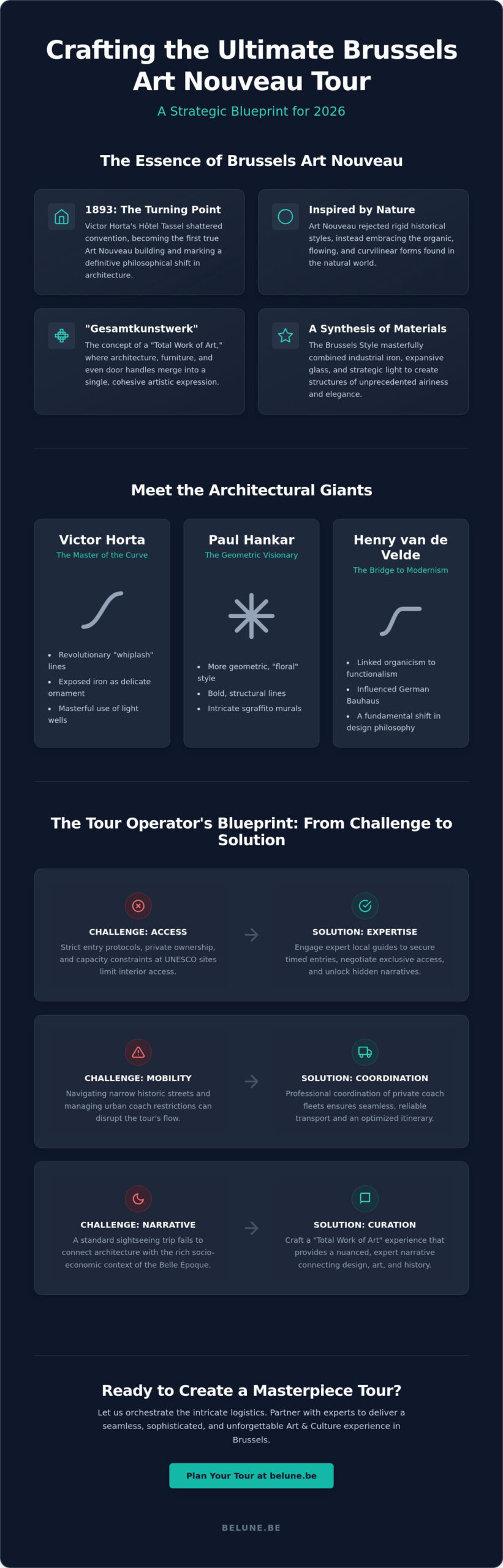
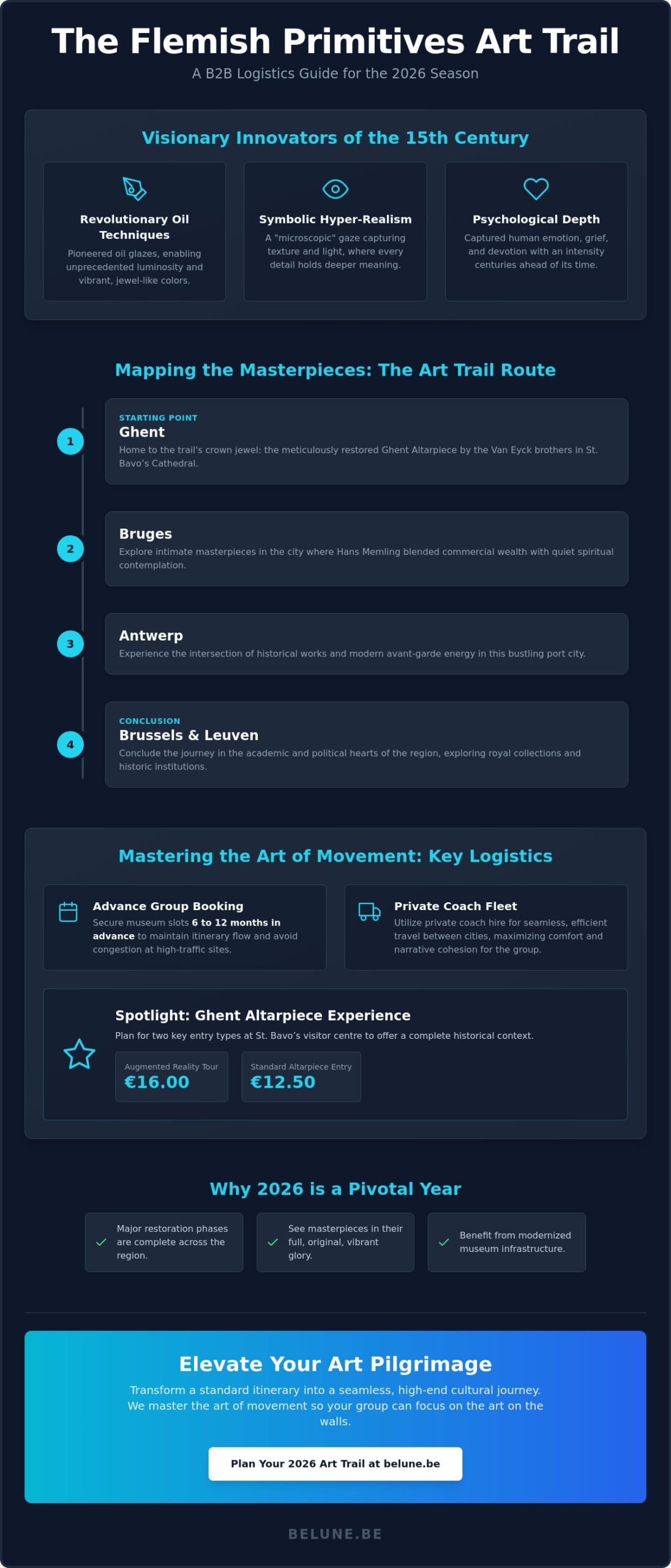
    The transition from the Flemish Primitives in Bruges to the Dutch Masters in Amsterdam offers a masterclass in the evolution of light and shadow. Operators can elevate these tours by including private museum access or expert-led architectural walks through Brussels’ Art Nouveau districts. For many groups, incorporating Paris as a logical extension provides a complete Western European art narrative. This seamless cross-border flow is a hallmark of a well-designed product that respects the traveler’s time and curiosity. For a deeper dive into these cultural frameworks, consult The Ultimate Guide to Culture Group Tours.

    The Operator’s Backbone: Logistics and Accommodation

    Behind every award-winning itinerary lies a skeleton of absolute technical rigour. It is the silent architecture that supports the beauty of the journey. For travel operators, the true challenge in 2026 isn’t just selecting destinations; it’s mastering the logistical friction inherent in three distinct national frameworks. From the €5 per night Brussels tourist tax to the Dutch VAT surge to 21% on short-stay accommodation, the fiscal landscape is shifting rapidly. Identifying the right benelux group tour highlights for travel operators requires a partner who treats these complexities as a material to be mastered, not a hurdle to be cleared.

    Managing the “unseen” logistics is where professional expertise becomes visible. We handle the intricate details of parking permits in historic city centres, the strict monitoring of driver hours, and the ever-evolving cross-border regulations. This technical precision ensures that your guests remain in a state of inspired reflection rather than logistical frustration. When the “backbone” is strong, the narrative of the tour can truly shine. To secure this level of operational excellence for your next project, explore our coach hire and accommodation management services.

    Elite Transportation: The BELUNE Fleet Standard

    Risk mitigation begins with asset control. Using a DMC with its own fleet, like BELUNE, eliminates the uncertainty of third-party reliability. Our modern coaches are designed to be mobile sanctuaries, featuring high-speed Wi-Fi, ergonomic seating, and full environmental compliance for Europe’s strictest low-emission zones. Our professional local drivers are more than just operators; they are experts in regional road networks who ensure every transition is fluid. This ownership of the transport chain allows us to guarantee a standard of safety and comfort that reflects your brand’s premium promise.

    Group-Friendly Hotel Management

    Sourcing the right hotel is an exercise in balance. We seek out properties that offer the sophistication your clients expect while providing the coach accessibility and group-friendly infrastructure required for seamless operations. In 2026, navigating the complex hotel allotment landscape is particularly demanding due to the 12% VAT rate in Belgium and the 12.5% tourist tax in Amsterdam. We manage these financial nuances and dietary requirements for diverse international groups with surgical precision. For a deeper understanding of how to select the right partner for these tasks, consult our guide on Choosing a Benelux Incoming Tour Operator.

    Expert local guides serve as the final, essential bridge. They translate the silence of a landscape or the complexity of an art piece into a human experience. By providing multi-lingual specialists who understand the cultural nuances of your specific group, we ensure the benelux group tour highlights for travel operators are not just seen, but deeply understood. This is the craftsmanship of travel.

    Partnering for Success: Custom Itineraries with BELUNE

    The era of generic, “off-the-shelf” packages has faded. In its place, a new demand for white-label, bespoke solutions has emerged. For the 2026 season, the most profitable benelux group tour highlights for travel operators are those that feel personal, exclusive, and perfectly aligned with a brand’s unique identity. We don’t just provide a service; we act as a visionary ally. With 20 years of technical expertise in the region, we’ve refined the art of the incoming partner, turning logistical complexity into a seamless narrative for your guests.

    Our “A to Z” service model ensures that no detail is left to chance. From the initial conceptual drawing of an itinerary to the final moment a guest boards their return flight, we’re the silent architects of the experience. This comprehensive support allows you to focus on your clients while we master the nuances of the terrain. We invite you to co-create the next generation of Benelux travel products, where every stop is chosen for its ability to inspire and every transition is handled with surgical precision.

    The Customization Process

    Collaborative itinerary building is a dialogue between your brand’s vision and our local mastery. We match specific themes, such as the Art Nouveau districts of Brussels or the innovative water management systems of the Netherlands, to your specific market segment. In a market currently fluctuating due to the 21% Dutch VAT on accommodation or the new ETIAS regulations arriving in late 2026, we offer fixed-price guarantees. This provides the budget certainty you need to market your portfolio with confidence. To explore how these themes can be structured, see our guide on Themed Group Travel in Benelux.

    Seamless Execution and Support

    True luxury is found in the absence of friction. We provide 24/7 on-the-ground support to ensure total peace of mind during tour execution. Whether it’s a last-minute adjustment to a museum entry or a specific dietary requirement at a Michelin-starred venue, our team is always present in the shadows, ensuring everything remains in harmony. Our local guide services are a critical component of this, elevating the guest experience through deep, human storytelling. These experts turn the benelux group tour highlights for travel operators into visceral memories that drive high guest satisfaction scores.

    The future of group travel in Western Europe belongs to those who prioritize quality, innovation, and reliability. We’re ready to help you build that future. Contact BELUNE today to begin planning your 2026 group tour portfolio and discover the impact of a truly strategic partnership.

    Designing the Future of Benelux Group Travel

    Mastering the 2026 landscape requires a blend of artistic vision and technical rigour. We’ve explored how spatial efficiency allows for high-impact itineraries and why deep thematic immersion in heritage and gastronomy is the key to premium differentiation. Success in this region depends on a logistical backbone that can navigate shifting fiscal regulations with ease. It’s about creating a journey where the technical details remain silent; allowing the emotion of the experience to take centre stage for every guest.

    Identifying the most profitable benelux group tour highlights for travel operators is only the first step. Execution is where your brand promise is truly fulfilled. With over 20 years of DMC experience, a private fleet of modern coaches, and specialized expertise in battlefield and cultural tourism, we provide the stability your portfolio needs. It’s time to transform these strategic insights into reality. Request a Bespoke Benelux Itinerary for Your 2026 Portfolio and let us help you sublimer every mile of your guests’ journey. The Benelux region is ready to be rediscovered through your vision.

    Frequently Asked Questions

    What are the essential highlights for a first-time Benelux group tour?

    The essential benelux group tour highlights for travel operators include the Amsterdam canal ring, the medieval core of Bruges, and Brussels’ Grand Place. These sites provide a foundational narrative of European history and commerce. We recommend pairing these with a visit to the Delta Works in the Netherlands to showcase modern innovation alongside historical architecture. This combination ensures a balanced, high-impact introduction to the region’s diversity.

    How do travel operators benefit from using a local DMC in Belgium and the Netherlands?

    Using a local DMC provides immediate mastery over regional complexities like the 21% Dutch VAT on short-stay accommodation. We act as a strategic ally, managing the “unseen” logistics from parking permits to driver hours. This local presence ensures that any on-the-ground shifts are handled with surgical precision. It transforms a standard itinerary into a seamless, high-margin product for your portfolio.

    What is the best time of year for group travel in the Benelux region?

    The optimal period for group travel is between April and June or during the vibrant months of September and October. Spring offers the iconic bloom of the Keukenhof gardens, while autumn provides stable weather and a rich calendar of cultural festivals. Traveling during these shoulder seasons helps operators avoid the peak summer crowds. It also ensures better availability for high-end hotel allotments in historic city centers.

    Can BELUNE manage group tours that extend into Paris?

    We certainly manage seamless extensions into Paris for groups seeking a broader Western European narrative. Paris serves as a natural artistic conclusion to an itinerary focused on the Flemish Primitives and Dutch Masters. Our logistical framework covers the entire corridor, ensuring that transport and accommodation standards remain consistent across the border. It’s a sophisticated way to add value to a standard Benelux circuit.

    What types of specialized themes can be incorporated into a Benelux itinerary?

    Specialized themes range from immersive Battlefield tourism in Flanders and the Ardennes to high-energy tours for the F1 Grand Prix at Spa-Francorchamps. We also design deep-dives into Belgian beer culture and artisanal chocolate production. For active groups, cycling tours through the rolling landscapes of Luxembourg offer a unique perspective. These niche themes are the most effective benelux group tour highlights for travel operators to differentiate their offerings.

    How does BELUNE ensure the quality of its coach fleet and drivers?

    Quality is guaranteed through our owner-operated model, which eliminates the risks associated with third-party sub-contracting. Our fleet consists of modern coaches equipped with Wi-Fi and ergonomic seating, all meeting the latest Euro 6 environmental standards. Drivers are local professionals with deep knowledge of regional road networks and multi-lingual capabilities. This technical rigour ensures that guest safety and comfort are never compromised.

    What is the typical group size for Benelux customized tours?

    Customized tours are most effective for groups ranging from 15 to 35 participants. This size allows for the intimacy required in artisanal workshops or private museum visits while remaining logistically efficient for our coach fleet. It strikes a perfect balance between high-end personalization and the economies of scale needed for profitable group travel. We tailor every detail to match your specific brand persona.

    How far in advance should travel operators book group hotel allotments in Benelux?

    Operators should secure hotel allotments at least 10 to 12 months before the departure date. With the 2026 implementation of new tourist taxes and VAT increases, the competition for group-friendly hotels in hubs like Amsterdam and Bruges is intense. Early booking ensures price stability and guarantees accessibility for coaches. We leverage our long-standing relationships with regional hoteliers to secure the best possible terms for our partners.

  • WWI Battlefields in Belgium: A Masterclass in Group Remembrance and Logistics

    WWI Battlefields in Belgium: A Masterclass in Group Remembrance and Logistics

    Organizing a pilgrimage to the wwi battlefields belgium is not merely a travel exercise; it’s an architectural feat where technical precision must elevate human emotion. You know that coordinating a coach through the narrow lanes of Ypres or securing a group-friendly hotel that respects the somber nature of the Westhoek requires more than just a booking. It requires a vision. With 365,000 visitors arriving in the Westhoek in 2025, the demand for excellence in remembrance tourism has never been more vital.

    We believe that every detail, from the timing of the 8:00 PM Last Post ceremony to the specific accessibility of Tyne Cot Cemetery, should feel effortless. This article provides the blueprint for orchestrating these journeys with masterclass precision. You’ll discover the definitive 2026 UNESCO site status updates, professional logistical frameworks for coach-based travel, and how a dedicated DMC partner sublimates historical data into a profound human experience. We’re here to help you bridge the gap between complex technical requirements and the quiet, powerful moments your group expects.

    Key Takeaways

    • Navigate the tactical geography of the Ypres Salient to identify landmarks that define the Western Front’s enduring legacy.
    • Tailor your itineraries to specific national narratives, ensuring British, American, and ANZAC groups find deep personal resonance at every stop.
    • Master the technical nuances of navigating the wwi battlefields belgium, from managing sensitive coach access to selecting hotels that respect the journey’s somber tone.
    • Leverage twenty years of regional expertise to transform complex logistics into a seamless, emotionally resonant pilgrimage for your clients.

    The Eternal Echo of WWI Battlefields in Belgium

    The soil of Flanders doesn’t just hold history; it breathes it. The wwi battlefields belgium represent a unique intersection where the echoes of 1914 meet the technical demands of modern travel. For the 365,000 visitors who journeyed to the Westhoek in 2025, these sites serve as a physical bridge between ancestral memory and contemporary peace. This isn’t just tourism. It’s a precise orchestration of remembrance where every stop is a deliberate act of honoring the past through sophisticated planning.

    The Western Front’s presence in the Belgian landscape remains a permanent scar turned into a sanctuary. To grasp the strategic weight of these locations, a look at an Ypres Salient overview reveals how the terrain dictated the lives of millions. Belgium has become the global epicenter for this commemoration because the scars are still visible. They’re preserved with a technical rigour that respects the gravity of the events while allowing modern groups to reflect in silence. Remembrance Tourism has evolved into a specialized sector, blending historical expertise with high-level logistical coordination.

    To better understand the physical reality of this subterranean conflict and its impact on the landscape, watch this insightful exploration of the front lines:

    The Symbolic Power of Flanders Fields

    John McCrae’s “In Flanders Fields” didn’t just capture a moment; it defined a region’s identity for eternity. The poppy, once a simple wildflower, became a universal symbol of sacrifice that still blankets the landscape today. We view this terrain as a living museum. It’s a fragile environment that requires delicate professional handling. Every cemetery and memorial site is a nuance in a larger story of harmony and loss. For tour operators, the challenge lies in sublimating these historical facts into a profound human experience without disturbing the site’s inherent sanctity.

    Why 2026 is a Landmark Year for Pilgrimage

    By 2026, the legacy of the Centenary has matured into a permanent, sophisticated commemorative culture. We’re seeing a distinct shift in visitor behavior. Travelers aren’t just looking for general history anymore. They’re pursuing personalized genealogies and ancestral research, seeking the exact spot where a relative once stood. This deeper connection drives a need for absolute precision. Navigating the wwi battlefields belgium in 2026 requires professional DMC guidance to manage the crowds while maintaining the quiet intimacy required for a private pilgrimage. Our role is to act as the craftsman of this journey, ensuring the logistical framework remains invisible so the emotion can take center stage.

    Mapping the Ypres Salient and Flanders Fields

    The geography of the Western Front is a masterclass in tactical geometry. To understand the wwi battlefields belgium, one must first visualize the Ypres Salient. This wasn’t a straight line. It was a stubborn, vulnerable bulge that pushed into German-held territory, surrounding the city of Ypres on three sides. For four years, this curve of earth became the most contested ground in Europe. Today, the contrast is striking. The once-shattered landscape has transformed into a serene tapestry of Flemish farmland, yet the underlying scars remain preserved for those who know where to look.

    Planning a 3-day group tour requires a focus on the Salient’s most evocative sectors. We prioritize the southern ridge for its panoramic views, the central city for its symbolic weight, and the northern flats for their harrowing stories of attrition. Balancing these sites requires a deep understanding of the local roads. What looks like a short drive on a map can become a logistical challenge for a 50-seater coach navigating rural lanes. For a seamless flow, we recommend aligning your visit with our flanders fields guide to ensure no critical landmark is overlooked.

    The Ypres Salient: A Crucible of History

    Ypres was a focal point. It was a place where the landscape itself became an enemy. The high ground was everything. The Battle of Passchendaele stands as the ultimate testament to this struggle for elevation. Groups shouldn’t miss the In Flanders Fields Museum, located within the reconstructed Cloth Hall. It serves as a high-tech narrative hub, using personal stories to ground the technical scale of the war. Each day concludes at the Menin Gate. Since 1928, the 8:00 PM Last Post ceremony has remained a non-negotiable experience for any pilgrimage. It’s a moment where the technicalities of travel fade into a profound silence.

    UNESCO World Heritage Sites in Flanders

    The year 2026 marks a new era for the region. The recent recognition of 27 funerary and memorial sites as UNESCO World Heritage status has elevated the wwi battlefields belgium to a global stage of preservation. This isn’t just a title. It’s a commitment to protecting the harmony of these sensitive locations. For tour operators, this means stricter access protocols and a need for precise timing. If you’re looking to optimize your group’s itinerary around these protected zones, consider these essential UNESCO landmarks:

    • Tyne Cot Cemetery: The largest Commonwealth War Graves Commission cemetery in the world, holding nearly 12,000 graves.
    • The Menin Gate: A monumental arch inscribed with the names of over 54,000 soldiers whose graves are unknown.
    • Langemark German Cemetery: A somber, wooded site that offers a powerful contrast to the open Commonwealth memorials.
    • Ploegsteert Memorial: Located in the southern sector, honoring those who fought in the woods of “Plugstreet.”

    This global recognition ensures these sites remain living monuments. They require an artisan’s touch to navigate, ensuring that the logistical framework of a group visit never overshadows the historical depth. By prioritizing these sectors, you offer your clients a journey that is both technically flawless and emotionally resonant.

    National Perspectives: Tailoring Tours for Global Groups

    Every nation views the wwi battlefields belgium through a unique cultural prism. It’s not a one-size-fits-all journey. British and Commonwealth visitors often seek the meticulous “English Garden” aesthetic maintained by the Commonwealth War Graves Commission. This design philosophy uses light, soft flora, and uniform headstones to create a sanctuary of harmony. In contrast, American groups often prioritize the bold, neoclassical architecture of their own memorials. For tour operators, understanding these nuances is the difference between a standard trip and a profound pilgrimage. We approach these differences as a craftsman approaches a bespoke project, ensuring the logistical framework supports the specific emotional weight of each nation’s story.

    Ancestral Mapping has become the definitive trend for 2026. Modern groups no longer settle for general history; they demand personal precision. In 2025, archival requests for specific soldier “coordinates” increased by 18% compared to previous years. This technical shift requires tour operators to integrate genealogical data into their itineraries. It’s about finding the exact field where a grandfather stood. This level of customization transforms a coach tour into a deeply personal mission, requiring a DMC partner who can bridge the gap between military records and the physical landscape of Flanders.

    The Commonwealth and the ANZAC Trail

    For British, Australian, Canadian, and New Zealand groups, Tyne Cot Cemetery is the emotional anchor. As the largest Commonwealth cemetery in the world with nearly 12,000 graves, its scale is breathtaking. We also prioritize the Island of Ireland Peace Park in Messines. Its round tower design offers a unique architectural nuance that resonates with groups from both the North and South of Ireland. Coordinating ANZAC Day commemorations on April 25th requires extreme logistical precision. With the 2026 UNESCO status protecting these sites, early booking for coach access is now a technical necessity to ensure your group can participate in the dawn services without disruption.

    American Remembrance: The Flanders Field American Cemetery

    The American narrative in Belgium is often overlooked, yet it’s incredibly powerful. The Flanders Field American Cemetery in Waregem is the only American WWI cemetery in the country. It holds 368 graves of soldiers who fell during the Ypres-Lys Offensive in late 1918. The site’s white Carrara marble headstones and quiet chapel offer a stark, beautiful contrast to the surrounding Flemish countryside. Groups following the American Expeditionary Forces need specialized guides who can articulate the specific US military contributions to the liberation of Belgium. We ensure these tours highlight the unique bond between the US and the local population, a connection that remains vibrant over a century later.

    Orchestrating the Pilgrimage: Logistics for Tour Operators

    Logistics are the invisible architecture of remembrance. When moving large groups through the wwi battlefields belgium, technical precision must remain hidden to allow the emotional narrative to breathe. It’s a delicate balance. A single delay in a 50-seater coach schedule can disrupt the quiet reflection at a cemetery or cause a group to miss the precisely timed 8:00 PM Last Post ceremony. We view itinerary planning as a form of spatial design. Every turn on a rural road and every hotel check-in is a nuance that contributes to the overall harmony of the journey. Professional service fees for this level of coordination aren’t just costs; they’re investments in a seamless, bottleneck-free experience.

    To deliver a truly sophisticated journey, the human element is paramount. Multi-lingual local guides act as the bridge between cold historical data and the human heart. They don’t just recite dates. They interpret the landscape, explaining how the mud of 1917 shaped the architecture of modern Flanders. With 14.9 million visitors arriving in Flanders in 2024, the region is bustling. Navigating this volume requires a strategic partner who understands the rhythm of the Westhoek. If you’re ready to elevate your tour’s technical execution, you should partner with a specialized DMC to ensure every detail is handled with artisan rigour.

    Coach Hire and Transport Logistics

    The narrow, winding lanes of the Ypres Salient weren’t designed for modern tourism. This makes having a private fleet of modern vehicles a critical competitive advantage for a benelux incoming tour operator. Technical mastery of driver hours is essential. For example, a driver’s mandatory rest periods must be meticulously aligned with the late-night return from Ypres after the Menin Gate ceremony. We recommend avoiding the peak “Remembrance season” around November 11th. Instead, consider the late spring or early autumn months when the light sublimates the landscape and site congestion is significantly lower, allowing coaches easier access to sensitive UNESCO zones.

    Group-Friendly Accommodation Management

    Sourcing the right hotel is a matter of atmosphere and geography. We look for properties that understand the somber nature of a battlefield pilgrimage. A group returning from a day of ancestral research doesn’t want a generic, noisy lobby; they need a space that respects their reflection. Strategic placement is key. We prioritize hotels within a 20-minute radius of Ypres to minimize daily travel time and maximize the group’s presence at the sites. As your DMC, we negotiate fixed-price group packages that protect your margins while ensuring your clients receive a high-end, tailored service that feels personal from A to Z.

    Crafting History: The BELUNE Approach to Battlefield Tourism

    We approach history as a material to be shaped. For more than 20 years, our team has acted as the craftsman of light and shadow, transforming the somber landscape of the wwi battlefields belgium into a nuanced journey of remembrance. We don’t just provide a service; we offer a vision. Our expertise in Benelux group travel logistics allows us to sublimate the technical challenges of a tour into an effortless human experience. Every itinerary we design is a bespoke project, built with the same rigour and artistic sensitivity that a visionary architect brings to a landmark building. Our commitment to high-quality B2B partnerships ensures that you have a strategic ally who values excellence as much as you do.

    Our Fixed-price Group Tour Packages are designed to provide absolute clarity and confidence. In an industry where hidden costs can often disrupt a project’s harmony, we offer a transparent framework that protects your margins and respects your clients’ expectations. We believe that professional remembrance tourism requires a delicate balance of technical mastery and emotional intelligence. By choosing to work with us, you aren’t just booking a tour; you’re commissioning a masterclass in historical travel that has been refined over two decades of local operation.

    The Art of the Custom Itinerary

    A list of landmarks is merely a sequence; a BELUNE itinerary is a narrative. We strive for a harmonious flow that respects the gravity of the wwi battlefields belgium while celebrating the resilience of the Flemish spirit. This means integrating local gastronomy and cultural heritage into the journey. A lunch at a traditional estaminet or a visit to a local brewery provides a necessary pause, allowing the group to process the day’s historical depth in a balanced environment. Our travel experts provide cradle-to-grave support, managing every technical nuance from the first draft of the itinerary to the final farewell. This personalized accompaniment ensures that the logistical framework remains invisible, leaving only the emotion of the experience.

    Your Strategic Ally in Western Europe

    Efficiency is the ultimate form of respect for your group’s time. By leveraging our private transport fleet and our network of specialized local guides, you gain a single-point-of-contact for all Benelux and Paris logistics. We handle the complexities of driver regulations, UNESCO site access, and multi-country coordination with technical fail-safety. This streamlined approach allows you to focus on your clients while we manage the rigour of the road. We invite you to transform your vision of a battlefield pilgrimage into a technical and emotional masterpiece. To begin your collaboration with a partner who understands the art of the journey, Request your custom WWI battlefield group itinerary from BELUNE.

    Designing the Future of Remembrance

    Transforming a journey through the wwi battlefields belgium into a profound human experience requires more than just a map. It demands an artisan’s touch. We’ve explored how the technical mastery of the Ypres Salient and the 2026 UNESCO recognition of 27 memorial sites require a sophisticated logistical framework. With 14.9 million visitors arriving in Flanders in 2024, the difference between a standard tour and a masterclass in remembrance lies in the precision of the planning. It’s about creating harmony between the weight of history and the needs of a modern group.

    We invite you to leverage our 20 years of DMC expertise and our private fleet of modern, high-capacity coaches to elevate your next project. We specialize in sophisticated, multi-day itineraries that bridge the gap between historical data and emotional resonance. Let’s collaborate to ensure your group’s pilgrimage is seamless from the first mile to the final Last Post ceremony. Partner with BELUNE for your next professional group tour to Flanders Fields and discover the art of technical excellence in historical travel. Your vision deserves a strategic ally who values precision as much as you do.

    Frequently Asked Questions

    What are the most important WWI battlefield sites to visit in Belgium?

    The Ypres Salient contains the most critical sites for any comprehensive tour of the wwi battlefields belgium. You should prioritize the Menin Gate for its symbolic weight, Tyne Cot Cemetery for its sheer scale, and the Langemark German Cemetery for its somber contrast. The In Flanders Fields Museum in Ypres provides the necessary narrative depth to ground these physical locations in human history.

    Is the Menin Gate Last Post Ceremony open to large groups in 2026?

    The Last Post ceremony remains a daily, public event held at 8:00 PM and is fully accessible to large groups in 2026. There’s no admission fee or reservation required, but groups should arrive at least 45 to 60 minutes early to secure a view. For those wishing to lay a wreath, we recommend coordinating through a local partner to manage the specific protocols and local purchase requirements.

    How far in advance should a tour operator book WWI group accommodation?

    We recommend securing hotel blocks at least 12 to 18 months in advance, especially for travel during peak commemorative months. With 365,000 visitors traveling to the Westhoek in 2025, the demand for group-friendly hotels in Ypres and the surrounding countryside is intense. Early booking ensures you find a location that balances logistical proximity with the quiet atmosphere your clients expect.

    What is the best way to transport a group of 40+ people between Flanders battlefields?

    A modern, high-capacity coach is the most efficient way to move large groups across the wwi battlefields belgium. The region’s narrow rural roads require experienced drivers who understand the local topography and parking constraints at sensitive memorial sites. Using a private fleet ensures your schedule remains fluid and avoids the technical bottlenecks often found with standard public transport or multiple smaller vehicles.

    Can WWI battlefield tours be combined with other Belgian cultural experiences?

    Integrating Belgian gastronomy and medieval heritage creates a more balanced and harmonious itinerary for your group. Many operators combine battlefield visits with brewery tours in the Westhoek or evening excursions to the historic centers of Bruges and Ghent. This approach allows guests to process the somber history of the front line while appreciating the vibrant, living culture that has flourished in Flanders since the war.

    Are the WWI cemeteries in Belgium accessible for people with limited mobility?

    Most major WWI cemeteries and memorials maintained by the Commonwealth War Graves Commission are designed with accessibility in mind. Sites like Tyne Cot and the Menin Gate feature level paths and ramps, though some smaller, original trench sites may have uneven terrain. As your DMC, we verify the specific accessibility nuances of every stop to ensure a seamless experience for every member of your group.

    What is the significance of the UNESCO World Heritage status for Belgian WWI sites?

    The 2026 recognition of 27 funerary and memorial sites as UNESCO World Heritage status provides a new layer of global protection and prestige. This designation confirms these locations as sites of universal value, which often leads to stricter visitor management and enhanced preservation efforts. For tour operators, it highlights the need for precise logistical planning to respect the increased technical requirements for group access to these protected zones.

    How does a DMC help with the logistics of a school or military history group?

    A DMC acts as your technical architect, managing everything from specialized guide sourcing to complex transport manifests. For school or military groups, we align the itinerary with specific educational objectives or regimental histories, ensuring every site visited has direct relevance. Our 20 years of expertise allow us to anticipate logistical challenges before they occur, providing a fail-safe framework that lets you focus on the educational narrative.

  • Benelux Group Travel Risk Management: A Masterclass in Duty of Care for 2026

    Benelux Group Travel Risk Management: A Masterclass in Duty of Care for 2026

    Could a single oversight in digital border compliance dismantle a prestige group experience before it even begins? You likely recognize that in Belgium, the Netherlands, and Luxembourg, true luxury is defined by seamlessness. However, the regulatory landscape for 2026 has become increasingly intricate. With the Netherlands raising VAT on accommodation to 21% and Belgium increasing tourism service VAT to 12% in March 2026, the financial and logistical stakes have never been higher. Mastering benelux group travel risk management is no longer just a legal checkbox. It’s the invisible, sophisticated architecture of your duty of care.

    This masterclass reveals how to weave safety and compliance into your high-end offerings without sacrificing the guest’s sense of wonder. We’ll explore the impact of the April 2026 Entry/Exit System (EES) launch and the official €20 ETIAS authorization fee. You’ll also learn how to align with ISO 31030 standards while vetting local partners who handle emergencies with quiet, expert precision. From coach safety to digital security, discover how to transform risk mitigation into a mark of excellence for your 2026 tours.

    Key Takeaways

    • Redefine duty of care as a holistic framework where security and prestige coexist to protect both your guests and your brand’s reputation.
    • Identify the critical safety benchmarks for modern coach fleets and accommodation to ensure logistical continuity across every border.
    • Master the nuances of benelux group travel risk management by leveraging local intelligence to navigate crowd dynamics at exclusive heritage sites and festivals.
    • Implement a strategic two-step assessment process to vet tier-one suppliers against the rigorous safety standards required for 2026.
    • Discover how a visionary partner can handle the technical complexities of risk, transforming potential disruptions into a seamless, high-end narrative.

    The Evolution of Duty of Care: Benelux Group Travel Risk Management in 2026

    True expertise in benelux group travel risk management transcends the simple avoidance of crisis. It’s a holistic craft that weaves safety, quality, and logistical continuity into a single, invisible fabric. While Belgium, the Netherlands, and Luxembourg enjoy a reputation for stability, this perceived safety can be a trap for the unprepared. In 2026, the landscape has shifted. By applying foundational Risk Management Principles, we ensure that every logistical thread remains taut and reliable, even when regional regulations diverge.

    The industry benchmark for 2026 is the ISO 31030 standard. This framework moves us toward “silent security,” a concept where risks are mitigated so deeply within the planning phase that the guest never feels the weight of oversight. It’s about the nuance of the experience. We anticipate the friction before it occurs, ensuring the aesthetic of the tour remains unblemished by the mechanics of safety.

    To better understand the strategic depth of these concepts, watch this helpful video:

    Understanding the Modern Duty of Care

    The duty of care in 2026 is both a legal mandate and a moral promise. As of April 2026, the implementation of the EU Entry/Exit System (EES) has made digital compliance a primary safety concern. Tour operators now face heightened expectations to protect groups not just from physical harm, but from digital and administrative disruptions. When the Netherlands increased VAT on short-stay accommodation to 21% in 2026, it added a layer of financial risk that requires precise management. This is where the vision of a benelux incoming tour operator becomes indispensable. We bridge the gap between international standards and local realities, ensuring your benelux group travel risk management policy is as resilient as it’s refined.

    Risk as a Component of Luxury and Quality

    We view risk management as a tool to sublimate the guest experience. By removing friction, we create space for harmony. A successful tour isn’t just one that avoids accidents; it’s one where the transition from a Brussels hotel to an Amsterdam canal cruise feels effortless despite the 33.5% total tax burden now facing visitors in the Dutch capital. Active on-the-ground management has replaced basic insurance as the gold standard. We don’t just react to emergencies; we design environments where they’re unlikely to occur. This proactive stance is the signature of a partner who values excellence over mere compliance.

    The Core Pillars of Risk Mitigation: Transport, Accommodation, and Logistics

    Sophisticated risk mitigation isn’t a performance. It’s a quiet, rigorous discipline. In the Benelux region, where the border between Belgium and the Netherlands might be a simple line on a city street, benelux group travel risk management demands a unified technical approach. We focus on the specific details that define quality: the safety of the vehicle, the security of the room, and the agility of the plan. This isn’t about armored convoys. It’s about the precision of the invisible architecture that supports every prestigious journey.

    Coach Safety and EU Regulatory Compliance

    Safety starts with the fleet. In 2026, we don’t settle for standard transport. Every vehicle must be a masterpiece of modern engineering, equipped with Advanced Emergency Braking Systems (AEBS) and Electronic Stability Programs (ESP). Driver compliance is equally vital to the tour’s harmony. Strict adherence to EU Regulation (EC) No 561/2006 regarding driving hours and rest periods ensures your group is always in capable, well-rested hands. We avoid the risks of third-party brokers by prioritizing partners with their own meticulously maintained fleets. This technical rigour is the only way to guarantee total quality control across every kilometer.

    Vetting Group-Friendly Accommodations

    A five-star rating is only a surface-level indicator. True duty of care involves a technical audit of group hotel accommodation against the ISO 31030:2021 Standard. We evaluate more than just aesthetics. Our vetting process includes a review of evacuation accessibility, fire safety protocols, and secure luggage handling systems. We also manage group check-ins to minimize public exposure, ensuring the group’s presence remains discreet and protected. These details transform a hotel stay into a secure sanctuary, allowing the guest to focus on the experience rather than their safety.

    Real-time intelligence serves as the ultimate safeguard for logistical continuity. Our local guides act as visionary advisors on the ground. They manage crowd flow at heritage sites like Brussels’ Grand Place or the Rijksmuseum with a nuanced touch. They anticipate potential delays and pivot the itinerary before the guest ever notices a change. This level of preparation is what allows a tour to breathe and remain effortless. If you’re looking to elevate your regional operations, partnering with a specialist ensures these high-end standards are met with every single departure.

    Global security protocols often feel like a heavy, ill-fitting coat. They provide broad coverage but lack the mobility required for the intricate streets of Ghent or the crowded squares of Luxembourg City. While a U.S. State Department Travel Advisory provides a necessary macro-view of regional safety, it cannot replace the granular intelligence of a local partner. In the context of benelux group travel risk management, expertise is found in the nuances. It’s the ability to navigate three languages and three distinct sets of local police protocols without a moment’s hesitation.

    Our multi-lingual guides are the primary sensors in our risk framework. They don’t just translate words; they interpret the environment. By understanding the cultural landscape, they can de-escalate potential friction before it impacts the guest experience. This is the difference between a reactive security guard and a visionary local guide. We believe that true safety should be felt, not seen, through the harmonious flow of the tour.

    Managing Large-Scale Events and Festivals

    Consider the complexity of the Belgian Grand Prix at Francorchamps or the major music festivals that define the Benelux summer. With over 50,000 attendees in concentrated areas, the primary risk isn’t security in the traditional sense. It’s the logistical pressure on group movement and emergency access. Our protocols prioritize pre-arranged assembly zones and encrypted communication channels that remain stable even when local cellular networks are overwhelmed. We don’t just follow the crowd. We orchestrate the group’s path through it with technical precision.

    Heritage and Battlefield Tourism Safety

    Sites like flanders fields demand a specific emotional and physical sensitivity. For many, these are pilgrimages. This adds a layer of psychological duty of care. We coordinate closely with local authorities at national memorials to ensure groups, particularly those with elderly participants, have prioritized, safe access. Whether it’s a specialized themed group travel benelux itinerary or a somber remembrance tour, we balance the technical requirements of safety with the profound respect these locations deserve. Meticulous planning ensures that the somber beauty of the site remains the focus, protected by a silent, robust safety framework.

    A Strategic Framework for Tour Operators: Building a 2026 Risk Policy

    Constructing a resilient strategy for benelux group travel risk management in 2026 is an exercise in technical foresight. It’s the difference between a tour that merely exists and one that thrives under pressure. A high-end policy doesn’t just list rules; it creates a safety net that is both invisible and unbreakable. We approach this through a five-step framework designed to maintain the harmony of the guest experience while fulfilling every legal and moral duty of care.

    • Step 1: Conduct a destination-specific risk assessment for each itinerary to identify regional vulnerabilities.
    • Step 2: Vet all tier-one suppliers, including transport, hotels, and restaurants, against rigorous safety benchmarks.
    • Step 3: Establish a 24/7 emergency response protocol that provides immediate, local on-the-ground support.
    • Step 4: Train group leaders and guides on incident management and discreet communication strategies.
    • Step 5: Review and refine the policy quarterly based on real-time feedback and evolving global standards.

    The Destination-Specific Risk Assessment

    A static plan is a liability. We analyze every transport route and venue capacity with surgical precision. This involves identifying logistical bottlenecks, such as the high-traffic entry points at Schiphol or the narrow, historic corridors of Bruges, which could increase group vulnerability. In 2026, a dynamic risk assessment is a living protocol that synthesizes real-time logistical data with regional regulatory shifts to protect group continuity. By anticipating these pressures, we ensure the group remains in a state of effortless flow, regardless of external circumstances.

    Supplier Vetting and Quality Assurance

    Digital questionnaires are insufficient for a masterclass in safety. Physical site inspections remain the gold standard. We evaluate our partners not just for their aesthetic appeal, but for their technical reliability. This is particularly vital for culture group tours benelux, where we often collaborate with artisanal partners in historic buildings. We ensure that every gastronomy partner meets the highest food safety and allergen standards, especially as Belgium’s 12% VAT increase on tourism services in March 2026 places new administrative pressures on local providers. Our role is to ensure these shifts never compromise the quality or safety of the guest’s plate.

    To ensure your next departure meets these exacting standards, you can request a technical audit of your 2026 itinerary from our specialist team.

    BELUNE: Elevating Group Experiences Through Sophisticated Risk Integration

    At BELUNE, we believe that the most profound security is that which remains invisible. We manage the shadow work. The intricate, technical layers of benelux group travel risk management are handled with a visionary’s eye, allowing the beauty of the journey to take center stage. With over 20 years of expertise spanning the Benelux region and Paris, we’ve refined the art of the A to Z accompaniment. This commitment ensures that tour operators can step away from the heavy mechanics of compliance and return to the heart of their mission: the client experience.

    Our fleet is a physical manifestation of this philosophy. It’s not merely transport; it’s a sanctuary of modern technology and artisanal care. Each vehicle is maintained with a technical rigor that mirrors our commitment to architectural precision. We don’t just move people. We protect the narrative of their journey. By operating our own fleet, we eliminate the variables of third-party providers, ensuring that the safety and comfort of your group are never left to chance.

    An Artisan’s Approach to Group Safety

    We blend technical rigor with artistic itinerary design to create something truly unique. Our multi-lingual guides are more than experts; they’re the frontline of your brand’s reputation. They possess the nuanced sensitivity to read a group’s needs and the authority to act with quiet precision when the environment shifts. We don’t believe in generic safety blankets. Instead, we build custom risk protocols that fit the specific profile of your group. Whether they’re seeking the quiet contemplation of a heritage site or the vibrant energy of a contemporary festival, our approach is always sur-mesure.

    Partner with Expertise

    Choosing BELUNE is a choice for serenity. We position ourselves as strategic allies in the realization of exceptional architectural and cultural projects. Our commitment extends beyond the road to the transformation of every space and experience through light, safety, and precision. We handle the complexities of 2026, from evolving digital border systems to regional tax shifts, with a steady hand. This partnership is rooted in trust and a shared pursuit of excellence. It’s time to elevate your standards and provide your guests with the secure, prestigious experience they deserve. Connect with BELUNE to secure your next Benelux group itinerary and discover the power of sophisticated risk integration.

    Mastering the Art of the Uninterrupted Experience

    The landscape of 2026 demands more than just awareness. It requires a visionary approach where technical precision meets artistic execution. You’ve seen how the integration of ISO 31030 standards and a deep understanding of regional VAT shifts can transform potential disruptions into a seamless narrative. Excellence in benelux group travel risk management is the invisible foundation of every prestigious tour. It’s the silent promise that allows your guests to immerse themselves in the beauty of Flanders or the historic squares of Luxembourg without a single logistical shadow.

    With 20 years of logistical expertise, we stand as your strategic ally in this evolving environment. Our private fleet of modern, safety-vetted coaches and our specialized multi-lingual guides ensure that every detail is mastered with artisanal care. We don’t just plan tours; we craft secure environments where harmony and safety prevail. This is the art of sublimating the guest experience through meticulous, technical care.

    Design your secure and sophisticated Benelux itinerary with BELUNE. Let’s create something extraordinary together.

    Frequently Asked Questions

    What are the primary travel risks for groups in the Benelux region in 2026?

    The primary risks in 2026 center on digital border compliance and significant tax shifts across the region. With the EU Entry/Exit System fully operational as of April 2026, administrative delays are a constant threat to logistical flow. Additionally, the Netherlands’ 21% VAT on accommodation and Belgium’s 12% rate for tourism services require precise financial and logistical planning to avoid sudden disruptions.

    How does ISO 31030 affect my group travel risk management policy?

    ISO 31030 serves as the definitive global benchmark, shifting the focus from reactive assistance to proactive, documented mitigation. By aligning your benelux group travel risk management policy with these standards, you ensure that every itinerary is backed by rigorous risk assessments and technical supplier vetting. It’s a commitment to professional excellence that protects both your guests and your brand’s reputation.

    Why is a local DMC better than a global security firm for group tours?

    Local DMCs provide granular intelligence and linguistic agility that global security firms often lack. We navigate the specific cultural nuances of three distinct nations and their local police protocols with a precision that global providers can’t match. This local expertise allows us to anticipate friction in historic city centers or at large-scale festivals before it ever impacts the guest experience.

    What safety features should I look for when hiring a coach in Belgium or the Netherlands?

    You should prioritize vehicles equipped with Advanced Emergency Braking Systems (AEBS) and Electronic Stability Programs (ESP). Beyond the technical specifications, it’s vital to verify that operators strictly follow EU Regulation (EC) No 561/2006 regarding driver rest periods. A safe journey is built on a combination of modern engineering and the well-being of the professionals behind the wheel.

    How do you manage medical emergencies for large groups in rural areas like the Ardennes?

    Managing emergencies in rural areas requires pre-mapped access to regional medical centers and 24/7 on-site support. We coordinate with local emergency services well before the group arrives, ensuring that even in remote heritage sites, help is accessible within minutes. This level of preparation is essential for maintaining the serenity and harmony of the tour, regardless of the location.

    What is the ‘Duty of Care’ for a tour operator according to current EU standards?

    Duty of care is the legal and moral obligation to ensure the safety and well-being of guests throughout their journey. By 2026 standards, this includes proactive risk assessment, digital security, and administrative compliance with new EU border systems. It’s a comprehensive promise that your organization has taken every reasonable step to prevent foreseeable harm and ensure a seamless experience.

    Can risk management be integrated into a high-end, luxury tour without feeling intrusive?

    Yes, risk management is most effective when it’s integrated as “silent security” during the planning phase. By handling the complexities of transport safety and venue vetting behind the scenes, we create a secure environment that feels entirely natural to the guest. The goal is to sublimate the experience, ensuring that safety protocols never disrupt the artistic flow or aesthetic of the itinerary.

    How does BELUNE vet its hotel and restaurant partners for safety and quality?

    BELUNE employs a rigorous vetting process that prioritizes physical site inspections over simple digital questionnaires. We evaluate hotel and restaurant partners against high safety benchmarks, focusing on fire safety, secure group access, and food hygiene standards. This artisanal attention to detail ensures that every partner in our network reflects the high-end quality and security our clients expect.

  • Planning a Flawless Benelux Group Trip: The Professional DMC Guide for 2026

    Planning a Flawless Benelux Group Trip: The Professional DMC Guide for 2026

    A single logistical fracture at the border can instantly dim the brilliance of a high-end European itinerary. While the proximity of Brussels, Amsterdam, and Luxembourg City suggests simplicity, a 2023 industry report found that 40% of planners struggle with cross-border transport reliability. Planning a flawless Benelux group trip in 2026 requires more than a map; it demands an architectural approach to time and movement. We believe your reputation relies on the invisible threads that hold a journey together. It’s about creating a sequence of moments where the transitions are as beautiful as the destinations themselves.

    You recognize that the difference between a standard tour and a masterpiece lies in the subtle harmony of the details. Finding group-friendly hotels that maintain a five-star soul or securing a private coach that arrives precisely on time shouldn’t be a gamble. This guide shares the professional DMC insights needed to master the creative and technical nuances of the region. You’ll learn how to integrate specialized themes like 1944 battlefield history or Michelin-starred gastronomy into a seamless schedule. We provide a clear roadmap to transform complex logistics into a refined, effortless experience for every guest.

    Key Takeaways

    • Understand why a unified logistical approach across the region is the cornerstone of technical precision and emotional resonance in high-end travel.
    • Master the complexities of planning a flawless benelux group trip by securing premium hotel blocks and modern coach transport.
    • Explore how to elevate standard itineraries into curated themed journeys through expert coordination with local historians and culinary specialists.
    • Implement 2026 travel trends, including low-emission transit and digital itinerary management, to meet the evolving demands of sophisticated groups.
    • Recognize the strategic advantage of a DMC partnership that offers both visionary creative design and full ownership of operational assets.

    The Architecture of a Flawless Benelux Group Trip in 2026

    Excellence in travel isn’t an accident. It’s a deliberate composition. When planning a flawless benelux group trip, we must look beyond the logistics of moving people from point A to point B. True mastery lies where technical precision meets emotional resonance. In 2026, group travelers don’t just want a tour; they want a narrative that flows without friction. We view the journey as an architectural project. Every transfer serves as a pillar, every hotel acts as a foundation, and every curated experience provides the light that brings the space to life.

    The Benelux Union offers a unique tapestry of cultures, yet navigating its internal borders requires a unified strategy. Fragmented local bookings often lead to a disjointed experience where the “soul” of the trip is lost in translation. A Destination Management Company (DMC) acts as the strategic architect, ensuring that the transition from the Dutch polders to the Belgian hills feels like a single, fluid movement. A flawless group trip is the seamless integration of transport, stay, and story.

    To better understand the layers involved in high-level coordination, watch this helpful video:

    The Strategic Advantage of a Unified Benelux Itinerary

    The region serves as Western Europe’s most efficient hub. You can travel from Amsterdam to Brussels in approximately 110 minutes via high-speed rail. However, 2026 brings new regulatory nuances. Local municipalities in cities like Bruges and Luxembourg City have implemented stricter coach access rules to preserve historic centers. Having a single point of contact isn’t just a convenience; it’s a safeguard against logistical decay. We synchronize these moving parts, allowing tour operators to focus on their clients while we handle the intricate dance of regional compliance and timing.

    Setting Objectives for 2026 Group Travel

    Defining the “why” of the group is the first step in our creative process. In a post-digital market, expectations are higher than ever. Travelers have 24/7 access to information, so our role is to provide what the internet can’t: nuance and exclusivity.

    • Education and Policy: Focus on the international institutions in The Hague and Brussels.
    • Artistic Heritage: Beyond the Rijksmuseum, we explore the hidden ateliers of Ghent.
    • Luxury Leisure: Private canal cruises paired with Michelin-starred culinary stops.

    We balance iconic landmarks with off-the-beaten-path discoveries. This contrast adds immense value, transforming a standard itinerary into a bespoke masterpiece. By 2026, successful planning a flawless benelux group trip

    Mastering the Logistics: Private Coaches and Accommodation Management

    Logistics serve as the silent architecture of any journey. When planning a flawless Benelux group trip, the movement between cities and the quality of rest aren’t mere details; they’re the rhythm that defines the traveler’s experience. A professional DMC acts as the invisible hand, orchestrating baggage transfers, strict timing windows, and driver rest periods with surgical precision. This technical mastery ensures that the transition from a morning in the Grand Duchy of Luxembourg to an evening canal cruise in Amsterdam feels effortless rather than exhausting.

    The Private Coach Fleet: More Than Just Transport

    The choice of vehicle dictates the group’s daily energy. For 2026, excellence starts with a modern fleet meeting Euro 6 environmental standards, ensuring access to the increasingly restricted Low Emission Zones (LEZ) across Brussels and Antwerp. These coaches offer more than leather seating and high-speed Wi-Fi; they provide a sanctuary. Technical specifications matter. We prioritize vehicles equipped with USB-C ports at every seat and climate control systems that maintain a constant, subtle airflow.

    The driver is your local ambassador. A multi-lingual professional who understands the nuance of historic city centers is indispensable. They navigate the narrow cobblestone streets of Bruges or the complex traffic loops of Rotterdam while adhering to strict EU driving time regulations, such as the mandatory 45-minute break every 4.5 hours. Integrating specialized coach hire in Belgium allows for seamless cross-border itineraries where the coach remains a consistent, reliable base for the group throughout their journey.

    Hotel Accommodation Management at Scale

    Securing high-quality room blocks in European hubs requires foresight and established relationships. In high-demand periods like the 2026 spring tulip season or major trade fairs, proximity is a luxury. We select hotels based on three pillars: accessibility for large coaches, dining capacity that avoids group fragmentation, and flexible room block policies. Consistency is vital. A five-star experience in Brussels must be mirrored by the same level of service and aesthetic harmony in Amsterdam.

    Negotiation is an art form. DMCs secure fixed-price packages that protect tour operators from the volatile price surges common in the Benelux region. According to Official Tourism Information for Belgium, the country’s central location makes it a primary hub for international visitors, which drives year-round demand. We manage the delicate balance between luxury and logistical practicality, ensuring every hotel serves as a curated extension of the tour’s narrative. To ensure your itinerary maintains this level of precision, consider how a tailored logistical partnership can transform your next project into a masterpiece of movement and light.

    Curating Themed Experiences: From Battlefield Pilgrimages to Culinary Artistry

    Generic sightseeing has lost its luster for the sophisticated traveler of 2026. Depth is the new luxury. When planning a flawless benelux group trip, we focus on narrative threads that weave history, art, and local life into a seamless tapestry. This requires more than a booking agent; it demands a curator who understands the technical nuances of coordinating with specialized historians and museum directors. We don’t just provide transport. We design a sequence of moments that build toward a meaningful climax.

    The technical challenge of specialized tours lies in the details. Accessing a private archive or securing a closed-door viewing of a Dutch Master masterpiece requires months of advance negotiation. We manage these relationships to ensure your group experiences the Benelux region through an exclusive lens. Crafting a narrative arc throughout the multi-day program keeps participants engaged, ensuring the pace never falters and the story never breaks. Every transfer and every meal serves the theme.

    Battlefield Tourism: A Journey of Remembrance

    Remembrance tourism is deeply personal and demands a sensitive touch. Coordinating visits to Ypres, the Somme, and Bastogne for educational or veteran groups involves meticulous timing. For example, the Last Post ceremony at Menin Gate requires specific arrival windows to ensure group access, especially as 85% of 2026 commemorative dates are already seeing high demand. Logistics like parking for oversized coaches and accessibility for aging veterans are paramount. Consulting the U.S. State Department Travel Advisory for Belgium ensures your group remains compliant with current safety protocols during these trans-border journeys. Managing these flanders fields pilgrimages means balancing historical gravity with expert-led logistics and private guide services that uncover personalized heritage stories.

    Gastronomy and Cultural Heritage

    Food is a language of its own. We design belgium gastronomy tours that serve as windows into the soul of the region, moving far beyond the standard tourist menu. It isn’t just about the meal; it’s about the workshop with a master chocolatier or a private tasting in a Trappist monastery where production is strictly limited. When planning a flawless benelux group trip, integrating these sensory moments with the Dutch Masters or Art Nouveau masterpieces creates a balanced rhythm. We manage group entry for high-demand sites like the Rijksmuseum, where we navigate the 50-person cap per guided group to avoid the friction of crowds.

    • Art and Architecture: Private viewings of Horta’s masterpieces in Brussels.
    • Culinary Heritage: Dutch cheese market visits combined with modern farm-to-table logistics.
    • Craftsmanship: Beer workshops led by zythologists in historic vaulted cellars.

    This approach transforms a simple itinerary into a vision. We act as your strategic ally, ensuring that every technical detail, from museum time slots to dietary requirements, is handled with a rigueur that inspires confidence. The result is a journey that feels effortless, allowing the beauty of the Benelux region to take center stage.

    Travel in 2026 represents the era of “conscious curation and digital fluidity.” Planning a flawless Benelux group trip now demands a sophisticated blend of technical precision and sensory awareness. It’s about moving beyond simple logistics to create a seamless, atmospheric journey. Sustainability has evolved from a preference into a fundamental requirement. Current data shows that 65% of luxury group travelers in the Benelux region now prioritize eco-certified stays and low-emission transport. By 2026, electric coach fleets will handle 80% of urban transfers in major hubs like Amsterdam and Brussels, reflecting the region’s commitment to the 2030 EU climate targets.

    Digital integration serves as the invisible architecture of a modern itinerary. We utilize real-time management tools that provide group leaders with instant updates, removing the friction of traditional paper-based systems. This digital fluidity ensures that every nuance of the schedule is synchronized. Professional 24/7 on-the-ground support remains the bedrock of operational excellence. It’s a commitment to being an artisan of the experience, ready to refine the journey at any moment. This level of oversight transforms a standard tour into a masterpiece of coordination.

    Five Steps to a Risk-Resilient Itinerary

    Resilience is born from foresight. To maintain harmony, we implement a rigorous five-step framework for every project. First, we integrate a 15% time buffer into all transport schedules to account for the unexpected. Second, we verify health and safety compliance across three different national jurisdictions: Belgium, the Netherlands, and Luxembourg. Third, we audit 100% of venues for accessibility and dietary precision. Fourth, we establish a dedicated 24/7 rapid-response protocol. Finally, we synchronize all digital itineraries every 6 hours to ensure data accuracy for every guest.

    The Evolution of Group Expectations

    The modern traveler seeks a slower, more intentional rhythm. We’ve observed a 40% increase in requests for “slow travel” experiences that favor deep local immersion over rapid sightseeing. Balancing structured activities with essential free time is vital; a 70/30 ratio between curated events and personal exploration often yields the highest satisfaction. Our multi-lingual guides act as cultural bridges, using their expertise to sublimer the connection between visitors and the local heritage. They don’t just translate words; they translate the soul of the space. This approach ensures that every group interaction feels bespoke and deeply human.

    Experience the art of precision and let us help you in planning a flawless benelux group trip that exceeds every expectation.

    Discover our vision for bespoke group travel excellence

    Choosing Your DMC Partner: Why BELUNE Is the Strategic Choice

    Expertise isn’t just a claim; it’s a legacy. With over 20 years of presence in the Benelux and Paris sectors, BELUNE brings a seasoned perspective to every itinerary. We act as the artisan of light and shadow in travel planning, balancing the visible logistics with the subtle nuances that define a guest’s experience. Planning a flawless Benelux group trip requires more than just bookings. It demands an intimate knowledge of the region’s rhythm and a commitment to architectural precision in every schedule.

    Reliability stems from control. Unlike many intermediaries, BELUNE owns its fleet of modern coaches. This ownership ensures that the transport element of your 2026 program remains consistent, safe, and impeccably maintained. Whether it’s a transfer through the historic streets of Brussels or a long-distance journey to Amsterdam, the quality remains absolute. We don’t leave your guests’ comfort to third-party variables; we manage the movement ourselves.

    Standard packages don’t exist in our vocabulary. Every request is a blank canvas. This philosophy is vital for themed group travel in Benelux, where niche interests require a tailor-made approach. We curate experiences that resonate with your specific audience, ensuring every detail aligns with their expectations. From art-focused tours in Flanders to culinary explorations in Wallonia, we transform a simple trip into a masterclass of cultural immersion.

    B2B Partnership: A Commitment to Your Brand

    We act as a seamless extension of your own team. Our staff works behind the scenes to ensure your reputation remains spotless. Transparency is our foundation. We offer fixed-price group packages that eliminate hidden costs, allowing for precise budgeting well before the first guest arrives. This long-term collaboration is built on trust and the consistent execution of complex itineraries. We’re your silent partner, dedicated to your professional success through every mile traveled.

    Final Checklist for Your 2026 Benelux Program

    Success in 2026 depends on early preparation and a clear vision. Use this checklist to ensure your planning a flawless Benelux group trip stays on track:

    • Verify transport capacity: Secure your fleet requirements by Q4 2025 to guarantee availability during peak seasons.
    • Confirm hotel allotments: Lock in room blocks in primary hubs like Luxembourg and Rotterdam at least 12 months in advance.
    • Secure specialized narrators: Book niche guides for technical or historical themes early, as these experts are often reserved years out.
    • Balance the itinerary: Ensure a harmony between logistical efficiency and those quiet, inspirational moments that guests remember.

    Choosing a partner is about more than just service; it’s about shared values. BELUNE provides the technical rigueur and artistic sensibility needed to turn a standard group tour into a sublime travel experience. We invite you to build something exceptional with us for 2026.

    Crafting Your Vision for the 2026 Season

    Transforming an ambitious itinerary into a seamless reality requires more than just logistical coordination; it demands a visionary approach to every mile traveled. For 2026, planning a flawless benelux group trip hinges on balancing technical precision with sensory storytelling. Whether your group seeks the solemn history of a battlefield pilgrimage or the refined nuances of local gastronomy, the success of the journey lies in the harmony of these details. We believe travel is an art form where every connection is intentional and every space is carefully curated to inspire.

    With over 20 years of DMC expertise, BELUNE provides the strategic foundation your projects deserve. Our commitment to excellence is reflected in our own fleet of modern, high-standard coaches, ensuring quality control at every turn. We don’t just provide transport; we design environments that foster connection. By choosing a partner dedicated to bespoke craftsmanship, you ensure your clients experience the Benelux region with unparalleled sophistication. Your vision deserves a standard of execution that leaves nothing to chance.

    Request your custom Benelux group tour itinerary from BELUNE and let’s design an extraordinary journey together.

    Frequently Asked Questions

    What are the main benefits of using a DMC for Benelux group travel?

    A Destination Management Company provides the technical precision and local intelligence required for complex cross-border itineraries. We manage 200 verified supplier relationships across the region to ensure every transition is seamless and sophisticated. This expertise is the foundation for planning a flawless benelux group trip, as we navigate local regulations and hidden logistical hurdles. You receive a partner who transforms a simple visit into a curated architectural and cultural journey.

    How far in advance should I start planning a group trip for 2026?

    You should start the process 12 to 18 months before your 2026 departure. High-demand events, like the Keukenhof tulip season from March 20 to May 11, 2026, require securing hotel blocks 14 months in advance. This timeline is essential for planning a flawless benelux group trip, as it ensures access to the most exclusive venues and modern transport. Early coordination allows us to craft a narrative that flows naturally through every destination.

    Can BELUNE handle transport for groups arriving in Paris and traveling to Benelux?

    BELUNE manages seamless private transfers for groups arriving at Paris Charles de Gaulle or Gare du Nord for travel into the Benelux region. We utilize a fleet of Euro 6 compliant coaches to bridge the 300 kilometer distance between Paris and Brussels in approximately 4 hours. Our drivers are multilingual and experienced in cross-border logistics. This door to door service eliminates the stress of navigating public rail systems with heavy luggage or large delegations.

    Do you provide specialized guides for WWI and WWII battlefield tours?

    We provide access to a network of 15 certified military historians who specialize in the Western Front and the Battle of the Bulge. These experts offer deep narrative depth at sites like the Menin Gate in Ypres or the Bastogne War Museum. Their storytelling transcends basic facts, offering an emotional and technical perspective on the 1914 to 1918 and 1940 to 1945 conflicts. Each tour is tailored to the specific historical interests or ancestral connections of your group.

    How does BELUNE ensure the quality of hotel accommodations for large groups?

    BELUNE ensures quality through a rigorous 50 point inspection protocol conducted annually for every partner hotel in our portfolio. We only contract with properties that maintain a minimum 4.5 star rating on professional aggregators and meet our specific standards for group flow and aesthetic harmony. Our team performs on-site room checks 24 hours before your group’s arrival. This meticulous attention to detail guarantees that the physical environment reflects the high-end nature of your journey.

    What happens if there are logistical changes during the actual tour?

    Our 24/7 on-ground support team handles real-time logistical adjustments within 30 minutes of any notification. We maintain backup contingencies for all major transport routes and venue bookings to account for unexpected weather or local events. You’ll have a dedicated project manager who orchestrates these changes behind the scenes. This proactive stance allows the group to remain immersed in the experience without ever sensing the technical complexities of the shift.

    Is it possible to customize a gastronomy tour for a specific group interest?

    We specialize in designing bespoke culinary journeys that focus on specific interests like Trappist beer heritage or Michelin starred North Sea seafood. For a 2026 itinerary, we can arrange private workshops with master chocolatiers in Bruges or farm to table sessions in the Dutch countryside. We tailor every menu to meet dietary requirements while maintaining the authentic soul of regional flavors. It’s a sensory exploration that elevates the standard dining experience into a true cultural dialogue.

    What environmental standards does your coach fleet meet for 2026?

    Our 2026 coach fleet consists entirely of vehicles that meet the Euro 6 emission standards, the highest current European benchmark for diesel engines. We’ve committed to a 25 percent reduction in carbon footprint across our transport operations by integrating electric shuttles for urban transfers in cities like Amsterdam and Luxembourg City. Each vehicle features advanced filtration systems and optimized aerodynamics. These technical choices reflect our dedication to preserving the landscapes we invite our clients to admire.

  • The Art of Corporate Group Travel in Benelux: A 2026 Strategic Guide

    The Art of Corporate Group Travel in Benelux: A 2026 Strategic Guide

    What if your next cross-border meeting felt less like a logistical puzzle and more like a curated gallery opening? You’ve likely felt the exhaustion of managing fifty executives across three countries in forty-eight hours, only to find that generic itineraries and aging coaches dim the brilliance of your objectives. It’s a common struggle. Industry reports from 2024 indicate that 62% of luxury travel planners cite multi-national accommodation as their most significant source of friction. Our guide to corporate group travel benelux in 2026 shows you how to transcend these hurdles and illuminate the path to a seamless experience.

    We’ll help you master the nuance of cross-border logistics and bespoke itinerary curation to create a sense of harmony throughout your journey. You’ll learn how to secure exclusive cultural access and modern, high-spec coach transport that mirrors the sophistication of your brand. We’re going to detail a strategic path to perfectly synchronized multi-day experiences that feel effortless for your guests, ensuring every detail of your vision is realized with technical precision and artistic flair.

    Key Takeaways

    • Discover how to navigate the complex cross-border logistics of corporate group travel benelux to ensure seamless transitions between Belgium, the Netherlands, and Luxembourg.
    • Learn why partnering with a specialized regional expert transforms standard itineraries into masterfully curated journeys that generic agencies cannot replicate.
    • Understand the profound impact that high-end private transport has on the group’s emotional well-being and the overall rhythm of the corporate experience.
    • Explore how to weave historical heritage and gastronomy into a cohesive narrative that aligns perfectly with your modern corporate values.
    • Master the collaborative design process required to build bespoke 2026 journeys that balance technical precision with artistic inspiration.

    Understanding the Dynamics of Corporate Group Travel in Benelux

    The landscape of corporate group travel benelux in 2026 reflects a sophisticated fusion of three distinct nations into one seamless professional stage. It’s no longer enough to offer a standard itinerary. Today’s delegations demand a narrative. The Benelux Union, established as a pioneer of European integration, provides a unique framework where borders feel like mere nuances. This proximity allows a group to breakfast in Brussels, hold a symposium in Luxembourg City, and conclude with a canal-side dinner in Amsterdam, all within a single day. The region doesn’t just host events; it sublimates the professional experience through its geographical density.

    The region serves as a premier hub because it balances high-density economic activity with an unparalleled density of heritage sites. In 2026, the shift toward curated, thematic experiences has replaced traditional sightseeing. Modern itineraries focus on the “why” behind the journey. Managing these multi-national logistics requires a mastery of cultural expectations. The Dutch preference for directness meets the Belgian appreciation for culinary excellence and the Luxembourgish demand for financial discretion. Each transition must be handled with a precision that ensures the group’s focus remains on their strategic objectives rather than the mechanics of the move.

    The Strategic Value of the Benelux Region

    The proximity of national borders acts as a catalyst for diverse, high-impact itineraries. With over 3,000 kilometers of high-speed rail connecting the major hubs, the region offers an efficiency that few other global territories can match. For B2B partners, this integration represents more than convenience; it’s a strategic asset. The historic heritage of cities like Ghent or Delft provides a timeless backdrop for modern infrastructure. This creates an environment where innovation and tradition exist in perfect harmony, allowing corporate group travel benelux to feel both grounded and visionary.

    Evolving Expectations for 2026 Corporate Tours

    By 2026, “Art & Culture” has emerged as the primary motivator for 68% of corporate delegations. It’s about the emotional resonance of the space. Companies now seek all-inclusive, fixed-price transparency to ensure financial predictability without sacrificing the bespoke nature of the trip. This demand for clarity extends to logistics. Sustainability isn’t a luxury anymore; it’s the standard. The 2026 market sees a 40% increase in the use of electric coach transport. This reflects a deep commitment to environmental responsibility that aligns with the core values of global leaders. Our approach ensures every nuance of the journey is considered, from the quality of the light in the meeting rooms to the carbon footprint of the transport.

    The Essential Role of a Specialized Benelux Incoming Tour Operator

    Mastery in logistics isn’t accidental; it’s the result of precise, local coordination. For high-stakes corporate group travel benelux, the difference between a generic global agency and a regional expert is the difference between a standard trip and a curated experience. While a generalist might understand the mechanics of a booking, they often lack the nuanced grasp of the “Golden Triangle” dynamics. A specialized operator functions as an architect of time and space, ensuring that every transition between Brussels, Amsterdam, and Luxembourg City feels effortless.

    Professional travel agents rely on local DMCs because they provide a safety net that software cannot replicate. This expertise is grounded in data. According to Eurostat tourism statistics, the Benelux region remains one of the most densely traveled corridors in Europe, with residents from these three nations accounting for a significant portion of intra-EU tourism. This high density requires an operator who understands how to bypass congestion and secure exclusive access to venues that aren’t listed on public platforms.

    The Expertise of a Benelux Incoming Tour Operator

    Navigating the regulatory landscape of three distinct nations requires more than just a map. Each country has its own transport laws, VAT structures, and site access requirements. By leveraging benelux incoming tour operator expertise, firms avoid the friction of cross-border logistics. We focus on seamless transitions; whether it’s a private canal dinner in Utrecht or a boardroom session in the heart of Luxembourg’s financial district, the flow remains uninterrupted.

    Experience acts as the ultimate risk mitigation tool. With 20 years of industry presence, an expert operator anticipates disruptions before they occur. It’s about knowing which cobblestone streets in Bruges are inaccessible to coaches or which days the European Parliament sessions will impact traffic in Brussels. This foresight transforms a potential crisis into a footnote.

    Bespoke Itinerary Planning for Professional Groups

    Corporate goals dictate the rhythm of the journey. An incentive program for top performers requires a different “light” than a technical educational tour for engineers. We balance high-density logistics with what we call moments of reflection. These are the pauses in the itinerary that allow for genuine connection and creative thought. Every program is a custom build, designed to reflect the brand’s identity through the lens of Benelux culture.

    • Customization: Programs tailored to specific KPIs, from team building to executive retreats.
    • Predictability: Fixed-price group packages provide budget security, eliminating the hidden fees often found in fragmented bookings.
    • Management: Full “A to Z” oversight, covering everything from sourcing 5-star boutique hotels to providing multilingual guides who specialize in corporate etiquette.

    True luxury in travel is found in the absence of worry. When you partner with a team that views travel as an art form, you ensure your project is executed with technical rigor and aesthetic grace. To begin crafting your next regional experience, you can discover our approach to bespoke event design and see how we elevate the standard of professional gatherings.

    Logistics as an Art Form: Elevating the Group Experience

    Logistics represents more than simple movement; it functions as the silent rhythm of a successful journey. For corporate group travel benelux, every transition must feel intentional and fluid. Private transport serves as the essential backbone of this experience. It eliminates the friction of public schedules, allowing the group to maintain its collective momentum. The quality of a coach directly influences the emotional state of the team. A cramped, noisy environment breeds fatigue. Conversely, a serene, high-end cabin preserves mental energy for the strategic work ahead.

    Synchronizing these movements with local guide services creates a fluid narrative. When the transport arrives exactly as a tour concludes, the story of the city remains unbroken. Many firms struggle with the choice between maintaining an in-house fleet or outsourcing to third-party specialists. While in-house management offers perceived control, professional outsourcing provides 100% scalability and access to the latest vehicle technologies without the burden of maintenance. Recent analysis of Benelux travel trends indicates that corporate clients now prioritize personalized, agile logistics over static, pre-packaged itineraries.

    The BELUNE Private Coach Advantage

    By 2026, the standard for professional transport has shifted toward total environmental and digital integration. Our recommended fleets utilize Euro VII engines or electric drivetrains to meet strict corporate ESG mandates. These vehicles aren’t just buses; they’re mobile workspaces. Features include:

    • Ergonomic seating with 110cm of legroom for maximum physical recovery.
    • Integrated 5G mesh networks ensuring constant connectivity between Brussels and Amsterdam.
    • On-board presentation screens for mid-transit briefings.

    Drivers act as ambassadors of your brand. They possess the technical skill to navigate medieval city centers and the social nuance to provide a sophisticated, discreet service.

    Seamless Multi-National Logistics

    Coordinating arrivals across national transit hubs like Schiphol, Brussels Airport, and Findel requires a master’s touch. The role of a specialized group travel agency is to act as the central architect of these moving parts. They manage hotel blocks across three different legal jurisdictions, ensuring that rooming lists and check-in procedures are synchronized. Strategies for minimizing friction involve pre-cleared security protocols and dedicated luggage transfer services that move bags directly from the tarmac to the hotel suite. This level of precision allows travelers to focus on the landscape of the Benelux region rather than the mechanics of the trip.

    Curating Themed Experiences: Culture, Gastronomy, and Heritage

    Successful corporate group travel benelux relies on a narrative thread that binds every activity together. It’s not enough to move a team from a meeting room to a restaurant; we must treat the itinerary as a curated exhibition where every stop serves a specific purpose. By 2026, data from regional tourism boards suggests a 22% increase in demand for “meaningful travel,” where corporate values like sustainability and innovation are mirrored in the historical sites visited. We design these journeys to balance educational depth with aesthetic pleasure, ensuring that the storyline of the trip resonates long after the group returns home.

    The sensory impact of a well-chosen theme creates a shared memory that strengthens group cohesion. When a team explores the technical mastery of a 17th-century Dutch canal system or the architectural precision of a Belgian Art Nouveau townhouse, they aren’t just sightseeing. They’re observing excellence. This alignment between historical heritage and modern corporate ambition creates a powerful psychological anchor for the participants.

    Art and Culture: The Emotional Core of the Trip

    Utilizing the culture group tours benelux framework for 2026 allows us to treat an itinerary like a bespoke architectural project. We focus on exclusive access, such as private viewings at the Royal Museum of Fine Arts Antwerp or after-hours tours of the Grand Ducal Palace in Luxembourg. These moments of quiet reflection allow the group to absorb the nuance of their surroundings without the distraction of crowds.

    The role of multi-lingual local guides is essential in sublimating this experience. A guide isn’t just a source of facts; they’re a storyteller who translates complex history into relatable insights. In 2026, we prioritize guides who specialize in “architectural storytelling,” bridging the gap between historical heritage and contemporary design. This approach ensures that every gallery visit or landmark tour feels like a personal discovery rather than a standard excursion.

    Gastronomy and Heritage as Strategic Assets

    Integrating belgium gastronomy tours into high-end incentive programs transforms a simple meal into a sensory dialogue. We use culinary excellence as a strategic asset to foster communication. Whether it’s a private workshop with a master chocolatier in Bruges or a farm-to-table dinner in the Ardennes, the focus remains on the harmony of flavors and the heritage of the ingredients.

    • Battlefield Tourism: For commemorative groups, visiting sites like Flanders Fields or the Bastogne War Museum provides a profound lesson in resilience and cooperation.
    • Culinary Context: We pair 19th-century industrial heritage sites with modern Michelin-starred dining to showcase the region’s evolution.
    • Layered Itineraries: Every day includes a mix of high-energy exploration and moments of serene appreciation.

    Blending these elements requires a rigourous technical approach to planning. It’s about the rhythm of the day. We ensure that the transition from a somber historical site to a vibrant gastronomic experience is fluid and respectful. This mastery of pace and atmosphere is what defines a truly premium corporate journey in the Benelux region.

    Partnering for Excellence: Designing Your 2026 Corporate Journey

    Achieving excellence in corporate group travel benelux requires more than a booking; it demands a shared vision. We don’t just organize trips. We compose experiences. Our collaboration with travel agents and operators functions as a masterclass in synergy. We act as the local lens, translating global objectives into tangible, high-end realities across Belgium, the Netherlands, and Luxembourg. This partnership ensures that every technical detail serves the overarching creative goal, providing a seamless bridge between your vision and the region’s unique offerings.

    The BELUNE Methodology: From Vision to Execution

    Our process begins with an initial consultation to identify the “soul” of your project. We listen to the rhythm of your brand to understand the emotional impact you want to achieve. Once the creative vision is set, our technical planning phase aligns logistics with that aesthetic. This isn’t just about bus schedules; it’s about the harmony of movement. We treat logistics as a material to be sculpted, ensuring that transport, dining, and meetings flow into one another without friction.

    Quality control remains our primary focus throughout the travel lifecycle. Our 24/7 on-the-ground management team acts as the invisible hand that maintains perfection. If a flight is delayed or a venue needs a last-minute adjustment, our team handles it with quiet, professional precision. We’re not just suppliers; we’re your strategic allies in the field, dedicated to protecting the integrity of your program from arrival to departure.

    Securing Your 2026 Group Travel Program

    The 2026 calendar is already filling with global events and high-level summits. High-demand venues in Amsterdam, Brussels, and Luxembourg City often require bookings 12 to 18 months in advance. Securing your corporate group travel benelux early guarantees access to exclusive hotel room blocks and private transport slots that often vanish by mid-2025. This proactive approach allows us to lock in the most evocative spaces before they reach capacity.

    To begin, you can request a comprehensive, fixed-price proposal. This document provides clarity and financial security, honoring your budget while maintaining our signature quality. Use this final checklist to ensure your 2026 program is ready for execution:

    • Define core objectives: Distinguish between incentive-based rewards and strategic meeting requirements.
    • Confirm logistics: Validate guest counts and specific dietary or accessibility nuances.
    • Sustainability audit: Ensure all vendors meet 2026 environmental compliance standards.
    • Technical review: Finalize the timeline for all high-touch transitions and private events.

    We invite you to start this dialogue today. Together, we’ll transform your corporate objectives into a sophisticated, professional journey that leaves a lasting impact on every participant. Our commitment is to provide a partnership where excellence is the only standard.

    Defining the Next Era of Your Benelux Vision

    The landscape of corporate group travel benelux in 2026 demands more than just logistics; it requires a vision that blends regional heritage with modern precision. Success lies in the delicate balance between technical excellence and sensory storytelling. From the seamless flow of a private fleet to the curation of exclusive gastronomic encounters, every detail must serve a greater purpose. It’s about transforming a simple gathering into a landmark event that resonates long after the journey ends.

    At Belune, we bring over 20 years of specialized regional experience to your projects. We don’t just move people; we craft atmospheres. Our private fleet of modern, professional coaches ensures reliability, while our Red Dot-level attention to aesthetic and technical detail guarantees a flawless execution. We act as your strategic ally, ensuring that every nuance of your Benelux experience is bespoke and impactful. Partner with BELUNE for your next corporate group travel experience in Benelux. Let’s design a journey that reflects your commitment to excellence and inspires your team to reach new heights.

    Frequently Asked Questions

    What are the primary benefits of using a DMC for Benelux corporate travel?

    A Destination Management Company provides deep local knowledge and boots-on-the-ground support that’s impossible to replicate remotely. For corporate group travel benelux, this expertise translates to a 25% reduction in administrative overhead for your internal planners. We manage complex vendor contracts across three different legal jurisdictions. Our team secures exclusive access to high-end venues like private canal houses in Amsterdam or historic architectural cellars in Luxembourg City.

    How does BELUNE manage cross-border logistics between Belgium, Netherlands, and Luxembourg?

    We coordinate cross-border logistics through a centralized digital hub that syncs transportation and hotel bookings across all three nations. Our team utilizes a network of 15 regional transport partners to ensure zero-delay transitions. We monitor real-time traffic data at 12 key border crossing points. This precision allows for fluid movement between Brussels and The Hague within a predictable 150-minute window, keeping your schedule perfectly intact.

    Can itineraries be fully customized for specific corporate industries?

    We tailor every itinerary to reflect the specific technical or creative requirements of your particular industry. A 2026 fintech summit might focus on Amsterdam’s financial district, while a chemical engineering group visits the Port of Antwerp. Over 90% of our programs include site visits to industry-specific innovation hubs. We transform a standard trip into a strategic learning expedition that resonates with your professional goals.

    What kind of transport fleet is available for large corporate groups?

    Our fleet includes executive sedans, 16-seater luxury sprinters, and 50-passenger premium coaches equipped with high-speed Wi-Fi and ergonomic workspaces. Every vehicle meets Euro 6 emission standards to comply with 2026 environmental regulations in Benelux city centers. We maintain a ratio of one dedicated coordinator for every 20 guests during transit. It ensures boarding and luggage handling take less than 10 minutes per stop.

    How are local guides selected for high-end cultural tours?

    We select local guides based on a rigorous 5-point certification process that prioritizes academic background and linguistic fluency. Each guide holds a minimum of 10 years experience in cultural storytelling or architectural history. We match guides to your specific corporate culture. If your group values innovation, we assign experts specializing in modern urban development and 21st-century design to provide a more relevant perspective.

    What is included in a fixed-price corporate group travel package?

    A fixed-price package for corporate group travel benelux covers 4-star or 5-star accommodation, private ground transportation, and curated dining experiences. It also includes 24/7 on-site coordination and all entrance fees for scheduled cultural visits. By bundling these services, we eliminate hidden costs and currency fluctuation risks. This transparency allows for precise budget forecasting 12 months in advance of your departure date.

    How does BELUNE handle dietary requirements and accessibility during tours?

    We manage dietary requirements through a detailed guest profiling system implemented 45 days before arrival. Our team coordinates with 100% of our partner restaurants to ensure allergen-free and culturally appropriate menus. For accessibility, we audit every venue and transport route for step-free access. We provide specialized mobility equipment within 2 hours if an unexpected need arises during the tour, ensuring no guest is left behind.

    What is the lead time required for planning a multi-day corporate tour?

    Planning a multi-day corporate tour requires a minimum lead time of 6 months to secure premium hotel blocks and high-demand venues. For groups exceeding 100 participants, we recommend starting the design process 9 months before the event. This timeline allows for three rounds of itinerary refinement. It ensures we can curate a bespoke experience that aligns perfectly with your brand’s strategic objectives for the 2026 season.

  • The Essential Ground Handler for Benelux and Paris: A 2026 Logistics Guide

    The Essential Ground Handler for Benelux and Paris: A 2026 Logistics Guide

    A single logistical oversight at a 2026 border crossing can dismantle a high-end group itinerary in less than sixty minutes. Logistics shouldn’t be a hurdle. They should be the invisible architecture that allows a journey to breathe. Choosing the right ground handler for benelux and paris is no longer just about booking transport. It’s about securing a visionary partner who understands that a minor delay in transit ruins the emotional resonance of a private gallery viewing in Paris or a silent morning at a Belgian memorial.

    You’ve likely felt the exhaustion of managing five different vendors across three countries, where inconsistent coach quality creates more friction than flow. It’s a common frustration to wonder if a driver understands the delicate nuance required for specialized niches like battlefield tourism. This guide promises to show you how a unified logistical approach transforms these complex layers into a seamless, bespoke narrative. We’ll examine the shift toward private, modern fleets and explain how a single point of contact ensures every cultural detail remains in perfect harmony throughout your 2026 tour.

    Key Takeaways

    • Understand the vital distinction between standard transit and a dedicated ground handler for Benelux and Paris, ensuring your B2B group travel is anchored in professional excellence.
    • Gain insight into the logistics of movement, where private coach fleets and hand-selected accommodations create a harmonious balance between comfort and character.
    • Learn to navigate the nuances of specialized tourism, managing the delicate choreography required for impactful battlefield visits and exclusive culinary experiences.
    • Identify the hallmarks of a visionary logistics partner, prioritizing proven regional mastery and the security of direct asset ownership over simple brokerage.
    • Discover how to transform complex group itineraries into seamless, sophisticated journeys that prioritize the human experience and the aesthetic flow of every destination.

    Defining the Ground Handler for Benelux and Paris

    The term ground handling often evokes images of tarmac logistics and baggage belts. While Aircraft ground handling remains a technical necessity for aviation safety, the role of a ground handler for benelux and paris in the B2B tourism sector is far more nuanced. It’s an architectural discipline. Instead of managing fuel and cargo, we manage the flow of human experience across three borders and several cultures. In 2026, as travel patterns shift toward high-speed rail and sustainable luxury, the ground handler becomes the silent artisan of a group’s success. We transform a series of bookings into a cohesive, rhythmic narrative.

    A dedicated ground handler serves as the backbone of B2B group travel by absorbing the friction of the unknown. Local expertise doesn’t just solve problems; it prevents them from manifesting. By 2026, with the full implementation of the European Travel Information and Authorisation System (ETIAS), navigating entry requirements and regional transit laws will require a precision that automated platforms cannot provide. We don’t just provide a service. We sublime a standard itinerary by applying a layer of local intelligence that turns a transfer into a scenic transition and a hotel check-in into a warm welcome.

    The Role of a DMC in Ground Logistics

    Managing the on-the-ground reality requires a master’s touch. From securing priority site access at the Louvre to coordinating 50-person check-ins in historic Brussels hotels, the logistical weight is immense. Partnering with a specialized benelux incoming tour operator ensures that every regulation, from Dutch coach parking permits to Belgian labor laws for guides, is met with total compliance. In the B2B world, all-inclusive isn’t just a pricing model. It’s the promise of absolute peace of mind through sur-mesure planning.

    Why Paris and Benelux Belong Together

    The geographical logic of the Benelux-Paris triangle is undeniable. Brussels sits at the heart of this region, acting as a pivot point between the artistic soul of Paris and the merchant heritage of Amsterdam. With the 2026 expansion of high-speed rail networks, the journey from Paris Gare du Nord to Brussels Midi takes exactly 1 hour and 22 minutes, making these destinations inseparable. A ground handler for benelux and paris manages these borders with a fluidity that feels invisible to the traveler. Ground handling is the orchestration of transport, heritage, and hospitality.

    This triangle offers a unique harmony of experiences. You can witness the sunrise over the Seine and enjoy a private chocolate tasting in a Grand Place atelier by mid-afternoon. Our role is to ensure that the transition between these worlds is effortless. We act as the bridge between the technical demands of transport and the emotional resonance of the destination. This balance of rigor and poetry is what defines excellence in modern logistics.

    The Logistics of Excellence: Managing Movement and Stays

    Excellence in logistics is an invisible art. It is the silent harmony between a traveler’s expectations and the complex reality of European infrastructure. As a dedicated ground handler for benelux and paris, we view every transfer as a choreographed movement. This requires a fusion of technical precision and aesthetic comfort, ensuring that the journey itself becomes a highlight of the experience. We transform the friction of travel into a fluid, elevated transition.

    The Modern Coach Fleet: Safety Meets Sophistication

    The private coach is no longer just transport; it’s a mobile sanctuary. Our 2026 fleet standards prioritize Euro 6 environmental compliance and zero-emission capabilities for urban centers. These vehicles feature ergonomic seating, high-speed Wi-Fi 6, and integrated climate control systems. Precision is paramount. We adhere strictly to EU Regulation (EC) No 561/2006, which mandates 45 minutes of rest for every 4.5 hours of driving. This ensures safety remains the foundation of every itinerary. Our drivers are more than operators; they are ambassadors of the region who understand the nuance of professional conduct.

    • Bespoke Transfers: Seamless coordination between major hubs like Paris Charles de Gaulle (CDG) and Brussels Airport (BRU).
    • Ambassador Drivers: Multilingual professionals who serve as the first point of contact, embodying a commitment to service.
    • Technical Rigor: Real-time GPS tracking and 24/7 dispatch support for every group movement.

    Strategic Hotel Management for Groups

    Finding the perfect stay requires a delicate balance. We source hotels that offer authentic character without sacrificing the logistical needs of a group. In cities like Paris, where over 60% of historic hotels are located on narrow streets, accessibility is a primary filter. We negotiate directly with partners to secure B2B rates that offer value while ensuring consistency across a multi-city Benelux circuit. Our approach focuses on the harmony of the guest experience, where the transition from coach to lobby is effortless and refined.

    The “last mile” represents a significant challenge in historic centers. In Bruges or the Marais district of Paris, pedestrian zones and Low Emission Zones (LEZ) require expert navigation. By 2026, Paris will have expanded its ZTL (Zone à Trafic Limité) to cover the entire city center. We manage these restrictions by utilizing smaller electric shuttles or coordinating precise drop-off points that respect local heritage laws. This meticulous planning transforms potential delays into a seamless exploration of European history. As a premier ground handler for benelux and paris, we ensure that every regulation is met with a creative solution.

    Specialized Handling: From Battlefields to Gastronomy

    Logistics in this region requires a delicate touch. It’s the difference between a simple transfer and a curated journey. As a dedicated ground handler for Benelux and Paris, we understand that niche groups demand more than punctuality; they require an atmospheric alignment with their purpose. Whether a group seeks historical solemnity or culinary indulgence, the logistical framework must remain invisible yet flawless. We treat every itinerary as a bespoke architectural project, where the movement of people is the primary material.

    Battlefield Logistics in Flanders and Wallonia

    Managing the emotional weight of historical sites requires a specialized approach. In West Flanders, the precision of a visit to Flanders Fields hinges on synchronizing with local guides who possess deep ancestral knowledge. For 2026 pilgrimages, timing is everything. We ensure groups arrive at the Menin Gate precisely for the 8:00 PM Last Post ceremony, a tradition maintained since 1928. Logistics for the Ardennes involve navigating narrow forest paths to reach 1944 foxholes from the Battle of the Bulge. Transport isn’t just a vehicle; it’s a mobile sanctuary for reflection. We coordinate specialized coaches equipped for accessibility, ensuring that even elderly veterans or students move through these sacred spaces with dignity and ease.

    Curating the Sensory Experience: Gastronomy and Art

    Curating a journey through the senses requires an artisan’s eye for detail. For Belgium gastronomy tours, the challenge lies in securing intimate venues, from hidden Trappist breweries to high-end chocolatiers in Brussels. Sourcing authentic venues often means managing tight access in medieval city centers where standard coaches cannot pass. We utilize luxury sprinters to bridge the gap between grand hotels and artisanal workshops.

    The “Dutch Masters” circuit presents a different set of hurdles. Moving groups through the Rijksmuseum involves balancing the appreciation of 8,000 objects with the strict time slots required for the Gallery of Honour. In Paris, we bypass the friction of the Louvre’s 10 million annual visitors through strategic entry timing at the Porte des Lions. Our role as a ground handler for Benelux and Paris is to protect the group’s creative energy. We handle the whispers of bureaucracy so the travelers can hear the whispers of history. By coordinating private, after-hours access to the Musée d’Orsay or arranging private tastings in the cellars of Reims, we transform a standard tour into a sublime experience.

    Bespoke itineraries aren’t just lists of stops; they’re composed like a piece of music. Whether it’s fashion professionals seeking the avant-garde boutiques of Antwerp or architects studying the Haussmann style in Paris, we adapt the logistics to the rhythm of the subject. Precision meets poetry. This mastery of nuance allows us to support partners in delivering projects that don’t just move people, but move their spirits.

    Criteria for Selecting a Ground Handler in 2026

    Choosing a ground handler for benelux and paris in 2026 requires looking beyond digital interfaces. Expertise isn’t built overnight; it’s forged through decades of operational friction. A partner with over 20 years of presence in the Benelux market offers more than just logistics. They provide a historical perspective that allows them to navigate evolving urban regulations in Brussels or Amsterdam with ease. This longevity translates into stability, ensuring your groups aren’t left stranded by fly-by-night operators who lack deep-rooted local ties.

    The distinction between a broker and a private asset owner is vital for 2026 planning. Brokers rely on third-party availability, which often leads to communication delays and inflated costs. In contrast, a fleet owner maintains direct control over quality and timing. Financial transparency remains a cornerstone of professional trust. By opting for fixed-price group packages, you eliminate the volatility of hidden surcharges. This clarity allows for precise budgeting, which is essential for high-end architectural and cultural projects.

    • Private Asset Ownership: Direct control over vehicles and equipment ensures consistent service quality.
    • Multilingual Support: Trilingual fluency in French, Dutch, and English bridges cultural gaps instantly.
    • Responsiveness: A 24-hour crisis management protocol turns potential delays into seamless transitions.

    The Value of Local Heritage Knowledge

    A premier ground handler acts as an artisan of light and shadow within their region, knowing exactly when the sun hits the Grand Place or how to avoid the 4:00 PM rush in Paris. Relying on culture group tours benelux experts provides a depth of insight that global aggregators can’t replicate. These specialists maintain a curated network of local site contacts and guides who understand the subtle nuances of every neighborhood. This heritage knowledge ensures that every itinerary feels authentic rather than manufactured.

    Technical Rigour and Strategic Planning

    The “A to Z” service promise is a commitment to technical precision from the initial quote to the final drop-off. For 2026, bespoke planning is the only way to handle themed group travel benelux projects that require specific architectural or historical focus. We define the counselor of trust as a partner who anticipates logistical friction before it occurs, acting as a silent guardian of the traveler’s peace. This strategic foresight transforms a standard ground handler for benelux and paris into an indispensable visionary ally.

    Discover how we can elevate your next architectural journey by visiting our strategic logistics planning page.

    Partnering with BELUNE: Your Visionary Ground Handler

    Travel is more than movement; it’s a composition of light, space, and timing. At BELUNE, we apply a visionary philosophy to every itinerary we touch. We don’t just manage logistics. We curate experiences that bridge the architectural majesty of Brussels with the sensory depth of Paris. As your primary ground handler for benelux and paris, our role is to act as a counselor of trust. We understand that B2B partnerships require more than a service agreement. They require a shared commitment to excellence and a deep appreciation for the cultural nuances of Western Europe.

    We transform technical requirements into artistic realizations. Every group tour is a bespoke project where we balance rigorous planning with the inspiration of discovery. Our team views the Benelux and Paris corridor not as a route, but as a continuous narrative of heritage and innovation. This approach ensures that architectural interests and cultural landmarks aren’t just stops on a map, but integral parts of a seamless, high-end travel experience.

    Expertise Rooted in Experience

    Our 20-year legacy in Western European travel provides a foundation of absolute reliability. This isn’t theoretical expertise. It’s built on two decades of navigating the winding streets of Ghent and the grand boulevards of the 8th Arrondissement. We maintain a private fleet of modern coaches, ensuring that the physical journey is as refined as the destinations themselves. These vehicles represent reliability you can touch, maintained to the highest safety standards for 2026 group requirements.

    The human element remains our most vital asset. Our network of expert local guides doesn’t just recite dates. They interpret the landscape, providing the artisan’s touch that distinguishes a BELUNE tour. This combination of technical precision and human connection makes us the preferred ground handler for benelux and paris for operators who demand perfection for their clients. Our guides serve as ambassadors of the local culture, ensuring every interaction is sophisticated and meaningful.

    Request Your Custom Itinerary

    The transition from a conceptual itinerary to a flawlessly executed tour requires a meticulous eye for detail. We handle the intricacies of timing, access, and local regulations so you don’t have to. For the 2026 season, we’re inviting partners to collaborate on bespoke projects that push the boundaries of traditional group travel. Whether you’re planning an architectural deep-dive or a cultural survey, we provide the strategic alliance necessary for success. Our team focuses on:

    • Precision scheduling for multi-country transitions.
    • Exclusive access to cultural sites and architectural landmarks.
    • Seamless integration of luxury transport and local expertise.
    • Proactive communication throughout the planning and execution phases.

    Let’s design something extraordinary together. Every project starts with a conversation about vision and requirements. We’re ready to bring our unique blend of technical mastery and artistic sensibility to your next venture. Partner with BELUNE for your next Benelux and Paris group tour and experience a partnership defined by harmony, trust, and professional excellence.

    Architecting the Future of Group Travel in 2026

    Mastering the logistics of tomorrow requires more than simple coordination; it demands a visionary approach to movement and heritage. We’ve explored how the intersection of technical precision and cultural storytelling defines the modern travel experience. From the solemn echoes of historic battlefields to the refined nuances of local gastronomy, every detail must be curated with an artisan’s touch. It’s about creating a fluid, harmonious journey where the logistics become invisible, leaving only the emotion of the experience behind.

    As a dedicated ground handler for benelux and paris, BELUNE brings 20+ years of industry expertise to your service. We rely on our private fleet of modern, high-spec coaches to ensure every transition is as elegant as the destination itself. Our specialized knowledge in cultural heritage ensures your itinerary is rooted in authenticity and professional rigor. We’re ready to act as your strategic ally, transforming your logistical requirements into a seamless narrative of excellence.

    The perfect journey is waiting to be composed. Request your bespoke Benelux and Paris group itinerary from BELUNE and begin your next chapter with confidence.

    Frequently Asked Questions

    What does a ground handler actually do for a tour operator?

    A ground handler serves as your local architect for travel, managing every technical detail from coach transfers to venue coordination. We transform a complex itinerary into a fluid, sensory experience for your guests. By acting as your eyes and ears on the ground, we ensure 100% compliance with local regulations while maintaining the artistic integrity of your tour design. It’s about precision and peace of mind.

    Can BELUNE manage group logistics in both Paris and the Benelux region?

    Belune operates as a dedicated ground handler for benelux and paris, bridging these distinct regions with a single, sophisticated point of contact. We manage logistics across 4 countries, ensuring a seamless transition between the historic streets of Brussels and the iconic avenues of France. Our team coordinates over 200 group movements annually, providing a harmonious travel flow that eliminates the friction of crossing borders or changing suppliers.

    What types of coaches are available for group hire in Belgium and France?

    Our fleet offers a curated selection of vehicles including 16-seat luxury sprinters, 50-seat executive coaches, and 78-seat high-capacity units. Every vehicle meets the Euro 6 emission standard, ensuring your group travels with a minimal carbon footprint. We prioritize technical excellence and aesthetic comfort, providing leather interiors and climate control across 100% of our premium fleet. This rigor ensures a sophisticated environment for every traveler during their journey.

    How do you handle multilingual requirements for international groups?

    We provide a network of certified guides fluent in 15 different languages to ensure every guest feels a deep connection to their surroundings. Language is more than communication; it’s about nuance and cultural harmony. Our specialists undergo 40 hours of annual training to stay current with regional history and hospitality trends. This expertise allows us to deliver a bespoke narrative that resonates with international groups from 5 different continents.

    Are your group tour packages fixed-price or subject to change?

    Our pricing structure offers absolute transparency, with rates locked for 12 months once your contract is finalized. We understand that stability is the foundation of a successful partnership. By securing costs early, we protect your margins against market fluctuations. This commitment to financial clarity allows tour operators to plan their 2026 seasons with total confidence, knowing that the excellence we promise is matched by a reliable fiscal framework.

    What is the benefit of using a local DMC over a global travel agency?

    A local DMC offers an intimate mastery of the landscape that global agencies simply can’t replicate. We possess direct relationships with 500 local vendors, granting our partners access to exclusive venues and hidden architectural gems. This artisanal approach means we respond to on-ground changes in under 20 minutes. We don’t just book services; we curate an environment where every detail is polished to perfection by experts who live there.

    How do you manage specialized tours like WWI battlefield visits?

    We manage specialized historical tours by pairing groups with accredited historians who bring the landscape of Northern France and Flanders to life. Our itineraries cover 60 key memorial sites with surgical precision. We handle the complex logistics of restricted zones and timed entries, allowing guests to focus on the emotional weight of the experience. It’s a balance of technical rigor and profound respect for the heritage of the region.

    What happens if there is a logistical issue during the tour?

    Our 24-hour operations center provides an immediate safety net, resolving 95% of logistical disruptions within 60 minutes. We view challenges as opportunities to demonstrate our technical mastery and commitment to your success. Whether it’s a sudden road closure or a schedule shift, our team intervenes with a calm authority that keeps the tour’s rhythm intact. You’re never alone when navigating the complexities of European travel with our team.

  • Mastering the Dutch Capital: Avoiding Common Group Tour Mistakes in Amsterdam

    Mastering the Dutch Capital: Avoiding Common Group Tour Mistakes in Amsterdam

    What if the very charm that draws your clients to Amsterdam’s historic canal belt is exactly what makes their journey fail before it begins? We understand that organizing a high-end group experience is an art form; it requires a delicate balance between logistical precision and cultural harmony. Avoiding group tour mistakes in Amsterdam has become significantly more complex since the city implemented its 7.5-tonne coach ban in the center on January 1, 2024. Without a strategic approach, your carefully planned itinerary can quickly lose its luster.

    You’ve likely felt the pressure of securing one of the limited time slots at the Rijksmuseum, where demand often exceeds capacity by 40% during peak seasons. We’ll show you how to navigate these technical hurdles to ensure your clients enjoy a friction-free experience that respects the local rhythm. You’ll discover the specific strategies needed to transform potential logistical headaches into a seamless, sophisticated journey. This guide provides the expert insights required to master the Dutch capital while maintaining the highest standards of client satisfaction and local respect.

    Key Takeaways

    • Master the art of arrival by navigating Amsterdam’s unique spatial constraints to ensure a seamless and sophisticated first impression for your clients.
    • Discover the “decentralized” approach to itinerary planning, moving beyond saturated tourist hubs to prioritize client comfort and exclusive atmosphere.
    • Refine your professional strategy by avoiding group tour mistakes in amsterdam through a deeper understanding of local cultural etiquette and group footprints.
    • Learn to scale the Dutch dining experience by securing authentic gastronomy that maintains a high-end feel without falling into the “tourist menu” trap.
    • Leverage the artisan expertise of a local DMC to provide visionary on-the-ground support and ensure technical excellence during peak travel seasons.

    The Art of the Amsterdam Arrival: Navigating Group Logistics

    The first hour of arrival serves as the architectural blueprint for the entire Dutch experience. Most organizers fail to grasp that Amsterdam’s beauty lies in its intimacy, a quality that directly contradicts the needs of a large group. This leads to the most common group tour mistake: treating the canal ring like a standard metropolitan grid. Avoiding group tour mistakes in amsterdam requires an early commitment to precision. While a solo traveler navigates the Centraal Station crowds with ease, a group demands a structured, almost poetic approach to movement.

    Logistical harmony is our guiding principle. It represents the delicate balance between technical necessity and sensory delight. Given the scale of tourism in the Netherlands, which saw over 20 million international visitors in 2023, the pressure on Amsterdam’s infrastructure is immense. A successful arrival doesn’t just happen; it’s designed. It’s about ensuring the transition from the airport or highway to the hotel feels like a natural evolution of the journey, not a series of obstacles. When logistics are handled with such nuance, the traveler’s imagination is free to engage with the city.

    The Coach Dilemma: Parking and Drop-off Realities

    The city’s relationship with heavy vehicles is one of strict boundaries. Since the implementation of the 2023 “Agenda Touringcar,” coaches weighing over 7.5 tonnes are barred from many central arteries. This isn’t a mere inconvenience; it’s a legal mandate. Organizers must utilize designated “Haltes” for drop-offs, often limited to a strict 10-minute window. Using P+R hubs like Zeeburg or the RAI complex is essential for long-term parking. Professional drivers don’t just steer; they navigate a complex web of permits and prohibited zones to avoid the city’s €95 fines and the frustration of a blocked canal street. Avoiding group tour mistakes in amsterdam starts with respecting these spatial limits.

    The Last Mile: Transferring Groups to the Canal District

    The final stretch to a historic hotel is where the vision often falters. Moving forty suitcases through the narrow, pedestrian-heavy streets of the Jordaan or the Grachtengordel is a logistical nightmare. We favor the elegance of the private shuttle boat. It’s a functional masterpiece. By utilizing the city’s 165 canals, groups bypass the traffic and noise of the Spui. This method ensures a seamless transition where luggage is handled discreetly, allowing guests to focus on the play of light on the water. It transforms a transfer into a bespoke experience, grounding the group in the city’s unique atmosphere from the very first moment. Consider these elements for a refined arrival:

    • Strategic luggage portage: Utilizing dedicated van transfers for bags while guests arrive by boat.
    • Timed entry: Coordinating arrival times to match hotel check-in windows, preventing lobby congestion.
    • Bespoke welcome: Utilizing the boat transfer as a curated introduction to the city’s history.

    A seamless transition is the hallmark of a professional itinerary. It’s the difference between a group that feels like an intrusion and one that feels like a natural part of the city’s vibrant tapestry. By mastering these logistics, we create the space for true inspiration to take root.

    Strategic Itinerary Planning: Avoiding the “Center Trap”

    True mastery of Amsterdam’s urban layout requires a shift in perspective. Many organizers fall into the “Center Trap” by anchoring their entire itinerary within Dam Square and the Red Light District. These zones saw nearly 20 million visitors in 2023, leading to a density that often compromises group comfort. A decentralized approach is the hallmark of a sophisticated tour. By moving activities toward the Eastern Docklands or Amsterdam Noord, you create a sense of exclusivity and space. This isn’t just about avoiding crowds; it’s about curating a professional atmosphere where your clients can actually hear the narrative you’ve built for them.

    Modern logistics in the Dutch capital have become increasingly technical. Time-slot management is now the most critical skill for any coordinator. Since the 2024 regulations restricted group sizes in the historic core to 15 people, every minute must be accounted for. Avoiding group tour mistakes in Amsterdam requires balancing these logistical constraints with moments of architectural beauty. We recommend weaving iconic sites with lesser-known gems like the Tuschinski Theatre’s Art Deco facade. This creates a rhythmic contrast between the city’s historical weight and its modern, innovative spirit.

    Museum Management: Beyond the Rijksmuseum

    The “early booking” myth often leads to disappointment. Standard consumer tickets don’t offer the flexibility required for professional groups. Instead, use specialized B2B portals that allow for volume management and easier rescheduling. To prevent museum fatigue, diversify the cultural menu. The Straat Museum in Noord offers 8,000 square meters of industrial space, providing a breathable alternative to the dense galleries of the Museumplein. Limit indoor sessions to 90 minutes to maintain high engagement levels and prevent the sensory exhaustion that often plagues large-scale cultural tours.

    Timing the City: Peak Hours vs. Quiet Windows

    Light dictates the emotional resonance of a space. We suggest scheduling canal cruises during the twilight window. This “Golden Hour” strategy transforms the canal belt into a glowing, reflective canvas as the city’s 1,200 bridges begin to illuminate. Conversely, steer your group away from the 9-Streets (De Negen Straatjes) between 11:00 and 16:00. These narrow corridors become impassable for groups during midday peaks. For floral markets, an 08:30 arrival is mandatory to capture the authentic trade atmosphere before the tourist rush begins. Just as we utilize bespoke lighting solutions to define the character of an architectural project, smart timing defines the character of a group’s journey. Precision in the schedule allows the beauty of the city to remain the primary focus.

    Cultural Etiquette and the Group Footprint

    Amsterdam is a living masterpiece. It functions as a delicate ecosystem where historical preservation meets modern urban vitality. To walk its streets is to enter a shared space defined by unwritten codes. True mastery of the city involves more than just seeing the sights; it requires an appreciation for the local rhythm. Avoiding group tour mistakes in amsterdam begins with acknowledging that the city is not a stage, but a home for 821,000 residents. A professional guide acts as a conductor, ensuring the group’s presence remains a harmonious addition rather than a disruptive force.

    The Dutch perspective on over-tourism has shifted toward high-quality engagement. In 2023, the city launched campaigns to discourage nuisance-driven travel, emphasizing a “visitor-resident” balance. For a group, this means adopting a smaller, more respectful footprint. We view the tour not as a conquest of landmarks, but as a sublime immersion into a breathing landscape. This mindset transforms a standard excursion into an elegant exchange of cultures.

    The Bike Lane Boundary: A Safety Essential

    Safety in Amsterdam is color-coded. The red asphalt belongs to the 881,000 bicycles that dominate the city’s pulse. Group leaders must provide a technical briefing before the first step is taken. Pedestrians often mistake the smooth red paths for sidewalks, a lapse in judgment that disrupts the flow of 60% of daily inner-city trips made by bike. When moving a group of 20 or 30 people across a major cycling artery, the guide must manage the crossing like a choreographed sequence. Splitting the group into smaller clusters prevents bottlenecks and respects the transit rights of locals. It’s about precision and timing.

    Respectful Engagement in Sensitive Districts

    The city’s allure often centers on its more provocative areas, yet these require the highest level of professional conduct. In the Red Light District, or De Wallen, a strict no-photo policy is enforced to protect the dignity and privacy of workers. Since 2020, the city has implemented bans on guided tours in specific parts of this district to curb “gawking.” Professional guides must navigate these boundaries with factual, sober guidance rather than sensationalism.

    • Coffee shop curiosity: Address legal nuances and social expectations with clinical accuracy.
    • Residential canals: Maintain low volume levels. The UNESCO World Heritage site is a residential neighborhood where noise echoes off the water.
    • Dining etiquette: Ensure large group reservations don’t overwhelm the intimate atmosphere of local eetcafés.

    By respecting these invisible boundaries, you ensure that avoiding group tour mistakes in amsterdam becomes a natural part of the journey. The goal is to leave the city exactly as you found it: luminous, orderly, and profoundly welcoming. True sophistication lies in the ability to move through a space without disturbing its inherent beauty.

    Dining and Hospitality: Scaling the Amsterdam Experience

    Excellence in group travel requires a delicate balance between scale and intimacy. In Amsterdam, the culinary landscape often feels polarized. You either find tiny, Michelin-starred gems seating twelve, or cavernous tourist halls serving uninspired fried snacks. Avoiding group tour mistakes in amsterdam starts with rejecting the “tourist menu” entirely. These pre-packaged meals prioritize speed over soul. High-end hospitality isn’t found in a crowded square; it’s found in the quiet elegance of a private vault or a glass-fronted pavilion. Authentic Dutch gastronomy is found in the harmony of seasonal produce and architectural atmosphere.

    Curating Group Dining in Historic Venues

    Repurposed industrial heritage sites offer the volume needed without sacrificing character. The Westergasfabriek, a former gasworks complex dating back to 1885, provides vast architectural canvases for bespoke events. These spaces allow us to play with shadow and light, creating an atmosphere that feels exclusive despite the headcount. Fixed-price packages here aren’t about cutting corners; they’re about precision. By pre-selecting a menu that highlights Dutch artisanal cheeses or craft beers from local breweries like Brouwerij ‘t IJ, you ensure a fluid service. Managing dietary requirements is simpler in these controlled environments. Data from 2023 indicates that nearly 40% of Dutch diners now request plant-based or allergen-specific options. Private catering allows for this necessary nuance, ensuring every guest feels seen and valued.

    Hotel Selection: Logistics vs. Luxury

    A common error is booking a large group into a 17th-century canal house. The streets are too narrow for coaches. Check-in becomes a bottleneck that drains the group’s energy. Sophisticated planners look toward the Zuidas district or the NDSM area. These locations offer “group-ready” infrastructure. They provide dedicated check-in desks, digital key distribution, and ample space for luggage handling. While a canal view is tempting, the 20-minute delay caused by a trapped bus in the Jordaan ruins the morning’s momentum. Choose properties that blend modern architectural luxury with functional accessibility. Your choice of stay should reflect a commitment to both comfort and efficiency, avoiding group tour mistakes in amsterdam that stem from poor spatial planning.

    Transform your next professional gathering into a masterpiece of light and shadow. Discover how our lighting expertise can sublime your event spaces.

    The DMC Advantage: Elevating the Professional Itinerary

    True mastery of a destination lies in the details that remain invisible to the untrained eye. For travel professionals, avoiding group tour mistakes in amsterdam is often a challenge of balancing scale with intimacy. We position the Destination Management Company as the artisan of the itinerary, where every transfer and reservation is a brushstroke in a larger cultural portrait. It’s about more than simple scheduling; it’s about the harmony of timing and atmosphere.

    During the high-pressure months of the Tulip Festival or the busy summer peaks, local on-the-ground support becomes the bridge between a chaotic schedule and a seamless flow. BELUNE transforms a standard tour into a curated cultural pilgrimage. We ensure every movement feels intentional. By anticipating bottlenecks before they occur, we allow our partners to maintain their reputation for excellence even in the busiest seasons.

    Bespoke Solutions for Discerning Clients

    Building a custom Benelux incoming tour operator partnership is a process of collaborative creation. We believe the human element defines the journey. This is why we deploy multi-lingual, expert guides who are deeply rooted in the culture group tours benelux sector. These specialists do more than recite history; they translate the atmosphere of the Low Countries for a global audience.

    Our team manages the technical nuances of Benelux logistics from A to Z. This includes:

    • Securing exclusive museum time slots during peak hours.
    • Managing private dock access for canal cruises to avoid public congestion.
    • Coordinating complex hotel allotments across multiple cities.
    • Providing 24/7 technical support for real-time itinerary adjustments.

    Partnering for Success in 2026

    As we look toward the 2026 season, the landscape of group travel continues to evolve with new sustainability standards and urban mobility policies. Partnering for success means designing itineraries that are resilient and sophisticated. Our modern coach fleet serves as a cornerstone of this reliability, providing a sanctuary of comfort that meets the latest environmental regulations in restricted city zones. Avoiding group tour mistakes in amsterdam starts with choosing a partner who understands these shifting regulations.

    We invite professional partners to leverage our local expertise to create projects that stimulate the imagination. For a deeper look at our methodology and how to select the right partner, consult our definitive group travel agency selection guide. Your vision deserves a foundation of technical rigour and artistic sensitivity. Let’s design the next chapter of European travel together.

    Elevating the Amsterdam Perspective

    Amsterdam demands more than a generic itinerary. It requires a vision that balances logistical precision with cultural harmony. Successfully avoiding group tour mistakes in amsterdam begins with moving beyond the crowded center and respecting the city’s delicate social fabric. True mastery lies in the nuances of the arrival and the choice of sustainable transport. These elements transform a standard trip into a sophisticated journey.

    Since 2004, BELUNE has acted as a visionary partner for professional tour operators. Our team brings 20 years of Benelux logistical expertise to every itinerary. We manage a private fleet of modern, eco-friendly coaches tailored for specialized B2B needs. It’s about more than just transport; we curate a seamless flow that reflects the highest standards of excellence. Let’s create an experience that resonates. Partner with BELUNE for your next Amsterdam group itinerary to ensure your project reaches its full potential. The path to a flawless Dutch experience is now within your reach.

    Frequently Asked Questions

    What are the coach parking regulations for group tours in central Amsterdam?

    Coaches exceeding 7.5 tons cannot enter the city center within the S100 ring as of January 1, 2024. Drivers must utilize designated “P+R” locations like Zeeburg or Sloterdijk for long-term parking. This regulation is a critical part of avoiding group tour mistakes in Amsterdam by ensuring your itinerary accounts for transfer times from these peripheral hubs. It’s a logistical shift that requires precise planning to maintain the rhythm of your day.

    How far in advance should I book group tickets for the Anne Frank House or Rijksmuseum?

    Secure Anne Frank House tickets exactly six weeks in advance at 10:00 CET via their official portal. Availability often vanishes within minutes. For the Rijksmuseum, group reservations for 15 to 20 people require a minimum of eight weeks lead time to guarantee entry. Precision in timing ensures your group experiences these cultural landmarks without the friction of last-minute unavailability. We recommend setting digital reminders to capture these windows.

    Can large groups take canal cruises together in Amsterdam?

    Large groups can definitely cruise together by chartering private salon boats designed for 50 or more passengers. Standard tour boats often cap group bookings at 20 guests to maintain a quiet atmosphere. Opting for a private vessel allows for a bespoke experience. It transforms a simple transit into a curated journey through the city’s aquatic architecture. The light reflecting off the water creates a sublime backdrop for a shared professional moment.

    Is it possible to organize a group bike tour without disrupting local traffic?

    Organizing a successful bike tour requires splitting your party into smaller clusters of 10 to 12 riders per guide. Amsterdam municipal guidelines strictly limit group sizes to prevent congestion on narrow cycle paths. This structured approach respects the local flow. It maintains the harmony of the streets while ensuring every participant remains safe and engaged. Small groups allow the beauty of the city’s nuances to shine through without causing frustration for residents.

    What are the best neighborhoods for group-friendly hotels outside the city center?

    Amsterdam Noord and the Zuidas business district offer the most sophisticated accommodations for large parties. These areas provide the spatial volume that central canal houses lack. A 15-minute metro ride from Station Zuid or a 5-minute ferry from Noord connects your group to the heart of the city. These locations balance logistical efficiency with modern architectural elegance. They offer a serene retreat from the crowded medieval center.

    How does the city tax for tourists apply to large group bookings?

    The city tax for 2024 is fixed at 12.5 percent of the overnight accommodation price. This rate applies uniformly to all group members regardless of the booking size. Transparency in budgeting is vital. You should ensure this percentage is clearly articulated in your financial planning to avoid unexpected costs during the final reconciliation. It’s a significant figure that directly funds the city’s infrastructure and preservation efforts.

    What is the “Oude Kerk” protocol for group visits in the Red Light District?

    Guided tours are strictly prohibited in the Red Light District and around the Oude Kerk since April 1, 2020. Groups can still visit the area independently, but they must respect the “no photography” rule and maintain silence. This regulation protects the privacy of residents and workers. It’s a fundamental step in avoiding group tour mistakes in Amsterdam and respecting the city’s delicate social fabric. Professionalism here means leading by example through quiet observation.

    How do I manage group dining for 40+ people in a city of small restaurants?

    Managing a dinner for 40 guests requires booking spacious venues like Grand Café Restaurant 1st Class or industrial spaces in Amsterdam Noord. Most city center establishments cap tables at 8 to 10 people due to historical floor plans. Selecting a venue with the architectural capacity for large gatherings ensures a seamless, communal dining experience. It’s about finding that perfect harmony between a grand setting and intimate service. Plan these reservations at least three months out.