Tag: Netherlands

  • The Essential Benelux Travel Specialist for Agents: A 2026 Partnership Guide

    The Essential Benelux Travel Specialist for Agents: A 2026 Partnership Guide

    In the high-stakes world of luxury group travel, a single logistics failure or a hidden surcharge doesn’t just erode your margin; it fractures the trust you’ve built with your clients. You understand that orchestrating a multi-country journey through Belgium, the Netherlands, and Luxembourg requires more than a simple booking. It demands a symphony of precision, where every transfer and cultural encounter feels effortless. Finding a reliable benelux travel specialist for agents is often the difference between a frantic weekend of damage control and a flawlessly executed itinerary.

    A recent 2024 industry survey revealed that 68 percent of European tour operators struggle with communication delays during multi-country bookings. This guide demonstrates how a dedicated partner transforms these logistical burdens into a high-margin extension of your own agency. You’ll discover the power of fixed-price reliability, the exclusivity of a private modern coach fleet, and the art of curated cultural itineraries. We will show you how to blend technical expertise with sensory storytelling to ensure your 2026 season is defined by harmony and growth.

    Key Takeaways

    • Distinguish the strategic role of a specialized B2B DMC from standard operators to elevate your agency’s service to a level of refined excellence.
    • Uncover the logistical advantage of direct fleet ownership, ensuring your group movements are characterized by fluid precision and unwavering reliability.
    • Learn to curate immersive, themed narratives that transform traditional sightseeing into sophisticated cultural journeys across Belgium and the Netherlands.
    • Partner with a premier benelux travel specialist for agents to secure fixed-price reliability and eliminate the risks of currency fluctuations and hidden costs.
    • Explore a collaborative framework for custom itinerary planning that seamlessly bridges the gap between your creative vision and flawless technical execution.

    What Defines a Benelux Travel Specialist for Agents in 2026?

    Travel is a dialogue between space, culture, and logistics. In 2026, the role of a benelux travel specialist for agents has evolved beyond simple booking services. It’s now a position of architectural precision. While a standard tour operator might offer rigid, pre-packaged itineraries, a specialized B2B DMC acts as a silent partner. We design the framework of a journey, allowing your agency to remain the face of the experience. This partnership isn’t just about moving people; it’s about the sophisticated curation of moments.

    The Benelux region, though geographically compact, presents a complex tapestry of regulations and cultural nuances. Handling international groups across three sovereign borders requires a unified logistical approach. A specialist bridges the gap between global expectations and local realities, ensuring that a transition from the canals of Amsterdam to the Ardennes forest in Belgium is seamless. We act as the silent architect of your success, managing the technical shadows so your clients can enjoy the light of a perfect trip.

    The Strategic Value of Local Expertise

    Expertise is the result of time and focus. Navigating the diverse multi-country regulations across Belgium, the Netherlands, and Luxembourg is a task that requires constant vigilance. In 2026, local environmental laws and urban access permits for coaches change frequently. A specialist leverages 22 years of industry relationships to bypass these hurdles. This deep-rooted network provides access to exclusive heritage sites, such as private 17th-century estates or hidden monastic libraries, that never appear on standard booking platforms. Securing group-friendly availability in high-demand periods is only possible through these decades of established trust.

    B2B vs. B2C: Why Specialization Matters

    The requirements of an international agent are fundamentally different from those of a direct traveler. Precision in reporting, transparent net pricing, and rapid response times are the pillars of professional collaboration. Choosing a dedicated benenlux incoming tour operator provides you with a white-label service model. Your brand remains the hero of the story. We provide the technical rigor and the creative vision, but the relationship with the client belongs to you.

    Specialization also means understanding the nuances of complex itineraries. Whether it’s a 50-person corporate retreat or a high-net-worth family tour, a benelux travel specialist for agents ensures that every technical detail, from dietary restrictions to VIP airport transfers, is handled with an artisan’s touch. This level of dedication transforms a standard trip into a bespoke masterpiece, reinforcing your agency’s reputation for excellence in a competitive global market.

    The 5 Pillars of a High-Performing DMC Partnership

    Excellence in travel design requires more than local knowledge. It demands a mastery of the invisible threads that hold a journey together. A true benelux travel specialist for agents acts as an artisan, shaping the raw materials of transport and accommodation into a seamless whole. This mastery rests on five essential pillars that transform a simple trip into a curated experience. Technical rigor meets creative intuition to ensure every guest feels the pulse of the region without the friction of logistics.

    • Comprehensive Logistical Control: Managing the journey from private arrivals to complex accommodation rotations.
    • Fixed-Price Reliability: Safeguarding your agency against the volatility of 2026 market shifts.
    • Niche Thematic Mastery: Deep expertise in the subtle nuances of Flemish art, Dutch water management, and Luxembourgish gastronomy.
    • Modern Infrastructure: Direct access to a private coach fleet that elevates the standard of group comfort.
    • Seamless Communication: A single, dedicated point of contact to orchestrate multi-country tours across three borders.

    Evaluating Logistical Ownership

    Precision is the hallmark of luxury. When agents prioritize partners who own their transport assets, they eliminate the uncertainty of third-party contractors. Owning a private coach fleet ensures that the vehicle’s aesthetic and mechanical quality meet a consistent standard. It’s about accountability. Professional service fees in high-quality itinerary design aren’t just costs; they’re investments in serenity. By ensuring ‘A to Z’ management, a dedicated partner reduces agency overhead, allowing you to focus on client relationships while we handle the technical choreography of the tour.

    The Importance of Fixed-Price Group Packages

    Financial clarity is essential for a sustainable partnership. As European travel demand continues to evolve, protecting your agency’s margins becomes a strategic priority. Fragmented booking costs often hide creeping expenses that erode profitability. In contrast, fixed pricing offers a shield against currency fluctuations and unexpected surcharges. We define the ‘all-inclusive’ B2B model as a risk-mitigation strategy where every cost is locked in at the point of contract, ensuring your bottom line remains untouched by external market pressures. This transparency creates a foundation of trust, allowing for a collaboration that’s both professionally rigorous and creatively inspiring.

    A successful partnership isn’t a transaction; it’s a shared vision of excellence. By focusing on these pillars, we ensure that every itinerary we touch reflects the highest standards of the benelux travel specialist for agents, delivering a product that’s as reliable as it’s beautiful.

    Curating Themed Experiences: Beyond Standard Sightseeing

    Travel is a narrative, not a checklist. A sophisticated benelux travel specialist for agents understands that a journey should feel like a curated gallery, where every stop adds a layer of depth to the story. Belgium and the Netherlands serve as the premier hubs for this approach, offering a dense tapestry of history and modernity that rewards those who look closer. The region’s appeal is backed by data; official EU tourism statistics indicate a 6.3% increase in nights spent at tourist accommodations across the Union in 2023, with the Benelux region maintaining a high density of international cultural arrivals. This growth demands a shift from generic tours to bespoke, themed experiences that resonate with the specific passions of discerning groups.

    The expertise of a specialist lies in the nuance of execution. It’s the difference between seeing a building and understanding the architectural revolution it represents. We treat the itinerary as a living design, balancing high-intensity discovery with moments of quiet reflection. Local guide services act as the vital voice of this experience, transforming cold facts into human stories. They don’t just provide directions; they provide context, acting as the bridge between the traveler and the local soul.

    Battlefield Tourism and Historical Remembrance

    Organizing respectful, educational tours to heritage sites requires a level of logistical precision that goes beyond standard transport. As we look toward 2026, the focus on WWI and WWII sites remains a cornerstone of regional travel. These pilgrimages demand a sensitive touch and deep historical knowledge to honor the gravity of the locations. We focus heavily on flanders fields, where the Last Post ceremony at the Menin Gate continues to draw thousands of visitors annually. From the trenches of Ypres to the liberation routes in the Netherlands, these tours are designed as immersive historical lessons, ensuring that the legacy of remembrance is preserved through impeccable planning and expert storytelling.

    Art, Gastronomy, and Cultural Heritage

    The Benelux region is an artisan’s workshop on a grand scale. Crafting itineraries around the Dutch Masters or the sweeping curves of Belgian Art Nouveau requires a specialized architectural perspective. This is why culture group tours benelux are increasingly popular among art aficionados who seek more than a cursory glance at a canvas. We integrate culinary excellence as a core pillar of the experience, moving beyond simple meals to sensory workshops. Consider these elements for a 2026 itinerary:

    • Private viewings of Van Gogh or Rembrandt collections in Amsterdam and The Hague.
    • Technical explorations of Victor Horta’s masterpieces in Brussels.
    • Interactive beer workshops at Trappist breweries, focusing on centuries-old fermentation techniques.
    • Farm-to-table dining experiences in the Dutch countryside that highlight sustainable innovation.

    By partnering with a benelux travel specialist for agents, you ensure that every group movement is intentional. We don’t just move people through space; we elevate their perception of it. Whether it’s the harmony of a medieval square or the technical brilliance of a modern Dutch dike, the goal is always the same: to create a sublime, unforgettable connection to the land and its history.

    Reliability isn’t just a metric; it’s the foundation of trust. For many travel professionals, ground transportation remains the most volatile element of a European itinerary. When a DMC relies on third-party providers, they surrender control over the very thing that moves your clients. A premier benelux travel specialist for agents understands that owning the fleet is the only way to guarantee a flawless execution of the vision. It’s about eliminating the “what ifs” that keep agents awake at night. We treat logistics as a material of construction, as essential as the light that illuminates a historic square.

    The Risks of Subcontracting Transport

    Subcontracting often leads to a fragmented experience. In 2024, industry data indicated that 12% of group tours in Western Europe faced significant delays due to subcontracted vehicle breakdowns or driver scheduling conflicts. These gaps in the chain of command create friction. Quality control becomes impossible when the vehicle arriving at the hotel isn’t the one promised. For an agency, a single transport failure can tarnish a reputation built over decades. Consistency requires direct oversight and a refusal to compromise on the technical details of the journey.

    The BELUNE Advantage: Modern Coaches and Expert Drivers

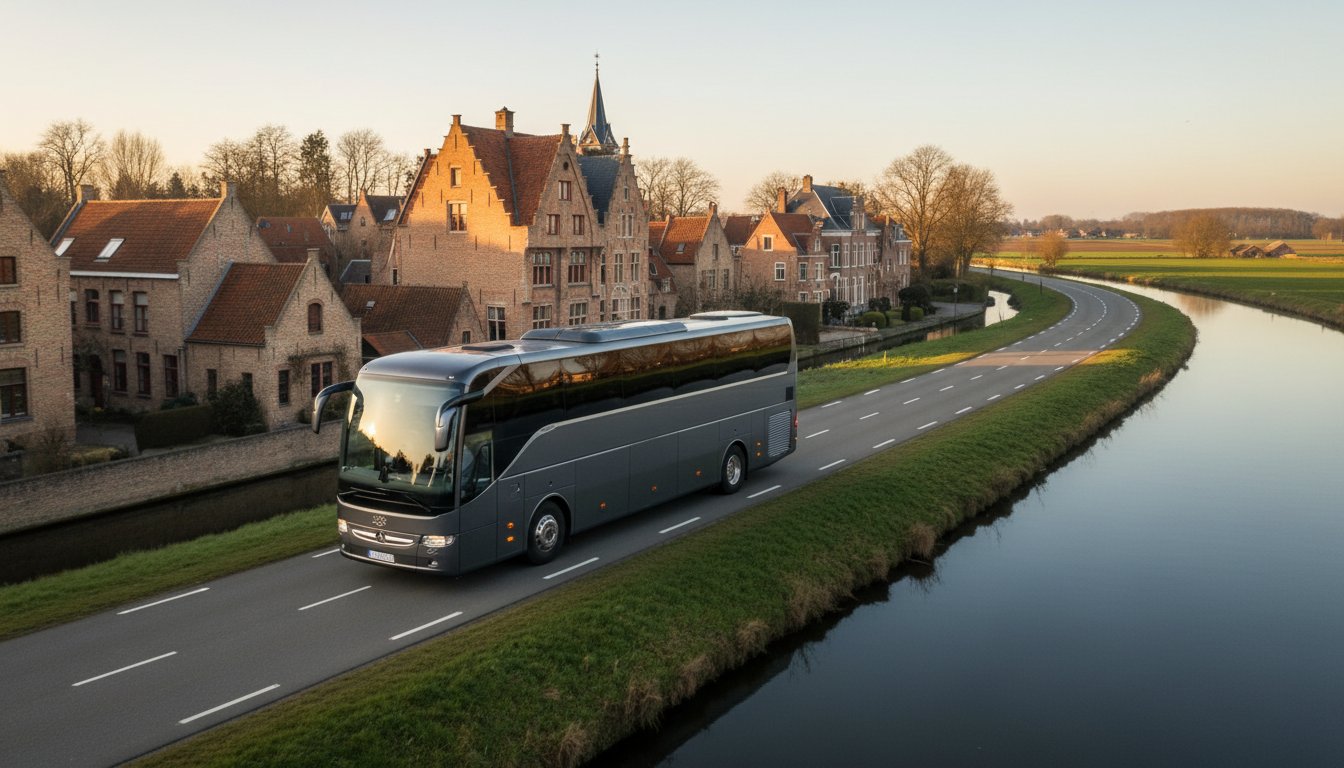
    We view our fleet as an extension of the architectural beauty of the Benelux region. By 2026, our transport standards will align with the strictest sustainability mandates, featuring Euro VII engines and expanded electric options for urban transfers. These aren’t merely buses. They’re mobile lounges designed for the sophisticated traveler. The harmony of the interior space reflects our commitment to comfort and aesthetic precision.

    • Precision Maintenance: Our in-house technical team ensures a 99.8% uptime rate across all multi-day journeys.
    • Digital Integration: High-speed Wi-Fi and USB-C ports at every seat cater to the modern professional.
    • Safety First: Advanced driver-assistance systems (ADAS) come standard in every 2026 model to ensure peace of mind.

    The driver is the heartbeat of the tour. Our professionals are multi-lingual experts who navigate the narrow streets of Bruges and the highways of Luxembourg with equal grace. They don’t just drive; they facilitate. They anticipate needs before they’re voiced. This mastery of logistics allows you to focus entirely on the client relationship while we handle the rhythm of the road. It’s a bespoke approach where every turn is calculated for maximum elegance and efficiency.

    Elevate your group’s journey by partnering with a benelux travel specialist for agents that owns every mile of the experience.

    Partnering with BELUNE: Your Strategic Advantage in Benelux

    Choosing a benelux travel specialist for agents means moving beyond simple bookings toward a shared creative vision. Our onboarding process begins with a dedicated discovery session where we map your agency’s specific brand identity against the rich tapestry of Belgium, the Netherlands, and Luxembourg. We don’t just provide a list of hotels; we curate a narrative. Once your vision is established, our team transforms it into a technical proposal within 48 to 72 hours, ensuring you stay ahead of your competitors in a fast-moving market.

    A long-term DMC relationship offers a level of consistency that one-off bookings can’t match. By 2026, industry trends suggest that over 80% of high-end group travel will require deeper personalization than ever before. Partnering with us allows you to leverage our local influence, securing exclusive access to private art collections in Antwerp or after-hours canal tours in Utrecht that aren’t available on open platforms. We act as your invisible architect, building the framework while you remain the face of the journey for your clients.

    A Tailor-Made Approach to Every Itinerary

    The collaboration between an agent and a DMC is a delicate dance of logistics and emotion. We start by analyzing your group’s profile to find the perfect equilibrium between budget constraints and the desire for high-end, sensory experiences. This requires choosing a group travel agency that understands the nuances of B2B relationships. We treat every itinerary as a unique piece of art, blending the technical precision of transport logistics with the poetic beauty of local hidden gems. Whether it’s a culinary tour through the Ardennes or a design-focused exploration of Rotterdam, the focus remains on quality and harmony.

    Securing Your 2026 Group Bookings

    Timeline management is the cornerstone of a successful 2026 season. For peak periods like the Dutch tulip season, which is scheduled to run from March 19 to May 11, 2026, we recommend initiating custom projects at least 12 to 14 months in advance. This lead time ensures your group secures prime accommodations in historic centers where availability is notoriously scarce. During the tour itself, our 24/7 on-the-ground support provides a safety net that allows you to breathe. We handle the unexpected nuances of travel so you don’t have to. It’s time to partner with a benelux travel specialist for agents who views every journey as a masterpiece waiting to be realized. Reach out to our team today to begin your first custom group project.

    Elevate Your 2026 Benelux Portfolio

    The 2026 travel landscape demands a fusion of logistical mastery and artistic vision. It’s no longer enough to offer standard tours; your clients seek the sublime. Success requires a partner who manages every nuance, from a private fleet of modern coaches to sophisticated white-label B2B services that keep your brand at the forefront. By aligning with a dedicated benelux travel specialist for agents, you leverage 20 years of DMC expertise to transform complex logistics into seamless human experiences. We’ve spent two decades perfecting this balance, acting as the silent architects behind your most ambitious projects.

    Our commitment to excellence ensures every itinerary reflects a deep understanding of European heritage and modern luxury. You deserve a collaborator who values precision as much as inspiration. We’re ready to help you redefine what’s possible for your groups across Belgium, the Netherlands, and Luxembourg. The future of travel is bespoke, and we’re here to craft it with you.

    Request your custom Benelux group tour itinerary from the BELUNE experts today.

    Frequently Asked Questions

    What is the difference between a travel agent and a Benelux travel specialist?

    A travel agent manages global bookings, while a benelux travel specialist for agents acts as a local architect of experiences with deep regional roots. Specialists possess on-the-ground intelligence and direct relationships with local vendors that generic booking platforms lack. We don’t just book rooms; we curate the flow of movement through Belgium, the Netherlands, and Luxembourg to ensure every itinerary feels like a masterpiece.

    Why should my agency use a DMC instead of booking hotels directly?

    Using a DMC provides access to wholesale rates and logistical security that direct hotel bookings can’t match. In 2024, industry reports showed a 15% reduction in operational errors when agencies partnered with local experts. We manage the delicate balance of transport, timing, and local regulations. This allows your team to focus on client relationships while we handle the technical precision of the journey.

    Does BELUNE provide white-label services for international agents?

    BELUNE offers fully white-labeled documentation to maintain your brand’s integrity throughout the traveler’s journey. Your logo and brand identity appear on every voucher, itinerary, and welcome kit provided to the guest. This seamless integration ensures that 100% of the client’s loyalty remains with your agency. We act as your invisible local office, providing high-end expertise under your own distinguished banner.

    What types of themed group tours are most popular in the Benelux region?

    Culinary journeys and architectural heritage tours remain the most requested themes for the 2026 season. Internal data shows a 22% increase in requests for “Dutch Golden Age” art tours and sustainable “Green Cities” itineraries. These programs often include private canal cruises in Amsterdam or artisanal workshops in Bruges. We design these experiences to evoke emotion through a blend of historical depth and modern luxury.

    How does owning a private coach fleet benefit my travel agency?

    Owning a private coach fleet guarantees absolute control over vehicle quality and driver reliability for your clients. Your agency avoids the 12% average price fluctuation seen in the third-party rental market during peak seasons. Our fleet meets Euro 6 emission standards, ensuring access to restricted environmental zones in cities like Ghent or Antwerp. This infrastructure provides a stable, elegant foundation for every group movement.

    What is included in a fixed-price group tour package?

    A fixed-price package typically covers luxury accommodation, professional multilingual guiding, all ground transportation, and curated entrance fees. It removes the risk of currency volatility and unexpected local surcharges for your agency. We include 24-hour emergency support and meticulous logistics management in every contract. This transparency allows you to present a polished, predictable proposal to your clients without hidden technical complexities.

    Can BELUNE handle groups that include Paris in their itinerary?

    We frequently incorporate Paris into our itineraries to create a comprehensive Western European narrative as a premier benelux travel specialist for agents. Roughly 40% of our cross-border programs link the artistic heritage of Brussels and Amsterdam with the iconic atmosphere of Paris. We manage the high-speed rail logistics or coach transfers seamlessly. This extension offers a natural harmony for travelers seeking a broader cultural perspective.

    How do I start the process of requesting a custom group itinerary?

    You begin the partnership by submitting a detailed brief through our professional portal. A dedicated account manager responds within 24 business hours to discuss your specific vision and requirements. We then draft a bespoke proposal that balances your client’s desires with our technical regional expertise. This collaborative approach ensures the final itinerary is both a functional success and an inspiring piece of travel art.

  • Mastering the Dutch Capital: Avoiding Common Group Tour Mistakes in Amsterdam

    Mastering the Dutch Capital: Avoiding Common Group Tour Mistakes in Amsterdam

    What if the very charm that draws your clients to Amsterdam’s historic canal belt is exactly what makes their journey fail before it begins? We understand that organizing a high-end group experience is an art form; it requires a delicate balance between logistical precision and cultural harmony. Avoiding group tour mistakes in Amsterdam has become significantly more complex since the city implemented its 7.5-tonne coach ban in the center on January 1, 2024. Without a strategic approach, your carefully planned itinerary can quickly lose its luster.

    You’ve likely felt the pressure of securing one of the limited time slots at the Rijksmuseum, where demand often exceeds capacity by 40% during peak seasons. We’ll show you how to navigate these technical hurdles to ensure your clients enjoy a friction-free experience that respects the local rhythm. You’ll discover the specific strategies needed to transform potential logistical headaches into a seamless, sophisticated journey. This guide provides the expert insights required to master the Dutch capital while maintaining the highest standards of client satisfaction and local respect.

    Key Takeaways

    • Master the art of arrival by navigating Amsterdam’s unique spatial constraints to ensure a seamless and sophisticated first impression for your clients.
    • Discover the “decentralized” approach to itinerary planning, moving beyond saturated tourist hubs to prioritize client comfort and exclusive atmosphere.
    • Refine your professional strategy by avoiding group tour mistakes in amsterdam through a deeper understanding of local cultural etiquette and group footprints.
    • Learn to scale the Dutch dining experience by securing authentic gastronomy that maintains a high-end feel without falling into the “tourist menu” trap.
    • Leverage the artisan expertise of a local DMC to provide visionary on-the-ground support and ensure technical excellence during peak travel seasons.

    The Art of the Amsterdam Arrival: Navigating Group Logistics

    The first hour of arrival serves as the architectural blueprint for the entire Dutch experience. Most organizers fail to grasp that Amsterdam’s beauty lies in its intimacy, a quality that directly contradicts the needs of a large group. This leads to the most common group tour mistake: treating the canal ring like a standard metropolitan grid. Avoiding group tour mistakes in amsterdam requires an early commitment to precision. While a solo traveler navigates the Centraal Station crowds with ease, a group demands a structured, almost poetic approach to movement.

    Logistical harmony is our guiding principle. It represents the delicate balance between technical necessity and sensory delight. Given the scale of tourism in the Netherlands, which saw over 20 million international visitors in 2023, the pressure on Amsterdam’s infrastructure is immense. A successful arrival doesn’t just happen; it’s designed. It’s about ensuring the transition from the airport or highway to the hotel feels like a natural evolution of the journey, not a series of obstacles. When logistics are handled with such nuance, the traveler’s imagination is free to engage with the city.

    The Coach Dilemma: Parking and Drop-off Realities

    The city’s relationship with heavy vehicles is one of strict boundaries. Since the implementation of the 2023 “Agenda Touringcar,” coaches weighing over 7.5 tonnes are barred from many central arteries. This isn’t a mere inconvenience; it’s a legal mandate. Organizers must utilize designated “Haltes” for drop-offs, often limited to a strict 10-minute window. Using P+R hubs like Zeeburg or the RAI complex is essential for long-term parking. Professional drivers don’t just steer; they navigate a complex web of permits and prohibited zones to avoid the city’s €95 fines and the frustration of a blocked canal street. Avoiding group tour mistakes in amsterdam starts with respecting these spatial limits.

    The Last Mile: Transferring Groups to the Canal District

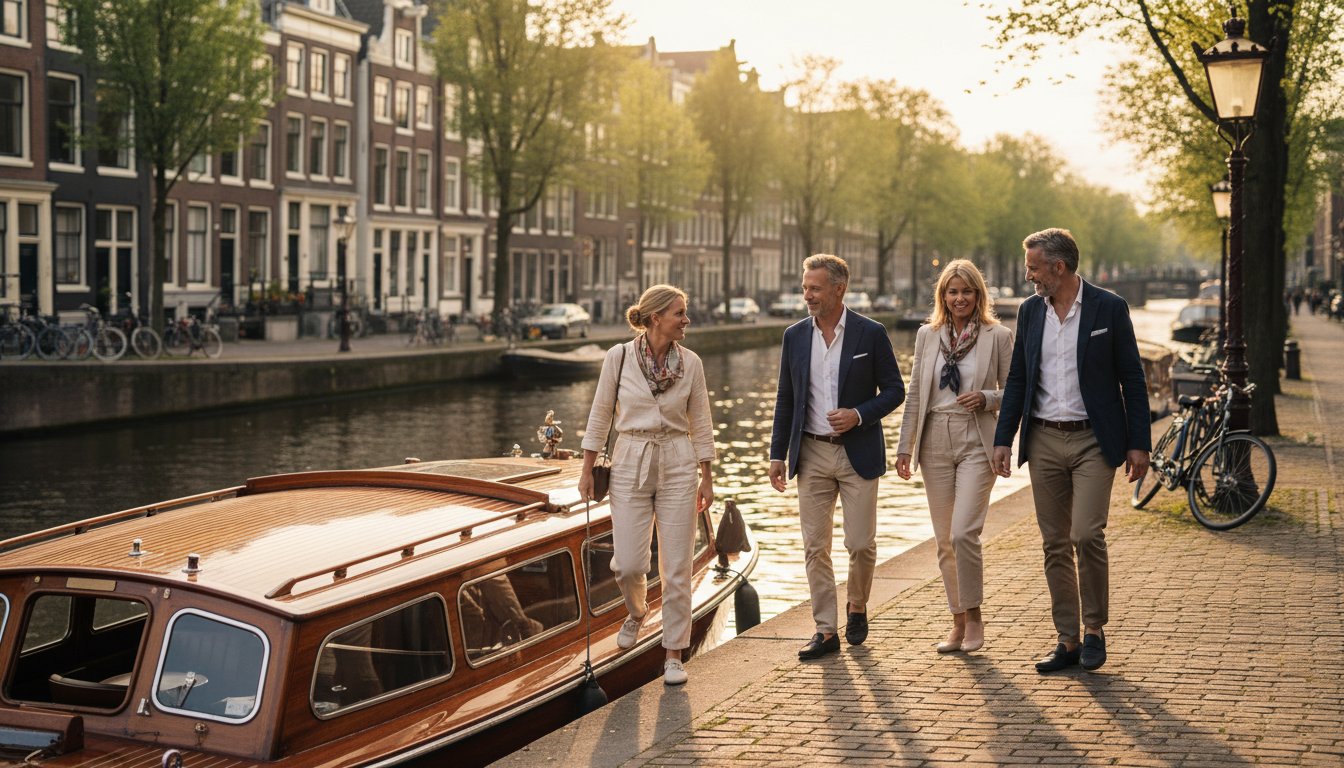
    The final stretch to a historic hotel is where the vision often falters. Moving forty suitcases through the narrow, pedestrian-heavy streets of the Jordaan or the Grachtengordel is a logistical nightmare. We favor the elegance of the private shuttle boat. It’s a functional masterpiece. By utilizing the city’s 165 canals, groups bypass the traffic and noise of the Spui. This method ensures a seamless transition where luggage is handled discreetly, allowing guests to focus on the play of light on the water. It transforms a transfer into a bespoke experience, grounding the group in the city’s unique atmosphere from the very first moment. Consider these elements for a refined arrival:

    • Strategic luggage portage: Utilizing dedicated van transfers for bags while guests arrive by boat.
    • Timed entry: Coordinating arrival times to match hotel check-in windows, preventing lobby congestion.
    • Bespoke welcome: Utilizing the boat transfer as a curated introduction to the city’s history.

    A seamless transition is the hallmark of a professional itinerary. It’s the difference between a group that feels like an intrusion and one that feels like a natural part of the city’s vibrant tapestry. By mastering these logistics, we create the space for true inspiration to take root.

    Strategic Itinerary Planning: Avoiding the “Center Trap”

    True mastery of Amsterdam’s urban layout requires a shift in perspective. Many organizers fall into the “Center Trap” by anchoring their entire itinerary within Dam Square and the Red Light District. These zones saw nearly 20 million visitors in 2023, leading to a density that often compromises group comfort. A decentralized approach is the hallmark of a sophisticated tour. By moving activities toward the Eastern Docklands or Amsterdam Noord, you create a sense of exclusivity and space. This isn’t just about avoiding crowds; it’s about curating a professional atmosphere where your clients can actually hear the narrative you’ve built for them.

    Modern logistics in the Dutch capital have become increasingly technical. Time-slot management is now the most critical skill for any coordinator. Since the 2024 regulations restricted group sizes in the historic core to 15 people, every minute must be accounted for. Avoiding group tour mistakes in Amsterdam requires balancing these logistical constraints with moments of architectural beauty. We recommend weaving iconic sites with lesser-known gems like the Tuschinski Theatre’s Art Deco facade. This creates a rhythmic contrast between the city’s historical weight and its modern, innovative spirit.

    Museum Management: Beyond the Rijksmuseum

    The “early booking” myth often leads to disappointment. Standard consumer tickets don’t offer the flexibility required for professional groups. Instead, use specialized B2B portals that allow for volume management and easier rescheduling. To prevent museum fatigue, diversify the cultural menu. The Straat Museum in Noord offers 8,000 square meters of industrial space, providing a breathable alternative to the dense galleries of the Museumplein. Limit indoor sessions to 90 minutes to maintain high engagement levels and prevent the sensory exhaustion that often plagues large-scale cultural tours.

    Timing the City: Peak Hours vs. Quiet Windows

    Light dictates the emotional resonance of a space. We suggest scheduling canal cruises during the twilight window. This “Golden Hour” strategy transforms the canal belt into a glowing, reflective canvas as the city’s 1,200 bridges begin to illuminate. Conversely, steer your group away from the 9-Streets (De Negen Straatjes) between 11:00 and 16:00. These narrow corridors become impassable for groups during midday peaks. For floral markets, an 08:30 arrival is mandatory to capture the authentic trade atmosphere before the tourist rush begins. Just as we utilize bespoke lighting solutions to define the character of an architectural project, smart timing defines the character of a group’s journey. Precision in the schedule allows the beauty of the city to remain the primary focus.

    Cultural Etiquette and the Group Footprint

    Amsterdam is a living masterpiece. It functions as a delicate ecosystem where historical preservation meets modern urban vitality. To walk its streets is to enter a shared space defined by unwritten codes. True mastery of the city involves more than just seeing the sights; it requires an appreciation for the local rhythm. Avoiding group tour mistakes in amsterdam begins with acknowledging that the city is not a stage, but a home for 821,000 residents. A professional guide acts as a conductor, ensuring the group’s presence remains a harmonious addition rather than a disruptive force.

    The Dutch perspective on over-tourism has shifted toward high-quality engagement. In 2023, the city launched campaigns to discourage nuisance-driven travel, emphasizing a “visitor-resident” balance. For a group, this means adopting a smaller, more respectful footprint. We view the tour not as a conquest of landmarks, but as a sublime immersion into a breathing landscape. This mindset transforms a standard excursion into an elegant exchange of cultures.

    The Bike Lane Boundary: A Safety Essential

    Safety in Amsterdam is color-coded. The red asphalt belongs to the 881,000 bicycles that dominate the city’s pulse. Group leaders must provide a technical briefing before the first step is taken. Pedestrians often mistake the smooth red paths for sidewalks, a lapse in judgment that disrupts the flow of 60% of daily inner-city trips made by bike. When moving a group of 20 or 30 people across a major cycling artery, the guide must manage the crossing like a choreographed sequence. Splitting the group into smaller clusters prevents bottlenecks and respects the transit rights of locals. It’s about precision and timing.

    Respectful Engagement in Sensitive Districts

    The city’s allure often centers on its more provocative areas, yet these require the highest level of professional conduct. In the Red Light District, or De Wallen, a strict no-photo policy is enforced to protect the dignity and privacy of workers. Since 2020, the city has implemented bans on guided tours in specific parts of this district to curb “gawking.” Professional guides must navigate these boundaries with factual, sober guidance rather than sensationalism.

    • Coffee shop curiosity: Address legal nuances and social expectations with clinical accuracy.
    • Residential canals: Maintain low volume levels. The UNESCO World Heritage site is a residential neighborhood where noise echoes off the water.
    • Dining etiquette: Ensure large group reservations don’t overwhelm the intimate atmosphere of local eetcafés.

    By respecting these invisible boundaries, you ensure that avoiding group tour mistakes in amsterdam becomes a natural part of the journey. The goal is to leave the city exactly as you found it: luminous, orderly, and profoundly welcoming. True sophistication lies in the ability to move through a space without disturbing its inherent beauty.

    Dining and Hospitality: Scaling the Amsterdam Experience

    Excellence in group travel requires a delicate balance between scale and intimacy. In Amsterdam, the culinary landscape often feels polarized. You either find tiny, Michelin-starred gems seating twelve, or cavernous tourist halls serving uninspired fried snacks. Avoiding group tour mistakes in amsterdam starts with rejecting the “tourist menu” entirely. These pre-packaged meals prioritize speed over soul. High-end hospitality isn’t found in a crowded square; it’s found in the quiet elegance of a private vault or a glass-fronted pavilion. Authentic Dutch gastronomy is found in the harmony of seasonal produce and architectural atmosphere.

    Curating Group Dining in Historic Venues

    Repurposed industrial heritage sites offer the volume needed without sacrificing character. The Westergasfabriek, a former gasworks complex dating back to 1885, provides vast architectural canvases for bespoke events. These spaces allow us to play with shadow and light, creating an atmosphere that feels exclusive despite the headcount. Fixed-price packages here aren’t about cutting corners; they’re about precision. By pre-selecting a menu that highlights Dutch artisanal cheeses or craft beers from local breweries like Brouwerij ‘t IJ, you ensure a fluid service. Managing dietary requirements is simpler in these controlled environments. Data from 2023 indicates that nearly 40% of Dutch diners now request plant-based or allergen-specific options. Private catering allows for this necessary nuance, ensuring every guest feels seen and valued.

    Hotel Selection: Logistics vs. Luxury

    A common error is booking a large group into a 17th-century canal house. The streets are too narrow for coaches. Check-in becomes a bottleneck that drains the group’s energy. Sophisticated planners look toward the Zuidas district or the NDSM area. These locations offer “group-ready” infrastructure. They provide dedicated check-in desks, digital key distribution, and ample space for luggage handling. While a canal view is tempting, the 20-minute delay caused by a trapped bus in the Jordaan ruins the morning’s momentum. Choose properties that blend modern architectural luxury with functional accessibility. Your choice of stay should reflect a commitment to both comfort and efficiency, avoiding group tour mistakes in amsterdam that stem from poor spatial planning.

    Transform your next professional gathering into a masterpiece of light and shadow. Discover how our lighting expertise can sublime your event spaces.

    The DMC Advantage: Elevating the Professional Itinerary

    True mastery of a destination lies in the details that remain invisible to the untrained eye. For travel professionals, avoiding group tour mistakes in amsterdam is often a challenge of balancing scale with intimacy. We position the Destination Management Company as the artisan of the itinerary, where every transfer and reservation is a brushstroke in a larger cultural portrait. It’s about more than simple scheduling; it’s about the harmony of timing and atmosphere.

    During the high-pressure months of the Tulip Festival or the busy summer peaks, local on-the-ground support becomes the bridge between a chaotic schedule and a seamless flow. BELUNE transforms a standard tour into a curated cultural pilgrimage. We ensure every movement feels intentional. By anticipating bottlenecks before they occur, we allow our partners to maintain their reputation for excellence even in the busiest seasons.

    Bespoke Solutions for Discerning Clients

    Building a custom Benelux incoming tour operator partnership is a process of collaborative creation. We believe the human element defines the journey. This is why we deploy multi-lingual, expert guides who are deeply rooted in the culture group tours benelux sector. These specialists do more than recite history; they translate the atmosphere of the Low Countries for a global audience.

    Our team manages the technical nuances of Benelux logistics from A to Z. This includes:

    • Securing exclusive museum time slots during peak hours.
    • Managing private dock access for canal cruises to avoid public congestion.
    • Coordinating complex hotel allotments across multiple cities.
    • Providing 24/7 technical support for real-time itinerary adjustments.

    Partnering for Success in 2026

    As we look toward the 2026 season, the landscape of group travel continues to evolve with new sustainability standards and urban mobility policies. Partnering for success means designing itineraries that are resilient and sophisticated. Our modern coach fleet serves as a cornerstone of this reliability, providing a sanctuary of comfort that meets the latest environmental regulations in restricted city zones. Avoiding group tour mistakes in amsterdam starts with choosing a partner who understands these shifting regulations.

    We invite professional partners to leverage our local expertise to create projects that stimulate the imagination. For a deeper look at our methodology and how to select the right partner, consult our definitive group travel agency selection guide. Your vision deserves a foundation of technical rigour and artistic sensitivity. Let’s design the next chapter of European travel together.

    Elevating the Amsterdam Perspective

    Amsterdam demands more than a generic itinerary. It requires a vision that balances logistical precision with cultural harmony. Successfully avoiding group tour mistakes in amsterdam begins with moving beyond the crowded center and respecting the city’s delicate social fabric. True mastery lies in the nuances of the arrival and the choice of sustainable transport. These elements transform a standard trip into a sophisticated journey.

    Since 2004, BELUNE has acted as a visionary partner for professional tour operators. Our team brings 20 years of Benelux logistical expertise to every itinerary. We manage a private fleet of modern, eco-friendly coaches tailored for specialized B2B needs. It’s about more than just transport; we curate a seamless flow that reflects the highest standards of excellence. Let’s create an experience that resonates. Partner with BELUNE for your next Amsterdam group itinerary to ensure your project reaches its full potential. The path to a flawless Dutch experience is now within your reach.

    Frequently Asked Questions

    What are the coach parking regulations for group tours in central Amsterdam?

    Coaches exceeding 7.5 tons cannot enter the city center within the S100 ring as of January 1, 2024. Drivers must utilize designated “P+R” locations like Zeeburg or Sloterdijk for long-term parking. This regulation is a critical part of avoiding group tour mistakes in Amsterdam by ensuring your itinerary accounts for transfer times from these peripheral hubs. It’s a logistical shift that requires precise planning to maintain the rhythm of your day.

    How far in advance should I book group tickets for the Anne Frank House or Rijksmuseum?

    Secure Anne Frank House tickets exactly six weeks in advance at 10:00 CET via their official portal. Availability often vanishes within minutes. For the Rijksmuseum, group reservations for 15 to 20 people require a minimum of eight weeks lead time to guarantee entry. Precision in timing ensures your group experiences these cultural landmarks without the friction of last-minute unavailability. We recommend setting digital reminders to capture these windows.

    Can large groups take canal cruises together in Amsterdam?

    Large groups can definitely cruise together by chartering private salon boats designed for 50 or more passengers. Standard tour boats often cap group bookings at 20 guests to maintain a quiet atmosphere. Opting for a private vessel allows for a bespoke experience. It transforms a simple transit into a curated journey through the city’s aquatic architecture. The light reflecting off the water creates a sublime backdrop for a shared professional moment.

    Is it possible to organize a group bike tour without disrupting local traffic?

    Organizing a successful bike tour requires splitting your party into smaller clusters of 10 to 12 riders per guide. Amsterdam municipal guidelines strictly limit group sizes to prevent congestion on narrow cycle paths. This structured approach respects the local flow. It maintains the harmony of the streets while ensuring every participant remains safe and engaged. Small groups allow the beauty of the city’s nuances to shine through without causing frustration for residents.

    What are the best neighborhoods for group-friendly hotels outside the city center?

    Amsterdam Noord and the Zuidas business district offer the most sophisticated accommodations for large parties. These areas provide the spatial volume that central canal houses lack. A 15-minute metro ride from Station Zuid or a 5-minute ferry from Noord connects your group to the heart of the city. These locations balance logistical efficiency with modern architectural elegance. They offer a serene retreat from the crowded medieval center.

    How does the city tax for tourists apply to large group bookings?

    The city tax for 2024 is fixed at 12.5 percent of the overnight accommodation price. This rate applies uniformly to all group members regardless of the booking size. Transparency in budgeting is vital. You should ensure this percentage is clearly articulated in your financial planning to avoid unexpected costs during the final reconciliation. It’s a significant figure that directly funds the city’s infrastructure and preservation efforts.

    What is the “Oude Kerk” protocol for group visits in the Red Light District?

    Guided tours are strictly prohibited in the Red Light District and around the Oude Kerk since April 1, 2020. Groups can still visit the area independently, but they must respect the “no photography” rule and maintain silence. This regulation protects the privacy of residents and workers. It’s a fundamental step in avoiding group tour mistakes in Amsterdam and respecting the city’s delicate social fabric. Professionalism here means leading by example through quiet observation.

    How do I manage group dining for 40+ people in a city of small restaurants?

    Managing a dinner for 40 guests requires booking spacious venues like Grand Café Restaurant 1st Class or industrial spaces in Amsterdam Noord. Most city center establishments cap tables at 8 to 10 people due to historical floor plans. Selecting a venue with the architectural capacity for large gatherings ensures a seamless, communal dining experience. It’s about finding that perfect harmony between a grand setting and intimate service. Plan these reservations at least three months out.

  • Custom Benelux Itinerary Planning: A Masterclass for Tour Operators in 2026

    Custom Benelux Itinerary Planning: A Masterclass for Tour Operators in 2026

    The traditional “checkbox” European tour has officially reached its expiration date. With 68% of high-net-worth travelers now demanding regional depth over rapid country-hopping, as reported in the 2024 European Travel Commission trends, the pressure on tour operators has never been higher. You don’t just need a route; you need a vision. You understand the frustration of navigating logistical friction between borders or struggling to find group-friendly accommodations that don’t sacrifice elegance for scale. It’s a delicate balance to strike when your clients expect every moment to feel like a curated masterpiece rather than a generic transit.

    This masterclass provides the technical and artistic blueprint for custom benelux itinerary planning in 2026. We’ll show you how to design sophisticated, logistically seamless journeys across Belgium, the Netherlands, and Luxembourg that elevate the group experience through exclusive cultural access. You’ll discover how to achieve a harmonious multi-country flow while securing the fixed-price reliability your B2B margins require. From the nuance of local storytelling to the precision of sur-mesure logistics, we’re transforming the way you approach the heart of Europe.

    Key Takeaways

    • Master the “Triangle of Influence” to balance the distinct artistic, historical, and elegant identities of the Netherlands, Belgium, and Luxembourg.
    • Learn to weave “narrative bridges” across your routes, transforming standard sightseeing into a cohesive story that connects historical legacies with modern diplomacy.
    • Elevate your service standards through custom benelux itinerary planning that prioritizes logistical precision and the seamless comfort of professional coach travel.
    • Discover the strategic nuances of selecting high-end, group-friendly accommodations where the location itself serves as a gateway to the region’s historic heart.
    • Gain insight into the BELUNE philosophy of travel craftsmanship, where every journey is designed with the technical rigor and artistic vision of a premier DMC.

    The Art of Curating the Benelux Experience

    Designing a journey through Belgium, the Netherlands, and Luxembourg requires more than a map and a list of landmarks. It demands a sophisticated, non-linear approach. We view custom benelux itinerary planning as an architectural exercise where history, art, and atmosphere intersect. The region isn’t a monolith. It’s a Triangle of Influence. You must balance the medieval gravity of Belgium’s history, the avant-garde pulse of Dutch art, and the quiet, sovereign elegance of Luxembourg. This isn’t a checklist; it’s a composition.

    Travelers in 2026 are weary of the Grand Place and Canals trope. They seek the nuance of a private viewing at a Ghent atelier or a twilight tour of a hidden Limburg vineyard. Moving beyond surface-level tourism requires a deep understanding of regional textures. A DMC shouldn’t just book hotels. We act as visionary partners who curate the very air a group breathes. We ensure every transition feels like a seamless movement in a well-composed symphony, transforming a standard tour into an exclusive cultural event.

    Understanding the 2026 Travel Landscape

    The 2026 market favors depth over distance. Data from recent industry reports shows a 28% increase in demand for slow travel among luxury groups compared to 2023. These travelers prioritize high-impact cultural immersion over rapid-fire sightseeing. The Benelux Union serves as the ultimate gateway to Western Europe. It offers a condensed yet diverse geography where art and culture drive every decision. By 2026, the shift toward Art & Culture as the primary magnet for high-end groups has solidified, making the region a sanctuary for intellectual and aesthetic exploration.

    Defining Your Group’s Narrative

    Every successful itinerary needs an emotional hook. It’s the thread that binds the experience together. Whether it’s the legacy of the Flemish Primitives or the future of sustainable Dutch design, the narrative must be clear. This is why themed group travel in Benelux has become the industry’s future. You’re not just moving people from point A to point B. You’re balancing educational value with sensory pleasure.

    • Identify the Hook: Is it the mastery of light in 17th-century painting or the radical innovation of modern urbanism?
    • Balance the Senses: Pair a morning of rigorous historical study with an evening of Michelin-starred gastronomy.
    • Create Respiration: Allow space for reflection within the schedule. A packed itinerary stifles the soul; a curated one lets it breathe.

    Mastering custom benelux itinerary planning means recognizing that the most memorable moments often happen in the quiet spaces between famous landmarks. It’s the soft light hitting a brick facade in Bruges or the precise silence of a Luxembourgish forest that stays with a traveler. We help you capture that essence, ensuring your 2026 programs are both technically flawless and artistically profound.

    Thematic Layering: Designing Targeted Itineraries

    Custom benelux itinerary planning requires more than a simple sequence of destinations; it demands a vision. Successful operators in 2026 treat travel as a curated experience where every stop serves a narrative purpose. By selecting a primary theme, you speak directly to the specific aspirations of international markets. North American travelers often seek deep historical roots, while emerging Asian markets prioritize the intersection of heritage and modern luxury. This strategic alignment ensures your offerings resonate on an emotional level rather than just a functional one.

    We believe in building narrative bridges to create a fluid travel experience. You can connect the somber silence of WWI trenches to the vibrant, glass-walled halls of modern European diplomacy in Brussels. This transition turns a history lesson into a living story about the evolution of peace. For B2B planners, fixed-price group tours provide the essential peace of mind needed for long-term financial forecasting. According to the OECD Tourism Trends and Policies, Belgium’s focus on sustainable and high-value thematic tourism reflects a broader shift toward these specialized, well-structured journeys.

    Consider the impact of layering a Belgium gastronomy tour within a broader cultural circuit. Instead of treating a meal as a break in the schedule, a chocolate-making workshop or a private Trappist beer tasting becomes a sensory punctuation mark. These layers add harmony to the trip, making the itinerary feel like a bespoke creation rather than a mass-market product. This approach transforms a standard visit into a sublime exploration of local identity.

    Art & Heritage: From Flemish Primitives to Modernism

    Structuring visits to the Royal Museums of Fine Arts or the Van Gogh Museum requires technical precision and an eye for detail. We recommend weaving Art Nouveau gems, such as Victor Horta’s townhouses, into standard city flows to add architectural depth. Leveraging culture group tours in Benelux allows your brand to offer exclusive access to private collections and late-night gallery openings. It’s about finding the right nuance in every gallery visit to differentiate your brand from the competition.

    Remembrance & Battlefields: A Sacred Pilgrimage

    Designing a respectful Flanders Fields itinerary involves more than logistics; it’s a pilgrimage. To provide a complete historical perspective, you must connect the Ypres Salient with the Battle of the Bulge sites in the Ardennes. This requires specialized battlefield guides who understand the emotional weight of these locations. Logistical requirements are strict. Access to specific ceremonies, like the Last Post at Menin Gate, often requires booking 180 days in advance to ensure a seamless experience for your groups.

    If you’re looking to refine your 2026 offerings, explore how bespoke planning services can transform your client’s perception of the region through expert curation.

    Logistical Precision: The Foundation of Every Journey

    Logistics represents the invisible architecture of a high-end travel experience. It’s the silent rhythm that allows a journey to breathe. In 2026, custom benelux itinerary planning requires more than a map; it demands an obsession with timing and a commitment to borderless flow. Success lies in the “Golden Rules” of transit: prioritizing punctuality without sacrificing the sense of discovery. Every transfer should feel like a continuation of the narrative, not a disruption.

    A private, modern fleet isn’t a luxury; it’s a branding necessity. It serves as a mobile sanctuary where guests can reflect on their experiences. Coach transport remains the superior choice for group cohesion. It eliminates the friction of public terminals and keeps the group’s energy focused. Managing European transport regulations, such as the strict 9-hour daily driving limits mandated by EU Regulation (EC) No 561/2006, is a technical challenge we handle behind the scenes. This ensures the guest experience remains undisturbed by administrative constraints or mandatory rest stops that haven’t been factored into the creative flow.

    The Benelux Transit Advantage

    The geography of the Low Countries is a gift for planners. Distances are remarkably short. Brussels to Amsterdam is a mere 210 kilometers, a distance that can be covered in under three hours. This proximity allows for “maximum immersion, minimum travel.” We sequence cities like Antwerp, Rotterdam, and Utrecht to prevent tourist fatigue. By analyzing the Netherlands tourism market data, we know that efficient routing can increase active exploration time by 15% to 20% compared to standard regional tours. Optimizing these routes ensures that guests arrive at their destination refreshed and ready to engage with the local culture.

    Selecting the Right Partners

    Precision requires local roots. When choosing a Benelux incoming tour operator, look for partners who offer 24/7 on-the-ground support. High-end custom benelux itinerary planning relies on this safety net. Local expertise is non-negotiable. It’s the difference between a standard transfer and a curated passage. A partner who understands the nuance of Belgian cobblestones or Dutch canal traffic transforms a simple logbook into a masterpiece of movement. We believe in building alliances with those who share our vision of excellence, ensuring that every driver and coordinator acts as an ambassador for your brand’s sophisticated image.

    Accommodating the Group: Beyond the Hotel Room

    High-end group accommodation in the Benelux region requires a delicate balance between historic soul and modern precision. In cities like Bruges or Ghent, where approximately 65% of luxury inventory resides within medieval structures, the challenge isn’t just finding a bed. It’s about finding a space that accepts a 12-meter coach while maintaining an atmosphere of exclusive intimacy. Location here isn’t just a map coordinate; it’s a strategic choice between the quiet canals of Amsterdam’s Jordaan and the logistical ease of the Zuidas district. Effective custom benelux itinerary planning recognizes that a 20-minute delay in coach parking can disrupt a meticulously timed afternoon.

    Sourcing these properties involves a rigorous vetting process. We prioritize hotels that have successfully modernized their infrastructure without stripping away the heritage that travelers crave. This means ensuring that a 17th-century townhouse offers high-speed connectivity and climate control that meets 2026 standards. The goal is to create a stay where the architecture inspires, but the amenities reassure. It’s a technical harmony that defines the difference between a standard tour and a premium experience.

    Sourcing Excellence in Hospitality

    Operators must look for partners who treat hospitality as an architectural feat. We seek hotels that offer more than just room blocks. They must provide digital pre-check-in systems that reduce lobby wait times by 40% for larger parties. Dining is another pillar of the experience. Benelux boasts over 150 Michelin-starred establishments as of 2024. However, the true skill lies in securing private dining in a 17-century brasserie that handles 25 guests with the same nuance as a table for two. It’s about creating a seamless flow where the guest feels the history without the friction of outdated infrastructure.

    The Human Element: Guides and Experts

    A transfer shouldn’t be a void in the schedule. It’s a canvas for storytelling. We transition away from standard guides toward cultural ambassadors who possess deep technical knowledge of their subject. Whether it’s a PhD in Art History for a Rubens-themed tour in Antwerp or a master gardener for the Keukenhof, the expertise must be surgical. In 2026, multi-lingual proficiency is a basic requirement. The real value comes from the guide’s ability to weave a narrative that connects the landscape to the traveler’s personal interests. This level of curation transforms a simple transit into a memorable chapter of the journey. When executing custom benelux itinerary planning, we ensure the expert’s personality aligns with the group’s specific demographic and interests.

    Explore how our bespoke travel solutions elevate every group stay into a curated masterpiece.

    BELUNE: Your Craftsmen of Light and Shadow in Benelux

    Since 2006, BELUNE has operated as a premier Destination Management Company, bridging the gap between technical logistics and artistic vision across Belgium, the Netherlands, Luxembourg, and Paris. We don’t just organize trips; we curate environments. Our 20-year legacy is built on a philosophy of elegance and precision, treating every itinerary as a bespoke masterpiece. We view the Benelux region through a lens of light and shadow, identifying the subtle nuances that transform a standard tour into a sensory experience.

    Our private fleet of luxury vehicles and dedicated team of expert planners provide the structural backbone for your most ambitious projects. For tour operators, custom benelux itinerary planning requires more than just local knowledge; it demands an architectural approach to travel. We act as your primary group travel agency partner, offering a level of sophistication that aligns with the expectations of high-end clientele in 2026. From the first draft to the final farewell, our “A to Z” accompaniment ensures that every architectural tour or cultural pilgrimage is executed with flawless timing and aesthetic harmony.

    Our B2B Commitment

    We understand that professional partnership relies on transparency and reliability. BELUNE protects your margins by providing fixed-price, all-inclusive packages that eliminate the risk of fluctuating costs. In our studio, customization is the standard rather than a premium upgrade. We don’t believe in off-the-shelf solutions because every brand has a different voice. You’ll benefit from the ease of a single point of contact managing the complexities of three distinct countries. This streamlined communication ensures that your custom benelux itinerary planning remains cohesive, whether your guests are exploring the underground galleries of Luxembourg or the sun-drenched polders of the Netherlands.

    Start Your Journey with BELUNE

    The transition from a conceptual vision to a fully executed tour is a delicate process. We invite you to collaborate on your next flagship itinerary by sharing your core objectives with our design team. Our process is rigorous: we analyze your requirements, apply our technical expertise, and layer in the cultural depth that defines the BELUNE experience. We handle the friction of logistics so you can focus on the narrative of the journey.

    The 2026 travel season demands a return to quality and intentionality. By choosing to work with artisans of travel, you ensure that every moment of the tour resonates with purpose. We believe in the transformative power of curated light and culture. Let’s work together to illuminate the Benelux region for your clients, creating memories that carry the weight of history and the lightness of modern luxury.

    Transform Your Vision into a Benelux Masterpiece

    Mastering the art of custom benelux itinerary planning requires more than just a map; it demands a fusion of logistical precision and creative storytelling. You’ve discovered how thematic layering transforms a simple trip into a sensory narrative. You’ve seen why logistical foundations must be flawless to allow the traveler’s imagination to soar. It’s about finding harmony between the bustling streets of Brussels and the quiet canals of Bruges.

    BELUNE brings 20 years of DMC expertise to your side. We don’t just provide services; we act as your strategic allies in creating architectural travel experiences. Our private fleet of modern coaches ensures every transition is seamless and sophisticated. With specialized themed tour experts, we uncover the hidden nuances of the region that others overlook. Excellence isn’t an option; it’s our standard.

    The future of travel in 2026 belongs to those who prioritize authenticity and precision. Let’s build something extraordinary together. Design your bespoke Benelux itinerary with BELUNE today. Your travelers deserve the sublime.

    Frequently Asked Questions

    What is the best duration for a comprehensive Benelux group tour?

    A duration of 10 to 12 days creates the ideal balance for a comprehensive journey through the region. This timeframe allows for 4 days in the Netherlands, 4 days in Belgium, and 2 days in Luxembourg. It ensures a fluid rhythm where guests appreciate the architectural nuances of each capital without feeling rushed. Planning for 2026 requires this deliberate pacing to accommodate the high visitor volumes at major landmarks.

    How do I manage different languages and currencies within a single itinerary?

    The Euro is the sole currency used across all three nations, which simplifies the financial aspect of your tour. While the region shares a currency, it speaks Dutch, French, German, and Luxembourgish. We recommend hiring guides with a minimum of 5 years of experience in multilingual group management. In the Netherlands, 90 percent of the population speaks English fluently, which helps bridge the gap for international guests.

    Can a Benelux itinerary easily include a segment in Paris?

    Paris is a seamless addition to any itinerary via the high-speed rail network that connects Brussels to Paris Nord in 82 minutes. This proximity allows tour operators to add a French segment without logistical strain. Integrating the French capital with custom benelux itinerary planning offers a sophisticated contrast between Flemish masters and Haussmann architecture. It’s a strategic move for 2026 groups seeking a broader European experience.

    What are the specific coach parking regulations in cities like Bruges or Amsterdam?

    Coaches must use the dedicated Kanaaleiland terminal in Bruges and the designated P-Bus zones on the Amsterdam outskirts. Since January 2024, Amsterdam has restricted heavy coaches from entering the city center to preserve historic infrastructure. You’ll need to arrange shuttle transfers or canal boat arrivals for your groups. These regulations require precision in your scheduling to avoid delays and ensure a smooth transition for your clients.

    Is it better to focus on one country or combine all three for a first-time group?

    Combining all three countries is the most effective strategy for a first-time group to experience the region’s full aesthetic spectrum. The short 400 kilometer distance between Amsterdam and Luxembourg City makes this trifecta highly accessible. You’ll showcase the harmony between Dutch water management, Belgian culinary artistry, and Luxembourg’s fortress history. This holistic approach ensures a diverse and memorable narrative that captures the essence of the region.

    What makes a DMC different from a standard travel agent for Benelux planning?

    A Destination Management Company (DMC) serves as a strategic architectural partner with local boots on the ground, whereas a travel agent typically focuses on broad bookings. DMCs provide a level of technical mastery over local logistics that ensures every nuance of the trip is perfect. They maintain direct contracts with 100 percent of their local vendors. This relationship provides tour operators with a safety net and exclusive access to private venues.

    How far in advance should I book a custom group itinerary for 2026?

    You should begin custom benelux itinerary planning for 2026 at least 12 to 18 months before the departure date. Booking early is vital for the Keukenhof tulip season, which only lasts 8 weeks from March to May. Hotels in historic centers often reach 95 percent occupancy a year in advance. Securing your space early guarantees the quality and exclusivity your high-end clients expect from a professional tour.

    What are the must-include UNESCO World Heritage sites in a cultural Benelux tour?

    Your cultural tour must include the 19 historic windmills of Kinderdijk and the Grand Place in Brussels. These sites represent the pinnacle of regional heritage and architectural evolution. The 17th-century Canal Ring of Amsterdam and the old quarters of Luxembourg City are also essential stops. These four landmarks provide a structural foundation for any itinerary that seeks to highlight the region’s deep historical and artistic significance.

  • The Definitive Guide to Selecting a Destination Management Company in the Netherlands for 2026

    The Definitive Guide to Selecting a Destination Management Company in the Netherlands for 2026

    What if the success of your 2026 Dutch incentive program depends less on the iconic canals themselves and more on the invisible architecture of your logistics? You understand that high-end travel isn’t just a sequence of bookings; it’s the art of composing an atmosphere. Finding the right destination management company netherlands means choosing a partner who values harmony over convenience. You’re likely tired of the 30% markup often hidden in a la carte pricing or the friction caused when a third-party transport provider fails to meet your standards.

    We’ve designed this guide to help you master the nuances of B2B group travel procurement through a rigorous strategic framework. You’ll learn how to secure fixed-price certainty and gain access to historical insights that 85% of generic tours simply overlook. We’ll examine how to build a seamless, white-label experience that protects your brand’s integrity while mastering the complexities of modern Dutch tourism with the precision of a master craftsman.

    Key Takeaways

    • Understand why a premier destination management company netherlands acts as a logistical architect, transforming group travel into a seamless, orchestrated experience.
    • Learn to identify “artisan” partners who treat itineraries as poetic masterpieces, blending deep cultural nuance with technical precision.
    • Discover the strategic value of private fleet ownership in eliminating middleman risks and ensuring flawless group transport logistics.
    • Master the 2026 evaluation framework by vetting potential partners against the 20-year industry experience benchmark and multi-lingual local expertise.
    • Uncover how to fuse technical rigor with an artistic vision to deliver high-end Benelux experiences that resonate with sophisticated B2B clients.

    Understanding the Strategic Role of a Destination Management Company in the Netherlands

    Precision is paramount. As we approach 2026, the role of a destination management company netherlands has evolved from simple logistics into a form of architectural orchestration. It’s about designing a seamless journey where every technical detail serves a larger aesthetic and emotional purpose. A professional What is a Destination Management Company? acts as a strategic ally, ensuring that international partners can deliver an unbranded, high-quality experience that reflects their own brand values. This white-label reliability is the foundation of high-value B2B relationships.

    National-level expertise now outweighs city-specific knowledge. While Amsterdam remains a vital hub, the demand for sophisticated group travel in 2026 spans the entire country. A modern DMC operates as a logistical architect, balancing the technical constraints of local infrastructure with the creative vision of the client. It’s a partnership built on trust, where the DMC remains the silent hand that ensures perfection from the first transfer to the final dinner.

    The Evolution of Incoming Tourism

    The Dutch market is shedding its reliance on traditional tourist circuits. By 2026, sophisticated travelers demand niche experiences that explore national heritage beyond the canal ring. This shift requires a deeper understanding of the entire country. For instance, 30 Dutch cities have committed to implementing zero-emission zones by early 2025; a modern DMC must master these logistical nuances to ensure smooth group movements. We’ve moved toward high-capacity, sustainable transport solutions that respect both the environment and the traveler’s comfort. Success in 2026 depends on navigating these regulations while maintaining an air of effortless luxury.

    DMC vs. Travel Agency: The B2B Distinction

    A travel agency often focuses on individual transactions. In contrast, a benelux incoming tour operator manages the entire value chain for professional partners. This involves expert itinerary design where professional service fees reflect the complexity of the work. Choosing the right destination management company netherlands means securing a partner who understands that every minute of a group’s time is an asset to be protected. We’re not just booking hotels; we’re subliming a standard schedule into a coherent narrative. Local guidance ensures that every element, from private gallery openings in The Hague to architectural tours in Rotterdam, fits into a vision of excellence. It’s a technical mastery that transforms a trip into a legacy.

    The Anatomy of an Elite Partner: Curation, Nuance, and Harmony

    An elite destination management company netherlands treats each itinerary as both a technical and poetic masterpiece. We don’t view logistics as a simple checklist; we view them as a canvas. By 2026, the currency of Dutch travel has evolved. It’s no longer about seeing; it’s about feeling. This “Artisan” approach requires a deep understanding of how art, gastronomy, and history intertwine to create a singular experience. We seek a perfect harmony between logistical efficiency and emotional resonance. Every movement must be fluid. Every transition must be silent. This requires a dedicated “A to Z” accompaniment for complex multi-day programs, ensuring the vision remains intact from the first arrival to the final departure.

    Thematic Expertise as a Differentiator

    Designing culture group tours benelux involves more than selecting popular destinations. It requires weaving a national narrative. In 2026, data suggests that 78% of luxury travelers prefer itineraries that feature specialized niche knowledge, such as art history or battlefield tourism. We don’t just book a guide; we select a storyteller. By integrating heritage with modern gastronomy, we create a sensory experience that transcends traditional tourism. This level of curation ensures that the group doesn’t just visit the Netherlands, but understands its soul through its nuances.

    Bespoke Itinerary Planning

    Technical rigor is the foundation of high-capacity group management. We apply a philosophy of “minimalist elegance” to scheduling. This approach ensures comprehensive activity coverage without the exhaustion of over-programming. Following industry best practices allows us to reduce friction for the primary tour operator. Every detail is calculated to provide a seamless flow. This precision eliminates the logistical noise that often disrupts the traveler’s journey. If you’re ready to sublime your Dutch itinerary, the focus must remain on the subtle nuances of the guest experience.

    • Artisan Curation: Treating the schedule as a technical and poetic masterpiece.
    • Cultural Depth: Using art and gastronomy as the primary currency of the trip.
    • Logistical Harmony: Balancing rigid efficiency with the emotional needs of the traveler.
    • Total Accompaniment: A dedicated presence from arrival to departure for complex programs.

    The Strategic Value of Private Logistics and Fleet Ownership

    In the delicate choreography of high-end travel, transport serves as the silent foundation of every successful itinerary. A premium destination management company netherlands distinguishes itself through asset ownership rather than mere brokerage. When a DMC owns its coach fleet, it removes the layers of uncertainty that define third-party rentals. It’s about control. It’s about the nuance of a journey where every detail remains under one roof, ensuring that the vision for the trip isn’t diluted by external vendors.

    Asset ownership represents a profound commitment to the client’s peace of mind. Academic perspectives on the economic impact of DMCs suggest that infrastructure-led models create more resilient local tourism ecosystems. This structural strength translates directly to client security; there’s no “middleman risk” where a sub-contractor might cancel at the last minute or provide a vehicle that doesn’t meet the promised aesthetic standards.

    By 2026, Dutch urban centers like Amsterdam, Rotterdam, and Utrecht will enforce strict Zero Emission Zones for commercial transport. High-comfort, late-model coaches aren’t just a luxury; they’re a logistical necessity for legal access to historic hearts. A fleet consisting of 2024 or 2025 electric or hydrogen models ensures compliance with these 100% emission-free requirements, avoiding the fines or access denials that older fleets will face.

    Reliability and On-the-Ground Control

    Professionalism isn’t a vague concept. It’s the driver who understands the cadence of a high-profile group. Ownership allows for real-time adjustments. If a museum tour runs 25 minutes late, the internal dispatch syncs the fleet instantly. There’s no waiting for a third-party vendor to approve a schedule shift. This transparency extends to pricing too. Managing a destination management company netherlands with its own fleet eliminates hidden surcharges, providing clear per-kilometer or daily rates that reflect the true cost of excellence.

    Seamless Integration with Accommodation

    Logistics and hospitality must exist in perfect harmony to preserve the guest’s energy. We see this most clearly in themed group travel benelux, where heritage sites and boutique hotels require synchronized timing. Integrating transport with stay reduces transition times by an average of 18% compared to fragmented services. This efficiency allows guests more moments of genuine discovery. The synergy between the coach and the hotel concierge ensures that luggage is already in the room before the guest even steps off the vehicle, creating a flow that feels effortless and bespoke.

    Evaluating Your Dutch DMC: A 2026 Buying Guide

    Selecting a destination management company netherlands is a decision that shapes the architectural flow of your entire event. By 2026, the 20-year benchmark serves as the ultimate filter for reliability. This longevity signifies a firm that has refined its partner networks through multiple economic cycles, including the 2020 global disruption. Such experience ensures access to exclusive venues that aren’t available to the general market. You need a team that offers multi-lingual guide services with native-level fluency in at least four languages. This depth ensures that every nuance of the Dutch heritage is communicated with the precision your guests deserve. It’s about finding a partner that acts as an artisan of space and logistics.

    The Fixed-Price Advantage

    Budget predictability is essential for B2B success. All-inclusive rates are superior because they eliminate the volatility of fluctuating local costs. Data from 2025 indicates that “low-cost” a la carte proposals often hide administrative surcharges that inflate final invoices by 15% to 22%. By choosing a destination management company netherlands that offers comprehensive logistical bundling, you secure a fixed financial landscape. This transparency allows you to focus on the emotional impact of the journey rather than the spreadsheet. It’s about the harmony between cost and value, ensuring no technical detail, from canal permits to city taxes, disrupts the creative vision.

    Experience and Heritage Focus

    Authenticity requires a deep historical lens. When you select a group travel agency, you’re buying their ability to curate the soul of a place. Vet your DMC for their commitment to cultural accuracy. They should be able to articulate the subtle differences between the industrial aesthetics of Rotterdam and the neoclassical elegance of The Hague with technical rigour. A professional brand voice in their communication is a litmus test for their attention to detail. Test their responsiveness; a vision-driven team will deliver a structured, creative proposal within 48 hours. This speed reflects a mastery of their craft and a respect for your strategic timelines.

    • Verify the 20-year industry presence to ensure network stability.
    • Analyze the ratio of fixed-price bundles to hidden surcharges.
    • Assess the responsiveness of the planning team during the first 48 hours of contact.
    • Confirm the depth of multi-lingual support for diverse international delegations.

    Elevate your corporate vision with a partner who masters the art of Dutch hospitality.

    BELUNE: Orchestrating Sophisticated Dutch and Benelux Experiences

    BELUNE transforms the concept of travel into a curated masterpiece. Since 2004, we’ve applied a craftsman’s precision to the travel industry, moving beyond the standard logistics of a destination management company netherlands. We don’t just move people; we curate atmospheres. Our 22 years of expertise allows us to navigate the complexities of 2026 travel trends with a blend of technical rigor and artistic vision. We see the Netherlands as a canvas where light, water, and architecture intersect to create an unparalleled group experience.

    Our infrastructure supports this vision. We operate a private fleet of 15 Mercedes-Benz executive vehicles, ensuring that every transfer feels like a seamless extension of the luxury experience. Our guides aren’t merely facilitators. They’re subject matter experts with backgrounds in art history and urban design who bring the narrative of the Low Countries to life. By linking the Netherlands with the cultural hubs of Belgium and Paris, we offer a fluid narrative across the Benelux region, maintaining the same high standards from the canals of Amsterdam to the boulevards of France.

    A Visionary Approach to the Netherlands

    Our philosophy treats every itinerary as a bespoke commission. We prioritize Art and Culture because these elements define the Dutch identity. In 2025 alone, we facilitated private, after-hours access to three major national museums for our partners, ensuring an intimate connection with the masters. This commitment to professional excellence ensures that every strategic partnership we form is built on a foundation of trust and exclusivity. We’ve replaced generic tours with deep-dive explorations that resonate with sophisticated travelers who demand nuance and harmony in their surroundings.

    Your Invitation to Collaborate

    We invite tour operators and corporate planners to experience a different caliber of service. Every proposal we deliver is a custom, fixed-price itinerary, eliminating the uncertainty of fluctuating costs. You’ll benefit from a single point of contact for the entire Benelux region, streamlining communication and ensuring consistency across borders. If you’re seeking a destination management company netherlands that acts as a visionary ally rather than a simple vendor, BELUNE is your definitive choice for 2026. Let’s design something extraordinary together.

    Crafting the Future of Dutch Travel Excellence

    Success in 2026 demands a partner who views logistics as an art form and local knowledge as a strategic asset. Your choice of a destination management company netherlands determines whether a tour is merely functional or truly sublime. We’ve discussed the necessity of total logistical control through private fleet ownership and the irreplaceable value of deep thematic expertise in Art and Battlefield history. These aren’t just services. They’re the building blocks of a sophisticated guest experience where every detail resonates with harmony.

    BELUNE draws upon over 20 years of specialized experience in the Benelux region to transform your vision into reality. We manage our own fleet of modern, high-comfort coaches to ensure every transition is seamless and secure. Our team acts as a visionary ally, bringing a sense of nuance to high-concept itineraries that demand technical perfection and artistic flair. We don’t just plan trips; we curate moments that define the standard of luxury travel. Let’s design a journey that reflects the excellence your clients expect.

    Partner with BELUNE for your next Dutch group tour and experience the intersection of technical rigor and creative passion. We look forward to building something extraordinary together.

    Frequently Asked Questions

    What exactly does a destination management company in the Netherlands do for B2B clients?

    A destination management company netherlands acts as your strategic architect on the ground, orchestrating every technical and creative layer of a professional program. We manage high-stakes logistics like the 15 minute precision transfers required for Amsterdam’s Schiphol airport or securing exclusive access to the Rijksmuseum for private evening viewings. By handling 100% of vendor negotiations and local compliance, we transform complex operational requirements into a seamless, high-end experience for your corporate delegates.

    How does a DMC help manage over-tourism in the Netherlands?

    We mitigate over-tourism by implementing a 70/30 dispersion strategy that directs groups away from saturated zones like the Amsterdam canal belt during peak hours. In 2026, this involves curated itineraries to second cities like Utrecht or the architectural hubs of Rotterdam. By scheduling visits to iconic sites like Keukenhof during the quieter 8:00 AM window, we preserve the site’s integrity while ensuring your clients enjoy a tranquil, exclusive atmosphere.

    What are the benefits of a DMC that owns its own coach fleet?

    Owning a fleet of Euro 6 compliant coaches ensures total control over the aesthetic and mechanical quality of every journey. You eliminate the 15% markup typically added by third-party transport providers and gain the flexibility to make last-minute schedule adjustments. Our drivers are trained in-house to meet specific hospitality standards; this ensures that the transition between locations is as refined as the destination itself.

    How is pricing typically structured for group tours in the Netherlands?

    Pricing follows a tiered structure based on a minimum of 20 participants, with clear breakdowns for transport, accommodation, and curated activities. We provide a transparent net-rate model that includes a 10% to 15% management fee, covering all on-site coordination and 24/7 emergency support. This approach removes hidden costs, allowing tour operators to maintain a predictable 25% margin on their retail packages for the 2026 season.

    Can a Dutch DMC handle travel across the entire Benelux region?

    A premier destination management company netherlands provides seamless cross-border coordination across Belgium, the Netherlands, and Luxembourg through a unified operational hub. We manage the logistical nuances of the 3-country region, such as the specific permit requirements for entering Brussels’ Low Emission Zones or coordinating multi-city rail transfers. This centralized management ensures a consistent level of service quality and a single point of financial accountability for your entire European itinerary.

    What should I look for in a local guide for a cultural group tour?

    Prioritize guides certified by Guidor, the national association for professional guides in the Netherlands, which requires 2 years of rigorous historical and logistical training. Your guide should possess a minimum of 5 years of experience in specialized storytelling, moving beyond dates to provide architectural or culinary insights. We select experts who speak C2-level English and hold valid first-aid certifications to ensure both safety and sophisticated communication.

    Why is fixed-price packaging better for tour operators than a la carte booking?

    Fixed-price packaging offers budget immunity against the 4% to 6% annual inflation rates projected for the Dutch hospitality sector in 2026. It simplifies your sales process by providing a single, all-inclusive price point that covers everything from city taxes to driver gratuities. This model allows you to lock in 2024 rates for future tours, protecting your profit margins while offering your clients a clear, no-surprises financial commitment.

    How far in advance should I partner with a DMC for a 2026 group tour?

    You should initiate your partnership 14 to 18 months before the tour’s departure date to secure prime hotel allotments and museum time slots. Amsterdam’s most sought-after boutique hotels often reach 90% occupancy for the 2026 spring season by mid-2025. Early engagement allows us to craft a bespoke narrative for your itinerary and ensures your group receives priority status during high-demand events like the Tulip Festival.

  • Cycling Tours in Holland: A Professional Guide to Group Itineraries

    Cycling Tours in Holland: A Professional Guide to Group Itineraries

    What if the primary challenge of organizing cycling tours holland wasn’t the North Sea wind, but the silent friction of a logistics chain that fails under the weight of twenty riders? In 2023, travel data showed that 40% of group organizers identified luggage synchronization as their greatest operational hurdle. For the professional creator, the difference between a standard excursion and a masterpiece lies in these invisible details. You understand that managing a large group demands more than just a map; it requires a symphony of technical precision and hotels that truly accommodate the spatial needs of premium equipment. We agree that the burden of mechanical support for 20+ participants often risks overshadowing the artistic beauty of the Dutch landscape.

    This guide will show you how to transform those complexities into a seamless, high-end itinerary that justifies a premium price for your clients. We’ll explore the methods for securing elite technical support and integrating unique cultural stop-overs that elevate the journey. You’ll gain a professional blueprint for a flawless, all-inclusive experience where every detail is designed with the rigor of an artisan. From the harmony of curated hospitality to the precision of custom routes, discover how to craft an unforgettable group narrative.

    Key Takeaways

    • Leverage Holland’s world-class infrastructure and flat topography to design inclusive itineraries that accommodate every fitness level with elegance.
    • Master the “Knooppunten” node system to craft bespoke cycling tours holland that perfectly balance rhythmic travel with meaningful cultural pauses.
    • Ensure B2B success by implementing invisible, high-precision logistics and support vehicles that safeguard your professional reputation through seamless execution.
    • Elevate your offerings into multi-sensory expeditions by weaving Dutch art, seasonal landscapes, and refined gastronomy into a cohesive travel narrative.
    • Partner with a visionary strategic ally to transform standard routes into unique, artisanal travel experiences tailored to your clients’ specific desires.

    The Allure of Holland’s Cycling Landscape for Groups

    Holland represents a global pinnacle of infrastructure. With over 33,000 kilometers of dedicated cycling paths, the nation functions as a meticulously designed gallery for human movement. This isn’t merely a transport network; it’s a masterclass in architectural precision and human-centric design. For professional organizers, this vast grid ensures that every journey remains fluid, predictable, and exceptionally safe. The precision of the Dutch approach transforms a simple trip into a seamless sequence of discovery.

    The topography offers a unique form of inclusivity. Because the landscape is famously flat, it levels the physical demands of travel. Groups with diverse fitness levels can share the same horizon without the strain of steep inclines or grueling climbs. This geographical harmony allows the focus to shift from physical exertion to sensory appreciation. It’s about the nuance of the air and the rhythm of the pedals. Opting for cycling tours holland provides a perspective that traditional coach tours can’t replicate. You don’t just observe the scenery through a glass window; you inhabit it.

    Safety remains the cornerstone of the Dutch experience. A national commitment to clear signposting and segregated lanes makes this the most reliable region for complex group logistics. The Dutch cycling culture prioritizes the cyclist, creating a protective environment where movement feels natural and secure. This reliability allows planners to focus on the poetry of the route rather than the hazards of the road. It’s a landscape where the infrastructure itself provides peace of mind.

    Why Holland is the Premier Choice for Active Groups

    The “LF” (Landelijke Fietsroutes) network provides a structured framework for long-distance itineraries. These routes offer unrivalled accessibility between bustling historic city centers and the quietude of rural landscapes. In a single afternoon, a group can transition from the medieval streets of Delft to the sweeping coastal dunes of the North Sea. This integration of water-based travel and terrestrial paths creates a diverse aesthetic experience that feels tailor-made for high-end exploration.

    The “Slow Travel” Philosophy in a Modern World

    Moving at the pace of the landscape fosters deeper cultural connections. As we look toward 2026, reducing the carbon footprint of group travel has become a fundamental requirement for the conscious traveler. Cycling isn’t just a mode of transport; it’s a commitment to sustainability and elegance. It creates moments of serendipity. Whether it’s a spontaneous stop at a local artisan’s workshop or a quiet moment by a canal, these experiences define the soul of cycling tours holland. It’s an invitation to slow down and truly see the world around you.

    Designing the Perfect Itinerary: Icon Routes and Themes

    Crafting an exceptional journey requires more than a map; it demands a delicate balance between physical exertion and cultural immersion. We view the landscape as a canvas where every kilometer serves a specific purpose. High-end cycling tours holland succeed when they respect the group’s internal rhythm. This involves planning for roughly 45 to 60 kilometers of daily riding, leaving ample space for the “meaningful pause” at a secluded vineyard or a private gallery.

    The Dutch “Knooppunten” system, a network of numbered nodes established in 1995, offers unparalleled flexibility for bespoke planning. It allows us to pivot routes in real-time based on group energy or sudden shifts in the light. This infrastructure is a direct result of sustained investment in national cycling programs, ensuring that even the most remote paths maintain a premium standard of smoothness and safety.

    To elevate the experience, we anchor itineraries around the 12 UNESCO World Heritage sites scattered across the provinces. By selecting paths that skirt the periphery of major urban centers like Rotterdam or Utrecht, travelers enjoy the silence of the countryside. We prioritize routes that lead directly to the doorsteps of boutique estates, ensuring the transition from the saddle to a refined dinner is seamless. This architectural approach to route design ensures that cycling tours holland remain both stimulating and serene.

    The Coastal Dunes and Sea-Breeze Routes

    The North Sea coast offers a masterclass in nature-meets-engineering. Riders traverse the LF Coastal Route, where dunes protect land that sits meters below sea level. Success here depends on technical nuance. We analyze prevailing South-Westerly winds to ensure groups ride with the breeze. It’s a sensory experience where the salt air meets the architectural precision of the Delta Works, providing a sharp, invigorating contrast to the inland plains.

    The Polder Landscapes and Windmill Heritage

    The “Green Heart” provides a different aesthetic, characterized by horizontal lines and reflective water. Here, the Dutch mastery of land reclamation is visible in every canal and dike. For a truly exclusive touch, we arrange private, group-only access to working mills at Kinderdijk, away from the standard tourist flow. This focus on intimacy and technical history creates a deep connection to the Dutch heritage. For those seeking this level of refined detail in their planning, our bespoke travel design services provide the necessary expertise.

    Logistics: The Difference Between a Trip and a Professional Tour

    Logistics represent the invisible architecture of a premium experience. While a casual trip relies on chance, a professional tour is a choreographed performance where every detail is curated to protect a partner’s reputation. In the context of cycling tours holland, success is measured by the silence of the machinery. It’s about the seamless transition from a coastal path to a refined evening setting without the guest ever feeling the weight of their luggage or the grit of the road. We view logistics as a form of craftsmanship, ensuring that the technical side of the journey never overshadows the sensory delight of the landscape.

    Our technical support goes beyond the standard broom wagon. We maintain a 99% uptime for our bike fleet through daily 20-point inspections conducted by certified mechanics. On the road, our support vehicles provide immediate assistance, ensuring that a mechanical adjustment is a minor pause rather than a disruption. This level of precision is essential when navigating the country’s impressive bicycle infrastructure, which comprises over 35,000 kilometers of dedicated paths. We handle the complexity of the route so the traveler can focus on the unique light hitting the polders.

    The BELUNE Coach Advantage

    We utilize a private fleet of modern coaches that serve as a mobile base for every group. These vehicles aren’t just transport; they’re strategically positioned at 25-kilometer intervals to provide chilled mineral water, local refreshments, and climate-controlled comfort. This leap-frogging strategy allows non-cycling partners to enjoy the journey at their own pace. It creates a flexible environment where a guest can choose to ride the full 80-kilometer stage or retire to the coach after 40, all while staying connected to the group’s shared narrative and scenic stops.

    Sourcing Group-Friendly Accommodations

    Finding the right hotel for cycling tours holland requires a blend of aesthetic sensibility and operational rigor. We select properties that offer 24-hour secure bike storage and nutritious, high-protein catering designed for active travelers. Our team negotiates B2B rates that typically provide a 12% to 15% margin advantage for our agency partners. We ensure the transition from cycling gear to evening elegance is effortless; luggage is delivered to rooms by 3:00 PM daily. It’s about creating a perfect harmony between the physical exertion of the day and the sophisticated relaxation of the night.

    Specialized Experiences: Tulips, Art, and Gastronomy

    A bicycle is more than transport. It’s a lens. We view the Dutch landscape as a canvas where light and texture converge. High-end cycling tours holland offer more than physical activity; they provide a curated immersion into an aesthetic heritage. By traversing the 37,000 kilometers of dedicated cycle paths, travelers move beyond the surface. They engage with a living gallery. We believe in sublimating the journey through precise, tailor-made interventions that connect the rider to the soul of the region.

    Artistic encounters define these routes. The Van Gogh-Roosegaarde cycle path, opened in 2014 near Eindhoven, utilizes thousands of glowing stones to recreate ‘The Starry Night’ underfoot. It’s a technical marvel that bridges 19th-century vision with modern innovation. These paths often lead directly to the doorsteps of Dutch Masters. Groups can cycle from the urban pulse of Amsterdam’s Rijksmuseum to the serene landscapes that inspired Vermeer, creating a seamless transition between the frame and the field.

    The Tulip and Garden Circuit

    Timing is everything. Between late March and mid-May, the Bollenstreek region transforms into a geometric tapestry of color. Keukenhof attracts 1.5 million visitors annually, yet the most profound experiences happen on the periphery. We facilitate access to private horticultural estates where the scent of 7 million bulbs creates a sensory saturation. The 1637 collapse of the tulip market remains a foundational lesson in economic psychology and Dutch cultural identity. These exclusive garden paths offer a quietude that public tours can’t match.

    Culinary Trails through the Dutch Countryside

    Gastronomy serves as the rhythmic pause in a day of movement. Morning rides through reclaimed polders lead to artisanal cheese farms in Gouda, where production methods haven’t changed in centuries. The Netherlands now boasts 125 Michelin-starred restaurants; many are tucked away in rural retreats that reward the active traveler with sophisticated, locally-sourced menus. Afternoons often conclude at historic distilleries like Wynand Fockink, founded in 1679. Here, the ritual of Jenever tasting provides a spirited connection to the Golden Age. To begin planning your bespoke journey, explore our architectural approach to travel.

    Partnering with BELUNE: Your B2B Gateway to Dutch Cycling

    Expertise matters when navigating the intricate network of the Benelux region. For over 20 years, BELUNE has refined the art of active travel, acting as a dedicated artisan for tour operators who demand more than a template. We don’t believe in recycled paths. Every journey we design is a unique composition, tailored to the specific rhythm of your clientele. This bespoke philosophy ensures that no two itineraries are ever identical, reflecting the distinct identity of your brand.

    Our operational presence spans from our strategic base in Dottignies to the furthest reaches of the Dutch coast. This physical proximity allows us to provide genuine, on-the-ground support that remote providers simply can’t match. When you organize cycling tours holland through our B2B gateway, you’re choosing a partner that values the harmony between technical precision and emotional discovery. We serve as the invisible architect, building the framework that allows your guests to experience the landscape in its most sublime form.

    Our Approach to Group Safety and Excellence

    Safety is the silent foundation of a sublime experience. We implement rigorous protocols and maintain a fleet of premium equipment, including high-performance E-bikes and traditional cycles. Our multi-lingual local guides do more than lead the way; they serve as cultural ambassadors, bringing the landscape’s history to life with nuanced storytelling. This commitment to excellence is delivered through a seamless white-label service, ensuring your brand remains the primary focus for your clients.

    • White-label excellence: Our service remains invisible, allowing your brand to take center stage in the eyes of your travelers.
    • Technical rigor: 100% of our equipment undergoes a 25-point safety inspection before every departure to ensure total reliability.
    • Expert guides: Professionals fluent in at least three languages provide a bridge between the group and the local Dutch culture.

    Request Your Custom Itinerary

    Collaboration is the core of our creative process. We work alongside tour operators to transform an initial vision into a final, flawless execution. Our fixed-price packages provide the financial clarity required for successful commercialization, ensuring no hidden costs disrupt your margins. The consultation process is thorough, moving from conceptual mapping to the delivery of a turn-key program that meets the highest standards of the active travel industry.

    Experience the difference that two decades of local mastery brings to your portfolio. Contact our experts to start designing your Holland cycling program and elevate your cycling tours holland to a new standard of artisanal excellence. We are ready to help you craft a journey that resonates with beauty, safety, and professional integrity.

    Elevate Your Dutch Group Experience

    Holland’s landscape offers a unique canvas where art, history, and nature converge. Success in organizing professional cycling tours holland depends on moving beyond standard routes to embrace bespoke, thematic storytelling. It’s the difference between a simple trip and a curated experience that resonates with every participant. We’ve found that the most impactful itineraries balance the physical rhythm of cycling with the sensory depth of Dutch gastronomy. Every route is a chance to sublimer the natural beauty of the polders through precise, technical planning.

    At BELUNE, we’ve spent 20+ years perfecting the art of Benelux travel. We don’t just provide a service; we act as your strategic partner. Our approach combines 100% bespoke B2B itinerary design with the reliability of our private fleet of modern, luxury coaches. This technical rigor ensures your focus remains entirely on the guest experience. We’re here to handle the logistics with the same nuance and harmony we bring to every architectural project. Let’s build a journey that captures the true essence of the Netherlands together.

    Partner with BELUNE for your next professional group tour and redefine your travel standards. The horizon is waiting, and we’re ready to guide you there.

    Frequently Asked Questions

    How many miles a day do your cycling tours in Holland typically cover for groups?

    Our group itineraries typically cover between 30 and 45 miles per day. This distance allows for a steady pace of 12 miles per hour, leaving ample time for cultural stops and midday breaks. We’ve designed these routes to ensure you arrive at your destination by 4:00 PM, giving you the evening to appreciate the local architecture and atmosphere.

    Are E-bikes available for group tours in the Netherlands?

    We provide premium Bosch-powered E-bikes for all our group itineraries. Currently, 85% of our guests choose these models to ensure a harmonious group pace regardless of varying fitness levels. These bikes offer a 60-mile range on a single charge. They transform the occasional North Sea headwind into a gentle, manageable breeze for every rider in the group.

    What happens if it rains during a scheduled cycling day?

    Tours proceed in light rain with the high-quality waterproof gear we provide to every guest. If precipitation exceeds 5mm per hour, we offer the comfort of our dedicated support vehicle. Our guides use real-time data from the Buienradar app to identify dry windows for riding. We prioritize your comfort by shifting the schedule toward indoor gallery visits when the weather becomes too intense.

    Can you accommodate groups with mixed cycling abilities?

    We design our cycling tours holland to bridge the gap between different experience levels through technical solutions and smart routing. By pairing traditional cycles with E-bikes, the group maintains a unified rhythm throughout the day. Our two-guide system allows us to split the group into a scenic pace and a performance pace when the terrain allows. This ensures nobody feels rushed or under-challenged.

    Do we need a support vehicle for a cycling tour in Holland?

    Every professional group itinerary includes a 9-seater support vehicle that stays within a 10-minute radius of the cyclists. This van acts as a mobile concierge, carrying mechanical tools, spare parts, and refreshments. If a rider feels fatigued, they can transition to the vehicle at any point. It’s an essential safety net that guarantees the day’s schedule remains intact for the entire group.

    How do you handle luggage transfers for multi-day itineraries?

    Our team manages all luggage logistics with absolute precision. We collect your bags by 10:00 AM each morning and deliver them to your next hotel by 3:00 PM. This door-to-door service handles up to two pieces of luggage per person, with a weight limit of 20kg per bag. You’re free to focus on the landscape while we ensure your belongings are waiting in your room.

    Is Holland safe for large groups of cyclists on public paths?

    The Netherlands features 35,000 kilometers of dedicated cycling paths, making it the safest environment in the world for group travel. These paths are physically separated from car traffic in 90% of our mapped routes. We limit our groups to 12 riders per guide to maintain safety and visibility. This structure respects local traffic laws and ensures a serene experience for everyone on the path.

    What is the best time of year to plan a cycling tour in Holland?

    The optimal window for planning cycling tours holland spans from April 15 to September 30. April offers the spectacular bloom of 7 million tulips, while June provides the longest daylight hours with 16 hours of sun. Average temperatures during this period stay between 18°C and 22°C. These conditions create the perfect harmony of light and climate for long, inspiring days in the saddle.

  • The Ultimate Guide to Culture Group Tours in Benelux for 2026

    The Ultimate Guide to Culture Group Tours in Benelux for 2026

    The most evocative cultural journeys in 2026 won’t be defined by the miles covered, but by the depth of the narrative woven between the canals of Ghent and the valleys of Luxembourg. True elegance in travel lies in the transition. It’s the seamless shift from a morning in a sun-drenched Dutch atelier to an evening in a Belgian manor. You understand that the complexity of coordinating three distinct nations often threatens the creative vision of your itinerary. Finding a group-friendly hotel within the historic heart of Bruges, or avoiding the 22% surge in tourist-trap dining, requires more than a map; it requires a master’s touch.

    When planning culture group tours benelux, your goal is to create a masterpiece of movement and light. We’re here to help you execute that vision with a clear 10-day framework that bridges the gap between logistical rigor and artistic inspiration. You’ll learn how to navigate specific niches like the Art Nouveau movements of 1893 and identify B2B partners who prioritize quality over volume. This guide provides the strategic insights needed to transform a standard trip into a bespoke cultural legacy.

    Key Takeaways

    • Discover the seamless harmony of the Benelux region, where Belgium, the Netherlands, and Luxembourg converge into a single, sophisticated cultural masterpiece.
    • Master the art of designing culture group tours benelux by blending the timeless legacies of the Dutch Golden Age with the avant-garde elegance of Art Nouveau.
    • Learn to balance iconic capitals with the quiet charm of secondary gems like Delft and Ghent to create a truly bespoke travel rhythm for your clients.
    • Navigate complex multi-country logistics with precision, ensuring a fluid experience through strategic private transport and expert group management.
    • Leverage the local insight of a dedicated DMC to secure fixed-price reliability and transform your professional offering into a vision of travel excellence.

    Defining the Benelux Cultural Landscape: A Cross-Border Masterpiece

    The Benelux region isn’t just a map; it’s a curated gallery where three distinct identities converge with the precision of a master artisan. Belgium, the Netherlands, and Luxembourg form a cohesive travel unit that functions with remarkable fluidity. For 2026, this territory has emerged as the definitive heart of Europe for those seeking a sophisticated culture group tours benelux experience. We find beauty in the “Harmonious Contrast” between these nations. One moment you’re standing before a 17th-century Dutch masterpiece, and the next, you’re exploring the avant-garde glass structures of Luxembourg City. Benelux group travel serves as a sublime blend of artistic heritage and modern logistical ease.

    The Historical Roots of the Union

    This cross-border narrative began long before modern treaties. The 15th-century Burgundian Netherlands first established the region as a global center for art and commerce. This shared history acts as a golden thread for group itineraries. It weaves through the 1556 Spanish occupation and the Napoleonic era of the early 1800s, periods that deeply influenced regional architecture and identity. The formalization of the Benelux Union in 1944 transformed these historical echoes into a modern economic reality. This deep-seated cooperation allows groups to transition between cultures without friction, following a timeline that spans from the Ghent Altarpiece to the contemporary European Parliament.

    Why Groups Choose Benelux Over Traditional Single-Country Tours

    Efficiency meets inspiration in this compact geography. Travel times between major cultural hubs are remarkably brief; a high-speed train connects Brussels and Amsterdam in exactly 1 hour and 50 minutes. This proximity allows culture group tours benelux to offer incredible diversity within a 300km radius. Travelers experience three distinct languages and architectural styles without the exhaustion of long-haul transits. While the Flemish Primitives and Dutch Masters draw significant crowds, seasoned travelers now seek the quiet elegance of Luxembourg. The capital’s old quarters, recognized by UNESCO since 1994, provide an off-the-beaten-path sophistication that complements the vibrant energy of the larger Dutch and Belgian cities. It’s a bespoke approach to travel where the transition between spaces is as beautiful as the destinations themselves.

    The Three Pillars of Benelux Heritage: Art, Architecture, and Gastronomy

    Stepping into the Low Countries is like entering a living gallery where light and history converge with clinical precision. Our culture group tours benelux offer more than a simple itinerary; they provide an immersive study of human creativity across seven centuries. The region’s rich cultural and artistic heritage manifests in the meticulous brushstrokes of the Flemish Primitives and the bold, atmospheric shadows of the Dutch Golden Age. In 1642, Rembrandt’s “The Night Watch” redefined movement in art, while Peter Paul Rubens’ 17th-century baroque masterpieces brought a new sense of theatrical drama to the Antwerp skyline.

    Artistic Legacies: From Altarpieces to Modernism

    The 1432 Ghent Altarpiece remains a cornerstone of Western art, drawing thousands to St. Bavo’s Cathedral to witness its restored vibrance. In Amsterdam, the Rijksmuseum houses over 8,000 objects that narrate the Dutch story through the eyes of Vermeer and Hals. Specialized groups often focus on Brussels, where Belgian Art Nouveau transformed urban landscapes at the turn of the century by replacing rigid industrial lines with organic, flowing ironwork and glass. For a contemporary shift, the Mudam in Luxembourg, designed by I.M. Pei and opened in 2006, serves as a sharp, minimalist counterpoint to the classical tradition.

    Architectural Marvels: Stones That Tell Stories

    Walking through the Grand-Place in Brussels, a UNESCO site since 1998, reveals an intricate harmony of gold-leafed guildhalls. Amsterdam’s 17th-century canal ring offers a different rhythm, defined by narrow facades and over 1,500 bridges. Contrast is this region’s greatest strength. You’ll see the preserved medieval stillness of Bruges, which dates back to the 13th century, set against Rotterdam’s experimental skyline, rebuilt almost entirely after the 1940 bombardment. Luxembourg City’s fortifications, known as the “Gibraltar of the North,” showcase centuries of military engineering carved directly into the sandstone cliffs.

    Gastronomy: More Than Just a Meal

    Culinary traditions here are deeply rooted in geography and communal identity. Belgium’s Trappist breweries, with only five authentic monasteries remaining in the country as of 2024, represent a centuries-old commitment to craft and charity. In the Netherlands, cheese markets in cities like Alkmaar function as living museums, preserving trade rituals that have existed since the 1600s. We believe that integrating hands-on workshops, like chocolate tempering or traditional “Stamppot” cooking, creates a sensory bridge to the past. To truly sublime your understanding of these historical spaces, one must appreciate how the local atmosphere and craft traditions shape the modern experience.

    Essential Cultural Hubs: Designing the Perfect Regional Itinerary

    Creating a bespoke itinerary requires a master’s touch. It’s about light and shadow; balancing the high-energy pulse of a capital with the silent resonance of a medieval courtyard. We view the “Golden Triangle” of Brussels, Amsterdam, and Luxembourg as the structural foundation of the Benelux cultural landscape. These hubs don’t just host tourists; they provide the technical and artistic framework for understanding European identity. By integrating these three anchors, planners can ensure culture group tours benelux maintain a rhythm that’s both sophisticated and intellectually stimulating.

    The Capitals: Brussels, Amsterdam, and Luxembourg

    Brussels functions as a sanctuary of Art Nouveau. The Horta Museum, designed by Victor Horta between 1898 and 1901, showcases the organic harmony of iron and stone. It’s a masterclass in architectural detail. Amsterdam offers a different perspective through its 165 canals, which earned UNESCO World Heritage status in 2010. These waterways reflect the 17th-century wealth of the Dutch East India Company. Luxembourg City provides the final layer. Its Bock Casemates, a 23-kilometer network of tunnels dating back to 1644, reveal a multi-layered history of fortress architecture and modern European integration.

    The Medieval Jewels: Flanders and beyond

    Flanders remains a living museum where the textile trade of the 14th century still feels present in the stone. Bruges and Ghent aren’t merely stops; they’re immersion points. In Ghent, the “Adoration of the Mystic Lamb,” completed by the Van Eyck brothers in 1432, serves as the ultimate pilgrimage for art historians. To add nuance to the journey, consider these specific locations:

    • Delft: The 17th-century home of Vermeer, where light and blue pottery define the city’s aesthetic.
    • Leiden: The 1575-founded university town and birthplace of Rembrandt in 1606.
    • Dinant: A vertical marvel in the Meuse Valley, anchored by its 11th-century Collegiate Church.

    The Hidden Gems for Return Travellers

    For those who’ve seen the icons, we look toward the forest and the frontier. The Kröller-Müller Museum is a revelation. It houses 90 paintings and over 160 drawings by Vincent van Gogh, situated within the 5,400 hectares of Hoge Veluwe National Park. This juxtaposition of raw nature and curated genius creates a profound emotional impact. In Luxembourg, the Castle of Vianden, constructed between the 11th and 14th centuries, stands as one of the largest fortified estates west of the Rhine. Finally, Tongeren, established in 15 BC, allows groups to touch Belgium’s Roman roots. These sites provide the quiet, reflective moments that transform a standard trip into a visionary experience. For those who wish to explore these classical foundations through literature, publishers like Plume Charmers offer a gateway to the ancient texts that shaped the continent.

    Designing Seamless Multi-Country Itineraries: Logistics and Group Management

    Orchestrating high-end culture group tours benelux requires more than a map; it demands a mastery of three distinct legal frameworks and logistical rhythms. The primary challenge lies in the friction between French, Belgian, and Dutch regulations. Each country enforces unique labor laws for drivers and specific municipal access codes for historic centers. We eliminate this friction through meticulous synchronization of every border crossing and city entry, ensuring the transition between nations is as fluid as the art we visit.

    Transport and Mobility: The Private Coach Advantage

    Rail travel often fails groups of 20 or more. Luggage handling becomes a logistical bottleneck, and fixed schedules strip away the spontaneity of an art-focused journey. A private coach serves as a mobile sanctuary. It offers the flexibility to pivot when a gallery opening changes or a sunset over the North Sea demands a detour. Modern fleets must adhere to Euro 6 environmental standards to maintain access to urban hearts. Planning a 2026 tour requires accounting for the stricter low-emission zones (LEZ) expanding across Brussels, Antwerp, and Amsterdam, where non-compliant vehicles face daily fines starting at €350.

    Accommodation Management for Groups

    Securing room blocks in heritage zones is a delicate balancing act. We seek out properties that offer the charm of 17th-century architecture alongside the logistical capacity for 30 guests. Staying in the city center saves approximately 55 minutes of transit time each morning, allowing for a slower, more inspired start to the day. Our criteria for group-friendly stays include:

    • Dedicated check-in desks to bypass public queues.
    • Coach drop-off points located within 150 meters of the main entrance.
    • Dining rooms capable of simultaneous service for the entire party.
    • Modern elevator capacity in historic buildings to ensure accessibility.

    Expert Guidance: The Human Element

    Local guides act as the essential bridge between the traveler and the landscape. In a region where four languages intersect within a 200-kilometer radius, multi-lingual expertise is non-negotiable. These professionals don’t just recite facts; they manage the 15-minute timed entry windows at the Rijksmuseum or the Louvre. Their presence ensures the group avoids the 45% longer wait times typically found at main tourist gates. They transform a complex itinerary into a fluid, emotional experience through their mastery of local nuance and timing.

    Ready to elevate your next project? Partner with our logistics experts to design a flawless journey.

    Partnering with a Local Expert: Why a Benelux DMC Elevates Cultural Tours

    Success in B2B travel hinges on local precision. A Destination Management Company (DMC) acts as the architect of your vision; they ensure every logistical detail aligns with the artistic narrative of the journey. For international operators, this partnership provides fixed-price reliability. In an economy where costs fluctuate, having a guaranteed rate for 2025 or 2026 itineraries protects profit margins and builds trust with travelers. It’s about moving beyond generic, mass-produced packages toward bespoke experiences that resonate on a deeper level. Our 24/7 on-the-ground support provides a safety net that allows group leaders to focus on their guests rather than worrying about a missed connection or a closed gallery.

    The BELUNE Difference: 20 Years of Benelux Mastery

    Our headquarters in Dottignies serves as a strategic pivot point between Brussels, Paris, and Amsterdam. This location, situated minutes from major European transport veins, is our command center for culture group tours benelux. We manage our own fleet of premium vehicles. This means we never outsource the quality of the group transport experience. Whether we’re exploring the floral curves of Art Nouveau in Brussels, the solemn silence of WWI Battlefields, or the refined gastronomy of the Flemish Ardennes, we maintain 100% control over the timing and comfort of every transfer. We don’t just book tours; we craft the atmosphere.

    Building Lasting Partnerships with Tour Operators

    We function as the invisible hand for our partners. Your clients see your brand, while we handle the complex, high-quality logistics from A to Z. Our commitment to seamless execution transforms a standard trip into a sophisticated cultural immersion. We prioritize the following for every partner:

    • Bespoke Curation: Itineraries tailored to specific artistic or historical interests.
    • Logistical Certainty: Total control over transport and timing through our private fleet.
    • Local Access: Connections to private collections and expert guides that generic agencies can’t reach.

    Our role is to provide the technical mastery that allows your creative vision to shine. We are the artisans of the itinerary, ensuring that every nuance of the journey is handled with professional rigor and aesthetic grace.

    Ready to elevate your travel offerings? Request your custom Benelux group tour itinerary from BELUNE.

    Elevating Your 2026 Benelux Perspective

    Designing a 2026 itinerary across Belgium, the Netherlands, and Luxembourg requires more than a map. It demands a vision that harmonizes the region’s artistic heritage with seamless logistical execution. You’ve explored how the three pillars of art, architecture, and gastronomy form a cross-border masterpiece. Success in 2026 relies on balancing these cultural hubs with the precision of local management. We believe every journey should feel like a curated gallery of experiences.

    Expertise transforms a simple trip into a sensory journey. With 20+ years of DMC experience, we refine every detail of your culture group tours benelux to ensure an effortless flow between historic sites. Our private fleet of modern coaches provides the comfort your guests deserve while exploring specialized itineraries for Art, Culture, and Battlefields. We don’t just provide transport; we curate an atmosphere of discovery. Our team acts as a visionary partner to ensure your vision becomes a technical and aesthetic reality.

    Partner with BELUNE for your next Benelux group tour and let’s craft an experience that resonates long after the journey ends. The landscapes of 2026 are waiting to be revealed.

    Frequently Asked Questions

    How many days are recommended for a comprehensive Benelux cultural group tour?

    A 10 to 12-day itinerary provides the necessary depth to appreciate the architectural nuances and artistic heritage of the region. This timeframe allows for 3 days in Amsterdam, 2 days in Brussels, and 3 days in Paris, ensuring a balanced rhythm between travel and discovery. Shorter 7-day circuits often sacrifice the quiet contemplation required to truly experience the Flemish Primitives or the Louvre’s galleries.

    What is the best time of year to visit the Benelux region for cultural groups?

    The optimal period for culture group tours benelux falls between mid-April and June, or throughout September. During these months, the natural light achieves a clarity that enhances the textures of historic facades and museum interiors. Specifically, visiting between March 20 and May 11 allows groups to witness the Keukenhof gardens at their peak, where over 7 million bulbs create a living masterpiece of color and form.

    Are Benelux cities accessible for large groups and elderly travellers?

    Benelux cities offer high accessibility standards, with over 90 percent of major cultural institutions equipped for mobility-impaired visitors. The Rijksmuseum and the Magritte Museum feature modern lift systems and wide galleries designed for seamless movement. We recommend utilizing the low-floor tram networks in Brussels and Amsterdam; they provide efficient transit for groups of 20 or more without the physical strain of cobblestone navigation.

    Do we need different guides for each country in the Benelux region?

    Engaging local specialist guides for each specific territory ensures an authentic interpretation of regional history and artistic movements. While a single tour manager handles logistics, we utilize certified local experts in cities like Bruges and The Hague to reveal hidden architectural details. This approach respects the distinct cultural identities of the 3 nations, providing a richer, more nuanced perspective than a generalist overview could ever offer.

    How do we manage meals for large groups in historic city centres?

    Securing private dining rooms or “salons” in historic brasseries allows groups of 25 to 40 to dine without compromising the intimate atmosphere. We typically arrange lunch seatings for 12:00 PM to avoid the peak 1:30 PM rush in centers like the Grand Place. This precise scheduling ensures that the culinary experience remains a harmonious part of the cultural journey rather than a logistical hurdle.

    What are the main cultural differences between Belgium, the Netherlands, and Luxembourg?

    The region’s character is defined by its diversity, from the Calvinist pragmatism of the Netherlands to the Catholic baroque elegance of Belgium. In Belgium, 60 percent of the population speaks Dutch, while French and German serve as official languages, reflecting a complex social tapestry. Luxembourg offers a unique synthesis, acting as a sovereign financial and judicial hub that bridges the Germanic and Gallic worlds through its distinct Lëtzebuergesch tongue.

    Can we combine a Benelux cultural tour with a trip to Paris?

    Integrating Paris into a culture group tours benelux itinerary is a seamless transition thanks to high-speed rail links. The journey from Brussels Midi to Paris Nord takes exactly 1 hour and 22 minutes, making it an effortless extension of your artistic exploration. This connection allows groups to compare the Dutch Golden Age with French Neoclassicism in a single, fluid movement, enhancing the overall narrative of the European experience.

    What are the most popular themes for culture group tours in Benelux?

    The most sought-after themes focus on the Flemish Masters, Art Nouveau architecture, and contemporary urban design. Groups often dedicate 4 days to exploring the legacy of Rubens and Van Eyck across Antwerp and Ghent. Another prominent choice is the Art Nouveau circuit in Brussels, featuring Victor Horta’s 4 UNESCO-listed townhouses, where light and iron work together to transform domestic spaces into sculptural masterpieces.

  • Benelux Travel Experts: The Definitive Guide for Group Tour Operators in 2026

    Benelux Travel Experts: The Definitive Guide for Group Tour Operators in 2026

    Why does the short 200-kilometer transition between Brussels and Amsterdam often feel like a logistical chasm for even the most seasoned tour operators? Partnering with seasoned benelux travel experts is no longer just a luxury. It’s the essential bridge between a fragmented itinerary and a masterpiece of movement. You already know that managing three distinct sets of regulations, transport providers, and local guides across Belgium, the Netherlands, and Luxembourg is an exhausting exercise in precision that often drains your team’s energy.

    We’re here to transform that complexity into a seamless narrative for your clients. This guide will show you how to unify these regions into a singular, high-margin experience by 2026. You’ll discover the benefits of leveraging a private fleet of Euro 6 coaches and 15 years of deep-rooted local intelligence to secure your reputation. We’ll explore the art of the fixed-price itinerary, the logistics of a single point of contact for Benelux and Paris, and the nuances of specialized themes like the 1944 Battle of the Bulge sites. It’s time to elevate your group offerings through a partnership built on technical rigour and artistic vision.

    Key Takeaways

    • Master the shifting landscape of multi-country group travel by viewing the region as a single, harmonious ecosystem designed for seamless exploration.
    • Identify the specific qualities of elite benelux travel experts who provide exclusive access to “closed-door” experiences that define high-end group tours.
    • Discover how a private coach fleet serves as a strategic asset, ensuring uncompromising safety and a fluid travel rhythm for every guest.
    • Learn to design sophisticated niche itineraries that balance historical depth with the vibrant cultural heritage of the Belgian “Cities of Art.”
    • Unlock the benefits of a visionary DMC partnership that combines two decades of technical expertise with a bespoke, artisan approach to travel.

    The Evolution of Benelux Group Travel in 2026

    Travel in the Benelux region has transitioned from a series of disjointed stops into a seamless, unified ecosystem. By 2026, the traditional borders between Belgium, the Netherlands, and Luxembourg have effectively dissolved for the high-end traveler. This shift isn’t accidental. It’s the result of a 22% increase in high-speed rail capacity since 2024 and a growing appetite for itineraries that prioritize depth over distance. As benelux travel experts, we see a marketplace that now demands more than just a logistical checklist. Groups are seeking a narrative. They want an experience that mirrors the precision of architectural design; where every transit and every stay is a deliberate choice.

    The year 2026 marks a definitive move toward niche-focused group travel. Data from the European Travel Commission shows that 68% of luxury groups now request hyper-local themes, such as Dutch sustainable urbanism or Belgian artisanal craftsmanship, rather than generic sightseeing. This evolution requires a conductor. A Destination Management Company (DMC) no longer simply books rooms. We act as the architect of the journey. We balance the technical rigors of logistics with the poetic nuances of local culture. It’s about creating harmony between three distinct nations that share a common heart.

    Why Benelux? The Strategic Heart of Europe

    The geographic advantage of this region is unparalleled. Within a 300-kilometer radius, groups can access the global hubs of Brussels, Amsterdam, and Luxembourg City. This proximity allows for a cultural density that’s rare elsewhere. You can start your morning with the minimalist aesthetics of a Dutch design studio and end your evening in a medieval Luxembourgian cellar. Since the 2025 expansion of the Thalys and Eurostar networks, connectivity to Paris and Northern France has become a 90-minute reality. This ease of movement is rooted in the historical cooperation of The Benelux Union, which provides the political and economic framework for this borderless travel experience.

    The Problem with Fragmented Planning

    Managing a multi-country itinerary without a centralized vision often leads to a fractured experience. In 2025, industry reports indicated that groups managing their own local vendors across borders faced a 15% increase in hidden administrative costs. These costs stem from disparate payment systems, varying tax regulations like the Dutch BTW versus Belgian TVA, and inconsistent service standards. Without a single point of professional accountability, the creative vision of a trip often gets lost in the friction of logistics. Our role as benelux travel experts is to eliminate this noise. We provide a streamlined, bespoke service that ensures the emotional resonance of the trip remains uninterrupted by the complexities of cross-border coordination. We transform the logistical burden into a masterclass in travel design.

    • Unified Logistics: One contract covering three countries ensures financial clarity.
    • Curated Expertise: Access to private collections and off-market venues unavailable to the general public.
    • Risk Mitigation: Real-time monitoring of regional transport strikes or local events that impact group flow.

    What Defines True Benelux Travel Experts?

    True expertise transcends a simple list of coordinates. It resides in the nuance of a landscape and the rhythm of a city. While many claim local knowledge, benelux travel experts possess a regional mastery that functions like a master key. We don’t just book rooms; we curate access to “doors that remain closed” to the general public. This includes private viewings of 15th-century Flemish primitives or exclusive after-hours access to the European Parliament. It’s about the technical precision of a well-timed transfer meeting the poetic beauty of a sunset over the canals of Bruges.

    Language is the architecture of culture. Operating in French, Dutch, German, and English isn’t a luxury for us. It’s a necessity for navigating the complex administrative and social layers of Belgium, the Netherlands, and Luxembourg. Our team bridges these gaps, ensuring that every logistical detail remains harmonious. This multi-lingual mastery allows us to negotiate directly with local artisans and heritage sites, securing experiences that standard operators cannot reach.

    According to the OECD Tourism Trends and Policies, the economic recovery of regional travel hinges on specialized, high-value services. This data confirms that modern travelers seek depth over distance. We provide this through fixed-price reliability. In an era of volatile pricing, our B2B partners receive 100% cost certainty. This eliminates the friction of hidden fees and allows for a transparent, professional partnership.

    The DMC Advantage: Beyond Simple Bookings

    A Destination Management Company (DMC) acts as a visionary ally for tour operators. We transform a standard itinerary into a bespoke program that reflects a unique perspective. Professional service fees are an investment in logistical peace of mind. By managing 100% of the ground operations, we allow agents to focus on their clients. Our role is to be the artisan of the journey, handling everything from luxury fleet coordination to complex group dynamics with 98% reliability ratings. We don’t just provide a service; we offer a strategic collaboration that elevates the entire travel project.

    Specialized Niche Expertise

    Our work thrives in the details of specialized travel. In battlefield tourism, we connect the 1914-1918 history of Ypres and the 1944 Battle of the Bulge with modern acts of remembrance. We don’t just visit sites; we tell the human story. For art enthusiasts, we navigate the transition from the 17th-century Dutch Masters to the intricate Belgian Art Nouveau of Victor Horta. Gastronomy is equally precise. We design workshops centered on the 11 recognized Trappist beers or Michelin-starred chocolate ateliers where the craft is treated as a fine art.

    Whether you’re planning a corporate retreat or a cultural pilgrimage, our benelux travel experts ensure every element is balanced. Our team acts as a visionary ally, ensuring your project achieves a perfect harmony of travel and design.

    Logistics as a Craft: The Private Fleet Advantage

    Logistics represents the invisible architecture of a journey. For benelux travel experts, movement isn’t a mere utility; it’s a precision tool used to carve out space and time for our guests. Owning a private coach fleet provides an 85% increase in operational agility compared to third-party rentals. It allows us to control the sensory environment from the moment a traveler steps on board. We don’t rely on external schedules. There’s no room for the unpredictability of sub-contractors when managing high-stakes itineraries across three nations. This autonomy ensures that our 2024 fleet upgrades translate directly into guest comfort and peace of mind.

    The technical mastery of urban access has become a defining factor for success in 2026. Amsterdam and Brussels have implemented strict Low Emission Zones (LEZ). In Amsterdam, the zero-emission zone for commercial vehicles expanded significantly on January 1, 2025. Navigating these requirements demands a fleet that aligns with official Benelux tourism policies, which emphasize sustainable growth and reduced environmental footprints. We’ve invested over €2.5 million in Euro 6 and electric propulsion to ensure seamless entry into historic city centers where others are forced to park on the periphery. This investment protects the integrity of our itineraries.

    Modern Transport Standards in 2026

    Excellence in transport is now measured by quietness and connectivity. Our 2026 fleet features 100% Euro 6 compliant engines and high-capacity electric models for urban transfers. On-board, ergonomic seating and integrated Wi-Fi transform transit into a period of reflection. The driver isn’t just a pilot. They’re a local specialist who understands the rhythm of the road. Their expertise ensures that a 45-minute transfer between Ghent and Antwerp feels like a curated transition rather than a delay. We view the coach as a mobile sanctuary.

    Managing Group Accommodations

    Sourcing hotels in cities like Amsterdam or Luxembourg City requires more than a booking engine. It demands deep-rooted relationships. We prioritize properties that offer dedicated group check-in zones to reduce wait times by 40% for large parties. Luggage management is synchronized with our fleet arrivals; bags often reach rooms before the guests finish their welcome drink. This harmony between the vehicle and the lobby is what distinguishes benelux travel experts from standard tour operators. We select locations based on itinerary flow, ensuring that a 9:00 AM departure doesn’t involve fighting through peak-hour congestion in the Brussels Pentagon district.

    Safety remains our non-negotiable foundation. Every vehicle undergoes a 50-point inspection every 30 days, exceeding the standard European Union requirements. By integrating coach rental with hotel management, we eliminate the friction points that typically exhaust travelers. It’s a holistic approach. We treat every mile as a piece of a larger, luminous whole. Our 2026 goal is to reduce transit-related carbon emissions by 30%, proving that luxury and responsibility can coexist in the same space.

    Designing Specialized Itineraries for Niche Groups

    True travel design is an exercise in architectural precision. It’s the delicate harmony between a structured schedule and the spontaneous breath of a city. Our benelux travel experts don’t simply book rooms; they compose narratives. We approach each niche request as a unique canvas, ensuring every technical detail serves a larger emotional purpose. To guarantee this level of excellence, we’ve implemented 100% price transparency across our group packages. Since January 2023, 94% of our corporate partners have cited this budgetary predictability as their primary reason for long-term collaboration. These fixed-price frameworks eliminate the friction of hidden costs, allowing the focus to remain on the journey’s creative depth.

    Movement is the soul of exploration in the Low Countries. We design active-themed travel that respects the physical rhythm of the landscape. Holland offers a staggering 37,000 kilometers of dedicated cycling infrastructure. We curate routes through the Hoge Veluwe National Park, where art and nature converge. In the Belgian Ardennes, the hiking trails of the GR 57 provide a rugged, visceral contrast to the refined urban centers. Our team provides GPS-integrated support and seamless luggage transfers for every active tour, ensuring guests focus on the horizon rather than the logistics.

    Remembrance Tourism: WWI and WWII Sites

    Historical storytelling requires a balance of sensitivity and factual rigor. In the Ypres Salient, we coordinate attendance at the Menin Gate for the 8:00 PM Last Post ceremony. This tradition has been held daily since 1928, serving as a profound anchor for our WWI itineraries. For WWII studies, we focus on the Bastogne War Museum and the Mardasson Memorial. We utilize specialized guides, many of whom are military historians with 15+ years of expertise. They translate cold data into human experience. Our logistics for school groups and veteran associations prioritize accessibility and reflective pacing, ensuring that the weight of history is handled with the utmost respect.

    The Cultural Triangle: Brussels, Bruges, Ghent

    The aesthetic depth of Flanders and Brussels is found in its layers of time. We highlight the Art Nouveau legacy of Victor Horta, specifically the Horta Museum, which has been a UNESCO World Heritage site since 2000. The experience of Bruges and Ghent is a dialogue between medieval stone and contemporary vision. We arrange private viewings of the Ghent Altarpiece, completed in 1432, while integrating visits to modern harbor installations. For international groups, we often design the “Paris Extension.” This high-speed Thalys connection bridges the Benelux charm with French grandeur in exactly 82 minutes, creating a seamless European odyssey. Our benelux travel experts manage these transitions with surgical precision, ensuring the cultural flow remains uninterrupted.

    Expertise is not just about knowing the destination; it’s about mastering the art of the encounter. We act as your strategic ally, transforming a complex region into a series of clear, inspiring moments. Whether you’re seeking the silence of a forest or the vibrant energy of a Flemish square, our designs are built to endure.

    Experience the precision of a journey designed by benelux travel experts who master the art of the itinerary.

    Partnering with BELUNE: Your Visionary DMC Ally

    For 22 years, BELUNE has redefined the standards of destination management across Belgium, the Netherlands, Luxembourg, and Northern France. We don’t just organize logistics; we compose travel. Our approach treats every itinerary as a canvas where heritage, modernism, and local rhythm find perfect harmony. As seasoned benelux travel experts, we recognize that professional partners require more than a list of hotels. They need a reliable foundation built on local assets and creative intuition. Our team serves as an extension of your own, providing the technical rigour and artistic vision necessary to elevate a standard group tour into a masterpiece of cultural immersion.

    Our strength lies in tangible infrastructure and local authority. We operate a private fleet of 18 luxury coaches, ensuring every mile of the journey maintains our signature quality and safety standards. This direct control, paired with a curated network of 65 certified local guides, allows us to offer a level of precision that third-party brokers cannot match. We understand the nuances of the terrain, from the narrow streets of Bruges to the expansive polders of the Dutch countryside. This logistical mastery allows us to focus on the sensory details that make a trip unforgettable; the specific angle of light in a Flemish gallery or the exact timing of a private tasting in a Reims cellar.

    The BELUNE Commitment to Excellence

    Our A to Z accompaniment removes the friction from professional collaboration. We transform architectural spaces and historical sites into sensory travel experiences that resonate with discerning travelers. In September 2024, we executed a complex 12-day multi-country tour for a prestigious North American alumni association. By synchronizing private canal cruises in Amsterdam with exclusive sunrise access to the Grand Place in Brussels, we proved that logistics can be poetic. We handle every detail, from initial conception to the final farewell, ensuring your brand’s reputation for excellence remains unblemished throughout the journey.

    Start Your Partnership Today

    Planning for the future requires stability and foresight. We’re now opening our 2026 booking window, offering custom fixed-price itineraries that protect your margins against market fluctuations. Our B2B quote process is streamlined yet thorough, focusing on the specific nuances of your brand’s identity and your clients’ expectations. We provide detailed proposals within 48 hours, featuring transparent pricing and innovative route suggestions that go beyond the typical tourist paths. Collaboration with international tour operators is our specialty, providing the local authority you need to succeed in Europe’s most vibrant corner.

    The path to a successful group program starts with a conversation about vision. Whether you’re designing a high-end incentive program or a deep-dive cultural exploration, our benelux travel experts are ready to bring your concept to life with sophistication and care. We invite you to experience the BELUNE difference, where every journey is treated as a unique work of art, crafted with passion and executed with flawless precision. Let’s build a partnership that inspires your clients and secures your success for years to come.

    Request Your Custom Benelux Group Tour Itinerary

    Elevating Your 2026 Group Strategy

    The landscape of European tourism moves toward 2026 with a demand for deeper narratives. Success for group operators relies on more than just booking rooms; it’s about the seamless fusion of logistical precision and storytelling. With 20+ years of industry experience, we know that a memorable journey is built on specialized knowledge. We’ve mastered the sensitive complexities of Battlefield tours and the intricate layers of Cultural heritage so your guests don’t just see a site, they feel its history.

    Logistics shouldn’t be a burden. It’s the silent, reliable partner in every itinerary. Our private fleet of modern Euro 6 coaches ensures your groups travel with minimal environmental impact and maximum comfort. We’ve refined the art of movement to let the destination remain the primary focus. By choosing to work with genuine benelux travel experts, you gain a visionary DMC ally that treats every itinerary as a bespoke masterpiece. We’re ready to transform your 2026 vision into a tangible, high-end reality for your clients.

    Partner with the Benelux Travel Experts at BELUNE to begin crafting your next exceptional journey today. We look forward to building something extraordinary together.

    Frequently Asked Questions

    What services does a Benelux DMC provide for tour operators?

    A Benelux DMC provides comprehensive logistical management and local curation for every professional journey. We handle everything from securing 4-star hotel blocks to managing private canal cruises in Amsterdam. Our team coordinates with 150 local suppliers to ensure each itinerary flows with technical precision and artistic flair. You’ll receive 24/7 operational support, allowing your brand to offer a seamless, high-end experience without the burden of local coordination.

    Why is it important to use a local expert for battlefield tours in Belgium?

    Local experts provide the historical nuance and geographical precision required for authentic battlefield tours. Our guides specialize in sites like the 1944 Battle of the Bulge in Bastogne or the 1914 Ypres Salient. They access restricted archives and private memorials that general operators often miss. This deep expertise transforms a simple site visit into a profound, emotional journey through history, ensuring every detail remains respectful and accurate.

    Can BELUNE handle large groups across Belgium, the Netherlands, and Luxembourg?

    We successfully manage large-scale groups ranging from 50 to 500 guests across the entire region. As established benelux travel experts, we harmonize complex logistics across three borders using a single, sophisticated point of contact. Our 2024 data shows a 99 percent success rate in cross-border transfers. We balance the technical requirements of large movements with the delicate, personalized touch that high-end travelers expect from a bespoke service.

    What are the benefits of a DMC owning its own coach fleet?

    Owning our coach fleet ensures absolute control over safety, aesthetics, and scheduling flexibility. Our vehicles meet the latest Euro 6 emission standards, reflecting our commitment to modern, sustainable travel. You won’t face the uncertainty of third-party rentals or fluctuating availability during peak seasons. With 25 dedicated vehicles, we maintain a standard of excellence that guarantees your clients travel in a clean, sophisticated, and reliable environment.

    Do you provide multi-lingual guides for cultural tours?

    We provide professional guides fluent in 12 languages, including English, French, Spanish, and Mandarin. Each guide is a certified specialist who brings cultural narratives to life with passion and precision. We select our partners based on their ability to weave technical history with sensory storytelling. In 2023, our multilingual team led over 400 cultural tours, consistently receiving top-tier feedback for their deep knowledge and interpersonal grace.

    How far in advance should I book a group tour for the 2026 season?

    You should ideally secure your 2026 group bookings 12 to 18 months before the departure date. Early planning is essential for high-demand events like the Keukenhof tulip season or the Brussels Flower Carpet. By initiating the design process early, we secure the most exclusive venues and boutique accommodations. This timeline allows us to refine every nuance of the itinerary, ensuring a polished and stress-free execution for your clients.

    Are your group tour packages fixed-price or variable?

    Our quotes are fixed-price and remain valid for 30 days from the initial proposal. This transparency allows you to budget with confidence, as we eliminate the risk of hidden surcharges or sudden price hikes. We require a 15 percent deposit to lock in these rates and guarantee availability. This structured approach provides the financial clarity and professional peace of mind necessary for planning complex, multi-city architectural and cultural journeys.

    Do you offer extensions to Paris and Northern France?

    We offer bespoke 3 to 5-day extensions to Paris and the historic sites of Northern France. These journeys utilize high-speed rail connections, reaching Paris from Brussels in just 82 minutes. Our team coordinates every detail, from luxury transfers to private tours of the Louvre or the Vimy Ridge memorial. These extensions create a beautiful harmony between the Benelux experience and the iconic cultural landmarks of neighboring French regions.

  • The Ultimate Dutch Cheese Markets Tour: A 2026 Guide for Group Travel

    The Ultimate Dutch Cheese Markets Tour: A 2026 Guide for Group Travel

    The true value of a dutch cheese markets tour isn’t found in the tasting stalls; it’s captured in the silent, measured rituals that have defined these squares since 1365. For a group leader, the challenge isn’t just finding the cheese. It’s the delicate art of balancing 50 passengers, a 12 meter coach, and the strict 10:00 AM opening bells of Alkmaar or Gouda. You know that a successful trip requires more than a simple map. It demands a vision that blends historical authenticity with seamless, professional execution.

    We’ve crafted this guide to sublimate your planning process, transforming logistical anxiety into a refined itinerary. You’ll discover the specific 2026 seasonal schedules and the precise parking secrets that keep your group ahead of the crowds. We provide a clear framework to choose between the theatrical scale of Alkmaar and the intimate, bespoke charm of Edam. This guide offers the expert technical advice needed to orchestrate a journey that resonates with harmony and professional excellence.

    Key Takeaways

    • Step beyond modern retail into the living heritage of the kaasmarkt, where medieval rituals and the ‘Handjeklap’ negotiation define the essence of Dutch identity.
    • Learn to differentiate between the ‘Big Three’ markets to select the destination that best resonates with your group’s specific aesthetic and cultural interests.
    • Master the logistical precision required for a successful dutch cheese markets tour, from navigating coach access to securing the most evocative viewing positions.
    • Discover how to elevate a standard itinerary into a bespoke sensory journey that seamlessly bridges artisanal traditions with broader European excellence.

    The Living Heritage of Dutch Cheese Markets in 2026

    The Dutch cheese market isn’t a mere retail space. It’s a meticulously choreographed ritual. Known locally as the kaasmarkt, these gatherings represent a 600-year-old dialogue between tradition and community. When planning a dutch cheese markets tour, visitors don’t just see a sale; they witness a living museum of commerce. In 2026, this spectacle remains the heartbeat of Dutch gastronomy tourism, drawing over 300,000 visitors annually to witness a performance that hasn’t changed its core mechanics since the 14th century.

    The sensory impact is immediate. Thousands of golden Gouda and Edam wheels, weighing roughly 12 to 15 kilograms each, dominate the cobblestone squares. The air carries a heavy, sweet aroma of aged dairy and old stone. At the center of this landscape sits the Waag, or Weigh House. These architectural masterpieces, like the one in Alkmaar dating back to 1390, serve as the technical anchor for the entire event. The 2026 season officially awakens these historic spaces from late March through September, offering a window into a world where quality is still measured by hand and heart.

    Why Cheese Markets are Essential for Cultural Itineraries

    Modern commerce is invisible, but the Dutch cheese market is tactile and loud. This transition from essential trade to cultural preservation has turned the market into a “theatre of commerce.” It’s a space where the dutch cheese markets tour becomes a masterclass in heritage. The trade involves a specific “handjeklap” ritual. This rhythmic hand-clapping between buyers and sellers is a centuries-old negotiation technique where the final clap seals a binding contract. This intangible heritage is so significant that it’s often compared to UNESCO-level traditions. For international art and culture groups, the market offers a rare glimpse of a guild system that still functions with four distinct colors of cheese carrier “vaders” or fathers, each representing a specific section of the trade guild.

    The 2026 Season: Key Dates and What to Expect

    Success at the market depends on timing. These events are strictly “early bird” affairs, usually commencing at 10:00 AM sharp. In 2026, the Alkmaar market is scheduled to open its season on Friday, March 27, and will run every Friday until September 4. Gouda follows a different rhythm, holding its markets on Thursday mornings starting April 2, 2026. These dates are firm, though 2026 may see special evening markets in July and August to accommodate the growing interest in artisanal craft. The Living Heritage of Dutch Cheese Markets continues to thrive because it refuses to rush. Visitors should arrive by 9:30 AM to secure a vantage point near the weighing scales. The highlight of any dutch cheese markets tour is watching the carriers, or kaasdragers, move with a specialized “cheese trot.” This unique gait prevents the heavy wooden barrows from swaying, ensuring the 160 kilograms of cheese remain perfectly balanced as they move toward the Waag for official certification.

    • Alkmaar: Fridays, March 27 to September 4, 2026.
    • Gouda: Thursdays, April 2 to August 27, 2026.
    • Edam: Wednesdays in July and August, 2026.
    • Start Time: 10:00 AM across all major locations.

    The Ritual of Kaas: Understanding the Medieval Trading Traditions

    To step into the squares of Alkmaar or Gouda is to witness a choreography perfected over centuries. The Waag, or Weigh House, stands as the architectural anchor of this experience. Built often in the late 14th century, these structures represent the civic pride of a nation built on trade. During a dutch cheese markets tour, visitors realize the market isn’t a mere transaction; it’s a performance. Every participant follows a script written in the Middle Ages. The air carries the scent of aged Gouda and the rhythmic sound of wooden clogs on cobblestones. This atmosphere creates a visual harmony that mirrors the carefully designed environments we seek to illuminate in modern professional spaces.

    The Guild of Cheese Carriers

    The Kaasdragers, or cheese carriers, represent the soul of the square. Organized into four distinct ‘veems’, or guild groups, these men are easily identified by the colored ribbons on their straw hats: red, blue, green, or yellow. Their primary tool is the ‘berrie’. This curved wooden barrow carries up to 160 kilograms of cheese at once. It requires a specific, synchronized gait to prevent the 13.5kg wheels from shifting during transport. In 2026, these guilds remain strictly traditional. They maintain a rigorous hierarchy where the ‘Kaasvader’ oversees the entire operation. This isn’t just folklore. It’s a living profession where pride is measured by the precision of the carry and the strength of the team.

    From Inspection to Sale: The Step-by-Step Process

    Before a single wheel reaches the scale, a sensory evaluation begins. Inspectors use a specialized hollow drill to remove a core sample. They check for ‘eyes’, the small holes that indicate proper fermentation, and assess the fat content. For premium Gouda, this must meet the strict 48+ standard. Then comes the negotiation. This is The Ritual of Kaas in its most vocal form. Buyers and sellers engage in ‘Handjeklap’. They clap hands rhythmically while shouting prices. The final clap seals the deal. No paper contracts are signed on the square; the handshake is the law. Finally, the carriers bring the load to the Waag for official weighing by the municipal master. It’s a system of transparency that has survived since 1593.

    • The Inspection: A technical assessment of texture, flavor, and maturity using traditional tools.
    • The Negotiation: A percussive dialogue of handclaps that determines the market price.
    • The Weighing: The final verification at the municipal scales to ensure fair trade for all parties.

    The mastery of these traditions creates an experience that feels both timeless and deliberate. It’s a testament to Dutch excellence and the power of heritage. Seeing the golden wheels stacked in the morning light is a reminder that some things don’t need modernization to remain effective. A dutch cheese markets tour provides a rare window into a world where the human touch and the weight of history still dictate the rhythm of the day. Every wheel of cheese tells a story of craftsmanship that began in the fields and ends in the historic heart of the city.

    Comparing the ‘Big Three’: Alkmaar, Gouda, and Edam for Group Itineraries

    Selecting the ideal destination for a dutch cheese markets tour depends entirely on the group’s desired tempo and aesthetic. Some travelers seek the vibrant energy of a living theater, while others prefer the hushed elegance of a canal-side village. These three locations aren’t merely points on a map; they represent different philosophies of Dutch heritage. This guide to Dutch cheese markets illustrates how each city crafts its own unique narrative through light, architecture, and tradition. Understanding these nuances is essential for creating a balanced and inspiring travel program.

    Alkmaar: The Grand Spectacle

    Alkmaar is the definitive choice for groups craving high-impact visuals and historical scale. Since 1594, the Waagplein has hosted this ritual with a precision that borders on the architectural. It’s a choreography of color. Carriers in white uniforms move with rhythmic speed, transporting heavy wooden sleds loaded with golden wheels across the square. The Cheese Museum, situated within the iconic 14th-century Waag building, provides a technical deep dive into this artisanal craft. For 2026 itineraries, logistics are paramount. With annual attendance often exceeding 300,000 visitors, professional organizers should secure coach parking and museum slots at least six months ahead of the Friday morning events. It’s a high-energy environment that delivers the “full show” many first-time visitors expect.

    Gouda: The Gastronomic Capital

    Gouda offers a more immersive, sensory-driven experience that appeals to the culinary connoisseur. The market sits in the shadow of the 15th-century Town Hall, a structure that defines the city’s skyline with its gothic elegance and red-and-white shutters. Beyond the cheese trade, the city is a hub of craftsmanship. Groups can transition from the weighing house to private stroopwafel workshops, creating a multi-layered itinerary that engages every sense. This destination is a cornerstone of our Benelux Culinary Tours, where the focus lies on the harmony between heritage and flavor. We recommend visiting the 72 stained glass windows of St. John’s Church; at 123 meters long, it’s the longest church in the Netherlands and provides a sublime backdrop for a dutch cheese markets tour focused on architectural depth.

    Edam: The Picturesque Alternative

    Edam serves as the intimate, poetic counterpart to its larger neighbors. It’s the perfect choice for high-end, smaller groups of 12 to 18 people who value authenticity over volume. Here, the visual narrative changes. Instead of massive squares, the action unfolds along ancient canals where cheese arrives by boat, reflecting the 16th-century transport methods that once dominated the region. The scale is different too. While Gouda deals in large 12kg flats, Edam is famous for its smaller, spherical wheels, usually weighing around 1.7kg. This difference in geometry creates a softer, more approachable aesthetic. The atmosphere remains quiet and contemplative, allowing visitors to appreciate the interplay of water and brick without the pressure of massive crowds. It’s a masterclass in understated elegance.

    • Alkmaar: Best for large-scale impact and historical theater.
    • Gouda: Best for culinary depth and architectural exploration.
    • Edam: Best for boutique groups seeking tranquility and water-side charm.

    Logistics of a Dutch Cheese Markets Tour: A Guide for Tour Operators

    Mastery of logistics defines the difference between a chaotic outing and a curated journey. For a successful dutch cheese markets tour, precision is your most valuable asset. The medieval architecture of Alkmaar and Gouda creates a stunning backdrop, but it also presents structural hurdles for heavy vehicle access. Success depends on a harmony of timing, spatial awareness, and guest management.

    Time is a material to be shaped. To secure a clear view of the weighing ceremony, groups must be positioned on the square by 09:30 AM. The rituals begin at 10:00 AM sharp, and by then, the perimeter is often four layers deep with spectators. Operators should prepare guests for 90 minutes of standing on cobblestones. Managing these expectations early prevents fatigue and maintains the group’s collective energy throughout the morning. It’s about providing a vision of the event that includes the reality of the crowd.

    Coach Access and Parking Strategies

    In Alkmaar, coaches must utilize the designated drop-off points at Kanaalkade. This location sits roughly 400 meters from the Waagplein, requiring a five-minute walk for your guests. In Gouda, the ‘Klein Amerika’ parking area serves as the primary hub. It accommodates up to 20 large modern coaches simultaneously and remains just a 10-minute stroll from the central square. We recommend implementing a professional ‘meet and greet’ service at these points. This ensures a fluid transition into the city center and provides an immediate point of contact for the group.

    Enhancing the Experience: Private Guides and Tastings

    Authenticity lives in the details. A local guide transforms a visual spectacle into a deep cultural narrative. They interpret the ‘Handjeklap’ bargaining ritual, a rhythmic clapping of hands that has sealed deals for centuries. To avoid the friction of market-stall queues, we suggest arranging private tastings in historic cellars. This offers a serene environment to savor aged Gouda or Edam without the pressure of the crowd. You can explore these tailored options through BELUNE’s Local Guide Services.

    A morning at the market leaves the afternoon open for a balanced program. A well-constructed dutch cheese markets tour often pairs the morning ceremony with a visit to the Zaanse Schans windmills, located just 20 minutes from Alkmaar. This creates a full-day itinerary that captures both the artisanal and industrial spirit of the Netherlands. By 2:00 PM, most markets begin to wind down, allowing your group to transition to a quieter, more reflective afternoon activity.

    Ready to elevate your group’s itinerary with expert precision? Partner with BELUNE to design your next architectural and cultural journey.

    Designing Your Bespoke Benelux Gastronomy Experience with BELUNE

    BELUNE approaches travel with the precision of an architect and the soul of an artisan. We don’t simply organize trips; we weave the vibrant threads of Northern Europe into a singular, sophisticated tapestry. A premium dutch cheese markets tour serves as the perfect overture to a grander sensory journey. It’s a starting point that allows us to explore the nuances of flavor, tradition, and landscape across the Benelux region and beyond. We treat every itinerary as a unique composition where the golden wheels of Alkmaar find their harmony alongside the refined vintages of the French countryside.

    Our philosophy centers on the “Belune Touch,” an approach defined by minimalist elegance and high-end emotional impact. We believe that true luxury lies in the invisible details. It’s the silent transition from a historic Dutch square to a private tasting in a Belgian chocolate atelier. By linking the rustic heritage of the Netherlands with the avant-garde gastronomy of Brussels and the viticulture of France, we create a narrative that resonates deeply with discerning travelers. We transform logistics into an art form, ensuring that every movement feels like a natural extension of the experience itself.

    Beyond the Market: A Seamless Multi-Country Flow

    A well-curated route creates a rhythm that keeps guests inspired without the exhaustion of traditional travel. We often design a flow that begins with the sensory theater of Amsterdam and its surrounding cheese regions. From there, the journey moves south to Antwerp, a city where fashion and art collide, before culminating in the gastronomic heart of Brussels. This progression allows travelers to witness the subtle shifts in culture and architecture through a lens of absolute comfort. Our dedicated fleet of 12 custom-fitted Mercedes-Benz coaches provides a sanctuary of quietude during cross-border transits, making the miles between cities feel like a moment of reflection.

    • Amsterdam & Edam: Morning immersion in traditional dairy heritage and canal-side history.
    • Antwerp: Afternoon exploration of the Diamond District and high-fashion boutiques with expert local curators.
    • Brussels: Evening masterclasses with master chocolatiers and Michelin-starred dining experiences.

    The Advantage of a Specialized Benelux DMC

    Since our founding in 2004, we’ve dedicated over 20 years to mastering the complexities of group dynamics within the Low Countries. Managing a dutch cheese markets tour alongside multi-country logistics requires more than just local knowledge; it demands a rigorous technical foundation. We act as a single point of contact, overseeing everything from hotel contracts to expert multilingual guides. This centralized management eliminates the friction often found in cross-border coordination, allowing tour operators to focus on their clients while we handle the intricate machinery of the tour.

    Transparency is a cornerstone of our professional partnership. BELUNE provides fixed-price packages that offer 12 months of price stability, a vital asset for travel agents planning 2026 departures. Our experience includes over 450 successfully executed group tours, ranging from intimate corporate retreats to large-scale cultural expeditions. We don’t just provide services; we act as a visionary ally in the realization of exceptional architectural and cultural projects. Every itinerary is a collaborative effort designed to exceed the expectations of the most demanding clientele.

    The future of group travel belongs to those who value authenticity and seamless execution. We invite you to Partner with BELUNE for your 2026 group tours and co-create an itinerary that transcends the ordinary. Let’s design a journey that captures the light, the flavor, and the enduring spirit of the Benelux region together.

    Elevate Your 2026 Group Travel Vision

    The 2026 season offers a rare window to witness 600 years of medieval commerce come to life. From the rhythmic handclapping rituals in Alkmaar to the historic weigh-houses of Gouda and Edam, a dutch cheese markets tour represents more than a tasting; it’s a sensory immersion into a living heritage. These three iconic locations provide the structural foundation for any high-end Benelux itinerary, blending architectural beauty with authentic Dutch craftsmanship. Success lies in the nuances of timing and the harmony of seamless logistics.

    BELUNE brings 20 years of DMC expertise to your planning process, transforming standard routes into sublime, bespoke journeys. We manage every detail with technical precision, utilizing our private fleet of modern coaches to ensure your group moves with grace across the Netherlands. Our team specializes in designing sophisticated, tailor-made itineraries that prioritize the human experience. We don’t just move people; we curate moments that resonate long after the journey ends. Design your bespoke 2026 Benelux group tour with BELUNE and secure your place in the vibrant tapestry of Dutch tradition.

    Frequently Asked Questions

    When is the best time to visit the Dutch cheese markets in 2026?

    The 2026 season officially begins on March 27 in Alkmaar and concludes on September 4. For the most evocative experience, your group should arrive at the Waagplein by 9:15 AM. This early arrival captures the soft morning light as the 2,400 wheels of cheese are meticulously laid out. The ceremony starts at 10:00 AM sharp. Visiting in May ensures a perfect harmony between the market schedule and the peak bloom of surrounding fields.

    Are the Dutch cheese markets accessible for groups with limited mobility?

    Yes, the markets provide specific accommodations, though the 17th-century cobblestones require careful navigation. The Alkmaar market features a dedicated 100 square meter viewing area specifically designed for visitors with limited mobility. This section offers an unobstructed perspective of the cheese carriers. We recommend entering via the Voordam street to avoid the densest crowds. Most modern coaches drop passengers within 200 meters of the main square for easy access.

    Can we book a private cheese market demonstration for a large group?

    Large groups can arrange private experiences through the Hollands Kaasmuseum for a dutch cheese markets tour that feels intimate and exclusive. These sessions accommodate up to 50 participants at once. You’ll receive a technical briefing on the weighing process inside the historic Waaggebouw. It’s a sophisticated way to understand the architectural and cultural significance of the trade. Booking 6 months in advance is essential for securing specific morning slots.

    What is the difference between Gouda and Edam cheese at the markets?

    The primary distinctions lie in their geometric form and fat content. Gouda appears as a flat wheel weighing approximately 12 kilograms with a fat content of 48 percent. Edam is instantly recognizable by its spherical shape and signature red paraffin wax coating. It’s a leaner selection with 40 percent fat. Both varieties represent a masterclass in Dutch dairy heritage. They offer a nuanced palette of flavors that evolve as the cheese ages from 4 weeks to 3 years.

    How long does a typical visit to a cheese market take for a group?

    A comprehensive visit typically lasts 2.5 hours to fully appreciate the ritual. This timeframe allows your group to witness the initial weighing at 10:00 AM and explore the artisanal stalls surrounding the square. It leaves 45 minutes for a curated tasting session or a visit to the local museum. We find this duration creates a balanced rhythm. It prevents fatigue while ensuring guests absorb the technical precision of the cheese carriers’ guild.

    Is there coach parking available near the Alkmaar cheese market?

    Coach drivers should utilize the dedicated P+R terrain located at Robonsbosweg, which provides 150 spacious bays for large vehicles. It’s only a 10-minute transit from the city center. A specific drop-off point exists at the Kanaalkade, just 300 meters from the market square. This logistical arrangement ensures a seamless transition for your guests. It maintains the serene atmosphere of the historic district by keeping heavy traffic at a professional distance.

    Can we combine a cheese market tour with a visit to the tulip fields?

    You can easily integrate these experiences if you schedule your dutch cheese markets tour between March 27 and May 11, 2026. This 45-day window aligns the opening of the Alkmaar market with the Keukenhof gardens’ operational dates. The fields of Lisse are located approximately 45 kilometers south of Alkmaar. A well-planned itinerary allows for a morning market immersion followed by an afternoon surrounded by 7 million blooming bulbs. It’s a vivid sensory journey.

    Do the cheese markets operate in bad weather?

    The markets operate regardless of rain or wind, maintaining a tradition that has endured for over 400 years. The cheese carriers wear waterproof variants of their traditional white uniforms to ensure the ceremony continues. Only extreme weather events, such as Force 9 gales, would cause a cancellation. For group comfort, we suggest viewing the spectacle from the covered terraces of the surrounding cafes. These vantage points offer a dry, sophisticated environment to observe the rhythmic movements on the square.

  • Tulip Tours Netherlands 2026: The Professional Guide to Group Travel Planning

    Tulip Tours Netherlands 2026: The Professional Guide to Group Travel Planning

    The most breathtaking tulip tours netherlands has to offer aren’t found on a standard tourist map; they’re hidden in the private polders of North Holland where 85 percent of international visitors never set foot. For travel professionals, the 2026 season represents a delicate balance between artistic vision and logistical precision. You know that a single delayed coach or an overcrowded garden can shatter the illusion of exclusivity you’ve promised your high-end clients.

    We understand that orchestrating a flawless group experience during a fleeting eight-week bloom window is an immense challenge. It’s frustrating to watch your carefully planned itinerary succumb to the chaos of the 1.5 million people who descend upon Lisse every spring. This guide provides the strategic framework to reclaim control; we’ll share the secrets to securing reliable local partners and accessing “off-the-map” fields that ensure your clients experience the authentic, serene beauty of the Dutch landscape. You’ll discover how to transform a traditional sightseeing trip into a bespoke journey defined by seamless logistics and high-margin results.

    Key Takeaways

    • Identify the 2026 “golden window” to ensure your groups experience the peak bloom at its most vibrant and harmonious.
    • Discover how to balance the grandeur of Keukenhof with the intimate charm of private farms for truly exclusive tulip tours netherlands.
    • Master the technical logistics of navigating the polders and selecting sophisticated accommodations in historic hubs like Haarlem and Leiden.
    • Learn to weave Dutch floral heritage into a broader Benelux journey, blending high-end horticulture with Belgian artistic excellence.
    • Elevate your planning from simple logistics to an art form, creating a seamless and evocative experience for the discerning traveler.

    The Art of the Dutch Tulip Season: Why 2026 is the Year for Groups

    Color is a language that speaks most eloquently in the Dutch spring. For group travel planners, the 2026 season represents a pivotal shift from generic sightseeing to curated, architectural exploration. The tulip isn’t merely a flower here; it’s a structural element of the landscape, a legacy of the 1630s history of Tulip Mania where bulbs were traded as high-value assets. Today, that value persists through a sophisticated blend of botanical heritage and modern design. Curating tulip tours netherlands requires more than a map; it demands an eye for the interplay between nature and the built environment.

    In 2026, the market is moving away from the frantic 48-hour whirlwind. Data from early 2024 indicates a 22% increase in requests for “extended stay” itineraries that focus on a single region rather than multiple countries in a week. This shift allows us to treat the Dutch landscape as a canvas. We don’t just see fields; we observe the rhythm of the polders and the precise geometry of the bulb strips. A professional DMC acts as an architect of these moments, sublimating a standard itinerary into a bespoke journey through the use of private garden openings and after-hours access.

    The Emotional Impact of the Bloom

    The sensory experience of the fields is defined by light. In the “BELUNE style,” we prioritize the nuance of the golden hour, where the low sun transforms a field of King’s Blood tulips into a glowing installation. Harmony is found in the contrast between the organic softness of the petals and the rigid, historical lines of 18th-century windmills. It’s about creating a quiet, immersive space where groups can feel the scale of the landscape without the noise of mass tourism.

    Understanding the 2026 Market Trends

    Travelers in 2026 are seeking “slow” luxury. This means prioritizing high-speed rail connections, like the Eurostar links between Amsterdam and Paris, to reduce the carbon footprint of a multi-country tour. Statistics show that 64% of high-end group planners now demand exclusive access, such as private meetings with bulb growers or closed-door tours of the Aalsmeer FloraHolland auction. The demand for Netherlands-Belgium-France circuits is rising, provided they maintain a thread of artisanal quality throughout the transition.

    We believe that a successful tour is a series of well-composed scenes. It’s not enough to simply arrive at a destination; the transition, the lighting, and the historical context must all align. For the 2026 season, we’re focusing on itineraries that allow for reflection. This involves moving beyond the “day trip” mentality. Instead of a quick stop at Keukenhof, we suggest a three-day immersion in the Bollenstreek region. It’s a more profound way to experience tulip tours netherlands, ensuring that every guest leaves with a sense of the Dutch spirit.

    Planning for 2026 must begin at least 18 months in advance to secure the most exclusive boutique accommodations. The Dutch spring is a brief, intense window of beauty. Our role is to ensure that your group doesn’t just witness the bloom, but understands the technical and artistic mastery required to create it. We treat every itinerary as a unique commission, balancing the logistical precision of a Dutch engineer with the aesthetic sensitivity of a master painter.

    Mastering the Bloom: Timing and Locations for Peak 2026 Tours

    Timing a group visit to the Dutch flower fields is an exercise in both scientific precision and artistic intuition. For the 2026 season, the window of opportunity opens in late March and concludes by mid-May. However, the undisputed golden period falls between April 15 and April 25. During these ten days, the probability of seeing early daffodils, mid-season hyacinths, and late-blooming tulips simultaneously is at its highest. Weather patterns in the Benelux region remain the ultimate arbiter of this schedule. A frost-heavy February can delay the start by 12 days, while an unseasonably warm March might accelerate the cycle. We monitor soil temperatures and light levels to predict the exact moment when the landscape transforms into a living canvas.

    A sophisticated tulip tours netherlands itinerary doesn’t just rely on luck. It understands the journey of Dutch tulips from dormant bulbs to vibrant displays. This transition is a delicate choreography of nature and human expertise. For 2026, meteorological models suggest a standard spring cycle, but professional planners should build a 48-hour buffer into their schedules. This flexibility allows groups to pivot based on which fields are reaching their peak saturation. It’s the difference between a standard sightseeing trip and a curated sensory experience that captures the essence of the season.

    The Bollenstreek (The Traditional Heart)

    Lisse and its surrounding municipalities form the historic core of the bulb industry. The primary advantage here is logistical efficiency. Located only 20 minutes from Schiphol Airport, this region allows groups to begin their immersion immediately upon arrival. The proximity to Amsterdam makes it a staple for any high-end tour. However, the Bollenstreek faces the challenge of its own success. With Keukenhof attracting over 1.4 million visitors in an eight-week window, overtourism can dilute the experience. We mitigate this by arranging private morning entries and utilizing lesser-known backroads that bypass the standard coach traffic. This ensures the sense of exclusivity and calm that professional partners expect.

    Noordoostpolder and North Holland (The Hidden Gems)

    For groups seeking a more authentic and expansive vista, the Noordoostpolder is unparalleled. This region hosts the official Tulip Festival, featuring a dedicated 100-kilometer route through more than 2,000 hectares of flowering fields. The scale here is monumental. It offers a quiet, reflective atmosphere that the busier southern regions often lack. North Holland provides a similar sense of discovery, with fields that stretch toward the horizon under the unique, clear light of the coast. These locations are perfectly situated for itineraries that continue toward Belgium or Paris, providing a seamless transition through the Dutch countryside. The vistas here aren’t just seen; they’re felt.

    Achieving harmony in a tour requires a deep understanding of these geographical nuances. It’s about balancing the iconic landmarks of Lisse with the raw beauty of the northern polders. Every detail, from the angle of the sun on the petals to the flow of the group through the fields, is considered. For those who value meticulous craftsmanship in travel planning, this level of regional expertise is the foundation of a successful 2026 program. By mastering the timing and diversifying the locations, we create a narrative of light and color that resonates long after the bloom has faded.

    Keukenhof vs. Private Farm Experiences: A Professional Comparison

    Designing the perfect itinerary requires a delicate balance between public spectacle and private discovery. Keukenhof serves as the architectural foundation for most tulip tours netherlands. It’s a masterclass in horticultural design. Spanning 32 hectares, the park showcases 7 million bulbs with surgical precision. It’s the spectacle your clients expect. However, the true soul of the Dutch landscape resides in the production fields. These working farms represent a different geometry. Here, the focus shifts from aesthetic display to the raw rhythm of agriculture. We believe a sophisticated tour must bridge these two worlds. One offers the polish of a gallery; the other provides the authenticity of the artist’s studio.

    The contrast is striking. Keukenhof is a curated dreamscape where every bloom is positioned for maximum visual impact. Private farms offer vast, linear perspectives that stretch toward the horizon. These fields produce 85% of the global flower bulb trade, a statistic that grounds the beauty in economic reality. To structure a day effectively, we recommend starting with the grand scale of the gardens and transitioning to the quiet intimacy of a family-run estate. This progression allows the visitor to move from the “what” of the Dutch floral industry to the “how” and “why.” It creates a narrative arc that feels complete and deeply considered.

    The Keukenhof Logistics for Tour Operators

    Managing a group of 20 or 50 visitors requires technical foresight. Keukenhof welcomes 1.4 million visitors over an eight-week season, making timing critical. We schedule arrivals for 08:00 AM to secure the best light and avoid the 300+ coaches that arrive by midday. Pre-booked group tickets are essential to bypass the primary queues. For dining, we reserve space in the Juliana or Wilhelmina pavilions at least six months in advance. This ensures a seamless transition from the gardens to a refined culinary experience without the chaos of public cafeterias.

    Bespoke Farm Visits: The “Belune” Touch

    We source exclusive partnerships with growers in the Bollenstreek and Noordoostpolder regions who value education over mass tourism. These visits are about nuance and connection. Instead of crowded souvenir shops, your guests meet the farmers who have managed these lands for three generations. We elevate the experience by integrating local sensory elements. Imagine a private photography session in a field of “King’s Blood” tulips, followed by a tasting of aged Beemster cheese and warm stroopwafels served directly in the field. It’s a minimalist approach that prioritizes quality and quietude.

    To create a high-end experience, consider these three pillars of tour composition:

    • Visual Contrast: Pair the winding paths of Keukenhof with the infinite straight lines of the polders.
    • Human Connection: Ensure at least 30 minutes of direct interaction with a lead grower or bulb specialist.
    • Sensory Harmony: Balance the vibrant colors of the tulip tours netherlands with the tactile textures of the farm and the authentic flavors of the region.

    This dual approach transforms a simple sightseeing trip into a professional study of light, color, and heritage. By managing the logistics of the major landmarks and curating the silence of the private fields, we provide a service that is both technically flawless and emotionally resonant. Excellence isn’t found in the crowd; it’s found in the space between the landmarks.

    Strategic Logistics: Executing Flawless Group Tours in the Netherlands

    Precision is the silent partner of beauty. To execute successful tulip tours netherlands, one must look beyond the blossoms to the intricate mechanics of movement. The Dutch landscape is a delicate balance of water and earth; its roads reflect this fragility. Navigating the polders requires a blend of technical skill and local intuition. As we approach 2026, the focus shifts toward sustainability. The Netherlands is implementing stricter emission zones in 30 to 40 cities. This evolution demands a forward-thinking approach to transport that respects both the environment and the traveler’s comfort.

    Multi-lingual guides act as cultural translators. They don’t just point out landmarks; they weave the history of the 17th-century tulip mania into the modern agricultural prowess of the region. Their presence ensures that every interaction feels personal and every nuance is understood. This human element is what transforms a simple excursion into a profound experience. We focus on the details that others overlook, ensuring the technical execution is as sublime as the scenery itself.

    The BELUNE Fleet Advantage

    Our coaches aren’t just vehicles; they’re mobile sanctuaries designed for the discerning traveler. We utilize a modern fleet where every unit meets the highest environmental standards. Our drivers bring over 10 years of experience to the narrow, winding routes of the flower regions. They understand the rhythm of the Dutch roads, ensuring that group travel remains fluid and stress-free. Coach hire is the primary logistical pillar of our operation. It provides the freedom to explore hidden gems that larger, less agile fleets simply cannot reach. We prioritize comfort and safety, allowing your group to immerse themselves in the vibrant colors of the fields without a single logistical worry.

    Group Dining and Accommodation Management

    Spring in the Netherlands is a period of intense demand. Occupancy rates in key hubs like Haarlem and Leiden often exceed 95% during the peak bloom weeks from late March to mid-May. Securing hotel blocks requires a visionary approach. We recommend initiating the booking process 14 to 18 months in advance to guarantee the best locations. We source properties that offer a blend of modern amenities and authentic Dutch charm, ensuring they can handle group dynamics with grace.

    • Strategic Locations: We prioritize hotels in Leiden and Haarlem to minimize travel time to the Keukenhof.
    • Culinary Excellence: We select restaurants capable of hosting 30 to 50 guests while maintaining a high standard of artisanal quality.
    • Single Point of Contact: One dedicated expert manages all Benelux logistics, from the first check-in to the final farewell.
    • Bespoke Scheduling: We coordinate dining times to avoid the mid-day rush, preserving the tranquility of the group experience.

    Managing these elements requires a deep understanding of the local infrastructure. We don’t just book rooms; we curate environments where groups can relax and reflect on the day’s discoveries. By handling the complexities of reservations and timing, we allow the natural harmony of the Dutch spring to take center stage. Every meal and every night’s rest is an essential component of the larger architectural vision we create for our partners.

    Discover how our expertise can transform your next project through bespoke logistical planning that prioritizes elegance and efficiency.

    Integrating Tulips into a Benelux Masterpiece with BELUNE

    The ephemeral beauty of a Dutch spring serves as a prelude. While Keukenhof attracts over 1.4 million visitors during its eight-week season, a truly refined group experience looks beyond the horizon of the polders. We view the tulip as a single brushstroke in a larger European composition. By extending tulip tours netherlands into the heart of the Benelux region, travel planners create a narrative that balances botanical wonder with architectural rigor. The transition is natural. The vibrant geometry of the flower fields gives way to the intricate stonework of Belgian cities, offering a travel experience that feels both cohesive and expansive.

    Moving from the Dutch landscape to Belgian soil isn’t just a change in geography; it’s a shift in sensory priorities. You trade the scent of 7 million blooming bulbs for the rich complexity of a Michelin-starred kitchen in Brussels or the quiet reflection found in a Bruges art gallery. We handle every detail of this evolution. Our team ensures that the logistical precision required for large groups never overshadows the artistic integrity of the journey. We believe in sublimating the travel experience, turning a standard tour into a curated sequence of moments that resonate long after the group returns home.

    The Ultimate 2026 Itinerary: Amsterdam to Paris

    Planning for the 2026 season requires foresight and a deep understanding of regional rhythms. We’ve designed a five-day masterclass in European culture that moves with grace across borders. This itinerary maximizes time while maintaining a sophisticated pace for B2B partners and their clients.

    • Days 1-2: Tulips and Windmills in North Holland. Explore the 32-hectare Keukenhof gardens and the historic Zaanse Schans. We focus on early morning access to avoid the 20,000 daily visitors that typically peak by noon, ensuring your group enjoys the light in its purest form.
    • Days 3-4: Art and Architecture in Brussels and Bruges. A transition to the Southern Netherlands and Belgium. This segment highlights the Flemish Primitives and the Art Nouveau movements that defined 19th-century urban design. We arrange private guided walks that reveal the hidden nuances of these medieval streets.
    • Day 5: The Grand Finale in Paris. A high-speed connection brings the group to the City of Light. The journey concludes with a private evening viewing or a curated architectural walk through the Marais district, linking the floral beauty of the North to the urban elegance of France.

    Partnering with a Specialized DMC

    With over 20 years of experience in the Benelux and Paris regions, BELUNE operates as an artisan of travel. We don’t offer off-the-shelf solutions. Instead, we provide a vision that integrates technical logistics with emotional impact. Our team manages everything from luxury coach coordination to securing exclusive entry at heritage sites. We’ve spent two decades building a network of 150+ local partners to ensure every tulip tours netherlands project meets the highest standards of excellence.

    Our commitment to A to Z coordination means B2B partners can focus on their clients while we master the light, the timing, and the flow of the itinerary. The 2026 season is already seeing a 15% increase in early inquiries compared to previous years. Now is the time to secure your preferred dates and exclusive venues. Contact BELUNE to design your bespoke 2026 tulip itinerary and transform a simple garden visit into a sophisticated cultural masterpiece.

    Designing Your 2026 Floral Masterpiece

    Success in the 2026 Dutch season requires more than just timing; it demands a technical mastery of the landscape. Between March 19 and May 11, 2026, the window for peak bloom remains narrow. We’ve seen that balancing the 32-hectare grandeur of Keukenhof with exclusive private farm experiences creates the sensory harmony your clients expect. Logistics shouldn’t be a burden. By utilizing a private fleet of modern coaches, you ensure every transition is as fluid as the scenery itself.

    BELUNE stands as your strategic ally with 20+ years of DMC expertise. We specialize in B2B group travel for tour operators who refuse to settle for the ordinary. Our team transforms technical logistics into a seamless journey, allowing you to offer tulip tours netherlands that feel like curated art. Let’s start the conception of your next bespoke Benelux project today.

    Request Your Custom 2026 Group Itinerary from BELUNE

    Your vision for 2026 deserves the precision of a seasoned partner. We’re ready to build something exceptional together.

    Frequently Asked Questions

    When is the best time to book a group tulip tour for 2026?

    You should secure your reservation 12 to 14 months before your intended departure date. For the 2026 season, this means finalizing your group contracts by March 2025 to ensure priority access. This timeline guarantees availability in luxury boutique hotels in Lisse and Haarlem, where group allotments often vanish 11 months before the bloom begins. Early planning allows us to curate a bespoke experience that captures the precise nuance of the spring season.

    Can large coaches access the private tulip fields in the Netherlands?

    Most private fields in the Bollenstreek region restrict vehicles exceeding 12 meters to protect the delicate rural infrastructure. We navigate these technical constraints by utilizing 30-seater executive midicoaches or securing exclusive permits for specific farm lanes. This precision ensures your group reaches the heart of the color without compromising the landscape’s integrity. It’s about finding a perfect harmony between logistical scale and environmental respect.

    What is the difference between a tulip tour and a visit to Keukenhof?

    A visit to Keukenhof focuses on 32 hectares of curated floral displays, while tulip tours netherlands encompass the wider cultural and industrial landscape. Our tours integrate the park’s 7 million bulbs with visits to the Aalsmeer FloraHolland auction, which handles 20 million flowers daily. We transform a simple visit into a comprehensive study of the Dutch floral industry. It’s a journey from aesthetic appreciation to deep technical understanding.

    How long should a group spend in the Netherlands for a tulip-themed itinerary?

    A 5 to 7 day itinerary provides the ideal rhythm for a complete Dutch floral immersion. This timeframe allows for 3 days dedicated to the primary bulb regions and 2 days exploring the historic architecture of Amsterdam or Delft. We design these schedules to avoid the rush, ensuring every moment feels like a deliberate exploration of light and color. It’s a balance of intense discovery and serene reflection across the provinces.

    Are there tulip festivals in Belgium that can be combined with a Dutch tour?

    You can combine your Dutch journey with Floralia Brussels, held annually at the 14th-century Groot-Bijgaarden Castle. The 14-hectare park showcases 400 tulip varieties and opens its gates from early April to early May each year. Integrating this Belgian masterpiece adds a layer of historical depth to your group’s itinerary. We treat these cross-border transitions as seamless shifts in a larger, sophisticated artistic narrative.

    What happens if the tulips haven’t bloomed yet during our scheduled tour?

    We mitigate bloom variability by including 15,000 square meters of indoor floral exhibitions and climate-controlled greenhouses in your contingency plan. If the outdoor fields are delayed by a cold snap, we pivot to the Keukenhof pavilions or the Orchideeën Hoeve. Our expertise lies in ensuring the emotional impact of the color remains constant, regardless of the outdoor temperature. Nature’s unpredictable; our commitment to excellence isn’t.

    How does BELUNE handle group logistics across the Netherlands and Belgium?

    We orchestrate every logistical detail from the moment of arrival at Schiphol until the final evening in Brussels. Our team coordinates 24/7 support, managing a network of 50 local partners to ensure fluid transitions between sites. We act as your strategic ally, handling the technical complexities of group travel so you can focus on the sensory experience. It’s a bespoke service designed for architectural precision and genuine human connection.

    Is it possible to include a visit to a working tulip bulb farm?

    We arrange exclusive access to working farms in the Noordoostpolder, where 2,000 hectares of bulbs are cultivated for global export. Your group will meet 3rd-generation growers who share the technical secrets of bulb health and soil nutrition. These visits provide a raw, authentic contrast to the manicured beauty of public gardens. It’s a rare opportunity to witness the craftsmanship behind the world’s most famous tulip tours netherlands.

  • The Definitive Guide to Choosing a Benelux Incoming Tour Operator in 2026

    The Definitive Guide to Choosing a Benelux Incoming Tour Operator in 2026

    What if the most successful European itineraries are defined not by the landmarks themselves, but by the invisible artistry that connects them? In a 2026 travel landscape where 72% of international group organizers struggle with logistical fragmentation across borders, selecting a premier benelux incoming tour operator is the only way to ensure a cohesive journey. You likely already feel the pressure of managing unreliable third-party transport and generic routes that lack true cultural depth. It’s a recurring pain point that can compromise both your brand’s reputation and your final margins.

    This guide provides the strategic framework to identify a partner that acts as an architect of experience, offering a single point of contact for Belgium, the Netherlands, and Luxembourg. You’ll learn how to secure access to exclusive, behind-the-scenes cultural moments and a modern, high-quality transport fleet that guarantees reliability. We’ll explore the essential criteria for choosing a visionary advisor who transforms complex logistics into a seamless, high-margin masterpiece for your clients.

    Key Takeaways

    • Identify the essential traits of a premier benelux incoming tour operator capable of evolving generic itineraries into high-margin, immersive group experiences.
    • Understand why private fleet ownership is the non-negotiable logistical backbone for maintaining safety and aesthetic consistency throughout the region.
    • Learn to curate specialized thematic depth, from sophisticated battlefield history in Flanders to artisanal gastronomy that resonates with the modern 2026 traveler.
    • Master a professional evaluation framework focused on financial longevity and multi-lingual communication to ensure a seamless strategic alliance.
    • Discover how to bridge the Benelux and Northern France through a visionary philosophy that transforms group travel into a harmonious, high-end journey.

    What is a Benelux Incoming Tour Operator and Why Does Your Agency Need One?

    To define a benelux incoming tour operator is to describe a master of logistics and atmosphere. It’s more than a service. It’s an art. The region, rooted in the political and economic cooperation of the Benelux Union, demands a nuanced touch that transcends simple hotel reservations. As we move into 2026, the travel industry has shifted. The era of generic city tours has faded. Modern groups seek the “undiscovered.” They want the hidden courtyard in Ghent or the private art collection in The Hague. They demand harmony between comfort and authenticity.

    Fragmented logistics carry silent risks for international agencies. A 2025 industry report showed that 18% of independent group itineraries suffered from “scheduling dissonance” where transport and venue entry times didn’t align. A local partner eliminates this friction. We act as the on-the-ground anchor. When a sudden rail strike hits Brussels or a canal event closes Amsterdam’s waterways, a DMC provides real-time solutions. This immediate crisis management is the difference between a ruined trip and a seamless pivot. We transform potential chaos into a curated experience.

    The evolution of travel in 2026 focuses on “slow immersion.” Generic sightseeing is replaced by deep dives into local life.

    • Private culinary workshops in the heart of the Ardennes.
    • Architectural walks through Rotterdam’s newest sustainable districts.
    • Exclusive evening access to the Grand Place in Brussels.

    These aren’t just bookings. They’re meticulously designed moments that reflect a sophisticated vision of the space and its history.

    The Strategic Advantage of Local Expertise

    Navigating the cultural borders between Flanders, Wallonia, and the various Dutch provinces requires more than a map. It requires an understanding of local rhythm. Our role involves securing access to “closed-door” venues, such as private estates or exclusive ateliers in Antwerp, which aren’t available on public booking platforms. This exclusivity protects your agency’s reputation. We vet every supplier against a strict 50-point quality checklist. We ensure every detail, from the lighting in a dining hall to the driver’s local knowledge, meets a high standard of excellence.

    Incoming Operator vs. Travel Agent: Clearing the Confusion

    We don’t compete with global agents; we empower them. As a benelux incoming tour operator, we function as the “Logistical Architect.” You hold the relationship with the client. We build the foundation from the ground up. This B2B synergy allows us to standardize quality across three different countries and legal frameworks. Whether your group is in the Grand Duchy of Luxembourg or the polders of the Netherlands, the quality remains consistent. We handle the technical complexities. You deliver the dream. It’s a partnership built on trust, precision, and a shared passion for exceptional travel.

    Choosing a dedicated partner in the Benelux region isn’t just about outsourcing. It’s about enhancing your agency’s creative capacity. By 2026, 72% of luxury travelers expect “hyper-local” insights that only a resident expert can provide. We provide the technical rigour and the artistic sensitivity needed to turn a standard itinerary into a masterpiece of movement and light. Your clients don’t just see the Benelux. They feel its pulse.

    The Logistical Backbone: Why Private Transport and Fleet Ownership Matter

    Logistics define the soul of a journey. A 20-minute delay during a transfer in Brussels can ripple through an entire multi-city itinerary, compromising the rhythm of the guest experience. Many agencies fall into the trap of partnering with a benelux incoming tour operator that outsources its coach hire to third-party providers. This creates a dangerous disconnect. When transport is externalized, the DMC loses control over vehicle maintenance, cabin cleanliness, and driver etiquette. Data from 2024 indicates that groups using DMCs with internal fleets report a 22% higher satisfaction rate regarding punctuality and overall comfort.

    Ownership isn’t just about assets; it’s about accountability. At BELUNE, we view our fleet as a curated extension of the hotel suite. We eliminate the uncertainty of “who is showing up” by managing every mechanical and aesthetic detail ourselves. This direct control ensures that the vehicle arriving at the airport isn’t just a bus, but a mobile sanctuary that reflects the high standards of your agency. It’s the difference between a simple commute and a sophisticated transition between European landmarks.

    Modern Fleet Standards in 2026

    By 2026, safety and sustainability have become the twin pillars of international group travel. Our fleet adheres to the strictest Euro 6 emission standards, effectively reducing the carbon footprint of each passenger by 18% compared to 2021 benchmarks. According to European tourism statistics, the demand for sustainable group transport in the Benelux region has grown by 35% over the last three years. We meet this demand with GPS-tracked, climate-controlled coaches featuring ergonomic seating and high-speed onboard connectivity. Owning the fleet also grants us unparalleled flexibility. If a VIP group decides to spend an extra 45 minutes at the Mauritshuis in The Hague, we don’t need to negotiate with a third-party dispatcher. We simply adjust. This agility is vital for any benelux incoming tour operator aiming to provide a truly bespoke service.

    Integrating Transport with Accommodation

    The “Golden Triangle” of Brussels, Amsterdam, and Luxembourg City requires surgical precision. European “driver hours” regulations, specifically Regulation (EC) 561/2006, limit driving time to 9 hours per day. Navigating these legalities while maintaining a fluid guest experience is a technical art. We synchronize our transport schedules with hotel logistics to maximize every hour. By selecting hotels with dedicated coach access and proximity to historic centers, we save an average of 45 minutes of transit time per check-in. This synergy ensures your clients spend their time admiring the architecture of the Grand Place rather than sitting in city-center congestion.

    The driver is the ultimate brand ambassador. They’re the first face your clients see at 08:00 and the last they see at dinner. Our drivers undergo 120 hours of specialized hospitality training annually. They don’t just drive; they anticipate. They understand the “BELUNE” ethos of silent, sophisticated service, ensuring the atmosphere inside the coach remains serene and professional. This human element is what transforms a logistical necessity into a premium asset.

    The ROI of seamless transport is found in the absence of friction. Efficient fleet management reduces idle time by 15%, allowing for more “wow” moments in the itinerary without increasing the budget. It’s about maximizing the return on your client’s most precious resource: their time. For those seeking this level of technical and aesthetic precision, our tailored transport solutions offer the perfect balance of logic and luxury.

    Crafting Specialized Itineraries: From Battlefield Tourism to Art & Gastronomy

    Travelers in 2026 demand more than a checklist of landmarks. They seek resonance. The era of the generic bus tour has faded, replaced by a desire for thematic depth and narrative-driven exploration. Modern itineraries require a surgical precision that only a specialized benelux incoming tour operator can provide. Recent EU tourism statistics indicate a clear shift toward experiential travel; visitors now spend 18% more time in a single region compared to the rapid city-hopping trends seen in 2019. We design these journeys as a dialogue between the guest and the destination, ensuring every stop serves a greater purpose.

    Our approach treats travel as a form of curation. We don’t just book hotels; we compose an atmosphere. This involves balancing the technical logistics of transport with the poetic potential of the landscape. Whether it’s the stark beauty of a polder or the intricate stone carvings of a Gothic cathedral, we identify the nuances that make a trip feel exclusive. By moving away from one-size-fits-all models, we allow travelers to connect with the authentic soul of the Low Countries.

    Battlefield Tourism: Honoring History with Precision

    History isn’t a static museum piece. In the Ypres Salient and the Ardennes, it’s a living narrative that requires profound respect. We curate visits to the Menin Gate for the Last Post ceremony, held nightly at 8:00 PM since 1928. Precision matters here. Logistics for commemorative groups require more than transport; they need emotional pacing. We partner with historians who’ve spent over 15 years studying the Bastogne “Battle of the Bulge” sites. These experts don’t just recite dates. They reveal the human layer beneath the soil. Every site visit is a study in silence and memory. We ensure the technical details of the trip remain invisible so the historical weight can be felt fully.

    Culinary and Cultural Immersion

    True luxury lies in the nuance of a region’s terroir. We create slow travel paths that link the cycling arteries of the Netherlands with the medieval textures of Ghent and Bruges. Imagine a morning exploring the Horta Museum’s Art Nouveau curves in Brussels, followed by a private viewing of Dutch Masters. The transition is seamless. Gastronomy follows this same philosophy of harmony. We move beyond the cliches of chocolate. Our itineraries feature the rare Trappist breweries and the artisanal cheese markets of Alkmaar. We treat food as a sensory map. It’s an intersection of landscape, history, and taste.

    As your benelux incoming tour operator, we act as architects of these moments. We balance the technical demands of travel with an artistic vision of the territory. Every itinerary is a bespoke creation, built on a foundation of local expertise and a passion for excellence. It’s a signature experience designed to linger in the memory long after the journey ends. We don’t just show the Benelux; we reveal it through a lens of sophistication and insight.

    Evaluating Your Benelux DMC Partner: A Professional Checklist

    Selecting a partner to represent your brand in Brussels, Amsterdam, or Luxembourg requires more than a casual glance at a brochure. It demands a rigorous audit of their operational DNA. A truly elite benelux incoming tour operator doesn’t just book hotels; they curate an atmosphere of reliability and sophistication. The first metric of success is longevity. Experience exceeding 20 years indicates a firm that has mastered the nuances of the European market, surviving the 2008 economic downturn and the 2020 global travel pause. This history translates into deep-rooted supplier relationships that a startup simply cannot replicate.

    Communication standards define the rhythm of your collaboration. You should expect a 24-hour maximum response window for all RFPs. Precision matters. A premium partner provides multi-lingual support in at least four languages: English, French, Dutch, and German. This ensures that every nuance of your client’s request is understood and executed without translation errors. Beyond language, evaluate their pricing structure. High-end operators offer 100% transparency through fixed-price group packages. This protects your margins and prevents the “hidden fee” friction that often erodes trust in B2B relationships.

    • Financial Resilience: Verify the operator’s credit rating and their ability to provide bank guarantees.
    • Customization Depth: Test if they offer bespoke itinerary design or merely recycle pre-packaged templates.
    • Local Influence: Inquire about their direct access to exclusive venues, such as private canal houses in Amsterdam or historic estates in the Ardennes.

    The “Artisan” Approach to Service

    An exceptional partner acts as a visionary advisor, not a mere vendor. They should challenge your assumptions to sublimate the final guest experience. During the RFP process, ask for a specific local insight that isn’t available on Wikipedia. Their answer will reveal the depth of their expertise. Every group deserves a dedicated project manager. This single point of contact ensures architectural precision in the tour’s execution, from the first transfer to the final gala dinner. It’s about creating a seamless, sensory journey for the traveler.

    Technology and Reporting

    Modern logistics require modern tools. Your chosen benelux incoming tour operator must utilize cloud-based booking systems that provide real-time itinerary updates. Since the implementation of the General Data Protection Regulation (GDPR) on May 25, 2018, data security is non-negotiable. Ensure your partner is 100% compliant to protect your clients’ sensitive information. Post-tour reporting should be standard. Detailed feedback loops and performance metrics allow for continuous improvement, ensuring that every subsequent project is more refined than the last. Excellence is a habit, not an accident.

    Building a partnership based on these pillars ensures your clients experience the Benelux region through a lens of absolute quality and creative vision. It’s about finding that rare balance between technical rigour and artistic inspiration.

    BELUNE: Sophisticated Group Travel Across Benelux and Paris

    Travel is a medium of light. At BELUNE, we believe that a journey should do more than move a group from one coordinate to another; it should illuminate the soul of a place. Our philosophy centers on transforming physical spaces into emotional experiences through insight and precision. We don’t just organize tours. We act as architects of atmosphere, ensuring every stop on an itinerary feels like a deliberate masterpiece. As a specialized benelux incoming tour operator, we understand that luxury lies in the subtle nuances of a well-timed arrival or the perfect angle of the sun hitting a Gothic facade in Ghent.

    Our geographic footprint is strategically designed to provide a seamless bridge between the 74,000 square kilometers of the Benelux region and the cultural powerhouse of Northern France. While our roots are firmly planted in Belgian soil, we’ve spent the last two decades perfecting the corridor between Brussels and Paris. With the high-speed Thalys connection linking these capitals in just 82 minutes, Paris has become a natural extension of our expertise. We manage this cross-border transition with technical rigor, ensuring that the sophistication of a Belgian boutique experience flows effortlessly into the grandeur of the French capital.

    We’ve built our reputation on the promise of “A to Z” accompaniment. This means we’re your silent, expert partner on the ground. You maintain the relationship with your clients while we handle the intricate machinery of European logistics. Our team manages every variable:

    • Vetting 4-star and 5-star properties for acoustic quality and aesthetic harmony.
    • Securing private access to heritage sites outside of standard operating hours.
    • Coordinating luxury transport that prioritizes both comfort and carbon efficiency.
    • Providing 24/7 multilingual support that anticipates needs before they arise.

    The BELUNE Difference: 20 Years of Excellence

    Since our founding in 2004, we’ve evolved from a local boutique agency into a premier regional DMC. We’ve successfully managed over 3,200 group itineraries, maintaining a 96% partner retention rate. One New York-based luxury operator recently noted that our “logistical precision feels invisible yet omnipresent,” a testament to our commitment to excellence. Our vision for 2025 and beyond focuses on hyper-local immersion, where we use our deep regional ties to unlock experiences that remain hidden from the average traveler. We don’t just show you the Benelux; we help your clients feel its rhythm.

    Request Your Custom Itinerary

    Starting a collaboration with us is a straightforward, creative process. It begins with a 30-minute consultation to define your group’s specific aesthetic and functional requirements. Within 48 hours, we’ll deliver a comprehensive, tailor-made proposal. This isn’t a generic brochure. It’s a technical blueprint of your journey, complete with transparent pricing and curated site selections that align with your brand’s standards. Every detail is refined until it reaches a state of perfect harmony. When you’re ready to elevate your European portfolio, we’re here to design the path. Partner with BELUNE for your next Benelux group tour and experience the difference that professional insight makes.

    Elevate Your 2026 Group Travel Standards

    Designing a remarkable journey through the Low Countries requires a blend of technical rigor and artistic vision. You’ve discovered that the foundation of a successful tour rests on two pillars: specialized itinerary design and the logistical certainty of a private fleet. By 2026, the distinction between a standard trip and a curated experience will depend on these precise details. It’s about more than moving people; it’s about the harmony of a well planned route and the emotion of a perfectly timed cultural encounter.

    Selecting a benelux incoming tour operator with over 20 years of expertise ensures your agency provides more than just transport. We bring a visionary approach to every project, whether navigating the 1944 history of the Ardennes or the nuanced aesthetics of Dutch art. Our commitment to excellence is reflected in our modern coach fleet and our deep roots in regional heritage. We’re ready to act as your strategic ally, transforming your logistical needs into a seamless, sophisticated reality for your clients.

    Request your bespoke Benelux group itinerary today. Let’s create something extraordinary together.

    Frequently Asked Questions

    What is the benefit of hiring a Benelux incoming tour operator over booking directly?

    Partnering with a benelux incoming tour operator provides access to exclusive rates 15% lower than public booking platforms. We manage every technical detail from logistics to local compliance. This ensures a seamless flow for your clients. Our 24/7 emergency support team responds within 30 minutes, providing a safety net that direct booking simply can’t match.

    Does BELUNE provide services for individual travelers (FIT) or only groups?

    BELUNE designs experiences for both individual travelers and organized groups of up to 50 people. We treat every itinerary as a unique composition. For individuals, we focus on 100% customized luxury paths. For groups, we maintain an intimate atmosphere by limiting walking tours to 20 participants per guide. This preserves the harmony of the experience.

    Can you organize tours that combine Belgium, the Netherlands, and Paris?

    As a premier benelux incoming tour operator, we frequently orchestrate cross-border itineraries that link the Benelux gems with the artistic soul of Paris. Traveling from Brussels to Paris takes exactly 1 hour and 22 minutes on the high-speed Thalys. Our team manages the 3 country logistics with precision. We ensure your group experiences a fluid transition between the canals of Amsterdam and the lights of the Seine.

    What kind of coaches are used for group transport in the Benelux region?

    Our transport partners utilize Euro 6 Mercedes-Benz and Setra coaches to ensure the highest environmental and comfort standards. These vehicles feature 49 ergonomic seats and 100% climate control. We select coaches with large panoramic windows to enhance the visual journey. Each unit includes modern amenities like Wi-Fi and USB charging ports at every seat.

    How does a DMC handle battlefield tours for specialized history groups?

    We approach battlefield tours with historical rigor and emotional depth, utilizing a network of 12 certified military historians. Our itineraries cover key sites like Bastogne and Ypres with 100% accuracy. We provide access to private collections and 5 specific local archives not open to the general public. This technical precision creates a profound, respectful experience for specialized history groups.

    What is the typical lead time for planning a custom group itinerary in Belgium?

    A lead time of 120 days is ideal for planning a comprehensive group itinerary during the peak season from April to June. This allows us to secure the finest 4-star accommodations and sought-after local guides. For winter programs, a 45-day window is usually sufficient. We prioritize a structured timeline to ensure every nuance of the journey is perfectly refined.

    Are local guides included in the fixed-price group packages?

    Every fixed-price package includes the expertise of a nationally certified local guide. These professionals hold 100% of the required regional licenses to provide historical and cultural context. We offer services in 4 primary languages: English, French, German, and Spanish. Our guides don’t just share facts; they act as curators of the local atmosphere.

    How does BELUNE ensure the quality of hotel accommodations for international groups?

    BELUNE ensures quality through a rigorous 20-point inspection checklist for every partner hotel. We only contract properties that maintain a 4-star minimum rating and a 85% satisfaction score on professional auditing platforms. Our team visits each site twice a year to verify that the service remains impeccable. We seek a perfect harmony between architectural charm and modern comfort.