The era of the spontaneous European group tour has vanished. By late 2026, the arrival of ETIAS requirements and the full implementation of biometric EES tracking have added layers of technical complexity to every itinerary. You likely feel the mounting pressure of managing fragmented vendor communications while navigating soaring costs, such as the 12.5% tourist tax in Amsterdam or the €32 entry fees at the Louvre. To truly reduce stress of organizing europe trips, you need a strategy that prioritizes precision and aesthetic flow over reactive problem-solving.
We understand that the mental load of coordinating coach hire, local guides, and hotel accommodations can stifle your creative vision. You deserve a planning process that offers fixed-price certainty and a single point of contact for all logistics. This article explores professional strategies to eliminate friction and elevate the traveler experience. You’ll learn how to transform your role from a burdened logistics manager into a visionary curator of exceptional, seamless journeys across the Benelux region and Paris.
Key Takeaways
- Identify the “Logistics Paradox” where excessive vendor choices create operational friction, and learn to streamline your communication through a single, sophisticated point of contact.
- Discover a strategic 5-step framework to reduce stress of organizing europe trips by prioritizing immersive quality and artistic flow over the burnout of over-scheduling.
- Understand how utilizing a private coach fleet and professional accommodation management eliminates the unpredictability of public transit and fragmented bookings.
- Contrast the high mental load of DIY planning with the fixed-price certainty and technical precision provided by a visionary Destination Management Company.
The Anatomy of Planning Stress in Western European Group Travel
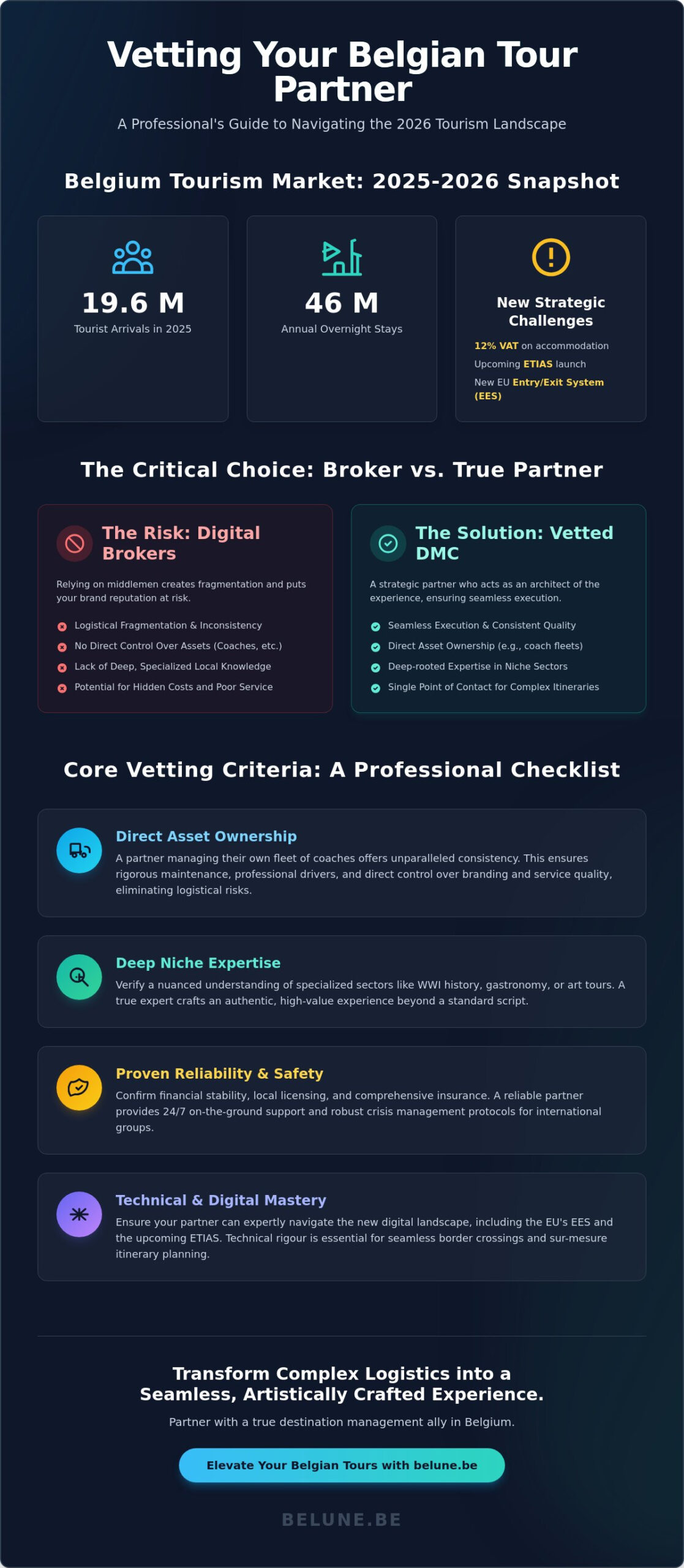
In the high-stakes world of professional group travel, an abundance of choice often masks a deeper inefficiency. We call this the Logistics Paradox. Having access to thousands of hotels, guides, and transport providers across Western Europe doesn’t necessarily empower the organizer. Instead, it often creates a paralyzing volume of data points and operational friction. To effectively reduce stress of organizing europe trips, one must recognize that every additional unvetted vendor represents a new potential point of failure. The sheer volume of coordination required for a multi-country itinerary is immense.
Managing the mental load is perhaps the greatest challenge for the modern travel architect. You’re balancing cultural nuances in Belgium with the rigid scheduling requirements of Parisian museums, all while trying to satisfy diverse traveler expectations. It’s a delicate dance. When you source vendors individually, you’re not just booking services; you’re inheriting the responsibility of syncing their disparate systems. This reactive “problem-solving” mindset is exhausting. True mastery lies in a “prevention-first” strategy where the logistics are unified long before the group arrives.
To better understand the impact of professional management on your well-being, watch this helpful video:
The Fragmentation of Local Vendor Management
Vetting a local guide in Bruges or a boutique hotel in Amsterdam from an office thousands of miles away is inherently risky. DIY sourcing often results in a fragmented ecosystem where nobody takes holistic responsibility for the group’s flow. Communication lags across time zones lead to missed details and misaligned expectations. These small gaps eventually manifest as major disruptions for the traveler, eroding the elegance of the journey. These complexities are frequently compounded by group decision-making challenges, where conflicting priorities between stakeholders can stall the entire planning process and lead to inconsistent quality across different legs of the trip.
The Hidden Costs of Unmanaged Group Logistics
Financial predictability is the foundation of professional serenity. Yet, unmanaged logistics are riddled with hidden variables. Fluctuating currency rates and shifting tourist taxes, like the 12.5% rate in Amsterdam or the 2026 VAT increases in the Netherlands, can quietly gut a project’s profitability. Relying on “cheap” individual bookings might seem fiscally responsible at first glance. However, when a local transport link fails or a hotel overbooks, the cost of an emergency solution far exceeds the initial savings. We believe in the power of fixed-price certainty. By securing comprehensive group packages, you replace financial volatility with a stable, transparent framework that protects both your margins and your reputation.
A 5-Step Framework for a Seamless Group Itinerary
Designing a group journey is an architectural feat. It requires a delicate balance between technical precision and emotional resonance. To effectively reduce stress of organizing europe trips, you must move beyond the traditional checklist and adopt a framework that anchors every logistical decision in a singular, visionary theme. When an itinerary has a clear conceptual core, the thousands of minor choices, from restaurant selections to transit times, suddenly align with purpose. This clarity doesn’t just benefit the organizer; it provides the travelers with a narrative thread that makes the experience feel curated rather than chaotic.
Professional itinerary design relies on five foundational pillars. First, define your anchor theme early. Second, embrace “Quality over Quantity” by resisting the urge to over-schedule. Third, integrate generous logistical buffers. Moving a large group always takes longer than anticipated. Fourth, curate sensory experiences that linger in the memory. Finally, validate every route and timing through local expertise to ensure geographic feasibility. This last step is crucial for catching the subtle nuances of European travel that digital maps often miss.
Pacing: The Secret to Traveler Satisfaction
The rhythm of a trip dictates its success. High-energy mornings at iconic sites must be balanced with intentional downtime to prevent group burnout. Strategic hotel placement serves as a structural component of this pacing. By choosing accommodations that minimize daily transit friction, you reclaim valuable time for your guests. We often rely on expert advice on overcoming travel stress to remind us that maintaining a sense of routine and predictability is vital for group harmony. When travelers know they have space to breathe, their engagement with the destination deepens significantly.
Curating Thematic Depth in Group Tours
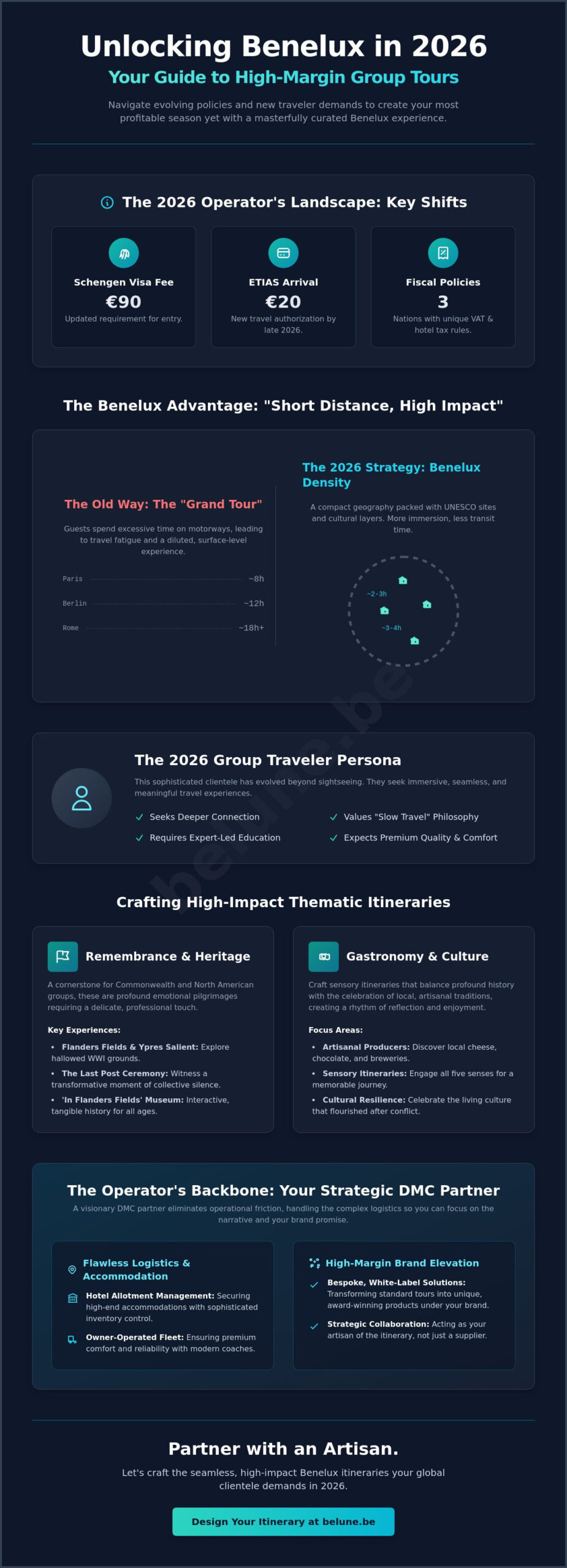
Focused themes are the ultimate antidote to decision fatigue. Instead of a generic “Best of Europe” approach, consider the profound impact of a specialized narrative. For instance, battlefield tourism offers a somber, deeply moving exploration of heritage that resonates on a personal level. You can balance this historical weight by incorporating belgium gastronomy tours, using the sensory delight of local flavors as a vibrant anchor for the day’s end. This contrast between intellectual reflection and sensory appreciation creates a sophisticated, multi-dimensional experience. If you’re ready to transform your next project into a seamless masterpiece, partnering with a strategic ally can help you refine every detail of your planning process.
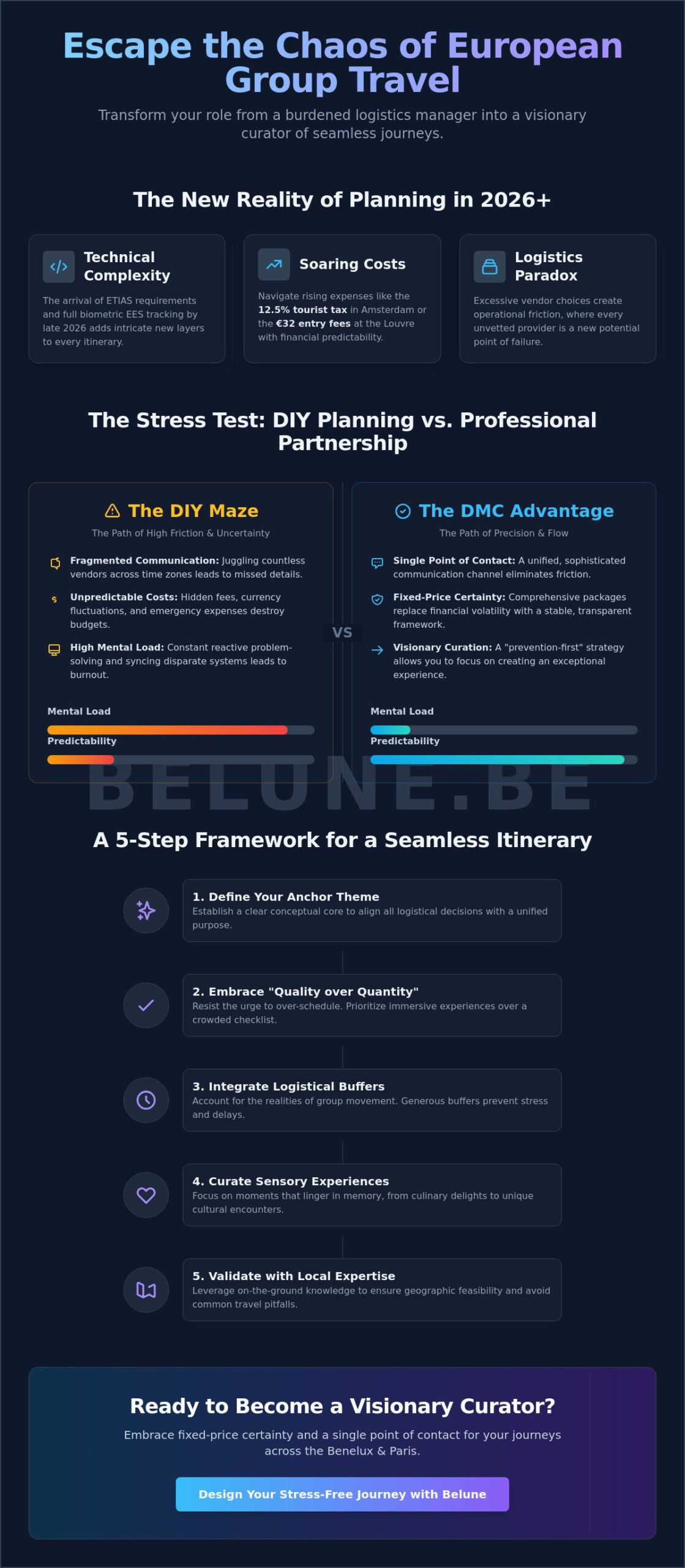
DIY Planning vs. Professional DMC Partnership: A Stress Test
The decision to manage every micro-detail of a group journey internally often stems from a desire for control. However, this control is frequently an illusion that dissolves the moment a logistical friction point emerges. To effectively reduce stress of organizing europe trips, one must weigh the massive time investment of DIY sourcing against the refined execution of a specialized partnership. When you outsource the technical scaffolding of a tour, you reclaim the mental space needed to focus on your clients’ emotional experience. It’s the difference between being a harried administrator and a visionary curator.
Flawless logistics aren’t just a comfort; they’re a structural component of your brand’s reputation. An ad-hoc approach, while seemingly flexible, risks the consistency of your service. A professional partnership offers a “guaranteed” level of on-the-ground management that “best effort” DIY sourcing simply cannot match. Scalability becomes effortless when you’re backed by a regional specialist who understands the intricate textures of the local market. You aren’t just buying a service; you’re investing in a sophisticated support system that scales with your ambition.
The Security of Local Ground Support
Crisis management is the true test of any itinerary. When a high-speed train is abruptly cancelled or a premium hotel in Amsterdam reports an overbooking, the DIY planner is left scrambling across time zones. A benelux incoming tour operator serves as your essential eyes and ears, providing immediate, sophisticated solutions before the group even senses a disruption. This presence transforms a potential crisis into a testament to your professionalism. Having a partner who understands local regulations and has direct relationships with vendors ensures that “unforeseen” events never derail the traveler experience.
Economic Predictability and Fixed Pricing
Economic predictability is a cornerstone of professional serenity. Fragmented vendor booking often leads to a culture of “nickel-and-diming,” where hidden fees for permits or local taxes erode your margins. We prioritize the power of all-inclusive, fixed-price group packages. By leveraging wholesale local relationships and managing our own fleet of coaches, we provide a transparent financial framework. This protects your profitability and ensures the focus remains on the art of the journey, not the volatility of the invoice. You gain the confidence of knowing your costs are locked, regardless of seasonal fluctuations or sudden tax increases.
The Reliability Pillar: Mastering Transport and Accommodation
Reliability is the structural integrity of your itinerary. It’s the invisible force that allows a group to move from the historic centers of Brussels to the hidden gems of the Ardennes without friction. One of the most fundamental ways to reduce stress of organizing europe trips is to eliminate the variables of public infrastructure. While European rail networks are impressive, they lack the bespoke flexibility required for high-end group travel. By utilizing a private fleet of modern busses, you regain control over the narrative of the journey.
Sourcing group-friendly hotels requires a specialized lens. It’s not merely about bed counts; it’s about understanding the unique flow of an international group. Professional accommodation management ensures that luggage transitions are seamless and that breakfast timings align with departure schedules. This synergy between transport and stay creates a cocoon of comfort for the traveler. When the coach is waiting at the door and the hotel is prepared for a swift check-in, the logistical weight on the organizer simply evaporates.
The Advantage of a Private Coach Fleet
A private fleet offers more than just transit; it provides a sanctuary. Modern amenities like climate control and ergonomic seating are essential for maintaining group energy levels during transit. More importantly, dedicated drivers who specialize in group movements ensure a level of punctuality and safety that public options cannot guarantee. Custom routes allow you to reach artisanal workshops or remote heritage sites that remain inaccessible to trains. This technical mastery of the road is what transforms a standard tour into an exclusive experience.
Expert Local Guidance as a Stress Buffer
Local guides are the human bridge between a plan and its execution. They don’t just share history; they manage the micro-logistics of every stop. A multi-lingual guide can navigate sudden local closures or language barriers with a grace that keeps the group at ease. By partnering with culture group tours benelux experts, you ensure that every cultural encounter is authentic and deeply resonant. This expertise acts as a buffer, absorbing the small shocks of travel so your clients never feel the impact. If you’re ready to elevate your logistics, explore our professional fleet and management services to secure your next itinerary.
BELUNE: Your Visionary Ally for Stress-Free Western Europe
BELUNE represents a definitive departure from the transactional nature of traditional travel planning. With over 20 years of expertise, we’ve transformed the technical complexities of the Benelux and Paris regions into a fluid, artistic process. When you choose to reduce stress of organizing europe trips by partnering with us, you aren’t just hiring a provider. You’re aligning with a team that views every itinerary as a bespoke creation. We strip away the logistical friction to reveal the soul of the destination, allowing your creative vision to take center stage.
Our philosophy blends minimalist elegance with a rigorous technical foundation. We believe that a high-quality traveler experience is the result of invisible, flawless execution. It’s the silent, punctual arrival of a private coach or the effortless check-in at a group-friendly boutique hotel. This commitment to excellence ensures that your brand identity is reflected in every touchpoint of the journey. We don’t just move people; we curate environments where memories can flourish without the weight of operational anxiety or the clutter of unmanaged details.
A Sophisticated Approach to Group Management
We treat the coordination of international flights, train bookings, and hotel accommodation management as both an art and a science. This dual focus allows us to act as your strategic partner on the ground, rather than a mere vendor. The security and peace of mind that come with a specialized group travel agency are invaluable in an increasingly complex regulatory landscape. We handle the nuances of EES tracking and ETIAS requirements so you don’t have to. Our role is to be your unwavering support system, ensuring that every logistical detail serves the larger human experience.
Crafting Memories Through Specialized Themes
Diversity is the hallmark of our portfolio, designed to stimulate the imagination of your clients. From the somber reflection of battlefield tourism to the high-octane energy of F1 Francorchamps or Grand Slam Tennis, we design journeys that resonate deeply. Our themed group travel benelux expertise includes immersive gastronomy and beer experiences, cycling tours through scenic landscapes, and exclusive festival access like Tomorrowland. Whether it’s a river cruise with curated local excursions or a deep dive into art and culture, our itineraries are cohesive and vibrant. Contact our experts today to begin your stress-free planning journey and transform your vision into an exceptional reality.
The Path to Professional Serenity in 2026
The landscape of European travel in 2026 demands a sophisticated shift in perspective. You’ve seen how a thematic anchor and a prevention-first mindset can redefine the planning process. By prioritizing quality over quantity and integrating logistical buffers, you transform a potentially chaotic itinerary into a fluid, artistic narrative. The key is to move away from the fragmentation that breeds uncertainty and operational fatigue. This transition allows you to focus on the emotional resonance of the journey rather than the friction of the logistics.
To truly reduce stress of organizing europe trips, you need the technical rigor of a partner who understands the intricate textures of the Benelux and Paris regions. With over 20 years of DMC experience and our own private fleet of modern coaches, we provide the stability and elegance your brand requires. We don’t just solve problems. We prevent them from ever touching your travelers’ experience. Your vision deserves a foundation of absolute reliability and sophisticated execution. It’s time to elevate your group journeys beyond the ordinary.
Partner with BELUNE for stress-free group logistics in 2026. Let’s create something exceptional together.
Frequently Asked Questions
How can I reduce the stress of organizing a large group trip to Europe?
The most effective way to manage complexity is to transition from a logistics coordinator to an experience curator by partnering with a specialized Destination Management Company. This shift allows you to reduce stress of organizing europe trips by outsourcing the technical scaffolding of the journey to experts. By centralizing your communication and relying on local authority, you eliminate the mental load of vetting fragmented vendors and navigating new 2026 regulations like ETIAS or biometric EES tracking.
What are the main benefits of using a DMC for European group travel?
A DMC provides technical precision and on-the-ground authority that individual planners cannot replicate from a distance. You gain access to exclusive local relationships, wholesale rates, and a deep understanding of regional logistics. This partnership ensures that your vision is executed with minimalist elegance. It transforms a series of bookings into a cohesive, high-quality experience that reflects your brand’s commitment to excellence and professional rigor.
How do fixed-price group tour packages help my travel business?
Fixed-price packages provide financial certainty and protect your profit margins against the volatility of currency fluctuations or sudden tourist tax increases. By securing an all-inclusive rate for transport, accommodation, and activities, you eliminate the hidden fees that often erode a project’s budget. This transparency allows you to present a polished, professional proposal to your clients without the worry of unexpected costs from fragmented service providers.
Is it better to use public transport or private coach hire for groups in Europe?
Private coach hire is the superior choice for groups as it offers bespoke flexibility and removes the unpredictability inherent in public rail networks. Utilizing a private fleet of modern busses allows for custom routes to artisanal workshops or remote heritage sites. It also ensures that the group remains in a controlled, comfortable environment. This structural reliability is essential for maintaining punctuality and group energy levels throughout the itinerary.
How can a local guide service improve the traveler experience?
Local guides act as a human bridge, providing cultural depth and managing the micro-logistics of every daily stop. Beyond sharing history, a multi-lingual guide navigates local nuances and sudden closures with professional grace. This expertise acts as a buffer for the group. It ensures that every cultural encounter feels authentic and resonant while the guests remain shielded from the minor frictions of travel in unfamiliar environments.
What should I look for when choosing a Benelux incoming tour operator?
Prioritize an operator with significant regional longevity and a direct fleet of transport assets. A visionary partner should offer more than just bookings; they should provide a strategic vision for the Benelux and Paris regions. Look for those who demonstrate a blend of technical rigor and artistic sensitivity. This ensures your itineraries aren’t just functional, but are crafted with a sense of sophisticated flow and high-end quality.
How does local ground support handle travel disruptions for groups?
Local ground support provides immediate, sophisticated solutions to crises like train cancellations or hotel overbookings before the group senses any friction. Having an expert team on the ground means having eyes and ears in the destination to manage logistics on the fly. This proactive management is a core strategy to reduce stress of organizing europe trips. It transforms a potential disruption into a seamless transition that preserves your professional reputation.
Can a DMC help with specialized themes like battlefield or gastronomy tours?
Specialized themes are a DMC’s area of mastery, allowing them to link cultural heritage to modern traveler values through focused narratives. Whether it’s a somber pilgrimage through Flanders Fields or a sensory exploration of Belgian beer and gastronomy, a DMC curates these experiences with technical precision. They integrate diverse elements into a cohesive journey; for example, if you are organizing specialized social events in Spain, you can visit Packs Despedidas for expert support in Valencia. This thematic depth reduces decision fatigue for the organizer and creates a profound, multi-dimensional experience for the travelers.