Category: Uncategorized

  • Art Nouveau Architecture: The Definitive Guide for Cultural Group Travel in 2026

    Art Nouveau Architecture: The Definitive Guide for Cultural Group Travel in 2026

    The subtle distinction between a sinuous, organic line and a bold, geometric one. For many, this nuance is what separates appreciation from true understanding, turning a tour of architectural marvels into a series of beautiful but disconnected moments. The challenge lies in weaving these individual masterpieces of art nouveau architecture into a single, compelling narrative for your clients-a story that flows as elegantly as the forms themselves.

    This definitive guide is your key to mastering that narrative for 2026. We move beyond simple definitions to explore the very soul of the movement, from its philosophical roots to its most intimate details. You will discover a curated path through its heartland-the Brussels-Paris axis-and gain a framework for identifying its signature harmony of iron, glass, and stone. Prepare to unlock the concept of the “total work of art” and transform your next cultural itinerary into a truly unforgettable, cohesive experience.

    Key Takeaways

    • Learn to identify the defining signatures of Art Nouveau, from its organic “whiplash” curve to the revolutionary harmony of industrial iron and traditional stone.
    • Trace the journey of art nouveau architecture from its birthplace in Brussels with Victor Horta to its celebrated expression in Paris with Hector Guimard.
    • Grasp the “total work of art” philosophy to understand how every element, from the facade to the doorknobs, contributes to a unified, immersive vision.
    • Discover essential strategies for curating a group itinerary that balances iconic landmarks with exclusive access to private interiors and hidden masterpieces.

    Defining the “New Art”: Why Art Nouveau Architecture Still Captivates

    Before the stark lines of Modernism, there was a brief, brilliant moment of artistic rebellion. Art Nouveau (1890-1910) was that vital bridge, a conscious departure from the historical imitation that defined the 19th century. At its core was the German concept of Gesamtkunstwerk-the ‘total work of art.’ Here, every element, from the structural ironwork to the door handle, was part of a unified, organic whole. This was not mere decoration; it was a philosophy designed to sublime the everyday, infusing domestic life with beauty and meaning through exceptional craftsmanship.

    The Philosophical Roots of the Movement

    The style did not emerge from a vacuum. It drew profound inspiration from the British Arts and Crafts movement’s emphasis on artisanal skill and the elegant, natural forms found in Japanese woodblock prints. Fueled by these influences, the Art Nouveau movement passionately sought to forge a modern style for a rapidly industrializing Europe. Art Nouveau was the first truly international modern architectural movement.

    Art Nouveau vs. Art Deco: Clearing the Confusion

    While often conflated, these two styles are distinct expressions of their time. Understanding their differences is key to appreciating the unique harmony of art nouveau architecture. Consider these core distinctions:

    • Form: Art Nouveau celebrates the organic line-whiplash curves, floral motifs, and sinuous asymmetry. Art Deco embraces geometric precision, symmetry, and streamlined shapes.
    • Era: Art Nouveau flourished before World War I (c. 1890-1910), an optimistic look to a new century. Art Deco defined the interwar period (1920s-1930s), reflecting the machine age.
    • Materials: Nouveau champions natural and crafted materials like wrought iron, stained glass, and warm woods. Deco favors industrial materials like chrome, concrete, and polished stone.

    The Brussels Birthplace: Victor Horta and the Revolution of Space

    Brussels is not merely a city with Art Nouveau; it is the source. A new architectural language was born here at the end of the 19th century, one that rejected historical imitation in favor of organic forms inspired by nature. At its heart was Victor Horta, a visionary architect who sculpted with iron, glass, and light to redefine interior space and its emotional impact.

    His masterpiece, the Hôtel Tassel (1893), is universally recognized as the world’s first true work of art nouveau architecture. Horta shattered the rigid conventions of the traditional Belgian townhouse-a series of dark, narrow rooms-by designing a central, light-filled stairwell. This luminous core, crowned with a stained-glass skylight, allowed daylight to cascade through the home. Here, the famous “whiplash” curve appears, an energetic line that flows seamlessly from iron columns to mosaic floors and wall murals, creating a total, immersive harmony.

    The UNESCO Legacy of Victor Horta

    Horta’s genius is immortalized in four of his major townhouses, now a collective UNESCO World Heritage site: Hôtel Tassel, Hôtel Solvay, Hôtel van Eetvelde, and his former home, now the Horta Museum. In each, he boldly exposed the building’s iron structure, transforming a purely functional material into a sublime decorative element. For any group seeking to understand the movement’s origins, these sites are the essential, non-negotiable anchors of your tour.

    Henry van de Velde and the Expansion of the Belgian Style

    While Horta revolutionized structure, his contemporary Henry van de Velde championed a holistic vision. His own home, the Bloemenwerf house, was a testament to the idea of a Gesamtkunstwerk or “total work of art.” Here, architecture, furniture, and even cutlery were conceived as a single, unified design. This comprehensive approach, deeply rooted in the Art Nouveau design philosophy, propelled the style beyond Belgium, significantly influencing the Jugendstil movement in Germany.

    Key Characteristics: Identifying the “Total Work of Art”

    Art Nouveau sought to dissolve the boundaries between architecture, art, and life itself. This ambition produced the Gesamtkunstwerk-the “total work of art”-where every component serves a unified aesthetic vision. From the grand facade to the smallest door handle, nothing is incidental. Understanding this philosophy is key to appreciating the movement’s profound impact, which is built upon a few core principles.

    • Organic Motifs: A deep reverence for the natural world, translating flora, fauna, and the female form into stylized, flowing designs.
    • Innovation in Materials: The unprecedented fusion of industrial iron and glass with traditional materials like stone and wood, allowing for new structural and decorative possibilities.
    • The Mastery of Light: A sophisticated understanding of how light, particularly through stained glass and skylights, could be used to sculpt interior atmospheres.
    • Integrated Design: A holistic vision where every element-furniture, lighting, mosaics, and metalwork-is custom-designed to create a single, harmonious environment.

    At its heart, art nouveau architecture is a celebration of nature’s dynamism. Architects rejected rigid historical symmetry, instead drawing inspiration from the organic world. This naturalism was married to industrial innovation, bending iron into delicate, vine-like structures and using glass not just for windows, but as an expressive, light-filtering canvas.

    The Whiplash Curve and Sinuous Lines

    This dynamic, asymmetrical line is the movement’s most famous signature. Mimicking the unfurling tendrils of a plant or the sudden crack of a whip, these curves infuse static structures with a palpable sense of energy and growth. The whiplash curve is the visual shorthand for the movement’s vitality, a line that refuses to be contained and flows seamlessly from one surface to another, unifying the design.

    This fascination with the expressive power of the line finds modern echoes in other artistic disciplines that explore aesthetics and connection. The Japanese art of rope tying, as practiced by Shibari-Tantra, for example, also uses flowing, organic lines to create intricate patterns that are both visually compelling and deeply meaningful.

    Stained Glass and the Play of Shadow

    Light was a material in its own right. Architects like Victor Horta used vast stained-glass windows and skylights not just for illumination, but to sculpt the interior atmosphere. These compositions of coloured and textured glass would filter daylight, casting ethereal, shifting patterns that transformed the mood of a space throughout the day. It was a masterful use of light as an architectural nuance, designed to evoke emotion.

    Beyond Brussels: Exploring Art Nouveau Across the Benelux and Paris

    Brussels was the crucible, but the fire of Art Nouveau spread with captivating speed. For groups wishing to deepen their understanding, extending the journey into France and the Netherlands reveals a fascinating dialogue of styles. From the flamboyant curves of Paris to the rationalist lines of Amsterdam, each city offers a distinct interpretation of nature, form, and modernity, creating a comprehensive narrative of this revolutionary design movement.

    The Parisian Interpretation: Guimard and Castel Béranger

    Paris embraced the Belgian “whiplash” line and amplified it into a theatrical aesthetic. Hector Guimard became its public face, and his iconic cast-iron Métro entrances remain enduring symbols of the era-perfect for group photography. The 1900 Exposition Universelle cemented this style’s fame, with masterpieces like the Castel Béranger showcasing a complete artistic vision, from façade to door handle.

    Beyond Paris, the “School of Nancy” presented a more profoundly organic vision, while just a short journey north of Brussels, Antwerp’s Zurenborg district offers another essential experience. This neighbourhood is an open-air museum, with streets like Cogels-Osylei providing an unparalleled architectural walking tour through a stunning concentration of imaginative façades.

    Nieuwe Kunst: The Dutch Perspective

    In the Netherlands, the movement evolved into the more restrained Nieuwe Kunst. Architects like Hendrik Petrus Berlage championed a sober, rationalist approach, favouring honest brickwork and structural clarity over ornate decoration. This distinct expression of art nouveau architecture offers a compelling counterpoint to the Belgian style, providing a richer, more nuanced itinerary for any design-focused group.

    Exploring these regional variations transforms a tour into a profound study of cultural identity expressed through design. Each city’s unique interpretation of light, material, and space reveals the movement’s true depth-a principle of bespoke harmony that informs every lighting conception we undertake.

    Curating the Experience: Why Expert Logistics Matter for Architectural Tours

    An architectural tour is more than a checklist of locations; it is a narrative journey. To truly appreciate the genius of art nouveau architecture, a group must not only see the structures but feel the spaces. This presents a unique challenge, as many of Brussels’ most exquisite interiors-the very heart of the Art Nouveau expression-remain private residences, inaccessible to the public.

    Expert logistics transform these obstacles into opportunities. It is the art of balancing iconic landmarks with hidden local gems to avoid crowds and create intimate moments of discovery. It is the precision of securing access to a private staircase or a secluded winter garden. Above all, it is the wisdom of an expert guide who can articulate not just the history, but the technical mastery of light-revealing how Victor Horta sculpted interiors with daylight, using glass, iron, and mirrors to craft an immersive, living environment.

    Planning a Cohesive Art Nouveau Itinerary

    A truly exceptional tour follows a deliberate narrative arc. We design itineraries that trace the movement’s evolution, from the radical early experiments in Brussels to its refined heights in other European capitals. This thematic journey is supported by seamless transport and accommodation that complements the aesthetic, ensuring the experience remains harmonious and immersive from start to finish. Our 3-Day Art Nouveau Tour of Brussels serves as a blueprint for this meticulous approach.

    The BELUNE Advantage for Tour Operators

    Our role is to sublime the group travel experience through professional precision. We are not just planners; we are curators of cultural discovery. This commitment is built upon:

    • Exclusive Access: Leveraging over 20 years of deep-rooted local connections to secure private viewings of homes and studios unavailable to the general public.
    • Seamless Transport: Coordinating private coach transport specifically designed for urban architectural discovery, navigating narrow city streets with comfort and efficiency.
    • Unwavering Expertise: An unwavering commitment to excellence, ensuring every detail-from timed entries to expert guide selection-is flawlessly executed.

    Partner with BELUNE to transform your vision into a profound cultural journey. We craft experiences where the logistics disappear, leaving only the pure, emotional impact of extraordinary design. Discover our bespoke approach at belune.be.

    Transforming Vision into an Unforgettable Journey

    Art Nouveau was more than an aesthetic; it was a revolution in design, transforming every surface into a canvas for organic beauty. From Victor Horta’s groundbreaking use of light and space to the intricate harmony of a ‘total work of art,’ understanding art nouveau architecture demands more than a passing glance. It invites a deep, immersive experience-one where every detail tells a story.

    Curating such an experience is an art in itself. At BELUNE, we transform this complexity into a seamless journey. With over 20 years of expertise in Benelux cultural logistics, our private fleet of modern coaches navigates city streets with ease, while our specialized network of multi-lingual architectural guides brings the history of each façade to life. We orchestrate every detail with precision and passion, ensuring your group can focus solely on the inspiration before them.

    Let’s create an architectural pilgrimage your group will remember for a lifetime. Partner with BELUNE to design your next Art Nouveau group itinerary and transform your vision into an unforgettable reality.

    Frequently Asked Questions About Art Nouveau

    What are the main characteristics of Art Nouveau architecture?

    A rebellion against rigid historicism. The hallmarks of Art Nouveau are its fluid, organic forms inspired by nature. Look for the iconic “whiplash” curve, asymmetrical lines, and motifs of flowers, vines, and insects. The style champions a synthesis of the arts, seamlessly integrating ornate ironwork, stained glass, mosaics, and murals into the architectural structure itself. This created a cohesive and deeply artistic environment, where every detail contributes to a unified whole.

    Where can I see the best Art Nouveau architecture in Europe?

    While Brussels is a celebrated cradle of the movement, its influence spread across Europe, creating a constellation of unique architectural hubs. In Paris, Hector Guimard’s metro entrances are iconic. Barcelona offers Antoni Gaudí’s singular vision of Modernisme, while Vienna showcases the Vienna Secession’s geometric elegance. For a different but equally compelling expression, the work of Charles Rennie Mackintosh in Glasgow is essential viewing for any connoisseur of the style.

    Organizing a trip that spans several of these cities requires significant planning. For travelers looking for support with flights, accommodations, and even pre- or post-tour cruises to round out their European vacation, Crestwell Travel Services offers comprehensive packages that can handle these broader logistics.

    Who was the most famous Art Nouveau architect?

    While the movement was rich with visionaries, Belgium’s Victor Horta is widely regarded as a primary pioneer of Art Nouveau architecture. His Tassel House in Brussels is considered the first true building of the style. His genius lay in his masterful use of iron and glass to create light-filled spaces with flowing, plant-like structures. Elsewhere, Antoni Gaudí in Barcelona achieved immense fame for his highly individualistic and sculptural interpretation of the style.

    What is the difference between Art Nouveau and Jugendstil?

    They are two regional names for the same revolutionary movement. “Art Nouveau” is the term used in France and Belgium, while “Jugendstil” (Youth Style) was its name in Germany and Austria. While they share a core philosophy of breaking from academic art, there are subtle stylistic nuances. French-Belgian Art Nouveau often features more sinuous, biomorphic curves, whereas Jugendstil sometimes leaned towards more geometric and abstract forms, particularly in its later phase.

    Is Art Nouveau the same as the Arts and Crafts movement?

    They are kindred spirits but not identical twins. Both movements emerged in the late 19th century as a response to industrial mass production, championing craftsmanship and the integration of art into daily life. However, the British Arts and Crafts movement favored simpler, medieval-inspired forms and traditional materials. Art Nouveau, by contrast, eagerly embraced new industrial materials like iron and glass, using them to create elaborate, stylized, and forward-looking forms.

    How do I organize a group visit to the Horta Museum in Brussels?

    A visit to this sanctuary of design requires thoughtful planning. The Horta Museum, being a former private residence, has limited capacity to preserve its delicate interiors. Group visits are possible but must be reserved well in advance, often several months ahead, directly through the museum’s official website. Strict time slots and group size limitations are enforced, so booking early is essential to secure a place for your group and ensure a serene, inspiring experience.

    Why did Art Nouveau architecture decline after 1910?

    Like a brilliant, brief bloom, the style’s intensity was part of its nature. Its decline was multifaceted. The highly ornamental, bespoke nature of Art Nouveau architecture was incredibly expensive and labor-intensive. As the world moved towards the 20th century, a desire for a more streamlined, functional, and less decadent aesthetic began to emerge. The rationalism of nascent Modernist movements and the subsequent austerity of World War I hastened its eclipse by the rise of Art Deco.

    What is a “total work of art” in architecture?

    A “total work of art,” or *Gesamtkunstwerk*, is the ultimate expression of artistic harmony. It is a design philosophy where the architect conceives not just the building’s structure, but every single element within it. This includes the furniture, lighting, textiles, door handles, and stained glass. Each component is designed to exist in perfect aesthetic dialogue with the others, creating a completely immersive and unified environment. Victor Horta’s own home, now the Horta Museum, is a sublime example.

  • Mastering Group Travel Logistics: A Professional Guide for the Benelux Region

    Mastering Group Travel Logistics: A Professional Guide for the Benelux Region

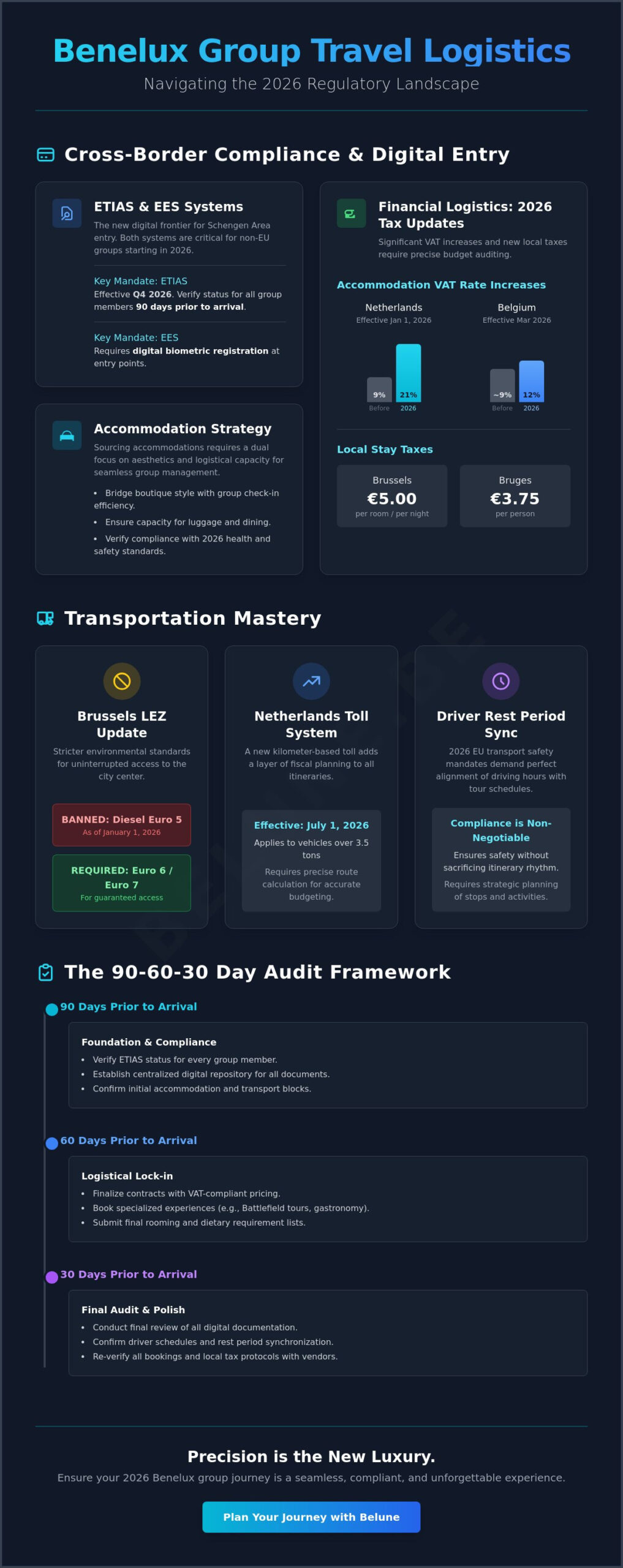
    A disjointed schedule. A missed connection. The subtle friction that erodes a perfect group experience. These are the challenges that separate a standard tour from a truly exceptional one. Orchestrating a journey through the Benelux requires more than a simple checklist; it demands a masterful approach to group travel logistics, where every detail contributes to a harmonious whole. It is an art of precision, nuance, and deep local knowledge.

    This guide is crafted for the professional who views travel not as a series of bookings, but as a curated experience. We will move beyond the common pitfalls-from the complexities of European transport regulations to the frustrating inaccessibility of historic city centers. Here, you will discover the framework to design and execute flawless, high-impact journeys. The result? Zero-friction transit between cities, itineraries that breathe with real-time elegance, and the foundation for lasting client loyalty and repeat business.

    Key Takeaways

    • Adopt a “logistics-first” mindset to build resilient itineraries that anticipate challenges in high-density regions like the Benelux.
    • Reframe your approach to group travel logistics from a mere checklist into a strategic art that synchronizes transport, accommodation, and storytelling.
    • Learn to master the unique challenges of the Benelux, from orchestrating fluid cross-border travel to navigating its dense historic infrastructure.
    • Discover why partnering with an asset-based DMC is the definitive way to ensure absolute reliability and quality control for your group’s transport.

    The Core Pillars of Modern Group Travel Logistics

    Mastering group travel logistics is far more than a checklist of bookings. It is the strategic synchronization of transport, accommodation, and storytelling-the invisible architecture that supports a flawless collective experience. This discipline elevates the foundational principles of coordinating complex operations into the realm of human connection, ensuring every moment flows with purpose and ease.

    In high-density regions, from historic city centres to bustling event venues, a “logistics-first” approach is non-negotiable. This applies globally, from European tours to sourcing a top-tier Bangkok event venue rental for a corporate function. It is the proactive strategy that prevents itinerary collapse, transforming potential friction points into seamless transitions. This marks the essential shift from simple booking services to comprehensive Destination Management, where the focus moves from securing rooms to architecting the entire journey.

    The success of this intricate work is measured by three key performance indicators:

    • Punctuality: Ensuring the group’s time is respected at every turn.
    • Comfort: Curating every detail, from vehicle quality to room accessibility, for effortless ease.
    • Flexibility: The capacity to adapt to unforeseen changes without compromising the experience.

    Transport Coordination and Fleet Management

    Moving groups of 20 to 50+ people requires more than just a large vehicle; it demands a modern, meticulously maintained fleet. Vehicle age and amenities directly impact passenger comfort and project an image of quality. The professional driver acts as the first point of logistical contact-an ambassador for the journey whose expertise is paramount. This orchestration must seamlessly integrate with international arrival hubs like Brussels Airport or Schiphol, transforming a potentially stressful arrival into a smooth, welcoming first impression.

    This focus on high-quality, bespoke transportation is a hallmark of premium service providers worldwide. While the context here is large group travel in Europe, the principles of fleet quality and professional chauffeur-driven experiences are universal. A prime example in the U.S. luxury market is LEEMO, a Miami-based black car service renowned for setting a high standard for seamless airport transfers and executive transport.

    Accommodation and Group-Friendly Lodging

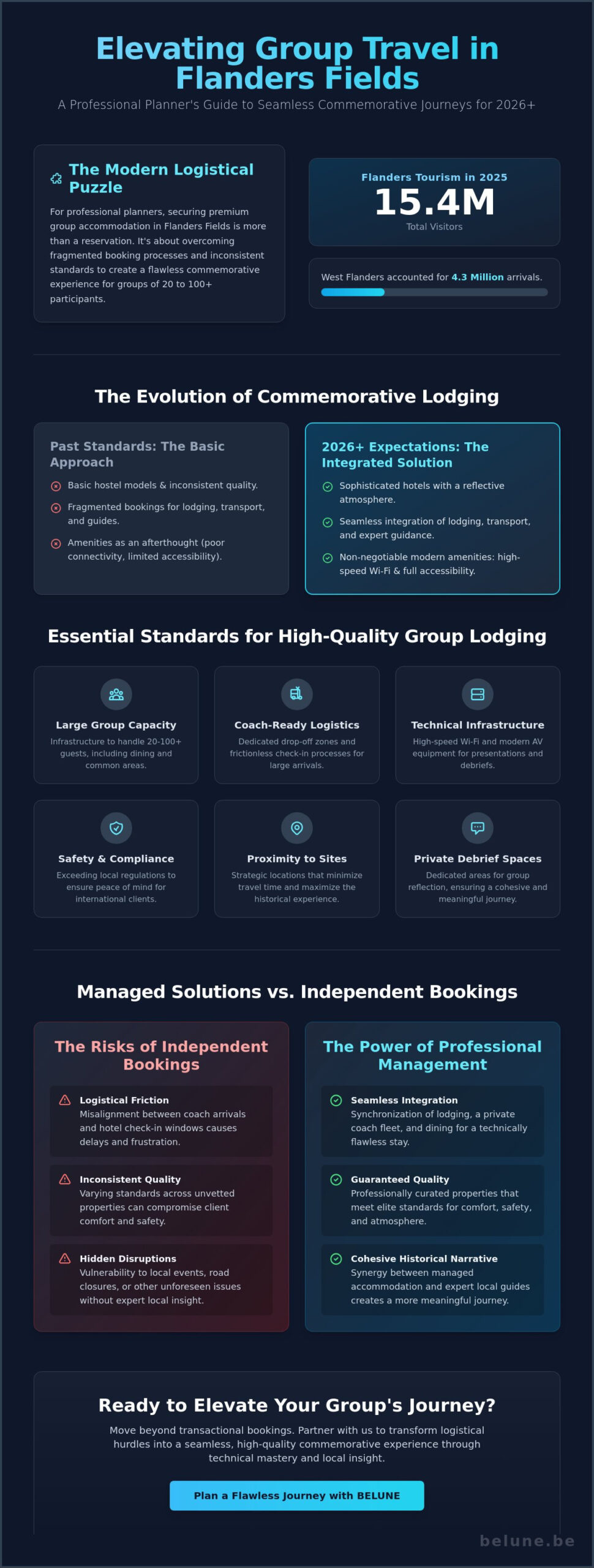
    Sourcing the right hotel is a delicate art. It requires identifying properties that understand the specific cadence of group arrivals, offering streamlined check-ins, efficient porterage, and adequate private dining spaces. The true challenge lies in balancing a coveted central location with the practical necessity of coach parking and accessibility. A skilled DMC ensures the grandeur of the destination is felt from the moment of arrival, not hindered by it.

    A region of immense charm. A puzzle of profound complexity. The Benelux countries-Belgium, the Netherlands, and Luxembourg-present a unique tapestry of high population density, historic infrastructure, and seamless international borders. This intricate dance of movement, often complicated by excursions to nearby Paris, is where expert group travel logistics becomes an art form. Navigating this landscape requires more than a map; it demands a deep, localized understanding of its rhythm and rules.

    The primary challenge lies in bridging centuries of history with modern transport. Imagine guiding a luxury coach through the narrow, cobbled streets of Bruges or Ghent. This “last mile” problem is a classic example where local expertise is indispensable, transforming a potential bottleneck into a graceful arrival. It’s about ensuring the experience remains elevated, from the motorway right to the medieval city center.

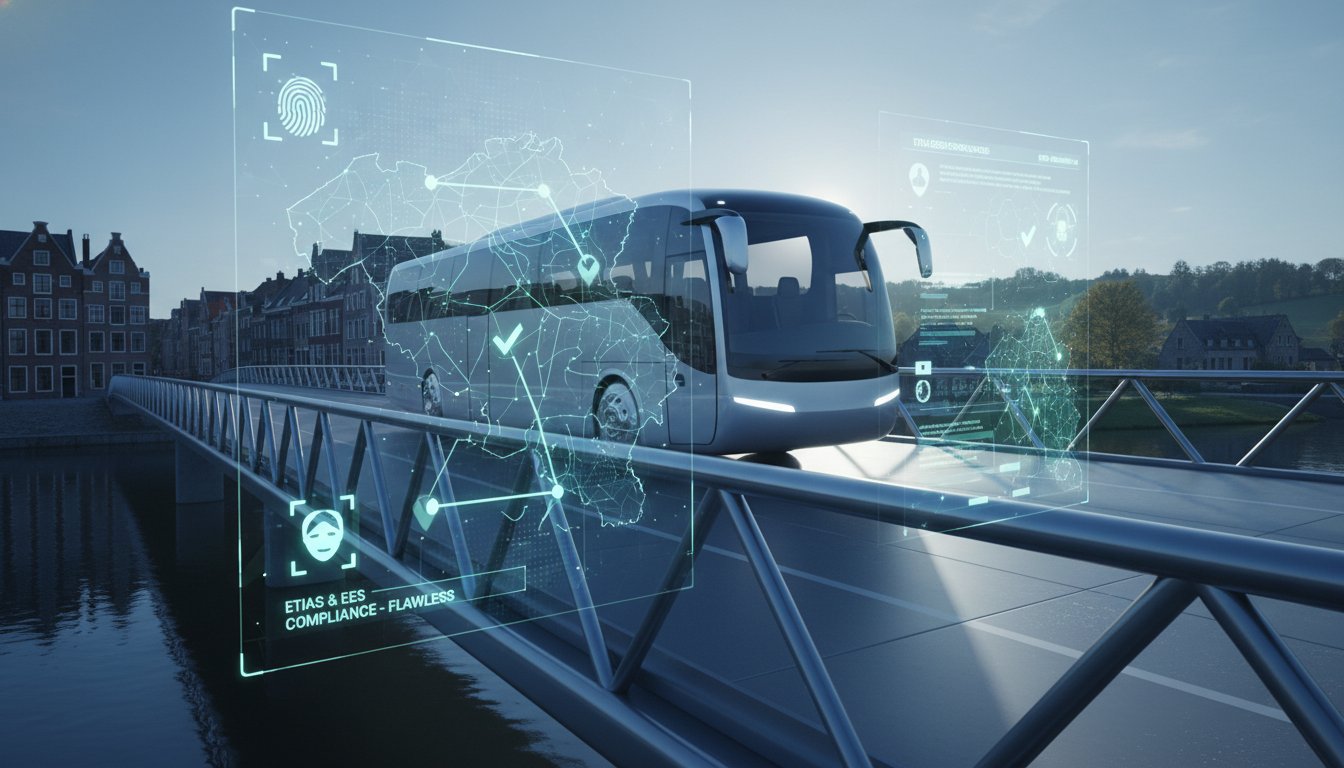
    Regulatory Compliance: EU Driver Hours and Tachographs

    Precision on paper. Perfection on the road. European Union regulations on driver hours are non-negotiable, designed to ensure safety and prevent fatigue. A miscalculation can lead to significant delays, steep fines, or even vehicle impoundment. Meticulous planning is essential, creating itineraries that respect mandatory rest periods without compromising the guest experience. This is the foundation of Designing Itineraries Around Logistical Reality, a discipline where a local DMC’s foresight in managing permits, road tolls, and compliance is invaluable.

    City Access and Environmental Zones

    The heart of Europe’s oldest cities is now protected by a modern shield: the Low Emission Zone (LEZ). Gaining access for a group coach to the historic centers of Brussels, Antwerp, or Amsterdam requires navigating a complex web of environmental regulations and securing the correct permits in advance. A DMC manages this entire process, ensuring your vehicle meets the stringent criteria for entry. Looking ahead, by 2026, coaches entering major Benelux Low Emission Zones will be required to meet zero-emission standards or, at a minimum, the latest Euro VI norms with specific city-by-city registrations.

    Risk Management: Pre-empting Logistical Failures

    Exceptional travel is defined not by the perfection of its plan, but by the elegance of its response to imperfection. The most critical aspect of group travel logistics is often invisible: the meticulous, proactive management of risk. This goes far beyond simple scheduling. It involves crafting robust contingency plans for traffic jams on the Brussels Ring, sudden transport strikes, or unexpected weather. For B2B partners, this assurance is paramount; knowing there is a 24/7 on-the-ground team operating in your destination’s time zone transforms uncertainty into absolute confidence. This level of foresight is a hallmark of professional planning, echoing the standards required for complex international group travel logistics, where anticipating failure is the first step toward guaranteeing success.

    The Tech-Human Hybrid in Logistics

    We harmonize advanced technology with irreplaceable human insight. While GPS and real-time fleet tracking allow us to dynamically optimize routes across Flanders and Wallonia, software alone cannot account for a last-minute road closure in rural Luxembourg for a local festival. This is where our network excels. A multi-lingual guide on the ground can instantly liaise with drivers and our back-office, smoothing over logistical friction and turning a potential disruption into a charming, spontaneous detour that enhances the group’s experience.

    Insurance and Liability in Group Travel

    A DMC acts as your primary shield against liability, insulating your brand from the unforeseen. We conduct rigorous due diligence, ensuring every vendor-from coach companies to activity providers-meets stringent safety and insurance standards. This risk assessment is nuanced, differentiating between the specific needs of a high-activity cycling tour in the Ardennes versus a cultural heritage tour in Bruges. This meticulous vetting extends to our human resources, where our expert local guide services become an essential risk-mitigation tool on the ground, providing both expertise and oversight.

    Ultimately, a DMC’s value shines brightest during a logistical pivot. When plans inevitably change, our role is not just to find a new route, but to manage group dynamics with clear, calm, and decisive communication. This proactive approach to group travel logistics transforms a moment of potential stress into a demonstration of seamless control and care, solidifying the trust your clients have placed in your brand and ensuring the journey continues flawlessly.

    Designing Itineraries Around Logistical Reality

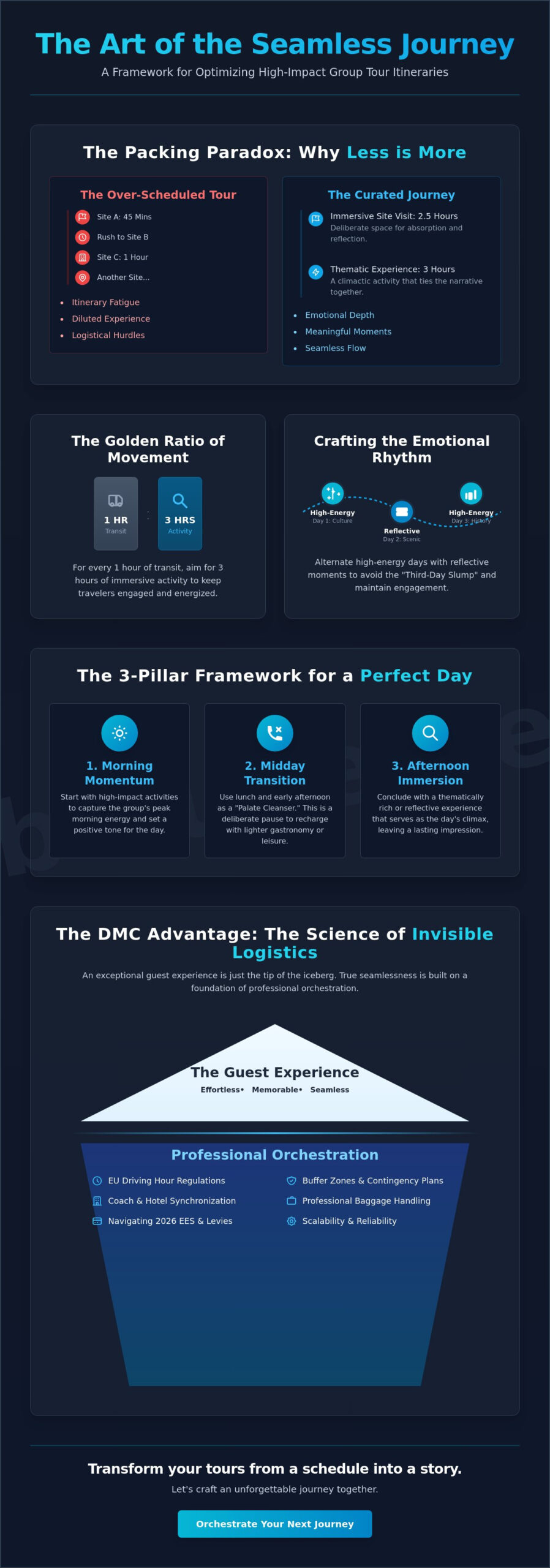
    An exceptional group tour is a masterpiece of timing and flow. The difference between a memorable journey and an exhausting marathon lies in the “golden ratio”-the delicate balance between travel time and immersive sightseeing. A Destination Management Company (DMC) excels at this, transforming a list of destinations into a seamless narrative. This expertise extends to every detail, from navigating complex group travel logistics to securing reservations for 40+ guests at restaurants that maintain culinary excellence under pressure.

    A great itinerary is built on a foundation of practical, on-the-ground knowledge. It anticipates challenges before they arise, ensuring the group’s energy is spent on discovery, not delay.

    The Battlefield Tourism Framework

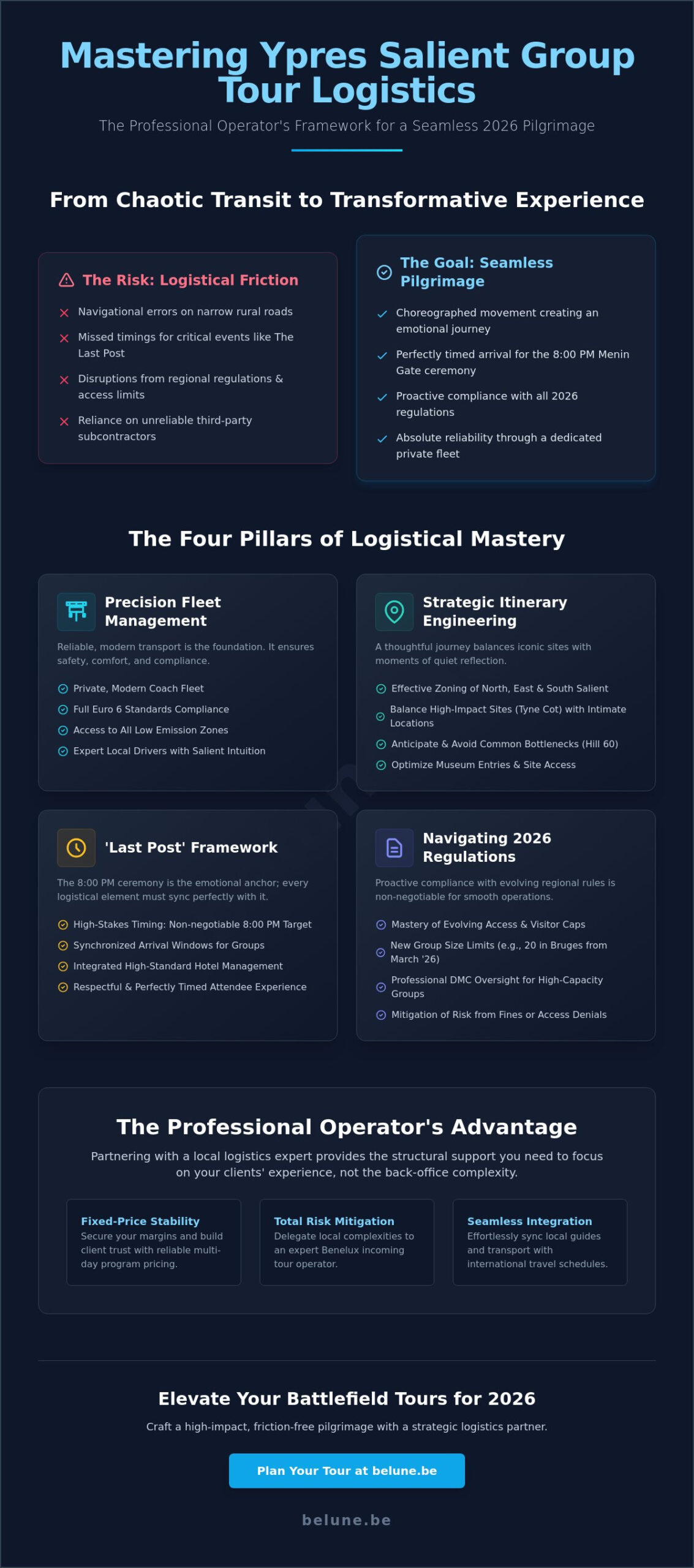
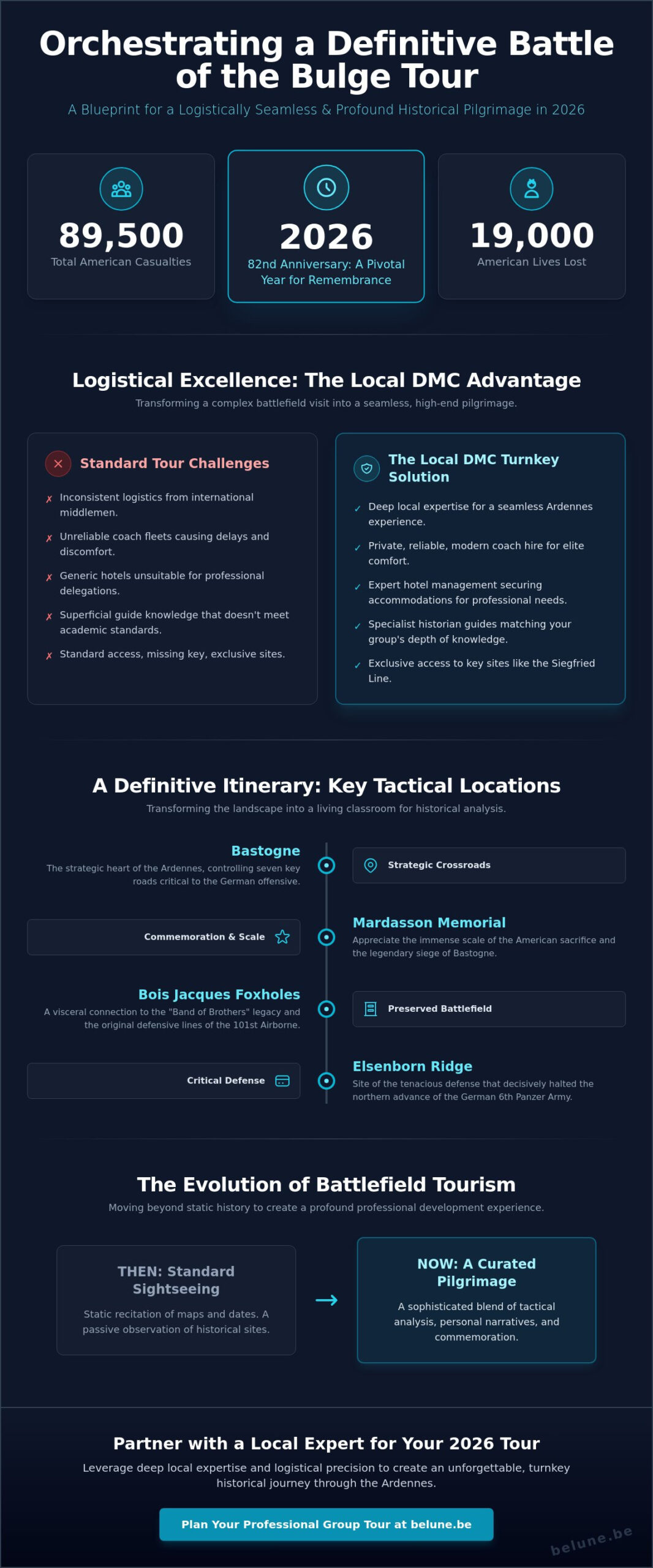
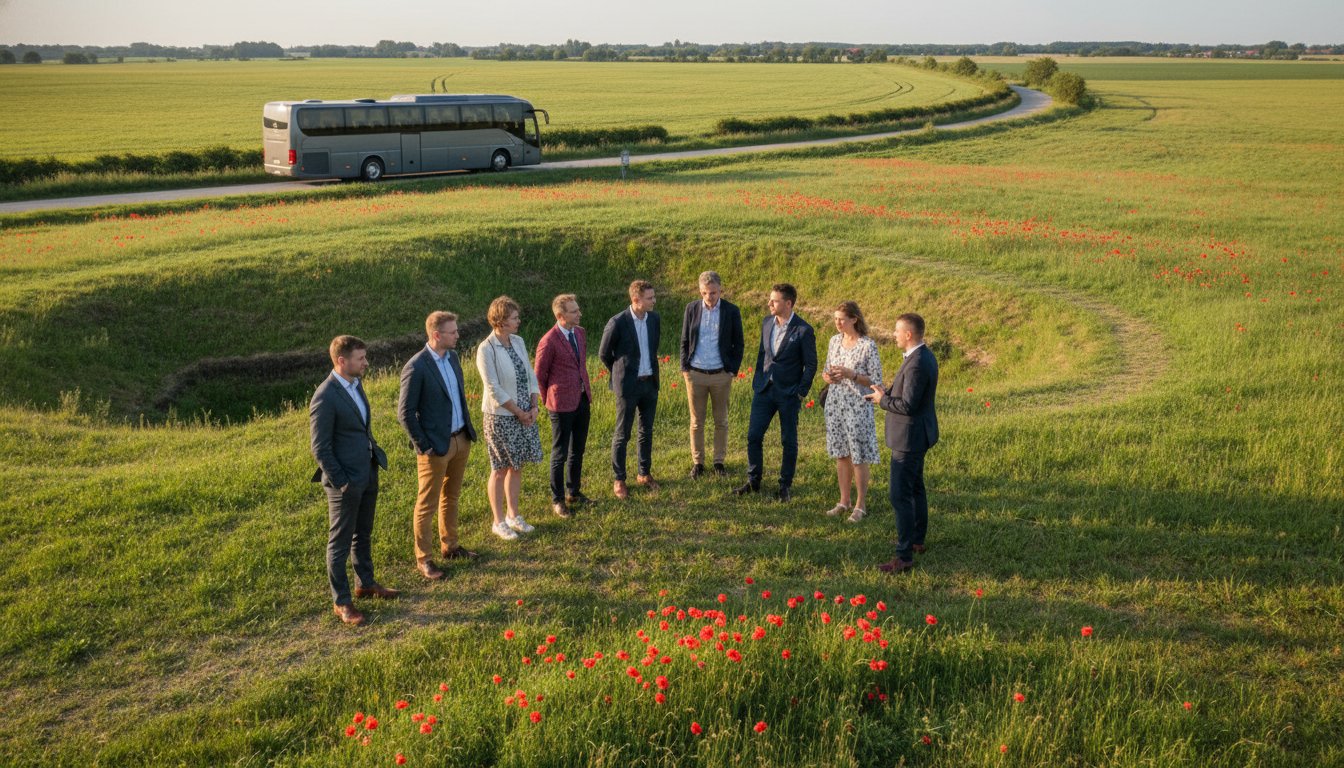
    For emotionally resonant tours, such as those through the Ypres Salient or around Bastogne, precision is paramount. A DMC’s plan accounts for coach parking limitations at key monuments and museums-a detail that can otherwise derail a schedule. Critically, it structures the day to culminate in the Last Post Ceremony at Menin Gate, ensuring your group arrives with ample time for reflection, not in a last-minute rush. For more detailed site information, consult our Flanders Fields guide.

    The Art and Culture Itinerary

    In cultural capitals, timing is everything. We manage the complexities of securing pre-booked, timed-entry tickets for entire groups at world-class venues like the Rijksmuseum or Magritte Museum, avoiding long queues. For experiences like an Art Nouveau walking tour in Brussels, we coordinate precise coach drop-off and pick-up points in pedestrian-heavy areas. This meticulous planning makes ambitious additions, like an efficient high-speed train day trip to Paris from Brussels, not just possible, but comfortable and rewarding.

    Why an Asset-Based DMC is the Ultimate Logistical Partner

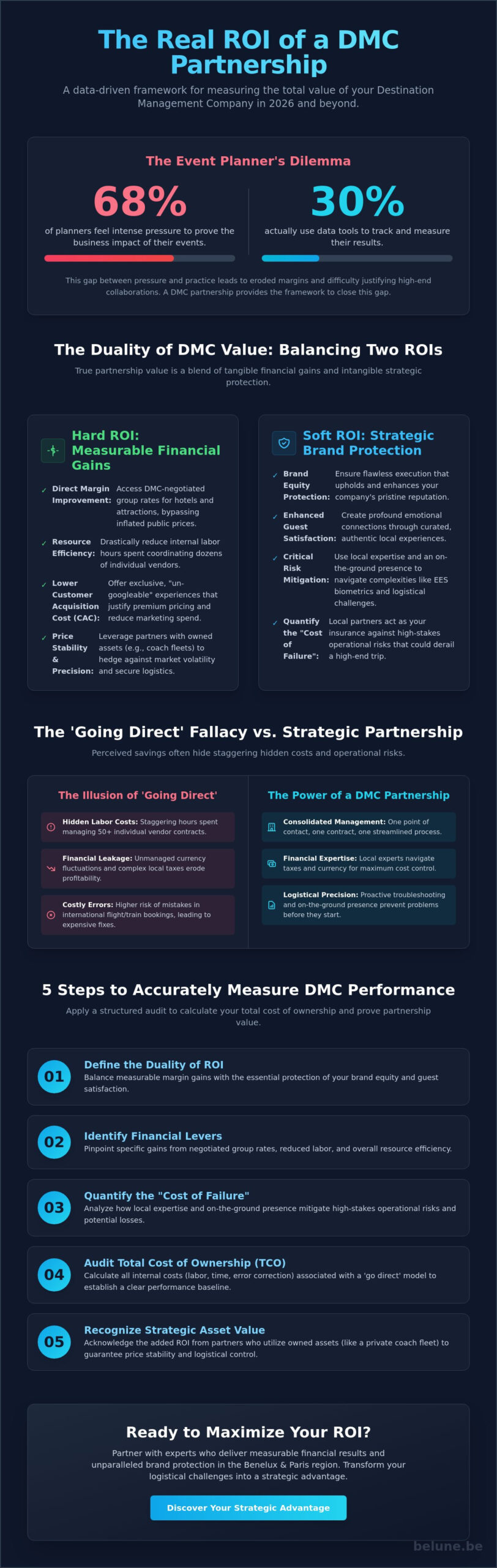
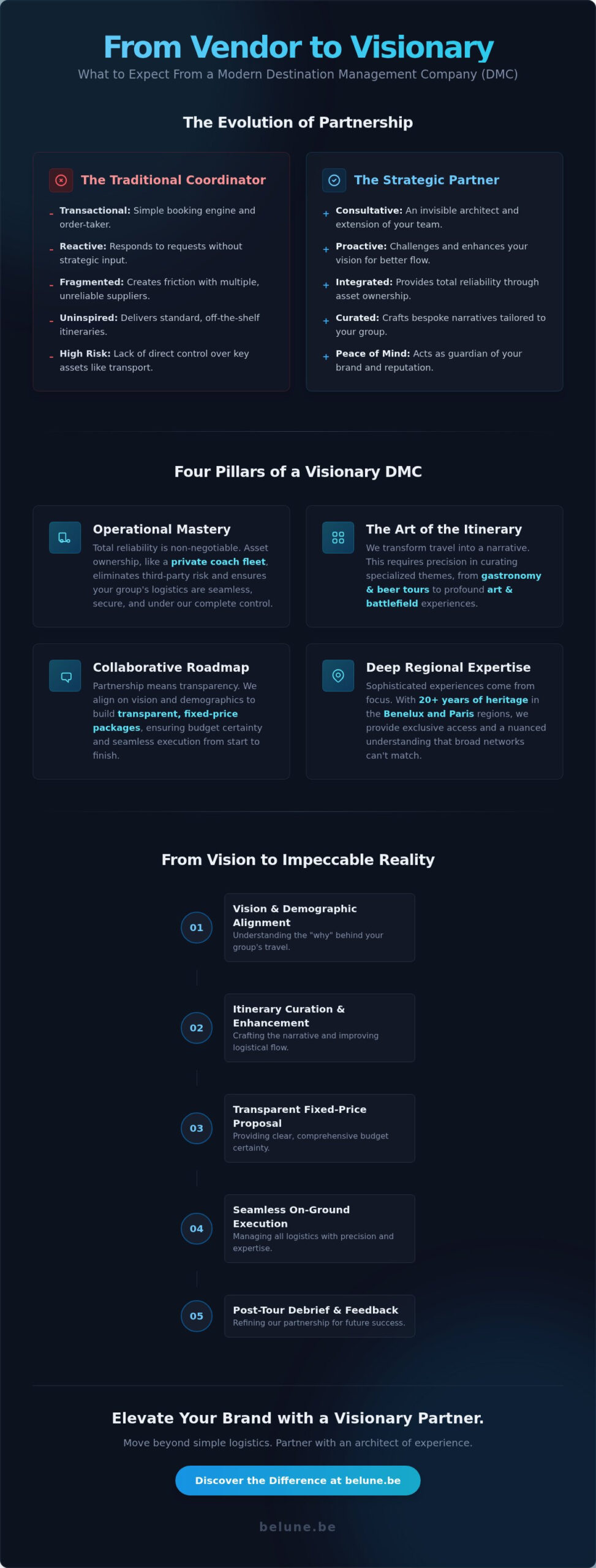
    While many travel agencies act as coordinators, an asset-based Destination Management Company (DMC) operates on a foundation of direct control. This is the fundamental difference. Where others outsource and hope for the best, we own the critical components of your journey. This model transforms the complex challenge of group travel logistics from a series of dependencies into a seamless, controlled, and harmonious experience.

    At BELUNE, this philosophy is embodied by our two decades of operational mastery. This isn’t just experience; it’s a curated network of deep-rooted relationships with premier hotels, exclusive restaurants, and cultural sites across the Benelux region. This “hidden” knowledge allows us to anticipate needs, solve problems before they arise, and secure access that others cannot. The result is a sophisticated, tailor-made group package with the clarity and security of a fixed price.

    The BELUNE Fleet Advantage

    Direct ownership of our transport fleet is the cornerstone of our promise. It eliminates communication breakdowns with third-party suppliers, ensuring every movement is executed with precision. Our modern, eco-friendly coaches are meticulously maintained and equipped for long-distance comfort, providing a serene environment for your group. From our strategic “Dottignies Hub,” we are perfectly positioned to serve the Benelux and Northern France with unmatched efficiency.

    Expertise in Crafting Experiences

    Twenty years in the field translates into more than just knowledge; it’s the art of crafting bulletproof itineraries. We design journeys where every transfer, meal, and activity flows together seamlessly. Our dedicated team provides personalized support throughout the entire process, from the initial spark of an idea to the final farewell. We are not just a supplier; we are your strategic partner in creating exceptional travel moments. Request your custom Benelux group travel logistics plan today.

    The Art of Flawless Group Travel

    Mastering travel in the Benelux region is not a matter of chance, but of design. As we have explored, the foundation of any unforgettable journey lies in its invisible architecture: a framework built on proactive risk management and itineraries grounded in logistical reality. True success is born from a deep understanding of the region and absolute control over every moving part.

    Ultimately, excellence in group travel logistics is achieved when every variable is managed with precision. This is the distinct advantage of an asset-based partner. With over 20 years of dedicated Benelux expertise and our private fleet of modern, high-spec coaches, we orchestrate every detail to ensure absolute quality, specializing in immersive Battlefield, Art, and Gastronomy experiences.

    Your vision for an exceptional group journey deserves a logistical counterpart of equal caliber. Allow us to translate your concept into a flawlessly executed reality. Request a Professional Logistical Proposal for Your Group and discover the art of seamless travel.

    Frequently Asked Questions

    What is the difference between travel logistics and a travel agency?

    A travel agency primarily sells pre-defined travel products like flights and hotel packages. A travel logistics partner, such as a DMC, is the architect of the journey’s execution. We focus on the operational masterpiece: harmonizing ground transport, timing, and local realities to create a seamless flow. It is the distinction between booking a trip and designing a flawless on-the-ground experience from start to finish.

    How do EU driver hour regulations affect our group itinerary?

    EU regulations are a cornerstone of safety and are meticulously integrated into any itinerary design. Drivers are limited to specific daily driving hours and mandated rest periods, which directly influences the tour’s pace and structure. Our role is to craft an elegant journey that respects these essential rules while optimizing your group’s time, ensuring the experience is both compliant and perfectly paced for maximum enjoyment.

    Can large coaches access historic city centers like Bruges or Amsterdam?

    Direct access to the historic hearts of cities like Bruges and Amsterdam is rightly restricted for large coaches to preserve their unique character. Our solution is one of finesse: we utilize strategic peripheral drop-off points and arrange for elegant transfers via smaller vehicles or private canal boats. This transforms a logistical challenge into an immersive part of the destination experience, revealing the city as it was meant to be seen.

    What are the benefits of using a DMC for Benelux group travel?

    Engaging a DMC for Benelux travel elevates the entire experience from standard to exceptional. We provide unparalleled local insight, from navigating complex regulations to securing exclusive access. Our expertise in group travel logistics means every detail is harmonized into a seamless whole. You gain a single, dedicated partner committed to flawless execution, proactive risk management, and the creation of a truly bespoke journey that resonates with your group’s vision.

    How do you handle group travel logistics for multi-country tours?

    Multi-country tours demand a sophisticated, unified vision. Our approach to managing logistics across borders is comprehensive, ensuring a consistent standard of excellence and a fluid travel experience. We coordinate everything from cross-border driver regulations to our network of trusted local partners in each country. Your group can therefore enjoy the richness of diverse cultures without the friction of fragmented logistical management.

    What happens if our group transport breaks down or is delayed?

    Contingency is an integral part of our planning. In the rare event of a transport issue, our on-ground team responds immediately, activating our extensive network to dispatch a replacement vehicle swiftly. We proactively communicate with all stakeholders-your tour leader, onward venues, and guides-to seamlessly adjust the itinerary. This ensures minimal disruption and maintains the absolute integrity of the travel experience.

    How far in advance should we plan group travel logistics for the Benelux?

    For a journey of distinction, we recommend beginning the planning process 9 to 12 months in advance. This foresight is particularly crucial for travel in the Benelux, especially during peak seasons. An early start allows us to secure the finest transport, guides, and accommodations. More importantly, it provides the necessary space for meticulous, creative itinerary design, ensuring every element is perfectly aligned with your objectives.

    Are your coaches equipped for long-distance travel to Paris?

    Absolutely. Our fleet is curated for superior comfort on long-distance journeys, including popular routes to Paris. Each coach is a modern sanctuary, impeccably maintained and equipped with amenities such as reclining seats, onboard restrooms, climate control, and Wi-Fi. We believe the journey is a vital part of the experience, and our vehicles are designed to ensure your group arrives feeling refreshed, relaxed, and ready to explore.

  • Luxembourg Group Tour: A Sophisticated Guide for Tour Operators in 2026

    Luxembourg Group Tour: A Sophisticated Guide for Tour Operators in 2026

    A fleeting glimpse. A two-hour interlude. For too long, Luxembourg has been a brief pause in a grander European narrative, its profound cultural depth overlooked while its logistical complexities-from navigating coach access in the Old City to securing truly high-end group hotels-act as a deterrent. We believe a sophisticated luxembourg group tour demands a new vision. It requires an approach that transforms these very challenges into an expression of seamless, exclusive travel.

    This guide is your blueprint for 2026. Within these pages, we move beyond the conventional to reveal the artistry of crafting a multi-day journey that captivates and inspires. We will share our most valuable DMC insights for designing a sophisticated itinerary, unlocking unique B2B cultural experiences, and ensuring flawless local logistics. Prepare to elevate your portfolio and present Luxembourg not as a mere stopover, but as the cultural centerpiece it was always meant to be.

    Key Takeaways

    • Discover how to curate thematic journeys that move beyond standard itineraries to align with the passions of discerning travelers.
    • Learn how to structure a high-end luxembourg group tour that artfully balances the nation’s fortress history with its modern European identity.
    • Master the region’s unique logistical complexities and understand why a local DMC partner is non-negotiable for operational success.
    • Gain a framework for creating sophisticated multi-day programs that blend iconic landmarks with exclusive cultural and culinary experiences.

    What Defines a Premium Luxembourg Group Tour in 2026?

    Luxembourg is an architectural masterpiece, not merely a financial capital. A state of nuanced contrasts. In 2026, a premium journey through the Grand Duchy is defined by a masterfully crafted balance-an elegant dialogue between the “Old World” charm of its UNESCO-listed fortress city and the “New World” ambition of its European institutions. This is the artisan approach to group travel: a bespoke experience that moves beyond the surface to reveal the nation’s soul.

    More than a simple itinerary, a distinguished luxembourg group tour is a curated narrative. As the country’s art and gastronomy scenes continue their dynamic evolution, 2026 presents a unique moment to explore this cultural renaissance, where heritage informs innovation.

    The UNESCO Fortress and Old City Heritage

    Our exploration begins within the very foundations of the city. We guide cultural groups through the Casemates du Bock, a subterranean labyrinth that whispers tales of medieval defense and resilience. From the shadows, we emerge onto the Chemin de la Corniche, aptly named “Europe’s most beautiful balcony,” where the architectural harmony of the old town unfolds. Here, integrated local storytelling transforms sightseeing into a resonant experience, bringing the Grand Duchy’s epic history to life.

    The Modern Narrative: Kirchberg and the European Spirit

    A short journey reveals another world. The Kirchberg plateau is a testament to Luxembourg’s forward-looking identity, a campus of striking contemporary design. We arrange architectural tours that include the I.M. Pei-designed MUDAM (Museum of Modern Art), the imposing European Court of Justice, and the acoustically brilliant Philharmonie. This deliberate contrast is essential; it is in the tension between the ancient fortress and modern Kirchberg that the complete story of Luxembourg is told.

    Ultimately, a premium experience is about connection and perspective. It’s about understanding how centuries of history shaped a modern European powerhouse. This curated approach elevates the journey far beyond standard itineraries, contributing to the sophisticated landscape of Tourism in Luxembourg and revealing its true character. By weaving together exclusive access, expert narration, and an appreciation for its evolving culture, a luxembourg group tour becomes an unforgettable exploration of history in motion.

    Deep Dive: Curating Themes for Sophisticated Travelers

    A truly exceptional luxembourg group tour moves beyond a checklist of sights and into the realm of curated experience. It’s about discovering the nuance that lies beneath the surface-a journey designed not just to be seen, but felt. This requires a bespoke approach, matching the expertise of our guides to the specific passions of your group, whether their interest lies in geopolitical history, fine art, or sustainable innovation. The narrative of Luxembourg is rich and layered, from the dramatic cliffs of its capital, a formidable fortress city whose ancient quarters and fortifications are a designated UNESCO World Heritage site, to the tranquil valleys that shaped European history.

    Defined by its commitment to becoming the “Green Heart of Europe,” Luxembourg’s ambitious sustainability initiatives for 2026 position it as a pioneer in responsible tourism.

    The Moselle Valley: Gastronomy and Viticulture

    For connoisseurs of food and wine, the Moselle Valley offers an itinerary that stimulates the palate. We move beyond standard tours to arrange exclusive experiences that capture the region’s essence. Imagine:

    • Private wine tastings in the cool, subterranean caves of esteemed local vintners along the Moselle River.
    • An immersive discovery of Crémant de Luxembourg, a sublime sparkling wine crafted with the same meticulous methods as its French counterpart.
    • Authentic farm-to-table dining in the heart of the Ardennes, where culinary-focused groups can savor the purity of local ingredients.

    Schengen and the Birth of Open Borders

    For groups fascinated by modern history and international relations, a visit to Schengen is essential. This small winemaking village holds monumental significance. Here, the abstract concept of a borderless Europe becomes tangible. We facilitate visits to the European Museum in Schengen for a deep understanding of the 1985 agreement, followed by a serene river cruise on the Moselle that glides past Germany, France, and Luxembourg-three countries in a single afternoon. The “Three-Country Corner” is a powerful, symbolic location that resonates deeply with international visitors, marking a pivotal moment in contemporary history.

    Ultimately, Luxembourg serves as a pivotal link. Its strategic location and compact size make it an ideal anchor for a wider Benelux circuit or a specialized tour of Northern France, offering a concentration of culture, history, and modernity that is simply unmatched.

    Logistical Excellence: The DMC Perspective on Group Success

    Luxembourg’s compact size is a deceptive virtue. Beneath its charming surface lies a complex network of high-density traffic and meticulous regulations that can challenge even seasoned planners. This is where logistical mastery becomes the art of the journey. A successful luxembourg group tour is not a matter of chance; it is a carefully orchestrated symphony of movement and timing. Our deep-rooted presence in the Benelux region is the non-negotiable “DMC Difference,” transforming potential friction into a seamless flow and justifying the nation’s premium positioning through unparalleled service quality.

    Private Coach Logistics and Accessibility

    Navigating the UNESCO-listed Grund with a modern, high-comfort coach is an exercise in precision. We manage the intricate details-from driver regulations and strict working hours to securing elusive parking permits in the city’s heart. The benefit of our private fleet is absolute: it ensures a consistent standard of luxury, reliability, and professional conduct, turning every transfer into an integral part of the premium experience, not just a means of transit.

    Group-Friendly Luxury Accommodation

    True luxury accommodation for groups extends beyond thread count. It demands an innate understanding of group dynamics. We partner with an exclusive portfolio of hotels adept at managing complex room blocks and executing flawless “meet and greet” services. Our deep knowledge, complemented by invaluable resources like the Official Luxembourg Tourism Portal, allows us to anticipate the market’s evolution. We are already curating experiences aligned with the shift toward boutique, sustainable luxury expected to define the 2026 hotel landscape.

    This meticulous, behind-the-scenes choreography is our promise. From the moment your group arrives, every check-in, transfer, and activity is harmonized. We believe this profound commitment to operational excellence is what elevates a simple itinerary into an unforgettable, high-value luxembourg group tour experience.

    A Sample 3-Day Luxembourg Cultural Itinerary

    A journey through Luxembourg is a study in elegant contrasts. This curated 3-day itinerary is designed to create a harmonious rhythm for your luxembourg group tour, balancing monumental history with moments of quiet reflection. It is a framework, not a rigid script-a thoughtful composition allowing space for the spontaneous discoveries that define truly memorable travel. Each day builds upon the last, revealing a new facet of the Grand Duchy’s character.

    Day 1: The Fortress and the Philharmonie

    Your exploration begins in the heart of the “Vertical City,” a place of dramatic topography and layered history. The morning is dedicated to a guided walk along the Chemin de la Corniche and through the UNESCO-listed fortifications, culminating with a view of the Grand Ducal Palace. In the afternoon, a seamless transition takes you to the modern Kirchberg plateau for an architectural deep-dive. Here, contemporary art and structures like the Philharmonie demonstrate how light can sublimate space into an emotional experience. The day concludes with a refined welcome dinner featuring the national dish, Judd mat Gaardebounen.

    Day 2: Vines and Borders

    Day two offers a change of scenery and pace, a sensory shift from stone to vine. A comfortable coach journey transports your group to the sun-drenched slopes of the Moselle Valley for a private tour of an esteemed local vineyard, tasting the crisp, mineral-rich wines of the region. The afternoon is reserved for a poignant visit to Schengen, where the European Museum provides powerful context to the concept of open borders. The evening is then yours, an open invitation for individual exploration or high-end shopping back in Luxembourg City.

    The final day ventures north into the verdant Ardennes, a region of deep forests and profound 20th-century history. Here, your group will connect with the powerful stories of the Battle of the Bulge at key memorial sites, with an optional extension to nearby Bastogne in Belgium. This deliberate structure-moving from urban core to rolling vineyards, and finally to historic landscapes-ensures a perfectly paced luxembourg group tour. It is a design that intentionally builds in moments for personal reflection, ensuring the experience is not just seen, but deeply felt.

    Partnering with BELUNE for Your 2026 Luxembourg Program

    A journey is more than a destination; it is a meticulously crafted experience. At BELUNE, we act as your visionary ally in Western Europe, transforming the concept of a group tour into an art form. With over two decades of specialized experience as a Benelux incoming tour operator, we understand the delicate harmony required to create unforgettable programs.

    Our philosophy is rooted in a commitment to “Art & Culture.” We don’t just book venues; we curate moments. This approach is supported by a foundation of logistical excellence:

    • Bespoke Curation: We design journeys that resonate with your group’s unique interests, ensuring every detail contributes to a cohesive and enriching narrative.
    • Private Fleet & Expert Guides: Our exclusive fleet of modern coaches and our team of certified, multi-lingual local guides provide a seamless, comfortable, and insightful travel experience from start to finish.
    • Deep Regional Expertise: Our long-standing presence in the Benelux region gives us unparalleled access and insight, allowing us to craft authentic and exclusive itineraries.

    Tailor-Made Itinerary Design

    We see ourselves as architects of your vision. Our process begins with listening, translating your specific group needs into a logistical masterpiece. We provide absolute B2B planning security with fixed-price transparency-no hidden costs, no surprises. From the initial creative concept to flawless on-the-ground management, our team offers unwavering support, ensuring your custom Luxembourg group tour exceeds every expectation.

    Start Planning Your Luxembourg Experience

    The Grand Duchy’s unique appeal means that key venues and accommodations are in high demand. We encourage early planning for 2026 programs to secure the best experiences for your group. The process begins with a simple conversation where we explore your objectives. From there, our specialists will develop a detailed, custom proposal tailored to your vision and budget.

    The dialogue between history and modernity awaits. Contact BELUNE to design your exclusive Luxembourg group tour and let us orchestrate a journey that will inspire for years to come.

    Your Vision, Our Expertise: Crafting the Definitive Luxembourg Experience

    As we look towards 2026, the essence of a remarkable Luxembourg journey lies not in its destinations, but in its narrative. A truly sophisticated tour is built on a foundation of curated thematic depth and flawless logistical execution-transforming a simple trip into a profound cultural immersion. This is the standard we uphold for every luxembourg group tour we design.

    With over 20 years of dedicated Benelux DMC expertise, a private fleet of modern, high-comfort coaches, and a specialized focus on Art, Culture, and Battlefield tourism, BELUNE is more than a supplier; we are your strategic partner in creation. We provide the nuance and harmony essential for an unforgettable client experience.

    Let us translate your vision into an unparalleled reality. Request a Custom Luxembourg Itinerary for Your Group and discover the difference that dedicated expertise makes. We look forward to crafting an exceptional journey together.

    Frequently Asked Questions About Group Travel in Luxembourg

    Is a 3-day Luxembourg group tour too long for such a small country?

    On the contrary, a three-day itinerary is the ideal duration to appreciate the Grand Duchy’s nuanced character. While Luxembourg City’s highlights can be seen in a day, this extended timeframe allows your group to immerse itself fully. It provides a harmonious pace to explore beyond the capital, discovering the enchanting castles of the Ardennes or the serene vineyards of the Moselle Valley, crafting a truly comprehensive and unhurried experience.

    What are the best months for a cultural group tour in Luxembourg in 2026?

    For a cultural journey, we recommend late spring (May-June) or early autumn (September-October). May and June offer pleasant weather, vibrant city life, and outdoor festivals in full bloom. Alternatively, September and October present a landscape of rich autumnal colours, coinciding with grape harvest festivals in the Moselle region. Both periods provide an inspiring backdrop for discovering Luxembourg’s heritage, with fewer crowds than the peak summer season.

    Can large coaches easily access the historic center of Luxembourg City?

    Direct access for large coaches into the UNESCO-listed historic center is restricted to preserve its integrity. However, planning is seamless with designated drop-off and pick-up zones located conveniently on the city’s periphery, such as the Glacis car park. From there, groups can easily descend into the old town via the panoramic Pfaffenthal lift or efficient public transport, ensuring a smooth and impressive arrival into the heart of the city.

    Does Luxembourg offer specific sites for battlefield tourism groups?

    Absolutely. Luxembourg holds profound significance in WWII history, particularly the Battle of the Bulge. A well-curated itinerary for history-focused groups should include the National Museum of Military History in Diekirch, which offers an exceptional collection of artifacts. A visit to the solemn and beautifully maintained Luxembourg American Cemetery and Memorial in Hamm is also an essential, moving experience for any battlefield-focused group tour.

    What languages do local guides in Luxembourg typically speak for groups?

    Professional local guides in Luxembourg are impressively multilingual, reflecting the nation’s cosmopolitan identity. English, French, and German are standard offerings for guided tours. Dutch is also widely available. With advance planning, it is often possible to arrange for expert guides who are fluent in other languages, such as Spanish, Italian, or Mandarin, ensuring your group receives a rich and accessible narrative of Luxembourg’s story.

    How does public transport being free in Luxembourg affect group tour planning?

    Luxembourg’s nationwide free public transport system is a transformative advantage for group logistics. It offers unparalleled flexibility, allowing for spontaneous itinerary adjustments and empowering smaller clusters within your group to explore independently during free time. This seamless network of buses, trams, and trains simplifies travel between city districts and even to regional attractions, reducing reliance on a single coach and enriching the overall travel experience.

    Are there group-friendly dining options that serve traditional Luxembourgish cuisine?

    Yes, Luxembourg offers excellent dining experiences for groups seeking authentic local flavours. Many restaurants, particularly in the historic Grund district of Luxembourg City, welcome larger parties with advance booking. These establishments artfully prepare traditional dishes like Judd mat Gaardebounen (smoked pork with broad beans) or Bouneschlupp (green bean soup). It is a wonderful opportunity for your group to gather and savour the nation’s hearty, rustic cuisine.

  • Flanders Fields: The Definitive Guide to WWI Remembrance and Group Pilgrimages in 2026

    Flanders Fields: The Definitive Guide to WWI Remembrance and Group Pilgrimages in 2026

    To orchestrate a group pilgrimage to the sacred ground of Flanders Fields is to balance profound emotion with exacting logistics. The sheer number of poignant sites can feel overwhelming, and the challenge of coordinating transport and accommodation can easily overshadow the solemn purpose of the journey itself. A pilgrimage of this nature demands more than a map; it requires a vision—a harmony between deep remembrance and seamless execution.

    This definitive 2026 guide is conceived as your trusted partner in that endeavor. Here, you will discover the expert frameworks needed to transform logistical complexity into a fluid, meaningful experience. We provide a clear path through the Ypres Salient, from crafting a resonant itinerary that honors the fallen to securing the practicalities of group comfort. Prepare to lead a journey defined not by its challenges, but by its profound historical and emotional depth.

    Key Takeaways

    • Understand the strategic geography of the Ypres Salient to craft a pilgrimage that follows the authentic front lines of memory.
    • Discover how to tailor a journey for specific national identities, moving beyond generic tours to create a deeply personal and resonant experience.
    • Master the complex logistics of group travel in Flanders Fields, from securing the best vantage points at the Last Post Ceremony to navigating rural roads with large coaches.
    • Identify the critical components of a bespoke itinerary that transform a simple visit into a profound, seamlessly executed act of remembrance.

    Understanding Flanders Fields: From Poetic Symbol to Living Landscape

    More than a name, Flanders Fields is a landscape forged in the crucible of the Great War. Geographically, it refers to the Ypres Salient, a critical bulge in the Western Front where relentless fighting defined the conflict’s attrition. This ground, once a strategic prize, has since been transformed into a global centre for remembrance. The name itself, immortalised in poetry, now evokes a profound sense of place, a destination where history is not just read, but felt. It is this unique fusion of tangible history and symbolic power that makes a pilgrimage to the region an essential experience.

    A century of careful preservation and thoughtful commemoration has shaped the Flemish countryside, creating a unique dialogue between past and present. The very soil tells a story, from the resilient poppies that first bloomed on the battle-scarred earth to the meticulously maintained cemeteries that now punctuate the horizon. This is why, as we approach 2026, Flanders Fields remains the most visited WWI theatre, offering groups a layered journey through a landscape that is both a memorial and a living testament to peace.

    The Legacy of John McCrae and the Poppies

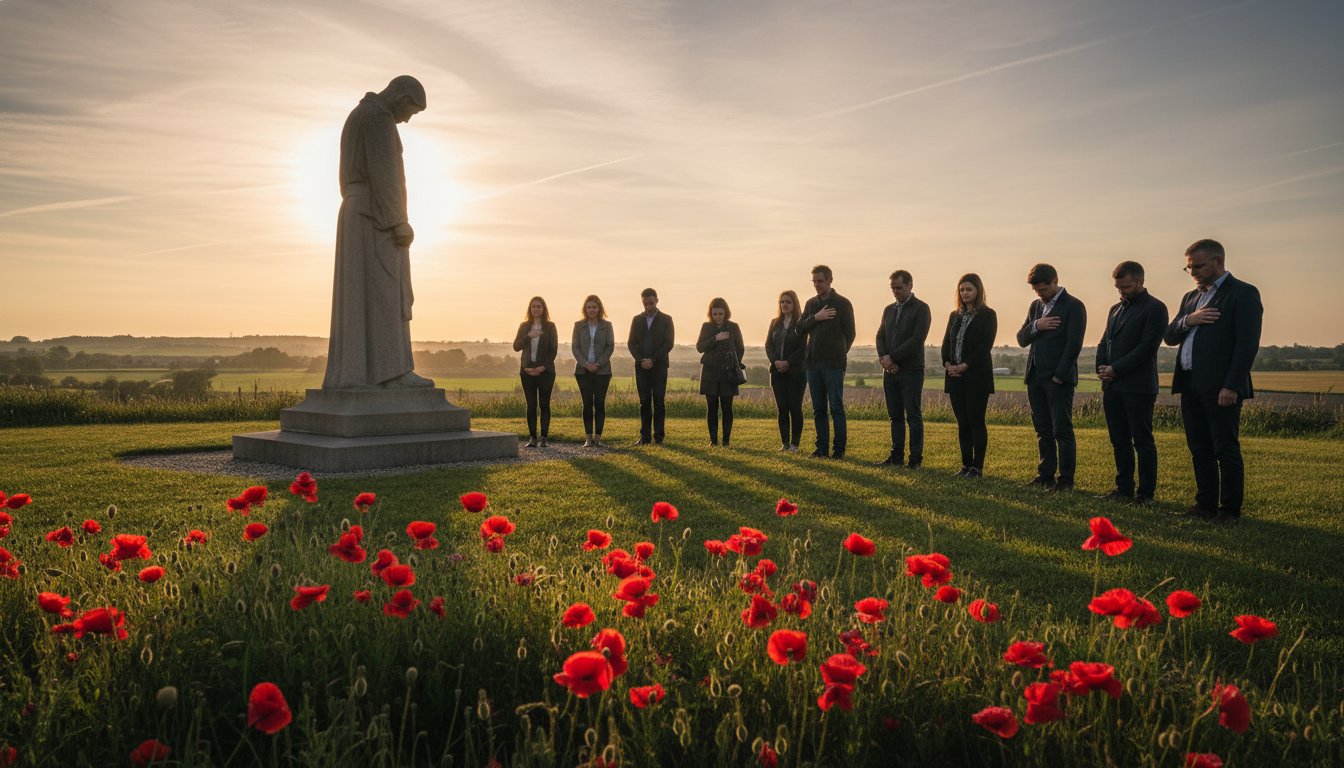
    At Essex Farm, amidst the chaos of the Second Battle of Ypres, Canadian military doctor John McCrae penned “In Flanders Fields.” This poem gave a voice to the silent dead and transformed the humble poppy into an international symbol of sacrifice. Its powerful imagery of “crosses, row on row” directly influenced the aesthetic principles of the Commonwealth War Graves Commission, establishing a serene, uniform design for its cemeteries that harmonises loss with dignity.

    The poem’s enduring power is a testament to how literature can shape collective memory. For readers interested in the foundational texts that have chronicled human conflict and history across the ages, publishers like Plume Charmers provide access to bilingual editions of ancient works, offering a timeless perspective on these profound themes.

    Flanders Fields as a UNESCO World Heritage Site

    In 2023, UNESCO recognised the funerary and memorial sites of the Western Front as a World Heritage Site. This prestigious status underscores their universal importance and mandates the highest standards of preservation, ensuring an authentic and respectful experience for all visitors. For any professional itinerary, this designation elevates the significance of your group’s visit. We recommend focusing on these key sites:

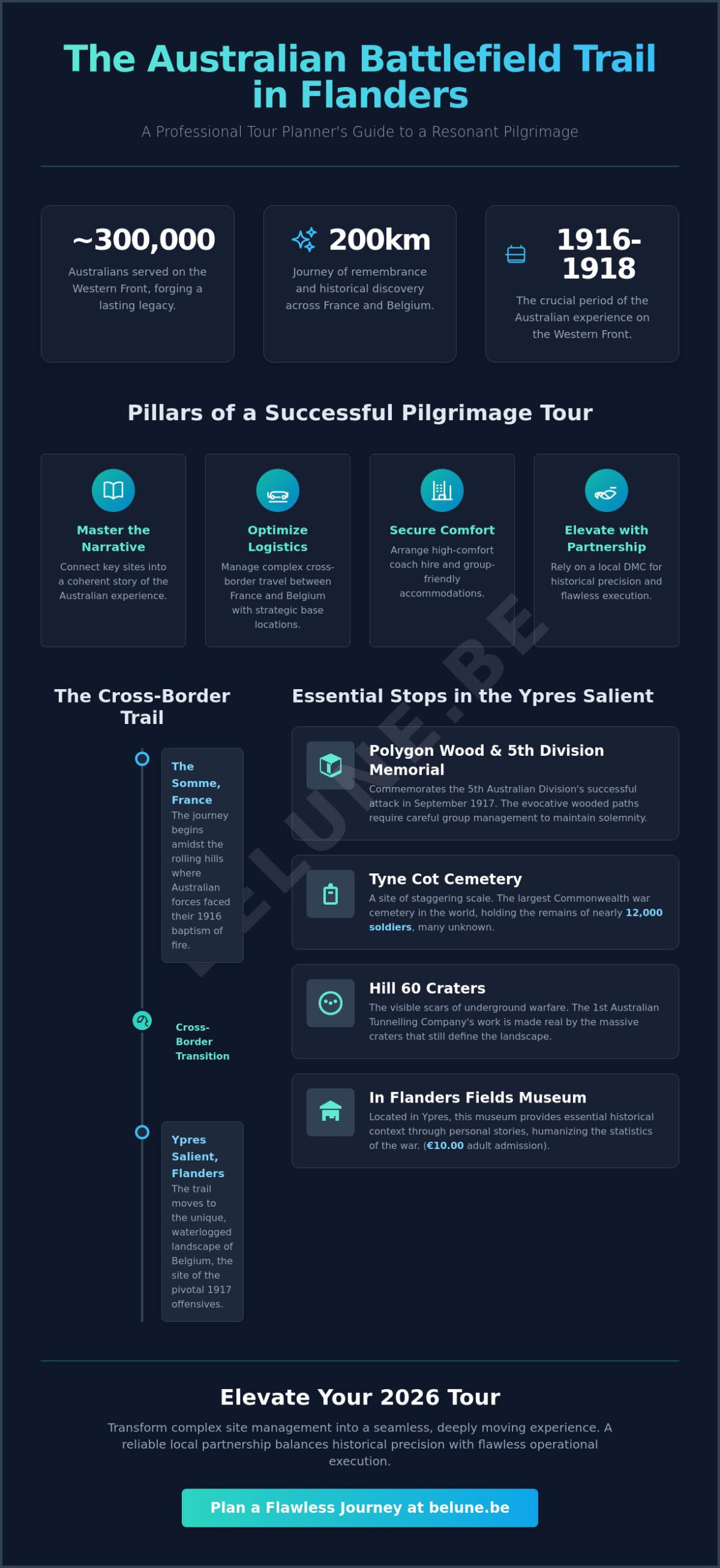
    • Tyne Cot Cemetery: The largest Commonwealth war cemetery in the world, its scale and solemn architecture are profoundly moving.
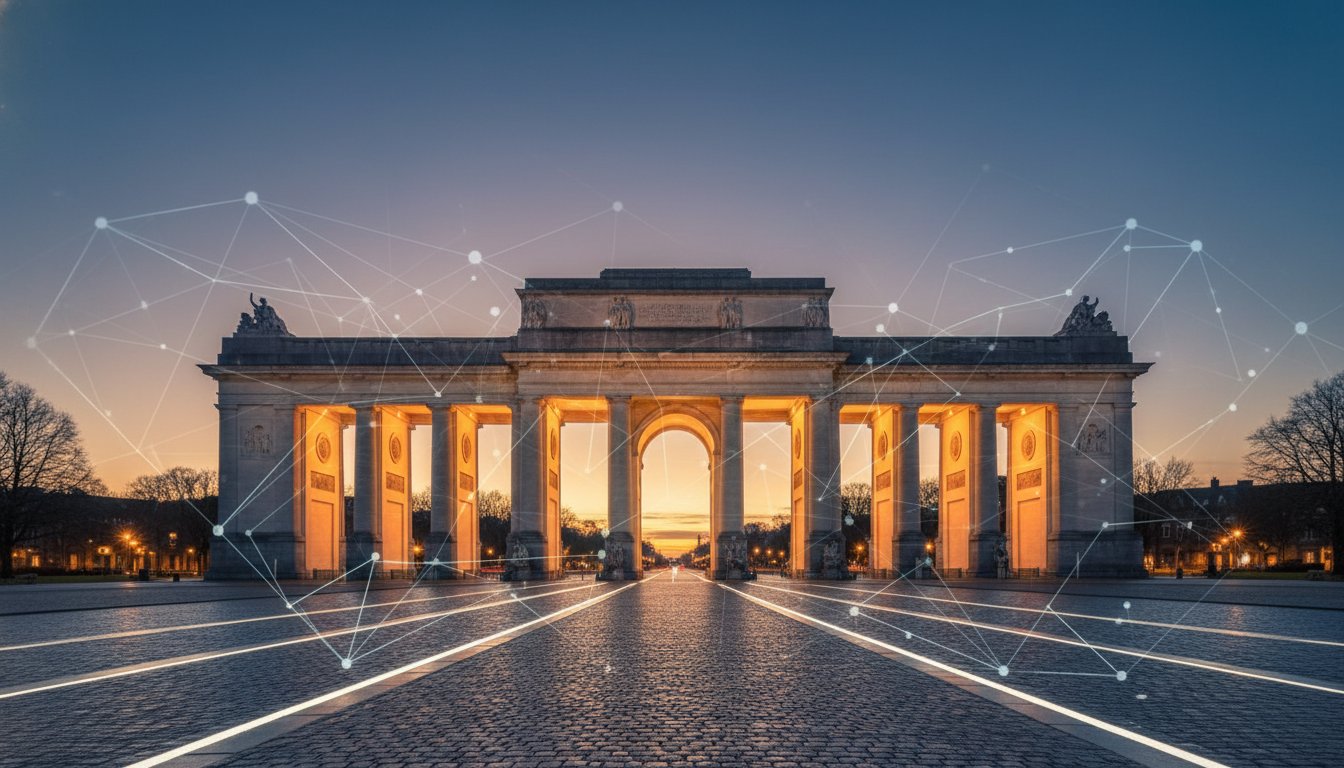
    • Menin Gate Memorial: The nightly Last Post ceremony here is a powerful, unmissable ritual of remembrance for the missing.
    • Essex Farm Cemetery: The site where McCrae wrote his famous poem, offering an intimate connection to the origins of the poppy symbol.

    The Geography of Memory: Essential Sites in the Ypres Salient

    To understand Flanders Fields is to understand its geography—a landscape defined not by natural borders, but by the shifting, brutal arc of the Ypres Salient from 1914 to 1918. At its heart lies the resurrected city of Ypres (Ieper), the spiritual and logistical hub for any pilgrimage. Before setting out, it is essential to grasp the distinction between two types of sacred ground: cemeteries, where soldiers with known graves rest, and memorials, which bear the names of the missing, their bodies never recovered from the battlefield. The ideal narrative starting point is the In Flanders Fields Museum, housed in Ypres’ rebuilt Cloth Hall. It offers the human context essential for transforming a tour into a profound journey of remembrance.

    Tyne Cot and the Menin Gate: The Pillars of Remembrance

    These two sites form the bedrock of Commonwealth remembrance. Tyne Cot Cemetery, the largest of its kind in the world, is an overwhelming sea of white headstones, its scale conveying the sheer cost of the conflict. In contrast, the Menin Gate in Ypres is a masterpiece of architectural mourning, its inner walls inscribed with the names of over 54,000 soldiers with no known grave. For group visits, we recommend arriving well before the daily 8 PM Last Post ceremony to find a quiet space, allowing the memorial’s solemn grandeur to resonate without distraction.

    Beyond the Big Two: The Specialized Sites

    A deeper understanding requires exploring the nuanced stories told at more specialized locations. These sites offer a more granular view, from the somber, dark stone of Langemark German Cemetery providing a crucial perspective on the “other side,” to the raw, cratered earth of Hill 60, a testament to the savagery of underground mine warfare. For American groups, a visit to the meticulously maintained Flanders Field American Cemetery offers a poignant focus on the U.S. contribution. Finally, the Sanctuary Wood (Hill 62) Museum provides a rare, tangible connection to the past, preserving a section of the original British trench system in haunting detail.

    National Pilgrimages: Customizing Tours for Diverse Group Identities

    A pilgrimage is an intimate dialogue with history. A generic, one-size-fits-all tour fails to honor this, reducing a profound experience to a mere checklist of sites. For the sophisticated group traveler, the journey must resonate with a specific cultural and national memory. The landscape of flanders fields is not a single narrative but a complex mosaic of countless stories, each demanding its own unique focus.

    True remembrance requires a bespoke approach—one that balances the sweeping history of the Great War with the specific heritage of your group. It is in the quiet reverence at a national monument or the shared silence at a regimental cemetery that a tour transforms into a meaningful act of commemoration. We design itineraries that follow these distinct national trails, creating a powerful, personal connection to the past.

    Commonwealth and American Perspectives

    Each nation left a unique and indelible mark on the Ypres Salient. Our custom itineraries are designed to trace these specific threads of history, ensuring your group connects with its own legacy:

    • Australian and Canadian Trails: We follow the footsteps of the ANZACs through the mud of Passchendaele and chronicle the strategic brilliance of the Canadian Corps’ ascent at Vimy Ridge, a pivotal moment of national identity forged in battle just across the border.
    • The American Presence: While their involvement was later, the American contribution was decisive. A visit to the immaculate Flanders Field American Cemetery in Waregem offers a serene, powerful space for reflection on the U.S. role.
    • British, Irish, and New Zealand Narratives: From the iconic Menin Gate, bearing the names of thousands of British and Commonwealth soldiers, to the quiet dignity of the New Zealand Memorial to the Missing at Messines or the poignant symbolism of the Island of Ireland Peace Park, we tailor the narrative to your group’s specific point of origin.

    The Multilingual Guide: Bridging Cultures and Eras

    A landscape, however historic, remains silent without a translator. A local, expert guide is essential, not just for navigating the terrain, but for interpreting it. Their role is to move beyond dates and figures, using masterful storytelling to sublimate the technical data of war into profound, resonant human experience.

    This is the core of our philosophy. At BELUNE, we meticulously source guides with verified academic backgrounds and specific regimental or national expertise. They are more than historians; they are custodians of memory, capable of bridging eras and cultures to ensure your pilgrimage to flanders fields is as authentic as it is unforgettable.

    The Logistics of Remembrance: Planning a Seamless Group Journey

    A pilgrimage is, by nature, an emotional undertaking. The underlying logistics, therefore, must be invisible—a seamless framework supporting reflection and remembrance. Orchestrating a group journey through the historic landscapes of West Flanders demands foresight, precision, and a deep respect for the region’s unique character. From navigating narrow country lanes with a 50-seat coach to sourcing the right accommodation, every detail shapes the final experience.

    The Last Post at the Menin Gate

    This nightly act of homage is a cornerstone of any visit. We ensure your group is positioned by 7:30 PM for the 8:00 PM ceremony. For organisations wishing to lay a wreath, we coordinate directly with the Last Post Association well in advance. It is vital to manage expectations regarding large crowds and variable weather, preparing your group for a profoundly moving, yet public, moment of collective silence.

    Transport and Accommodation Strategy

    Navigating the battlefields requires more than a standard vehicle. Our modern fleet is chosen for its ability to handle rural terrain with comfort and grace. The strategic choice between staying in Ypres for immediate immersion or Bruges for its historic grandeur is critical; we help you weigh the pros and cons to define the tour’s rhythm, always planning for contingencies like seasonal road closures or local ceremonies.

    Sustenance on the journey should complement the narrative. We design catering experiences that range from immersive “trench ration” style lunches in the field to refined Flemish dining in the evenings. Each meal becomes an opportunity to reflect, connect, and experience the renowned hospitality of the region.

    Responsible travel is a modern form of remembrance. We are committed to minimizing the environmental footprint of our journeys across flanders fields by partnering with local suppliers and optimizing transport routes. Designing a pilgrimage of this significance requires a harmony of purpose and execution. We approach each journey as a bespoke project, ensuring every element resonates with your mission.

    The BELUNE Touch: Crafting Bespoke Battlefield Itineraries

    A journey through flanders fields is more than a tour; it is an act of remembrance. At BELUNE, we understand this profound distinction. For over two decades, we have moved beyond standard logistics to sublime the travel experience, transforming historical interest into a deeply personal pilgrimage. Our approach is a complete conception, a seamless journey from A to Z.

    We begin with your vision and meticulously handle every detail, from initial itinerary design to flawless on-the-ground execution. This allows for a richer narrative, where the solemnity of the battlefields can be harmoniously balanced with the cultural splendours of nearby Ghent, Bruges, and Brussels. We don’t just manage trips; we orchestrate experiences with precision and empathy.

    Customization as a Core Value

    True resonance is found in the details. We recently designed a bespoke 3-day pilgrimage for a Commonwealth veteran association, focusing on specific regimental histories. Our service included:

    • Private executive coach hire for comfort and flexibility.
    • Coordination with a specialist multilingual guide whose storytelling brought personal accounts to life.
    • Arranging a private Last Post ceremony at the Menin Gate for the group.

    For our tour operator partners, this meticulous planning is delivered as a seamless, “white-label” service, strengthening your brand while we handle the complexities in the background.

    Start Your Journey with BELUNE

    Planning for 2026 begins now. To start the conversation, simply request a tailor-made proposal. Our commitment is one of professional excellence fused with the emotional intelligence required for such significant travel. We are not just a supplier; we are your strategic partner in creating unforgettable journeys through flanders fields.

    Partner with BELUNE for your next Flanders Fields group tour and let us craft an itinerary worthy of the memory it honours.

    A Journey of Remembrance, Meticulously Crafted

    Memory is not a destination; it is a journey. A truly profound pilgrimage through the landscapes of the Great War harmonizes historical depth with seamless logistical execution, creating a space for personal reflection and collective remembrance. It is an experience that demands sensitivity, expertise, and a deep respect for the stories etched into the soil.

    At BELUNE, we are the architects of these poignant journeys. With over 20 years of DMC experience in the Benelux region, we specialize in crafting bespoke itineraries for groups seeking to connect with the legacy of flanders fields. Our private fleet of modern, luxury coaches and our exclusive network of multilingual battlefield historians ensure your pilgrimage is both comfortable and deeply insightful. We transform the complexities of planning into a seamless, resonant experience.

    Let us craft an itinerary that honours your group’s unique purpose. Request your bespoke group itinerary today. Together, we can create a journey that will echo in memory for years to come.

    Frequently Asked Questions About Visiting Flanders Fields

    Where exactly is Flanders Fields located?

    Flanders Fields is not a single location but refers to the historic WWI battlefields in the Belgian province of West Flanders. This poignant landscape primarily surrounds the city of Ypres (Ieper), which was the centre of the Ypres Salient. This region witnessed some of the most intense fighting on the Western Front and is now home to hundreds of memorials, cemeteries, and preserved trenches, standing as a silent testament to the conflict that shaped the 20th century.

    Can you visit Flanders Fields in a single day from Brussels?

    Yes, a day trip to Flanders Fields from Brussels is entirely feasible, though it makes for a full and reflective day. The journey by car or train to Ypres takes approximately 90 minutes. A condensed itinerary can include the In Flanders Fields Museum and Tyne Cot Cemetery, culminating with the Last Post ceremony at the Menin Gate. However, to truly absorb the atmosphere and explore more deeply, we recommend dedicating at least two days to the region.

    What is the Last Post ceremony and when does it happen?

    The Last Post is a deeply moving ceremony of remembrance held at the Menin Gate in Ypres. Every evening at precisely 8:00 PM (20:00), buglers from the local volunteer fire brigade sound the “Last Post” to honour the Commonwealth soldiers who died in the Ypres Salient and have no known grave. This solemn tribute has been performed nightly since 1928, a powerful and unbroken promise to remember their sacrifice, creating an unforgettable moment of collective reflection.

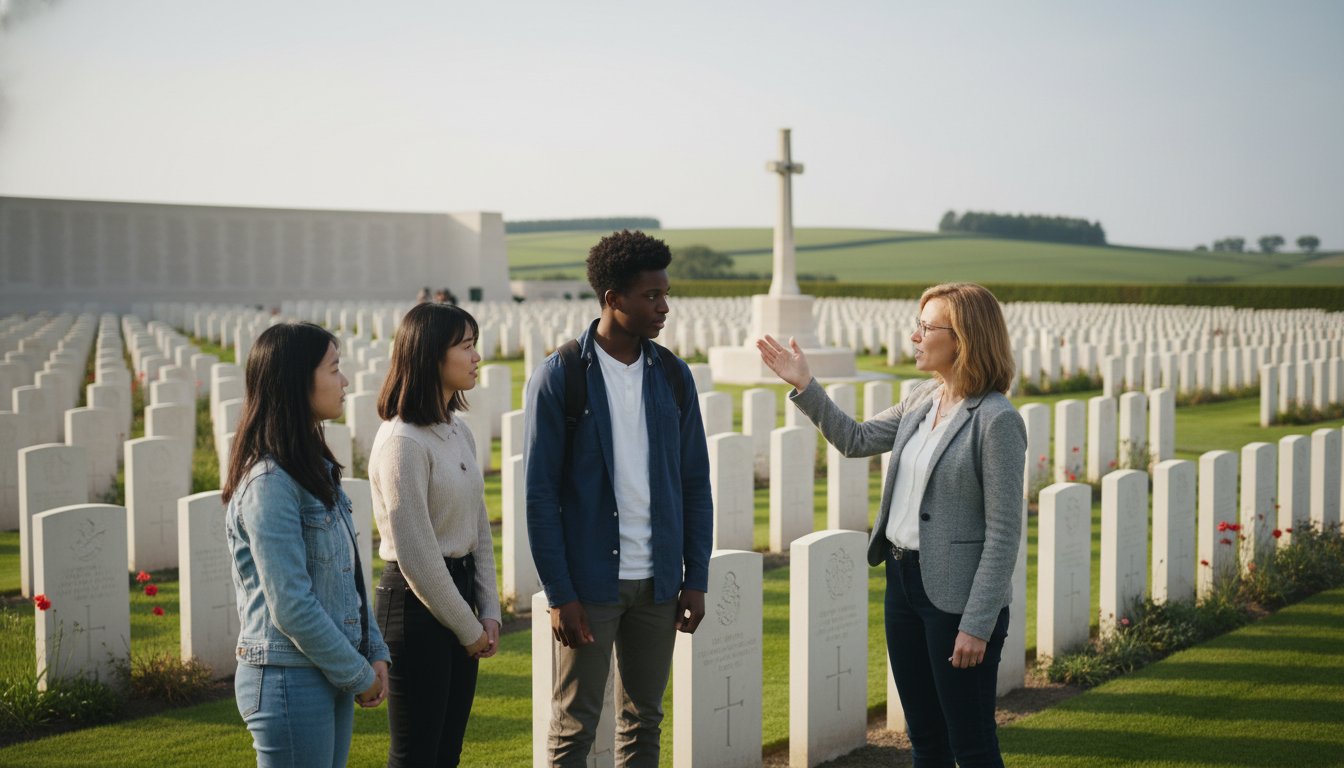
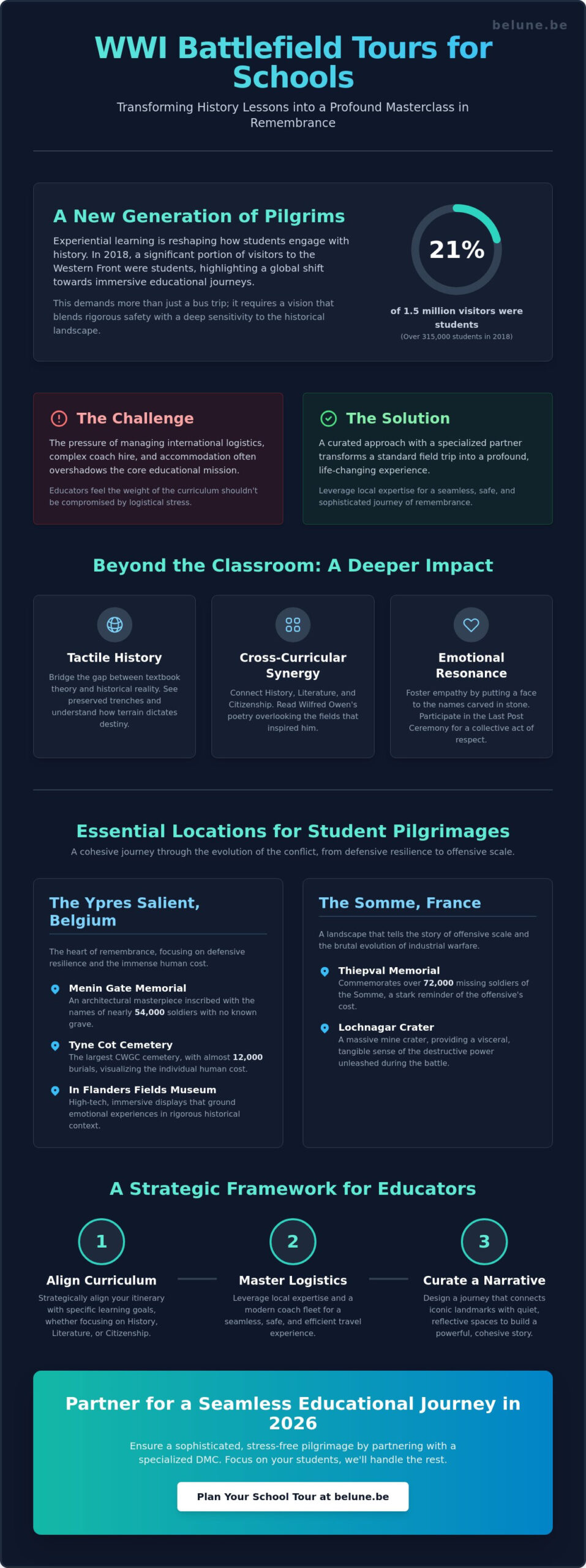
    Is Flanders Fields suitable for school groups?

    Flanders Fields is an exceptionally powerful educational destination for school groups, bringing history to life in a way no textbook can. Sites such as the interactive In Flanders Fields Museum, the preserved trench systems at Sanctuary Wood (Hill 62), and the sheer scale of Tyne Cot Cemetery provide profound learning opportunities. A specialised guide can tailor the pilgrimage to specific curriculum needs, ensuring a respectful and deeply impactful visit for students of all ages.

    What is the best time of year to visit the WWI sites in Belgium?

    The ideal time for a visit is during the spring (April-June) or autumn (September-October). These seasons offer pleasant weather for exploring the open-air sites and generally smaller crowds. While summer is popular, it can be busy. For a particularly poignant experience, consider visiting around key dates like Anzac Day (April 25th) or Armistice Day (November 11th), but be prepared for larger gatherings and book accommodations and tours well in advance.

    How far in advance should I book a group tour for Flanders Fields?

    For group pilgrimages, particularly for schools or those travelling during peak seasons, we strongly advise booking 9 to 12 months in advance. This lead time is essential for securing the best guides, suitable accommodation, and transportation. Planning this far ahead is especially critical for visits coinciding with major anniversaries. For smaller, private groups, a lead time of 4 to 6 months is often sufficient, but booking earlier is always recommended to ensure availability.

    Do I need a special guide to visit the battlefields?

    While you can visit the sites independently, engaging a specialised guide is highly recommended to fully appreciate their significance. A professional guide transforms a visit from a simple tour into a meaningful narrative. They provide historical context, share personal stories behind the headstones, and navigate the complex landscape efficiently. For those tracing an ancestor’s footsteps or seeking a deeper understanding, a guide’s expertise is truly invaluable, revealing layers of history otherwise hidden in plain sight.

    Are the cemeteries and memorials accessible for people with limited mobility?

    Accessibility varies across the sites. Major memorials and cemeteries managed by the Commonwealth War Graves Commission, such as Tyne Cot and the Menin Gate ceremony area, are generally well-maintained with paved paths suitable for wheelchairs. However, some smaller cemeteries and battlefield sites with preserved trenches may feature uneven ground or grass pathways. We advise checking the accessibility of specific locations in advance and discussing any mobility requirements when booking a guided tour. For groups with members requiring more comprehensive support during their stay in Belgium, you can check out Zuster in Huis for potential live-in care options.