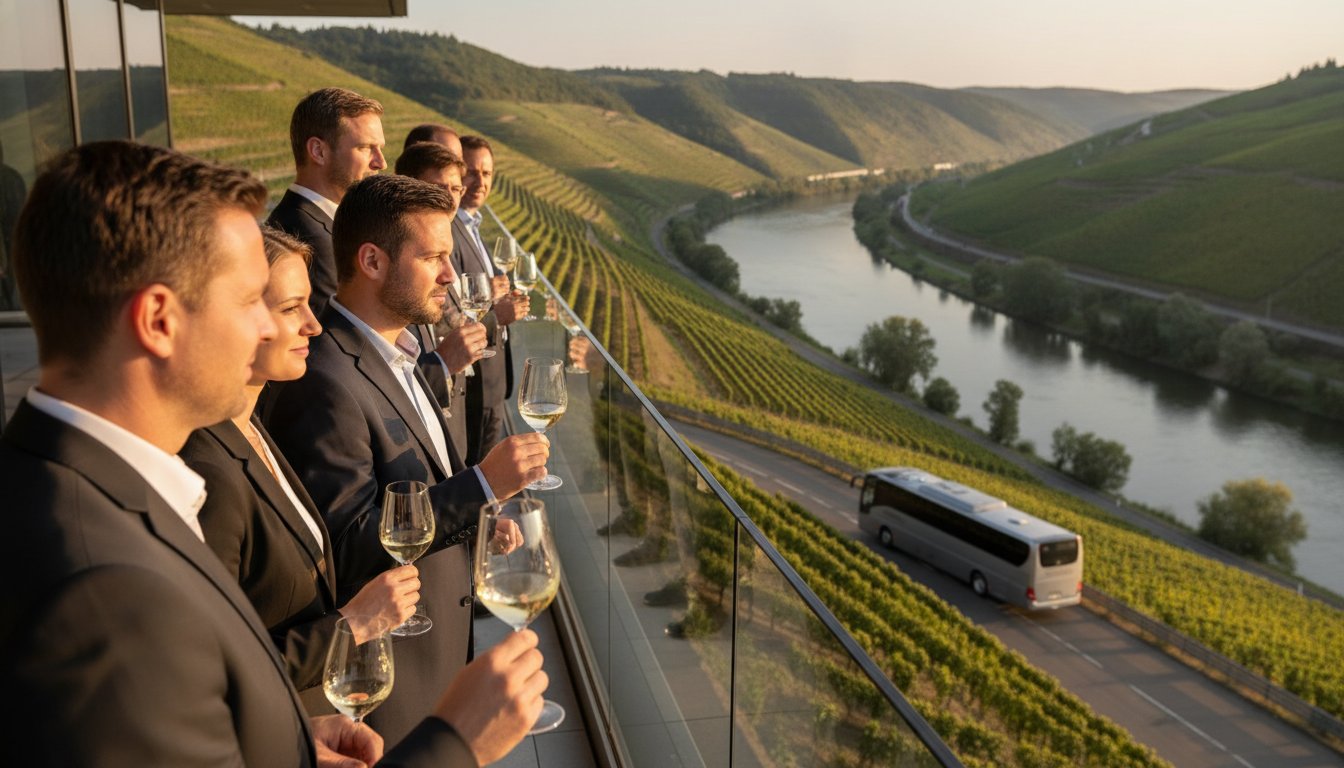
Can a single valley redefine the standard for European corporate hospitality? With over 403,000 visitors seeking the Moselle’s viticultural secrets annually, the demand for wine tasting tours luxembourg for groups has reached an all-time high. You likely recognize the complexity of this task. Coordinating high-capacity coach transport from Belgium or France while maintaining the intimate feel of a boutique estate is a delicate technical balance. It’s about more than just a glass of Riesling. It’s about the seamless choreography of logistics and luxury.
We’ll show you how to transform these logistical hurdles into a curated masterpiece of travel. This guide provides the blueprint for executing world-class group experiences, from securing exclusive Crémant cellar access to managing fixed-price itineraries with surgical precision. You’ll discover the essential strategies for elite transport and local expert guidance that ensure every guest feels the artistry behind the bottle.
Key Takeaways
- Identify estates that balance artisanal charm with the physical capacity to host large groups without compromising the sensory experience.
- Optimize logistics through professional coach hire and strategic route planning, ensuring seamless wine tasting tours luxembourg for groups.
- Master the multi-layered itinerary by integrating medieval heritage and gourmet local pairings alongside exclusive cellar visits.
- Secure operational margins and reliability by leveraging fixed-price packages through a specialized destination management partner.
- Position your offerings as a sophisticated alternative to traditional regions by embracing Luxembourg’s 2026 focus on immersive gastronomic travel.
Why Luxembourg is the 2026 Hidden Gem for Group Wine Tourism
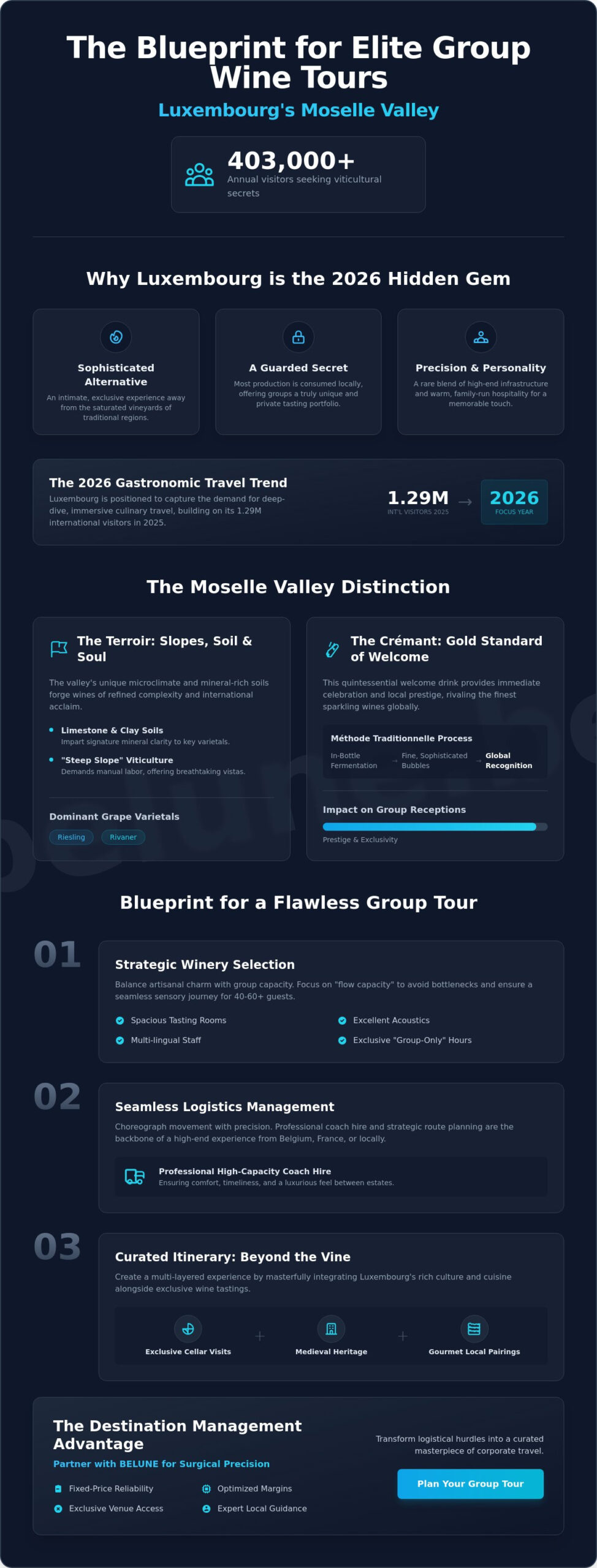
Luxembourg represents a sophisticated shift in the European wine landscape. It’s an intimate alternative to the saturated vineyards of France. For those planning wine tasting tours luxembourg for groups, the Moselle offers an unparalleled canvas of sensory experiences. Here, exclusivity isn’t just a marketing term. It’s a logistical reality. Since a vast majority of the nation’s production is consumed locally, these wines remain a well-guarded secret. In 2025, the country welcomed 1,290,000 international visitors. Many of these travelers sought the “deep-dive gastronomic immersion” that defines the 2026 travel trend.
Professional organizers are increasingly prioritizing wine tasting tours luxembourg for groups to offer something truly distinct. You aren’t just booking a tour. You’re securing entry into a private viticultural society. The infrastructure is high-end, yet the hospitality remains deeply personal. It’s a rare combination of professional precision and family-run warmth. This balance ensures that even large delegations experience the soul of the Moselle without the anonymity of mass tourism.
To visualize the passion behind these labels, watch this exploration of the local winemakers:
The Terroir of the Moselle Valley
The Moselle Valley’s character is etched into its limestone and clay soils. These foundations give Rivaner and Riesling their signature mineral clarity. Much of Luxembourg’s winemaking history is defined by its “steep slope” viticulture. These dramatic inclines demand manual labor and offer breathtaking vistas for group photography. As we look toward the 2026 vintage, international experts are noting a refined complexity in these northern cool-climate wines. The unique microclimate of the valley protects the vines, allowing for a technical artistry that is gaining significant international sommelier attention.
The Crémant de Luxembourg Distinction
Crémant de Luxembourg stands as the region’s gold standard for group receptions. Produced via the méthode traditionnelle, it rivals the finest sparkling wines globally. The process involves secondary fermentation in the bottle, resulting in a fine bead and sophisticated profile. It represents the pinnacle of local craftsmanship. This sparkling wine serves as the quintessential welcome drink for corporate incentives, providing an immediate sense of celebration and local prestige that elevates any professional itinerary.
Selecting the Right Wineries for Group Capacity and Flow
Organizing wine tasting tours luxembourg for groups is a logistical art form. You must navigate the tension between the intimate allure of a boutique estate and the functional requirements of a large delegation. It isn’t merely about finding a venue. It’s about ensuring a fluid movement of people through a sensory journey. This requires a deep understanding of estate infrastructure. A winery that serves a couple perfectly might fail a group of forty due to acoustics or simple physical constraints.
Capacity is the first technical filter. While a family-run cellar might charm a small party, it can quickly become a bottleneck for 40 or 60 guests. Professional planners categorize estates by their “flow capacity.” This includes the physical volume of the tasting room and the availability of multi-lingual staff. In Luxembourg, your guides must often pivot between English, French, German, and Dutch with effortless precision. You can find a comprehensive list of registered producers through Luxembourg’s Moselle tourism board. However, the true value lies in knowing which specific cellars can handle the technical demands of a professional tour.
Top-Tier Estates for Professional Itineraries
High-end itineraries demand exclusive access. Many elite estates now offer “behind-the-scenes” tours where guests walk through the production areas, not just the retail shops. When selecting these venues, we prioritize tasting room aesthetics and acoustic quality. If a guide’s voice is lost in a cavernous room, the educational value vanishes. To maintain an air of exclusivity, we often negotiate “group-only” hours. This prevents the “tourist trap” feel and allows the winemaker to focus entirely on your clients. Partnering with a specialist like BELUNE ensures these nuances are managed before your guests ever step off the coach.
The Role of Local Cooperatives
For groups exceeding 50 participants, local cooperatives are often the most reliable strategic allies. These institutions have invested heavily in modern architecture. They provide striking visual backdrops that reflect Luxembourg’s contemporary aesthetic. They offer the efficiency of large-scale operations without sacrificing the personalized, high-touch service your clients expect. These cooperatives are masters of the “multi-layered” tasting, where different stations allow large groups to stay in motion, preventing the stagnation that often plagues amateur tours.
Selecting the right partner is about more than just wine quality. It’s about the technical artistry of the space. It’s about ensuring that every guest, whether they’re in a group of twenty or sixty, feels they’ve had a private, artisanal experience.
Logistics: Managing Transport and Accommodations for Groups
Organizing wine tasting tours luxembourg for groups requires more than a map and a reservation. It demands a technical mastery of the Moselle’s geography. While casual travelers might rely on public transport, professional delegations cannot afford the unpredictability of regional schedules. A single missed connection can dismantle a carefully timed itinerary. The narrow, winding roads of the valley villages present significant challenges for high-capacity vehicles. We meticulously plan routes that account for bridge height restrictions and narrow village centers where standard GPS often fails. Precision in route planning is the difference between a seamless transition and a logistical bottleneck.
Professional Coach Hire and Driver Management
Reliability is the cornerstone of luxury group travel. Partnering with a provider that offers coach hire with own fleet of buses ensures direct control over vehicle quality and driver professionalism. In Luxembourg, managing driver hours and legal rest periods is a non-negotiable legal requirement. We structure our itineraries to align with these mandates without interrupting the guest experience. A modern fleet equipped with climate control and Wi-Fi transforms transit time into a period of relaxation, which is essential for successful wine tasting tours luxembourg for groups. It allows guests to recover between estates, effectively neutralizing the risk of tasting fatigue before the next cellar door opens.
Group Hotel Management in Luxembourg
Luxembourg is a boutique market where high-end capacity is limited. Securing group hotel accommodation requires a proactive strategy. For the 2026 season, booking room blocks 12 to 18 months in advance has become the professional standard. We focus on the “Wine and Pillow” strategy: sourcing properties within striking distance of the vineyards to minimize evening travel. Integrating dinner-and-stay packages further streamlines the logistics. It allows groups to transition from a final tasting to a gourmet meal and then to their rooms without the need for additional transport. This holistic approach preserves the mood of the evening and ensures guest safety while maintaining a sophisticated atmosphere.
Effective logistics act as the invisible structure of a successful tour. By balancing active tasting sessions with periods of quiet transit and early hotel check-ins, we respect the natural rhythm of the group. This foresight prevents the exhaustion that can dull the senses by the third winery visit. It ensures that the final glass of the day is enjoyed with as much enthusiasm as the first, leaving a lasting impression of excellence.
Crafting the Itinerary: Gastronomy and Culture Beyond the Vine
A world-class itinerary is more than a sequence of appointments. It’s a curated narrative where every stop reinforces the next. Many providers list museums and wineries as separate entities, yet the true brilliance of the Moselle lies in their intersection. For those designing wine tasting tours luxembourg for groups, the goal is to create a seamless flow that balances education with indulgence. You aren’t just moving people through space. You’re guiding them through a sensory history that spans two millennia.
The Cultural Context: Why History Matters to Oenophiles
The Moselle’s viticultural identity is inseparable from its Roman heritage. Integrating culture group tours benelux elements provides the necessary depth to justify a premium tour price. We often begin with a morning cultural anchor, such as the ancient Roman wine-pressing sites or a medieval castle overlooking the valley. This storytelling sets the stage. It transforms a simple drink into a historical artifact. Local guides play a pivotal role here. Their ability to weave technical winemaking facts with regional lore ensures the experience feels like a masterclass rather than a standard excursion. This intellectual engagement is what distinguishes a professional group tour from a casual outing.
Pairing Wine with Luxembourgish Gastronomy
Lunch serves as the structural bridge between morning history and afternoon tasting. It’s a moment for “gastronomy tours” to shine as a pillar of the group experience. Luxembourgish cuisine, with its earthy flavors and refined execution, provides the perfect foil for the region’s high-acid white wines. We often feature Judd mat Gaardebounen (smoked pork collar with broad beans) or fresh Moselle trout. These dishes demand the mineral precision of a local Riesling to cut through their richness. While we often look to belgium gastronomy tours for inspiration in hearty pairings, Luxembourg offers a unique, lighter technicality that guests find refreshing. It’s about demonstrating how the land and the table speak the same language.
To execute this vision, we follow a rigorous five-step structural blueprint:
- Step 1: The Cultural Anchor. A morning visit to a historic site to establish the region’s heritage.
- Step 2: The Gourmet Lunch. A sit-down pairing session featuring traditional local cuisine and regional labels.
- Step 3: The Afternoon Estate. A deep-dive technical tasting and cellar visit for the core wine tasting tours luxembourg for groups experience.
- Step 4: The Sunset Reception. An exclusive Crémant tasting on a terrace overlooking the Moselle River.
- Step 5: The Professional Return. A smooth transit back to the hotel via private coach, allowing guests to reflect in comfort.
This structure prevents fatigue and maintains a high level of engagement throughout the day. It ensures the group remains energized and focused on the quality of the experience. If you’re ready to elevate your next project, request a bespoke group itinerary from BELUNE to see how we blend technical logistics with artistic storytelling.
The DMC Advantage: Why Partner with BELUNE for Luxembourg Tours
Executing wine tasting tours luxembourg for groups requires a partner who understands that logistics is a form of technical artistry. We’ve spent over 20 years refining the complexities of Benelux travel. This legacy serves as the ultimate safeguard for your professional reputation. By choosing a partner with deep local roots, you gain access to fixed-price group tour packages. This model is essential for protecting your margins as a tour operator. It removes the uncertainty of fluctuating seasonal costs or hidden fees. We provide a transparent, professional framework that allows you to focus on your clients while we manage the intricate details of the Moselle Valley.
Our multi-lingual local guide services bridge the gap between the technical world of the cellar master and the curiosity of the guest. These experts do more than translate words; they translate the soul of the vineyard. This level of storytelling is a core component of our themed group travel benelux portfolio. Whether your group is interested in the somber history of battlefield tourism or the active pace of cycling tours, we weave these elements into a cohesive narrative. We transform a simple trip into a masterclass of regional culture and gastronomy.
Your Benelux Incoming Tour Operator Partner
BELUNE acts as the essential “boots on the ground” for international travel agents and corporate planners. As a specialized benelux incoming tour operator, we maintain our own private fleet of modern coaches. This ownership is a critical differentiator. It grants us total control over vehicle quality, driver professionalism, and schedule flexibility. For the 2026 season, we’ve streamlined our booking process to ensure rapid transitions from the initial RFP to final execution. We understand the high-stakes nature of group travel. Our team provides the technical precision required to navigate Luxembourg’s boutique infrastructure without compromise.
A Commitment to Seamless Excellence
Our approach is defined by a “minimalist elegance.” We recently managed a 100-person wine incentive program that required simultaneous visits to three different estates. The coordination was invisible to the guests. They experienced only the serenity of the vineyards and the quality of the Crémant. Behind the scenes, we managed the coach flow, the dietary requirements, and the technical timing of each tasting. We handle the logistical chaos so that you can take the credit for an exceptional event. Our specialized DMC expertise transforms logistical complexity into a serene and flawlessly executed guest experience.
Elevating the Moselle Experience for 2026
Success in organizing wine tasting tours luxembourg for groups rests on the delicate intersection of technical precision and sensory storytelling. It’s about moving beyond generic sightseeing to offer a deep-dive gastronomic immersion that respects both the land and the logistics. By balancing the boutique allure of the Moselle with professional-grade transport and exclusive cellar access, you ensure a seamless journey that resonates long after the final glass is poured. The technical artistry of the itinerary is what ultimately transforms a simple excursion into a world-class event.
We bring over 20 years of Benelux travel expertise to every project, acting as a visionary ally for tour operators and travel agents. Our private fleet of modern coaches and specialized DMC services provide the structural reliability needed to protect your margins and your professional reputation. Request Your Custom 2026 Luxembourg Group Wine Itinerary from BELUNE to begin crafting an elite experience defined by minimalist elegance and technical mastery. Let’s transform the landscape of group travel together. The Moselle Valley is ready for your vision.
Frequently Asked Questions
What is the best time of year for wine tasting tours in Luxembourg for groups?
Late summer and autumn are the peak seasons for wine tasting tours luxembourg for groups. September features the “Riesling Open” while November hosts the “Fête des Vins & Crémants.” These periods offer the most vibrant atmosphere as the harvest begins. Spring is also an excellent choice for those seeking quieter vineyard walks and a more technical focus on the previous year’s vintage.
Can large coaches access the wineries in the Moselle Valley?
High-capacity coaches can access the Moselle Valley, but success depends on expert route planning. Many villages have narrow centers and bridge restrictions that challenge standard GPS systems. We utilize a private fleet of modern buses and drivers who specialize in these specific routes. This ensures your group reaches the estate gates safely and on time without the stress of navigating tight rural infrastructure.
How many wineries should be included in a one-day group itinerary?
We recommend including no more than two or three wineries in a single day. This pace prevents “tasting fatigue” and allows for a deep-dive exploration of each estate’s technical artistry. By structuring the day with a morning cultural anchor and a gourmet lunch, you maintain the group’s engagement. Quality always takes precedence over quantity in professional-grade viticultural itineraries.
Is it possible to combine Luxembourg wine tours with visits to Belgium or Germany?
Luxembourg’s central location makes it the perfect hub for multi-country itineraries. You can easily combine a morning tasting in the Moselle with an afternoon visit to historic sites in Germany or Belgium. Our logistics team regularly coordinates these cross-border movements. We ensure that transport and guide services remain consistent as you transition between different European wine and cultural landscapes.
What languages do the local guides speak for these group tours?
Local guides in Luxembourg are exceptionally multi-lingual, typically fluent in English, French, German, and Dutch. This linguistic flexibility is a hallmark of the region’s professional hospitality. It ensures that every guest receives a nuanced explanation of the winemaking process. Your guide acts as a bridge between the cellar master’s technical expertise and the group’s diverse backgrounds.
Are there non-alcoholic options available for groups during wine tastings?
Wineries provide sophisticated non-alcoholic alternatives to ensure every guest feels included. These often include premium, single-variety grape juices and local mineral waters. These options reflect the same terroir-driven quality as the wines themselves. It’s a standard practice that respects the diverse preferences of corporate delegations and ensures a high level of hospitality for all participants during wine tasting tours luxembourg for groups.
How far in advance should a group wine tour be booked for the 2026 season?
For the 2026 season, large groups should ideally secure their bookings 12 to 18 months in advance. Luxembourg is a boutique market with limited high-capacity infrastructure. Early planning is essential to guarantee access to the most exclusive cellars and the best hotel blocks. This lead time allows us to refine every technical detail and negotiate private “group-only” hours at top-tier estates.
Do Luxembourg wineries provide group dining facilities on-site?
Many of the larger cooperatives offer modern, on-site dining facilities designed specifically for group flow. Smaller boutique estates often lack full kitchens but maintain strategic partnerships with nearby gourmet restaurants. We coordinate these lunch and dinner pairings to ensure the transition from the cellar to the table is seamless. This approach preserves the professional rhythm of your itinerary while highlighting local gastronomy.