What if the best group itinerary isn’t the one with the most stops, but the one where each experience fits naturally into the day? Organizing group tours in The Hague means balancing different interests and mobility needs while coordinating transport, timings and bookings. Without a joined-up plan, even excellent experiences can feel rushed or disconnected.
Start with the people travelling: what they enjoy, how much time they have and what pace feels comfortable. Then bring cultural visits, gastronomy and heritage experiences together with practical details such as coach travel, accommodation and guided visits. BELUNE is a specialist destination management company (DMC) with more than 20 years of experience in group travel. Its itinerary planning connects experiences with the logistics needed to make a group journey flow.
This guide explains how to build an itinerary around your group’s priorities, allow breathing room between experiences and coordinate the details that keep each day on track. The aim is a memorable visit that feels like one coherent experience, not a collection of separate bookings.
Key Takeaways
- For organizing group tours in the hague, define the group’s purpose and available time before deciding whether to plan one activity, a half-day or a multi-day programme.
- Give the itinerary a clear narrative: select a theme and anchor experience, then add supporting stops and a fitting finish.
- Match transport to the route and group’s pace, and build in arrival buffers, clear meeting points and time to regroup.
- Use a practical checklist for access needs, meal preferences, pace and weather alternatives so a change of plan doesn’t break the day’s flow.
- A tailored DMC plan can connect itinerary design with coach travel, accommodation and local guides, keeping the programme aligned with the organiser’s objectives.
Organizing Group Tours in The Hague: Start With the Group’s Purpose
A group tour is more than an activity shared by several people. It’s a coordinated programme shaped around common interests, available time and practical needs. A single guided visit may suit a short stop, while a half-day itinerary can connect an anchor experience with a meal or a second activity. A multi-day programme needs a wider thread, with each day contributing to the group’s overall purpose.
Let that purpose guide both the activities and the way the group moves. Educational, corporate, cultural, culinary and special-interest groups may need different content, pacing and transport arrangements. For background when shaping a theme, the The Hague Wikipedia page offers an overview of the city’s history, government, culture and attractions.
For a broader perspective on themed experiences, this video considers the role an organised tour can play in a group trip.
Set objectives before selecting activities
Begin with three decisions: why the group is travelling, how quickly it wants to move and how much time is available. A school group might value a clear learning focus; a corporate group may need space for conversation; culinary travellers may prefer a programme built around shared tastings and meals. These objectives help distinguish essential experiences from optional additions.
Next, map the group’s practical needs. Consider mobility, preferred language, meal requirements and how much walking feels appropriate. Use these details to shape the route and transport choices before bookings are made, rather than relying on last-minute adjustments. Keep the plan focused: one strong central experience often gives a short visit more meaning than several loosely connected stops.
Choose a tour format that fits the group
A guided walk can suit a compact visit when the group wants to explore on foot and hear local context along the way. Cycling can cover more ground for travellers comfortable with an active pace. A boat experience offers a different perspective and can work as a distinct activity within a wider programme. For groups with varied needs or a longer schedule, combining formats can balance movement with time to pause.
Match the format to the itinerary, not the other way around. A short visit may call for one activity with a simple arrival and finish; a half-day or multi-day plan can connect cultural heritage, gastronomy and leisure into a more developed narrative. BELUNE’s culture group tours guide offers broader inspiration for themed planning. BELUNE designs customised programmes around organisers’ objectives, with coach transport and local guidance considered as part of the itinerary.
Design a The Hague Group Itinerary With a Clear Narrative
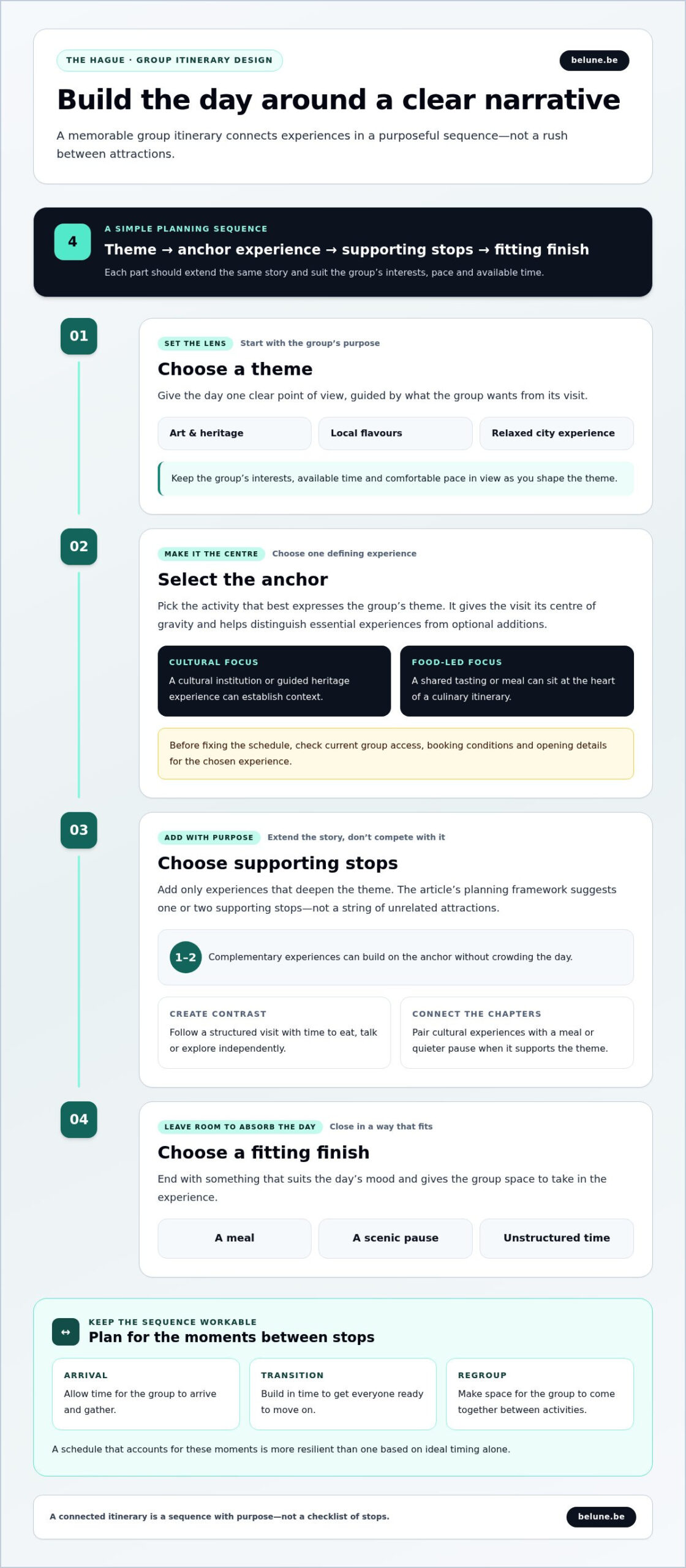
A memorable itinerary has a through-line. Rather than stacking attractions, arrange experiences so each one adds meaning to the next: choose a theme, select an anchor experience, add only complementary stops, then finish on a note that suits the day. A well-paced itinerary is a connected sequence, not a checklist.
This approach gives tour operators a practical way to turn organizing group tours in the hague into a programme with shape and purpose. A cultural visit might build towards an art or heritage experience; a food-led day can use a shared tasting as its centre; a leisure itinerary may balance a guided activity with room to explore at an unhurried pace.
Build the day around an anchor experience
Choose one experience to define the visit. It could be a cultural institution or another activity that reflects the group’s interests. Treat the anchor as the day’s centre of gravity, then add a complementary stop only if it deepens the theme. Before fixing the schedule, review current group access, booking conditions and opening details for each attraction.
From that centre, sketch the day in four steps:
- Theme: Set the lens, such as art and heritage, local flavours or a relaxed city experience.
- Anchor: Choose the activity that best expresses it.
- Supporting stops: Add one or two experiences that extend the story, rather than competing with it.
- Finish: Close with a meal, a scenic pause or unstructured time that leaves the group room to absorb the day.
For a heritage-led programme, a guided cultural visit can establish context, with a meal or quieter pause giving the group time to reflect. A culinary theme might place a food experience at the heart of the itinerary and use cultural stops as supporting chapters. The Official website of The Hague can help organisers review current visitor information, events and practical details as the plan takes shape.
Create variety without overloading the schedule
Contrast matters. Follow a structured visit with time to eat, talk or explore independently. This gives the day a more natural rhythm than a continuous run of guided activities. Build transition time around each stop, including arrival, gathering the group and getting everyone ready to move on. A schedule that accounts for these moments is more resilient than one based on ideal timing alone.
Food can provide both variety and a shared point of connection. A gastronomy-led programme may pair a tasting or meal with a cultural experience, while leaving enough breathing space for the group to enjoy each element. For inspiration beyond the destination, BELUNE’s gastronomy tours guide explores food-led group themes. BELUNE can also shape a tailored group itinerary that connects experiences into a considered programme.
Coordinate Group Transport, Guides and Timings Across The Hague
Transport is part of the itinerary’s design, not a detail to add after activities are booked. Compare each mode against the distance between stops, the group’s pace, mobility needs and the experience itself. For a group tour, check how people will arrive, move together and reassemble, rather than relying on a route that looks simple on a map.
Use this comparison to make an initial choice, then verify current access arrangements and restrictions for the specific stops and transport involved. Don’t assume a coach can approach every entrance or that a walking connection will suit every participant.
- Walking: Suits compact itineraries where stops are close enough for a comfortable walk. Consider the group’s mobility and the length of each leg.
- Cycling: Can connect a wider set of experiences for groups who want an active outing and are comfortable travelling by bike. Make the pace and riding requirements part of the decision.
- Boat: Works as an experience in its own right or as a distinctive change of perspective. Check the boarding arrangements and how the departure point fits the day’s other stops.
- Coach: Useful when an itinerary links separate locations or when the group needs to travel together between activities. Plan around appropriate pick-up and drop-off points, and verify access for the intended vehicle.
Match transport to the route and group profile
Start with the actual sequence of stops. A short, concentrated programme may need little transport between activities, while a broader itinerary can benefit from coach travel that connects distinct locations without asking everyone to cover the distance on foot. Include cycling or a boat experience when it suits both the group’s interests and abilities, not simply to add another mode. Check relevant access details during planning, since routes, entry points and operating arrangements can affect the schedule.
Make transitions and guidance part of the plan
Every movement needs a clear handover. Give participants a specific meeting point and time, and allow room for arrival, boarding, headcounts and regrouping before the next activity. Add a buffer between scheduled experiences so a small delay doesn’t unsettle the rest of the day. Where guides change, agree who welcomes the group, shares practical instructions and introduces the next stop.
A guide can do more than interpret a place. Clear narration during transitions helps participants understand how one experience connects to another, while concise directions keep movement orderly. For a day that includes a guided visit and coach transfer, align the end of the visit, the group’s walk to the vehicle and the next activity’s start time as one sequence.
BELUNE’s own modern coach fleet and local guide services can be incorporated into itinerary planning, connecting transport and on-the-ground context rather than treating them as separate bookings. The team brings more than 20 years of experience in transport and tour operations to coordinating these elements around the programme’s needs.
Choose Group Activities With Access, Pace and Contingencies in Mind
An activity can suit the theme yet still be wrong for the group if the route, pace or practical arrangements create barriers. Assess each experience alongside its transitions: who can take part, how long the group can comfortably stay active and what happens if weather or timing changes.
Build a concise planning checklist before finalising the programme:
- Access: Note mobility requirements, walking distances, steps or other barriers, and how participants will move between activities.
- Meals: Record dietary needs, meal preferences and suitable timing so food breaks support the day rather than interrupt it.
- Pace: Consider how long the group can comfortably walk, cycle or remain engaged in a guided activity. Allow different participants time to regroup.
- Weather: Pair outdoor or weather-sensitive plans with an indoor alternative that preserves the itinerary’s theme.
- Communication: Make sure participants know meeting points, timings and what to do if separated from the group.
Realistic buffers reduce pressure by giving the group room to arrive, use facilities, regroup and transition between activities without compressing the next booking. A schedule with breathing space is easier to adapt if one stop runs late.
Plan for different needs without fragmenting the group
Ask the group organiser to gather mobility, dietary and language needs while the itinerary is still taking shape. Use that information to select experiences and connections the group can share at a comfortable pace. If some participants need a gentler option, keep it close to the main activity where practical, with a clear meeting point and a simple plan to rejoin. The aim is flexibility without turning one shared tour into separate itineraries.
For example, if a walking segment is too demanding for part of the group, consider shortening the route or adjusting the transition rather than removing the shared experience altogether. Communicate the plan in advance so participants understand what to expect.
Prepare for changes before the tour begins
Choose a weather alternative that still serves the itinerary’s purpose. If an outdoor activity is affected, a cultural visit or another suitable indoor experience may preserve the day’s focus. Decide in advance who communicates a change, how the group will regroup and what happens if a connection or scheduled start is missed.
Separate stable planning information from details that can change. Keep confirmed bookings, agreed meeting points and transport arrangements in the working itinerary; verify current opening times, group-booking conditions, attraction access and coach arrangements before publication and again during operational planning. Don’t present an unverified route or access detail as settled fact. This distinction gives organisers a reliable plan while leaving room to respond to current conditions.
For a programme that brings access needs, transport and contingencies into one plan, work with BELUNE on a tailored group itinerary.
Bring the Group Tour Together With a Tailored DMC Plan
A compelling group tour depends on more than a strong activity list. The itinerary, transport, accommodation and local guidance need to work as one programme, with each element supporting the organiser’s purpose. A destination management company (DMC) helps connect these workstreams, bringing creative planning and practical coordination into the same conversation.
That joined-up approach matters especially when a programme includes several days, different experience types or participants arriving with varied needs. A cultural visit, culinary experience and heritage stop can each be valuable on their own; considered together, they can form a coherent journey with a clear pace and character. The focus stays on the group, not on fitting people around disconnected bookings.
What a joined-up planning partnership can coordinate
Itinerary design informs the logistics, and logistics shape what is realistic. BELUNE can develop a programme around the organiser’s objectives, then coordinate supporting details through its own coach fleet, hotel accommodation management and local guide services. Transport choices can be considered alongside the sequence of activities, while local guidance adds context and helps each experience feel connected.
Themes can range from art and culture to gastronomy, beer or heritage. The right combination depends on what the group wants to take away, how much time is available and which practical requirements need to shape the plan. BELUNE brings more than 20 years of experience in transport and tour operations, including the relationship between itinerary design and delivery.
Move from initial idea to a workable programme
Start with a short planning brief. Share the group’s purpose, preferred dates, interests, available time and practical requirements, including mobility, language and meal considerations. These priorities help shape the proposed itinerary: which experiences belong at its centre, how the group will move between them, and whether accommodation or local guidance should be integrated. The plan can then be refined around the group’s priorities rather than beginning with a fixed template.
For tour operators and travel agents, this creates a clear basis for discussing the programme with travellers and partners. It also makes trade-offs easier to see. If time is limited, the plan can protect the defining experience; if the group has several days, the itinerary can develop a broader cultural, culinary or heritage thread without crowding every day.
A tailored DMC plan brings those decisions together, from the first outline to the practical structure of the journey. If you’re exploring a group programme, share your objectives with BELUNE to begin shaping an itinerary around your travellers.
Shape Your Next Group Programme With Confidence
The most effective next step is to turn the group’s broad interests into a concise working brief: what should travellers remember, what is fixed, and where can the itinerary breathe? That clarity gives the planning conversation a useful starting point and helps keep decisions focused as details develop.
For tour operators and travel agents organizing group tours in the hague, the opportunity is to create a visit with a distinct point of view, not merely fill the available hours. Start with one defining experience, then let the surrounding choices reinforce it. As priorities become clearer, the programme can take shape around the travellers rather than a generic template. A clear brief also makes it easier to weigh optional additions without losing the programme’s central thread.
BELUNE can translate that brief into a tailored group programme, connecting itinerary design with practical arrangements such as coach transport, accommodation and local guidance. Share your objectives and preferred travel themes to shape a programme that feels cohesive from arrival through the final experience.
Explore a tailored group tour with BELUNE and take the first step towards a thoughtful, well-connected group visit.
Frequently Asked Questions
How do you organise a group tour in The Hague?
Start by turning the group’s purpose into a short planning brief, then use it to guide the itinerary and logistics. Include the visit’s main objective, preferred themes, available time, participant needs and any fixed commitments. For organizing group tours in the hague, this brief also helps you compare options consistently: does each proposed experience serve the group’s aim, and can it fit the practical schedule? Refine the plan before confirming individual arrangements.
What activities can you include in a group tour in The Hague?
You can combine cultural visits, heritage experiences, guided exploration, cycling, river activities and food-focused experiences, depending on the group’s interests and capabilities. For example, a group interested in local history might pair a guided visit with time for discussion, while a culinary theme could centre on a shared food experience. Keep the programme focused by choosing activities that contribute to the same overall idea, rather than adding stops simply to fill the day.
How long should a group tour in The Hague last?
Set the duration according to the group’s available time, travel purpose and preferred pace; there’s no single ideal length. A brief visit may centre on one defining experience, while a longer stay allows more variety and unstructured time. Consider the context too: a group arriving between other commitments may need a self-contained programme, while travellers with an open schedule can explore a broader theme. Leave room for meals and transitions instead of scheduling activity continuously.
How can group organisers keep a tour itinerary on schedule?
Give one person responsibility for coordinating the live schedule and sharing updates with guides, drivers and activity contacts. Prepare a single itinerary with current meeting points, start times and contact details, then distribute the same version to everyone involved. Set a clear regrouping procedure and decide how the group will respond if a visit overruns. A brief check before each transition can catch confusion early, without relying on participants to interpret separate booking confirmations.
Is a coach necessary for a group tour in The Hague?
No. A coach may be useful when the programme connects separate stops or when keeping the group together between locations is a priority. For a compact itinerary, walking or another activity-based mode may suit the plan better. Consider the route, participant mobility, luggage and where the group needs to arrive, then verify vehicle access and suitable pick-up points for the specific schedule. The best choice is the one that supports the experience without adding unnecessary transfers.
How do you make a group tour suitable for different interests and mobility needs?
Ask the group organiser to gather access, dietary and language needs before activities are selected. Build the shared programme around experiences most participants can enjoy together, then offer nearby optional choices where they won’t split the group for long. For instance, a shorter route or a seated pause can give participants different ways to take part while preserving a common meeting point. Communicate the plan clearly so everyone knows what to expect.
What does a destination management company do when organising group tours?
A destination management company (DMC) helps tour operators and travel agents develop a group programme and coordinate its practical components. Depending on the brief, that work can connect accommodation, transport, local guidance, activities and the itinerary into one operational plan. For organizing group tours in the hague, a DMC can help translate a group’s objectives into a coherent schedule, giving the organiser a central planning framework instead of requiring them to manage each element in isolation.