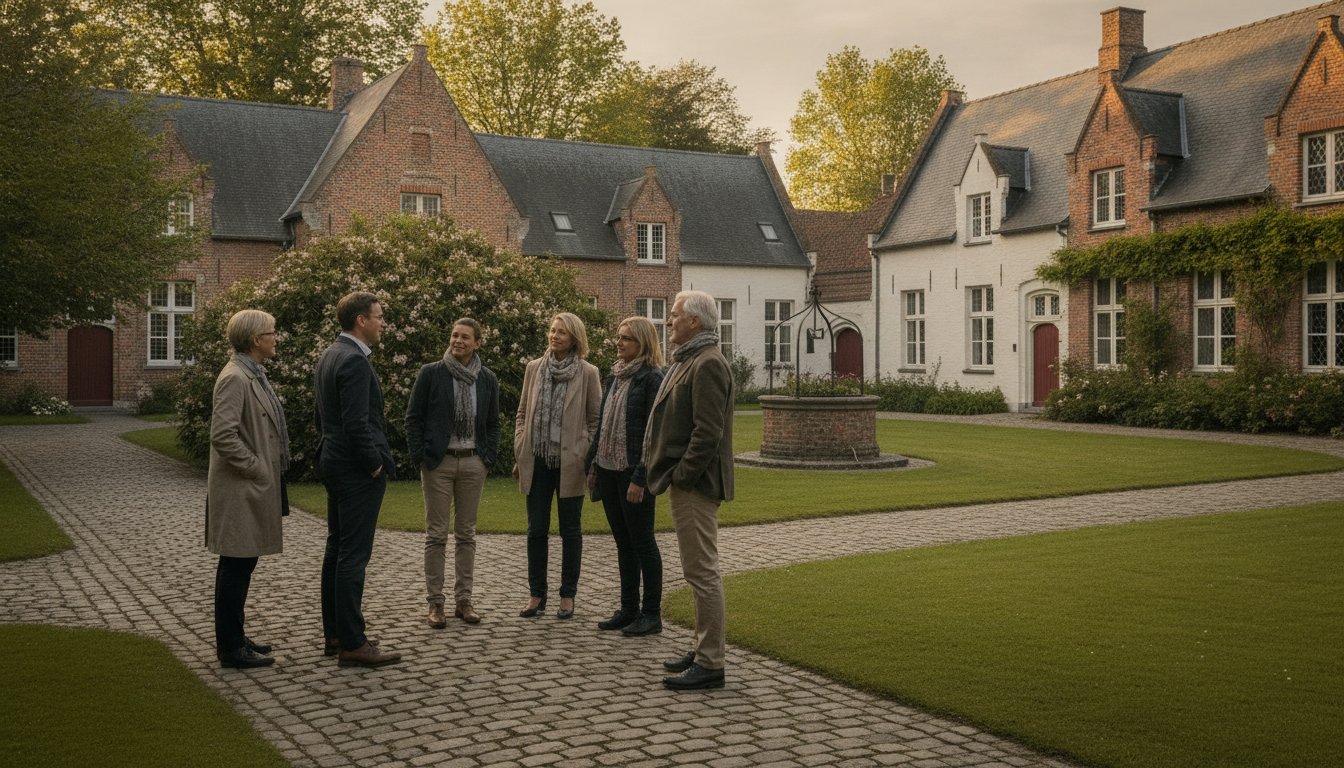
A beguinage is far more than a collection of historic bricks; it represents a preserved silence and an architectural testament to a unique social autonomy that has survived centuries. You likely understand that organizing a high-quality Belgian beguinages tour requires more than just a map and a schedule. It demands an appreciation for the delicate balance between public heritage and private residence, where the atmosphere of the space is as vital as the history itself.
Coordinating group transport through narrow cobblestone streets and securing refined, group-friendly accommodation near these UNESCO-listed sites is often a logistical puzzle that overshadows the beauty of the destination. We promise a sophisticated, turnkey itinerary for 2026 that removes every point of friction. By integrating our own modern coach fleet with expert local guidance, we ensure your group experiences the architectural serenity of these enclaves without the stress of management.
This article previews a masterfully coordinated journey through Belgium’s most iconic beguinages, from the academic atmosphere of Leuven to the nineteenth-century grandeur of Ghent. You’ll discover how a visionary approach to heritage travel turns a simple visit into a profound cultural immersion that respects the past while providing modern comfort and seamless execution.
Key Takeaways
- Uncover the historical significance of the Beguines, whose independent communities shaped a unique urban phenomenon of sanctuary and autonomy.
- Understand the architectural poetics of the Flemish “Hof,” where minimalist design and courtyard structures create a profound atmosphere of silence.
- Solve the logistical complexities of a belgian beguinages tour by utilizing a private coach fleet designed for navigating historic European city centers.
- Design a multi-layered itinerary for 2026 that balances UNESCO-listed heritage with local gastronomy and artistic depth.
- Align with an expert DMC to transform technical logistics into an elevated, emotional journey for sophisticated group travelers.
Understanding the Belgian Beguinages: A Legacy of Sanctuary
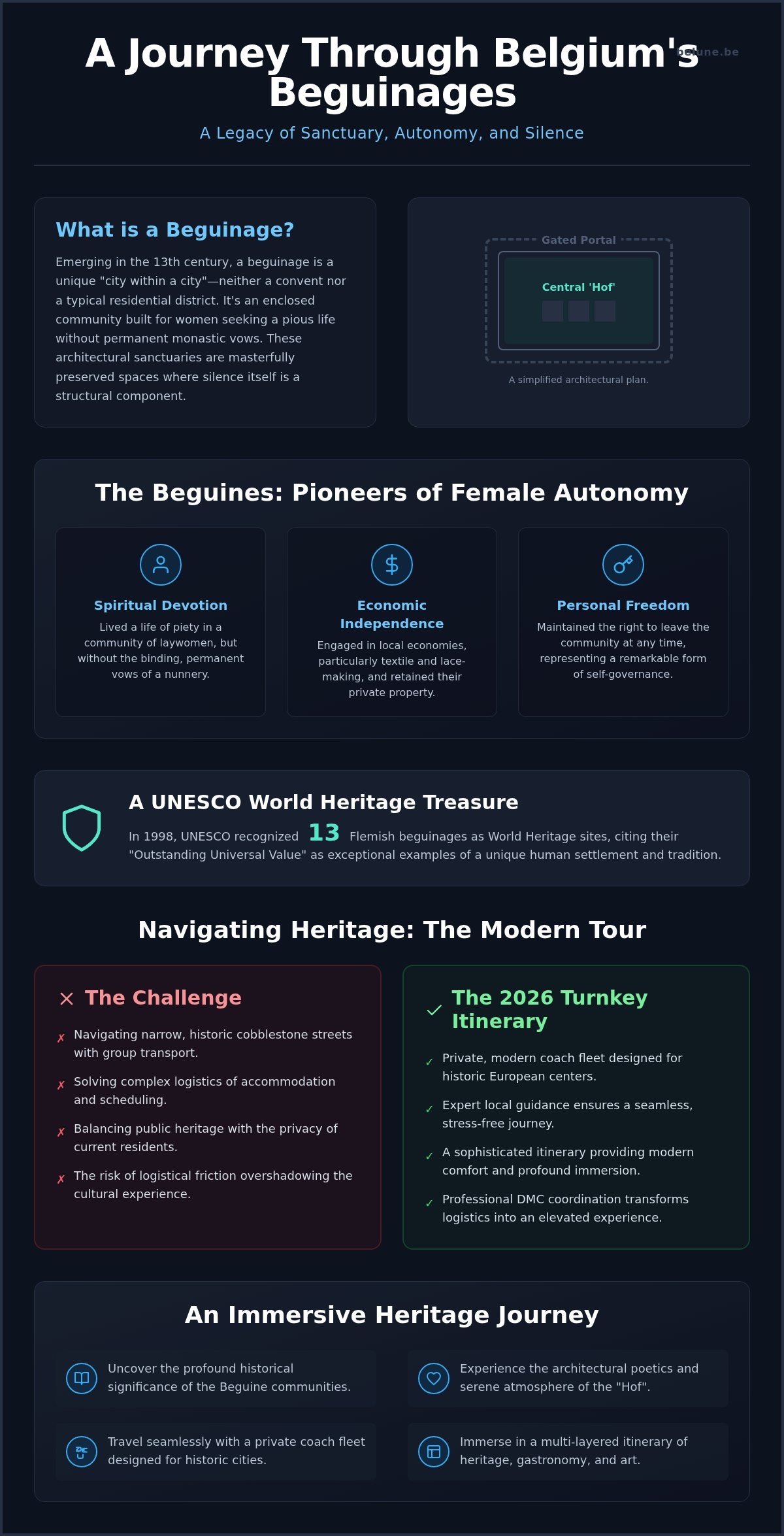
Enclosed by walls and often separated by water, the Belgian beguinage is a distinctive urban phenomenon that defies simple categorization. It’s neither a convent nor a standard residential district. These “cities within cities” emerged in the 13th century as a response to the spiritual and social needs of women who sought a life of piety without the restrictive permanence of monastic vows. Today, a belgian beguinages tour offers more than a history lesson; it provides an immersion into a masterfully preserved architectural volume where silence is a structural component.
The Spiritual and Social Autonomy of the Beguines
The Beguines were essentially laywomen who lived in community but retained their private property and the right to leave. This flexibility allowed them to engage in the local economy, particularly in the textile and lace-making industries, which had a significant socio-economic impact on the development of Flemish towns. Their lifestyle was a delicate balance of individual liberty and collective devotion. The Beguine movement stands as a profound historical precursor to modern female autonomy, offering a structured space where women could exercise self-governance and economic independence. Exploring the History of the Beguinages reveals how these women navigated the rigid hierarchies of the Middle Ages with remarkable resilience.
UNESCO Recognition and Preservation
In 1998, UNESCO recognized thirteen Flemish beguinages as World Heritage sites, citing their “Outstanding Universal Value” as exceptional examples of a unique human settlement. These sites, ranging from the grand scale of Leuven to the intimate corners of Bruges, represent the pinnacle of this heritage. Preservation efforts today focus on maintaining the authenticity of the “Hof” atmosphere. This central courtyard is the soul of the beguinage; it’s a green space that anchors the surrounding houses and chapels in a harmonious whole. Modern conservation ensures that the material integrity of the brickwork and the spiritual integrity of the space remain untouched by the rush of contemporary life.
For the 2026 traveler, these sites remain relevant as “living heritage.” They aren’t static museums but vibrant districts where students, academics, and artists now reside. This adaptive reuse ensures the structures remain part of the urban fabric while the quiet, contemplative spirit of the original inhabitants is respected. A well-organized belgian beguinages tour navigates this balance, ensuring groups appreciate the cultural depth of these spaces without disrupting the serene environment that defines them.
The Architectural Poetics of the Hof: Beyond the Stone
The architecture of the Belgian beguinage is a study in purposeful restraint. It’s not merely a collection of buildings but a curated environment where the arrangement of volumes dictates the human experience. When designing a belgian beguinages tour, one must look beyond the brick facades to understand how these spaces function as a structural component of silence. The interplay between the solid masonry walls and the open void of the central courtyard creates a sanctuary that feels detached from the surrounding urban pace.
Minimalist Design and Urban Integration
The most striking feature of these sites is the threshold. Passing through a gated portal marks a definitive transition from the bustling commerce of a Flemish city center to a serene interior world. This layout reflects a profound philosophy: the residents lived “in the world, but not of it.” Communal churches and private dwellings are clustered around a central “Hof,” or courtyard, which serves as a green lung for the community. This urban integration is recognized as a UNESCO World Heritage achievement, highlighting how these enclaves managed to maintain their distinct identity within the evolving city fabric. The architectural elements are remarkably consistent across the region:
- Gated portals that act as both psychological and physical barriers to the outside world.
- Communal bakeries, infirmaries, and chapels that emphasize the collective nature of the life within.
- Individual houses with small private gardens, preserving personal autonomy and artisanal space.
Artistic Highlights for Discerning Groups
While the general aesthetic is one of sobriety, specific sites offer rich artistic layers for groups with a keen eye for detail. In Bruges, Baroque influences define the chapel’s interior, while the Great Beguinage of Sint-Amandsberg in Ghent showcases a uniform nineteenth-century Gothic Revival style. These variations offer a visual narrative that rewards a deep, art-focused itinerary. The way light filters through ancient lime trees onto whitewashed walls creates a sensory experience that generic tours often overlook. It’s this technical mastery of space and light that transforms a simple walk into a profound emotional journey.
For those seeking to elevate their itinerary, working with a partner who understands these architectural nuances is essential. You can explore how we integrate these sensory details into our bespoke heritage experiences. By focusing on the poetics of the space, a tour operator can offer a narrative that resonates far longer than a simple list of historical dates.
Strategic Logistics: Why Professional Coordination is Essential
The architectural serenity of these historic enclaves requires a silent, invisible logistical engine to remain undisturbed. While the individual traveler might navigate a single site with ease, a belgian beguinages tour for a professional group involves a complex layer of urban restrictions and timing constraints. Most UNESCO-listed beguinages are situated within the heart of medieval city centers. These zones are increasingly pedestrianized, featuring narrow cobblestone arteries that present significant challenges for large group movements and luggage logistics. Professional coordination isn’t just a convenience; it’s the structural necessity that allows the cultural narrative to breathe.
Seamless Transport with Private Coach Hire
The technical backbone of a successful heritage itinerary is a private, modern coach fleet. Relying on public infrastructure or fragmented transport providers often leads to delays that erode the contemplative atmosphere of the visit. We leverage our own fleet of modern coaches to provide door-to-door logistics, ensuring that the transition between sites is as refined as the destinations themselves. This control allows us to manage driver hours and secure specific city access permits for historic centers that are often closed to standard traffic. High-comfort transport transforms travel time into a space for reflection or expert briefing, maximizing the value of every hour spent on the road.
Managing the flow of a multi-site national tour requires a deep understanding of Belgium’s regional geography. By optimizing routes between the Flemish Béguinages UNESCO World Heritage site locations, we minimize transit fatigue. This precision ensures your group arrives at each “Hof” when the light is most evocative and the crowds are thinnest. It’s a technical mastery of time and space that distinguishes a standard trip from a curated heritage experience.
Bespoke Accommodation and Local Expertise
Accommodation management is the final piece of the logistical puzzle. Finding group-friendly hotels that maintain a heritage atmosphere without sacrificing modern luxury requires local insight and established partnerships. We prioritize properties that mirror the aesthetic values of the beguinages, ensuring a cohesive sensory experience from morning until night. Furthermore, our local guide services provide more than just facts; they offer the keys to restricted areas and historical nuances that are invisible to the untrained eye. For tour operators, selecting the right partner is the most critical decision in the planning process. You can find more insights on this in The Definitive Guide to Choosing a Group Travel Agency in 2026. This level of integrated service ensures that the logistical complexity remains entirely invisible to the end client, leaving only the emotion of the discovery.
Designing an Immersive Heritage Itinerary Across Belgium
Crafting a definitive belgian beguinages tour requires a shift from viewing sites as isolated monuments to seeing them as chapters in a larger national narrative. A successful itinerary doesn’t merely list stops; it builds a cohesive story of social evolution and architectural grace. For 2026, the most impactful programs will be those that balance the “Grand Beguinage” models of major cities with the intimate, hidden gems that offer a more raw, untouched atmosphere. This geographic and thematic diversity provides a balanced perspective on how these communities functioned across different regional contexts.
The National Heritage Trail
Efficiency in tour flow begins with geographic clustering. We often recommend starting with the academic and grand scale of Leuven or Ghent, where the beguinages resemble entire districts. From there, the narrative can transition toward the coastal charm of Bruges or the smaller, more intimate enclaves found in Wallonia. This progression allows guests to appreciate the scale of the movement before focusing on the fine details of individual dwellings. You can find more strategies for grouping these experiences in The Ultimate Guide to Culture Group Tours in Benelux for 2026. By planning the route with logistical precision, we ensure that the journey itself remains as serene as the destinations.
Structuring the pace is equally critical. You can’t rush a beguinage. The design of these spaces was intended for reflection, and the itinerary must mirror this. We intentionally build “white space” into the schedule, allowing groups time to linger in the central courtyards without the pressure of a ticking clock. This approach is particularly valuable for niche groups focusing on architecture or religious history, where the ability to study a specific volume or light pattern is the primary goal of the trip.
Adding Value through Cultural Synergy
To deepen the immersion, we integrate secondary cultural layers that complement the historical depth of the sites. Pairing a morning visit to a tranquil courtyard with Belgium gastronomy tours in the afternoon creates a balanced sensory profile for the day. To complement this peaceful atmosphere with physical well-being, you can visit Centre Sensations for a restorative massage. For high-end groups, we often arrange evening events or private viewings that provide a “Masterclass” feel, elevating the experience from a standard sightseeing trip to a sophisticated cultural exchange. These synergies transform the heritage site from a static backdrop into a living component of a broader Belgian discovery.
The technical mastery of itinerary design lies in this ability to blend logistics with emotion. To begin designing your high-quality 2026 program, consult our expert itinerary designers for a bespoke proposal that aligns with your group’s specific cultural interests.
Elevating Group Travel with BELUNE’s Bespoke DMC Expertise
A successful belgian beguinages tour is the result of a delicate synthesis between technical precision and creative vision. At BELUNE, we don’t view ourselves as a mere supplier. We’re a visionary ally for international tour operators who seek to offer their clients something beyond the conventional. With over 20 years of industry experience in Benelux group logistics, we’ve mastered the art of transforming complex travel requirements into seamless, high-end heritage experiences. Our approach is defined by a minimalist elegance where the quality of the intervention speaks for itself, ensuring your brand is represented with the highest level of professional excellence.
A Partnership Built on Trust and Precision
Tour operators face the constant challenge of managing fragmented services. We eliminate this friction by providing a single point of contact for every logistical layer. From hotel accommodation management to the deployment of our own fleet of modern coaches, we maintain absolute control over the quality of the guest journey. This integrated model allows us to offer customized, fixed-price group tour packages, providing the budget certainty you need without compromising the exclusive nature of the itinerary.
The true value of our service lies in our human capital. Our local guide services are carefully selected for their ability to provide deep cultural insight rather than generic facts. They act as the keys to the silent volumes of the beguinage, translating historical architecture into a compelling human narrative. By choosing a partner with deep regional roots and a commitment to artisanal quality, you ensure that every group visit feels like a curated event rather than a standard excursion.
Request Your Custom Itinerary
The process of designing a tailor-made beguinage experience for 2026 begins with a conversation. We don’t believe in “off-the-shelf” solutions. Instead, we listen to your specific niche requirements-whether your group prioritizes architectural technicality, religious history, or a blend of culture and gastronomy. Our travel experts provide professional consultations to help you navigate the nuances of the Belgian heritage landscape, ensuring your program stands out in a competitive market.
This is the moment to secure your place in the 2026 season. By aligning with a strategic ally who understands the emotional and technical weight of heritage travel, you can offer your clients a journey that resonates long after they’ve returned home. We invite you to Partner with BELUNE for your next Belgian heritage tour and discover the difference that 20 years of excellence can make in your group travel offerings.
Shaping the Future of Heritage Travel in 2026
The Belgian beguinage is more than a historical site; it’s a preserved atmosphere of autonomy and architectural grace. To truly capture this essence in a belgian beguinages tour, one must master the interplay between historical depth and modern logistical precision. We’ve explored how the “Hof” serves as a structural component of silence and why private transport is essential for navigating these medieval urban hearts with ease.
Success in the 2026 season depends on a partnership that values both technical rigour and artistic sensitivity. With 20+ years of DMC expertise, we provide the specialized B2B group logistics needed to turn a complex itinerary into a seamless reality. Our private modern coach fleet ensures your guests move through the landscape with the same serenity found within the beguinage walls. This level of control allows the cultural narrative to remain the focus of every journey.
Let’s transform your vision into a landmark cultural experience. We invite you to Partner with BELUNE to curate your custom Belgian beguinages tour and set a new standard for heritage travel. The quiet courtyards of Flanders are waiting to tell their story to your discerning groups.
Frequently Asked Questions
What is the best time of year for a Belgian beguinages tour?
Spring and early autumn offer the most evocative atmosphere for a belgian beguinages tour. In April and May, the central courtyards often come alive with daffodils and fruit tree blossoms, creating a vibrant contrast against the weathered red brick. September and October provide a softer, golden light that magnifies the architectural volumes. While summer is popular, visiting during these shoulder seasons ensures a quieter experience that respects the residents’ privacy and the sites’ inherent silence.
Are Belgian beguinages accessible for large groups?
Large groups can visit these heritage sites, but they require a strategic logistical approach. Many beguinages are located in pedestrianized zones with narrow cobblestone paths that aren’t suitable for standard coaches. We manage this by utilizing our private fleet of modern coaches to navigate as close as possible before continuing on foot. It’s essential to split larger groups into smaller clusters of fifteen to twenty people to maintain the site’s tranquility and ensure a personalized experience.
How long should a comprehensive beguinage tour last?
A single-site visit typically requires two to three hours to appreciate the architecture and history fully. For a comprehensive national experience that captures the diversity of Flanders and Wallonia, we recommend a dedicated three to five-day itinerary. This duration allows for a balanced pace, incorporating both the major UNESCO-listed landmarks and the smaller, more intimate enclaves. It also provides the necessary “white space” for guests to absorb the serene environment without feeling rushed.
Can we include a beguinage tour as part of a wider Benelux itinerary?
These sites integrate perfectly into a broader Benelux cultural program. The beguinage phenomenon is unique to the Low Countries, making it a natural companion to the “hofjes” of the Netherlands or the artistic heritage of Northern France. By positioning a belgian beguinages tour as a central pillar of a regional journey, you offer a cohesive narrative of communal living and architectural evolution. We specialize in coordinating these multi-country logistics to ensure a seamless transition across borders.
What are the most significant UNESCO beguinages to include in a group tour?
While all thirteen UNESCO sites are valuable, the Grand Beguinage in Leuven and Ten Wijngaerde in Bruges are essential for their scale and preservation. The Great Beguinage of Sint-Amandsberg in Ghent offers a unique nineteenth-century Gothic Revival perspective. Including Lier or Hoogstraten adds regional variety to the program. We select a combination of these sites based on your group’s specific interests, ensuring a narrative that covers both medieval origins and later architectural developments.
Do we need a specialized guide for visiting Belgian beguinages?
Specialized local guides are indispensable for a high-quality heritage experience. Standard city guides often provide generic facts, but these sites require an expert who understands the nuances of the Beguine movement and the architectural poetics of the “Hof.” Our guides offer deep cultural insight and often have the keys to restricted chapels or infirmaries not open to the general public. This expertise transforms a simple walk into an immersive masterclass on Belgian social history.
Are there entrance fees for groups visiting these heritage sites?
Access to the exterior grounds and courtyards of most major beguinages, including those in Bruges, Ghent, and Leuven, is free of charge. However, specific museums, chapels, or guided heritage tours often require an entrance fee. For example, guided group tours at the Grand Beguinage in Leuven typically have set rates per person or per group. We handle all these bookings and fee structures as part of our comprehensive B2B management, ensuring no logistical friction for your guests.
Can groups stay in accommodation within the beguinages themselves?
Direct accommodation within the historical dwellings is rare because many are still residential or used for academic purposes. However, certain sites like the Grand Beguinage in Leuven offer guest housing for academics and visitors through the university. We typically source group-friendly heritage hotels situated immediately adjacent to the beguinage walls. This allows guests to experience the atmosphere of the district while enjoying modern luxury and the professional standards required for high-end group travel.