Tag: Ypres Salient

  • Canadian WWI Battlefields Tour in Belgium: A 2026 Group Pilgrimage Guide

    Canadian WWI Battlefields Tour in Belgium: A 2026 Group Pilgrimage Guide

    A Canadian battlefield tour is not a mere sightseeing trip; it’s a structural transformation of historical space into a personal pilgrimage. Standing before the “Brooding Soldier” at St. Julien or reading the 35,000 names on the Tyne Cot Memorial requires more than a simple map. It demands a bridge between the technical complexity of modern logistics and the profound silence of history. Organizing a canadian ww1 battlefields tour belgium for a large group in 2026 involves balancing new ETIAS travel authorizations with the delicate task of maneuvering coaches through the narrow, hallowed lanes of the Westhoek.

    You likely understand that a journey of this magnitude shouldn’t be marred by the friction of poorly timed transport or impersonal accommodations. We promise to show you how to orchestrate a logistically seamless and deeply respectful commemorative tour that honors every Canadian narrative. This guide details how to secure reliable coach hire, manage boutique group stays near Ypres, and ensure historical accuracy, transforming a complex group project into a refined experience of heritage and remembrance.

    Key Takeaways

    • Recognize why the Ypres Salient remains the cornerstone of Canadian national identity and how to honor this legacy through a purposeful 2026 pilgrimage.
    • Identify the most significant landmarks for your canadian ww1 battlefields tour belgium, from the gas-scorched fields of St. Julien to the hard-won victory at Passchendaele.
    • Master the art of itinerary design by blending solemn periods of reflection with immersive local experiences like regional gastronomy and beer heritage.
    • Secure logistical peace of mind by coordinating with a local incoming operator to manage modern coach fleets and exclusive group hotel blocks.
    • Discover how professional battlefield management provides budget certainty and a seamless connection to the emotional weight of the Western Front.

    The Legacy of the Canadian Expeditionary Force in Belgium

    Belgium’s soil holds more than just history for Canadians; it holds the roots of a nation. The Ypres Salient wasn’t just a front line; it was where a distinct Canadian identity was forged in fire. As we approach 2026, the call for a canadian ww1 battlefields tour belgium becomes more than a travel request. It’s a collective return to a landscape that witnessed the birth of Canadian military autonomy. The Legacy of the Canadian Expeditionary Force is deeply etched into the Flemish landscape, turning these fields into a sanctuary of memory. We view this legacy not as a static record, but as a living volume of space that requires an expert’s touch to reveal its true depth.

    For many, this journey is a pilgrimage rather than a standard historical tour. A pilgrimage requires a different level of technical and emotional preparation. It’s not about checking boxes on a map. It’s about a profound connection to the past. Belgium remains the primary destination for this research because the narrative of Canada’s “shock troops” was written in the mud of Flanders. The year 2026 marks a period of continued reflection, where the distance of time only strengthens the need for a respectful, physically present tribute. Orchestrating such a journey in 2026 involves navigating modern logistical shifts while maintaining the solemnity the subject deserves.

    From Second Ypres to the Final 100 Days

    The 1st Canadian Division arrived in the Ypres Salient in April 1915, facing the horrific debut of poison gas. They didn’t just survive; they held the line when others couldn’t. This baptism of fire initiated a rapid evolution in Canadian tactics. They moved away from rigid structures toward decentralized command and specialized training. By the time they reached the final 100 days of the war, the Canadians had earned a reputation as the elite “shock troops” of the Western Front. Their presence in Belgium wasn’t just a contribution to the British effort; it was a demonstration of tactical innovation and unparalleled resilience that redefined their standing among the Allied powers. They became the force that commanders turned to when an objective seemed impossible.

    Why a Specialized Canadian Itinerary Matters

    A generic tour often misses the nuances that define the Canadian experience. While British Commonwealth sites are vast, a canadian ww1 battlefields tour belgium must focus on specific milestones like Vancouver Corner. The emotional resonance of the “Brooding Soldier” is incomparable for a Canadian group. It represents a specific moment of national trial. It’s essential to view these sites within the broader context of flanders fields, where every ridge and farm tells a story of Canadian sacrifice. Selecting a specialized itinerary ensures your group doesn’t just see the war; they see their own history reflected in the stones and soil of Belgium. This tailored approach allows for moments of quiet reflection that a standard commercial tour simply cannot provide.

    Essential Canadian Landmarks for Your 2026 Tour

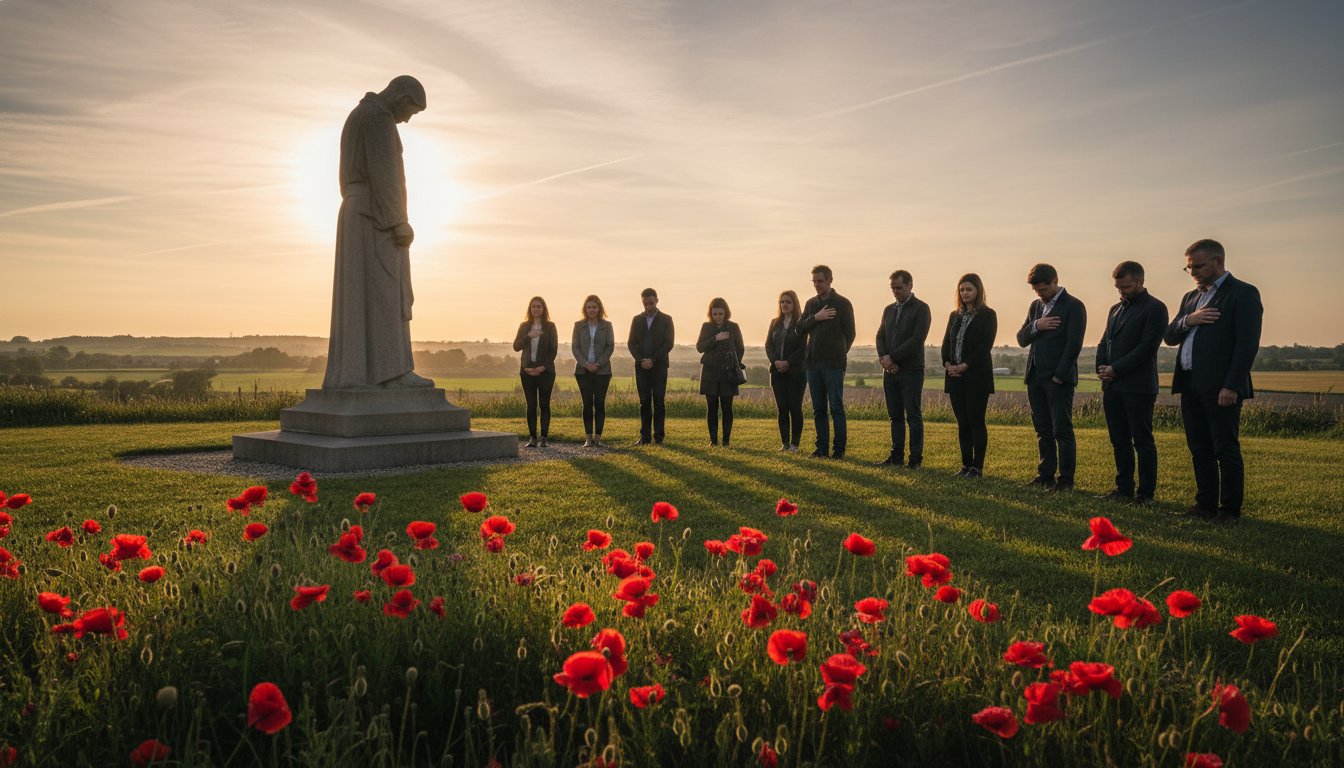
    To walk the fields of Flanders is to witness the physical embodiment of Canadian sacrifice. Every monument stands as a structural testament to a specific moment of tactical evolution and national grief. For those planning a canadian ww1 battlefields tour belgium in 2026, the itinerary must prioritize sites that hold a unique Canadian signature. The Brooding Soldier at Vancouver Corner remains the most haunting of these. It commemorates the first gas attacks of April 1915, where the 1st Canadian Division held its ground against a terrifying new form of chemical warfare. This site isn’t just a statue; it’s a marker of the moment Canada became a primary actor on the global stage.

    According to the Canadian War Museum’s historical timeline, the defense of the Ypres Salient was a series of escalating trials that culminated in the victory at Passchendaele. At Crest Farm, you can stand where Canadian soldiers achieved what many thought impossible in the mud of 1917. This location offers a clear view of the Ypres skyline, providing a visual understanding of the high ground the Canadians were tasked to take. Nearby, Hill 62 (Mount Sorrel) provides a rare glimpse into the defensive struggles of 1916, where the Canadian Corps fought to maintain the integrity of the Salient under immense pressure. These sites form the backbone of a profound pilgrimage, requiring an expert eye to appreciate the tactical nuances of each landscape.

    The Ypres Salient: A Canadian Crucible

    Essex Farm is a vital stop for any Canadian group. It’s the site where John McCrae penned “In Flanders Fields” in May 1915. The bunkers here offer a visceral connection to the dressing stations of the era. For your nightly schedule, the Last Post ceremony at the Menin Gate is a mandatory experience. It starts at 8:00 PM, but large groups should arrive at least 45 minutes early to secure a respectful vantage point. Managing these movements through the city’s narrow streets requires a benelux incoming tour operator who understands the specific flow of commemorative events. For a truly seamless experience, consider a professional battlefield management ally to handle the technical timing of your visits.

    Lesser-Known Canadian Sites in Belgium

    Beyond the major memorials, the true depth of a canadian ww1 battlefields tour belgium is found in isolated cemeteries. Small plots near Mount Sorrel often house concentrated groups of soldiers from specific Canadian battalions, offering a quieter, more intimate connection than the larger memorials. For groups interested in a broader historical scope, exploring connections to the Battle of the Scheldt can bridge the narrative between WWI and WWII. Finding “lost” unit markers or specific gravesites often requires local expertise to navigate the rural Belgian landscape. These smaller, specialized sites ensure your journey is a unique reflection of your group’s specific heritage rather than a generic tourist route.

    Designing a Purposeful Itinerary for Canadian Groups

    Designing an itinerary for a canadian ww1 battlefields tour belgium requires more than a chronological list of dates; it’s a composition of space, time, and emotion. We believe a successful journey balances the technical weight of historical facts with the necessary silence of reflection. Every monument and trench line represents a volume of human experience that can’t be rushed. Pacing is the architecture of the tour. It ensures that the transition from a bustling museum to a quiet cemetery feels natural and respectful, allowing the historical narrative to breathe.

    To truly understand the land the Canadian Expeditionary Force fought for, one must experience its present-day vibrancy. Integrating themed group travel benelux elements like local gastronomy allows groups to process the day’s emotional weight in a communal setting. A local beer tasting or a traditional Flemish dinner isn’t a distraction. It’s a structural part of the commemorative process, offering a space for shared stories and reflection. Our local guides provide what we call “Technical Poetry,” weaving the technical specifics of 1917 artillery barrages with the personal letters of the men who stood in the mud. This mastery of narrative transforms a standard tour into a profound connection to Canadian heritage.

    The 3-Day “Essential Canada” Program

    A concise 3-day program focuses on the high-impact sites of the Ypres Salient. On Day 1, we explore the 1915 Gas Attacks near St. Julien, grounding the group in the CEF’s baptism of fire. Day 2 is dedicated to Passchendaele Ridge, where the battle of the mud redefined Canadian resilience. We conclude on Day 3 with the liberation of Mons. This allows the group to trace the final shots of the war, providing a narrative arc that moves from survival to victory. For longer 7-day programs, we expand this to include secondary sites and specific unit markers, offering a more exhaustive look at the Canadian contribution.

    Customizing for Educational vs. Veteran Groups

    Pacing requirements shift significantly based on the group’s profile. Student groups need a dynamic, fluid rhythm to stay engaged. We focus on tactile experiences and modern storytelling to bring the 1914-1918 era to life. Conversely, veteran groups or those with direct family connections require a more deliberate, slower pace. We often incorporate archival research into the physical tour. This allows participants to stand on the exact coordinates where a relative served, bridging the gap between a paper record and the physical earth. Managing the emotional toll of these visits is a priority, ensuring every participant feels supported throughout their personal pilgrimage.

    Seamless Logistics: The Backbone of a Successful Pilgrimage

    Precision in logistics is the invisible architecture that supports a profound commemorative journey. For a canadian ww1 battlefields tour belgium, the technical execution of the trip must be as flawless as the historical narrative is moving. When movement between sites is seamless, the mind is free to focus on the weight of the history. This requires more than just a booking agent; it demands a benelux incoming tour operator with the local mastery to manage every variable on the ground. From the timing of the Menin Gate to the accessibility of rural cemeteries, every detail is a structural component of the experience.

    Navigating the “narrow lanes” of Flanders is a task that requires both technical skill and local intuition. These rural roads were never designed for modern transport, yet they lead to the most significant Canadian landmarks. A successful pilgrimage relies on a partner who views these challenges as part of the creative process. We ensure that the transition from a busy city center to a silent, windswept ridge is handled with a quiet authority that respects the solemnity of the occasion. This level of on-the-ground control is what distinguishes a standard tour from a true pilgrimage.

    Coach Hire and Transport Excellence

    Ownership of the journey starts with the vehicles themselves. We manage our own fleet of modern coaches, which allows for a level of reliability and flexibility that third-party rentals can’t match. These aren’t just buses; they’re mobile spaces of comfort. Equipped with Wi-Fi, climate control, and full accessibility features, they provide a sanctuary for Canadian travelers after long days in the field. The driver is a central figure in this process. They act as a logistical partner, navigating the Belgian terrain with a precision that only local experience provides. They understand the rhythm of the landscape, ensuring the group arrives at each landmark with serenity and punctuality.

    Accommodation for Large Groups

    Our approach to Hotel Accommodation Management balances aesthetic charm with the practical demands of group travel. We don’t just find rooms; we curate environments. Selecting properties near key historical sites is a priority to minimize transit times and maximize reflection. These hotels must offer more than just a bed. They need communal spaces for evening debriefings and group dining where the day’s experiences can be processed together. Managing these large-scale bookings requires a refined technical touch to ensure every guest feels the exclusivity and care of a personalized tour. If you’re ready to design an itinerary with this level of precision, contact our logistical experts today to start the process.

    Partnering with BELUNE for Expert Battlefield Management

    Choosing a partner for a canadian ww1 battlefields tour belgium isn’t just about booking services; it’s about finding a visionary ally who understands the symmetry between technical precision and emotional depth. We position ourselves as an artistic and technical extension of your team. Our role is to provide the invisible scaffolding that allows the historical narrative to take center stage. By managing the complexities of local regulations, site access, and group flow, we ensure that your clients experience a curated heritage journey rather than a simple trip. This mastery of the Belgian landscape allows international travel agents to offer exclusive, high-end pilgrimages with absolute confidence.

    Budget certainty is a cornerstone of professional collaboration. We offer fixed-price group tour packages that protect your margins and provide clarity for your clients. This transparency is paired with access to our elite network of multi-lingual, expert battlefield guides. These specialists don’t just recite facts. They’re storytellers who bridge the gap between the technical details of the Western Front and the human experience of the Canadian Expeditionary Force. This combination of financial predictability and narrative excellence transforms a standard itinerary into a profound heritage experience that resonates long after the group returns home.

    Our Commitment to Professional Tour Operators

    We specialize in white-label services that allow you to maintain your brand’s identity while leveraging our local expertise. Our team handles the entire logistical spectrum, from seamless airport transfers to the coordination of final commemorative dinners. We provide 24/7 support for groups on the ground, ensuring that any unforeseen changes in the local environment are handled with quiet efficiency. This comprehensive approach covers everything from hotel accommodation management to the deployment of our own modern coach fleet, giving you a single, reliable point of contact for every aspect of the Belgian pilgrimage.

    Request Your 2026 Custom Itinerary

    The 2026 commemorative season is expected to see a significant increase in demand for Canadian-specific tours. Early planning is essential to secure the most sought-after hotel blocks near Ypres and to ensure the availability of our top-tier guides. The process begins with a consultation where we listen to your group’s specific goals, whether they focus on educational outcomes or personal family research. We then craft a bespoke proposal that reflects your brand’s standards and the unique heritage of the Canadian units being honored. It’s time to build a partnership based on excellence and a shared respect for history. Contact us to begin designing a 2026 program that sets a new standard for battlefield tourism.

    Crafting Your 2026 Legacy Journey

    A canadian ww1 battlefields tour belgium is a profound commitment to memory. It’s a structural bridge between the technical realities of the Western Front and the emotional resonance of national heritage. We’ve seen how specific landmarks like Vancouver Corner and Passchendaele demand a purposeful itinerary, one that balances deep historical insight with the necessary silence of reflection. Navigating the narrow lanes of Flanders or securing group-friendly hotels shouldn’t distract from the pilgrimage’s weight. It requires an ally who sees the artistry in the logistics.

    With over 20 years of Benelux DMC experience, we provide the expert scaffolding your group deserves. From our own fleet of modern coaches to specialized hotel accommodation management, we ensure every technical detail is a component of a seamless heritage experience. Partner with BELUNE for your custom Canadian battlefield itinerary and let us transform your vision into a refined reality. The fields of Flanders are waiting. We’re here to stand as your strategic ally, ensuring you honor them with the excellence and respect they’ve earned.

    Frequently Asked Questions

    What are the most important Canadian WWI sites to visit in Belgium?

    The most significant landmarks include the St. Julien Memorial at Vancouver Corner and the Crest Farm memorial at Passchendaele. These sites represent the tactical and emotional peaks of the Canadian experience in the Ypres Salient. Visiting the nightly Last Post ceremony at the Menin Gate is also essential. These locations provide a structural framework for understanding the national sacrifice within the broader context of the Western Front.

    Is it possible to customize a battlefield tour for a specific Canadian regiment?

    Customization is a central pillar of our service. We can tailor a canadian ww1 battlefields tour belgium to follow the specific historical path of any Canadian regiment. This includes locating remote unit markers and visiting specific Commonwealth War Graves Commission cemeteries where members of a particular battalion are concentrated. Our team uses archival research to transform a general tour into a precise, personal narrative for your group.

    How far in advance should I book a group tour for 2026?

    We recommend booking your 2026 group tour 12 to 18 months in advance. The 2026 commemorative season will attract significant international interest, making hotel blocks in the Ypres area scarce. Early coordination ensures access to our own coach fleet and the most experienced local guides. Securing your dates early provides the budget certainty and logistical control necessary for a successful large-scale pilgrimage.

    Does BELUNE provide its own coaches for battlefield tours?

    We operate our own fleet of modern coaches to ensure total technical reliability. Owning our transport allows us to maintain a high standard of comfort and flexibility that third-party rentals can’t guarantee. Our vehicles are equipped with modern amenities like climate control and Wi-Fi. This ownership means your driver is a fully integrated logistical partner who understands the specific requirements of battlefield touring.

    Can you help with hotel bookings for groups of 40 or more people?

    Our hotel accommodation management service is specifically designed to handle groups of 40 or more. Finding high-capacity properties with historical character in the Flemish countryside is a complex task. We leverage our deep local network to secure blocks in properties that offer both proximity to the battlefields and the necessary communal spaces for evening debriefings. This ensures your group stays together in a cohesive, respectful environment.

    Are there specific WWI events in Belgium for Canadians in 2026?

    2026 will feature a range of commemorative events, including special exhibitions at the In Flanders Fields Museum and the Memorial Museum Passchendaele 1917. The nightly Last Post ceremony at the Menin Gate remains the central focus for Canadian groups. We monitor the local calendar to integrate specific anniversary ceremonies into your itinerary, ensuring your canadian ww1 battlefields tour belgium aligns with these significant moments of international remembrance.

    What is the best time of year to visit the Flanders battlefields?

    The primary season for battlefield visits is between April and October. April is particularly meaningful as it marks the anniversary of the first gas attacks at Second Ypres. While the summer months offer the most reliable weather, many groups find the misty autumn landscapes of October and November provide a more atmospheric and poignant setting for reflection. Each season offers a different aesthetic perspective on the historical terrain.

    Do your guides speak English and have expertise in Canadian military history?

    Our guides are fluent in English and possess deep expertise in the specific history of the Canadian Expeditionary Force. They don’t just share dates; they provide a technical and poetic interpretation of the landscape. By blending tactical military history with personal stories of Canadian soldiers, they create a profound connection to the heritage of the Salient. This expertise ensures that every site visit is both historically accurate and emotionally resonant.

  • Masterclass in Ypres Salient Group Tour Logistics: A 2026 Guide for Tour Operators

    Masterclass in Ypres Salient Group Tour Logistics: A 2026 Guide for Tour Operators

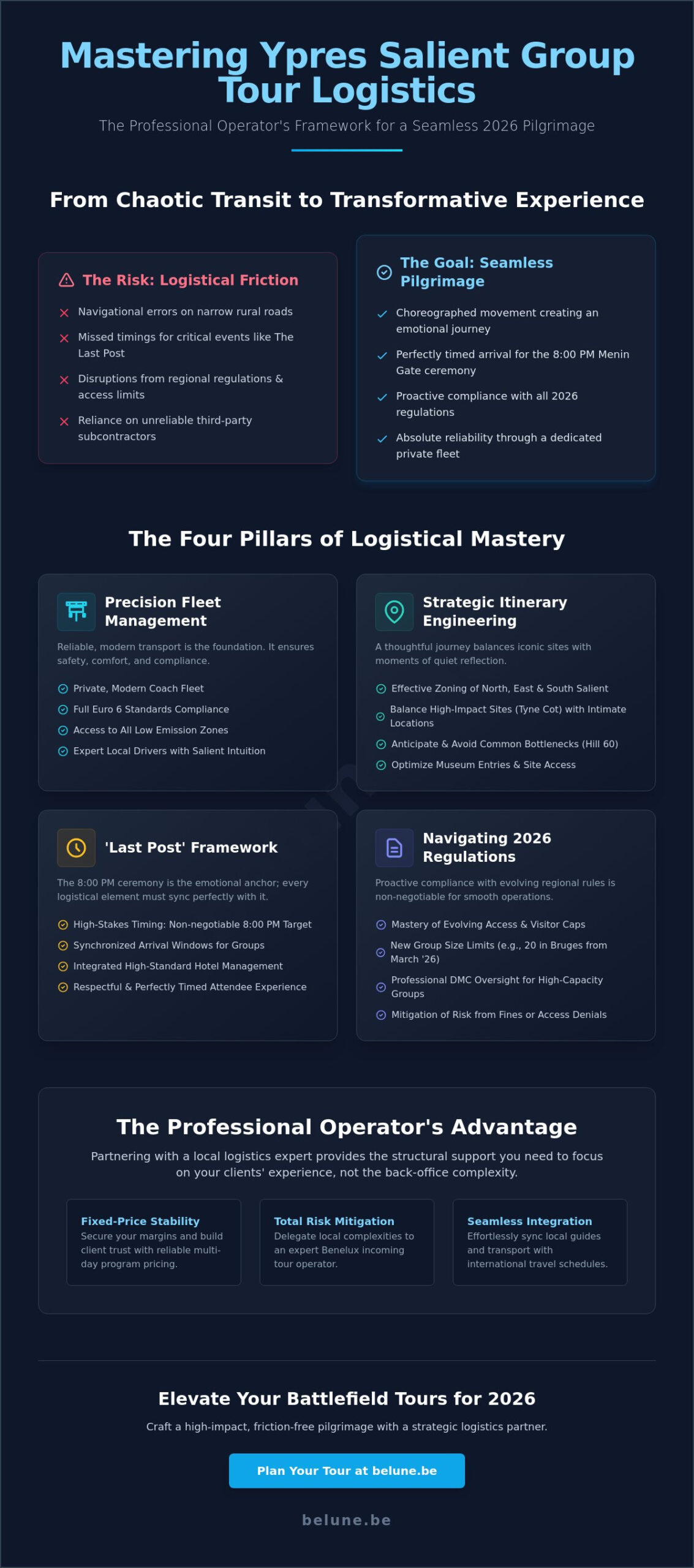
    The most profound moments of remembrance are never accidental; they’re the result of invisible, rigorous engineering. For professional operators, mastering ypres salient group tour logistics is the essential difference between a chaotic transit and a truly transformative pilgrimage. You understand that the emotional weight of Flanders Fields deserves a backdrop of absolute technical precision. Whether it’s the challenge of navigating full-sized coaches through narrow historic corridors or the high-stakes timing of the 8:00 PM Last Post ceremony, the margin for error is non-existent.

    We’ve designed this 2026 guide to help you build the silent architecture required for a seamless journey. You’ll discover how to secure premium group hotel management and leverage a private fleet of coaches to bypass common regional bottlenecks. We’ll explore the strategic coordination of expert local guides and the integration of new regional regulations, such as the 20-person group limits recently established in nearby Bruges. From optimizing museum entries to ensuring a respectful and perfectly timed experience at the Menin Gate, this is your roadmap to delivering an elevated, friction-free battlefield tour.

    Key Takeaways

    • Navigate the evolving 2026 landscape by mastering the choreographed movement of groups through updated access regulations and site-specific visitor caps.
    • Leverage the reliability of a private coach fleet and local driver expertise to transform rural transit into a safe, elegant component of the tour experience.
    • Secure the technical foundation of your pilgrimage by integrating a ‘Last Post’ framework that syncs arrival windows with high-standard hotel management.
    • Apply sophisticated itinerary engineering to zone the Salient effectively, ensuring a balance between high-impact sites and intimate, evocative locations.
    • Discover the professional frameworks of ypres salient group tour logistics that allow you to elevate battlefield tourism into a seamless, high-impact pilgrimage.

    Defining Ypres Salient Group Tour Logistics for 2026

    In the quiet fields of West Flanders, logistics serves as the silent conductor of memory. For a professional operator, ypres salient group tour logistics isn’t merely a matter of moving vehicles; it’s a choreographed movement of people and history. Every turn in the road or pause at a memorial must be intentional. This mastery ensures that the technical reality of the journey never intrudes upon the emotional experience of the traveler. We believe that professional precision is what allows the profound weight of these sites to truly resonate with your clients.

    The 2026 landscape demands a higher level of foresight than previous years. New regulations in the region, such as the March 2026 group size limit of 20 participants in nearby Bruges, signal a shift toward more managed tourism that operators must anticipate. Professional DMC oversight is now a non-negotiable requirement for high-capacity group pilgrimages. You must balance these rigid technical requirements with the delicate, often somber atmosphere of flanders fields. It’s about creating a structure where the history can speak without the distraction of logistical friction.

    To better visualize the terrain and the scale of these historic sites, watch this helpful video:

    The Logistical Complexity of Remembrance

    The historical geography of the Ypres Salient is divided into distinct zones. The North, East, and South sectors each present unique challenges. Narrow rural lanes and restricted bridge weights require precise vehicle selection and route planning. During peak anniversary dates, traffic flow and site availability tighten significantly. Logistical mastery is the fusion of timing, transport, and local insight. It’s the ability to anticipate a bottleneck at Tyne Cot or a delay at Hill 60 before they occur. We view this as a structural component of the tour, turning potential friction into a smooth, respectful passage.

    B2B Requirements: What Tour Operators Need

    For tour operators, reliability is the primary currency. You need fixed-price stability for multi-day programs to maintain your margins and client trust. Success depends on the seamless integration of local guide services with complex international travel schedules. This is where the role of a benelux incoming tour operator becomes vital for risk mitigation. By managing the back-office coordination, we allow you to focus on the client’s emotional journey. We don’t just provide services; we act as a strategic ally in crafting projects of exception that inspire confidence and respect.

    Fleet Management: Optimizing Group Transport in Flanders

    Precision in motion defines the caliber of a pilgrimage. When executing ypres salient group tour logistics, the choice of vehicle isn’t just a budget line item; it’s a commitment to operational excellence. A private, modern fleet provides the reliability and aesthetic consistency that professional tour operators demand. It ensures that the first and last impression of the tour remains one of sophistication and care. Beyond the visual appeal, a dedicated fleet allows for absolute control over maintenance schedules and safety protocols, eliminating the variables often found with third-party subcontractors.

    Environmental responsibility is no longer optional. By 2026, compliance with Euro 6 standards is the baseline for accessing the region’s expanding Low Emission Zones. Our fleet meets these rigorous requirements, ensuring your group moves without restriction through urban centers and rural heritage sites alike. This technical foresight protects your itinerary from unexpected fines or access denials. It’s about providing a service that’s as clean and efficient as it is comfortable.

    The expertise of the driver is the final, vital component. Navigating the winding, often single-track rural roads of Flanders requires more than just a GPS. It demands a local’s intuition for seasonal road closures and the specific weight limits of historic bridges. Our drivers don’t just steer; they safeguard the rhythm of the journey while strictly adhering to EU driving hour regulations. This balance between legal compliance and fluid movement is essential for maintaining a stress-free environment for your guests.

    Technical Specifications for Battlefield Mobility

    Successful mobility in the Salient requires a delicate balance of scale. While high-capacity coaches offer efficiency, they must be agile enough to navigate the narrow lanes leading to evocative sites like the German cemetery at Langemark. On-board, the experience is defined by modern climate control and ergonomic seating, providing a sanctuary for reflection during multi-site days. If you are looking to elevate your next program, our professional coach hire services provide the technical foundation your project deserves.

    Integrating Transport into the Narrative

    The coach functions as a mobile hub, a shared space where the group processes the day’s emotional weight. It provides a consistent environment that bridges the gap between different historical chapters, including seamless border crossings for those extending their journey into France. The silent luxury of a perfectly timed coach arrival allows the history to remain center stage, undisturbed by the mechanics of travel. This seamless integration ensures that the ypres salient group tour logistics remain invisible to the traveler, allowing the narrative to flow without interruption.

    Masterclass in Ypres Salient Group Tour Logistics: A 2026 Guide for Tour Operators

    Strategic Accommodation and the ‘Last Post’ Framework

    The Last Post ceremony at the Menin Gate serves as the emotional anchor of any pilgrimage. For tour operators, however, it represents a complex puzzle. Mastering ypres salient group tour logistics means recognizing that every evening at 8:00 PM, the city of Ypres undergoes a profound transformation. You can’t simply arrive with a large group and expect a seamless experience. It requires a calculated framework that syncs transport, dining, and hotel check-ins around this singular, solemn event. We view these technical layers as the necessary foundation for a truly resonant experience.

    This ceremony creates a logistical ripple effect that dictates the entire evening’s rhythm. If your group wishes to participate in the wreath-laying, they must coordinate with stewards by 7:30 PM. This timing necessitates either an early dinner or a late-night service, both of which require advanced coordination with local establishments. We treat this as a structural challenge. Timing isn’t just about punctuality; it’s about preserving the dignity of the moment for your clients. Managing diverse group needs, from accessibility requirements to quiet-zone preferences, ensures that the physical environment supports the emotional journey.

    The Menin Gate Logistics Protocol

    Calculating transit time from outlying sectors like Passchendaele back to the Ypres center is critical. During peak remembrance periods, traffic flow narrows significantly. Successful operators utilize designated coach drop-off points to avoid the congestion of the medieval center. While general attendance is free and requires no reservation, the physical positioning of a large group requires early arrival. For those seeking a more intimate atmosphere, we often suggest exploring alternative remembrance timings at smaller cemeteries, though the Menin Gate remains the essential touchstone for most programs.

    Professional Accommodation Management

    Sourcing group-friendly accommodation is about more than proximity. It involves evaluating a property’s group readiness, specifically its capacity for efficient baggage handling, breakfast throughput, and secure coach parking. Securing room blocks during high-demand periods is only possible through long-standing relationships with local providers. Our approach to themed group travel benelux management ensures that multi-city stays maintain a consistent standard of professional service. By managing these technical details, we provide a stable environment where travelers can reflect on the day’s experiences without the intrusion of logistical failure.

    Itinerary Engineering: Crafting Seamless Battlefield Journeys

    Crafting a journey through the Salient is an exercise in architectural design. It requires more than a chronological list of events; it demands a deep understanding of ypres salient group tour logistics to ensure every moment serves a purpose. We approach itinerary engineering through a structured, five step process. First, we zone the Salient into North, East, and South sectors. This minimizes ‘dead’ transit time, keeping the group engaged rather than confined to a coach. Second, we balance high-impact sites like Passchendaele with smaller, more evocative locations where the silence speaks louder than any monument.

    Third, we integrate our Gastronomy and Beer Experience elements. These aren’t just meals; they’re logistical rest points that allow for emotional decompression. Fourth, we empower our local guides to make real-time adjustments. If a site is unexpectedly crowded, they pivot. Finally, we review the entire program to ensure it respects the emotional arc of the group. This technical rigor is what transforms a standard visit into a profound pilgrimage. If you’re ready to design an exceptional program, our experts can help you manage your battlefield tourism project from start to finish.

    The Art of the ‘Flanders Flow’

    A North to South route is often the most efficient way to navigate the region. This flow optimizes coach movement and takes advantage of natural lighting for photography at sites like Tyne Cot. Scheduling is equally vital. For instance, the In Flanders Fields Museum has a confirmed 2026 group rate of €9.50 per person for groups of 15 or more. We recommend booking visits outside of peak school group hours to maintain the group’s focus. Finding lunch stops that can accommodate 40 or more guests without sacrificing the region’s artisanal quality is a hallmark of our coordination.

    Customization for Specialized Groups

    Logistics must adapt to the audience. School groups, which represented 21% of Western Front visitors in previous years, require immersive, experiential learning workshops rather than simple sightseeing. Military history enthusiasts, conversely, often need more time at specific tactical points. We also manage delicate pilgrimage requests, such as locating specific gravesites within a tight schedule. This level of detail is essential for a respectful experience. Custom planning transforms a standard tour into a bespoke legacy, ensuring that every participant finds a personal connection to the history of the Salient.

    The BELUNE Advantage: Elevating Professional Battlefield Tourism

    Excellence in travel management is born from the intersection of technical rigour and artistic vision. With over 20 years of expertise in the Benelux transport and tour operator industry, BELUNE has refined the complexities of ypres salient group tour logistics into a seamless, sophisticated experience. We don’t view ourselves as a mere supplier. Instead, we act as a strategic ally, providing the silent architecture that allows your clients to engage deeply with the history of Flanders Fields. Our commitment to a minimalist, high-end aesthetic ensures that every logistical component, from the gleam of a modern coach to the precision of a hotel check-in, reflects the prestige of your brand.

    The true value of a professional partnership lies in the peace of mind it provides. By offering a single point of contact for every logistical element, we eliminate the fragmentation that often leads to operational friction. This centralized oversight allows for absolute clarity and rapid response, ensuring that the emotional weight of a pilgrimage is never compromised by administrative delays. We transform the technical challenges of the Salient into an effortless journey, allowing the narrative of remembrance to remain the primary focus of the experience.

    Comprehensive DMC Support

    Our role as a leading Benelux incoming operator is to provide a total solution for international partners. This includes everything from coordinating international train bookings to managing our own private fleet of modern coaches. We understand the Benelux market from the inside out, navigating local regulations and site-specific constraints with practiced ease. Our philosophy is simple: we handle the technical rigour so you can deliver an inspired, high-impact program. This deep sector knowledge is what allows us to transform a standard itinerary into a project of exception.

    Planning Your 2026 Program

    The year 2026 represents a significant period for battlefield tourism, with high demand expected for key anniversaries. Early booking is essential to secure premium hotel accommodation management and the most experienced local guide services. We invite you to initiate the custom itinerary design process with our team to ensure your program stands out in a competitive landscape. Our visionary approach to volume and space management will ensure your group experiences the Salient with the dignity it deserves. Partner with BELUNE for your next Ypres Salient program and discover the impact of professional logistical mastery.

    Mastering the Future of Remembrance

    Navigating the sacred geography of the Salient requires more than a map. It demands an architect’s eye for detail. We’ve explored how technical precision in ypres salient group tour logistics serves as the foundation for a truly profound pilgrimage. From the reliability of a private, modern coach fleet to the strategic timing of the Last Post ceremony, every element must be choreographed with absolute care. By zoning your itinerary and prioritizing local driver expertise, you transform a complex journey into a seamless, high-impact legacy for your clients.

    With over 20 years of DMC expertise, BELUNE provides the comprehensive accommodation management and logistical rigour required for such an undertaking. We invite you to elevate your next program by partnering with an ally who understands the Benelux market from the inside out. Let’s create a journey that honors the past while delivering an exceptional standard of professional service. Our approach ensures that the technical layers of travel remain invisible, leaving only the emotional resonance of the landscape.

    Request Your Custom Ypres Salient Group Itinerary

    The fields of Flanders are waiting. Together, we’ll ensure their stories are told with the dignity and precision they deserve.

    Professional Perspectives: Frequently Asked Questions

    What is the best group size for an Ypres Salient battlefield tour?

    Optimal group sizes for the Salient typically range between 20 and 35 participants to maintain a balance between logistical efficiency and an intimate atmosphere. While standard coaches accommodate up to 50 guests, smaller groups navigate the narrow rural lanes of Flanders with greater ease. Operators should also consider the regional trend toward smaller caps, such as the 20-person limit introduced in Bruges in March 2026, which may influence future regulations in Ypres.

    How far in advance should we book coach hire for Flanders tours in 2026?

    For peak remembrance periods in 2026, we recommend securing coach hire at least 12 to 18 months in advance. High-demand dates, particularly around April and November, see local fleets reach capacity quickly. Early booking ensures access to modern, Euro 6 compliant vehicles and allows for better alignment with your specific itinerary requirements. This foresight is a cornerstone of professional ypres salient group tour logistics.

    Are there specific coach parking regulations in the center of Ypres?

    Coach parking is strictly regulated within the medieval center of Ypres to preserve its historic character and manage traffic flow. Drivers must utilize designated drop-off points near the Menin Gate and park in the official coach park located at Leopold III-laan. Our drivers possess the local knowledge required to navigate these restrictions seamlessly, ensuring your group arrives at ceremonies without the stress of urban congestion or parking fines.

    Can BELUNE handle both accommodation and transport for multi-day tours?

    BELUNE provides a comprehensive solution that integrates both hotel accommodation management and transport via our private coach fleet. We act as a single strategic ally for tour operators, managing the technical synchronization of complex multi-day itineraries. This holistic approach eliminates the fragmentation of booking separate services, providing the technical rigour and aesthetic consistency necessary for a high-end battlefield pilgrimage.

    Is the Last Post ceremony at the Menin Gate held every night?

    The Last Post ceremony is held every evening at exactly 8:00 PM at the Menin Gate, a tradition maintained since 1928. It remains free of charge for all visitors, including large groups, and no prior reservation is required for general attendance. For groups wishing to lay a wreath, we coordinate with the Last Post Association stewards to ensure they’re positioned correctly by 7:30 PM on the evening of the ceremony.

    What are the logistical considerations for groups with limited mobility?

    Managing groups with limited mobility requires careful site selection and the use of coaches equipped with hydraulic lifts. While major memorials and museums like In Flanders Fields are fully accessible, some historic trench sites or smaller cemeteries feature uneven terrain. We analyze each stop within the ypres salient group tour logistics framework to ensure the itinerary remains inclusive and respectful of all participants’ physical needs.

    How do we coordinate visits to specific Commonwealth War Graves Commission sites?

    Coordinating visits to Commonwealth War Graves Commission sites involves strategic timing rather than formal permits. Because these are active sites of remembrance, we schedule arrivals to avoid overlapping with other large groups, preserving the site’s quiet dignity. Our local guides help locate specific gravesites for individual pilgrims, a service that adds a layer of personal legacy to the broader historical narrative of the tour.

    Does BELUNE provide multi-lingual guides for international group tours?

    We provide expert local guide services in multiple languages to cater to our international partners. These professionals don’t just translate facts; they interpret the historical and emotional landscape of Flanders for your specific audience. Whether your group requires English, French, German, or Dutch, our guides ensure the narrative remains sophisticated and accessible, bridging the gap between technical history and the human experience.