
A low booking total isn’t the same as a low-cost group tour. The hidden costs of self-managing group tours often sit beyond visible fares and accommodation: staff hours spent coordinating bookings, trade-offs in shaping the itinerary, and personal expenses that arise along the way. The real cost is the full effort and spending required to make the trip work.
It’s understandable to assume that booking each element independently gives a group more control and better value. It can offer flexibility, but that flexibility takes time to manage. Supplier terms, schedule changes, and incidental expenses all affect the final picture.
This article explores how supplier rates and terms, itinerary control, staff time, and personal spending affect the cost of managing a group tour yourself. You’ll see where less visible costs arise and how coordinated travel support can bring the logistics together, so the budget reflects the whole experience rather than just the initial bookings.
Key Takeaways
- Assess supplier terms and benefits alongside headline fares to understand the full booking picture.
- Balance itinerary flexibility with the coordination needed to keep group plans running smoothly.
- Include employees’ booking, rebooking, and expense administration time when evaluating the real cost of a trip.
- Account for incidental and personal spending, then consider whether travel support could simplify the trip’s logistics.
Access to negotiated travel rates and supplier benefits
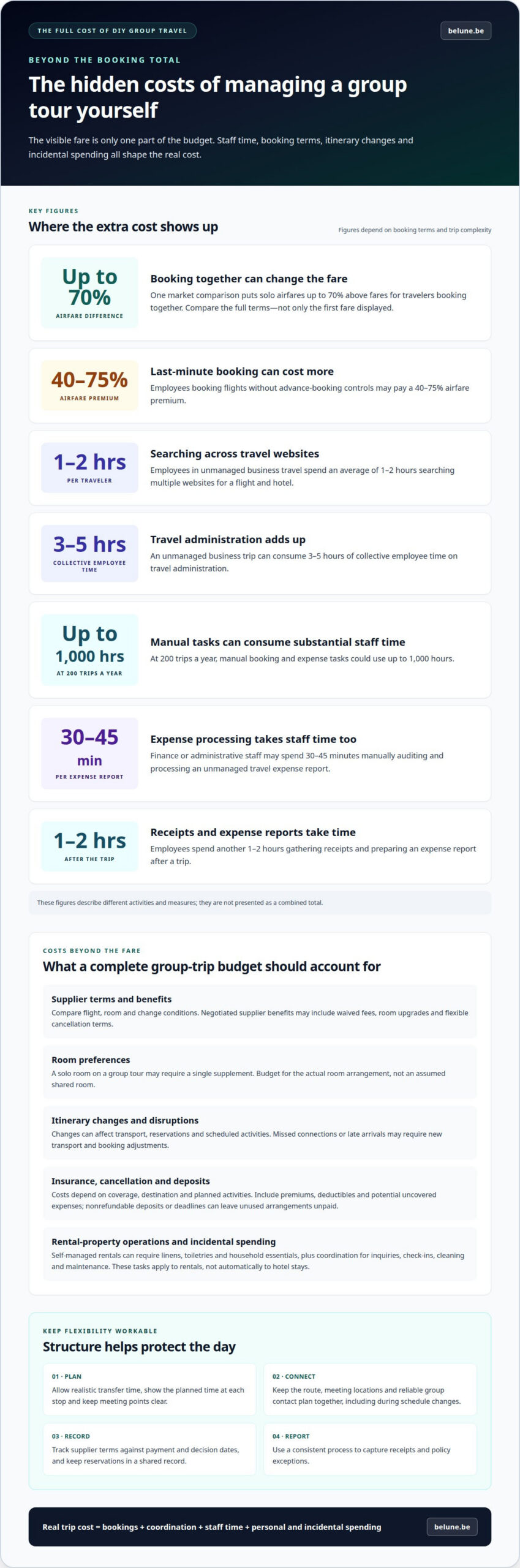
An attractive fare doesn’t necessarily reflect what a group will pay. One market comparison puts solo airfares up to 70% above fares for travelers booking together. These examples show why booking terms and party size matter.
Consumer booking platforms are built for individual transactions, rather than for using a company’s broader travel spending to seek preferred rates or flexible terms. Corporate travel advisors like Michael Sorsky can provide access to negotiated fares and supplier benefits, such as waived fees, room upgrades, and flexible cancellation terms. These benefits can affect a booking’s overall value beyond its displayed price. Compare the full terms for flights, rooms, and changes, not just the first fare shown. An alternative rate only helps when its conditions suit the group’s itinerary.
Room arrangements can also affect the total. A traveler who wants a room alone on a group tour may need to pay a single supplement. Sharing can avoid that charge, but only when the arrangement works for both travelers and fits the accommodation plan. Include room preferences in the budget early, and distinguish shared-room assumptions from solo occupancy. This helps ensure the quoted total reflects the group’s actual arrangements.
Supplies matter when organizers manage a vacation rental themselves. Linens, toiletries, and household essentials need to be tracked, purchased, and restocked between stays. For example, a coordinator may need to check what remains after one group departs before preparing the property for the next. These tasks add procurement and coordination to the accommodation plan. They apply to self-managed rentals, not automatically to hotel stays. Treat them as a separate operational cost when a rental is part of the trip, rather than overlooking the work involved in preparing a ready-to-use property.
DIY travel flexibility and itinerary control
DIY planning lets organizers shape a vacation around the group’s interests. A museum visit can run longer, or a stop can be removed when travelers prefer more time elsewhere. Yet every change can affect transport, reservations, and the next scheduled activity. If the itinerary doesn’t show how much time is planned at each stop, travelers may be unsure what comes next. Include realistic transfer time and clear meeting points to preserve flexibility without losing the day’s structure.
Traveler location and communication matter during serious emergencies. Duty of care includes knowing where business travelers are and being able to reach them quickly. A group moving between a hotel, a gallery, and a restaurant needs clear check-in arrangements. Keep the day’s route, meeting locations, and a reliable group contact plan together. Losing contact with one traveler can complicate coordination, especially when the schedule changes.
Disruptions can mean missed connections or late arrivals, which may cause travelers to miss meetings or events. Professional travel advisors can arrange alternatives proactively when plans are disrupted. Without that support, an organizer may need to find new transport while updating the group and adjusting reservations. Unmanaged travel also adds administrative work: employees spend another 1-2 hours gathering receipts and preparing an expense report after a trip. A consistent reporting process helps capture receipts and policy exceptions.
Insurance and liability costs depend on the coverage selected, the destination, and planned activities. Include premiums, deductibles, and potential uncovered expenses in the budget; no single amount suits every group. Cancellation, deposit, and refund terms can also create unexpected costs. A nonrefundable deposit or cancellation deadline, for instance, may leave the organizer paying for unused arrangements. Track each supplier’s terms against the group’s payment and decision dates.
Risks include schedule disruption, missing travelers, and financial losses when bookings cannot be changed. Reduce them with a shared itinerary, clear meeting instructions, a contact plan, and a record of each booking’s terms. For groups whose plans center on culture, coordinated group itineraries can bring visits and logistics into a more considered sequence.
Employee time spent booking and rebooking trips
Booking travel takes more than choosing a flight and hotel. Employees in unmanaged business travel spend an average of 1-2 hours searching multiple websites for both. Planning a self-guided trip can take hundreds of hours when research, reservations, transfers, and changes accumulate. The total depends on itinerary complexity, traveler needs, and how many arrangements require coordination.
Group bookings also generate questions before departure. Travelers may need details about arrival times, room arrangements, meeting points, and reservation changes. With a vacation rental, self-management can also mean handling guest inquiries, booking updates, check-ins, cleaning coordination, and maintenance issues. Each message needs an answer, and each booking change may affect other arrangements. A shared itinerary and a single record of reservations can reduce duplicate follow-up.
Administrative work extends beyond the traveler’s own booking. An unmanaged business trip can consume 3-5 hours of collective employee time on travel administration. At 200 trips a year, manual booking and expense tasks could use up to 1,000 hours. These estimates illustrate why apparent savings from handling bookings internally can shrink once staff time enters the calculation.
Last-minute decisions can also raise airfare costs. Employees booking flights without advance-booking controls may pay a 40-75% airfare premium. Working with established flight booking services like WORLD BEST TRAVEL, combined with clear approval steps and earlier booking decisions, can help limit avoidable rush choices while preserving room for genuine schedule changes.
Expense filing adds another layer. Finance or administrative staff may spend 30-45 minutes manually auditing and processing an unmanaged travel expense report. A consistent process for submitting receipts and recording trip details makes missing information easier to spot. For organizers, the meaningful measure is not just booking time, but the combined effort across travelers, coordinators, and finance staff.
Financial and personal costs of self-management
A useful comparison includes more than the itinerary total. Accommodation, administration, payment handling, and travelers’ own spending all shape the final cost.
Comparing DIY and Operator Costs
Personal spending also changes the equation. Compare included meals and planned activities, then account for administration and coordination time. This shows whether the lower initial total remains a saving after the trip’s full workload is considered.
Payment, Currency, and Group Collection Costs
Payment and collection costs arise when organizers pay suppliers, collect contributions, and reconcile transactions. Processing charges may apply, while currency conversion can affect the amount received or paid. The impact depends on payment methods, currencies, and transaction terms. Include those details in the trip budget instead of treating the displayed booking total as final.
Collecting group payments adds work even when no fee is charged. For example, an organizer may need to match each traveler’s payment to a hotel deposit, track late contributions, and resolve discrepancies before supplier deadlines. Keep a record of amounts due, payments received, refunds, and exchange rates used. A clear ledger makes shortfalls and outstanding balances visible before they affect bookings.
Explore coordinated group travel to bring the itinerary’s accommodation and experience planning into one conversation.
BELUNE: Art & Culture Group Tours
BELUNE helps tour operators and travel agents plan art and culture group tours with coordinated travel logistics. When museum visits, heritage, and local context define the experience, Hotel Accommodation Management, coach hire with BELUNE’s own fleet of buses, and Local Guide Services can bring key arrangements together.
This support is useful when coordinating suppliers and schedules internally takes attention away from designing the trip. Considering the itinerary’s cultural focus alongside its practical arrangements helps organizers decide where professional support fits their plans.
Contact BELUNE to discuss an art and culture group tour.
Shape the Next Group Journey With Clarity
A considered brief is the starting point for a trip that feels coherent from arrival to departure. Define the group’s purpose, the experience you want travelers to remember, and the arrangements that need careful coordination. This gives planning decisions a clear direction, rather than letting logistics dictate the character of the journey.
Understanding the hidden costs of self-managing group tours can help you decide where your team’s time belongs and which details need dedicated support. The right approach depends on your itinerary and priorities. For a cultural journey, BELUNE offers Art & Culture Group Tours, Hotel Accommodation Management, coach hire with its own fleet of buses, and Local Guide Services.
Bring your goals and preferred travel style into the conversation, then shape a group experience around them. Contact BELUNE to plan your group tour, and take the next step with a clearer vision for the journey ahead.
Frequently Asked Questions
What hidden costs come with self-managing a group tour?
The hidden costs of self-managing group tours go beyond bookings: organizers may also absorb staff time, payment administration, and costs tied to unused arrangements. For example, a late change to a venue reservation can require extra coordination across transport and accommodation. Build a complete budget by separating supplier charges, internal labor, traveler expenses, and contingency needs, then assign an owner to each category.
What fees do hotels, venues, and tour operators charge for group bookings?
Fees depend on each supplier’s booking terms and the requested arrangements. A hotel, for example, may apply different terms to room blocks than to individual reservations, while a venue may set conditions for catering or event-space use. Rather than assume a standard group fee, review the written quote for service charges, deposits, cancellation conditions, and inclusions before comparing options.
What costs arise from no-shows, late arrivals, and last-minute itinerary changes?
No-shows can leave organizers paying for reserved places that travelers don’t use, depending on the supplier’s terms. A late arrival may mean a missed admission window or extra transport coordination; changing the itinerary can also affect later reservations. For example, delaying a group visit could reduce time at the next stop. Clear meeting instructions and a named group contact help limit avoidable disruption.