Tag: Travel Guide 2026

  • The Ultimate Dutch Cheese Markets Tour: A 2026 Guide for Group Travel

    The Ultimate Dutch Cheese Markets Tour: A 2026 Guide for Group Travel

    The true value of a dutch cheese markets tour isn’t found in the tasting stalls; it’s captured in the silent, measured rituals that have defined these squares since 1365. For a group leader, the challenge isn’t just finding the cheese. It’s the delicate art of balancing 50 passengers, a 12 meter coach, and the strict 10:00 AM opening bells of Alkmaar or Gouda. You know that a successful trip requires more than a simple map. It demands a vision that blends historical authenticity with seamless, professional execution.

    We’ve crafted this guide to sublimate your planning process, transforming logistical anxiety into a refined itinerary. You’ll discover the specific 2026 seasonal schedules and the precise parking secrets that keep your group ahead of the crowds. We provide a clear framework to choose between the theatrical scale of Alkmaar and the intimate, bespoke charm of Edam. This guide offers the expert technical advice needed to orchestrate a journey that resonates with harmony and professional excellence.

    Key Takeaways

    • Step beyond modern retail into the living heritage of the kaasmarkt, where medieval rituals and the ‘Handjeklap’ negotiation define the essence of Dutch identity.
    • Learn to differentiate between the ‘Big Three’ markets to select the destination that best resonates with your group’s specific aesthetic and cultural interests.
    • Master the logistical precision required for a successful dutch cheese markets tour, from navigating coach access to securing the most evocative viewing positions.
    • Discover how to elevate a standard itinerary into a bespoke sensory journey that seamlessly bridges artisanal traditions with broader European excellence.

    The Living Heritage of Dutch Cheese Markets in 2026

    The Dutch cheese market isn’t a mere retail space. It’s a meticulously choreographed ritual. Known locally as the kaasmarkt, these gatherings represent a 600-year-old dialogue between tradition and community. When planning a dutch cheese markets tour, visitors don’t just see a sale; they witness a living museum of commerce. In 2026, this spectacle remains the heartbeat of Dutch gastronomy tourism, drawing over 300,000 visitors annually to witness a performance that hasn’t changed its core mechanics since the 14th century.

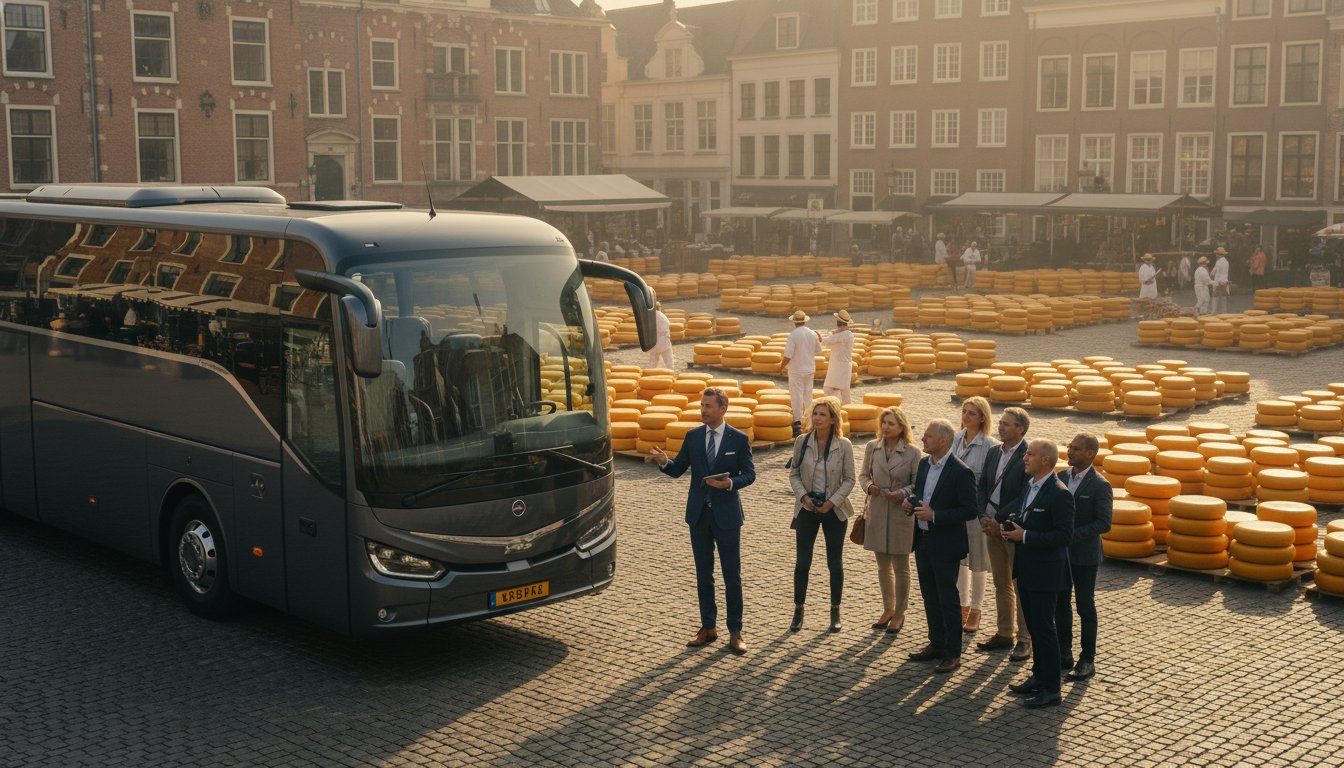
    The sensory impact is immediate. Thousands of golden Gouda and Edam wheels, weighing roughly 12 to 15 kilograms each, dominate the cobblestone squares. The air carries a heavy, sweet aroma of aged dairy and old stone. At the center of this landscape sits the Waag, or Weigh House. These architectural masterpieces, like the one in Alkmaar dating back to 1390, serve as the technical anchor for the entire event. The 2026 season officially awakens these historic spaces from late March through September, offering a window into a world where quality is still measured by hand and heart.

    Why Cheese Markets are Essential for Cultural Itineraries

    Modern commerce is invisible, but the Dutch cheese market is tactile and loud. This transition from essential trade to cultural preservation has turned the market into a “theatre of commerce.” It’s a space where the dutch cheese markets tour becomes a masterclass in heritage. The trade involves a specific “handjeklap” ritual. This rhythmic hand-clapping between buyers and sellers is a centuries-old negotiation technique where the final clap seals a binding contract. This intangible heritage is so significant that it’s often compared to UNESCO-level traditions. For international art and culture groups, the market offers a rare glimpse of a guild system that still functions with four distinct colors of cheese carrier “vaders” or fathers, each representing a specific section of the trade guild.

    The 2026 Season: Key Dates and What to Expect

    Success at the market depends on timing. These events are strictly “early bird” affairs, usually commencing at 10:00 AM sharp. In 2026, the Alkmaar market is scheduled to open its season on Friday, March 27, and will run every Friday until September 4. Gouda follows a different rhythm, holding its markets on Thursday mornings starting April 2, 2026. These dates are firm, though 2026 may see special evening markets in July and August to accommodate the growing interest in artisanal craft. The Living Heritage of Dutch Cheese Markets continues to thrive because it refuses to rush. Visitors should arrive by 9:30 AM to secure a vantage point near the weighing scales. The highlight of any dutch cheese markets tour is watching the carriers, or kaasdragers, move with a specialized “cheese trot.” This unique gait prevents the heavy wooden barrows from swaying, ensuring the 160 kilograms of cheese remain perfectly balanced as they move toward the Waag for official certification.

    • Alkmaar: Fridays, March 27 to September 4, 2026.
    • Gouda: Thursdays, April 2 to August 27, 2026.
    • Edam: Wednesdays in July and August, 2026.
    • Start Time: 10:00 AM across all major locations.

    The Ritual of Kaas: Understanding the Medieval Trading Traditions

    To step into the squares of Alkmaar or Gouda is to witness a choreography perfected over centuries. The Waag, or Weigh House, stands as the architectural anchor of this experience. Built often in the late 14th century, these structures represent the civic pride of a nation built on trade. During a dutch cheese markets tour, visitors realize the market isn’t a mere transaction; it’s a performance. Every participant follows a script written in the Middle Ages. The air carries the scent of aged Gouda and the rhythmic sound of wooden clogs on cobblestones. This atmosphere creates a visual harmony that mirrors the carefully designed environments we seek to illuminate in modern professional spaces.

    The Guild of Cheese Carriers

    The Kaasdragers, or cheese carriers, represent the soul of the square. Organized into four distinct ‘veems’, or guild groups, these men are easily identified by the colored ribbons on their straw hats: red, blue, green, or yellow. Their primary tool is the ‘berrie’. This curved wooden barrow carries up to 160 kilograms of cheese at once. It requires a specific, synchronized gait to prevent the 13.5kg wheels from shifting during transport. In 2026, these guilds remain strictly traditional. They maintain a rigorous hierarchy where the ‘Kaasvader’ oversees the entire operation. This isn’t just folklore. It’s a living profession where pride is measured by the precision of the carry and the strength of the team.

    From Inspection to Sale: The Step-by-Step Process

    Before a single wheel reaches the scale, a sensory evaluation begins. Inspectors use a specialized hollow drill to remove a core sample. They check for ‘eyes’, the small holes that indicate proper fermentation, and assess the fat content. For premium Gouda, this must meet the strict 48+ standard. Then comes the negotiation. This is The Ritual of Kaas in its most vocal form. Buyers and sellers engage in ‘Handjeklap’. They clap hands rhythmically while shouting prices. The final clap seals the deal. No paper contracts are signed on the square; the handshake is the law. Finally, the carriers bring the load to the Waag for official weighing by the municipal master. It’s a system of transparency that has survived since 1593.

    • The Inspection: A technical assessment of texture, flavor, and maturity using traditional tools.
    • The Negotiation: A percussive dialogue of handclaps that determines the market price.
    • The Weighing: The final verification at the municipal scales to ensure fair trade for all parties.

    The mastery of these traditions creates an experience that feels both timeless and deliberate. It’s a testament to Dutch excellence and the power of heritage. Seeing the golden wheels stacked in the morning light is a reminder that some things don’t need modernization to remain effective. A dutch cheese markets tour provides a rare window into a world where the human touch and the weight of history still dictate the rhythm of the day. Every wheel of cheese tells a story of craftsmanship that began in the fields and ends in the historic heart of the city.

    Comparing the ‘Big Three’: Alkmaar, Gouda, and Edam for Group Itineraries

    Selecting the ideal destination for a dutch cheese markets tour depends entirely on the group’s desired tempo and aesthetic. Some travelers seek the vibrant energy of a living theater, while others prefer the hushed elegance of a canal-side village. These three locations aren’t merely points on a map; they represent different philosophies of Dutch heritage. This guide to Dutch cheese markets illustrates how each city crafts its own unique narrative through light, architecture, and tradition. Understanding these nuances is essential for creating a balanced and inspiring travel program.

    Alkmaar: The Grand Spectacle

    Alkmaar is the definitive choice for groups craving high-impact visuals and historical scale. Since 1594, the Waagplein has hosted this ritual with a precision that borders on the architectural. It’s a choreography of color. Carriers in white uniforms move with rhythmic speed, transporting heavy wooden sleds loaded with golden wheels across the square. The Cheese Museum, situated within the iconic 14th-century Waag building, provides a technical deep dive into this artisanal craft. For 2026 itineraries, logistics are paramount. With annual attendance often exceeding 300,000 visitors, professional organizers should secure coach parking and museum slots at least six months ahead of the Friday morning events. It’s a high-energy environment that delivers the “full show” many first-time visitors expect.

    Gouda: The Gastronomic Capital

    Gouda offers a more immersive, sensory-driven experience that appeals to the culinary connoisseur. The market sits in the shadow of the 15th-century Town Hall, a structure that defines the city’s skyline with its gothic elegance and red-and-white shutters. Beyond the cheese trade, the city is a hub of craftsmanship. Groups can transition from the weighing house to private stroopwafel workshops, creating a multi-layered itinerary that engages every sense. This destination is a cornerstone of our Benelux Culinary Tours, where the focus lies on the harmony between heritage and flavor. We recommend visiting the 72 stained glass windows of St. John’s Church; at 123 meters long, it’s the longest church in the Netherlands and provides a sublime backdrop for a dutch cheese markets tour focused on architectural depth.

    Edam: The Picturesque Alternative

    Edam serves as the intimate, poetic counterpart to its larger neighbors. It’s the perfect choice for high-end, smaller groups of 12 to 18 people who value authenticity over volume. Here, the visual narrative changes. Instead of massive squares, the action unfolds along ancient canals where cheese arrives by boat, reflecting the 16th-century transport methods that once dominated the region. The scale is different too. While Gouda deals in large 12kg flats, Edam is famous for its smaller, spherical wheels, usually weighing around 1.7kg. This difference in geometry creates a softer, more approachable aesthetic. The atmosphere remains quiet and contemplative, allowing visitors to appreciate the interplay of water and brick without the pressure of massive crowds. It’s a masterclass in understated elegance.

    • Alkmaar: Best for large-scale impact and historical theater.
    • Gouda: Best for culinary depth and architectural exploration.
    • Edam: Best for boutique groups seeking tranquility and water-side charm.

    Logistics of a Dutch Cheese Markets Tour: A Guide for Tour Operators

    Mastery of logistics defines the difference between a chaotic outing and a curated journey. For a successful dutch cheese markets tour, precision is your most valuable asset. The medieval architecture of Alkmaar and Gouda creates a stunning backdrop, but it also presents structural hurdles for heavy vehicle access. Success depends on a harmony of timing, spatial awareness, and guest management.

    Time is a material to be shaped. To secure a clear view of the weighing ceremony, groups must be positioned on the square by 09:30 AM. The rituals begin at 10:00 AM sharp, and by then, the perimeter is often four layers deep with spectators. Operators should prepare guests for 90 minutes of standing on cobblestones. Managing these expectations early prevents fatigue and maintains the group’s collective energy throughout the morning. It’s about providing a vision of the event that includes the reality of the crowd.

    Coach Access and Parking Strategies

    In Alkmaar, coaches must utilize the designated drop-off points at Kanaalkade. This location sits roughly 400 meters from the Waagplein, requiring a five-minute walk for your guests. In Gouda, the ‘Klein Amerika’ parking area serves as the primary hub. It accommodates up to 20 large modern coaches simultaneously and remains just a 10-minute stroll from the central square. We recommend implementing a professional ‘meet and greet’ service at these points. This ensures a fluid transition into the city center and provides an immediate point of contact for the group.

    Enhancing the Experience: Private Guides and Tastings

    Authenticity lives in the details. A local guide transforms a visual spectacle into a deep cultural narrative. They interpret the ‘Handjeklap’ bargaining ritual, a rhythmic clapping of hands that has sealed deals for centuries. To avoid the friction of market-stall queues, we suggest arranging private tastings in historic cellars. This offers a serene environment to savor aged Gouda or Edam without the pressure of the crowd. You can explore these tailored options through BELUNE’s Local Guide Services.

    A morning at the market leaves the afternoon open for a balanced program. A well-constructed dutch cheese markets tour often pairs the morning ceremony with a visit to the Zaanse Schans windmills, located just 20 minutes from Alkmaar. This creates a full-day itinerary that captures both the artisanal and industrial spirit of the Netherlands. By 2:00 PM, most markets begin to wind down, allowing your group to transition to a quieter, more reflective afternoon activity.

    Ready to elevate your group’s itinerary with expert precision? Partner with BELUNE to design your next architectural and cultural journey.

    Designing Your Bespoke Benelux Gastronomy Experience with BELUNE

    BELUNE approaches travel with the precision of an architect and the soul of an artisan. We don’t simply organize trips; we weave the vibrant threads of Northern Europe into a singular, sophisticated tapestry. A premium dutch cheese markets tour serves as the perfect overture to a grander sensory journey. It’s a starting point that allows us to explore the nuances of flavor, tradition, and landscape across the Benelux region and beyond. We treat every itinerary as a unique composition where the golden wheels of Alkmaar find their harmony alongside the refined vintages of the French countryside.

    Our philosophy centers on the “Belune Touch,” an approach defined by minimalist elegance and high-end emotional impact. We believe that true luxury lies in the invisible details. It’s the silent transition from a historic Dutch square to a private tasting in a Belgian chocolate atelier. By linking the rustic heritage of the Netherlands with the avant-garde gastronomy of Brussels and the viticulture of France, we create a narrative that resonates deeply with discerning travelers. We transform logistics into an art form, ensuring that every movement feels like a natural extension of the experience itself.

    Beyond the Market: A Seamless Multi-Country Flow

    A well-curated route creates a rhythm that keeps guests inspired without the exhaustion of traditional travel. We often design a flow that begins with the sensory theater of Amsterdam and its surrounding cheese regions. From there, the journey moves south to Antwerp, a city where fashion and art collide, before culminating in the gastronomic heart of Brussels. This progression allows travelers to witness the subtle shifts in culture and architecture through a lens of absolute comfort. Our dedicated fleet of 12 custom-fitted Mercedes-Benz coaches provides a sanctuary of quietude during cross-border transits, making the miles between cities feel like a moment of reflection.

    • Amsterdam & Edam: Morning immersion in traditional dairy heritage and canal-side history.
    • Antwerp: Afternoon exploration of the Diamond District and high-fashion boutiques with expert local curators.
    • Brussels: Evening masterclasses with master chocolatiers and Michelin-starred dining experiences.

    The Advantage of a Specialized Benelux DMC

    Since our founding in 2004, we’ve dedicated over 20 years to mastering the complexities of group dynamics within the Low Countries. Managing a dutch cheese markets tour alongside multi-country logistics requires more than just local knowledge; it demands a rigorous technical foundation. We act as a single point of contact, overseeing everything from hotel contracts to expert multilingual guides. This centralized management eliminates the friction often found in cross-border coordination, allowing tour operators to focus on their clients while we handle the intricate machinery of the tour.

    Transparency is a cornerstone of our professional partnership. BELUNE provides fixed-price packages that offer 12 months of price stability, a vital asset for travel agents planning 2026 departures. Our experience includes over 450 successfully executed group tours, ranging from intimate corporate retreats to large-scale cultural expeditions. We don’t just provide services; we act as a visionary ally in the realization of exceptional architectural and cultural projects. Every itinerary is a collaborative effort designed to exceed the expectations of the most demanding clientele.

    The future of group travel belongs to those who value authenticity and seamless execution. We invite you to Partner with BELUNE for your 2026 group tours and co-create an itinerary that transcends the ordinary. Let’s design a journey that captures the light, the flavor, and the enduring spirit of the Benelux region together.

    Elevate Your 2026 Group Travel Vision

    The 2026 season offers a rare window to witness 600 years of medieval commerce come to life. From the rhythmic handclapping rituals in Alkmaar to the historic weigh-houses of Gouda and Edam, a dutch cheese markets tour represents more than a tasting; it’s a sensory immersion into a living heritage. These three iconic locations provide the structural foundation for any high-end Benelux itinerary, blending architectural beauty with authentic Dutch craftsmanship. Success lies in the nuances of timing and the harmony of seamless logistics.

    BELUNE brings 20 years of DMC expertise to your planning process, transforming standard routes into sublime, bespoke journeys. We manage every detail with technical precision, utilizing our private fleet of modern coaches to ensure your group moves with grace across the Netherlands. Our team specializes in designing sophisticated, tailor-made itineraries that prioritize the human experience. We don’t just move people; we curate moments that resonate long after the journey ends. Design your bespoke 2026 Benelux group tour with BELUNE and secure your place in the vibrant tapestry of Dutch tradition.

    Frequently Asked Questions

    When is the best time to visit the Dutch cheese markets in 2026?

    The 2026 season officially begins on March 27 in Alkmaar and concludes on September 4. For the most evocative experience, your group should arrive at the Waagplein by 9:15 AM. This early arrival captures the soft morning light as the 2,400 wheels of cheese are meticulously laid out. The ceremony starts at 10:00 AM sharp. Visiting in May ensures a perfect harmony between the market schedule and the peak bloom of surrounding fields.

    Are the Dutch cheese markets accessible for groups with limited mobility?

    Yes, the markets provide specific accommodations, though the 17th-century cobblestones require careful navigation. The Alkmaar market features a dedicated 100 square meter viewing area specifically designed for visitors with limited mobility. This section offers an unobstructed perspective of the cheese carriers. We recommend entering via the Voordam street to avoid the densest crowds. Most modern coaches drop passengers within 200 meters of the main square for easy access.

    Can we book a private cheese market demonstration for a large group?

    Large groups can arrange private experiences through the Hollands Kaasmuseum for a dutch cheese markets tour that feels intimate and exclusive. These sessions accommodate up to 50 participants at once. You’ll receive a technical briefing on the weighing process inside the historic Waaggebouw. It’s a sophisticated way to understand the architectural and cultural significance of the trade. Booking 6 months in advance is essential for securing specific morning slots.

    What is the difference between Gouda and Edam cheese at the markets?

    The primary distinctions lie in their geometric form and fat content. Gouda appears as a flat wheel weighing approximately 12 kilograms with a fat content of 48 percent. Edam is instantly recognizable by its spherical shape and signature red paraffin wax coating. It’s a leaner selection with 40 percent fat. Both varieties represent a masterclass in Dutch dairy heritage. They offer a nuanced palette of flavors that evolve as the cheese ages from 4 weeks to 3 years.

    How long does a typical visit to a cheese market take for a group?

    A comprehensive visit typically lasts 2.5 hours to fully appreciate the ritual. This timeframe allows your group to witness the initial weighing at 10:00 AM and explore the artisanal stalls surrounding the square. It leaves 45 minutes for a curated tasting session or a visit to the local museum. We find this duration creates a balanced rhythm. It prevents fatigue while ensuring guests absorb the technical precision of the cheese carriers’ guild.

    Is there coach parking available near the Alkmaar cheese market?

    Coach drivers should utilize the dedicated P+R terrain located at Robonsbosweg, which provides 150 spacious bays for large vehicles. It’s only a 10-minute transit from the city center. A specific drop-off point exists at the Kanaalkade, just 300 meters from the market square. This logistical arrangement ensures a seamless transition for your guests. It maintains the serene atmosphere of the historic district by keeping heavy traffic at a professional distance.

    Can we combine a cheese market tour with a visit to the tulip fields?

    You can easily integrate these experiences if you schedule your dutch cheese markets tour between March 27 and May 11, 2026. This 45-day window aligns the opening of the Alkmaar market with the Keukenhof gardens’ operational dates. The fields of Lisse are located approximately 45 kilometers south of Alkmaar. A well-planned itinerary allows for a morning market immersion followed by an afternoon surrounded by 7 million blooming bulbs. It’s a vivid sensory journey.

    Do the cheese markets operate in bad weather?

    The markets operate regardless of rain or wind, maintaining a tradition that has endured for over 400 years. The cheese carriers wear waterproof variants of their traditional white uniforms to ensure the ceremony continues. Only extreme weather events, such as Force 9 gales, would cause a cancellation. For group comfort, we suggest viewing the spectacle from the covered terraces of the surrounding cafes. These vantage points offer a dry, sophisticated environment to observe the rhythmic movements on the square.

  • Flanders Fields: The Definitive Guide to WWI Remembrance and Group Pilgrimages in 2026

    Flanders Fields: The Definitive Guide to WWI Remembrance and Group Pilgrimages in 2026

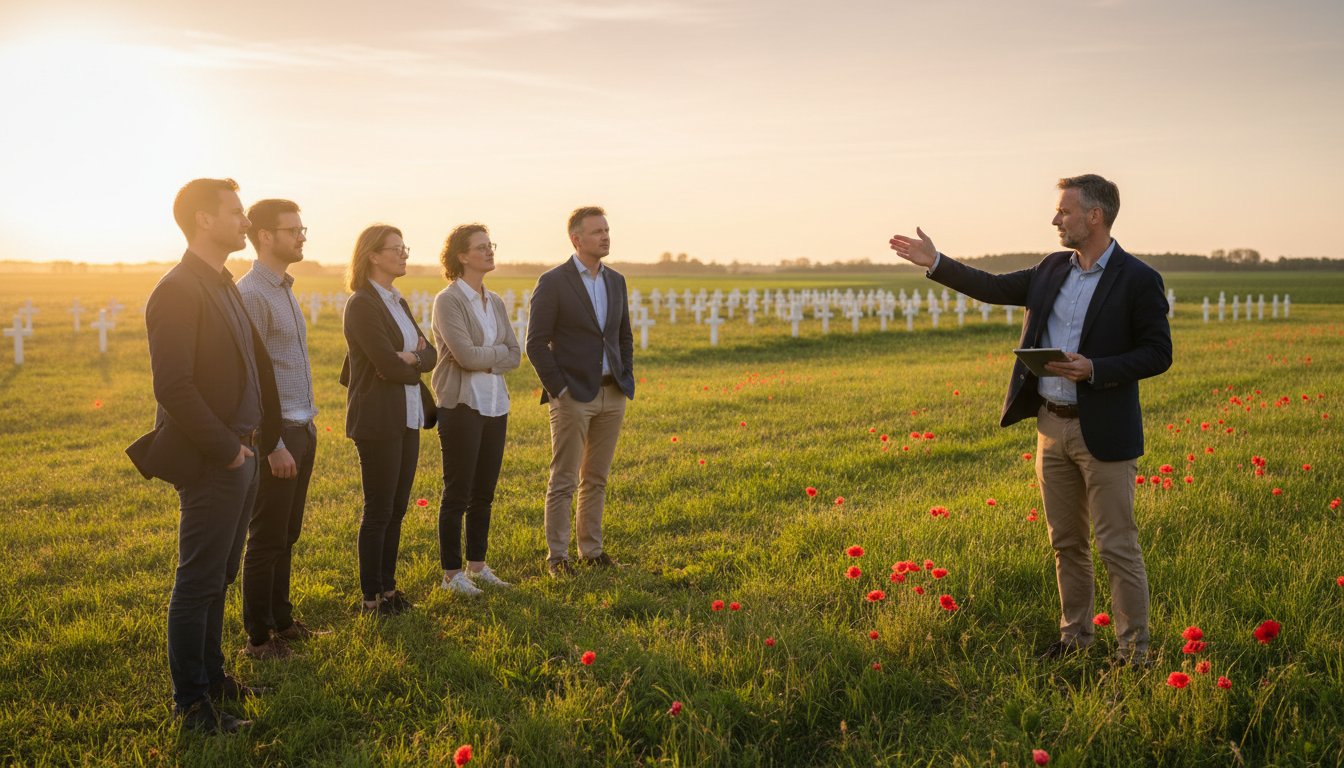
    To orchestrate a group pilgrimage to the sacred ground of Flanders Fields is to balance profound emotion with exacting logistics. The sheer number of poignant sites can feel overwhelming, and the challenge of coordinating transport and accommodation can easily overshadow the solemn purpose of the journey itself. A pilgrimage of this nature demands more than a map; it requires a vision—a harmony between deep remembrance and seamless execution.

    This definitive 2026 guide is conceived as your trusted partner in that endeavor. Here, you will discover the expert frameworks needed to transform logistical complexity into a fluid, meaningful experience. We provide a clear path through the Ypres Salient, from crafting a resonant itinerary that honors the fallen to securing the practicalities of group comfort. Prepare to lead a journey defined not by its challenges, but by its profound historical and emotional depth.

    Key Takeaways

    • Understand the strategic geography of the Ypres Salient to craft a pilgrimage that follows the authentic front lines of memory.
    • Discover how to tailor a journey for specific national identities, moving beyond generic tours to create a deeply personal and resonant experience.
    • Master the complex logistics of group travel in Flanders Fields, from securing the best vantage points at the Last Post Ceremony to navigating rural roads with large coaches.
    • Identify the critical components of a bespoke itinerary that transform a simple visit into a profound, seamlessly executed act of remembrance.

    Understanding Flanders Fields: From Poetic Symbol to Living Landscape

    More than a name, Flanders Fields is a landscape forged in the crucible of the Great War. Geographically, it refers to the Ypres Salient, a critical bulge in the Western Front where relentless fighting defined the conflict’s attrition. This ground, once a strategic prize, has since been transformed into a global centre for remembrance. The name itself, immortalised in poetry, now evokes a profound sense of place, a destination where history is not just read, but felt. It is this unique fusion of tangible history and symbolic power that makes a pilgrimage to the region an essential experience.

    A century of careful preservation and thoughtful commemoration has shaped the Flemish countryside, creating a unique dialogue between past and present. The very soil tells a story, from the resilient poppies that first bloomed on the battle-scarred earth to the meticulously maintained cemeteries that now punctuate the horizon. This is why, as we approach 2026, Flanders Fields remains the most visited WWI theatre, offering groups a layered journey through a landscape that is both a memorial and a living testament to peace.

    The Legacy of John McCrae and the Poppies

    At Essex Farm, amidst the chaos of the Second Battle of Ypres, Canadian military doctor John McCrae penned “In Flanders Fields.” This poem gave a voice to the silent dead and transformed the humble poppy into an international symbol of sacrifice. Its powerful imagery of “crosses, row on row” directly influenced the aesthetic principles of the Commonwealth War Graves Commission, establishing a serene, uniform design for its cemeteries that harmonises loss with dignity.

    The poem’s enduring power is a testament to how literature can shape collective memory. For readers interested in the foundational texts that have chronicled human conflict and history across the ages, publishers like Plume Charmers provide access to bilingual editions of ancient works, offering a timeless perspective on these profound themes.

    Flanders Fields as a UNESCO World Heritage Site

    In 2023, UNESCO recognised the funerary and memorial sites of the Western Front as a World Heritage Site. This prestigious status underscores their universal importance and mandates the highest standards of preservation, ensuring an authentic and respectful experience for all visitors. For any professional itinerary, this designation elevates the significance of your group’s visit. We recommend focusing on these key sites:

    • Tyne Cot Cemetery: The largest Commonwealth war cemetery in the world, its scale and solemn architecture are profoundly moving.
    • Menin Gate Memorial: The nightly Last Post ceremony here is a powerful, unmissable ritual of remembrance for the missing.
    • Essex Farm Cemetery: The site where McCrae wrote his famous poem, offering an intimate connection to the origins of the poppy symbol.

    The Geography of Memory: Essential Sites in the Ypres Salient

    To understand Flanders Fields is to understand its geography—a landscape defined not by natural borders, but by the shifting, brutal arc of the Ypres Salient from 1914 to 1918. At its heart lies the resurrected city of Ypres (Ieper), the spiritual and logistical hub for any pilgrimage. Before setting out, it is essential to grasp the distinction between two types of sacred ground: cemeteries, where soldiers with known graves rest, and memorials, which bear the names of the missing, their bodies never recovered from the battlefield. The ideal narrative starting point is the In Flanders Fields Museum, housed in Ypres’ rebuilt Cloth Hall. It offers the human context essential for transforming a tour into a profound journey of remembrance.

    Tyne Cot and the Menin Gate: The Pillars of Remembrance

    These two sites form the bedrock of Commonwealth remembrance. Tyne Cot Cemetery, the largest of its kind in the world, is an overwhelming sea of white headstones, its scale conveying the sheer cost of the conflict. In contrast, the Menin Gate in Ypres is a masterpiece of architectural mourning, its inner walls inscribed with the names of over 54,000 soldiers with no known grave. For group visits, we recommend arriving well before the daily 8 PM Last Post ceremony to find a quiet space, allowing the memorial’s solemn grandeur to resonate without distraction.

    Beyond the Big Two: The Specialized Sites

    A deeper understanding requires exploring the nuanced stories told at more specialized locations. These sites offer a more granular view, from the somber, dark stone of Langemark German Cemetery providing a crucial perspective on the “other side,” to the raw, cratered earth of Hill 60, a testament to the savagery of underground mine warfare. For American groups, a visit to the meticulously maintained Flanders Field American Cemetery offers a poignant focus on the U.S. contribution. Finally, the Sanctuary Wood (Hill 62) Museum provides a rare, tangible connection to the past, preserving a section of the original British trench system in haunting detail.

    National Pilgrimages: Customizing Tours for Diverse Group Identities

    A pilgrimage is an intimate dialogue with history. A generic, one-size-fits-all tour fails to honor this, reducing a profound experience to a mere checklist of sites. For the sophisticated group traveler, the journey must resonate with a specific cultural and national memory. The landscape of flanders fields is not a single narrative but a complex mosaic of countless stories, each demanding its own unique focus.

    True remembrance requires a bespoke approach—one that balances the sweeping history of the Great War with the specific heritage of your group. It is in the quiet reverence at a national monument or the shared silence at a regimental cemetery that a tour transforms into a meaningful act of commemoration. We design itineraries that follow these distinct national trails, creating a powerful, personal connection to the past.

    Commonwealth and American Perspectives

    Each nation left a unique and indelible mark on the Ypres Salient. Our custom itineraries are designed to trace these specific threads of history, ensuring your group connects with its own legacy:

    • Australian and Canadian Trails: We follow the footsteps of the ANZACs through the mud of Passchendaele and chronicle the strategic brilliance of the Canadian Corps’ ascent at Vimy Ridge, a pivotal moment of national identity forged in battle just across the border.
    • The American Presence: While their involvement was later, the American contribution was decisive. A visit to the immaculate Flanders Field American Cemetery in Waregem offers a serene, powerful space for reflection on the U.S. role.
    • British, Irish, and New Zealand Narratives: From the iconic Menin Gate, bearing the names of thousands of British and Commonwealth soldiers, to the quiet dignity of the New Zealand Memorial to the Missing at Messines or the poignant symbolism of the Island of Ireland Peace Park, we tailor the narrative to your group’s specific point of origin.

    The Multilingual Guide: Bridging Cultures and Eras

    A landscape, however historic, remains silent without a translator. A local, expert guide is essential, not just for navigating the terrain, but for interpreting it. Their role is to move beyond dates and figures, using masterful storytelling to sublimate the technical data of war into profound, resonant human experience.

    This is the core of our philosophy. At BELUNE, we meticulously source guides with verified academic backgrounds and specific regimental or national expertise. They are more than historians; they are custodians of memory, capable of bridging eras and cultures to ensure your pilgrimage to flanders fields is as authentic as it is unforgettable.

    The Logistics of Remembrance: Planning a Seamless Group Journey

    A pilgrimage is, by nature, an emotional undertaking. The underlying logistics, therefore, must be invisible—a seamless framework supporting reflection and remembrance. Orchestrating a group journey through the historic landscapes of West Flanders demands foresight, precision, and a deep respect for the region’s unique character. From navigating narrow country lanes with a 50-seat coach to sourcing the right accommodation, every detail shapes the final experience.

    The Last Post at the Menin Gate

    This nightly act of homage is a cornerstone of any visit. We ensure your group is positioned by 7:30 PM for the 8:00 PM ceremony. For organisations wishing to lay a wreath, we coordinate directly with the Last Post Association well in advance. It is vital to manage expectations regarding large crowds and variable weather, preparing your group for a profoundly moving, yet public, moment of collective silence.

    Transport and Accommodation Strategy

    Navigating the battlefields requires more than a standard vehicle. Our modern fleet is chosen for its ability to handle rural terrain with comfort and grace. The strategic choice between staying in Ypres for immediate immersion or Bruges for its historic grandeur is critical; we help you weigh the pros and cons to define the tour’s rhythm, always planning for contingencies like seasonal road closures or local ceremonies.

    Sustenance on the journey should complement the narrative. We design catering experiences that range from immersive “trench ration” style lunches in the field to refined Flemish dining in the evenings. Each meal becomes an opportunity to reflect, connect, and experience the renowned hospitality of the region.

    Responsible travel is a modern form of remembrance. We are committed to minimizing the environmental footprint of our journeys across flanders fields by partnering with local suppliers and optimizing transport routes. Designing a pilgrimage of this significance requires a harmony of purpose and execution. We approach each journey as a bespoke project, ensuring every element resonates with your mission.

    The BELUNE Touch: Crafting Bespoke Battlefield Itineraries

    A journey through flanders fields is more than a tour; it is an act of remembrance. At BELUNE, we understand this profound distinction. For over two decades, we have moved beyond standard logistics to sublime the travel experience, transforming historical interest into a deeply personal pilgrimage. Our approach is a complete conception, a seamless journey from A to Z.

    We begin with your vision and meticulously handle every detail, from initial itinerary design to flawless on-the-ground execution. This allows for a richer narrative, where the solemnity of the battlefields can be harmoniously balanced with the cultural splendours of nearby Ghent, Bruges, and Brussels. We don’t just manage trips; we orchestrate experiences with precision and empathy.

    Customization as a Core Value

    True resonance is found in the details. We recently designed a bespoke 3-day pilgrimage for a Commonwealth veteran association, focusing on specific regimental histories. Our service included:

    • Private executive coach hire for comfort and flexibility.
    • Coordination with a specialist multilingual guide whose storytelling brought personal accounts to life.
    • Arranging a private Last Post ceremony at the Menin Gate for the group.

    For our tour operator partners, this meticulous planning is delivered as a seamless, “white-label” service, strengthening your brand while we handle the complexities in the background.

    Start Your Journey with BELUNE

    Planning for 2026 begins now. To start the conversation, simply request a tailor-made proposal. Our commitment is one of professional excellence fused with the emotional intelligence required for such significant travel. We are not just a supplier; we are your strategic partner in creating unforgettable journeys through flanders fields.

    Partner with BELUNE for your next Flanders Fields group tour and let us craft an itinerary worthy of the memory it honours.

    A Journey of Remembrance, Meticulously Crafted

    Memory is not a destination; it is a journey. A truly profound pilgrimage through the landscapes of the Great War harmonizes historical depth with seamless logistical execution, creating a space for personal reflection and collective remembrance. It is an experience that demands sensitivity, expertise, and a deep respect for the stories etched into the soil.

    At BELUNE, we are the architects of these poignant journeys. With over 20 years of DMC experience in the Benelux region, we specialize in crafting bespoke itineraries for groups seeking to connect with the legacy of flanders fields. Our private fleet of modern, luxury coaches and our exclusive network of multilingual battlefield historians ensure your pilgrimage is both comfortable and deeply insightful. We transform the complexities of planning into a seamless, resonant experience.

    Let us craft an itinerary that honours your group’s unique purpose. Request your bespoke group itinerary today. Together, we can create a journey that will echo in memory for years to come.

    Frequently Asked Questions About Visiting Flanders Fields

    Where exactly is Flanders Fields located?

    Flanders Fields is not a single location but refers to the historic WWI battlefields in the Belgian province of West Flanders. This poignant landscape primarily surrounds the city of Ypres (Ieper), which was the centre of the Ypres Salient. This region witnessed some of the most intense fighting on the Western Front and is now home to hundreds of memorials, cemeteries, and preserved trenches, standing as a silent testament to the conflict that shaped the 20th century.

    Can you visit Flanders Fields in a single day from Brussels?

    Yes, a day trip to Flanders Fields from Brussels is entirely feasible, though it makes for a full and reflective day. The journey by car or train to Ypres takes approximately 90 minutes. A condensed itinerary can include the In Flanders Fields Museum and Tyne Cot Cemetery, culminating with the Last Post ceremony at the Menin Gate. However, to truly absorb the atmosphere and explore more deeply, we recommend dedicating at least two days to the region.

    What is the Last Post ceremony and when does it happen?

    The Last Post is a deeply moving ceremony of remembrance held at the Menin Gate in Ypres. Every evening at precisely 8:00 PM (20:00), buglers from the local volunteer fire brigade sound the “Last Post” to honour the Commonwealth soldiers who died in the Ypres Salient and have no known grave. This solemn tribute has been performed nightly since 1928, a powerful and unbroken promise to remember their sacrifice, creating an unforgettable moment of collective reflection.

    Is Flanders Fields suitable for school groups?

    Flanders Fields is an exceptionally powerful educational destination for school groups, bringing history to life in a way no textbook can. Sites such as the interactive In Flanders Fields Museum, the preserved trench systems at Sanctuary Wood (Hill 62), and the sheer scale of Tyne Cot Cemetery provide profound learning opportunities. A specialised guide can tailor the pilgrimage to specific curriculum needs, ensuring a respectful and deeply impactful visit for students of all ages.

    What is the best time of year to visit the WWI sites in Belgium?

    The ideal time for a visit is during the spring (April-June) or autumn (September-October). These seasons offer pleasant weather for exploring the open-air sites and generally smaller crowds. While summer is popular, it can be busy. For a particularly poignant experience, consider visiting around key dates like Anzac Day (April 25th) or Armistice Day (November 11th), but be prepared for larger gatherings and book accommodations and tours well in advance.

    How far in advance should I book a group tour for Flanders Fields?

    For group pilgrimages, particularly for schools or those travelling during peak seasons, we strongly advise booking 9 to 12 months in advance. This lead time is essential for securing the best guides, suitable accommodation, and transportation. Planning this far ahead is especially critical for visits coinciding with major anniversaries. For smaller, private groups, a lead time of 4 to 6 months is often sufficient, but booking earlier is always recommended to ensure availability.

    Do I need a special guide to visit the battlefields?

    While you can visit the sites independently, engaging a specialised guide is highly recommended to fully appreciate their significance. A professional guide transforms a visit from a simple tour into a meaningful narrative. They provide historical context, share personal stories behind the headstones, and navigate the complex landscape efficiently. For those tracing an ancestor’s footsteps or seeking a deeper understanding, a guide’s expertise is truly invaluable, revealing layers of history otherwise hidden in plain sight.

    Are the cemeteries and memorials accessible for people with limited mobility?

    Accessibility varies across the sites. Major memorials and cemeteries managed by the Commonwealth War Graves Commission, such as Tyne Cot and the Menin Gate ceremony area, are generally well-maintained with paved paths suitable for wheelchairs. However, some smaller cemeteries and battlefield sites with preserved trenches may feature uneven ground or grass pathways. We advise checking the accessibility of specific locations in advance and discussing any mobility requirements when booking a guided tour. For groups with members requiring more comprehensive support during their stay in Belgium, you can check out Zuster in Huis for potential live-in care options.