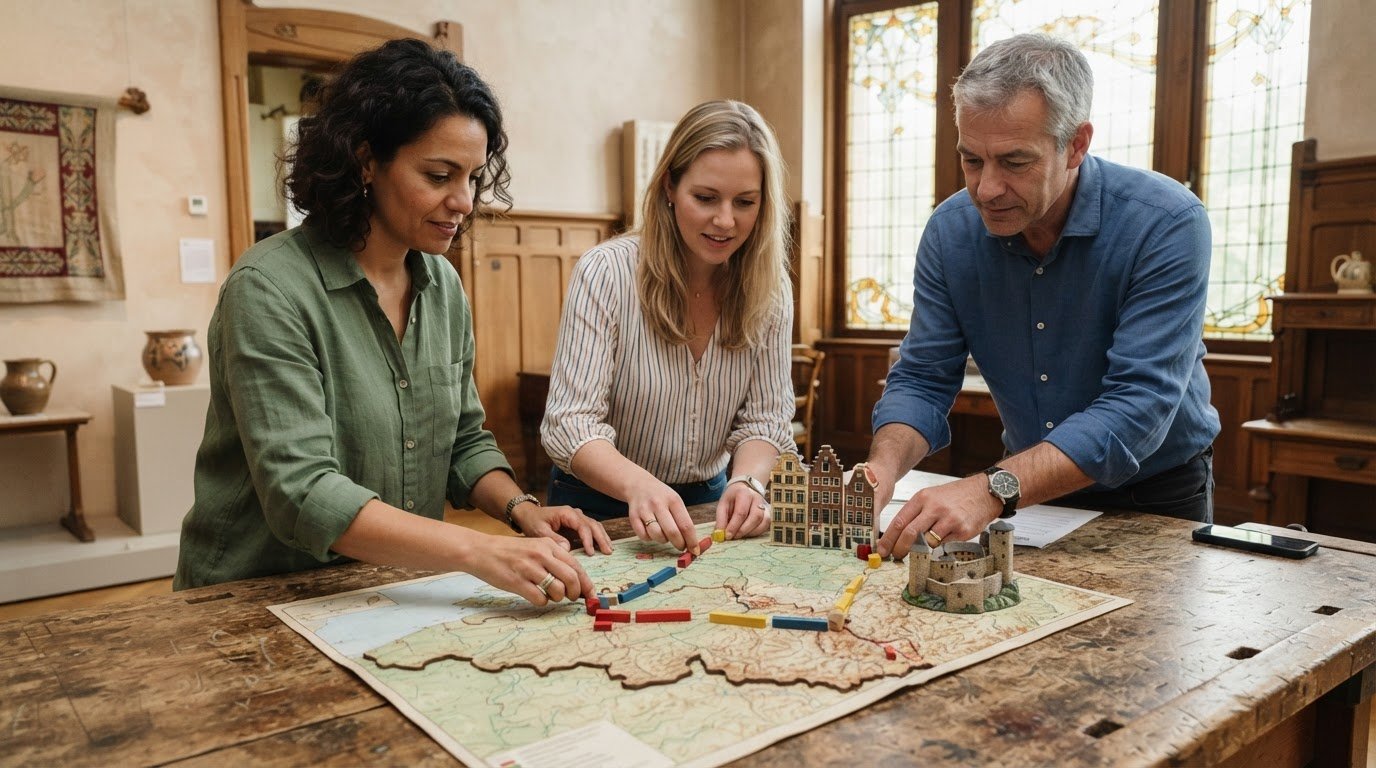
Reach the right travelers by giving every partner one clear audience, one compelling tour story, and a coordinated campaign. The practical answer to how to effectively co-market a Benelux tour is to match channels to traveler interests, then align timing, messaging, and the next step across each partner’s communications.
Coordination matters: a tour spanning Belgium, the Netherlands, and Luxembourg can appeal to travelers drawn to different experiences, from art and culture to gastronomy and heritage. A broad message can blur those distinctions; a focused campaign makes the journey easier to picture and gives each partner a meaningful role. This guide explains how to define your target travelers, select suitable channels, shape a shared campaign, and measure whether it is generating useful interest. You’ll come away with a clear framework for presenting a multi-country itinerary as one coherent experience while making its distinctive themes visible to the travelers most likely to value them.
Key Takeaways
- Shape a Benelux itinerary around a clear theme, then make the connections between its three countries easy for travelers to picture.
- Choose campaign channels according to your audience and each partner’s strengths, with consistent messaging across every touchpoint.
- Agree in advance on how partners will handle campaign responsibilities, shared costs, incoming leads, and revenue.
- For tours with a battlefield heritage focus, BELUNE can bring together Battlefield Tourism, local guide services, coach hire, and hotel accommodation management.
Tour packages combining Belgium, the Netherlands, and Luxembourg
A compelling package connects three countries through a clear theme while giving each place room to feel distinct. The itinerary and campaign should show travelers why the journey works as one experience.
Three-Country Package Design
Build the package around a theme such as art, food, or wartime heritage, then choose stops that bring it to life. A guided itinerary might pair Brussels and Bruges with Luxembourg City and Amsterdam, while a dinner or local tasting offers an authentic pause between visits. Explain what each stop adds, and make the package’s defining feature clear in every partner’s campaign.
Route and Itinerary Planning
Map the route through Belgium, Luxembourg, and the Netherlands in a sensible sequence, grouping nearby experiences and allowing time for transfers. A driver, local transport, and guided visits each serve different parts of the journey; choose them to suit the stops rather than forcing every transfer into one mode. Explain travel times clearly, and build flexibility around connections and border crossings.
Present tour inclusions, terms, and promotional claims clearly. Collect and share campaign data in line with applicable privacy and consumer-protection rules in each market. Keep partner messaging consistent with the package travelers will actually receive.
Potential partners include local tour operators, hotels, attractions, and tourism boards across the three countries. Partners connected to Bruges, Utrecht, or Luxembourg City, for example, can give a shared itinerary a stronger local character.
Address language and cultural differences with localized materials for Dutch-, French-, German-, and Luxembourgish-speaking audiences. Adapt examples, imagery, and tone to each audience while keeping the itinerary’s core promise consistent.
Give the campaign a sense of discovery through places beyond headline stops: Utrecht’s canals, Dinant’s cliffs, or Echternach’s lake and abbey. At Luxembourg American Cemetery, according to American Battle Monuments Commission, sloping away from the terrace is the cemetery where 5,070 service members lie, many of whom lost their lives in the Battle of the Bulge and in the advance to the Rhine River.
Benelux countries and multi-country itineraries
Belgium, the Netherlands, and Luxembourg can form one destination story, but each itinerary needs its own rhythm. Choose its length based on the experiences travelers value, then make the route and shared campaign reflect that choice.
Co-marketing risks include inconsistent promises, uneven partner participation, and confusion about who handles leads. Reduce friction with agreed messaging, a shared campaign calendar, clear lead ownership, and a process for updating partners when itinerary details change.
Multi-Country Itinerary Options
A seven-day itinerary should focus on a compact route and a few defining experiences, such as medieval architecture in Ghent and canals in Amsterdam. A ten-day tour can allow more time across the three countries, while a two-week itinerary can include slower stays or secondary destinations. For each option, explain the trade-off between travel time and time at each stop.
Build personalized itineraries by offering a clear choice of themes, not a crowded list of destinations. One route might pair a visit to Amsterdam’s Rijksmuseum with historic streets in Belgium and Luxembourg City; another could emphasize cultural experiences across all three countries. Local guide services can add context and help connect the stops.
Partner Roles and Resource Sharing
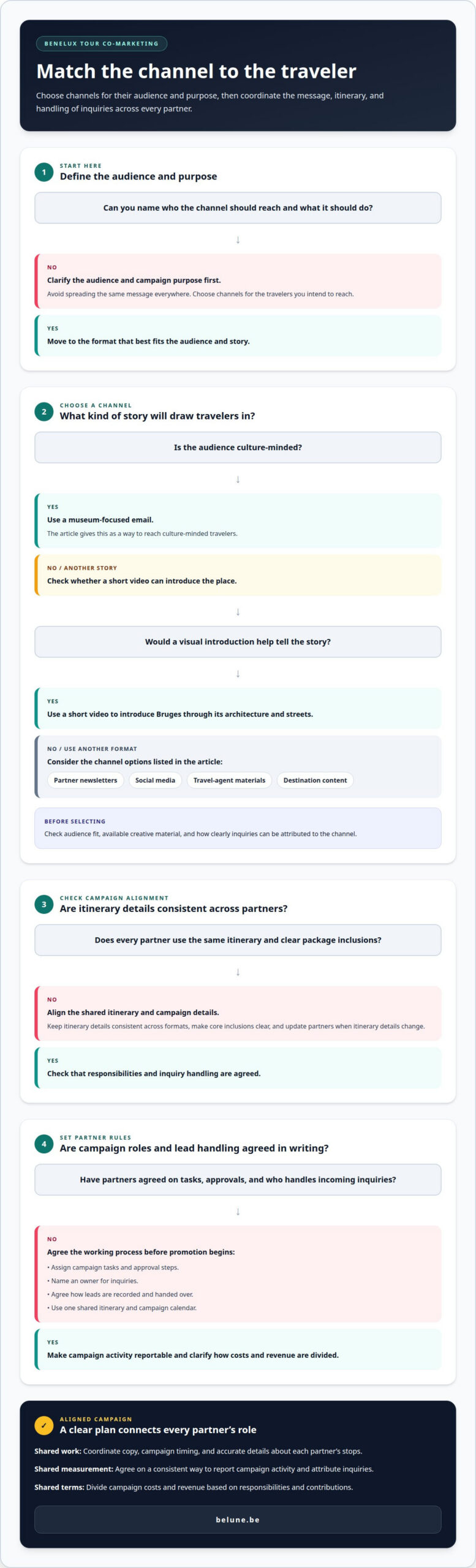
Before promotion begins, partners should agree in writing on campaign tasks, approval steps, and lead handling. One partner, for example, can coordinate shared copy while each destination partner supplies accurate details about its own stops. Agree how campaign costs and revenue will be divided based on responsibilities and contributions, rather than leaving assumptions unresolved.
Use one shared itinerary and campaign calendar as the working reference. Assign a named owner for inquiries, agree how leads are recorded and handed over, and establish a consistent way to report campaign activity. These practical steps help protect the traveler experience and keep every partner’s messaging aligned.
Think of every itinerary as a sequence: select destinations, balance travel with time on site, then match campaign messages to the route. A guide can bring local knowledge to museums, medieval quarters, and other stops. Explore local guide services as part of shaping that on-the-ground experience.
Choosing marketing channels and planning campaigns
Choose channels based on the audience, partner strengths, and the story each format can tell. A clear plan connects campaign activity to one tour departure and gives every partner a consistent role. To effectively co-market a Benelux tour, select channels that reach the intended travelers rather than spreading the same message everywhere.
Marketing Channel Selection
Match each channel to a specific audience and purpose. A museum-focused email can reach culture-minded travelers, while a short video can introduce people to Bruges through its architecture and streets. Partner newsletters, social media, travel-agent materials, and destination content each offer different ways to present the tour. Choose channels based on audience fit, available creative material, and how clearly inquiries can be attributed.
Keep itinerary details consistent across formats. A cruise extension or a day among historic cities can provide a distinctive campaign angle while keeping the package’s core inclusions clear. Effective Benelux tour co-marketing also means using each partner’s channels to extend the story without fragmenting it.
Campaign Planning
Start with the departure date and plan campaign milestones backward. Agree on a shared message, approve copy and images, assign publishing dates, and prepare one destination page with itinerary and booking details. Give partners defined tasks, such as supplying destination information or distributing campaign content, so promotion feels coordinated rather than duplicated.
Use a shared calendar to schedule launch, follow-up content, and reminders. Consumers take around 30 touch points to decide to buy a holiday. Plan varied content that helps create those interactions, such as a route overview, a culture feature, and a practical departure reminder.
Track inquiries, qualified leads, and completed bookings by channel or partner. Use consistent campaign tags and shared reporting to identify which activities contributed to results. Compare attributed booking revenue with campaign spending to assess return on investment. Review the findings together, then refine the next campaign based on which content generated meaningful interest and bookings.
How should partners divide marketing costs, revenue, leads, and responsibilities for a Benelux tour?
Begin with a written agreement covering campaign spending, booking revenue, inquiry ownership, and delivery tasks across Belgium, the Netherlands, and Luxembourg. A shared framework gives every partner the same expectations before promotion begins.
Allocate marketing costs using a method partners understand, such as agreed contributions or each partner’s share of the campaign. Record who pays for photography, translated copy, advertising, and booking materials. If one partner funds destination imagery while another promotes it, document the contribution and how shared assets may be used. Set approval steps for unexpected expenses, too.
Define revenue distribution separately from campaign spending. Partners can agree whether revenue follows the services each provides, a negotiated share, or another written arrangement. Specify which bookings count, how cancellations or changes are handled, and when partners receive reports. Clear records prevent a campaign contribution from being mistaken for a booking entitlement.
Define lead ownership precisely. Decide which partner receives each inquiry, how referrals are recorded, and who follows up with travelers interested in the full three-country route. For example, a request about Amsterdam that also includes Brussels and Luxembourg should have one named lead owner, with relevant partners receiving the information they need to respond. Use consistent records to avoid duplicate follow-ups.
Match responsibilities to each partner’s role. One partner might maintain the campaign calendar, another supply current destination details, and another coordinate booking questions. Agree who approves shared copy, updates itinerary information, and reports campaign results. Name a backup contact for each task so work can continue if the primary contact is unavailable.
Schedule regular reviews around campaign milestones and the tour departure. Compare recorded inquiries and bookings with agreed spending, then discuss which partner actions contributed to results. Update the agreement when the itinerary or campaign changes, and keep decisions in one shared record. To put a coordinated Benelux tour plan into practice, discuss your group travel requirements.
BELUNE: Battlefield Tourism
BELUNE helps tour operators and travel agents shape group itineraries around battlefield tourism across the Benelux region. Turn to BELUNE when battlefield heritage is central to the tour and the journey needs to connect meaningful sites with practical travel arrangements.
Hotel Accommodation Management, Coach Hire with own fleet of busses, and Local Guide Services can support the itinerary’s structure. Local guidance adds historical context at each stop, while coordinated transport and accommodation help bring the route together for a group. The result is a considered travel experience, not simply a sequence of visits.
For a group tour built around battlefield heritage, contact BELUNE to discuss your itinerary.
Turn a shared campaign into a lasting partnership
Treat your Benelux tour as a partnership that can evolve with each departure. Use the first campaign to learn which stories resonate, where traveler interest begins, and how partners can refine their collaboration for the next itinerary. This ongoing approach is central to effectively co-marketing a Benelux tour: build a relationship that grows alongside the experience.
For tour operators and travel agents developing a battlefield-focused group journey, BELUNE can bring the practical elements together through Battlefield Tourism, Hotel Accommodation Management, Coach Hire with own fleet of busses, and Local Guide Services. These services connect the tour’s historical purpose with its on-the-ground delivery and give partners a clear starting point for shaping the campaign.
Contact BELUNE to plan your campaign, and take the next step toward a more distinctive Benelux journey.
Frequently Asked Questions
How will you reach your target customers?
Reach target travelers by matching each audience to a reason to travel, then placing that message where they already seek inspiration. For example, present a cultural itinerary through arts-focused content, while a battlefield heritage journey can foreground historical sites and guided interpretation. Use partner communications to give travelers a consistent picture of the experience and make the next step clear.
What does co-marketing a Benelux tour involve?
Co-marketing a Benelux tour means two or more organizations work together to promote the same travel experience, bringing their distinct expertise or audiences. A hotel partner might share destination imagery, while a tour operator presents the itinerary and booking details. The collaboration works best when every partner can describe the experience accurately and explain their role without creating separate or conflicting versions of the offer.
Which audiences and travel segments are most likely to book a Benelux tour?
Travelers interested in cultural heritage, gastronomy, battlefield history, cycling, festivals, or sporting events may find a themed Benelux journey especially relevant. Tour operators, travel agents, and group travel organizers are also natural professional audiences for packaged itineraries. Rather than target everyone with one message, connect each theme to a defined interest, such as guided heritage experiences or group cultural travel.
Which channels and campaigns best promote a multi-country Benelux tour?
The strongest channel depends on the audience and the tour’s defining theme. Use partner email newsletters for itinerary-led information, social media for visual scenes from places such as Bruges, and travel trade materials for agents assessing group programs. A campaign can build interest with a destination story, then provide practical itinerary details and a clear way to inquire. Keep the core promise consistent across formats.
Which local tour operators, hotels, attractions, and tourism boards are potential co-marketing partners in Belgium, the Netherlands, and Luxembourg?
Potential partners include local tour operators, hotels, attractions, and tourism boards across Belgium, the Netherlands, and Luxembourg. Partners connected to Bruges, Utrecht, or Luxembourg City can contribute local details to a shared itinerary.