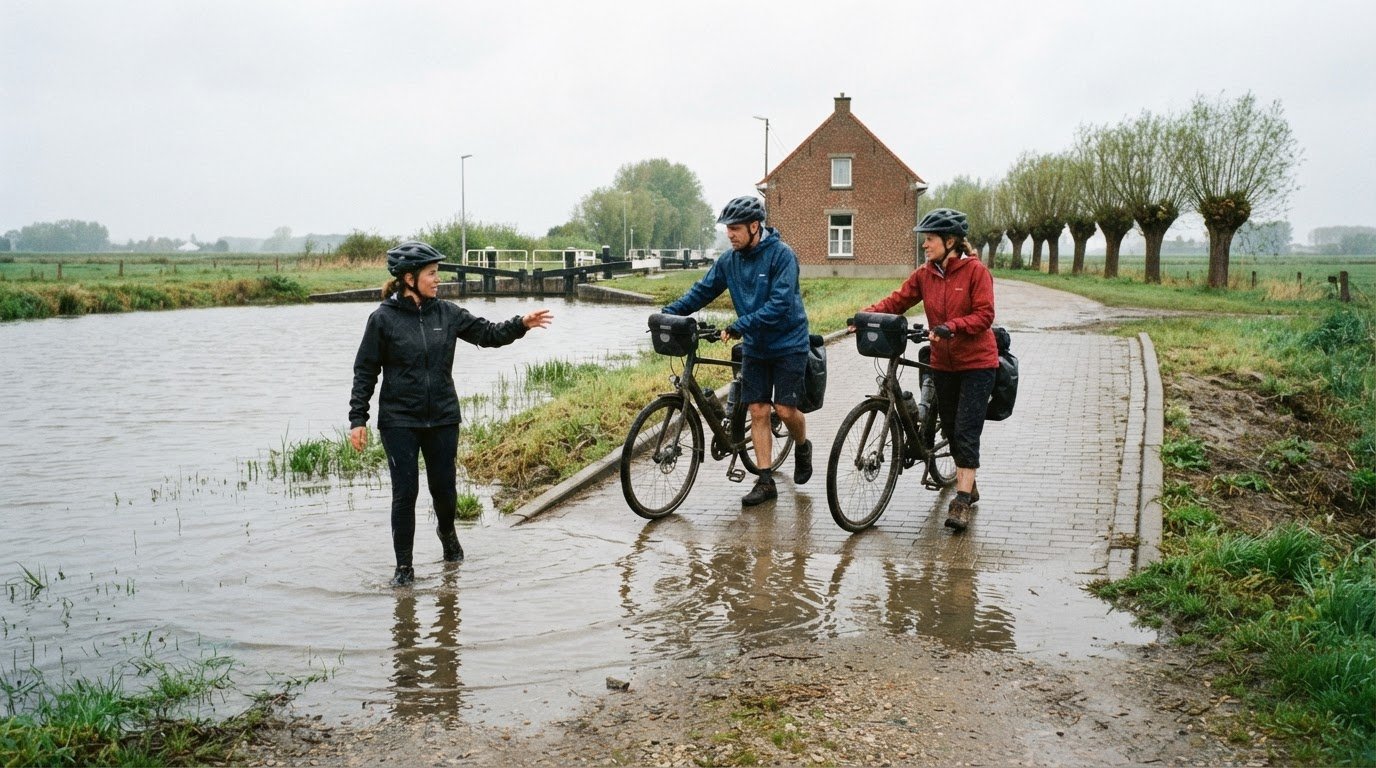
Rain should change the plan, not dictate the day. Effective bad weather backup plans for Benelux cycling tours combine rain radar and precipitation probabilities to time shelter stops, route checks for flooding or diversions, and extra time for slower riding or weather delays. If heavy rain makes it difficult for drivers to see cyclists, get off the road. If conditions remain safe, adjust the day’s distance rather than treating rain alone as a reason to abandon the tour.
A changing forecast can unsettle even a carefully planned itinerary. The aim isn’t to ride through every shower, but to make clear decisions that protect safety and preserve the experience. This guide explains when to pause, when to reroute and how to leave more room in the schedule.
Learn how to combine rain radar with seven-day forecasts, check routes after overnight rain, use long-term weather averages as a planning guide and allow for a slower pace in adverse conditions. The result is a more flexible tour, with practical options to shelter, shorten a stage or take a weather day.
Key Takeaways
- Use radar and precipitation probabilities together to choose a safer window for shelter, lunch or a rest day.
- After overnight rain, review the route for flooding and diversions before setting out, and adjust the day’s plan if needed.
- Use long-term weather averages to shape expectations, but consider record temperatures too, especially when camping.
- Build weather days and extra travel time into the itinerary so headwinds or a slower pace don’t force rushed decisions.
1. Rain radar for choosing when to shelter or rest
Along Benelux routes, use a weather app or national meteorological service to check forecasts, rain radar and storm alerts for your location. While travelling, review the seven-day forecast, then compare radar movement with precipitation probabilities before deciding when to shelter, eat lunch or rest.
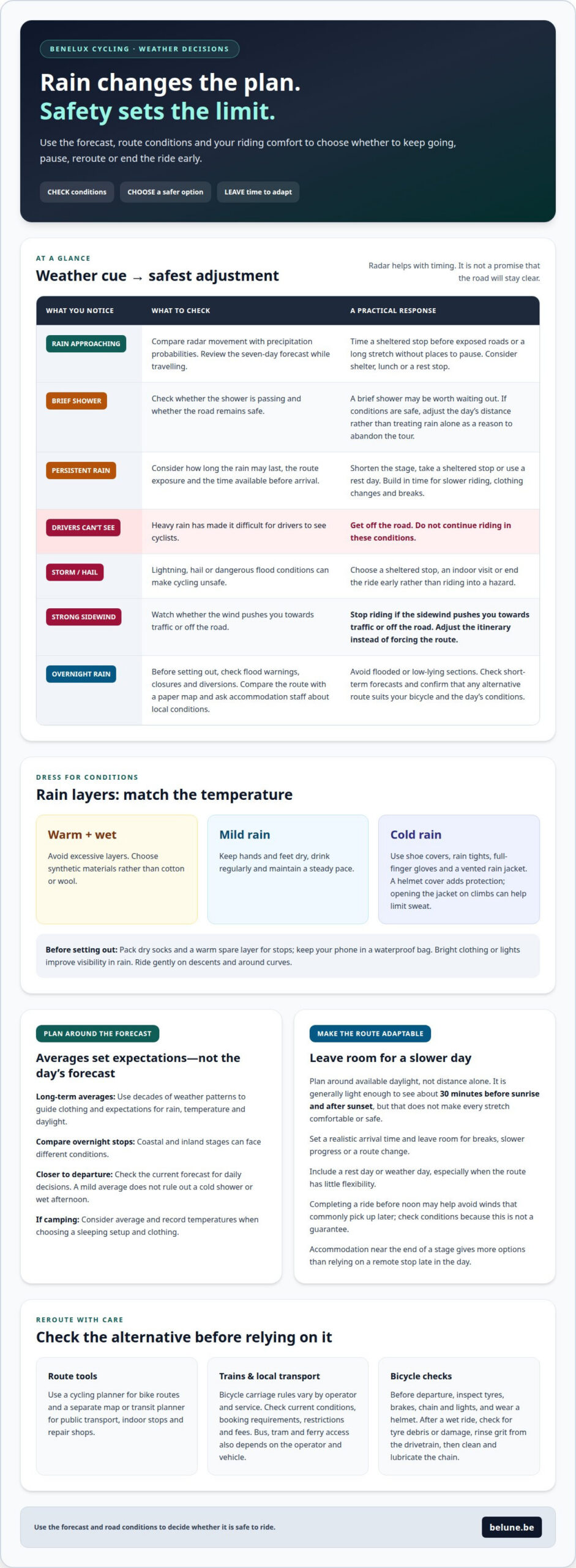
Use radar as a timing tool, not a promise that the road will stay clear. If rain is approaching, choose a sheltered stop before exposed roads or a long stretch without places to pause. A brief shower may be worth waiting out; persistent rain may call for a shorter stage or rest day. If rain becomes so heavy that drivers can’t see cyclists, get off the road. Strong storms may mean taking more breaks or ending the ride early.
Dress for the temperature as well as the rain. In warm, wet weather, avoid excessive layers and choose synthetic materials over cotton or wool. In mild rain, keep your hands and feet dry, drink regularly and maintain a steady pace. In cold rain, use shoe covers, rain tights, full-finger gloves and a vented rain jacket. A helmet cover can add protection, while opening the jacket on climbs can help limit sweat.
Prepare the bicycle and essentials before setting out. Pack dry socks and a warm spare layer for stops, and keep your phone in a waterproof bag. Bright clothing or lights improve visibility in rain; ride gently on descents and around curves. Snow or rain alone doesn’t automatically rule out cycling: use the forecast and road conditions to decide whether it’s safe to ride. A rain jacket, dry clothing and a flexible schedule are useful on any travel day.
2. Research routes and check for flooding or diversions
After overnight rain, inspect the day’s route before setting out. Check for flood warnings, closures and diversions, then compare the route with a paper map to find alternatives that avoid low-lying paths or exposed roads. Accommodation staff may also know about local delays or flooded sections. Short-term forecasts can show whether conditions are improving or worsening along the route.
For thunderstorms, strong winds or flooding, adjust the itinerary instead of forcing the planned route. Avoid flooded sections, and stop riding if a strong sidewind pushes you towards traffic or off the road. Lightning, hail and dangerous flood conditions can make cycling unsafe. A shorter stage, sheltered stop or indoor visit may be a better choice than riding into a hazard.
Train rules and charges for bicycles vary by operator and service across Belgium, the Netherlands and Luxembourg. Before relying on a train, check the current bicycle-carriage conditions for your journey, including any booking requirements, restrictions or fees.
Access for bicycles on buses, trams and ferries also depends on the operator and vehicle. Don’t assume a bicycle can board in bad weather; check the service’s carriage conditions before relying on it for a reroute.
Route-planning tools vary in what they show. Use a cycling planner for bike routes and a separate map or transit planner for public transport, indoor stops and repair shops. Confirm the alternative route suits your bicycle and the day’s conditions. For a coordinated Benelux cycling tour, route changes can be considered alongside the wider itinerary.
Before departure, inspect the bicycle’s tyres, brakes, chain and lights, and wear a helmet. After a wet ride, check the tyres for debris or damage, rinse grit from the drivetrain, then clean and lubricate the chain. These simple checks can reveal problems before the next day’s ride.
3. Using long-term weather averages for tour planning
Start with weather averages gathered over decades for the towns and landscapes along your Benelux route. They reveal seasonal patterns that can help you choose clothing and set realistic expectations for rain, temperature and daylight. They aren’t a day-by-day forecast. Compare averages for each overnight stop, since coastal and inland stages can face different conditions. Then use the current forecast closer to departure to guide daily decisions. A mild average doesn’t rule out a cold shower or wet afternoon.
When planning to camp, consider average and record temperatures together. Averages help you prepare for typical conditions, while records show how much temperatures have varied. This matters when choosing a sleeping setup, jacket and waterproof layers. Pack gloves and dry clothing so a temperature change doesn’t leave you uncomfortable after riding. Plan overnight stops where you can rest and dry wet gear, rather than assuming every day will suit camping.
Plan each day around available daylight, not distance alone. It’s generally light enough to see about 30 minutes before sunrise and after sunset, but that doesn’t make every stretch comfortable or safe to ride. Set a realistic arrival time and leave room for breaks, slower progress or a route change. A stage that ends near accommodation gives you more options than one that relies on reaching a remote stop late.
Include a rest day or weather day in the itinerary, especially if the route has little flexibility. If the forecast turns poor, move a riding stage, pause in town or use the day to recover. Completing a ride before noon can help avoid winds that commonly pick up later. Treat this as an option, not a guarantee: check the day’s conditions and adapt the schedule accordingly.
4. Building time buffers into tour plans for unpredictable weather
A weather buffer is planned flexibility, not unused time. Headwinds can make the same distance take longer and feel harder, while rain can slow riding and add clothing changes or shelter stops. Build bad weather backup plans for Benelux cycling tours around the day’s destination, expected riding time, route exposure and arrival window. Leave room for slower progress instead of scheduling every hour around ideal conditions. The right amount of flexibility depends on the terrain, forecast, temperature and how easily the route can be shortened.
Build flexibility into the parts of the route where it can make a difference. Allow more room for a headwind across open countryside than on a sheltered urban stretch. If rain is forecast, identify a town where the group can pause, dry clothes or end the stage early. Keep lights ready in case a delay pushes arrival towards dusk, and avoid making a distant overnight stop the only workable destination.
Rest days and weather days can serve different purposes. A rest day supports recovery; a weather day gives the itinerary room to shift when conditions disrupt riding. For a Patagonia cycling tour in spring 2017, Martin Moschek planned two extra days as a weather buffer. That example shows the principle, not a universal formula: route length, terrain, accommodation sequence and forecast uncertainty all affect how much time makes sense.
Build the buffer into the schedule before departure, then decide how to use it as conditions develop. Move a stage, shorten the day or pause when unsafe weather makes continuing unwise. Groups travelling to a fixed event or timed connection have less flexibility than those with adaptable overnight stops, so protect those commitments first. Effective bad weather backup plans for Benelux cycling tours also account for the group’s priorities and practical travel arrangements. If your group needs an itinerary designed with weather flexibility in mind, plan a tailored cycling tour around its route and accommodation needs. A little room in the schedule helps the adventure stay composed when the forecast changes.
BELUNE: Cycling Tours
BELUNE organizes customized cycling tours for groups travelling through the Benelux, bringing route planning and travel logistics into one itinerary. For tour operators and travel agents, that can mean considering where a weather delay could affect the day’s ride, overnight stay or onward transfer.
If rain or flooding calls for a change, BELUNE can support a revised group itinerary with accommodation management and coach hire using its own fleet of buses. Local guide services bring regional knowledge to the journey. These services can help shape a cycling tour with room for route alternatives, rest periods or a different daily rhythm.
Share your group’s cycling tour plans with BELUNE to discuss an itinerary tailored to your travel needs.
Make room for a more adaptable journey
A cycling itinerary is more than a line between destinations. It’s a sequence of choices shaped by the group, the landscape and the rhythm of each day. Build bad weather backup plans for Benelux cycling tours into the design from the outset, so changing conditions lead to considered adjustments rather than rushed decisions. For tour operators and travel agents, practical flexibility helps keep the journey’s character intact.
BELUNE can help develop a customized group cycling itinerary and coordinate the travel arrangements that support it. Bring your route ideas, group priorities and preferred travel dates to the conversation, and explore how they can come together in a coherent plan. Contact BELUNE about your cycling tour to discuss the next step. With thoughtful planning behind it, a change of weather can become a reason to adjust the pace, not lose sight of the journey.
Frequently Asked Questions
Plan B: What should I do in bad weather?
Choose whether to wait, reroute or end the ride based on what conditions make safe. If the weather is expected to pass, pause somewhere sheltered and reassess before setting off. If a route segment is unsafe, take a pre-planned alternative that still leads to your overnight stop. If no safe option remains, stop riding and reorganize the day rather than treating the original schedule as fixed.
What happens if it rains during my bike tour?
Light rain may not require ending the ride, but wet roads call for careful handling. Avoid sudden braking, sharp turns and close following, especially where puddles may hide debris. If visibility drops or conditions become hazardous, stop somewhere safe and decide whether to wait or change plans. After the ride, let wet clothes dry before packing them with dry layers.
What happens if a bike ride is canceled due to weather?
A canceled ride can become an opportunity to reshape the day around an indoor activity. Consider a museum visit, cultural experience, artisan tour or wine tasting, depending on the route and opening times. If the itinerary includes several overnight stops, rearrange the order of activities rather than adding a long transfer. Keep the next cycling stage flexible until conditions improve.
How often do rain, wind and storms affect cycling conditions in the Benelux?
Weather’s effect varies with the season, location and timing, so there’s no single frequency that applies to every Benelux route. A shower may affect only one stretch, while wind can increase the effort across a longer stage. Check conditions for the places you’ll pass through, not just the day’s starting point, and let the forecast guide your riding decision.
Which indoor attractions and museums near popular Benelux cycling routes make good rainy-day backups?
Museums and cultural venues can make useful alternatives, as can artisan visits, wine tastings and other indoor experiences. Choose an option near the planned route or overnight stop, so a rainy-day change doesn’t create a demanding transfer. Check opening times and whether the visit suits the group before rearranging the day. This keeps the detour purposeful, rather than simply filling time.
Which bike-friendly hotels, hostels and campsites offer flexible cancellation or shelter for wet-weather stops?
Look for accommodation near your route with a sheltered place to wait or dry off, and cancellation terms that suit a weather-sensitive itinerary. Policies and facilities vary, so compare the written terms before booking. At campsites, consider whether there’s an indoor communal space; at hotels or hostels, check whether arrival and cancellation conditions give your group room to adapt its plans.