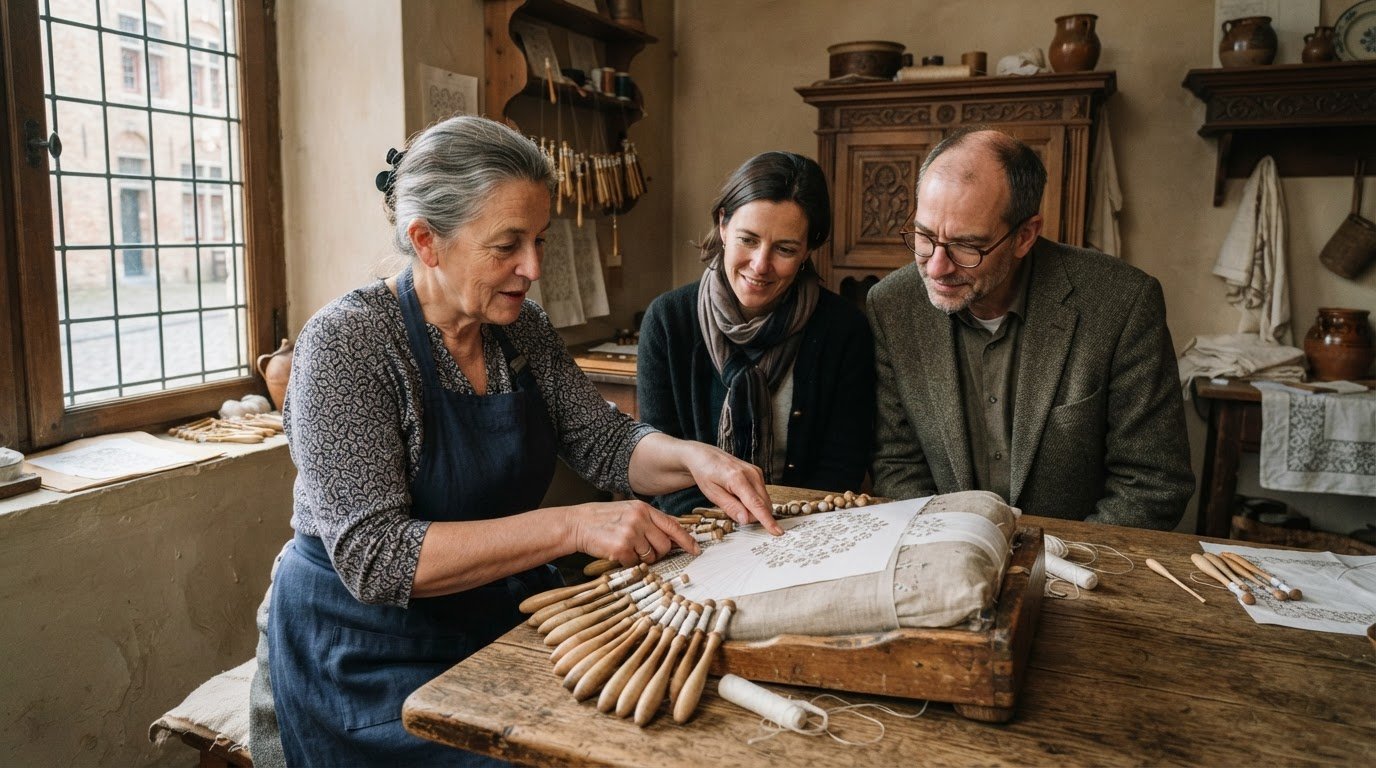
The most memorable travel moments aren’t always the grandest; they’re the ones that feel unmistakably personal. Creating unforgettable client travel moments means building an itinerary around what matters to each traveler, then adding thoughtful details, local encounters, and experiences that make the journey distinctive.
That personal touch begins with listening. A client drawn to art may value time with local culture; a food lover may remember a meal that reveals the character of a place. The aim isn’t to fill every hour with surprises, but to choose experiences that fit the traveler and give the trip a sense of meaning. In this guide, you’ll learn how to uncover client interests, suggest activities that bring a destination to life, arrange VIP or behind-the-scenes access, and create exclusive experiences through careful planning. Each detail can help turn a well-organized itinerary into a journey clients remember.
Key Takeaways
- Use conversations and client preferences to shape surprises that feel considered, not generic.
- Build local encounters into the itinerary to reveal a destination through its people, traditions, and everyday life.
- Make VIP access meaningful by connecting it to the client’s interests and the purpose of the trip.
- Coordinate accommodation, transport, and activities as one cohesive experience, so each detail supports the journey as a whole.
1. Personalising trips with interest-based surprises
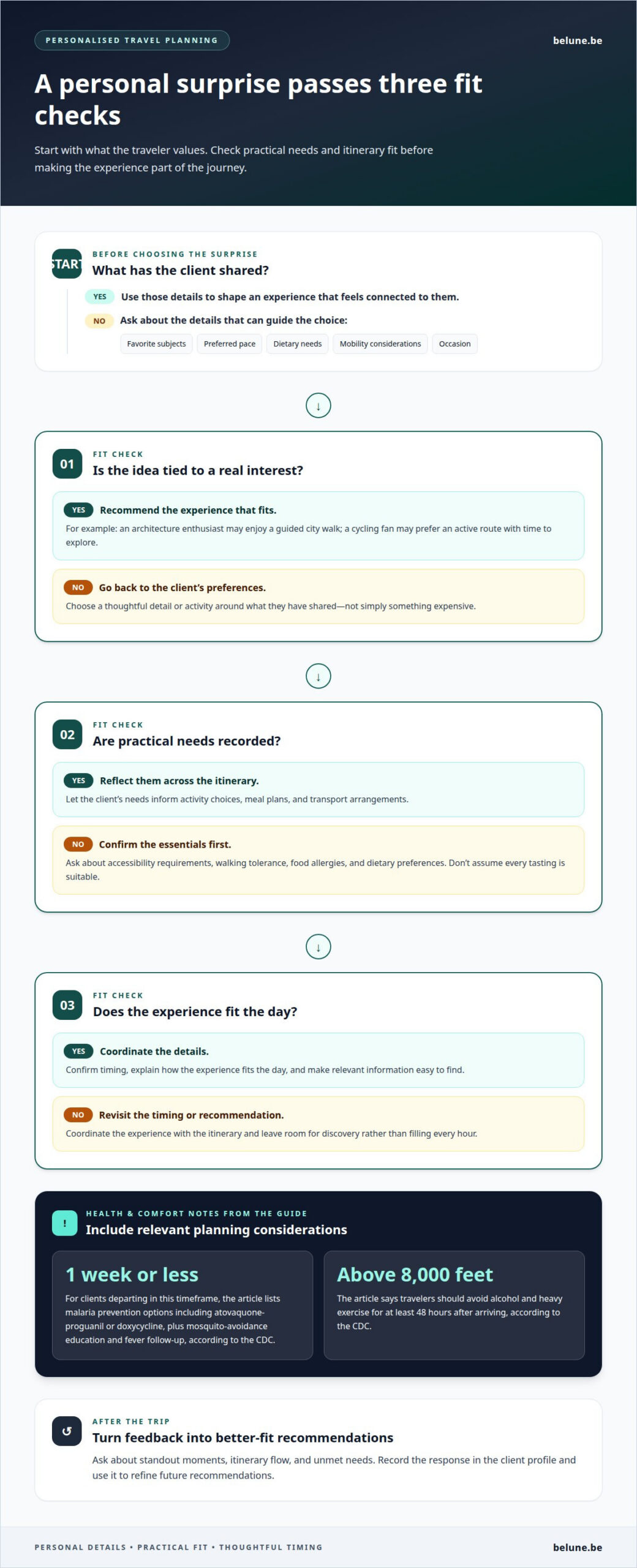
Creating unforgettable client travel moments starts with understanding each traveler. Ask about favorite subjects, preferred pace, dietary needs, mobility considerations, and the occasion behind the trip. Then shape recommendations around those details: an architecture enthusiast might enjoy a guided city walk, while a cycling fan may prefer an active route with time to explore.
Make each surprise feel connected to the traveler, not simply expensive. A local restaurant recommendation, a birthday note, or an activity chosen around a client’s interests can add a personal touch—such as booking time at a dedicated wellness and beauty space like New Shape Center by Bouchra for a traveler focused on self-care. For concierge-level service, coordinate the details with the itinerary: confirm timing, explain how the experience fits the day, and make relevant information easy to find. Surprises work best when they reflect what the client has shared and leave room for discovery.
Personalisation also means considering health and comfort. For clients departing in 1 week or less, malaria prevention options include atovaquone-proguanil or doxycycline, plus mosquito-avoidance education and fever follow-up, according to the Centers for Disease Control and Prevention. Travelers should avoid alcohol and heavy exercise for at least 48 hours after arriving above 8,000 feet, according to the Centers for Disease Control and Prevention (CDC).
Before finalizing recommendations, record practical needs alongside interests. Ask about accessibility requirements, walking tolerance, food allergies, and dietary preferences. Reflect them in activity choices, meal plans, and transport arrangements. For example, a food-focused itinerary should account for stated dietary restrictions rather than assume every tasting is suitable.
After the trip, send a brief follow-up and invite specific feedback about standout moments, itinerary flow, and unmet needs. Record the response in the client profile and use it to refine future recommendations. A thoughtful follow-up turns one journey into useful insight for the next tailored experience.
2. Recommending activities that immerse travelers in local culture
A destination feels more vivid when travelers experience its everyday rhythms, not just its landmarks. Pair a major attraction with a market, craft workshop, or walk through streets beyond the busiest visitor routes. These experiences give clients a chance to observe local routines and discover how food, work, and public life shape a place.
Choose activities to suit the group’s interests and comfort with unfamiliar settings. A cooking session can introduce regional ingredients through preparation and conversation; an art visit can show how local history influences an artist’s work. Encourage travelers to approach different traditions with curiosity, listen before making comparisons, and follow the host’s lead. This makes cultural exchange more thoughtful.
Local insight adds context that a booking description may not provide. Before an activity, explain what guests will do, who they will meet, and how the experience connects to the destination. A knowledgeable guide can share neighborhood stories, clarify customs, and suggest respectful ways to participate. Arranging local guide services can help groups engage with a place through informed, personal interpretation.
Offer practical cultural guidance before the visit. For a religious site, explain any stated expectations about clothing, quiet, or photography. For a market visit, tell travelers where the group will meet afterward and whether bargaining is part of the interaction. For a meal, introduce unfamiliar dishes and explain how guests can communicate dietary needs to the host.
Leave enough space in the schedule for genuine encounters. A short conversation with a craftsperson or time to sample a local specialty can matter more than rushing between stops. Art and culture group tours can bring these encounters together, while river cruises with local excursions offer another way to discover communities along the route. The best recommendations reflect the group’s interests and leave room to learn, notice, and participate.
3. Arranging VIP and behind-the-scenes access
VIP access feels meaningful when it brings a client closer to something they value. First identify the event, artist, team, or venue that gives the visit personal significance. A tennis enthusiast may appreciate a premium match-day experience, while an architecture lover may prefer access to a building’s public areas with expert context. Exclusivity should deepen the experience, not simply add a label.
Plan the details in sequence. Match the opportunity to the client’s interests and the trip’s purpose, then clarify what the access includes, such as a reserved area, guided visit, or conversation with a specialist. Share clear arrival instructions, meeting points, dress expectations, and any photography restrictions. A concise itinerary note helps clients understand what to expect without overwhelming the moment.
Behind-the-scenes experiences need careful coordination. For a sporting event, explain how the visit fits around the match and which parts of the venue the group will see. At a cultural institution, a curator-led conversation can reveal how an exhibition is assembled or interpreted. Don’t imply access to private spaces or people unless it is part of the arranged experience. Accuracy protects trust and helps clients appreciate what is genuinely distinctive.
Consider comfort and pace alongside exclusivity. A long event day may call for a quiet break before an evening reception; a walking tour may need an accessible route and a clear meeting point. Arranging premium private ground travel through providers like Luxor Transportation Hawaii can turn transit into a restful, seamless part of the day. Share relevant timing and transport details before departure, then leave room for clients to absorb the experience. If a preferred option doesn’t suit the itinerary, suggest a better-fitting alternative rather than adding an attraction for prestige alone. Thoughtful access is memorable when it feels relevant, clear, and well placed within the wider journey.
Arranging VIP or behind-the-scenes access to an event or restaurant can help travel agents make clients feel valued. Keep the gesture connected to the client’s interests, and explain clearly what has been arranged. Present access as a thoughtful part of the journey, not a promise of more than the arrangement provides. That keeps the focus on personal relevance and a trustworthy experience.
4. Creating exclusive travel experiences
Start with the trip’s central idea, then build a coherent sequence around it. Choose one memorable focal point, such as a specialist-led visit or a river excursion with a local perspective. Add details that help the day flow, including suitable transport, time to pause, and accommodation that complements the wider itinerary. Avoid adding activities simply to make the schedule look full.
Balance the budget by setting priorities. Ask which element matters most, then direct more of the available budget toward that centerpiece. Pair it with accessible ways to enrich the day, such as a self-guided neighborhood stroll or time at a public market. A thoughtful travel experience can feel personal through its pace and context, without a costly upgrade at every turn.
Disruptions call for calm decisions and clear communication. If weather affects an outdoor visit, explain the change promptly, adjust the order of activities, and preserve the trip’s main theme with an indoor alternative. If transport is delayed, share updated meeting details and, when practical, use the waiting time for a nearby cultural stop. Clients should understand what changed and what happens next.
For groups drawn to regional food and drink, a curated tasting can become the journey’s signature, especially when local stories give each stop context. A carefully coordinated itinerary connects that highlight with the rest of the day rather than treating it as an isolated booking. Plan a distinctive group travel experience around a clear theme, considered pacing, and details that make the whole journey feel cohesive.
BELUNE
BELUNE helps tour operators and travel agents turn thoughtful ideas into cohesive group journeys. When a trip needs more than a schedule of stops, coordinated accommodation, transport, and local guidance can bring its theme to life.
BELUNE’s Hotel Accommodation Management and coach hire with its own fleet of buses support the practical flow of a group itinerary. Local Guide Services and Art & Culture Group Tours add context and connection, helping travelers engage with the places they visit. Together, these services support a considered journey shaped around the group’s interests.
If you’re planning a group trip that needs personal details and coordinated logistics, contact BELUNE to discuss your itinerary.
Shape the next journey with intention
Turn what you’ve learned about a group into a clear creative direction. Decide what travelers should feel, discover, or remember, then let that intention guide the choices that follow. A coherent point of view gives each detail purpose and makes the journey feel considered rather than assembled.
Creating unforgettable client travel moments is a practice of attention: noticing what matters to people and translating it into experiences with a sense of place. For travel professionals planning a group itinerary, BELUNE can help bring that vision into focus and coordinate its practical elements. Contact BELUNE to plan client travel and begin shaping a journey that feels distinctive to the people taking it.
Start with one meaningful idea. Build from there with care, curiosity, and room for discovery.
Frequently Asked Questions
What makes a client travel experience unforgettable?
A travel experience becomes unforgettable when its details connect to the client’s purpose rather than forming a collection of unrelated highlights. A reunion trip, for instance, might center on a shared interest that gives the group a natural way to spend time together. Smooth transitions between activities matter too: a well-paced day lets travelers enjoy each moment instead of rushing to the next stop.
How can travel advisors personalize trips for clients?
Personalize the journey by shaping its overall rhythm as well as its activities. A client seeking restoration may value unstructured time between planned events, while a group celebrating a milestone may prefer shared experiences that bring everyone together. Present a few coherent itinerary options, explain the character of each, and adapt the chosen plan as the client clarifies what feels right.
What questions should you ask clients to understand their travel preferences?
Ask questions that reveal priorities without turning planning into an interview. What would make the trip feel worthwhile? Which past journey did the traveler enjoy most, and why? Do they prefer a clear schedule or flexible days? Ask what they want to avoid, such as early starts or crowded settings. The answers help distinguish essential preferences from optional details.