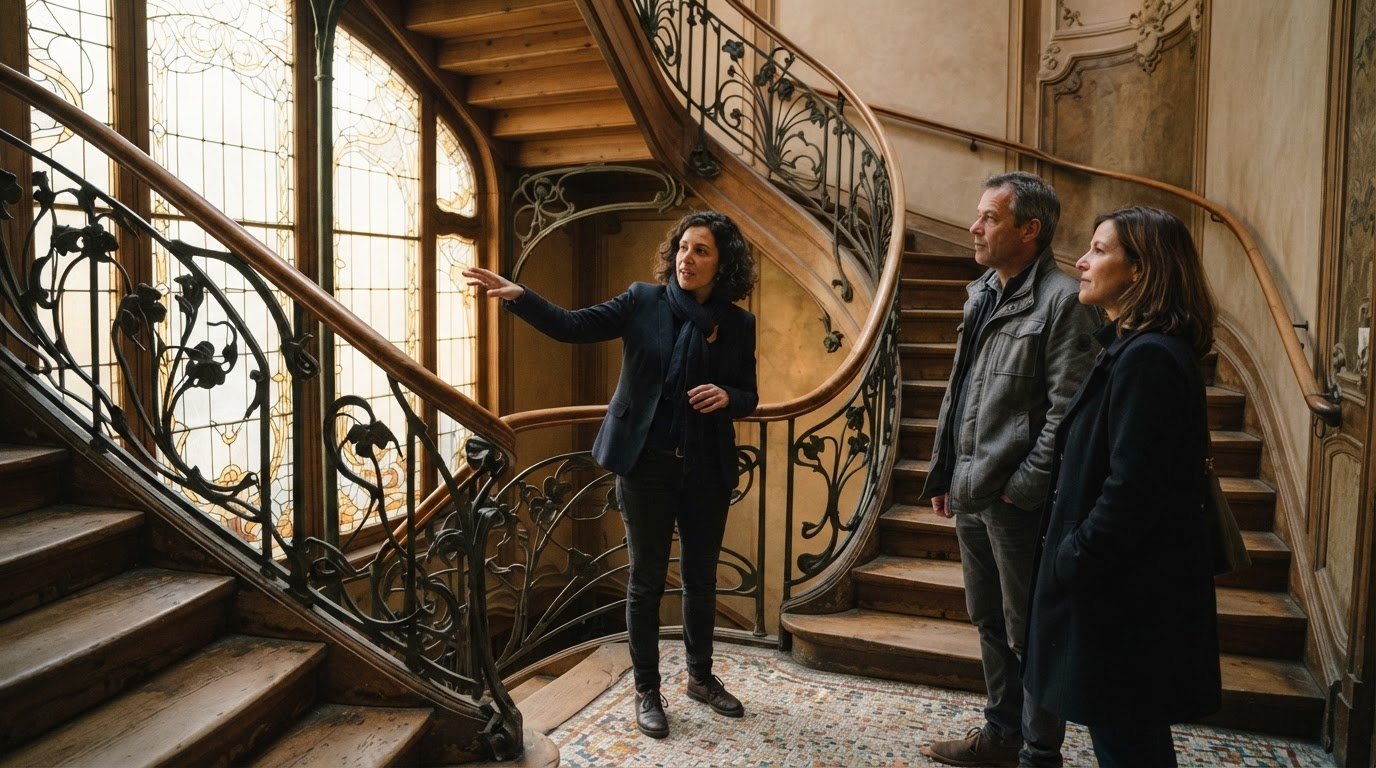
The strongest Benelux tour operator FAM trips have a clear purpose: exploring a destination, experiencing travel services, or assessing a theme such as art and culture, gastronomy, or battlefield heritage. A FAM trip is a professional familiarisation visit that helps travel professionals experience what they may later recommend to customers.
These are working visits, not simply hosted holidays. Depending on their purpose and host, they can combine site inspections, meetings, presentations, guided experiences, and time to record practical details.
This guide explains how destination-, supplier-, and theme-led trips differ, what professional participation involves, and what a familiarisation itinerary can look like. It also shows how a well-planned Benelux programme can help tour operators understand the region’s cultural character, logistics, and experiences.
Key Takeaways
- Distinguish supplier-hosted, agency, destination, cruise, and incentive FAM trips by their purpose and who organizes them.
- Prepare for a working itinerary that may combine inspections, presentations, meetings, and guided experiences, with professional conduct throughout.
- Use examples from previous trips to understand how varied a programme’s pace, themes, and destinations can be.
- Shape a tour-operator FAM around the experience you want to evaluate, from practical logistics to the stories and places that will resonate with future guests.
What is a FAM trip for travel agents?
A familiarisation, or FAM, trip lets travel agents experience destinations and travel services firsthand. Its format depends on who hosts it and what participants need to assess.
FAM Trip Types
Supplier-hosted FAMs introduce specific services, such as a hotel stay, guided tour, or cruise. Agency FAMs are organized around an agency’s training or product priorities. Destination FAMs bring travel professionals together to explore a place and meet local partners. Incentive FAMs link participation to a professional reward, while still needing a defined learning purpose.
Tour operators can focus on how experiences work together across an itinerary. Tourism boards tend to present a wider destination perspective and facilitate meetings with local partners. In Belgium, the Netherlands, and Luxembourg, destination meetings and networking can help agents understand how local experiences fit into a tour.
Supplier and destination FAMs can also focus on travel beyond the Benelux. A cruise-focused programme, for example, centres on the ship and related services; Nordic and Baltic itineraries can introduce different destination experiences. The right format depends on what participants need to evaluate and communicate to customers.
A destination management company (DMC) with group-travel experience across Belgium, the Netherlands, and Luxembourg can organize a regional FAM. Look for a programme that coordinates the destination experience, local partners, and practical details of the group itinerary.
Scheduling and Considerations
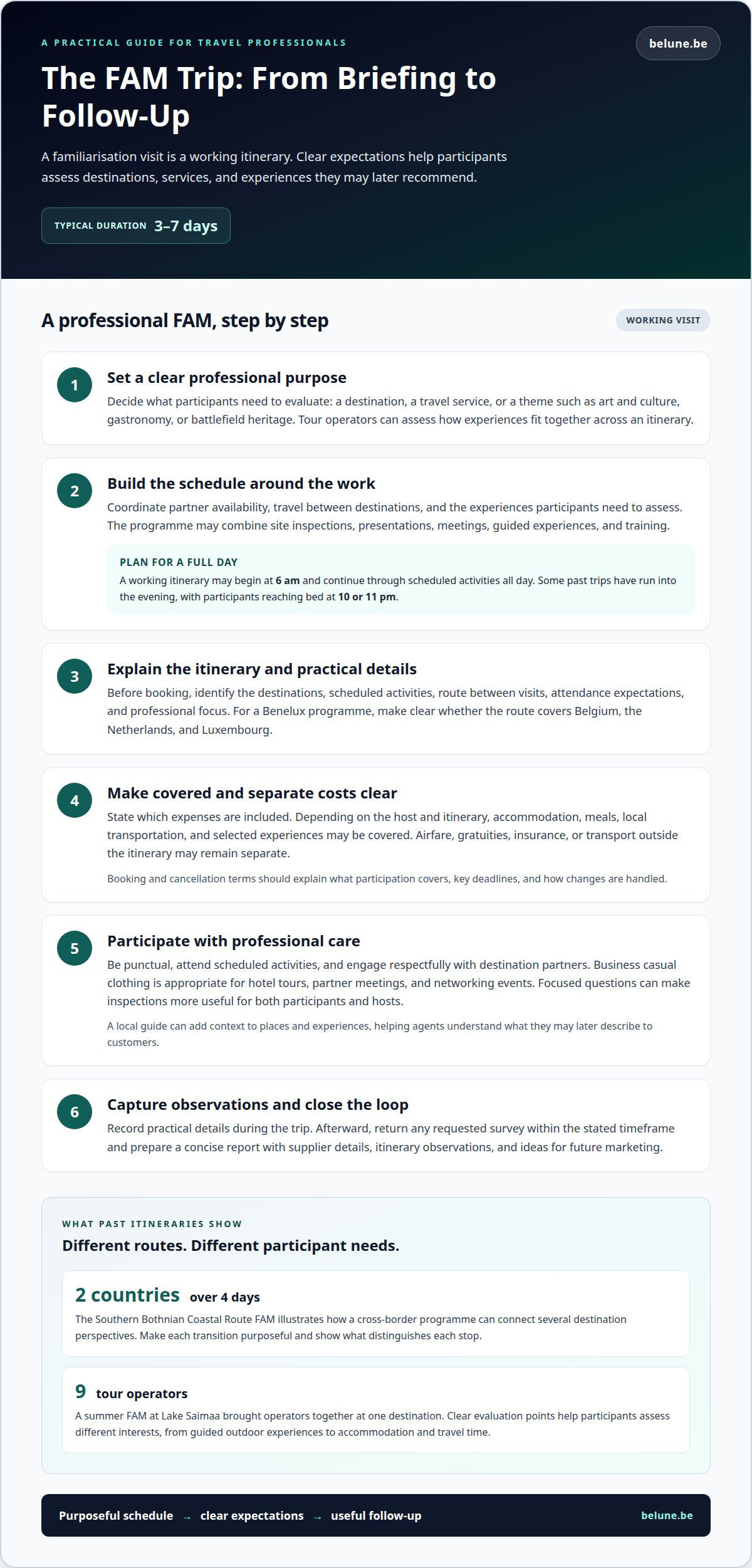
Most FAM trips last between three and seven days. A professional organizer sets the schedule around partner availability, travel between destinations, and the experiences participants need to assess. Applications can gather each participant’s role, business focus, relevant interests, and practical requirements.
Booking and cancellation terms should explain what participation covers, key deadlines, and how changes are handled. For U.S. tax purposes, the Internal Revenue Service says business travel expenses must be ordinary and necessary, not lavish, extravagant, or personal. Participants should distinguish professional activities from personal travel.
What should a professional FAM trip organizer communicate about etiquette?
Before booking, organizers should explain the itinerary, professional expectations, included expenses, and follow-up. Benelux FAM trips can cover Belgium, the Netherlands, and Luxembourg, with routes shaped around the destinations and experiences participants need to assess.
Activities and Itineraries
A working itinerary may begin at 6 am and continue through scheduled activities all day. Organizers should identify site inspections, presentations, meetings, and training sessions in the programme, so each travel agent understands the trip’s professional focus. Business casual clothing is appropriate for hotel tours, partner meetings, and networking events.
For a Benelux route, communicate which destinations the itinerary covers and how participants move between scheduled visits. A local guide can add context to places and experiences, helping agents understand what they may later describe to customers. A local guide service can support this kind of destination-led experience.
Costs and Included Expenses
State clearly which expenses the programme covers. Inclusions depend on the host and itinerary: accommodation, meals, local transportation, and selected experiences may be covered, while airfare or other costs may be separate. Gratuities, insurance, or transport outside the itinerary can also remain separate expenses. Participants should review the programme details to understand its scope.
Professional etiquette extends beyond the itinerary. Organizers should explain attendance expectations, punctuality, and how participants can engage respectfully with destination partners. A focused question during a hotel inspection or partner meeting can make the visit more useful for both the travel agent and host.
After the trip, organizers can request a survey and set a submission deadline. Travel agents should return any requested post-trip survey within the stated timeframe. A concise report can capture supplier details, itinerary observations, and ideas for future marketing. Keeping participation records and trip materials together also makes follow-up with destination partners more coherent.
Stories from previous familiarization trips
Past FAM itineraries show how distinct the professional experience can be. Some working trips run from early starts to late evenings, with participants not reaching bed until 10 or 11 pm. That pace leaves limited room for unstructured time. It also makes a clear itinerary valuable: agents can understand when they will inspect properties, join guided experiences, and record details for future clients.
The Southern Bothnian Coastal Route FAM trip covered two countries over four days. It shows how a cross-border programme can bring several destination perspectives into one itinerary. The practical lesson for organizers is to make every transition purposeful. Participants need to see how destinations connect, what distinguishes each stop, and which details matter when shaping a tour for customers.
A summer FAM trip to Lake Saimaa included nine tour operators. A group of operators can bring varied commercial interests to the same destination. One may focus on guided outdoor experiences; another may assess accommodation or how activities fit with travel time. Organizers can make visits more useful by giving each experience clear evaluation points, rather than treating every stop as a showcase.
Together, these examples offer two planning lenses: route design and participant focus. The Bothnian trip highlights travel across two countries, while Lake Saimaa illustrates a shared destination experience for nine operators. For future Benelux itineraries, organizers can connect places around a coherent theme, such as cultural heritage or gastronomy, while allowing enough time to take in each visit. A detailed programme helps participants return with concrete observations about experiences, properties, and the destination’s character.
FAM trips for tour operators
A tour operator’s FAM trip should test a potential itinerary, not simply showcase individual attractions. For Benelux tour operator FAM trips, the organizer can connect historic sites, cultural visits, and regional food experiences around one clear travel theme. Each stop should help participants judge how a place fits their customers’ interests, pace, and expectations. That is more useful than a collection of unrelated visits.
Start with the product decision the tour operator needs to make. Is the goal to assess a battlefield itinerary, compare art and culture experiences, or explore gastronomy across destinations? The answer guides which partners to meet and what participants should observe. For example, a cultural route can pair a guided visit with time to consider how the experience works within a group itinerary.
Next, design the route around practical connections between places. Consider travel time, the order of visits, and whether each stop adds a distinct perspective. A programme spanning Belgium, the Netherlands, and Luxembourg should make regional connections clear, rather than treating each destination as an isolated stop. Participants can then assess the itinerary as a complete product, including its theme, transitions, and range of experiences.
Define the evaluation focus before invitations go out. A tour operator assessing a heritage itinerary may prioritize interpretation and visitor flow; one exploring gastronomy may focus on how food experiences complement the route. Briefing participants on these priorities keeps meetings with local partners relevant. Their observations can then inform which places merit further product development and how to present the itinerary to customers.
Well-designed Benelux tour operator FAM trips begin with a clear product question and a coherent route. To develop a programme around your tour concept, discuss a tailored group travel programme focused on the destinations and experiences your team wants to assess.
BELUNE: Battlefield Tourism
BELUNE can help tour operators shape a battlefield FAM trip into a coherent, professionally managed group itinerary. Turn to BELUNE when your team wants to assess how historic sites, guided interpretation, and regional travel can work together in a future tour.
Battlefield Tourism provides the thematic focus, while Local Guide Services bring context to the places visited. Hotel Accommodation Management and Coach Hire with BELUNE’s own fleet of buses support the group’s accommodation and transport arrangements. Together, these services help operators evaluate the experience as a complete itinerary rather than as separate site visits.
If you’re developing a battlefield-focused FAM trip in the Benelux, contact BELUNE to discuss your group’s travel concept.
Turn Destination Insight Into Your Next Itinerary
For tour operators planning Benelux FAM trips, the lasting value comes after the visits: deciding which experiences belong in a product, who it is for, and what makes it distinctive. Treat each observation as a design choice. A memorable place can shape the itinerary’s theme; a strong local story can give future guests a more meaningful connection to it.
Before developing the next programme, identify the experience participants should evaluate and the decisions their feedback should inform. That gives the trip direction while leaving room for each destination’s character to emerge. The result can be an intentional itinerary, not just a sequence of stops.
If you’re ready to develop a FAM trip around your tour concept, contact BELUNE about FAM trips. Take the next step with a clear purpose and make the region’s character part of your next travel story.
Frequently Asked Questions
What are the different types of familiarization (FAM) trips?
FAM trips can be hosted by suppliers, travel agencies, destination organizations, cruise companies, or incentive programme organizers. Each format serves a different business purpose. For example, a tour operator assessing a heritage itinerary may benefit from a destination-focused visit, while a cruise-focused trip can help agents understand onboard and shore experiences. Choose the format that matches the products participants need to evaluate.
How long do Fam trips usually last?
Most FAM trips last between three and seven days. Benelux tour operator FAM trips can use that span to focus on one destination or connect several places. The itinerary’s reach and purpose shape the schedule, including travel between stops and time for partner visits. A clear programme also helps participants plan professional commitments around the trip and understand its pace before they join.
How much does a Fam trip cost?
There is no standard FAM trip cost. The amount depends on the itinerary and what the programme includes, such as accommodation, local transport, meals, and activities. Hosts may cover selected expenses, while airfare or other items may remain separate. For a tailored Benelux programme, BELUNE can prepare a quote based on the itinerary and included logistics.
What happens during a Fam trip?
Participants experience a destination as travel professionals, assessing whether its services and activities suit future customers. A visit might involve inspecting a property, meeting local partners, or joining a guided cultural experience. Agents can note practical details, such as the character of a visit and how it fits a tour theme. Those observations can inform product planning and customer recommendations after the trip.
What is included?
Inclusions vary by host and itinerary, so programme details should distinguish covered items from separate expenses. Accommodation, local transportation, meals, and selected experiences may be part of a FAM trip. Airfare is often separate, and gratuities, insurance, or transport beyond scheduled activities can add costs. Clear inclusion notes give participants a practical view of the trip’s scope before they commit.
Who can join?
FAM trips are intended for travel advisors and other travel industry professionals who can use firsthand knowledge in their work. Hosts may consider an applicant’s booking history, sales volume, and interest in the featured travel type. For example, an advisor developing cultural tours may suit a heritage-focused programme. The host sets the selection criteria and application process for each trip.