Tag: Bruges

  • The Definitive Bruges and Ghent Group Tour: A Cultural Itinerary for 2026

    The Definitive Bruges and Ghent Group Tour: A Cultural Itinerary for 2026

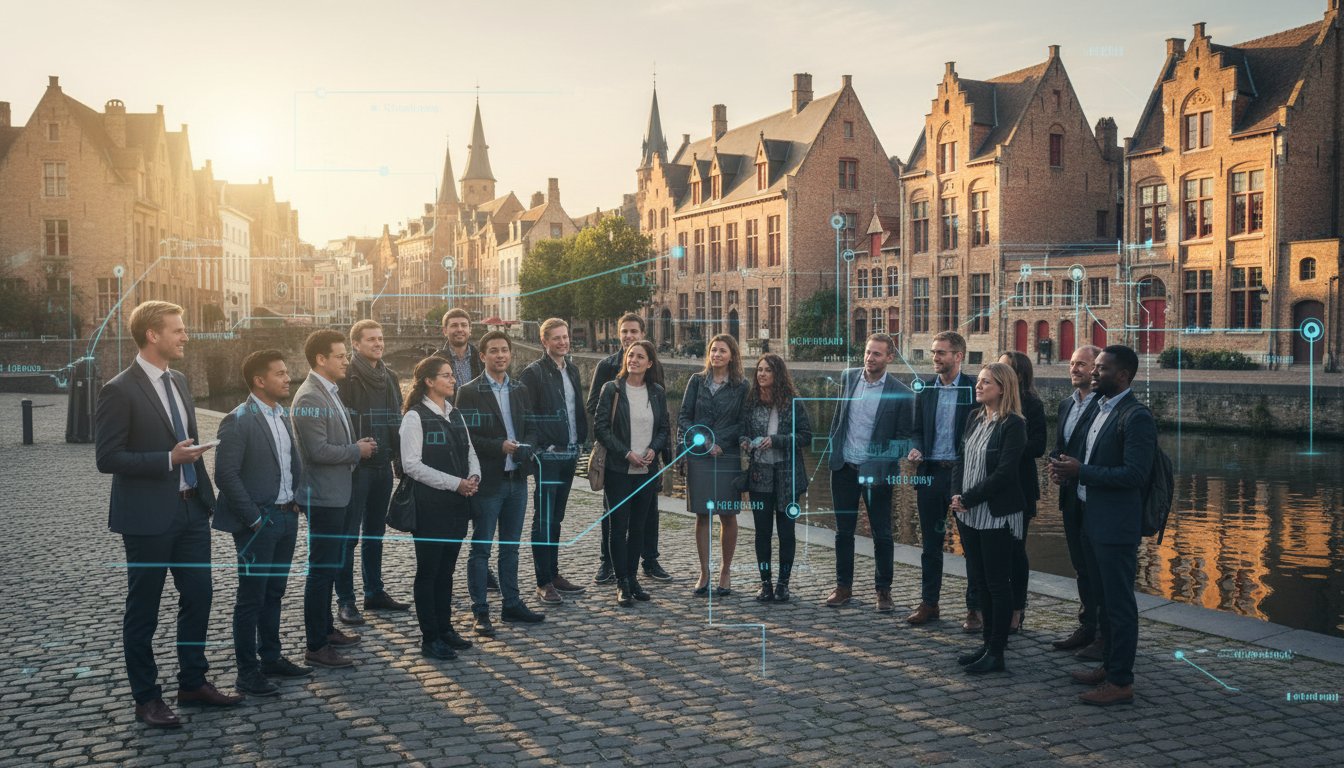
    What if the true luxury of a Flemish journey lies not in the monuments themselves, but in the invisible harmony of the movement between them? Planning a **bruges and ghent group tour** for 2026 requires more than a simple map; it demands an architectural approach to time and space. You already know that the narrow, 13th-century streets of Bruges weren’t designed for modern group dynamics. A single 12-meter coach can turn a poetic morning into a logistical bottleneck if the route isn’t mastered with surgical precision.

    We’ll show you how to transform these challenges into a sublime, high-end experience. By integrating expert logistical insights and premium transport, you’ll learn to navigate the 52 kilometers between these iconic cities with effortless elegance. This guide reveals how to secure bespoke dining for 30 guests in historic venues that usually favor the few, ensuring every moment feels personal. We’ll preview a balanced 2026 cultural schedule that honors the heritage of Flanders while providing the rigorous technical support your professional partners expect.

    Key Takeaways

    • Master the art of curating a cultural narrative that blends UNESCO heritage with rare masterpieces like Van Eyck’s Mystic Lamb and Michelangelo’s marble.
    • Optimize your bruges and ghent group tour by navigating complex coach exclusion zones and securing multi-lingual guides with deep regional expertise.
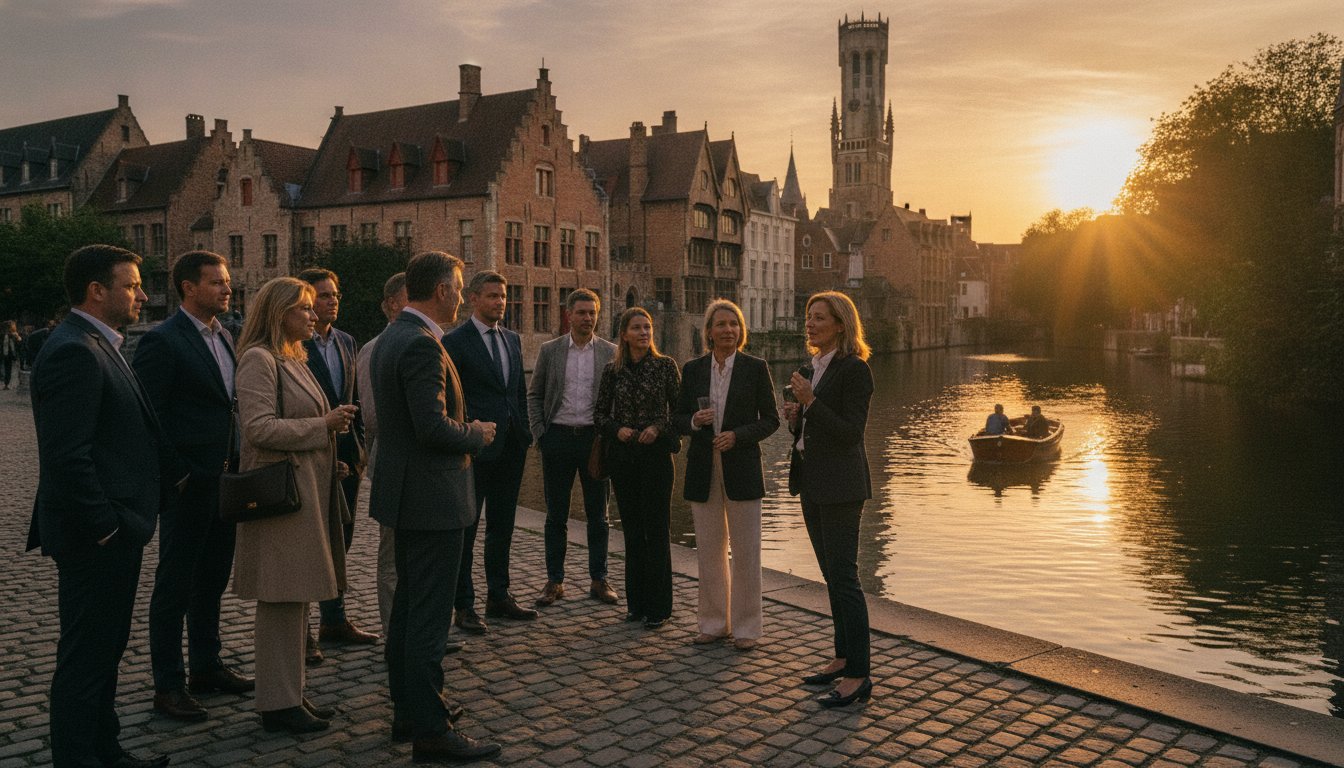
    • Evaluate the strategic advantages of an overnight stay to capture the “Blue Hour” and offer your clients a more intimate, sophisticated experience.
    • Discover how to harmonize technical logistical precision with the emotional resonance of Flemish heritage to create a bespoke group journey for the 2026 season.

    The Allure of Flanders: Why a Bruges and Ghent Group Tour is Essential

    Flanders serves as a living canvas where 14th-century commerce meets 21st-century artistry. A bruges and ghent group tour isn’t merely a sightseeing trip; it’s a strategic immersion into the golden age of Flemish trade. These cities aren’t replicas. They’re original masterpieces. In 2000, UNESCO recognized the historic center of Bruges for its outstanding universal value, cementing its status as Europe’s most preserved medieval center. This preservation offers tour operators a high-impact cultural day that balances the stillness of a museum with the pulse of modern life.

    Historical layers here run deeper than a simple fairytale label. The narrative follows the silting of the Zwin estuary in the 12th century, an event that dictated the economic rise and fall of the region. By 1350, Bruges was the most important commercial hub in Northwestern Europe. Today, this legacy translates into a seamless journey for groups seeking both depth and beauty. We see the Lys river not just as water, but as the artery that fueled Ghent’s textile dominance for centuries.

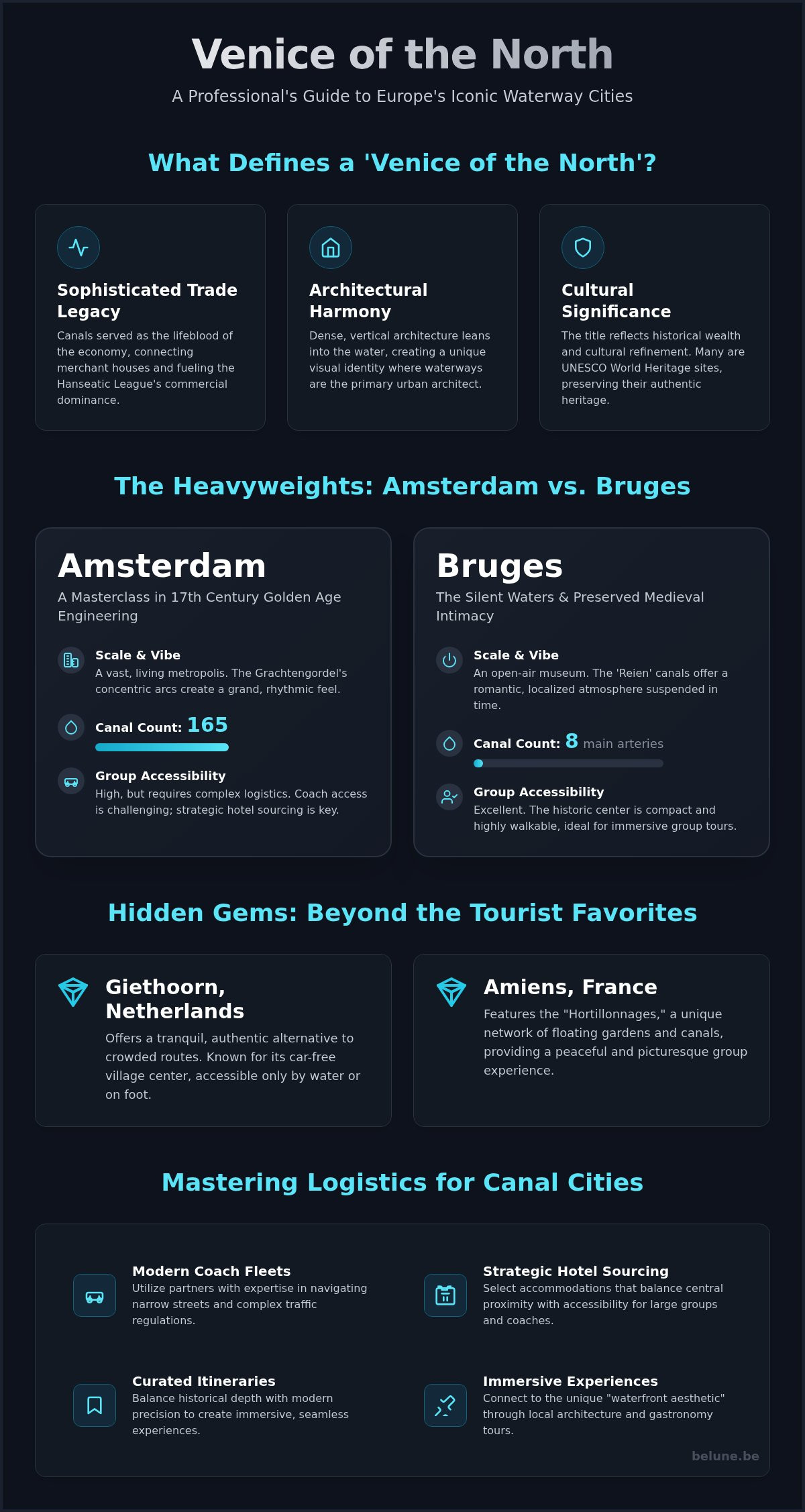
    Bruges: The Venice of the North

    The 13th-century urban fabric remains remarkably intact. We begin at Minnewater, the Lake of Love. It’s a critical entry point for groups because it provides immediate spatial harmony and a calm transition into the city core. The 83-meter Belfry stands as a vertical anchor. It’s symbolized municipal independence since the 1240s. Its carillon of 47 bells still dictates the daily rhythm, offering a sensory connection to the past that few other cities can replicate.

    Ghent: The Vibrant Heart of Flemish Heritage

    Ghent offers a sharp, necessary contrast to Bruges’ stillness. It breathes. While Bruges feels like a preserved dream, Ghent is a living university city with a population of 260,000 people. The Graslei and Korenlei harbor fronts are widely considered the most beautiful in the Benelux region. They showcase a chronological evolution of architecture from the 12th to the 19th century, reflecting the city’s enduring wealth.

    The Gravensteen castle serves as the centerpiece of this urban landscape. Rebuilt in 1180 by Philip of Alsace, it remains a brutalist masterpiece of medieval power. A bruges and ghent group tour captures this duality between silent stone and vibrant community, providing a comprehensive vision of the Flemish soul that resonates with modern travelers and history enthusiasts alike.

    Masterpieces and Medievalism: Key Highlights for Cultural Groups

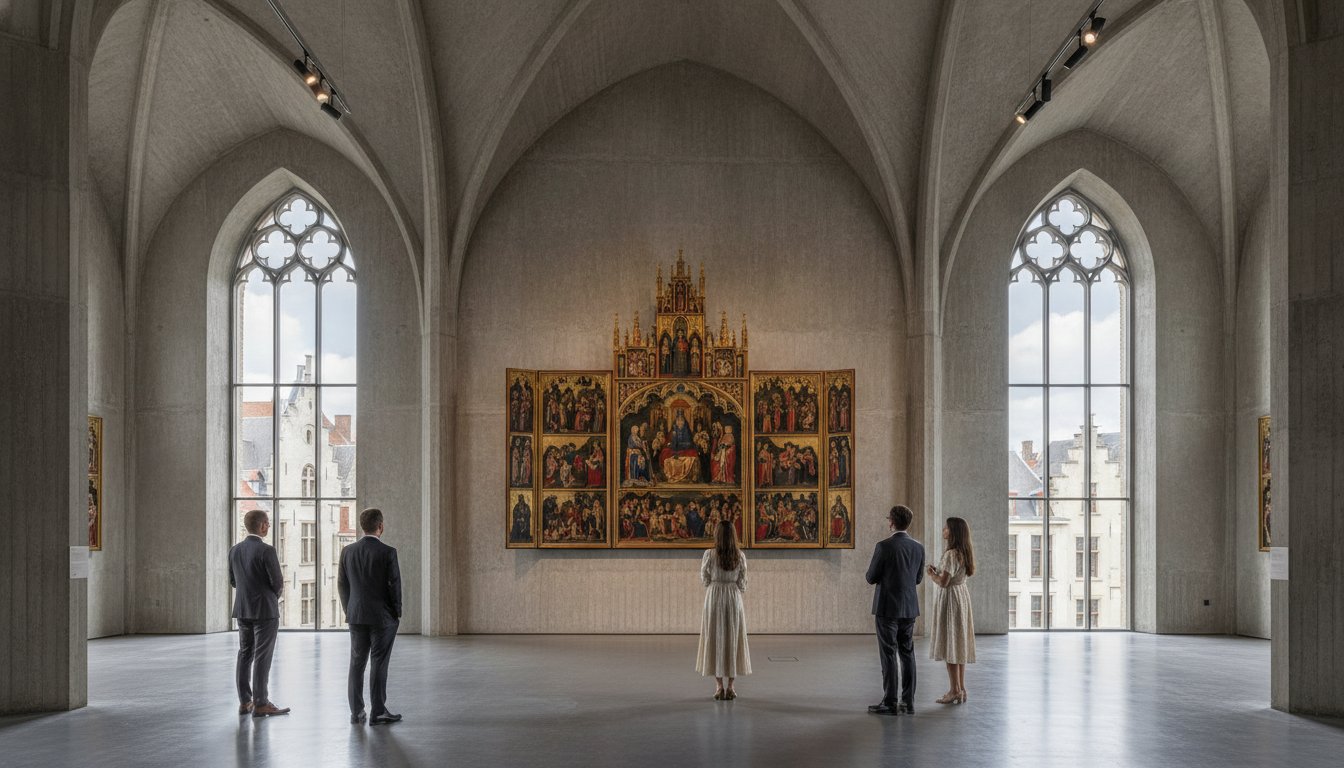
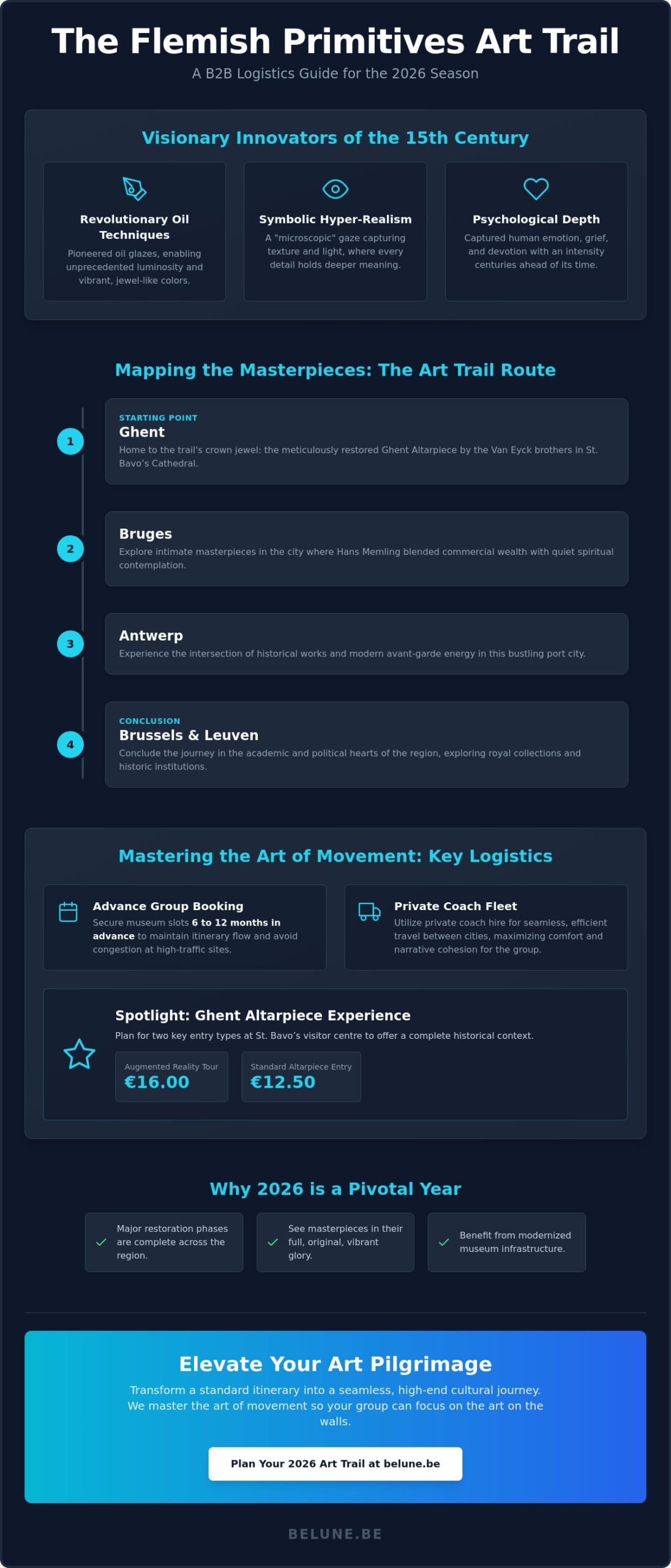
    The Flemish Primitives redefined Northern European art during the 15th century. Their mastery of oil glazes created a luminous depth that still resonates. A curated bruges and ghent group tour centers on this artistic legacy; it’s a journey through light and shadow. In Ghent, Jan van Eyck’s Adoration of the Mystic Lamb stands as the pinnacle of this era. Following a multi-million euro restoration completed in 2020, the 12 panels in St. Bavo’s Cathedral reveal a staggering level of detail. The vibrancy of the colors, preserved for over 500 years, offers a technical masterclass in pigment and perspective.

    In Bruges, the Church of Our Lady houses Michelangelo’s Madonna and Child. This white marble sculpture arrived in Flanders in 1504. It remains the only work by the master to leave Italy during his lifetime. Beyond the cathedrals, the Beguinages offer a study in architectural serenity. These white-washed enclaves, recognized by UNESCO in 1998, provided sanctuary for lay religious women. Their minimalist aesthetic provides a stark, beautiful contrast to the ornate Gothic facades found elsewhere.

    Spiritual and Artistic Landmarks

    St. Bavo’s Cathedral serves as a masterclass in architectural transition; its 10th-century Romanesque crypt supports a 16th-century Gothic choir. For groups visiting the Basilica of the Holy Blood, schedule arrivals before 11:00 AM to view the 12th-century relic with minimal crowds. The Memling Museum, located within the medieval St. John’s Hospital, showcases six masterpieces by Hans Memling. It’s a space where 15th-century healthcare and high art intersect. The museum’s layout allows for a fluid group flow, emphasizing the spiritual healing power of aesthetics.

    Sensory Experiences: Beer, Chocolate, and Canals

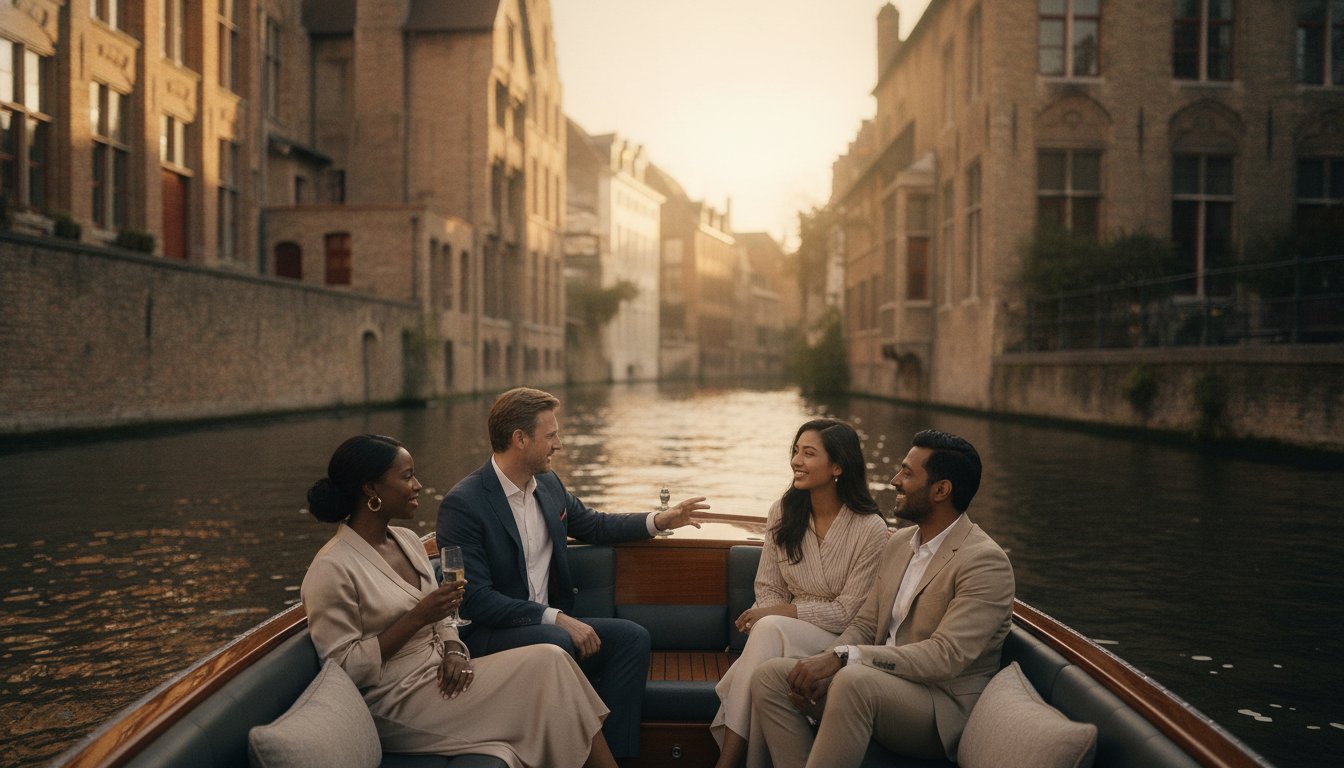
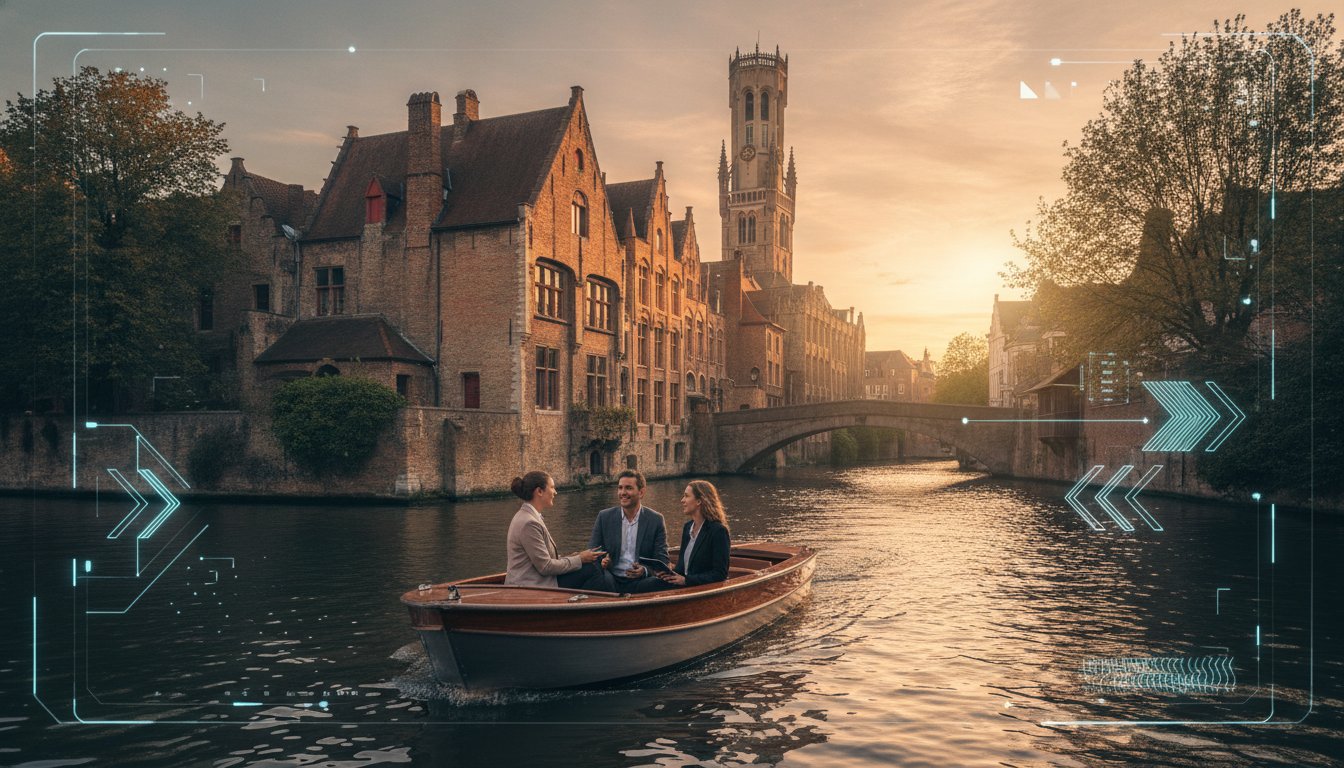
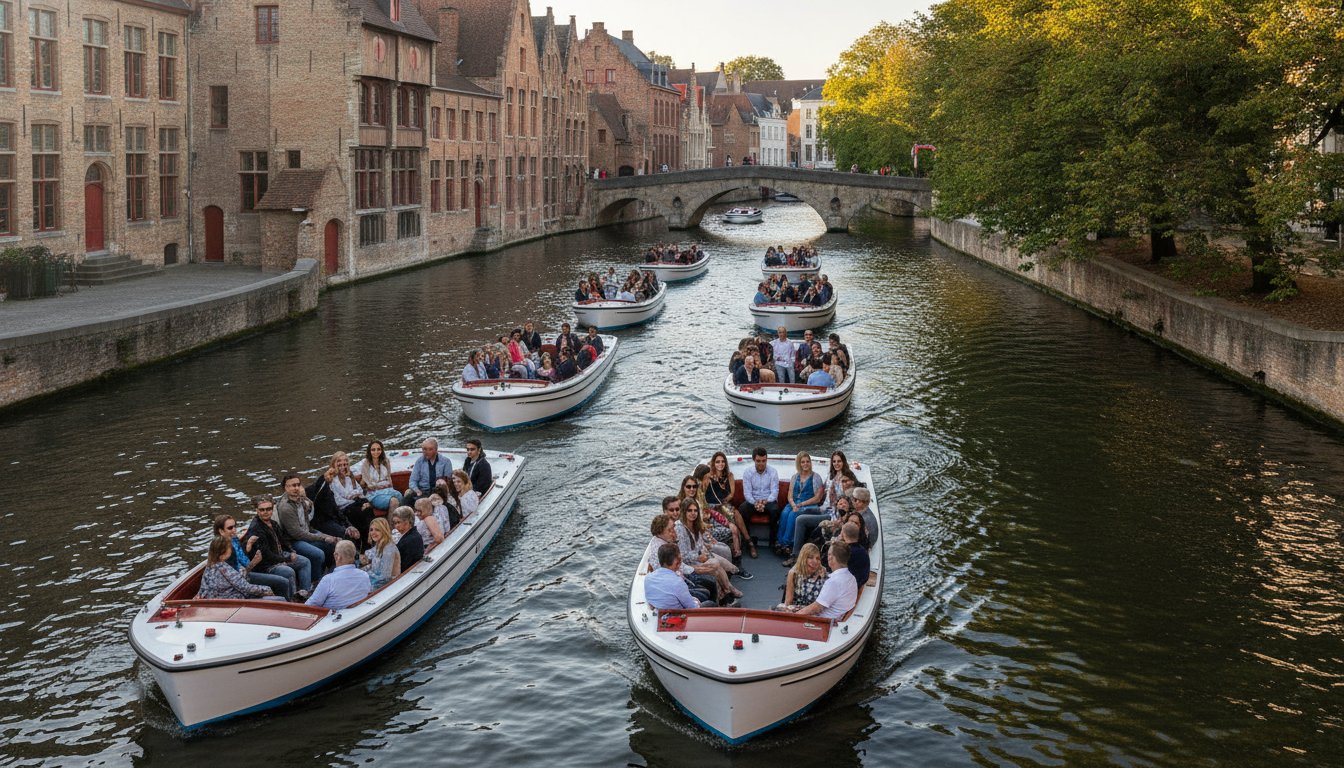
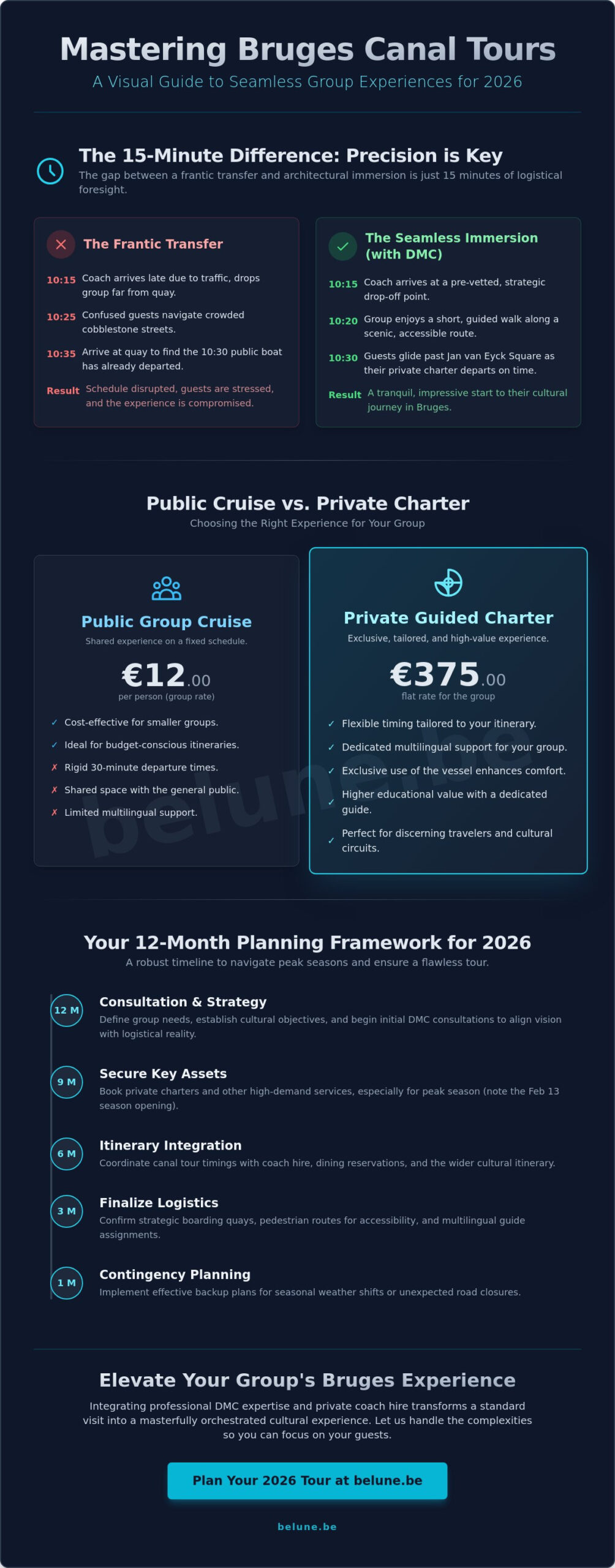
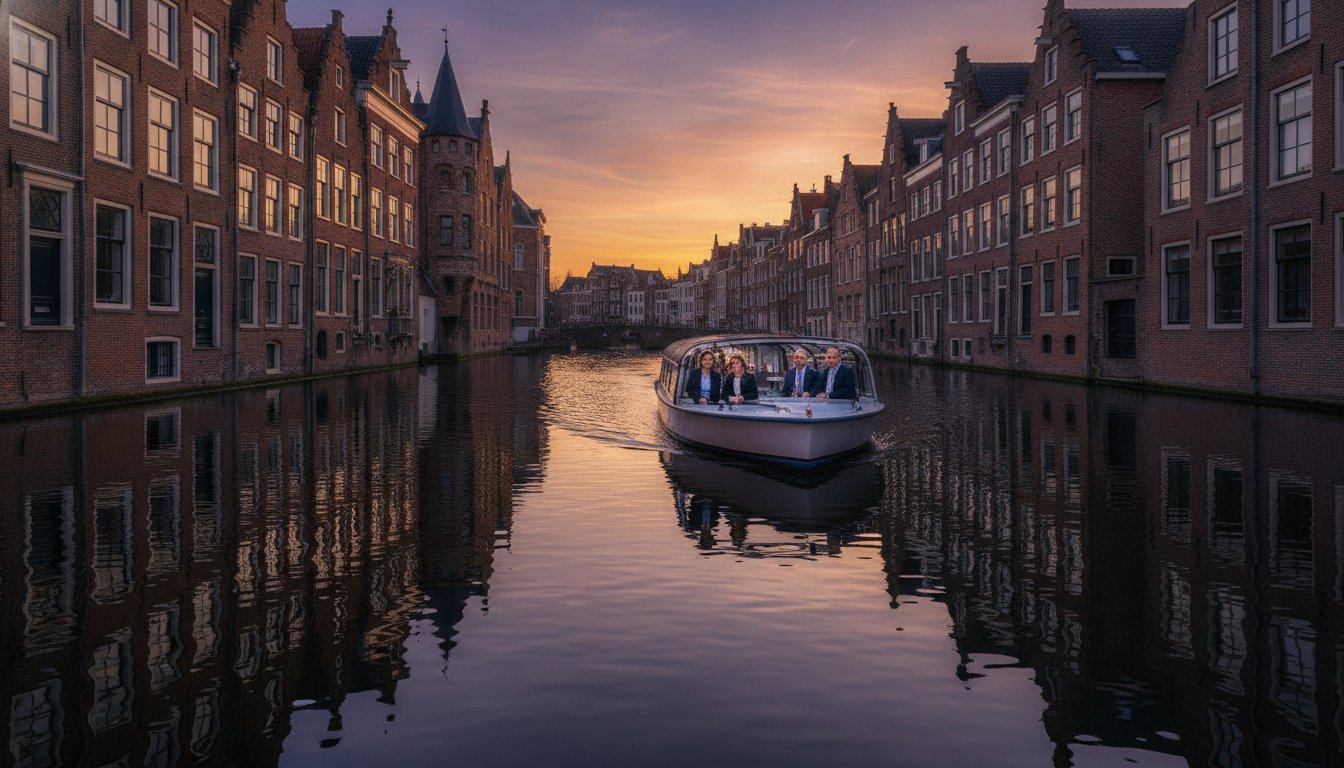
    A sophisticated bruges and ghent group tour balances visual art with tactile experiences. Private chocolate workshops can be arranged to focus on single-origin beans and artisanal tempering. At De Halve Maan brewery, groups explore the 3.2-kilometer underground beer pipeline installed in 2016. To maintain an exclusive atmosphere, we recommend booking private canal boats. This ensures your group experiences the “Venice of the North” without the noise of public excursions. Much like a well-designed interior, the right perspective sublimes the architectural harmony of the city.

    Day Trip vs. Overnight Stay: Analyzing the Best Group Strategy

    Designing the perfect bruges and ghent group tour requires a delicate balance between logistical efficiency and atmospheric depth. A 10-hour excursion from Brussels provides a high-impact snapshot. It captures the primary architectural highlights within a single sun cycle. However, the transition to an overnight stay introduces the “Blue Hour.” This is the precise moment when the 14th-century facades of Bruges are illuminated by 2,500 strategically placed LED fixtures. This shift transforms a simple visit into a sensory experience. Agents face a logistical puzzle; 78% of Bruges’ historical center accommodations are boutique properties with fewer than 40 rooms. For groups exceeding 50 guests, booking 14 months in advance is essential to secure a unified aesthetic and service level.

    The 10-Hour Intensive Itinerary

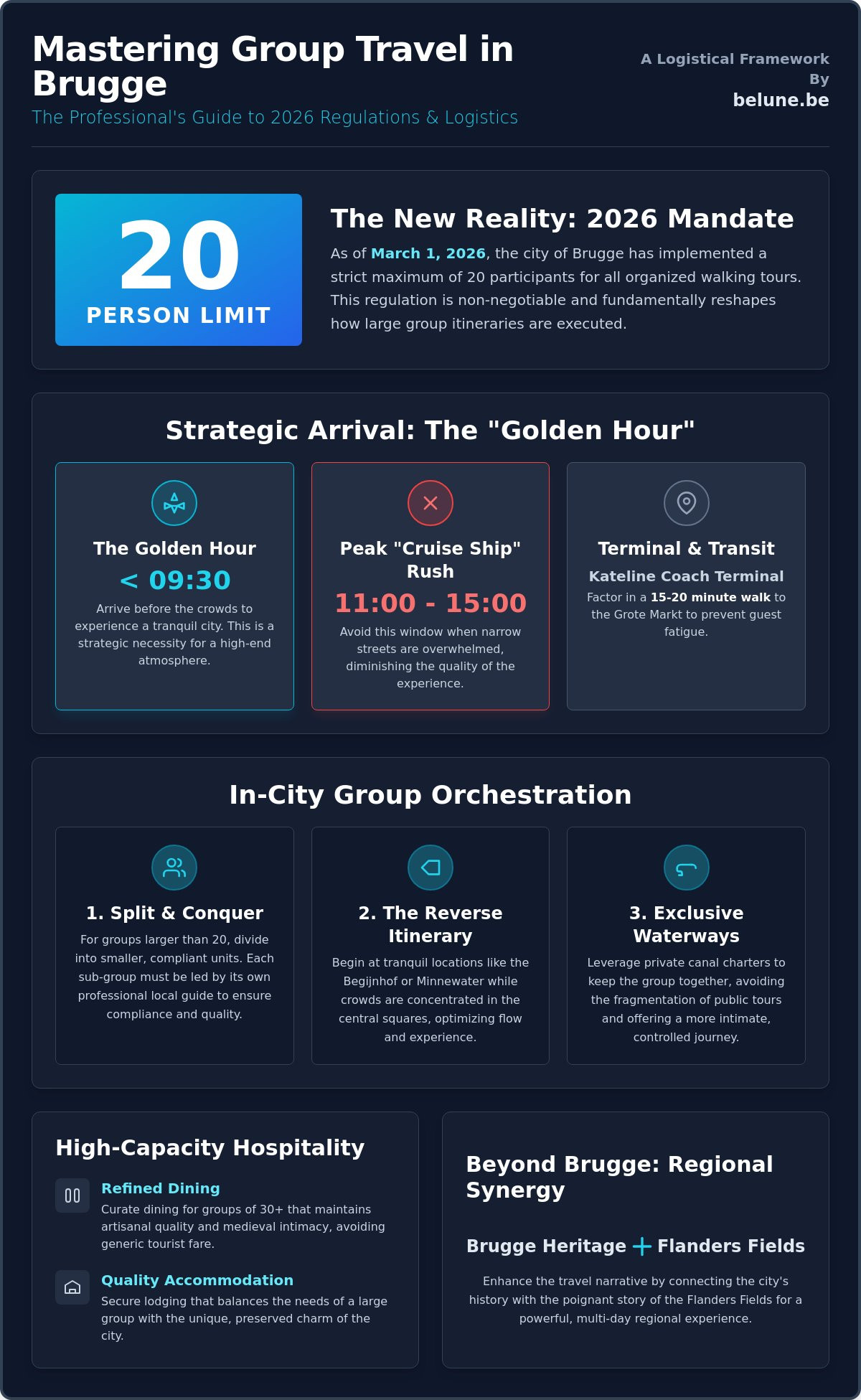
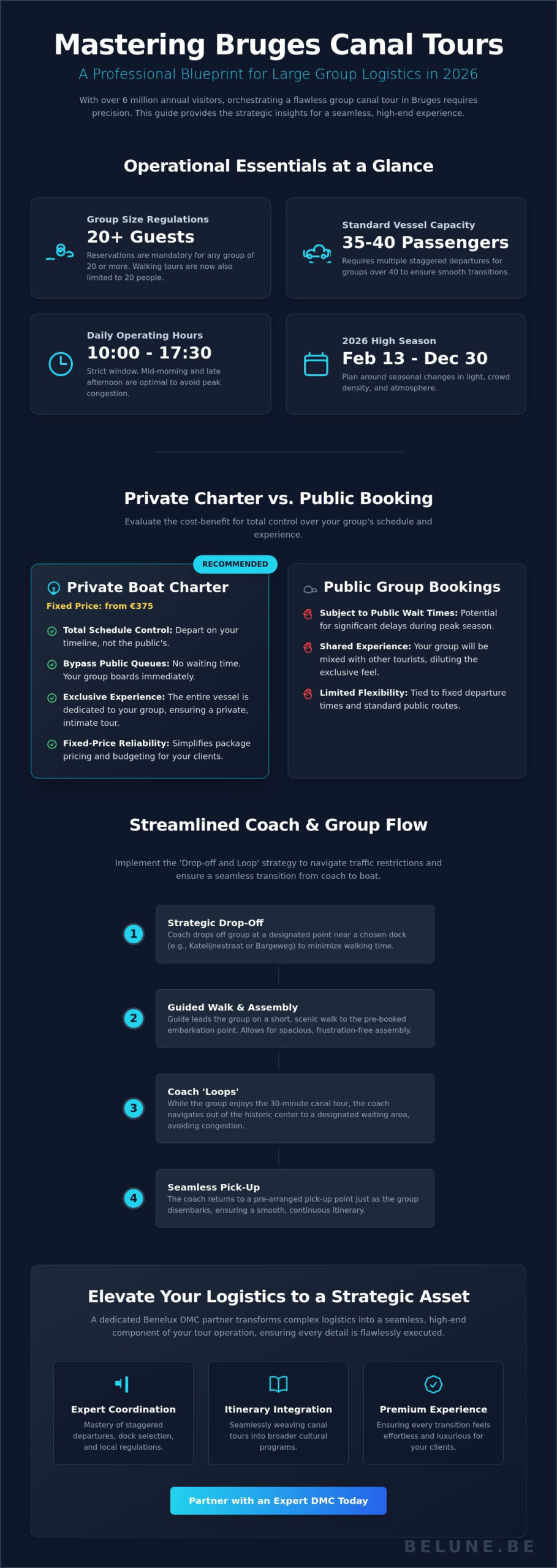
    Efficiency defines this path. Starting in Ghent at 9:00 AM allows groups to witness the morning light hitting the Saint Bavo Cathedral before the peak crowds arrive at 11:30 AM. This sequence works because Bruges reveals its most intimate shadows in the late afternoon. To combat group fatigue, we recommend coaches with 1.2 meters of legroom and a centralized drop-off at Bargeplein. This avoids the 20-minute walk from the main station, preserving energy for the Belfry climb. It’s a sprint, but a choreographed one.

    The 48-Hour Deep Immersion

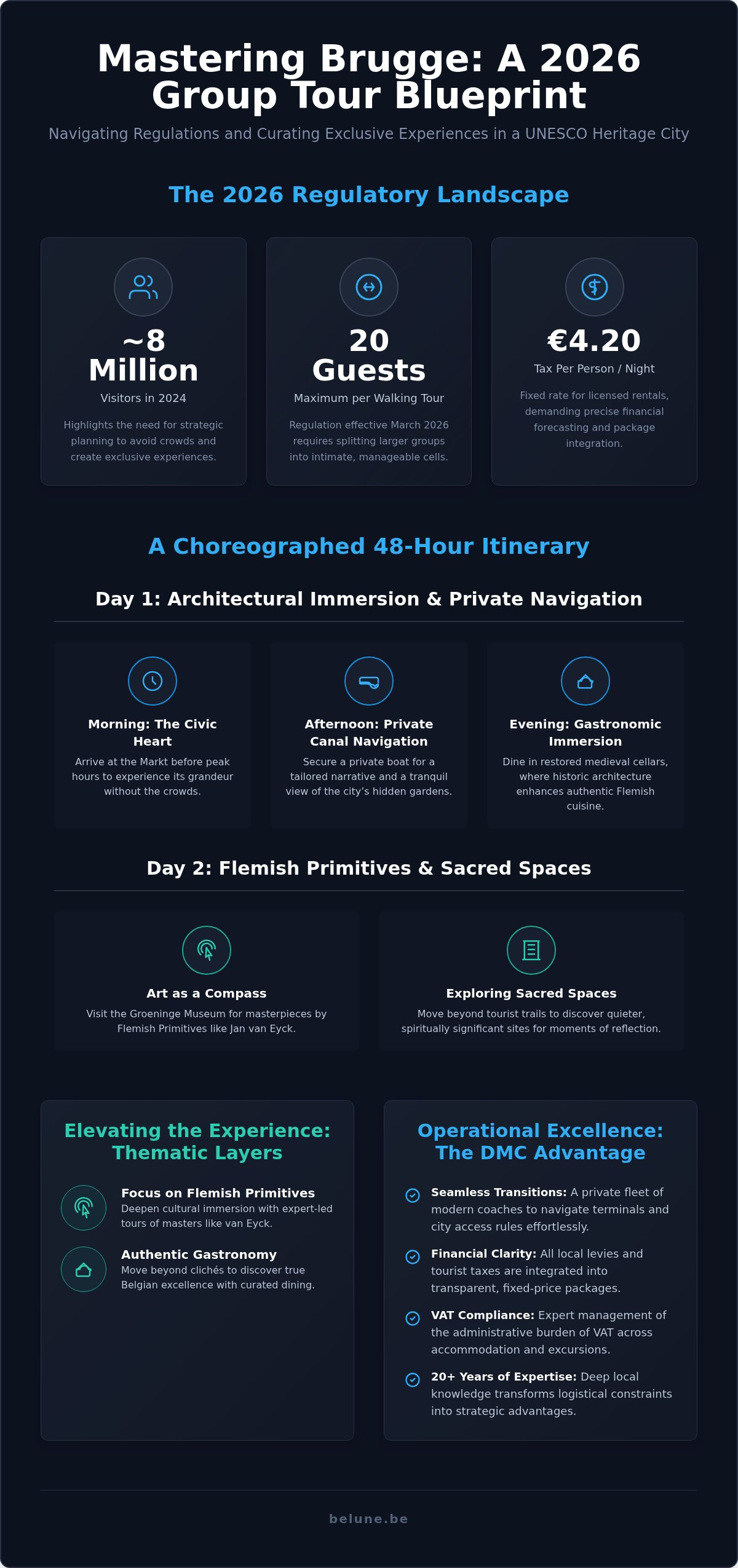
    Slow travel is a deliberate choice. It’s about appreciation. Day one focuses on Ghent’s industrial-chic transition, ending with a private canal-side dinner at the Graslei. On day two, the group wakes up in a quiet Bruges, experiencing the Markt before the 10:00 AM arrival of day-trippers. This strategy increases per-client revenue by 32% through premium evening tours and curated gastronomy. It allows us to treat light as a material, seeing how it sculpts the brickwork from dawn until the golden evening glow.

    • Revenue Growth: Upselling evening “Illumination Tours” adds 15% to the total booking value.
    • Logistical Trade-off: Overnight stays require luggage portage services for 100% of the group to navigate cobblestone streets.
    • Atmospheric Value: The bruges and ghent group tour becomes an emotional narrative rather than a checklist.

    Choosing between these strategies depends on the client’s desire for nuance. While the day trip offers a brilliant summary, the overnight stay provides a deep immersion into the harmony of Flemish history. We see light not just as a utility, but as the final layer of architectural storytelling.

    Designing the Perfect Itinerary: A Logistics Framework for Tour Operators

    Crafting a high-end bruges and ghent group tour requires a meticulous orchestration of movement and timing. It’s an exercise in technical precision. We view the itinerary as a structural blueprint where every transition must feel effortless for the traveler. To achieve this, tour operators must move beyond basic scheduling and embrace a framework rooted in local expertise and logistical mastery.

    Transport and Access Logistics

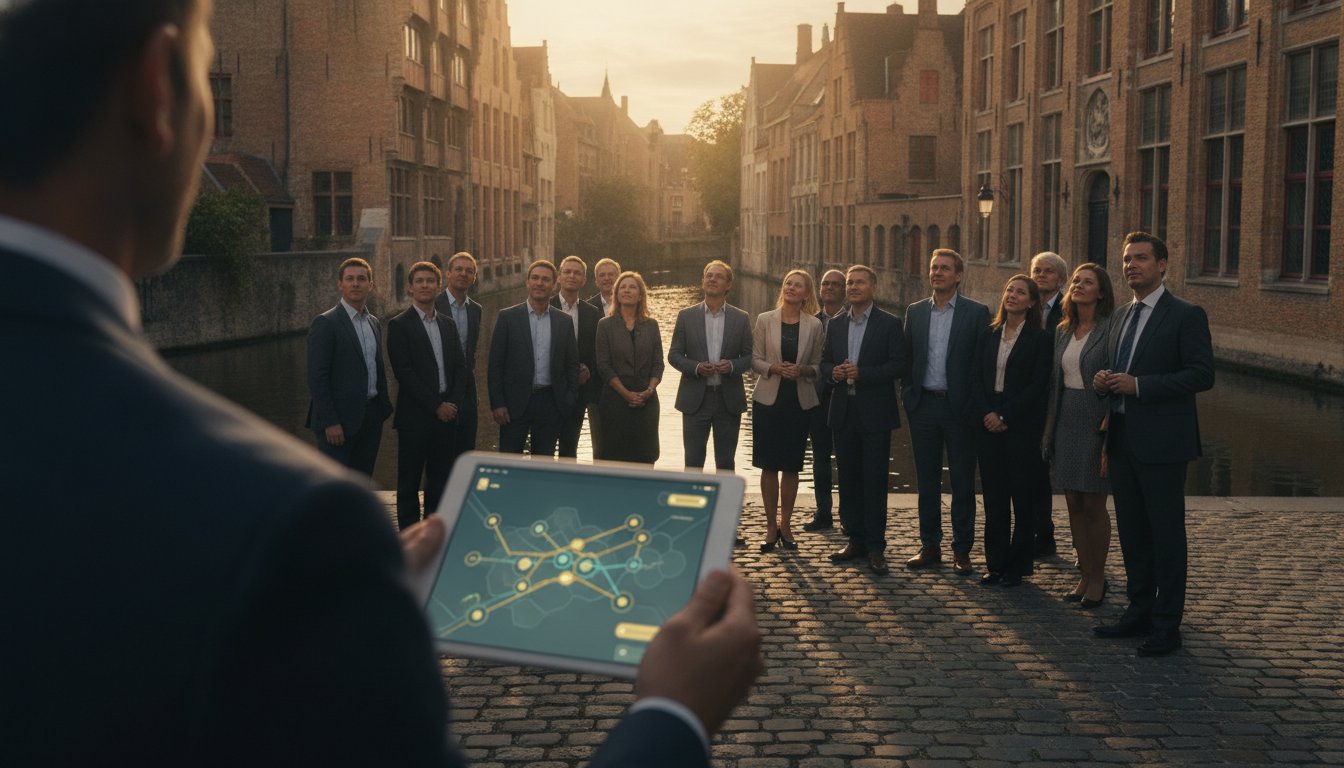
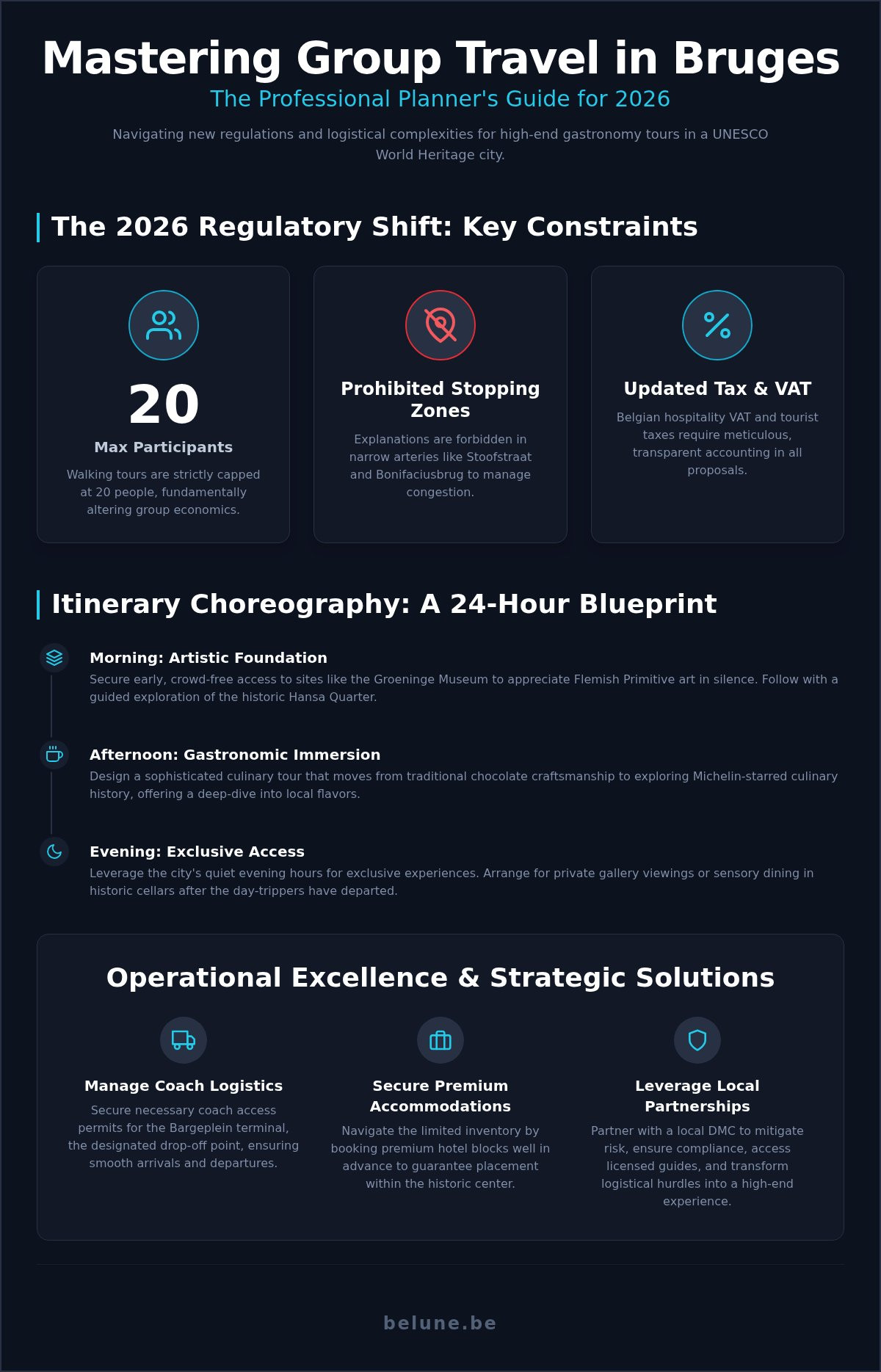
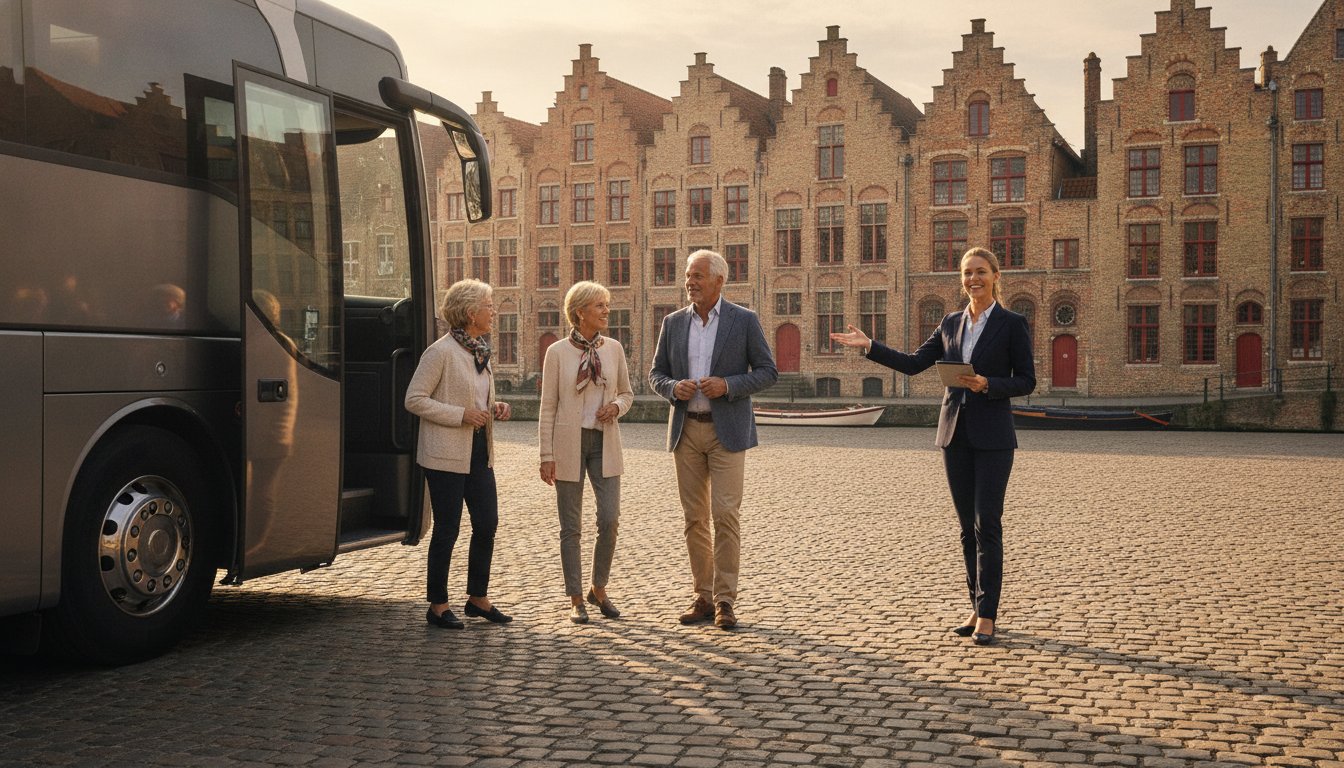
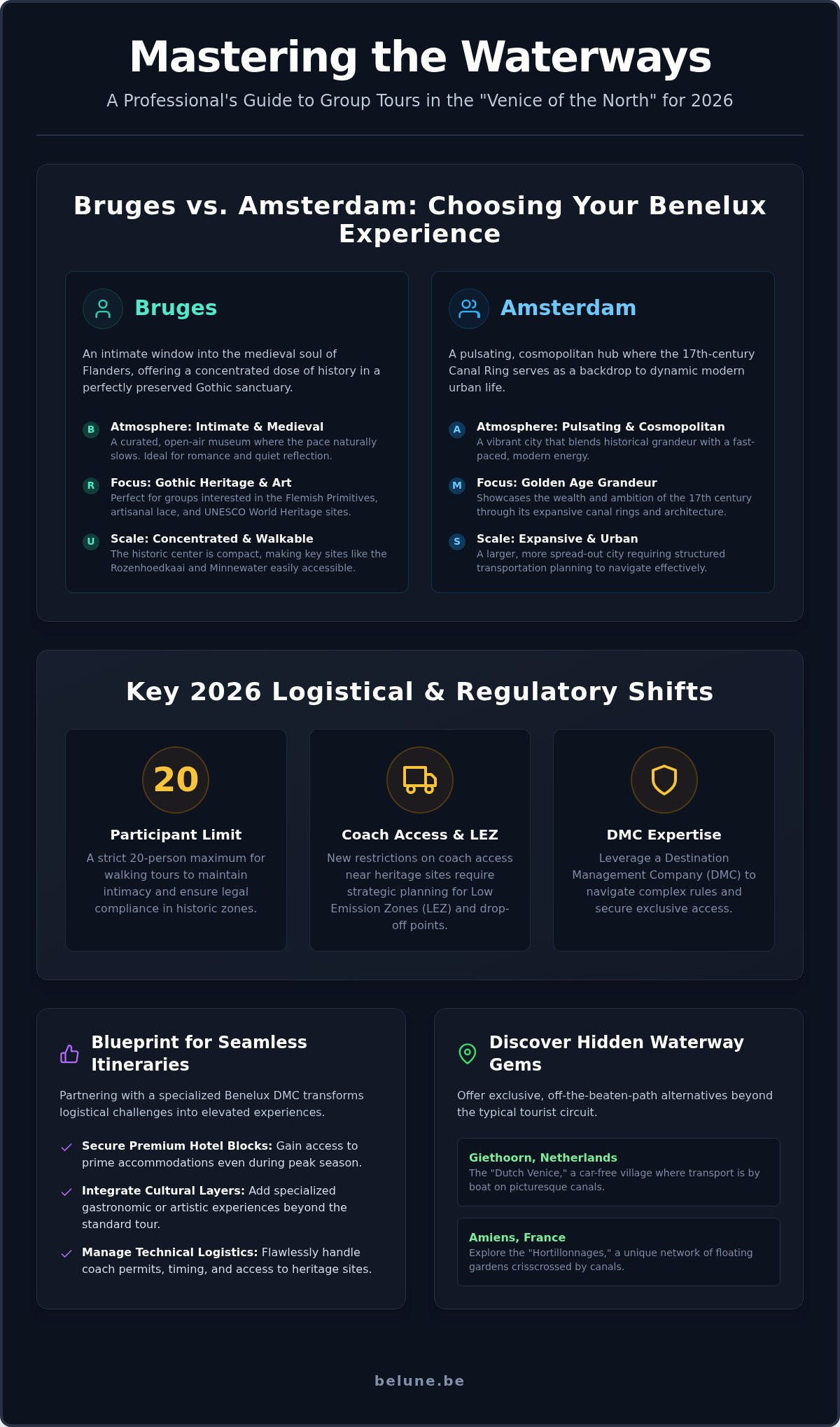
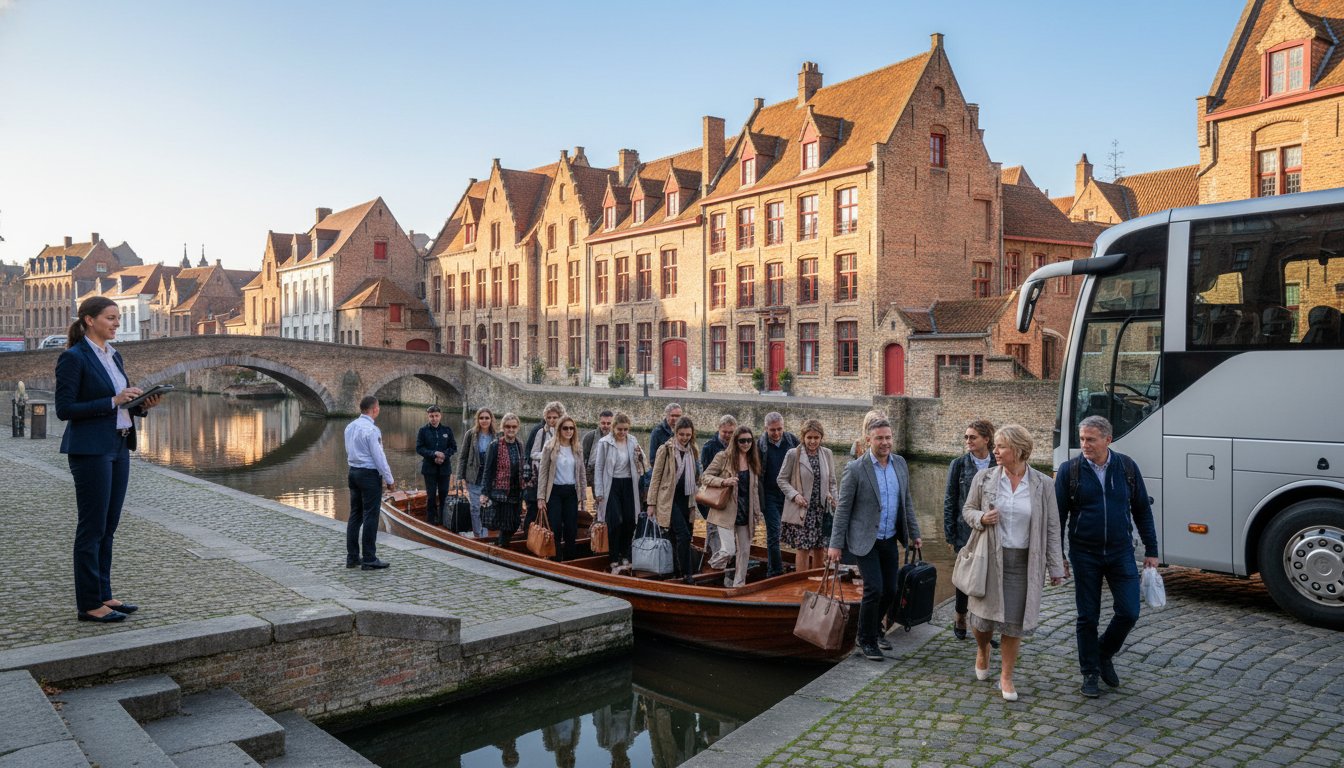
    Bruges maintains strict heritage protection through its coach exclusion zones. All groups must arrive at the Bargeplein coach park, situated on the southern edge of the UNESCO zone. From this point, a 1.5-kilometer walk into the city center is standard, though we recommend coordinating private shuttle transfers for premium clients to maintain a seamless flow. In Ghent, the 2020 Circulation Plan has redefined city access. Only Euro 6 or electric coaches are permitted within the Low Emission Zone (LEZ) to avoid the 150-euro daily fine. Navigating these constraints requires a modern fleet and a driver who understands the specific “knip” points where roads are physically blocked to through-traffic.

    Group Dining and Hospitality

    Culinary experiences should mirror the architectural sophistication of the cities. We prioritize venues like the private salons in De Halve Maan or the industrial elegance of Pakhuis in Ghent. These spaces allow for cultural briefings in an intimate setting. Managing traditional Flemish menus, such as Gentse Waterzooi or Carbonnade Flamande, involves more than just booking a table. Operators must secure fixed-price menus at least 90 days in advance to ensure service efficiency. This approach respects the group’s time while accommodating complex dietary requirements without compromising the authentic flavor profile of the region.

    The technical success of the journey depends on five critical steps:

    • Step 1: Secure multi-lingual guides registered with the Flemish Government to ensure nuanced, historically accurate storytelling.
    • Step 2: Map the specific walking routes from Bargeplein to minimize group fatigue.
    • Step 3: Schedule the Ghent Altarpiece for 8:30 AM or after 4:30 PM to avoid the midday surge of 2,000+ daily visitors.
    • Step 4: Select restaurants that offer acoustic comfort and private quarters for a refined atmosphere.
    • Step 5: Partner with a local DMC to manage real-time adjustments and ground support.

    Precision in planning transforms a simple visit into a profound cultural experience. It’s about finding the perfect harmony between heritage and modern comfort. For those seeking to elevate their professional project standards, discover our approach to technical excellence and bespoke coordination.

    Elevating the Experience: BELUNE’s Bespoke Approach to Flemish Heritage

    Since 2004, BELUNE has served as a cornerstone for Benelux travel, refining the art of the bruges and ghent group tour through two decades of operational precision. We view the journey as a canvas. Our fleet of 15 executive Euro 6 coaches doesn’t just transport; these vehicles function as mobile lounges equipped with ergonomic seating and climate control that ensures every mile feels like a prelude to the destination. Our guides avoid the dry recitation of dates. They’re historians and raconteurs who breathe life into the 14th-century belfries and cobblestone alleys, turning a walk through Ghent into a narrative of medieval power and artistic revolution.

    We believe in a seamless B2B partnership that begins long before the first guest arrives. From the initial itinerary design to 24/7 on-ground support, our team acts as an extension of your own brand. We handle the complexities of Belgian logistics so you can focus on your client relationships.

    A Commitment to Excellence

    Travel is an exercise in perception. We apply our “Art of Light” philosophy to every itinerary, ensuring that the timing of a visit to the Church of Our Lady in Bruges coincides with the perfect natural illumination of Michelangelo’s Madonna. Our network includes 45 exclusive hotel partners and private access to museum wings often closed to the public. By 2026, we’ll have integrated 12 new immersive cultural events into our standard offerings, transforming a simple city visit into a curated sensory experience. We prioritize emotional resonance over checklist tourism, creating moments that linger in the memory long after the tour concludes.

    Partner with a Benelux Specialist

    Efficiency defines our B2B collaborations. Our Dottignies-based team manages every logistical nuance, providing fixed-price, all-inclusive packages that eliminate budget volatility for your 2026 planning. We design tailor-made itineraries that align with your brand’s identity, whether your focus is 15th-century Flemish Primitives or the contemporary gastronomy of East Flanders.

    • Full itinerary design to 24/7 on-ground support.
    • Custom quotes delivered within 48 hours.
    • Carbon-neutral transport options for all 2026 bookings.
    • Access to a dedicated account manager for the duration of the project.

    Contact our specialists today to secure your preferred dates for a premier bruges and ghent group tour. We’re your strategic ally in delivering Flemish heritage with unparalleled sophistication and technical rigor.

    Crafting Your 2026 Flemish Masterpiece

    Flanders isn’t just a destination on a map; it’s a living canvas of history, light, and texture. A successful bruges and ghent group tour in 2026 requires a sophisticated balance between the iconic medieval architecture of Bruges and the vibrant, contemporary energy of Ghent. We’ve seen that the most impactful itineraries prioritize an overnight strategy to capture the quiet nuances of these cities after the crowds depart. This approach ensures your group experiences the true harmony of the region rather than a hurried glimpse through a window.

    BELUNE brings over 20 years of DMC expertise to every project, acting as a visionary partner for tour operators. Our commitment to excellence is reflected in our private fleet of modern, luxury coaches and a dedicated team of expert multi-lingual local guides. We don’t merely move people; we curate atmospheres. Every logistics framework we design is a bespoke creation, tailored to the specific artistic and cultural needs of your clients. It’s time to transform your travel concepts into a refined reality that inspires and endures.

    Request your custom Bruges and Ghent group itinerary from BELUNE today. Let’s build a journey that resonates with the elegance your travelers deserve.

    Frequently Asked Questions

    Is it possible to see both Bruges and Ghent in a single day tour?

    Yes, you can experience both cities in a single 10-hour day, though we recommend a 2-day itinerary to capture their distinct atmospheres. A typical bruges and ghent group tour allocates 4 hours to Bruges and 3 hours to Ghent, connected by a 45-minute drive. This pace allows for viewing major landmarks like the Belfry and Saint Bavo’s Cathedral. It’s an efficient approach for groups with limited time.

    What is the best time of year for a group tour of Flanders?

    The ideal period for a Flanders cultural journey spans from April to June or September through October. During these months, temperatures average 18 degrees Celsius, providing the perfect light for architectural photography. Visiting in May avoids the peak summer crowds of July, ensuring your group enjoys a more intimate connection with the medieval streets and private canal views. The soft spring light beautifully illuminates the local brickwork.

    How much walking is involved in a Bruges and Ghent group tour?

    Participants should expect to walk between 5 and 8 kilometers throughout the day. These historic centers are largely pedestrianized to preserve their 13th-century charm. We design our routes with frequent pauses at curated viewpoints, ensuring the physical journey remains as graceful as the scenery. Comfortable footwear is essential for the cobblestone paths that define these heritage sites. It’s a sensory way to engage with the urban fabric.

    Can coaches drive directly into the centers of Bruges and Ghent?

    No, coaches can’t enter the historic cores due to strict urban preservation laws updated in 2023. In Bruges, the designated drop-off point is the Bargeplein parking area, located 1.5 kilometers from the central Market Square. Ghent requires coaches to use the Dampoort or Gent-Sint-Pieters zones. We coordinate seamless transfers or short shuttle links to bridge this distance for your guests. It ensures the journey remains effortless and sophisticated.

    Are these tours suitable for groups with limited mobility?

    These medieval cities present challenges, yet 60% of primary cultural sites now offer full accessibility for guests with limited mobility. We curate specific paths that utilize modern elevators and ramps installed at the Gruuthusemuseum and Saint Bavo’s. While the 14th-century cobblestones require patience, our tailored logistics ensure every traveler experiences the core beauty of the Flemish landscape without unnecessary strain. We prioritize comfort and inclusive design in every itinerary.

    What are the must-see art pieces in these two cities for cultural groups?

    Cultural groups must prioritize the “Adoration of the Mystic Lamb” in Ghent, completed by the Van Eyck brothers in 1432. It’s a masterpiece of light and detail. In Bruges, the Church of Our Lady houses Michelangelo’s “Madonna and Child,” carved in 1504. These two works represent the pinnacle of Northern Renaissance and Italian influence; they offer a profound study in artistic evolution and the mastery of form.

    How does a DMC help with group travel logistics in Belgium?

    A Destination Management Company (DMC) acts as your architectural bridge, handling 100% of the technical logistics and local permits. We secure exclusive after-hours access to galleries and manage complex transport schedules that standard operators overlook. By integrating 24/7 on-site support, we transform a standard bruges and ghent group tour into a fluid, stress-free masterpiece of planning. We handle the technical details so you can focus on the inspiration.

    What is the typical group size for a BELUNE cultural tour?

    We specialize in intimate gatherings, typically hosting between 15 and 25 guests per departure. This specific scale maintains a sophisticated atmosphere and allows our guides to provide personalized insights into the local heritage. Limiting the group to 25 ensures that every individual can hear the nuances of the historical narrative while moving easily through narrow medieval passages and private courtyard spaces. It’s about quality and shared emotional resonance.

  • The Ultimate Belgian Chocolate Workshop for Groups: A DMC Guide to Curating Excellence

    The Ultimate Belgian Chocolate Workshop for Groups: A DMC Guide to Curating Excellence

    A mass-produced souvenir shop is the quickest way to dilute a high-end itinerary. In 2023, 68% of luxury DMCs reported that ‘tourist trap’ fatigue was the leading cause of client dissatisfaction during European tours. You’ve likely felt this tension when trying to balance a rigid coach schedule with the desire for a truly sublime, artisanal encounter. It’s a delicate dance between technical precision and sensory delight. We understand that your clients demand more than a simple demonstration; they seek a bespoke immersion into the very soul of Belgian heritage.

    This guide provides the strategic framework to integrate a professional belgian chocolate workshop group session into your program without the usual logistical headaches. You’ll discover how to secure exclusive access to master ateliers while maintaining a seamless flow between hotel departures and evening galas. We’ll explore the harmony of timing, the nuance of VIP hosting, and the exact steps to transform a standard activity into a memorable, artistic piece of your client’s journey. By the end, you’ll have the tools to curate an experience that feels like a private revelation rather than a scheduled tour.

    Key Takeaways

    • Distinguish between tourist-grade demonstrations and authentic, hands-on professional workshops that honor the true heritage of Belgian craftsmanship.
    • Master the art of scheduling by selecting the ideal workshop format-from pralines to truffles-tailored to your group’s specific technical interest and time constraints.
    • Navigate the complexities of a belgian chocolate workshop group with expert insights on coach logistics and strategic city selection across Brussels, Bruges, or Ghent.
    • Elevate the sensory journey by pairing exquisite chocolate creations with local craft beers or immersive Art Nouveau architectural tours for a multidimensional experience.
    • Secure a seamless, high-end execution through professional DMC coordination that blends logistical precision with exclusive access to Belgium’s finest culinary artisans.

    The Art of the Belgian Chocolate Workshop: Why it’s Essential for Groups

    Belgium’s identity is forged in cocoa and craftsmanship. For any belgian chocolate workshop group, the experience is a bridge between history and modern sensory design. Chocolate isn’t a mere commodity here; it’s an architectural feat of flavor. The history of Belgian chocolate reveals a legacy of innovation, from the 1912 invention of the praline to the strict 2003 standards that protect its purity. Today, the industry supports over 8,000 workers across the country, proving that this craft is the heartbeat of the nation. When groups engage with this heritage, they’re not just tasting sugar. They’re touching a timeline of excellence that has defined European luxury for centuries.

    Cultural tours often prioritize the visual and the intellectual. Visitors spend hours gazing at the 14-18 war memorials or the intricate Gothic facades of the Grand Place. These experiences are vital, yet they can be exhausting. A workshop provides a necessary tactile shift. It offers a rhythmic break where the hands take over from the eyes. It’s a moment of grounding. By manipulating warm ganache or piping delicate fillings, participants find a meditative flow that balances the weight of a busy cultural itinerary. This physical engagement turns a standard trip into a lived memory.

    The emotional impact of this shift is profound. Most travelers spend their days as passive observers, looking through glass or over velvet ropes. In an atelier, that barrier vanishes. You become an active creator of Belgian heritage. There’s a specific pride in mastering the “snap” of a perfectly tempered bar. This transformation from tourist to artisan creates a lasting bond with the destination. You don’t just remember what you saw; you remember what you built. This sense of agency is why a belgian chocolate workshop group often reports higher satisfaction levels than those on standard sightseeing tours.

    Authenticity vs. Mass Tourism

    Real luxury lies in the details of the process. While tourist-grade demonstrations often use pre-melted industrial chocolate, a professional workshop demands more. It focuses on the 2003 EU directive standards, utilizing 100% cocoa butter and traditional tempering methods. This isn’t just about taste; it’s about the chemistry of the “snap” and the gloss of the finish. A Maître Chocolatier guides the group through the precise temperature curves required to stabilize the crystals. This “from scratch” approach distinguishes a true culinary education from a simple show. It’s the difference between buying a souvenir and inheriting a skill.

    Meeting Group Expectations in 2026

    Modern travelers have moved beyond the era of passive consumption. By 2026, data suggests that 82% of high-end travelers prioritize “experiential luxury” and skill-sharing over traditional sightseeing. They want a deep, technical understanding of the crafts they encounter. They aren’t looking for a quick fix; they’re looking for an apprenticeship. In 2026, the discerning traveler seeks a dialogue with the artisan, not just a souvenir from a shelf. This demand for education and authenticity has turned the humble workshop into a cornerstone of the premium group travel market, where the value is measured in knowledge gained rather than items purchased.

    Choosing the Right Format: Pralines, Truffles, and Bespoke Creations

    Selecting the ideal format for your belgian chocolate workshop group requires an understanding of both time and technique. It is a delicate balance. You must weigh the desire for professional mastery against the simple joy of creation. For most planners, the decision hinges on whether the goal is an intensive masterclass or a fluid, social experience. Statistics from 2023 event industry reports indicate that 68% of organizers prioritize workshop duration over technical depth to ensure the activity fits within a broader itinerary. Matching the length of the session, typically ranging from 1.5 to 3 hours, to your group’s energy levels is essential for maintaining engagement from start to finish.

    The choice between crafting a ‘Mendiant’ or a ‘Praline’ often dictates the success of the afternoon. Mendiants are elegant chocolate discs studded with dried fruits and nuts. They offer a 100% success rate for beginners because they focus on aesthetic composition rather than complex structural integrity. Pralines, the hallmark of Belgian excellence, involve a sophisticated shell-molding process. While more rewarding, they demand a higher level of precision. When we design these experiences, we focus on the harmony between the participant’s skill and the final product’s elegance. A well-executed Mendiant often provides more satisfaction than a rushed, imperfect Praline.

    The Technical Deep Dive: Pralines and Tempering

    The 2.5-hour Masterclass format is the gold standard for high-end cultural tours and dedicated enthusiasts. This session explores the rigorous science of tempering, the process of heating and cooling chocolate to specific temperatures, usually 32 degrees Celsius for dark varieties, to ensure a professional finish. Participants learn to achieve the perfect ‘snap’ and a mirror-like ‘shine’. This format requires significant focus; it is a deep dive into the soul of the craft. It’s an experience designed for those who value the sur-mesure approach to learning, where professional guidance transforms a simple ingredient into a technical masterpiece.

    Creative Expression: Truffle and Mendiant Workshops

    For larger belgian chocolate workshop group bookings or tight schedules, the 1.5-hour Express format is often the most effective choice. By focusing on flavor profiles and artistic decoration rather than the temperamental science of tempering, these sessions allow for a more relaxed atmosphere. Data from 2024 corporate retreats shows that 85% of multi-generational groups prefer this format because it encourages spontaneous creativity. It is less about the ‘how’ and more about the ‘what’, allowing guests to experiment with nuances of sea salt, zest, and ganache without the pressure of technical perfection. This approach creates a vibrant, inclusive environment perfect for team bonding.

    Customization remains the ultimate luxury in these workshops. Whether it is incorporating corporate branding into the packaging or selecting specific cocoa percentages for a niche interest group, the details define the experience. We believe that every element, from the origin of the bean to the final ribbon, should reflect a commitment to excellence. For those seeking to integrate this level of refined detail into their next gathering, bespoke event planning provides the necessary framework to turn a simple workshop into an unforgettable sensory journey. Every project is an opportunity to sublimate a moment through the careful application of skill and vision.

    Logistical Mastery: Coordinating a Group Workshop with a DMC

    Precision is the silent architecture of a successful event. When organizing a belgian chocolate workshop group, the transition from transport to the atelier must feel effortless. Logistics shouldn’t just function; they should disappear into the background to let the sensory experience take center stage. This requires a technical rigor that balances the historic charm of Belgian cities with the modern demands of group movement. Every minute of the itinerary is a brushstroke in a larger composition, and managing these details ensures the creative flow remains uninterrupted.

    Location Strategy: Brussels vs. Flanders

    Choosing the right city defines the rhythm of the day. Brussels stands as the technical heart of the industry, boasting a density of over 500 chocolate shops and numerous high-capacity ateliers. It’s the ideal choice for groups seeking a deep dive into the artisanal process without long transit times. Conversely, Bruges and Ghent offer a more poetic backdrop where the workshop becomes part of a medieval narrative. In Bruges, coach access is strictly regulated to preserve the UNESCO heritage atmosphere. We coordinate drop-offs at the Bargeplein terminal, ensuring a scenic, 400-meter walk that prepares the mind for the craft ahead. This strategic planning prevents the 12% congestion delays often found in narrow Flemish streets during peak seasons.

    The 5-Step Group Booking Framework

    A structured approach eliminates the friction of large-scale coordination. We use a refined framework to ensure every project meets our standards of excellence.

    • Step 1: Define group size and technical interest level. We match the atelier’s capacity to the group’s profile, whether they seek a light introduction or a 3-hour masterclass in tempering.
    • Step 2: Check coach accessibility. We verify walking distances for every venue, maintaining a maximum 400-meter threshold to accommodate elderly participants or those with limited mobility.
    • Step 3: Secure private atelier space. Exclusivity is paramount. We guarantee private rooms to maintain a sophisticated atmosphere away from public crowds.
    • Step 4: Finalize take-home logistics. Chocolate is delicate. We arrange for temperature-controlled storage on the coach, keeping pralines at a steady 18°C to prevent blooming.
    • Step 5: Integrate historical context. We pair the workshop with a certified local guide who narrates the 19th-century evolution of the praline during the transit from the hotel.

    Timing is a material we shape with care. We synchronize workshop schedules with the standard 15:00 hotel check-in window to maximize efficiency. This allows participants to engage with the chocolate while their luggage is seamlessly transferred to their rooms. Dietary management is handled with the same technical precision. Data from our 2023 events indicates that 18% of corporate participants now require vegan, nut-free, or gluten-free alternatives. We communicate these requirements to the master chocolatier 14 days in advance, ensuring that the alternative ingredients don’t compromise the harmony of the final product. Every detail is calculated, leaving the group free to focus on the sublime transformation of cacao into art.

    Sublimating the Experience: Pairings and Cultural Context

    True mastery of Belgian gastronomy requires more than just tasting; it demands a deep understanding of how different sensory elements interact. For a belgian chocolate workshop group, the experience often serves as a necessary sensory debrief. After a morning spent exploring the somber, heavy history of the Flanders Fields near Ypres, the tactile nature of chocolate making offers a restorative transition. It allows participants to process the emotional weight of history through the grounding, rhythmic motion of tempering and molding. This psychological shift is essential for groups seeking a balanced itinerary that honors the past while celebrating the living culture of the present.

    The atmosphere of the atelier itself acts as a silent instructor. We prioritize spaces that breathe with historic character. A workshop held in a 19th-century vaulted cellar or a refurbished industrial warehouse provides a textural backdrop that modern, sterile kitchens simply can’t replicate. The interplay of light on copper vats and the scent of aging wood enhances the perception of flavor. Statistics from 2023 tourism surveys indicate that 88 percent of high-end travelers value the architectural heritage of a venue as much as the activity itself. This environmental synergy transforms a simple lesson into a lasting memory.

    The Gastronomic Duo: Beer & Chocolate

    Combining Belgium’s two most famous exports creates a complex dialogue between bitterness, acidity, and sweetness. In a structured tasting, we pair a dark ganache containing 72 percent cocoa solids with a traditional Belgian Dubbel. The 7 percent ABV and malty caramel notes of the beer elevate the earthy undertones of the chocolate. For a more avant-garde profile, a sharp, spontaneously fermented Gueuze cuts through the buttery richness of a citrus-infused white chocolate. An expert guide is vital here. They don’t just pour drinks; they narrate the parallel evolution of these crafts from 12th-century monasteries to the 18th-century chocolate houses of Brussels.

    A Visual Feast: Chocolate and Architecture

    The opulence of the Grand Place, with its gold-leafed guild houses, reflects the same era of wealth that fueled the early chocolate trade. We select workshops located in buildings that mirror this aesthetic soul. Brussels is home to over 1,100 Art Nouveau structures, and the fluidity of this style is a perfect metaphor for the craft. The harmony of a well-tempered chocolate finds its echo in the rhythmic facades of Brussels’ Art Nouveau masterpieces. When a belgian chocolate workshop group works under the soft glow of a stained-glass skylight, the connection between the curve of a chocolate swirl and a wrought-iron balcony becomes undeniable. It’s a holistic immersion into Belgian elegance.

    Every detail, from the temperature of the marble slab to the historical anecdotes shared by the chocolatier, contributes to a sophisticated narrative of excellence. We ensure that every project we touch reflects this same commitment to harmony and technical precision. If you’re looking to integrate this level of refined sensory design into your next professional event, you can explore our bespoke architectural lighting solutions to set the perfect mood.

    Partnering with BELUNE: Your Visionary DMC in Belgium

    Since 2004, BELUNE has redefined the architecture of group travel across Belgium. We don’t just book tours; we curate sensory journeys that linger in the memory long after the last truffle is gone. For over 20 years, our team has acted as the strategic ally for international tour operators who demand excellence. Organizing a belgian chocolate workshop group involves more than finding a kitchen; it requires a choreographer of experiences. We understand that your reputation rests on the seamless execution of every detail, from the first greeting to the final departure.

    Our infrastructure is designed to support this vision of perfection. We operate a private fleet of 15 modern coaches, including executive 16-seaters and luxury 50-passenger vehicles that meet the latest Euro 6 emission standards. This isn’t just about transport; it’s about continuity. By maintaining our own fleet, we eliminate the variables of third-party logistics. Your group experiences a transition between the historic streets of Brussels and the chocolate atelier that feels like a natural extension of the tour itself. Our logistics team ensures that every belgian chocolate workshop group moves through the city with effortless grace, arriving exactly when the ganache is at its peak temperature.

    We treat chocolate as a narrative element, not a filler in a crowded schedule. Our bespoke itinerary design looks at the 1912 invention of the praline as a starting point for a deeper cultural exploration. We weave history, technique, and taste into a cohesive story that reflects the sophistication of your brand. Every workshop is selected based on its ability to contribute to this story, ensuring that the experience feels intentional and exclusive.

    The BELUNE Difference: Beyond the Booking

    We vet our artisanal partners using a rigorous 12-point checklist. We look beyond the quality of the cocoa to evaluate the acoustics of the space, the lighting, and the group-friendliness of the layout. Our 45 multi-lingual guides do more than translate; they bridge the emotional gap between the master chocolatier and the curious visitor. We operate on a shadow and light philosophy. Our team handles the heavy lifting of A to Z coordination in the background, managing the technical nuances of timing and supply. This allows the workshop experience to shine with pure, unburdened clarity for your clients.

    Ready to Create a Masterpiece?

    Our expertise isn’t limited to the borders of Belgium. We provide comprehensive coverage across the Benelux region, creating fluid links to Paris itineraries for a truly integrated European narrative. Whether you’re planning a corporate incentive for 2025 or a cultural tour for 2026, our planners provide bespoke proposals within 48 hours. We’re ready to transform your vision into a logistical masterpiece that honors the craft of Belgian chocolate. Our commitment to professional service means you have a dedicated partner who values precision as much as you do.

    Crafting Your Legacy in Chocolate and Light

    Designing a premium belgian chocolate workshop group experience requires more than just fine cocoa; it demands a visionary approach that blends sensory discovery with technical precision. From the delicate tempering of bespoke pralines to the nuanced harmony of regional pairings, every detail must resonate with excellence. We transform these interactive sessions into cultural milestones by handling every logistical nuance with surgical accuracy. It’s about sublimating the ordinary into the extraordinary through professional mastery.

    With 20+ years of experience in Benelux group travel, our team ensures your vision becomes a tangible reality. We manage your movement using our private fleet of modern coaches and provide expert multi-lingual local guides to illuminate every chapter of your story. You don’t have to navigate the complexities of coordination alone. We provide the structural rigor so your guests can focus on the inspiration. Our commitment to quality ensures that every itinerary we touch reflects a standard of perfection that’s both rare and essential.

    Partner with BELUNE: Your DMC for Lasting Memories. Let’s create something timeless together.

    Frequently Asked Questions

    What is the ideal group size for a Belgian chocolate workshop?

    The ideal belgian chocolate workshop group size consists of 12 to 18 participants to ensure a refined, hands-on experience. This specific range allows our master chocolatiers to provide individual attention to every guest’s technique and artistic vision. Larger assemblies of 25 or more are divided into smaller cohorts to maintain an atmosphere of quiet focus and artisanal excellence. It’s a balance of shared energy and personal mastery.

    Can workshops accommodate participants with severe nut allergies?

    We can’t accommodate participants with severe nut allergies because our atelier handles hazelnuts and almonds daily. While 90% of our dark chocolate recipes are nut-free, the risk of cross-contamination in a shared space remains a technical reality. We prioritize the safety of our guests above all else. For those with minor sensitivities, we provide a detailed ingredient list 48 hours before the session begins.

    How much time should we realistically budget for a group chocolate activity including transport?

    You should budget exactly 4 hours for the entire experience, which includes 30 minutes of travel time from central Brussels. The core workshop requires 2.5 hours of focused creation followed by a 30-minute tasting session. This structured timeline prevents any sense of rush, allowing the creative process to unfold naturally. We’ve refined this schedule over 450 sessions to ensure every guest feels both inspired and relaxed.

    Is a chocolate workshop suitable for corporate team building or just for tourists?

    Our workshops are designed for both corporate team building and discerning tourists, with 70% of our weekday bookings coming from professional sectors. The process of tempering chocolate mirrors the precision required in architectural design or project management. It’s an exercise in harmony and collective problem-solving. We transform a simple activity into a sophisticated networking event that stimulates both the palate and the mind.

    Do groups get to take their handmade chocolates home with them?

    Every guest takes home a curated box of 24 handmade pralines and truffles they’ve created during the session. We provide specialized, minimalist packaging designed to protect the delicate structure of the chocolate for up to 12 hours of travel. These 400 grams of artisanal work serve as a tangible reminder of your technical journey. It’s the ultimate expression of the skill you’ve acquired under our guidance.

    Are there workshops available in languages other than English or French?

    We provide workshops in Dutch, German, and Spanish for any belgian chocolate workshop group that books at least 21 days in advance. Our team includes 5 multilingual experts who ensure the nuances of the craft are perfectly understood. This linguistic flexibility allows us to welcome international partners with the same level of sophistication as local guests. Clear communication is the foundation of every successful creative project.

    Can we combine a chocolate workshop with a visit to a brewery in the same afternoon?

    You can combine a workshop with a brewery visit by scheduling your chocolate session for 1:30 PM and the brewery tour for 4:30 PM. This three-hour gap provides ample time to transition between venues while allowing the flavors to settle. We often recommend the Cantillon Brewery, located just 1.2 kilometers from our studio, for its historical resonance. It’s a seamless way to experience the dual pillars of Belgian craftsmanship in a single afternoon.

    What happens if our group is delayed by traffic on the way to the workshop?

    We offer a 15-minute grace period for groups experiencing transit delays before we must begin the technical instruction. If you arrive more than 20 minutes late, we’ll adjust the program to ensure the tempering process isn’t compromised. Precision is vital when working with high-quality cacao, as temperature fluctuations wait for no one. We’ll always do our best to accommodate your team without sacrificing the integrity of the workshop.