
A supplier cancellation is a disruption, not yet an event failure. Navigating last-minute cancellations from suppliers starts with a focused triage of what’s affected, what must be protected, and what can change; use the first 60 minutes to get the cancellation in writing, review the agreement, and identify a workable backup. A clear response creates room to act before the change ripples through the event.
It’s natural to feel pressure when a key service suddenly falls through. But rushed decisions can add costs and strain operations. A calm, clear response helps protect the trip’s essential experience and keeps everyone aligned.
This guide explains what to do first, how to adjust the itinerary and communicate changes, and which cancellation, substitution, refund, and force majeure terms to review. It also covers practical ways to limit financial and operational disruption, from activating backup plans to updating shared travel information. Not every cancellation has a perfect fix, but deliberate decisions can keep the trip moving.
Key Takeaways
- Use the first 60 minutes to establish what’s affected, get the cancellation in writing, and identify the event’s most urgent needs.
- Ask planners and other event vendors about suitable replacements, while using backup contacts to keep the search focused.
- Rework the event flow and share clear updates with affected stakeholders so teams can adapt without losing sight of essential details.
- Review cancellation, substitution, refund, and force majeure terms, then document decisions and use the event debrief to strengthen future contingency plans.
1. Last-Minute Cancellations: What are Your Next Steps?
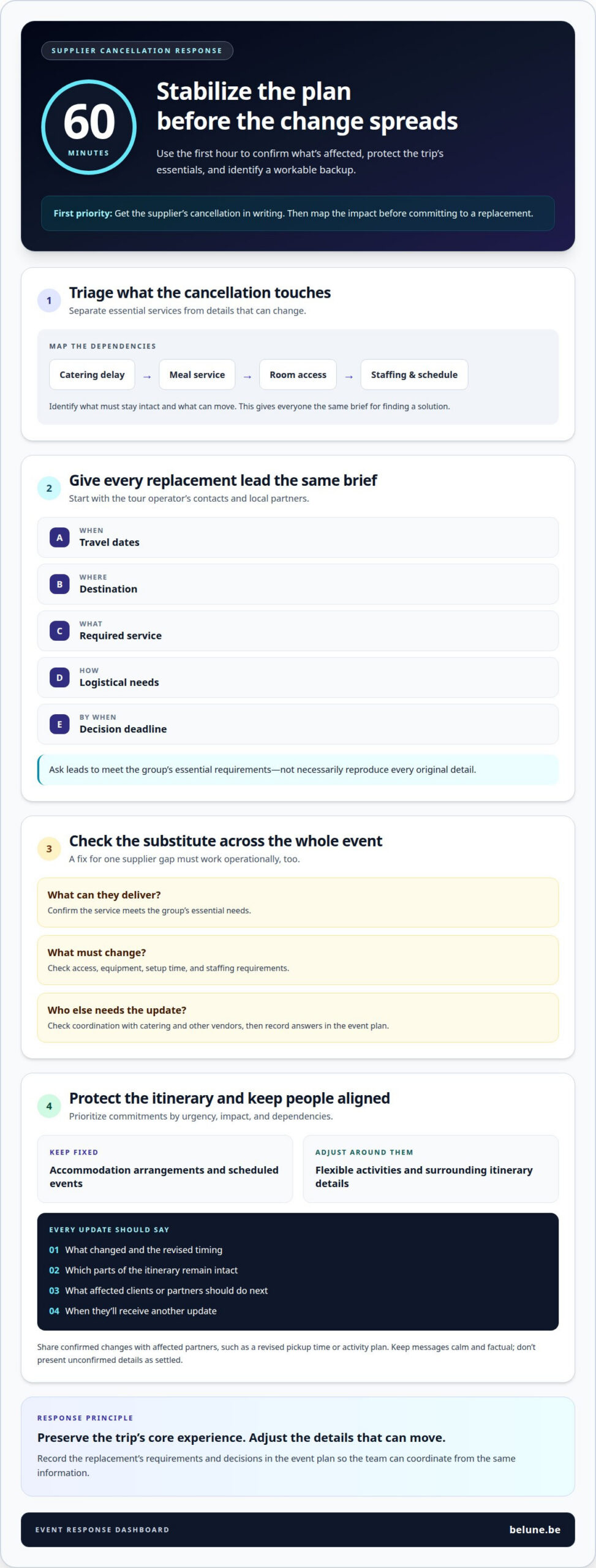
In the first 60 minutes, establish what the cancellation affects and what must stay intact. Confirm the supplier’s message in writing, then identify dependencies: a catering delay may affect meal service, room access, staffing, and the event schedule. Separate essential services from details that can change. This gives the team a clear brief for replacement options rather than prompting disconnected decisions. A disciplined approach to navigating last-minute cancellations from suppliers keeps attention on immediate impacts and practical next steps.
To find a replacement, start with the tour operator’s existing contacts and local partners. Give each lead the same concise brief: travel dates, destination, required service, logistical needs, and decision deadline. Ask whether they can meet the group’s essential requirements, rather than reproduce every original detail. A suitable replacement preserves the trip’s core experience while leaving room to adjust the itinerary.
Before confirming a substitute, ask what operational changes their service requires. Will the replacement need different access, equipment, setup time, staffing, or coordination with catering? Ask what they can deliver, what must change, and which other vendors need the update. Record the answers in the event plan. These details reveal whether the proposed fix works across the event, rather than solving one supplier gap while creating another.
Prioritize commitments by urgency, impact, and dependencies. Tell affected clients directly what has changed, the revised timing, and when they’ll receive another update. Explain which parts of the itinerary remain intact and which need adjustment. Notify other partners of confirmed changes, such as a revised pickup time or activity plan, so they can adapt their arrangements.
A broad network of local partners makes future replacements easier to arrange. Build relationships before a trip through respectful, regular communication, and keep alternative contacts by service category. After a cancellation, acknowledge the message promptly and request the details you need, including any recommendations. Consistent communication helps everyone understand the group’s priorities and coordinate a workable response.
2. Adjusting the event schedule and communicating changes
Once you know which service is affected, map its place in the itinerary. A change to an activity may shift transfers, meals, or the timing of the next stop. Mark fixed commitments first, such as accommodation arrangements or a scheduled event, then move flexible elements around them. This protects the trip’s essential rhythm and makes practical adjustments clear to the whole team.
Give one person authority to approve itinerary changes and assign specific decisions to other team members. For example, a tour coordinator can manage revised transport arrangements while the lead planner approves changes to the schedule. A shared messaging group can carry concise updates, but keep the master itinerary in one shared document. Record each change, who owns it, and any action required, so the team isn’t working from conflicting messages.
Tell affected clients and partners as soon as a change is settled. Explain what changed, what remains on schedule, and what the group should do next. If an activity is delayed, for example, clarify how that affects the next transfer or stop. Keep the wording calm and factual. Avoid sharing unconfirmed details, and send another update if the plan changes again.
Guest cancellations also call for operational updates. Send vendors the revised guest count, relevant timing, and any adjustment they need to make. A catering team may need the new count; the venue team may need updated seating arrangements. Treat the seating plan as a live document and keep digital check-ins aligned with its latest version. For groups attending a fixed-date match, sport event tours can offer a useful planning context: preserve essential event timing while adapting the surrounding itinerary.
3. Discussing cancellation policies before signing a contract
Before signing, read the cancellation policy alongside the service description and payment schedule. Identify what happens if you cancel, if a supplier cancels, or if circumstances outside either party’s control disrupt the trip. These are distinct situations, and one clause may not cover them all. Ask how notice must be given, whether replacement assistance is required, and what reimbursement applies if a supplier fails to deliver.
Payment terms deserve close attention. One photographer’s event contract requires a 50% retainer to reserve the date; another makes the remaining half due 60 days before the event. These examples show why timing and refund language matter. An agreement may make a retainer non-refundable, address later payments separately, or release a client from a final payment that hasn’t been processed. Read each term as written, rather than assuming one payment rule applies to every situation.
Look for cancellation notice periods, non-performance penalties, and a clear process for finding a replacement. A substitution clause may describe backup arrangements or allow changes to services such as transport or activities. Ask what happens if the replacement differs from the original arrangement, or if staffing issues affect delivery. The contract should explain how changes are handled and whether you can request another alternative.
Review force majeure language carefully. Such a clause may excuse contractual duties when an event outside the parties’ control occurs; its wording determines which circumstances and duties it covers. A default clause may describe failure to provide services and set out reimbursement or refund terms. Also note any provision stating that unused services or travel costs aren’t reimbursable.
Contract laws vary by state, so couples should consult a lawyer licensed in the state where the wedding will take place. A contracts lawyer can explain how the agreement’s notice, refund, and non-performance terms apply to that situation. Before signing, ask for unclear cancellation procedures or replacement commitments to be stated in writing. Specific language makes each party’s responsibilities easier to understand if plans change.
4. Financial and operational effects of event cancellations
An unexpected cancellation can affect more than the missing service. A replacement may come with premium last-minute rates, while itinerary changes can add staffing, transport, or accommodation costs. Map each consequence to the affected budget item and operational task. This shows which commitments can be adjusted and where a decision could create further disruption.
Document the cancellation and related costs in one shared record. Save the supplier’s written notice, relevant contract terms, replacement quotes, receipts, and revised invoices. Note when each change was agreed, which service it covers, and how it affects the itinerary. Shared cloud documents help coordinators and on-the-ground teams use current information instead of outdated copies.
Keep the record practical. For example, if a supplier withdraws and a replacement changes transfer timing, log the revised schedule, any additional staffing needs, and client-approved budget adjustments. Separate confirmed expenses from proposed costs. This creates a clear account of the decision and helps the team explain its financial impact without relying on scattered messages.
After the trip, hold a debrief with each team involved. Invite candid feedback from planning, operations, and on-the-ground staff about what worked, where information arrived late, and which contingency steps failed. Use those observations to update supplier contacts, backup arrangements, and communication templates. A debrief turns a difficult situation into specific improvements for the next trip.
Casual events can allow more flexibility than tightly timed programs. If a date cancellation leaves a gap, consider promoting the newly available date, booking a smaller job, or using the time to regroup. The right choice depends on existing commitments and the event’s purpose. For a planned gathering that still needs coordinated arrangements, explore tailored event logistics support as you shape the revised plan.
BELUNE
BELUNE helps tour operators and travel agents keep group itineraries coherent when a supplier cancellation disrupts planned logistics. If accommodation, transport, local guidance, or cultural activities need to be coordinated around revised plans, its Hotel Accommodation Management, coach hire with its own fleet of buses, Local Guide Services, and Art & Culture Group Tours can form part of a customized itinerary. The right support depends on which arrangements are affected and how the group’s schedule needs to change.
Bring BELUNE into the planning process when a group trip across the Benelux region or Paris needs a coordinated adjustment. Share the affected arrangements and revised priorities so the itinerary can be shaped around what still works. Contact BELUNE to discuss your group’s plans.
Build resilience into the next itinerary
A supplier cancellation can reveal where a travel plan depends too heavily on one connection. Use that insight to build a more resilient itinerary: clarify who can approve changes, keep operational information accessible, and leave room to adapt without losing the group’s purpose. These steps make navigating last-minute cancellations from suppliers a deliberate part of planning, rather than a disruption handled in isolation.
For tour operators and travel agents coordinating group travel, BELUNE can help bring the wider arrangements into focus as plans evolve. Contact BELUNE to discuss your event and explore how a tailored itinerary can support your next group journey. A thoughtful plan leaves space for change while keeping the experience moving forward.
Frequently Asked Questions
Last-Minute Cancellations: What are Your Next Steps?
Start by separating essential outcomes from details that can change. Identify who can approve a substitute, who will update the itinerary, and which decisions need client approval. For example, protect essential transport or a scheduled group activity before refining optional elements. This structure keeps a disruption from becoming a series of unrelated changes and gives the team a clear way forward.
Turning cancellations into future bookings, is it possible?
Yes, a cancelled date can create an opportunity to promote that date, accept a smaller booking, or use the time to regroup. The best option depends on existing commitments and the work already prepared. If the original trip can’t proceed, consider whether a revised format or future date still serves the client’s purpose. Keep any new booking separate from unresolved terms or payments connected to the cancelled arrangement.
What should you do immediately when a supplier cancels at the last minute?
Assign one person to own the response and record decisions as they happen. That person can note who has been informed, what remains unresolved, and which choices need approval. When navigating last-minute cancellations from suppliers, a simple decision log helps prevent duplicate calls or conflicting instructions, especially when several teams are working on the trip and the schedule is changing.
How can you find and qualify a replacement supplier quickly?
Use recommendations from the tour operator and partners already involved, then compare each lead with the trip’s essential requirements. For a replacement activity provider, for instance, establish whether the proposed service fits the group’s schedule, transport arrangements, and accommodation plans. Confirm responsibilities and any changes the substitute requires before revising the itinerary. A suitable match is one the wider operation can accommodate.
What contract clauses cover supplier cancellations, notice, and liability?
Look for cancellation notice terms, non-performance provisions, replacement assistance, and refund or reimbursement language. A force majeure clause may address duties affected by events outside the parties’ control, while a default clause may describe failure to provide services. Read each clause in context: the agreement’s wording determines how it treats notice, substitute services, and resulting costs. Contract laws vary by state.
Can you recover deposits, extra costs, or damages after a supplier cancellation?
Recovery depends largely on the contract’s deposit, refund, and reimbursement terms. A supplier may return a deposit even when it was described as non-refundable, but that isn’t automatic. Separate amounts already paid from new expenses for replacement services, and keep relevant invoices and written communications together. The agreement’s wording, including any terms for unused services or travel costs, shapes what may be recoverable.