Can a single logistical oversight dim the brilliance of a Van Eyck altarpiece? For professionals organizing Benelux art history tours for groups, the answer is a resounding yes. You understand that the true art of travel lies in the invisible details. It’s the silent transition from a private coach to a timed entry at the Rijksmuseum. It’s the confidence that your itinerary remains unaffected by the 2026 VAT increases in the Netherlands or the strict new group limits in Bruges. We believe that a masterpiece is only as moving as the atmosphere that surrounds it, and that atmosphere depends on flawless execution.
We’re here to help you design a journey that transcends the typical tourist circuit. You’ll discover how to navigate the evolving 2026 landscape, from managing the 33.5% combined tax rates in Amsterdam to securing elite local guides who breathe life into the Flemish Primitives. This guide provides the technical roadmap and creative vision needed to deliver a sophisticated, seamless experience. We’ll cover everything from private fleet logistics to high-end accommodation management, ensuring your guests focus entirely on the canvas, not the clock.
Key Takeaways
- Learn how to transform a standard itinerary into a sophisticated narrative arc that captures the essence of the Low Countries’ artistic heritage.
- Master the chronological flow from 15th-century oil painting innovations to the evocative light of the Dutch Golden Age.
- Discover how to eliminate logistical friction in Benelux art history tours for groups by leveraging professional hotel management and a private coach fleet.
- Expand your expertise into Art Nouveau architecture and contemporary art hubs to create a more diverse, immersive cultural experience.
- Access the strategic advantages of 20 years of regional expertise, including fixed-price packages and custom itinerary design.
The Renaissance of Group Travel: Why Art History Tours Require a Specialist
A masterfully executed art tour is more than a sequence of museum visits. It’s a curated narrative that connects the viewer to the soul of a region. In 2026, Benelux art history tours for groups require a specialist who understands that the Art of the Low Countries is a living dialogue between history and space. With the highest density of world-class masterpieces per square kilometer in Europe, this region demands a visionary approach. It isn’t enough to simply secure tickets. You must weave a story that spans centuries, from the meticulous detail of the Flemish Primitives to the revolutionary light of the Golden Age.
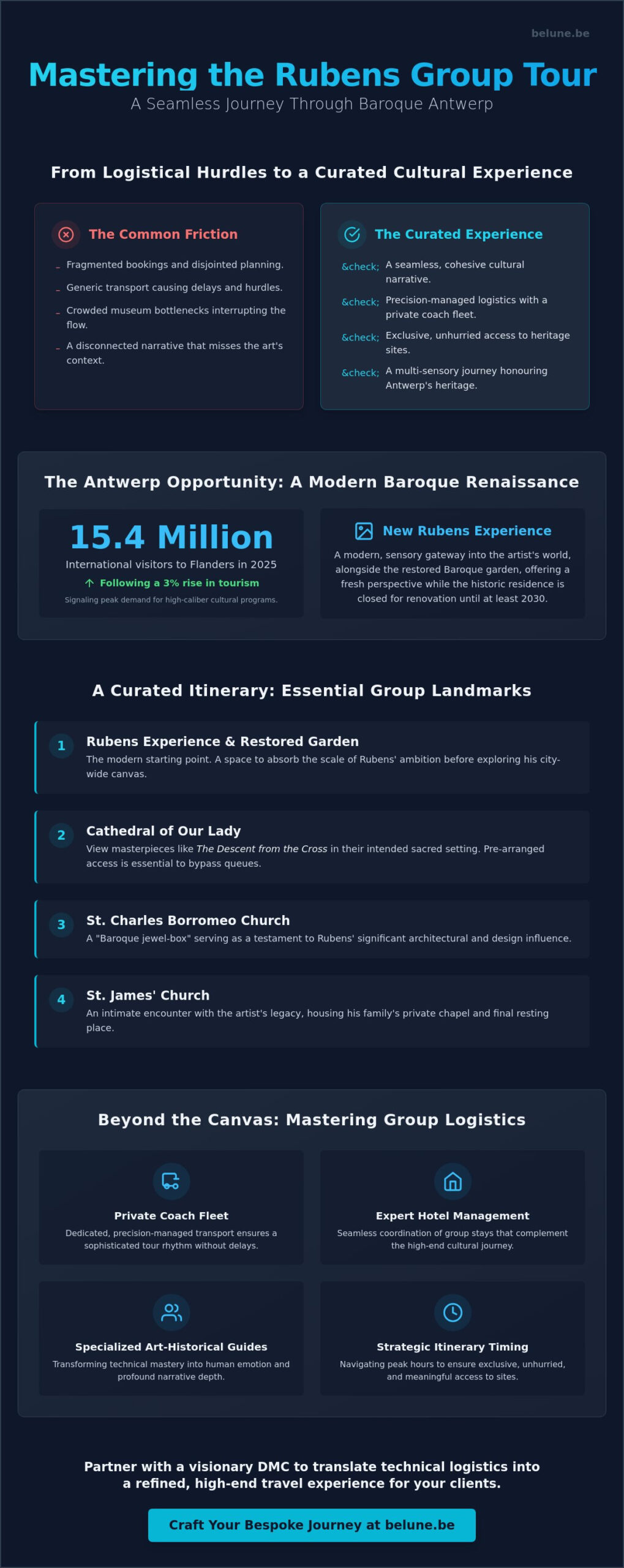
Professional tour operators are increasingly moving away from generic itineraries. They seek a partner who understands the intersection of culture and group dynamics. This means recognizing how a group of thirty people moves through a narrow medieval street in Ghent or how a specific lighting arrangement in a gallery affects the collective mood. We don’t just provide a service; we offer a technical and artistic intervention that elevates the travel experience from a mere trip to a sophisticated cultural event.
The Complexity of Multi-Country Art Logistics
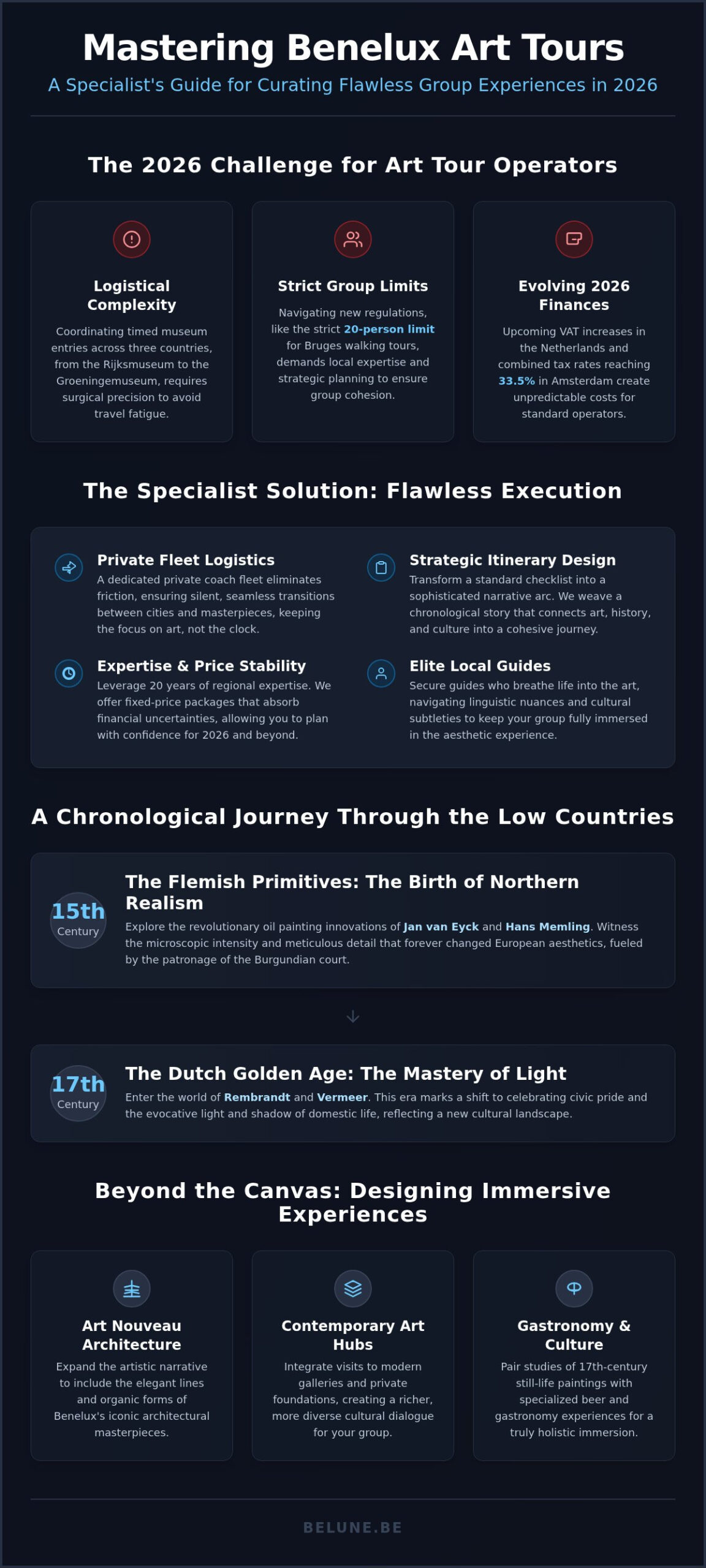
Managing a group across three borders involves a delicate balance of timing and comfort. Coordinating museum entry times across three borders is a primary challenge for Benelux art history tours for groups, requiring local expertise to avoid travel fatigue. For example, syncing timed entries at the Rijksmuseum with a visit to the Groeningemuseum in Bruges requires surgical precision, especially with the 20-person limit now in effect for Bruges walking tours. By acting as your strategic ally, BELUNE ensures that transitions are seamless. Our local guide services navigate linguistic nuances and cultural subtleties, allowing your group to remain immersed in the aesthetic experience rather than the logistics of the journey.
The Shift Toward Immersive Cultural Heritage
Modern travelers seek depth over speed. While the major museums are essential, the true “Renaissance” of travel lies in discovering hidden gems within smaller regional collections or private foundations. We often integrate these quiet spaces with local traditions, perhaps pairing a study of 17th-century still-life paintings with a specialized gastronomy and beer experience—much like the way you can visit Canto da Esquina Café to see how regional heritage and culinary excellence create a unique cultural space. This holistic approach transforms a tour into a meaningful cultural intervention. The DMC advantage in 2026 is the ability to fuse technical precision with an artistic sensibility that anticipates the needs of a sophisticated group before they arise.
From Van Eyck to Vermeer: A Chronological Journey Through the Low Countries
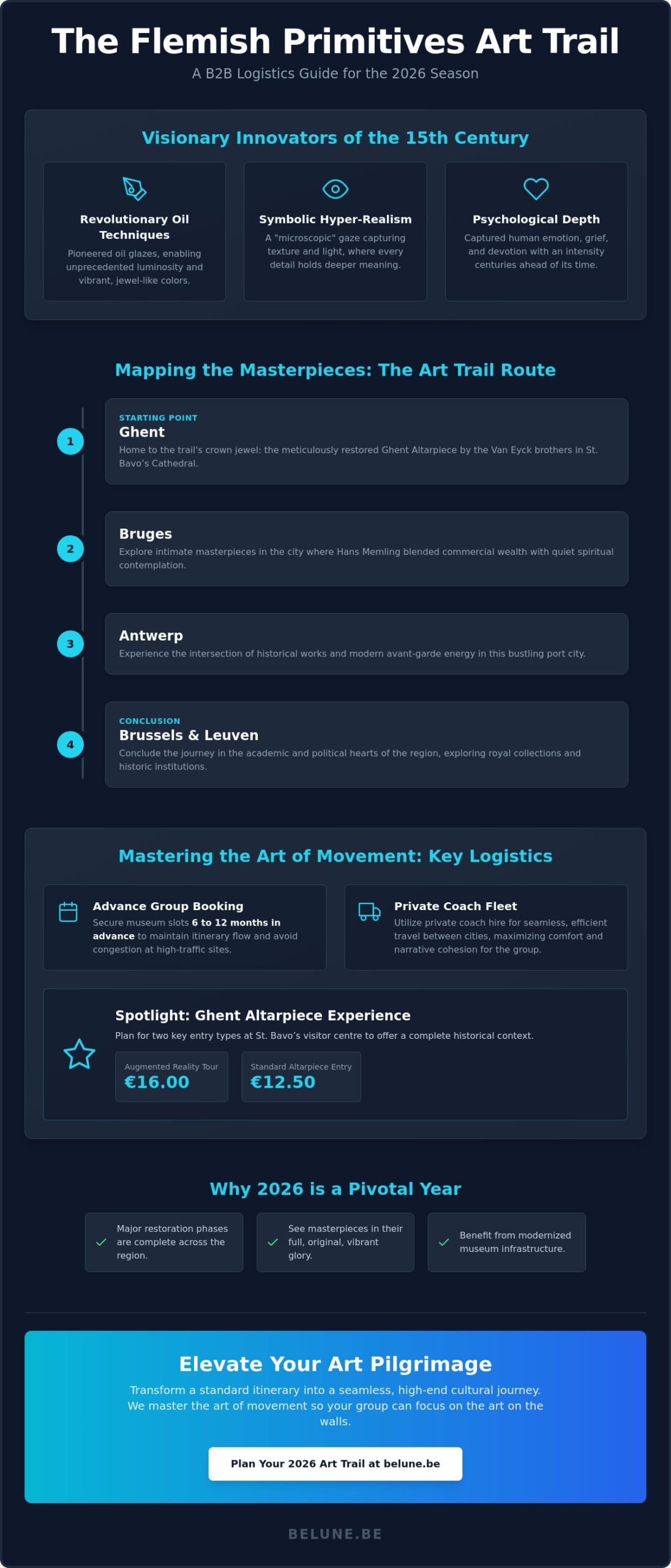
The history of art in the Low Countries is a chronicle of light captured on panel and canvas. For Benelux art history tours for groups, the journey begins in the 15th century with the Flemish Primitives. This era marked the birth of Northern Realism. Jan van Eyck and Hans Memling didn’t just paint; they observed the world with a microscopic intensity that forever changed European aesthetics. This innovation wasn’t accidental. It was fueled by the immense wealth of the Hanseatic League and the Burgundian court. These economic engines provided the patronage necessary for artistic revolution. For those seeking deeper academic context, we recommend consulting scholarly resources on Netherlandish art to appreciate the technical rigor of this period.
Moving into the 17th century, the narrative shifts toward the Dutch Golden Age. Here, the mastery of light, shadow, and domestic life takes center stage through the works of Rembrandt and Vermeer. This period reflects a transition from religious devotion to the celebration of civic pride and the quiet beauty of the home. Interestingly, the influence of these Northern masters extended far beyond their borders, reaching the French court in Paris. This cross-pollination created a sophisticated artistic dialogue that we often explore in our multi-country itineraries. By connecting the Low Countries to Paris, we provide a cohesive narrative that few can replicate, showing how Northern realism informed French classicism.
The Flemish Masters: The Foundation of Northern Realism
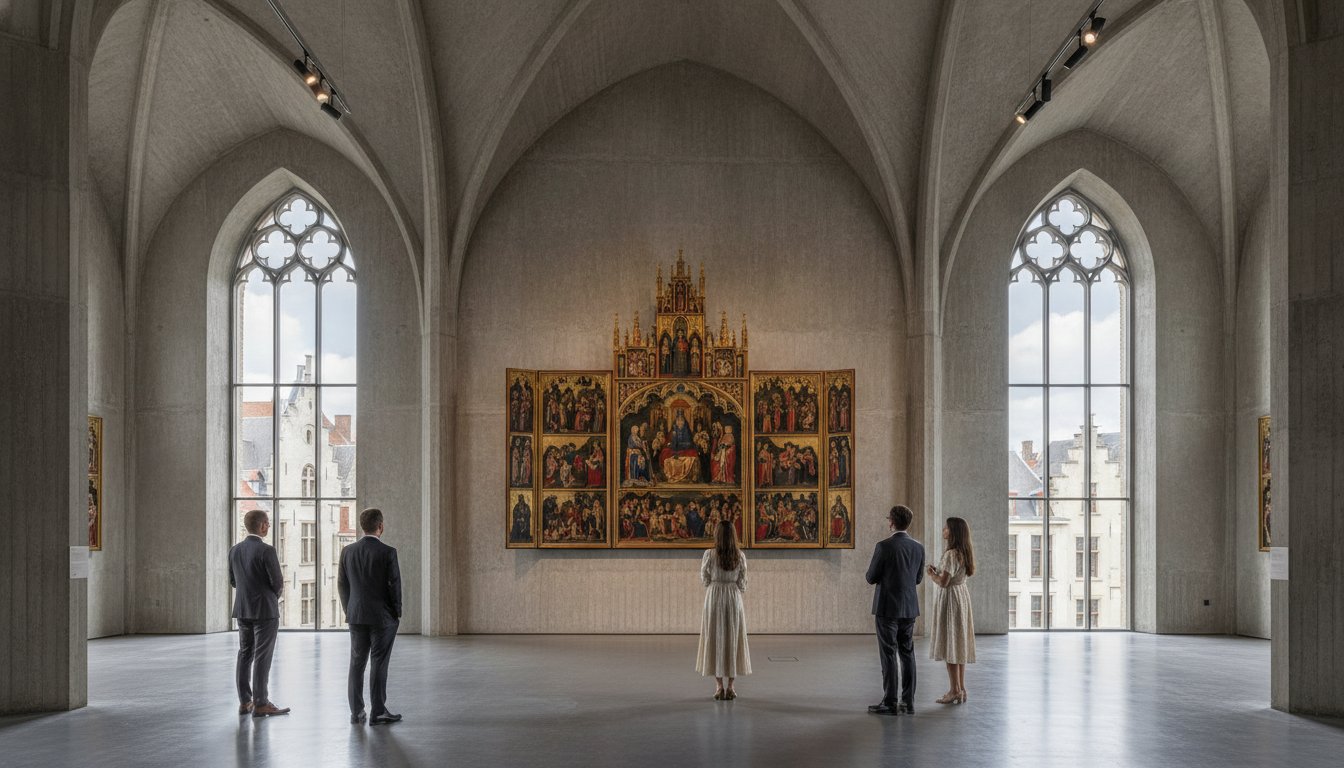
Accessing high-demand masterpieces like the Ghent Altarpiece requires strategic planning. In 2026, managing group access to these sites is an art form in itself. We evolve the standard ‘Art & Culture Group Tour’ into a deep-dive experience. We focus on the intricate details of Van Eyck’s work in Ghent and Memling’s poetic compositions in Bruges. Our team ensures your group avoids the friction of long queues, allowing for a contemplative encounter with these foundational works.
The Dutch Golden Age: Rembrandt, Vermeer, and Hals
A well-designed amsterdam art tour must account for the sheer density of visitors at major landmarks. We anchor our itineraries at the Rijksmuseum and the Mauritshuis, timing these visits with technical precision. This level of coordination is vital for Benelux art history tours for groups to maintain a sense of exclusivity. Your group will explore the ‘Schuttersstuk’ or militia paintings, which offer a unique window into the social structures of the time. These massive group portraits are particularly resonant for travel groups, illustrating the power of collective identity. Our expert guides bring these canvases to life, explaining the social and technical mastery behind Rembrandt’s ‘Night Watch’ or Vermeer’s intimate interiors. To begin crafting your own chronological journey through these masterpieces, consider our custom itinerary planning services.
Logistics as an Art Form: Managing Group Accommodations and Transport
Excellence in itinerary design is hollow without technical precision. For Benelux art history tours for groups, the logistics serve as the invisible scaffolding for the cultural experience. We believe that a group’s emotional connection to a masterpiece shouldn’t be disrupted by a late bus or a disorganized hotel check-in. Our approach treats every transfer and room assignment as a structural component of the tour’s success. This rigor ensures that the transition from the gallery to the hotel is as graceful as the art itself.
Financial transparency is equally vital for our B2B partners. We offer fixed-price group tour packages that eliminate the volatility of fluctuating local costs. This allows tour operators to market their programs with confidence, knowing the foundational costs are secured. By removing the financial uncertainty, we allow you to focus on the creative and educational aspects of the journey. We handle the technical complexities, from navigating the 2026 VAT changes to securing group-friendly hotels in historic centers that rarely accommodate large coaches.
The Private Coach Fleet: Reliability and Sophistication
Professional coach hire in Belgium is the cornerstone of regional movement. We operate our own fleet of modern coaches, a strategic choice that guarantees a standard of cleanliness and reliability that outsourced services often lack. Our drivers are specialists. They understand the specific needs of cultural tour groups and prioritize smooth, punctual transitions. Modern amenities like onboard connectivity and climate control transform travel time into a space for reflection or preparatory lectures. We ensure that the journey between Amsterdam, Brussels, and Paris is a seamless extension of the tour’s narrative.
B2B Hotel Management and Logistics
Finding the balance between luxury and accessibility in historic European centers is a delicate task. We source group-friendly hotels that reflect the sophistication of the tour while remaining logistically viable for large vehicles. As a dedicated Benelux incoming tour operator, we act as your single point of contact for the entire region. We negotiate exclusive group rates at premium properties across Benelux and Paris. Our team manages check-ins and luggage handling with surgical efficiency, maximizing museum time and protecting the group’s energy for the masterpieces ahead.
Beyond the Canvas: Designing Immersive Art Nouveau and Contemporary Itineraries
The narrative of the Low Countries is a living organism. While the Flemish Primitives established the foundation of realism, the architectural revolution of the late 19th century redefined the very volume of the city. Modern Benelux art history tours for groups are shifting their focus toward this structural poetry. In 2026, integrating the organic curves of Art Nouveau with the stark lines of contemporary art hubs creates a more balanced, sophisticated itinerary. It’s an opportunity to see how the technical mastery once reserved for a 17th-century canvas translated into the iron and glass of a modern facade.
We believe that a truly immersive culture tour must bridge the gap between the historical and the immediate. This means looking beyond the museum walls to the streets themselves. The rise of industrial-to-art transformations across the region provides a unique backdrop for groups seeking a deeper connection to the local environment. Whether it’s a former wharf in Amsterdam or a repurposed warehouse in Antwerp, these spaces prove that art is a perpetual force of urban renewal. This vision requires a partner who can navigate these diverse environments with the same technical precision applied to a classical museum visit.
Victor Horta and the Birth of Art Nouveau
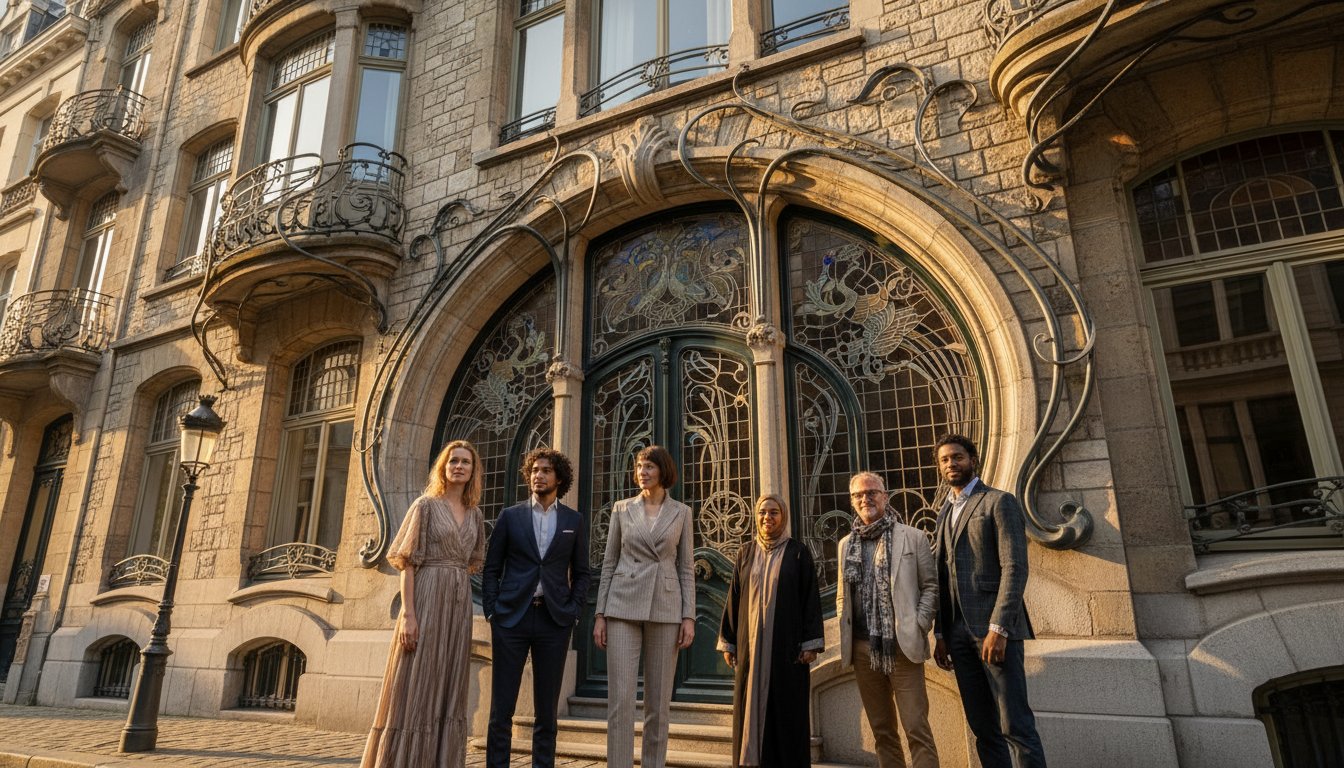
Brussels serves as the undisputed epicenter of this movement. Victor Horta’s townhouses are not merely buildings; they are intricate studies in light and space. For architecture enthusiasts, a Brussels art nouveau tour offers a deep dive into Northern Europe’s social history. We examine how Horta used industrial materials to create domestic warmth, a technical feat that mirrored the social shifts of the 19th century. Designing an art nouveau architecture focused day trip requires a nuanced understanding of these volumes, ensuring groups experience the flow of the space without the pressure of a hurried schedule.
Modernity and the Avant-Garde
The journey continues into the 20th century, where the Magritte Museum provides a surrealist counterpoint to the realism of the past. The avant-garde movement in the Benelux region wasn’t just about painting. It was a total transformation of the sensory environment. Contemporary hubs in Antwerp and Amsterdam now occupy former industrial sites, proving that art is a perpetual force of renewal. This type of themed group travel in Benelux creates lasting memories because it bridges the gap between the historical and the immediate. To begin designing a journey that looks both backward and forward, consult our expert itinerary planners to explore our contemporary options.
Partnering with BELUNE: Your Destination Management Expert in 2026
Twenty years of industry experience has allowed us to perfect the art of the cultural intervention. We understand that for a professional tour operator, a Benelux art history tour for groups isn’t just a product; it’s a reflection of your brand’s commitment to excellence. Our role as your destination management expert is to ensure that this reflection remains untarnished by logistical friction or a lack of vision. We provide the technical scaffolding that allows your creative and educational goals to flourish without compromise.
Each partnership we build is based on a foundation of trust and shared ambition. We offer a spectrum of services, from fixed-price group tour packages that provide financial stability to bespoke art hunts tailored for the most discerning enthusiasts. As we look toward the 2026 and 2027 seasons, we’re ready to help you manage the complexities of museum bookings and regional regulations with the same rigour we apply to our own fleet management. We don’t just plan trips; we engineer sophisticated cultural experiences.
The BELUNE Strategic Ally Model
Why do leading tour operators trust us? The answer lies in our ‘Strategic Ally’ model. Selecting a group travel agency partner requires more than a checklist of services; it requires a shared aesthetic and a commitment to quality. We don’t just provide local guide services; we curate experts who bring the Low Countries to life. We don’t just hire coaches; we operate a private fleet that guarantees reliability. This comprehensive approach is why we remain the preferred choice for those organizing Benelux art history tours for groups. You can request your custom itinerary today to begin securing your 2026 placements and ensuring a seamless experience for your clients.
A Vision for the Future of Group Travel
The future of travel belongs to those who embrace minimalist elegance. This means removing the clutter of logistical anxiety so that the emotional impact of the art can take center stage. A perfectly executed cultural tour has the power to transform a guest’s perspective, and that transformation is our ultimate goal. We believe that professional rigour and artistic vision should go hand in hand. We invite you to elevate your group’s experience by partnering with a team that values technical mastery as much as historical depth. Let’s create something exceptional together for the coming season.
Mastering the Art of the 2026 Cultural Itinerary
Organizing sophisticated Benelux art history tours for groups requires a delicate fusion of historical insight and logistical rigour. You’ve seen how the 2026 landscape demands a proactive approach to museum access and evolving regional regulations. Success isn’t found in a simple list of stops. It lives in the seamless narrative that connects a 15th-century masterpiece to the modern pulse of an architectural landmark. By prioritizing technical precision, you allow the true brilliance of the region to captivate your guests without distraction.
We invite you to leverage our 20+ years of DMC expertise and our private fleet of modern coaches to secure your vision. Whether you require reliable hotel management or custom itineraries for tour operators, our team acts as your strategic ally across the region. It’s time to transform your logistical challenges into a curated experience that inspires and endures. Partner with BELUNE for your next masterpiece group tour and elevate your program to a new standard of excellence.
Frequently Asked Questions
What are the best art history museums for large groups in the Benelux region?
The Rijksmuseum in Amsterdam and the Royal Museum of Fine Arts in Antwerp are the premier choices for accommodating large groups. While the Groeningemuseum in Bruges is an essential stop, you must account for the strict 20-person limit per guide currently in effect for that city. These institutions are central to Benelux art history tours for groups because they offer the spatial volume and curated depth necessary for a professional cultural experience.
How far in advance should a tour operator book group tickets for the Rijksmuseum or Louvre?
You should secure group reservations at least three to six months in advance to ensure your preferred timed entry slots. For the Rijksmuseum, where adult tickets are €25 in 2026, online booking is mandatory and group windows fill up quickly. The same level of foresight is required for the Louvre in Paris. Early coordination is the only way to maintain a seamless itinerary and avoid the friction of sold-out dates.
Does BELUNE provide multi-lingual guides specializing in art history?
Yes, we specialize in providing high-quality local guide services delivered by professionals who are fluent in multiple languages. Our guides are more than just translators; they are experts who bring the technical and emotional nuances of the Low Countries’ artistic heritage to life. This specialized expertise ensures that your group receives an inspiring and deeply professional narrative at every museum and gallery on the tour.
Can an art history tour be combined with other themes like gastronomy or battlefield tourism?
What size of groups can BELUNE accommodate with their private coach fleet?
Our private fleet of modern coaches is designed to accommodate a wide range of group sizes with technical reliability and sophistication. By operating our own vehicles, we guarantee a standard of excellence that outsourced services cannot match. Whether you’re managing a small specialized group or a large delegation, we provide the specific transport logistics needed to move between Amsterdam, Brussels, and Paris without fatigue.
How does BELUNE manage hotel bookings for large cultural groups in historic cities?
We manage hotel accommodation by leveraging our long-standing relationships with premium properties that are specifically equipped for group logistics. Our team handles the technical aspects of check-ins and luggage management to maximize your group’s time in the galleries. This strategic oversight is vital in historic centers where navigating large vehicles and managing group check-ins requires local expert knowledge and precision.
Are the itineraries customizable for specific artistic movements like Art Nouveau?
Every itinerary we design is fully customizable to focus on specific movements such as Art Nouveau, the Dutch Golden Age, or contemporary transformations. We recognize that Benelux art history tours for groups often require a unique narrative arc tailored to a specific audience. Our visionaries work closely with you to curate a bespoke journey that reflects your professional standards and the artistic interests of your guests.
Does BELUNE offer fixed-price group tour packages for the 2026 season?
Yes, we provide fixed-price group tour packages for the 2026 season to offer our partners total financial certainty. These packages cover transport, accommodation management, and expert guidance, protecting you from the volatility of fluctuating local costs. Our goal is to serve as a reliable strategic ally, allowing you to focus on the creative and educational aspects of your tour while we handle the technical execution.