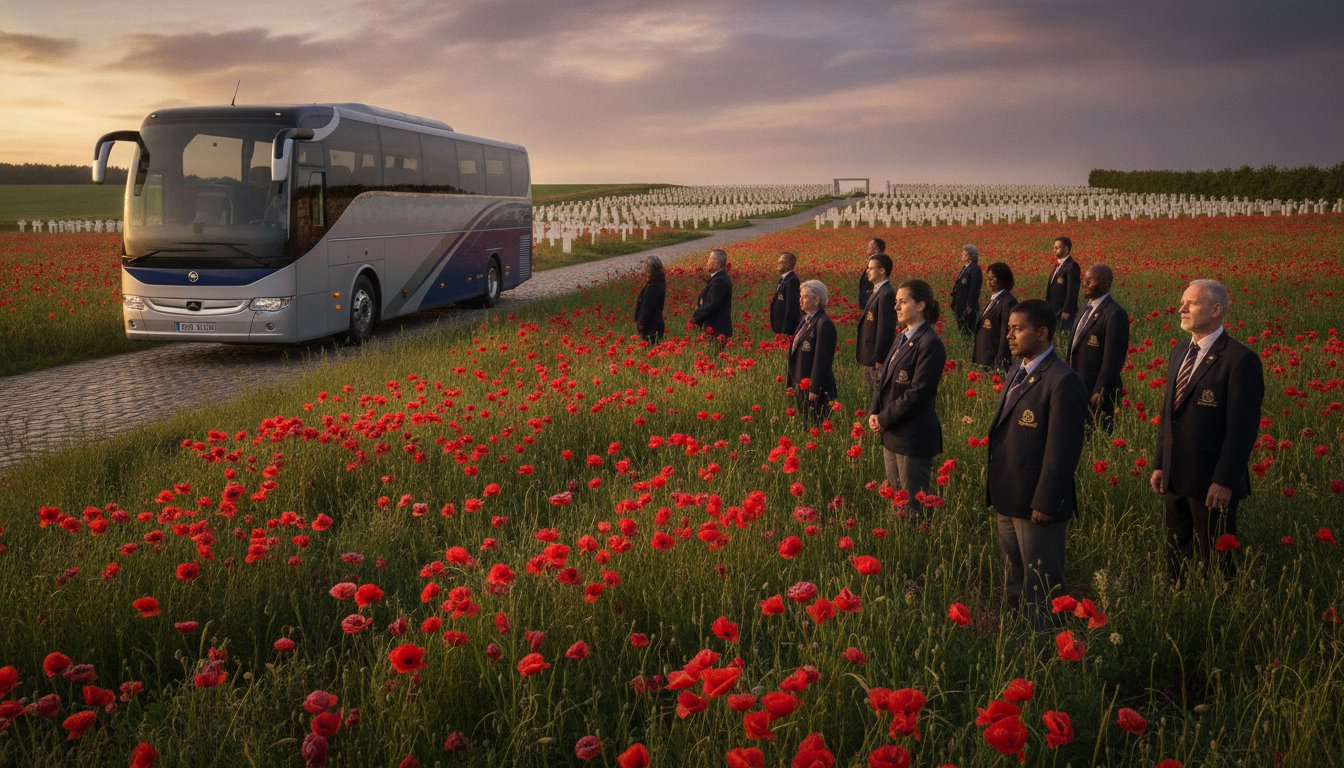
Could the most profound moments of a journey exist in the seamless transitions rather than the destinations themselves? For those orchestrating flanders fields pilgrimage planning, the challenge lies in transforming a complex logistical grid into a meaningful, sacred experience. It’s an architectural feat of timing and grace. You already know that navigating modern coaches through narrow rural roads while preserving a group’s contemplative state requires more than a simple itinerary. It demands a sophisticated vision that marries technical precision with the emotional weight of the Ypres Salient.
We agree that a pilgrimage should feel effortless, allowing the historical depth of the region to take center stage without the distraction of logistical friction. This 2026 guide reveals the expert frameworks and curated strategies necessary to design a seamless group experience, from the beautifully restored Menin Gate to the latest archaeological insights. We’ll preview how to secure group-friendly accommodations and reliable transport management that honors your schedule. You’ll learn how to build a fixed-price journey that combines local expertise with the quiet reflection your travelers seek.
Key Takeaways
- Learn to balance iconic landmarks like Tyne Cot with hidden sites, ensuring your itinerary captures the heart of collective memory.
- Master the logistical artistry of flanders fields pilgrimage planning by utilizing a specialized coach fleet designed for the region’s narrow, historic roads.
- Discover how professional accommodation management secures hotels that align with the quiet, reflective tone required for a profound pilgrimage.
- Understand the nuances of tailoring narratives for diverse groups, linking specific memorial sites to the unique histories of Commonwealth or American forces.
- Secure the serenity of financial predictability through fixed-price group packages that leverage decades of local guide expertise and regional partnerships.
The Foundation of Flanders Fields Pilgrimage Planning in 2026
2026 marks a profound transition in how we approach the landscapes of the Ypres Salient. We’re moving away from the loud echoes of the centenaries into a more intimate, reflective era of remembrance. This shift transforms Flanders Fields from a historical site into a living landscape of collective memory. Successful flanders fields pilgrimage planning now requires a delicate, sophisticated touch. It’s no longer just about seeing the scars of the Western Front; it’s about understanding the silence that remains and the stories that still wait to be told.
The strategic focus of any group itinerary remains the Ypres Salient. This semi-circular front line, where the landscape was literally reshaped by conflict, serves as the physical foundation for the journey. In 2026, planners must account for the region’s UNESCO World Heritage status. This designation has introduced more rigorous management of visitor flows at key funerary and memorial sites. For large groups, this means securing permits well in advance and respecting the heightened conservation standards that protect these hallowed grounds. It’s an architectural feat of timing that ensures the site’s solemnity remains intact for everyone.
To appreciate the profound atmosphere of these landscapes, it’s helpful to reflect on the words that first immortalized them:
The Geography of Memory
Structuring a route requires a deep understanding of the Northern, Eastern, and Southern sectors of the Salient. A logical flow follows the historical troop movements, moving from the flooded plains of the North toward the high ground of the East. We often encourage groups to explore the “Forgotten Fronts,” such as the quiet ridges near Messines or the wooded areas of the Palingbeek. These less-traveled paths offer a unique sense of discovery. They provide the physical and mental space needed for a genuine connection with the past, away from the more frequent tourist traffic.
Setting the Emotional Tone
The technical details of flanders fields pilgrimage planning are nothing without the right emotional resonance. Balancing historical education with moments of solemnity is a fine art. We rely on expert local guide services to bridge this gap. These professionals don’t just recite dates; they weave human stories into the physical landscape, making the history tangible. Preparing your group before they arrive is equally vital. Providing curated materials that set the stage ensures that when they step onto the soil of the Salient, they aren’t just visitors. They’re pilgrims ready for a transformative, deeply personal experience.
Curating the Itinerary: Balancing Essential Sites and Hidden Gems
Curation is an act of balance. Mastering flanders fields pilgrimage planning involves more than a checklist of monuments; it requires an architectural approach to pacing and emotional texture. A successful itinerary avoids remembrance fatigue by alternating between vast, open landscapes and intimate, enclosed spaces. We focus on creating a narrative arc that respects the gravity of the history while ensuring the group remains engaged and reflective. By 2026, the landscape has matured, offering new ways to witness the layers of conflict and recovery.
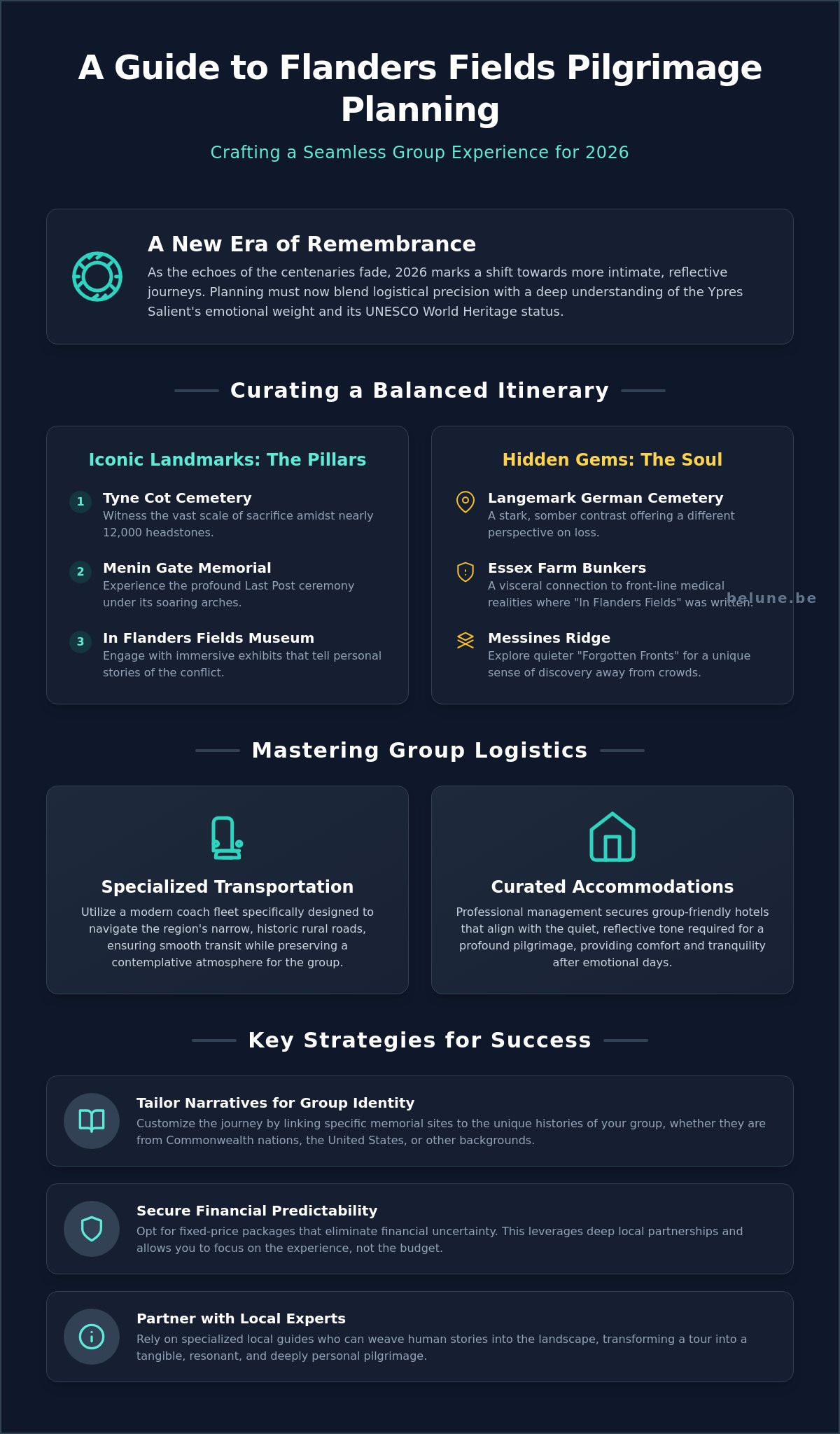
The “Big Three” remain the essential anchors for any journey. These include the massive white headstones of Tyne Cot, the soaring arches of the Menin Gate, and the immersive exhibits of the In Flanders Fields Museum. However, the true depth of a pilgrimage emerges when you weave in lesser-known sites. The German cemetery at Langemark, with its dark granite and mass graves, provides a stark, necessary contrast to the Commonwealth memorials. Similarly, the concrete bunkers at Essex Farm offer a visceral connection to the medical realities of the front lines. Our experts provide the local guide services required to navigate these complexities with grace.
The Pillars of the Ypres Salient
Tyne Cot Cemetery stands as the world’s largest Commonwealth war cemetery, a silent city of 11,965 burials. Managing a large group here requires precision to maintain the site’s solemnity. Following the 2025 restoration, the Menin Gate is fully accessible in 2026, featuring enhanced LED lighting that adds a new dimension to the Last Post Ceremony. This ceremony takes place daily at 8:00 PM. For groups, securing a vantage point requires arriving at least 45 minutes early. We often recommend visiting the In Flanders Fields Museum in the afternoon to provide historical context before the evening’s tribute.
Off-the-Beaten-Path Remembrance
To truly understand the subterranean war, a visit to Hill 60 is indispensable. This site remains an active archaeological zone where the landscape is still distorted by mine craters. The Yorkshire Trench and Dugout, located in an industrial estate, offers a raw look at trench life that feels immediate and unpolished. For a moment of quietude, the Pool of Peace at Spanbroekmolen provides a natural sanctuary. This massive crater, now filled with water, demonstrates how nature eventually reclaims the scars of conflict. These sites require expert flanders fields pilgrimage planning to ensure they fit seamlessly into a tight coach schedule without feeling rushed.
Strategic timing is the invisible thread that holds these experiences together. By varying the site types, from the interactive museum galleries to the wind-swept ridges of the Salient, you create a journey that resonates long after the group returns home. It’s about finding the silence between the stories.
Group Logistics: Transportation and Accommodation Strategies
Precision in flanders fields pilgrimage planning is often found in the unseen details of transport and rest. Moving a group through the Ypres Salient is a technical challenge that requires an intimate knowledge of the Flemish platteland. These narrow, rural roads lead to the heart of remembrance sites, yet they weren’t designed for the dimensions of modern 49-seater coaches. A professional fleet isn’t just a vehicle; it’s a mobile sanctuary where the journey’s emotional weight is processed between stops. Logistics are the silent architecture of memory. Without a meticulously managed plan, the profound silence of a cemetery can quickly be eclipsed by the frustration of a parking delay or a navigation error.
Timing is everything. European driving hour regulations are strict, requiring a 45-minute break for every four and a half hours of driving. A sophisticated itinerary respects these legal boundaries while maintaining the day’s momentum. We design routes that account for the 15-minute transit between Ypres and Tyne Cot, ensuring the driver’s schedule aligns perfectly with the group’s needs. Catering is another vital component. Balancing efficiency for large groups with the desire for authentic local gastronomy requires pre-arranged venues that can handle volume without sacrificing the quiet, respectful atmosphere of the trip.
Optimizing the Coach Experience
- Fleet Agility: Utilizing modern coaches equipped with advanced navigation ensures that even the most secluded bunkers remain accessible.
- Parking Mastery: Major sites like the Menin Gate have specific drop-off zones. Knowing the exact logistics of these points prevents unnecessary walking for older pilgrims.
- On-board Reflection: Coaches featuring high-quality audio-visual systems allow guides to present maps and historical footage during transit, deepening the educational impact.
Accommodation for Large Groups
Sourcing the right hotel is an exercise in atmospheric alignment. A pilgrimage requires a base that respects the solemnity of the day’s visits while providing the comfort needed for recovery. We prioritize locations in Ypres or the immediate surrounding countryside to minimize transit times. Managing rooming lists and group check-ins is a technical hurdle we handle behind the scenes to ensure a seamless evening transition. The benefits of hotel accommodation management for multi-night stays become clear when the group can return to a familiar, welcoming environment each night, allowing them to focus entirely on their personal journey of remembrance.
By integrating these logistical frameworks, the pilgrimage moves from a series of stops to a fluid, uninterrupted experience. It’s about creating the space for reflection through the mastery of movement.
Customizing the Pilgrimage for National and Group Identities
A pilgrimage is an intimate dialogue between the present and a specific past. Effective flanders fields pilgrimage planning recognizes that a group’s national or regimental identity dictates the emotional geography of their journey. A Commonwealth group might prioritize the tracing of specific regimental paths through the Salient, while an American group finds its focal point at the Flanders Field American Cemetery in Waregem. This isn’t merely about visiting different coordinates. It’s about tailoring the narrative through nuanced storytelling that bridges cultures and eras. Multilingual local guides are essential here, offering the linguistic and historical fluidity needed to translate technical battlefield maneuvers into human experiences.
For American groups, the perspective often shifts toward the broader Allied effort of 1918. Linking the Waregem cemetery with sites like the Kemmelberg provides a comprehensive view of the U.S. involvement. In April 2025, the multi-national effort to exhume 22 soldiers near the Palingbeek golf club highlighted the ongoing nature of this landscape. Such discoveries offer a dynamic element to customized tours, reminding pilgrims that the soil of Flanders still holds many secrets. We ensure these recent events are integrated into the itinerary, providing a layer of contemporary relevance to the historical narrative.
National Identity in Remembrance
True customization often happens at the individual level. We specialize in sourcing specific grave locations for family or regimental pilgrimages, transforming a vast cemetery into a site of personal reunion. Coordinating wreath-laying ceremonies is a standard part of our service. These tributes, with wreaths typically costing between €23 and €26 at the Ypres Tourist Office, provide a tangible moment of connection. By integrating culture group tours benelux elements, we place these individual acts of remembrance within the wider artistic and social fabric of the region.
Educational vs. Commemorative Focus
The architecture of the trip must adapt to the group’s purpose. School groups require a focus on curriculum-aligned education and safety, often emphasizing the evolution of technology or the role of women in the war. Conversely, veteran associations prioritize accessibility and formal commemorative events. We adjust the pacing to allow for the quiet reflection these groups deserve. Whether the theme is the history of medicine or the subterranean war, the itinerary must be a bespoke creation. If you’re ready to design a journey that honors your group’s unique identity, explore our battlefield tourism expertise.
Partnering for Excellence: Why a Specialized DMC is Essential
The transition from a conceptual itinerary to a lived experience is where technical mastery meets emotional resonance. In the intricate world of flanders fields pilgrimage planning, the difference between a standard tour and a profound journey lies in the invisible hand of a specialized Destination Management Company (DMC). We bring over 20 years of local expertise in the Benelux region to every project. This longevity isn’t just a number; it represents a deep, artisanal knowledge of the Ypres Salient’s rhythms, its people, and its hidden possibilities. A partnership with a local expert transforms logistical complexity into a fluid, meaningful narrative for your group.
For tour operators, the primary value of this collaboration is financial and operational predictability. We provide fixed-price group tour packages that eliminate the volatility often associated with international travel planning. Professional service fees aren’t merely an added cost. They’re a strategic investment in risk mitigation and quality assurance. When you pay for expert guidance, you’re securing a guarantee that every detail, from coach transit times to the solemnity of a hotel’s atmosphere, has been vetted by professionals who live and breathe this landscape. It’s about buying peace of mind so you can focus on your clients’ emotional journey.
The DMC Advantage for Tour Operators
Our role involves sophisticated local partner management that goes beyond simple bookings. We secure access to sites and venues that are often unavailable to the general public or solo organizers. This exclusive reach ensures your group experiences the Salient without the friction of over-crowded paths. On-the-ground support provides real-time problem solving, ensuring that if a road is closed or a ceremony time shifts, the itinerary adapts without the group ever feeling the change. To build a foundation for high-end travel experiences, it’s vital to partner with a benelux incoming tour operator who understands the nuances of the European market.
Starting Your 2026 Planning Process
The timeline for a successful 2026 pilgrimage begins now. The industry standard for group bookings is 12 to 18 months in advance, especially for the high-demand periods surrounding memorial anniversaries. This lead time is essential for securing the best group-friendly hotels and the most experienced local guides. When requesting a bespoke itinerary, provide your DMC with clear group goals, whether they’re educational, commemorative, or regimental. The more technical detail we have, the more artistic we can be with the final experience. The BELUNE promise is one of excellence and technical rigor. Enquire about your custom Flanders Fields group itinerary today to begin crafting a journey that will resonate for a lifetime.
Transforming Vision into a Sacred Journey
A successful journey through the Ypres Salient is an architectural feat where technical precision magnifies the emotional experience. By mastering flanders fields pilgrimage planning, you move beyond mere tourism to create a legacy of remembrance. This guide has detailed the necessity of balancing iconic landmarks with intimate, hidden ridges and the importance of logistical frameworks that preserve the group’s contemplative state. Every detail, from the timing of the Last Post Ceremony to the accessibility of private bunkers, serves a singular purpose: to honor the past with grace.
Our team provides the structural support required for such a profound undertaking, leveraging over 20 years of local DMC expertise. With a private fleet of modern, group-optimized coaches and the financial serenity of fixed-price transparency, we transform complex logistics into a seamless narrative. We invite you to collaborate with us to build an experience that resonates long after the final wreath is laid. Request your custom 2026 Flanders Fields group pilgrimage plan and ensure your next journey is as effortless as it is unforgettable. The history of Flanders is a living landscape, and it’s waiting for your arrival.
Frequently Asked Questions
How far in advance should I start planning a Flanders Fields pilgrimage for 2026?
You should ideally begin flanders fields pilgrimage planning 12 to 18 months before your intended departure date. This timeline is the industry standard for securing the most reputable group-friendly hotels and elite local guides during the peak remembrance months. Early engagement also allows for the precise customization of itineraries, especially when tracing specific regimental histories or family connections across the Ypres Salient.
Is the Menin Gate Last Post ceremony accessible for large groups during restoration?
The Menin Gate is fully accessible for large groups in 2026 following the successful completion of its restoration in July 2025. The iconic memorial now features enhanced LED lighting to illuminate the daily Last Post ceremony, which takes place at 8:00 PM. While reservations aren’t required for the general public, we recommend arriving at least 45 minutes early to secure a cohesive vantage point for your entire group.
What are the coach parking regulations in the center of Ypres?
Coach parking in the center of Ypres is strictly regulated to preserve the city’s historic character while facilitating group access. Dedicated drop-off and pick-up zones are located near the Menin Gate and the Grote Markt, but long-term parking is restricted to designated peripheral areas. We utilize a modern fleet and expert drivers who are intimately familiar with these local ordinances, ensuring your group transitions seamlessly from the coach to the memorials.
Can we combine a Flanders Fields pilgrimage with other Belgian gastronomy or culture tours?
Integrating remembrance with local culture is a hallmark of a sophisticated and balanced itinerary. You can easily combine a pilgrimage with our gastronomy and beer experience tours, offering a necessary moment of respite and reflection. This approach balances the emotional weight of the battlefield sites with the artisanal excellence of Flemish culinary traditions, from historic village breweries to refined regional specialties.
Do you provide specialized guides for specific national military histories?
We provide highly specialized local guide services tailored to specific national military histories, including Commonwealth, American, and French perspectives. These experts go beyond general facts to offer nuanced storytelling that resonates with your group’s unique identity. Whether your focus is on the 1918 American offensive or specific British regimental paths, our guides bridge the gap between technical historical data and the human experience.
How do we manage the logistics of a multi-national group with different commemorative needs?
Managing multi-national groups requires an architectural approach to itinerary design that honors diverse perspectives. We structure the journey to include specific sites relevant to each nationality, such as the Flanders Field American Cemetery alongside Tyne Cot. By coordinating private wreath-laying ceremonies and providing multilingual guides, we ensure every participant finds personal meaning within the collective narrative of the Western Front.
What is the best way to handle group dining near the major battlefield sites?
The most effective way to handle group dining is through pre-arranged venues that specialize in high-quality service for large parties. We source locations that offer the efficiency required for a tight schedule without sacrificing the quiet, atmospheric alignment of the pilgrimage. This ensures your group can reflect on their morning visits over a meal that honors the region’s local flavors in a respectful environment.
Are there specific accessibility considerations for older veterans at the cemeteries?
Accessibility is a critical component of our flanders fields pilgrimage planning, particularly for older veterans or those with limited mobility. Most major cemeteries, such as Tyne Cot, feature level paths, and we prioritize drop-off points that minimize walking distances. Our modern coaches are equipped with amenities to ensure comfort during transit, and our guides are trained to adjust the pace of the tour to accommodate all mobility levels.