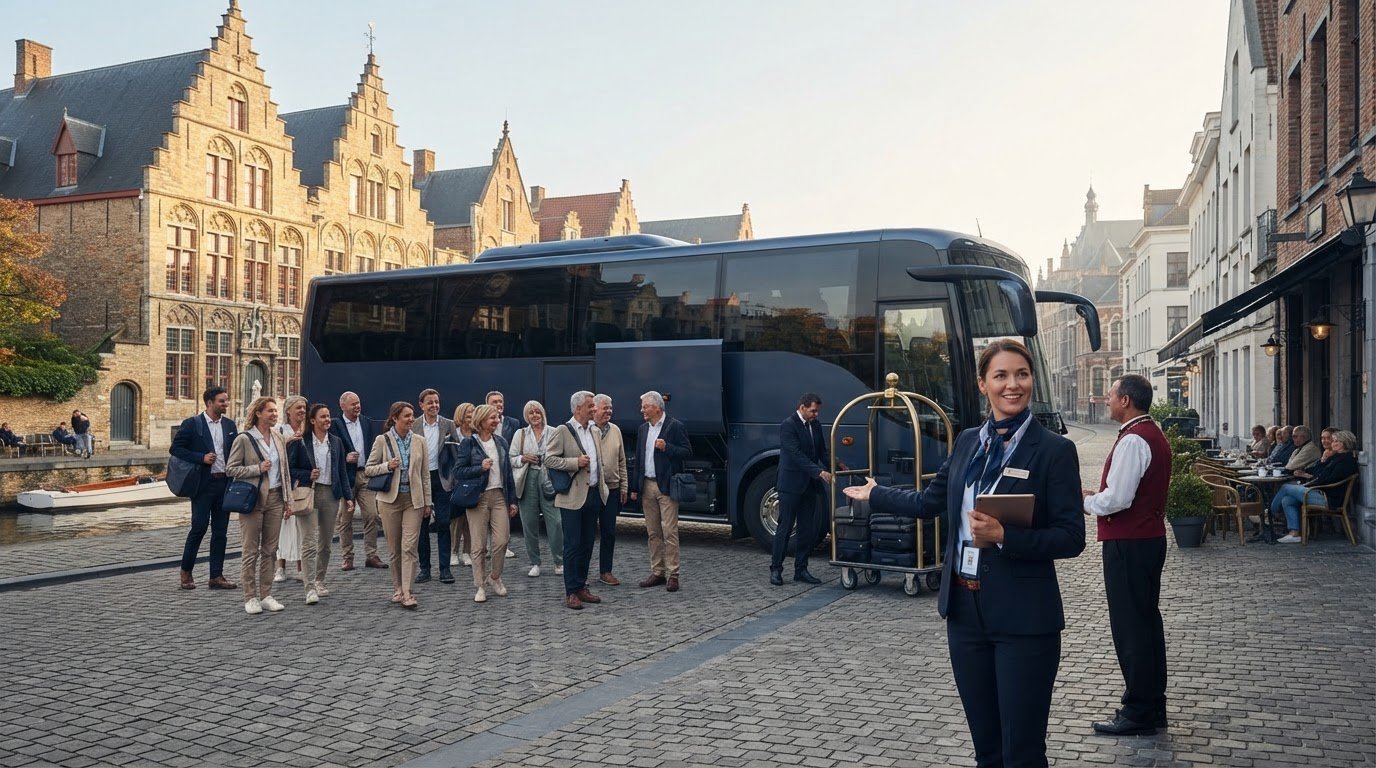
What makes a group tour run smoothly is often how well its services work together. Tour management Belgium means planning transport, accommodation, local guidance and activities as one itinerary, rather than a series of separate bookings. When those parts are not aligned, even a thoughtfully designed programme can feel rushed, and changes can add pressure for the tour leader.
Coordination matters as much as the experiences themselves. A practical schedule gives the group time to enjoy Belgium’s culture, gastronomy and distinctive character while keeping timings, transfers and traveller needs in view.
This article explains the responsibilities involved in group tour management, how to prepare a clear brief and workable itinerary, and what to consider when choosing a coordination partner. BELUNE brings more than 20 years of experience in transport and tour operations, connecting accommodation management, its modern coach fleet, local guides and customised group experiences in one programme. The aim is to put thoughtful logistics behind a journey that feels seamless to travellers.
Key Takeaways
- Tour management connects the moving parts of a group journey, so activities, transport and accommodation work as one itinerary.
- With tour management belgium, a clear brief helps shape a programme around the group’s theme, pace and practical needs.
- Compare separate bookings with a coordinated plan to understand how communication, flexibility and local support affect the tour leader’s workload.
- Set priorities early, including traveller needs, accommodation preferences and transport requirements, to guide itinerary decisions.
- BELUNE’s experience supports tailored group programmes for tour operators and travel agents.
What Tour Management in Belgium Means for Group Travel
Tour management in Belgium is the coordinated planning and delivery of a group journey. It brings the itinerary, accommodation, coach transport, local guidance and activities into one workable programme. Rather than arranging a single excursion or transport booking in isolation, it considers how each element affects the others and the group’s experience.
For tour operators, that coherence matters. An activity affects departure times, the journey between stops influences the day’s pace, and accommodation shapes arrival and departure arrangements. A tour operator’s wider role in assembling travel services is outlined in Tour Operator Definition and Functions. Tour management applies that connected thinking to the details of a group itinerary, so individual services support one shared plan.
A brief visual introduction to Belgium can help set the scene for the group experiences a programme might bring together.
Which responsibilities sit within group tour management?
Group tour management connects the programme’s core components. This can include managing overnight accommodation, planning coach transport between activities, arranging local guide services, and fitting visits or themed experiences into the schedule. Sequence and timing matter: a cultural visit, guided walk and group meal each need enough time, with practical transitions built into the day.
The management work centres on designing and aligning those arrangements. The tour leader focuses on the group: welcoming travellers, sharing information and helping them stay oriented as the itinerary unfolds. Clear plans and hand-offs give the leader a reliable framework, rather than making them the sole point of contact for every logistical detail.
Why does coordinated management matter to the traveller experience?
Good coordination is often noticeable when the day moves without unnecessary friction. Travellers know when to be ready, where the next part of the programme fits and how one experience leads into another. Clear timings and hand-offs reduce uncertainty, leaving more attention for the stories, flavours, culture or shared occasion at the heart of the tour.
Consider a group travelling for an art and culture programme. A guided visit is followed by a coach transfer and a planned meal. If the schedule allows time for the visit, the transition and the group’s pace, the day can feel connected rather than compressed. The same principle applies to gastronomy, cycling or heritage-focused itineraries: practical planning should support the theme, not compete with it.
Tour management in Belgium is the coordinated design and delivery of group travel, aligning services and timing so the itinerary works as one considered experience.
How Tour Management in Belgium Brings Every Service Together
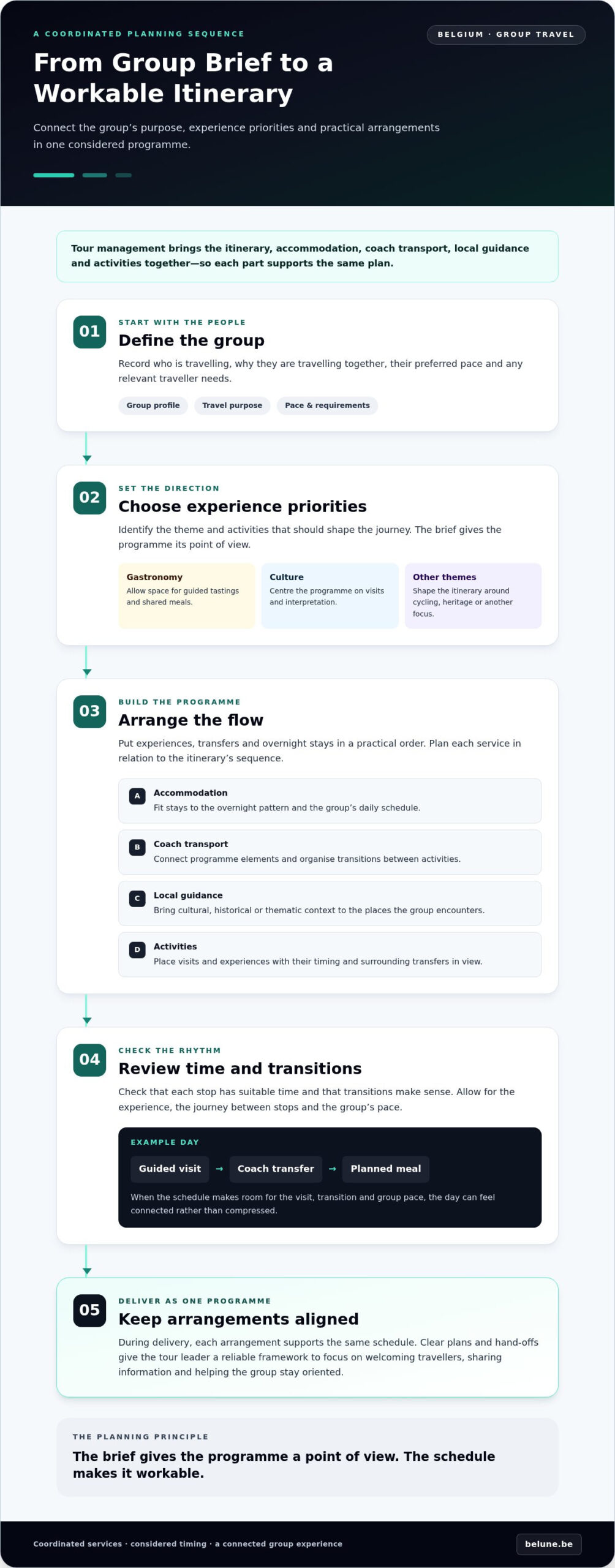
A group programme takes shape in stages. First, the travel partner defines the brief. Next, priorities become an itinerary, and accommodation, transport, guides and activities are planned around its sequence. During delivery, each arrangement needs to support the same schedule. This is the practical value of tour management belgium: shaping individual services into one programme instead of leaving their connections to chance.
From group brief to a workable itinerary
Start with the essentials: who is travelling, why they are travelling together, the pace they prefer and any important traveller needs. These details help determine what belongs in the programme and how much time to allow for each experience. BELUNE tailors group itineraries for tour operators and travel agents, turning those priorities into a considered plan.
A useful planning sequence is:
- Define the group. Note its profile, travel purpose and relevant requirements.
- Set the experience priorities. Identify the theme and activities that should shape the journey.
- Arrange the flow. Put experiences, transfers and overnight stays in a practical order.
- Review the rhythm. Check that each stop has suitable time and that transitions make sense.
This sequence keeps the itinerary anchored in the group’s purpose. A gastronomy-led programme, for example, may need space for guided tastings and shared meals, while a culture-focused tour may centre on visits and interpretation. The brief gives the programme a point of view; the schedule makes it workable.
Coordinating accommodation, coaches, and local guidance
Once the itinerary’s shape is clear, its components can be planned in relation to one another. Accommodation needs to fit the overnight sequence and the group’s daily movements. Coach transport links activities and helps organise transitions, while local guides bring knowledge and context to the places and themes the group encounters.
- Accommodation: Plan stays around the itinerary’s overnight pattern and the group’s schedule.
- Coach transport: Connect programme elements so the group can move through the day according to the agreed plan.
- Local guidance: Give travellers more than a route between stops. A guide can illuminate cultural, historical or thematic connections that make an experience more meaningful.
- Activities: Position visits and experiences with their timing and surrounding transfers in view.
Clear responsibilities also help prevent avoidable friction. When the programme records what happens next and how its elements connect, partners and the tour leader can work from a shared structure instead of repeating arrangements across separate conversations. BELUNE brings accommodation management, coach transport, local guides and themed experiences together for professional travel partners. Explore BELUNE’s group travel support as you shape a coordinated programme.
Tour Management in Belgium: Separate Bookings or One Coordinated Plan?
Tour operators can assemble a group programme by booking each service independently or by working with one destination-management partner across connected elements. Neither model suits every operation. The right choice depends on the team’s time, supplier relationships, local knowledge and capacity to coordinate details. As programme elements multiply, coordination becomes more important: each service adds another connection to align, not just another booking to make.
For a simple itinerary with few moving parts, an operator with strong supplier relationships and enough planning capacity may prefer to coordinate directly. A multi-day programme combining accommodation, coach journeys, guides and scheduled experiences may benefit from a shared planning structure, particularly when timings or arrangements need to change.
What changes when services are managed separately?
With separate bookings, the tour operator is responsible for joining the dots: aligning schedules, sharing relevant requirements and passing updates between suppliers. This can work well when the team has clear processes and a manageable programme. But a change to one element may need to be communicated through several conversations, adding coordination for the operator and sometimes the group leader.
| Consideration | Separate bookings | One coordinated plan |
|---|---|---|
| Coordination load | The operator tracks arrangements and dependencies across suppliers. | A planning partner aligns connected programme elements. |
| Communication flow | Updates may travel through several separate channels. | Related details can be managed through one planning relationship. |
| Itinerary flexibility | The operator brings suppliers together to assess adjustments. | Changes can be considered in the context of the wider programme. |
| Local support | Depends on the operator’s own local knowledge and contacts. | A destination partner adds local guidance and coordination. |
What does an integrated destination-management approach add?
A destination-management partner can give the operator one planning relationship across accommodation, coach transport, local guides and activities. The services remain distinct, but their roles and timing are considered together. This makes it easier to see how a change to one part may affect another and to make a practical decision with the full programme in view.
This approach can suit operators who want their internal team to focus on the group and the experience, while drawing on local coordination for delivery. It does not remove the operator’s role or mean every supplier decision is identical. It provides a connected framework for managing the moving parts. BELUNE works with tour operators and travel agents to coordinate customised group programmes. For a wider perspective on incoming tour operators, see its guide to choosing an incoming tour operator.
In practice, tour management belgium is less about choosing a universally superior booking model and more about matching coordination to programme complexity. Consider how many services must work together, who will handle updates and how much local support your team needs. Those answers can help you decide whether independent coordination or a unified plan best fits your group and operational capacity.
How to Prepare a Strong Brief for Tour Management in Belgium
A clear brief gives tour management belgium a useful starting point. It turns broad ideas into a programme shaped around the group, rather than a list of appealing activities. Share what matters most, what can flex and who will make decisions as the itinerary develops. Clearly stated priorities make it easier to balance the experience with the practical details behind it.
What information should a group-tour brief include?
Build the brief in a deliberate order, moving from the group’s essentials to the character of the programme:
- Define the group. Describe its profile, approximate size and travel purpose, such as a shared interest, celebration or professional programme.
- Set the travel framework. Give preferred dates and outline the group’s pace, including how active or relaxed the days should feel.
- Identify traveller needs. Record key requirements that may affect accommodation, transport, activities or the daily schedule.
- Choose the experience theme. Indicate whether culture, gastronomy, heritage or battlefield tourism should shape the itinerary.
- Rank priorities. Separate essential requirements from preferences that could adapt as the programme takes shape.
This distinction is valuable. If a particular experience is central to the group’s purpose, mark it as essential. If an activity or schedule preference can change, identify it as flexible. This gives itinerary planning room to adapt without losing sight of what travellers came to experience.
How should operators plan for changes and communication?
Decide early who owns programme decisions and who communicates updates to travellers. The operator might lead decisions about the group’s priorities, while a designated tour leader shares practical information with participants. Clear roles help prevent repeated questions and reduce the risk of different people working from different versions of the plan.
Build sensible space into the schedule around transfers and group activities. This does not mean leaving the day undefined. It means considering how long transitions may take and avoiding an itinerary that depends on every element running perfectly to schedule. If a visit takes longer than expected, a flexible plan gives the operator a clearer basis for deciding what can shift while preserving the programme’s essential experiences.
Local coordination can help assess practical changes in context. When accommodation, coach transport, guides and activities are considered together, an adjustment to one part can be weighed against its effect on the rest of the itinerary. Share updates through agreed points of contact, then make sure the tour leader has the information needed to brief travellers clearly.
A thoughtful brief does not need to predict every detail. It needs to show what the group values, where the programme can adapt and who guides decisions. Discuss a tailored group programme with BELUNE to bring those priorities into a considered itinerary.
How BELUNE Delivers Tour Management in Belgium for Group Travel
BELUNE is a destination management company that works with tour operators and travel agents to create tailored group programmes. Its approach to tour management belgium connects practical arrangements with the character of the journey, bringing accommodation management, coach transport, local guidance and themed experiences into one itinerary.
More than 20 years of experience in transport and tour operations informs the way BELUNE coordinates these elements. For a travel partner, that means working with a team familiar with the relationship between the plan on paper and the movement of a group through its programme. The aim is a considered structure that supports the partner’s objectives while giving travellers a cohesive experience.
A connected service model for professional travel partners
Programme development begins with the partner’s purpose and priorities. BELUNE shapes customised itineraries around them, bringing accommodation management, coach hire from its own modern fleet, local guide services and activities into the same plan. Each component has a clear place in the journey, helping the operator see how the itinerary’s practical structure supports its overall theme.
The experience itself can take different forms. A group may be drawn to art and culture, gastronomy and beer, or battlefield tourism. These themes call for different rhythms and kinds of interpretation. A cultural itinerary might place guided experiences at its heart; a gastronomy-led programme can give food and drink a defining role. In either case, coordination should preserve the theme while making the sequence workable for the group.
For tour operators and travel agents, this model offers a coordination partner without taking away their role in shaping the programme. The partner brings knowledge of its travellers and what the tour should achieve. BELUNE applies destination and operations experience to the connected arrangements, helping turn those objectives into a tailored itinerary.
What to expect when developing a tailored programme
Collaboration starts with a brief: the group profile, travel purpose, preferred pace, essential requirements and desired experiences. These priorities guide itinerary development. BELUNE then brings the programme components into view together, so the proposed flow reflects both the intended experience and the practical links between its parts.
As the programme takes shape, the travel partner can consider how its choices affect the whole journey. The arrangement of overnight stays influences the daily sequence; coach movements connect experiences; local guides add context to the itinerary’s themes. Attentive coordination keeps these decisions aligned and gives the partner a coherent framework to share with its tour leader and travellers.
The result is a group programme shaped around the partner’s brief, not a generic package. With more than two decades of experience behind its work, BELUNE brings care and operational perspective to the details that connect the journey. Plan your Belgium group tour with BELUNE.
Give Your Group Journey a Clear Direction
The strongest group programmes begin with a decision: what should travellers remember most? Let that answer guide the choices that follow, from the rhythm of each day to the experiences that give the itinerary its distinctive character. With tour management belgium, a clear point of view gives practical planning a purpose and helps every element feel connected to the journey you want to create.
For tour operators and travel agents, the next step is to turn that intention into a focused brief. Identify your audience, the experience you want to shape and the priorities that matter most. Then develop a programme that leaves room for discovery while keeping the group’s needs in view. A thoughtful beginning gives your partners a strong foundation for planning and gives travellers something meaningful to look forward to.
Plan your Belgium group tour with BELUNE and take the first step towards a programme shaped around your travellers. A well-considered journey starts with one clear idea and can become an experience your group will carry with them.
Frequently Asked Questions
What does tour management in Belgium include?
Tour management in Belgium covers the coordination of arrangements for a group, with decisions shaped by the programme’s purpose and practical needs. Alongside transport, accommodation, guidance and activities, planning may account for meal timing, arrival information, accessibility considerations and how updates reach the group. For example, a group leader can use a clear day-by-day itinerary to brief travellers before departure, rather than piecing together details from separate confirmations.
How is a destination management company different from a tour operator?
A tour operator generally creates and sells travel programmes, while a destination management company brings destination knowledge and local coordination to a programme’s delivery. Their roles can overlap, depending on the arrangement. A travel agent or tour operator may define the audience, theme and commercial offer, then work with a DMC to plan local services and experiences. The distinction is useful, but it is not a rigid boundary between entirely separate kinds of work.
Can a tour management company coordinate accommodation and coach transport for groups?
Yes. BELUNE provides hotel accommodation management and coach transport for group programmes using its own fleet of modern coaches. Planning these together helps account for the relationship between overnight stays and daily movements. For example, the planned departure from accommodation can be considered alongside the day’s first activity and the group’s transfer. This gives travel partners a joined-up basis for shaping the schedule, rather than treating each arrangement as an isolated decision.
How do I prepare a brief for a group tour in Belgium?
Describe who the group is, its approximate size, the purpose of the trip, preferred dates and any essential traveller requirements. Then explain what experience you want to create and distinguish must-haves from preferences. It is also useful to identify who can approve itinerary decisions and who will communicate updates to travellers. This gives the planning conversation a clear creative direction and a workable way to resolve choices.
What kinds of themed group tours can be organised in Belgium?
Group programmes can be shaped around art and culture, gastronomy and beer, battlefield tourism, cycling, sporting events, festivals or river cruises with local excursions. The best theme depends on what will engage the group and how active or immersive the programme should feel. A travel partner might centre a tour on cultural visits, for example, then use food experiences or local guidance to add context without distracting from the central theme.
How does tour management help when a group itinerary changes?
It helps the operator understand how a proposed adjustment affects the rest of the programme. If an activity’s timing shifts, consider whether transport, later visits or meal arrangements also need attention. A shared itinerary and agreed decision-making contact make it easier to communicate the change consistently. Local coordination can contribute practical context, while the operator or tour leader remains responsible for appropriate traveller updates.
Is tour management suitable for travel agents and tour operators?
Yes. Tour management can support travel agents and tour operators creating group programmes who want destination expertise to help coordinate local arrangements. It can be especially useful when an itinerary combines several kinds of experience or requires the operator to align multiple services. BELUNE works with professional travel partners on customised group programmes, helping them develop journeys around their clients and the experience they intend to offer.