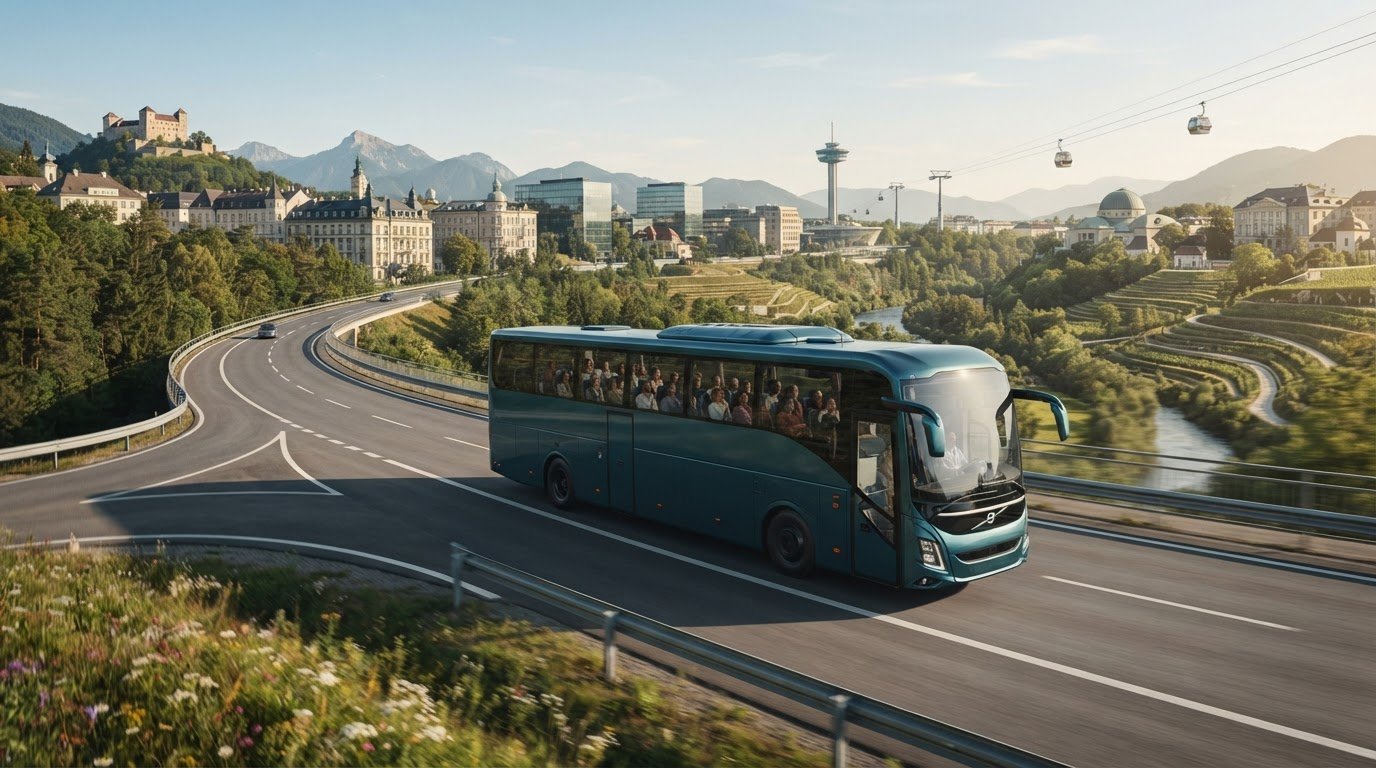
Tag: sustainable travel

  • Reducing the Environmental Impact of Coach Travel: A Practical Guide

    Reducing the Environmental Impact of Coach Travel: A Practical Guide

    What if the most effective way of reducing the environmental impact of coach travel isn’t choosing a different vehicle, but planning a better journey? Two practical steps are to coordinate passengers so seats are well used and to avoid unnecessary journey legs. A coach can carry a group together, but its impact per passenger depends on how many people travel and how efficiently the itinerary is arranged.

    That nuance matters when comparing a coach with cars, trains or flights. Headline figures can mislead if they use different assumptions about occupancy, distance or which emissions are counted. Sustainable planning needn’t mean sacrificing comfort or cutting meaningful stops. It means comparing equivalent journeys and shaping the route around the group’s real needs.

    This guide explains what affects coach emissions and how group size, routing and coordinated logistics can reduce avoidable travel. BELUNE brings more than 20 years of group travel experience and its own modern coach fleet to itinerary planning, helping organisers consider transport alongside accommodation and activities.

    Key Takeaways

    • Separate emissions from operating a journey from wider lifecycle effects to understand what an environmental comparison includes.
    • Use passenger-kilometres to compare equivalent journeys, accounting for distance and the number of travellers.
    • No transport mode is automatically the greener choice. Occupancy, route and trip assumptions shape the result.
    • Practical steps for reducing the environmental impact of coach travel include coordinating passengers, choosing direct routes and avoiding unnecessary mileage.
    • A joined-up itinerary for transport, accommodation and activities can help groups travel more coherently without sacrificing the experience.

    What determines the environmental impact of coach travel?

    A journey’s environmental impact includes emissions produced while a vehicle is operating and may also include the wider effects of making, fuelling and eventually disposing of it. The result depends on more than the coach itself: energy use, route length, passenger numbers and vehicle characteristics all shape the footprint. When reducing the environmental impact of coach travel, it is important to know which parts of the journey a comparison counts.

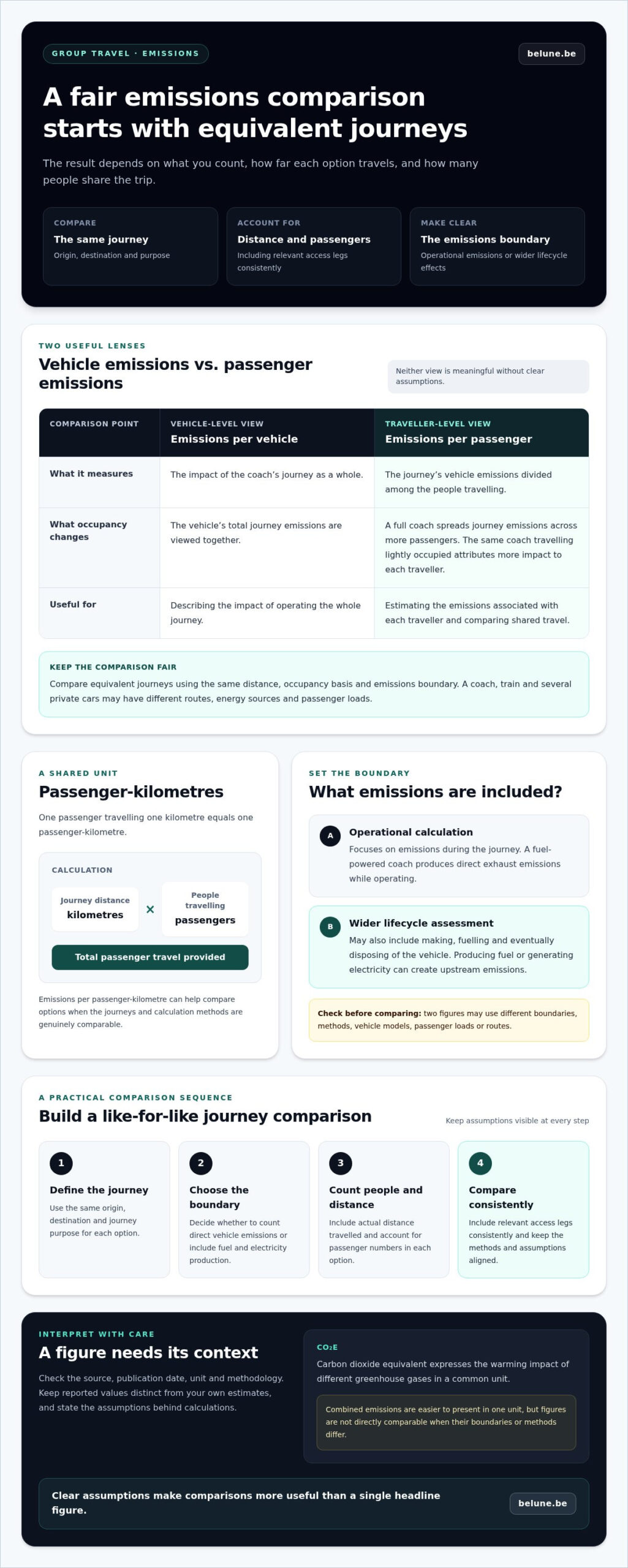
    Two measures answer different questions. Emissions per vehicle describe the impact of the coach’s journey as a whole. Emissions per passenger divide that impact among the people travelling, helping organisers estimate the emissions associated with each traveller. Neither measure is meaningful without clear assumptions about distance, occupancy and which emissions are included.

    Which parts of a coach journey create environmental impact?

    During operation, a fuel-powered coach produces direct exhaust emissions. The energy source can also have upstream effects: extracting and producing fuel, or generating electricity, may create emissions before the vehicle moves. A lifecycle assessment may include vehicle manufacture and disposal, while an operational calculation focuses on emissions during the journey.

    Route length and driving conditions affect how much energy a journey requires. Traffic, gradients, speed and stops can influence vehicle efficiency, as can characteristics such as vehicle size and design. A precise footprint can give a misleading impression of certainty if its boundary, method and data source are unclear.

    Why does coach occupancy matter?

    A per-person calculation divides the journey’s vehicle emissions among its passengers. A full coach spreads journey emissions across more passengers. A well-used shared trip can therefore have a lower attributed impact per traveller than the same coach travelling lightly occupied, even when the route and vehicle are unchanged.

    Occupancy is important, but it doesn’t settle every comparison. A fair assessment also considers how far each option travels, how many people are travelling together and which emissions are counted. A train, a coach and several private cars may use different energy sources, routes and passenger loads. An overview of intercity bus services discusses the environmental advantages of coach travel, but a specific group’s comparison still depends on its journey and the assumptions used.

    For organisers, the practical lesson is to look beyond a vehicle’s total emissions. Consider how many travellers share the trip and whether the route serves the group efficiently. These details provide a clearer basis for comparing transport choices.

    How to measure coach travel emissions fairly

    A useful comparison starts with a clear question: what journey are you measuring, and whose emissions are you counting? For a group trip, define the journey, choose the emissions boundary, count the passengers, then compare equivalent transport options. This sequence helps distinguish published figures from estimates based on your own assumptions.

    Passenger-kilometres offer a straightforward unit for comparing travel. One passenger travelling one kilometre equals one passenger-kilometre. Multiply the distance by the number of passengers to calculate the total passenger travel provided. If a source reports emissions per passenger-kilometre, the figure can help compare options, provided the journeys and calculation methods are genuinely comparable.

    What should a like-for-like transport comparison include?

    Use the same origin, destination, passenger count and journey purpose for each option. Then compare the actual distance travelled by each mode, including relevant access legs consistently. Decide whether the calculation covers direct vehicle emissions only or also includes emissions from producing fuel or supplying electricity. Comparisons need the same distance, occupancy basis and emissions boundary to be meaningful.

    For example, comparing one coach carrying a group with several cars requires knowing how many people are in each car and how far each vehicle travels. The American Bus Association’s report describes motorcoach travel as the most sustainable and energy-efficient transportation option. Treat this as the association’s reported conclusion, not a universal result for every route or group. Its relevance depends on the report’s scope and assumptions.

    How can organisers interpret emissions figures responsibly?

    Check the source, publication date, unit and methodology before using a figure. A government conversion factor, an operator’s fleet-specific estimate and an industry report may use different vehicle models, passenger loads or emissions boundaries. Keep reported values distinct from your own estimates, and state the assumptions behind any calculations you make.

    CO2e, or carbon dioxide equivalent, expresses the warming impact of different greenhouse gases in a common unit. It helps present combined emissions, but two figures are not directly comparable if they use different boundaries or methods. Vehicle model, load and route can all affect the result.

    For a real group itinerary, consistent assumptions matter more than a single headline figure. BELUNE coordinates coach transport, accommodation and group logistics, helping organisers plan a coherent journey. Explore BELUNE’s group travel planning as you consider how itinerary design can support more informed comparisons.
    Reducing the Environmental Impact of Coach Travel: A Practical Guide

    Is coach travel always the greener group transport choice?

    No. A coach isn’t automatically the lowest-impact option for every group or route. The outcome depends on how many people travel together, the distance and route, the available transport options and the boundaries used in an emissions comparison. A shared coach may replace several separate car journeys, but that advantage depends on whether the group uses it.

    Mode When it may suit a group What affects the comparison
    Coach Travellers share a destination or coordinated itinerary. Passenger uptake, route length, vehicle occupancy and any extra mileage.
    Rail Routes, timetables and onward connections work for the group. Train service, group access and travel to and from stations.
    Multiple private cars Travellers have separate origins, destinations or schedules. Number of cars, occupancy, total distance and any shared travel.

    This is a framework, not a universal ranking. Comparisons are most useful when they cover the same journey and passenger needs, including relevant travel at either end. A mode that looks favourable on its main leg may involve extra transfers or access trips that change the full journey’s impact.

    When can a shared coach make practical sense?

    A coach can be a practical choice when a group is travelling to one destination or moving together through a planned itinerary. Instead of each traveller arranging a separate car journey, one shared trip can bring the group together. The environmental outcome depends on passenger uptake and routing: a well-used, direct journey differs from a lightly occupied coach making substantial detours.

    Group logistics matter, too. Coordinating departure points and timings can make shared transport workable while preserving the rhythm of the trip. When reducing the environmental impact of coach travel, consider whether one coherent route serves the group better than a collection of individual journeys.

    When should organisers compare other transport modes?

    Rail deserves consideration when a suitable service fits the group’s timetable and provides workable access to the destination. The comparison should account for reaching stations and completing onward travel, not just the train segment. For travellers starting or finishing in different places, separate cars may be more practical, but their total distance and passenger loads still matter.

    Map each option from the group’s actual starting points to its final destinations. Include transfers, pickups and other necessary legs. Then compare convenience and itinerary fit alongside emissions, using consistent assumptions rather than treating any mode as inherently greener.

    How can organisers reduce the environmental impact of coach travel?

    Thoughtful planning can reduce avoidable mileage without making a trip feel rushed or less comfortable. The aim isn’t simply to choose the shortest route. It is to coordinate passengers, stops and activities so each journey leg serves a clear purpose.

    • Coordinate passenger numbers: Gather registrations and likely attendance before arranging transport. A reliable count helps with vehicle planning, though it doesn’t guarantee a particular emissions outcome.
    • Plan direct, connected routes: Arrange pickups and stops in a logical sequence to avoid backtracking and unnecessary transfers.
    • Make stops purposeful: Where practical, combine rest breaks with group needs rather than adding detours for convenience alone.
    • Bring related activities together: Group nearby visits and consider accommodation in relation to the day’s route.
    • Record the journey: Note route distance, passenger numbers and the assumptions used in any emissions comparison. Review those details when planning future trips.

    How can itinerary design avoid unnecessary travel?

    Start with the shape of the experience. If a group has several activities in the same area, arrange them in a sensible sequence to avoid repeated journeys between the same points. Include accommodation and pickups in the plan: a well-placed departure point can help the day flow naturally and limit extra legs.

    The shortest route isn’t always the best route. A slightly longer journey may better suit the group’s timing, access needs or planned stops. Balance distance with a calm, workable itinerary so environmental considerations support the experience rather than dictate it.

    What can group organisers do before departure?

    Coordinate passengers early. Confirm expected numbers in time to plan transport, then share clear joining instructions, pickup details and timings with everyone. When people know where to meet and how the shared journey works, there is less reason for separate transfers or individual car trips caused by uncertainty.

    After the trip, compare the plan with what happened. Record final passenger numbers, actual route distance and any unplanned mileage. These notes provide a more useful basis for future planning than relying on a generic emissions estimate. For broader organiser considerations, see The Definitive Guide to Choosing a Group Travel Agency in 2026.

    Reducing the environmental impact of coach travel often comes down to coordination: connecting transport with accommodation, activities and the group’s real needs. Plan a coordinated group journey with BELUNE, drawing on more than 20 years of group travel experience and its own modern coach fleet.

    How BELUNE can help groups plan more considered coach journeys

    Environmental choices become more practical when transport is planned as part of the whole trip. A coach route, hotel location, activity schedule and pickup plan all influence how a group moves. Coordinating these elements can create a coherent itinerary and avoid journey legs that don’t serve a clear purpose, while keeping the experience comfortable and well paced.

    What does coordinated group transport planning involve?

    Start with the group’s schedule and priorities. Considering activities and accommodation alongside coach movements helps organisers build a logical sequence rather than treating each transfer as a separate decision. For example, the order of planned visits and the location of an overnight stay can affect how much backtracking the itinerary requires.

    Clear coordination matters to passengers, too. Shared pickup information, well-planned timings and a route that reflects the day’s activities can make group travel feel smooth and connected. These are planning priorities, not guarantees of a particular environmental result. Any impact assessment still depends on the actual journey, passenger numbers and the method used to measure emissions.

    BELUNE brings more than 20 years of group travel experience to itinerary and logistics coordination and operates its own modern coach fleet. Its hotel accommodation management and local guide services can be considered alongside transport and activities when planning a group itinerary. Careful comparisons remain important, while coordinated planning brings routing, schedules and group movement into one discussion.

    What is a sensible next step for a group organiser?

    Begin with the fundamentals: expected group size, journey purpose, key dates, schedule and transport priorities. Note where passengers will join, which activities need transfers and how accommodation fits into the route. A clear starting brief helps identify where the itinerary can be more direct and which stops are essential to the group’s experience.

    From there, organisers can plan transport and logistics around efficient routing and a comfortable pace. If reducing the environmental impact of coach travel is a priority, keep the assumptions visible: anticipated passenger numbers, planned distance and any detours or connections. This makes future reviews more meaningful and avoids relying on broad sustainability claims.

    Explore BELUNE’s group travel services to consider how coordinated coach transport, accommodation and activities can come together in a more considered group itinerary.

    Make your next group journey more considered

    Reducing the environmental impact of coach travel starts with understanding what shapes a journey’s footprint: distance, vehicle use, passenger numbers and the boundaries used to measure emissions. Fair comparisons use the same route and occupancy assumptions. Practical planning focuses on coordinating travellers, avoiding unnecessary mileage and connecting activities with accommodation.

    No transport mode is right in every situation. Make an informed decision based on the group’s actual itinerary and needs. Clear passenger plans and thoughtfully arranged routes can support a smoother experience while helping organisers make more considered choices.

    BELUNE brings more than 20 years of group travel experience, its own modern coach fleet and expertise coordinating itineraries, accommodation and logistics. These elements can be considered together when shaping a coherent journey. Explore BELUNE’s group travel services and take the next step towards planning a group trip with care and confidence.

    Frequently Asked Questions

    Is coach travel better for the environment than travelling by car?

    It can be, particularly when a coach carries many passengers who might otherwise travel in separate cars, but it isn’t always the lower-impact choice. The comparison depends on the coach’s occupancy, the number of people in each car and the distance each option travels. For a fair assessment, compare the same journey and passenger numbers, using emissions figures with consistent boundaries and assumptions.

    Can a coach reduce the environmental impact of group travel?

    Yes, a shared coach can reduce the need for multiple separate vehicle journeys when a group travels together. The potential benefit depends on how many people use the coach and whether its route avoids unnecessary detours. A lightly occupied coach or an indirect itinerary can change the comparison. Consider the complete trip, including pickups and onward travel, rather than assuming shared transport always has the lowest impact.

    How are emissions from coach travel calculated per passenger?

    To estimate emissions per passenger, calculate emissions for the coach journey using a stated method, then divide that total across the passengers. Distance and occupancy both matter: a longer route adds travel, while more passengers share the journey’s emissions. Check whether the calculation covers direct vehicle emissions or also fuel production. Cite the methodology and report its assumptions, since different boundaries can produce different results.

    What factors affect the environmental impact of a coach journey?

    A coach journey’s impact depends on the vehicle and its efficiency, the fuel or energy it uses, route distance, driving conditions and passenger load. Traffic, stops and route changes can affect the energy needed to complete the trip. The result also depends on what the calculation includes, such as direct operating emissions alone or upstream fuel and energy effects. A precise comparison needs a clear method.

    Does a fuller coach always have a lower environmental impact per passenger?

    Usually, more passengers mean the journey’s vehicle emissions are divided among more travellers, lowering the amount attributed to each person, all else being equal. But occupancy alone doesn’t determine the full environmental comparison. Route length, vehicle characteristics and the emissions boundary matter, as do the occupancy and distance assumptions for other transport modes. A full coach isn’t automatically the best option for every group or journey.

    What can group organisers do to make coach travel more sustainable?

    Start with a realistic passenger count, then plan pickups and stops in a logical sequence. Group nearby activities and consider accommodation alongside the daily route to limit backtracking and unnecessary mileage. Share clear joining instructions so travellers can coordinate their arrival and avoid separate transfers caused by uncertainty. Record passenger numbers, route distance and calculation assumptions after the trip to inform future planning and comparisons.

    Should organisers compare coach travel with rail for a group trip?

    Yes, if rail could serve the group’s route and schedule. Compare complete journeys, not just the coach leg with the train ride: include travel to stations, transfers and onward connections. Consider group size, access and timetable suitability, then use emissions data based on the same distance, occupancy basis and boundary for both modes. Neither rail nor coach is automatically the lower-impact choice in every situation.
  • Community-Focused Tourism Initiatives in Luxembourg: A Guide to Cultural Group Tours

    Community-Focused Tourism Initiatives in Luxembourg: A Guide to Cultural Group Tours

    What if a group’s most meaningful cultural encounter began with a local resident, not a landmark? Cultural group tours luxembourg can offer are at their most engaging when they introduce the people and traditions behind each visit, rather than treating community life as a backdrop. A thoughtful itinerary can help visitors connect with local perspectives while respecting the people and places involved.

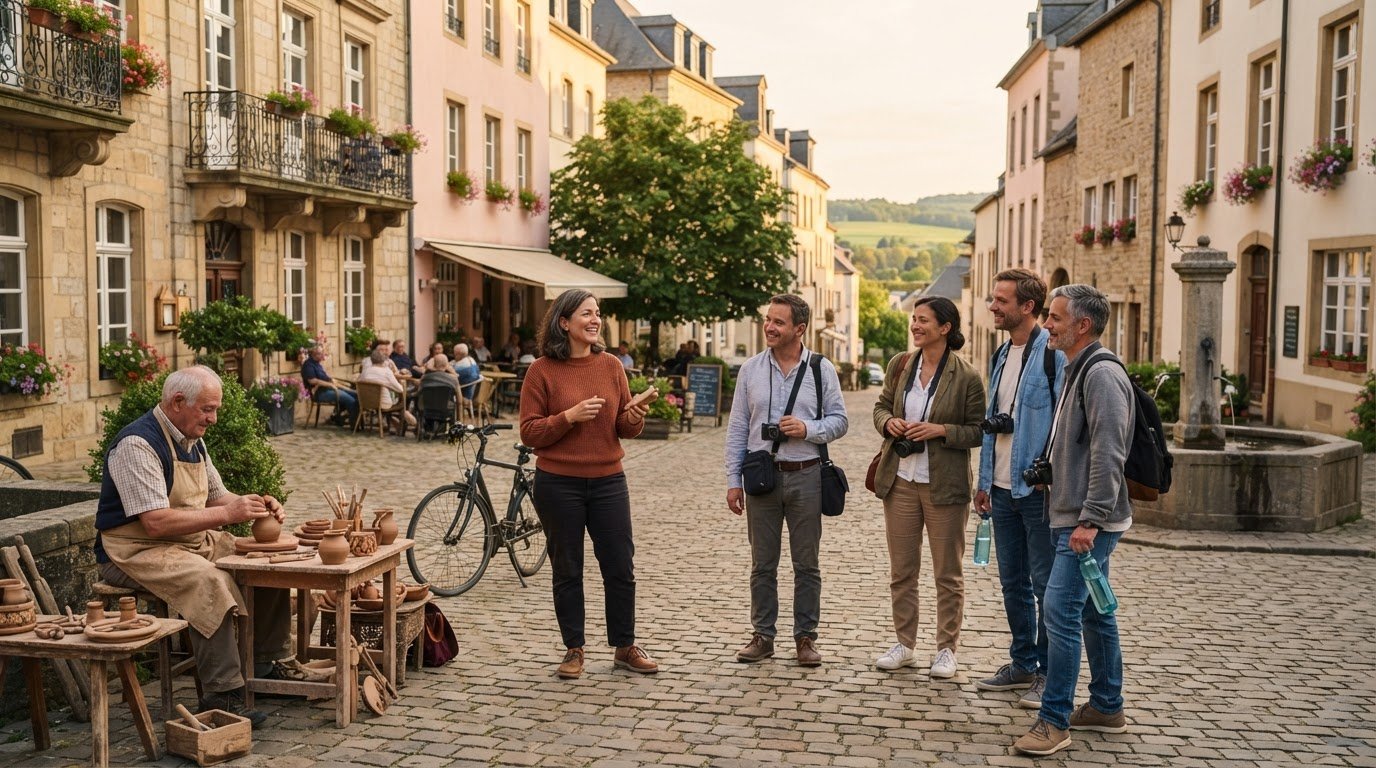
    Luxembourg’s “Guide for one day” initiative offers an example of local participation: residents volunteer to lead free tours about a place, activity, or subject that matters to them. It’s a reminder that cultural depth can come from personal perspective, attentive listening, and time to engage.

    This guide explains how community-focused tourism works, how to build local participation into a group itinerary, and what to look for when assessing a visit. It also covers how local guidance, considerate pacing, and coordinated transport can support a richer experience for visitors and communities alike.

    Key Takeaways

    • Shape cultural group tours luxembourg around local participation and reciprocal value, not sightseeing alone.
    • Use local guides and cultural practitioners to add context, and plan visits and conversations respectfully.
    • Assess community value through several signals, including local input, cultural context, visitor conduct, and practical transparency.
    • Build a thoughtful itinerary by setting learning goals, briefing participants, and allowing time for interpretation and transitions.
    • BELUNE coordinates tailored cultural itineraries with local guide services, accommodation management, and coach transport.

    Community-Focused Cultural Group Tours in Luxembourg

    Community-focused tourism puts local perspectives into the design of a visit instead of treating culture as scenery. A group might do more than view a heritage site: where appropriate and welcomed, the itinerary could include interpretation from a local guide, a conversation with a cultural practitioner, or time to understand how traditions are experienced today.

    Community-focused cultural tourism is travel shaped with local voices, guided by respect, and planned to create value for both visitors and the people whose culture they encounter.

    For organisers planning cultural group tours luxembourg, that distinction matters. An itinerary can include important heritage yet offer little exchange if visitors simply move from stop to stop. Local participation helps shape what is shared and how. Cultural respect means allowing people to represent their own histories and practices, without turning residents or traditions into props. The Culture of Luxembourg provides background on the country’s cultural history, arts, museums, and traditions, while local interpretation can bring particular stories into focus.

    Good intentions alone don’t guarantee community benefit. Consider who contributes to the experience, whether their role is acknowledged, and how the visit fits the setting and its everyday rhythms. Stronger cultural understanding, meaningful exchange, and support for local cultural activity are aims to plan for and assess, not outcomes to assume.

    How Is Community-Focused Tourism Different from Conventional Sightseeing?

    Conventional sightseeing can be rewarding, but it often positions visitors as observers: see the landmark, hear a short account, then move on. A community-focused visit makes room for informed exchange. A local guide might connect a building or craft practice to its wider cultural context. A facilitated conversation or workshop, where locally appropriate, can invite questions and deepen understanding.

    The key is who shapes the interpretation. Local voices should influence how stories are presented and which visitor interactions are suitable. That may mean following a host’s guidance on photography, keeping the group’s footprint considerate, or listening without expecting personal stories on demand. Participation should be welcomed, not extracted for atmosphere.

    Why Does This Approach Matter for Cultural Groups?

    Context can make an itinerary more meaningful. Understanding why a tradition matters, how a place is remembered, or how cultural practices continue today helps visitors look beyond surface details. The aim isn’t to fit in more stops, but to create encounters that leave room for attention and reflection.

    Practical choices matter too. Group size can affect whether people can hear, ask questions, and engage comfortably. Conduct shapes whether an exchange feels respectful, while scheduling determines whether a visit feels unhurried or rushed. These choices don’t guarantee a particular community outcome, but they make meaningful interaction more possible and give organisers clearer evidence to review afterward.

    How Cultural Group Tours Can Create Meaningful Connections in Luxembourg

    A knowledgeable local guide can turn a detail into a point of connection. They might explain how a language, historic event, craft, or building fits into a wider cultural story, helping visitors understand not only what they’re seeing, but why it matters. Cultural practitioners and heritage interpreters can bring another perspective through a demonstration, workshop, or conversation, when the format suits their work and they want to participate.

    Informed local interpretation gives a group visit context, connecting what visitors see with the histories and perspectives that shape it.

    What Can Local Guides and Cultural Contributors Bring to a Tour?

    Guides can help a group navigate complex histories and cultural references, including how language and traditions have changed over time. Contributors can offer insight grounded in their expertise or experience, but one person’s perspective shouldn’t be presented as a complete account of an entire community.

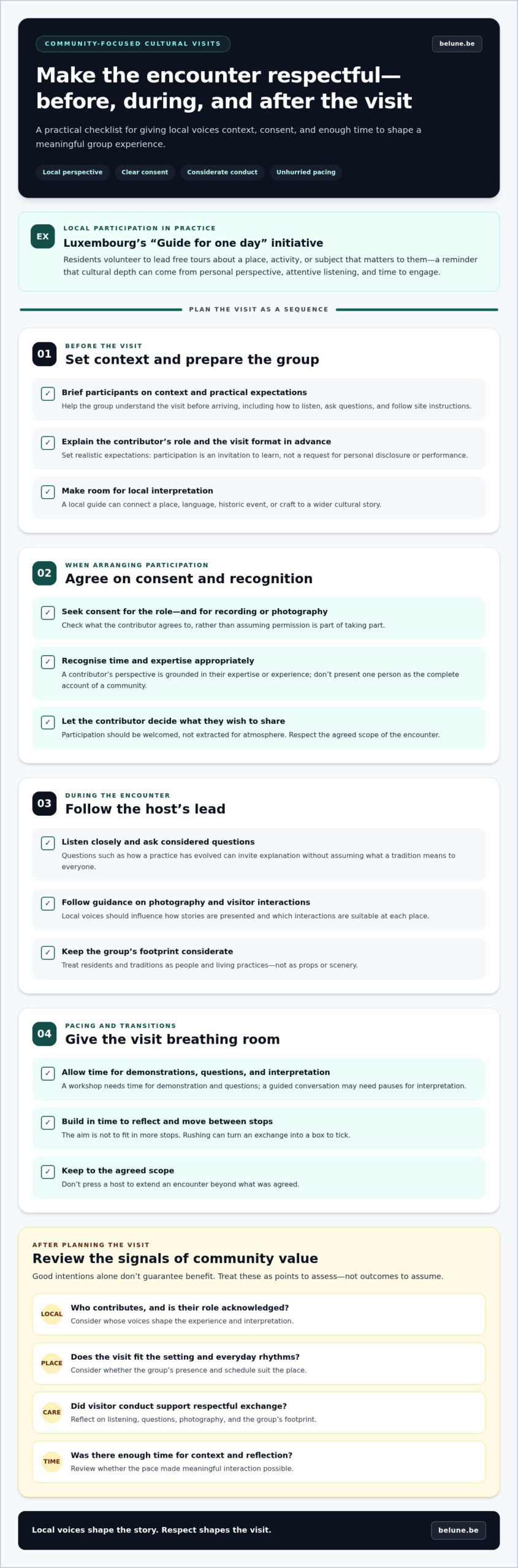
    Plan participation with care. Explain the purpose and format in advance, seek consent for the role and for any recording or photography, and recognise the contributor’s time and expertise appropriately. Set realistic expectations: a conversation is an invitation to learn, not a request for personal disclosure or performance. A genuine encounter lets the contributor decide what they wish to share.

    How Can a Group Engage with Heritage Respectfully?

    Preparation shapes the encounter. Brief participants on the visit’s context and practical expectations, then encourage them to listen closely, ask considered questions, and follow instructions at each site. Questions that invite explanation, such as asking how a practice has evolved, are often more useful than assumptions about what a tradition means to everyone.

    Give the visit enough breathing room. A workshop needs time for demonstration and questions; a guided conversation may need pauses for interpretation. Rushing between stops can turn an exchange into a box to tick. Build in time to reflect, and don’t press a host to extend an encounter beyond its agreed scope.

    For more itinerary ideas, explore this guide to cultural group tours. For travel partners shaping cultural group tours luxembourg, BELUNE brings local guide services together with tailored cultural itineraries and group logistics. With more than 20 years of experience in group travel, we coordinate programmes that give cultural encounters thoughtful context and practical structure. Learn more about BELUNE’s cultural group travel planning.

    Community-Focused Tourism Initiatives in Luxembourg: A Guide to Cultural Group Tours

    How to Assess Whether a Luxembourg Cultural Tour Supports Local Communities

    A compelling itinerary isn’t, by itself, evidence of community benefit. For cultural group tours luxembourg, look beyond promotional language and examine how local perspectives, interpretation, visitor conduct, and practical arrangements appear in the programme. Treat each sign as one piece of evidence, not proof of a particular social or economic outcome.

    Words such as “authentic” or “sustainable” can sound reassuring, but they’re too vague to assess on their own. Look for specific details: who contributes, what their role is, how cultural context is explained, and what participants are asked to do. Claims about community benefits need evidence. A positive visitor experience doesn’t automatically create local value.

    Area to assess Signs to look for What it can and can’t show
    Local input A named role for a local guide or contributor, where publicly available, and a clear description of their contribution. Shows who is involved, but doesn’t by itself establish wider community impact.
    Cultural context Interpretation that explains the subject and whose perspective is being shared. Helps assess depth and attribution, not whether one account represents everyone.
    Visitor conduct Practical guidance on listening, questions, photography, and respectful behaviour at each visit. Indicates that conduct has been considered; it doesn’t prove every interaction will be meaningful.
    Practical transparency A clear itinerary, realistic timing, and understandable descriptions of visits and contributor roles. Makes the programme easier to evaluate, but isn’t evidence of social or economic outcomes on its own.

    What Signs Suggest That Local Perspectives Shape the Experience?

    Review the itinerary and supporting material for clear roles, such as a local guide explaining a heritage site or a contributor leading a cultural activity. Look for interpretation that identifies the viewpoint being shared and gives it context. A guide or practitioner may offer valuable insight, but no single encounter should be presented as representative of every community or experience in Luxembourg.

    Which Questions Help Organisers Evaluate Cultural Value?

    Use questions to assess the programme’s design: Where does local knowledge shape the visit? What makes the interaction appropriate for the people and place involved? Does the schedule leave room to listen and reflect, or does it rush the group onward? After the tour, compare the intended learning goals with what participants experienced, and record any available feedback or evidence. Don’t turn a positive comment into a claim of community-wide impact.

    For broader planning considerations, see our guide to choosing a group travel agency. Applying these criteria helps organisers distinguish a well-presented cultural stop from an itinerary designed with context, care, and accountability.

    How to Plan a Respectful Community-Focused Group Visit

    Thoughtful planning turns good intentions into practical decisions. For cultural group tours luxembourg, follow a clear process that connects learning goals with a considerate pace, participant preparation, and time to review how the visit worked for everyone involved.

    1. Define learning goals. Start with what the group hopes to understand, such as a historical period, artistic practice, or cultural tradition. Use those aims to shape the programme instead of building it around the largest possible number of stops.
    2. Shape the itinerary. Choose visits that support those goals and allow enough time for interpretation, questions, transitions, and quiet observation. Consider accessibility needs, group size, interests, and site-specific instructions. Coordinate transport and accommodation around the programme so practical arrangements support, rather than crowd out, the cultural experience.
    3. Brief participants. Share the purpose of each visit and explain relevant expectations for listening, photography, questions, and conduct at sites. Encourage curiosity without assumptions, and ask participants to follow guidance from local hosts and site staff.
    4. Review outcomes. After the visit, reflect on whether the learning goals were met and where the schedule or briefing could improve. Where appropriate, invite feedback from participants and local contributors, respecting their time and preferred way of sharing comments.

    How Should Organisers Build the Itinerary?

    Begin with the group’s cultural interests, then give each visit a clear purpose. Balance guided interpretation with unhurried time to look, listen, and reflect. Build in realistic transitions between activities rather than assuming every stop can begin immediately after the last. Consider how coach travel, accommodation, and visit timings work together so the itinerary feels coherent instead of fragmented.

    Accessibility deserves attention at the planning stage. Consider the needs participants have shared and the practical demands of each activity, including walking, seating, and the pace of interpretation. A well-shaped schedule leaves room to adapt without placing pressure on hosts or rushing the group.

    How Can Groups Prepare to Be Considerate Visitors?

    A concise pre-visit briefing can prevent avoidable friction. Explain site instructions, when photography is appropriate, and how to take part in conversations respectfully. Invite open questions that seek context rather than confirm assumptions. For related itinerary ideas, see our themed group travel guide.

    For travel partners planning a tailored cultural programme, BELUNE coordinates the itinerary with local guide services, accommodation management, and coach transport through its own fleet. Plan a tailored cultural group tour around your group’s learning goals and practical needs.

    How BELUNE Can Coordinate a Tailored Cultural Group Tour

    Once a cultural programme has clear learning goals and a respectful approach, the next challenge is making every element work together. A destination management company (DMC) can coordinate the itinerary, transport, accommodation, and local guidance as one considered programme. Joined-up planning helps protect time for cultural visits instead of letting logistics dictate the rhythm of the experience.

    What Does a DMC Coordinate for a Cultural Group?

    BELUNE creates tailored cultural itineraries for professional travel partners, drawing on more than 20 years of experience in group travel and tour operations. Local guide services give visits context, while accommodation management and coach transport through BELUNE’s own fleet connect the practical parts of the programme. The aim is coherence: an itinerary in which travel time, visit timings, and cultural interpretation support one another.

    For example, organisers can shape a programme around an artistic or heritage interest, then plan transport and overnight arrangements around the visits. Coordinating these details makes it easier to allow realistic transitions and unhurried time on site. Each group’s priorities shape the programme, while joined-up planning keeps the cultural experience at its centre.

    For partners developing cultural group tours luxembourg, a tailored approach brings structure to both the content and the logistics. BELUNE works with professional travel partners to coordinate group programmes, rather than treating cultural visits as isolated stops in a schedule.

    How Can Organisers Take the Next Step?

    A clear outline helps turn an initial idea into a workable programme. Consider sharing:

    • Interests: the cultural themes or heritage subjects that matter most to the group.
    • Group details: expected size and any relevant accessibility or participation needs.
    • Timing: travel dates, overall duration, and preferred pace.
    • Experience priorities: the balance you’re seeking between guided interpretation, visits, and time to reflect.

    These details give the itinerary a thoughtful starting point. From there, BELUNE coordinates the cultural programme with local guidance, coach transport, and accommodation management in line with the group’s objectives.

    Explore BELUNE’s group travel services to see how we work with professional partners. Share your group’s interests and practical requirements, and let’s shape a cultural itinerary with care, clarity, and a considered sense of place.

    Design a Cultural Journey with Lasting Meaning

    Thoughtful cultural group tours luxembourg begin with local perspectives, respectful participation, and an itinerary shaped for more than a checklist of sights. Organisers can look for clear evidence of local input and cultural context, while treating community benefit as an outcome to assess, not assume. Careful pacing, participant preparation, and time for reflection help create more considered encounters.

    Bringing that intention to life takes coordination. BELUNE combines more than 20 years of group-travel experience with tailored cultural itineraries, local guide services, accommodation management, and its own fleet of modern coaches. Together, these elements connect meaningful visits with the practical flow of a group programme.

    Explore BELUNE’s tailored group travel services and start shaping an itinerary around your group’s interests and needs. With thoughtful planning and collaborative design, a group visit can become a richer experience for everyone involved.

    Frequently Asked Questions

    What is community-focused tourism?

    Community-focused tourism puts local perspectives and respectful interaction at the centre of a visit, rather than focusing only on what visitors can see. A group itinerary might include interpretation from a local guide or a cultural activity led by a willing contributor. The experience should make clear whose perspective is being shared and leave local people room to decide what they want to discuss or demonstrate.

    How can cultural group tours benefit local communities?

    Cultural group tours can create opportunities for local guides and cultural contributors to share knowledge, and can support greater visitor understanding of local heritage. These are potential benefits, not automatic results. Organisers should consider who participates, how their contribution is recognised, and whether the visit suits the people and place involved. Assess outcomes using available evidence and feedback rather than assuming a positive visitor experience proves community impact.

    What makes a cultural group tour in Luxembourg respectful?

    A respectful tour gives cultural interpretation appropriate context and prepares visitors to listen, ask considerate questions, and follow site-specific guidance. For cultural group tours luxembourg, organisers should also allow time for transitions and reflection instead of rushing through visits. Photography and other interactions should follow the instructions of local hosts and site staff. No single guide or contributor should be treated as speaking for every community or perspective.

    How can I tell whether a tour is genuinely community-focused?

    Look for concrete details rather than relying on labels such as “authentic” or “sustainable.” A programme may identify local guides or contributors, explain the perspective behind its interpretation, and outline expected visitor conduct. Clear timing and descriptions of each activity also help organisers assess how the experience is designed. Consider these signs together; none alone proves that a tour creates social or economic benefit for a community.

    Can a large group take part in community-focused cultural tourism?

    Yes, a large group can participate, but the format and pace should suit the setting and the people involved. Organisers can consider dividing participants into smaller groups for interpretation or activities where that better supports listening and exchange. Allow time for movement between groups, explain conduct expectations in advance, and avoid crowding a visit into an impractical schedule. The right arrangement depends on the activity and local context.

    How do you plan a cultural group itinerary that supports local participation?

    Begin with the group’s learning goals, then select visits where local knowledge can add relevant context. Build in realistic time for interpretation, questions, transitions, and quiet observation. Brief participants on considerate conduct, including photography and site instructions where relevant. Afterward, review whether the programme met its aims and, where appropriate, invite feedback from local contributors as well as participants. Treat community benefit as something to assess, not assume.

    What should tour organisers consider before booking a cultural group visit?

    Clarify the group’s interests, size, timing, accessibility needs, and preferred pace. Review what each visit involves, who provides interpretation, and how the schedule allows for meaningful engagement. For professional travel partners, BELUNE creates tailored group itineraries and coordinates local guide services, accommodation management, and coach transport through its own fleet. With more than 20 years of group-travel experience, BELUNE brings cultural content and practical planning together.